Regulator Approves New Go-op Train Service Between Swindon, Taunton and Weston-super-Mare
The title of this post, is the same as that of this press release from the Office of Rail and Road.
This is the sub-heading.
The rail regulator has given the go ahead for new train services between Swindon, Taunton and Weston-super-Mare from the end of 2025. The regulator has also set conditions on its approval to ensure the new, co-operatively owned operator has sufficient finance and rolling stock in place in good time.
These paragraphs from the press release give more details.
Go-op plans to operate return weekday and weekend services between Taunton and Weston-super-Mare, Taunton and Westbury, Taunton and Swindon, and Frome and Westbury.
It will compete with Great Western Railway (GWR), a public service operator. Go-op plans to start in December 2025 at the earliest, and must do so no later than December 2026 in order to use the capacity ORR has granted.
As part of ORR’s decision, Go-op must provide evidence to ORR of the necessary finance to start operations, fund level crossing enhancements, and that the necessary rolling stock has been secured. ORR’s decision requires Go-op to do this without delay, and no later than November 2025.
I must admit I’m a little surprised at the Office of Rail and Road giving approval.
There is more on the Go-op web site.
Electrification Between Newbury And East Somerset Junction
In the August 2023 Edition of Modern Railways, there is an article, which is entitled GWR Seeks Opportunities To Grow.
This is the sub-heading.
Managing Director Mark Hopwood tells Philip Sherratt there is plenty of potential to increase rail’s economic contribution.
This is two paragraphs.
The desire to provide electrification to support aggregates traffic from the Mendip quarries could also benefit GWR , says Mr. Hopwood. ‘Having an electric loco would massively help with pathing heavy freight trains through the Thames Valley. If you could electrify from Newbury to East Somerset Junction, a big chunk of the Berks and Hants route would be wired.
Then you can ask how much further you could get on battery power on an IET without running out of juice.’
I have some thoughts.
Where Is East Somerset Junction?
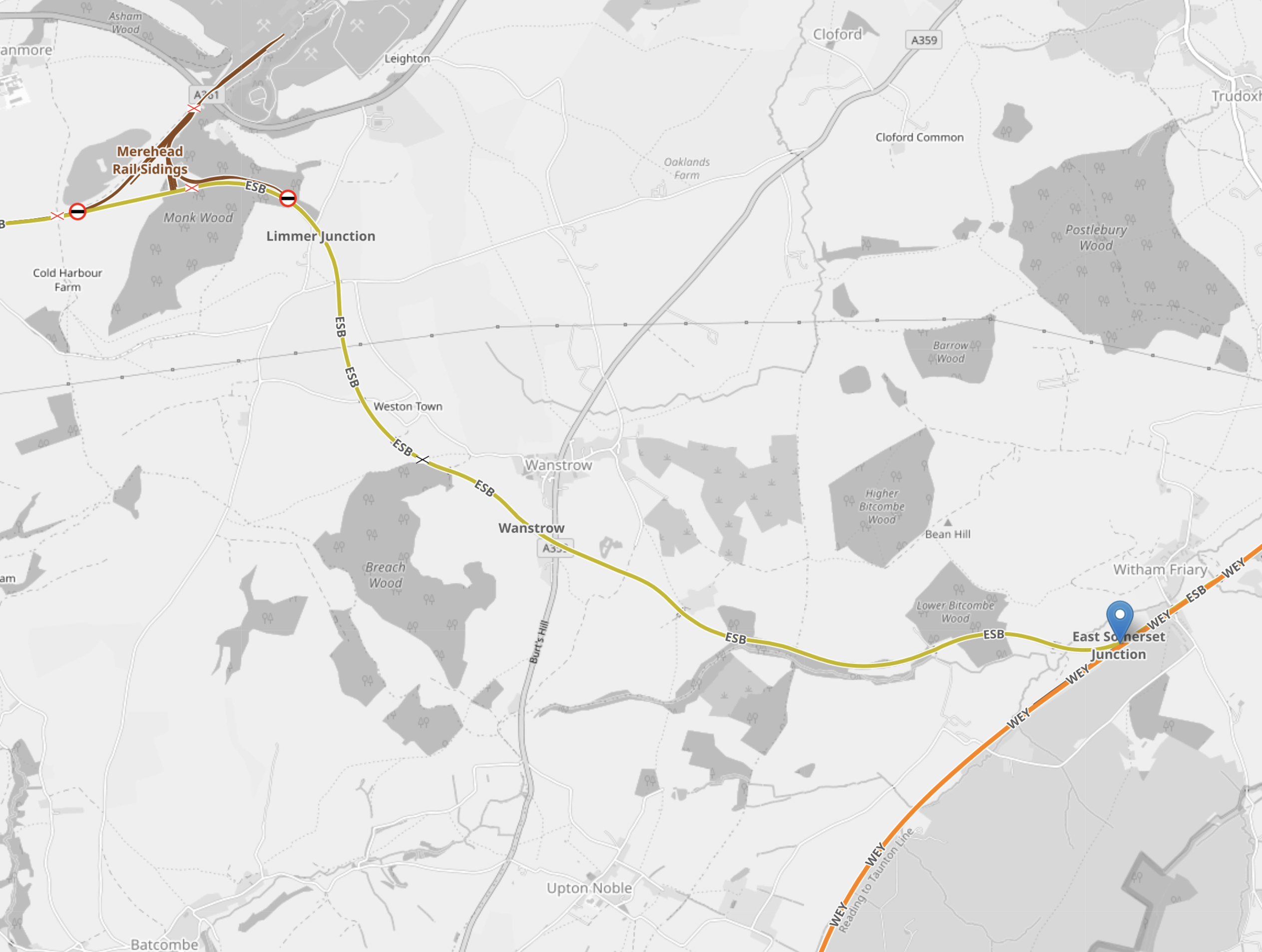
This OpenRailwayMap shows East Somerset junction.
Note.
- The East Somerset junction is marked with the blue arrow.
- East Somerset junction is 5.2 miles North of Bruton station and 5.4 miles South of Frome station on the Reading and Taunton Line.
As the map shows there is a branch to Merehead Rail Sidings, which is shown in yellow.
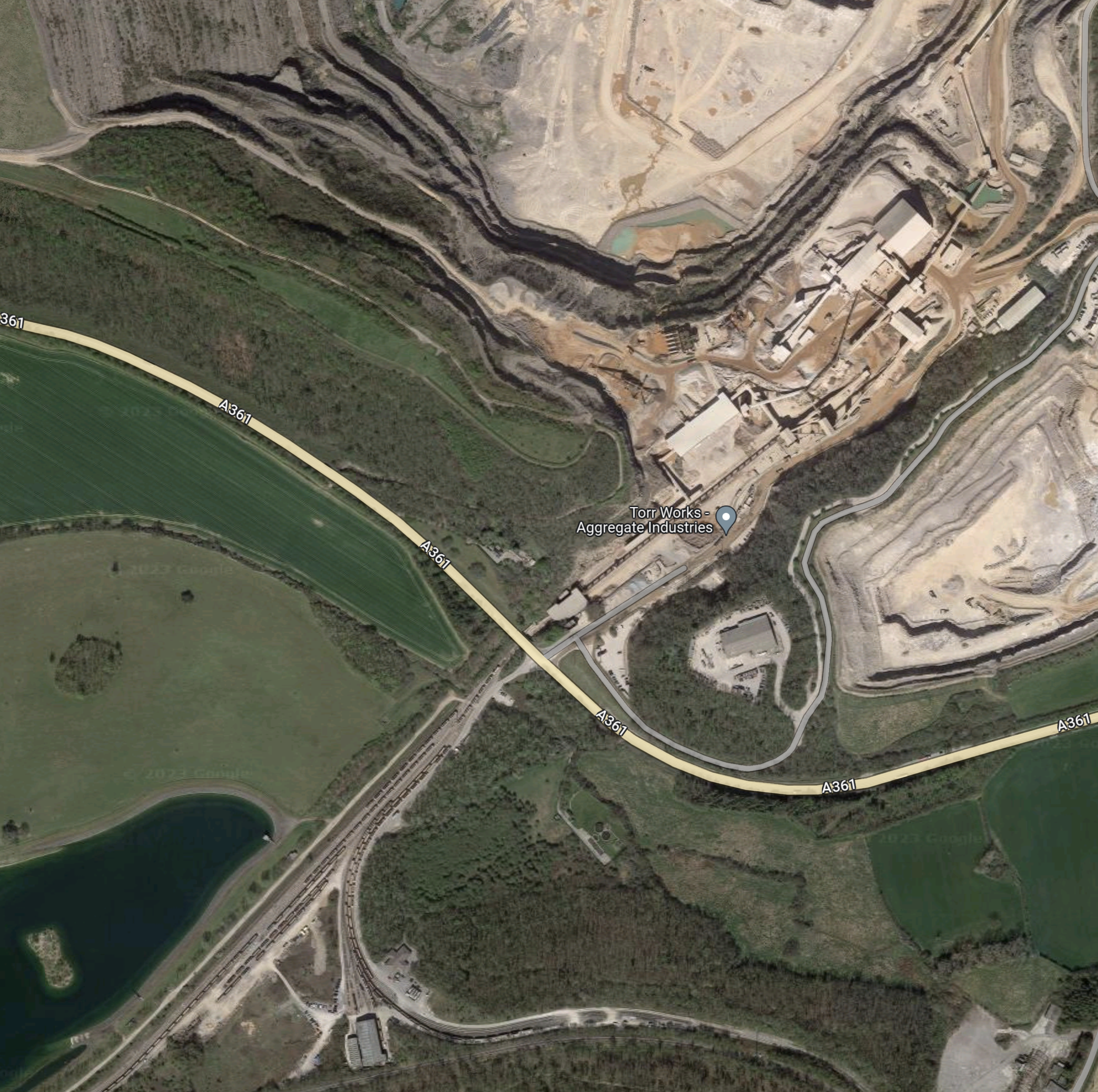
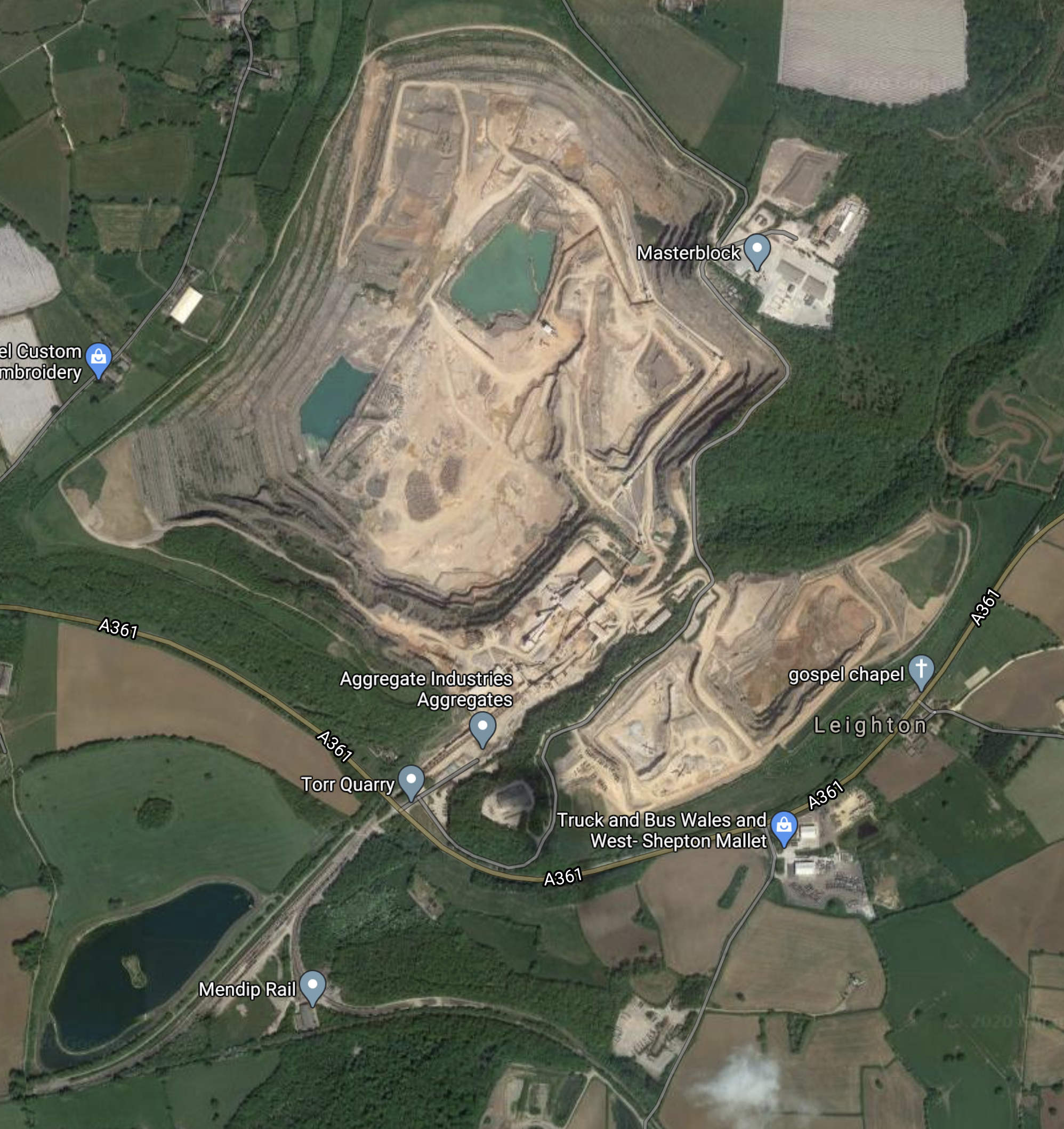
This Google Map shows Merehead Rail Sidings.
Note.
- It looks like there is a massive quarry to the North of the A361 road, which curves across the map.
- It is labelled Torr Works – Aggregate Industries.
- Torr Works has a Wikipedia entry.
- The rail sidings are South of the A361.
- Zooming in on the map, shows that the railway between East Somerset junction and Merehead is single-track and only a few miles long.
Distances from East Somerset junction are as follows.
- Dorchester junction – 41.2 miles
- Newbury – 53.4 miles
- Taunton – 37.2 miles
- Weymouth – 47.8 miles
Note that it is electrified with 750 VDC third-rail between Weymouth and Dorchester junction.
Range of Battery-Electric Trains
Consider.
- A Bombardier engineer told me eight years ago, that the battery-electric Class 379 train had a range of sixty miles.
- Stadler’s FLIRT Akku has a Guinness world record of 139 miles on one battery charge. See this page on the Stadler web site.
- Even Stadler’s Class 777 trains for Merseyrail have a range of 84 miles on battery power. See New Merseyrail Train Runs 135 km On Battery.
It does appear that five-car battery-electric trains will have ranges in excess of a hundred miles.
I believe that because Hitachi’s battery makers have a good record, they will probably be very ambitious and will want that Guinness record, that Hitachi’s Class 802 trains will have a battery range not far short of the 139 miles of the Stadler FLIRT Akku.
I will be very surprised if Hitachi’s battery-electric version of a Class 802 train, doesn’t have range of at least 125 miles.
But say if they could do say 140 miles, the battery-electric Class 802 train could cover every long-distance route in the UK, which would attract orders for trains to run on the following routes.
- Cardiff and Swansea
- Crewe and Holyhead
- Edinburgh and Aberdeen
- Edinburgh and Inverness
- Crewe and Holyhead
- London Waterloo and Exeter St. Davids
A substantial reward to the battery makers, would probably not be out of order.
Aggregate Trains From The Mendips
Consider.
- Mining and quarrying companies are under pressure from governments, shareholders and environmentalists to reduce their carbon footprints.
- Many are replacing diesel-powered mining excavators and trucks, with electric or hydrogen versions.
- In addition, those companies delivering building products to the construction industry are under pressure to provide low-carbon products.
- Using rail with electric traction to deliver products to market would cut carbon emissions and might even help sales.
These Mendip quarries appear to be connected to the Reading and Taunton Line.
- Torr Works – Connects 5.4 miles to the South of Frome.
- Whatley Quarry – Connects close to Frome.
There may be others.
But these rail-connected quarries, connect at or North of East Somerset junction, to where Mark Hopwood is proposing electrification.
Zero-carbon rail traction could even be possible, by electrifying the short single-track branch lines. or by using hydrogen-electric hybrid locomotives.
GWR’s London And South-West Services
These services use the Reading and Taunton Line to join the Bristol and Exeter Line at Taunton, before going on to Exeter, Plymouth and other destinations in the South-West of England.
These are distances from East Somerset Junction.
- Exeter – 67 miles
- Paignton 95.2 miles
- Penzance – 198.5 miles
- Plymouth – 119.0 miles
- Taunton – 37.2 miles
Note.
- Exeter, Paignton, Penzance and Plymouth stations would need short lengths of electrification to charge terminating trains or top-up passing trains.
- In Thoughts About Electrification Through Devon And Cornwall, I showed that the average stop time at Plymouth station was eight minutes, which could be enough for the rail equivalent of a Formula One splash and dash.
- A 125 mile battery range, not only enables London and Penzance, but also Cardiff and Swansea, and Edinburgh and Aberdeen, when the extra electrification is completed.
Could my estimate of a 125 mile battery range, be Hitachi’s objective for their battery-electric trains?
The Ultimate Battery-Electric Class 802 Train
Hitachi have been totally silent on how the fitting of batteries to Class 802 trains is going.
But Mark Hopwood is more forthcoming in the GWR Seeks Opportunities To Grow article. where this is said.
Meanwhile, GWR had announced plans with Eversholt Rail to trial the replacement of a diesel generator unit with batteries on a Class 802 IET. However, Mr. Hopwood says this would not be useful for GWR and so the trial is not proceeding; instead, a TransPennine Express Class 802 will be the subject of a battery trial.
It sounds to me that another solution is being developed to get trains to run on electric power between London and the South-West.
- I think we can rule out full electrification on the grounds of cost, disruption, time and the Nimbys and objectors will have a field day.
- Newbury and Penzance is a distance of 251.9 miles, which would surely need a lot of batteries.
Mark Hopwood’s idea to electrify the 53.4 miles between Newbury And East Somerset junction, is starting to look like a good compromise.
GWR’s Bristol/Gloucester And Weymouth Services
These stopping trains are run by diesel trains and take the following route between Bristol Temple Meads and Weymouth stations.
- Keynsham
- Oldfield Park
- Bath Spa
- Freshford
- Avoncliff
- Bradford-on-Avon
- Trowbridge
- Westbury
- Frome
- East Somerset junction
- Bruton
- Castle Cary
- Yeovil Pen Mill
- Thornford
- Yetminster
- Chetnole
- Maiden Newton
- Dorchester West
- Dorchester junction
- Upwey
Note.
- I would assume that there is enough electrification at Bristol Temple Meads and towards Gloucester to charge the trains.
- Trains would leave Bristol Temple Meads with a full battery.
- The eighteen stops mean that an electric train with regenerative braking will be more efficient.
- Bristol Temple Meads and Westbury is not electrified.
- Westbury and East Somerset junction will be electrified with 25 KVAC overhead electrification under Mark Hopwood’s proposal.
- Trains take sixteen minutes between Westbury and East Somerset junction.
- East Somerset junction and Dorchester junction is not electrified.
- Dorchester junction and Weymouth is electrified with 750 VDC third-rail electrification.
- Trains take ten minutes between Dorchester junction and Weymouth.
Distances of the various legs are as follows.
- Bristol Temple Meads and Westbury – 28.3 miles – Not Electrified
- Westbury and East Somerset junction – 11.4 miles – Electrified
- East Somerset junction and Dorchester junction – 41.4 miles – Not Electrified
- Dorchester junction and Weymouth – 6.6 miles – Electrified
The two sections without electrification, should be well within range of a dual-voltage battery-electric train, that has been designed for the route.
GWR’s Cardiff Central And Portsmouth Harbour Service
These stopping trains are run by diesel trains and take the following route between Bristol Temple Meads and Portsmouth Harbour stations.
- Keynsham
- Oldfield Park
- Bath Spa
- Freshford
- Avoncliff
- Bradford-on-Avon
- Trowbridge
- Westbury
- Warminster
- Salisbury
- Romsey
- Redbridge
- Southampton Central
- Fareham
- Cosham
- Fratton
- Portsmouth & Southsea
Note.
- I would assume that there is enough electrification at Bristol Temple Meads and towards Cardiff Central to charge the trains.
- Trains would leave Bristol Temple Meads with a full battery.
- The seventeen stops mean that an electric train with regenerative braking will be more efficient.
- Bristol Temple Meads and Westbury is not electrified.
- Westbury station will be electrified with 25 KVAC overhead electrification under Mark Hopwood’s proposal.
- Trains would leave Westbury with a full battery.
- Westbury and Redbridge is not electrified.
- Redbridge and Portsmouth Harbour is electrified with 750 VDC third-rail electrification.
Distances of the various legs are as follows.
- Bristol Temple Meads and Westbury – 28.3 miles – Not Electrified
- Westbury and Redbridge – 46.4 miles – Not Electrified
- Redbridge and Portsmouth Harbour – 28.5 miles – Electrified
The two sections without electrification, should be well within range of a dual-voltage battery-electric train, that has been designed for the route.
GWR’s Bristol Temple Meads And Salisbury Services
These stopping trains are run by diesel trains and take the following route between Bristol Temple Meads And Salisbury stations.
- Keynsham
- Oldfield Park
- Bath Spa
- Freshford
- Avoncliff
- Bradford-on-Avon
- Trowbridge
- Dilton Marsh
- Warminster
Note.
- I would assume that there is enough electrification at Bristol Temple Meads to charge the trains.
- Trains would leave Bristol Temple Meads with a full battery.
- An electric train with regenerative braking will be more efficient.
- Bristol Temple Meads and Westbury is not electrified.
- Westbury station will be electrified with 25 KVAC overhead electrification under Mark Hopwood’s proposal.
- Trains would leave Westbury with a full battery.
- Westbury and Salisbury is not electrified.
Distances of the various legs are as follows.
- Bristol Temple Meads and Westbury – 28.3 miles – Not Electrified
- Westbury and Salisbury – 24.4 miles – Not Electrified
The two sections without electrification, should be well within range of a battery-electric train, that has been designed for the route.
GWR’s Swindon And Westbury Services
These stopping trains are run by diesel trains and take the following route between Swindon and Westbury stations.
- Chippenham
- Melksham
- Trowbridge
Note.
- This is the Transwilts service.
- I would assume that there is enough electrification at Swindon to charge the trains.
- Trains would leave Swindon with a full battery.
- An electric train with regenerative braking will be more efficient.
- Chippenham and Westbury is not electrified.
- Westbury station will be electrified with 25 KVAC overhead electrification under Mark Hopwood’s proposal.
- Trains would leave Westbury with a full battery.
Distances of the various legs are as follows.
- Swindon and Chippenham – 16.9 miles – Electrified
- Chippenham and Westbury – 15.8 miles – Not Electrified
The section without electrification, should be well within range of a battery-electric train, that has been designed for the route.
What Can Be Done If The Electrification Is Not Long Enough?
Some of these routes battery-electric routes may need more electrification to work efficiently.
Despite some routes having both 25 KVAC overhead and 750 VDC third-rail electrification, any extension of the electrification would be overhead, as new third-rail electrification is effectively banned.
Conclusion
It looks like Mark Hopgood proposal is an excellent idea to enable the decarbonisation of GWR services in Wiltshire and Somerset.
- Express services would be run by battery-electric Class 802 trains.
- Local services would be run by battery-electric trains with perhaps three cars.
Some of the local trains would need to be dual-voltage to use both forms of electrification.
Bristol And South Gloucestershire Set For Seven New Train Stations
The title of this post, is the same as that of this article on Rail Technology Magazine.
These are the first two paragraphs.
Multi-million-pound proposals to breathe new life into Bristol and South Gloucestershire’s defunct railways and reverse the Beeching cuts from the 1960’s, are set to go ahead.
With an investment strategy which proposes £350m for transport over the next 20 years. The West of England Combined Authority (WECA), comprising Bristol city, South Gloucestershire and Bath & North East Somerset councils, is expected to agree investments into a raft of projects at its committee meeting on Friday, June 14.
The improvements include.
- Improving the Severn Beach Line to provide direct services to Bath and Westbury.
- Reopening Henbury station.
- More frequent services to Yate.
- New train stations in Portishead, Henbury, Portway and Charfield.
Note.
- The reopening of Henbury station must mean the reopening of the freight-only Henbury Loop Line to passenger services.
- Portway Parkway station will be built adjacent to an existing Park-and-Ride.
- I wrote about Charfield station in Beeching Reversal – Charfield Station.
It certainly looks like MetroWest is finally getting underway.
Beeching Reversal – Shepton Mallet (Mendip Vale)
This is one of the Beeching Reversal projects that the Government and Network Rail are proposing to reverse some of the Beeching cuts.
This article on Rail Technology News is entitled Shepton Mallet Railway Station And Services Could Be Restored Under New Vision.
These are the introductory paragraphs.
National rail services could be restored to a Somerset town after the local authority unveiled a new vision for the rail route.
Shepton Mallet’s current nearest mainline station is Castle Cary which is over seven miles away, but new stations and a bypass have been proposed in a business case from Mendip District Council for major new transport projects.
In the Wikipedia entry for the East Somerset Railway, this is said.
On 25 March 2007, the East Somerset Railway announced that it had received a £7,500 grant from Shepton 21 Group, a local organisation, set up to regenerate the area around Shepton Mallet. The money was to be spent on conducting a feasibility study into extending the line towards Shepton Mallet, with a possible new terminus at Cannards Grave, on the outskirts of Shepton Mallet
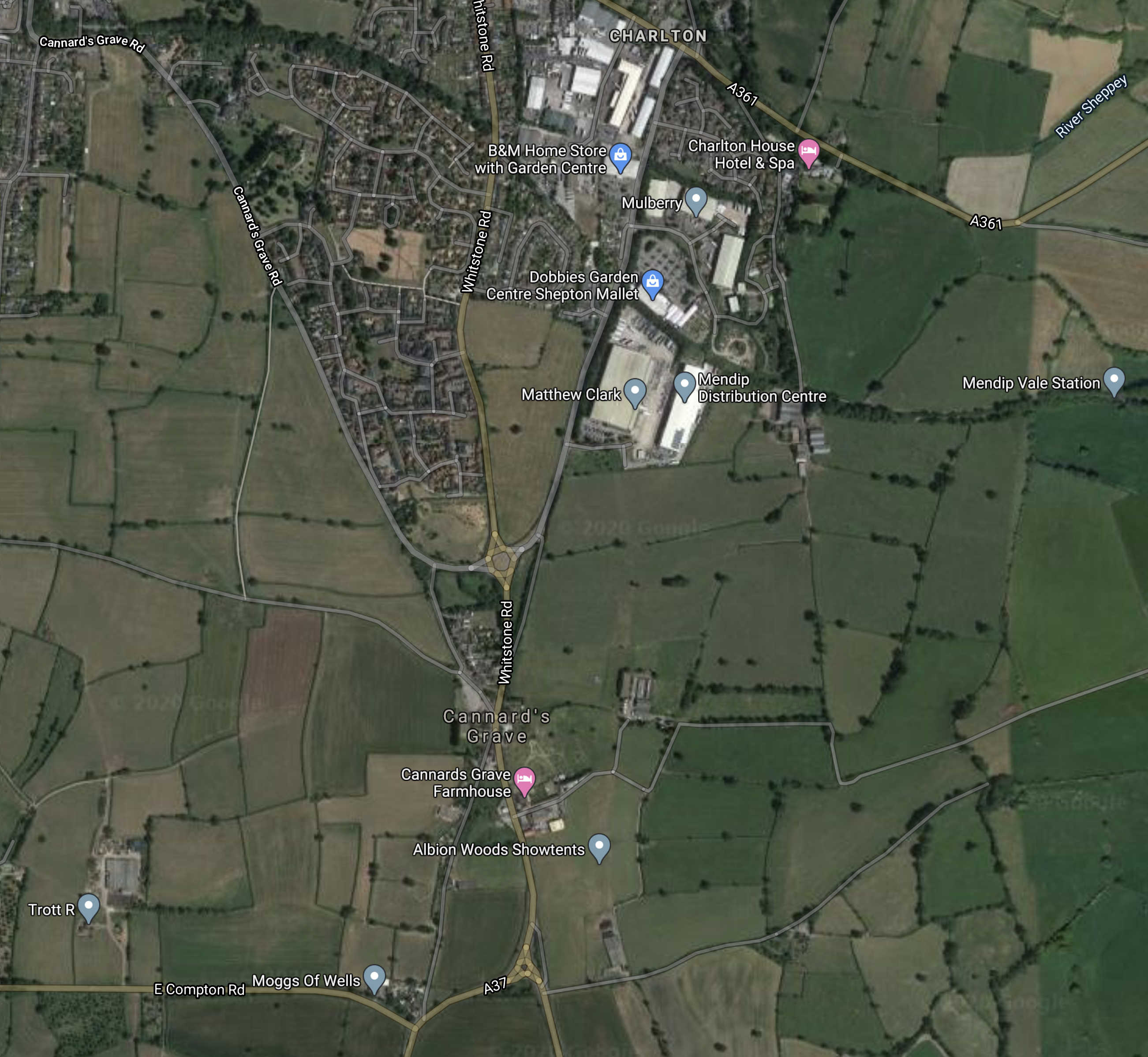
This Google Map shows the South-Eastern edge of Shepton Mallet.
Note.
- The scar of the disused railway passing East-West through the town.
- Mendip Vale station on the East Somerset Railway on the Eastern side of the map.
- The Cannard’s Grave area of the town, with what appears to be a new road system.
Would it be possible to extend the East Somerset Railway to a new Parkway station in the Cannard’s Grave area?
It certainly looks the most likely plan.
This map clipped from Wikipedia, shows the route of the railway.
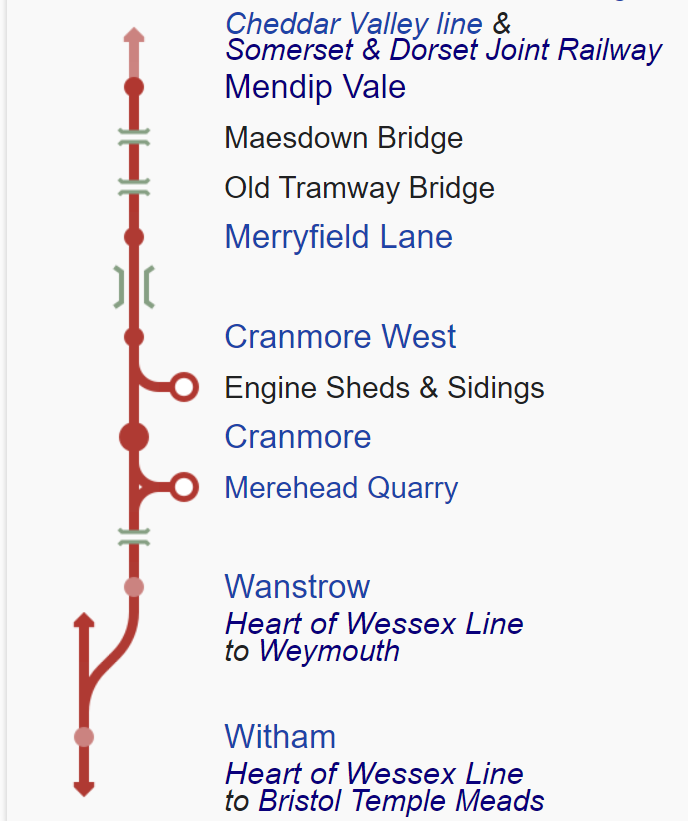
The railway may be only 2.5 miles long, but it does provide a connection for the important Merehead Quarry to the UK rail network.
The tracks to the Quarry and Shepton Mallet join up to the South West of the quarry before joining the Heart of Wessex Line, that connects Bristol Temple Meads and Weymouth stations via Bath Spa, Bradford-on-Avon, Trowbridge, Westbury, Frome. Castle Cary and Yeovil.
Passenger Train Services
This Google Map shows East Somerset Junction, where the branch line joins the Heart of Wessex Line.
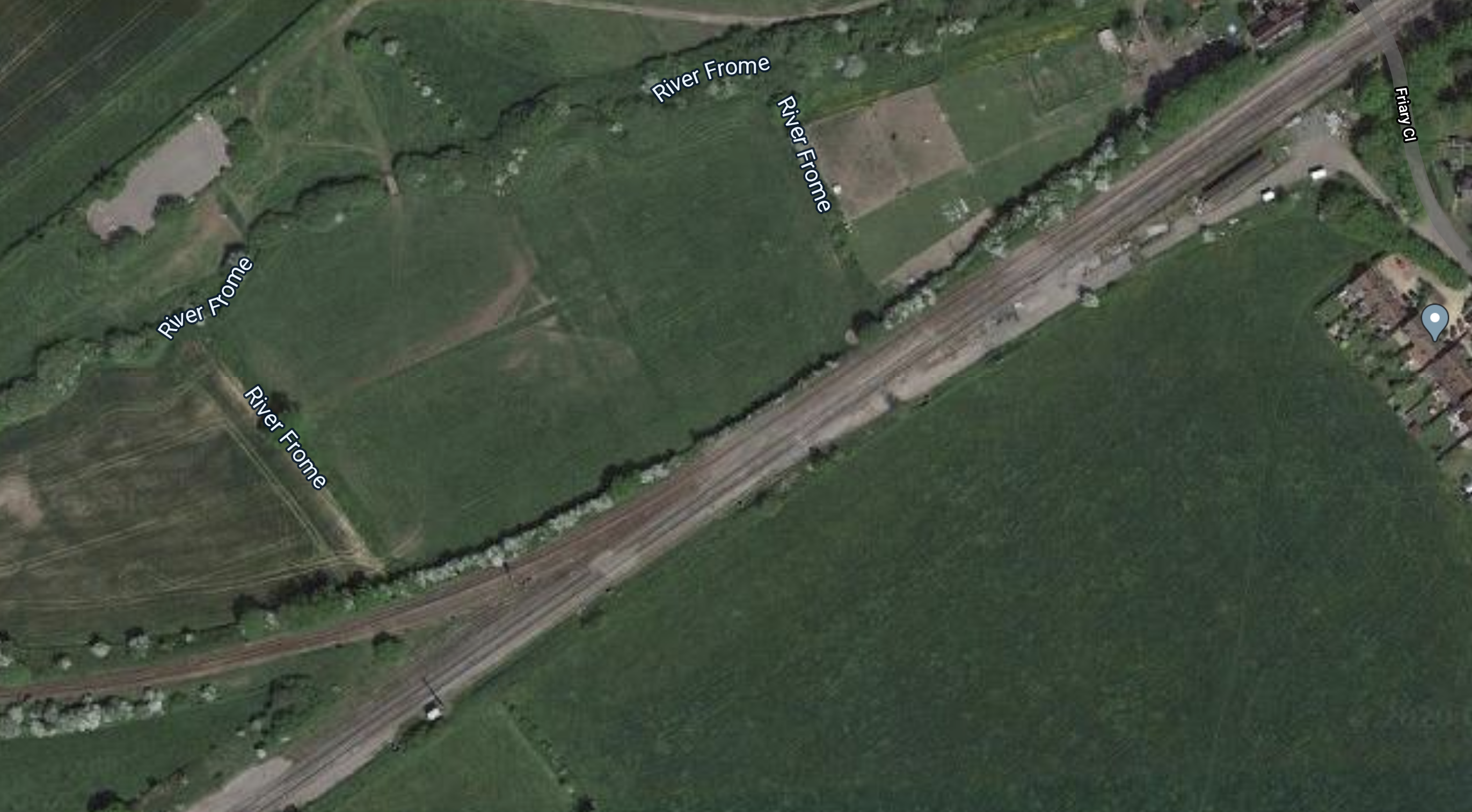
Note.
- Frome, Westbury, Bath Spa and Bristol Temple Meads are to the North East.
- The double-track railway going South-West is the Heart of Wessex Line to Castle Cary, Yeovil and Weymouth.
- The East Somerset Railway is the single-track joining from the West.
There is no direct access to and from the branch from the South-West. But then all of the quarry traffic needs to go to and from via the junction at Westbury.
In Westbury Station – 30th July 2020, I discussed the development of Westbury station.
This was my conclusion.
Could Westbury station develop into a zero-carbon rail transport hub for Wiltshire?
-
- It has an hourly train service between London Paddington and Exeter St. Davids.
- It has an hourly service between Bristol Temple Meads and Weymouth.
- There are hourly services to stations like Bath Spa, Bradford-on-Avon, Bristol Temple Meads, Chippenham, Dorchester, Frome, Swindon, Taunton, Trowbridge and Yeovil
It could be electrified to charge battery electric trains as they pass through.
Perhaps, an hourly service between Westbury and Shepton Mallet Parkway stations could be added to the services?
- I estimate that Westbury and Shepton Mallet Parkway stations are about 13.5 miles apart
- With an intermediate stop at Frome, I estimate that it would be a twenty minute journey.
- A shuttle would need just one train and could run a passenger-friendly clock-face timetable.
- A two-car diesel multiple unit would probably be good enough to open the service.
- The service could be fully-integrated with all the other services passing through Westbury.
It would also be a shuttle service, that could be run using a battery electric train charging at Westbury station.
Vivarail’s Pop-up Metro
The route could be ideal for Vivarail’s Pop-up Metro.
- It is 27 miles for a round trip.
- I’m sure space could be found for charging at either Shepton Mallet or Westbury.
- A two-car train would be large enough.
it could be an extension to the Transwilts local system.
Conclusion
I like this proposal.
- The only infrastructure required is the Park-and-Ride station at Shepton Mallet Parkway.
- Much of the route is currently used by heavy freight trains.
- I doubt that the East Somerset Railway will object.
- I’m sure, that a diesel multiple unit could be found for the shuttle.
- The passenger services will have good connections at Westbury station.
In a future zero-carbon world, it could be run by battery electric trains, charging at Westbury station.
Westbury Station – 30th July 2020
I went to Westbury station today and took these pictures.
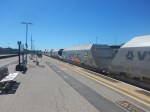
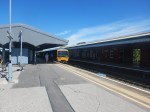


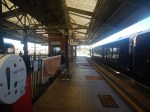
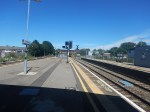
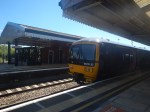
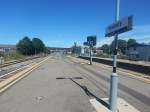
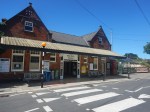
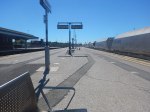
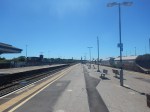
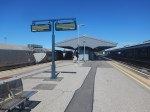
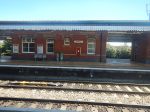

I found Westbury station to be a station in extremely good condition.
It also had a buffet, where I was able to purchase a delicious ice cream.
Passenger Services Through Westbury Station
I was at the station for about an hour and several trains passed through.
Great Western Railway services through the station include.
- One train per two hour (tp2h) – London Paddington and Exeter St. Davids – Stops
- One tp2h – London Paddington and Penzance – Passes through
- One tp2h – London Paddington and Plymouth – Passes through
- One train per hour (tph) – Cardiff Central and Portsmouth Harbour – Stops
- One tp2h – Great Malvern and Westbury
- One tp2h – Gloucester and Weymouth – Stops
- One tp2h – Swindon and Westbury
Train classes included Class 800 trains and Class 166 trains.
South Western Railway services through the station include.
- Five trains per day – Salisbury and Bristol Temple Meads – Stops
Train classes include Class 159 trains.
Battery Trains Through Westbury
Hitachi’s Class 800 train with a battery electric capability or Regional Battery Train, is described in this infographic from the company.

The proposed 90 km or 56 mile range could even be sufficient take a train between Westbury and Bristol Temple Meads stations on a return trip.
Many of the trains through Westbury go to the same stations.
Distances are as follows.
- Bristol Temple Meads – 28 miles
- Newbury – 42 miles
- Salisbury – 24 miles
- Swindon – 32.5 miles
- Taunton – 47 miles
It looks like all of these places should be in range of an electric train with a battery capability, providing there is a charging facility at the other end.
An Electrification Island At Westbury Station
I have been advocating an island of electrification around Westbury station for some time and feel about a dozen miles of electrification through the station would be sufficient for Class 800 trains with a battery capability to bridge the gap.
- At Newbury, trains would access the current electrification into London Paddington.
- Between Exeter and Taunton, the rail route runs alongside the M5, so why not electrify this stretch, as the wires will not be so noticeable?
Looking at Westbury, to my untrained eye, it would appear that a short section of electrification around the station, would not be the most challenging of projects.
I believe that discontinuous electrification between Newbury and Exeter would be possible and could gradually be extended across Devon and Cornwall.
It should also be noted that one of Hitachi’s Regional Battery Trains has a range of 56 miles, so that these places from Westbury could be an return trip on batteries, with a well-driven train with excellent energy management.
- Bath Spa – 17 miles
- Bradford-on-Avon – 7 miles
- Bristol Temple Meads – 28 miles
- Chippenham – 16 miles
- Frome – 6 miles
- Salisbury – 24 miles
- Trowbridge – 4 miles
- Warminster – 9 miles
Obviously, the number of stops and the terrain will play a part.
Freight Might Drive Full Electrification Through Westbury Station
As the pictures show, there are heavy freight trains going through the area, which bring long and weighty loads of stone from the Mendips to London.
- There are regularly two or three stone trains in an average hour of the day.
- Like in the picture, I suspect they are usually hauled by a noisy, smelly, polluting and carbon-dioxide emitting Class 66 Locomotive. Not all of these, are as clean and well-maintained, as the one in the picture.
- Some trains start at Merehead Quarry, which is about fifteen miles from Westbury station.
I believe that we must decarbonise freight trains.
But freight and electric haulage is not a simple subject.
- I once had extensive talks with a Senior Crane Driver at the Port of Felixstowe during an Ipswich Town Away match. Ports don’t like overhead wires, as containers do get dropped and fall off rail wagons.
- Suppose a historic line without electrification, like the Settle and Carlisle has a serious land-slip, which it did a couple of years ago. How do you haul in the materials for repair?
- Because freight can be of a random and unpredictable nature, to electrify freight, you probably need to electrify the whole rail network.
For these and other reasons, we need independently-powered freight locomotives and I feel that a new freight locomotive will develop, that will be needed by the rail industry all over the world.
There are several solutions.
Biodiesel
Biodiesel is the simplest solution and would mean that the current diesel locomotives could be used.
In Grant Shapps Announcement On Friday, I talked about Government support for an industrial process, that has been developed by Oxford University and their spin-off company; Velocys, from the the Fischer-Tropsch Process, which can produce, the following fuels from household and industrial waste.
- Aviation biofuel.
- Biodiesel.
A plant to process 500,000 tonnes per year of Lincolnshire finest waste is now being built at Immingham to create 50,000,000 litres of fuel, by Altalto, which is a partnership between Velocys, British Airways and Shell.
If nothing else, waste-to-fuel is the interim solution to the decarbonisation of tricky sectors like heavy rail freight, rail construction, large diesel-powered machines, ships or long-distance aviation.
This fuel could be ideal to haul the heavy stone trains from the Mendips.
Hydrogen
I did think, it would be hydrogen powered, but I’m not so sure now, as hydrogen trains and locomotives seem to have a slow development cycle.
Although, there is one factor, that might influence the use of hydrogen as a fuel, which I wrote about in Thirsty High-Rollers … Mining’s Heavy Haulers Prime Candidates For Hydrogen Conversion.
Mining and quarrying don’t have a good green image, but converting mines and quarries to hydrogen power, would surely have operational and good public relational advantages.
It would also ensure a plentiful and convenient supply of hydrogen, for any hydrogen-powered locomotives.
Hydrogen-powered locomotives, with their electric transmissions, would probably be able to use electrification for traction power, so they would put pressure on the Government to electrify between Westbury and Newbury stations, so that there was a fully-electrified route between the Mendips and London.
Rolls-Royce’s Staggering Development
Staggering is not my word, but that of Paul Stein, who is Rolls-Royce’s Chief Technology Officer.
He used the word in a press release, which I discuss in Our Sustainability Journey.
To electrify aviation, Rolls-Royce has developed a 2.5 MW generator, based on a small gas-turbine engine, which Paul Stein describes like this.
Amongst the many great achievements from E-Fan X has been the generator – about the same size as a beer keg – but producing a staggering 2.5 MW. That’s enough power to supply 2,500 homes and fully represents the pioneering spirit on this project.
This generator is designed for flight and the data sheet for the gas-turbine engine is available on the Internet.
- It has a weight of under a couple of tonnes compared to the thirteen tonnes of the diesel engine and generator in a Class 68 locomotive.
- It is also more powerful than the diesel.
- It looks to be as frugal, if not more so!
- Rolls-Royce haven’t said if this gas-turbine can run on aviation biofuel, but as many of Rolls-Royce’s large engines can, I would be very surprised if it couldn’t!
Rolls-Royce’s German subsidiary is a large producer of rail and maritime diesel engines, so the company has the expertise to customise the generator for rail applications.
I can see this generator ending up in a high-powered heavy independently-powered electric locomotive for hauling stone and inter-modal container trains.
As with hydrogen-powered locomotives, this new breed of gas-turbine locomotive with its electric transmission, will be able to use electrification, where it exists.
So would locomotive developments drive the electrification through Westbury and especially between Westbury and Newbury?
I would rate is likely, that in the future, increasingly rail locomotives will have sophisticated electric transmissions, between their prime motive power of diesel, hydrogen, gas-turbine or whatever and their traction system. All of these locomotives will have pantographs and/or third-rail shoes to access electrification, where it exists.
These locomotives will surely add to pressure to electrify between Westbury and Newbury.
Biodiesel is surely the interim freight solution, if one is needed.
Future Zero-Carbon Passenger Services
Passenger services through Westbury can be divided into three groups.
Great Western Railway’s Services Between London Paddington And Devon And Cornwall
From Beeching Reversal projects put forward over the last few months, it looks like these services will increase and stop at several new and refurbished stations.
I can see discontinuous electrification being used to create a series of electrification islands to allow Class 800 trains, with a battery capability reach the Far South West of Cornwall.
Electrification islands could be at places like
- Around Westbury station.
- Between Taunton and Exeter St. Davids stations alongside the M5.
- Between Plymouth station and the Royal Albert bridge.
- Around Bodmin Parkway station
- Around Truro station
- At Newquay station
- At Penzance station
Obviously, the number and type of the various installations will depend on the methods used and the engineering required.
I do believe that with Hitachi trains, that meet their specification, that trains will be able to travel between Paddington and Penzance without touching a drop of diesel.
Great Western Railway’s Cardiff Central And Portsmouth Harbour Service
The service can be split into the following legs.
- Cardiff Central and Filton Junction – 33 miles – Electrified
- Filton Junction and Bristol Temple Meads – 5 miles – Not Electrified
- Bristol Temple Meads and Westbury – 28 miles – Not Electrified
- Westbury and Salisbury – 24 miles – Not Electrified
- Salisbury and Southampton Central – 15 miles – Not Electrified
- Southampton Central and Portsmouth Harbour – 26 miles – Electrified
It would appear that a train with the performance and range on batteries of Hitachi’s Regional Battery Train should be able to handle the route, provided the following conditions are met.
- It can leave the Great Western Main Line at Filton Junction with a full battery.
- It can leave the electrification at Westbury station with a full battery.
- It can leave Southampton Central station with a full battery.
- Third-rail shoes are fitted for working between Southampton Central and Portsmouth Harbour stations.
Recharging batteries at Bristol Temple Meads and Salisbury stations, although probably welcome, are not necessary.
I can envisage Hitachi Class 800 and Class 385 trains being able to fulfil this role, along with Bombardier Electrostars and Aventras and Siemens Desiros.
As Great Western Railway have forty-five Class 387 trains, conversion of some of these to battery electric operation must be a possibility.
Great Western Railway’s Gloucester and Weymouth Service
The service can be split into the following legs.
- Gloucester and Bristol Temple Meads – 39 miles – Not Electrified
- Bristol Temple Meads and Westbury – 28 miles – Not Electrifield
- Westbury and Dorchester Junction – 52 miles – Not Electrified
- Dorchester Junction and Weymouth – 4 miles – Electrified
It would appear that a train with the performance and range on batteries of Hitachi’s Regional Battery Train should be able to handle the route, provided the following conditions are met.
- It can leave Gloucester station with a full battery.
- It can leave Bristol Temple Meads with a full battery.
- It can leave Westbury with a full battery.
- It can leave the South Western Main Line at Dorchester Junction with a full battery.
It would be a tight trip for a battery electric train and I suspect, that there would be some extra electrification between Westbury and Dorchester Junction or perhaps charging facilities at Frome or Yeovil Pen Mill stations.
The alternative would be to fit larger batteries on the train.
As to the train to be used, a Class 387 train with a battery capability would surely be ideal.
Great Western Railway’s Swindon and Westbury Service
The service can be split into the following legs.
- Swindon and Chippenham – 16 miles – Electrified
- Chippenham and Westbury- 16 miles – Not Electrified
It would appear that a train with the performance and range on batteries of Hitachi’s Regional Battery Train should be able to handle the route, provided the following conditions are met.
- It can leave Chippenham station with a full battery.
This would have sufficient charge to do the thirty-two mile round trip from Chippenham to Westbury and back.
As to the train to be used, a Class 387 train with a battery capability would surely be ideal.
South Western Railway’s Bristol Temple Meads and Salisbury Service
The service can be split into the following legs.
- Bristol Temple Meads and Westbury – 28 miles – Not Electrified
- Westbury and Salisbury- 24 miles – Not Electrified
t would appear that a train with the performance and range on batteries of Hitachi’s Regional Battery Train should be able to handle the route, provided the following conditions are met.
- It can leave Bristol Temple Meads station with a full battery.
- It can leave Westbury with a full battery.
- It can leave Salisbury with a full battery.
But, I do wonder, if with a slightly larger battery, a well-driven train could work the route with only charging the battery at Westbury station?
Conclusion
Could Westbury station develop into a zero-carbon rail transport hub for Wiltshire?
- It has an hourly train service between London Paddington and Exeter St. Davids.
- It has an hourly service between Bristol Temple Meads and Weymouth.
- There are hourly services to stations like Bath Spa, Bradford-on-Avon, Bristol Temple Meads, Chippenham, Dorchester, Frome, Swindon, Taunton, Trowbridge and Yeovil
It could be electrified to charge battery electric trains as they pass through.
Bath Spa Station – 28th July 2020
I took these pictures as I twice passed through Bath Spa station.

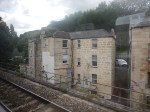
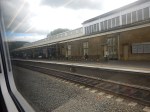

These are my thoughts.
Electrification Gantries On The Platforms
As somebody, whose eyesight is on the wane, I am not a lover of electrification, where the gantries are bolted to the platforms. These pictures show some installations of this type at Crouch Hill station.
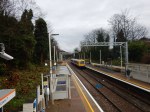
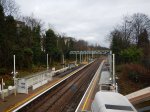
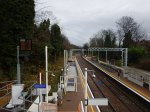
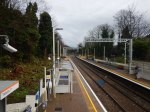
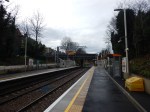
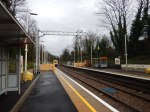
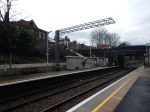
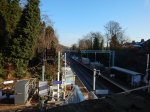
Would electrification gantries like these, be appropriate in Bath Spa station?
Could Lightweight Electrification Gantries Be Placed Between The Tracks?
These pictures show the wide gap between the two tracks in Bath Spa station.
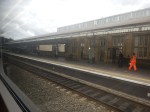
Could double-track lightweight structures, based on a design like this be placed between the tracks?
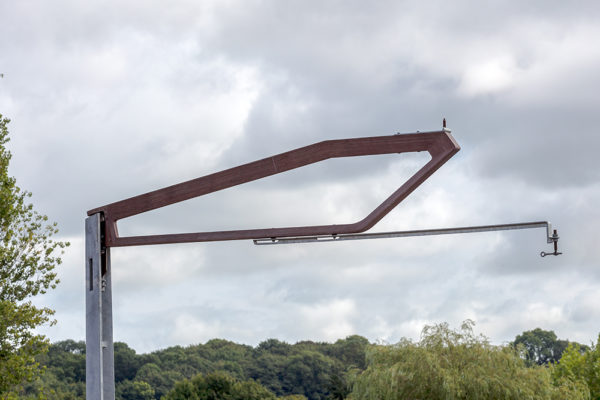
These structures are made out of laminated wood and are surely a possibility.
A Makeover For Bath Spa Station
If you look at much of the woodwork and paint in the fabric of the station, it appears tired and in need of refurbishment.
Whether the station is electrified or not, the station will need a high-class makeover.
Services Through Bath Spa Station
Three train companies run services through Bath Spa station.
- CrossCountry which only operates diesel trains.
- Great Western Railway operates Class 800 electro-diesel trains and some assorted diesel trains.
- South Western Railway only operates Class 159 diesel trains.
There are also some freight services hauled by diesel locomotives.
Trains leave Bath Spa station using one of three routes via either.
- Bristol Temple Meads station, which is 11.5 miles away without electrification.
- Chippenham station, which is where the electrification to London starts and is 13 miles away.
- Westbury station, which is on the Reading and Taunton Line and 17 miles away without electrification.
Most trains seem to go via Bristol Temple Meads station.
- The distance between Bristol Temple Meads and Chippenham stations are 24.5 miles.
- The distance between Bristol Temple Meads and Westbury stations are 28.5 miles.
Neither distance is that long.
An Alternative To Full Electrification
When I look at the distances between Bristol Temple Meads, Chippenham and Westbury stations, they tell me that they are within the range of Hitachi’s Class 800 train with a battery electric capability or Regional Battery Train, which is described in this infographic from the company.
The proposed 90 km or 56 mile range would even be sufficient take a train between Chippenham and Bristol Temple Meads stations on a return trip.
Notes for each station follow.
Bristol Temple Meads
Charging facilities would be needed.
Destinations in battery range would include.
- Bristol Parkway – 6 miles
- Cardiff Central – 5 miles to the electrified Great Western Main Line.
- Cheltenham Spa – 41 miles
- Gloucester – 39 miles
- Taunton – 45 miles
- Weston-super-Mare – 19 miles
Note.
- Return trips to Bristol Parkway and Western-super-Mare would be possible.
- The other destinations will need charging facilities.
Bristol Temple Meads station could become a major hub for battery trains.
All local services and all passing longer distance services could be trains with a battery capability.
I write more about Britol Temnple Meads station as a battery train hub in Bristol Temple Meads Station – 28th July 2020.
Chippenham
A train would leave Chippenham station with a full battery after charging on the fully-electrified route from London.
Chippenham and Weston-super-Mare would be in battery range with a charging facility at Weston-super-Mare station.
It should be noted that every extra mile of electrification past Chippenham, can be added to the distance electric trains with a battery capability can reach.
Westbury
Charging facilities would be needed.
Destinations in battery range would include.
- Salisbury – 24 miles.
- Southampton – 49 miles to the electrified South Western Main Line, at Southampton Central station.
- Weymouth – 53 miles to the electrified South Western Main Line at Dorchester Junction.
Note.
- A return trip to Salisbury would be possible.
- Trains would need to have the capability to access 750 VDC third-rail electrification.
- A few extra miles of electrification may make operation South from Westbury station easier, more reliable and allow more destinations to be included.
Westbury station could be a major hub for battery trains.
This Google Map shows Westbury station and the lines around it.
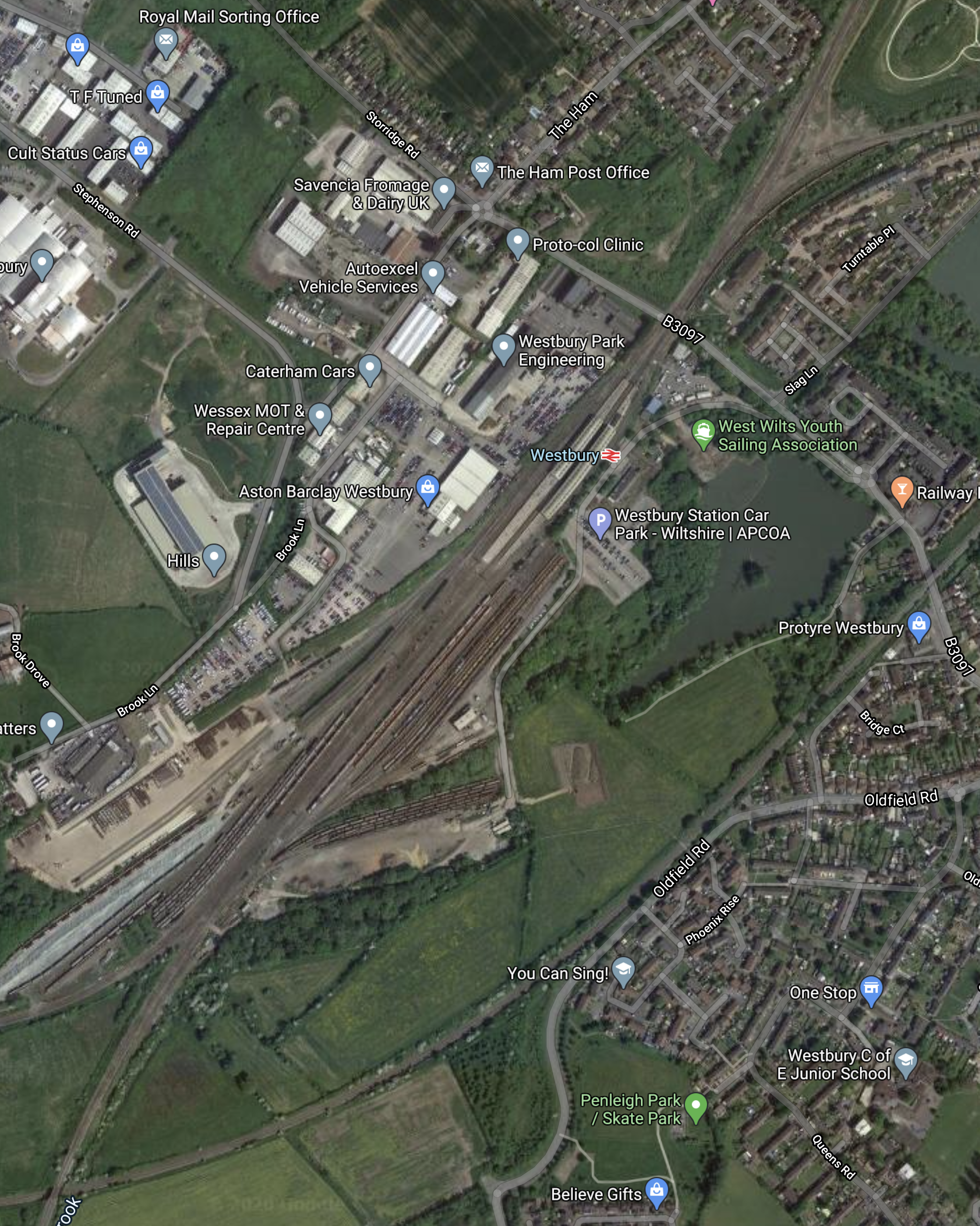
I would probably electrify a few miles either side of Westbury, so that passing trains could be in contact with the overhead wires for perhaps five to ten minutes and take a good long drink.
- Electrification could be either 25 KVAC overhead or 750 VDC overhead.
- Newbury, where the electrification to London starts is 42 miles away and trains can pick it up at speed.
- Taunton is 47 miles away and could be electrified to Exeter St. Davids.
Great Western Railway could run all their services between London Paddington and the South-West using Class 800 trains with a battery capability.
Conclusion
The prolitical, heritage and engineering problems of electrifying through Bath Spa station can be voided, by electrification and charging facilities at stations like Bristol Temple Meads, Taunton, Westbury and Weston-super-Mare.
The Newly-Decorated White Horse Room In Westbury Is Open For Bookings
The title of this post, is the same as that of this article on the Wiltshire Gazette And Herald.
This is the introductory paragraphs.
A disused room at Westbury Railway Station has been transformed into a office area and community space.
The community rail partnership, TransWilts, has announced the completion of work to refurbish and redecorate the Westbury White Horse room.
It is an interesting concept and I’ll be interested to see how it all works out.
Reinstatement Of Rail Access To Devizes Via A New Station At Lydeway
This is one of the successful bids in the First Round of the Restoring Your Railway Fund.
Devizes is a growing town without a railway station.
The Wikipedia entry for the former Devizes station, says this about providing a new station.
Although Devizes was denied a railway station due to its stagnant population, as of 2017 the population had grown to 31,000, which could warrant its re-establishment. However, much of the vital land agreements and rights of way were sold off reducing the chances of reinstatement. An alternative plan has been proposed: to build Devizes Parkway Station at Clock Inn Park, three miles east of Devizes on the Reading–Taunton line, near to the site of the original junction for the branch at Etchilhampton.
It appears to have been taken from Baldrick’s book of cunning plans, where you create a virtual branch line using the A342, travellers’ personal transport and a shuttle bus service.
This Google Map shows the position of the station site at Clock Inn Park, with relation to Devizes.
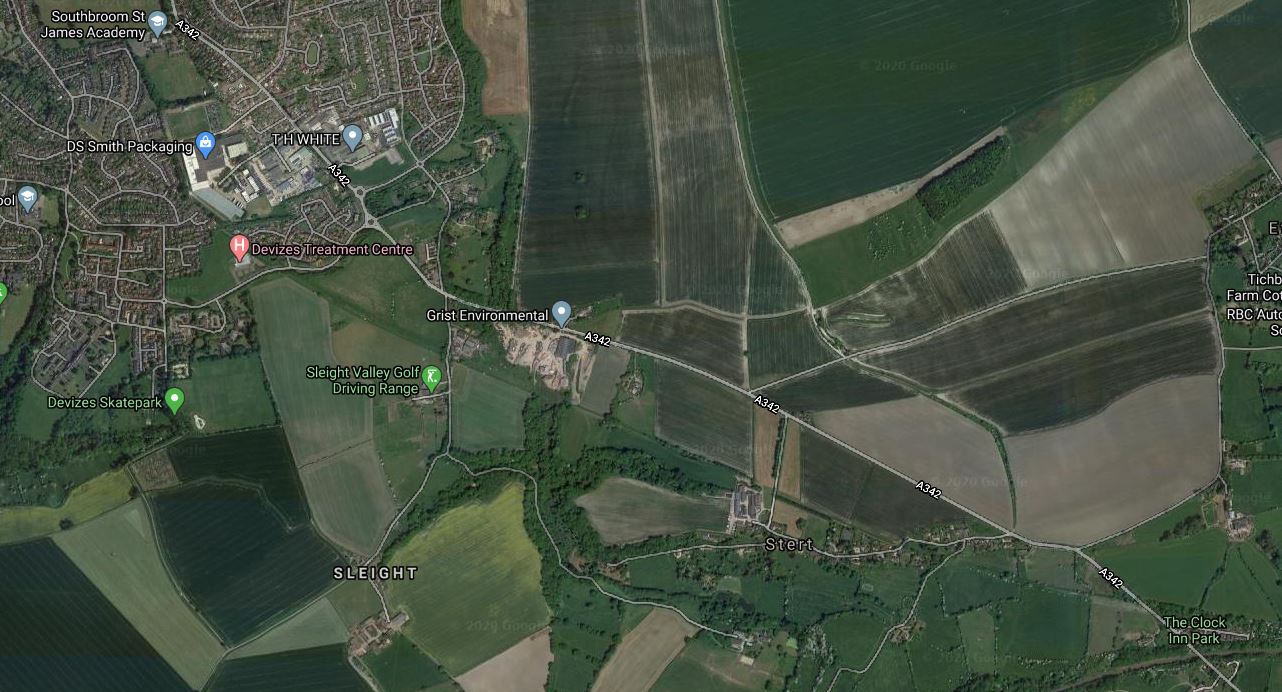
Note.
- Devizes in the North-West corner of the map.
- Clock Inn Park in the South-East corner of the map.
- The A342 road connecting the town with the station site.
This more detailed Google Map shows the station site.
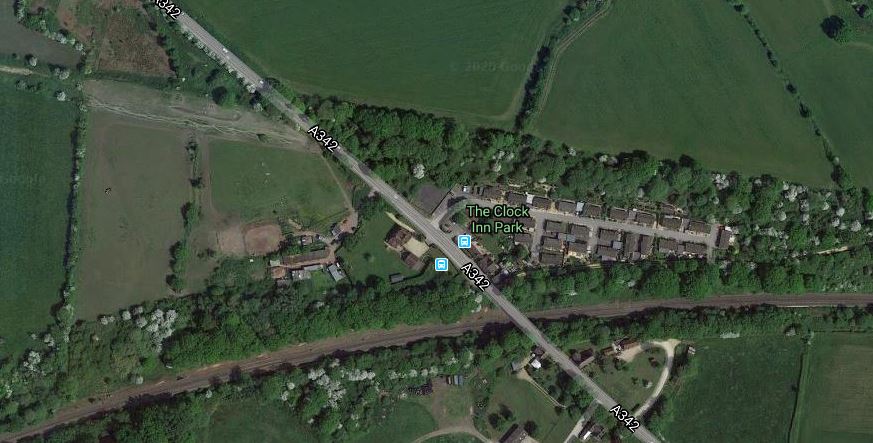
Note.
- The A342 going diagonally across the map.
- The Reading-Taunton Line going across the map.
- There’s even bus stops by the station site.
As the site could be fairly generous, I think a station with adequate parking could be created.
The Train Service
The train service is currently two hourly on this route between Paddington and Exeter St. David’s stations.
Perhaps, with an extra stop and more passengers, the service could be increased to hourly.
Another alternative would be to run battery-electric trains on the route between Paddington and Westbury, that called at all stations West of Newbury.
- Trains would use the electrification between Paddington and Newbury and would leave Newbury with a full battery.
- This service would be an extension of the current hourly service to Bedwyn station.
- Between Newbury and Westbury stations is forty-two miles of unelectrified lines, which should be possible with a battery electric version of the Class 802 train.
- Charging facilities would be needed at Westbury station.
- Between Paddington and Westbury stations takes one hour and thirteen minutes.
- Hitachi are quoting a ten minute charge time for one of their battery-electric trains.
- The trains would turn at Westbury station, which has refreshments and toilets for the crew.
- No extra electrification would be needed to run electric services to Westbury.
I think it could be feasible.
The Concept Of An Electrification Island
Westbury could be what I would call an electrification island.
Consider
- The Reading-Taunton Line passes through the station.
- The Wessex Main Line both passes through the station.
- The town of Westbury has a population of around 17,000 and some substantial heavy industries, so I suspect that it has a robust electricity supply.
- Taunton is 47 miles away.
- Newbury is 42 miles away.
- Weymouth is 59 miles away.
- Bristol Temple Meads is 40 miles away.
- Swindon is 32 miles away.
- Hitachi are claiming a range of between 55 and 65 miles for a battery-electric train.
Suppose the two routes through the station and perhaps for up to ten miles away from the town, were to be electrified.
- A battery-electric train turning back at Westbury would pan-up in the station and charge the battery. Leaving the station, the driver would leave the pantograph up for acceleration and then make sure pan-down was performed before the end of the electrification.
- A through battery-electric express between Paddington and Exeter would pan-up when under the electrification and pan down before it left the electrification.
- It might be prudent that all passing expresses stopped in Westbury station, to make sure, trains didn’t stop with a flat battery in the middle of nowhere, until procedures were seen to be totally reliable.
- A battery-electric train to and from Weymouth would probably need to run for about 45 miles between the electrification island at Westbury and the third-rail electrification at Dorchester Junction.
I believe that a well-designed electrification island at Westbury coupled with perhaps electrification between Exeter and Taunton, would enable battery-electric trains to work the following routes.
- Paddington and Exeter
- Westbury and Bristol
- Westbury and Weymouth
- Westbury and Swubdon
I suspect that Transwilts services could also be run by battery-electric trains, as they could charge at Westbury, Swindon and other electrified stations.
Conclusion
Devizes Parkway station would appear to be a simple way to provide a new station, at a town that has grown substantially since the days of Dr. Beeching.
Did Dr. Beeching and the Government of the day, have a view on population growth in the UK? They certainly didn’t take it into the account in their rail closure program. Or if they did, they got it spectacularly wrong!
 The Anonymous Widower