Ulstein Designs Hydrogen Powered Wind Turbine Installation Vessel
The title of this post, is the same as that of this article on 4c Offshore.
This is the introductory paragraphs.
Ulstein has revealed its second hydrogen hybrid design for the offshore wind industry, the ULSTEIN J102 zero emission wind turbine installation vessel (WTIV). The shipbuilders claim the vessel can operate 75% of the time in zero emission mode. Using readily available technology, the additional cost is limited to less than 5% of the total CAPEX.
Most new jack-up designs are featuring a battery hybrid system in addition to diesel gen sets, with a future option for hydrogen powered fuel cell system. Ulstein stated that the down side of a high-power battery energy storage system (BESS) is its heavy weight and cost.
The article shows how hydrogen could be the power source for large specialist equipment.
Ulstein are a Norwegian company.
A First Ride On A Class 710 Train Between Upminster And Romford
This morning I went to Upminster and took the Class 710 train to Romford and back.
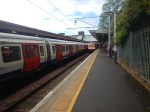
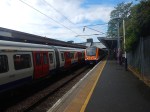
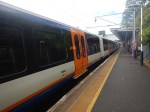

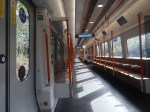
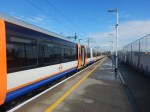
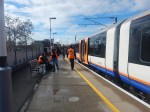
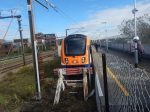


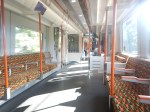
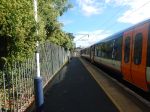

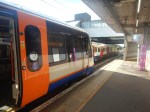
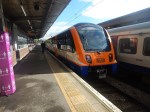

All went well and what a difference from yesterday, which I wrote about in A Last Ride On A Class 315 Train Between Upminster And Romford?
These are my thoughts.
Capacity Improvement
These pictures show the interiors of the Class 710 train and the Class 315 train.
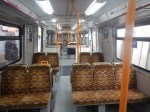

It looks like many more passengers can be squeezed into the Class 710 train, than the Class 315 train.
According to Wikipedia the Class 710 train can hold 189 seated and 489 standing passengers, whilst the Class 315 train has 318 seats.
Ride Improvement
I travelled along the route with a Transport for London engineer, who worked on the Crossrail trains.
We both felt the ride was a large improvement and we both felt that it Network Rail worked a bit of magic on the track, it would be a very good train service.
Could Four Trains Per Hour Be Possible?
My travelling companion had worked on the Docklands Light Railway, and we both felt that with a degree of automation, an increased frequency would be possible.
Consider.
- There is only one train on the line at any one time.
- No other trains use the line.
- The route is under 3.5 miles long.
- The acceleration and deceleration of the new trains is superior to those of the Class 315 trains.
- Do the Class 710 trains employ regenerative braking to battery technology?
- The current operating speed is just 30 mph.
- I’m sure Network Rail could improve the operating speed.
- My travelling companion told me, that Crossrail had successfully tested the automated auto-reverse feature on the Class 345 trains
All these points convince me, that, track improvements and simple automation, much less sophisticated, than that of the Victoria Line or the Docklands Light Railway, could run the service at a frequency of four trains per hour (tph).
There is one problem though.
This article on Time 107.5, is entitled New Train To Begin Running Between Romford And Upminster.
This is an extract.
From today, the new Overground train which has changes to certain features, will be implemented.
The key changes include a different colour at the front which has changed from yellow to orange.
Different LED lights have also been fitted to the train.
The new trains are also quieter so may sound different to the older trains.
As a result, Network Rail and Transport for London are reminding pedestrians using level crossings along the route to stay safe.
Network Rail and Transport for London seem to be worried about pedestrians on the level crossings.
I would think, it prudent, that before line speeds and the frequency of the service are increased, there should be a thorough period of testing to see how pedestrians cope with the new trains, at the level crossings.
What methods of automation could be used?
Borrow From Dear Old Vicky
The Victoria Line (aka Dear Old Vicky!) opened in 1968 and runs using a fully-automated system, at frequencies of up to 36 tph.
Under Service And Rolling Stock, in the Wikipedia entry for the Victoria Line, there is this description of the original automation system.
On opening, the line was equipped with a fixed-block Automatic Train Operation system (ATO). The train operator closed the train doors and pressed a pair of “start” buttons and, if the way ahead was clear, the ATO drives the train at a safe speed to the next station. At any point, the driver could switch to manual control if the ATO failed. The system, which operated until 2012, made the Victoria line the world’s first full-scale automatic railway.
The Victoria line runs faster trains than other Underground lines because it has fewer stops, ATO running and modern design. Train speeds can reach up to 50 miles per hour (80 km/h).
Note.
- The original ATO system worked for over forty years.
- The method of operation seemed to be very safe,
- But most remarkably, the electronics that controlled the trains, were 1960s technology and contained a lot of thermionic valves and relays
What would 50 mph running do for timings between Romford and Upminster?
By training I am a Control Engineer, and although, I’ve never worked on large-scale automation systems, I have worked with lots of people who have and firmly believe that a simple system based on Dear Old Vicky’s original design would work.
What sort of times could be achieved between Romford and Upminster?
- The route can be considered to be two legs; Romford and Emerson Park and Emerson Park and Upminster, both of which are about 1.75 miles long.
- The fastest way in a train between too stations, is to accelerate to cruising speed, cruise at that speed and then time the deceleration, so you stop neatly in the station.
- The Class 710 trains probably accelerate and decelerate at around 1 m/sec/sec.
- The acceleration and deceleration section of each leg will take 22.2 seconds and during that time the train will travel 0.15 miles.
- So that means the train will cruise at 50 mph for 1.45 miles, which will take 104 seconds.
- The two legs of the journey will take around 150 second or 2.5 minutes.
The time for a round trip from Romford to Upminster can now be calculated,
- Four legs between station 4 x 2.5 = 10 mins
- Two stops Emerson Park 2 x 1 mins = 2 mins
- One stop at Romford 2 mins = 2 mins
- One stop at Upminster 2 mins = 2 mins
Note.
- This is a total of 16 minutes
- The longer stops at Romford and Upminster are needed for the driver to change ends.
- I have repeated the calculations for a 60 mph cruise and it saves just 40 seconds.
But I do feel that improving the method of operation could allow four tph.
The Driver Could Control The Train From One End
Consider.
- Each cab could have a video screen showing the view from the other cab.
- There could also be video screens on the platforms giving detailed views of the train in a station, as there are on many platforms now!
Would these and perhaps extra automation allow the driver to control the train from one cab, as it shuttled back and forth?
I suspect it would be cab at the Upminster end, as the platform is longer at Romford.
I believe that it would be possible and should allow stops of a minute at the two termini, as the driver wouldn’t be changing ends.
One minute stops would reduce the round-trip time to fourteen minutes and allow four tph.
Full Automation With The Driver In Control
The Docklands Light Railway is fully automated, so why not use a similar system on the Romford and Upminster Line?
But instead of having the system controlled by an operator in a remote signalling centre, the driver on the single train on the route is in control of it all.
The automation would enable fast stops and the driver would not have to change ends.
This would mean that four tph would be able to run at all times.
The System Would Self-Regulate
With public transport, things do go wrong.
Supposing someone turned up in a wheel-chair and it took five minutes to load them onto the train, so it left late.
This would mean that the train would be running late for the rest of the day, unless it was decided to wait for a few minutes, so it had the time of the following service.
After the wait, all trains would be on time.
Put Two Drivers On The Train
This would also be possible.
The train would have a driver in each cab.
- The driver in the cab at the Romford end of the train would drive the train to Romford.
- The driver in the cab at the Upminster end of the train would drive the train to Upminster.
- At each terminus, they would swap over control, just as the two pilots do in an airliner.
There would probably need to be a simple interlock, so that only one driver could drive the train at the same time.
This should give the required four tph, as fast stops could be performed at all stations.
Using two drivers could be the ideal way to test out four tph and see whether it attracted more passengers.
Conclusion
The Romford and Upminster route has been markedly improved with the new Class 710 train.
I believe, that it is now possible to run four tph on this route, with some moderate extra expenditure or using two drivers.
Hitachi Targets Export Opportunities From Newton Aycliffe
The title of this post, is the same as that of this article on Rail Magazine.
This is the introductory paragraph.
Very High Speed Trains (VHSTs) built in Britain could be exported to Europe and even further afield from Hitachi’s Newton Aycliffe factory.
The article would appear to confirm, that the AT-300 family of trains is now a family with a very wide reach.
Trains in the family include.
Very High Speed Trains (VHST)
The article states that VHST trains will form part of the AT-300 family.
The big order to be handed out in the UK, is for 54 Classic-Compatible trains for High Speed Two.
The Classic-Compatible trains are described in this section in Wikipedia, by this sentence.
The classic-compatible trains, capable of high speed but built to a British loading gauge, permitting them to leave the high speed track to join conventional routes such as the West Coast Main Line, Midland Main Line and East Coast Main Line. Such trains would allow running of HS2 services to the north of England and Scotland, although these non-tilting trains would run slower than existing tilting trains on conventional track. HS2 Ltd has stated that, because these trains must be specifically designed for the British network and cannot be bought “off-the-shelf”, these conventional trains were expected to be around 50% more expensive, costing around £40 million per train rather than £27 million for the captive stock.
The trains will have the same characteristics as the full-size High Speed Two trains.
- Maximum speed of 225 mph.
- Cruising speed of 205 mph on High Speed Two.
- Length of 200 metres.
- Ability to work in pairs.
- A passenger capacity around 500-600 passengers.
A seven-car Class 807 train with twenty-six metre long cars would appear to be a partial match and tick all the boxes, except for the following.
- The train’s maximum and cruising speeds are well below what is needed.
- The train is only 182 metres long.
- The train has a passenger capacity of 453.
Would a train with eight twenty-five metre long cars be a better fit?
- The train length would be 200 metres.
- Twenty-five metre cars would not cause a problem!
- I estimate the passenger capacity would be 498 seats.
The trains or members of the same family have already shown.
- They can run on the East Coast, Great Western, Midland and West Coast Main Lines.
- They can run on High Speed One.
- They can split and join automatically.
- When needed they can run on local lines.
If I was Avanti West Coast’s train-Czar, I would be seriously interested in a Classic-Compatible High Speed Two train, that was very similar to one I already had in service. Provided, of course it did what it promised in the specification.
By adjusting the car-length and the number of cars, the Classic-Compatible High Speed Two train can probably made to fit any operators needs.
High Speed Trains (HST)
There are several fleets of these in service.
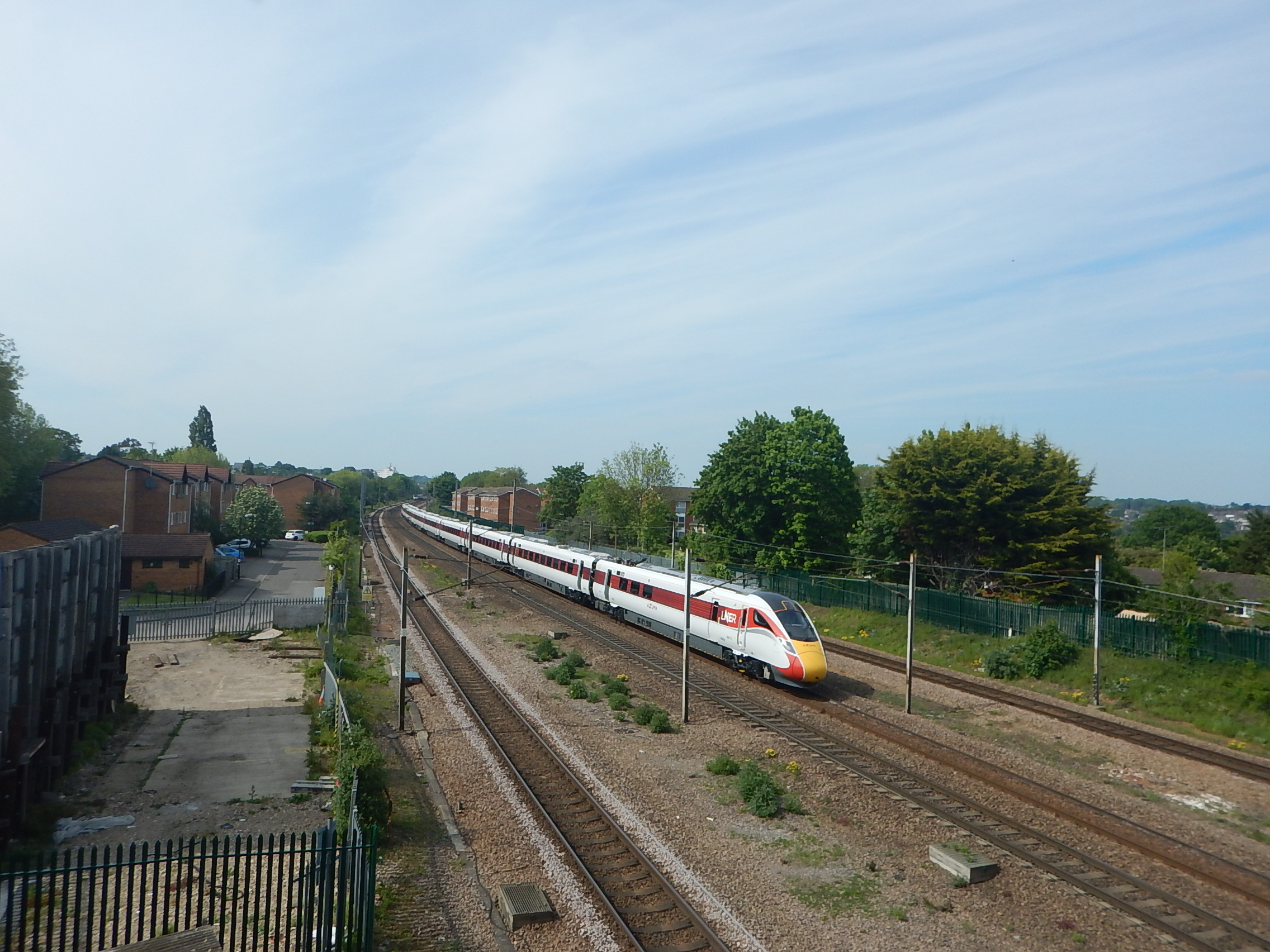
The picture shows one of LNER’s Hitachi trains going through Oakleigh Park station.
It would appear that the trains can be configured to the customers needs.
- Trains have been ordered in lengths of five, seven or nine cars, with a maximum length of up to twelve or more cars.
- Cars have been ordered in lengths of 24 and 26 metres.
- Some fleets will be fitted with diesel engines for bi-mode operation.
Operating speeds will be as follows.
- 100 mph operating speed on diesel.
- 125 mph operating speed on electric power
- 140 mph operating speed on electric power with in-cab signalling.
The signalling required for 140 mph running, is currently being installed between London Kings Cross and Doncaster.
High Speed Commuter Trains
As high speed lines proliferate, there will be a need for faster commuter trains.
In a few years time, the following lines out of London will see High Speed Trains like those made by Hitachi sharing tracks with commuter trains.
- East Coast Main Line
- Midland Main Line
- West Coast Main Line
- Great Western Main Line
Already on the Great Western Main Line services to Bedwyn and Oxford are run by Class 800 or Class 802 trains, so these trains could be considered to be High Speed Commuter Trains.
- Their 125 mph operating speed allows them to mix it, with the other High Speed Trains running into and out of London Paddington.
- Digital in-cab signalling may allow running of both expresses and High Speed Commuter trains at 140 mph.
Other routes, where they could be used, would include.
- London Kings Cross and Ely via Cambridge.
- London Paddington and Cheltenham
- London Paddington and Westbury
- London St. Pancras and Corby.
- Liverpool And Blackpool
- Liverpool And Crewe
The trains would only be doing the same as already happens on High Speed One.
As more and more High Speed Trains run in the UK on existing 125 mph routes, there will be a greater need to increase the operating speed of commuter trains sharing the routes.
Regional Battery Trains
I described these trains in Hyperdrive Innovation And Hitachi Rail To Develop Battery Tech For Trains.
Their specification is given in this Hitachi infographic.

A Regional Battery Train has the following capabilities on battery power.
- 100 mph operating speed.
- Ability to run for 56 miles.
It appears that all AT-300 based trains could be converted into either Regional Battery Trains or AT-300 trains fitted with batteries.
If you take one of Great Western Railway’s Class 802 trains, it will have the following specification.
- 125 mph operating speed on electric power
- 140 mph operating speed on electric power with in-cab signalling.
These speeds will be unaffected by fitting batteries, as when running using electrification, the batteries will effectively be more passengers, just as any diesel engines are today.
I also believe that the trains could be Plug-and-Play, with interchangeable diesel engines and battery packs. The train’s operating system would determine how much power was available and drive the car accordingly.
I also believe that Hitachi are being economical with the truth on range on battery power and that if every car was fitted with an intelligent battery pack, on some routes the range could be much greater in a few years.
As an example of their use, Harrogate is eighteen miles from electrification at Leeds. With a range of 56 miles, a Regional Battery Train could do the following.
- Travel from London Kings Cross to Leeds using the existing electrification.
- Travel from Leeds to Harrogate and back on battery power.
- Travel back to London Kings Cross from Leeds using the existing electrification.
Note.
- Trains would charge their batteries on the run up from London Kings Cross.
- Trains would be travelling at up to 125 mph between London Kings Cross and Leeds.
- Once in-cab signalling is installed between London and Doncaster, this section could be run at up to 140 mph.
This battery train is no glorified milk-float!
There are other services off high speed lines , that could be handled
- Bedwyn – 13 miles
- Harrogate – 18 miles
- Henley – 4.5 miles
- Huddersfield – 17 miles
- Lincoln – 16.5 miles
- Oxford – 10.5 miles
These are just a few of many examples, which are probably increased by a factor of two or three if you have charging at both ends of route without electrification.
Conclusion
Hitachi have developed a family of high speed trains, that can handle anything from fast commuter trains to very high speed trains.
They also probably have battery options to fit all of them.
Screening For Coeliac Disease
People ask me if they should be screened for coeliac disease.
This page on Coeliac UK is entitled Screening For Coeliac Disease.
They quote this advice from NICE.
NICE has advised that people with close relatives (for example father, mother, son, daughter, brother, sister) are at increased risk of coeliac disease and so should be considered for screening. This would involve having a blood test in the first instance.
That sounds fairly sensible to me.
A Ride In A Dynamo Electric Taxi
I came out of Marks and Spencer on Finsbury Pavement and an unusual black taxi was sitting on the rank opposite.
So I had to take a ride.
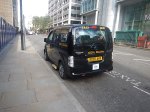

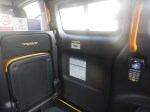

It was a Dynamo Electric Taxi based on a Nissan e-NV200 Evalia MPV.
These are my thoughts.
The Two Major Complaints About The LEVC TX Cab From Drivers
There are two major complaints about the LEVC TX from drivers.
- It is too expensive to buy.
- The range on battery power is not far enough.
I’ve also had several conversations about hydrogen power
My Taxi Use
As I have a Freedom Pass, I only travel in taxis about twice a month. Usually this is when I’m coming home from a railway station like Euston, Liverpool Street or Kings Cross in the evening and I want to get home quickly, or I am coming home with shopping, as I was today. Only occasionally, do I use a taxi with somebody else.
I’d be interested to know, the average number of passengers in a black cab.
Dynamo Has Developed A Vehicle To Sell
I feel that Dynamo have developed a vehicle that will sell.
- The driver said that it is £20,000 cheaper than the LEVC TX.
- The web site says that the battery range is at least twice that of the LEVC TX.
- The capacity is one less than the lEVC TX, which is probably not a large disadvantage.
- The cab includes four different charging methods.
- It can even be charged from a 13-amp socket.
- It can carry one person in a wheelchair.
- Roomy enough for taller drivers.
- Dynamo claimed to have talked to the drivers. As they have addressed, their two major complaints, that seems about right.
- It has a glass roof, as does the LEV TX, which is a good feature for a cab,
- It is 100 % electric and zero carbon.
Overall, it seems to have been designed to have a low cost of ownership. Being based on a standard vehicle must help.
Would It Appeal To Drivers In Smaller Towns And Cities?
After my stroke, I used a lot of taxis to go between my house and the local bus station in Haverhill, which was a distance of about four miles.
Haverhill is a town of 27,000 people without a railway station.
- The nearest railway station at Dullingham is 10 miles away.
- Cambridge is 18 miles away.
- Bury St. Edmunds is 19 miles away.
I feel that the range could be sufficient to run a taxi service in a town like Haverhill.
So could the Dynamo taxi, bring black cabs to more areas?
Ride Quality
Ride quality was what I would expect from a modern vehicle.
Comfort And Space
Comfort was very similar to that of an LEVC TX, but there was a little bit less space. But that wouldn’t bother me.
Would I Use One Again?
I can’t see any reason not to!
I might even choose one in preference to an LEVC TX or a Mercedes Vito, as my road can sometimes be congested and a smaller vehicle might be an advantage.
Conclusion
The Dynamo Black Cab looks to be a serious alternative to the LEVC TX. Especially, as the design has addressed the two major complaints of drovers; cost and range and the vehicle is 100 % electric.
In my lifetime, there have been alternative black cabs, like the Winchester, the Mercedes Vito and the Metrocab.
I can see others joining the market.
A Last Ride On A Class 315 Train Between Upminster And Romford?
This morning I went to Upminster and took the Class 315 train to Romford.
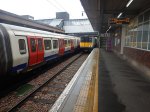
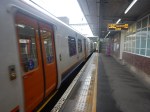
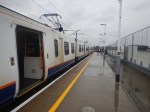
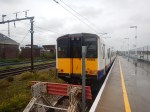
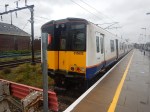
I added the question mark, as when I passed East Ham depot, there were two new Class 710 trains sitting there, covered in graffiti.
Could The Romford And Upminster Line Be Improved?
I see two possible simple improvements
Four Trains Per Hour
London Overground likes to run four trains per hour (tph).
Could this frequency be run on the Romford and Upminster Line?
Three years ago I wrote Could The Romford To Upminster Line Handle Four Trains Per Hour?, and came to this conclusion.
A seven minute trip would mean the train could perform the required four trips per hour.
It would still be tight.
I also investigated an automated shuttle train on the route in An Automated Shuttle Train Between Romford And Upminster, which I felt would be possible, to run a four tph service.
Extension Of The Service
There are various reasons, why the service could be extended from Upminster station, in the Grays direction.
- It would give travellers from South Essex much better access to Crossrail.
- It could give a shuttle between Romford and Grays via the Lakeside Shopping Centre
- Tilbury Riverside station could be a possibility.
- It could open up possibilities for more housing in the area.
- If the route were to be extended to a new station at London Gateway, it could make it easier for people to travel to work at the large port.
Obviously, it would have to be viable for the operator, but the big beasts of Crossrail, Lakeside Shopping Centre and London Gateway might make it possible.
Planning the route wouldn’t be that easy.
Consider.
- The connections to Romford and Grays are on different sides of the District Line, so a flyover or dive-under might be needed.
- Upminster and Grays is a single-track line with a passing loop at the two-platform Ockenden station.
- Upminster and Grays used to be worked by a shuttle service.
- The signalling appears to be able to handle four tph in both directions.
- The current service between Grays and Upminster is two tph in both directions.
- There is a bay platform 1A, at Upminster, which faces towards Grays.
It can certainly be said, that the extension of the service can’t be run at four tph.
I also think, that the current track layout at Upminster looks like one of British Rail efforts to stop any expansion of the railway.
This Google Map shows the layout of Upminster station.

Note.
- The platforms are numbered 1 to 6 from South to North.
- Platform 1A is the Southernmost platform, which is slightly at an angle.
- The main station footbridge is at the Western ends of the platforms.
- The station isn’t fully step-free.
Is an alternative approach possible?
Suppose the following were to be arranged.
- A four tph endless shuttle between Romford and Upminster stations.
- Full step-free access at Romford station is currently being installed.
- Full step-free access at Upminster station.
- A two tph shuttle between Platform 1a and Grays, London Gateway or wherever most passengers want. This service would be arranged to give four tph between Upminster and Grays, when combined with the current services.
- The two four tph services would be timed to give a convenient interchange at Upminster.
Could it be made to work?
It would only need improvements to Upminster station.
These pictures show Upminster station.
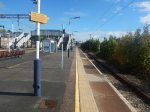
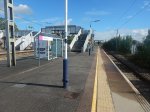

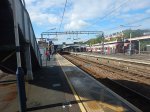
Note.
- Platform 1a is fully-electrified and long enough for a Class 710 train.
- The bridge at the Eastern end of the station is not step-free but could be updated.
- It might be possible to extend this bridge to Platform 6.
Platform 1a could certainly be used to operate a shuttle service to Grays to create a new service across South Essex.
Coronavirus: Can I Be Infected By Touching Surfaces?
The title of this post is the same as that of an article on The Sunday Times.
The article is worth reading.
These two paragraphs some up the latest thoughts on infection from surfaces.
Monica Gandhi, a professor of medicine at the University of California, San Francisco, told the US science website Nautilus that there had been “a lot of fear” at the beginning of the pandemic about transmission of the virus if people touched their faces after contact with metal, plastic or other contaminated surfaces, collectively known to scientists as fomites.
Yet the evidence suggests that the virus on most surfaces is not strong enough to make people ill. “It’s not through surfaces,” she added. “It’s from being close to someone spewing virus from their nose and mouth, without in most cases knowing they are doing so.”
I travel around the Underground a lot and I’m always masked, when I enter stations and usually use the hand-sanitisers, at least once on a trip. Most in London, seem to be acting similarly.
There has been no scares about using the Underground because of high-rates of the covids in recent months, that I can find.
More importantly, under a sub-title of Why Are Young Women The Targets Now?, this is the first paragraph.
The disease that ravaged care homes and turned the elderly into hermits for much of the spring has taken aim at different targets this autumn. Public Health England’s most recent statistics show that the 20-29 age group has had the most new cases since the end of June, followed closely by the 30-39 age group. In both those groups, more women are being infected than men.
This is paragraph is from the NHS web site.
Reported cases of coeliac disease are around 3 times higher in women than men. It can develop at any age, although symptoms are most likely to develop: during early childhood – between 8 and 12 months old, although it may take several years before a correct diagnosis is made.
Could this paragraph partly explain, the fact that women in their twenties and thirties are suffering from the covids?
Coeliac disease affects one in fifty of the population.
As a coeliac, it’s no hard task to stick to a gluten-free diet.
And I get the bonus of being 25 % less likely to suffer from cancer, according to peer-reviewed research from Nottingham University.
A Curious Link Between Pancreatic Cancer And COVID-19
i am involved in fund raising for pancreatic cancer research at Liverpool University, because my youngest son died of the awful disease, at just thirty-seven, leaving a widow and an eight-year-old daughter.
I am also a passionate analyser of data and databases.
For a few weeks now, I have had a feeling that there is a connection between pancreatic cancer and the old Austro-Hungarian Empire.
I found this simple description of the Austro-Hungarian Empire on this page on the Internet.
The former Austro-Hungarian Empire was spread over a large part of Central Europe, it comprises present Austria and Hungary as well as the Czech Republic, Slovakia, Slovenia, Bosnia, Croatia and parts of present Poland, Romania, Italy, Ukraine, Moldova, Serbia and Montenegro.
I had been looking at pancreatic cancer data on the World Life Expectancy database, which is based on World Health Organisation data.
I have built this table, which shows the top twenty countries for a death rate from pancreatic cancer.
These are the columns.
- Country
- Rate of pancreatic cancer deaths per 100,000 of the population.
- Quarantine or Travel Corridor based on this page of the Government web site.
- Member of the Austro-Hungarian Empire.
These are the top twenty countries.
- Hungary – 11.35 – Quarantine – AHE
- Uruguay – 10.72 – Quarantine
- Armenia – 10.34 – Quarantine
- Malta – 10.01 – Quarantine
- Czech Republic – 9.89 – Quarantine – AHE
- Estonia – 9.26 – Travel Corridor
- Iceland – 9.21 – Quarantine
- Israel – 9.18 – Quarantine
- Slovakia – 9.17 – Quarantine – AHE
- Austria – 9.13 – Quarantine – AHE
- Finland – 8.78 – Travel Corridor
- Japan – 8.74 – Travel Corridor
- Latvia – 8.72 – Travel Corridor
- Germany – 8.68 – Travel Corridor
- Slovenia – 8.55 – Quarantine – AHE
- Denmark – 8.51 – Quarantine
- Netherlands – 8.38 – Quarantine
- Croatia – 8.30 – Quarantine – AHE
- Lithuania – 8.21 – Travel Corridor
- Luxembourg – 8.15 – Quarantine
Note.
- I would hope that the Government’s Travel Corridor list has been devised in a scientifically-correct manner.
- Am I right to assume that the Travel Corridor list is a good measure of the level of Covid-19 in the country?
- The pancreatic cancer data is from 2018.
Of the countries I mentioned earlier, as being partly in the Austro-Hungarian Empire, only Montenegro is in the top thirty countries for pancreatic cancer deaths.
My Thoughts On The Data
These are my thoughts on the data.
The Significance Of The Austro-Hungarian Empire
Consider.
- All the countries that were fully or partly in the Austro-Hungarian Empire are on the Government Quarantine List, with the exception of Italy.
- Many will argue, including myself, that Italy, has too high a Covid-19 rate for a visit.
- Austria, Croatia, the Czech Republic, Hungary, Slovakia and Slovenia are in the top twenty countries for pancreatic cancer deaths.
It looks to me, that there is a correlation in there somewhere.
Germany And Japan Are The Odd Ones Out
The list of countries with high levels of pancreatic cancer, where there is no quarantine are.
- Estonia
- Finland
- Japan
- Latvia
- Germany
- Lithuania
If you eliminate the Baltic States and Finland from the worse countries for pancreatic cancer, you’re left with Germany and Japan.
Is There A Jewish Dimension?
I ask this question for these reasons.
- Israel is eighth on the pancreatic cancer list and has high levels of Covid-19 according to various news reports, like this one on the BBC, which is entitled Coronavirus: Israel Tightens Second Lockdown Amid Acrimony.
- I am not Jewish, but my great-great-great-grandfather from Konigsberg probably was and it looks like I inherited my coeliac disease from him and gave it to my son, who died from pancreatic cancer.
- The Baltic States and Finland, don’t seem to have large Jewish populations for various reasons and they have high levels of pancreatic cancer, but low levels of Covid-19.
- Germany has the third largest Jewish population in Europe, but seems to have done well in fighting Covid-19. Is that because their well-funded healthcare system has worked?
- Wikipedia states that, the Austro-Hungarian Empire was favourable to the Jews and even a sizeable numbers of its Army officers in Word War One were Jewish.
- According to reports locally and my observations, it appears that the Jewish community in Hackney, where I live has been badly hit by Covid-19.
I need an appropriate historian to give me answers.
Conclusion
I believe the correlation between pancreatic cancer and Covid-19 could be rather strong. More research needs to be done, as to why.
But I do wonder, if undiagnosed coeliac disease, as in my son, could be the alligator in the swamp.
Undiagnosed coeliacs seem to have poor immune systems, which makes them more susceptible to everything, that’s going around.
The more I learn about coeliac disease and its myriad effects on health, the more I’m convinced that it should be one of the diseases checked for in all young children.
It would certainly have changed my miserable always-ill childhood for the better.
All Aboard The Bamford Hydrogen Bus Revolution
The title of this post, is the same as that of this article on Air Quality News.
This is the introductory paragraph.
Air Quality News editor Jamie Hailstone talks to JCB heir and hydrogen advocate, Jo Bamford, about why it is the fuel of the future for buses.
It is a good read, as Jo Bamford details his vision to change public transport with thousands of hydrogen-powered buses.
He talks in a common-sense manner, about the economics and practicalities of zero emission buses, of which this paragraph is typical.
‘I have a bus manufacturing business,’ he adds. ‘We make a diesel bus, a battery double-decker and a hydrogen double-decker. A battery double-decker will do 60% of the distance of a diesel bus and take 4.5 hours to charge. A hydrogen bus will do the same distance as a diesel bus and take seven minutes to fill up. If you are running a bus for 22 hours a day, you can’t afford to charge them up for 4.5 hours a day.
Jo Bamford finishes with.
I think hydrogen is a sexy, cool thing to be looking at.
I agree with him and we should get started on lots of hydrogen buses and their hydrogen supply network.
As I wrote in Daimler Trucks Presents Technology Strategy For Electrification – World Premiere Of Mercedes-Benz Fuel-Cell Concept Truck, Mercedes are going the hydrogen route with big trucks and these trucks will need a hydrogen supply network to be built in the UK.
So surely, we should look at decarbonisation of buses and heavy trucks in an holistic way, by creating that hydrogen supply network in the UK.
Ryze have now obtained planning permission for their first big electrolyser at Herne Bay and it now has its own web site, which includes this video, explaining Ryze Hydrogen’s philosophy.
Let’s hope that this first electrolyser, grows into the network the country needs.
Dutch Province To Introduce Regular Hydrogen Services
The title of this post, is the same as that of this article on the International Railway Journal.
This is the introductory paragraph.
The regional transport authority in the Dutch province of Groningen has announced plans to introduce hydrogen trains for its regional concession following a successful test earlier this year.
In March 2019, I went to Groningen and explored the railways in the area, where Stadler GTW trains are used for the train services.

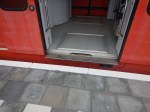
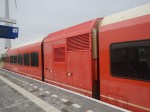
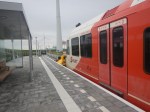
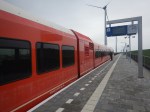
These trains are a smaller version of Greater Anglia’s Class 755 trains.
In The Train Station At The Northern End Of The Netherlands, I describe a visit to Eemshaven station to the North of Groningen.
I said this.
At the turnround at Eemshaven with the driver, he indicated that there had been speculation about battery and hydrogen trains in the North of The Netherlands.
It appears the driver was right.
The Bridge Over The Ems
The article also indicates that the bridge over the River Ems, that I wrote about in From Groningen To Leer By Train, could be opening soon.
This video shows what the new bridge will look like.
And this Google Map shows the current state of the bridge.
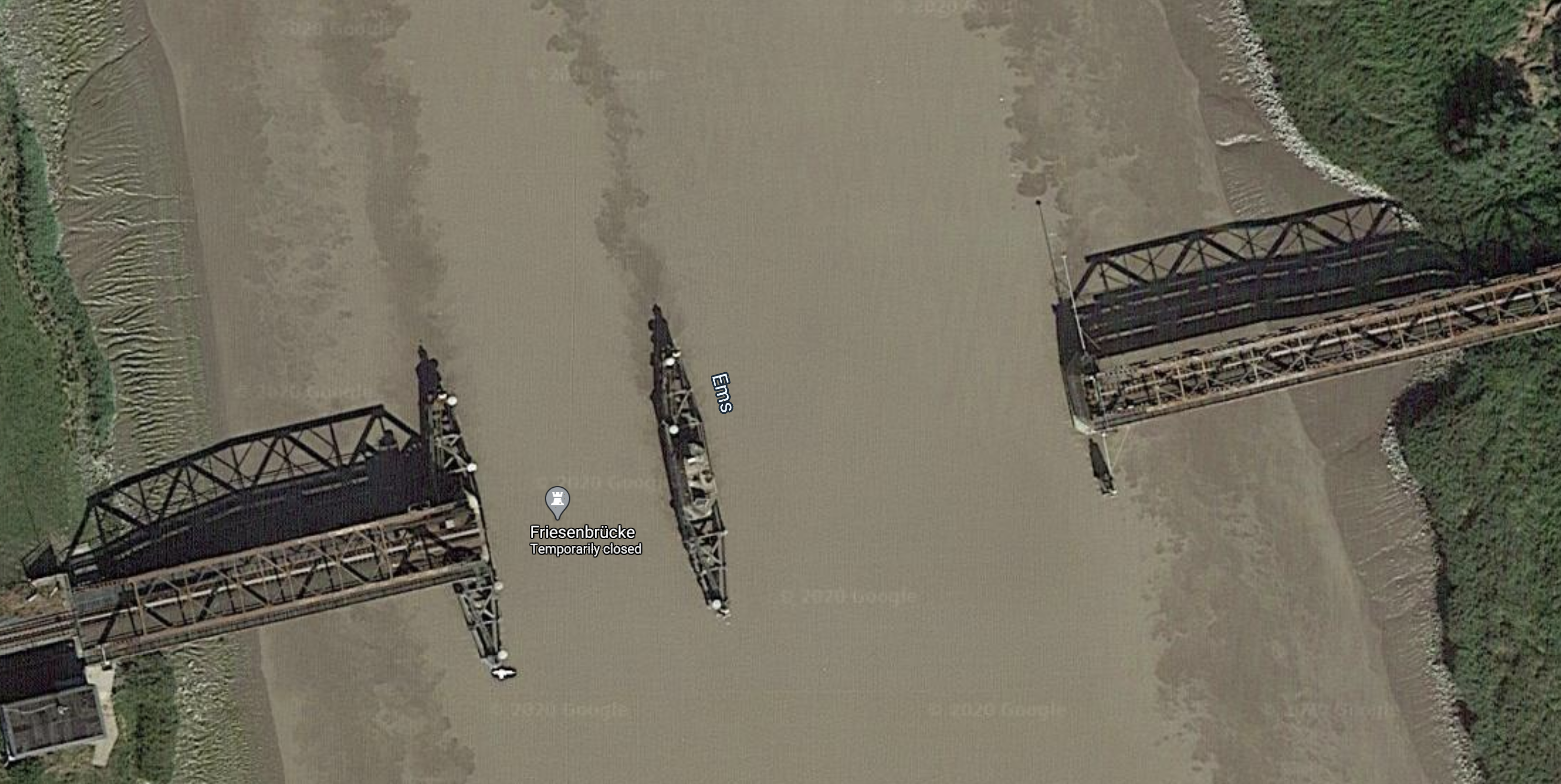
I’m not sure of the date of the picture, but there still appears a lot of work to do.
 The Anonymous Widower