The title of this post, is the same as that of this article on Time Out.
French startup; Midnight Trains, aims to update sleeper trains for the twenty-first century.
What Routes Are Being Offered?
The Time Out article says this.
Centred around Paris’s Gare du Nord train station, routes will stretch as far as 800km in a star shape across Europe, encompassing major destinations such as Madrid, Lisbon, Porto, Milan, Venice, Florence, Rome, Vienna, Prague, Budapest, Berlin, Hamburg, Copenhagen and even Edinburgh.
A map on the Midnight Trains web site, shows these individual routes.
- Paris and Barcelona
- Paris and Edinburgh
- Paris and Madrid
- Paris and Porto
- Paris, Brussels, Hamburg and Copenhagen
- Paris, Brussels, Hamburg and Berlin
- Paris, Milan and Venice
- Paris, Florence and Rome
I’m sure this list will grow.
Some Detailed Looks At Routes
I shall give a few notes about some of the proposed routes.
Paris And Barcelona
Crows would fly 831 kilometres or 516 miles.
I have gone by train between Barcelona and Paris twice. One trip is described in From Barcelona To Paris.
It looks like it takes 06:40 in a TGV without a change.
The service leaves from Barcelona Sants and arrives at Paris Lyon.
Time Out says journeys are centred on Gare Nord, so could the train access that terminal from the South?
An eight or nine hour sleeper journey would probably be convenient for train operators and passengers.
But I suspect that this route may need trains that can take advantage of the high speed nature of much of the route.
Paris And Edinburgh
Crows would fly 873 kilometres or 543 miles.
- I have gone by train between London and Edinburgh many times and four-and-a half hours would not be an unreasonable time.
- I have also used Eurostar between London and Paris many times and two-and-a-quarter-hours would not be an unreasonable time.
An eight or nine hour sleeper journey would probably be convenient for train operators and passengers.
The most efficient way could be for the Paris and Edinburgh service to operate would be with a reverse at St. Pancras.
- It could be at between one and three in the morning, as sleeper trains run slower than high speed services.
- It would take about ten-fifteen minutes for the driver to change ends.
Would they be allowed to pick up passengers on the way through London?
- I doubt they would be able to do this universally, but there must be a market for passengers needing to get to Edinburgh or Paris early in the morning from London.
- During the Glasgow Commonwealth Games, on one day, I used the Caledonian Sleeper to return to London. It was packed and a sleeper train leaving for Paris and Edinburgh might pick up a substantial number of passengers after sporting or cultural events or business that finished late in the evening.
- Timings could be arranged, so that both the Edinburgh and Paris legs were sufficient for say four or five hours sleep.
Caledonian Sleeper would probably object. But competition of this nature is often mutually beneficial.
There is also an alternative fully-electrified route that avoids the reverse at St. Pancras.
It winds its way through East London between Barking and Holloway using the North London Line.
It is feasible, but wouldn’t have the commercial advantages of a reverse in St. Pancras.
Would the Paris and Edinburgh services call at other stations?
The Lowland Caledonian Sleeper to Edinburgh and Glasgow calls at the following other stations.
- Watford Junction – Pick up Northbound – Set down Southbound
- Carlisle – Pick up Southbound – Set down Northbound
- Carstairs – Pick up Southbound – Set down Northbound
- Motherwell – Pick up Southbound – Set down Northbound
Would the Midnight Trains do something similar. Perhaps they would call at the following stations.
- Stevenage – Pick up Northbound – Set down Southbound
- York – Pick up Southbound – Set down Northbound
- Newcastle – Pick up Southbound – Set down Northbound
This would create three extra sleeper services.
- Paris and Newcastle
- Paris and York
- Stevenage and Edinburgh
Commercially this must be attractive, as it would require no extra rolling stock.
I also suspect providing Customs and Immigration for outgoing passengers at York and Newcastle would not be an expense, that made the stops unviable.
Paris And Madrid
Crows would fly 1057 kilometres or 657 miles.
In 2014, I used trains from Madrid to Paris and on to London, which I wrote about in From Madrid To London.
That was a trip that I planned on the move, so it could have been done faster.
Looking at the timetables, I find the following.
- Paris and Barcelona – 6:41
- Barcelona and Madrid – 2:45
Note
- All times are given in hours:minutes.
- A direct service without a change at Barcelona must be possible.
- Would this service pick up and set down at Girona, Barcelona, Camp de Tarragona and Zaragoza?
A ten or eleven hour sleeper journey would probably be feasible and convenient for train operators and passengers.
But when I look at the route map on the Midnight Trains web site, their route between Paris and Madrid appears to go further to the West.
I have a strong feeling that they are proposing to use the currently closed route via the iconic Canfranc station.
But then Wikipedia says this about plans for the future of the route and the station.
The government of Aragon has long held various ambitions for the rehabilitation of the station. Plans have been mooted to redevelop the main station building into a hotel, which would involve the construction of a new station beside it to replace it. There have been explorations of options to reopen the through line as the “western trans-Pyrenean line”; this initiative would reportedly involve the assistance of the government of Aquitaine, the adjacent French region. In February 2020, it was announced that funding from the European Union had been made available for the purpose of reopening the through line and relaunching international services.
Note.
- A regular rail service between Pau in France and Zaragoza in Spain would tick a lot of boxes.
- On the French side the Pau-Canfranc railway is a fifty-eight mile electrified single-track, standard-gauge railway.
- On the Spanish side, the railway is Iberian gauge.
- It would probably be a useful freight route.
- If it could take a TGV, it would enable faster TGV links between France and the Iberian nations.
It looks to me, that if it was properly rebuilt, it could be a useful standard gauge line between the high speed networks of France and Spain.
Looking at the timetables, I find the following.
- Paris and Pau – 4:24
- Zaragoza and Madrid – 1:35
If Pau and Zaragoza could be achieved in three hours, times would be as good or better, than the Barcelona route.
Paris And Porto
Crows would fly 1213 kilometres or 753 miles.
This is a challenging one to find the route, but I did find a current time of just over fourteen hours with lots of changes.
But from Zaragoza, there does appear to be a route via Burgos and Vigo.
It could be up to sixteen hours, so would probably be the better part of a day.
Could the Madrid and Porto services, provide a service to and from Canfranc?
Consider.
- Canfranc station is a spectacular station in the Pyrenees.
- It has been blessed by St. Michael.
- I suspect many people would like to visit.
- The station might be converted into a hotel.
I wouldn’t be surprised to see innovative arrangements in the Madrid and Porto services, so that passengers could have a visit to Canfranc.
Paris, Brussels, Hamburg And Copenhagen
Crows would fly 1027 kilometres or 638 miles.
Looking at the timetables, I find the following.
- Paris and Brussels – 1:32
- Brussels and Hamburg- 6:49
- Hamburg and Copenhagen- 5:06
Note
- All times are given in hours:minutes.
- When I went between Hamburg and Copenhagen by train, I used the Bird Flight Line which involved a train ferry, where passengers had to get on the ship for the crossing. I described that trip in From Copenhagen To Hamburg By Train.
- The ferry is being replaced by a tunnel by 2028.
- It looks like it might be possible to go between Hamburg and Copenhagen by a longer route further to the North.
An eleven or twelve hour sleeper journey would probably be feasible and convenient for train operators and passengers.
I was initially surprised that the service didn’t call at Amsterdam.
- But then there are a lot of big cities between Brussels and Amsterdam; Antwerp, Rotterdam, Schipol Airport and The Hague.
- There is generally one train per hour (tph) between Brussels and Amsterdam.
- Paris and Amsterdam are only 3:20 apart by Thalys, so perhaps there wouldn’t be many takers for a sleeper train.
- It would appear that the best route between Paris and Hamburg is via Brussels and Cologne.
From friends in the area, I also get the impression, that it would take forever for the Belgians and the Dutch to decide on the calling pattern.
Paris, Brussels, Hamburg And Berlin
Crows would fly 876 kilometres or 545 miles.
Looking at the timetables, I find the following.
- Paris and Brussels – 1:32
- Brussels and Hamburg- 6:49
- Hamburg and Berlin – 1:36
Note that all times are given in hours:minutes.
A ten or eleven hour sleeper journey would probably be feasible and convenient for train operators and passengers.
I was initially surprised that the service didn’t call at Cologne.
- Thalys runs a high speed service between Paris and Cologne.
- DB runs a high speed service between Cologne and Hamburg.
- NightJet runs a sleeper service from Brussels and Cologne to Austria.
It could be that the demand isn’t thought to be there.
Paris, Milan And Venice
Crows would fly 845 kilometres or 525 miles.
I have done much of this route before and wrote about it in From Novara To Paris.
Looking at the timetables, I find the following.
- Paris and Milan – 7:22
- Milan and Venice – 2:29
Note
- All times are given in hours:minutes.
- Would this service pick up and set down at Turin and Verona?
A ten or eleven hour sleeper journey would probably be feasible and convenient for train operators and passengers.
Paris, Florence And Rome
Crows would fly 1106 kilometres or 687 miles.
Looking at the timetables, I find the following.
- Paris and Turin – 5:42
- Turin and Florence – 3:00
- Florence and Rome – 1:36
Note
- All times are given in hours:minutes.
- Would this service pick up and set down at Turin and Verona?
A ten or eleven hour sleeper journey would probably be feasible and convenient for train operators and passengers.
What Rolling Stock Will Be Used?
In recent years sleeper train sets have been ordered as follows.
- Austrian Railways from Siemens.
- Caledonian Sleepers from CAF of Spain.
But as Midnight Trains is a French Company, I suspect the train order could go to Alstom.
On the other hand because of European procurement rules and quality, the order could go to CAF.
The CAF Mark 5 Coaches are capable of running at 100 mph and there are pictures in On The Caledonian Sleeper To Glasgow.
I do wonder, though if we’ll see a radical design, which is different to current locomotive-hauled sleeper trains.
- Electrical multiple unit rather than locomotive hauled.
- 125 mph capability, which could be useful on some routes.
- A fleet of identical train sets.
- Ability to use all the voltages on the routes.
- Ability to work in pairs or singly dependent on the needs of the route.
- Ability to split and join automatically in a station.
- Ability to use the signalling on all routes, including high speed ones.
- The trains would be built to be suitable for all loading gauges on the routes served.
Note.
- Given that French-designed Class 373 trains used by Eurostar, could trundle all over South London into Waterloo, I don’t think it will be difficult to design a train, that fitted the Edinburgh service.
- Get the design right and there could be other customers.
They would be true Pan-European trains.
When Will The Trains Start Running?
2024 is the date given by Time Out and the Midnight Trains web site.
Conclusion
I like the proposed service.
These are reasons why.
The Proposed Level Of Service
When travelling for between eight and twelve hours, you need a quality train.
Over the years, I must have used sleeper trains run by Caledonian Sleeper at least twenty times,
When they have been good, they have been very good.
The new trains from CAF don’t need for anything more.
If Midnight Trains can match Caledonian Sleeper for quality on trains, service and food, they’ll attract passengers.
The Service Is Easy To Expand And Extend
Consider, these extra services could surely be added to the proposed network.
- Paris and Munich
- Paris and Switzerland.
- Paris, Nice and Genoa
If some of the plans to connect the UK and Irish railways come to fruition, there could even be a Paris and Dublin service in the distant future.
Consider, these extensions to the proposed services.
- Edinburgh and Glasgow 1:12
- Rome and Naples – 1:10
- Barcelona and Valencia – 2:40
Note that all times are given in hours:minutes.
The Service Is Very UK-Friendly
Because of Eurostar, with its two-and-a-quarter hour journey between two of Europe’s largest cities, London and Paris can almost be considered twin cities with respect to long-distance transport.
Suppose a resident of Paris wants to go for a weeks holiday birdwatching in the North of Scotland, a late afternoon Eurostar to London and the Caledonian sleeper to Inverness is a very-feasible way to travel.
Suppose, I wanted to go from London to Berlin, in the future, I will be able to get a Eurostar to Paris and a Midnight Train to Berlin.
A Good Food Offering
I would hope that the food is of a quality nature.
I am coeliac and must have gluten-free food, like probably up to one percent of people.
I have found that the higher the quality of the food, the more likely it is, that the chef knows their allergies.
Before the pandemic, the best train food in Europe on a regular service was Great Western Railway’s Pullman Dining. But because of the restrictions, I’ve not tried it lately.
June 30, 2021
Posted by AnonW |
Transport/Travel | Alstom, Barcelona, Brussels, CAF, Caledonian Sleeper, Cologne, Copenhagen, Edinburgh, Eurostar, Florence, Hamburg, Midnight Trains, Milan, Newcastle, NightJet, Paris, Rome, Sleeper Train, TGV, Venice, York |
4 Comments
The title of this post, is the same as that of this article on Rail Technology Magazine.
It may only be the renewal of 600 yards and competry at Newsham, but it least it gets the project on the rails.
I find it heartening, that this project and the similar Beeching Reversal one at Okehampton seemed to have made quick starts.
June 30, 2021
Posted by AnonW |
Transport/Travel | Beeching Reversal, Dartmoor Line, Northumberland Line (Newcastle And Ashington/Blyth) |
3 Comments
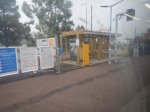
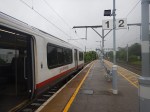
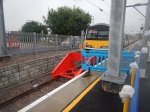
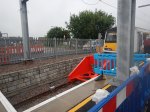
This article on Rail Advent indicated that the platform extension at Wickford station had been completed, so that five-car Class 720 trains can work the Crouch Valley Line.
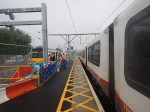
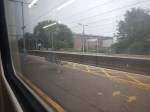
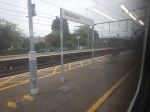
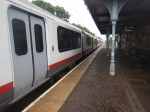
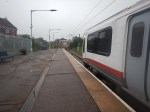
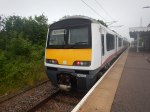
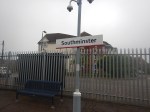
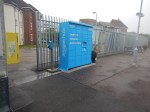
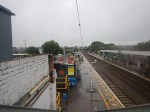
This morning I went to look at the progress and took these pictures.
Note.
- Platform 1 has been extended at the London end.
- The two trains working the branch were Class 321 Renatus trains.
- The stations on the branch seemed to have been spruced up.
I suspect Greater Anglia are expecting a lot more commuters and visitors.
- But then the area is getting a lot more housing.
- There are fast direct trains to and from London Liverpool Street on a railway with refurbished electrification.
- Burnham-on-Crouch is one of the foremost yachting towns.
- Remember the area is not far from Snowgoose Country.
- The new Wallasea wetlands that were created with the tunnel spoil from Crossrail’s tunnels is not far away.
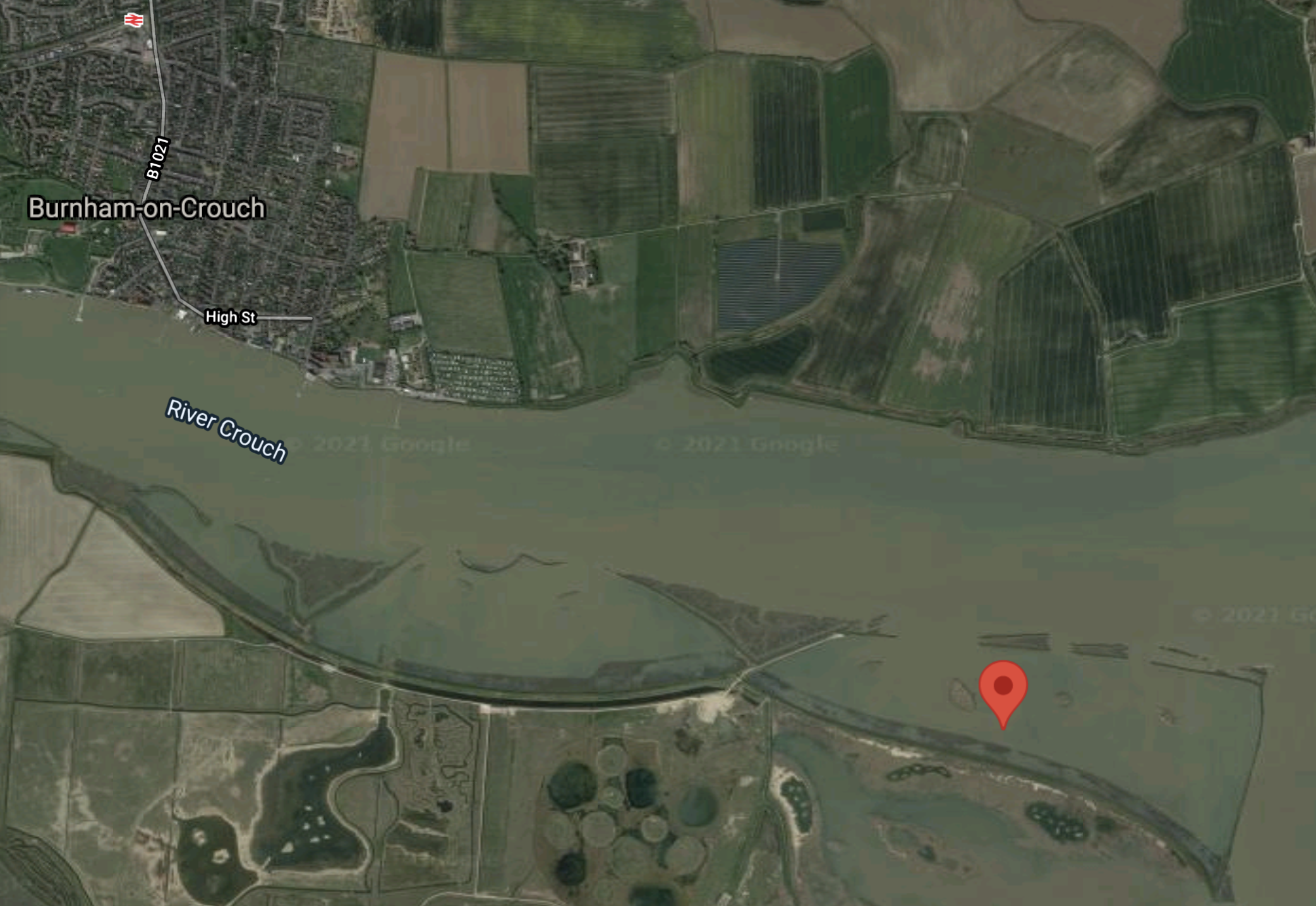
This Google map shows Burnham-on-Crouch and Wallasea Wetlands.
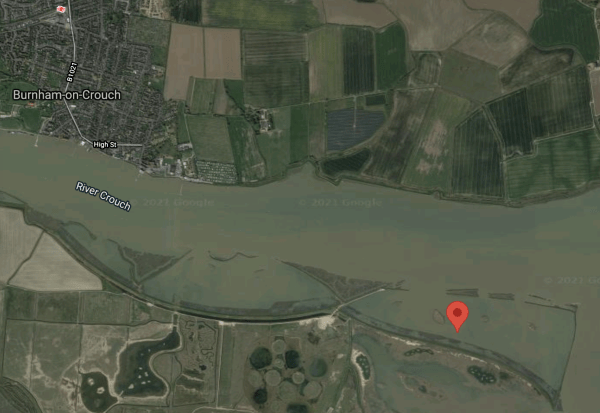
Note.
- Burnham-on-Crouch with its station in the North-West corner of the map.
- Wallasea Wetlands are marked by the red arrow.
I don’t think it will be long before an appropriately-powered ferry is provided across the River Crouch.
I also have some thoughts.
The Class 321 Renatus Trains
The Class 321 Renatus trains may be a 2017 conversion of a 1990-built British Rail Class 321 train, but that doesn’t mean they are a cheap and nasty conversion.
So until all the Class 720 trains are in service, they are a more than adequate stand-in.
I was told that the Class 720 trains will be in service on the branch in September.
The Snow Goose
The Snow Goose is one of the great books of the Twentieth Century, written by the American; Paul Gallico.
This summary of the plot is from Wikipedia.
The Snow Goose is a simple, short written parable on the regenerative power of friendship and love, set against a backdrop of the horror of war. It documents the growth of a friendship between Philip Rhayader, an artist living a solitary life in an abandoned lighthouse in the marshlands of Essex because of his disabilities, and a young local girl, Fritha. The snow goose, symbolic of both Rhayader (Gallico) and the world itself, wounded by gunshot and many miles from home, is found by Fritha and, as the human friendship blossoms, the bird is nursed back to flight, and revisits the lighthouse in its migration for several years. As Fritha grows up, Rhayader and his small sailboat eventually are lost in the Dunkirk evacuation, having saved several hundred men. The bird, which was with Rhayader, returns briefly to the grown Fritha on the marshes. She interprets this as Rhayader’s soul taking farewell of her (and realizes she had come to love him). Afterwards, a German pilot destroys Rhayader’s lighthouse and all of his work, except for one portrait Fritha saves after his death: a painting of her as Rhayader first saw her – a child, with the wounded snow goose in her arms.
It is not a book, you’d expect an American to write about the dark days of World War II in the UK.
But as Christopher Nolan showed in his film, Dunkirk was the battle in World War II, that stiffened up the sinews and summoned up the blood.
Wickford Station
The pictures show that Wickford station is being rebuilt.
I would think it needs a speed-free bridge.
June 28, 2021
Posted by AnonW |
Transport/Travel | Class 321 Renatus, Class 720 Train, Crossrail, Crouch Valley Line, Dunkirk, Essex, Greater Anglia, Snow Goose, Tunnels, Wallasea Wetlands, Wickford Station |
Leave a comment
London has a rail capacity problem, for both freight and passenger trains.
This report from Network Rail is entitled The London Rail Freight Strategy (LRFS).
Surprisingly, the report only mentions decarbonisation once and that is when it is talking about moving the AC/DC switchover point on the West London Line to Kensington Olympia station.
This section from the report describes how dual-voltage electrically-hauled freight trains would handle the electrification on the West London Line.
Although moving the changeover to Shepherd’s Bush would eliminate the need for passenger trains to slow down or stop at North Pole Junction, electrically hauled freight trains will still need to switch power supply modes whilst moving, wherever the AC/DC interface is located.
Due to the substantial incline facing trains running northward on the WLL, which increases in severity towards the Willesden end of the route, it would be preferable for the changeover to be made as far south as possible. This would enable freight trains to slow down to switch traction before reaching the worst of the gradient, giving them a much better chance of regaining line speed once drawing power from the OLE.
Although Kensington Olympia is less than a mile to the south of Shepherd’s Bush, the intervening route section is almost entirely level, with the incline commencing just before Shepherd’s Bush station and continuing to rise sharply along the rest of the WLL. The capacity and performance benefits of relocating the changeover are therefore likely to be greater if the overhead wires are extended to Kensington Olympia, removing the risk to traffic flow that would remain if freight trains were forced to switch whilst running uphill.
This would prepare the West London Line for the transition to electric freight that will be necessary as part of the decarbonisation of the railway over the next thirty years.
Resolving the current traction changeover issues for freight as well as passenger trains would support this transition by encouraging freight operators to invest in electric locomotives to run on the orbital routes, in the confidence that this constraint has been addressed.
Where is Network Rail’s guidance?
These are a few thoughts.
How Many Of The Freight Trains Through London Could Be Electrically-Hauled?
Most freight trains are hauled by diesel Class 66 locomotives.
But that doesn’t mean that these freight trains between say Ipswich and Cardiff are electrically-hauled on what is a fully-electrified route.
There are various reasons, why they aren’t.
- There are large fleets of cheap, nasty and polluting Class 66 locomotives.
- There isn’t many suitable electric locomotives.
- The routes to major ports like Felixstowe, Immingham, London Gateway and Southampton are not electrified.
- Many busy cross-country freight routes like Ipswich and Peterborough are not fully-electrified.
But powerful bi-mode electric-locomotives, like the Class 88 locomotives, that can do many tricky trips in the UK are available. Although there are only ten of them.
I have done a quick analysis and found the following.
- There are a good proportion of lighter weight freight trains, that are not long and heavy.
- There are a good proportion of freight trains running over routes that are electrified with 750 VDC third-rail equipment.
- There are also some freight services, where a dual-voltage locomotive would be needed.
- If a locomotive had a Last-Mile capability of perhaps forty miles, a lot of services could be electric-hauled.
Network Rail should do an analysis of all freight working in the various regions of the UK, to find out what are the needs of the electrically-hauled market in the various regions of the UK.
Could There Be A London Locomotive?
I wouldn’t want to get too regional, but looking at the figures, I think the following locomotive could be developed to handle freight trains in and through London.
I’m very much of the opinion, that the UK needs a battery-electric locomotive with the following capabilities.
- The physical size and axle loading of a Class 68 or 88 locomotive.
- Up to 4 MW when running on 25 KVAC overhead electrification.
- Up to 2.5 MW when running on 750 VDC third-rail electrification.
- Up to 2 MW for 30 minutes when running on battery power.
- Regenerative braking to batteries.
Note.
- The axle load of a Co-Co Class 66 locomotive is 21.6 tonnes.
- The axle load of a Bo-Bo Class 88 locomotive is 21.5 tonnes.
But the overall weight of the Class 66 locomotive is fifty percent higher.
I believe, that a locomotive with this specification could replace the ubiquitous, cheap, smelly, polluting and carbon-emitting Class 66 locomotive on a lot of duties. Especially, in London and the South East, where there is a lot of running on tracks with 750 VDC third-rail electrification.
I believe that this locomotive would be able to haul some of the heaviest trains on these routes.
- Ipswich and the Port of Liverpool via London.
- Ipswich and Wentloog (Cardiff) via London.
- Ipswich and Coatbridge via London.
- Ipswich and Birmingham via London.
- Ipswich and Crewe via London.
These routes cry out for the ability to be able to do the last miles into Felixstowe.
Ipswich And Felixstowe On Battery Power
If the diesel engine and all the associated gubbins are removed from a Class 88 locomotive, a battery with the same weight could be fitted into the locomotive, without unduly affecting handling or axle load.
Doing rough calculations, this battery would have a capacity of at least 1 MWh.
- This battery would be able to supply 2.5 MW for twenty-four minutes, which would be a very valuable Last-Mile capability.
- The battery would also enable regenerative braking to the battery, which would increase the energy efficiency of the locomotive.
These capabilities may open up the possibility of battery-electric haulage of some trains into and out of the Port of Felixstowe.
- Freight trains take around 32 minutes to travel from the Great Eastern Main Line to the port.
- Freight trains take around 36 minutes to travel from the port to the Great Eastern Main Line.
- The route is fairly level although there is the climb over Spring Road viaduct.
If necessary, the route could be electrified, between the Great Eastern Main Line and Derby Road station.
- The climb over the viaduct would be electrified.
- Only 21 minutes of the route would not be electrified.
I believe that, it would be possible for Stadler to design a dual-mode battery-electric locomotive that could haul most of the heaviest trains into and out of the Port of Felixstowe.
This would effectively decarbonise a large proportion of freight traffic on the North London and Gospel Oak to Barking Lines.
Third-Rail Freight
In addition, a locomotive of this class, with a third-rail capability would be able to handle the numerous freight trains on the third-rail network.
With third-rail electrification, there are always worries that it can supply enough power.
- A Class 66 locomotive has a diesel engine generating 2.5 MW.
- An eight-car Class 700 train is rated at 3.3 MW. These trains are seen all over South London.
- A Class 377 train is rated between 0.8 and 1.2 MW. Pairs of these trains are seen all over South London.
It would appear that an electric Class 66-sized locomotive would only draw the same power as typical trains on the third-rail network.
So perhaps a dual-voltage electric locomotive suitable for freight through much of South London, wouldn’t leave all of South London in the dark?
Junctions Which Need Upgrading
The London Rail Freight Strategy, identifies these junctions as needing an upgrade.
Would these junctions be easier to upgrade, if the designers of the junctions, knew that many more trains using the junction were to be hauled by powerful and spritely electric-haulage?
West London Line Issues
Two of the posts covering the London Rail Freight Strategy concern the AC/DC switchover on the West London Line.
The proposed locomotive wouldn’t care where the switchover happened, as it would use batteries to achieve a smooth switchover.
Conclusion
The UK rail network needs a go-anywhere battery-electric locomotive.
Related Posts
These are related posts about the London Rail Freight Strategy (LRFS).
Doubling Harlesden Junction
East Coast Main Line South Bi-Directional Capability
Gauge Improvements Across London
Gospel Oak Speed Increases
Headway Reductions On The Gospel Oak To Barking, North London and West London Lines
Heavy Axle Weight Restrictions
Kensal Green Junction Improvement
Longhedge Junction Speed Increases
Moving The West London Line AC/DC Switchover To Kensington Olympia
Moving The West London Line AC/DC Switchover To Shepherd’s Bush
Nunhead Junction Improvement
Stratford Regulating Point Extension
Will Camden Road Station Get A Third Platform?
Will Clapham Junction Station Get A Platform 0?
June 28, 2021
Posted by AnonW |
Design, Transport/Travel | Battery-Electric Locomotives, Decarbonisation, Freight, Gospel Oak And Barking Line, London Rail Freight Strategy, North London Line, Port of Felixstowe |
15 Comments
London has a rail capacity problem, for both freight and passenger trains.
This report from Network Rail is entitled The London Rail Freight Strategy (LRFS).
One of the secondary recommendations of the report is to improve the capacity to handle trains with heavy axle weight restrictions.
The report explains it like this.
In consultation with train drivers for the Freight Operating Companies and Network Rail structural engineers, this study has identified a list of Heavy Axle Weight restrictions on routes used by freight in London, which are known to negatively impact the movement of heavier trains around the
network.
The resulting proposal, as part of the LRFS, is for packages of works to enable the removal of these restrictions to be progressed.
A general package of cross-London interventions, targeting structures across a variety of routes, has been outlined for development. In addition, a large stretch of the Gospel Oak-Barking Line, where Heavy Axle Weight traffic is subject to a blanket 20mph speed restriction, should be the focus of a dedicated package of works to facilitate the removal of that restriction and to strengthen the route so that it is capable of accommodating future
rail freight growth.
Although these proposed packages of works should address the structures currently known to cause speed restrictions that negatively impact freight operations in London, maintaining the infrastructure to a level that can safely accommodate Heavy Axle Weight loads is an ongoing challenge for
Network Rail.
There are no permanent fixes when dealing with structures that have been bearing railway traffic since the nineteenth century. Ongoing maintenance funding to prevent the need for HAW speed restrictions to be imposed in the first place is just as critical as interventions to remove existing ones.
It sounds to me that, as with Gauge Improvements Across London, there needs to be a full survey to identify all the places, where heavy axle weight is a problem.
It does sound from the report, that some of the remedial works will not be trivial.
Conclusion
I don’t think Network Rail will be keen to rebuild all the freight routes through London.
Related Posts
These are related posts about the London Rail Freight Strategy (LRFS).
Decarbonisation Of London’s Freight Routes
Doubling Harlesden Junction
East Coast Main Line South Bi-Directional Capability
Gauge Improvements Across London
Gospel Oak Speed Increases
Headway Reductions On The Gospel Oak To Barking, North London and West London Lines
Kensal Green Junction Improvement
Longhedge Junction Speed Increases
Moving The West London Line AC/DC Switchover To Kensington Olympia
Moving The West London Line AC/DC Switchover To Shepherd’s Bush
Nunhead Junction Improvement
Stratford Regulating Point Extension
Will Camden Road Station Get A Third Platform?
Will Clapham Junction Station Get A Platform 0?
June 27, 2021
Posted by AnonW |
Transport/Travel | Freight, Gospel Oak And Barking Line, London Rail Freight Strategy, North London Line, West London Line |
18 Comments
London has a rail capacity problem, for both freight and passenger trains.
This report from Network Rail is entitled The London Rail Freight Strategy (LRFS).
One of the secondary recommendations of the report is to use the bi-directional capability of the East Coast Main Line to create another freight route through London.
The report explains it like this.
The southern end of the East Coast Main Line, from Kings Cross to Stoke Tunnel (about five miles south of Grantham), is due to be the first part of a national main line to be fully converted to European Train Control System (ETCS) digital signalling.ETCS, because it does not rely on fixed lineside equipment facing one way or another, is bi-directional by nature.
This presents an opportunity for freight to make use of a new routeing at the southern end of the East Coast Main Line, which current signalling and track layout do not permit.
This strategy therefore proposes installing new track layout features that would facilitate this routeing for freight trains, enabling them to take advantage of the bi-directional capability brought about through ETCS deployment.
The main expected change would be the creation of a facing crossover at Bowes Park, to enable southbound freight trains to run onto the Down Enfield Viaduct in the up direction, before continuing onwards to the terminal at Ferme Park or accessing the Gospel Oak-Barking Line at Harringay.
This example shows an advantage of digital in-cab signalling.
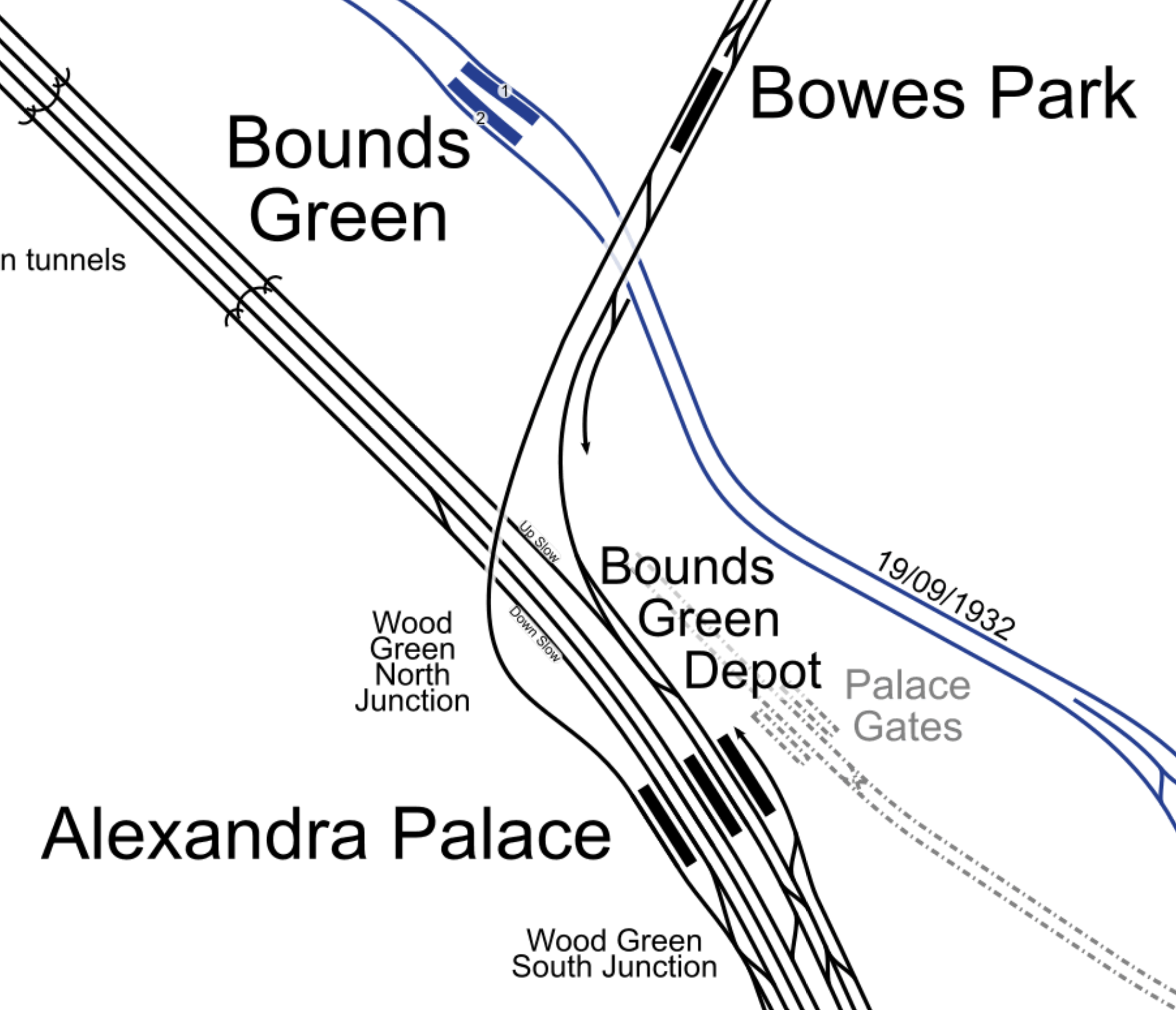
This map from cartometro, shows the lines between Bowes Park and Alexandra Palace stations.
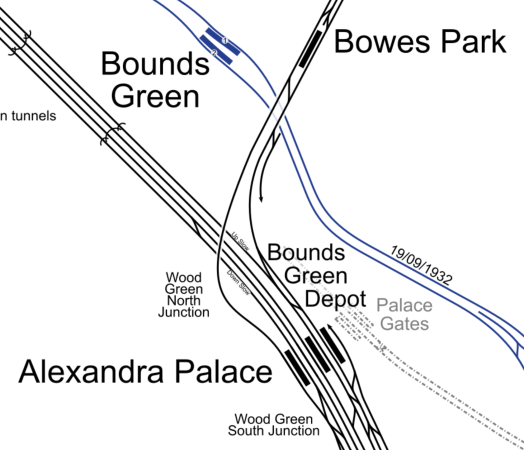
Freight trains coming from the North regularly take the Hertford Loop Line and arrive in North London at Bowes Park
Currently, they sneak down the Eastern side of the East Coast Main Line and then take a route across London, which probably uses the North London Line.
What is proposed is that with an extra crossover just South of Bowes Park station, freight trains will crossover and take Enfield Viaduct the wrong way to the Western side Alexandra Palace station.
The Enfield Viaduct is the track taken from Alexandra Palace station to Bowes Park station, by trains going to Enfield. It takes a bit of a loop to the West.
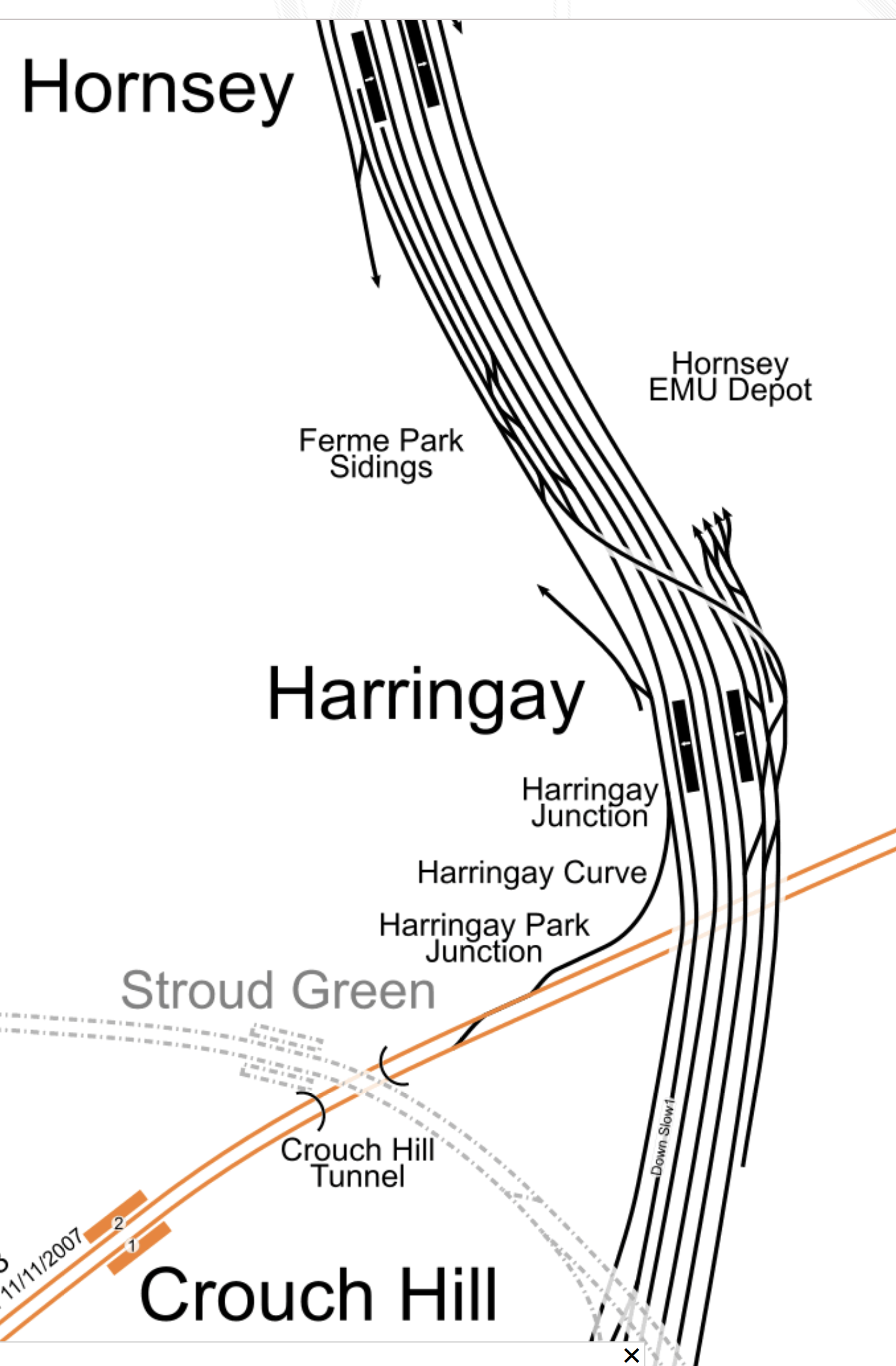
This second map from cartometro, shows the lines South of Alexandra Palace stations.
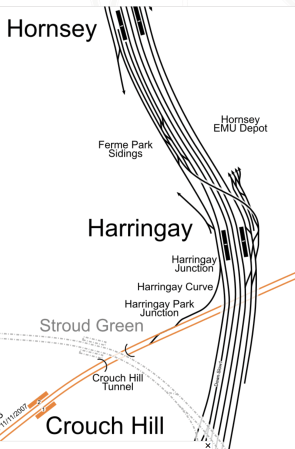
Note.
- Hornsey is the next station to the South of Alexandra Palace.
- The Eastern side of the East Coast Main Line is crowded with maintenance depots for trains.
- The orange line is the Gospel Oak to Barking Line.
By the use of digital signalling a new freight route through North London can been created.
Conclusion
How many other places can this technique be used?
Related Posts
These are related posts about the London Rail Freight Strategy (LRFS).
Decarbonisation Of London’s Freight Routes
Doubling Harlesden Junction
Gauge Improvements Across London
Gospel Oak Speed Increases
Headway Reductions On The Gospel Oak To Barking, North London and West London Lines
Heavy Axle Weight Restrictions
Kensal Green Junction Improvement
Longhedge Junction Speed Increases
Moving The West London Line AC/DC Switchover To Kensington Olympia
Moving The West London Line AC/DC Switchover To Shepherd’s Bush
Nunhead Junction Improvement
Stratford Regulating Point Extension
Will Camden Road Station Get A Third Platform?
Will Clapham Junction Station Get A Platform 0?
June 27, 2021
Posted by AnonW |
Transport/Travel | Alexandra Palace Station, Digital Signalling, East Coast Main Line, Freight, Gospel Oak And Barking Line, London Rail Freight Strategy, North London Line |
15 Comments
London has a rail capacity problem, for both freight and passenger trains.
This report from Network Rail is entitled The London Rail Freight Strategy (LRFS).
One of the secondary recommendations of the report is to increase speed through Gospel Oak.
The report explains it like this.
This proposal would see the current 20mph line speeds through Gospel Oak increased, through an upgrade to the junction immediately to the west of the station. Improving the flow of traffic through this critical flat junction, where the North London Line and Gospel Oak-Barking Line meet, would be of benefit for the wider operations and performance of these orbital routes. Freight trains in particular, which run non-stop through Gospel Oak, using all available routes, would see a notable uplift to how quickly they are able to pass through the area.
This would not only contribute to achieving the fast end-to-end cross-London paths that are a priority for freight but would also reduce the time trains would occupy the junction, increasing performance resilience at Gospel Oak, the impact of which would drive improvement right across the North London Line and Gospel Oak and Barking Line.
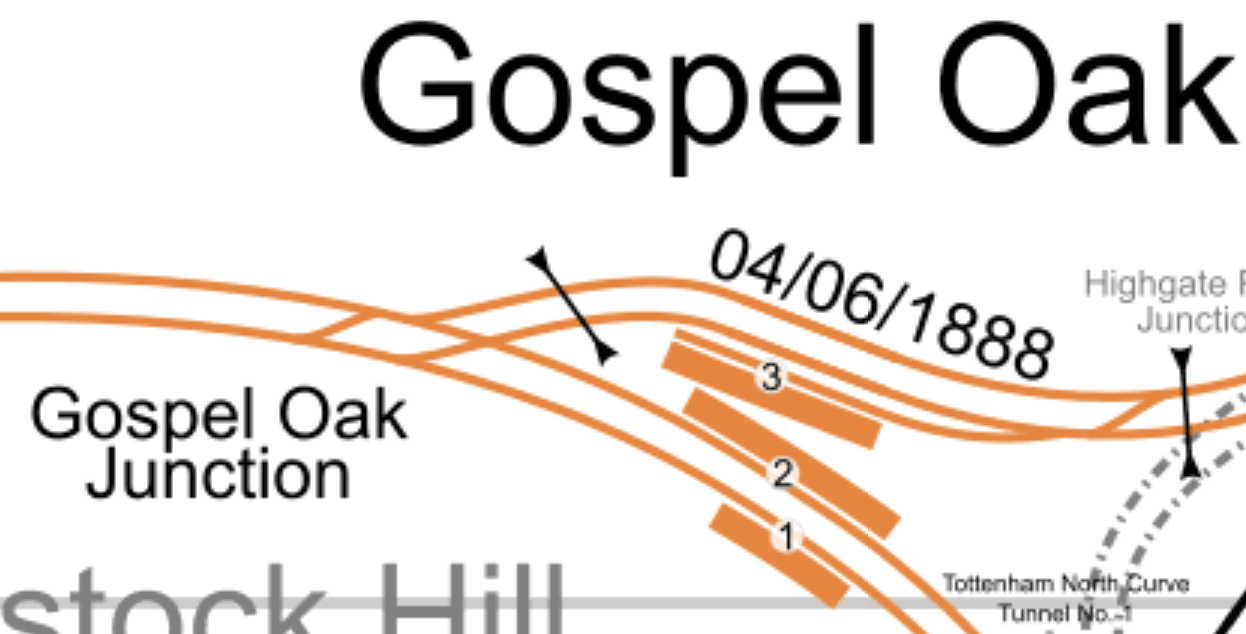
This map from cartometro shows the track layout at Gospel Oak.
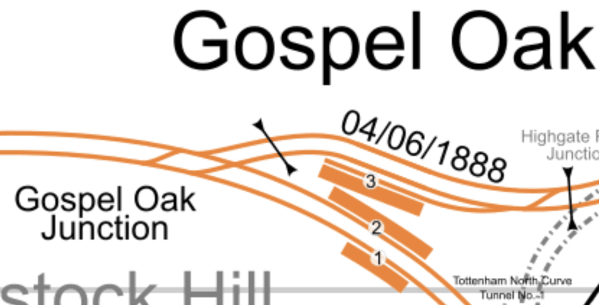
Note.
- The double-track North London Line passing through Platforms 1 and 2 at Gospel Oak station.
- The double-track Gospel Oak and Barking Line passing to the North of the station.
- Platform 3 is a West-facing bay platform for services to Barking.
- There is no Westbound connection to Platform 3.
- All tracks in the map are hace 25 KVAC overhead electrification.
The two double-track railways merge west of the station at Gospel Oak junction.
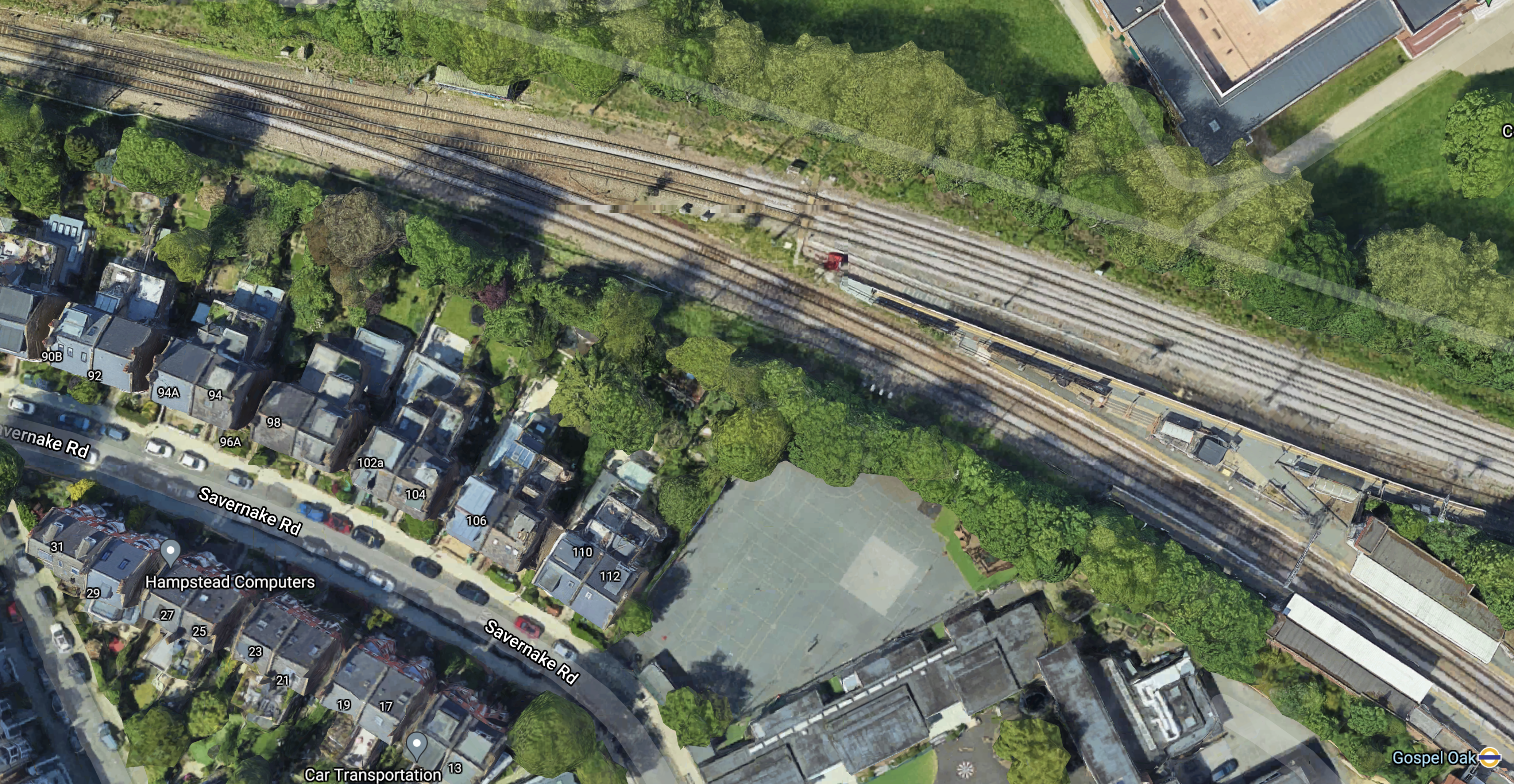
This Google map shows the same area.
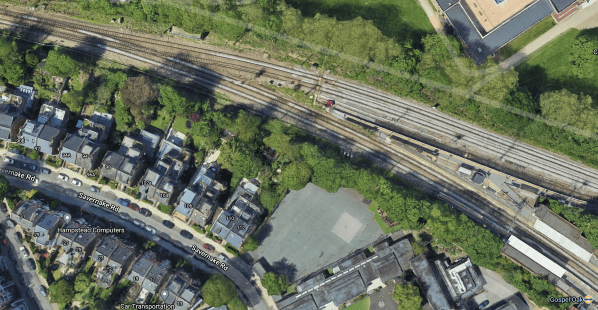
Note.
- Gospel Oak junction is in the North-West corner of the map.
- Platform 1 and 2 of Gospel Oak station are in the South-East corner of the map.
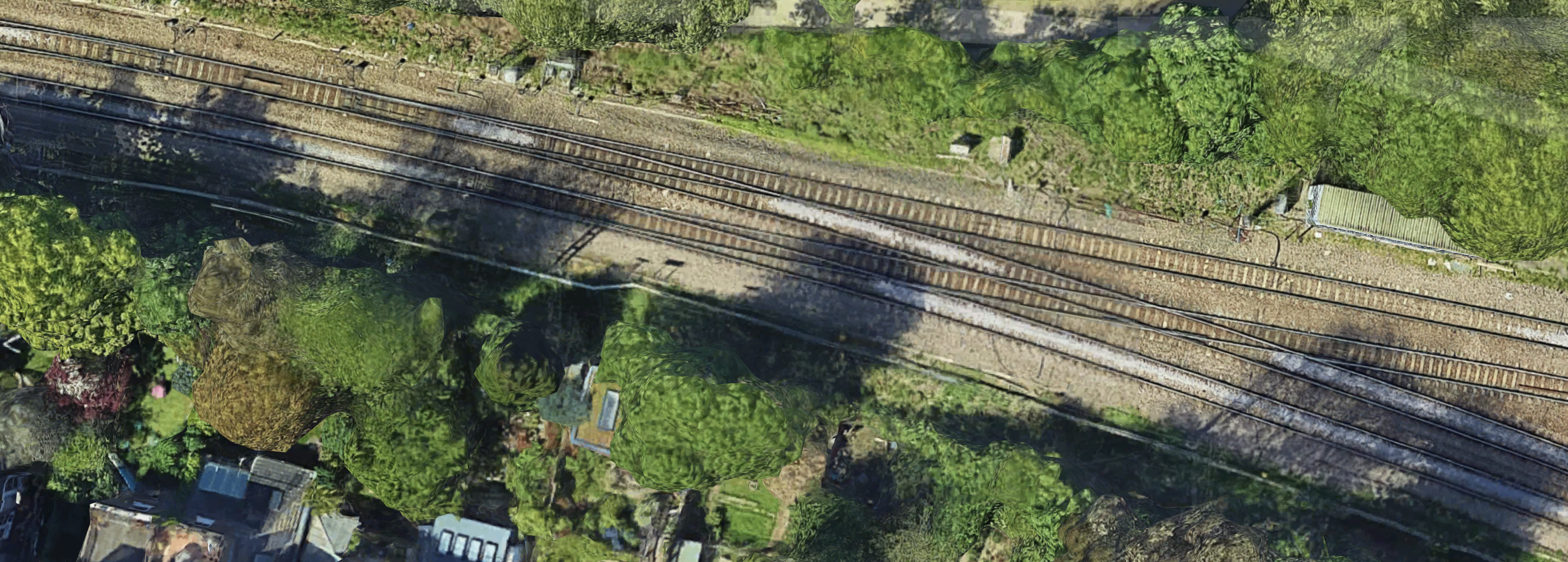
This Google map shows the junction to a larger scale.
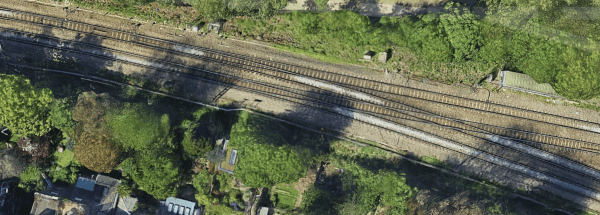
There would appear to be space to the North of the junction for expansion.
It might even be possible to squeeze in another line, so that trains can go straight through at a faster speed.
Conclusion
This looks like another junction, that could be easy to improve on an engineering basis.
But whether the locals will accept it quietly could be another matter.
Related Posts
These are related posts about the London Rail Freight Strategy (LRFS).
Decarbonisation Of London’s Freight Routes
Doubling Harlesden Junction
East Coast Main Line South Bi-Directional Capability
Gauge Improvements Across London
Headway Reductions On The Gospel Oak To Barking, North London and West London Lines
Heavy Axle Weight Restrictions
Kensal Green Junction Improvement
Longhedge Junction Speed Increases
Moving The West London Line AC/DC Switchover To Kensington Olympia
Moving The West London Line AC/DC Switchover To Shepherd’s Bush
Nunhead Junction Improvement
Stratford Regulating Point Extension
Will Camden Road Station Get A Third Platform?
Will Clapham Junction Station Get A Platform 0?
June 27, 2021
Posted by AnonW |
Transport/Travel | Gospel Oak And Barking Line, Gospel Oak Station, London Overground, London Rail Freight Strategy, North London Line |
17 Comments
London has a rail capacity problem, for both freight and passenger trains.
This report from Network Rail is entitled The London Rail Freight Strategy (LRFS).
One of the secondary recommendations of the report is to improve the gauge across London.
The report explains it like this.
The portfolio of options developed from this strategy needs to include a cross-London programme of gauge clearance, to address existing gaps and open up new market opportunities for rail freight in the long-term future.
Priorities in this area include:
- Formal publication of W10 clearance on the North London Line from Kensal Green Junction to Acton Wells Junction. This section is currently only published as W9 but has been used for diversions of W10 traffic in the recent past.
- Further work to understand what would be required to achieve W12 clearance on the North London Line and Gospel Oak-Barking Line.
This stands to enable rail freight to take advantage of emerging opportunities in the short-sea market from the Essex Thameside ports
and is a priority for stakeholders.
Continued development work towards gauge enhancement of the Channel Tunnel classic routes, which run through south and west London to Wembley.
The ultimate aim is to progress a programme of clearance works to achieve full W12, but opportunities to deliver incremental improvements by clearing for wagon and box combinations above what is possible today, but short of W12, are also being actively considered.
It appears to me, that a series of well-designed and well-defined projects is needed to update all those places, where loading gauge is insufficient.
In the Felixstowe And Nuneaton Freight Capacity Scheme, Phase 1 included increasing the loading gauge between Peterborough and Nuneaton to a loading gauge of W10.
This scheme involved the replacement of fourteen bridge and eleven tracking lowering/slewing schemes.
Conclusion
Gauge enhancement on a difficult railway has been performed successfully in several places in the UK and the bullet must be bitten to enhance the loading gauge appropriately, through London.
Related Posts
These are related posts about the London Rail Freight Strategy (LRFS).
Decarbonisation Of London’s Freight Routes
Doubling Harlesden Junction
East Coast Main Line South Bi-Directional Capability
Gospel Oak Speed Increases
Headway Reductions On The Gospel Oak To Barking, North London and West London Lines
Heavy Axle Weight Restrictions
Kensal Green Junction Improvement
Longhedge Junction Speed Increases
Moving The West London Line AC/DC Switchover To Kensington Olympia
Moving The West London Line AC/DC Switchover To Shepherd’s Bush
Nunhead Junction Improvement
Stratford Regulating Point Extension
Will Camden Road Station Get A Third Platform?
Will Clapham Junction Station Get A Platform 0?
June 26, 2021
Posted by AnonW |
Transport/Travel | Freight, Gauge Enhancement, London Rail Freight Strategy |
16 Comments
London has a rail capacity problem, for both freight and passenger trains.
This report from Network Rail is entitled The London Rail Freight Strategy (LRFS).
One of the secondary recommendations of the report is to increase speed through Longhedge junction.
The report explains it like this.
There is an opportunity to enhance Longhedge Junction, a key location for freight passing through the Battersea area, to enable higher speeds and provide faster transit between the South London Line and West London Line or Clapham Junction (for the Brighton Main Line or Windsor lines).
This would benefit the numerous freight flows through this important part of the network, where two orbital routes connect to each other and to radial routes in and out of London to the south and south-west.
London Overground SLL services running to and from Clapham Junction would also benefit from an increase to the existing 25mph line speed through Longhedge Junction.
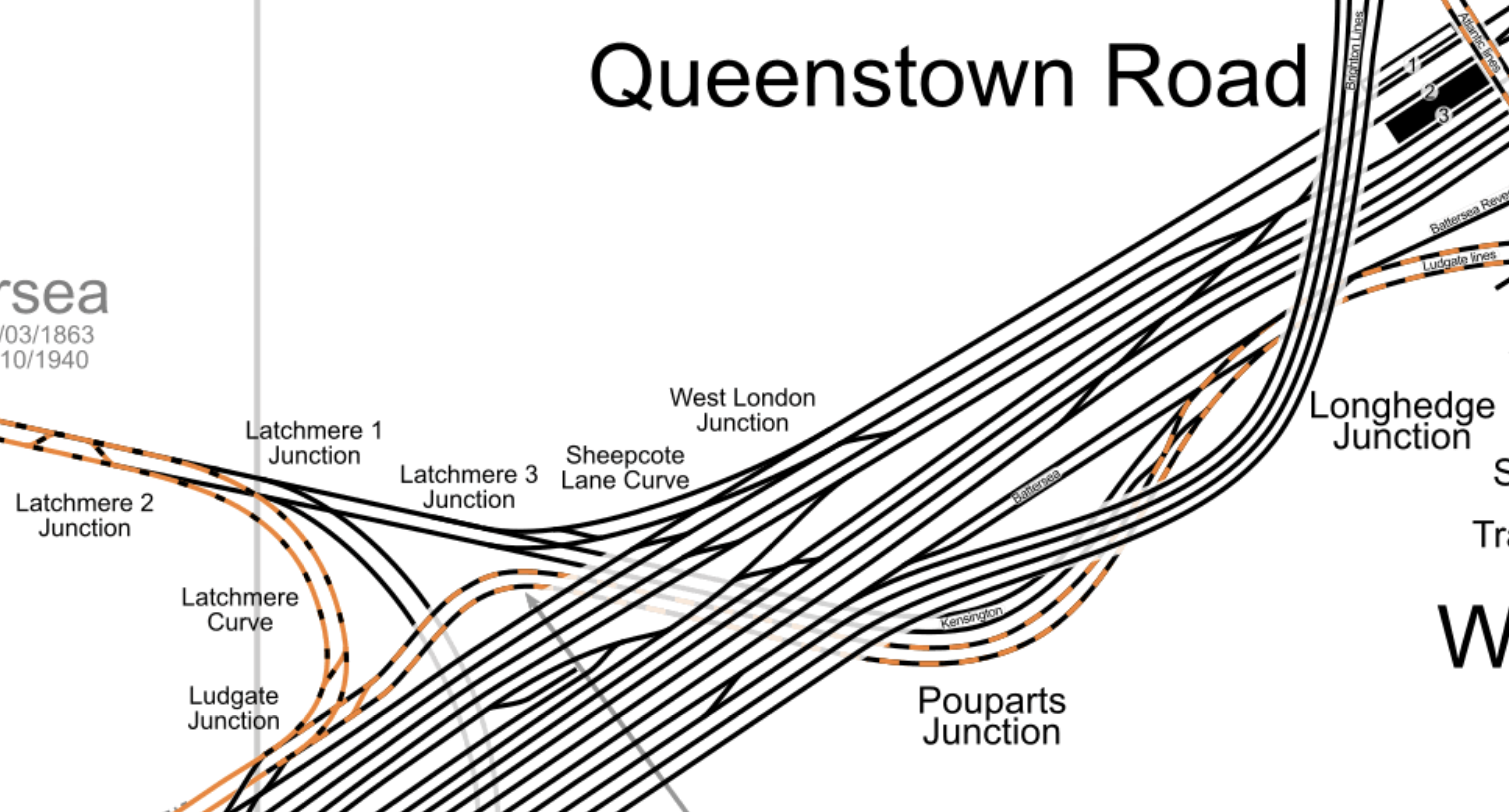
This map from cartometro shows the location of Longhedge junction.
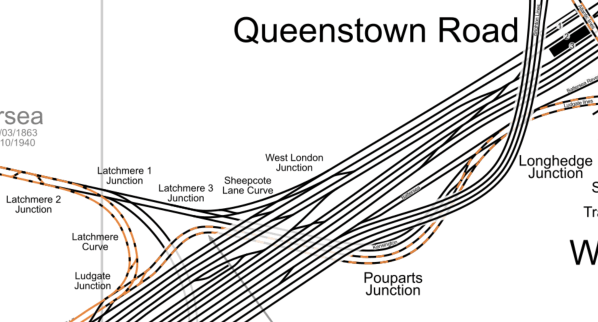
Note.
- The orange and black tracks are London Overground routes.
- The Overground route going East is the Dalston Junction and Clapham Junction service that goes via the South London Line (SLL).
- The Overground route going West is the Stratford and Clapham Junction service that goes via the West London Line (WLL).
- The two Overground routes combine to run into the Overground platforms at Clapham Junction.
- There is a double-track route, that links Latchmere 1 junction on the West London Line with Longhedge junction on the South London Line.
- Longhedge junction is in the East of the map.
It is an area congested with train tracks and junctions.
Traffic Through Longhedge Junction
Longhedge junction is busy, with the following trains in a typical hour.
- Four tph between Dalston Junction and Clapham Junction stations.
- Up to six assorted freight tph.
Note that services run in both directions.
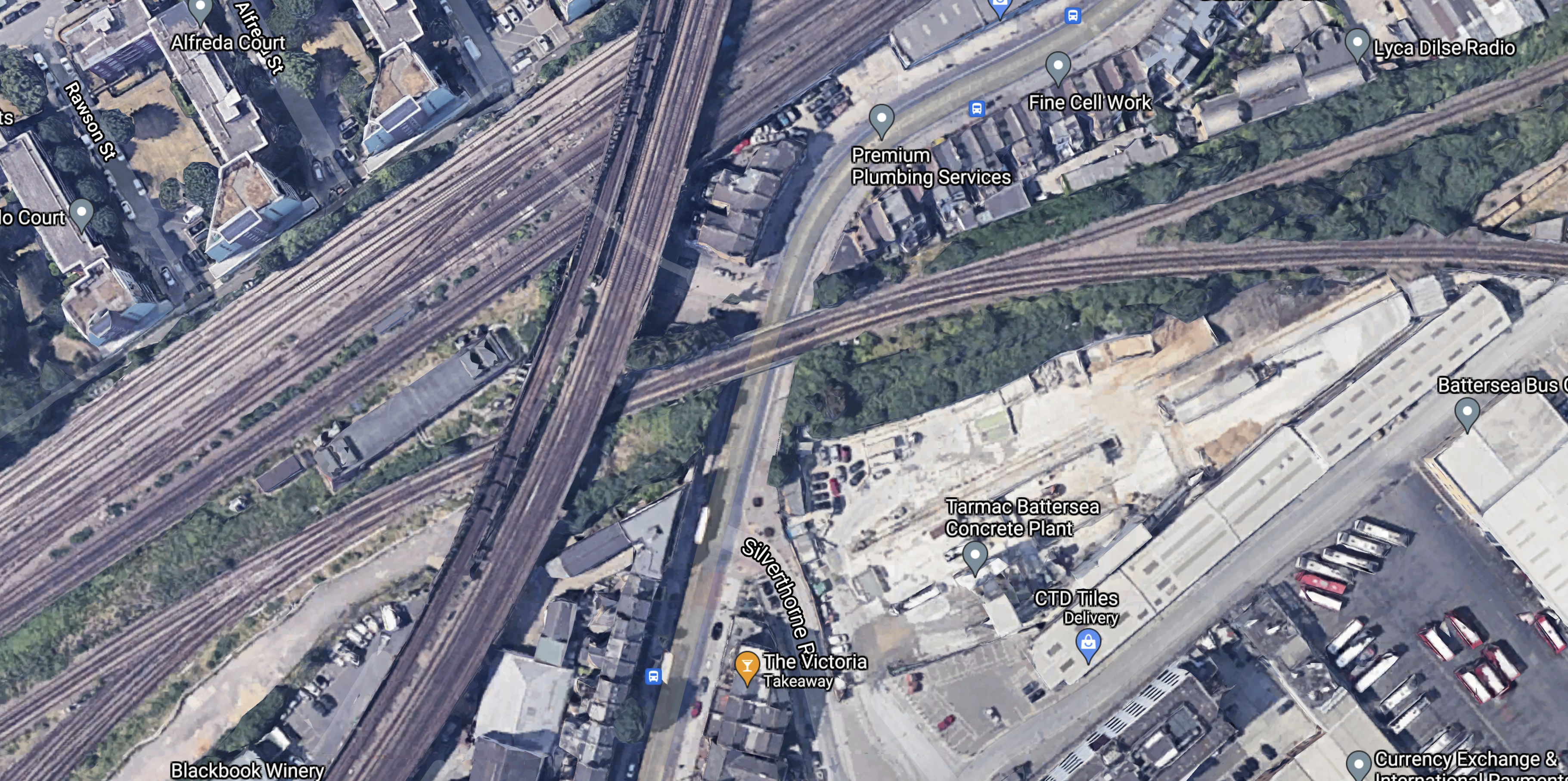
But this Google Map of the are gives hope.
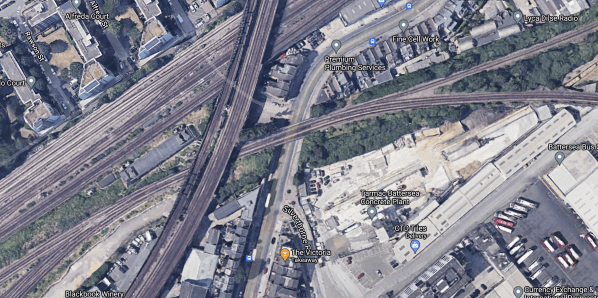
Longhedge junction is to the West of the West of the tracks running North South and it looks like there could be plenty of space to realign the tracks and improve the junction.
As with Nunhead Junction, which I wrote about in Nunhead Junction Improvement, it could be that the use of electric haulage on freight trains through the junction with their more nimble acceleration might help.
Conclusion
This appears to be a serious problem.
What it needs now is a well-designed scheme to speed freight and passenger trains through the junction.
Related Posts
These are related posts about the London Rail Freight Strategy (LRFS).
Decarbonisation Of London’s Freight Routes
Doubling Harlesden Junction
East Coast Main Line South Bi-Directional Capability
Gauge Improvements Across London
Gospel Oak Speed Increases
Headway Reductions On The Gospel Oak To Barking, North London and West London Lines
Heavy Axle Weight Restrictions
Kensal Green Junction Improvement
Moving The West London Line AC/DC Switchover To Kensington Olympia
Moving The West London Line AC/DC Switchover To Shepherd’s Bush
Nunhead Junction Improvement
Stratford Regulating Point Extension
Will Camden Road Station Get A Third Platform?
Will Clapham Junction Station Get A Platform 0?
June 26, 2021
Posted by AnonW |
Transport/Travel | Clapham Junction Station, London Overground, London Rail Freight Strategy, Longhedge Junction, South London Line, West London Line |
17 Comments



 The Anonymous Widower