Green Hydrogen Roundup: Statera Eyes ‘Critical’ 3GW Project In Scotland; UK Government Provides Support To Carlton Power And Octopus Hydrogen
The title of this post, is the same as that of this article on Current News.
This is the first heading.
Statera to develop ‘critical’ 3GW green hydrogen project in Scotland
These two paragraphs outline the project.
Energy generation and storage company Statera has released plans to develop a 3GW green hydrogen project in Scotland capable of supplying the UK with up to 30% of its 10GW by 2030 hydrogen target.
The major green hydrogen project is set to harness surplus Scottish wind power to power an electrolyser facility. The green hydrogen is expected to supply Statera’s power generating facilities and the UK’s carbon intensive industrial clusters via existing gas transmission pipelines.
This project will be built in Kintore.
This Google Map shows Kintore sub station.
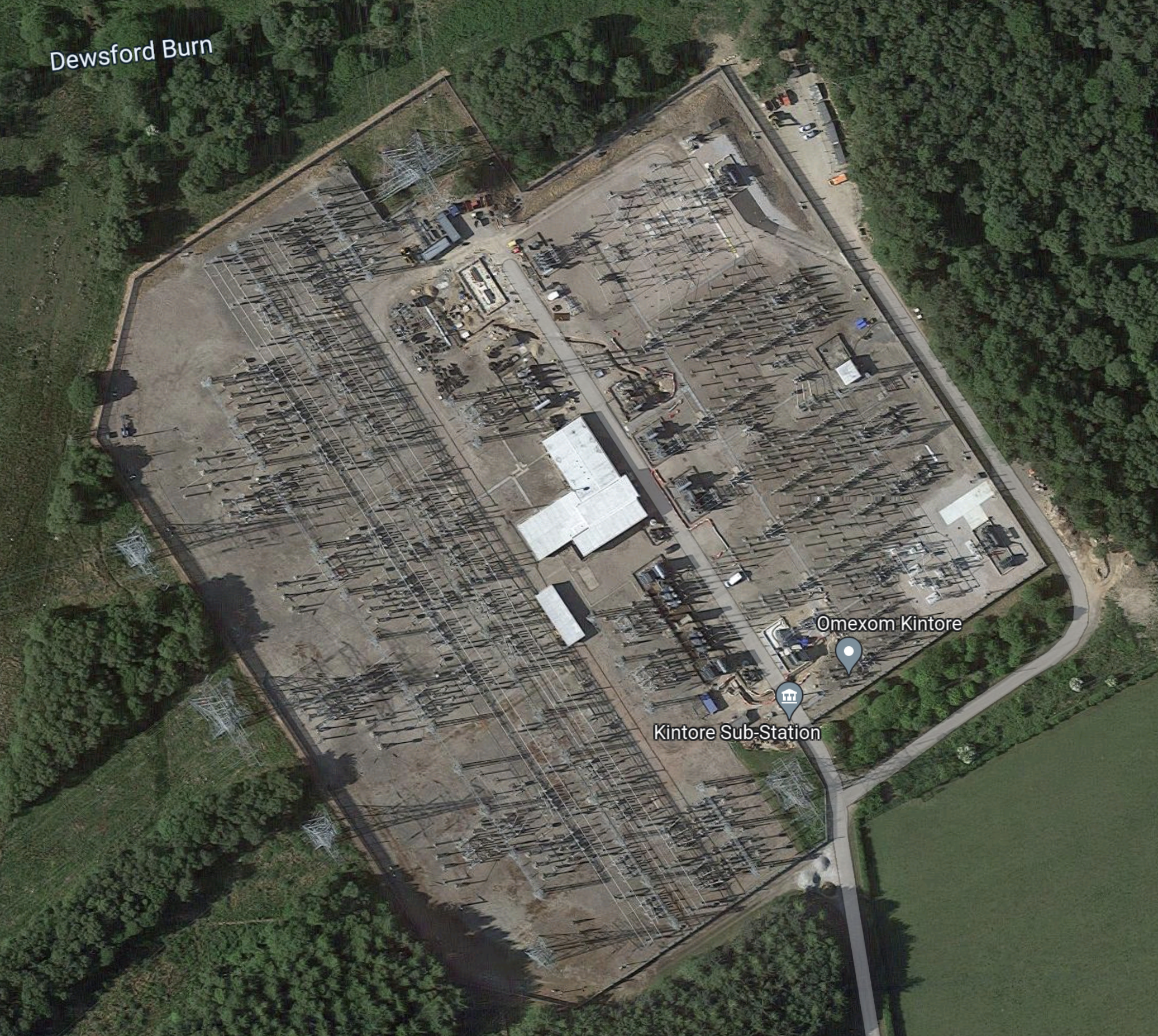
As this substation features on the home page of Kintore Hydrogen’s informative web site, I would assume, the electrolyser will be built nearby.
Statera’s web site is also informative.
This is the second heading.
Carlton Power receives UK government backing for three green hydrogen projects
These two paragraphs outline the projects.
Energy infrastructure development company Carlton Power has received UK government backing for three green hydrogen projects in Greater Manchester, Cumbria and Devon.
The backing has been received via the first round of the government’s Hydrogen Business Model (HBM)/Net Zero Hydrogen Fund process, which is worth up to £240 million. Around 15 projects in total will receive financial backing via this allocation.
The three projects will have a total capacity of 240 MW.
This article is very much one to read fully and thoroughly.
These are my thoughts.
Hydrogen Will Be Used To Bring Energy South From Scotland
This is part of a quote from Statera’s Managing Director.
The use of green hydrogen in the project has various perks. Firstly, it will utilise excess green energy that is generated from the vast Scottish wind sector and thus provide an additional basis to decarbonise sectors.
In doing so, Statera has said this will reduce the need for more costly transmission grid reinforcements to convey excess electricity in Scotland to other parts of the UK – in particular large industrial clusters.
Extracting Hydrogen From The Hydrogen/National Gas Blend
It’s all very well bringing the hydrogen South from Scotland blended with natural gas in the existing gas network, but how do you deliver pure hydrogen to those that need it?
In New Device Separates Hydrogen From Natural Gas When The Two Gases Are Blended In Pipelines, I wrote about such a device that has been developed by HyET Hydrogen in the Netherlands.
It is claimed to be silent and to create 99.9 % pure hydrogen.
Conclusion
This is an important milestone in cutting the UK’s carbon emissions.
Riding The 34 Bus Between Arnos Grove Station And Walthamstow Bus Station
To continue on the route of the Superloop, I needed to get to North Walthamstow bus station, so I took a 34 bus from Arnos Grove station to Walthamstow bus station. I took these pictures.








































































Note.
- The route was along the North Circular Road and then into Walthamstow from the Crooked Billet roundabout.
- The North Circular Road was grade separated but quite congested.
- The North Circular Road has a 40 mph speed limit.
- There was only one station on the route; Silver Street, by the North Middlesex Hospital.
- Walthamstow bus interchange is by Walthamstow Central station and has reasonable amounts of space.
The journey took about 67 minutes.
I have two thoughts.
The Route Of The Bus 34 Could Be Part Of The Superloop
I feel my journey today, proved that this would be part of a feasible Superloop leg between North Finchley and Walthamstow Central bus stations.
This Google Map shows the route between North Finchley bus station and Arnos Grove Underground station.
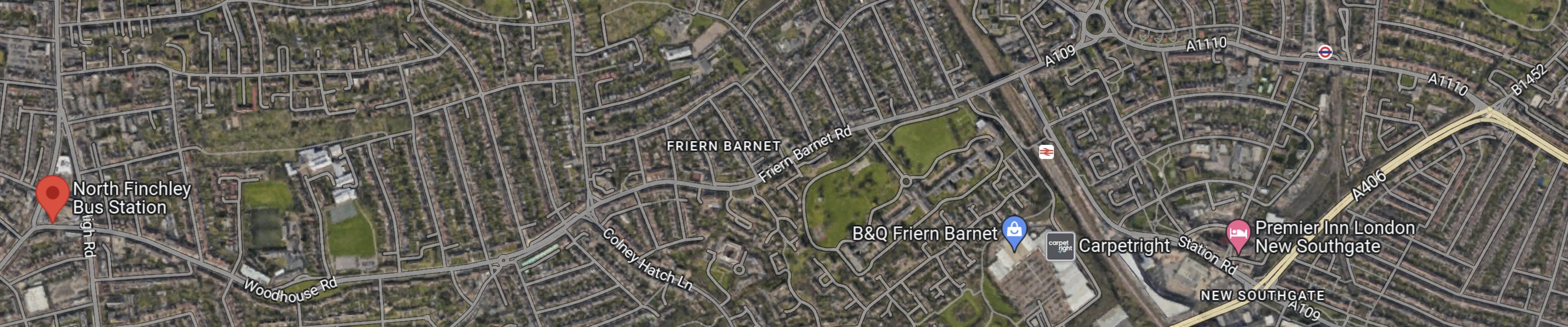
Note.
- North Finchley bus station is shown by the red arrow!
- Arnos Grove Underground station is shown by an Underground roundel in the North-East corner of the map.
- The light yellow road at the East side of the map is the North Circular Road.
There would appear to be a road connecting North Finchley bus station and Arnos Grove Underground station, that runs across the top of the map.
The road passes to the North of New Southgate station, which could be one of the Northern termini of Crossrail 2.
Edmonton
This Google Map shows the North Middlesex University Hospital.
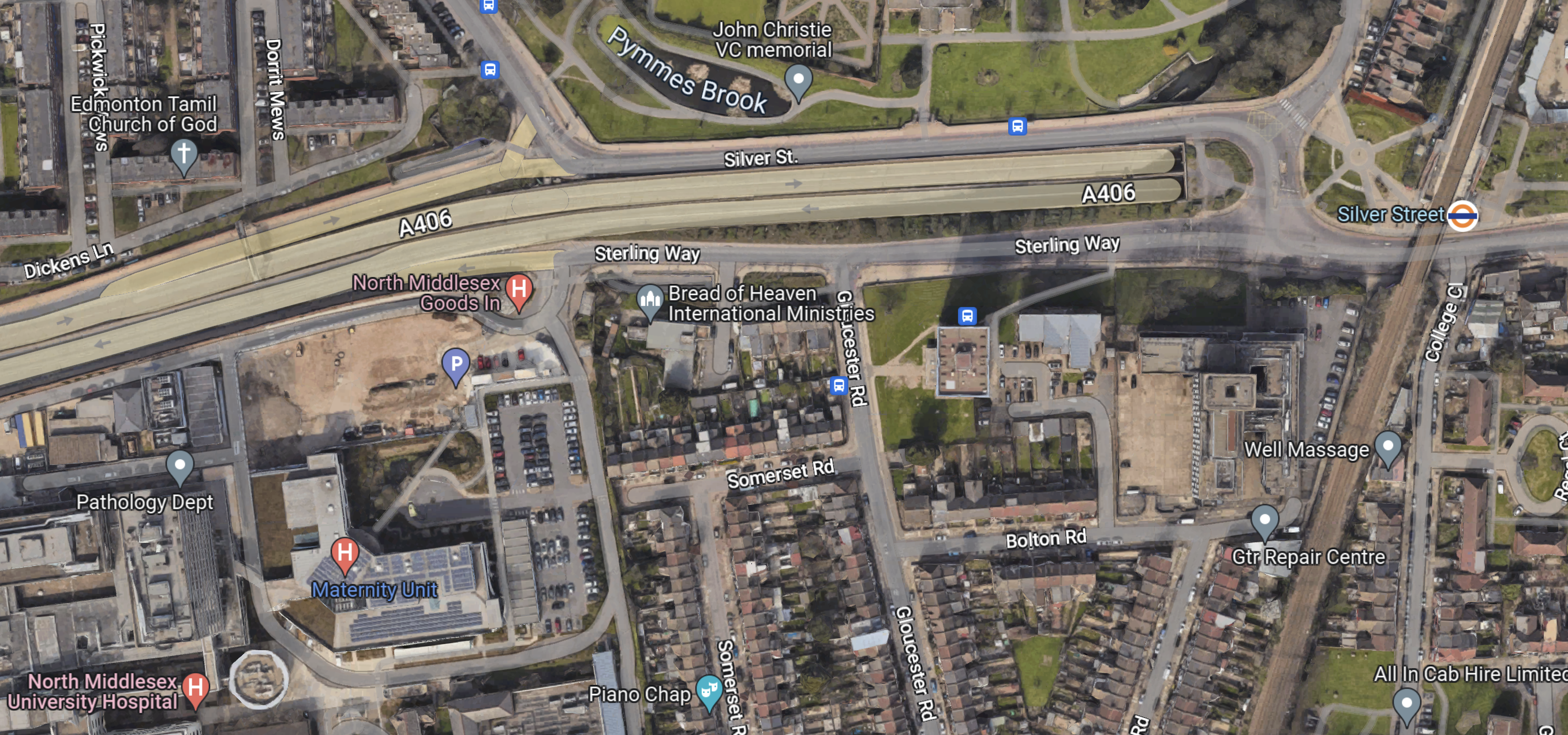
Note.
- The North Circular Road running across the map.
- The North Middlesex University Hospital in the South-West corner of the map.
- The London Overground and Silver Street station in the East of the map.
- There are several bus stops in the area.
This area could be turned into a comprehensive and very useful transport interchange.
Conclusion
The Superloop leg between North Finchley and Walthamstow Central bus stations has possibilities.
Adding Rose Hill Marple And Manchester Piccadilly To The Bee Network
This article on the Railway Gazette has a list of the lines, that will be transferred between Northern Rail and the Bee Network.
Included in the list is this line.
Rose Hill Marple And Manchester Piccadilly
I think this route would be the following.
- The Eastern terminus would be Rose Hill Marple.
- The Western terminus would be Manchester Piccadilly.
- Intermediate stations would be Romiley. Woodley, Hyde Central, Hyde North, Guide Bridge, Fairfield and Gorton.
- The route is partially-electrified with 25 KVAC overhead between Hyde North and Manchester Piccadilly.
- Most of the route has a range of operating speeds, up to 90 mph.
- The distance is 13.3 miles
- Trains take 34 minutes
- Trains are often two-car Class 156 trains.
The route is the same as the current Northern Trains service.
This is my thought.
Trains
This route is a classic for battery-electric trains, as only 6.8 miles at the Marple end is not electrified.
Merseyrail’s Class 777 trains or something similar would surely do nicely.
There would be no need for charging at the Marple end.
Adding Glossop/Hadfield And Manchester Piccadilly To The Bee Network
This article on the Railway Gazette has a list of the lines, that will be transferred between Northern Rail and the Bee Network.
Included in the list is this line.
Glossop/Hadfield And Manchester Piccadilly
I think this route would be the following.
- The Eastern termini would be Glossop and Hadfield.
- The Western terminus would be Manchester Piccadilly.
- Intermediate stations would be Dinting, Broadbottom, Hattersley, Godley, Newton for Hyde, Flowery Field, Guide Bridge and Ashburys.
- The route is fully electrified with 25 KVAC overhead.
- Most of the route has a range of operating speeds. up to 75 mph.
- The distance is 14.8 miles
- Trains take 41 minutes
- Trains are often three-car Class 323 trains.
The route is the same as the current Northern Trains service.
This is my thought.
Trains
The Class 323 trains could be easily replaced with a 25 KVAC overhead version of Merseyrail’s Class 777 trains.
Adding Buxton And Manchester Piccadilly To The Bee Network
This article on the Railway Gazette has a list of the lines, that will be transferred between Northern Rail and the Bee Network.
Included in the list is this line.
Buxton And Manchester Piccadilly
I think this route would be the following.
- The Southern terminus would be Buxton.
- The Northern terminus would be Manchester Piccadilly.
- Intermediate stations would be Dove Holes, Chapel-en-le-Frith, Whaley Bridge, Furness Vale, New Mills Newtown, Disley, Middlewood, Hazel Grove, Woodsmoor, Davenport, Stockport, Heaton Chapel and Levenshulme.
- he route is fully electrified with 25 KVAC overhead between Hazel Grove and Manchester Piccadilly.
- Most of the route has a range of operating speeds. up to 90 mph.
- The distance is 19 miles
- Trains take 62 minutes
- Trains are often two-car Class 150 trains working as a pair.
- The Buxton Line is one of the stiffest routes on the UK rail network.
The route is the same as the current Northern Trains service.
This is my thought.
Trains
I think there are three choices.
- Electrify the line fully and use 100 mph electric trains like Class 331 trains.
- Use 100 mph battery-electric trains, with large enough batteries to climb to Buxton.
- Use 100 mph hydrogen-electric trains, with enough power on hydrogen to climb to Buxton.
Note.
- The current diesel trains could be used until a zero-carbon solution is delivered.
- 100 mph trains would be needed because of the 90 mph section around Stockport.
- The stiffness of the line makes the choice difficult.
- Regenerative braking would allow trains to coast down the hill.
- Battery-electric trains would not need charging at Buxton.
I’m sure that the deal that will be setting up the Bee Network, would have a plan for the Buxton Line.
Adding Alderley Edge And Manchester Piccadilly To The Bee Network
This article on the Railway Gazette has a list of the lines, that will be transferred between Northern Rail and the Bee Network.
Included in the list is this line.
Alderley Edge And Manchester Piccadilly
I think this route would be the following.
- The Southern terminus would be Alderley Edge.
- The Northern terminus would be Manchester Piccadilly.
- Intermediate stations would be Wilmslow, Handforth, Cheadle Hulme, Stockport, Heaton Chapel and Levenshulme.
- The route is fully electrified with 25 KVAC overhead.
- Most of the route has a range of operating speeds. up to 110 mph.
- The distance is 13.6 miles
- Trains take 29 minutes
- Trains are often three-car Class 331 trains.
The route is the same as the current Northern Trains service.
This is my thought.
Trains
As the route is fully-electrified, electric trains are needed.
Any 110 mph trains would probably be ideal, to keep out of the way of the expresses.
The Apathy Society At Liverpool University
BBC Radio 5 is talking about unusual clubs.
At Liverpool University in the 1960s, a group of students tried to form the Apathy Society. In the end, it folded as no-one could be bothered to write the constitution!
The problem was if you didn’t have a constitution, you couldn’t get funding.
Largest Offshore Wind Project In UK Reaches Development Milestone
The title of this post, is the same as that of this article on offshoreWIND.biz.
This is the sub-heading.
An application to build the up to 4.1 GW Berwick Bank, the UK’s largest offshore wind farm, capable of providing enough electricity to power more than five million homes, has commenced determination, SSE Renewables said.
These two paragraphs outline the current status of the project.
Located roughly 38 kilometers off the East Lothian coast of Scotland, Berwick Bank is the largest offshore wind farm planning application to be submitted in the UK to date and one of the largest globally.
The consent process for the onshore elements of the project has now opened, which is being considered by East Lothian Council.
This process runs alongside the offshore consent process, which kicked off in December 2022 and is being considered by the Scottish Government. A final decision by authorities is expected later in 2023.
SSE Renewables hope to deliver first power by 2027.
Centrica And UK Infrastructure Bank Announce Significant Investment Into Sustainable Electricity Funds
The title of this post is the same as that of this press release from Centrica.
This is the sub-heading.
Funds set to help supercharge UK’s transition to cleaner, greener energy
These four paragraphs outline the investment.
Centrica and UK Infrastructure Bank have today announced they are investing up to £265 million in sustainable energy storage to help drive the country’s transition to a cleaner, greener and more resilient electricity network.
The proposed investment will support the development of new energy storage, following the Bank’s expression of interest to find innovative ways to fund and increase the nation’s storage capacity.
The Bank will invest £75 million on a match funding basis into the Gresham House Secure Income Renewable Energy & Storage LP (SIRES) alongside a £65 million investment from Centrica.
UK infrastructure Bank has committed to invest £125 million on a match-funding basis into Equitix UK Electricity Storage Fund.
Note.
- Centrica describes itself on its web site, as an energy services and solutions company.
- The Wikipedia entry for the UK Infrastructure Bank, says it is a British state-owned development bank.
- The Equitix web site has a mission statement sating it is a responsible investor, investing in, developing and managing global infrastructure assets, which materially contribute to the lives of the communities they serve.
By supporting two energy storage funds, it is to be hoped that more electricity storage is added to the UK electricity network.
This is a paragraph in the press release.
Currently National Grid forecasts show that up to 29 GW of total storage could be needed by 2030 and up to 51 GW by 2050. This is a huge increase on the 5 GW currently available and means there is a clear need to accelerate deployment of capital and investment in new storage projects.
I doubt there will be any problems deploying new energy storage.
The press release then has a paragraph on what each fund will do with the money.
Gresham House Secure Income Renewable Energy & Storage LP (SIRES)
I will pick these important points from the paragraph.
- Centrica and the UK Investment Bank will invest on a matched funding basis.
- Centrica will be a cornerstone investor, and this marks the first time the business has invested in such a fund.
- Collocation of renewable generation and short duration electricity storage facilities to help maximise grid connections.
- The seed asset will be a collocated solar and battery energy storage project in Hartlepool, County Durham, with 50 MWp solar capacity and 75 MWh of battery energy storage.
- Centrica will seek to provide a route-to-market for the assets in the fund once they become operational.
You could almost consider this a When the wind doesn’t blow and the sun doesn’t shine fund.
Equitix UK Electricity Storage Fund
I will pick these important points from the paragraph.
- The Bank will support the launch of the fund by committing to invest up to £125million on a match-funding basis.
- The fund will focus on a combination of innovative business models across both short and long duration storage. Short duration strategies may include installation in households and at underutilised commercial premises, as well as co-location.
- The fund will also aim to deploy a range of long duration storage technologies, such as pumped-hydro.
Does a range of technologies mean that they will support new storage technologies?
Hulam Farm, Hartlepool
This page on the Lightsource-BP web site is entitled Proposed Solar Installation At Hulam Farm.
This is the first paragraph.
The proposal involves Lightsource bp funding the development of a solar installation that will connect into the local electricity network, with an output power capacity of 49.9MW (Megawatts).
Could this be the solar part of the Hartlepool project mentioned in the press release?
- Lightsource BP are experienced funders of solar farms.
- Gresham House have built many batteries of the size needed.
- I don’t think technically, there will be too many problems.
I shall watch this development with interest.
What’s In It For Centrica?
I have to ask this question.
Consider.
- Centrica is part-owner of the 270 MW Lincs offshore wind farm, which was commissioned in September 2013.
- Centrica is half-owner of the 194 MW Lynn and Inner Dowsing wind farm, which was commissioned in March 2009.
- Both these wind farms have separate substations in Lincolnshire.
- Centrica also have interests in two onshore wind farms in Scotland, that have a combined capacity of 98 MW.
I wonder how many times these wind farms have been shut down because of too much electricity?
Will Gresham House pit batteries on these sites?
UK Launches GBP 160 Million Floating Wind Funding Round, Industry Not Satisfied With Investment
The title of this post, is the same as that of this article on offshoreWIND.biz.
This is the sub-heading.
The UK Government has announced that up to GBP 160 million in grant funding will be made available for certain investments for the floating offshore wind sector
These three paragraphs outline the scheme,
The Department of Energy Security and Net Zero (DESNZ) has established the Floating Offshore Wind Manufacturing Investment Scheme (FLOWMIS) to distribute GBP 160 million in funding to support critical port infrastructure that could enable the delivery of floating offshore wind.
Through this scheme, the government hopes to enable the delivery of the country’s 5 GW 2030 deployment ambition by securing additional suitable port capacity necessary to scale up and accelerate floating offshore wind deployment in the UK, as well as to increase capability in the UK floating wind supply chain, drive cost reduction, and the commercialisation of floating offshore wind technology.
In addition, the government hopes that this scheme will deliver industrial growth and associated regional economic and social benefits (for example, quality jobs and increased GVA).
Note.
- The scheme is called FLOWMIS.
- It seems to be geared to improve port infrastructure.
- It looks like some of these projects will be needed to support ScotWind and INTOG.
- This page on the Government web site, gives the latest state of FLOWMIS.
FLOWMIS could bring forward some interesting projects.
 The Anonymous Widower