Cleve Hill Solar Park
This document from the Department of Business, Industry and Industrial Strategy lists all the Contracts for Difference Allocation Round 4 results for the supply of zero-carbon electricity that were announced yesterday.
There were sixty-six solar power projects, that totalled up to 2.2 GW, which gives an average size of 33.3 MW.
I looked at the list and found the following.
- All contracts had the same strike price of £45.99 per MWh.
The largest solar farm with a contract is Cleve Hill Solar Park.
- ,Cleve Hill Solar Park received a contract for 112 MW.
- According to Wikipedia, the solar park will have a battery of 700 MWh.
- Will the battery enable the solar park to supply 112 MW on a twenty-four seven basis?
- According to Wikipedia, solar farms have a capacity factor of about 10 % in the UK.
- The Cleve Hill Solar Park will have a capacity of 350 MW.
- On a typical day, it will generate 350 * 24 *0.1 = 840 MWh
- The Contract for Difference mechanism means they get the strike price for each MWh of electricity up to the level in the contract, which is 112 MW.
- I suspect that for several months of the year, the solar park will be able to supply 112 MW to the grid.
- I do feel that overnight and on sunless winter days, the system will provide a lot less electricity.
- This page on the EMR web site explains Contract for Difference mechanism.
This extract from Wikipedia, describes, the solar park’s connection to the National Grid.
Across the marsh run the 400kV powerlines of the national grid. They are supported by eight 40m pylons. There is a large 150/400kV electricity substation at Cleve Hill, serving the London Array offshore wind farm that lies to the north beyond the mouth of the Thames Estuary. The output from the Solar Farm will use this substation to connect to the grid. Here, a battery array will placed, that will charge from the sunlight during the day and release the energy at night when it is needed.
I can build a table showing the earnings on a per day and per year basis, against average output.
- 20 MW – £22,076.20 per day – £8,057,448 per year
- 50 MW – £55,188 per day – £20,143,620 per year
- 70 MW – £77,263.20 per day – £28,201,068 per year
- 100 MW – £110,376 per day – £40,287,240 per year
- 112 MW – £123,621.12 per day – £45,121,708.80 per year
Note.
- I have assumed the year is 365 days.
- As a time-expired Control Engineer, I know that the battery can be optimised to supply the electricity, when it is needed and the price is highest.
- I wouldn’t be surprised to see co-operation between the London Array and Cleve Hill Solar Farm, as on a sunless but windy day, there may be scope to store excess wind energy in the battery for later release.
On this brief look, it appears that owning a solar farm, can be a nice little-earner.
Thoughts On The Battery
Consider.
- According to Wikipedia, the solar park will have a battery of 700 MWh.
- One of the largest lithium batteries in the UK is the one at Clay Tye in Essex, which is just under 200 MWh.
I suspect that lithium ion batteries will not be used.
Highview Power are building a 250 MWh battery in Manchester.
- This battery will be able to supply 50 MW.
- The batteries use liquid air as an energy storage medium.
- The company says the design can be extended up to a GWh by adding more tanks for the liquid air.
- The only fossil fuels used in Highview’s batteries is probably some lubricating oil.
I feel that a Highview battery or something similar would be an ideal solution at Cleve Hill Solar Farm.
I should be noted that the London Array is a 630 MW wind farm, so the London Array and Cleve Hill Solar Farm have a combined nameplate capacity of 980 MW.
I feel there is a case for a larger battery at the substation, to give the grid an almost-guaranteed GW all day.
It would be large than most if not all gas-fired power stations.
It could be used to balance the grid.
The controlling software would optimise the finances by buying and selling electricity at the right time.
Orbital Marine Power Awarded Two CfDs As Part Of UK Government Renewable Energy Auction
The title of this post, is the same as that of this news item on the Orbital Marine Power web site.
This is the heart of the news item.
Orbital, the renewable energy company focused on the development and global deployment of its pioneering floating tidal stream turbine technology, has been awarded two contracts for difference (CfDs) in the UK Allocation Round 4 (AR4) process.
This is a significant milestone in the company’s growth, with these CfDs underpinning the delivery of multi-turbine projects in Eday, Orkney.
Capable of delivering 7.2MW of predictable clean energy to the grid once completed, these Orbital tidal stream energy projects can power to up to 7,200 homes, supporting the UK’s security of supply, energy transition and broader climate change objectives.
This positive outcome also means Orbital can make a transformative investment in its UK supply chain, with around 150 jobs expected to be created through the manufacture and installation phase alone. On a jobs per MW installed basis, this would represent an unprecedented level of UK role creation for the construction phase of a renewable energy project.
It is good to see tidal power taken seriously.
The Strike Price For Tidal Stream Energy
Consider.
- Four contracts have been awarded for tidal stream energy.
- All have strike price of £178.54 per MWh of electricity.
- This may seem high, as all large wind farms have a strike price of only £37.35 per MWh of electricity.
On the other hand, there is a level playing field for all tidal stream energy developers. Just as there is for large wind farm developers, who have to live with £37.35 per MWh of electricity.
I think it will incentivise the developers and give them a reward for their technology.
All these strike prices are also mapped out for fifteen years, when trying to raise money for your tidal stream gubbins, you will know exactly where you stand.
I’ll give the Department of Business, Energy and Industrial Strategy, at least four out of five for their strike price regime!
Norfolk Boreas Offshore Windfarm Contract Awarded
The title of this post, is he same as that of this article on the BBC.
These are the introductory paragraphs.
A government contract has been awarded for the first phase one of the biggest offshore wind zones in the world.
The Norfolk Boreas is expected to secure renewable electricity to meet the needs of around 1.5 million homes, Swedish firm Vattenfall said.
Alongside the Norfolk Vanguard project, it is part of the Norfolk Offshore Wind Zone, which was approved in February.
Together, Norfolk Boreas and Norfolk Vanguard will probably produce over 3 GW of electricity.
Ørsted Awarded Contract For World’s Single Biggest Offshore Wind Farm
The title of this post, is the same as that of this press release from Ørsted.
This is the sub-title.
The UK Department for Business, Energy and Industrial Strategy (BEIS) has awarded Ørsted a contract for difference for its Hornsea 3 offshore wind farm. The project was awarded at an inflation-indexed strike price of GBP 37.35 per MWh in 2012 prices.
And this is the first paragraph, which describes the size of the farm.
With a capacity of 2,852 MW, Hornsea 3 will produce enough low-cost, clean, renewable electricity to power 3.2 million UK homes, making a significant contribution to the UK Government’s ambition of having 50 GW offshore wind in operation by 2030 as part of the British Energy Security Strategy.
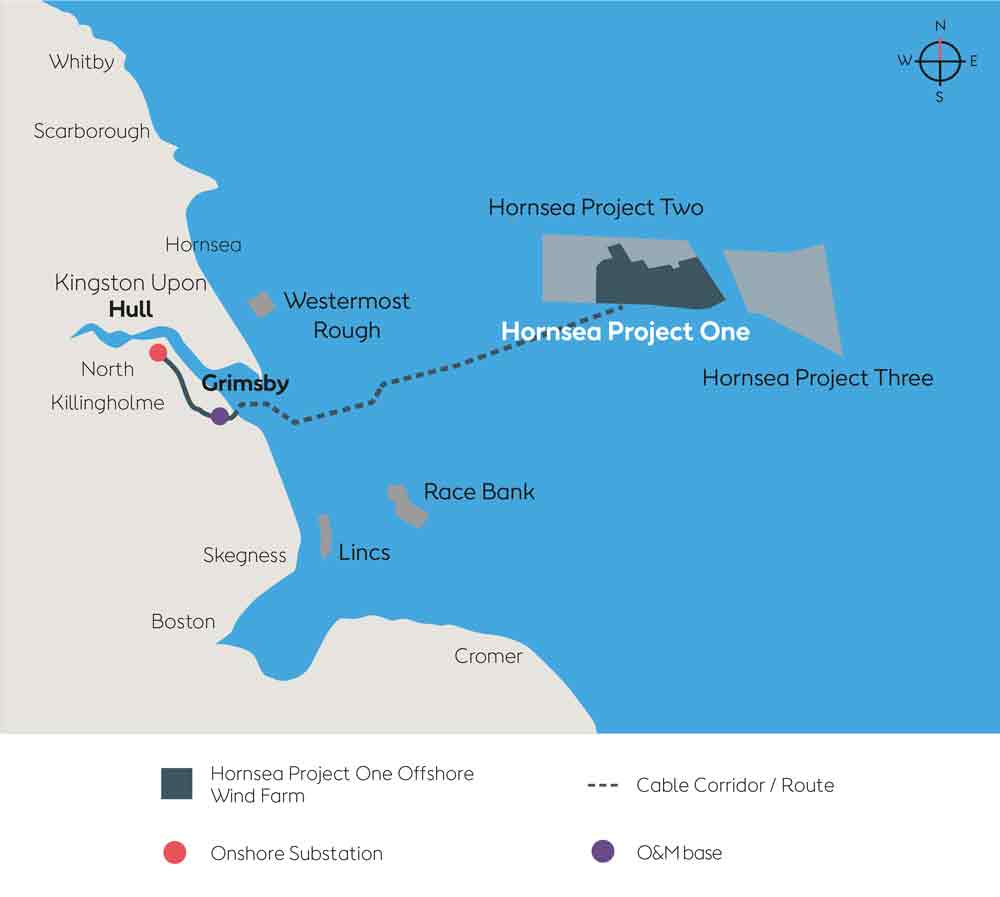
This map from Ørsted shows the location of the Hornsea wind farm and its three sections.
Note.
- The Hornsea Wind Farm, when fully developed, with a fourth section, is likely to have a capacity of around six GW.
- The Lincs, Race Bank and the Westernmost Rough wind farms are about another GW.
Looking at the map, I can see Humberside hosting the world’s largest hydrogen electrolyser to feed into the Humber Zero hydrogen network.
The Concept Of Remote Island Wind
This document from the Department of Business, Industry and Industrial Strategy lists all the Contracts for Difference Allocation Round 4 results for the supply of zero-carbon electricity that were announced yesterday.
The contracts have also introduced a concept that is new to me, called Remote Island Wind. All have got the same strike price of £46.39 per MWh.
Two of the projects on Orkney are community projects of around 30 MW, run by local trusts. This is surely, a model that will work in many places.
There is more on Orkney’s Community Wind Farm Project on this page of the Orkney Islands Council web site.
It could even have an electrolyser to provide hydrogen for zero-carbon fuel, when there is more electricity than is needed. Companies like ITM Power and others already build filling stations with an electrolyser, that can be powered by wind-generated electricity.
The other Remote Island Wind projects are larger with two wind farms of over 200 MW.
It does look to me, that the Department of BEIS is nudging wind farm developers in remote places to a model, that all stakeholders will embrace.
The Viking Wind Farm
I wrote about this wind farm in Shetland’s Viking Wind Farm.
There are more details in this press release from SSE enewables, which is entitled CfD Contract Secured For Viking Energy Wind Farm.
These introductory paragraphs, give a good explanation of the finances of this farm.
SSE Renewables has been successful in the UK’s fourth Contract for Difference (CfD) Allocation Round, announced today, and has secured a low-carbon power contract for 220MW for its wholly-owned Viking Energy Wind Farm (Viking) project, currently being constructed in Shetland.
Viking’s success in securing a contract follows a competitive auction process in Allocation Round 4 (AR4) where it competed within Pot 2 of the allocation round set aside for ‘less established’ technologies including Remote Island Wind.
The 443MW Viking project, which SSE Renewables is currently building in the Shetland Islands, has secured a CfD for 220MW (50% of its total capacity) at a strike price of £46.39/MWh for the 2026/27 delivery year.
The successful project will receive its guaranteed strike price, set on 2012 prices but annually indexed for CPI inflation, for the contracted low carbon electricity it will generate for a 15-year period. Securing a CfD for Viking stabilises the revenue from the project whilst also delivering price security for bill payers.
It’s very professional and open to explain the capacity, the contract and the finances in detail.
The press release also has this paragraph, which details progress.
Viking is progressing through construction with over 50 per cent of turbine foundation bases poured. When complete in 2024, Viking Energy Wind Farm will be the UK’s most productive onshore wind farm in terms of annual electricity output, with the project also contributing to Shetland’s security of supply by underpinning the HVDC transmission link that will connect the islands to the mainland for the first time.
SSE also released this press release, which is entitled Major Milestone Reached As First Subsea Cable Installation Begins On Shetland HVDC Link, where this is the first paragraph.
The first phase of cable laying as part of the SSEN Transmission Shetland High-Voltage Direct Current (HVDC) Link began this week off the coast of Caithness, marking a major milestone in the £660M project.
SSE seem to be advancing on all fronts on the two projects!
The Stornoway Wind Farm
This press release from EDF Renewables is entitled EDF Renewables UK Welcomes Contract for Difference Success, where these are the first two paragraphs.
Two EDF Renewables UK projects bid into the Contract for Difference (CfD) auction round held by the UK Government’s BEIS department have been successful.
The projects are the Stornoway wind farm on the Isle of Lewis and Stranoch wind farm in Dumfries and Galloway. Together these onshore wind farms will provide 300 MW of low carbon electricity which is an important contribution to reaching net zero.
The press release also gives this information about the contract and completion of the Stornoway wind farm.
Stornoway Wind Farm on the Isle of Lewis is a joint venture with Wood. The project has won a CfD for 200 MW capacity, the strike price was £46.39, the target commissioning date is 31 March 2027.
This page on the Lewis Wind Power web site, gives these details of the Stornoway Wind Farm.
The Stornoway Wind Farm would be located to the west of the town of Stornoway in an area close to the three existing wind farm sites.
The project has planning consent for up to 36 turbines and is sited on land owned by the Stornoway Trust, a publicly elected body which manages the Stornoway Trust Estate on behalf of the local community.
The local community stands to benefit as follows:
- Community benefit payments currently estimated at £900,000 per annum, which would go to an independent trust to distribute to local projects and organisations
- Annual rental payments to local crofters and the Stornoway Trust – which we estimate could total more than £1.3m, depending on the CfD Strike Price secured and the wind farm’s energy output
- Stornoway Wind Farm is the largest of the three consented wind farm projects with a grid connection in place and is therefore key to the needs case for a new grid connection with the mainland. Indeed, the UK energy regulator Ofgem has stated that it will support the delivery of a new 450MW cable if the Stornoway and Uisenis projects are successful in this year’s Contract for Difference allocation round.
Note the last point, where only the Stornoway wind farm was successful.
The Uisenis Wind Farm
This press release from EDF Energy is entitled Lewis Wind Power Buys Uisenis Wind Farm, gives these details of the sale.
Lewis Wind Power (LWP), a joint venture between Amec Foster Wheeler and EDF Energy Renewables has bought the Uisenis Wind Farm project on the Isle of Lewis. The wind farm has planning consent for the development of 45 turbines with a maximum capacity of 162 MW. This would be enough to power 124,000 homes and would be the biggest renewable energy development on the Western Isles.
LWP owns the Stornoway Wind Farm project located around 20km to the north of Uisenis which has planning consent to develop 36 turbines to a maximum capacity of 180 MW – enough to power 135,000 homes.
This would bring Stornoway and Uisenis wind farms under the similar ownership structures.
This is a significant paragraph in the press release.
On behalf of Eishken Limited, the owner of the site where the Uisenis Wind Farm will be located, Nick Oppenheim said: “I am delighted that LWP are taking forward the wind farm. The resources available on the Eishken estate, and the Western Isles in general, means that it is an excellent location for renewable energy projects and, as such, the company is also developing a 300MW pumped storage hydro project immediately adjacent to the Uisenis wind farm. With such potential for renewables and the positive effect they will have on the local community, economy, and the UK as a whole I am are looking forward to positive news on both support for remote island projects and the interconnector.”
Note the mention of pumped storage.
This article on the BBC is entitled Pumped Storage Hydro Scheme Planned For Lewis, where this paragraph introduces the scheme.
A pumped storage hydro scheme using sea water rather than the usual method of drawing on freshwater from inland lochs has been proposed for Lewis.
The only other information is that it will provide 300 MW of power, but nothing is said about the storage capacity.
It looks like Lewis will have a world-class power system.
Mossy Hill And Beaw Field Wind Farms
Mossy Hill near Lerwick and Beaw Field in Yell are two Shetland wind farms being developed by Peel L & P.
This press release from Peel L & P is entitled Government Support For Two Shetland Wind Farms, where these are the first two paragraphs.
Plans for two onshore wind farms on the Shetland Islands which would help meet Scotland’s targets for renewable energy production are a step closer to being delivered after receiving long-term Government support.
Clean energy specialists Peel NRE has been successful in two bids in the Department for Business, Energy and Industrial Strategy’s (BEIS) Contracts for Difference (CfD) scheme; one for its Mossy Hill wind farm near Lerwick and the other for Beaw Field wind farm in Yell.
It looks like the two wind farms will power 130,000 houses and are planned to be operational in 2027.
Conclusion
I must admit that I like the concept. Especially, when like some of the schemes, it is linked to community involvement and improvement.
Only time will tell, if the concept of Remote Island Wind works well.
Hexicon Wins UK’s First Ever CfD Auction For Floating Offshore Wind
The title of this post, is the same as that of this press release from Hexicon.
This is the first paragraph.
Today (7th of July) the UK Government confirmed that Hexicon AB’s TwinHub project in the Celtic Sea was successful in the latest Contracts for Difference (CfD) Allocation Round (AR4). It has been awarded a CfD for its 32MW floating wind project at a strike price of £87.30/MWh (2012 real prices) taking the project a significant step closer to completion.
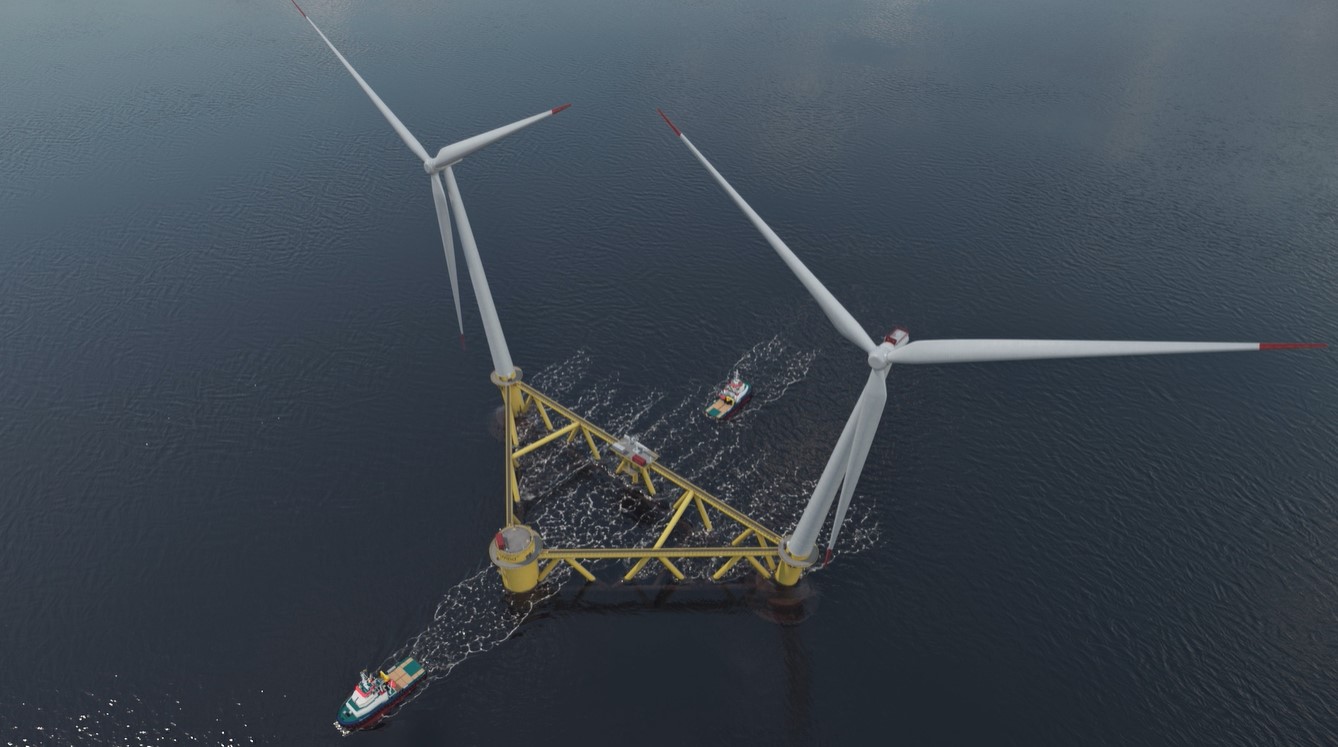
This image shows one of their TwinHub turbine installations being towed into place.
The TwinHub home page has a title of The First Floating Offshore Wind Project in The Celtic Sea.
This is the description on the page.
The TwinHub offshore wind demonstration project intends to prove how Hexicon’s innovative design with two turbines on one floating foundation can further reduce the Levelized Cost of Energy (also referred to as LCoE) before large scale commercialisation. The TwinHub project is a stepping stone to help kick-start floating wind in the Celtic Sea, an area identified as a hotspot for floating wind by the UK Government. It will pave the path for larger and larger projects to help support The Crown Estates’ ambitious target of 4GW of floating wind in the Celtic Sea.
Scroll the page down and there is a short video of a pair of wind turbines in operation.
- It appears that when there is no wind, it automatically goes into a safe parked mode.
- As the wind rises, one turbine starts up.
- The second turbine starts up and the float turns so they face the wind.
It appears to be a classic example of disruptive innovation.
I did the calculations for floating and reusable oil and gas platforms in the 1970s, that were designed by two Cambridge University professors, which would have been launched horizontally and upturned when in position. This experience leads me to believe that the Swedish designers of this type of platform have been able to verify that this is a workable design.
This document from the Department of Business, Industry and Industrial Strategy indicates that the demonstration is for 32 MW.
Does that indicate, that this installation is twin 16 MW wind turbines?
16 MW seems to be the size of the largest wind turbines in the world.
There is a lot to like about this Swedish design.
- As the video shows, it appears to balance itself with the wind.
- I suspect from the calculations I did in Cambridge, that the twin design with its higher weight is more stable than a floating single turbine design.
- The float and its two turbines can be assembled alongside a dock with a large stable onshore dockside crane.
- Servicing would also be done in a dock.
- Working onshore is much safer and easier, than working offshore.
- The twin design allows more power to be generated in a given area of sea.
This is a brilliant concept and it will give Putin, the Sheikhs and the other oil dictators, the most terrible of nightmares.
The initial site chosen for this design in the UK, will be in the sea at Hayle in Cornwall.
This map shows the location.
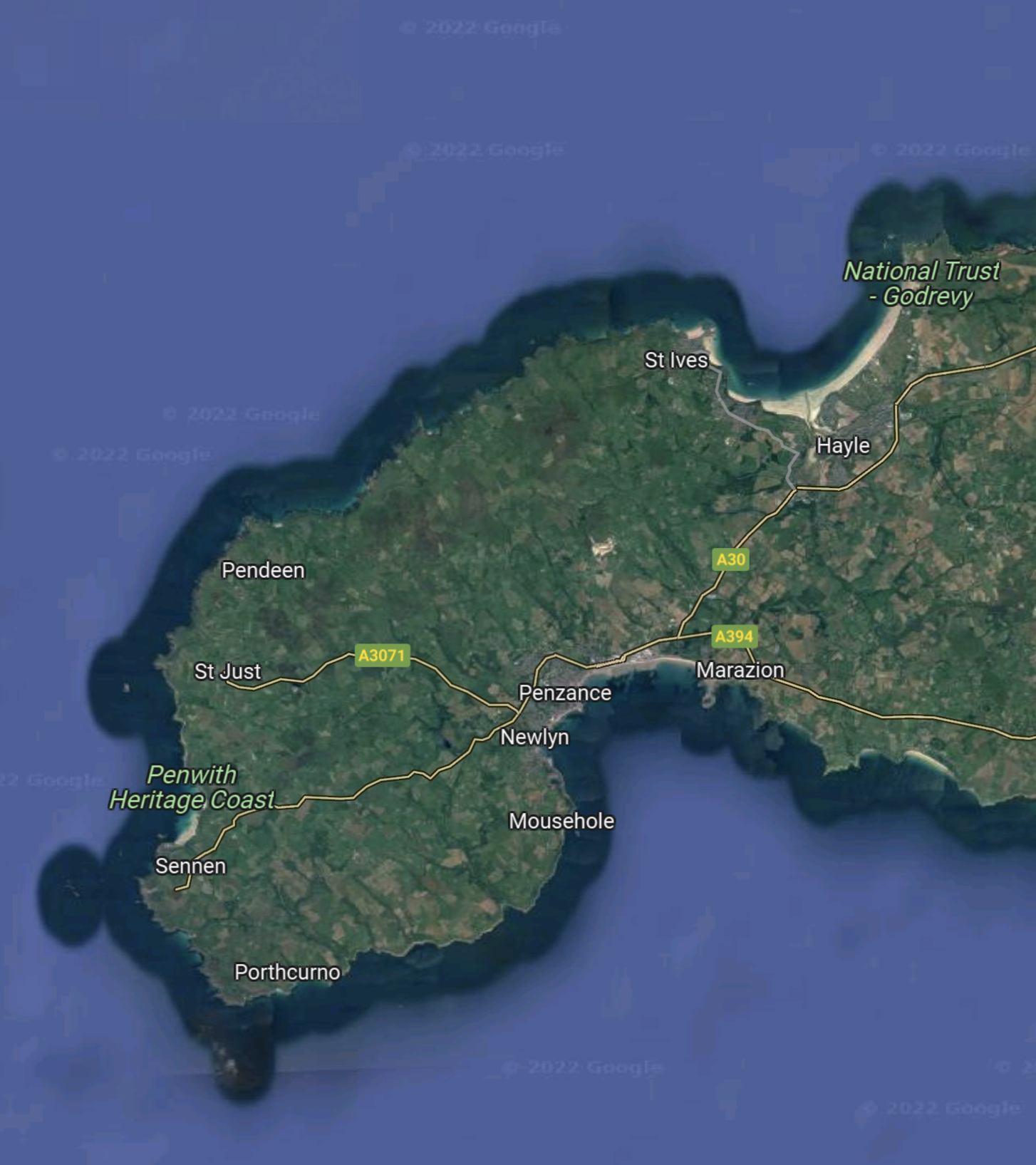
Hayle is in the North-East corner of the map, by the sandy beach.
A 32 MW turbine could probably provide enough electricity for 15,000 houses.
Air Products Partners Up On Hydrogen Production In The UK
The title of this post, is the same as that of this article on Upstream.
These three paragraphs explain the project.
Air Products has joined with power generator VPI to push forward a hydrogen hub on the south bank of the Humber Estuary in the UK, primarily meant to decarbonise VPI’s power production in Immingham.
The companies said they will develop an 800-megawatt production facility called the Humber Hydrogen Hub (H3) that would include carbon capture and storage and aim to capture up to 2 million tonnes per annum of carbon dioxide.
Hydrogen produced at the facility will first substitute fuel for VPI’s existing third gas turbine power train.
Note.
- VPI is a UK-based power company, providing energy to the National Grid.
- Immingham Power station is currently a 730 MW gas-fired power station, which is being expanded to 1240 MW.
- It looks like that expansion will use hydrogen.
It is all part of HumberZero.
Extending The Elizabeth Line – Linking To The Oxted Line
I believe that everybody in the South East of England needs the best access possible to the Elizabeth Line, by train from where they live.
- The Elizabeth Line serves the important places like Brick Lane, Canary Wharf, the City of London, Heathrow Airport, Liverpool Street station, the Olympic Park, Oxford Street and Paddington station directly.
- Because of its connection to Thameslink, the Elizabeth Line also serves important places like Bedford, Brighton, Cambridge, Gatwick Airport, Luton Airport and Tate Modern with a single change at Farringdon station.
- Using the Elizabeth Line, Thameslink and perhaps a bus, it is possible to get to most important places in Central London.
- The more passengers that use the Elizabeth Line and Thameslink, the more London’s businesses will thrive creating employment and tax revenues.
- It should also be remembered, that using a train to visit central London, probably cuts your carbon footprint.
- The Elizabeth Line also cost a fortune, so perhaps by using it, you will be getting some of your portion of what it cost you back.
This post is the first of several, where I discuss how to bring more passengers into the Elizabeth Line network.
The Oxted Line
The Oxted Line is a line with two branches; East Grinstead and Uckfield, which runs South from East Croydon station.
- The branch to East Grinstead is electrified, but the branch to Uckfield is not and is still run by diesel trains.
- Plans exist to run battery-electric trains on the Uckfield branch, but they always seem to be awaited,
- Network Rail are now saying that they will electrify the Uckfield branch with third-rail.
- All platforms on both branches can take ten-car trains, if not twelve.
- A reasonable amount of money has been spent on the Uckfield branch to improve it.
- Services on both branches are one train per hour (tph).
- London terminals of trains are London Bridge and Victoria, both of which have no easy connection to the Elizabeth Line.
The major faults of the current services are as follows.
- One tph is not enough.
- Victoria is an overcrowded terminal with no connection to the Elizabeth Line or Thameslink
- At London Bridge and East Croydon, there are tortuous step-free change to Thameslink.
- From London Bridge you can use the Northern Line to transfer to the Elizabeth Line, but it wouldn’t be the best route when taking a heavy case to Heathrow.
- From Victoria, you can use the Circle and District lines to the Elizabeth Line at Paddington.
The Oxted Line service needs to be improved.
I would do the following.
Move Uckfield Branch Services To Thameslink
This would mean that Uckfield services would call at East Croydon, London Bridge, Blackfriars, City Thameslink, Farringdon, St. Pancras and then terminate somewhere to the North.
- There would be a step-free change to the Elizabeth Line at Farringdon.
- East Croydon and London Bridge are still served.
- There are connections to the Circle, District, Hammersmith & City, Jubilee, Metropolitan, Northern, Piccadilly and Victoria Lines of the Underground.
- There will be no need for a terminal platform at London Bridge.
I believe that this gives much better connectivity.
Electrify To Uckfield
This is a long-debated question.
But as Thameslink trains are Class 700 trains, which are dual voltage, I’d electrify the Uckfield branch with 25 KVAC overhead electrification between Hurst Green and Uckfield.
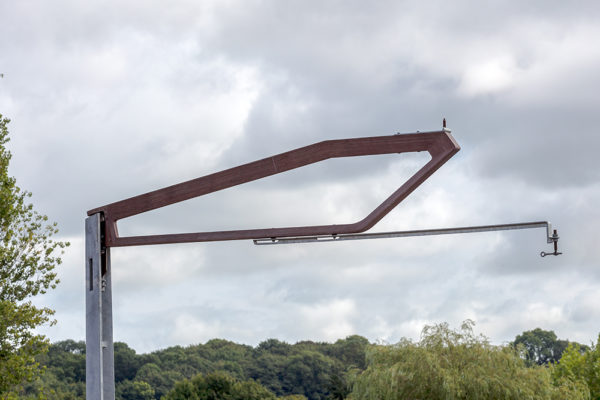
Lightweight catenary could be used to reduce visual intrusion.
Note.
- The curved beam at the top of this overhead electrification gantry is laminated wood.
- Power changeover would take place at Hurst Green station.
Hopefully, the electric trains would offset any anger at overhead wires.
Run Two tph To Uckfield
I am fairly certain that when Network Rail lengthened the platforms on the Uckfield branch, that they arranged the track and signalling, so that two tph could use the branch.
Run An Hourly Shuttle Between Oxted And East Grinstead
This service would be as follows.
- It would terminate in the bay platform at Oxted station.
- This would give 2 tph on this route.
The existing hourly service between East Grinstead and Victoria would continue.
Conclusion
I believe that this simple scheme could give very good benefits to all stakeholders.
Extending The Elizabeth Line – Toilets On A Service Between Heathrow And Southend Airports
The Wikipedia entry for Crossrail, has a section about an extension to Southend Airport, where this is said.
Stobart Aviation, the company that operates Southend Airport in Essex, has proposed that Crossrail should be extended beyond Shenfield along the Shenfield–Southend line to serve Southend Airport and Southend Victoria. The company has suggested that a direct Heathrow-Southend link could alleviate capacity problems at Heathrow. The extension proposal has been supported by Southend-on-Sea City Council.
I think there could be a big problem, in that I estimate the journey will take a few minutes short of two hours. Surely, this will mean toilets will need to be fitted.
Extending The Elizabeth Line – Rebuilding Shenfield Station
I have a feeling that Shenfield station will become a bottleneck on the Great Eastern Main Line.
- I feel that both passenger and freight traffic will increase through the station in the next ten years.
- I also feel that there is a possibility that the Elizabeth Line will be extended to Southend/Airport/Victoria and/or Beaulieu.
- Yesterday, I changed between a Southend and a Lizzie Line service, which meant down in one lift and up in another.
- With more and more housing likely to be built in the area, I wouldn’t be surprised to see a lot more parking.
I wouldn’t be surprised to see the station needing to be rebuilt and expanded in the next few years.
 The Anonymous Widower