LNER To Put Lincoln On The Rail Map
This article on Rail Magazine is entitled LNER To Run New Azumas To Lincoln.
The article says that from October 21st, 2019, the service between London and Lincoln would be.
Southbound
- HST – 0730
- Azuma – 1118
- Azuma – 1323
- Azuma – 1526
- Azuma – 1714
The only current service; the HST takes four minutes under two hours.
Northbound
- Azuma – 1006
- Azuma – 1206
- Azuma – 1406
- Azuma – 1606
- HST – 1906
The only current service; the HST takes three minutes under two hours.
In both directions Azumas appear to be a few minutes slower in the timetable.
But these improved services are not all, as this is a paragraph, which sums up further changes after December 2019.
A sixth daily weekday service will be introduced as part of the December timetable (leaving London at 0806 and returning at 2025), along with five additional Saturday services. Azumas will start serving Lincoln on weekends from December 7.
Lincoln will get a large increase in the number of direct services to and from London.
- The weekday service will be approximately one train every two hours.
- The weekday service will be boosted, by extra services which will require a change at Newark, Peterborough or Retford.
- Lincoln will be getting more weekend services.
There must be other large towns and cities served by LNER, who wish they could have a service as good as Lincoln’s.
Onwards To Grimsby And Cleethorpes
Under Proposed Services And Future Changes, in the Wikipedia entry for Cleethorpes station, this is said.
Informed sources close to LNER reported in June 2019, that LNER would like to extend a number of trains from Lincoln Central to Cleethorpes in the future, but it would take time to do this as the route will need to be checked to see whether the Azuma trains are cleared to use the route.
Consider.
- The distance between Lincoln and Cleethorpes is forty-seven miles.
- The trip takes five minutes over the hour, with four stops.
- I would feel that it is feasible that Kings Cross and Cleethorpes could be a few minutes under three hours using an Azuma.
TransPennine Express also has a stabling, cleaning and refuelling facility at Cleethorpes. Would they be able to accommodate an overnight Azuma?
As an example, the current HST service could become the following Azuma-operated service.
- Leave Cleethorpes around 0630.
- Call at Lincoln at 0730.
- Arrive in Kings Cross at 0926.
- Evening return from Kings Cross at 1906.
- Call at Lincoln at 2103.
- Arrive at Cleethorpes around 2200.
The train could be cleaned and refuelled at Cleethorpes or it could take a trip to and from the main Azuma base at Doncaster Carr, which is just over an hour away from Cleethorpes.
I could see LNER running a couple of services in each direction every day, if the demand is there.
Splitting And Joining
LNER seem to be proposing to increase services on the East Coast Main Line.
One problem will be the number of paths available to and from London.
Could this be solved by services splitting and joining trains en route, so that one service from Kings Cross serves two destinations?
As a simple example, Lincoln and Hull services could work together.
- Each city would get a five-car service to and from London.
- Services would run South of Newark as ten car trains.
- Services would split and join at Newark North Gate station.
- Services would run North of Newark as five car trains.
- Only the Hull service would need a path North of Newark on the East Coast Main Line.
- The Lincoln service would be on the Newark and Lincoln Line.
The number of paths needed between London and Newark would not be increased, from the current requirement.
I noted earlier that some Lincoln services run by Azumas will be a few minutes slower than those run by HSTs. Could this be because LNER are planning to run Lincoln services in conjunction with other services, by using splitting and joining at Newark?
As some Lincoln services have a longer stop than others at Newark, perhaps timings have been arranged for possible splitting and joining.
It should also be noted, that the design of Kings Cross station, has pedestrian access in the middle of a ten-car train, courtesy of a step-free footbridge. This makes joining the front train easier.
Surely, the ultimate service could be to combine Lincoln and Hull services, so that both cities got a two-hourly or even hourly London service, courtesy of a split and join at Newark.
Conclusion
Lincoln is getting an excellent, more frequent service to and from London.
Extending some services from Lincoln to Grimsby and Cleethorpes could be the icing on the cake!
C
Acton Main Line Station – 2nd September 2019
These pictures show Acton Main Line station.
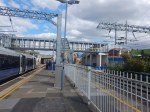
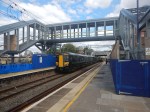
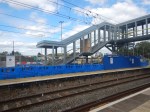
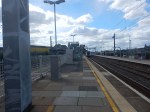
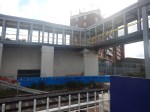
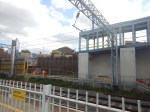
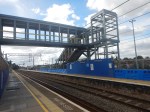
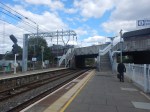
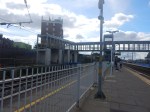

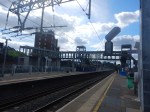
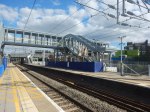
These improvements are promised in Wikipedia.
- New station building with a larger ticket hall with level access from Horn Lane
- Step-free access between street level and all platforms via a new footbridge with stairs and two lifts
- Platforms 2–4 extended to enable 10-car trains to stop
- Improved passenger facilities including a new canopy on platform 4, along with information and security systems.
There is still work to do.
West Ealing Station – 2nd September 2019
These pictures show West Ealing station.
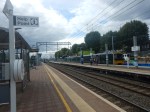

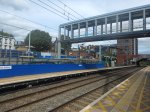
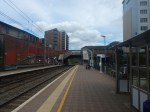
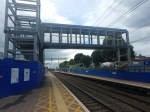
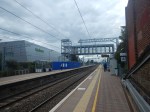

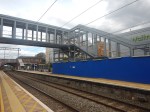
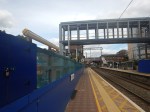
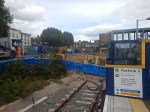
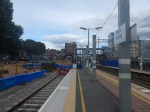
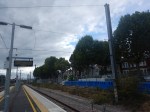
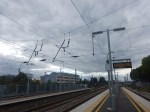
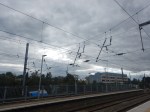
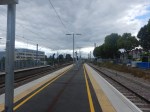
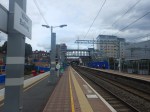
Some observations.
The Big Hole
A big hole is being dug on the North side of the station.
- This is the side where the entrance will be giving access from the road at the side of the station.
- There are no stairs or lift tower on this side.
- There looks to be foundations in the hole!
Could these support the stairs and lift and the entrance on this side of the station? I suspect the answer is an affirmative!
Bay Platform 5 Electrification
Platform 5 is not electrified, but two gantries are at the Western end of the platform and these could easily be fitted with wires.
Perhaps at the Eastern end, the wires will be fixed to the station building, as they have been at Abbey Wood station.
An electrified bay platform would be ideal for charging a battery-electric train, that was working the Greenford Branch.
- In How Much Power Is Needed To Run A Train At 125 mph?, I calculated that to overcome air resistance and keep a high speed train at 125 mph needs around three k|Wh per vehicle mile.
- I know that, trains on the Greenford Branch will be going a lot slower than 125 mph, so I will treat the three kWh figure as a maximum value.
- The maximum size of train will be two cars.
- The Greenford Branch is two-and-a-half miles long, so a round trip is five miles.
\Multiplying all the numbers together gives a maximum energy requirement for the cruise of thirty kWh.
I think that it should be possible to design a two-car battery-electric train with sufficient range to handle the Greenford Branch.
In Will The Class 230 Trains Be Coming Home?, I speculated that the Greenford Branch could be run by a small fleet of Class 230 trains.
Could this be right? Probably not!
But!
- The diesel version is already in service at Bedford.
- They are the right loading gauge and weight.
- Two cars would be an ideal length.
- They could have upwards of two hundred kWh of energy storage.
- They can be fitted with a pantograph for charging or a Vivarail fast charger could be used.in one or both stations.
If the battery version were to be thought too risky, the diesel version, as at Bedford could be used.
Judging by their performance at Bedford, they would probably do a quality job.
Energy Vault Receives $110 Million From SoftBank For Gravity-Assisted Power Storage
The title of this post is the same as that of this article on Forbes.
Energy Vault is a company, that is developing gravity-assisted power storage.
You don’t invest £110million in a company, even if you are as rich as Softbank, unless you are certain, that you’ll get a return!
So I suspect Energy Vault may have a working system for storing energy
Read the article and see what your think! It also links to a video.
This is an interesting quote from the company.
We knew we needed to be around three to four cents levelized cost per kWh ($30 – $40 per MWh) to add to PV or wind in order to be competitive below fossil. This took a lot of innovation.
I shall be following the company.
What Will Boris Do About The Proposed Third Runway At Heathrow?
I have tackled this before in October 2016 in a post called Changing Sides.
This was how I started that post.
There is an interesting article in The Sunday Times today, entitled Boris Retreats In Fight Against Third Runway.
Boris is apparently saying he won’t oppose a third runway at Heathrow, so if anything he’s being consistent in changing horses, just as he did with Michael Gove.
But perhaps more surprisingly, Willie Walsh, the Chief Executive of IAG, who own BA, is quoted as calling Heathrow a fantasy project, which has been gold-plated and inflated by the owners to maximise their returns, at the expense of the airlines.
The paper also says that Gatwick will build a new runway anyway.
Remember, it was written before Theresa May’s government decided to allow Heathrow’s Third Runway.
Since the decision to allow Heathrow to build a Third Runway was made nearly three years ago in October 2016, there have been a lot of changes.
Notably, Boris has gone from Foreign Secretary and an MP in a Heathrow Expansion-opposing constituency to Prime Minister.
As Prime Minister he is supposed to look at the bigger picture.
Unless he’s totally stupid he must have noted the following.
Brexit Has Changed From A Simple Quick Exit Into A Slow And Very Tortuous Process
I would expect an opinion poll would show that the UK population thinks that sorting out Brexit is a much more important problem, than the decision on a new runway in the South East of England.
So will Boris put Heathrow’s Third Runway on the back burner, given the following factors
Gatwick Will Build A Second Runway Anyway
In the Wikipedia entry for Gatwick Airport, there is a section entitled Expansion Proposals, where this is the first paragraph.
Gatwick has been included in a number of reviews of airport capacity in southeastern England. Expansion options have included a third terminal and a second runway, although a 40-year agreement not to build a second runway was made in 1979 with West Sussex County Council. Expanded operations would allow Gatwick to handle more passengers than Heathrow does today, with a new terminal between two wide-spaced runways. This would complement or replace the South Terminal, depending on expected future traffic.
My project management knowledge tells me, that Gatwick could add a second runway and upgrade the terminals in a shorter time, than Heathrow can build a third runway.
But more importantly, Gatwick Airport could build the extra runway and terminal without disruption to airport passengers, aircraft and road traffic on the nearby M23.
Boris’s only problem with Gatwick expansion, is the amount of post he’ll get from Disgusted of Tunbridge Wells.
Disruption Must Be Avoided
Recent timetabling and construction fiascoes on Thameslink and Northern Rail should have sent a message to politicians, that large infrastructure projects must be created without disrupting train or air passengers and road traffic.
Can Heathrow Be Built Without Disrupting Traffic On The M25?
It is interesting to look back at the basic facts at the construction of Heathrow Terminal 5.
- A public enquiry into the project lasted 525 days.
- The terminal sits on a 260 hectare site.
- Construction started in 2002.
- The terminal opened in 2008.
- Construction finisged in 2011.
- The terminal cost £4.2billion.
The construction of Terminal 5, also needed the M25 to be widened and linked to the terminal.
This Google Map shows Heathrow Terminal 5 and its relationship to Heathrow’s current two runways and the M25.
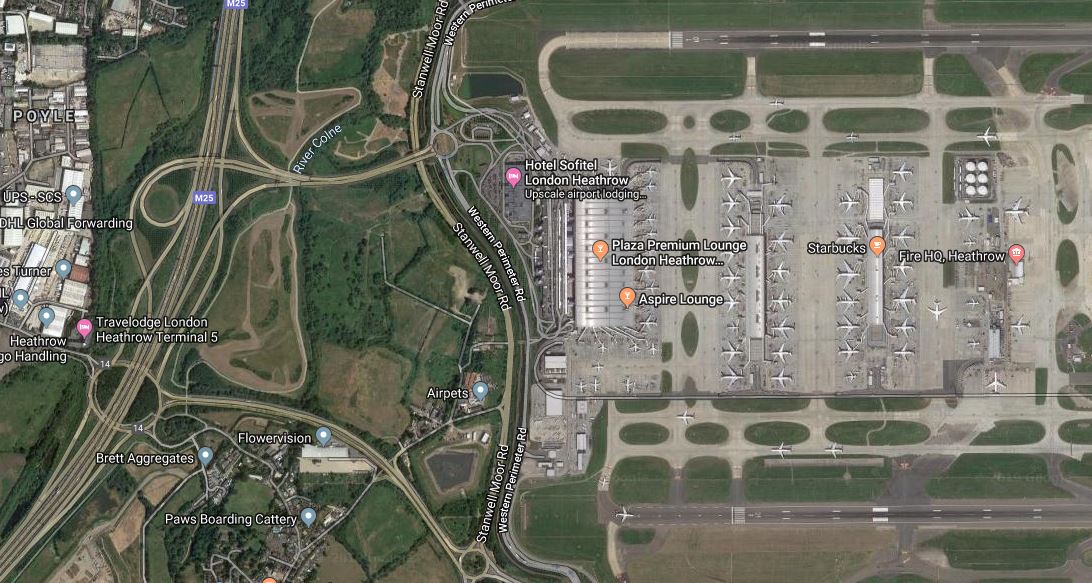
I remember the construction of Terminal 5 well, if only because, I was stuck in or moving slowly along that section of the M25 so many times.
As this immense construction project, is probably in living memory of much of the population of West London, how will they react to the thought of all the disruption, that building the third runway will cause.
Would Uxbridge, throw Boris out, if he approved the building of a third runway at Heathrow?
Heathrow Is A Pollution Blackspot
Various factors mean, that the surroundings of Heathrow are a pollution blackspot, mainly caused by the large number of diesel vehicles on the M4 and M25 motorways and others bringing passengers and goods to the airport.
I believe that any Planning Permission for the third runway, will require Heathrow to do something about the pollution. This could be easier than anybody thinks, as more of us will be using electric vehicles by the time the runway opens.
Heathrow are already proposing their ULEZ or Ulta Low Emission Zone.
Heathrow Rail Access Will Improve
Crossrail will eventually serve Heathrow in a year or so and this will improve rail access to the Airport significantly.
Other rail links are also in prospect.
- The Western Rail Approach to Heathrow could be open by 2024.
- Heathrow Southern Railway could be built.
- The West London Orbital could be built.
The first two would be privately financed.
This better rail access may reduce the traffic and pollution around the airport, but it will make it easier, for passengers to use the airport and traffic will grow.
High Speed Rail
Increasingly, Heathrow and the other London airports, will come under competition from High Speed Rail.
Eurostar has upwards of seventy percent of the London-Paris and London-Brussels passenger markets.
I have travelled a few times from London to Amsterdam on Eurostar and feel that four hours is my limit for comfortable train travel.
I estimate the following journeys would be possible on Eurostar.
- London and Cologne via Brussels in four hours
- London and Bordeaux via Paris in four and a half hours.
- London and Frankfurt in Five hours.
Another competitor to air services out of London will be London and Edinburgh services on the East Coast Main Line, which are being updated with new faster trains and journey times under four hours.
Air Cargo And Heathrow
I looked up air cargo in Wikipedia and these points are there.
- Fifty-percent of all air frieght is belly-cargo on airlines.
- An industry expert estimates that 15-20 tonnes of air cargo is worth 30-40 economy passenger seats, when both are on passenger planes.
- In 2017, the IATA observed a 9% rise in freight tonne kilometres
- Boeing is doubling its 767F production since 2016 to three per month in 2020.
Heathrow dominates the air cargo traffic into and out of the UK and last year it handled 1,788,815 tonnes of cargo, which was a 5.3% increase in tonnage on 2017.
However, it does appear that the second largest cargo airport in the UK; East Midlands, handled about the same amount of freight as Heathrow in April 2018.
There is also the East Midlands Gateway close to that airport, which will be a massive logistics park., with a rail connection.
Perhaps the pressures of the congested Heathrow, with some nudging from the Government could remove the cargo aircraft from the airport to more suitable airports like East Midlands and Doncaster Sheffield.
Manchester Airport Is The Most Important Airport North Of London
Manchester Airport is the busiest Airport after Heathrow and Gatwick and over the next few years it will catch up to a certain extent.
In Changes Signalled For HS2 Route In North, I said this about Manchester Airport’s rail connectivity if High Speed Two and Northern Powerhouse Rail are combined across the Pennines.
If High Speed Two and Northern Powerhouse Rail are developed as laid out in the Transport for the North report, the following cities will be connected to Manchester Airport.
- Birmingham – High Speed Two
- Blackpool – Northern Powerhouse Rail/West Coast Main Line
- Bradford – High Speed Two/Northern Powerhouse Rail
- Carlisle – Northern Powerhouse Rail/West Coast Main Line
- Edinburgh – Northern Powerhouse Rail/East Coast Main Line
- Glasgow – Northern Powerhouse Rail/West Coast Main Line
- Hull – High Speed Two/Northern Powerhouse Rail
- Leeds – High Speed Two/Northern Powerhouse Rail
- London – High Speed Two
- Newcastle -High Speed Two/Northern Powerhouse Rail
- Preston – Northern Powerhouse Rail/West Coast Main Line
- Sheffield – Northern Powerhouse Rail
- Sunderland – Northern Powerhouse Rail
- York – High Speed Two/Northern Powerhouse Rail
Manchester Airport will probably become the most important station in the North with High Speed connections to a large part of England and Scotland.
Heathrow and Gatwick will find they have a very big and well-connected Northern competitor.
Extinction Rebellion And Other Environmental Protesters
Most of the environmental protesters like Extinction Rebellion seem to have focused their attention on Heathrow, where airports are concerned.
They will fight tooth and nail to stop Heathrow’s third runway.
Will Heathrow Get The Planning Permission They Need?
I think that this is the sort of planning decision, that will end up with the Secretary of State for Environment, Food and Rural Affairs; Theresa Villiers.
Her Wikipedia entry says this.
Villiers favours construction of a high-speed rail link from London to Birmingham and Manchester, arguing that flyers could use capacity at airports such as Birmingham International and Manchester International Airport.
She is also quoted as being against a third runway at Heathrow, when she was a member of Davisd Cameron’s cabinet.
Grant Schapps, who is the current Secretary of State for Transport, could be more supportive to Heathrow’s application.
The Mood Of The UK About The Environment
The view of the average UK voter on the environment has changed markedly in the last few years, driven by documentaries, events and politics from around the world.
Boris’s father; Stanley Johnson has written books on the environment and received the Greenpeace Award for Outstanding Services to the Environment, so this could fit with his opposition to a third runway at Heathrow, when he was Mayor of London.
Do Heathrow Airport Have A Plan B?
In Heathrow Plans Runway Over M25 In 30-Year Expansion, I outlined how I thought the runway would be built.
The Times says this about the construction program.
Only the runway would be built by the opening date of early 2026.
Other facilities such as new terminals, car parks, hotels and transit systems would open from 2030, with an expansion of Terminal 5 the priority
This means that the extra runway capacity can be used initially to better accommodate the same number of flights.
Perhaps Plan B would mean changing the order of construction, leaving a space for the third runway and getting Planning Permission to build it in perhaps starting in 2028.
Conclusion
This is a tough one to call and I know what I would do. I would just let it fester until the decision was forced by another factor.
But Boris is the Prime Minister and will have to make a decision!
D
Simpler LNER Train Fares Will Make A Single Half The Price Of A Return
The title of this post is the same as that of this article in The Times.
This is a paragraph from the article, that explains what is being done.
As part of a trial London North Eastern Railway (LNER) will abolish the £1 price difference for return tickets on some routes and require passengers to buy two singles. It is designed to remove an anomaly whereby singles on some long-distance routes are overpriced in the expectation that most people will buy a return.
I’m all for it, as I often go on a wander around the UK and I’m not sure of the route, that I will take.
A couple of times, I’ve gone up to Scotland on a Sleeper, visited a few places and friends and then turned up in Edinburgh station needing to get home. I don’t generally use an Advance ticket, as I don’t want to be tied to a particular date.
I can think of lots of scenarios, where this new ticketing will be very convenient.
Yesterday, I went to the football in Ipswich.
As I do normally, I bought a zone 6 to Ipswich return to take advantage of my Freedom Pass. Sometimes, a friend brings me back to London, so to be able to buy a single ticket to Ipswich would be very useful.
Conclusion
This move by LNER is a good start, but we need a Universal cCntactless Ticketing scheme based on bank cards and mobile devices for the whole of the UK.
As an example, on the short London and Ipswich route, I should be able to use a contactless bank card linked to my Freedom Pass and Senior Railcard, which would automatically charge me for the cheapest fare.
If everybody could get best value Universal Contactless Ticketing with their American Express, Mastercard, Visa or mobile phone, think what the effects would be.
Many Would Not Buy Traditional Tickets
Obviously, if you wanted to buy tickets for a particular train or wanted best value, you could still buy an Advance ticket over the Internet and use it in one of the following ways.
- As a traditional paper ticket.
- As a download on your phone, mobile device.
It might also be associated with your bank card.
The Tyranny Of Ticketing Would Be Abolished
Suppose a close relative lived about a hundred miles from where you lived.
Taking a train to visit say your mother, might involve a lot of planning to get a keenly-priced ticket.
If you can just turn up and touch in and out and know the price of the tickets, you will probably be more likely to do the journey by train.
Coming back, you would not be limited to a particular train, which could mean cutting a visit short.
More People Would Travel By Train
Contactless travel has certainly boosted the use of public transport in London and it would certainly do the same for the rest of the UK.
More Passengers With Limited Mobility Would Travel
Pensioners are always quick to see a bargain and my generation of pensions are much more tech-savvy than those, who are perhaps ten years older.
Universal Contactless Ticketing will appeal to this large group of travellers.
There Would Be More Train Services And Trains
More passenger would mean that train operating companies would need to run more services and acquire more trains.
Some train operating companies are already obtaining extra trains to increase capacity and frequency.
Many Stations Will Need Updating
Quite a few stations are struggling with current passenger numbers and they are not ready for the increase in passenger numbers, that will surely happen with Universal Contactless Ticketing.
Universal Contactless Ticketing Will Promote Competition Between Train Companies
Suppose you are going from London to Birmingham for a meeting or a leisure activity.
You know because of advertising or past experience, that Chiltern is more comfortable and cheaper, than the faster Virgin.
You might travel up using Chiltern, as you can lay out your paper and give it a good read, but travel back by Virgin, as your want to get home for supper.
Universal Contactless Ticketing will enable the choice of return journey to be made at the last minute.
You might argue that companies like Greater Anglia have no competition.
But in the leisure market, the competition is twofold.
- The private car.
- Passengers can spend a day in the countryside or at the coast in places served by other train companies.
If Greater Anglia embraced Universal Contactless Ticketing, travellers would be more likely to use their train services.
Will Train Operating Companies Offer More Special Deals?
In the next couple of years, Greater Anglia have said they will bring in the following new services, amongst others.
- A third hourly service between London and Norwich via Ipswich.
- Four direct trains per day between London and Lowestoft.
- A direct hourly service between Norwich and Stansted.
With Universal Contactless Ticketing, it would be easy to ofer promotional fares or offers to promote these new routes.
Will Fare Prices Go Up Or Down?
London has been able to bring in various cost-saving measures, like the closure of Ticket Offices.
The Mayor has decided to spend all saving and more on a fare freeze. As his decision, was more about politics and winning an election, make of that what you will.
Whether we like it or not, and some politicians on the Left don’t, Universal Contactless Ticketing will happen sooner rather than later.
St. James Station To Reopen
This article on the Liverpool Echo is entitled Merseyside Set To Get Two New Train Stations As Part Of Massive Transport Investment.
One of the new stations will be a reopened Liverpool St. James station, which closed in 1917.
This Google Map shows the location of the station.

In the North-East corner is Liverpool’s Anglican cathedral.
In the South-West, there is a large road junction, where Parliament Street meets St. James Place. To the South-West of this junction, there is a black hole.
This Google Map shows a close-up of the hole.
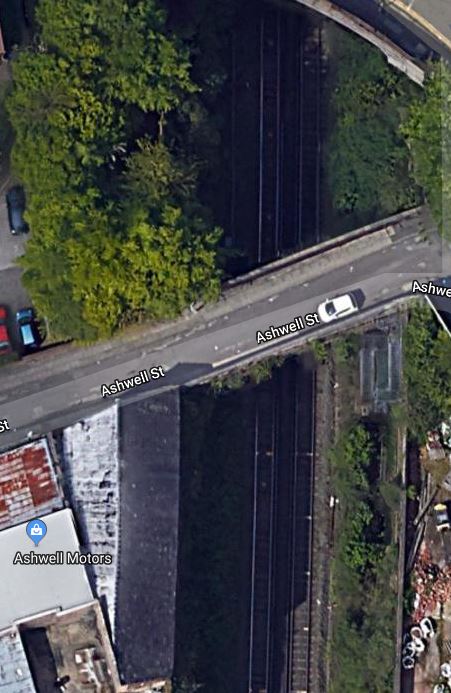
Note the railway tracks in the dark of the hole.
This was where St. James station was located between Liverpool Central and Brunswick stations.
It would be a challenge to design a station, but one that a decent architect should enjoy.
This page on Disused Stations gives more details and several pictures of the station in all its glory.
Does The Acceleration Of The TransPennine Upgrade Have Anything To Do With Boris?
In Issue 885 of Rail Magazine, which was published on 14/08/19, there is an article, which is entitled Johnson Vows To Build New Manchester-Leeds Line, where this is said.
New Prime Minister Boris Johnson has pledged to fund a new line as part of Northern Powerhouse Rail in what has been described by leaders in the North as a “seminal moment”.
Speaking in Manchester on July 27, Johnson said. “I want to be the PM who does with Northern Powerhouse Rail what we did with Crossrail in London. And today I’m going to deliver on my commitment to that vision with a pledge to fund the Leeds to Manchester route.
“It will be up to local people and us to come to an agreement on the exact proposal they wat – but I have tasked officials to accelerate their work on these plans so that we are ready to do a deal in the autumn.”
Since Boris’s speech, plans for improvements between Huddersfield and Dewsbury have been announced and now it seems that Network Rail have published plans for full electrification between Huddersfield and Leeds, as I discussed in Is There Going To Be Full Electrification Between Leeds And Huddersfield?.
Whether you are for or against Boris, he certainly seems to have got action from Network Rail.
Is There Going To Be Full Electrification Between Leeds And Huddersfield?
This article on Rail Technology Magazine is dated 23/08/19 and is entitled Network Rail Reveals Detailed £2.9bn Upgrade Plans For TransPennine Route and it prompted me to write this post of the same name.
The Rail Technology Magazine article talks about a comprehensive upgrade to the Huddersfield Line is planned that includes.
- Improvement between Huddersfield and Westtown
- Grade separation or a tunnel at Ravensthorpe
- Rebuilding and electrification of eight miles of track.
- Possible doubling the number of tracks from two to four.
- Improved stations at Huddersfield, Deighton, Mirfield and Ravensthorpe.
I have now found this document on the Network Rail web site, which is entitled Huddersfield to Westtown (Dewsbury).
This statement is included under proposals.
Electrification of the railway from Huddersfield to Ravensthorpe – and right through to Leeds.
Because there is a dash in the words, has electrification to Leeds, been a recent addition?
It certainly doesn’t fit with the Rail Technology Magazine article.
It also doesn’t fit with this article on the BBC, which is dated 20/08/19 and is entitled Detailed TransPennine £2.9bn Rail Upgrade Plans Unveiled.
Electrification is mentioned in the second paragraph.
Network Rail has also announced it intends to electrify the line between Huddersfield and Dewsbury and double the number of tracks from two to four.
And in the sixth paragraph.
Network Rail said the proposed major overhaul and electrification work would be carried out on an 8-mile (13km) section of the route, with the “first round” of consultations starting with those living closest to the railway.
The two news sites seem to have used the same source.
The BBC also uses this map, that I have copied from the Network Rail document
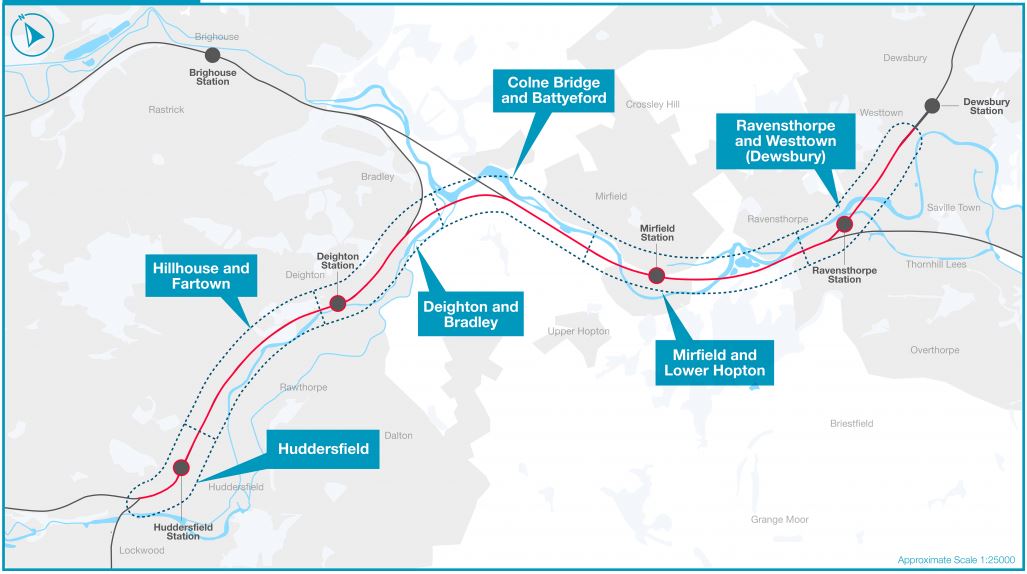
Note the railway lines shown in red. Are these the ones to be electrified? As they go from Huddersfield to Westtown, I think the answer is probably in the affirmative.
I seems to me, that Rail Technology Magazine and the BBC are using a common source and could it be an earlier version of the Network Rail document.
But the map, I have shown, shows the electrification only going as far as Westtown, despite coming from a document, that states twice that the electrification is going as far as Leeds.
It is certainly sloppy documentation.
Track Layouts
This document on the Digital Railway web site is dated 16/08/18 and is entitled Transpennine Route Upgrade SDO1 ETCS – Analysis.
Significantly, it is written by the Digital Railway – Joint Development Group (JDG), which consists of representatives of Siemens, Hitachi, ARUP and Network Rail.
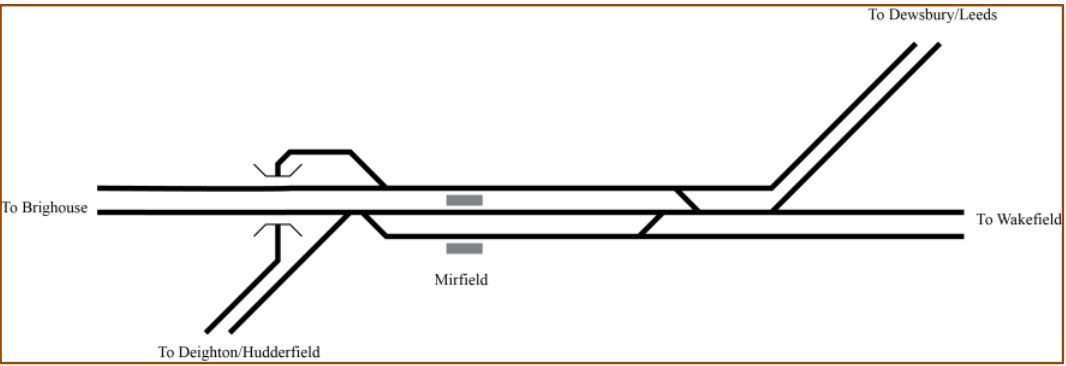
It is mainly about using digital signalling called ETCS on the Transpennine Route, but it does give these track layouts between Huddersfield and Dewsbury.
This is the current layout.
There is also this full four-track layout, which I assume was the original plan.
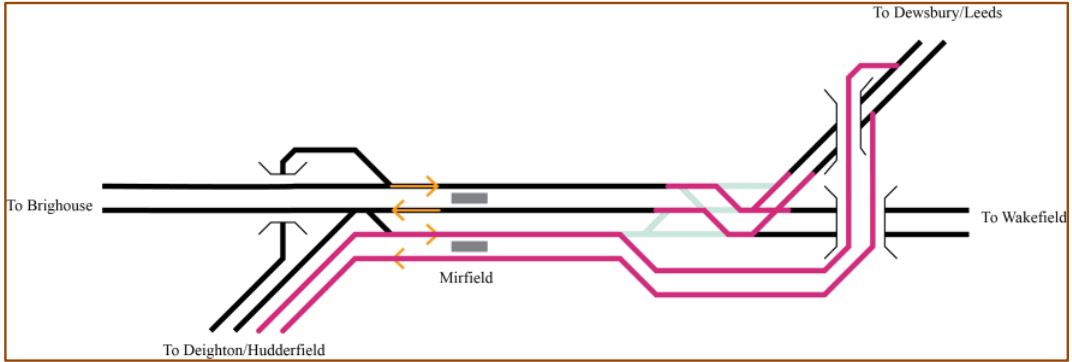
It is more complicated and involved the building of bridges in the area of Ravensthorpe station.
There is also a reduced four-track layout, which I assume was developed as the track analysis progressed.
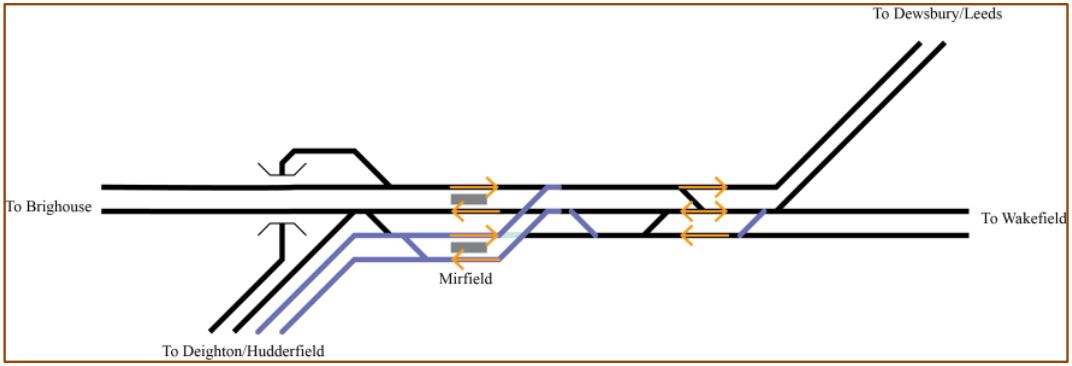
It is not a massive upgrade from the current layout.
As I see it, if the reduced layout can handle the required number of services, it has major advantages over the full scheme.
- There are no changes to track layout between Ravensthorpe and Dewsbury stations.
- Rebuilding Ravensthorpe station should be a smaller project.
- The current and reduced layout have three tracks between Mirfield and Ravensthorpe stations.
- There are no expensive new bridges to be built.
To make the scheme work there is a small amount of bi-directional running on the centre track, which is made possible by using digital signalling on the route.
Track Usage
By using bi-directional running on the centre track between Ravensthorpe and Mirfield stations, which is controlled by ETCS, the track layout is simplified, with three tracks instead of four.
- Slow trains from Huddersfield to Dewsbury will dive under the Brighouse lines and call in/pass Platform 1 at Mirfield station before going straight on to Ravensthorpe and Dewsbury. This is as trains do now.
- Slow trains from Dewsbury to Huddersfield will use the centre track from East to West and call in/pass Platform 2 at Mirfield station before turning South-West on to Huddersfield. This is as trains do now.
- Fast trains from Huddersfield to Dewsbury will call in/pass Platform 3 at Mirfield station and then cross over to the top track and go straight on to Ravensthorpe and Dewsbury.
- Fast trains from Dewsbury to Huddersfield will use the centre track from East to West and call in/pass Platform 4 at Mirfield station before turning South-West on to Huddersfield.
- Trains from Brighouse to Wakefield will call in/pass Platform 1 at Mirfield station and then cross to the centre track and go straight on to Wakefield. This is as trains do now.
- Trains from Wakefield to Brighouse will use the centre track from East to West and call in/pass Platform 2 at Mirfield station and go straight on to Brighouse.
Note.
- Platforms at Mirfield station are numbered 1 to 4 from the North
- The slow lines between Mirfield and Huddersfield are shown in black.
- The fast lines between Mirfield and Huddersfield are shown in blue.
- Passengers can use Platforms 1/2 as a cross-platform interchange between slow Huddersfield-Leeds and Brighouse-Wakefield services.
I also think it likely, that the proposed layout will improve the timetable.
Does The Reduced Layout Produce A Cost Saving?
In one of the first jobs I did at ICI Plastics Division, I simulated a chemical process on an analogue computer. My mathematics showed they could use much smaller vessels, which meant the height of the plant could be reduced by a few metres. I remember the engineer in charge of the project being very pleased, when he told me, that height costs money.
- The reduced layout removes three bridges, which must mean a cost saving.
- There is probably less track to lay
The negative is that digital signalling with ETCS must be installed through the area. This is going to be installed on the UK network, so it probably needs little more than shuffling the installation order.
On balance, when all things are considered, I suspect if the reduced layout can be used, there will be substantial cost savings on the project.
Problems At Morley Station
Morley station is two stations after Dewsbury station on the route towards Leeds.
Unusually for Wikipedia, the entry for Morley station has a large section entitled Current Problems.
This is the first two paragraphs.
The increase in demand, combined with growth elsewhere on the line, means that overcrowding in the morning peak, particularly for commuters heading towards Leeds, is becoming more of an issue.
Despite this commuter growth little has been done to bring this station into the 21st century. For example, only one platform is accessible for disabled passengers, there is insufficient parking, access routes to and from the station are often overgrown with weeds, and there are frequent drainage problems which all combine to make the station not as pleasant as other stations in West Yorkshire. In 2012 a “Friends of Morley station” group was formed, and is addressing some of these issues. Work to improve the car park and drainage commenced in February 2013.
To make matters worse, the station is 10-15 minutes walk from the centre of Morley with poor bus and taxi connections.
Would the following help the Friends of Morley Station?
- Longer trains.
- More frequent trains.
- Faster trains to Leeds
- Better bus services.
Electric trains would help solve the first three.
White Rose Station
There are plans to build a new White Rose station in the next couple of years at the White Rose Centre..
This would be between Morley and Cottingley stations.
This station will surely increase the passenger numbers on the Huddersfield Line.
Have Network Rail Designed The Electrification Between Dewsbury And Leeds?
This electrification has been off and on more times, than the lights in an average kitchen, so I suspect there is a workable plan dating from the last century amongst many others.
Would Extending Electrification To Leeds Provide The Power?
Electrification needs a good connection to the National Grid to provide the power needed to run the trains.
The short eight-mile electrification, as originally proposed could probably have been fed from one end; Huddersfield or Dewsbury.
Both locations would need new sub-stations, with Huddersfield possibly needed in the future to power the wires all the way to Manchester.
Leeds is already fully-electrified with electric expresses to Doncaster and London and several electric local services.
So is the easiest and most affordable way to power the eight-mile electrification between Huddersfield and Westtown to run an extension cable between Leeds and Dewsbury?
Network Rail had a similar problem on the Midland Main Line, which I wrote about in Welcome For Extension Of Midland Electrification.
National Grid had provided a power connection near Market Harborough for the Midland Main Line electrification, which was then cancelled North of Kettering North Junction, leaving the electrification to Corby without a power supply.
The problem is being solved, by extending the electrification to Market Harborough and connecting the wires to the power there.
I do wonder, that the most affordable way to power the Huddersfield and Westtown electrified line is to electrify all the way to Leeds and connect to the power there.
Conclusion
Improving services on the Huddersfield Line between Huddersfield and Leeds is going to be very necessary in the next few years, as passenger numbers will surely grow, due to new housing, increased commuting and the opening of White Rose station.
- New or refurbished four-car electric trains would provide more capacity, increased frequencies and faster services,
- Digital signalling with ETCS would allow more trains to run smoothly.
It appears to me, that to electrify all of the Huddersfield Line between Huddersfield and Leeds would be a good idea, if the money can be found.
Has that money been found by developing a more affordable track layout for the proposed TransPennine Upgrade between Huddersfield and Westtown?
But also using the power at Leeds and electrifying all the way between Huddersfield and Leeds, seems to be a bloody great tail, that is wagging the dog of electrification.
Further Electrification
Providing a fully-electrified route between Huddersfield and Leeds, would leave just two sections of the main TransPennine route without electrification.
- Stalybridge and Huddersfield over Saddleworth Moor and through the Standedge Tunnels.
- Leeds and the Northbound East Coast Main Line.
I don’t know about the planning and difficulty of the first route, but from my helicopter the engineering shouldn’t be too difficult, with the exception of the elecxtrification of the Standedge Tunnels, although Wikipedia seems optimistic about the electrifying the main twin-bore tunnel.
During the 2000s, Network Rail proposed reinstating rail traffic through the 1848 and 1871 tunnels to increase capacity on the Leeds-Manchester trans-Pennine route, but after a re-appraisal after the decision to electrify the trans-Pennine line, it was reported in 2012 that reinstatement was unnecessary.
In addition, could it be, that Manchester with lots of electric trains can provide enough power at Stalybridge, where an updated power connection has been recently installed, to power electric trains between Manchester and Huddersfield?
, The second has been planned for years and has a string of advantages.
- Speed up services between Leeds and Newcastle and Scotland.
- Allow LNER to run electric trains between London and Scotland via Leeds.
- Create an electrified route between Neville Hill Depot and York.
- Create an electrified diversion through Leeds for the East Coast Main Line
This section should be electrified for operational reasons on the East Coast Main Line.
A Final Conclusion
Network Rail’s plans seem to have evolved under analysis to be as follows.
- Limited four-tracking and updated track between Huddersfield and Westtown.
- Digital signalling with ETCS between Huddersfield and Leeds.
- Full electrification between Huddersfield and Leeds
- Power for the electrification from Leeds.
Could it even cost less than the allocated £2.9billion?
Trams Tested On New Section Of West Midlands Metro
The title of this post is the same as that of this article on the South Wales Argus.
I don’t understand why test running of the battery trams on the West Midlands Metro has been reported in South Wales.
But it does report, that the UK’s first battery trams could be running in December.
 The Anonymous Widower