Manchester’s Contactless Ticketing
In Manchester yesterday, I used their new contactless ticketing.

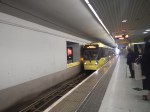

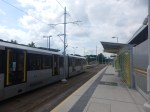
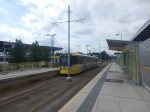
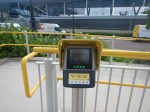
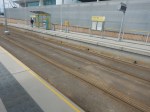
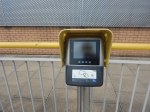
The system appeared to be working well, but I do have reservations.
Use On The Trains
I went up to Glossop on the train. As both Glossop and Manchester Piccadilly stations have tiket barriers, why can’t I use contactless ticketing on that type of journey?
Consider.
All of the barriers I saw, were the same as London’s, so they can also read contactless bank cards.
Not all stations in London have ticket barriers. You’re just expected to touch in and touch out, as you do with Manchester’s system.
Surely, the software can and will be extended!
Damage To The Terminal
Two of the four terminals I looked at were damaged; possibly by a sledgehammer or a Size 10-boot.
Are they robust enough.
Instructions For Users
I didn’t see any posters, describing how to use the system in English.
Surely, as Manchester, is receiving a lot more visitors, comprehensive instructions in several languages.
Terminal Design
I came across a couple of first time users, who were both locals and they weren’t sure, where to put their card.
I’d be interested to know, why they didn’t use London’s design of terminal.

I’ve only ever seen a technician fixing one broken terminal in London.
No Staff
I didn’t see any staff! The stop under Piccadilly had no staff there to help visitors.
What About Those With Poor Vision?
I have a friend, who is registered blind and has a guide dog. But he can see a bit and has no trouble using contactless in London, especially as the dog leads him to wide gates.
Would my friend cope in Manchester?
Conclusion
It’s a good start, but some details haven’t been properly thought through!
At least, I won’t need to buy a ticket in Manchester again, unless I’m using a train.
They Don’t Make Very Good Boats
This was a tweet from Greater Manchester Police Traffic, during the recent floods.
The driver of this Lamorghini lost control on standing water and took out a section of before making off on foot prior to police arrival.
A very expensve mistake. They don’t make very good boats!!
Nearly 400 people are talking about it.
Manchester Metrolink To Gorton And Glossop
The Wikipedia entry for the Manchester Metrolink doesn’t say much about Glossop, except that one of the original lines would have taken over the Glossop Line to Gorton, Glossop and Hadfield stations.
In Manchester Metrolink Extensions In A Sentence, I quoted this sentence from the Manchester Evening News.
It includes tram extensions to Port Salford, Middleton and Stalybridge, plus ‘tram trains’ to Hale, Warrington, Gorton and Glossop.
How would tram-trains from Gorton and Glossop join the current Metrolink network at Piccadilly station?
Consider.
- Glossop Line trains use the low-numbered platforms on the Northern side of Manchester Piccadilly station.
- Some plans have shown High Speed Two platforms on the save side of Piccadilly station.
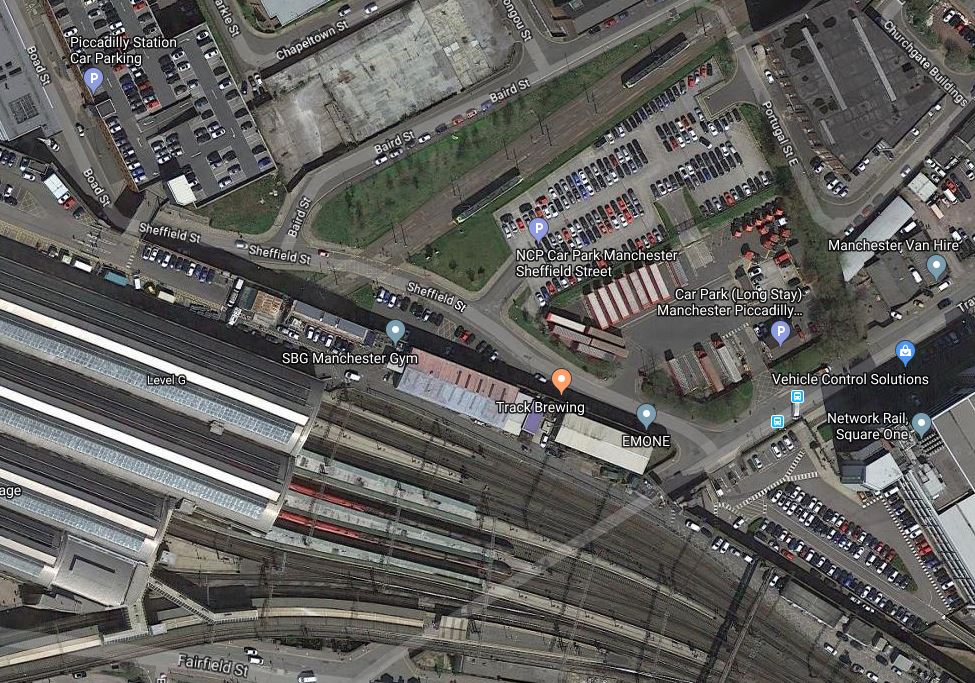
Look at this Google Map of the Northern side of the station.
Note.
- Two trams crossing the green space to the North of the station.
- The area between the tram lines and the tracks going into Piccadilly station, appears to be mainly car parking and low-grade buildings.
- The tracks leading to Gorton and Glossop are on the Northern side of Piccadilly station.
These are a few pictures of the area.to the North of the station.


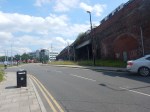


I feel it would be very feasible for tram-trains to connect the Glossop Line and the tram station underneath the main station.
In fact there would be no reason, why tram-trains shouldn’t continue to serve Manchester Piccadilly train station.
High Speed Two
High Speed Two’s terminals in Manchester is in a state of foux at the moment, so it might be preferable to just replace all Glossop Line services with tram-trains and use Manchester Piccadilly tram station.
Updating The Glossop Line
The Glossop Line is electrified with 25 KVAC overhead wires, which looks to be one of the systems in worst condition in the UK along with the Crouch Valley Line in Essex.
It would probably need replacing, as the rust weevils holding it up, must be getting very tired.
To say that some stations look like they’ve seen better times, is an understatement.
Class 399 Tram-Trains For Manchester
Transport for Greater Manchester are serious about tram-trains and I believe that their usefullness to the City could be explored by running the existing service between Manchester Piccadilly and Glossop using a small fleet.
Conclusion
Extending the Manchester Metrolink to Gorton and Glossop using tram-trains appears to be very feasible.
In my view, it would have made a good trial route to prove the concept of tram-trains in the UK.
Manchester Metrolink Extensions In A Sentence
This article on the Manchester Evening News, sums up the extensions to the Manchester Metrolink like this.
It includes tram extensions to Port Salford, Middleton and Stalybridge, plus ‘tram trains’ to Hale, Warrington, Gorton and Glossop.
We all need more pithy sentences like this. Me included!
Dialysis-At-Home Developer Quanta Raises £38m
The title of this post is the same as that of this article in today’s Sunday Times
Strangely, in my almost seventy-two years, I’ve never met anybody, who is undergoing dialysis, although one of my friends did give one of his kidneys to his brother.
But reading this article in The Sunday Times, I feel that for those undergoing dialysis, things may be improving.
- The £38m will launch Quanta’s machine with the NHS.
- More people will be able to have dialysis-at-home.
- The company hopes the machine will be launched in the US this year.
It is very much a good news article.
To me though, it shows how technology is increasingly being developed to improve healthcare.
Surprisingly, the machine uses the same technology as that used to mix soft drinks in bars.
Could A Battery- Or Hydrogen-Powered Freight Locomotive Borrow A Feature Of A Steam Locomotive?
Look at these pictures of the steam locomotive; Oliver Cromwell at Kings Cross station.
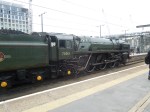
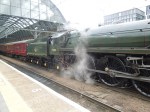
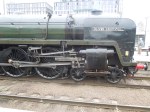

Unlike a diesel or electric locomotive, most powerful steam locomotives have a tender behind, to carry all the coal and water.
The Hydrogen Tank Problem
One of the problems with hydrogen trains for the UK’s small loading gauge is that it is difficult to find a place for the hydrogen tank.
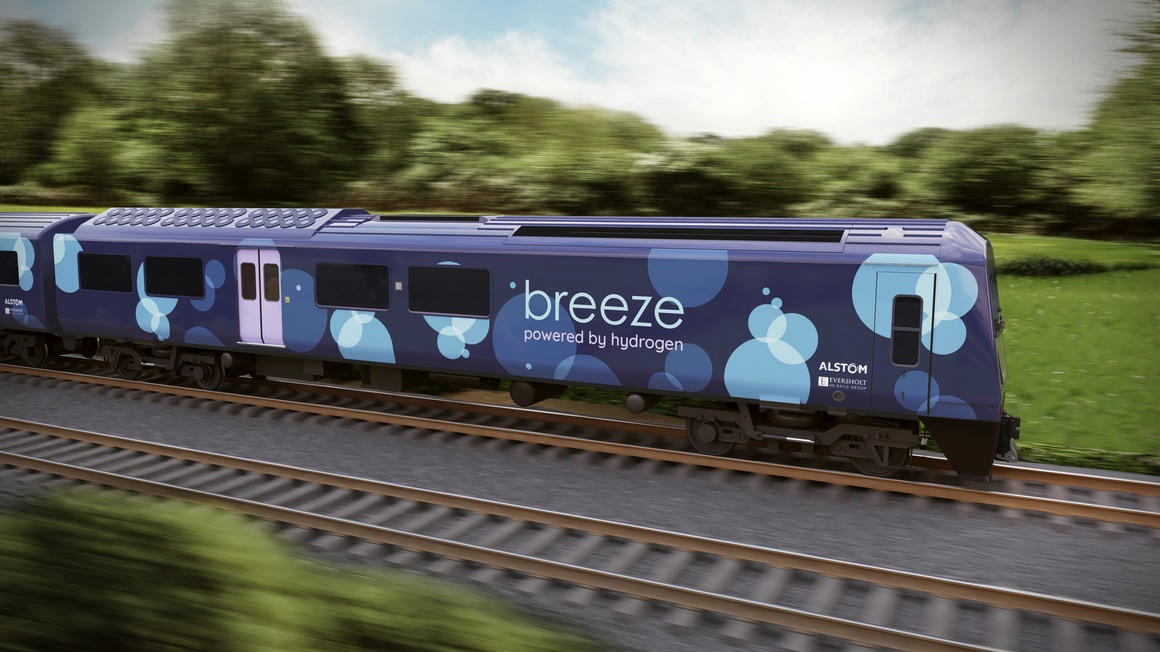
The picture is a visualisation of the proposed Alstom Breeze conversion of a Class 321 train.
- There is a large hydrogen tank between the driving compartment and the passengers.
- The passenger capacity has been substantially reduced.
- The train will have a range of several hundred miles on a full load of hydrogen.
The Alstom Breeze may or may not be a success, but it does illustrate the problem of where to put the large hydrogen tank needed.
In fact the problem is worse than the location and size of the hydrogen tank, as the hydrogen fuel cells and the batteries are also sizeable components.
An Ideal Freight Locomotive
The Class 88 locomotive, which has recently been introduced into the UK, is a successful modern locomotive with these power sources.
- 4 MW using overhead 25 KVAC overhead electrication.
- 0.7 MW using an onboard diesel engine.
Stadler are now developing the Class 93 locomotive, which adds batteries to the power mix.
The ubiquitous Class 66 locomotive has a power of nearly 2.5 MW.
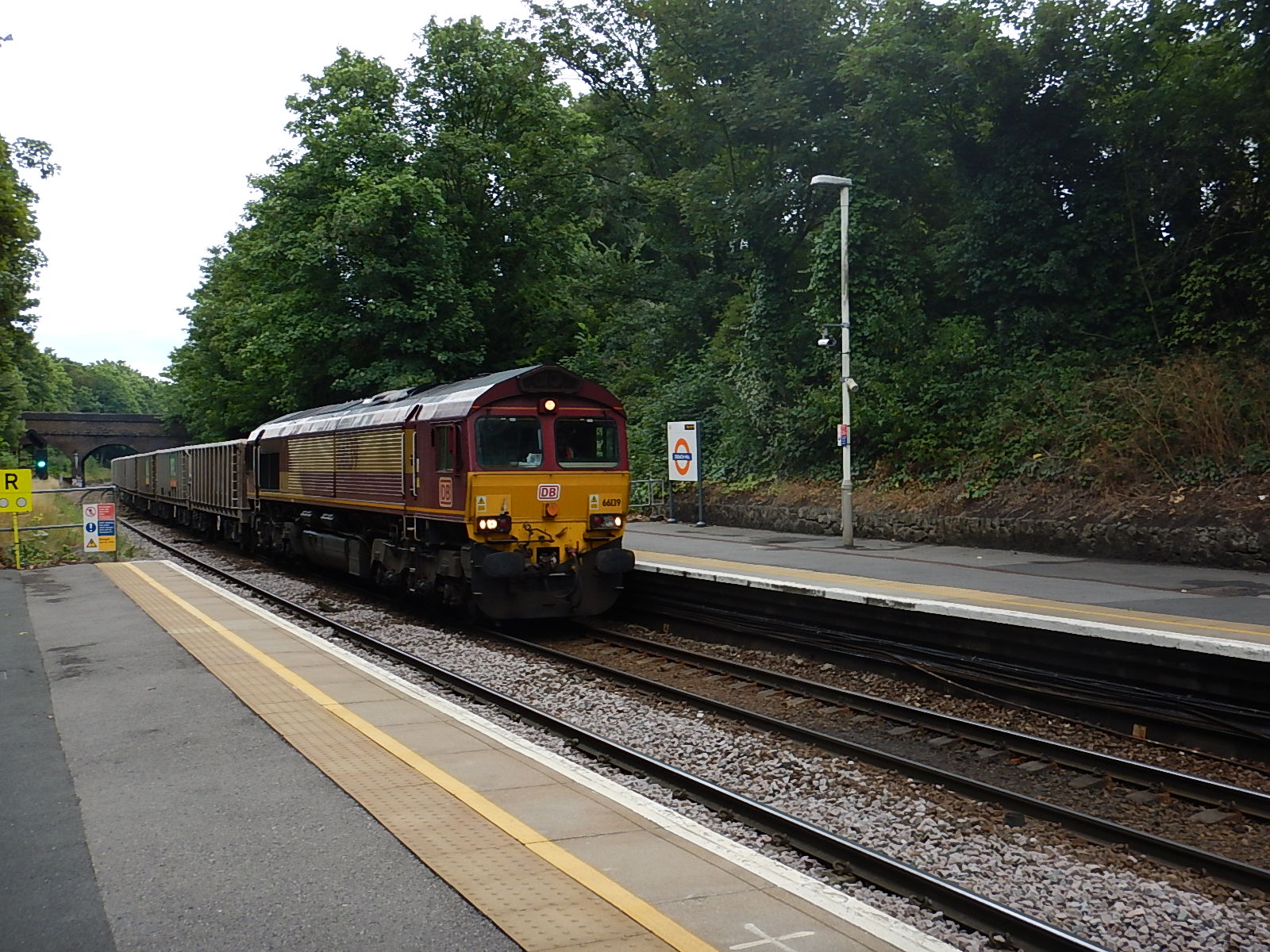
But as everybody knows, Class 66 locomotives come with a lot of noise, pollution, smell and a substantial carbon footprint.
To my mind, an ideal locomotive must be able to handle these freight tasks.
- An intermodal freight train between Felixstowe and Manchester.
- An intermodal freight train between Southampton and Leeds.
- A work train for Network Rail
- A stone train between the Mendips and London.
The latter is probably the most challenging, as West of Newbury, there is no electrification.
I also think, that locomotives must be able to run for two hours or perhaps three, on an independent power source.
- Independent power sources could be battery, diesel, hydrogen, or a hybrid design
- This would enable bridging the many significant electrification gaps on major freight routes.
I feel that an ideal locomotive would need to meet the following.
- 4 MW when running on a line electrified with either 25 KVAC overhead or 750 VDC third-rail.
- 4 MW for two hours, when running on an independent power source.
- Ability to change from electric to independent power source at speed.
- 110 mph operating speed.
This would preferably be without diesel.
Electric-Only Version
Even running without the independent power source, this locomotive should be able to haul a heavy intermodal freight train between London and Glasgow on the fully-electrified West Coast Main Line.
I regularly see freight trains pass along the North London Line, that could be electric-hauled, but there is a polluting Class 66 on the front.
Is this because there is a shortage of quality electric locomotives? Or electric locomotives with a Last Mile capability, that can handle the routes that need it?
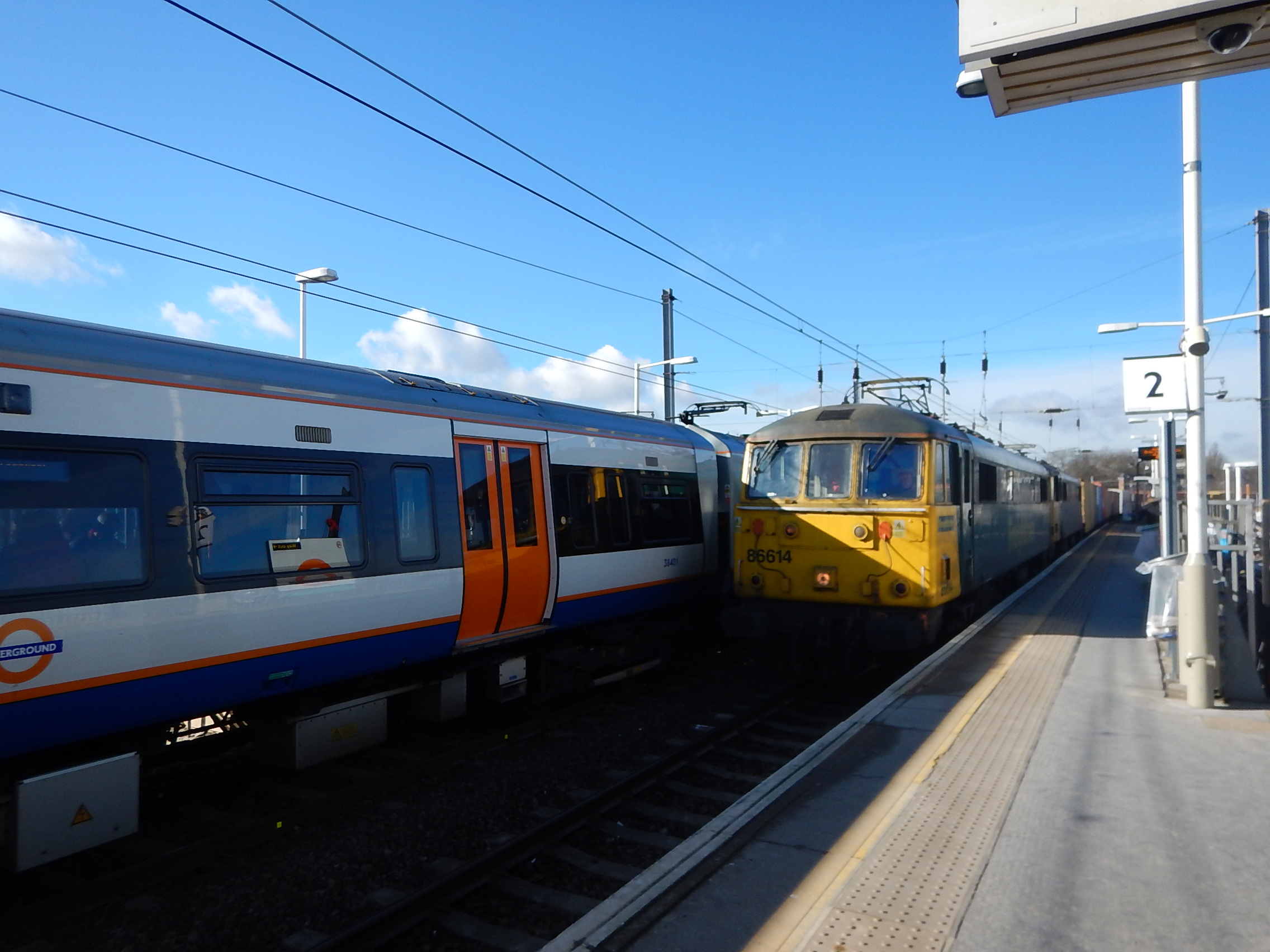
If we have to use pairs of fifty-year-old Class 86 locomotives, then I suspect there are not enough electric freight locomotives.
Batteries For Last Mile Operation
Stadler have shown, in the design of the Class 88 locomotive, that in a 4 MW electric locomotive, there is still space to fit a heavy diesel engine.
I wonder how much battery capacity could be installed in a UK-sized 4 MW electric locomotive, based on Stadler’s UK Light design.
Would it be enough to give the locomotive a useful Last Mile capability?
In Thoughts On A Battery Electric Class 88 Locomotive On TransPennine Routes, I estimated that a Class 88 locomotive could replace the diesel engine with a battery with a battery capacity of between 700 kWh and 1 MWh.
This would give about fifteen minutes at full power.
Would this be a useful range?
Probably not for heavy freight services, if you consider that a freight train leaving the Port of Felixstowe takes half-an-hour to reach the electrification at Ipswich.
But it would certainly be enough power to bring the heaviest freight train out of Felixstowe Port to Trimley.
If the Felixstowe Branch Line were to be at least partially electrified, then I’m sure a Class 88 locomotive with a battery instead of the diesel engine could bring the heaviest train to the Great Eastern Main Line.
- Electrifying between Trimley and the Great Eastern Main Line should be reasonably easy, as much of the route has recently been rebuilt.
- Electrifying Felixstowe Port would be very disruptive to the operation of the port.
- Cranes and overhead wires don’t mix!
I wonder how many services to and from Felixstowe could be handled by an electric locomotive with a Last Five Miles-capability, if the Great Eastern Main Line electrification was extended a few miles along the Felixstowe Branch Line.
As an aside here, how many of the ports and freight interchanges are accessible to within perhaps five miles by electric haulage?
I believe that if we are going to decarbonise UK railways by 2040, then we should create electrified routes to within a few miles of all ports and freight interchanges.
Batteries For Traction
If batteries are to provide 4 MW power for two hours, they will need to have a capacity of 8 MWh.
In Thoughts On A Battery Electric Class 88 Locomotive On TransPennine Routes, I said this.
Traction batteries seem to have an energy/weight ratio of about 0.1kWh/Kg, which is increasing with time, as battery technology improves.
This means that a one tonne battery holds about 100 kWh.
So to hold 8 MWh or 8,000 kWh, there would be a need to be an 80 tonne battery using today’s technology.
A Stadler Class 88 locomotive weighs 86 tonnes and has a 21.5 tonne axle load, so the battery would almost double the weight of the locomotive.
So to carry this amount of battery power, the batteries must be carried in a second vehicle, just like some steam locomotives have a tender.
But suppose Stadler developed another version of their UK Light locomotive, which was a four-axle locomotive that held the largest battery possible in the standard body.
- It would effectively be a large battery locomotive.
- It would share a lot of components with the Class 88 locomotive or preferably the faster Class 93 locomotive, which is capable of 110 mph.
- It would have cabs on both ends.
- It might have a traction power of perhaps 2-2.5 MW on the battery.
- It would have a pantograph for charging the battery if required and running under electrification.
- It might be fitted with third rail equipment.
It could work independently or electrically-connected to the proposed 4 MW electric locomotive.
I obviously don’t know all the practicalities and economics of designing such a pair of locomotives, but I do believe that the mathematics say that a 4 MW electric locomotive can be paired with a locomotive that has a large battery.
- It would have 4 MW, when running on electrified lines.
- It would have up to 4 MW, when running on battery power for at least an hour.
- ,It could use battery-power to bridge the gaps in the UK’s electrification network and for Last Mile operation.
A very formidable zero-carbon locomotive-pair could be possible.
The battery locomotive could also work independently as a 2 MW battery-electric locomotive.
Hydrogen Power
I don’t see why a 4 MW electric locomotive , probably with up to 1,000 kWh of batteries couldn’t be paired with a second vehicle, that contained a hydrogen tank, a hydrogen fuel-cell.and some more batteries.
It’s all a question of design and mathematics.
It should also be noted, that over time the following will happen.
- Hydrogen tanks will be able to store hydrogen at a greater pressure.
- Fuel cells will have a higher power to weight ratio.
- Batteries will have a higher power storage density.
These improvements will all help to make a viable hydrogen-powered generator or locomotive possible.
I also feel that the same hydrogen technology could be used to create a hydrogen-powered locomotive with this specfication.
- Ability to use 25 KVAC overhead or 750 VDC third-rail electrification.
- 2 MW on electrification.
- 1.5 MW on hydrogen/battery power.
- 100 mph capability.
- Regenerative braking to batteries.
- Ability to pull a rake of five or six coaches.
This could be a very useful lower-powered locomotive.
What About The Extra Length?
A Class 66 locomotive is 21.4 metres long and a Class 68 locomotive is 20.3 metres long. Network Rail is moving towards a maximum freight train length of 775 metres, so it would appear that another twenty metre long vehicle wouldn’t be large in the grand scheme of things.
Conclusion
My instinct says to be that it would be possible to design a family of locomotives or an electric locomotive with a second vehicle containing batteries or a hydrogen-powered electricity generator, that could haul freight trains on some of the partially-electrified routes in the UK.
Stanmore Tube Station To Convert Car Park Into Flats
The title of this post is the same as this article on Ian Visits.
Solar Panel Pilot For Aldershot
The title of this post is the same as that of an article in the August 2019 Edition of Modern Railways.
This is the two paragraphs.
Solar panels are to be installed on derelict land near Aldershot station as part of an experiment into whether renewable energy can be used to power trains.
A total of 135 discrete solar panels are being installed and are expected to go live in August. The Riding Subnbeams ‘First Light’ demonstrator project is a collaboration between climate change charity 10:10, Community Energy South and Network Rail, alongside a consortium of specialist consultants and university departments.
I wrote about the company and its ideas in Solar Power Could Make Up “Significant Share” Of Railway’s Energy Demand, which I posted in December 2017.
I won’t repeat myself, but I will say that since I wrote the original article, a compatible development has happened.
In Vivarail Unveils Fast Charging System For Class 230 Battery Trains, I wrote about Vivarail’s charging system for battery trains, which uses battery-to-battery power transfer to charge batteries on trains, through standard third-rail technology.
I do feel that the 10:10 and Vivarail ought to be talking, as I feel that between them, they could come up with some good joint ideas.
The London Overground Is Still Running Four-Car Class 378 Trains
This picture shows the three spare cars, that were taken from three five-car Class 378 trains to make them short enough to work the Gospel Oak to Barking Line.

I would have thought that the trains would have returned to their full length, but they have been put into service on the Watford DC Line.
Perhaps, London Overground want to keep them at four-cars, as a precaution against a serious bug in the Class 710 train’s computer system.
Only when the Class 710 trains are behaving impeccably will the full length be restored.
Trains On The Watford DC Line
As it is, the services on the Watford DC Line are being changed from three x five-car trains per hour to four x four-car trains per hour.
This is roughly the same number of cars per hour, but at a higher frequency.
According to Wikipedia seven Class 710 trains are needed for the full service.
West Hampstead Station Is A Wide Station
I took these pictures at the rebuilt West Hampstead station today.



Everything seems to have been built as wide as possible, which must be good for passenger safety.
 The Anonymous Widower