Seven Sisters Station To Go Step-Free
This document on the Government web site is entitled Access for All: 73 Stations Set To Benefit From Additional Funding.
Seven Sisters station is on the list.
These pictures show the current station.


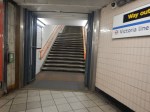
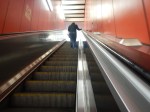
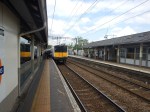
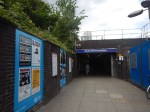
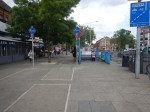
It is a nightmare.
- There are two London Overground platforms on a viaduct and three deep-level ictoria Line platforms.
- The Overground platforms are accessed by stairs although there is one up escalator and provision was made for another, although it was never installed.
- The Victoria Line station is double-ended with escalators and steps which must be negotiated by all passengers.
- Rabbits would probably feel at home in the warren of tunnels of the Underground station.
- The three subway entrances on Tottenham High Road all have just steep steps.
If ever there was a station designed by a committee of bean counters, with no children or disabilities and rail experience, it is Seven Sisters station.
Extra Pressures
Other factors will come into play in the next few years.
Tottenham Hotspur
As Seven Sisters station is the nearest Underground station to the ground, a lot of supporters walk to matches and other events along Tottenham High Road.
White Hart Lane station is being rebuilt, with increased capacity and full step-free access, so hopefully, passengers on match days at Seven Sisters station will decrease.
But the obvious route to the ground from Euston is probably to take the Victoria Line and walk from Seven Sisters station.
With the new station at White Hart Lane, there may even be an increase in interchange passengers at Seven Sisters station.
Crossrail
In any London railway scheme, Crossrail is the elephant in the room.
Will passengers between Tottenham and Enfield and the West End and Heathrow take the Overground to and from Liverpool Street and then use Crossrail?
For many passengers with limited movement, it could be a better route to avoid Seven Sisters station.
New Trains On The Overground
Hopefully, new Class 710 trains will start to arrive on the Overground this year.
As all new trains do, these will increase the number of passengers through Seven Sisters station, especially as the trains may have a much larger capacity, than the existing Class 315 trains.
Extra Services On The Overground
Transport for London are planning to add extra services through Seven Sisters, which will surely bring more passengers wanting to interchange with the Victoria Line.
Increased Frequency On The Victoria Line
The Victoria Line currently runs at thirty-six trains per hour (tph) all day, with trains running between Walthamstow Central and Brixton stations.
I am sure that the line’s engineers would love to squeeze the magic forty tph out of the line, but the capacity of some stations couldn’t handle the extra passengers.
But one way or another, more passengers will be squeezed into Dear Old Vicky and as she always does, she will deliver and more passengers will want to interchange at Seven Sisters station.
Services Between Seven Sisters And Stratford Stations
The track exists to run services between Lower Edmonton and Statford stations, via Seven Sisters, South Tottenham and Lea Bridge stations.
With all the new housing being built in the area, I feel this could be valuable addition to London’s railways.
As South Tottenham and Lea Bridge stations have step-free access, this might be an improvement that takes pressure from Seven Sisters station, by giving passengers a new route to Crossrail.
Improving Access At Seven Sisters Station
It is obvious, that passenger numbers wil be increasing at Seven Sisters station will be increasing and there will also be a substantial increase in passengers wanting to change between the Overground and the Victoria Line.
So what can be done to solve the various problems?
The Tottenham High Road Subway Entrances
These really only give access to the Victoria Line via an escalator.
Lifts tom the subway could be provided, but that would just get passengers to and from the gate-line. After the gate-line, it is just escalators to the platforms with some steps thrown in for good measure.
Victoria Line Platforms
If you were pushing a buggy or in a wheelchair, your best route to the Underground is probably to take a bus from outside the station in Tottenham High Road to Tottenham Hale station and use the step-free access there, which in a couple of months will also apply to the trains as well.
I doubt we’ll see much improvement to the Underground station, until Crossrail 2 is built, which will probably be in the 2050s.
Overground Platforms
There is a side entrance on Seven Sisters Road, that was probably the original entrance to the station.
Making this route to the Overground platforms step-free, is probably the best way to at least do something positive, as regards step-free access at the station.
It could also be relatively easy to put an escalator on the Londonj-bound platform, where there are two parallel staircases.
Conclusion
This is a very important station, that needs to be made step-free.
But it will be very difficult.
Tottenham Hale Station – 20th May 2019
I took these pictures today at Tottenham Hale station.
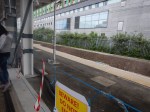
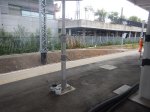
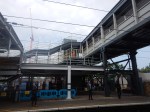
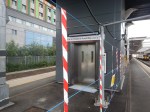
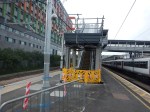
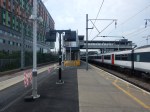
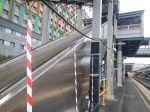
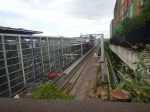
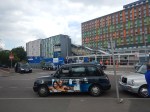
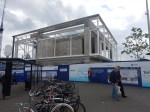
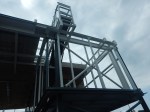
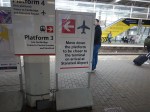
The new station is still a shortish time away.
The bridge and Meridian Water station should have opened today.
But as you can see, they didn’t!
The First Norwich To London Service In Ninety Minutes
These pictures show the arrival of the first Norwich-in-Ninety service in Liverpool Street


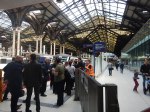
Looking at Real Time Trains, it appears the train left Norwich at 0900 and arrived in Liverpool Street at 1030.
Normal services take three or four minutes under two hours, so ninety minutes with a Class 90 locomotive, eight Mark 3 coaches and a driving van trailer isn’t bad!
Is This One Of The Best Platform Access Routes In Europe?
I have been to some large and grand stations in Europe like Amsterdam Centraal, Berlin Hbf, Leizig Hbf and Milan Centrale.
But I have yet to visit a station, where a subsidiary group of platforms have such a spectacular two-level approach.
I took these pictures as I walked from the main concourse to the underground gates, leading to the escalators, that take passengers to and from the middle of the platforms.


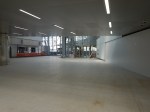


It should be noted, that the concourse ends of the platforms can also be accessed using a bridge from the concourse. This bridge can be seen over the orchestra pit.
This wide tunnel has been designed to handle just five platforms 20-24.
This article on Rail Engineer is entitled New Platforms At London Waterloo.
The articles states these facts and objectives.
- The platforms will be shortened by a hundred metres.
- Each platform will be able to handle a twelve-car train.
South Western Railway‘s new ten-car Class 701 trains have a capacity of 600 passengers.
As the platforms will handle twenty tph,, this means that a total of 12,000 passengers could arrive in every peak hour, but with two gate-lines on separate levels and various routes to either the Underground or walking out of the station, it appears to be designed to cope.
The access would even cope if because of some important event there was a substantial amount of travellers going the opposite way to the commuters.
In the future, the arrangement would mean that each platform could be divided into two; 20A and 20B etc.
- Passengers for the far train could use both routes, but would probably use the tunnel.
- Passengers for the near train, would probably use the bridge.
Busby Berkeley has been hired to get the choreography right.
Conclusion
Very large traveller flows have met their Waterloo.
Promoting The Highland Main Line
On Wednesday, the Highland Main Line Community Rail Partnership were in Kings Cross station promoting the Highland Main Line as a tourism destination.
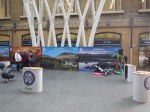
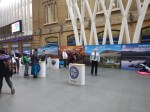
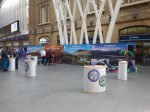
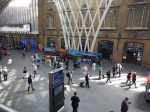
I very much agree with the Partnership’s objective of encouraging more visitorsto the Scottish Highlands.
The Highland Main Line Community Rail Partnership Web Site
The Partnership were giving out an excellent brochure brochure which documents the wide range of attractions along the line between Perth and Inverness.
The Highland Main Line Community Rail Partnership web site has an on-line copy of the brochure.
The web site is also a valuable resource about the line and the area.
An Improving Domestic Rail Service
There is an approximately two-hourly service between Perth and Inverness and it is planned that this will be improved in the next couple of years.
- Reducing journey times is an objective.
- An hourly service is also an objective.
- Inter7City trains, which are shortened, refurbished and modernised InterCity 125 trains will be introduced.
This service will enable visitors to base themselves close to one of the stations along the line and use the trains to visit other places.
Azumas To Inverness
LNER currently run InterCity 125 trains between London and Inverness
- There is a single service each day in both directions.
- The Northbound train leaves London at midday.
- The Southbound train leaves Inverness just before eight in the morning.
- The journey currently takes around eight hours.
- The trains stop at all stations between Perth and Inverness.
The service needs two trains to run one train per day in both directions.
LNER have just launched the new Class 800 trains, which they are marketing as Azumas.
My observations show that Azumas could save between thirty and sixty minutes on the trip.
The following improvements will all help.
- Improvements to the Highland Main Line.
- Steo-free access between train and platform at all stations.
- Faster acceleration and deceleration at all stops.
- Electrification to Stirling and possibly as far as Perth.
- As digital signalling is introduced South of Edinburgh, speeds of up to 140 mph could be possible.
Many of these improvements are currently planned and most will be completed by 2024.
This video was one I made travelling in the cab of an InterCity 125.
Will LNER invite to take one from an Azuma?
The Possibility Of Extra Services
The journey time between London and Inverness will surely get shorter in the next few years.
If say it was seven hours, then allowing an hour for cleaning, loading supplies and refuelling in Inverness would mean that a round trip from London would take fifteen hours.
- A train leaving Kings Cross station at 07:00 would arrive in Inverness at 14:00.
- The return journey would leave at 15:00 and be in London by 22:00.
- A second service could start in Inverness and mirror the service starting in London.
The service would need two trains.
So it appears that by saving time on the journey, the possibility of extra services is opened up.
The Improved Sleeper Service
I have taken the current Caledonian Sleeper to Inverness and it is a spectacular ride through the Highlands in the early morning.
But the elderly trains are being replaced and I wouldn’t be surprised to see a lot more passengers decide to use the sleeper to the Highlands.
Over the last few years, the Austrians, the Swedes and the Scots have all ordered new rolling stock for their sleeper trains and I believe that we’ll see a revival in this form of transport, throughout Europe.
A Caithness To Edinburgh Sleeper
This has been proposed and I wrote about it in Rail Sleeper Plan Between Caithness And Edinburgh.
This was my conclusion.
I feel that not next year, but once Scotland’s rail system is fully developed, with the shortened Inter-City 125s serving the longer routes and electric trains all over the Central Belt, that a Sleeper Train between Edinburgh and Thurso will be viable.
The proposed increase in capacity between London and Edinburgh, probably adds to the viability.
Sleeper One Way And Azuma The Other
I can see this becoming a popular way to visit Scotland.
- It will be new trains both ways.
- Both trains stop at all stations between Perth and Inverness.
- The price of a sleeper ticket compares well with the cost of a reasonable hotel.
The combinations are many and varied.
Cycling
Cycling holidays seem to be increasing everywhere and Scotland is no exception.
On the West Highland Line between Gl;asgow and Oban, passengers with cycles are increasing in number, so Scotrail are converting redundant Class 153 trains into multi-purpose carriages to add capacity to the trains.
On the Highland Main Line, for those, who want to explore the area on their bicycles, the Inter7City trains should be able to provide enough space for bicycles in the back of the two Class 43 locomotives.
Conclusion
The more I look at the Highland Main Line, the more I think it has a rosy future.
All it needs to seal its future is a visit from Michael Portillo and his camera crew.
Research Shows UK Capital Is Europe’s Most Connected Business Hub
The title of this post, is the same as that of this article on Conference And Meetings World.
Crossrail and Brexit aren’t even mentioned. So we must be doing something right!
But then I always believe that London is the Capital of the World!
Funding Secured For New Entrance At Stratford Tube Station
The title of this post is the same as that of this article on IanVisits.
The new entrance will give those coming from the Carpenters Estate direct access to Stratford station.
This Google Map shows the South East section of the station.
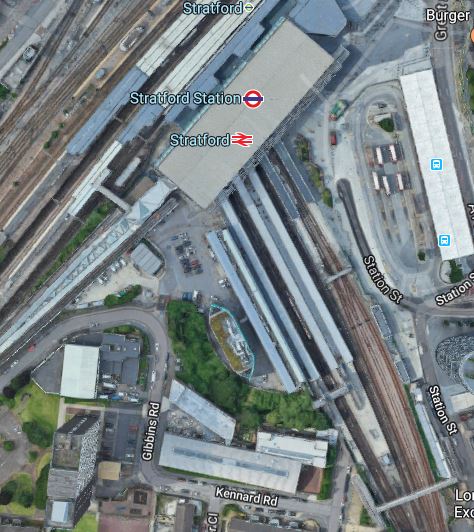
The main station building has the two station symbols on the top and the Jubilee Line platforms run Southwards from the building.
It would appear that the new entrance will be close to the Southernmost corner of the station building in a staff car park.
Knowing the station well, I suspect it will be a very useful new entrance for both residents and visitors to the Olympic Park.
It will make it easier to avoid the clutches of Eastfield.
The only details on the cost of the scheme is this sentence from Ian’s article.
Newham council has agreed to contribute £1 million to the scheme, which is being funded from its Community Infrastructure Levy.
As it incorporates some extra lifts in the station, the scheme is probably going to be more than a million pound one, but the London Legacy Development Corporation (LLDC) is involved, I suspect that everything is securely funded.
Should There Be Other Small Schemes Like This?
At Shepherd’s Bush station on the Overground, in 2015, a new entrance was built to give better access to Westfield. It is not very busy during the day, but I suspect that workers at Westfield use it more than shopper. Wikipedia says it cost £1.35 million, so I should think that the Stratford scheme wouldn’t cost a great deal more.
I believe there are other places, where extra entrances could be built.
Simple Ungated Entrances
Entrances don’t have to be grand, as I showed in An Ungated Entrance Used To Create Step-Free Access At Crofton Park Station.
These two entrances are just a hole in the station fence, Oyster readers and a bit of tarmac. There must be other places, where these entrances can be installed.
An Entrance At Hackney Central Station Into Graham Road
In It Looks Like The Hackney Downs/Central Link Is Ready To Open, I also talk in detail about adding a Southern entrance to Hackney Central station, that would lead directly into Graham Road. Eith a pedestrian crossing and changes to the bus stops, it would be a very useful step-free entrance for those living between the centres of Hackney and Dalston.
A Second Entrance At Highbury & Islington Station
In Could We Create A Second Entrance To The Overground At Highbury And Islington Station?, I investigated creating a West-facing entrance at Highbury & Islington station, that would improve access for those going to football.
Conclusion
I believe that a lot of stations can be improved, by adding extra entrances in convenient places.
It is probably easier to do in London’s Oyster/contactless card area, as a couple of readers can sort out ticketing.
A First Ride In One Of LNER’s New Azumas
The Azuma is the name given by LNER‘s new Class 800 trains.
I rode in one today from Peterborough to Kings Cross after deliberately doing the trip the other way in an InterCity 125.
I took these pictures.
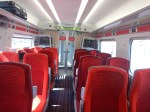
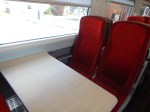
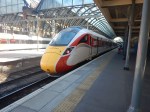
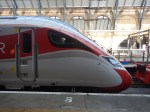
These are my thoughts.
The Brand-Name
The Azuma brand-name is one of those names, that was either thought-up for a fee of several million pounds by a specialist agency or it was thought up by a few serious real-ale drinkers in a comfortable pub, in front of a roaring fire or a blazing sun.
- It is actually Japanese for East, so I doubt it will be controversial.
- It is catchy and if say Simon Calder said that he liked the new Azuma, it might result in extra ticket sales.
- It will differentiate LNER from their competitors running differently-liveried examples of the same Class 800 train.
- Does it suggest speed in English, with the zoom in the middle?
LNER obviously like it, as Wikipedia says they retained the name, which was devised by the previous franchise holder; Virgin Trains East Coast.
Thinking through the history of the East Coast Main Line, I can only remember one class of locomotives or trains, that got a name; the Class 55 locomotive or Deltic. For those of my generation, Deltics are often iconic. In The Thunder of Three-Thousand Three-Hundred Horses, I describe a memorable trip behind a Deltic.
The Livery
The livery is distinctly cheeky, with an eye suggested around the front side-window!
The eye certainly stands out, which could be a good way to get extra seat sales.
It also appears that the livery has changed from the original Virgin East Coast design.
I like it!
The Interior
The interior is simple, practical and bright with some innovative touches.
- I was in Standard and there were a reasonable number of good-sized tables, which is always welcome.
- The seats seemed better than those fitted to the Class 800 trains on Great Western Railway (GWR).
- The electronic seat registration status displays were clear and understandable.
- I didn’t use the wi-fi or the charging points, but others were using them and one guy said they worked fine.
- Our ticket collector had a moan and I suspect there are a few problems that will be corrected as necessary.
But then trains always get a lot better after their first major update.
Comparison With Great Western Railway’s Version
The general consensus between two other passengers and myself, was that the seats in the Azuma were more comfortable, than those of GWR’s Class 800 trains.
A Three Class Train
Like some other services in the UK, the Azuma is effectively a three-class train.
- First Class
- Standard Class with a table.
- Bog Standard Class
I find it interesting that East Midlands Railway are promising that all seats will have tables, which already happens on some services on Chiltern Railways.
I wonder if LNER’s competitors; East Coast Trains, Grand Central and Hull Trains will offer more tables.
As a regular user of Chiltern Railways, I can see more tables being added to all main line services.
Performance
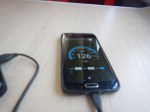
As the pictures show, I followed the train speed with the Speedview app on my phone.
After accelerating away from Peterborough 125 mph was held to Stevenage and then after slowing for the twin-track section over the Digswell Viaduct, the train maintained 100 mph for most opf the way until Kings Cross.
I think we will see improved performance onf the East Coast Main Line, with speeds increasing and journey times decreasing.
- There are plans to add extra tracks between Huntingdon and Peterborough.
- The flyunder at Werrington will be completed.
- There are plans for improvements to the North at Newark, Doncaster and York.
- Digital signalling will allow 140 mph running of Azumas and other Class 800 trains.
- It has been suggested that capacity on the route would improve with 125 mph trains running to Kings Lynn.
If all operators were running Class 800 trains, this would surely increase capacity.
Splitting And Joining
This document on the Hitachi web site is entitled Development of Class 800/801 High-Speed Rolling Stock For UK Intercity Express Programme.
This is a sentence from the document.
It also incorporates an automatic coupling system that shortens the time taken to couple or uncouple trains while stopped at a station.
Their Kentish cousins have been at it for several years.
LNER have not disclosed how they will use splitting and joining, but there are possibilities, where two five-car trains leave London as a ten-car train and then split en route to serve two destinations.
- London to Aberdeen and Inverness, splitting, at Edinburgh.
- London to Harrogate or Skipton and Middlesborough, splitting at Leeds.
- London to Lincoln and Hull, splitting at Newark.
Trains would join at the same stations, when returning South.
The splitting and joining has advantages over the current fixed-length InterCity 125 and InterCity 225.
- A five-car Azuma, only needs a 130 metre long platform. So services to destinations like Lincoln, Middlesbrough, Scarborough and Sunderland without a long platform become possible without expensive platform extensions.
- Train paths on the East Coast Main Line are being used more efficiently, as in some cases two destinations are served by one service into Kings Cross.
There are some disadvantages.
- Travellers must make sure they get into the correct part of the train.
- There is probably more staff on the train, as both five-car trains need a full crew.
- Returning South, trains must keep to time precisely to the joining station, to avoid delaying another service.
- All possible calling points on the East Coast Main Line, must be able to handle ten-car trains But as these are less than twenty metres longer than an InterCity 225, lengthening shouldn’t be a major exercise.
It’s probably best to consider the two five-car trains as separate services, which happened to be coupled together on the Southern section of the East Coast Main Line.
It should also be noted that several stations like Kings Cross, Doncaster, York and others have entrances in the middle of the platform, which is convenient for either the front or rear train.
Bicycles, Surf Boards And Oversized Luggage
I don’t think you get many surfboards on London to Leeds services, but a member of LNER’s staff told me, that during the recent Tour de Yorkshire, there were a lot of passengers with bicycles. This could be a problem on the Azuma,, as the nine-car train has only four spaces, with a five-car just two.
With the conversion of Scottish services to Azumas, I can see that luggage could be a problem.
I took this picture at Edinburgh, where this luggage is about to be swallowed by the locomotive of an InterCity 125.
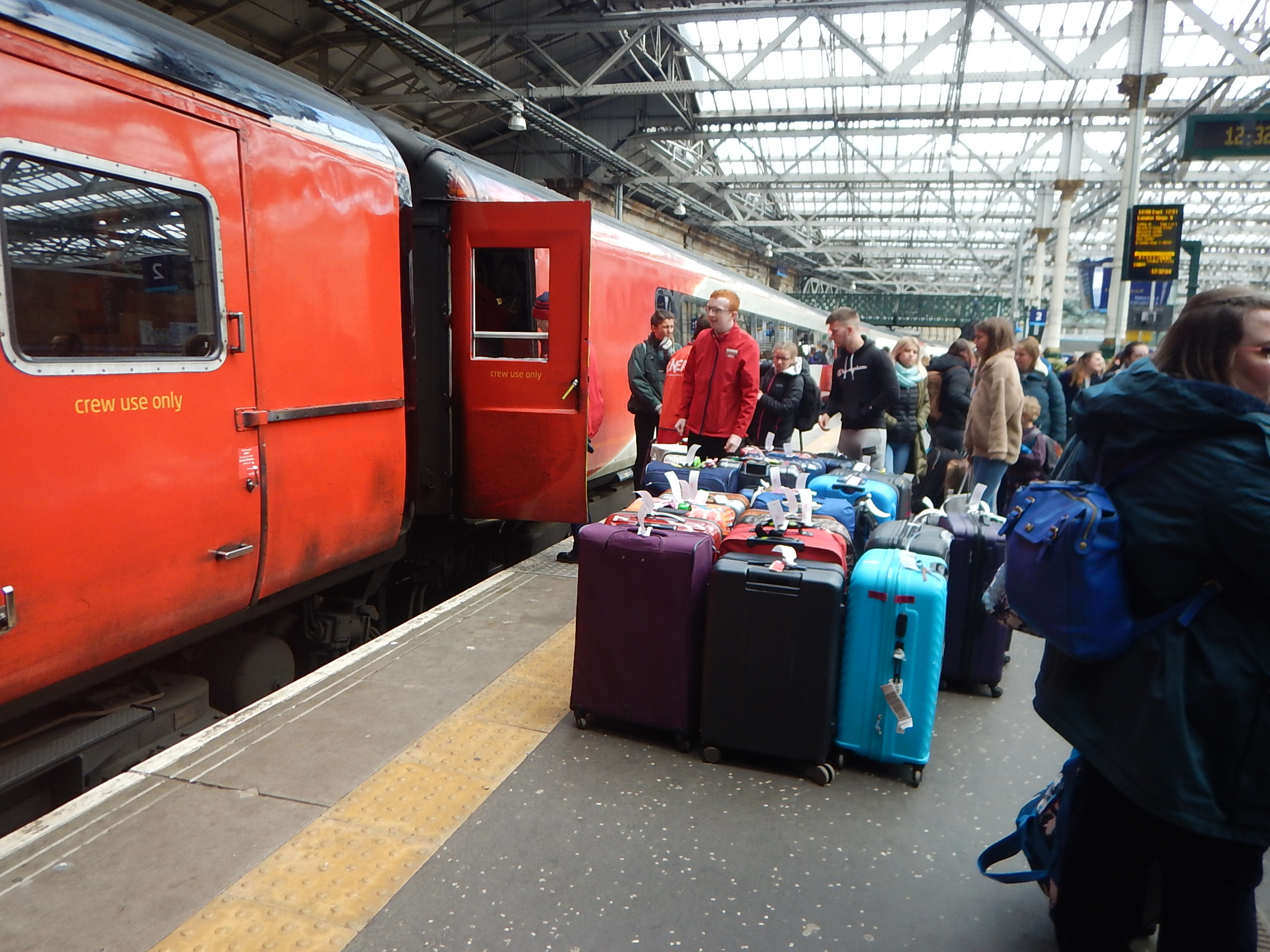
I can see a time, when there will be a need to add another car to some nine-car trains, to make sure all the bicycles, surf boards and oversized luggage can be accommodated on the train.
- Are LNER cutting themselves off from upmarket golf tours, where passengers travel between London and Gleneagles in First Class luxury?
- GWR have a similar problem on South West England services and I think, it will get more serious in the next few years, as more people take up cycling and surfing.
- It appears GWR have resorted to banning surf-boards.
- ScotRail have opted to convert redundant single-car Class 153 trains, into multi-purpose additional carriages to enhance services on the West Highland Line.
I can also see a problem on the London to Inverness services. In Promoting The Highland Main Line, I wrote about the efforts of the Highland Main Line Community Rail Partnership to encourage more visitors to their iconic line and the surrounding area.
Many of the visitors that are attracted to the area, might come with bicycles, golf bags, climbing equipment and other oversized baggage.
So could we see an extra multi-purpose car added to some Azumas working between London and Scotland?
- The Class 800 trains can be lengthened to as long as twelve cars.
- Manufacturing of extra cars in the next few years, should be relatively easy.
- Adding extra cars is a simple cut-and-paste, with the train software ascertaining the train formation.
- Most platforms are probably long enough for at least ten-car trains.
- A ten-car Class 800 formation is only fifteen metres longer than a nine-car InterCity 225.
- There may be opportunities to carry high-value, urgent or perishable freight.
Obviously, the train operators’ needs to satisfy their markets and their finances will decide if extra cars are worth adding.
But I think, that we’ll see some ten-car Azumas on the London and Aerdeen, Edinburgh and Inverness routes.
Conclusion
The train appears to meet the specification, but as regards bulky luggage, it could be that the specification is lacking.
London Overground Timetable Changes After Delay In New Trains
The title of this post, is the same as that of this article on the Watford Observer.
This is the first paragraph.
Passengers could face some difficult journeys to work over the next few months after a delay in delivering new electric trains.
The late delivery of Class 710 trains have struck again.
Instead of four trains per hour from May 19th, the service will stay as three trains per hour on an unusual 15, 15, 30 time interval.
Probably more annoying than a disaster.
Breeze Hydrogen Multiple-Unit Order Expected Soon
The title of this post is the same as that of this article on Railway Gazette.
This is the first paragraph.
Alstom Transport is hopeful of confirming an order before the end of this year for its Breeze hydrogen multiple-unit trains being developed in partnership with leasing company Eversholt Rail, suggesting that the first trains could enter service ‘as early as 2022’.
It then goes out to fill out some of the thinking behind the Alstom Breeze hydrogen-powered train.
The Breeze Is A Stop-Gap
Alstom are quoted as indicating the Breeze is an interim solution, until the next generation of train is available.
But after a ride to Southend recently in a Class 321 Renatus, I’m sure that the ride and passenger acceptance will be of a high standard.
And that’s what counts. Hydrogen is only the train’s personal power supply.
Alstom Are Not Building A Suburban Trundler
The Alstom Coradia iLint is not an exciting train.
- It has a cruising speed of 87 mph.
- It has a range of 370-500 miles.
- It has a noisy mechanical transmission.
- It always runs on hydrogen-power.
- The prototypes have covered 100,000 km.
In my view, it is very much a first generation compromise design.
The article says more about the Alstom Breeze.
- It has a slightly faster cruising speed of 90 mph
- The Breeze will have 50% more power than the iLint. Does this mean better acceleration and/or a longer and heavier train?
- It will have a 1,000 km range.
- It will have regenerative braking to the train’s batteries.
- It will have a new AC traction package, as does a Class 321 Renatus. So will the two systems be the same? Or at least similar?
I am also fairly sure, the train will be able to use electrification of both 25 KVAC overhead and 750 VDC third-rail, as Class 321 trains can now!
Train Capacity
This is said about train capacity.
Despite the loss of some seating space, each set of three 20 m vehicles would provide slightly more capacity than a two-car DMU with 23 m cars which it would typically replace.
The Class 172/0 trains, that are two-car 23 metre diesel multiple units, have 124 seats.
In Hydrogen Trains Ready To Steam Ahead, I estimated that a three-car Alstom Breeze would have a seating capacity of around 140 seats, with the ability to perhaps take an additional 160 standees.
So was my seat estimate fairly good? I also think, that as the Breeze has been designed with bags of grunt, I suspect that the basic train could be increased in size by adding extra trailer cars.
After all, the legendary Class 442 train is a five-car train, with a power-car in the middle. South Western Railway, think they are worth pulling out of the scrapyard and refurbishing to run expresses between Waterloo and Portsmouth.
I am fairly certain, that Alstom can create a five-car Class 321 Breeze with the following characteristics.
- A capacity of about three hundred seats
- A smaller three-car train would have 140 seats.
- A near-100 mph top speed on hydrogen-power.
- A 100 mph top speed on electrification.
- A 1000 km range on hydrogen.
- Regenerative braking to an on-board battery.
- The ability to use 25 KVAC overhead and/or 750 VDC third rail electrification.
The trains could have the ability to run as pairs to increase capacity.
The train would be ideal for the following routes.
- Liverpool and North Wales via Chester
- Norwich and Derby
- Newcastle and Carlisle
- Preston and Carlisle via Barrow
- Cardiff and the South Coast of England
- Borders Railway
- Southampton and Ashford
- Waterloo and Exeter
All of these routes have partial electrification, which would reduce the amount of hydrogen needed to be carried around.
Now that is an interesting multi-variable calculation!
Hydrogen Infrastructure
Alstom seem to be developing infrastructure solutions to supply hydrogen for fleets of ten or more trains, which could be shared with other applications. The obvious one could be where a train depot and a fleet of buses share a facility in say a large city like Exeter, which has an extensive diesel train network.
The article also says this about the source of hydrogen.
Ideally, the trains would use ‘green’ hydrogen manufactured by electrolysis using surplus renewable energy rather than ‘brown’ hydrogen from steam methane reforming.
I agree wholeheartedly with that!
Delivery In 2022?
Consider what has already been achieved in other projects.
- Alstom have proved they can generate enough electricity to power a practical train.
- Eversholt have proved that you can turn Class 321 trains into comfortable and efficient 100 mph Class 321 Renatus trains for routes up to a hundred miles.
- Several classes of Mark 3-based electrical multiple units have been re-engined with AC traction, including the Class 321 Renatus.
- Engineers all over the UK have modified Mark 3-based coaches and multiple units to create better and more-efficient trains.
Helping delivery of the project, is a legacy of drawings and philosophy from British Rail Engineering.
If Alstom say 2022, I believe that that could be a feasible date.
Conclusion
The ghost of British Rail Engineering is certainly a benign one allowing all sorts of worthwhile development paths.
 The Anonymous Widower