Huge Outlay On Motorways Despite Reduction In Traffic
The title of this post, is the same as a small news item in The Times on Friday.
According to the Commission on Travel Demand, individuals used cars and other vehicles fourteen percent less than they did in 2002.
Reasons given include internet shopping, Netflix and flexible working.
They also say that many in their teens and early twenties shunning car ownership altogether.
There is a graph in the article, which shows that the reduction has been largest in Greater London. That seems to fit with my observations.
- I’ve chatted to several youngsters , who have no intention of learning to drive for some years. It’s all just too costlyin the Capital and there are few places to park securely.
- I’m also sure, that my road which is wide and has cars parked on both sides, is less crowded than when I moved here nearly ten years ago. Now, when I get a parcel delivery, there is always space for the van outside.
- In Dalston, we have also benefited from the Overground and lots of new buses, although the frequency of the latter hasn’t increased.
- I wouldn’t underestimate the fact that those of a certain age, like myself, get free public transport in Greater London.
- There has also been a tremendous increase in the use of bicycles for commuting.
I don’t think that all parts of London have seen as much reduction as the North and East.
It always seems that traffic is busy, when I go to Chelsea, Westminster or the West End. But I don’t think we can stop, those with large 4x4s going to the local Waitrose and Harrods.
I also think, that Crossrail will reduce traffic across a whole swathe of London from Ealing to Ilford via Paddington, the West End and the City.
It will be a well-designed stylist railway with trains every few minutes.
According to the article, Metropolitan areas are also seeing a reduction in car use.
Although, they haven’t got as comprehensive, a public transport network as London, over the last ten years, several large metropolitan areas have improved public transport considerably.
Traffic also seems to have reduced slightly in what the report calls shire towns, resort and rural.
I would put this down to the three factors said earlier by the article; internet shopping, Netflix and flexible working.
The only places not showing a less significant decline is districts with industry and new towns.
But a lot of these have been built for car use.
Conclusion
It is a thought-provoking article.
Given that Greater London has shown the biggest decline in traffic and it has the most comprehensive public transport system in the UK, the question has to be asked if more money is spent on public transport, could it reduce the amount of money spent on the roads!
I would do the following.
- Build more welcoming new stations with adequate parking like, Apperley Bridge , Bromsgrove, Cambridge North, Ilkeston, Kenilworth, Kirkstall Forge and Maghull North.
- Update some of the worst stations in the country to a modern standard.
- Put more seats on busy routes.
- Increase train frequency where possible.
- Make certain everybody who wants to, can work flexibly from home.
- Use more sophisticated and better managed home delivery systems.
- Build HS2 as fast as possible.
- Develop more rail-based freight solutions.
- Make it possible to get to most Airports by public transport.
Hopefully, with local mayors and other devolved bodies, we’ll see more areas of the country taking the decisions they need.
Artificial Photosynthesis Offers Clean Source Of Hydrogen
The title of this post, is the same as that of this article on The Engineer.
This is the first paragraph.
Devices made using conventional semiconductor technologies could make hydrogen using just fresh or saltwater and sunlight.
It would appear to be an interesting concept, but after reading the article, there is still a lot of research and development to be done before it is an affordable proposition.
But I do feel, it could be one of those technologies that are commonplace in a few decades.
Greater Anglia’s Class 755 Trains Seem To Have Bags Of Grunt
This article on Rail Magazine, is entitled IN PICTURES: Greater Anglia Unveils First New Stadler Bi-Mode Train In Switzerland.
The text with the excellent and numerous pictures is informative, with other details of the Class 755 trains.
Dynamic Testing
This starts in July and involves.
- Sixteen trains.
- Eight teams.
- Seven locations across Europe including the Czech Republic, Germany, Poland, Romania and Switzerland.
No-one can say that Stadler are not being thorough.
Entry Into Service
The bi-modes will enter service in Summer 2019, when Greater Anglia hope to have twenty trains in service.
The first Class 755 train will be delivered to Norwich Crown Point depot in October.
Articulated Trains
The trains are articulated and the article has a good image of two carriages showing the join.
Power Car And Car Lengths
The article says that the engines will be located in a power car. There is also an image looking through the power car.
I’m still unsure, whether the length of the train, includes the power car!
There are two versions.
- Three-car Class 755/3 trains.
- Four-car Class 755/4 trains.
This clipped image from Wikipedia shows the train formats.
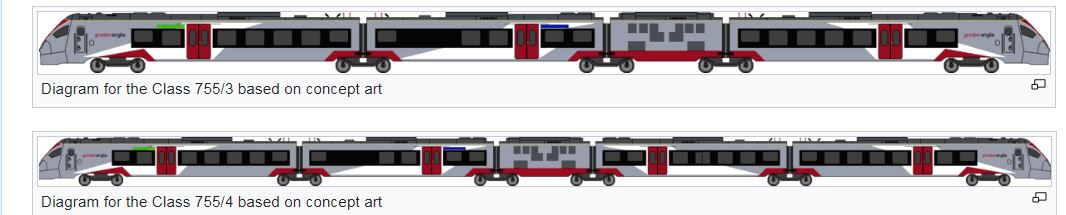
It looks like the four-car Class 755/4 trains, a three-car train with an extra passenger car.
The Class 755/4 train would appear to consist of the following
- Two full-length drive cars, with passenger accommodation.
- A half-length power car.
- Two full-length passenger car.
The three-car Class 755/3 car train would not have the extra full-length passenger car.
So in terms of full-length passenger cars, train lengths could be as follows
- Class 755/3 trains – 3 cars
- Class 755/4 trains – 4 cars
Wikipedia says that each train has the following number of seats
- Class 755/3 trains – 166 seats
- Class 755/4 trains – 224 seats
Calculating the seats per car, gives the following.
- Class 755/3 trains – 55.3 seats/car.
- Class 755/4 trains – 56 seats/car.
This suggests to me, that the interior of a passenger car is very similar to that of a driver car, which must mean manufacturing cost savings.
Diesel Engines
Both trains are fitted with 16 litre V8 engines supplied by Deutz which produce 478 kW.
The power cars have the following numbers of engines
- Class 755/3 trains – 2 engines – 956 kW – 319 kW per car
- Class 755/4 trains – 4 engines – 1912 kW – 478 kW per car.
I suspect that a fifth car could be added to a Class 755 train. This would have 1912 kW and 382 kW per car.
Add a sixth car and this would have 1912 kW and 319 kW per car.
Comparison With A Class 170 Train
Compare these figures with a diesel Class 170 train, which has 315 kW per car.
Both trains are 100 mph trains, built from aluminium, so I suspect that the performance of three-car Class 755/3 and Class 170 trains are roughly the same.
But the four-car Class 755/4 trains have fifty percent more power per car, than the Class 170 train, so these will be no sedate rural trundlers.
Looking at the power figures for five-car and six-car units, they would still have at least as much power per car as a Class 170 train.
Other Possible Routes For Class 755 Trains
Could Class 755 trains be a replacement for routes like the following?
- Aberystwyth to Shrewsbury
- Basingstoke to Exeter – Stadler are doing third-rail in Liverpool
- Birmingham to Stansted Airport
- Cardiff to Holyhead
- Cardiff to Shrewsbury
- Holyhead to Liverpool via Halton Curve
- Holyhead to Manchester Piccadilly
- Liverpool to Norwich
- Milford Haven to Manchester Piccadilly
- Swansea to Shrewsbury
Trains could be any suitable length from three to six cars.
Note that electric FLIRTs can attain 125 mph, so could we see a train with the following characteristics?
- 125 mph on electrified lines, where operating speeds allow.
- 100 mph on lines with no electrification.
This performance is not far off Hitachi’s Class 802 train.
The other major competition could be Bombardier’s proposed 125 mph bi-mode Aventra, that I wrote about in Bombardier Bi-Mode Aventra To Feature Battery Power.
The winners will be the train operating companies and their passengers.
A Video
Greater Anglia have put a video on YouTube.
Conclusion
The Class 755 trains certainly seem to have bags of grunt!
Thameslink Information At London Bridge Station – 3rd March 2018
This picture was taken at the foot of the escalators leading to the Thameslink Platforms 4 and 5 at London Bridge station.

The trains were fairly crowded, although it was mid-afternoon.
But at the bottom of the escalators under the tracks going through the station, in the vast space, there were relatively few travellers.
I should visit in the Peak.
But it does seem the design is working.
First Qatar Airways Flight From Doha Lands In Cardiff
The title of this post is the same as that of this article on the BBC.
The story is also reported in the Business section of The Times under a title of Direction Of Travel Brings Qatar Airways To Cardiff Airport.
This is the first paragraph from the latter article.
Trade winds from the Middle East have brought a whiff of what a successful Brexit might look like: a 300-seat, state-of-the-art Qatar Airways jetliner carrying a full business-class cabin and several tonnes of freight that has travelled from the 35C of Persian Gulf heat to 10C of Welsh drizzle.
To some it might seem to be a surprising new route.
As a former private pilot, who knew many of the UK’s airports pretty well, Cardiff Airport has many advantages.
- It has a long runway.
- It is not very busy.
- Air traffic control and other services are top class.
- It has a terminal capable of handling a large number of planes.
- British Airways have a large maintenance centre at the Airport.
- Ground transport to Cardiff includes buses and a railway station at Rhoose Cardiff International Airport station.
It could be an airport, that just needs more airlines and passengers to take advantage of its facilities.
The two articles suggest various reasons, why Qatar are going to run a service, that will be daily by July.
- It gives Cardiff a direct link to the world’s fastest growing hub airport at Doha.
- Qatar have lots of investments all over the UK.
- Doha gives direct access flights to to Australia, China, India, Japan, Korea and New Zealand, to give six examples.
- Cardiff Airport wants to develop as a warehousing hub and Qatar Airways is big in freight.
- The export market for Welsh food and other perishables could be transformed.
- The Times reminds us there are nine million sheep in Wales.
The Times also has this memorable phrase.
Quite why the flights have been launched has as much to do with Welsh lamb as it does with not being Bristol.
But I think there are other reasons.
New Routes For Qatar Airways To North America
Look at Qatar Airways routes to North America.
- They serve mostly Eastern seaboard destinations from Doha.
- Chicago and Los Angeles are also served from Doha, but they are long flights of over sixteen hours.
- San Francisco, Seattle and Vancouver are not served.
So would Cardiff with its top-class facilities make an excellent hub for Qatar Airways?
Would a pos-Brexit UK be free to allow Qatar Airways to run services from Cardiff to selected destinations in North America?
Remember, it’s also about freight!
Improved Rail Access
This Google Map shows the Airport.
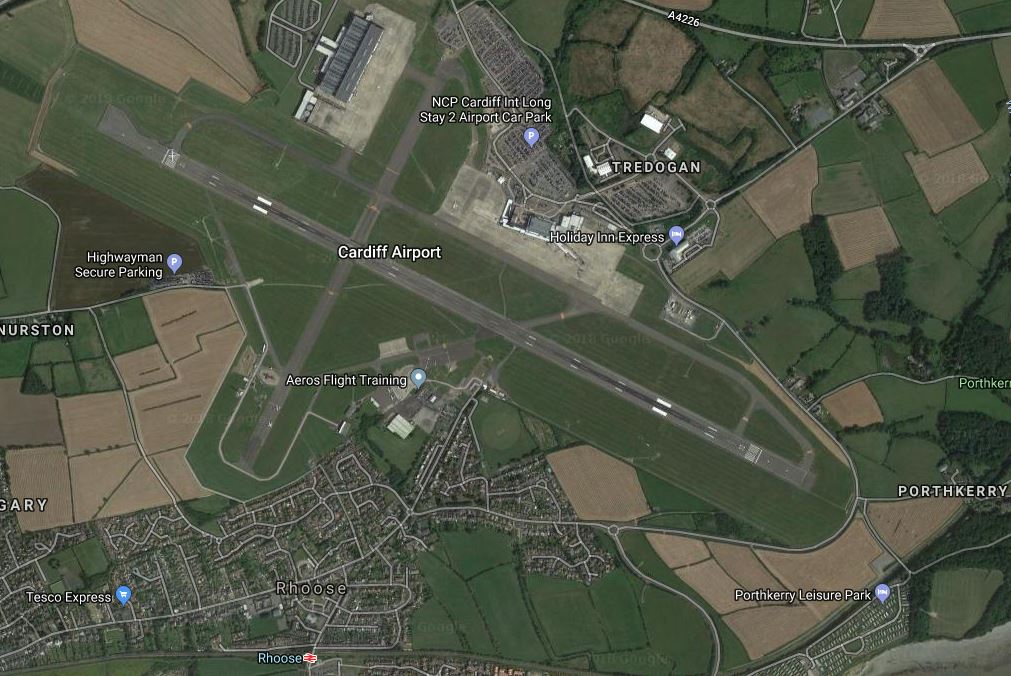
Note.
- Rhoose Cardiff International station is South of the Airport at the bottom of the map.
- The main terminal is on the North side of the Airport.
- The Vale of Glamorgan Line through the station and then skirts past the Eastern end of the runway on its way to Cardiff.
- The Vale of Glamorgan Line is double-track with sections of single-track.
- The Vale of Glamorgan Line was scheduled to be electrified.
It would appear that providing better passenger and freight access would not be the most challenging of problems, if they were to become needed in the future.
Improved Passenger Services
The current service at Rhoose Cardiff International station is as follows.
- An hourly service to Bridgend.
- An hourly service to Cardiff Central, Cardiff Queen Street and Aberdare.
- On Sundays the service is only two-hourly.
The service needs to be improved.
It would be possible to run a service from Cardiff to Swansea along the Vale of Glamorgan Line.
- The service would call at Rhoose Cardiff International station.
- The service could be run by trains designed for an airport service.
- The service would connect to all the Cardiff Valley Lines at Cardiff Central station.
- The service could be extended at the Western end to Llanelli and Fishguard.
- The service could be extended at the Eastern end to Newport, Bristol Parkway and Bristol Temple Meads.
If bi-mode or diesel trains were to be used no new infrastructure would be needed.
Two trains per hour are needed and may be possible, but it might be necessary to find a solution to the two single-trac sections of line.
Freight Services
After reading, the two articles, I’m convinced that both Cardiff Airport and Qatar Airways are backing the use of the airport as a freight hub.
But all freight would have to leave the airport by truck, as there is no rail connection.
Because of the closeness of the Vale of Glamorgan Line to the airport, it would be possible to create a high-quality cargo-handling facility, with rail access.
In The Go-Anywhere Express Parcel And Pallet Carrier (HSPT), I proposed using four-car Class 321 trains as parcel and pallet carriers.
- These could serve anywhere in the UK from Cardiff Airport.
- If from the Airport to Cardiff were to be electrified, electric freight could go fast to London and the South East.
- Cardiff could be used as an alternative freight hub,, for an over-crowded Heathrow.
I shall be interested to see how Cardiff Airport develops a cargo terminal..
Conclusion
Qatar Airways may have more money than Croesus, but they seem to be spending it wisely, in developing a route to Cardiff.
Birmingham International Station Set For £286m Revamp
The title of this post, is the same as that, of this article on Railway Technology Magazine.
This paragraph, explains the objectives of the revamp.
The plans would see the existing station be transformed into a multi-modal transport exchange, bringing together existing rail, future high speed rail, air, trams, buses, rapid transit, private vehicles, taxis, bicycles by 2025.
Birmingham seems to be growing in ambition.
This Google Map shows Birmingham Airport, the National Exhibition Centre and Birmingham International station in the middle.

Transport hubs based around an international airport will become increasingly common.
- Heathrow Airport is improving rail access with Crossrail and a possible Western rail access.
- Gatwick Airport is improving rail access as I wrote about in The Rise Of Gatwick Airport.
- Manchester Airport is improving, rail and tram access.
But we still need more.
To get to many airports, the only convenient way is to drive. Which in these days is not acceptable.
Will TSB Exist In A Couple Of Months?
I am seventy and I have been programming computers and using them since I was eighteen.
I also worked for Lloyds Bank in the 1970s, although not on their computing side, but as a high level consultant, where I was using data extracted from the main computer system to calculate bank costs, through a program I had written that was effectively a giant spreadsheet.
So I have heard a lot of stories from the 1960s, of when banks were first computerised, over drinks with bank e,employees.
One was about an absolutely brilliant fraud, that would make a good film.
None were as horrific as what TSB have inflicted on their customers over the last few weeks.
I like to check my bank account every morning, as in my view, that is the best way to pick up any fraud.
So if I had been a TSB customer, I would already have long ago moved my account.
It would be in everybody’s interest, if all TSB account holders moved to other banks.
As that would hopefully, close TSB!
This would surely mean, all banks and other financial institutions made sure they got their computing right.
From my computing knowledge, I do wonder whether the TSB problems are being caused by an evil programmer!
The chaos undoubtedly, could have been created deliberately.
But for what purpose?
- There is always a rogue state or organisation, wanting to create mischief.
- Banco Sabadell, who are TSB’s parent, are a publicly-quoted company. Their share price appears to have been falling recently. Could someone have placed a big bet on the share price?
- Chaos is a good smokescreen for fraud.
Hopefully, the truth will come out in the end!
How The Class 717 Trains Are Financed
This is a paragraph in an article in Rail Technology Magazine, which is entitled Brand-New £200m Class 707s Undergo Testing Ahead Of Autumn Roll-out.
The 25 six-car trains, financed by Rock Rail Moorgate, will be the first to be introduced in the UK using a new model for financing rolling stock. In an unprecedented move, the trains will be financed through long-term investment from pension and insurance companies.
So many of us will own a portion of these trains, through our pensions and insurance policies!
Great Northern’s Class 717s Under Test
The title of this post, is the same as that of this article on Global Rail News.
The title also says it all and it would seem that the aim of having Class 717 trains in service this year on the Northern City Line is feasible.
The article also says that twelve trains have been completed and another twelve are being built.
I suppose Siemens had an advantage, in that except for the end doors, they are probably very similar to the Class 707 trains.
From Lea Bridge Station To Coppermill Junction – 1st May 2018
I walked to the footbridge to the North of Lea Bridge station, before I took a train North.
I took some pictures around the bridge and some from the train.



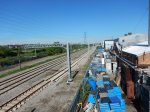
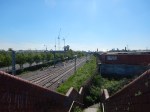
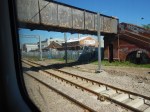
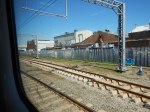
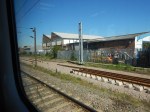
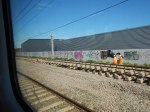

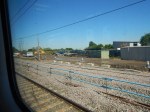
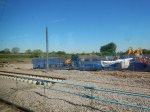

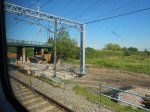
Lea Bridge Junction was the old name for the junction and has been shown on carto.metro.free.fr.
It would appear there are gaps in the track, so will these be used to put in points to link to possible fourth track or even the Hall Farm Curve, which would link the Chingford Branch Line to Stratford.
One thing that puzzles me about Lea Bridge Junction, is that the crossing appears to be unwired. Does this mean that trains will cross using a mixture of Momentum and/or battery power.
 The Anonymous Widower