Ørsted Signs Two ‘Industry First’ Monopile Contracts For Hornsea 3 Foundations
The title of this post, is the same as that of this press release from Ørsted.
This is the introductory paragraph.
Ørsted, the world’s most sustainable energy company, has signed two ‘industry first’ contracts for the fabrication of XXL monopile foundations for the Hornsea 3 offshore wind farm.
I have a few thoughts about the press release.
XXL Monopile Foundations
These four paragraphs describe Hornsea 3’s XXL monopile foundations.
Subject to Ørsted taking a Final Investment Decision on Hornsea 3, the contracts have been finalised with Haizea Wind Group, through its subsidiary Haizea Bilbao, and SeAH Wind Limited, a UK-based subsidiary of SeAH Steel Holdings (SeAH).
Ørsted will be the first major customer at SeAH Wind’s new monopile facility in Teesside, and the agreement with Haizea marks the company’s first XXL monopile contract with Ørsted.
The deal with SeAH represents the single largest offshore wind foundations contract secured by any UK company. Haizea’s agreement is the largest single contract ever secured by Haizea Wind Group.
Each of the huge foundation structures for Hornsea 3 will weigh between 1,300 and 2,400 tonnes and measure in at between 83 and 111 metres in length. Monopile production is expected to start in 2024.
Note
- These are huge steel structures.
- But then the water depth appears to be between 36 and 73 metres.
- It looks like the orders are shared between Spanish and Korean companies
This article on offshoreWIND.biz, is entitled Beyond XXL – Slim Monopiles For Deep-Water Wind Farms.
These are some points from the article.
- XXL-Monopiles have been successfully used for water depths of up to 40 metres. Now wind farm developers need monopiles “beyond XXL”.
- The extension of the range is needed, mainly to enable the use of larger turbines, deeper water, and harsher environmental situations.
- These monopiles will allow turbines of up to 15 megawatts with rotor diameters of up to 230 metres.
- This monopile design automatically induces the idea of design and fabrication optimisation to ensure that monopiles continue to lead the ranking of most economical foundation systems.
In the 1970s, I was involved with a Cambridge University spin-out company called Balaena Structures, who were using similar much larger structures to support oil and gas production platforms.
I was just doing calculations, but I do wonder if these XXL monopile foundations, owe things in their design to work done by structural engineers, like those I met at Cambridge fifty years ago.
Accelerating The Delivery Of Offshore Wind Farms
It is one of Kwasi Kwarteng’s ambitions to accelerate the delivery of offshore wind farms.
In The Growth Plan 2022, these groups of wind farms are mentioned.
- Remaining Round 3 Projects
- Round 4 Projects
- Extension Projects
- Scotwind Projects
- INTOG Projects
- Floating Wind Commercialisation Projects
- Celtic Sea Projects
My thinking in this post, will probably apply to all of these groups.
These are my thoughts.
Accelerating Delivery Of A Wind Farm
This will have these positive effects.
- Electricity will be delivered earlier.
- Customers will have a more secure supply of electricity.
- The wind farm owner will start to be paid for their electricity.
- The Crown Estate will start to be paid for their leases. Although, these might start at signing.
- National Grid will be paid for the transmission of the electricity.
- An energy storage company could be paid for storing surplus electricity.
- Construction teams and engineers can move on to the next project.
- Expensive construction hardware like ship-mounted cranes will no longer be needed.
- I also suspect that the government will raise some taxes from the various companies involved.
It looks like it’ll be winners all round.
How Will Delivery Be Accelerated?
These are some thoughts.
Overall Project Time
In How Long Does It Take To Build An Offshore Wind Farm?, I came to these conclusions.
- It will take six years or less from planning consent to commissioning.
- It will take two years or less from the start of construction to commissioning.
I suspect that as we have been building offshore wind farms for some years, that it will be very difficult to reduce these times significantly.
But as some wind farms take quite a few years to progress from the initial proposal to planning consent, I suspect that improvements to the planning process may speed up the overall construction time of a wind farm.
Project And Resource Management
Good project and resource management will always help.
Better Design And Construction Methods
I always remember in the early days of North Sea Oil, being told by a very experienced project manager that construction of production platforms was accelerated by the availability of larger and more powerful cranes.
Are we approaching the design of the ultimate wind farm? I doubt it, as in the last few months, I’ve seen two very radical new designs.
In Hexicon Wins UK’s First Ever CfD Auction For Floating Offshore Wind, I show this image of one of their TwinHub turbine installations being towed into place.
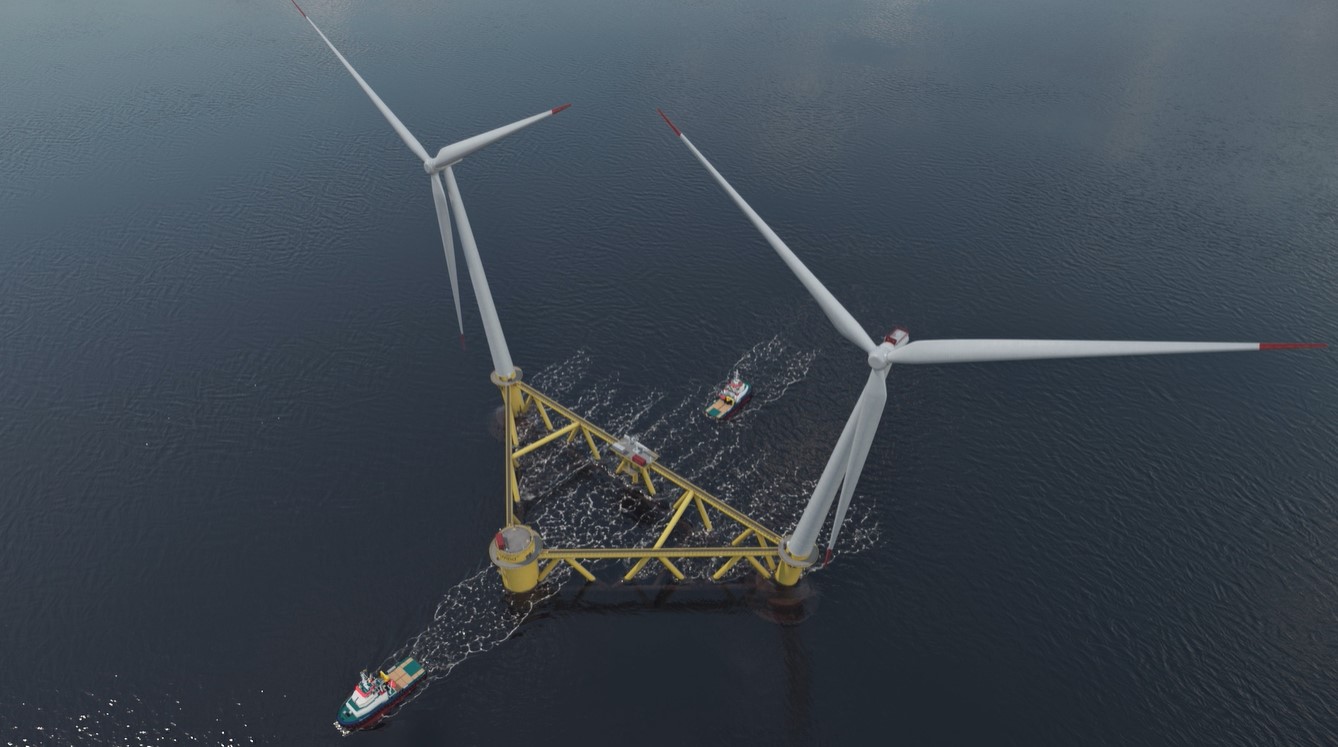
The TwinHub home page has a title of The First Floating Offshore Wind Project in The Celtic Sea.
This is the description on the page.
The TwinHub offshore wind demonstration project intends to prove how Hexicon’s innovative design with two turbines on one floating foundation can further reduce the Levelized Cost of Energy (also referred to as LCoE) before large scale commercialisation. The TwinHub project is a stepping stone to help kick-start floating wind in the Celtic Sea, an area identified as a hotspot for floating wind by the UK Government. It will pave the path for larger and larger projects to help support The Crown Estates’ ambitious target of 4GW of floating wind in the Celtic Sea.
Scroll the page down and there is a fascinating short video of a pair of wind turbines in operation.
- It appears that when there is no wind, it automatically goes into a safe parked mode.
- As the wind rises, one turbine starts up.
- The second turbine starts up and the float turns so they face the wind.
It appears to be a classic example of disruptive innovation.
I have a feeling that this type of installation might have generation, assembly and cost advantages over a single turbine mounted on a single float.
RCAM Technologies are also creating interesting designs for mounting turbines and energy storage using 3D-printed concrete.
What Ts The UK Government Doing To Accelerate Projects?
This article on offshoreWIND.biz, was published in late September 2022 and is entitled BREAKING: UK Puts Massive Amount Of New Offshore Wind Capacity On Fast Track and this is the first paragraph.
The UK will speed up planning and development consent processes for projects from the recently completed, currently ongoing, and upcoming (floating) offshore wind leasing rounds to bring new energy capacity online faster and facilitate economic growth and job creation.
The article is based on what Kwasi Kwateng said on the 23rd of September about speeding up projects in the 2022 Growth Plan.
A Quick Summary Of Our Wind Energy
The article has this paragraph, which summarises our wind energy.
For the UK, which currently has around 14 GW of offshore wind capacity in operation and 8 GW under construction, the projects from the listed auction rounds could bring well beyond the targeted capacity for 2030, which was recently raised to 50 GW.
I can see the target being raised again to at least 60 GW.
A Design Crime – Platform-To-Train Access On The Northern Line At Bank Station
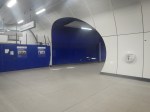
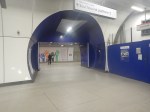
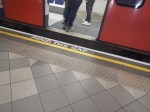
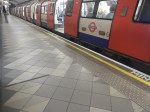
These four pictures show the platform-to-train access on the Northern Line at Bank station.

Note.
- The first two pictures are the new Southbound platform.
- The last two pictures are the Northbound platform.
- The other pictures show the wide and level walkways between the two platforms.
The Southbound platform has level platform-to-train access, but the old Northbound platform does not!
That constitutes a design crime in my book.
Wide Platforms On The Piccadilly Line Extension
As a child, I used to live on the Northern reaches of the Piccadilly Line.
- My family lived near Oakwood station.
- I used to have my hair cut in the barbers at Cockfosters station.
- My school was at Southgate station.
- My father’s print works was close to Wood Green station.
- I regularly brought shopping home from Marks & Spencer in Wood Green, by using Turnpike Lane station.
- I saw Eric Clapton, John Mayall and others at the Manor House pub by Manor House station.
Incidentally, I’ve never had much to do with Arnos Grove or Bounds Green stations.
Perhaps because in those days of the 1950s, I rarely used other lines, I didn’t notice the wider platforms of the extension, which opened in 1933.
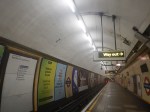
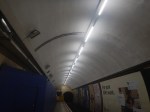

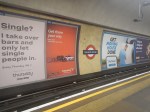
The Wikipedia entry for the Piccadilly Line, says this.
Platforms 400 ft (120 m) long were originally planned for each station to fit 8-car trains, but were cut short to 385 ft (117 m) when built. Some stations were also built with wider platform tunnels to cater to expected high patronage.
Perhaps, that explains the wider platforms at Turnpike Lane and Manor House stations.
I suspect that Transport for London wish that the Victoria Line had been built to the same standards of the Piccadilly Line Extension of the 1930s.
LED Lights Illuminate London’s Elizabeth Line
The title of this post is the same as that of this article on E & T Magazine.
This is the introductory paragraph.
Using LEDs to light up the stations, escalator shafts and concourses of the Elizabeth line was a bold move from Transport for London; especially as when they decided on its use back in the late 2000s, LED technology was yet to break into the lighting world.
These points are also made in the article.
- The Elizabeth line is one of the first sub-surface infrastructure projects to be lit entirely by LEDs.
- The decision to use the technology was based on industry evidence that its use will help reduce energy consumption and maintenance requirements.
- The Crossrail team used the light-grey, matt-textured, glass-reinforced concrete lining of the station and escalator tunnels to reflect light onto the passenger areas.
- The main lighting and the emergency lighting are incorporated in the wayfinding totems.
The article certainly explains how the excellent lighting was designed.
These pictures show some of the LED lighting on the Elizabeth Line.


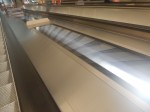
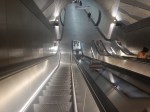

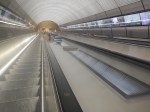

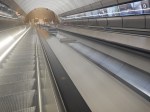


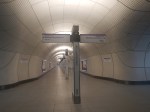
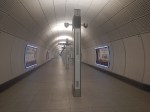
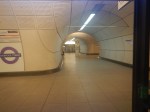
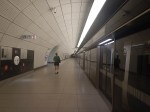
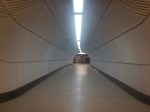



Note that uplighters on the Underground are not new, as these pictures from Turnpike Lane station show.



They were installed in the 1930s and were also used on the Moscow Metro, where London Transport installed the escalators.
Lighting Can Calm Passengers
This is a paragraph from the article.
Both Kerrigan and Clements agree that the lighting infrastructure makes the Elizabeth line unique to all its predecessors seen across the London Underground and that they have met their goal to create a soothing environment to enhance the passenger experience. “We wanted to create a relaxed commuting environment that is the opposite to the poorly lit and cramped environment of the Central line, for example,” Clements admits. “And we believe that the lighting has a massive amount to do with this.”
Does this explain why passengers seem generally calm?
The Case Of The Disappearing Litter Bins
Coming back from Cardiff today, I had some Marks & Spencer sandwiches and some of their still lemonade, which ended up in a carrier bag.
There were no litter bins on the exit of the train I used, so I had to carry my rubbish to the Lizzie Line, where I knew there were bins.
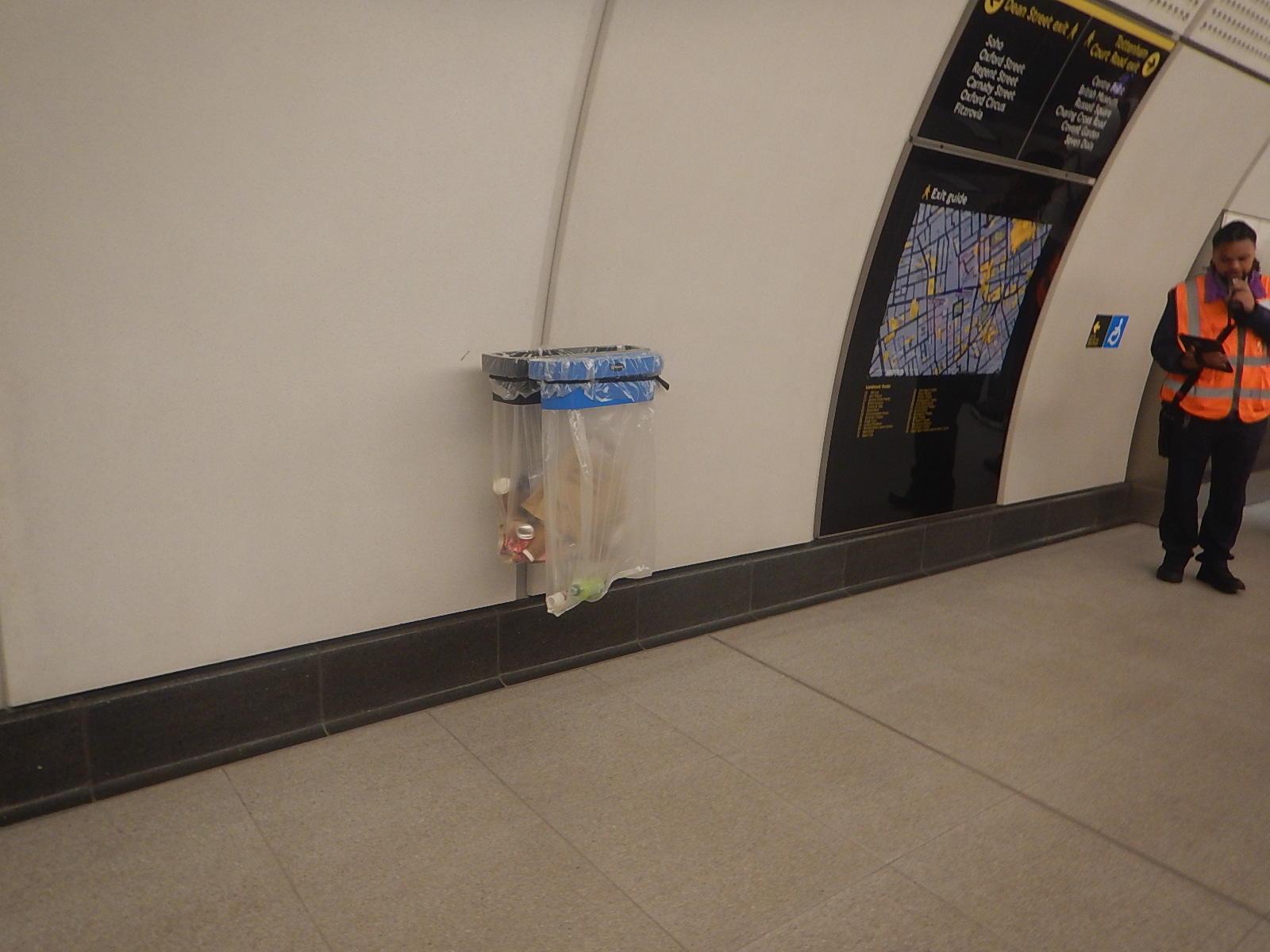
I took this picture in May at Tottenham Court Road station.
But they were missing so I had to bring it home.
I asked one of the station guys and they said, that they kept falling off the wall.
So let’s hope that a solution can be found.
The Grade II Listed Next-Train Indicators At Earl’s Court Station Are Back
This page on Rail News has a section, which is entitled Heritage Train Indicators Return To Service, where this is said.
Vintage train describers have returned to the platforms of Earl’s Court District Line station, which is Grade II listed. First installed in 1905 when London’s District Railway was electrified, they have been renovated and given replica destination name plates, which are highlighted as required by an illuminated arrow. The indicators had been switched off while they were connected to a new signalling system. Modern information panels showing the destination and the number of minutes before the next train is due from each of the four platforms have also been installed.
I went Earl’s Court station to have a look this morning and took these pictures.
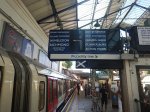

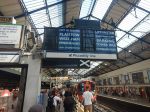
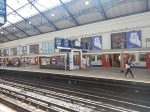
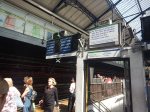
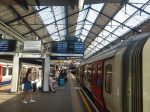
They all seemed to working as they should.
Earl’s Court station is a Grade II listed London Underground station and Wikipedia says this about these indicators.
On each platform is an old-fashioned “next train” indicator board which had various routes shown, of which one is usually highlighted by an arrow to indicate that this is the route of the next train. As of March 2022, these have been temporarily disabled while signalling is upgraded to CBTC signalling, as part of the 4LM improvement works to the subsurface lines, although are expected to return in June the same year. These have not been replaced by modern electronic equivalents as they are Grade II listed.
There can’t be many next train indicators in the world, that are listed or given the local equivalent.
This does take me all back to the 1960s, when for two summers, I worked in the Electronics Laboratory at a company called Enfield Rolling Mills. The Electronics Laboratory developed control systems for the many machines in the factory. At that time, a lot of the work involved replacing relays and electronic valves with then-modern transistors. I learned a lot about industry in those two summers and it wasn’t all about automation and electronics.
Would a fifteen-year-old be allowed to do a job like that, these days?
I suspect that on that Earl’s Court indicator board, there is some interesting electronics connecting it to the CBTC signalling.
High Speed Two Publish Rural Footbridge Design
High Speed Two have published their rural footbridge design on this page of their web site.
This image from High Speed Two shows an artist’s impression of the bridge.
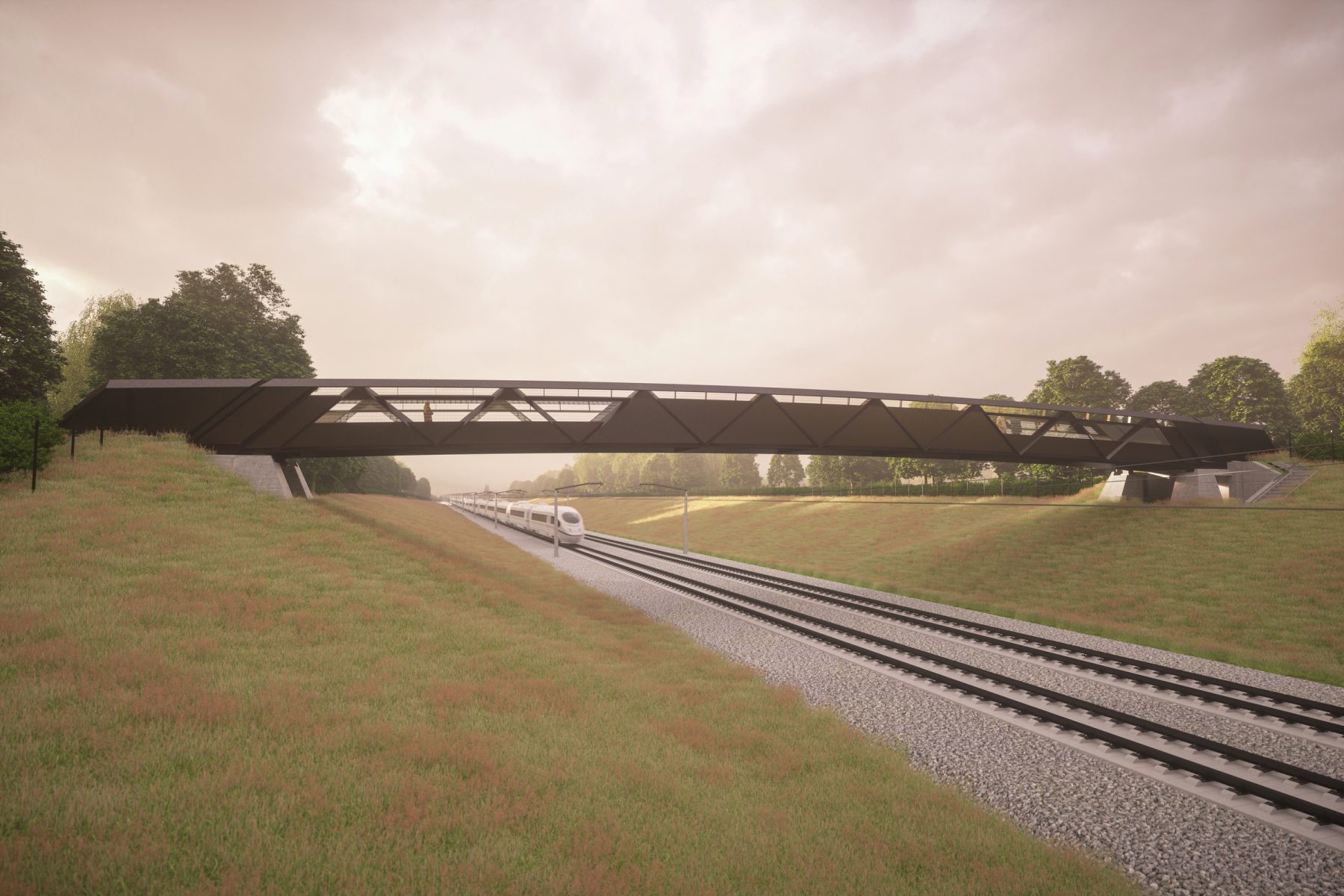
This is High Speed Two’s own thoughts on the design.
Made of weathering steel, the sides of the lightweight bridges will lean outwards to maximise views of the sky and improve the experience of people crossing the railway.
Weathering steel – which ages naturally to a russet brown colour – was chosen to help match the tone of the surrounding countryside, while the plates that form the structure of the bridges will be angled to appear narrower and lighter.
To emphasise the sense of lightness, each span will be slightly higher in the middle so that they appear to leap over the railway. Most of the bridges will consist of just one 42m span, with extra spans added where necessary to create bridges of up to 102m long.
The design of the bridge would appear to be a good compromise between accessibility, cost, ease of construction and installation and practicality.
The article also covers other topics.
Step-Free
This paragraph explains how the bridges will be step-free.
In order to improve efficiency of manufacturing and assembly, all the bridges will have the same basic form, with the approach paths built into the earthworks on either side of the bridge. This also means that all the footbridges will effectively be step-free.
I can see bridges of this type being built at other rural locations.
A Single-Platform Station
These images show James Cook station in Middlesbrough.

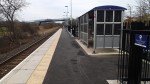
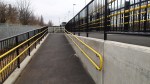
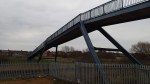

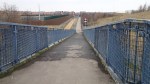

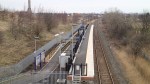
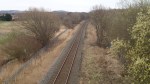
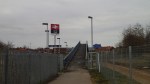
High Speed Two’s rural bridge design could be used as part of a design for a step-free station on a rural line.
Bridleways
The footbridge can be used for a bridge on a bridleway.
Designed with guidance from the British Horse Society, the bridges which carry bridleways will follow the same basic pattern, with a recycled, non-slip rubber deck and the structure acting like a baffle to stop horses being distracted by passing trains.
Footbridges will be 2.5m wide, while bridleways will be 3.5m wide to allow two horses to pass comfortably and safely.
It should be remembered, that horses are flight animals and if they are startled they run, so if say a train went under the bridge, when they were on top, they would most likely go forward and cross the bridge quickly.
I would happily have ridden my stallion; Vague Shot over a bridge like this.
I also think, the design of the bridge in the landscape should allow riders to approach to a safe distance from the bridge and perhaps watch a train or two go through.
Other Animals
I can see other animals like badgers, foxes and hares using a bridge like this.
I also think, that on classic railways, bridges like these could be used to allow farmers to move sheep or possibly cattle over a railway, with some simple design changes.
Conclusion
This bridge has more applications, than the initial one, for which it was designed.
Essex Firm’s Hydrogen Lorry On Show In Stoneleigh
The title of this post, is the same as that of this article on the BBC.
These paragraphs describe the truck.
Tevva, the maker in Tilbury, Essex, says it is the first hydrogen fuel cell-supported truck to be designed, built and mass produced in the UK.
The company adds the vehicle has a range of up to 310 miles (500 km) via the tech, with hydrogen tanks able to be refilled in 10 minutes.
It says it wants to help the transport industry adapt to a “post-fossil fuel future”.
To that end, it developed a fuel cell to top up electric battery-powered trucks, giving them a longer range while reducing the size of the electric battery needed.
I think that this truck is a superb example of disruptive innovation.
- Tevva have looked at the 7.5 tonne truck market and have developed a truck that fits it.
- Using hydrogen as a range extender up to to 500 km. is probably a good fit for the use of these vehicles.
- So many local delivery companies will look at these trucks, so they can tell their customers, that they now offer zero-carbon deliveries.
- They will also be useful to go into cities, that charge diesel vehicles.
I also suspect, that a lot of parts follow the route pioneered by the great Colin Chapman – Borrow from other manufacturers.
I wouldn’t be surprised to see other companies following Tevva’s route all over the world.
Wheelchair Provision On Elizabeth Line Trains And Platforms
These pictures show the provision for wheelchairs on trains and platforms of the Elizabeth Line.
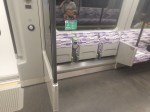
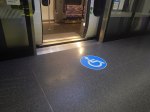
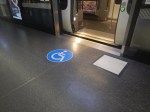
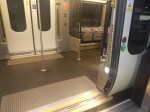
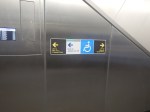
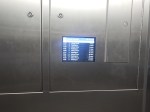
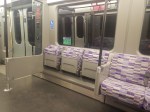

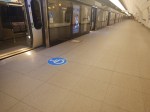
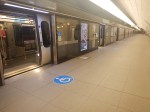
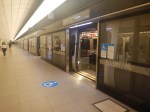
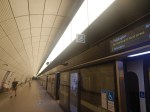
Note.
- The generous spaces for a wheelchair. There are four spaces in the middle carriage of the nine-car trains.
- There is a blue wheelchair symbol, that marks where wheelchair entry to the trains is easiest.
- There are blue wheelchair symbols on the floor at doors closest to the wheelchair spaces.
- There are a lot of wheelchair signposts on all platforms.
- There are no steps to negotiate taking a wheelchair in or out of the train.
- At Canary Wharf there was a small screen showing the next five trains in each direction, which appeared to be positioned at the right height for a self-propelled wheelchair user.
Whilst I was coming back from Canary Wharf, the wheelchair space opposite was occupied by a very elderly lady in a wheelchair, who was accompanied, by a couple I took to be her daughter and son-in-law.
Judging by the smiles and compliments all round, they all seemed well satisfied with the provision.

