Norfolk Boreas Offshore Windfarm Contract Awarded
The title of this post, is he same as that of this article on the BBC.
These are the introductory paragraphs.
A government contract has been awarded for the first phase one of the biggest offshore wind zones in the world.
The Norfolk Boreas is expected to secure renewable electricity to meet the needs of around 1.5 million homes, Swedish firm Vattenfall said.
Alongside the Norfolk Vanguard project, it is part of the Norfolk Offshore Wind Zone, which was approved in February.
Together, Norfolk Boreas and Norfolk Vanguard will probably produce over 3 GW of electricity.
Ørsted Awarded Contract For World’s Single Biggest Offshore Wind Farm
The title of this post, is the same as that of this press release from Ørsted.
This is the sub-title.
The UK Department for Business, Energy and Industrial Strategy (BEIS) has awarded Ørsted a contract for difference for its Hornsea 3 offshore wind farm. The project was awarded at an inflation-indexed strike price of GBP 37.35 per MWh in 2012 prices.
And this is the first paragraph, which describes the size of the farm.
With a capacity of 2,852 MW, Hornsea 3 will produce enough low-cost, clean, renewable electricity to power 3.2 million UK homes, making a significant contribution to the UK Government’s ambition of having 50 GW offshore wind in operation by 2030 as part of the British Energy Security Strategy.
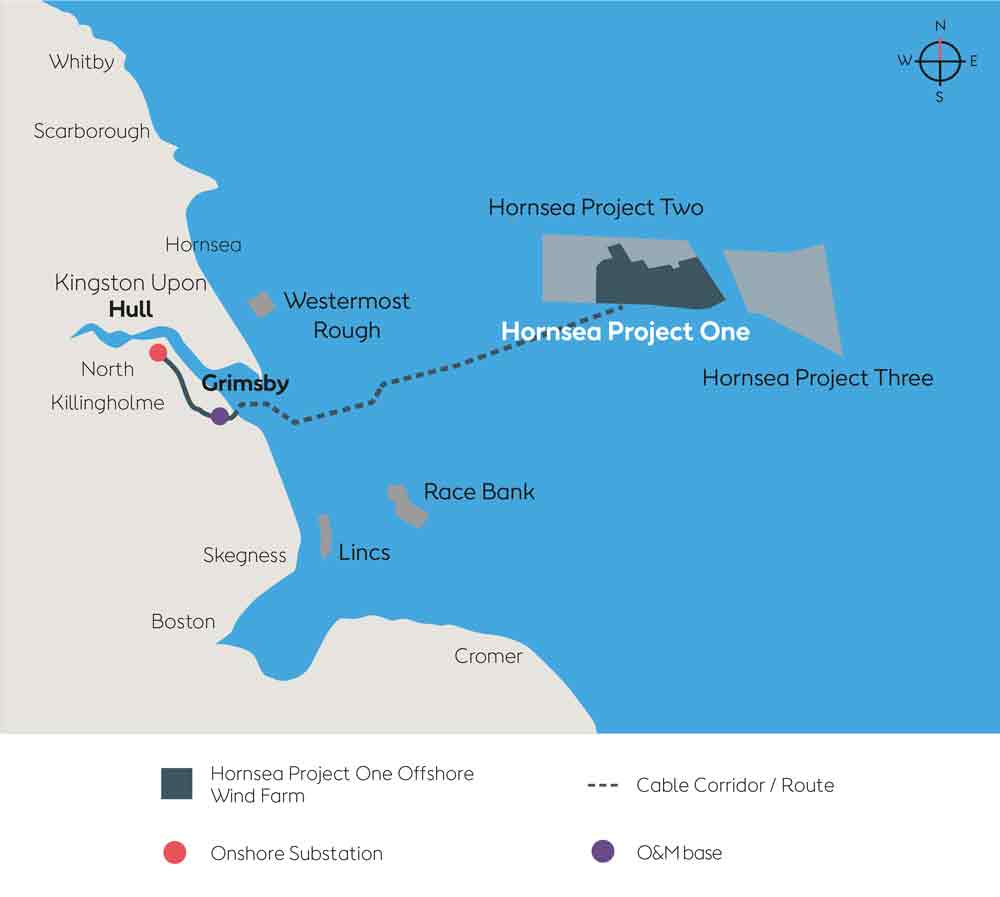
This map from Ørsted shows the location of the Hornsea wind farm and its three sections.
Note.
- The Hornsea Wind Farm, when fully developed, with a fourth section, is likely to have a capacity of around six GW.
- The Lincs, Race Bank and the Westernmost Rough wind farms are about another GW.
Looking at the map, I can see Humberside hosting the world’s largest hydrogen electrolyser to feed into the Humber Zero hydrogen network.
The Concept Of Remote Island Wind
This document from the Department of Business, Industry and Industrial Strategy lists all the Contracts for Difference Allocation Round 4 results for the supply of zero-carbon electricity that were announced yesterday.
The contracts have also introduced a concept that is new to me, called Remote Island Wind. All have got the same strike price of £46.39 per MWh.
Two of the projects on Orkney are community projects of around 30 MW, run by local trusts. This is surely, a model that will work in many places.
There is more on Orkney’s Community Wind Farm Project on this page of the Orkney Islands Council web site.
It could even have an electrolyser to provide hydrogen for zero-carbon fuel, when there is more electricity than is needed. Companies like ITM Power and others already build filling stations with an electrolyser, that can be powered by wind-generated electricity.
The other Remote Island Wind projects are larger with two wind farms of over 200 MW.
It does look to me, that the Department of BEIS is nudging wind farm developers in remote places to a model, that all stakeholders will embrace.
The Viking Wind Farm
I wrote about this wind farm in Shetland’s Viking Wind Farm.
There are more details in this press release from SSE enewables, which is entitled CfD Contract Secured For Viking Energy Wind Farm.
These introductory paragraphs, give a good explanation of the finances of this farm.
SSE Renewables has been successful in the UK’s fourth Contract for Difference (CfD) Allocation Round, announced today, and has secured a low-carbon power contract for 220MW for its wholly-owned Viking Energy Wind Farm (Viking) project, currently being constructed in Shetland.
Viking’s success in securing a contract follows a competitive auction process in Allocation Round 4 (AR4) where it competed within Pot 2 of the allocation round set aside for ‘less established’ technologies including Remote Island Wind.
The 443MW Viking project, which SSE Renewables is currently building in the Shetland Islands, has secured a CfD for 220MW (50% of its total capacity) at a strike price of £46.39/MWh for the 2026/27 delivery year.
The successful project will receive its guaranteed strike price, set on 2012 prices but annually indexed for CPI inflation, for the contracted low carbon electricity it will generate for a 15-year period. Securing a CfD for Viking stabilises the revenue from the project whilst also delivering price security for bill payers.
It’s very professional and open to explain the capacity, the contract and the finances in detail.
The press release also has this paragraph, which details progress.
Viking is progressing through construction with over 50 per cent of turbine foundation bases poured. When complete in 2024, Viking Energy Wind Farm will be the UK’s most productive onshore wind farm in terms of annual electricity output, with the project also contributing to Shetland’s security of supply by underpinning the HVDC transmission link that will connect the islands to the mainland for the first time.
SSE also released this press release, which is entitled Major Milestone Reached As First Subsea Cable Installation Begins On Shetland HVDC Link, where this is the first paragraph.
The first phase of cable laying as part of the SSEN Transmission Shetland High-Voltage Direct Current (HVDC) Link began this week off the coast of Caithness, marking a major milestone in the £660M project.
SSE seem to be advancing on all fronts on the two projects!
The Stornoway Wind Farm
This press release from EDF Renewables is entitled EDF Renewables UK Welcomes Contract for Difference Success, where these are the first two paragraphs.
Two EDF Renewables UK projects bid into the Contract for Difference (CfD) auction round held by the UK Government’s BEIS department have been successful.
The projects are the Stornoway wind farm on the Isle of Lewis and Stranoch wind farm in Dumfries and Galloway. Together these onshore wind farms will provide 300 MW of low carbon electricity which is an important contribution to reaching net zero.
The press release also gives this information about the contract and completion of the Stornoway wind farm.
Stornoway Wind Farm on the Isle of Lewis is a joint venture with Wood. The project has won a CfD for 200 MW capacity, the strike price was £46.39, the target commissioning date is 31 March 2027.
This page on the Lewis Wind Power web site, gives these details of the Stornoway Wind Farm.
The Stornoway Wind Farm would be located to the west of the town of Stornoway in an area close to the three existing wind farm sites.
The project has planning consent for up to 36 turbines and is sited on land owned by the Stornoway Trust, a publicly elected body which manages the Stornoway Trust Estate on behalf of the local community.
The local community stands to benefit as follows:
- Community benefit payments currently estimated at £900,000 per annum, which would go to an independent trust to distribute to local projects and organisations
- Annual rental payments to local crofters and the Stornoway Trust – which we estimate could total more than £1.3m, depending on the CfD Strike Price secured and the wind farm’s energy output
- Stornoway Wind Farm is the largest of the three consented wind farm projects with a grid connection in place and is therefore key to the needs case for a new grid connection with the mainland. Indeed, the UK energy regulator Ofgem has stated that it will support the delivery of a new 450MW cable if the Stornoway and Uisenis projects are successful in this year’s Contract for Difference allocation round.
Note the last point, where only the Stornoway wind farm was successful.
The Uisenis Wind Farm
This press release from EDF Energy is entitled Lewis Wind Power Buys Uisenis Wind Farm, gives these details of the sale.
Lewis Wind Power (LWP), a joint venture between Amec Foster Wheeler and EDF Energy Renewables has bought the Uisenis Wind Farm project on the Isle of Lewis. The wind farm has planning consent for the development of 45 turbines with a maximum capacity of 162 MW. This would be enough to power 124,000 homes and would be the biggest renewable energy development on the Western Isles.
LWP owns the Stornoway Wind Farm project located around 20km to the north of Uisenis which has planning consent to develop 36 turbines to a maximum capacity of 180 MW – enough to power 135,000 homes.
This would bring Stornoway and Uisenis wind farms under the similar ownership structures.
This is a significant paragraph in the press release.
On behalf of Eishken Limited, the owner of the site where the Uisenis Wind Farm will be located, Nick Oppenheim said: “I am delighted that LWP are taking forward the wind farm. The resources available on the Eishken estate, and the Western Isles in general, means that it is an excellent location for renewable energy projects and, as such, the company is also developing a 300MW pumped storage hydro project immediately adjacent to the Uisenis wind farm. With such potential for renewables and the positive effect they will have on the local community, economy, and the UK as a whole I am are looking forward to positive news on both support for remote island projects and the interconnector.”
Note the mention of pumped storage.
This article on the BBC is entitled Pumped Storage Hydro Scheme Planned For Lewis, where this paragraph introduces the scheme.
A pumped storage hydro scheme using sea water rather than the usual method of drawing on freshwater from inland lochs has been proposed for Lewis.
The only other information is that it will provide 300 MW of power, but nothing is said about the storage capacity.
It looks like Lewis will have a world-class power system.
Mossy Hill And Beaw Field Wind Farms
Mossy Hill near Lerwick and Beaw Field in Yell are two Shetland wind farms being developed by Peel L & P.
This press release from Peel L & P is entitled Government Support For Two Shetland Wind Farms, where these are the first two paragraphs.
Plans for two onshore wind farms on the Shetland Islands which would help meet Scotland’s targets for renewable energy production are a step closer to being delivered after receiving long-term Government support.
Clean energy specialists Peel NRE has been successful in two bids in the Department for Business, Energy and Industrial Strategy’s (BEIS) Contracts for Difference (CfD) scheme; one for its Mossy Hill wind farm near Lerwick and the other for Beaw Field wind farm in Yell.
It looks like the two wind farms will power 130,000 houses and are planned to be operational in 2027.
Conclusion
I must admit that I like the concept. Especially, when like some of the schemes, it is linked to community involvement and improvement.
Only time will tell, if the concept of Remote Island Wind works well.
Hexicon Wins UK’s First Ever CfD Auction For Floating Offshore Wind
The title of this post, is the same as that of this press release from Hexicon.
This is the first paragraph.
Today (7th of July) the UK Government confirmed that Hexicon AB’s TwinHub project in the Celtic Sea was successful in the latest Contracts for Difference (CfD) Allocation Round (AR4). It has been awarded a CfD for its 32MW floating wind project at a strike price of £87.30/MWh (2012 real prices) taking the project a significant step closer to completion.
This image shows one of their TwinHub turbine installations being towed into place.
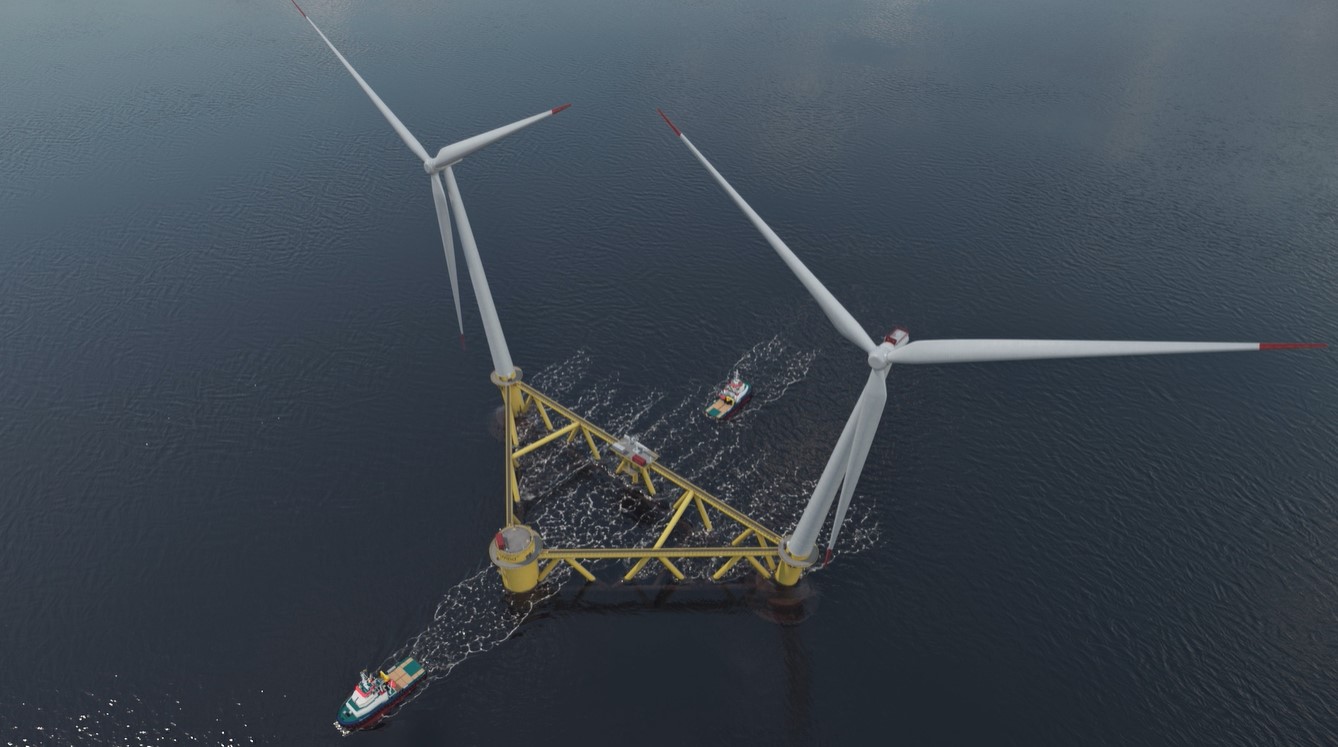
The TwinHub home page has a title of The First Floating Offshore Wind Project in The Celtic Sea.
This is the description on the page.
The TwinHub offshore wind demonstration project intends to prove how Hexicon’s innovative design with two turbines on one floating foundation can further reduce the Levelized Cost of Energy (also referred to as LCoE) before large scale commercialisation. The TwinHub project is a stepping stone to help kick-start floating wind in the Celtic Sea, an area identified as a hotspot for floating wind by the UK Government. It will pave the path for larger and larger projects to help support The Crown Estates’ ambitious target of 4GW of floating wind in the Celtic Sea.
Scroll the page down and there is a short video of a pair of wind turbines in operation.
- It appears that when there is no wind, it automatically goes into a safe parked mode.
- As the wind rises, one turbine starts up.
- The second turbine starts up and the float turns so they face the wind.
It appears to be a classic example of disruptive innovation.
I did the calculations for floating and reusable oil and gas platforms in the 1970s, that were designed by two Cambridge University professors, which would have been launched horizontally and upturned when in position. This experience leads me to believe that the Swedish designers of this type of platform have been able to verify that this is a workable design.
This document from the Department of Business, Industry and Industrial Strategy indicates that the demonstration is for 32 MW.
Does that indicate, that this installation is twin 16 MW wind turbines?
16 MW seems to be the size of the largest wind turbines in the world.
There is a lot to like about this Swedish design.
- As the video shows, it appears to balance itself with the wind.
- I suspect from the calculations I did in Cambridge, that the twin design with its higher weight is more stable than a floating single turbine design.
- The float and its two turbines can be assembled alongside a dock with a large stable onshore dockside crane.
- Servicing would also be done in a dock.
- Working onshore is much safer and easier, than working offshore.
- The twin design allows more power to be generated in a given area of sea.
This is a brilliant concept and it will give Putin, the Sheikhs and the other oil dictators, the most terrible of nightmares.
The initial site chosen for this design in the UK, will be in the sea at Hayle in Cornwall.
This map shows the location.
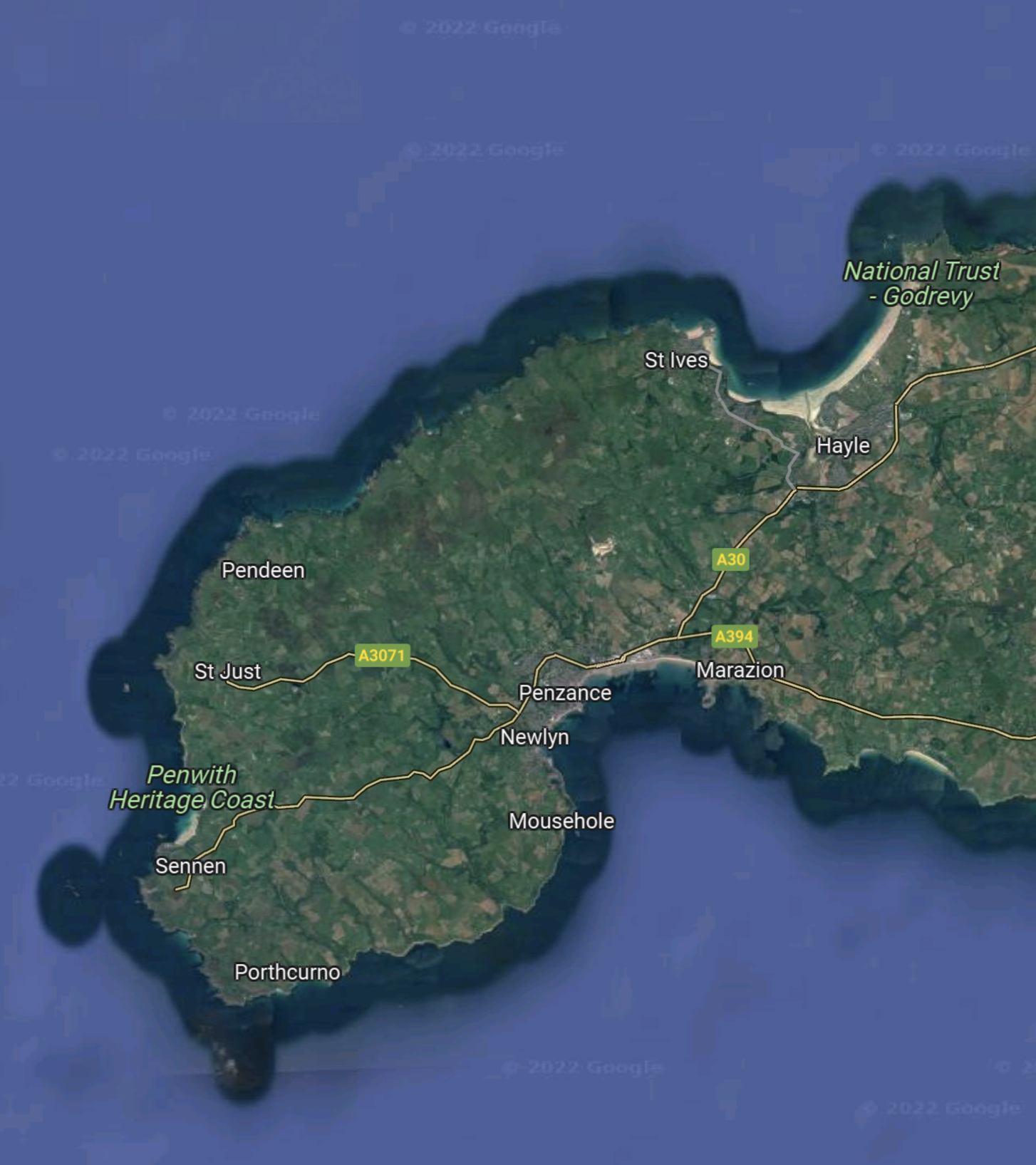
Hayle is in the North-East corner of the map, by the sandy beach.
A 32 MW turbine could probably provide enough electricity for 15,000 houses.
Air Products Partners Up On Hydrogen Production In The UK
The title of this post, is the same as that of this article on Upstream.
These three paragraphs explain the project.
Air Products has joined with power generator VPI to push forward a hydrogen hub on the south bank of the Humber Estuary in the UK, primarily meant to decarbonise VPI’s power production in Immingham.
The companies said they will develop an 800-megawatt production facility called the Humber Hydrogen Hub (H3) that would include carbon capture and storage and aim to capture up to 2 million tonnes per annum of carbon dioxide.
Hydrogen produced at the facility will first substitute fuel for VPI’s existing third gas turbine power train.
Note.
- VPI is a UK-based power company, providing energy to the National Grid.
- Immingham Power station is currently a 730 MW gas-fired power station, which is being expanded to 1240 MW.
- It looks like that expansion will use hydrogen.
It is all part of HumberZero.
Shell To Start Building Europe’s Largest Renewable Hydrogen Plant
The title of this post, is the same as that of this press release from Shell.
This is the first paragraph.
Shell Nederland B.V. and Shell Overseas Investments B.V., subsidiaries of Shell plc, have taken the final investment decision to build Holland Hydrogen I, which will be Europe’s largest renewable hydrogen plant once operational in 2025.
Theconstruction timeline for Holland Hydrogen 1 is not a long one.
The next paragraph describes the size and hydrogen production capacity.
The 200MW electrolyser will be constructed on the Tweede Maasvlakte in the port of Rotterdam and will produce up to 60,000 kilograms of renewable hydrogen per day.
200 MW is large!
The next paragraph details the source of the power.
The renewable power for the electrolyser will come from the offshore wind farm Hollandse Kust (noord), which is partly owned by Shell.
These are my thoughts.
Refhyne
Refhyne is a joint project between Shell and ITM Power, with backing from the European Commission, that has created a 10 MW electrolyser in Cologne.
The 1300 tonnes of hydrogen produced by this plant will be integrated into refinery processes.
Refhyne seems to have been very much a prototype for Holland Hydrogen 1.
World’s Largest Green Hydrogen Project – With 100MW Electrolyser – Set To Be Built In Egypt
The sub-title is the title, of this article on Recharge.
It looks like Holland Hydrogen 1, is double the current largest plant under construction.
Shell is certainly going large!
Will ITM Power Be Working Again With Shell?
Refhyne has probably given Shell a large knowledge base about ITM Power’s electrolysers.
But Refhyne is only 10 MW and Holland Hydrogen 1 is twenty times that size.
This press release from ITM Power is entitled UK Government Award £9.3 m For Gigastack Testing.
This is the first paragraph.
ITM Power (AIM: ITM), the energy storage and clean fuel company, announces that the Company has been awarded a contract by The Department for Business, Energy and Industrial Strategy (BEIS), under its Net Zero Innovation Portfolio Low Carbon Hydrogen Supply 2 Competition, to accelerate the commercial deployment of ITM Power’s 5 MW Gigastack platform and its manufacture. The award for the Gigatest project is for £9.3m and follows initial designs developed through previous BEIS funding competitions.
Note.
- The Gigastack is 2.5 times bigger, than ITM Power’s previously largest electrolyser.
- Forty working in parallel, in much the same way that the ancient Egyptians built the pyramids, will be needed for Holland Hydrogen 1.
- ITM Power have the world’s largest electrolyser factory, with a capacity of one GW. They have plans to create a second factory.
ITM Power would probably be Shell’s low-risk choice.
My company dealt with Shell a lot in the 1970s, with respect to project management software and we felt, that if Shell liked you, they kept giving you orders.
The Hollandse Kust Noord Wind Farm
This wind farm is well described on its web site, where this is the introduction on the home page.
CrossWind, a joint-venture between Shell and Eneco, develops and will operate the Hollandse Kust Noord subsidy-free offshore wind project.
Hollandse Kust Noord is located 18.5 kilometers off the west coast of the Netherlands near the town of Egmond aan Zee.
CrossWind plans to have Hollandse Kust Noord operational in 2023 with an installed capacity of 759 MW, generating at least 3.3 TWh per year.
This Google Map shows the location of Egmond aan Zee.

Note that the red arrow points to Egmond aan Zee.
Will The Electrolyser Be Operational In 2025?
If Shell choose ITM Power to deliver the electrolysers, I don’t think Shell are being that ambitious.
I would suspect that connecting up an electrolyser is not the most complicated of construction tasks.
- Build the foundations.
- Fix the electrolyser in place.
- Connect power to one end.
- Connect gas pipes to the other.
- Switch on and test.
Note.
- If ITM Power deliver electrolysers that work, then the installation is the sort of task performed on chemical plants all over the world.
- ITM Power appear to have tapped the UK Government for money to fund thorough testing of the 5 MW Gigastack electrolyser.
- Enough wind power from Hollandse Kust Noord, should be generated by 2025.
I feel it is very much a low risk project.
Shell’s Offshore Electrolyser Feasibility Study
This is mentioned in this article in The Times, which describes Holland Hydrogen 1, where this is said.
Shell is also still involved in a feasibility study to deploy electrolysers offshore alongside the offshore wind farm. It has suggested this could enable more efficient use of cabling infrastructure.
I very much feel this is the way to go.
Postscript
I found this article on the Dutch Government web site, which is entitled Speech By Prime Minister Mark Rutte At An Event Announcing The Construction Of Holland Hydrogen 1.
This is an extract.
By building Holland Hydrogen 1, Shell will give the Dutch hydrogen market a real boost.
So congratulations are in order.
And this is only the beginning.
Because countless companies and knowledge institutions are working now to generate the hydrogen economy of tomorrow.
The government is supporting this process by investing in infrastructure, and by granting subsidies.
Because we want to achieve our climate goals, though the war in Ukraine won’t make it any easier.
We want to reduce our dependence on Russian gas.
We want the Netherlands to lead the way in the European energy transition.
And all these ambitions are combined in the Holland Hydrogen 1 project.
Mark Rutte seems to believe in hydrogen.
Conclusion
This is a very good example of the sort of large electrolyser, we’ll be seeing all over the world.
In fact, if this one works well, how many 200 MW electrolysers will Shell need all over the world?
Will they all be identical?
Rolls-Royce Lists Sites For New Reactor
The title of this post, is the same as that of this article on The Times.
The headline is a bit misleading, as the site is for a factory to build the reactors.
These paragraphs list the sites.
Rolls-Royce, the engineering company, has shortlisted six sites for a factory that will build its proposed small nuclear reactors.
The constituency of Rishi Sunak, the chancellor, in Richmond, North Yorkshire, is among the locations, which have been whittled down from more than 100 proposals.
The other sites are Sunderland, Deeside in Wales, Ferrybridge in West Yorkshire, Stallingborough in Lincolnshire, and Carlisle.
As Rishi Sunak resigned last night, does that rule out Richmond?
I feel that Rolls-Royce will choose this location with care, as any good company would.
I have a few thoughts.
Will Rolls-Royce Go For Zero-Carbon Manufacture?
If you intend to build large numbers of small modular nuclear reactors, it is not a good idea from a marketing or public relations point of view to release tonnes of carbon in their manufacture.
This page on the Rolls-Royce web site has a title of Destination Net Zero, where this is said.
We have already pledged to reduce emissions from our own operations to net zero by 2030, and to play a leading role in enabling the sectors in which we operate to reach net zero by 2050. Now, we are now laying out our technology pathway and setting clear short-term targets to show how we will achieve those goals.
I am sure Rolls-Royce will go for zero-carbon manufacture.
This will probably mean the site will need to have access to the following.
- Renewable electricity from wind, solar or hydro.
- Hydrogen
- Zero-carbon steel, copper and other raw materials
An external supply of hydrogen may well be the least important, as they recently purchased a German electrolyser developer and manufacturer, that I wrote about in Rolls-Royce To Develop mtu Hydrogen Electrolyser And Invest In Hoeller Electrolyser.
Will The Factory Have A Rail Connection?
A rail connection could have four main purposes.
- Bringing in raw materials like steel.
- Delivering manufactured components to site.
- If the factory is a major source of employment, rail is the greenest way to bring in staff from further away.
- If large shipments are brought in and delivered by zero-carbon rail, it generally doesn’t annoy the locals.
Note.
- The huge Britishvolt gigafactory at Blyth will have a rail connection for the transport of lithium and finished batteries.
- Transport of nuclear fuel and waste around the UK is generally done by train, with perhaps the last few miles by truck.
I think it will be very unlikely, that the new factory will not have a rail connection.
Will Power Station Modules Be Transportable By Rail?
Given that in the UK, there will need to be a railhead at or near the power station for fuel and waste, I believe that if modules were transportable by rail, this could give big advantages to the roll-out of the reactors.
If a former Magnox nuclear site like Bradwell is to be home to a fleet of small modular reactors, the electrified railhead is already in place at Southminster station.








The crane and the track probably need a bit of a refurbishment, but overall, it looks in reasonable condition.
If you sell nuclear as zero-carbon, rail is the easiest way to ensure zero-carbon delivery of modules.
The standard loading gauge in the UK is W10, which is 2.9 metres high and 2.5 metres wide.
- A standard twenty-foot container is six metres long, which must help.
- W10 gauge allows the transport of standard Hi-Cube shipping containers, which are 9 ft 6 in. high, on flat rail wagons.
- If the modules can fit into Hi-Cube shipping containers, this would make transport easier everywhere, as all ports and railways can handle these containers.
Would it be possible to fit all components into this relatively small space?
It could be difficult, but I suspect it is possible to achieve, as it would make the reactors easier to sell.
- Sites would only need to be able to receive Hi-Cube shipping containers.
- These could be trucked in from a nearby railhead.
- Containers on a railway are a very secure way of transporting goods.
- Rolls-Royce has masses of experience in shipping large turbofan engines in standard shipping containers. Some are shipped in very carefully controlled air conditions to minimise damage.
- Hi-Cube shipping containers can go through the Channel Tunnel.
I am fairly sure, that Rolls-Royce are designing the power station, so that it fits into a number of Hi-Cube shipping containers. It would give other advantages.
- Smaller components would probably speed up assembly.
- Smaller components may also mean that smaller cranes could be used for assembly.
There may need to be some gauge enhancement to be able to access some sites in the UK.
- This article on Rail Engineer, is entitled Showing Your Gauge, and it details how gauge is being enhanced to W10 and W12 in the UK.
- Network Rail have also published a map, which shows where W10 gauge is possible. Click here to view.
I am fairly certain, that most railways in the world can handle Hi-Cube shipping containers.
Availability Of Staff
Rolls-Royce will obviously opt for a place, where there is good availability of staff.
Conclusion
I feel that any of the sites mentioned could be the ideal place for the factory.
If I had to have a bet, I’d put it the factory at Stallingborough in Lincolnshire.
- It is close to the Zero Carbon Humber energy and hydrogen hub.
- There is plenty of space.
- There is a rail connection.
- It is close to the Port of Immingham.
- It is close to British Steel at Scunthorpe.
It is also not that far from Derby by road or rail.
Climate Change: ‘Sand Battery’ Could Solve Green Energy’s Big Problem
The title of this post, is the same as that of this article on the BBC.
This is the introductory paragraph.
Finnish researchers have installed the world’s first fully working “sand battery” which can store green power for months at a time.
The article then gives a detailed explanation about how the battery works.
Note.
- The article does not give any details on battery capacity.
- The heat stored in the battery is extracted as hot water.
- The Finnish company is called Polar Night Energy.
In Bang Goes My Holiday!, I described the Siemens Gamesa ETES, which appears to work on similar principles, to the Finnish battery.
This document on the Siemens Gamesa web site describes that installation.
- The nominal power is 30 MW.
- The storage capacity is 130 MWh.
- Siemens use volcanic rock as the storage medium.
- 80 % of the technology is off the shelf.
The picture on the front says “Welcome To The New Stone Age”.
The BBC have published a video of the Polar Night Energy Battery.
The Crown Estate Announces Areas Of Search To Support Growth Of Floating Wind In The Celtic Sea
The title of this post, is the same as that of this press release from the Crown Estate.
This is the first paragraph.
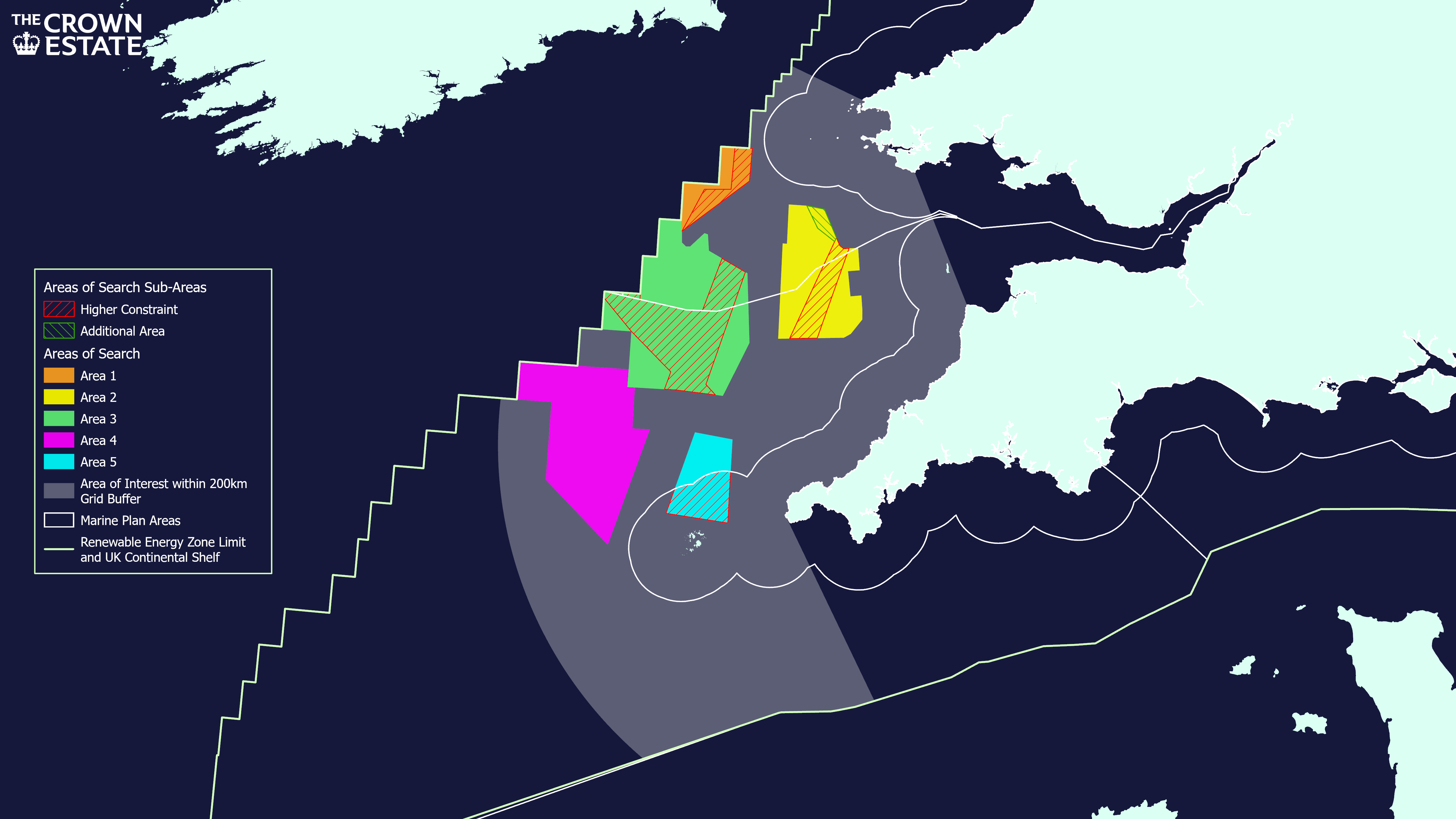
In a major step forward in supporting the UK’s net zero ambitions, The Crown Estate has today identified five broad ‘Areas of Search’ for the development of floating offshore wind in the Celtic Sea – a region rich in natural resources, including world-class wind resource that can be developed with floating turbines. This marks a significant milestone and provides the foundation on which to build greater capacity in the future, helping the UK to achieve its renewable energy targets and drive economic development.
Points in the press release include.
- Five areas with good wind power potential have been chosen.
- A competitive tender, is to be launched in mid-2023.
- It is intended that these areas will deliver 4GW of floating offshore wind power by 2035.
This map shows the areas.
I have a few thoughts.
What About The Other Wind Farms Already Announced In the Celtic Sea?
In DP Energy And Offshore Wind Farms In Ireland, I said this.
They are also developing the Gwynt Glas offshore wind farm in the UK sector of the Celtic Sea.
- In January 2022, EDF Renewables and DP Energy announced a Joint Venture partnership to combine their knowledge and
expertise, in order to participate in the leasing round to secure seabed rights to develop up to 1GW of FLOW in the Celtic Sea. - The wind farm is located between Pembroke and Cornwall.
The addition of Gwynt Glas will increase the total of floating offshore wind in the UK section of the Celtic Sea.
- Blue Gem Wind – Erebus – 100 MW Demonstration project – 27 miles offshore
- Blue Gem Wind – Valorus – 300 MW Early-Commercial project – 31 miles offshore
- Falck Renewables and BlueFloat Energy – Petroc – 300 MW project – 37 miles offshore
- Falck Renewables and BlueFloat Energy – Llywelyn – 300 MW project – 40 miles offshore
- Llŷr Wind – 100 MW Project – 25 miles offshore
- Llŷr Wind – 100 MW Project – 25 miles offshore
- Gwynt Glas – 1000 MW Project – 50 miles offshore
This makes a total of 2.2 GW, with investors from several countries.
It does seem that the Celtic Sea is becoming the next area of offshore wind around the British Isles to be developed.
So what about these seven wind farms?
Erebus and Valorus
Is Blue Gem’s philosophy to develop and prove the technology and put in big bid for around a GW?
Gwynt Glas
The Gwynt Glas web site says this.
The Crown Estate announced in March 2021 that it intends to run a competitive leasing round to award seabed rights to developers for floating offshore wind (FLOW) projects in the Celtic Sea, targeting an overall regional capacity of 4GW.
In January 2022, EDF Renewables and DP Energy announced a Joint Venture partnership to combine their knowledge and expertise, in order to participate in the leasing round to secure seabed rights to develop up to 1GW of FLOW in the Celtic Sea.
The partnership project is called Gwynt Glas, Welsh for Blue Wind, in recognition of its Celtic roots.
Our proposed floating offshore wind project could provide power for approximately 920,000 homes.
It looks like they’re throwing their hat into the ring for 1 GW.
Llŷr Wind
The Llŷr Wind web site says this.
Combined, the two 100MW projects will generate enough renewable electricity to power around 250,000 homes. If successful, we will be able to offer highly cost-effective, floating offshore wind farms to the rest of the world by 2030.
By unlocking new, higher energy capacities from deeper waters, further offshore, the Llŷr projects have huge implications for UK energy consumers. Not only will they help the UK meet its target for net zero emissions, but they will create new opportunities for regional manufacturing and supply chains in Wales and Southwest England as global demand for floating, offshore, wind rises.
It looks to me that this project hasn’t been fully defined yet. Perhaps, this will happen after a successful bid.
Llywelyn
The Llywelyn web site says this.
Llywelyn wind farm is located in Welsh waters in the Celtic Sea, 40 miles off the coast of Pembrokeshire.
Llywelyn’s location has been selected following an extensive feasibility study and rigorous site assessment process. Our assessment has included reviews of protected areas, environmental impacts, cable routing, existing infrastructure, marine traffic, and fishing activity.We have signed an agreement with National Grid, securing a 300MW grid connection in Pembrokeshire. The system operator is exploring upgrades to the existing site to facilitate the connection. These developments will enable the Llywelyn offshore wind project to quickly enter the planning system.
Have they already said go?
Petroc
The Petroc web site says this.
Petroc’s location has been selected following an extensive feasibility study and rigorous site assessment process. Our assessment has included reviews of protected areas, environmental impacts, cable routing, existing infrastructure, marine traffic, and fishing activity.
We have signed an agreement with National Grid, securing a 300MW grid connection in North Devon. The system operator is exploring upgrades to the existing site to facilitate the connection. These developments will enable the Petroc offshore wind project to quickly enter the planning system.
Have they already said go?
These companies are certainly setting themselves up for bidding or have already got a smaller deal.
How Much Wind Power Can Be Developed In The Celtic Sea?
This article on the Engineer is entitled Unlocking The Renewables Potential Of The Celtic Sea.
The article starts with these two paragraphs.
Over the last decade, the UK has become a global leader in renewable marine energy, tapping into the vast resources its coastal geography offers. Offshore wind, in particular, has flourished, with gigawatt-scale projects being deployed off the east coast of England and Scotland, at Hornsea, Dogger Bank and Moray.
However, looking at a map of existing and proposed wind farms, what’s perhaps most striking is the complete absence of projects in the southwest of Britain, off the rugged shores of Wales, Devon and Cornwall, shaped by the fierce North Atlantic. The Celtic Sea – which extends south off Wales and Ireland down past Cornwall and Brittany to the edge of the continental shelf – is estimated to have around 50GW of wind generating capacity alone. What’s more, it also delivers some of the highest tidal ranges in the world, alongside some of the best waters in Europe for generating wave energy. In a country blessed with renewable resources, the Celtic Sea may well be its biggest prize.
I’ll go along with what this article says and accept that 50 GW of wind capacity could be installed in the Celtic Sea.
As I write this article at around nine o’clock, the UK is generating almost exactly 30 GW of electricity, which gives an idea of how large electricity production in the Celtic Sea could be.
Conclusion
It will be interesting to see how this first round of leasing in the Celtic Sea develops.
XLCC Obtains Planning Approval To Build UK’s First HVDC Cable Factory In North Ayrshire
The title of this post, is the same as that of this press release from XLCC.
These are the first three paragraphs.
On 29th June 2022, the North Ayrshire Council Planning Committee resolved to grant planning permission for XLCC’s HVDC subsea cable manufacturing operations in Hunterston, Scotland.
Breaking ground in the coming months, the brownfield site will create a new UK industry to support global decarbonisation targets. Once fully operational, the facility will support 900 jobs in the area, with thousands more in the wider supply chain.
XLCC’s first order is for four 3,800km long cables to connect solar and wind renewable power generation in the Sahara to the UK for the Xlinks Morocco-UK power project.
XLCC have also issued two other important press releases.
XLCC To Build New Cable Laying Vessel To Address Increase In Future Demand For HVDC Cable
These are the first paragraphs.
XLCC, the new HVDC, renewable energy focused business in the UK, has completed the concept design of an advanced, first-of-a-kind Cable Laying Vessel to be delivered in the first half of 2025.
As the world strives for Net Zero, the UK, EU and other world economies have set themselves ambitious targets for decarbonisation. The UK, for example, has stated that it will be powered entirely by clean energy by 2035 and that it will fully decarbonise the power system in the same time frame. This ambition is driving an exponential growth in high voltage cable demand as the increase in installation of offshore wind and interconnectors drive a forecast six times increase (2020 – 2027 over 2014 – 2020) for HVDC cable.
The planned delivery of the XLCC CLV will support the Morocco – UK Power Project, the first client project, through the delivery of four 3,800km subsea HVDC cables from a wind and solar generation site in Morocco to the UK.
This press release can be read in full here.
XLCC Signs UK Steel Charter For New Export-Led Cable Industry
These are the first paragraphs.
XLCC signed the UK Steel Charter at an event in Parliament on 19 April 2022, alongside representatives from politics, business and the trade union movement.
XLCC will create a new export-led HVDC cable manufacturing industry for the UK, nearly doubling the world’s current production. It aims to support renewable energy projects with the first factory planned for Hunterston, Scotland. XLCC will deliver its first project for the Xlinks Morocco-UK Power Project, consisting of four 3,800km long subsea cables, with the first phase between 2025-2027 connecting wind and solar power generated in Morocco exclusively to the UK in Devon.
Signing the UK Steel Charter shows a commitment to supporting existing and future jobs within the sector and the supply chain. Along with strengthening UK-based business, sourcing steel locally will cut transport emissions and seek to support decarbonisation in a sector dedicated to finding ways to minimise environmental impact of steel use.
This press release can be read in full here.
I have a few thoughts.
You Wait For A Large Interconnector Project To Come Along And Then Two Arrive Holding Hands
This paragraph introduces the Morocco-UK Power Project.
The Xlinks Morocco-UK Power Project will be a new electricity generation facility entirely powered by solar and wind energy combined with a battery storage facility. Located in Morocco’s renewable energy rich region of Guelmim Oued Noun, it will cover an approximate area of 1,500km2 and will be connected exclusively to Great Britain via 3,800km HVDC sub-sea cables.
XLCC have this mission statement on their home page.
XLCC will establish a new, export-led, green industry in the UK: world class HVDC subsea cable manufacturing.
Our mission is to provide the connectivity required for renewable power to meet future global energy needs.
Xlinks Morocco-UK Power Project and XLCC appear to be made for each other.
In some ways it takes me back to the 1970s, where large oil and gas projects in the North Sea were paired with platform building in Scottish lochs.
There Are Several Interconnector Projects Under Development
We will see a lot of undersea interconnectors in the next few years.
- Country-to-country interconnectors
- Interconnectors along the coast of the UK.
- Connections to offshore wind farms.
This capacity, with a ship to lay it, is being created at the right time.
Icelink
Icelink is a proposed interconnector between Iceland and the UK.
- It would be up to 1200 km long.
- It would have a capacity of around 1 GW
XLCC could spur the development of this project.
Floating Wind Farms Hundreds Of Miles Out To Sea
The developer of a floating wind farm, say a hundred miles out to sea, is not going to develop it, if there isn’t a secure supply of cable.
Where Will Finance Come From?
Wind farms have proven to be good investments for finance giants such as Aviva.
See World’s Largest Wind Farm Attracts Huge Backing From Insurance Giant, for Aviva’s philosophy.
As mathematical modelling for electrical systems get better, the estimates of the finance needed and the returns to be made, will indicate whether these mega-projects can be funded.
It was done with North Sea oil and gas and it can be done with offshore wind power and its interconnectors.
In The Times on the 4th of July 2022, there is this article, which is entitled Schroders Chief Buzzing To Take Finance Offshore Wind Farms.
It is a must-read!
Conclusion
XLCC and its cable factory will spur the expansion of zero-carbon electricity in the UK.
 The Anonymous Widower