Why Canada’s Geothermal Industry Is Finally Gaining Ground
The title of this post, is the same as that of this article on the Narwhal.
When I think of Canada, I don’t think hot rocks and volcanoes.
But read the article and this Wikipedia article, which is entitled Geothermal Power In Canada, that adds more flesh.
This is an interesting paragraph.
At present, Canada remains the only major country in the Pacific Rim that is not producing electricity from its geothermal resources. This is despite the fact that the colder it is outside, the more electricity a geothermal power plant can produce. This is because the larger the temperature differentials between the geothermal resource and the ambient air temperature, the more efficiently geothermal plants operate. This makes geothermal power ideal for cold northern countries.
Iceland is certainly blessed, with mountains, volcanoes, hot rocks and cooler weather.


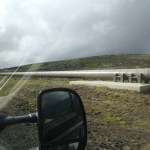




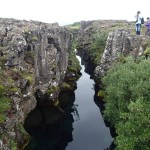
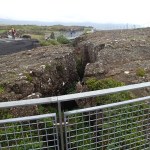

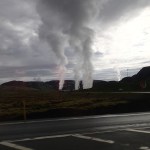
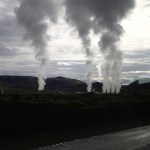
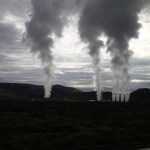
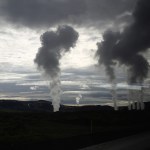
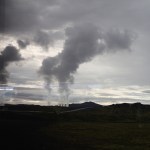

In 2016, sixty-five per cent of Iceland’s electricity and space heating was from geothermal sources.
I took the pictures on a summer holiday In July.
It looks like if the articles on the Narwhal and Wikipedia are to be believed, Canada could exploit a lot of geothermal energy resources.
Canada though will have the advantages of not being first.
The technology has already developed in countries like Iceland, the United States and the Philippines.
A lot of the skills needed is available in Canada’s oil industry.
We’re even seeing oilfield services companies like Schlumberger moving into geothermal energy. I wrote about that in Schlumberger New Energy And Thermal Energy Partners Form Geothermal Development Company STEP Energy.
We shouldn’t forget the potential for geothermal energy in the UK. We’re looking seriously in Cornwall and already extracting heat from the Underground in Islington, using similar techniques.
See Drilling Starts For ‘Hot Rocks’ Power In Cornwall and Bunhill 2 Energy Centre.
Conclusion
Geothermal energy would appear to have a high capital cost, but should return a fixed income year-on-year.
For this reason, I believe that funding for viable geothermal schemes, will be easier to obtain, as we improve the engineering and the returns increase.
So expect more geothermal schemes in the future.
The Power Of Community In A Crisis
The title of this post, is the same as that of this article on Business Green.
This is the introductory paragraph.
OVO’s Kate Weinberg reflects on a hugely eventful year since the energy giant debuted its ground-breaking Plan Zero strategy
I have been using OVO for some years now and have not had the smallest quibble in that time.
They salso handle the Feed-In Tariff for my solar panels.
Morphing Water Crystals Could Be The Future Of Green Energy
The title of this post, is the same as that of this article on Inverse.
This is the first two paragraphs.
It’s a process so embedded in our daily lives that itts easy to ignore. However, new research indicates there’s more to water evaporation than simply letting your towels dry in the sun after a day at the beach. Evaporation, like any form of matter transformation, requires energy.
An international team of researchers recently tried to better understand that energy process by examining the shape-shifting crystals that control it. They published their findings in Nature Materials on Monday.
Could the researchers have found a new way to create green energy?
Google Going “Carbon Free” By 2030
The title of this post, is the same as that of this article on the Houston Chronicle.
This is the introductory paragraph.
Tech giant Google is committing to using no form of energy that emits carbon dioxide by the end of this decade, ramping up its commitment to fighting climate change.
This looks like a good thing to me, as all those servers use a lot of electricity.
There have also been similar pledges from Microsoft and Apple.
Iceland Using Geothermal To Remove CO2
The title of this post, is the same as that of this article on Renewable Energy Magazine.
This is the introductory paragraph.
Renewable energy is one of the key factors in fighting the climate crisis. Burning fossil fuels releases carbon dioxide (CO2) that speeds up global warming and damages the planet. With geothermal energy, though, Iceland is realizing the full potential and power of renewables. Using geothermal for carbon removal then creates a circular production system that helps the environment.
The article describes how Iceland is moving to become carbon negative, by injecting carbon dioxide deep into the ground.
Siemens To Build One Of Europe’s Largest Energy Storage Systems
The title of this post, is the same as that of this article on Smart Energy International.
This is the introductory paragraph.
Siemens Smart Infrastructure and Fluence have been awarded a contract by the Portuguese energy provider EDA – Electricidade dos Açores to build a battery-based energy storage system on Terceira.
Read the article, as it shows how battery storage and advanced methods of generation, can transform the electricity systems of islands and other remote places.
We will be seeing many systems like this, all over the world.
$15mn Solar Plant Funded By UAE’s ADFD Gets Capacity Boost To 15MW
The title of this post, is the same as that of this article on Utilities Middle East.
This is the sub-title.
Financing part of the Fund’s commitment of $350 million to support renewable energy uptake in developing countries.
I have read the whole article and it puzzles me. There is no mention, as to what Abu Dhabi gets in return.
Energy Storage Takes On Weird New Forms As Sparkling Green Future Takes Shape
The title of this post, is the same as that of this article on CleanTechnica.
The first section is entitled Gravity-Enabled Energy Storage Tested By Scotland’s Gravitricity and explains it well.
It then writes an interesting aside about pairing a Gravitricity system, with an idea from GE, in a section, which is entitled A Wind Power & Energy Storage Twofer, Maybe.
GE were proposing a lattice-style wind-turbine tower, so why not put a Gravitricity system inside?
Hence the maybe in the section title!
I can imagine an office or residential tower with a Gravitricity system built into the lift core in the centre of the building. Top the building with solar panels or wind turbines and you’re going some way towards a building that could be self-sufficient in energy.
Putting two and two together, so they add up to five, is the best way to improve efficiency.
The last section is entitled How To Do Energy Storage Without Any Energy Storage.
As I have never played a computer game, I don’t understand it, but it is based on research at two reputable universities; Delft University of Technology (TU Delft) in the Netherlands and Northwestern University in the US.
Conclusion
We will be seeing weirder and weirder ideas for energy generation and storage in the future.
France Devotes €30 Billion To Energy Transition
The title of this post, is the same as that of this article on PV Magazine.
This is the introductory paragraphs.
The French government has launched a new Covid-19 recovery plan that includes €30 billion to invest in the energy transition.
The top priority is the creation of a hydrogen economy, with €2 billion to be invested by the end of 2022 and €7.2 billion up to 2030. The money will be used for R&D activities and industrial electrolysis development projects.
The full plan for hydrogen will be published on September the 8th.
Other plans include.
- €7 billion for building renovations.
- €11 billion for the transport section.
- 100,000 terminals for electric vehicles by 2021.
I feel, that they will need to do more to decarbonise the transport sector.
Generating Clean Energy From The Coal Mines
The title of this post, is the same as that of this article on The Engineer.
This is the introductory paragraph.
With a number of the UK’s abandoned coal mines being repurposed for green energy projects, Jon Excell asks whether the legacy of Britain’s polluting industrial past could hold the key to its low carbon future?
A few points from this must-read article.
- We spend £2.4 billion every year dealing with the water in abandoned mines.
- The huge volumes of mine water – heated by geological processes to temperatures as high as 40˚C – could actually help power the UK’s shift to a zero-carbon economy.
- The Coal Authority now has around thirty different projects.
- there is an estimated 2.2 million GWh of annually renewing zero carbon geothermal energy held within the mines.
- Heat can be extracted using boreholes, heat pumps and heat exchangers.
- The mines can be used to store energy as waste heat.
- I particularly liked the use of a mine shaft as a thermal flask, which is being developed at Shawfair in Scotland.
The article then talks about Gravitricity.
This is an extract.
According to Gravitricity project development manager Chris Yendell, the potential for the technology is huge.
Research carried out for the company by KPMG identified 60,000 vertical shafts of 200m or greater in Germany alone. Indeed, many of these shafts as deep as 1000m. Meanwhile, following discussions with the Coal Authority, the team believes that in the UK there are at least 100 potentially viable deep vertical mineshafts. “Based on that you could look at a future portfolio in the UK of 2.4GWh of capacity, based on a 10MW peak system with a capacity of 24MWh” said Yendell.
The article finishes on an optimistic note, by outlining how in the former mining areas, there is lots of expertise to maintain and run these new green energy systems, that will replace coal’s black hole.
Conclusion
Coal could be the future! But not as we know it!
 The Anonymous Widower