Europe’s Biggest Battery Storage Project Goes Live In Scotland
The title of this post, is the same, as this article in The Times.
This is the sub-heading.
Zenobe’s site at Blackhillock can store surplus generation for when the wind doesn’t blow and the sun doesn’t shine
These are the first two paragraphs.
Europe’s biggest battery storage project has entered commercial operation in Scotland, promising to soak up surplus wind power and prevent turbines being paid to switch off.
Zenobe said the first phase of its project at Blackhillock, between Inverness and Aberdeen, was now live with capacity to store enough power to supply 200 megawatts of electricity for two hours. It is due to be expanded to 300 megawatts by next year.
I believe we can do better, than install large lithium-ion batteries.
We need to get the pumped storage like Coire Glas, the liquid air like Highview Power and the gravity batteries like Gravitricity going as fast as we can.
They are more environmentally friendly than Tesla’s lithium ion tiddlers and a second generation liquid air battery appears to be 200 MW and 2.5 MWh, so they can supply 200 MW for 12.5 hours.
The Blackhillock battery can do just two hours.
Two of them working as a pair, with a 1 GW wind farm, are as big as a small modular nuclear reactor, so could do the same job, with respect to power supply, using machinery and tank designs, that have been used for decades.
I suspect, that like 1960s coal-fired power stations, they would keep running for fifty years and be simply recycled as steel, copper and other scrap.
Highview Power could make Bishops Stortford famous!
UK Government Sets 8-Hour Minimum For LDES Cap-And-Floor Scheme
The title of this post, is the same as that of this article on Energy Storage News.
This is the sub-heading.
The UK government has published a Technical Decision Document confirming crucial aspects of its long duration electricity storage (LDES) cap-and-floor scheme, which includes increasing the minimum duration required from six hours to eight.
These three paragraphs give more details.
The document, released by regulator Ofgem on 11 March, details the final overarching rules and requirements for the scheme as well as how it will be implemented, though significant detail still remains to be worked out.
The scheme will provide a cap-and-floor revenue protection for 20-25 years that will allow all capital costs to be recoverable, and is effectively a subsidy for LDES projects that may not be commercially viable without it. Most energy storage projects being deployed in the UK today are lithium-ion battery energy storage systems (BESS) of somewhere between 1-hour and 3-hour in duration (very occasionally higher).
One of the most significant new details of the scheme is that, following industry feedback, the minimum duration for projects to qualify has been increased from six hours to eight hours of continuous rated power.
As a control engineer, I believe this is all good stuff and is a good improvement on the previous regime.
The whole article is a must read and I believe that more investors, will invest heavily in energy storage.
But then the UK, with its massive potential for offshore wind, has the resources to create and fill many GW of energy storage.
Boris once said, that we would become the Saudi Arabia of wind!
Disused Oil Wells Could Enhance Compressed Air Storage
The title of this post, is the same as that of this article on The Engineer.
This is the sub-heading.
A new study has shown how geothermal energy in abandoned oil and gas wells can boost the efficiency of compressed air energy storage by nearly 10 per cent.
These are the first two paragraphs.
Developed by researchers at Penn State University, the geothermal-assisted compressed air energy storage (GA-CAES) system harnesses the existing infrastructure of abandoned oil and gas wells (AOGWs). Compressed air is pumped into the wells, where geothermal heat raises its temperature and compresses it further. Published in the Journal of Energy Storage, the study showed how geothermal energy could increase round-trip efficiency by 9.5 per cent.
“This improvement in efficiency can be a game changer to justify the economics of compressed-air energy storage projects,” said corresponding author Arash Dahi Taleghani, Professor of Petroleum and Natural Gas Engineering at Penn State.
The Professor also says it could be a “win win situation!”
Trump must have nightmares about stories like this, especially, when the scientists have a name, that labels them as an immigrant.
UK Government Sets 8-Hour Minimum For LDES Cap-And-Floor Sheme
The title of this post, is the sa,e as that of this article on Energy Storage News.
This is the sub-heading.
The UK government has published a Technical Decision Document confirming crucial aspects of its long duration electricity storage (LDES) cap-and-floor scheme, which includes increasing the minimum duration required from six hours to eight
These paragraphs give full details.
The document, released by regulator Ofgem on 11 March, details the final overarching rules and requirements for the scheme as well as how it will be implemented, though significant detail still remains to be worked out.
The scheme will provide a cap-and-floor revenue protection for 20-25 years that will allow all capital costs to be recoverable, and is effectively a subsidy for LDES projects that may not be commercially viable without it. Most energy storage projects being deployed in the UK today are lithium-ion battery energy storage systems (BESS) of somewhere between 1-hour and 3-hour in duration (very occasionally higher).
One of the most significant new details of the scheme is that, following industry feedback, the minimum duration for projects to qualify has been increased from six hours to eight hours of continuous rated power.
The ‘continuous rated power’ aspect prevents shorter duration projects from bidding in a smaller section of their MW capacity in order to act like an 8-hour system.
Another interesting detail pointed out by several commentators is that the cap is a ‘soft’ one, meaning it will allow extra revenue to be shared between developers and consumers. Exact details on the ratio are yet to be determined.
As a Graduate Control Engineer from Liverpool University in the 1960s, I hope that the move from a six to eight hours minimum duration is feasible.
I wasn’t dealing with power systems, but with multi-vessel chemical plants.
These are my thoughts.
The biggest project, I was dealing with a few years later in the 1970s, was the modeling of all the the reservoirs and pipelines by the Water Resoures Board.
As the supply side of the water industry hasn’t had too many issues with the volume of water supplied, I feel that the main modelers must have done a reasonable job.
Six To Eight Hours Of Continuous Operation
The article says this about uprating from six to eight hours of continuous operations.
All the systems that have been proposed for cap-and-floor operation, seem to have some form of physical storage.
- Energy Dome appears to have tents of carbon dioxide.
- Energy Vault uses stacks of heavy weights.
- Form Energy has tanks of rust.
- Gravitricity has huge weights in disued mine shafts.
- Highview Power has large tanks of liquid air.
- Pumped storage hydro has two lakes, that hold water.
- Rheenergise has two large tanks, of a water-based slurry.
So to go from six to eight hours will hopefully just need some more storage.
Highview Power appears to use similar gas tanks to those used to store natural gas or hydrogen.
This image clipped from Highview’s web site, shows large tanks for liquified gas storage.
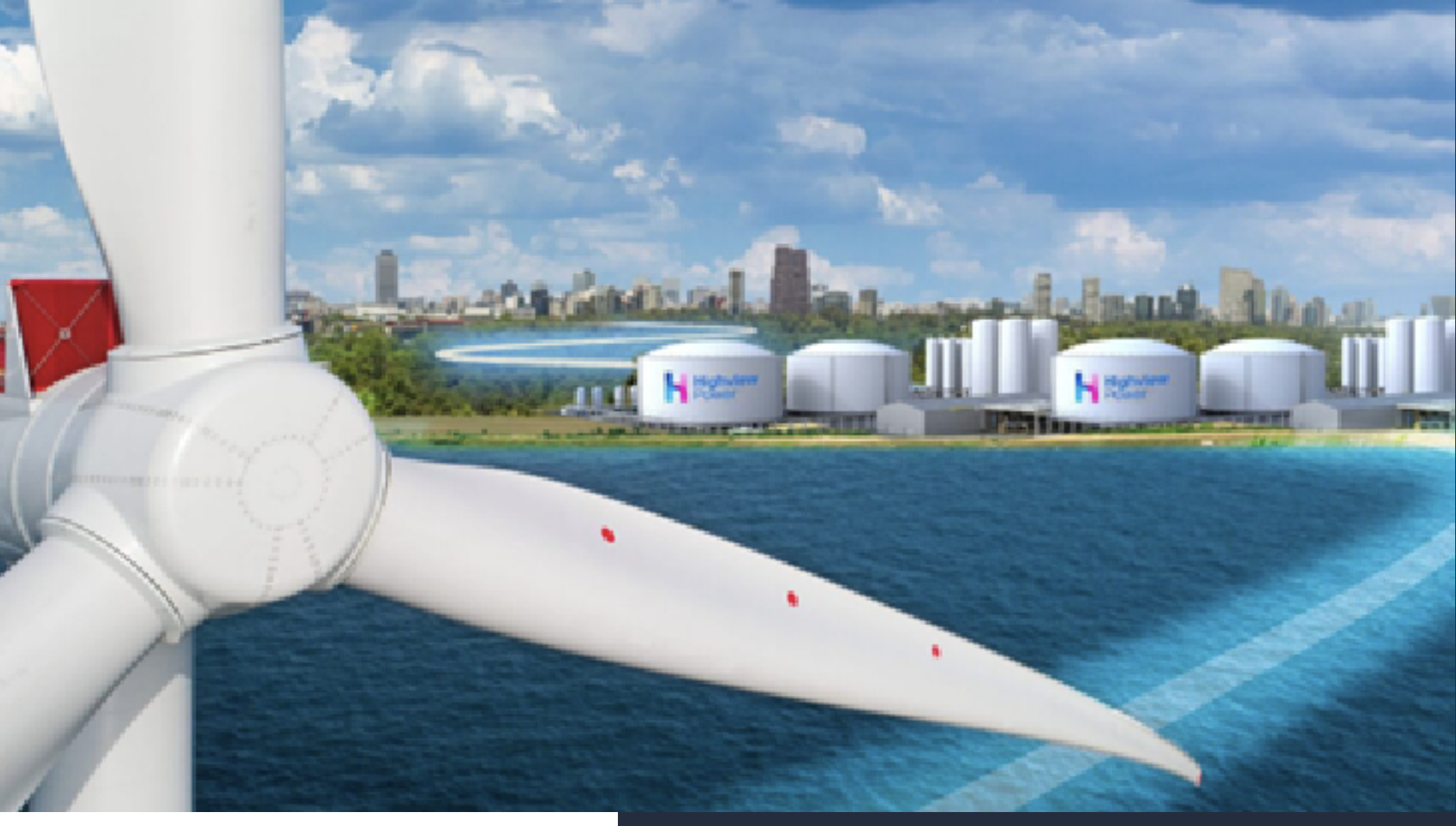
With tanks like these, which can hold GW-equivalents of liquid air, Highview could be building batteries with storage to rival the smaller pumped storage hydroelectric power stations. They are already talking of 200 MW/2.5 GWh systems, which would have a 12.5 hour continuous rating and would probably need two to three tanks.
Coire Glas Pumped Storage
I’ll use Coire Glas pumped storage hydro electric power station as an example.
As currently planned SSE’s Cioire Glas pumped storage hydroelectric power station is 1.5 GW/30 GWh, so it has a a 20 hour continuous rating.
In The UK’s Pumped Storage Hydroelectricity, I gave a rough estimate of the pumped storage hydroelectricity systems in operation or planed as nearly 11 GW/224GWh.
The Soft Cap
The article says this about a soft cap.
Another interesting detail pointed out by several commentators is that the cap is a ‘soft’ one, meaning it will allow extra revenue to be shared between developers and consumers. Exact details on the ratio are yet to be determined.
I seem to remember that when I was modeling a larger multi-vessel chemical plant at ICI, I was using sharing between vessels, to get the system to operate on a PACE-231R analog computer.
So I suspect a soft cap is possible.
Ørsted Breaks Ground On Innovative UK Battery Energy Storage System
The title of this post, is the same as that, as this news item from Ørsted.
This is the sub-heading.
Ørsted, a global leader in offshore wind energy, has marked breaking ground for its first large-scale UK battery energy storage system (BESS) with a golden shovel ceremony.
These four paragraphs give more details of the project.
Located alongside Ørsted’s Hornsea 3 Offshore Wind Farm, near Norwich, Norfolk, the system will have a capacity of 600 MWh (and a 300 MW power rating), equivalent to the daily power consumption of 80,000 UK homes.
The golden shovel ceremony officially kicks off the construction phase of the project, known as Iceni after the Norfolk-based warrior tribe of the Roman era. It is expected to be operational by the end of 2026.
Preparatory works are now complete and the Ørsted, Knights Brown and Tesla Iceni team will continue with the remainder of the installation.
When completed, the battery energy storage system will be one of the largest in Europe.
Note.
- The batteries themselves are from Tesla.
- The project was previously known as the Swardeston BESS.
- The project will be located near to the Swardeston substation to the South of Norwich.
- The project doesn’t seem very innovative to me, as it appears to be a BESS built from Tesla batteries.
Like many batteries, it is designed to supply power for two hours.
Centrica Business Solutions Powers Gressingham Foods Into A Sustainable Future
The title of this post, is the same as this press release from Centrica Business Systems.
This is the sub-heading.
Centrica Business Solutions has partnered with luxury poultry supplier, Gressingham Foods, to decarbonise its operation and unlock significant energy savings, with the installation of a 3.27MW solar array
These four paragraphs detail the project, its operation and the thinking it.
The energy solutions company will deliver a 5,100 solar panel array to Gressingham Foods’ main food processing site in Redgrave, Suffolk capable of providing more than a quarter of its total energy requirements – enough energy to power 111 homes.
The project will break ground in March and is expected to be fully operational by September 2025.
Once live, the solar project will accelerate the decarbonisation plans of the famous Gressingham Duck producer, by reducing more than 670 tonnes of carbon in the first year alone. The chosen site for the project is part of the original Gressingham duck farmland on the property – with low agricultural land grading, solar represents a great solution to make sustainable use of the space.
The solar project is part of a flexible Power Purchase Agreement (PPA) that will see Gressingham Foods purchase the energy generated by the solar installation from Centrica Business Solutions over the next 12 years, with no upfront capital cost to Gressingham Foods. During this period, Centrica Business Solutions will own and maintain the solar site, guaranteeing its optimal performance.
I have posted this, as I feel the project is a good example of how this type of business can be partially decarbonised.
Certainly, with my rooftop solar installation, I now have the knowledge to have managed the energy on the stud farm, I owned with my wife, in a more efficient manner.
Saxmundham Station – 14th March 2025
On Friday, I went to Saxmundham to view the presentation of LionLink.
I took these pictures of Saxmundham station.








Note.
- The trains are two of Greater Anglia’s excellent Class 755 trains.
- The line is double track at Saxmundham station.
- The station building suffered a devastating fire 2018 and has since been rebuilt.
- Access between train and platform is step-free. See the gap fillers in the first two pictures.
- The tracks are crossed by the use of the level-crossing.
- There was a new comfortable and warm waiting room.
- There is a small car park.
- There is an hourly train in both directions to Ipswich and Lowestoft.
The station is in walking distance from the town.
These are my thoughts.
Extra Services
This OpenRailwayMap shows Saxmundham station and the Aldeburgh branch, which also serves the Sizewell power stations.

Note.
- The blue arrow indicates Saxmundham station.
- The yellow track is the East Suffolk Line.
- A disused branch line curves East, to the North of Saxmundham station and then South to the former site of Aldeburgh station.
- Sidings for Sizewell C construction trains will be built along this branch line.
Would it not be a good idea to reinstate the railway to Aldeburgh and run a second hourly train between Aldeburgh and Ipswich?
- There is space for a Platform 0 at Ipswich station.
- There is only the hourly Ipswich and Lowestoft train in both directions on the East Suffolk Line.
- Simple one platform stations would be needed at Leiston, Sizewell, Thorpness and Aldeburgh.
- There is probably enough double track for the extra train.
The current Ipswich and Saxmundham service takes about 34 minutes, so I suspect two trains would be needed for an Ipswich and Aldeburgh shuttle.
In the Wikipedia entry for Aldeburgh station, there is this paragraph.
In 1929 the LNER introduced luxurious Pullman day excursion trips from Liverpool Street to various seaside resorts. The service, known as the Eastern Belle, served Felixstowe on Mondays, Frinton and Walton on Tuesdays, Clacton on Wednesdays and Thorpeness and Aldeburgh on Thursdays and Fridays. The service ended in September 1939 when the Second World War broke out.
Perhaps not a Pullman service, but a kids special in the summer holidays.
Could Bealings Station Be Rebuilt?
Bealings station, which used to be between Westerfield and Woodbridge stations was closed in 1956.
This Google Map shows its location.

The station is now the Mallard House Business Centre.
More Than Four In Ten New Homes In England Built With Solar Power
The title of this post, is the same as this press release from Solar Energy UK.
These two paragraphs add some more detail.
The introduction of more stringent rules on energy efficiency for new homes in England has driven a surge in solar panel installations.
The proportion of new homes and buildings that come with solar photovoltaic panels included has risen by more than three times in the last twelve months.
It certainly appears that solar is now an essential part of a new house.
The article calls it a dramatic jump.
That is a dramatic jump compared to only 5,731 of 44,310 newbuilds sporting solar panels in the last quarter of 2023 – only 13%.
Will the next product to be installed in houses, be batteries for individual houses?
I’m certainly thinking of one to complement my solar panels.
Drax To Get £24m In Green Subsidies For Pumped Hydro
The title of this post is the same as that of this article in The Times.
These three paragraphs give details of the subsidy.
Drax will bank £24 million in green subsidies from energy bill-payers for its pumped hydro assets, ahead of a revival in the energy storage technology in Britain.
The FTSE 250 constituent, which also operates Britain’s largest power station in North Yorkshire, has secured contracts to provide 434 megawatts of capacity from its pumped storage and hydro assets, the largest of which is the Cruachan power station near Oban in Scotland.
The contracts cover energy to be delivered between October 2028 to September 2029, at a price of £60 a kilowatt a year.
This will arouse the anti-Drax lobby, but it should be born in mind, that according to Wikipedia, Cruachan can provide a black start capability to the UK’s electrical grid.
This is Wikipedia’s definition of a black start.
A black start is the process of restoring an electric power station, a part of an electric grid or an industrial plant, to operation without relying on the external electric power transmission network to recover from a total or partial shutdown.
After the Great Storm of 1987, we were without power in my part of Suffolk for two weeks and I suspect there were several black starts in the South of England.
I suspect that power from interconnectors could now be used.
Drax is expanding Cruachan from 440 MW to 1 GW, which will be a large investment and surely increase its black start capability.
So in this case the future subsidy could be considered something like an insurance policy to make sure black start capability is available.
Blackstone Secures Approval For $13bn Hyperscale Data Centre In UK
The title of this post, is the same as that of this article in Private Equity Insights.
This is the sub-heading.
Blackstone has received approval from Northumberland County Council to move forward with its $13bn hyperscale data centre project in North East England.
These three paragraphs add detail.
The investment marks a major push by the private equity giant into the fast-expanding digital infrastructure sector, as demand for data storage and cloud computing surges.
The project, covering 540,000 square metres, represents one of the largest data centre developments in Europe. It is expected to bring significant economic benefits to the region, creating 1,200 long-term construction jobs, hundreds of permanent operational roles, and up to 2,700 indirect positions.As part of its commitment to the local economy, Blackstone has pledged £110m to support job creation and economic growth along the Northumberland Line, a newly launched railway corridor. Find out more and meet Blackstone at the Italy Private Equity Conference in Milan.
The Northumberland Line cost £300 million to build. Adding £110 million for job creation and economic growth looks to be a good return for the North-East.
Conclusion
As we have the power, perhaps we should add a few more hyperscale data centres around our coasts.
 The Anonymous Widower