Sizewell C – South Park And Ride
This document on the Planning Inspectorate web site, is a description of the Southern Park and Ride for the Sizewell C Project.
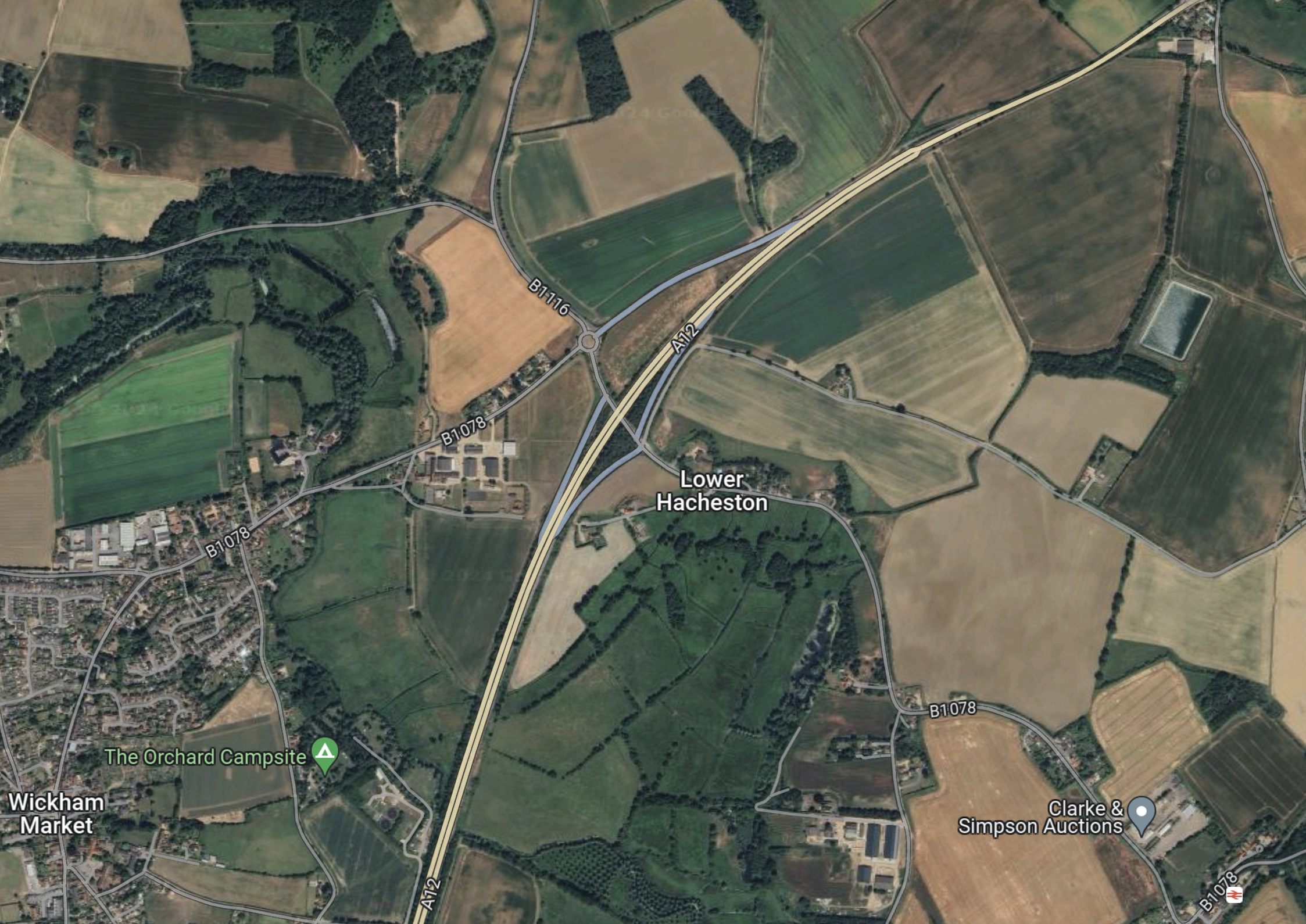
This Google Map shows the area of the Park-and-Ride site.
Note.
- Wickham Market is in the South-West corner of the map.
- The dual-carriageway is the Wickham Markey by-pass, which is part of the A12 between Ipswich and Lowestoft.
- Close to Lower Hacheston is the Northern junction of the by-pass which connects the B1116 and B 1078 roads to the A 12.
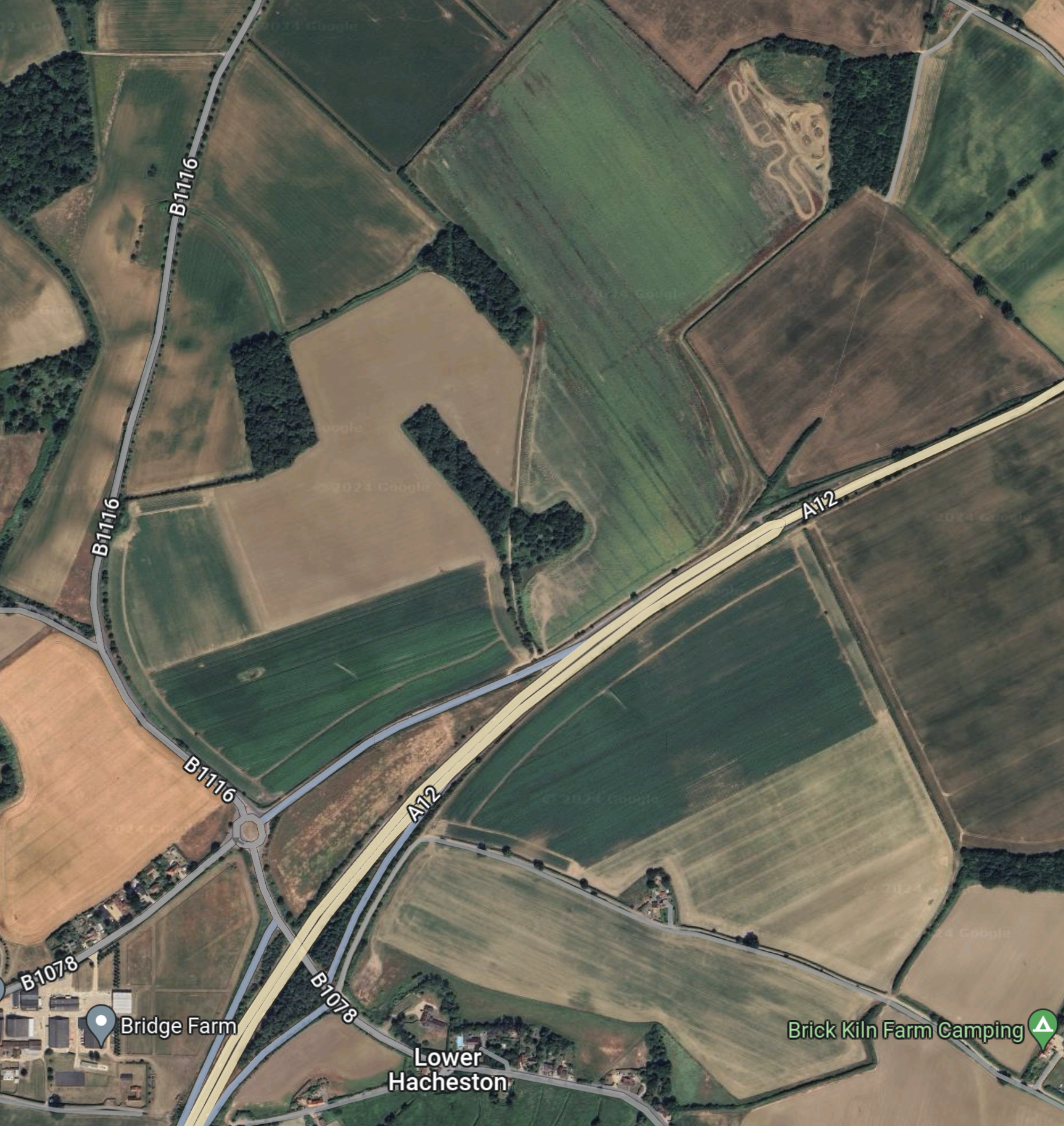
- If my memory serves me correctly, there is a small roundabout to the North of the A12, where the B 1116 and B 1078 cross, which is referred to as Fiveways Roundabout in some of the documentation.
- Wickham Market station is in the South-East corner of the map.
I know the area well, as I used to live less than ten miles to the West of Fiveways roundabout.
This shows the area to the North of Fiveways roundabout to a large scale.
The document on the Planning Inspectorate says this about the site.
The site comprises approximately 26.4 hectares (ha) of predominantly
agricultural land and highway land located north-east of Wickham Market.
The part of the site which would contain the parking and buildings, postal
consolidation building and Traffic Incident Management Area (TIMA) is
approximately 18ha in size, and located to the east of the B1078/B1116, to
the north of the A12. The remainder of the site encompasses a section of
the A12, and an associated slip road where highway improvements are
proposed to form the site access, and associated signage and road
markings, see Chapter 1, Figure 1.1 of this volume.
These are my thoughts.
There Is No Rail Connection
I wrote about the Northern Park-and-Ride in Sizewell C – North Park And Ride and there is one big difference.
The Northern Park-and-Ride is an easy walk from Darsham station.
- Darsham station has an hourly four-car train to Lowestoft and Ipswich.
- Some or all trains could be doubled in capacity as Greater Anglia has enough stock to do this.
- If required, trains could be run to and from London and intermediate stations.
- In the past, Network Rail have developed plans to extend the service as far as Yarmouth.
I believe that a rail connection at the Southern Park-and-Ride could have added flexibility for workers in Ipswich travelling to the Sizewell site.
Bus Routes
The frequency and timing of park and ride buses would depend on the
working patterns adopted during construction of the Sizewell C main
development site, and the number of workers to be moved during the shift
changeover periods. More frequent services would operate during staff
changeover and shift start/end periods. It is anticipated that there would be
three to nine buses from the proposed development per hour during shift
changeover period, and an hourly service outside shift changeover periods.There would be a maximum of 100 daily bus arrivals and 100 daily bus
departures from the proposed development to the Sizewell C main
development site. These buses would use the A12, two village bypass and
Sizewell link road once operational to travel to and from the Sizewell C main development site.
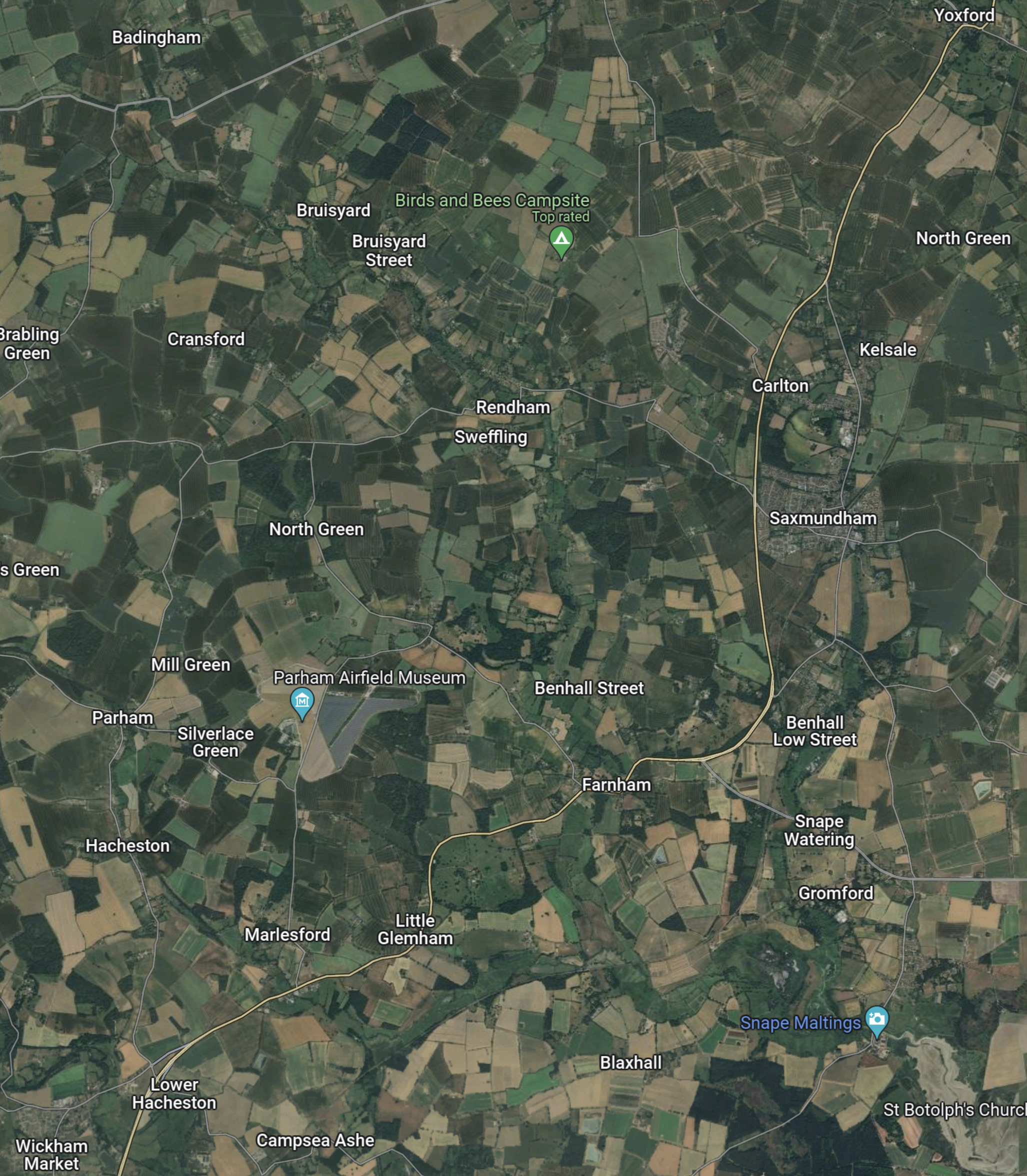
This Google Map shows the A 12 between the South Park-and-Ride site and Yoxford.
Note.
- Yoxford is in the North-East corner of the map.
- Wickham Market is in the South-West corner of the map.
- The A 12 is the cream road linking the two villages.
- The Southern Park-and-Ride will be to the North-East of Wickham Market.
- The Northern Park-and-Ride is a couple of miles North of Yoxford.
- Yoxford and Wickham Market are 11.8 miles apart.
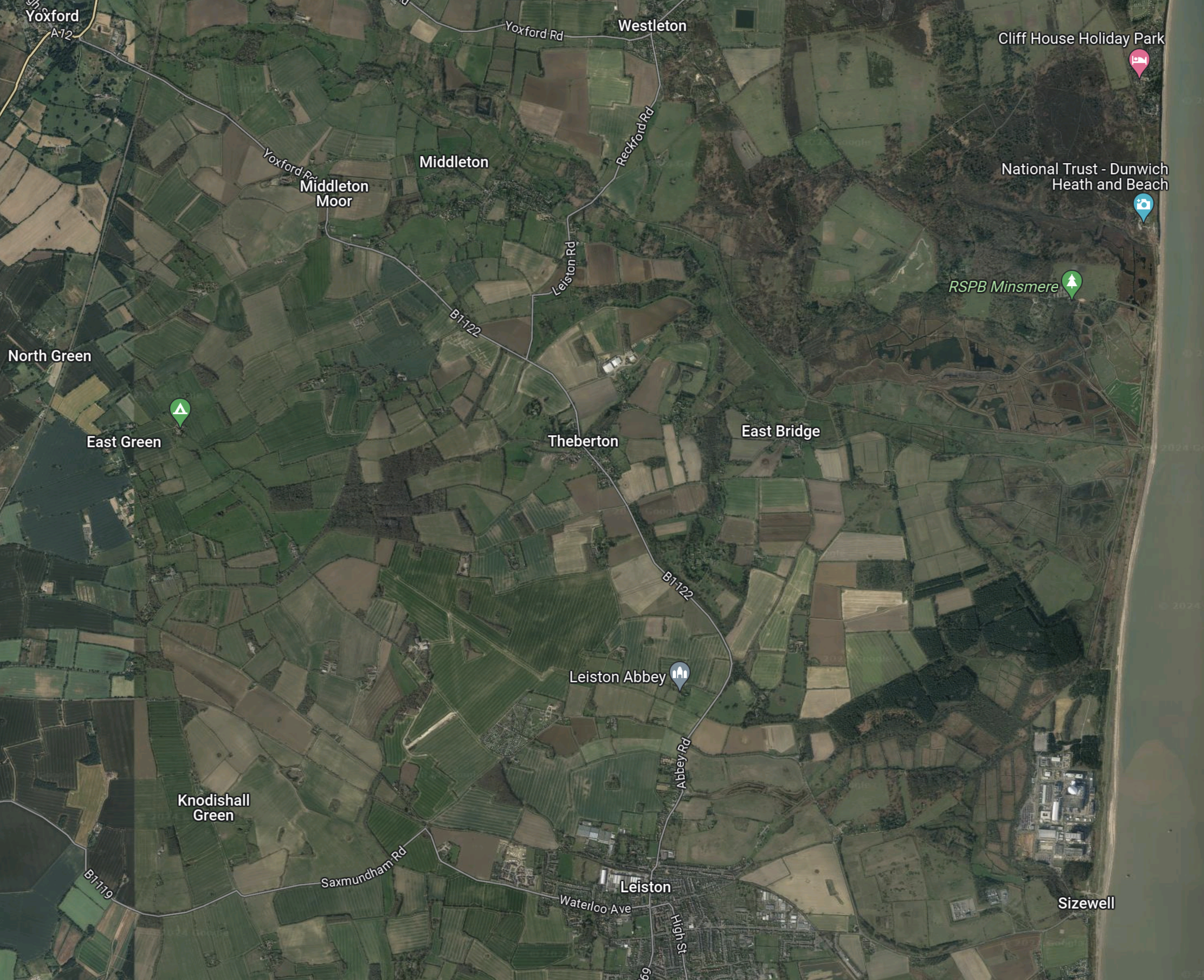
This third Google Map shows the route between Yoxford and Sizewell.
Note.
- Yoxford is in the North-West corner of the map.
- Sizewell is in the South-East corner of the map.
- Leiston Abbey is indicated by the arrow to the North of Leiston.
The B 1122 can be picked out through Middleton Moor and Theberton and then as it skirts Leiston Abbey.
It appears that both Park-and-Ride sites, use the same connection between the A 12 and Sizewell C.
Objections To The Park-and-Ride
This petition on change.org is entitled Stop Sizewell C Park and Ride at Wickham Market.
The petitioner is objecting on the following grounds.
- The size of the site.
- Spoiling of views.
- Disturbance to walkers and horse riders.
- Terrestrial ecology and ornithology will be affected by the site.
- Increase in traffic.
This was the petitioner’s conclusion.
In conclusion I oppose the Sizewell C southern park and ride site at Wickham Market and believe it should be sited further south on the A12 away from residential areas and near the A14.
The Ipswich Northern By-Pass
There is another large project scheduled for Ipswich in the next few years; the Ipswich Northern By-Pass.
This map clipped from the Ipswich Borough Council web site shows possible routes.

Note.
- Wickham Market is in the North-East corner of the map.
- One of the aims of the Northern by-pass is to open up land for housing.
- The railway between Ipswich and Darsham stations goes via Westerfield, Wiidbridge, Melton andWickham Market.
- Perhaps by phasing the developments, an area could be used for a Park-and-Ride, which has a road connection to the A 12.
- When the need for Park-and-Ride for Sizewell has decreased, the site could be handed over to housing.
It would certainly help, if the route of the Northern by-pass was settled soon.
Sizewell C – Where Will The Workers Live?
I have now written about, where the two Park-and-Ride sites are to be built.
- The Northern Park-and-Ride is proposed for Darsham.
- The Southern Park-and-Ride is proposed for Wickham Market.
I can now write about where the workers could be billeted.
I suspect there could be a Bibby Stockholm solution, where accommodation barges are used.
This Google Map shows the centre of Ipswich.
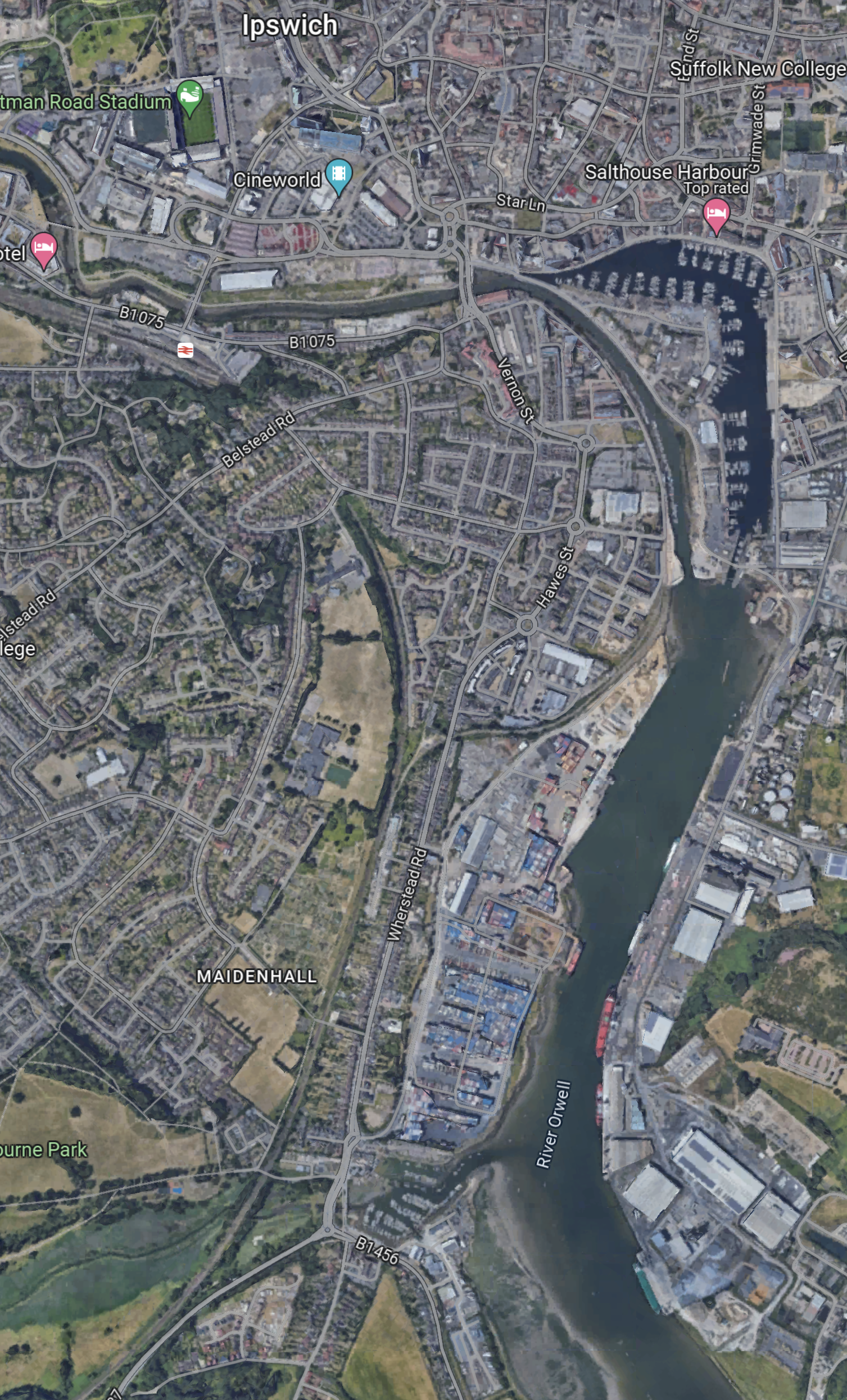
Note.
- There is a lot of space on the River Orwell.
- Ipswich station is in the North-West corner of the map.
- There could be a shuttle bus between the barge and the station.
- Trains could take workers to Darsham for buses to Sizewell.
There could even be direct buses to Sizewell.
This Google Map shows the centre of Lowestoft.
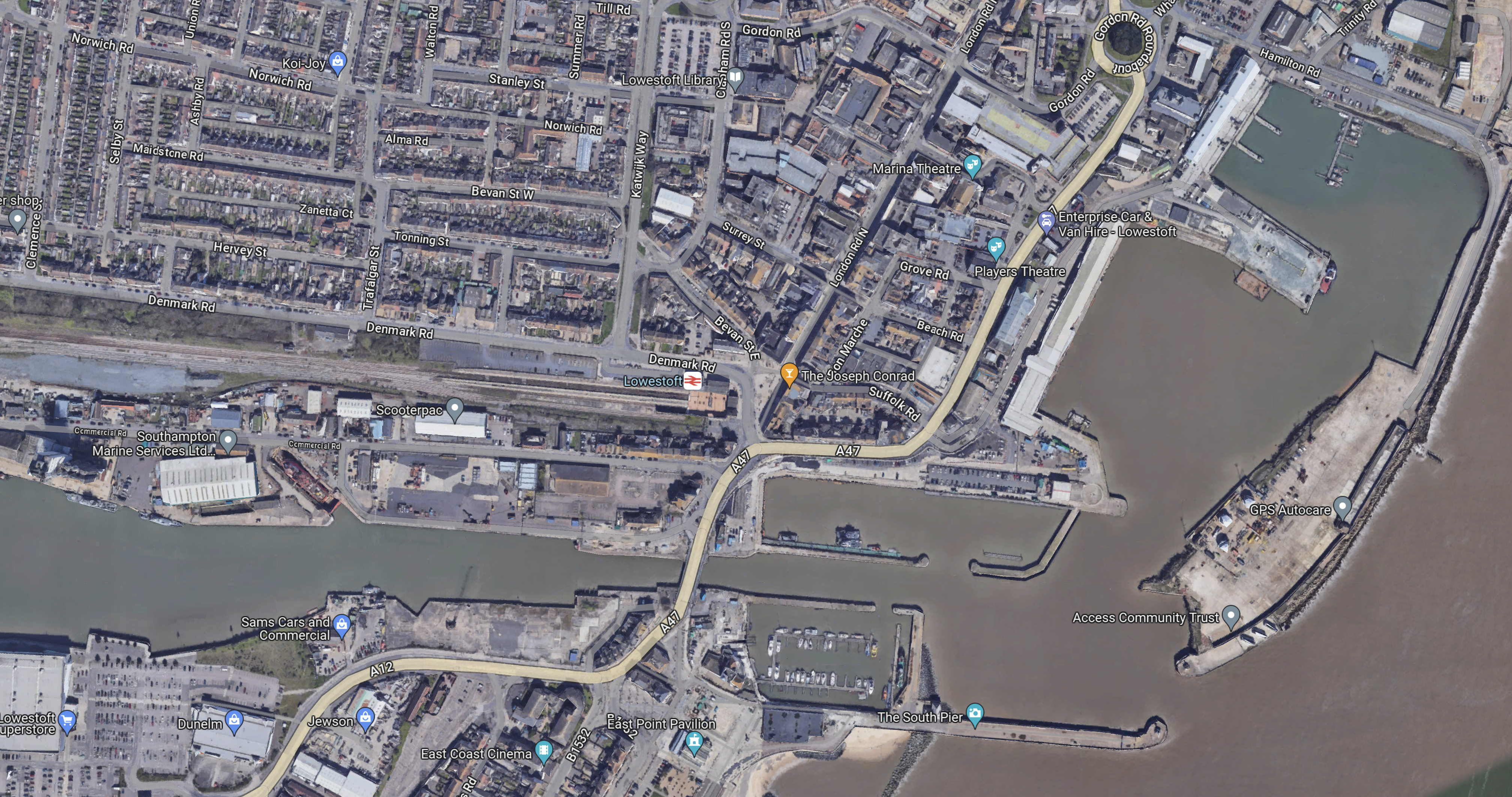
Note.
- The Bibby Stockholm is 100 metres long with a beam of 30 metres.
- Lowestoft station is close to the port.
Workers could take the train direct to the Northern Park-and-Ride for Sizewell C.
Sizewell C – North Park And Ride
This document on the Planning Inspectorate web site, is a description of the Northern Park-and-Ride for the Sizewell C Project.
This Google Map shows the area of the Park-and-Ride site.
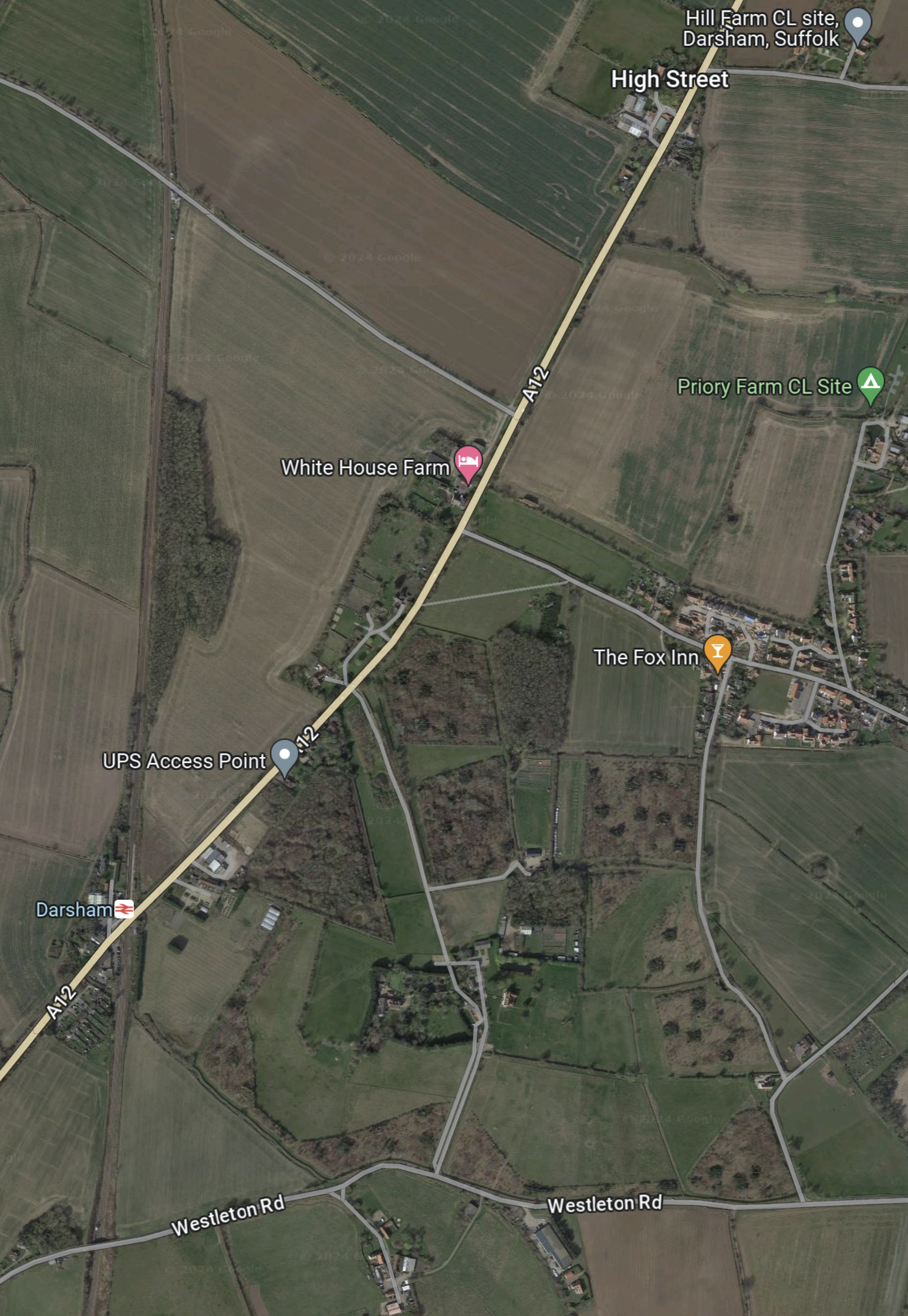
Note.
- The main road running SW-NE is the A 12 between Ipswich, Felixstowe and Woodbridge in the South and Lowestoft and Great Yarmouth in the North.
- The East Suffolk Line runs North-South at the West side of the map.
- Darsham station, which is indicated by the red logo on a white background is situated, where road and railway cross.
- The Fox Inn is in the village of Darsham and indicated by an orange arrow.
- The pink arrow to the North-West of the Fox Inn indicates White House Farm.
- The lane going North-West from the A 12 to the North of the farm is Willow Marsh Lane.
The document on the Planning Inspectorate says this about the site.
The site comprises approximately 27.9 hectares (ha) of predominantly
agricultural land but also includes sections of the A12 and Willow Marsh Lane
towards the north of the site. It is located west of the village of Darsham and
west of the A12, to the east of the East Suffolk line, and to the north of
Darsham railway station (see Chapter 1, Figure 1.1 of this volume). Further
detail on the site and the environmental baseline is provided in Chapters 1
and 4 to 12 of this volume of the Environmental Statement.
This second Google Map shows Darsham station.
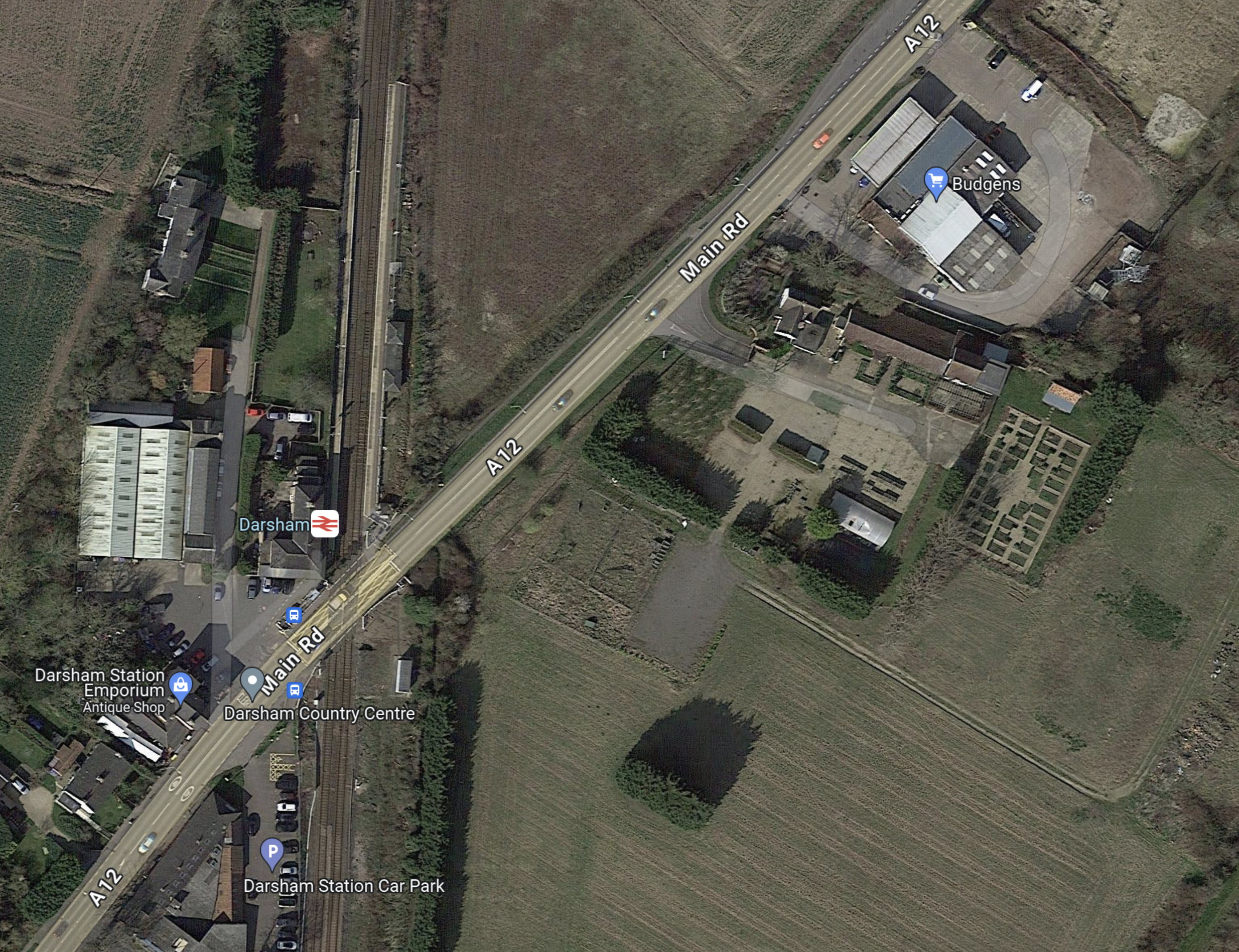
Note.
- Darsham station has long platforms.
- Crossing the line is by means of the level crossing.
- The Budgens store, which is indicated by the blue arrow also sells fuel.
- The station has a bus service.
- The Southern end of the Park-and-Ride site lies between the railway and the road at the North of the map.
The document on the Planning Inspectorate says this about walking between the Park-and-Ride site and the station.
There would be a pedestrian route from Darsham railway station along the
footway on the A12 to the south-east of the site. Pedestrians accessing the
site would leave the A12 and enter through a security gate provided in the
security fencing. Further details of access measures (such as key fobs,
CCTV, intercom system) would be agreed at the detailed design stage.
I could probably manage that at 76.
These are further thoughts.
The Current Rail Service
Currently, the rail service is as follows.
- One train per hour (tph) in both directions.
- |Trains are Class 755 trains, built by Stadler in Switzerland a few years ago.
- Each train can carry up to 229 passengers.
- Up to three trains can run together.
- Trains going to and from Lowestoft in the North call at Oulton Broad South, Beccles, Brampton and Halesworth.
- Trains going to and from Ipswich in the South call at Saxmundham, Wickham Market, Melton and Woodbridge.
- Travellers for London Liverpool Street change at Ipswich.
- The first train from London Liverpool Street would get you to Darsham at 11:00.
- This is not a bad train service but it could be improved.
Direct Trains Between London Liverpool Street And Lowestoft
In 2016, I wrote Making Sense Of The New East Anglia Franchise.
I wrote the following about Greater Anglia’s plans to run four trains per day between London Liverpool Street and Lowestoft.
There are going to be four direct services between London and Lowestoft each day. This probably initially means two trains to London in the morning peak and two trains back in the evening one.
When, I first moved back to Suffolk in the 1970s, I regularly caught a diesel-hauled train from Wickham Market to London for the day.
This is all motherhood and apple pie for those in Lowestoft wanting to go to London, but I suspect it isn’t the easiest service for a train operator to schedule efficiently and make money.
Would a train operator really want to start a full train at Lowestoft at say six in the morning and then have it wait around all day in London before returning in the evening?
The East Suffolk Line from Ipswich to Lowestoft has the following characteristics.
- It is fifty miles long.
- It is not electrified.
- It has a speed limit of 40-55 mph.
- There are nine intermediate stations. Many are just a single platform, and car parking is fairly limited.
- It has enough double-track and a passing loop at Beccles station to run a train in both directions at the same time.
- As it ran long trains in the past, I suspect, that most of the stations have platforms that can handle at least six-carriage trains.
- Trains would appear to take around ninety minutes for the whole journey
But the most important characteristic, is that every time the line is improved, more passengers come rushing out of the woodwork.
There would certainly be no problem with running bi-mode Flirts on this route, as London-Lowestoft is just the type of route for which they are designed.
- They would use their on-board diesel engines on the East Suffolk Line.
- As some would work along the busy lines to London, I suspect their top speed under electric power would be the same as the EMUs.
- Services to and from London, once on the Great Eastern Main Line, would join the high-speed race to and from the capital.
- At the start and finish of the day, the trains could use the electrified main line to position between Ipswich and Crown Point depot at around 100 mph.
- Abellio could use either a single three- or four-car train or perhaps two trains coupled together.
This service would pass through Darsham station, so it could provide a direct link between London and the Park-and-Ride.
It might also stop at stations like Manningtree, Colchester, Chelmsford and Stratford.
I am fairly certain, that a London Liverpool Street and Lowestoft services, that stopped at Darsham station, would improve labour availability and construction efficiency at Sizewell C.
A Connection To Yarmouth
There used to be a direct Yarmouth to Lowestoft Line, but now it is possible to use the Wherry Lines, with a reverse at Reedham station.
So will we be seeing the direct London-Lowestoft trains being extended to Yarmouth?
As Yarmouth hasn’t had a direct connection to London for years and there are lots of fast, capable new trains, I wouldn’t be surprised.
Especially, as Network Rail are talking about reinstating the Reedham Chord to create a more direct route between East Anglia’s largest North-Eastern towns. This is said about the Reedham Chord in Direct Yarmouth Services in the Wikipedia entry for Lowestoft station.
In January 2015, a Network Rail study proposed the reintroduction of direct services between Lowestoft and Yarmouth by reinstating a spur at Reedham. Services could once again travel between two East Coast towns, with an estimated journey time of 33 minutes, via a reconstructed 34-chain (680 m) north-to-south arm of the former triangular junction at Reedham, which had been removed in c. 1880. The plans also involve relocating Reedham station nearer the junction, an idea which attracted criticism.
If we take these current approximate timings.
- Ipswich to Lowestoft takes 90 minutes.
- Lowestoft to Reedham takes 27 minutes.
- Reedham to Yarmouth takes 16 minutes.
That means the service today would take 133 minutes, with a train reverse at Reedham station.
Note.
- Modern three-car bi-mode Flirt trains, with better speed, acceleration and braking than the current Class 170 trains.
- The short-cut along the Reedham Chord, which could save as much as ten minutes.
- A few selective improvements to save a minute here and there.
- Lowestoft station is redeveloped forty metres to the West and eighty metres to the South, as detailed in Wikipedia under Relocation Of The Station.
- I think it would be possible for an Ipswich-Yarmouth service to do the trip in around two hours.
The service would have the following characteristics.
- It would be timetabled for under the all-important two hours.
- Trains would turnround efficiently in a few minutes at either end of the line.
- It could be hourly with four trains or two-hourly with just two, used to run the service.
- All stops would be at the same minutes past each hour at each station.
- Trains would always leave Ipswich and Yarmouth at the same number of minutes past the hour.
- Lowestoft and Yarmouth get a regular hourly direct train service in just thirty-three minutes.
- Intriguingly if the trains left Ipswich and Yarmouth at the same time, they would pass each other at Beccles station, which incorporates a passing loop.
- As Beccles and its passing loop, fits so well into this schedule, I suspect that it was designed with the Reedham Chord and this type of service in mind.
- There would be no prizes for guessing the beer, that should be served on a train on this route.
I don’t think any better than an hourly service, could be run, without some extra passing loops or double-track.
This extension would make commuting between Sizewell and Yarmouth easier.
Bus Route Between Darsham And Sizewell
The document on the Planning Inspectorate says this about the buses and the route.
There would be a maximum of 100 daily bus arrivals and 100 daily bus
departures from the proposed development to the Sizewell C main
development site.Bus services between the proposed development and the Sizewell C main
development site would travel south on the A12 and use the new A12/B1122
roundabout (Yoxford Roundabout – see Volume 7 of the ES) to access the
B1122 and the Sizewell link road (once operational – see Volume 6 of the
ES) towards the Sizewell C main development site.
This Google Map shows Darsham station and the Sizewell site, as it exists today.
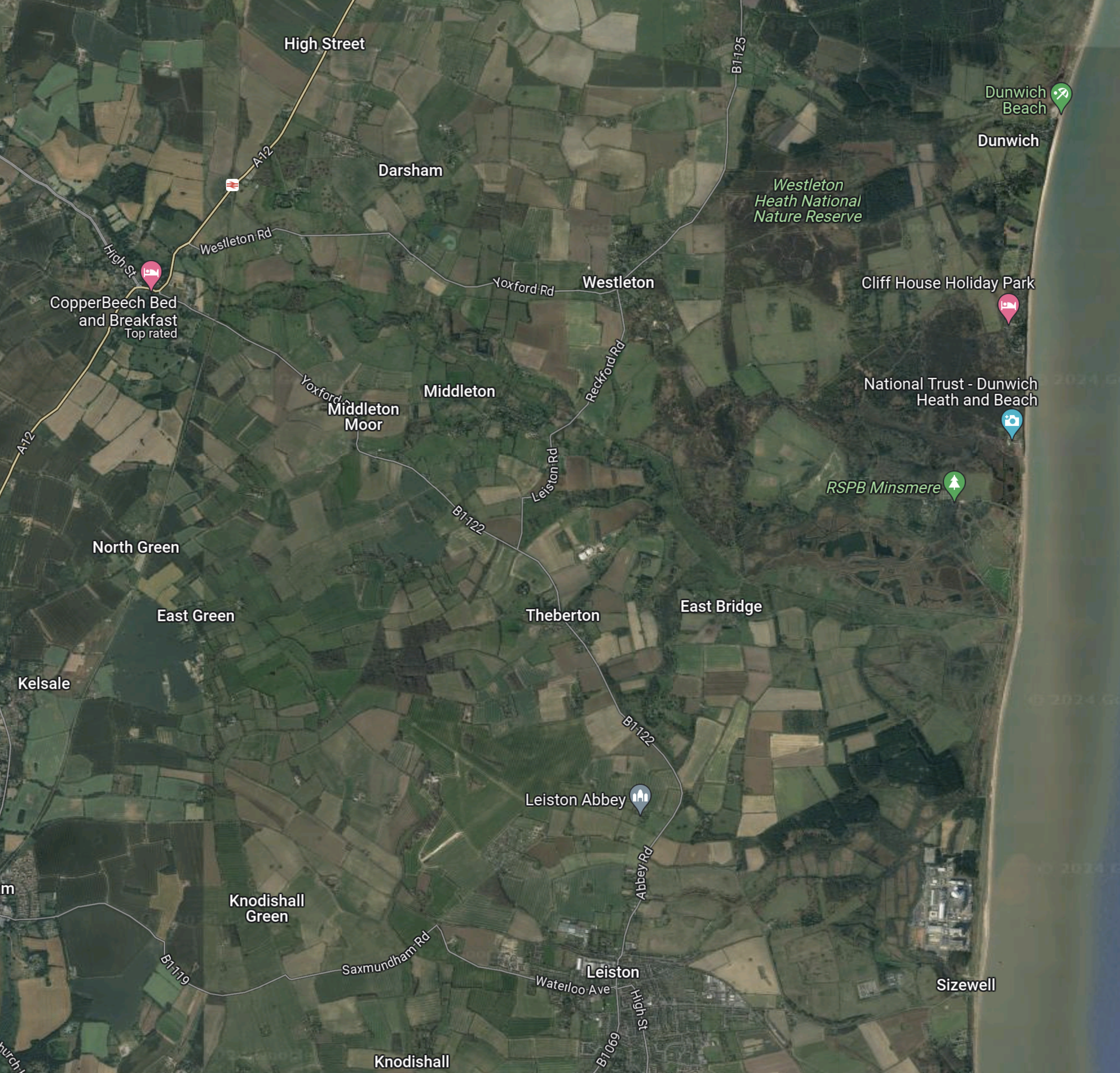
Note.
- The Sizewell site is in the South-East corner of the map.
- Darsham station is in the North-West corner of the map.
This second Google Map shows the A 12 between Darsham station and Yoxford.

Note.
- Darsham station is at the top of the map on the A 12.
- The village of Yoxford is on an S-bend of the A 12.
- A B& B is marked by a pink arrow.
The B 1122 connects Yoxford to the South-East corner of the map.
This third Google Map shows the route between Yoxford and Sizewell.
Note.
- Yoxford is in the North-West corner of the map.
- Sizewell is in the South-East corner of the map.
- Leiston Abbey is indicated by the arrow to the North of Leiston.
The B 1122 can be picked out through Middleton Moor and Theberton and then as it skirts Leiston Abbey.
Sizewell C seem to have made a good effort to get the workers to the site.
Why Isn’t A Passenger Train Run Between Ipswich And The Sizewell Site?
In Network Rail Prepares To Send Four Trains A Night Through Suffolk To Sizewell, I came to this conclusion.
I am fairly certain, that it is possible to move four freight trains in and out of the Sizewell site during the night, without doing any major works to the East Suffolk Line between Ipswich and Saxmundham junction.
- Adding extra track at Wickham Market would probably cause major disruption.
- Some level crossings will probably be improved.
But without a full double track between Ipswich and Saxmundham junction, I doubt there could be any increase in passenger services.
But with those track works, it might be possible to run an hourly service between Ipswich and Aldeburgh with calls at Westerfield, Woodbridge, Wickham Market, Saxmundham, Sizewell and Leiston.
This would give a two tph service between Saxmundham and Ipswich.
Objections To The Park-and-Ride
This document from Darsham Parish Council is entitled Consultation Response To Sizewell C.
This is the first paragraph.
Darsham Parish Council (Darsham PC) continues to oppose the proposed location of the Northern Park and Ride (NPR). We believe its location on an already busy single carriageway section of the A12 just north of the level crossing at Darsham Station, coupled with proposed roundabouts at Willow Marsh Lane and the A1120 junction in Yoxford are a recipe for traffic chaos extending northwards up the A12. We have no confidence in the traffic estimates submitted by EDF, which we believe underestimate the amount of local, through, agricultural and tourist traffic. This will be exacerbated by the proposed motel and further proposed development south of the station. We believe that traffic congestion on this main artery into Suffolk will adversely impact tourism throughout the AONB, which generates more than £360 million pa to the local economy (2018 figure). Further, we believe these volumes of traffic will generate excessive noise, vibration and pollution with serious negative impacts on those living alongside or close to the A12. Most significantly, Darsham PC has been advised that location of the NPR on this site could pose a significant flood risk to the railway (see below).
The Parish Council is also worried about flood risk to the railway.
The site of the NPR slopes down from Willow Marsh Lane towards the railway. A consulting engineer has advised us that the heavy clay soil here could pose a drainage and flood risk problem when compacted during the construction period. An appropriate sustainable semi-permeable surface could be utilised for car parking spaces to reduce run-off, with suitable drainage and reservoir capacity at the southern end to protect the railway from flooding. We submitted this evidence to EDF during the consultation period, but it has been ignored.
I suspect as with the opposition to Sizewell B, the opposition is led by second home owners, worried about the value of their investment.
Network Rail Prepares To Send Four Trains A Night Through Suffolk To Sizewell
The title of this post, is the same as that of this article on the East Anglian Daily Times.
These are the first two paragraphs.
There will be improvements to the East Suffolk Line between Ipswich and Saxmundham and to the little-used Leiston branch line which will become busier with up to four trains a night carrying construction materials to the Sizewell C site.
However there are no plans at present to create a new passing loop at Wickham Market which would be needed to allow construction trains to travel by day so most of these trains will have to use the line at night.
Note.
- Trains access the Sizewell site from Saxmundham junction on the East Suffolk Line.
- Between Saxmundham and Halesworth stations is double track.
- With the exception of a passing loop at Beccles station between Halesworth and Lowestoft stations is single track.
- Saxmundham junction and Lowestoft station is 26.2 miles.
- Between Saxmundham and Woodbridge stations is mainly single track.
- Between Woodbridge and Ipswich stations is double track.
- Saxmundham junction and Ipswich station is 22.8 miles.
It is a classic line, that was partly singled by British Rail to try and cut operating costs.
A passing loop at Wickham Market could make operation of the line easier.
- The last train in the evening leaves Saxmundham station at around 23:00 for Lowestoft.
- The first train in the morning leaves Saxmundham station at around 06:00 for Ipswich and Harwich International.
This would give a seven hour window in which to move four trains out of the Sizewell site and four trains in.
This OpenRailwayMap shows Ipswich Yard which is a set of freight sidings to the North of Ipswich station.
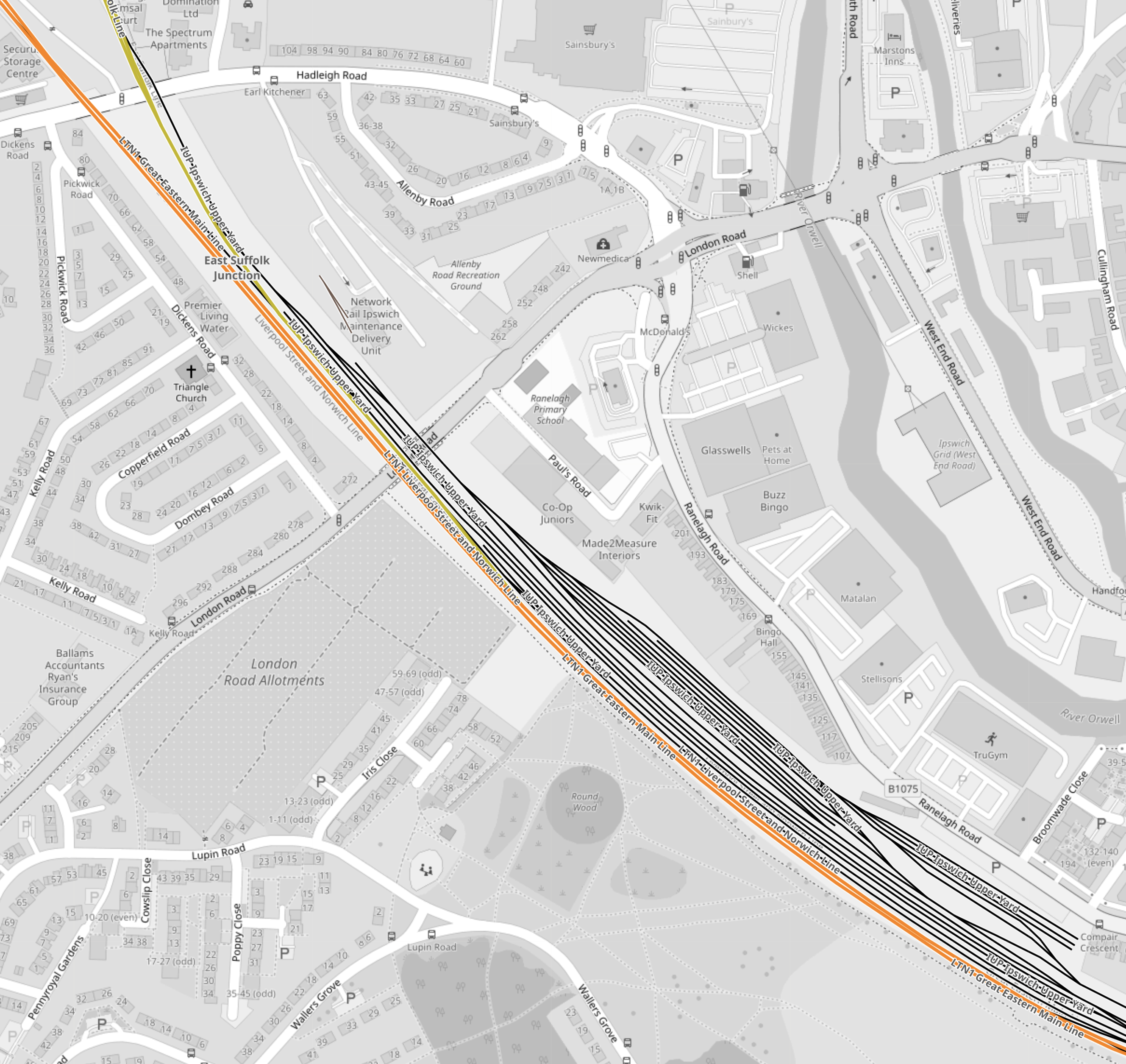
Note.
- The orange tracks are the Great Eastern Main Line.
- Ipswich station is just off the map to the South-East.
- The yellow track in the North-West corner is the East Suffolk Line to Saxmundham and Sizewell.
- The black lines diagonally across the map is Ipswich Yard, where wait if required, when coming out or going into the Port of Felixstowe.
I would expect that trains destined for Sizewell will wait in Ipswich Yard before being moved in at night.
These are my further thoughts.
Moving Trains Into And Out Of The Sizewell C Site
A map of the proposed rail layout in the Sizewell C site was published in the February 2019 Edition of Modern Railways showed at least four sidings in the site.
- We can assume that at the beginning of each night, there are.
- Up to four trains in the Sizewell C site, that need to come out of the site.
- Up to four trains in Ipswich Yard, that need to enter the site.
- As each train leaves the Sizewell C site, it creates a free siding for the next incoming train.
The process could be started by the four trains in the Sizewell C site, leaving nose-to-tail like a herd of elephants, but perhaps five minutes apart.
The outgoing trains would then park-up in Ipswich Yard or position themselves to get ready to bring in the next load.
Once all the outgoing trains, were clear of the Sizewell site, the four incoming trains, could trundle into the site.
Note.
- Effectively, there would be a night-time single-track railway exclusively handling freight trains into and out of the Sizewell C site, between the site and Ipswich Yard.
- With more sidings on the Sizewell C site, the limit could be higher than the currently proposed four trains per night in each direction.
- The number of and length of the trains could be adjusted, so that the deliveries of materials to the site, were in an optimal manner, which hopefully would increase the efficiency of the construction.
- There are twenty level crossings between Ipswich and Saxmundham junction and another five between Saxmundham junction.
Did poor delivery performance contribute to cost and time overruns at the more difficult-to-support, rail-isolated Hinckley Point C power station?
Conclusion
I am fairly certain, that it is possible to move four freight trains in and out of the Sizewell site during the night, without doing any major works to the East Suffolk Line between Ipswich and Saxmundham junction.
- Adding extra track at Wickham Market would probably cause major disruption.
- Some level crossings will probably be improved.
But without a full double track between Ipswich and Saxmundham junction, I doubt there could be any increase in passenger services.
Freightliner Partners With Zero To Decarbonise Critical Transport Operations
The title of this post, is the same as that of this news item from Freightliner.
This is the sub-heading.
Today, Freightliner and Zero, a breakthrough energy company that develops and manufactures whole-blend synthetic, non-biological fuels, announced a partnership to achieve a fossil-free locomotive operation by 2040 and overall Net Zero by 2050, representing a major evolution for one of the world’s oldest, safest and most reliable forms of freight transport. To successfully meet these ambitious emissions targets, Freightliner is exploring alternatives to diesel, such as Zero’s carbon-neutral synthetic diesel, which will eliminate fossil-carbon emissions and improve air quality and environmental wellbeing.
These are my thoughts.
Freightliner
Freightliner is a rail-freight company, that you see regularly hauling freight trains all over the UK.

The picture shows two of their Class 90 electric locomotives in their latest livery.
These posts talk about the company and lower or zero carbon operation.
- Clean Air Power Adds Hydrogen To Class 66 Fuel Mix
- Freightliner Continue Trials On New Low Carbon Fuel
- Freightliner Secures Government Funding For Dual-Fuel Project
- The Ultimate Bi-Mode
The current post fits that pattern.
Zero Petroleum
Zero Petroleum is one of those companies that gives Elon Musk nightmares.
But when you have backers like Babcock, Boeing, Intertek, Rolls-Royce and the Royal Air Force, you must be doing something right.
The Wikipedia entry for the company has this first paragraph.
Zero is a manufacturer of non-biological carbon-neutral synthetic fuel (also known as e-fuel) co-founded by former Formula One engineer Paddy Lowe. Its product has been developed as an alternative to fossil-based fuels and a more scalable sustainable alternative to waste and bio-fuels. The Royal Air Force used its fuel in November 2021 to achieve a World Record first flight powered by synthetic fuel. In July 2022, Zero entered a new partnership with the Royal Air Force to move towards mass production of sustainable aviation fuel.
The company is often known as just Zero.
These two and a half paragraphs from the Wikipedia entry describe the technology.
Zero uses Direct FT (a proprietary and specialised version of Fischer-Tropsch) to directly manufacture target fuels (gasoline, kerosene and diesel) at high yield and with no need for refinery upgrading.
When manufactured using renewable energy, synthetic fuel can be used as a carbon neutral or carbon negative direct drop-in replacement for fossil fuels, particularly for operations that require high energy densities – such as air travel, shipping and farming – and to ensure the continued use of legacy vehicles. It can also be used as a raw material to produce various forms of plastic.
It is manufactured using a process known as petrosynthesis, in which carbon dioxide and hydrogen are combined to create hydrocarbons. The process involves direct air capture of carbon dioxide from the atmosphere and the electrolysis of water to obtain hydrogen.
The Fischer-Tropsch process, despite its association in the past with dodgy regimes, seems to be at the heart of things, as it is with Velocys.
I describe the Velocys process and its link to Fischer-Tropsch in Grant Shapps Announcement On Friday.
Surely, the carbon-neutral fuel produced by Zero, are the ideal stop-gap fuel until true full zero-carbon fuels are available.
But Zero’s fuels will always be available for heritage and legacy trains, planes and automobiles and for applications, where older technology must be used.
As an example of older technology still being used on UK’s railways, Network Rail operate, the New Measurement Train to check all tracks in Great Britain.

The train may have been manufactured in the 1970s, but it has modern engines and is the ideal train to carry the wide variety of sophisticated equipment to ensure the safety of Britain’s railways.
Synthetic diesel like that produced by Zero could keep the New Measurement Train running for some years yet.
Freightliner Have Made A Pragmatic Decision
I believe that Freightliner have made a pragmatic decision, that allows them to go carbon neutral without without taking risks or spending millions on new equipment, that is not fully-developed.
As new zero-carbon technology is developed, like say hydrogen-electric hybrid locomotives, these may take over certain tasks, which will reduce some of the need for synthetic diesel.
But synthetic diesel from Zero will always be there as a fuel of last resort.
Coire Glas Exploratory Tunnel 70% Complete
The title of this post, is the same as that of this article in Ground Engineering.
This is the sub-heading.
A tunnel to investigate ground conditions at SSE Renewables’ Coire Glas project to build a pumped hydro scheme in the Scottish Highlands is 70% complete, as wider ground investigations come to an end.
These are the first three paragraphs.
Coire Glas on the shores of Loch Lochy in Great Glen is the first large scale pumped hydro storage scheme to be developed in the UK for more than 40 years.
It would take excess energy from the grid and use it to pump water 500m up a hill from Loch Lochy to a vast reservoir where it would be stored. This will be done through a tailrace tunnel, underground cavern power station, high pressure tunnel and low-pressure headrace tunnel.
SSE Renewables has started exploratory works on the scheme. This has involved building an up to 1km long and 4m wide tunnel to investigate the ground conditions in which the powerhouse will be built.
All the information gathered will be used in the detailed design of the 1,5GW/30 GWh pumped storage system, which is expected to be a £1.5 billion capital investment.
The Wikipedia entry for Coire Glas power station, says this about the current status and completion.
In December 2023, the exploratory tunnel had reached 720m in length.
A final investment decision will depend on UK government assurances about how the regulated electricity market would reward storage schemes. SSE hope to make that £1.5Bn decision in 2024, in which case the scheme could be completed in 2031.
I suspect that as this is one of the largest green energy projects in the UK, that there’ll be a lot of media coverage of the construction of this power station.
Rolls-Royce Supplies mtu Large-Scale Battery Storage To Secure The Latvian National Grid
The title of this post, is the same as that of this press release from Rolls-Royce.
These four bullet points, act as sub-headings.
- Latvia synchronizes its electricity grid with the European grid in 2025
- Large-scale battery storage system from Rolls-Royce ensures stability of the power grid in Latvia
- Transmission system operator AST orders 160MWh mtu EnergyPack
- Facility will be one of the largest battery storage systems in the EU
This is the first paragraph.
Rolls-Royce has received an order from the Latvian transmission system operator Augstsprieguma tikls (AST) to supply an mtu large-scale battery storage system to secure the Latvian power grid. In 2025, Latvia, together with the other Baltic states, will synchronize its energy supply system with the continental European power grid.
Note.
- This is a Rolls-Royce press release, not a Rolls-Royce mtu press release.
- Recently, Rolls-Royce mtu supplied the generators for Redditch power station, which I wrote about in Centrica Completes Work On 20MW Hydrogen-Ready Peaker In Redditch.
- In The Modern Way To Grow Tomatoes, I describe how a Rolls-Royce mtu Combined Heat and Power unit (CHP), is used in the growing of tomatoes.
Could it be that using the Rolls-Royce name prominently, makes sales easier?
SSE Partners With Bord na Móna On 800MW Onshore Wind JV In Ireland
The title of this post, is the same as that of this press release from SSE.
These four bullet points, act as sub-headings.
- Leading low-carbon energy companies SSE Renewables and Bord na Móna continue to progress their respective portfolios in Ireland, by partnering to develop new onshore wind energy projects across the Midlands.
- More than €1 billion could be invested by the joint venture partnership to develop up to 800MW of new renewable energy projects, enough to provide power to over 450,000 homes.
- Onshore wind farm projects to be developed as part of the portfolio will include Lemanaghan Wind Farm in north-west Offaly, Littleton Wind Farm in Tipperary, and Garryhinch Wind Farm on the Laois Offaly border.
- The partnership has the potential to support hundreds of jobs across the Midlands during construction and operation of the onshore wind projects.
Note.
- It is a 50:50 project between SSE Renewables and Bord na Móna.
- It will deliver 800 MW of onshore wind energy.
These link to the three web sites for the wind farms.
- Lemanaghan Wind Farm will be 80-100 MW
- Littleton Wind Farm will be 60-80 MW
- Garryhinch Wind Farm will be 60-80 MW
These must be the first phases, as they are nowhere near 800 MW.
There is an interesting comparison to be made here.
- As I said in Wind Farm: Yorkshire Moors Could Get England’s Biggest Wind Farm, it looks like a 304 MW wind farm on England will be controversial.
- The 539 MW Whitelee Wind Farm near Glasgow is the largest onshore wind farm in the UK.
- The republic of Ireland is building three schemes totalling 800 MW in the Irish Midlands.
So why does England object?
Wind Farm: Yorkshire Moors Could Get England’s Biggest Wind Farm
The title of this post, is the same as that, of this article on the BBC.
This is the sub-heading.
The largest onshore wind farm in England could be built on moorland in the Pennines if plans get the go-ahead.
These are the first two paragraphs.
Calderdale Windfarm Ltd is exploring options for 65 turbines on Walshaw Moor, near the Walshaw Dean reservoirs above Hebden Bridge in Calderdale.
The company said the scheme would generate enough electricity to power more than 286,000 homes a year.
The Calderdale Wind Farm has a web site, which adds these details about the proposals.
- The 65 wind turbines will generate up to 302 MW of electricity.
- There will be a 150 MW battery on site.
- £2.5 million per year will be put in a Community Benefit Fund.
- Up to 300,000 trees will be planted across the site.
This Google Map shows the Walshaw Dean reservoirs and Hebden Bridge.
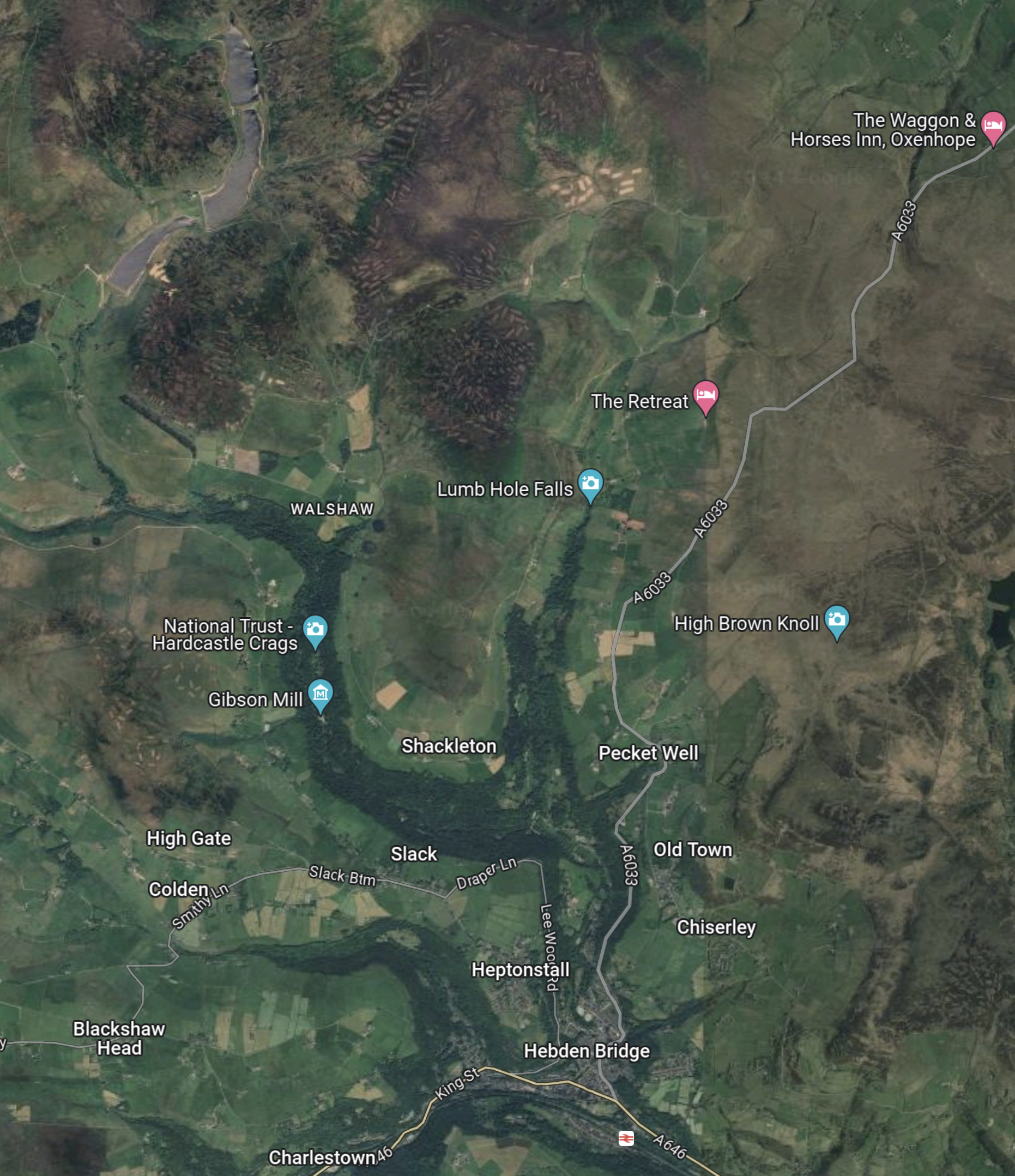
Note.
- Walshaw Dean reservoirs are in the North-West corner of the map.
- Hebden Bridge is at the bottom of the map.
- Hebden Bridge station on the Calder Valley Line is also marked.
- This will be a very unusual wind farm for England.
It could also be a controversial wind farm.
These are some of my thoughts and those of the BBC article.
Environmental Opinions
These five paragraphs indicate both sides of the environmental argument.
Environmental campaigners warned the development would disturb peat bogs, releasing carbon into the atmosphere.
A spokesperson for Calderdale Windfarm, which is backed by Worldwide Renewable Energy (WWRE), said the proposal was an “incredibly exciting opportunity”.
“During a cost-of-living crisis, with ongoing energy security challenges and the climate emergency, the UK needs to explore how it can generate more carbon-free renewable electricity,” the firm said.
“But our proposals are at a very early stage and we recognise there will be a range of views about the merits of our proposal.
“We look forward to continuing to work with the local community, environmental groups, local councillors and others over the coming months to help shape the final design of the project.”
The £2.5 million per year Community Benefit Fund could be the clincher.
The Site Has A Battery
In my view, it is good practice to fit every wind farm with a battery, if this is practical and cost-effective.
As most batteries associated with wind farms, seem to be able to replace the wind farm for two hours, I wouldn’t be surprised to see the battery specified as a 150 MW/300 MWh unit.
A battery this size would improve the stability of the electricity supply in the area.
How Will Calderdale Wind Farm Be Connected To The Grid?
This question is answered in the page of FAQs.
We already have an offer from the Distribution Network Operator Energy North West to connect into the local electricity network substation at Padiham. Negotiations are also ongoing about an alternative connection via a new substation and that would go into National Grid which would connect into existing 440 KV pylons.
Padiham is a few miles away to the West, so the second option may need a smaller number of pylons.
The grid connection and associated infrastructure would be subject to a separate planning application to the wind farm.
Is Calderdale Wind Farm Just Wind Turbines?
This question is answered in the page of FAQs.
- No. Alongside our proposals for onshore wind we are also exploring the potential for the inclusion of battery storage and solar panels on southern slopes.
- As we develop the proposals further, we will be able to confirm whether we will be including other renewable technologies as part of the proposals.
I wouldn’t be surprised to see solar panels floated on the reservoirs. This also has the secondary benefit of reducing evaporation.
How Will Calderdale Wind Farm Benefit Calderdale?
This question is answered in the page of FAQs.
If consented, Calderdale Wind Farm would represent an investment of circa £500m into the local economy. Calderdale Wind Farm will support the local economy and present many opportunities for years to come.
Community Benefit Fund
Around 16,500 households in Calderdale are living in fuel poverty, with around 1,200 of these being in the HX7 postcode area. As part of our proposals for Calderdale we are exploring a community benefit fund to provide support to these households across the 30-year operational lifetime of Calderdale Wind Farm.
This fund would represent £75m worth of funding across a 30-year timeframe that would be paid to Calderdale Council to help relieve fuel poverty for the operational lifetime of the Calderdale Wind Farm.
We want to work closely with the communities in and around Calderdale to ensure they benefit from the project to help address identified local challenges such as the current energy and cost of living crisis.
Socio Economic Impacts
A socio-economic report produced by Biggar Economics suggests that the project would be a significant boost to both the Calderdale and wider regional economy if it goes ahead. The report estimates that Calderdale Wind Farm would generate at least £2.2million GVA for Calderdale through the design, build and operational lifetime of the windfarm.
This is surely going to level-up Calderdale.
Is This Going To Impact My Walking Route?
This question is answered in the page of FAQs.
As we develop our proposals, we will design the scheme and placement of the wind turbines and associated infrastructure to minimise any disruption to existing paths and trails. Our team has taken into consideration the importance of preserving the natural beauty and accessibility of the area in our early stage designs, which will evolve as we undertake further work ahead of a planning submission.
While there might be temporary adjustments or diversions to certain paths during the construction phase to ensure safety, these changes will be communicated well in advance, and we will strive to keep any inconveniences to a minimum.
Once operational the moor will continue to be accessible to members of the public.
As part of our commitment to community consultation, we want to hear your thoughts on the proposals, if you have any specific concerns about how the wind farm might affect your walking routes please let us now, community input is vital to designing a scheme that works seamlessly with the local environment.
It does look like the impact will not be all that great.
Is Grouse Shooting On Walshaw Moor Expected To Continue If Calderdale Wind Farm Is Approved?
This question is answered in the page of FAQs.
WWRE and Calderdale Wind Farm Ltd are pleased to confirm that the approval of the wind farm would result in the end of grouse shooting on Walshaw Moor.
This could face a lot of opposition from the shooting lobby.
Who Are WWRE?
The Calderdale wind farm has a page of FAQs.
In response to who are the funding partners of the project, this is said.
WWRE Global is a UK based company that was looking at projects in Spain and registered with Companies House in Gibraltar. With its investors and opportunities its current operations are focused on helping to deliver new renewable energy infrastructure in locations across the UK, which is why the business is now listed at Companies House in London.
WWRE Global is responsible for delivering investment opportunities for Energy Horizon II Investment Company and managing the planning and consenting process.
WWRE Global has a web site.
When Will The Wind Farm Be Built?
This question is answered in the page of FAQs.
Calderdale Wind Farm is a fully funded project, and it is envisaged the construction would commence within 12 months of any planning permission being granted and conditions being discharged. At this stage it is expected that construction could take up to two years.
WWRE Global certainly seem to want to get on with it.
Objectors
Use Google to search for news about Calderdale wind farm and you get a lot of objectors.
Conclusion
This is a bold and scientifically-correct proposal and it will be a close decision, as to whether the wind farm gets built or not!
The Crews Bracing Themselves For A Rise In Electric Car Fires
The title of this post, is the same as that of this article on the BBC.
This is the sub-heading.
Each year, Essex Fire and Rescue Service focuses on one area of “top-up” training for its crews. In recent years, this has included sessions on firefighting at height and managing hazardous materials. This year, a new course is being introduced: How to deal with electric vehicle fires. Why?
These are the first three paragraphs.
Station manager Terry Maher has recently taken on a new role within the fire service.
A hazardous material expert, he is now the service’s lead officer on tackling lithium-ion battery fires.
His new responsibility comes as the number of electric vehicles (EVs) on UK roads hits more than 540,000. And the number is rising fast.
The article certainly worried me.
Most of the views expressed are by a fire officer, who is also a hazard materials expert.
It should be remembered that I have had serious fire training both as a Scout with the London Fire Brigade and a few years later at both Enfield Rolling Mills and at ICI.
These are a few points from the article.
- Dealing with a petrol or diesel car fire would normally take about 30 minutes. With an EV fire we’re looking at four or five hours or longer, if we’ve used water.
- As more and more people use electric vehicles we can expect more and more electric vehicle fires.
- The results of text searches show there were 59 electric vehicle fire references in 2022-23 across England – up from 30 the previous year.
We are dealing with dangerous vehicles and must handle with care.
These are my thoughts.
Car Insurance Rates For Electric Vehicles Will Rise
The worse the risk, the more you will have to pay.
A Full Safety Assessment Should Be Done Before Buying An Electric Vehicle
For instance, I have an integral garage in my house and wouldn’t feel safe at night, if an electric car or bicycle was in there on charge.
I certainly wouldn’t buy an electric car with a plastic body. Although I did own a Lotus Elan for over twenty years.
Conclusion
Everybody, who is thinking of buying an electric car or bicycle, should read the BBC article first.
 The Anonymous Widower