Belgians To Start Building World’s First Artificial Energy Island Next Year (VIDEO)
The title of this post, is the same as that, of this article on offshoreWIND.biz.
This is the sub-heading.
Belgian offshore construction companies Jan De Nul and DEME, through their consortium TM EDISON, have won the tender for the construction of the Princess Elisabeth Island in their home country and the first artificial energy island in the world.
And this first paragraph outlines the project.
The artificial island, which will be built some 45 kilometres off the Belgian coast and will occupy an area of approximately five hectares above the waterline, will serve as the link between the offshore wind farms in the country’s second, 3.5 GW Princess Elisabeth offshore wind zone and its onshore high-voltage grid.
Initial plans don’t seem to be putting any wind turbines or solar panels on the island.
The most impressive part of the article is the video, which shows how the island will be constructed.
To some people of my age, the construction of the island will seem familiar, as the island will be built in a similar way to the Mulberry harbours of World War II.
A few years ago, I went inside some of the giant Pheonix caissons in The Netherlands, where they were initially used to plug the dykes after the North Sea Flood of 1953. They are now a museum of the floods called the Watersnoodmuseum.
Engineering is repeating itself.
9 Energy, House And Rail Projects Planned For Norfolk
The title of this post, is the same as that of this article on the Eastern Daily Press.
The article is a survey of major projects across Norfolk.
Projects in the article with my thoughts will now be detailed.
Railway Village
This is described as follows in the article.
Plans to build a new 5,000-home town north of Dereham could take a significant step forward in 2023.
The proposals have been dubbed a ‘railway village’ and would lie close to the Mid Norfolk Railway at North Elmham.
The 1,278-acre site has been put forward by its owners as a potential area for development included in Breckland Council’s forthcoming local plan – a document detailing how the district should grow over the next two decades.
This map from OpenRailwayMap shows North Elmham and the Mid-Norfolk Railway.
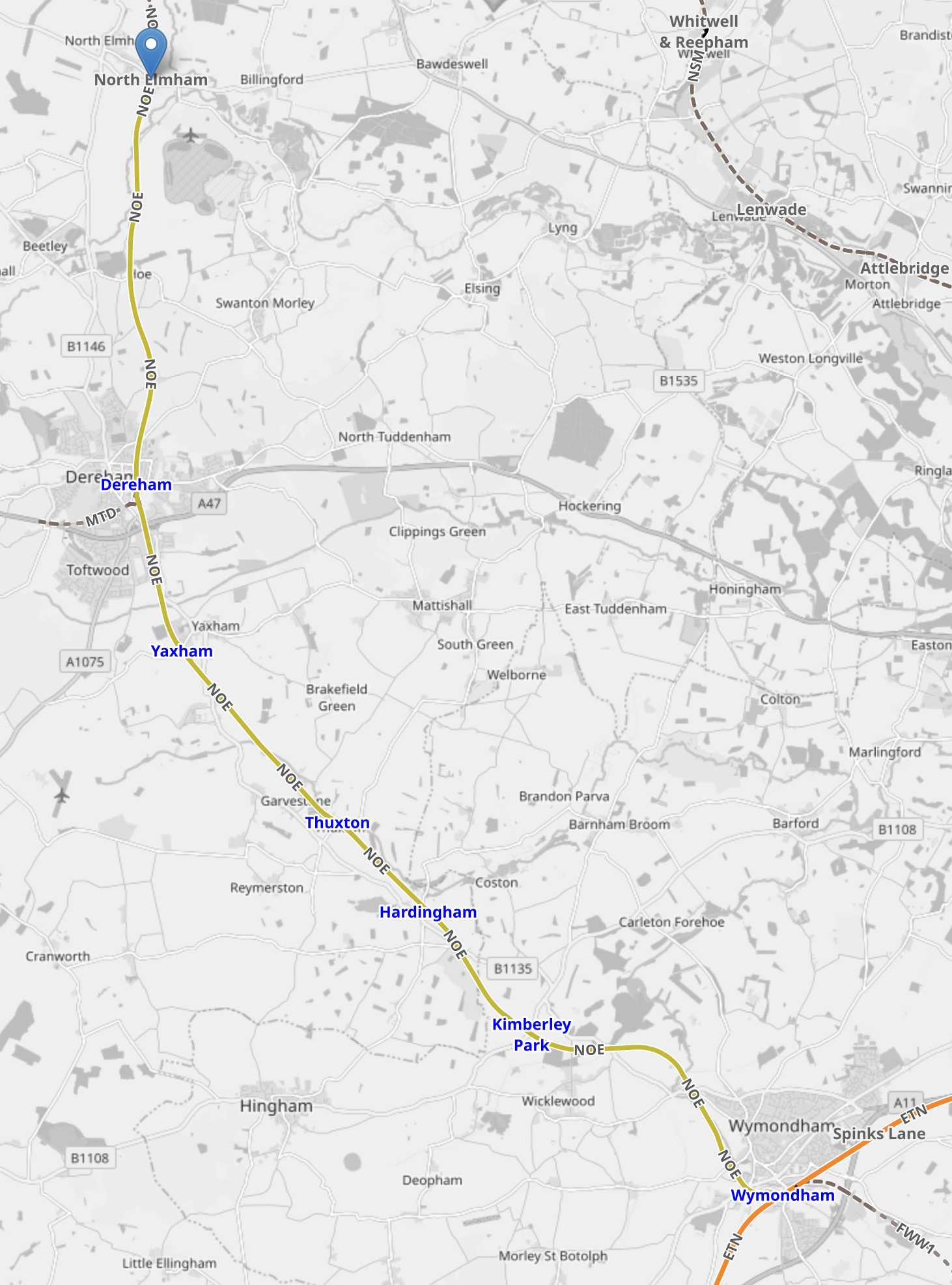
Note.
- The yellow line is the Mid-Norfolk Railway.
- The site of the former North Elmham station is shown by the blue arrow at the top of the map.
- The orange line across the South-East corner of the map is the Breckland Line between Cambridge and Norwich.
- Wymondham station is on the Breckland Line, but trains between the Mid-Norfolk Railway and Norwich would be able to call at Wymondham station.
Wymondham station could be converted into a proper connection between the Breckland Line and the Mid-Norfolk Railway, with services being run between Norwich and North Elmham via Dereham.
In the Wikipedia entry for the Mid-Norfolk Railway, there is a section, which is entitled Community Railway, where this is the first paragraph.
The Mid-Norfolk Railway was established as a multi-functional line, with an intention to operate a community service in addition to tourist and freight services. The railway has also stated their belief that a commuter service between Dereham and Norwich remains a viable proposition, with the MNR either running the service themselves or working with an existing train operator. One obstacle on the MNR to running such services is the requirement to operate five manual gated level crossings between Dereham and Wymondham, although level crossing automation is a possibility in the future.
Later the section indicates that the Mid-Norfolk Railway could be extended to Fakenham.
This map from OpenRailwayMap shows the original route between North Elmham and Fakenham.
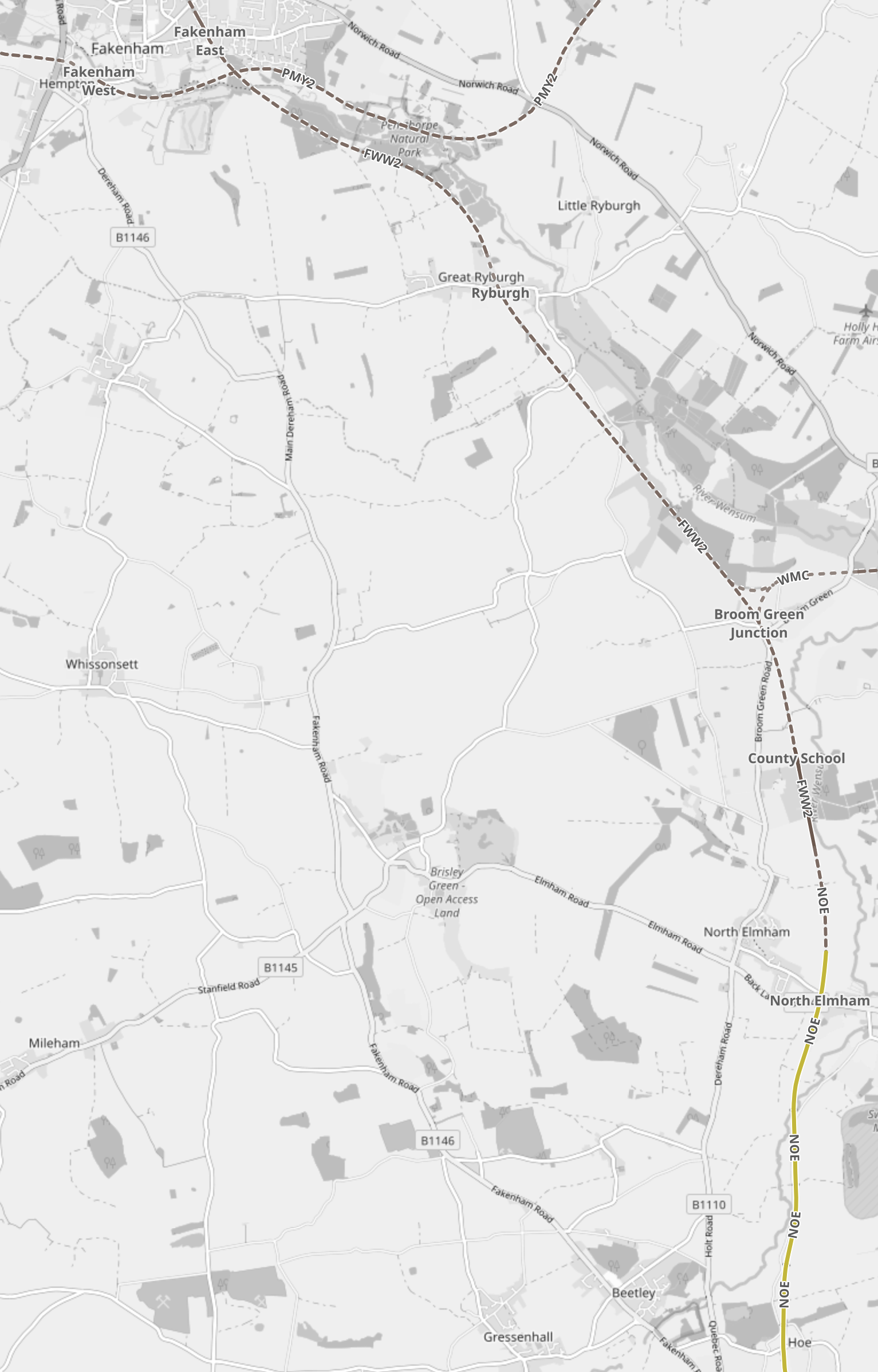
Note.
- The yellow line is the Mid-Norfolk Railway.
- North Elmham station is at the top of the yellow.
- Fakenham is at the top of the map.
Adding Fakenham to the passenger service from Norwich would surely increase its viability.
There have been ambitions in the past to create a Norfolk Orbital Railway, that would connect the National Rail stations at Sheringham and Wymondham, using the tracks of the North Norfolk Railway and Mid-Norfolk Railway, and some new and relaid track.
This map from OpenRailwayMap shows North Norfolk from Fakenham and North Elmham in the West to Sheringham in the East.

Note.
- Fakenham is on the Western edge of the map about halfway up.
- North Elmham is in the South-West corner of the map, on the yellow line, what indicates the Mid-Norfolk Railway.
- The railway shown in the North-West corner is the Wells and Walsingham Light Railway. which is a 260 mm. gauge railway.
- Sheringham station, which has an hourly service to Norwich via Cromer, is in the North-East corner of the map.
- The Eastern terminus of the North Norfolk Railway is a short walk from Sheringham station.
- The blue arrow to the West of Sheringham station, indicates the Western terminus of the North Norfolk Railway at Holt station.
The Norfolk Orbital Railway would need to connect Fakenham and Holt, which doesn’t appear to be easy.
But if the connection could be made, Greater Anglia could run a combined service around the county, which would allow those living in the houses at North Elmham to get easily to the coast or the City of Norwich.
Wash Barrage
This is described as follows in the article.
A bid to build a tidal barrage stretching from Norfolk to Lincolnshire was unveiled at the end of last year.
While the scheme has seen objections from conservation groups, proponents say it would help protect the Fens from flooding, generate tidal power and would allow a new deep-sea container port to be built.
A planning application has yet to be submitted for the scheme, which Centre Port, the group behind the proposal, said could be operational by the end of the decade if given the go-ahead.
The Wash Barrier has a web site, but I doubt the RSPB will like it.
New Reservoir
The article says that the proposed site is between Chatteris and March in Cambridgeshire.
Long Stratton Bypass
This is described as follows in the article.
The Long Stratton Bypass has been mooted for decades and finally looked like it was going to get underway after funding was approved in 2021.
The scheme will mean motorists can avoid passing through the centre of the town.
It was needed, when C regularly commuted to Norwich in the 1980s.
Norwich Western Link
This is described as follows in the article.
The flagship infrastructure project has been thrown into doubt after County Hall announced an indefinite delay earlier this month.
The 3.9-mile road is designed to link the A47 with the NDR to the west of the city and has been hailed as a council priority for several years.
Climate protestors are mounting a High Court challenge.
Windfarms
These are described as follows in the article.
There are a series of major windfarms planned for the Norfolk coast.
These include Swedish energy giant Vattenfall’s Boreas and Vanguard projects, which could be some of the largest in the world.
The company was granted development consent for its Norfolk Vanguard windfarm in 2022, pledging to get underway early this year.
The two schemes could power more than 3.9m homes in the UK.
Hornsea Three, another major scheme which could power another 3.2m homes, is set to start being built in March.
Note.
- The author missed out the Sheringham Shoal and Dudgeon Extension windfarms.
- Total wind power that will be developed is around 6 GW, which would supply around a quarter of the UK.
The only problem is that Norfolk is protesting against the cables to connect the wind farms to the National Grid.
I suspect they will have to be put under the sea. I wrote about this in Is There A Need For A Norfolk-Suffolk Interconnector?
New Rail Junctions
The problems around Ely station are described as follows in the article.
A key rail junction, which could help to boost growth across the region, could steam ahead this year.
Ely Junction is important because it links five lines connecting Norwich, Ipswich, Cambridge, Peterborough and King’s Lynn.
It is currently operating at full capacity, which limits the opportunity for growth of routes for passenger and cross-country freight services.
It would also enable more frequent passenger services, including between King’s Lynn and London.
An outline business case was submitted to the Department for Transport last year to seek money for the next stage of the design process – but the government has yet to make a decision.
There are also problems at Haughley Junction.
Hospitals Rebuild
The article also puts the case for developing both King’s Lynn and Great Yarmouth hospitals.
Conclusion
Norfolk is going to be busy.
Surveys Completed For Celtic Sea Floating Offshore Wind Projects
The title of this post, is the same as that of this article on offshoreWIND.biz.
This is the sub-heading.
N-Sea Group has finished a series of benthic and geophysical surveys for Llŷr 1 and Llŷr 2 floating offshore wind projects in the Celtic Sea.
I described the two projects in detail in Two More Floating Wind Projects In The Celtic Sea.
- At least the surveys are complete and it still appears that a commissioning date of 2026/27 is still feasible for these twin 100 MW projects.
- In the original documents, it was stated that there would be six next generation turbines in each wind farm, with a capacity of between 12 and 20 MW.
- There appears to be no decision on the floats or turbine size to be used.
I wouldn’t be surprised to see larger turbines used and the capacity of the farms increased.
Dutch Take Aim At Lower Green Hydrogen Costs By Combining Offshore Wind And Floating Solar
The title of this post, is the same as that of this article on offshoreWIND.biz.
This is the sub-heading.
A consortium of Dutch companies has launched a government-backed project to explore the synergies between offshore wind, offshore solar and hydrogen production at sea for improved sustainability of North Sea renewable energy projects.
T thought about calling this post, The Dutch Go For The Full Monty, but there is no mention of wave or tidal power.
These two paragraphs outline the project.
The four-year project, dubbed Solar Enhanced North Sea Energy Hub (SENSE-HUB), is expected to accelerate the rollout of offshore solar into offshore renewable energy systems.
Let by TNO, short for Netherlands Organization for Applied Scientific Research, the project will address the integration of various energy system modules for the Dutch North Sea by understanding and removing the implementation barriers for future SENSE-HUBs from a technical, economical, ecological, legal and societal perspective.
I wouldn’t be surprised to see more integrated systems like this in the waters around our coasts.
I also believe that the ultimate offshore energy production system will also use wave and tidal power to generate electricity and have inbuilt energy storage.
Vattenfall Invests In 76-Megawatt Agrivoltaic Project
The title of this post, is the same as that of this media report from Vattenfall.
This is the sub-heading.
Agrivoltaics is the combination of sustainable agriculture and solar power generation on the same agricultural land. Vattenfall has now made a final investment decision for a 76-megawatt solar park Tützpatz in Mecklenburg-Western Pomerania. The project is being set up without state support.
These two paragraphs outline the project.
Photovoltaics is now one of the cheapest technologies among renewable energies, and solar power has a high level of acceptance among the population. However, critics of open space photovoltaics fear that expansion could take place at the expense of agricultural land used for food production. The relatively young technology of agrivoltaics, which can reconcile agricultural use and photovoltaics, can help to resolve this competitive situation.
For the first time, Vattenfall will implement this innovative concept of land use on a commercial scale with partners. The aim of the project in Tützpatz is to combine module types on different mounting systems with suitable agricultural uses over an area of 95 ha, and thus gain further practical experience for future commercial projects of this kind. According to current plans, construction at Tützpatz is scheduled to start in early summer 2023.
Note.
- Tützpatz is a few miles North of Lincoln.
- This project is subsidy-free.
- At Tützpatz, 76 MW is to be installed in 95 hectares, which is an energy density of 0.8 MW per hectare.
- Agrivoltaics have an extensive Wikipedia entry.
I would expect we could use agrivoltaics in quite a few places in Southern England.
Unique Study: Birds Avoid Wind Turbine Blades
The title of this post, is the same as that of this media report from Vattenfall.
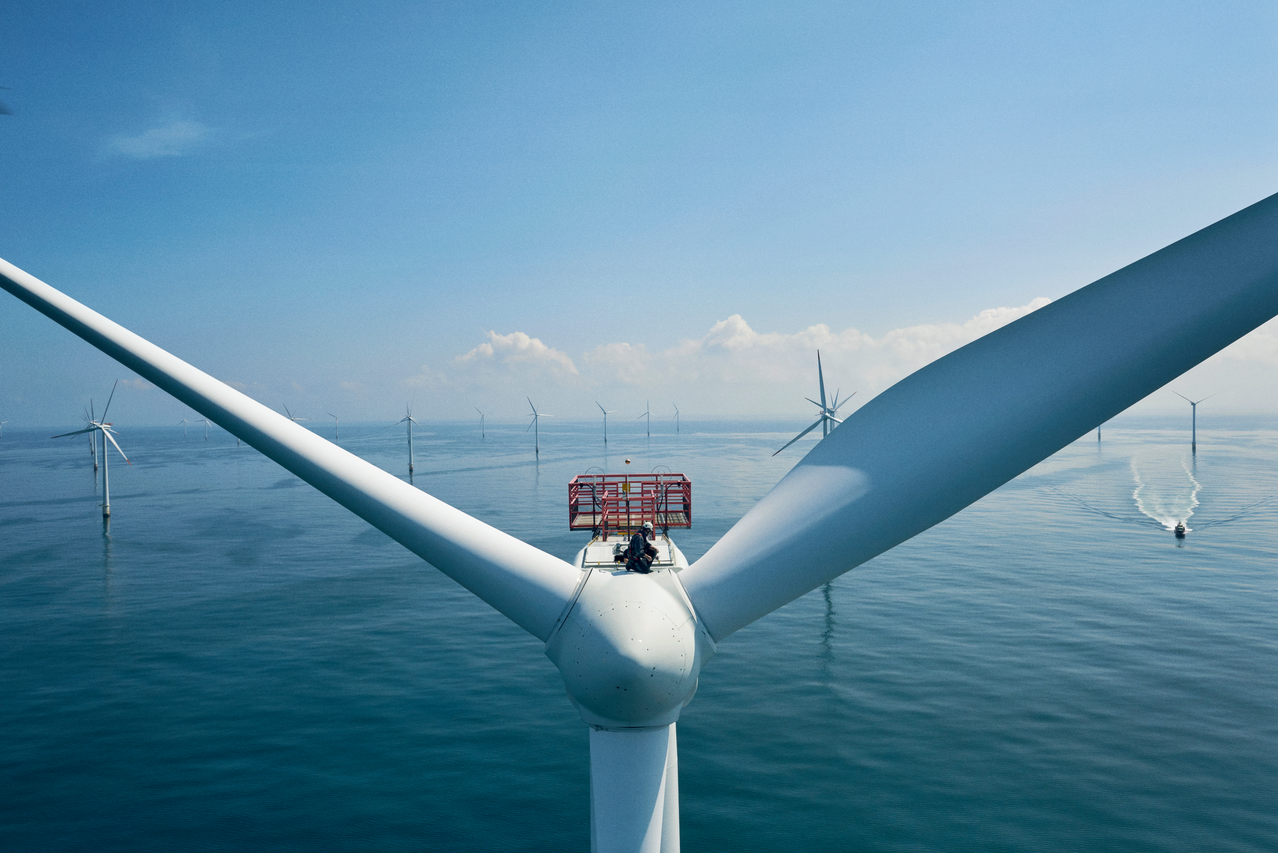
This is the sub-heading.
Seabirds deliberately avoid wind turbine rotor blades offshore – that is the main finding of a new study that mapped the flightpaths of thousands of birds around wind turbines in the North Sea. Most importantly, during two years of monitoring using cameras and radar, not a single bird was recorded colliding with a rotor blade.
I must admit I’m not surprised, as I’ve landed a light aircraft many times with birds flying above the runway and I can’t remember ever hitting one. But I have seen several dive out of the way.
The report is a fascinating read.
Floating Foundation For 15+ MW Offshore Wind Turbines Launches
The title of this post, is the same as that of this article on offshoreWIND.biz.
This is the sub-heading.
Odfjell Oceanwind has launched the Deepsea Star™ harsh environment floating wind foundation designed to support wind turbines with a capacity of 15 MW and more.
Note.
- Odfjell Oceanwind is a Norwegian company and has this web site.
- This news item from Odfgell Oceanwind is entitled Odfjell Oceanwind Launches The Deepsea Star™ 15MW Floating Wind Foundation and was published on the 28th of February, 2023.
- The news item was the source of the iffshoreWIND.biz article.
- In the news item, one of the designers, explains some of the features.
I very much believe that ,my twenty-three-year-old self armed with ICI’s PACE 231-R would have had great fun examining the dynamic proiperties of a structure like this.
Activity Ramping Up On Irish Floating Wind Test Site
The title of this post, is the same as that of this article on offshoreWIND.biz.
This is the sub-heading.
The Sustainable Energy Authority of Ireland (SEAI) is busy with bringing forward its Atlantic Marine Energy Test Site (AMETS), a floating wind and wave energy technology test site which has been in development for several years now. Along with offshore surveys scheduled for next month, SEIA has also commenced work on procuring an onshore substation and a floating LiDAR for AMETS.
It all sounds very professional.
The Atlantic Marine Energy Test Site will be located off Annagh Head in the West of Ireland. This Google Map shows the location of Annagh Head on the island of Ireland.

I do have a imperfect memory of a weekend of good hospitality and gourmet food at a hotel called the Cashel House Hotel to the West of Galway, but I can’t remember how C and I flew there. Did we fly to Knock or Shannon either using a scheduled airline or my Cessna 340 A?
All I can remember of the holiday, was that it was very windy at times and driving through Westport. So did we explore towards Annagh Head?
This Google Map shows a close-up of Annagh Head.
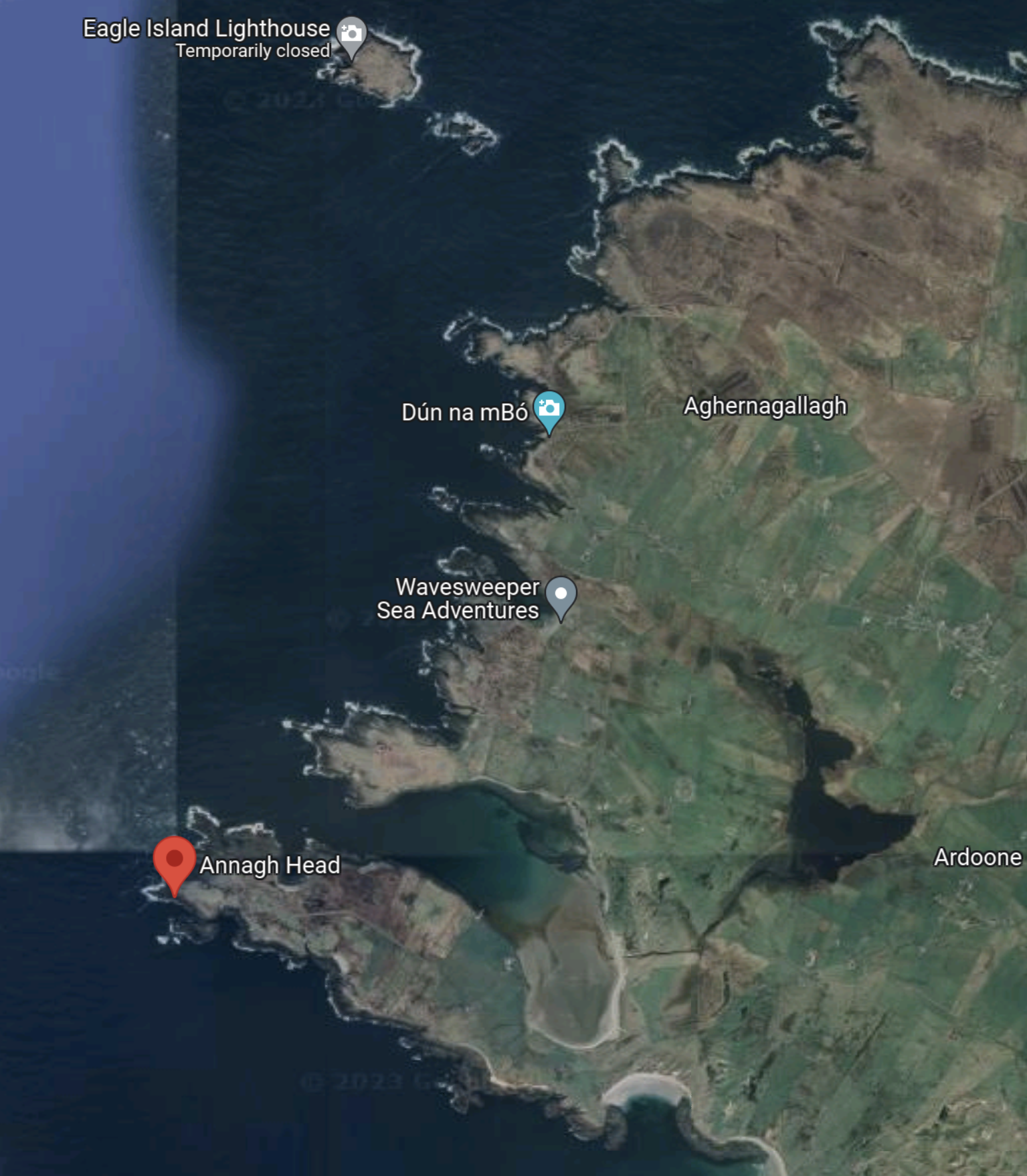
I suspect that Annagh Head is an ideal location to test floating wind and wave power.
There will also be good hospitality and airlinks to the UK and Europe.
In So Many Floating Wind Designs, So Few Test Sites – Norwegian METCentre Sold Out, I wrote about the shortage of test sites for wind power.
So perhaps, AMETS will help to fill the gap?
In
Skegness Wind Turbine Trial To Light Up Pier In UK First
The title of this post, is the same as that of this article on the BBC.
This is the sub-heading.
A Lincolnshire seaside pier is being lit up at night with the help of a new mini wind turbine.
These are the first three paragraphs.
One of the 6ft (2m) vertical turbines has been installed on Skegness Pier with another fitted on a factory roof in Spalding.
They are able to capture wind from all directions without turning, making them low maintenance.
Both are made by Norwegian company Ventum Dynamics, which is testing the technology with local councils.
I believe it is one of those ideas, that proves the Sliced-Bread Theory of Innovation.
I have a few thoughts.
Design
The design looks clean, modern and unobtrusive.
I don’t know what the noise level is like, but I suspect good design means, it could be fairly low.
I’ll just have to visit Skegness on a windy day, which won’t be a difficult thing to arrange.
Easy To Add To An Existing Or New Building
The Ventum web site has some good pictures.
From my flying experience, I suspect that the higher a turbine is mounted, the more power will be generated.
The only problem would be the heritage lobby.
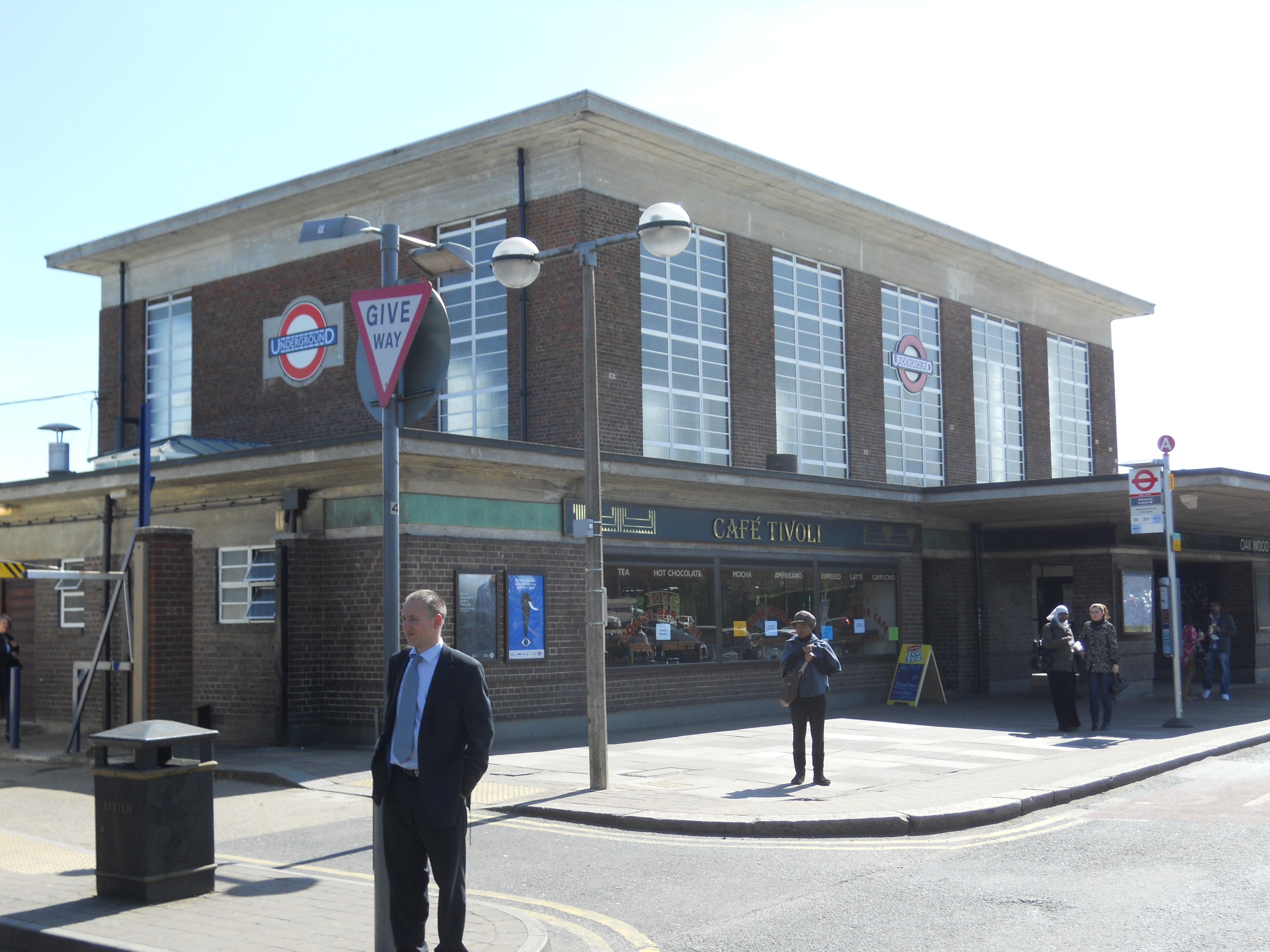
This picture shows Oakwood station on the Piccadilly Line.
Note.
- The station is the second most Northerly on the line.
- It opened in 1933.
- It is a classic Charles Holden design.
- It is a Grade II* Listed building.
- The station is on top of a hill and has an elevation of 71 metres above sea level.
It might be the ideal place to put perhaps six turbines on the roof.
But would the heritage lobby allow it?
Remote Power
Teamed with a battery, they would be the ideal remote power solution for buildings and locations without a mains supply.
Finance
I used to part-own a finance company and feel that these turbines would be attractive to a finance company, if ethically sold.
Conclusion
I like them!
Plans To Turn Czech Coal Mine Into Storage, Hydrogen And Solar Hub
The title of this post, is the same as that of this article on Power Engineering International.
This is the sub-heading.
Mine is also going to be the site of an experimental greenhouse project called Eden Silesia
This paragraph outlines Eden Silesia.
The site will also be home to an experimental greenhouse project called EDEN Silesia, managed by the Silesian University of Technology and based on the concept of the Eden Project in Cornwall, England.
It does seem that the Czechs are creating a comprehensive facility around a Gravitricity energy store.
This Gravitricity system is only a 4MW/2 MWh system, but there is also this quote from the company.
Future multi-weight systems could have a capacity of 25MWh or more.
If the concept works, this could be imitated in several countries around the world?
 The Anonymous Widower