Northern Offers Free Travel To Bedlington Terrier Owners When Town’s New Station Opens
The title of this post, is the same as that of this article on Rail magazine.
These two paragraphs add more details.
Passengers with a famous breed of dog named after Bedlington will be offered free travel when the town’s new station is open. It is the sixth and final new station on the Northumberland Line, which reopened to passengers in December 2024 – for the first time in 60 years.
Around 1.3 million journeys have been made on the route so far, with passengers travelling for work, education, important appointments and fun days out. When the station opens on Sunday, 29 March, it will allow customers to travel into Newcastle in around 30 minutes, with an off-peak single costing just £2.60.
I don’t own a dog anymore, let alone a bedlington terrier, but I had intended to go to the opening of the new Bedlington station tomorrow, but there don’t seem to be any trains between London and Newcastle due to engineering works.
So, it looks like I’ll have to miss out!
WSMR Plans Alstom-Built Bi-Mode Sets If Open Access Bid Approved
The title of this post, is the same as that of this article on Rail magazine.
This is the sub-heading.
Wrexham, Shropshire & Midlands Railway (WSMR) has said it will invest in new Alstom battery-electric bi-mode trains if its open access application is successful.
These three paragraphs add some more details.
In December the Alstom-backed operation resubmitted its application to run between the North Wales city and London Euston via Shrewsbury and Walsall after its initial bid was rejected by the Office of Rail and Road (ORR) last year.
In a letter to the regulator and Network Rail, Mobilisation Director Darren Horley said: “Should our application be successful, WSMR will work alongside its parent company, Alstom, and will commit to invest in a new bi-mode battery-electric fleet based on the Adessia platform – Alstom’s new generation passenger train designed specifically for the UK market.
“Initial discussions regarding the procurement of a small new fleet have already commenced with Alstom and a financier.”
The Adessia will be a high speed version, with a maximum speed of 125 mph or 200 kph.
I have some thoughts.
How Much Of The Route Is Without Electrification?
In Alstom Plans To Operate Its Own Passenger Train Service In The UK For The First Time, I gave these distances of the sections of the route.
- Euston and Nuneaton – 96.7 miles – electrified
- Nuneaton and Walsall – 26.7 miles – electrified
- Walsall and Wolverhampton – 6.7 miles – electrified
- Wolverhampton and Shrewsbury – 29.7 miles
- Shrewsbury and Wrexham General – 30.3 miles
That looks like there are sixty miles in each direction without electrification.
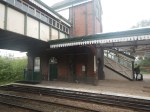
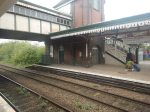
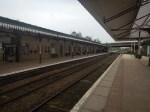
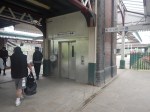
Either the trains would have a battery range of 120 miles or a battery range of over 60 miles with charging at Wrexham General station, which is shown in these pictures.

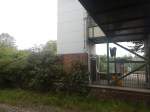
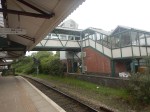

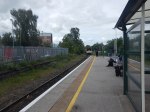
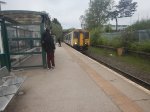
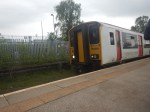
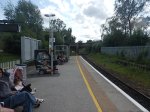
Note.
- Wrexham General station has four platforms. Two are a pair of long through platforms and there are also a separate long and a short through platform.
- The station is step-free.
- The last four pictures are Platform 4.
This OpenRailwayMap shows the platform layout at Wrexham General station.
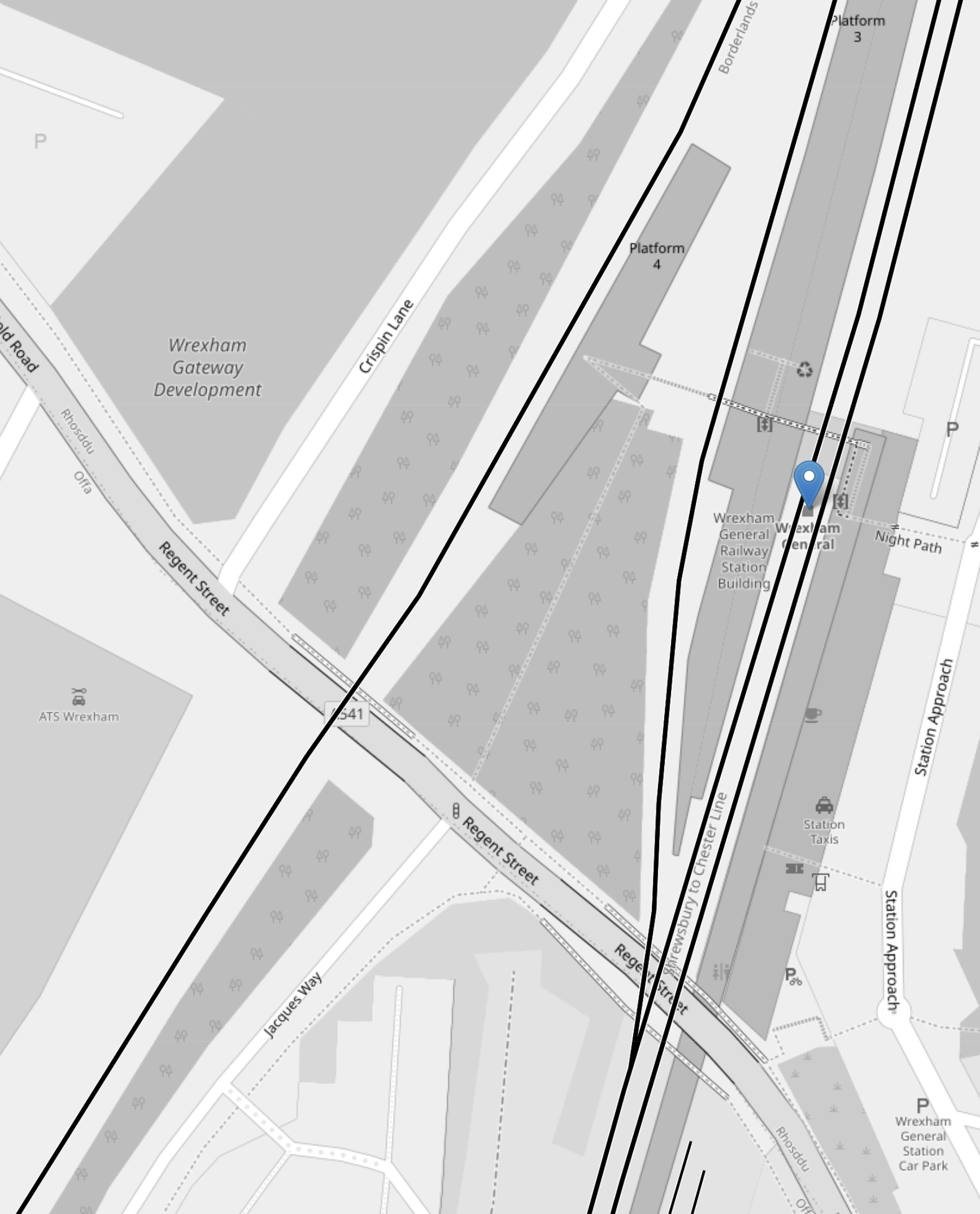
Note.
- The blue arrow is between the two through Platforms 1 and 2.
- Platform 3 is the platform in the middle.
- Platform 4 is the platform on the left.
An overhead charging rail could be used on Platforms 3 and/or 4, as has been used at Caerphilly station.
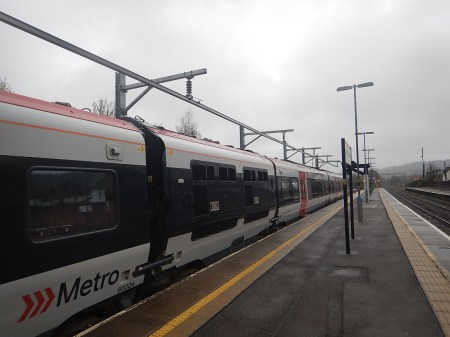
The overhead charging rail could also charge other Wrexham General services.
Prospective Routes
I would expect that there would be a need for such a train on the following UK routes.
- CrossCountry – Class 221 train replacement.
- East-West Rail – New fleet.
- Southeastern – London and Hastings.
- ScotRail – Inter7City replacement.
- South Western Railway – Class 158 and Class 159 train replacement.
- Transport for Wales – Some diesel services.
There would be probably be other services too!
Will The Service Call At Willenhall, Darlaston And Walsall?
This OpenRailwayMap shows the three stations.
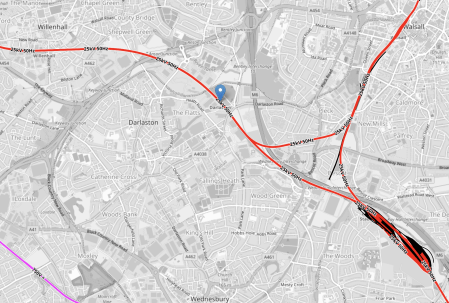
Note.
- Willenhall station is in the North-West corner of the map.
- Darlaston station is marked by the blue arrow.
- Walsall station is in the North-East corner of the map.
- Tame Valley Parkway station is in the South-East corner of the map.
- It might also be a good idea to call at the Parkway station.
- Red tracks are electrified.
- To call at all four stations will need a reverse at Walsall.
There may be some thinking to do, on the best calling pattern in Walsall.
Cardiff Queen Street And Cardiff Bay Stations – 24th March 2026
After I’d visited Caerphilly station, which I wrote about in Cardiff And Caerphilly – 24th March 2026, I went to look at Cardiff Queen Street And Cardiff Bay stations.
I took these pictures.

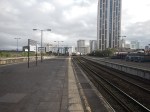
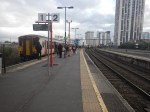





Note.
Cardiff And Caerphilly – 24th March 2026
I took this pictures, as I rode up the Rhymney Valley from Cardiff to Caerphilly.
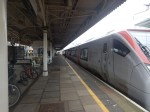





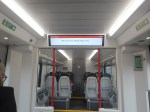
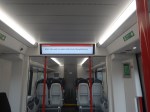
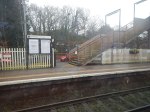

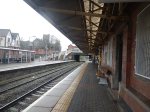
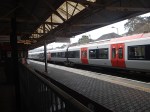

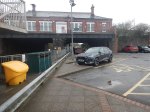
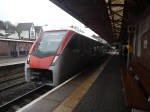

Note.
- The trains I took up and down the valley were both Class 756 tri-mode trains.
- My train reversed to Penarth in Platform 1.
- I think they were running using the diesel power in the power pack.
- There is an overhead conductor rail in Platform 1 at Caerphilly station to charge trains.
- The electrification North of Caerphilly station can be seen through the bridge in one of the pictures.
- Platforms 2 and 3 are not electrified.
I think Caerphilly station is a very neat electrification layout for occasional charging of battery-electric or tri-mode trains.
I have some specific thoughts.
What Have Caerphilly And St. Pancras Thameslink Stations Got In Common?
These pictures show the rigid conductor rail through St. Pancras Thameslink station.
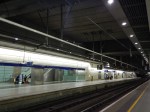


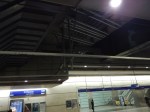
It looks remarkably similar to that in Platform 1 at Caerphilly station.
Judge in this picture.
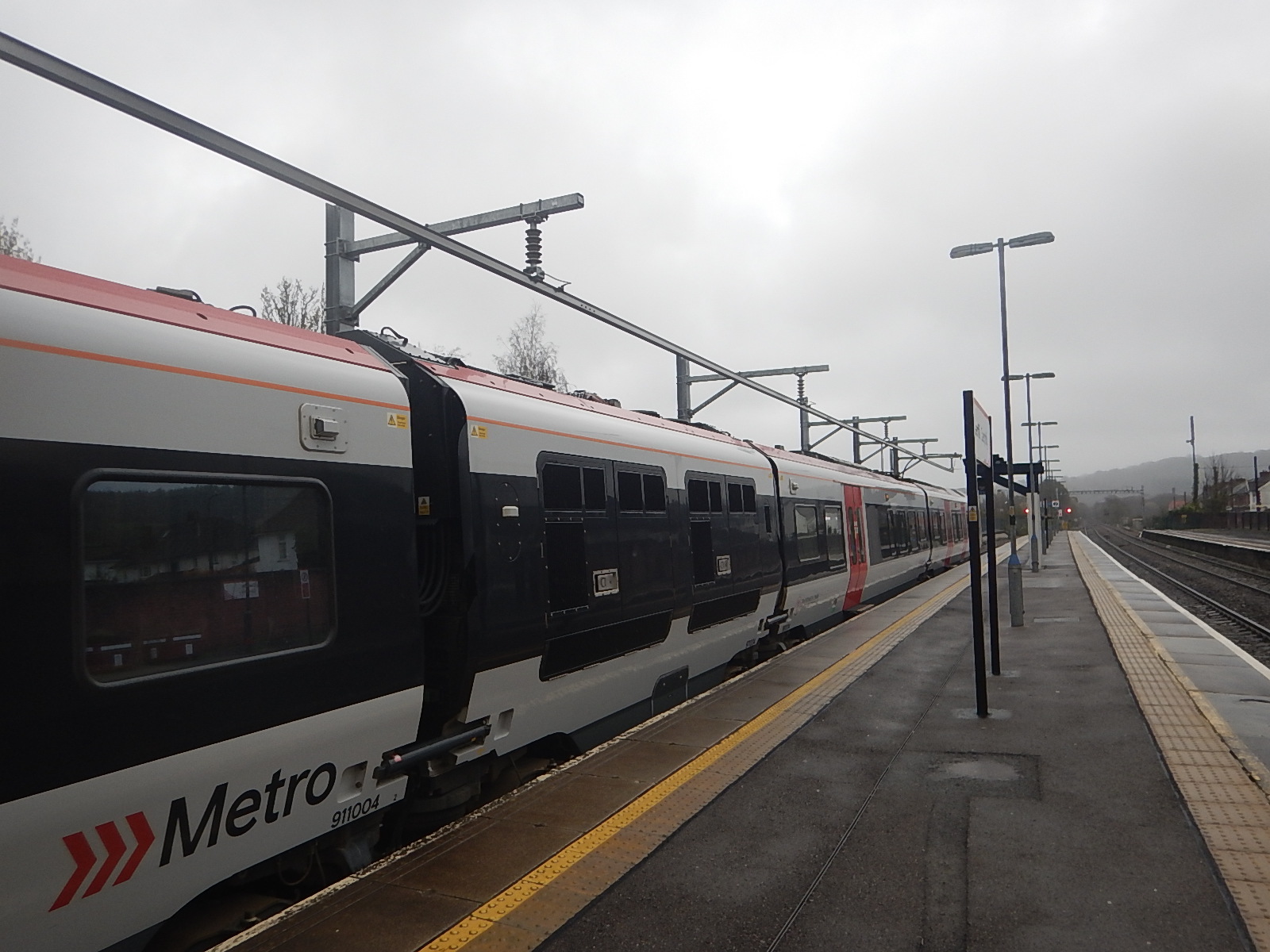
The rails are probably out of the same Swiss electrification maker’s parts bin.
Both look equally professional with an I-section conductor, which could be aluminium, as it is lightweight and a good electrical conductor.
Google AI finds this.
The I-beam overhead conductor system used in St. Pancras Thameslink station is made of a hollow extruded aluminium profile. This system, known as a conductor beam, holds a conventional copper contact wire, providing a rigid, low-profile alternative to traditional overhead wires.
Key details:
Material: Extruded aluminium profile.
Structure: Hollow, designed to hold an un-tensioned, conventional copper contact wire.
Application: Developed by Balfour Beatty to reduce the required depth of overhead line equipment.
Installation: Often installed in a sinusoidal wave to ensure consistent wear on the pantograph.
This technology is used in areas with restricted overhead space, such as tunnels and some modern station approaches, to manage 25kV AC electrification.
It looks like it’s been used to provide a charging rail in Caerphilly station.
Is The Conductor Rail In Platform 1 Used To Create A Continuous Electrical Connection Around Caerphilly Station?
Look at this OpenRailwayMap, which shows the completed electrification through Caerphilly station.
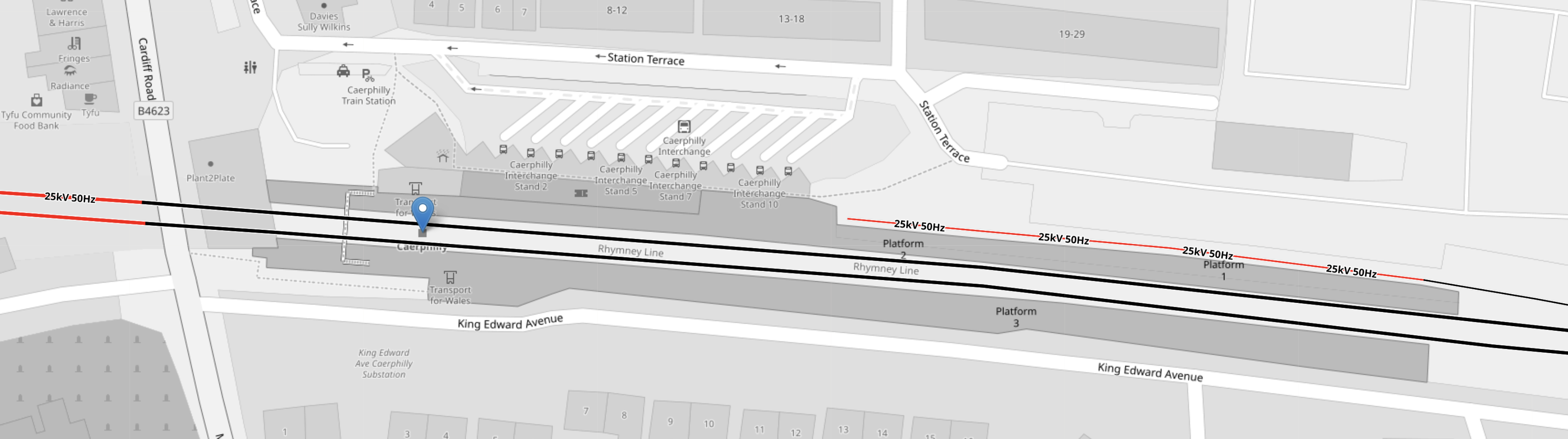
Note.
- Red tracks are electrified.
- Black tracks are not electrified.
- Caerphilly station is indicated by the blue arrow.
- The electrification continues to the Western end of the station.
- The two main platforms 2 & 3 are not electrified.
- The bay platform 1 is electrified to charge trains for return to Cardiff.
- Class 756 tri-mode electric-diesel-battery trains are already in service.
- There appears to be a comprehensive bus interchange.
The power for Platform 1 could come from the electrification at the Western end of the station.
I wouldn’t be surprised that the Rhymney Line will be fed with electricity at the heads of the valleys and it is fully-connected down to Cardiff to give a secure electrical connection.
Will Welsh Wind Power From The Heads Of The Valleys Be Used To Power The Cardiff Valley Lines?
To start with, as I know it can be blowy there, I asked Google AI, this question.
“Is Onshore Wind Planned At The Heads Of The Valleys In South Wales?”
I received this answer.
Yes, there is significant onshore wind energy development planned and in progress along the Heads of the Valleys area in South Wales. This region, encompassing areas like Merthyr Tydfil, Blaenau Gwent, and northern Rhondda Cynon Taf, is part of a broader push to increase onshore wind capacity in Wales, with many projects located on Natural Resources Wales forestry land.
Key Developments and Proposed Projects (2025-2026):
Trydan Gwyrdd Cymru: The Welsh government-owned developer has selected sites in South Wales for new, large-scale wind farms intended to be operational by 2040.
Carreg Wen Wind Farm: A planned 18-turbine project located between Aberdare and Maerdy (Rhondda Cynon Taf), near the Hirwaun/Heads of the Valleys area.
Hirfynydd Renewable Energy Park: A proposed project located on the Hirfynydd mountain range between Seven Sisters and Banwen, north of Neath, near the western end of the Heads of the Valleys.
Mynydd Llanhilleth and Trecelyn Wind Farms: Projects in the pre-application or planning stages by Pennant Walters in the Blaenau Gwent area.
Abergorki Wind Farm: A consented three-turbine project on Mynydd Maerdy (Rhondda Cynon Taf) with construction scheduled for 2026.
Operational Context:
Pen y Cymoedd: Already operational and currently the largest onshore wind farm in England and Wales, situated in the hills above the upper Neath, Afan, Rhondda, and Cynon Valleys.
Grid Infrastructure: Proposed new substations, such as one near Hirwaun (Rhondda Cynon Taf), are intended to connect these new projects to the national grid.
These developments are part of a target to generate 70% of Wales’ electricity from renewable sources by 2030, with a focus on areas previously identified as suitable for large-scale wind development.
Note.
- Pen y Cymoedd is the largest onshore wind farm in Wales and England, with an installed capacity of 228 MW.
- With the right size of battery, I’m fairly sure, that this wind farm could go a long way to powering the Cardiff Valley Lines.
- Carreg Wen Wind Farm is planned to be 108 MW wind farm.
- Hirfynydd Renewable Energy Park is planned to be a 100 MW hybrid development of wind turbines and solar with a battery.
- Mynydd Llanhilleth is planned to be a 48 MW wind farm.
- Trecelyn is planned to be a 20 MW wind farm.
- Abergorki is planned to be a 13 MW wind farm.
The total of new developments is 389 MW, which is about the same size as a Rolls-Royce SMR.
EasyJet’s New Slimline Seats Will Offer 2 Inches More Legroom
The title of this post, is the same as that of this article in The Times.
This is the sub-heading.
The Kestrel seat’s thinner design promises improved knee and shin clearance. Could the ‘fixed recline’ feature also lead to fewer spats over space?
These three paragraphs add more detail to the story.
As budget airlines try to squeeze more and more passengers onto flights, it can feel as though the seat in front gets slightly closer every time you step on a plane.
But a “next generation” economy seat is coming, which its makers say will give travellers extra legroom with no loss of space for airlines.
The Kestrel seat from Mirus Aircraft Seating, a British manufacturer, will be installed from 2028 on hundreds of easyJet’s new aircraft, providing an extra two inches of “improved knee and shin clearance” for passengers.
Hopefully easyJet’s passengers will be sitting more comfortably.
Funds Committed To Explore More Rail Expansion
The title of this post, is the same as that of this article on the BBC.
This is the sub-heading.
Money has been allocated to develop plans to extend a popular rail route reinstated 15 months ago
These three paragraphs add more details.
Last week, the North East Combined Authority (NECA) committed an initial £2.5m to a dedicated Rail Development Fund, which included plans to expand the Northumberland Line.
Northumberland County Council leader Glen Sanderson said he hoped planning applications for the line’s extension to Newbiggin-on-Sea could be submitted by 2028 and suggested a station could be added to serve Wansbeck General Hospital.
The funding would be used to “accelerate rail‑related scheme development across the region” including a plan to reopen Ferryhill Station in County Durham as part of the Leamside Line.
This would appear to be most of what campaigners want.
How Green Are The Valley Lines?
This news item from Transport for Wales is entitled 100% Electrification Of The Core Valley Lines Complete.
This is the sub-heading.
Transport for Wales has completed the full electrification of the Core Valley lines, at the heart of the South Wales Metro, delivering one of Wales’ most ambitious rail infrastructure transport projects.
These two paragraphs describe the current status.
Dubbed the ‘Welsh Tube’, the £1bn project brought electric tri-mode trains to the South Wales Valleys for the very first time in 2024. This spring, TfW will introduce the first of its 36 fully electric Class 398 tram-trains. The new fleet will initially operate between Pontypridd and Cardiff Bay, providing greener, more frequent services as part of the South Wales Metro.
Passengers are already benefitting from these improvements with the Core Valley lines being one of the most punctual and reliable networks in Great Britain over the past 6 months.
This OpenRailwayMap shows the electrification in the Cardiff area.
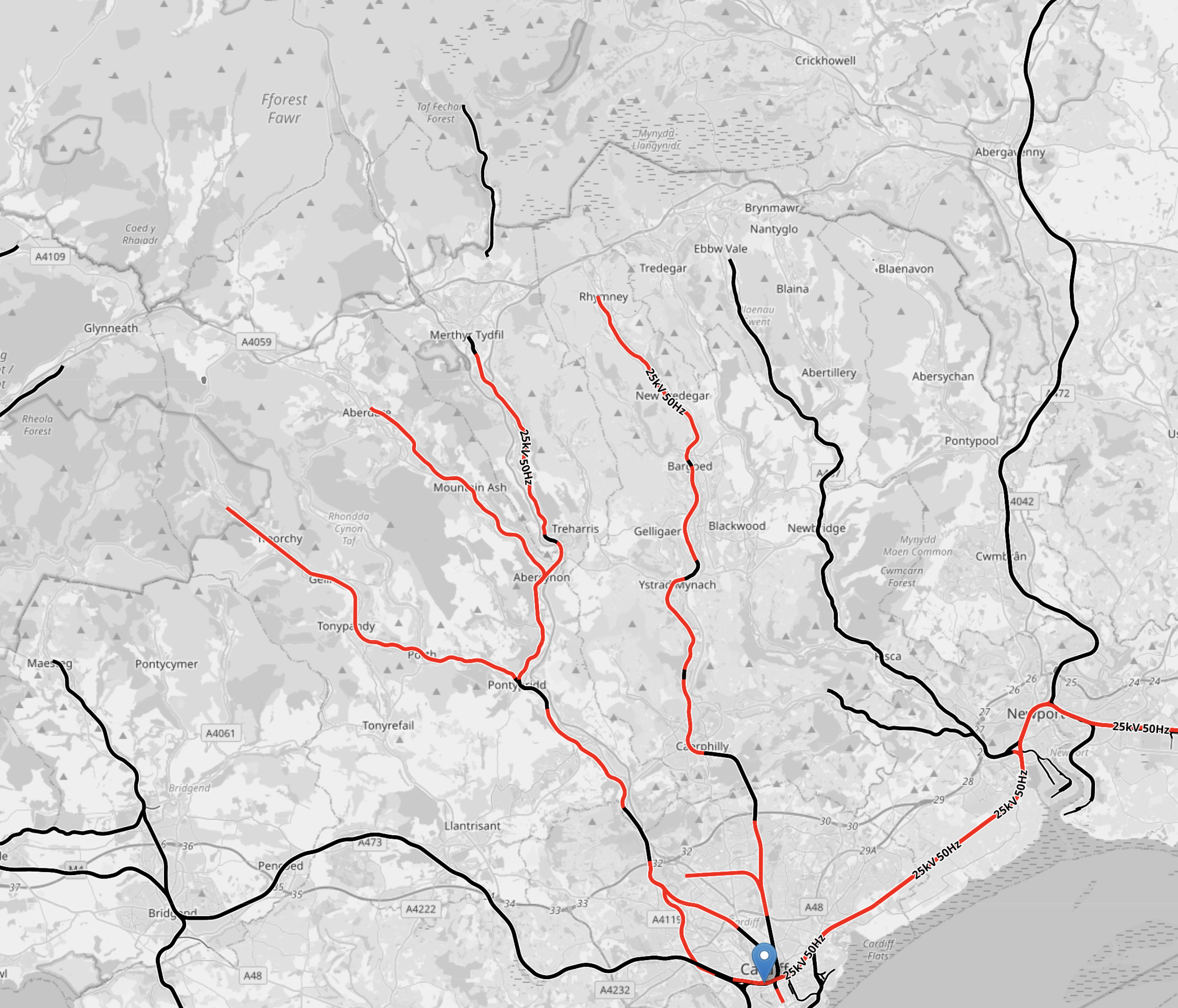
Note.
- Red tracks are electrified.
- Black tracks are not electrified.
- Cardiff station is indicated by the blue arrow.
- The black track going West from Cardiff is the South Wales Main Line to Llantrisant, Bridgend, Port Talbot and Swansea.
- The red track going East from Cardiff is the South Wales Main Line to Newport, the Severn Tunnel, Bristol Parkway, Reading and London.
- The lines going North up the valleys are from the West to Maesteg, Treorchy, Aberdare, Merthyr Tydfil, Rhymney and Ebbw Vale.
- The most Easterly line is the Newport and Hereford Line.
I will now look at some of the electrification.
Caerphilly Station
Caerphilly statition is on the Rhymney Line.
In June 2018, I wrote Caerphilly Station and took these pictures of the station.
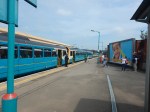
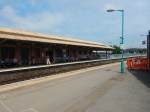
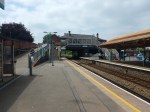
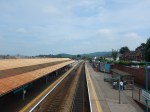

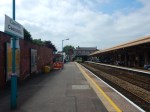

At the time, I considered it a difficult station to electrify.
This OpenRailwayMap shows the completed electrification through Caerphilly station.
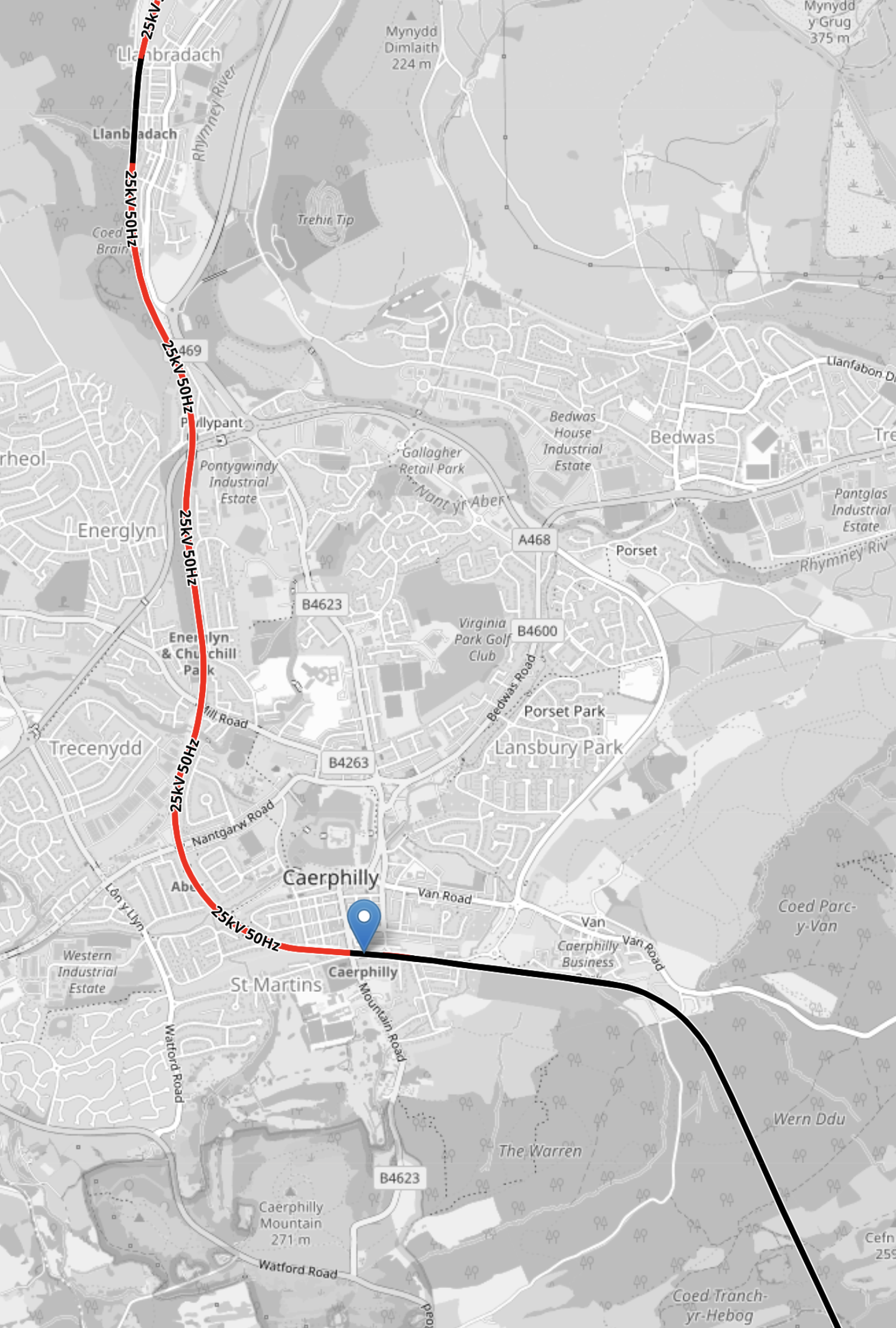
Note.
- Red tracks are electrified.
- Black tracks are not electrified.
- Caerphilly station is indicated by the blue arrow.
- Tracks to the North of Caerphilly are electrified.
- Tracks to the South of Caerphilly are not electrified.
- The electrification layout allows station with its two bridges and the 1784 metre Caerphilly Tunnel to the South of the station, to be unwired.
- There appears to be another section of plain track to the North of Caerphilly.
This second OpenRailwayMap shows the completed electrification through Caerphilly station.
Note.
- Red tracks are electrified.
- Black tracks are not electrified.
- Caerphilly station is indicated by the blue arrow.
- The electrification continues to the Western end of the station.
- The two main platforms 2 & 3 are not electrified.
- The bay platform 1 is electrified to charge trains for return to Cardiff.
- Class 756 tri-mode electric-diesel-battery trains are already in service.
- There appears to be a comprehensive bus interchange.
Euston Station – 22nd March 2026








I went for breakfast to Euston and took these pictures on a quiet Sunday morning.
Will Northumberland Line Success Help More Open?
The title of this post, is the same as this article on the BBC.
This is the sub-heading.
On 29 March the final station, Bedlington, opens on the Northumberland Line marking the completion of the project to reopen the route from Newcastle to Ashington.
These three paragraphs add detail to the story.
With passenger numbers exceeding predictions, could its success give new impetus to other projects to reopen former railways across northern England?
Dennis Fancett, chair of the rail users group Senrug, which campaigned for the Northumberland line for 20 years, hopes so.
He believes the obvious next step is to extend it along the existing freight tracks to a new station at Woodhorn and from there to Newbiggin-by-the-Sea.
I believe that the Northumberland Line is following a pattern, that I call London Overground Syndrome.
Black Country Towns’ Trains Return After 60 Years
The title of this post, is the same as that of this article on the BBC.
This is the sub-heading.
Two Black Country towns have welcomed trains for the first time in 60 years following the opening of new stations.
These two paragraphs give details of the route.
The Willenhall and Darlaston stations are part of a £185m project to reinstate rail links across the West Midlands not used in decades.
The two stations have been added to the Shrewsbury to Birmingham New Street service via Wolverhampton.
Note.
- The services are run by four-car Class 196 dieselmultiple units.
- The frequency is two trains per hour.
- One hourly service calls at Smethwick Galton Bridge, Wolverhampton, Shifnal, Telford Central and Wellington.
- The other hourly service calls at Tame Bridge Parkway, Darlaston, Willenhall, Wolverhampton, Bilbrook, Codsall, Albrighton, Cosford, Shifnal, Telford Central, Oakengates and Wellington.
This map shows shows the route of the Birmingham New Street and Shrewsbury service via Wolverhampton.
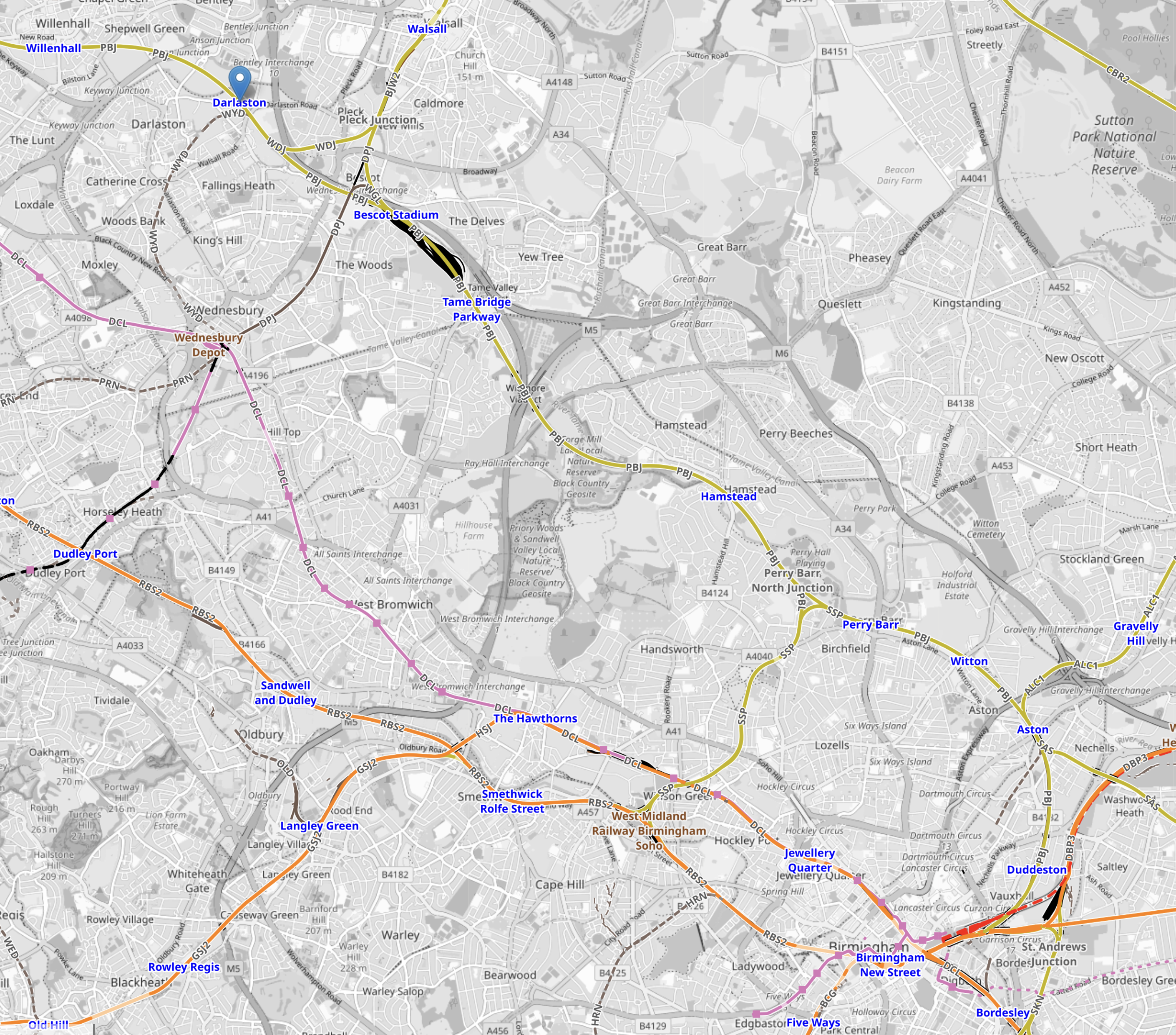
Note.
- Willenhall station is in the North-Western corner of the map.
- Darlaston station is marked with a blue arrow on the yellow track to the East of Willenhall.
- Birmingham New Street station is in the South-East corner of the map.
I have one further thought.
Electrification
Only the almost thirty miles between Wolverhampton and Shrewsbury is without electrification, but electrification is all the way between Wolverhampton and Birmingham New Street station is already wired.
I could see the Wolverhampton and Shrewsbury route being electrified using battery-electric trains.
Obviously, if the route is eventually electrified will depend on the traction needed for other services.

