I Hope The American Army Doesn’t Navigate Using Google Maps
There is an article in The Times today, which is entitled As The World Watches Kharg Island, Iran Gets Oil Out Another Way.
This is the sub-heading.
Satellite imagery reveals millions of barrels have been shipped from the ‘forgotten’ port of Jask — used only once before
The only Jask, that Google Maps can find is a marketing agency in Solihull. At least Jask,Iran finds it.
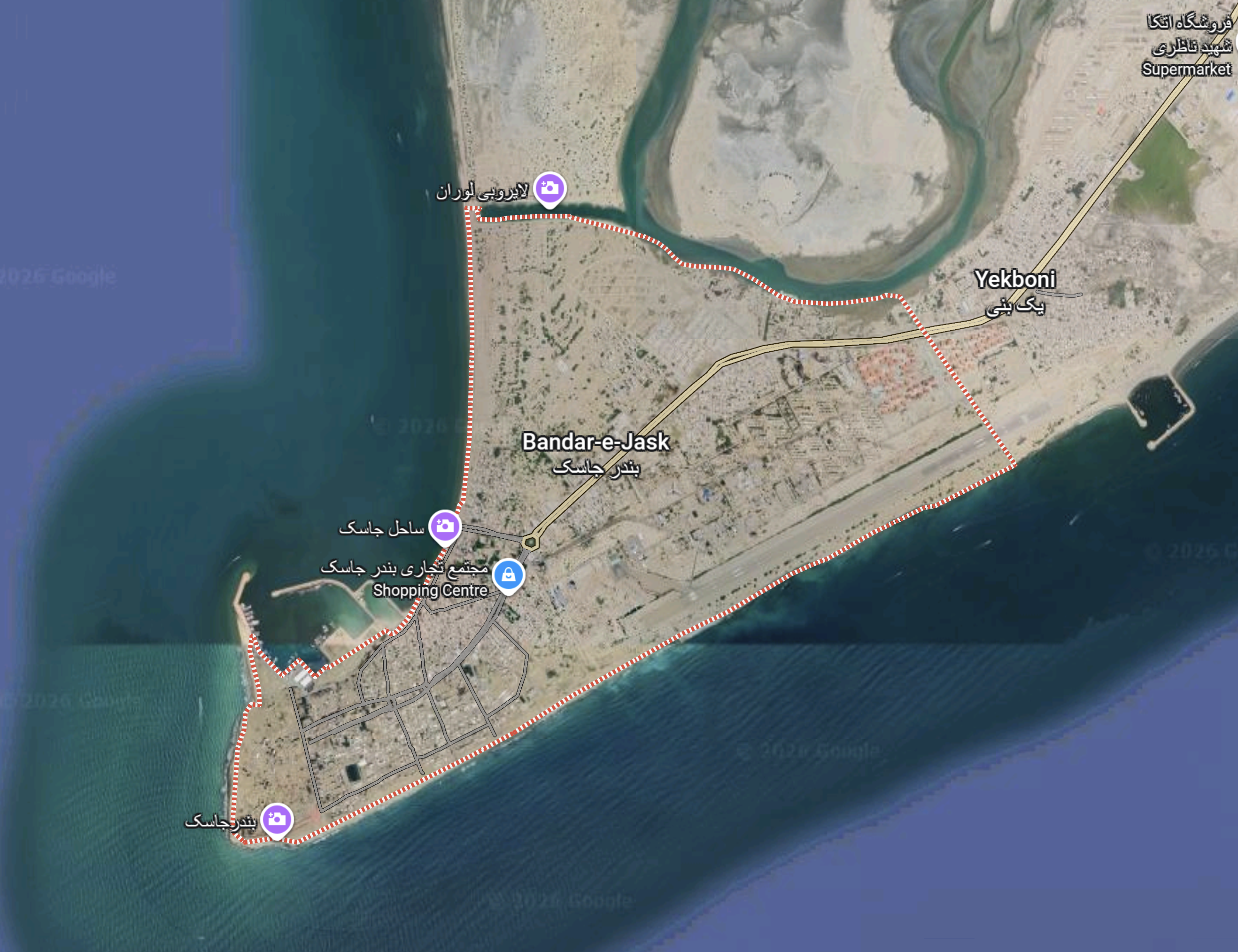
Looks a bit deserty to me!
I just had to ask Google AI if the US Army has a Camel Corps and I received this answer.
Yes, the U.S. Army operated a “Camel Corps” experiment between 1856 and 1866, using camels for logistics and supply transport in the Southwest, particularly Texas and California. While considered hardy and effective, the corps was never an official unit and was abandoned due to the Civil War, soldier preference for mules, and lack of long-term support.
Key Facts about the U.S. Army Camel Experiment:
Origin: Proposed by Jefferson Davis (then Secretary of War) and approved by Congress with a $30,000 budget.
Acquisition: Around 70 camels were imported from the Mediterranean (Egypt, Turkey, Tunisia) in two shipments.
Operation: The camels were based primarily at Camp Verde, Texas, transporting cargo across desert terrains.
Key Leaders: Major Henry C. Wayne directed the experiment, and Lt. Edward F. Beale praised the camels’ endurance in reports.
End of Project: The program was abandoned during the Civil War. Confederate forces captured some camels, and the remaining herd was sold at auction in 1864-1866.
While the camels themselves were durable, they were often disliked by soldiers due to their difficult temperament compared to mules. Some camels were sold to miners or escaped, leading to reports of wild camels in the Southwest for decades following the experiment.
Easter Disruption For Europe’s Busiest Train Line
The title of this post, is the same as that of this article on the BBC.
This is the sub-heading.
Thousands of Easter train journeys will be disrupted by a six-day shutdown on the West Coast Main Line (WCML).
These two paragraphs add more details.
Engineering work means no intercity services will run between London Euston and Milton Keynes from Good Friday to Wednesday, 8 April, Network Rail said.
The Easter work is part of a £400m project to boost reliability, which WCML said was Europe’s busiest railway line used for passenger and freight trains.
This graphic from London Northwestern Railway, shows the Rail Replacement Bus routes around the blockade.
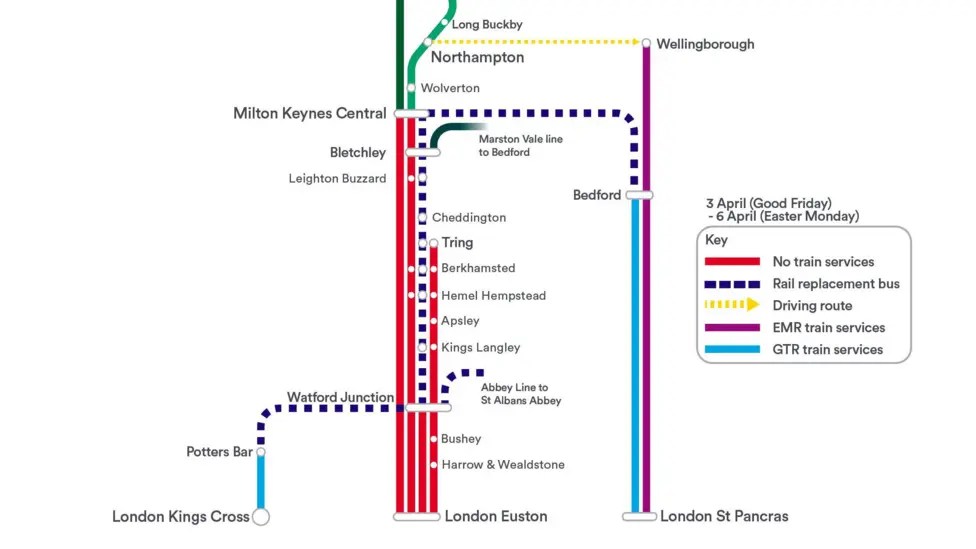
Note.
- There are no trains South of Milton Keynes Central
- There is a Rail Replacement Bus between Milton Keynes Central and Bedford.
- There is a Rail Replacement Bus between Milton Keynes Central and Watford Junction
This OpenRailwayMap , shows the Marston Vale Line between Milton Keynes Central and Bedford.
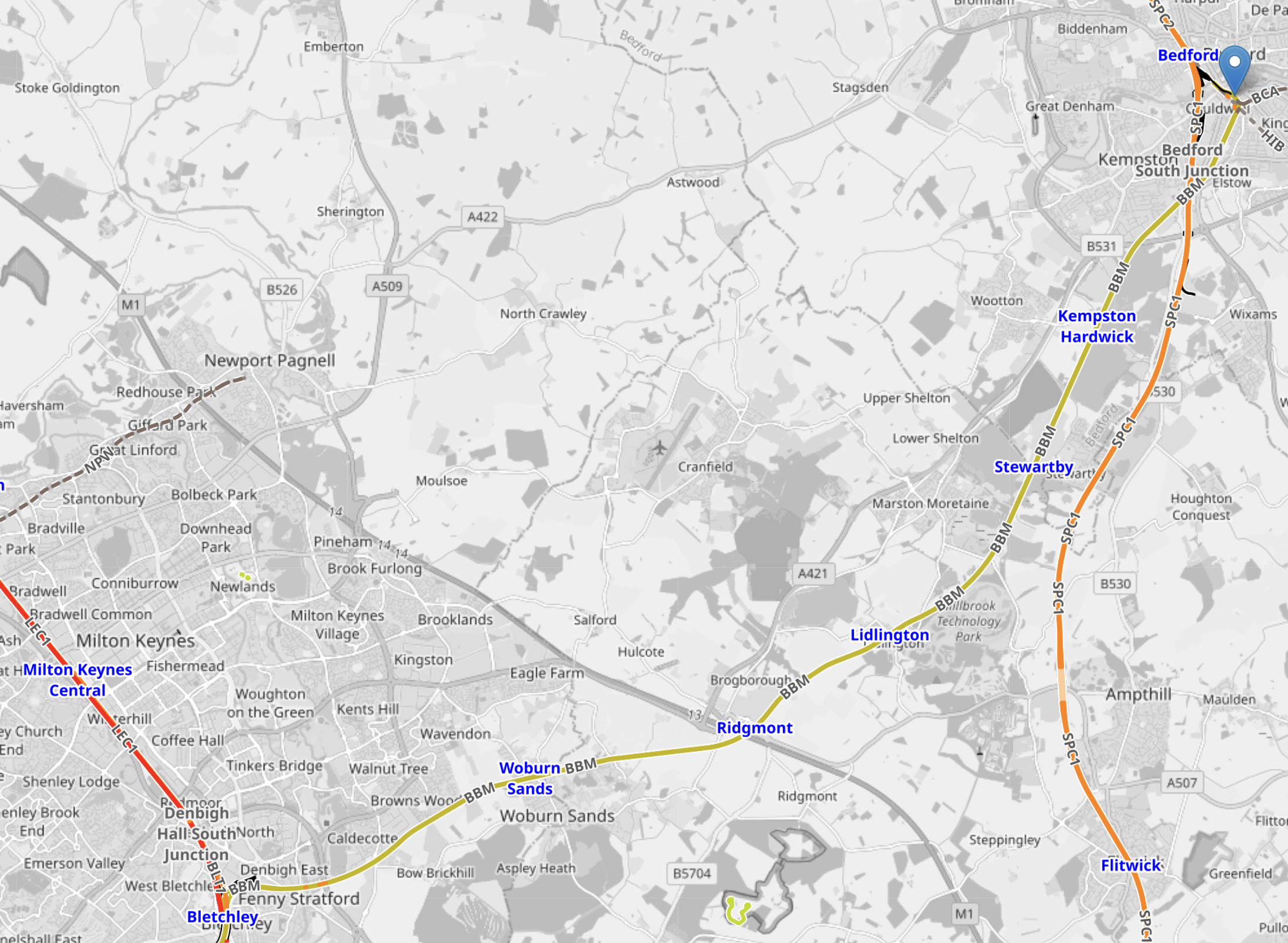
Note.
- The two Bedford stations ; Bedford and Bedford St. Johns are in the North East corner of the map.
- Milton Keynes Central station is on the Western edge of the map.
- The Marston Vale Line, which is shown in yellow, links Milton Keynes Central and the two Bedford stations.
- The track shown in red, going through Milton Keynes Central is the West Coast Main Line.
- The track shown in orange, going North South through Bedford is the Midland Main Line.
- The Midland Main Line appears to be running normally between Bedford and St. Pancras. This is according to Real Time Trains.
- The Marston Vale Line should be running new Class 196 trains, but it is not due to a door opening dispute with the trains.
- The Marston Vale Line appears to be running normally between Milton Keynes Central and Bedford. This is according to Real Time Trains.
This OpenRailwayMap shows Bletchley station and the flyover on the East side of the station.
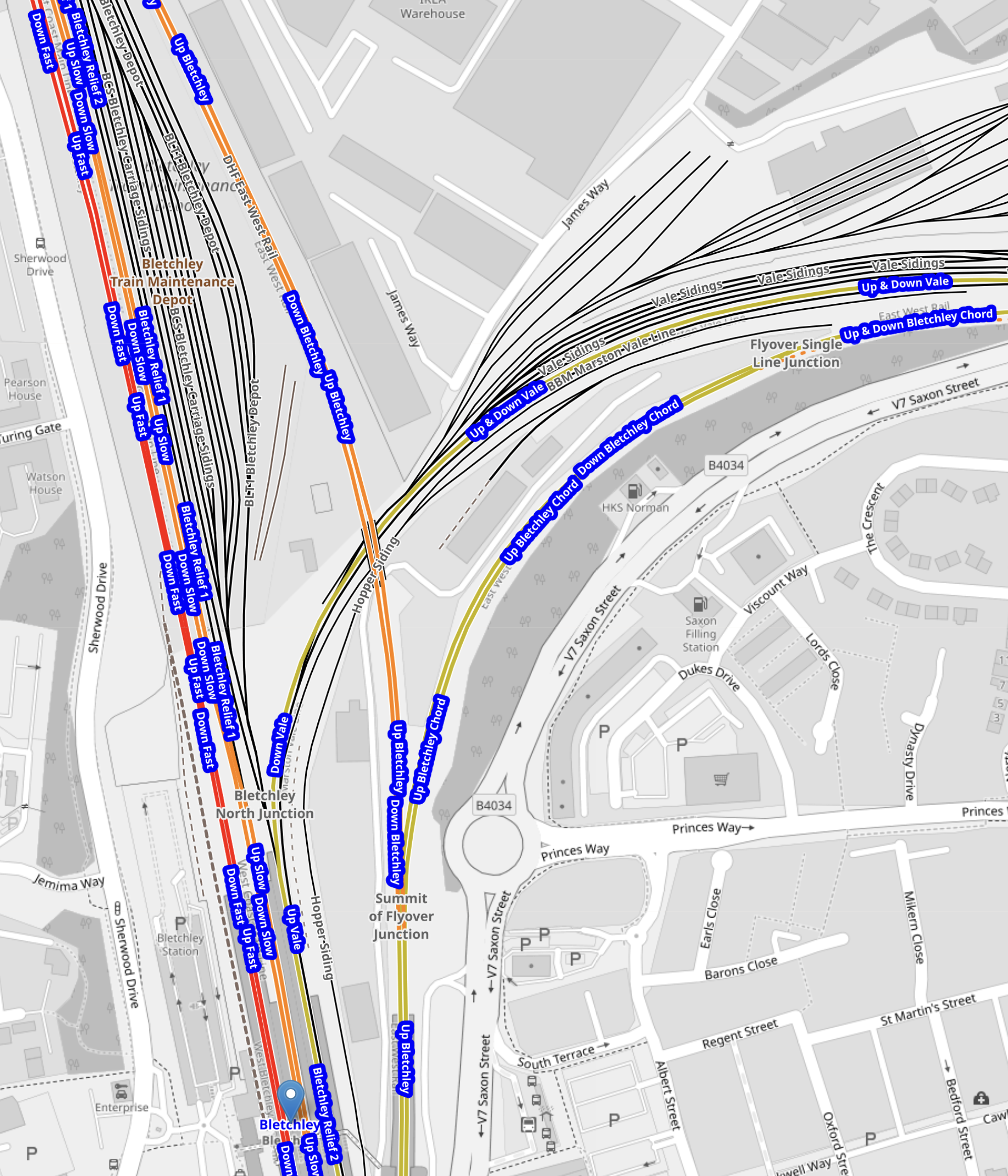
Note.
- The West Coast Main Line is on the West side of the map.
- Bletchley station is indicated by the blue arrow at the bottom of the map.
- To the East of the station is Bletchley flyover, which is labelled “Summit of Bletchley Flyover.
- The flyover splits with one branch going North to Milton Keynes and the other East to Bedford.
It does appear, that no train can go between Milton Keynes Central and Bedford stations, without a reverse at Bletchley station.
But you can go between Milton Keynes Central and Oxford stations, without a reverse at Bletchley station, as you stop on the flyover.
To check, I read the tracks right, I asked Google AI, “Can Trains Go Between Bedford And Milton Keynes Central Without A Reverse At Bletchley and received this answer.
Currently, no. Trains running between Bedford and Milton Keynes Central cannot bypass a reversal (reversing direction) at Bletchley because the Marston Vale line terminates at Bletchley station. Trains must enter Bletchley and then change direction to join the West Coast Main Line to reach Milton Keynes Central.
Key Details:
Current Routing: The Marston Vale line connects Bedford and Bletchley. Services from Bletchley to Milton Keynes Central operate as a separate connection.
The Reversal: Passengers currently must change trains or experience a driver change/reversal at Bletchley to continue.
Future Changes: The East West Rail project aims to improve these connections, but as of early 2026, the direct link remains through Bletchley.
Conclusion
Does this explain, why there is a Rail Replacement Bus rather than a shuttle train between Bedford And Milton Keynes Central stations?
Toyota Won’t Give Up On Hydrogen, Teams Up With Truck Giants
The title of this post, is the same as that of this article on TorqueCafe.
This is the sub heading.
Japanese car giant Toyota has signed a non-binding MoU to collaborate with Daimler Truck and Volvo Group on hydrogen fuel cells.
These three paragraphs add more details.
Toyota just won’t let its hydrogen-fuelled dreams die, this week announcing it wants to further develop fuel cell technology with two big players in the heavy vehicle market.
Daimler Truck (makers of Mercedes-Benz, Freightliner, Western Star and Fuso trucks) and the Volvo Group (responsible for Volvo, Mack and Renault trucks), already have a joint venture, cellcentric, which Toyota has signed a non-binding Memorandum of Understanding to join.
Split between equal shareholding, a joint press release said “the combination of the parties’ complementary experience and know-how will support and advance their joint objective to develop, produce and commercialise fuel cell systems for heavy-duty vehicles and other heavy-duty applications with comparable requirements”.
The rest of the article gives a summary of where Toyota are with hydrogen.
It is worth a thorough read.
Backing hydrogen you have Centrica, Ceres, Cummins, Daimler, Hyundai, JCB, INEOS, Kia, Ryse, Volvo, Wrightbus and a few others.
Will they prevail against a cynical world?
I think it will be one iconic vehicle, that excites the world. I will nominate.
- A 1000 km. range hydrogen-powered coach from Mercedes, Solaris, Volvo or Wrightbus.
- A large American-style pickup from Dodge with a Cummins engine or from Toyota.
- A large American-style truck.
- A remodelling of the iconic London new Routemaster bus with a hydrogen Cummins engine by Wrightbus.
- A small affordable hydrogen hatchback from the French, Toyota or the Koreans, based on a fuel cell and an electric transmission.
When I was a child the icon was a dragline called Big Geordie, who is shown in this video.
I suspect for some of the mining projects in the world today, a hydrogen-powered Big Geordie would make a good fist of it.
Condor Celebrates Inaugural Flight Of New Frankfurt–London Gatwick Route
The title of this post is the same as that of this press release from Condor.
This is the sub-heading.
Condor today launched its new city connection between Frankfurt am Main (FRA) and London Gatwick (LGW). With the inaugural flight, the British capital is now officially part of Condor’s city network. The route will be operated three times daily with a schedule designed to appeal equally to business travellers and city tourists. Flights are operated using Condor’s Airbus A320 aircraft, offering capacity for 180 passengers in a two-class configuration, including Business Class and Economy Class with the standard 3-3 seating layout. In addition, Condor cooperates with partner airlines on this route.
These three paragraphs add more details.
With this new connection, Condor is expanding its city network to include one of Europe’s most important metropolitan hubs, thereby strategically strengthening its presence in the European market. To mark the inaugural flight from London Gatwick, departing passengers on the fully booked service were welcomed with a small reception and gifts before the flight departed punctually for Frankfurt am Main.
David Carlisle, Director Network and Partnerships at Condor, said: “Today’s inaugural flight to London Gatwick marks another important milestone in the expansion of our European route network. London is one of Europe’s most sought-after destinations, both for business travellers and short city breaks. We are delighted to offer our guests up to three daily frequencies, providing maximum flexibility as well as convenient access to our long-haul network to Africa and Asia.”
Jonny Macneal, Head of Aviation Development at London Gatwick, added: “We are delighted to welcome Condor to London Gatwick and to offer our passengers even greater choice with this new, frequently operated service to Frankfurt. Whether travelling for business, leisure or to visit friends and family, the route provides excellent flexibility and connectivity. Condor’s arrival marks another important milestone during a period of significant growth for the airport.”
The press release also has these two last paragraphs, which give more information about the airline.
London is one of Europe’s leading economic and financial centres and also one of the most popular destinations for city travel. The new connection offers business travellers excellent access to the Greater London area as well as flexible options for day trips. Leisure travellers benefit from convenient flight times for weekend getaways.
In addition to the launch of London Gatwick, Condor continues to expand its network. From May, Barcelona, Budapest and Venice will be added as new destinations, bringing the total number of city destinations in the Condor network to 13. With these additions, Condor is further strengthening its presence in high growth markets and continuing to expand its European route network. Flights can be booked online at http://www.condor.com, via telephone or through travel agencies.
It is certainly one of the best-written and information-rich press releases, that I have seen.
If the attention to detail is as good in the way the airline is run is half as good, Condor will be worth giving a try.
This page is their TripAdvisor reviews.
Gatwick Airport Is Expanding
I picked up the news of Condor Airlines new service from one of my Google Alerts about Gatwick Airport’s proposed new runway.
These were the titles of the news articles in the alert.
- Simple Flying – Unbelievable! The UK’s 2nd-Busiest Airport Welcomes 5th New Airline In 11 Days
- MSN – London Gatwick confirms 9th new airline in massive 2026 shakeup
- Aviation A2Z – Condor Begins First UK Route with 3 New Daily Flights to This Airport
- Yahoo News UK – Airline launches first-ever UK route from Gatwick Airport to popular European city
- AviationSource News – Condor Launches New Frankfurt to London Gatwick Route
- Aviation24.be – Condor launches Frankfurt–London Gatwick route with three daily flights, marking UK debut
- Travel Wires – Condor launches first UK route with Gatwick–Frankfurt service
- Travel And Tour World – Frankfurt & London: New Condor Flights Spark Hope and Joy at London Gatwick Airport, UK
There is also this headline about Air France.
- Aviation24.be – Air France returns to London Gatwick with new twice-daily Paris CDG service
Gatwick seems to be doing well to be welcoming nine new airlines in 2026 and five in the last eleven days.
Perhaps, some honest accounting have convinced those nine airlines, that Gatwick’s new runway, won’t raise charges as much as Heathrow’s.
It’s Nearly Ten Years Since I Wrote The Streatham Virtual Tube
In the June 2016 Edition of Modern Railways, there was an article entitled Turning South London Orange.
One of the proposals in the article is to create a virtual tube through Streatham.
So I wrote The Streatham Virtual Tube.
My curiosity has been aroused, as to why the article is one of my top posts.
Does anybody have any ideas?
Or could it just be that someone is promoting the Streatham Virtual Tube In The Local Elections?
Platform 17 At Clapham Junction Station
I took these pictures at Clapham Junction station this morning.
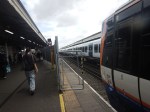
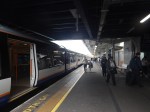



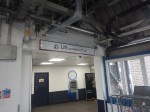
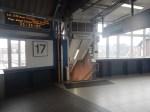
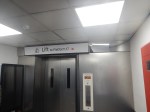
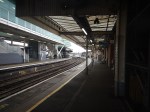
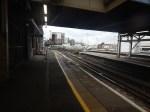



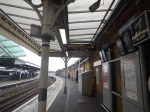
Note.
- The double-platform 1/2 is the main platform for the London Overground at Clapham Junction station.
- Platform 1 handles trains from Stratford station via the North and West London Lines
- Platfom 2 handles trains from Dalston Junction station via the East and South London Lines
- I arrived today in Platform 2 from Whitechapel station.
- Platform 17 is decidedly curved.
- Platform 16, which is used by trains going the other way, is also curved.
- Both Platform 16 and 17 have lifts to the station’s main overbridge.
Currently, some minor upgrade work is being carried out on the station.
The Platform Layout At Clapham Junction Station
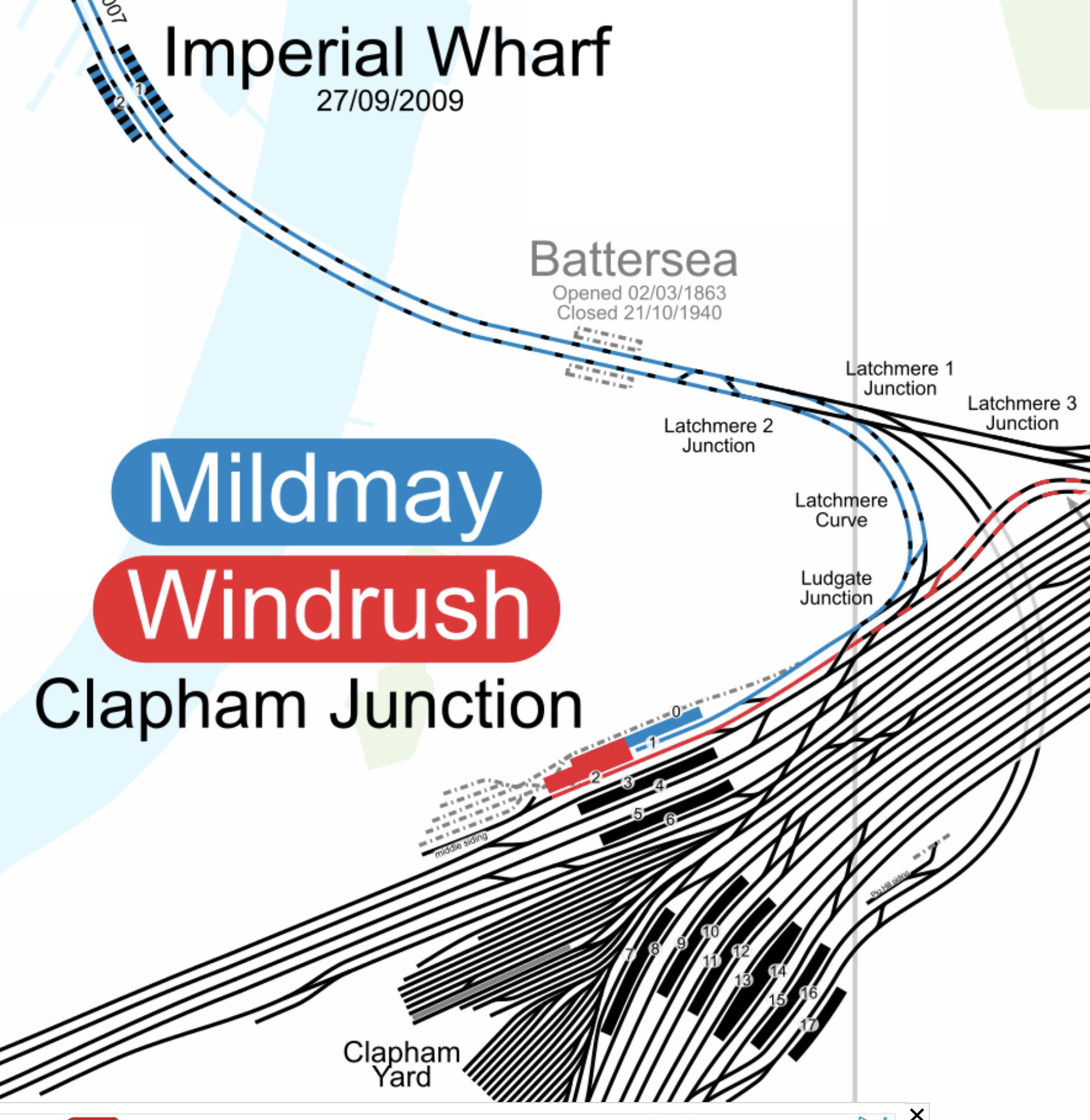
This map from CartoMetro shows the platform layout at Clapham Junction.
Note.
- Mildmay services from Stratford on the North and West London Lines are shown in blue and terminate in Platform 1.
- Windrush services from Dalston Junction on the South London Line are shown in red and terminate in Platform 2.
- Platform 17 is the Southernmost of the platforms at Clapham Junction.
Platforms are more or less numbered 1 to 17 from North to South.
How Long Did It Take Me To Walk Between Platforms 1 And 17?
It took me five minutes this morning, but the bridge wasn’t crowded.
How To Carry A Suit On A London Overground Train
I took this picture this morning on a London Overground train.
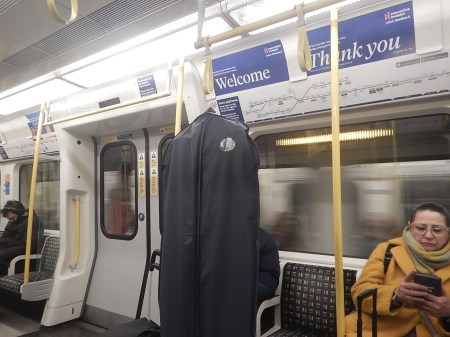
I’ve never ever seen anybody do this before.
But, I suppose it is fairly logical.
I would expect it would work on other trains, like the Underground.
Mersey Ferry To Be Decommissioned After 67 Years
The title of this post is the same as that of this article on the BBC.
This is the sub-heading.
A “much-loved” ferry that has crossed the River Mersey for 67 years is being decommissioned.
These three paragraphs add more details.
Mersey Ferries confirmed The Royal Iris of the Mersey is to be replaced by the new £26m Royal Daffodil later this year.
From its launch in Devon in 1959 until a major refurbishment in 2001, The Royal Iris was named Mountwood. She was renamed on her return to service in 2002, following a major revamp.
Mersey Ferries said it was considering how best to mark her farewell “with further details to be confirmed in due course”.
When I was a student at Liverpool University, it was named Mountwood and I used it regularly.
This is a video of the ferry, that I found on Youtube.
I have a thought.
Is There Any Other Public Transport, That I Have Used Recently, That Was Built In 1957?
I can’t think of anything, except the occasional Routemaster bus.
We Live Three Minutes From The Station — And Can’t Catch A Train
The title of this post is the same as that of this article on The Times.
This is the sub-heading.
A line connecting Oxford to Milton Keynes was finished 16 months ago. So why does it remain useless to families who moved to be next to it?
These four paragraphs add more details.
Nearly two years after moving to Winslow for its rail connections, Rachael Lee is still waiting to catch her first train.
Winslow station, a three-minute walk from Lee’s house, should have opened last year, connecting locals to Oxford, Milton Keynes and beyond. But as the site remains plagued by delays, the only people to pass through its doors are the security guards paid to keep watch.
“All the lights are on and there’s ticket machines that are on,” said Lee, 36, a marketing professional who moved to the Buckinghamshire town with her family in June 2024. “Who’s paying for all of that? It just feels like it takes the mickey when you drive and walk past it.”
Construction issues, union disputes about onboard guards and a lack of ready trains have all delayed the opening of the station, which was built for East West Rail (EWR) in a £6 billion government-funded project to reconnect Oxford and Cambridge by train for the first time since 1967. It is one of the country’s biggest rail projects, begun in 2014, and is expected to bring tens of thousands of jobs and billions of pounds to the regional economy.
Harold Wilson would have solved this problem with beer and sandwiches at No. 10.
Olympia Partners With TfL To Boost Peak-Time Mildmay Line Services
The title of this post, is the same as that as this press release from Transport for London.
These two bullet points act as sub-headings.
- Olympia, London’s newest entertainment destination, is funding 16 extra peak‑time services per weekday, providing increased capacity to support rising demand on this part of the Mildmay line as well as reducing customer journey times
- The additional shuttle services will depart from Clapham Junction Platform 17, with three services in the morning peak and five in the evening peak
These two paragraphs add more details.
Customers will benefit from easier access to the transformed Olympia, set to become London’s newest destination for entertainment, culture and hospitality, as well as Westfield London and improved links to other TfL services
Customers will benefit from more frequent services between Clapham Junction and Shepherd’s Bush from Monday 18 May, as Transport for London (TfL) introduces additional peak weekday shuttle services on the Mildmay line.
This map from CartoMetro shows how trains will get to Platform 17 at Clapham Junction.
Note.
- Mildmay services from Stratford on the North and West London Lines are shown in blue and terminate in Platform 1.
- Windrush services from Dalston Junction on the South London Line are shown in red and terminate in Platform 2.
- Platform 17 is the Southernmost of the platforms at Clapham Junction.
The new services will take the same route as Southern’s Watford Junction and East Croydon service through Clapham Junction.
- Trains will go through Imperial Wharf station and Latchmere 2 Junction.
- They will then take Latchmere 1 Junction and pass under the lines to get to Platform 17.
- There is a crossover between the two tracks, so that trains can get on the left-hand track.
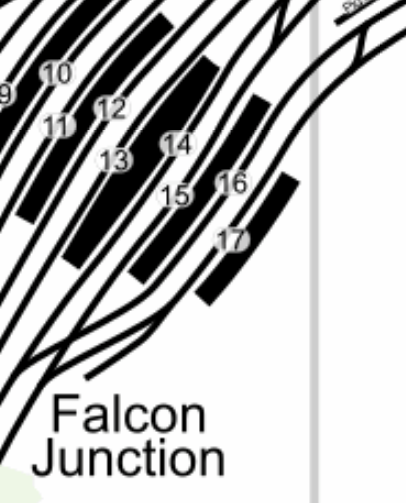
This second CartoMetro map shows Platforms 16 and 17 to a larger scale.
Note.
- Platform 17 doesn’t look very long, but it is 172 metres.
- Five-car Class 378 trains are 101.35 metres, so should fit.
- The crossover, that will be used by returning shuttle trains is clearly visible in the top-right corner.
It does appear though that there will need to be no major trackwork needed for the new service.
I do have one thought.
Will Clapham Junction Station Get A Platform 0?
This was proposed in Will Clapham Junction Station Get A Platform 0?, but there is no mention of it in the press release, although Michael Volkert, who is CEO of Olympia estates does say this.
The new train services will depart from platform 17 at Clapham Junction. Existing services to Stratford will continue to operate from Platform 1. For the latest travel information customer should check TfL Go, Journey Planner on the TfL website or station departure screens.
Commuters will have to hone their ducking and diving skills.

