An Affordable Reinstatement Of The Stour Valley Railway
The Stour Valley Railway used to link Cambridge to Colchester. The section between Sudbury and Shelford stations was closed in 1967. The only portion remaining is the Gainsborough Line between Sudbury and Marks Tey stations.
So could the line be reopened in an affordable way using modern technology?
In Sudbury To Cambridge – D-Train, IPEMU Or Tram-Train?, I basked what would be the ideal rolling stock on a reopened Stour Valley Railway.
My conclusion was.
It is very much a case of who pays the money makes the choice.
Purists will want a double-track railway with fully manned stations, served by at least two-trains per hour. But they’re probably not paying!
There are plenty enough single-track, single-platform stations in the UK, that work safely and well. The Gainsborough Line, which would connect a restored Stour Valley Railway to the Great Eastern Main Line has the following characteristics, history and aspirations.
- Single track throughout.
- Single-platform stations at Sudbury, Bures, Chappel and Wakes Colne and Marks Tey
- A line speed of 50 mph. This is the same as the Nottingham Express Transit and the Croydon Tramlink.
- There was a serious accident on a level crossing at Little Cornard in 2010.
- There is pressure for a station at Great Cornard.
So why not extend a railway across Suffolk, with these features.
- Single-track throughout.
- No traditional electrification
- Single-platform stations.
- Passing loops at Sudbury or Great Cornard and Haverhill.
- In-cab wireless signalling, using ERTMS, as piloted on the Cambrian Line in Wales.
- No level crossings.
- No freight, except engineering trains.
- Run under tramway rules.
- Double-manned trains.
- Services would be run by Aventras running on stored power.
It would be the ultimate modern railway connecting to one of the world’s most high-tech cities.
A Few Questions
These questions come to mind. If you have any others, let me know and I’ll answer them.
Could an Aventra Travel Between Marks Tey And Shelford Stations On Battery Power?
Both ends of the Stour Valley Railway connect to double-track main lines, which use 25 KVAC overhead electrification.
Current practice, always extends the electrification for a few hundred metres down a branch line and I would assume this would be done, so that a train running on stored energy, which was running short of power, could pull out onto the main line using the electrification.
Estimates of the distances of the sections of the line are as follows.
- Marks Tey to Sudbury – 12 miles – From Gainborough Line details in Wikipedia.
- Sudbury to Haverhill – 17 miles – From road distances
- Haverhill to West Anglia Main Line – 14 miles – From road distances.
Which gives a total of forty-three miles.
These factors will help.
- The terrain is not challenging.
- The trains will be using regenerative braking at stops.
- The trains have been optimised for low energy use.
- The trains will enter the line with full batteries.
In An Exciting New Aventra, Bombardier are quoted as saying.
So plans were made for an Aventra that could run away from the wires, using batteries or other forms of energy storage. “We call it an independently powered EMU, but it’s effectively an EMU that you could put the pantograph down and it will run on the energy storage to a point say 50 miles away. There it can recharge by putting the pantograph back up briefly in a terminus before it comes back.
The prototype, which was based on a Class 379 train, that I rode in public service in January 2015, could happily travel along the eleven miles of the Mayflower Line. Even then the on-board engineer, that I spoke to, reckoned that longer distances were possible.
Two years on, I can’t believe that Bombardier have not achieved their objective of a train with on-board storage, that can reliably achieve a fifty mile range away from the wires.
In fact for reliable operation over fifty miles, they’d probably need a range of around seventy miles, just to make sure.
Could Charging Be Provided En Route?
Seville’s MetroCentro trams, which I described in Seville’s Elegant Trams, charge themselves at each stop.
I believe that there may be a very simple system, that could be used with Aventra trains.
The Aventras are dual-voltage trains, so could a short length of 750 VDC third rail be provided in some or all stations, which at most times is electrically dead. As is normal practice the rail would be on the side of the track away from the platform.
The sequence of operation would be as follows.
- The train arrives in the station.
- The second crew member gets out to supervise the passengers, as is normal practice.
- The presence of the train, allows the third rail to be switched on.
- The train connects using a third-rail shoe and charges the batteries.
- When charging is complete, the third rail is switched off.
- The second crew member checks all is ready and boards the train.
- The train goes on its way with a full battery.
I’m sure that by careful design, a very safe system of charging the batteries can be developed.
- The third rail can’t be switched on unless a train is in the platform.
- The train would act as a massive safety guard for the third-rail.
- The shoe could be on the middle car of a five-car train.
- CCTV could monitor the third-rail at all times it is switched on.
I don’t think that all stations would have charging facilities, but just enough to ensure reliable operation of the trains.
How Would You Rescue A Failed Battery Train?
There are generally two ways, that failed trains are rescued.
- In most cases, a second train attaches itself to the failed train and drags it out of moves it to a suitable siding out of the way.
- Alternatively, a locomotive, often nicknamed a Thunderbird moves the train.
Would a battery train be able to shift the dead weight of a failed train?
It has been suggested to me, that Greater Anglia’s Class 755 trains, which are bi-mode will be able to rescue a Class 720 train, which are Aventras.
Now that is probably the ideal solution.
If you are using battery trains on a route, you make sure that you have some bi-mode trains working a route nearby.
How Long Would Colchester To Cambridge Take With A Battery Train?
Currently, the fastest journey by train between Colchester and Cambridge, that I can find takes two hours twenty minutes with a change at Ipswich. The Internet gives a driving time of one hour twenty-two minutes.
So how long would a journey take on the Stour Valley Railway?
The following timings are achieved by electric trains on the part of the route that is electrified.
- Marks Tey to Colchester – 7-8 minutes
- Shelford to Cambridge – 7 minutes
With Marks Tey to Sudbury taking twenty minutes. I will assume that a modern train like an Aventra would save a couple of minutes per stop, but then there could be an extra station at Great Cornard.
So let’s leave the timing at twenty minutes.
Scaling this time up for the forty-three miles between Marks Tey and the West Anglia Main Line from the twelve miles between Msrks Tey and Sudbury gives a time of one hour twelve minutes for the centre section of the route without electrification.
Adding everything together gives one hour twenty-seven minutes for the complete Colchester to Cambridge journey.
I suspect a few minutes could be saved by good driving and some extra electrification at the junctions.
This all adds up to a comfortable three-hour round trip between Colchester and Cambridge.
How Many Trains Would Be Needed To Work A Colchester To Cambridge Service?
The previous section would mean that to provide an hourly service between Cambridge and Colchester would require just three trains. A half-hourly service would require six trains.
Why Not Use Bi-Mode Trains?
It could be argued that everything a Class 720 Aventra train running on battery power could be done by a Stadler Class 755 bi-mode train.
Consider.
- The track access charges and leasing costs may favour one train or the other.
- Tha Class 720 train is probably better suited to gliding silently through the Suffolk countryside.
- The Class 755 train would run on diesel for most of the journey. Not very green!
- The five-car Class 720 train may be too big.
Abellio’s accountants and the Marketing Department will decide.
Costs And Benefits
The cost of building the railway between the West Anglia Main Line and Sudbury, is a bit like the old question, as to how long is a piece of string.
Much of the route is still visible in Google Maps and it could be rebuilt as single track with single platform stations, which is the style of the Gainsborough Line.
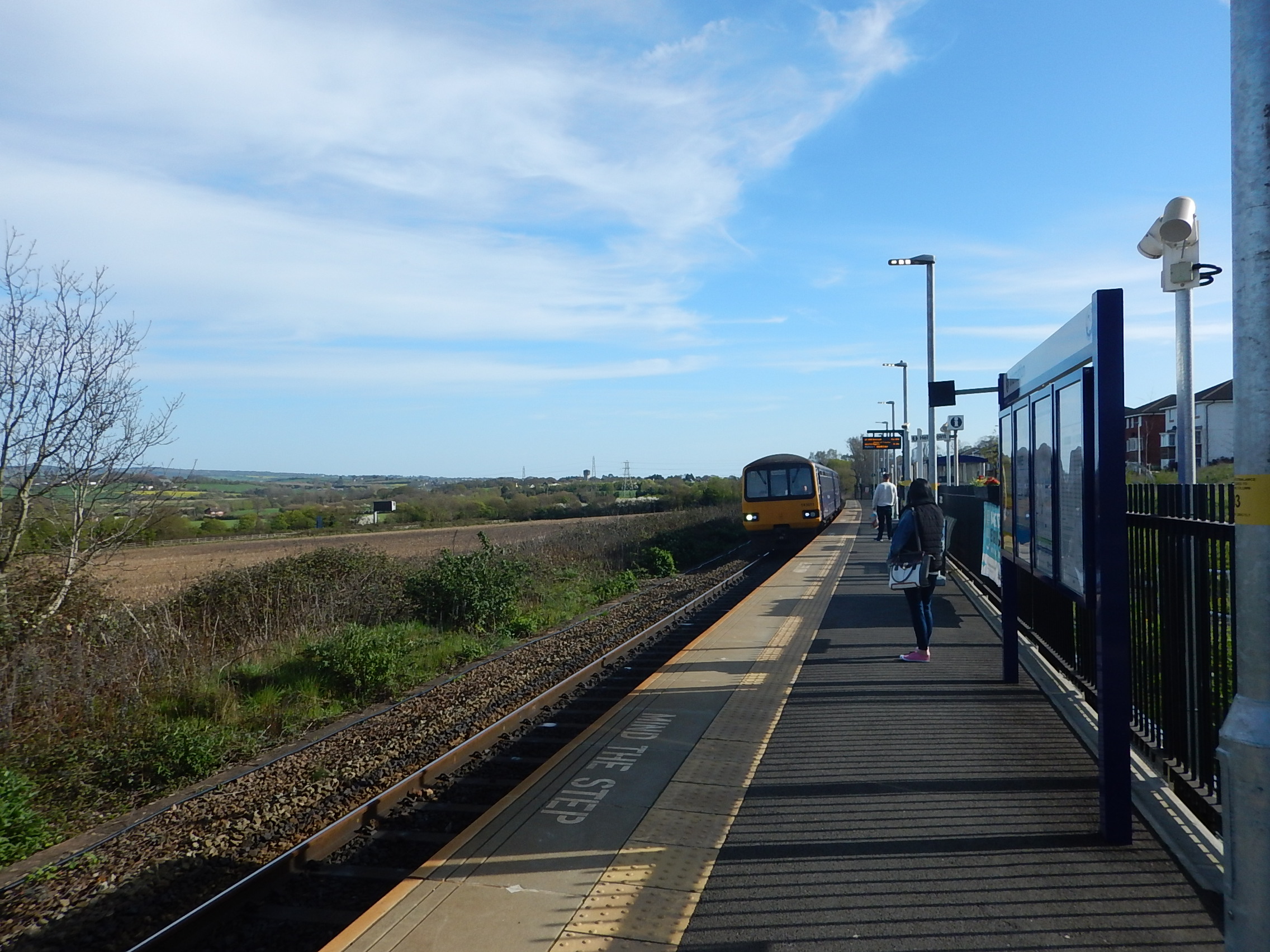
The picture shows Newcourt station on the Avocet Line in Devon.
There were originally stations between Shelford and Sudbury at the following places.
I don’t suspect all would be needed, but none except perhaps Haverhill and a rebuilt and/or moved Sufbury would be anything more than basic.
To show the level of costs, Newcourt station cost £4 million, when it opened in 2015.
I would estimate that a total cost of the single track and the required stations would be around £100-120 million.
At least, it would be unlikely, if new trains had to be purchased.
Putting value to the benefits is more difficult, but at least they can be listed.
- Fast growing Haverhill will gain a high-capacity public transport link to Cambridge.
- It would give Cambridge access to the housing and industrial sites, the |City needs.
- An efficient route would be built between Cambridge and Colchester via Sudbury and Haverhill.
- Haverhill and Sudbury get good direct links to Colchester and Ipswich.
- Most of the locals would be pleased, as house prices would rise!!
- All areas along the line get links to Addenbrook’s Hospital.
- If you can’t drive in South Suffolk, it is a beautiful prison.
As to the last point, why do you think I moved to London?
Conclusion
Reinstatement of the Stour Valley Railway would be the ultimate modern railway for one of the world’s most high-tech cities.
–
An Addenbrooke’s Train Station Has Got The Thumbs-Up From The Transport Secretary
The title of this post is the same as that of an article in the Cambridge News.
These are my thoughts.
Location
Cambridge South station, if they follow the convention of the name of the newly-opened Cambridge North station, has the ideal location.
- It is South of the City of Cambridge in a similar position to how Cambridge North station is North of the City.
- The Cambridgeshire Guided Busway could be diverted to serve the station.
- Addenbrooke’s Hospital and the Cambridge Biomedical Campus could be a short walk or a travelator ride away.
- Addenbrooke’s bus station could be moved to be adjacent to the new train station.
- Services between both Liverpool Street and Kings Cross stations and Cambridge would call.
- There is space for a large car park for both train passengers and hospital patients and visitors.
- In the future, trains on the East West Rail Link will be able to call.
The location would also allow trains or guided buses on a reopened Stour Valley Railway to call.
Trains
When Thameslink opens fully, it looks like the trains going through Cambridge South station could include.
- 1 tph – CrossCountry – Birmingham New Street to Stansted Airport.
- 1 tph – Greater Anglia – Norwich to Stansted Airport.
- 2 tph – Greater Anglia – Liverpool Street to Cambridge/Cambridge North/Ely
- 3 tph – Great Northern – Kings Cross to Cambridge/Cambridge North
- 1 tph – Great Northern – Kings Cross to Kings Lynn
- 2 tph – Thameslink – Brighton to Cambridge/Caambridge North
- 2 tph – Thameslink – Maidstone East to Cambridge/Caambridge North
Note tph is trains per hour.
This totals to twelve tph. And that’s only for starters.
- The East West Rail Link will surely add 2 tph to Oxford.
- All these services to Kings Cross and St. Pancras must surely hit Greater Anglia’s Liverpool Street services. Will this mean they use some of their massive fleet of new trains to provide extra services to Liverpool Street and Stansted.
It should also be noted that Greater Anglia serves the City, Stratford and connects to Crossrail, whereas Great Northern doesn’t!
The Stour Valley Railway
If Cambridge continues to be one of the most successful cities in the world, I can’t believe that the Stour Valley Railway won’t be reinstated as another route across East Anglia.
I discuss this proposal in detail in An Affordable Reinstatement Of The Stour Valley Railway.
I came to this conclusion.
Reinstatement of the Stour Valley Railway would be the ultimate modern railway for one of the world’s most high-tech cities.
I think it will be built at some time.
Cost
The usual suspects will complain about Cambridge South station being another station in a city near London, that already has two stations.
This is said about the cost of Cambridge North station in Wikipedia.
On 19 August 2015, Cambridge City Council approved Network Rail’s new plans for the station, which were not substantially different from the original plans put forward by Cambridgeshire County Council in 2013. Following Network Rail’s intervention, the cost of the station was revised upwards to £44 million.
When first proposed by Cambridgeshire County Council in around 2007, at the cost was £15 million, with a benefit-cost ratio of 3.09.
So much for Network Rail’s costing systems.
Incidentally, Kirkstall |Forge station in Leeds, which is a two-platform station on an electrified line with full step-free access cost £16 million. So as Cambridge South will probably have an extra platform and lots of parking, I would reckon £25 million would cover the cost of building the station.
To put this sum in context, two Cambridge companies have recently been sold.
- ARM Holdings was sold to Softbank Group for £23.4 billion.
- Worldpay was sold to Vantiv for £10.4 billion.
These two deals must have generated a lot of tax revenue.
Conclusion
A start on Cambridge South station should be made next week.
Crossrail Tests Its Trains In Southend
The title of this post is the same as that of this article in the Southend Echo.
This is the first paragraph.
Crossrail trains are being tested from Southend to London – raising hopes that in future they could run to and from the town on a regular basis.
As the title of the article indicates, it could be that Bombardier and Crossrail are seeing how a Class 345 train performs on the route, prior to the delivery of Greater Anglia’s similar Class 720 trains, which are another train in Bombardier’s Aventra family.
Southend Victoria Station
Southend Victoria station could be a destination for Crossrail in the future, but consider these facts.
- Southend Victoria station is 41.5 miles from London Liverpool Street station and the fastest services take about an hour.
- Southend Victoria has a frequency of three trains per hour (tph) to London Liverpool Street.
- Southend Victoria station has four terminal platforms and is a short walk to the Town Centre.
- Reading station is 36 miles from London Paddington station and the fastest services take just over half-an-hour.
- Fast-growing Southend Airport with its station is on the Shenfield to Southend Line and the Airport would surely welcome a direct link to Central London and Heathrow.
- The three tph on the Shenfield to Southend Line doesn’t have a good interchange with the one train every forty minute service on the Crouch Valley Line.
If there is a major problem, it is that Greater Anglia is losing passengers to c2c with its station at Southend Central.
Between 2013/14 and 2015/16 Southend Victoria has lost 2.79 million passengers, whereas in the same period Southend Central has gained 1.14 million.
From what I have seen Greater Anglia intend to speed up the Liverpool Street to Norwich services to ninety minutes and run at a frequency of 3 tph. They are also going to add a fourth train that goes to Ipswich. So again, the three tph service to Southend, isn’t the best fit to services on the Great Eastern Main Line for passengers travelling between say Southend and the County Town of Chelmsford.
There are probably not too many reasons for Crossrail to be extended to Southend for its own sake, but if Greater Anglia and Crossrail decide that an integrated service is to be provided between Shenfield and Southend, then everything is up for discussion.
Fast Trains Between London And Southend Victoria
The current Southend to London trains stop seven times to the East of Shenfield.
They would probably need to stop at Southend Airport and perhaps two of the busiest stations, but cutting out five stations would probably bring the journey time down to fifty minutes, which would attract passengers and make it easier for Greater Anglia to run the service, as trains could do the round trip in comfortably under two hours.
Running three tph, as now, would need just six trains and running a desirable four tph would need eight trains.
I’d be very interested to see what time a one of the new Stadler Class 745 trains, could achieve on the route, with just four stops at Stratford, Shenfield, Billericay and Southend Airport.
Slow Crossrail Trains Between Shenfield And Southend Victoria
Paired with the fast trains could be a number of extended Crossrail services.
Based on Crossrail’s projected timings between Liverpool Street and Shenfield of 41 minutes and the current 35 minutes between Shenfield and Southend, a timing of 76 minutes is estimated.
- Crossrail’s trains could save as much as two minutes at each of the seven stops, East of Shenfield.
- The Shenfield to Southend Line has an 80 mph speed limit, which I suspect could be improved.
So could we see Slow Crossrail trains achieving the times that Fast Greater Anglia trains do now?
I think the answer is yes and it shows how trains have improved in the last few decades.
How Many Trains Could Use The Shenfield To Southend Line?
The capacity must be quite high, as the only complication is the totally independent Crouch Valley Line.
Southend Victoria station has four platforms, so the station could probably handle sixteen tph, which is more than enough.
I feel that it would be possible to run four Fast expresses and four Slow Crossrail trains in an hour.
Whether that would be an acceptable timetable is another matter.
Interchange With The Crouch Valley Line
The Crouch Valley Line’s one train every forty minutes must be a nightmare for Greater Anglia and passengers alike, and I suspect that Greater Anglia have a cunning plan to run a two tph service on the line.
It appears that the track layout can achieve this, with the two trains passing at North Fambridge station. But as they don’t run two tph on this branch there must be other limitations.
Foremost of these could be the three tph service on the Shenfield to Southend Line.
So sorting out the Shenfield to Southend Line might improve the service on the Crouch Valley Line.
Conclusion
I have come to these conclusions about services between Liverpool Street and Southend Victoria stations..
- A Fast Greater Anglia express service could probably achieve a sub-fifty minute time.
- A Slow Crossrail service, could probably do the trip in an hour.
- Better interchange with Crouch Valley Line and Great Easstern Main Line services would be achieved.
- Four Fast and four Slow services in each hour is possible.
My choice for the Liverpool Street to Southend Victoria service would be as follows.
- Four tph – Crossrail Class 345 trains – Stopping at all stations.
- Four tph – Greater Anglia Class 745 trains – Stopping at Southend Airport, Billericay, Shenfield and Stratford.
Or the simple option of just running the four Crossrail trains.
Crossrail to Southend, isn’t a ridiculous aspiration.
Govia Loses The West Midlands Rail Franchise
This article on the BBC is entitled London Midland loses West Midlands rail franchise.
The new lead partner in a company called West Midlands Trains is Abellio.
This page on the Government web site gives full details.
There is also this interactive map, which details changes by line.
The next few sections detail a few points.
Four Hundred New Carriages
West Midlands Trains are promising four hundred new carriages.
Currently, there are 476 carriages serving the routes they will be taking over. The trains that are modern include.
- 77 x four-car Class 350 trains – 308 carriages – Built in 2004-2014
- 17 x two-car Class 170 trains – 34 carriages – Built in 1999-2000
- 6 x three-car Class 170 trains – 18 carriages – Built in 1999-2000
This is a total of 360 carriages.
This group probably lack wi-fi, which could be retrofitted.
It looks to me, that the West Midlands are going to be seeing a hell of a lot more trains.
Abellio should know what trains to buy, as they’ve just spent nearly a billion on new trains for Greater Anglia and are introducing a large fleet of Hitachi electric trains in Scotland.
Are we going to see a complete fleet change, as is happening with Greater Anglia and South Western Railway?
I think it will be very likely that the new train will be an Aventra or similar, with the following characteristics.
- Based on four or five car units.
- Ability to work in pairs.
- Possibly some longer ones. of eight or ten cars for busy routes.
- Walk-through design.
- Large lobbies and wide doors.
- Ability to stop at a station and get started quickly. Could save up to two minutes every stop.
- 100 mph capability.
- Some bi-mode or trains to work independently for perhaps thirty miles are needed.
They could be very similar to the Class 720 trains ordered by Greater Anglia or the Class 710 trains ordered by London Overground, if Aventras are chosen.
I will look at a simple example on the Cross-City Line between Lichfield Trent Valley and Redditch stations.
This currently takes 83 minutes with twenty-two stops. This would probably give a three-hour round trip. So on a rough estimate, to provide this service on a two trains per hour (tph) basis, would require six trains or twelve, if each of the current Class 323 train is a pair of six-cars.
Running a five-car Aventra or similar, which would save over a minute a stop and would be faster, would probably bring the round trip time down to under two hours. So two tph, would need just four trains.
The capacity of the Aventra would be greater at over 800 passengers as opposed to 500 in the pair of Class 323 trains.
Birmingham To Rugeley Trent Valley
The electrification on the Chase Line is being extended to Rugeley Trent Valley and new electric services should start from May 2018.
Wolverhampton To Walsall Line
The Wolverhampton To Walsall Line is an oddity in that is electrified and doesn’t have a passenger service.
In the Wikipedia entry for the line under Future Plans, this is said.
The West Midlands Combined Authority have announced their intention to restore a passenger service to the line using either conventional trains or tram-trains. Along with new stations at Willenhall and Darlaston James Bridge.
So will these plans be implemented in the next few years?
Birmingham To Bromsgrove
The new electric trains would also be able to serve the newly electrified route to Bromsgrove station from May 2018.
Does The B In Birmingham Stand For Battery?
If Bombardier or Hitachi get their energy storage working, then the new trains would be able to continue to Worcester from Bromsgrove, as it’s only fourteen miles.
Birmingham is getting battery trams, so is it getting battery trains?
Battery trains would certainly be able to work the Camp Hill Line.
But it will be interesting to see if battery trains can sneak through on other routes in the centre of Birmingham.
The Snow Hill Lines
The Snow Hill Lines across Birmingham are the classic cross-city line that should be electrified, as you don’t want to have diesel trains in the centres of cities.
My thoughts.
- In the current financial climate, large scale electrification is not going to happen.
- Battery trains wouldn’t help, as there is no electrification with which to charge the batteries.
- Traditional bi-modes aren’t much use either, as they’d run on diesel all the time.
The only alternative is probably more efficient diesel-electric hybrid trains that incorporate regenerative braking with batteries.
Could these trains be coupled with limited electrification in the centre around the Snow Hill Tunnel?
There’s a solution in there somewhere and I suspect that West Midlands Trains have used it.
Leamington To Nuneaton via Kenilworth And Coventry
This route via the new Kenilworth station will be getting an hourly service.
It’s only nineteen miles each way with scraps of electrification at Nuneaton and Coventry.
Could an Aventra or similar with batteries do this trip?
Conclusion
The West Midlands are getting a much better train service.
Your Class 345 Train Has Arrived
I took this picture at Stratford today.

Note the extra information on both screens.
Class 345 Trains And Regenerative Braking
Bombardier don’t seem to talk much about regenerative braking on Class 345 trains.
In the Wikipedia entry for the train, there is a section called Background And Specifications. This is the first paragraph.
In 2008, the UK government’s rolling stock plan stated a requirement for around 600 carriages for Crossrail, expected to be similar in design to the Thameslink rolling stock, to meet the design improvement requirements of the 2007 ‘Rail Technical Strategy’ (RTS), including in-cab signalling/communication including satellite and ERTMS level 3 technologies, regenerative braking, low cost of operation and high reliability, with low weight and high acceleration.
Perhaps Bombardier aren’t letting on how they achieve efficient braking of the trains.
One thing I proved today, was that the trains have no give away electric fires on the roof, where braking energy is traditionally dissipated.
This bad picture was taken through safety netting at Forest Gate station.
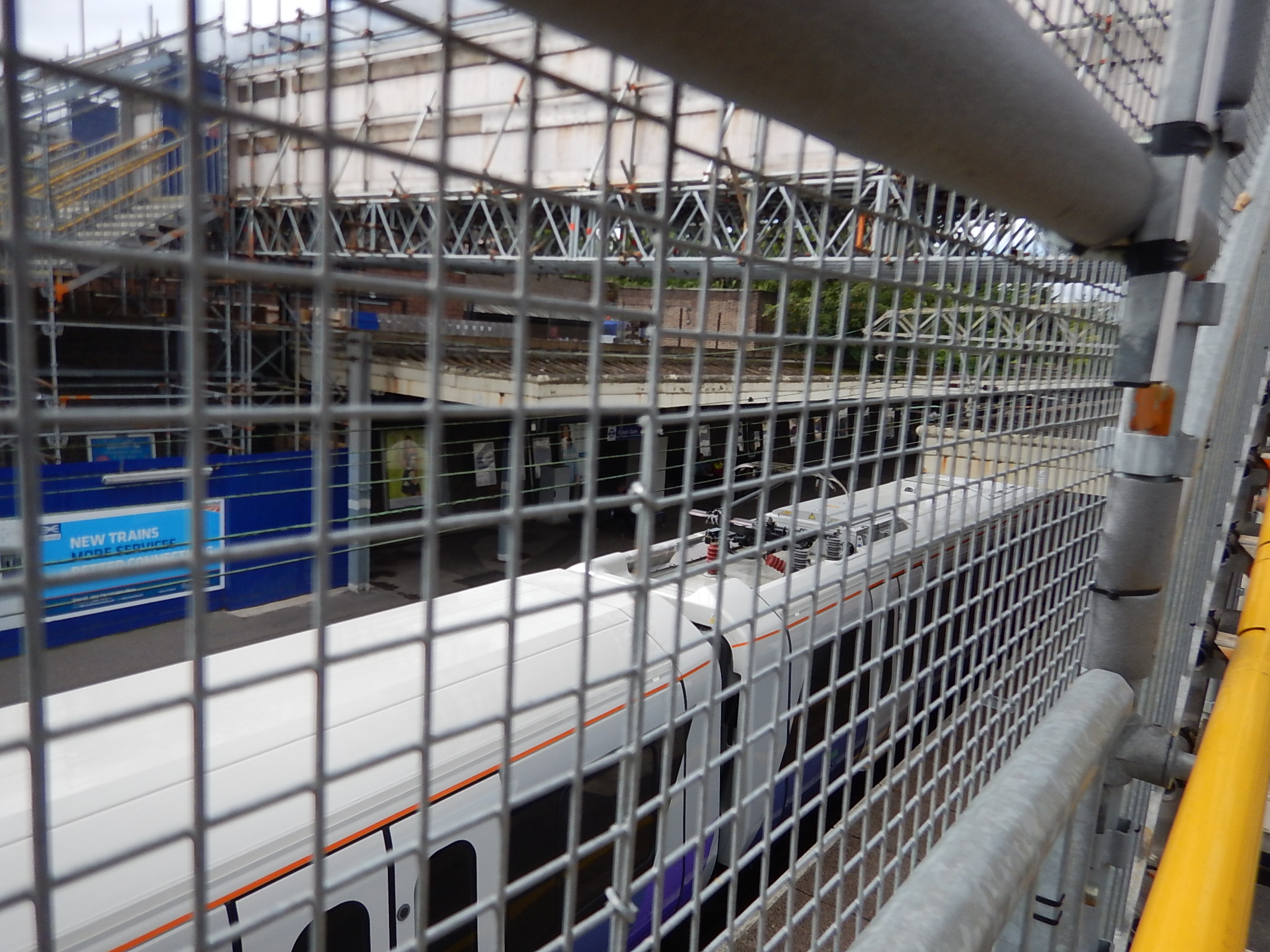
The roof is mainly-smooth with just grills for the air-conditioning and ventilation.
There certainly wasn’t any electric fires on the roof!
So does the braking energy get stored on the train for reuse?
An Exciting New Aventra
The title of this post is the title of an article in Rail Engineer.
It is actually dated the 31st of January 2014, so you might think it is out of date.
But surely, with the first Aventras appearing in service, now is the time to revisit.
I found the article this morning by accident and it is a fascinating read, Especially when you consider the article was written before the train had received any orders. Bombardier had actually just missed out on the Thameslink order, which resulted in the Class 700 trains.
A Blank Sheet Of Paper
The loss of the Thameslink order allowed Bombardier to start from scratch.
This paragraph indicates one of their start points.
And then we looked at it and thought we’ve also got depot engineers from Strathclyde to Surrey, all over the place, all looking after these trains in the field. How are they performing? Is there something we can do better there?
As the article says Aventra was reborn after Thameslink!
They also talked extensively to possible customers.
Suppliers
Suppliers were invited on board and given space with the design team in a new Design Office in Derby.
This paragraph described how everyone worked together.
We basically started from scratch, and in a completely different way. It isn’t engineering-led any more. It’s a joint collaboration of our depot people, our manufacturing guys, procurement and engineering.
I would describe it as a project-led structure similar to one that ICI used to use in the 1960s.
I wrote my first scheduling program to allocate the office space needed.
A Modular Approach For The Future
Each Electrostar had been different to the previous, but this sums up the Aventra philosophy.
Aventra will be a single modular product, capable of being easily modified for different applications but in each case referring back to the core design. So whether the actual class will be a 90mph metro train or a 125mph main-line express, it will have the same systems and components as its basis. In fact, Jon thinks that the distinctions are becoming blurred anyway.
They had looked forward ten years.
Away From The Wires
Aventra will be an electric train, but what happens, when the wires run out?
This was their solution.
So plans were made for an Aventra that could run away from the wires, using batteries or other forms of energy storage. “We call it an independently powered EMU, but it’s effectively an EMU that you could put the pantograph down and it will run on the energy storage to a point say 50 miles away. There it can recharge by putting the pantograph back up briefly in a terminus before it comes back.
I rode the prototype in public service in January 2015!
I was totally convinced that Bombardier’s battery trains have not even the smallest touch of Mickey Mouse!
Although the experience was magical!
Bombardier’s Iron Bird
Bombardier have borrowed the Iron Bird concept from the plane-makers.
This is an extract.
A leaf has been taken out of the aircraft designers’ handbook. They use something termed an Iron Bird – basically an aeroplane without wings – to test new systems.
Bombardier’s Iron Bird is a train without bogies. However, it does contain control systems, wiring looms and other bits of kit and it is being assembled at Derby.
I think that this shows, that they are not against borrowing other concepts from other industries.
The Most Affordable Train
The article describes how the train was designed to give the best whole life cost.
This sentence sums up the philosophy.
It’s actually about a 50/50 split between the whole life cost and the first capital cost. That makes it a bit more difficult because we’ve got be competitive on the first practical cost, but additionally we have to offer a really high availability, strong reliability, combined with much better energy consumption and less track damage.
As someone, who used to own a finance company, that leased trucks and other expensive equipment, the product described is the sort of product that leasing companies love. If the train is economical to run, if the first train operating company goes bust, you’ll still have an asset that other train operating companies will fight over.
Trains are also a predictable long-term investment, as well-built efficient trains have a thirty or forty year lifetime.
In my view the big winner of a train like this is the manufacturer, as they’ll get happy owners, train operating companies and passengers, which must lead to repeat orders.
Conclusion
I’ve never ridden a more well-designed, comfortable, smooth and quiet suburban electric train, than the Class 345 train in trial service on the Shenfield Metro, anywhere in the UK or Europe.
What Is Happening To The Greenford Branch?
It appears to me, that the Greenford Branch Line has been quietly shunted into a siding, as it has been some months since any statements of any worth have come from the Department of Transport, Transport for London, Great Western Raiiway or Network Rail.
The line now gets a two trains per hour shuttle service between Greenford and West Ealing stations. Trains that use the branch line to don’t go to Paddington any more.
West Ealing station is being rebuilt and looks like it won’t be complete for a couple of years.
This article on City AM is entitled Ealing Council seeks ‘urgent clarity’ over five delayed Crossrail stations as Network Rail retenders contracts to save money, which says a lot and may even explain, why nothing has been decided about the future of this branch line.
Current Speculation And Rumours
Various reports and forums outline solutions that suggest or include the following.
- It is probably not the easiest line operationally, as the train has to be stabled some distance away.
- Four trains per hour.
- Transfer of the line to the Overground.
- Run a shuttle from High Wycombe to West Ealing.
- Use London Overground’s Class 172 trains, when the Gospel Oak to Barking Line is electrified.
But there are a few problems.
- The incomplete West Ealing station.
- The platform at Greenford is rather short.
- Electrification would be difficult.
I hope all the silence is because the DfT, TfL, GWR, Network Rail and perhaps a train manufacturer are working hard to create an innovative solution for short branch lines like the Greenford Branch.
London’s Other Branches
London has two other short branch lines, that currently carry passengers.
Both are electrified and are run by a four-car shuttle using a bog-standard electric multiple unit.
But I doubt, they are some of most profitable routes in London.
In one forum, it was suggested that London Overground might use the Romford to Upminster Line for driving training on the new Class 710 trains.
In addition, there is the Brentford Branch Line, which has been proposed for reopening.
The Marlow Branch Line
I’m including the Marlow Branch Line, as according to the August 2017 Edition of Modern Railways, Network Rail have devised an innovative track layout for Bourne End station, that will allow trains to pass in the station and thus allow at least a two trains per hour service all day.
Modern Railways says this about financing the new track layout at Bourne End.
The LEP has allocated £1.5million to the infrastructure change needed to accommodate this proposal and GWR is seeking to close the funding gap on it.
There is also an informative diagram.
This Google Map shows Bourne End station.
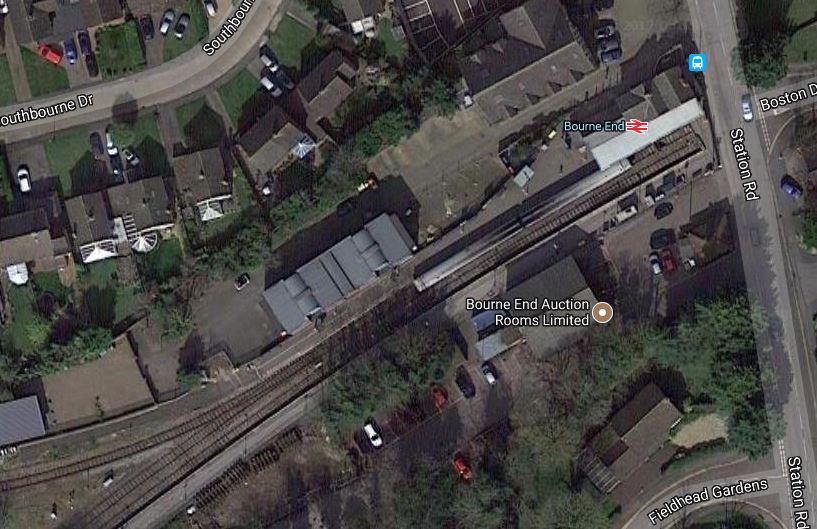
Note how a two-car Class 165 train is parked in the station with lots of space. These trains have two 23 metre long cars, so it would appear that a three-car train with possibly shorter length cars could be accommodated.
I wonder what is the maximum length train that the design team are working with.
Two three-car trains per hour would be a tripling of capacity over the current single two-car train per hour at present.
This innovative proposal certainly looks like one, that has a high chance of realisation.
Other Branch Lines
The UK probably has several short branch lines, with a similar profile to the Bromley North, Greenford and Marlow Lines, where often the service is inadequate or expensive and difficult to provide.
A Train For Branch Lines
Would it be possible to create a train using existing stock, that was ideal for these lines?
Vivarail with their Class 230 train have attempted to do this.
- Two or three cars.
- Diesel-electric or battery power.
- Designed to be serviced remotely.
It may turn out to be a high-class and reliable train, but there may be operational and marketing disadvantages, due to the train’s London Underground history.
But it is certainly a possibility.
Otherwise it is probably necessary to carry on as before with a two-car diesel multiple unit.
But at least, London Overground will be releasing eight Class 172 trains in Spring 2018.
The Unconventional Solution
Although two or three-car diesel multiple units will serve these branches well, I just wonder whether applying the same thinking that led to the Class 319 Flex train could produce a much better solution.
In their brochure for the train, Porterbrook state that they are thinking of adding a battery option to the train. The electrical layout of the Class 319 train leads me to believe it is certainly possible.
These branch lines are not arduous, so why not do the following.
- Replace one diesel power-pack of the Class 319 Flex train with a battery pack.
- Remove the trailer car to create a three-car train.
- Give the trains a good refurbished interior.
Note.
- A three-car train would probably not be a 100 mph train.
- A three-car Class 319 Flex train would only be fourteen metres longer than a two-car Class 165 train.
- Several similar four-car Class 321 trains have been converted to three-car Class 320 trains.
- Being able to run on electrified lines would ease operation, open up new services and charge the batteries.
I feel that having both diesel and battery power for working away from electrified lines would give the trains a high degree of reliability.
These trains could certainly work the Brentford, Greenford, Marlow and Windsor Branches.
The Bombardier Solution
In Will London Overground Fit On-board Energy Storage To Class 378 Trains?, I mused about this statement, after reading this article in Rail Technology Magazine entitled Bombardier enters key analysis phase of IPEMU. Marc Phillips of Bombardier is quoted as saying this in the article.
All Electrostars to some degree can be retrofitted with batteries. We are talking the newer generation EMU as well as the older generation. So, the 387s and 378s are the ones where we have re-gen braking where we can top-up the batteries and use the braking energy to charge the batteries. That gives us the best cost-benefit over operational life.
So it would seem that the Class 378 trains of the London Overground are candidates for fitting with batteries.
These trains started out with just three cars and have grown twice, by adding another motor car and a trailer car. So they are now five-car trains.
London Overground have said that they might lengthen the trains again to six cars.
I would suspect that Bombardier can play musical carriages and create, some six-car trains and a few three-car trains.
Fit batteries to the three-car trains and you have a battery-powered train for a short branch line, that starts in an electrified station.
Services on the Brentford, Greenford and Marlow branches could probably be run by these three-car battery-electric trains.
If the Class 378 train is too spartan, then there is always other Electrostars.
Just remember, that 4 + 4 = 5 + 3!
Conclusion
Don’t be surprised to see an innovative solution at Greenford.
Waterloo Upgrade August 2017 – Walking Between Wandsworth Common And Clapham Junction Stations
These pictures show my walk this morning.
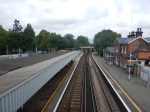
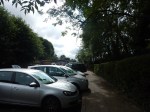
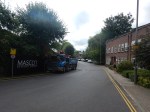
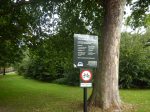
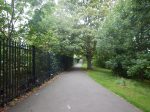
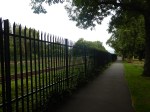
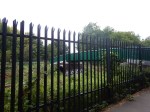
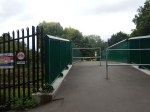
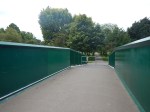
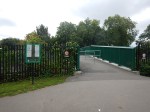
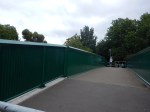
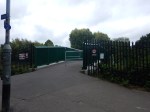
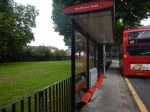
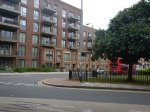
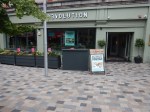
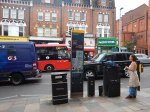


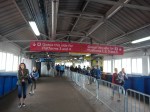
These are my thoughts on the various things I saw! Or in some cases didn’t!
Wandsworth Common Station
Wandsworth Common station is a curious station in some ways, as it certainly wouldn’t be built in the middle of Wandsworth Common in these conservation-minded days.
It also has an eleven trains per hour (tph) frequency to the next stations; Balham and Clapham Junction. Some trains take as little as two or three minutes.
Passenger numbers in 2015-16 at the three stations are as follows.
- Balham – 10,115,000
- Wandsworth Common – 1,690,000
- Clapham Junction – 32,282,000
Wandsworth Common station would appear to be just an overflow station to take pressure from the other two much busier stations.
In the Gibbs Report, one of the things that Chris Gibbs says is that there are too many Off Peak services.
Surely four or six tph stopping at Wandsworth Common station is enough, given that there’s only 24 parking spaces and bus stops are 450 yards away.
Currently, there are six tph between Victoria and West Croydon stations and all stop at Wandsworth Common station, with the fastest journeys taking thirty two minutes.
There are also six tph between Wandsworth Common and Norbury.
Surely on both these services stops can be eliminated, which would save a couple of minutes per stop.
Timing the trains for something like a Class 377 train and using a more efficient stopping pattern, might reduce timings between Victoria and West Croydon to under thirty minutes, which must help Southern to run a better service.
But would the good burghers of Wandsworth allow the simplification, even if it became a faster service?
The Cat’s Back Bridge
The Cat’s Back Bridge is a pedestrian bridge across the railway to the North of Wandsworth Common station.
The replacement of this bridge is described in this article on Rail Engineer, which is entitled A Trio Of Southern Bridges.
The article has some clear before and after pictures taken from the railway.
Wandsworth Seems An Information-Free Borough
Walking from the bridge to Clapham Junction station might have been quicker, if there had been some maps or information.
Perhaps, Wandsworth doesn’t welcome walkers!
At least I found a couple of helpful policemen!
Breakfast At Revolution
I had a hearty gluten-free breakfast at a bar-restaurant called Revolution in Clapham.
Incidentally, Clapham surprised me with the quality of the shops.
There were also a couple of interesting cafes, including one that was gluten-free and vegan called Without.
Clapham Junction Station And The Waterloo Upgrade
Again there was a lack of information.
Plenty of helpful Customer Service personnel were in attendance at the station, but some better signage was needed, for those unfamiliar with the station.
Conclusion
Wandsworth Council need to get their act together with regard to information.
I live in Hackney and the maps are so much better!
 The Anonymous Widower