Brand New Battery Technology To Be Trialled On TransPennine Train
The title of this post, is the same as that of this press release from Hitachi.
These three bullet points, act as sub-headings.
- First-ever trial in the UK to replace a diesel engine with a battery on an intercity train is underway.
- Pioneering collaboration between Angel Trains, TransPennine Express, Turntide Technologies and Hitachi Rail.
- Hitachi Rail has built a battery using the North East supply chain, with one battery unit predicted to reduce emissions and fuel costs by as much as 30%.
These are my thoughts on some of the paragraphs in the press release.
The First Paragraph
This is the first paragraph.
Testing of the UK’s first intercity battery train commenced earlier today. The battery, which generates a peak power of more than 700kw, has now been successfully retrofitted onto a TransPennine Express ‘Nova 1’ train (five-carriage intercity Class 802), ahead of the trial on Transpennine routes this summer.
Each of the three diesel power packs in on of TransPennine Express’s Class 802 trains can generate 700 kW, so the battery packs can provide the same power as the current Rolls-Royce mtu diesel power packs.
The Third Paragraph
This is the third paragraph.
The single battery unit is incredibly powerful, storing enough electricity to power more than 75 houses for a day. This impressive energy and power density will deliver the same levels of high-speed acceleration and performance, while being no heavier than the diesel engine it replaces.
This equity of high-speed acceleration and performance is to be expected, as the train power and weight is the same, if the power is diesel engines or batteries.
The Fourth Paragraph
This is the fourth paragraph.
The installation of a battery will reduce emissions and improve energy efficiency. It is predicted to reduce emissions and fuel costs by as much as 30% on a Hitachi intercity train.
I would assume that this improvement in emissions and fuel costs, is due to the use of regenerative braking to recharge the batteries, when the train slows down.
The Fifth Paragraph
This is the fifth paragraph.
Most importantly for passengers, the trial will test how intercity trains can enter, alight and leave non-electrified stations in zero-emission battery mode to improve air quality and reduce noise pollution.
As the trains enter a non-electrified station, the regenerative braking will recharge the batteries to both power the train in the station and accelerate the train on its way.
The Seventh Paragraph
This is the seventh paragraph.
The trial will provide real-world evidence to inform the business case for a 100% -battery-electric intercity train, capable of running up to 100km in battery mode. This remarkable range means this battery technology could be deployed to cover the final non-electrified sections of intercity routes in the coming years. It will also demonstrate how battery technology can reduce infrastructure costs by reducing the need for overhead wires in tunnel sections and over complex junctions.
Note that 100 kilometres is 62.1 miles.
You can never do too much real world testing!
These are my further thoughts.
Acceleration And Braking Under Battery Power
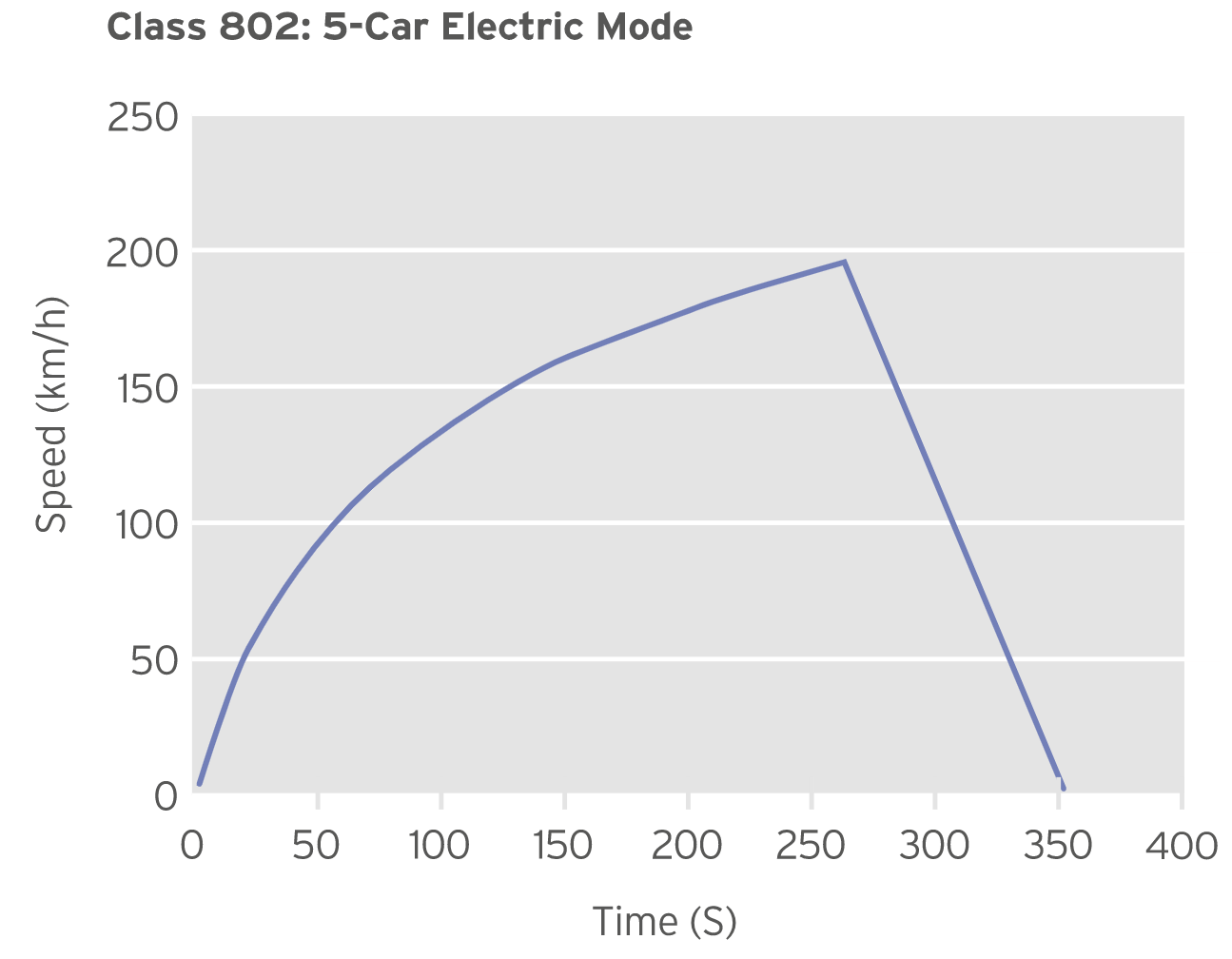
This graph from Eversholt Rail, shows the acceleration and deceleration of a five-car Class 802 electric train.
As Hitachi have said in the press release that.
- The weight of a battery pack is the same as a diesel engine.
- The power of a battery pack is the same as a diesel engine.
The acceleration and braking curve for a Class 802 train, with a single traction battery will surely be the same.
Would this mean, that if a battery-electric train replaced a diesel-electric train, the timetable would be the same?
What would be the effects, if a second diesel engine were to be replaced with a battery pack?
- The train would still weigh the same.
- The train’s performance would still be the same.
- The train would have 1400 kW of power available, but I doubt this could be used efficiently, as it might exceed the train’s performance limits.
- The train would have enough electricity for a 200 kilometre or 124.3 mile range.
There might be a need for a sophisticated control system to set the power mode, but in my experience of riding in the cab of an InterCity 125 and a Boeing 747, drivers or pilots have enough intelligence and fingers to control systems with multiple engines.
What would be the effects, if a third diesel engine were to be replaced with a battery pack?
- The train would still weigh the same.
- The train’s performance would still be the same.
- The train would have enough electricity for a 300 kilometre or 186.4 mile range.
The range is sufficient for a lot of routes.
London And Beverley
Consider.
- This route has 44.3 miles of unelectrified track between Temple Hirst Junction and Beverley.
- One battery range is 100 kilometres or 62.1 miles.
- As the trains have three slots for battery packs or diesel engines, they could always carry a diesel engine for emergencies.
The route could be run in one of two ways.
- By using one battery, that would be charged at Beverley.
- By two batteries, that would be charged on the main line to the South of Temple Hirst Junction. One battery would be used in each direction.
Note.
- The second method would not require any new infrastructure at Beverley or Hull.
- All batteries would be identical 100 km batteries.
- Trains would just swap an appropriate number of diesel engines for batteries.
The service could run as soon as the trains had the power transplants.
Using The Lincoln Diversion
In Extra Luggage Racks For Lumo, I also talked about Lumo taking the diversion via Lincoln.
Consider.
- This route is 88.5 miles of unelectrified track.
- It would be possible to be handled by a Class 802 train with two battery packs.
- Hull Trains will need battery packs to get to Beverley.
- Some LNER services will use battery packs.
Perhaps trains will use one battery to Lincoln and one from.
Crewe And Holyhead
In October 2023, the government said, that the North Wales Coast Line would be electrified.
Consider.
- Crewe and Holyhead are 105.5 miles apart.
- The route currently has no electrification.
- It has been planned to electrify the 21.1 miles between Crewe and Chester for some time.
- A lot of the route West of Chester may arouse the wrath of the Nimbies and be politically difficult to electrify, as castles and electrification don’t mix.
- Llandudno Junction station might be a station, where trains could be charged.
- Shotton and Chester stations need rebuilding.
- The line is not short of electric power, because of Electric Mountain and the windfarms along the coast.
- The route will soon be served by Hitachi Class 805 trains.
I believe the North Wales Coast Line could be one of those routes, which Hitachi’s partial electrification might be ideal.
I also believe that, it could be an extension of High Speed Two from Crewe, which provided a zero-carbon route between London and Ireland.
Conclusion
I can see if the tests perform as expected, that there will be some battery express trains running soon.
Korean Hydrogen Bus Adoption Emerging To Block Low-Priced Electric Buses From China
The title of this post, is the same as that of this article on BusinessKorea.
These are the first two paragraphs.
Major Korean business groups such as Samsung, SK, Hyundai Motor, and POSCO are expanding the introduction of hydrogen buses. They are more efficient than electric buses, and can run 635 kilometers on a single charge, making them suitable for long-distance commuting. Expanding hydrogen mobility, including buses, is considered the first step in building an entire hydrogen ecosystem.
SK Group is one of the most active companies in expanding hydrogen buses. According to SK Group on May 26, SK siltron has decided to replace its commuter buses for employees of its Gumi plant in North Gyeongsang Province with hydrogen buses. Additional deployments are under consideration after a pilot run in the first half of the year. In early May, SK hynix introduced three of the Universe model, Hyundai’s hydrogen bus for commuting. SK E&S recently completed the world’s largest liquefied hydrogen plant in Incheon and plans to soon expand its hydrogen refueling stations nationwide to 20.
The Korean bus seem to have developed a strategy to protect themselves from the Chinese.
I have a few thoughts.
Korea And HiiROC
Hyundai and Kia have joined Centrica in taking stakes in Hull-based startup HiiROC, which I wrote about in Meet HiiROC, The Startup Making Low-Cost Hydrogen Free From Emissions.
London’s Future Bus Fleet
There are rumours on the Internet that Sadiq Khan, will replace all London’s buses with new Chinese buses.
How will I get around, as I don’t ride in anything that was made in China?
Conclusion
We live in interesting times.
First US Hydrogen-Fueled Ferry Okayed For Commercial Operation
The title of this post, is the same as this of this article on OffshoreEnergy.biz.
This is the sub-heading.
US-based shipping company SWITCH Maritime has received approval from the U.S. Coast Guard for its hydrogen-powered ferry Sea Change to enter commercial operations.
This is the first paragraph.
As informed, the company was presented with the signed Certificate of Inspection (COI) by Captain Taylor Q. Lam, the U.S. Coast Guard Sector San Francisco commander and Captain of the Port, for its flagship hydrogen ferry.
This paragraph gives more details of the ferry.
Built and launched at All American Marine shipyard in Bellingham, Washington, Sea Change is a 75-passenger catamaran ferry featuring an integrated hydrogen power system from Zero Emission Industries (ZEI), with 360kW of fuel cells from Cummins and 600kW of electric motor propulsion from BAE Systems.
As the electric motor propulsion is 600 kW and there are only 360 kW of hydrogen fuel cells, I suspect there is a battery in there somewhere.
The Orkney Islands have their own hydrogen ferry project called HySeasIII.
The Orkney ferry uses 600 kW of Ballard fuel cells.
There is no news this year about what is happening to the Orkney project.
FirstGroup’s Lumo Seeks To Launch Rochdale – London Open Access Service
The title of this post, is the same as that of this article on Railway Gazette.
These two paragraphs outline the service.
FirstGroup has applied to operate Rochdale – London open access passenger trains, more than 20 years after a short-lived through service ran between the two destinations.
On May 17 FirstGroup said that it had applied to the Office of Rail & Road to launch six Lumo-branded return journeys per day linking London Euston and Rochdale via the West Coast Main Line. The trains would call at Warrington Bank Quay, Newton-le-Willows, Eccles and Manchester Victoria.
These are my thoughts.
The Route Isn’t Fully-Electrified
The route is electrified between London Euston and Manchester Victoria stations, but the 10.4 miles between Manchester Victoria and Rochdale is not electrified.
In Extra Luggage Racks For Lumo, I also talk about the possibility of fitting traction batteries to Lumo’s Class 803 trains, so they could handle the 88.5 mile diversion on the East Coast Main Line via Lincoln.
Trains with a traction battery, with an 88.5 mile range, would be able to travel between Manchester Victoria and Rochdale and return.
How Long Would London Euston And Rochdale Take?
Consider.
- The fastest London Euston and Warrington Bank Quay services take 1 hour and 44 minutes
- The fastest Warrington Bank Quay and London Euston services take 1 hour and 47 minutes
- Northern’s Class 195 trains take between 44-51 minutes Rochdale and Warrington Bank Quay with three stops.
- Northern’s Class 195 trains take between 29-32 minutes Manchester Victoria and Warrington Bank Quay with two stops.
- I will add two minutes for the extra stop.
These are my estimates for overall journey times.
- London Euston and Manchester Victoria – 2 hours and 15 minutes
- London Euston and Rochdale – 2 hours and 29 minutes
- Manchester Victoria and London Euston – 2 hours and 21 minutes
- Rochdale and London Euston – 2 hours and 40 minutes
The fastest direct Avanti West Coast services between London Euston and Manchester Piccadilly take 2 hours and 6 minutes.
Could The Service Be Extended To Leeds?
For my timings between Rochdale and Warrington Bank Quay, I used Northern’s Leeds and Chester service.
This service goes between Manchester Victoria and Leeds calling at Rochdale, Todmorden, Hebden Bridge, Halifax, Bradford Interchange, New Pudsey and Bramley.
I estimate it would take about 3 hours 32 minutes.
When Bradford has a new through station, I wouldn’t be surprised if a train operator looked at this route between London Euston and Leeds.
As Leeds and Manchester Victoria is only 49.8 miles, Lumo’s battery electric trains, with 88.5 mile batteries sized for the Lincoln diversion on the East Coast Main Line, would have no difficulty serving Leeds, where they would charge before return.
Could Lumo Run Pairs Of Five-Car Trains Between London Euston and Manchester Victoria?
As I said in Ten-Car Hull Trains, Lumo’s sister company; Hull Trains, runs the occasional ten-car service.
Perhaps for a big football match or other event, Lumo might like to run ten-car trains between Manchester Victoria and London Euston.
I suspect they could do it if the platforms were long enough, but they wouldn’t be able to run a 260 metre ten-car train to Rochdale, as that station only has a 135 metre long platform.
Warrington Bank Quay Station Will Get Six Extra Non-Stop Trains To And From London
This would provide real competition to Avanti West Coast over this route.
Newton-le-Willows Station Is Only A Few Miles From The Town Of St. Helen’s
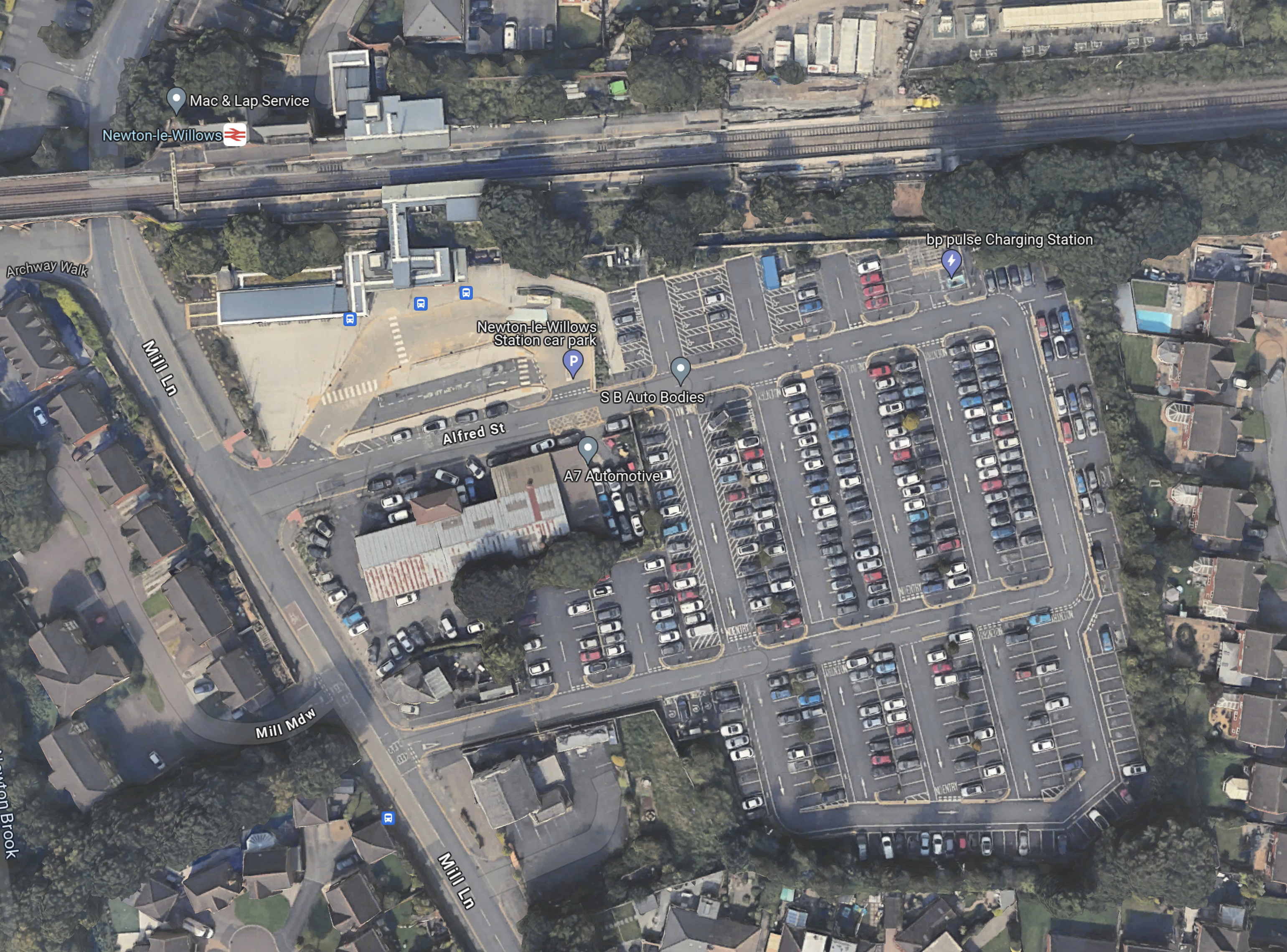
Newton-le-Willows station has 400 parking spaces and 32 disabled parking spaces.
Note.
- The parking is all free!
- There are regular local trains to Chester, Leeds, Liverpool Lime Street, Manchester Airport and Wigan North Western.
A six trains-per-day service to and from London, will help fill up the parking spaces.
Eccles Station Is Within Walking Distance Of Eccles Interchange
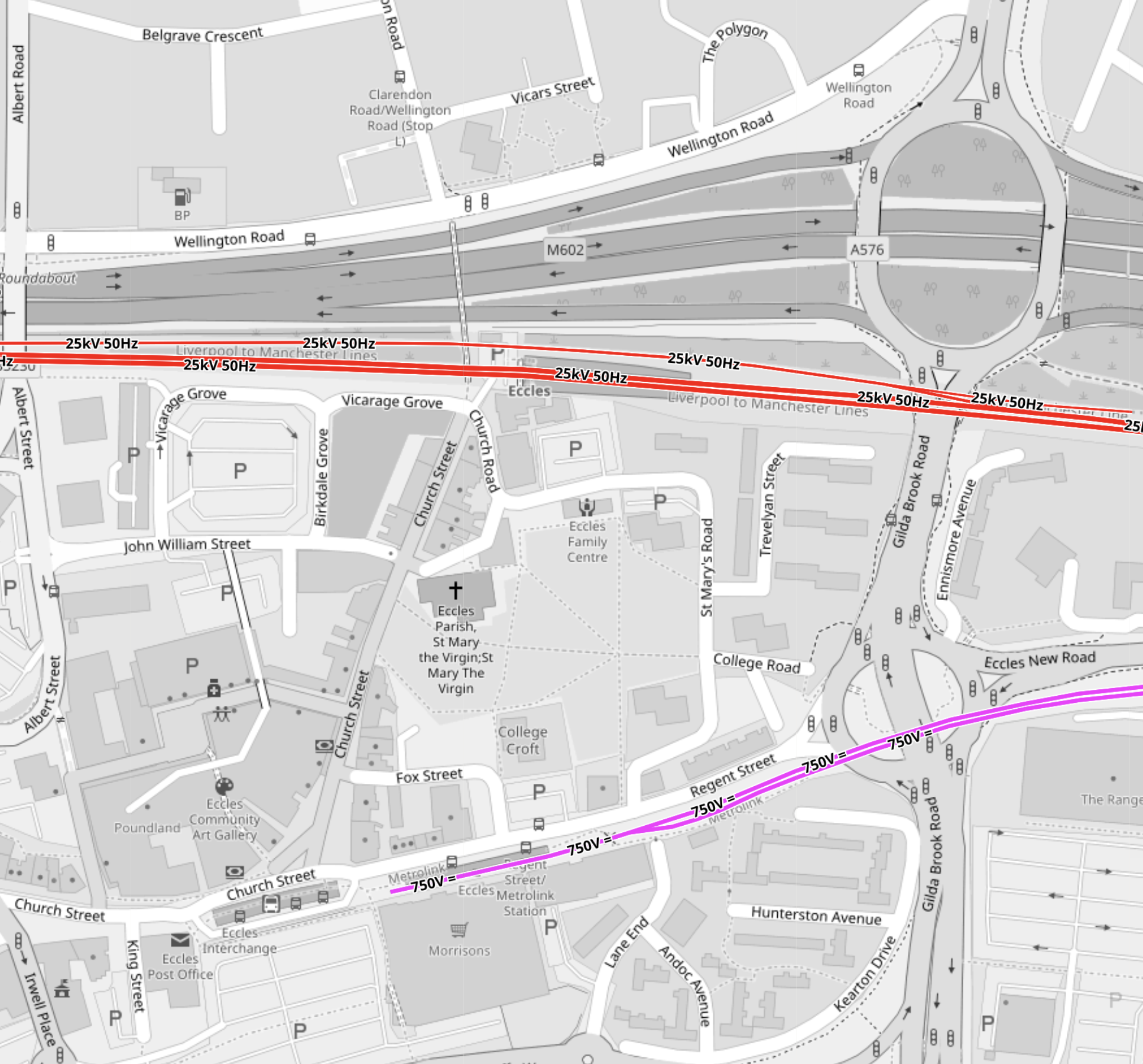
This OpenRailwayMap shows Eccles station and Eccles Interchange.
Note.
- The mauve tracks are the Manchester Metrolink.
- They terminate in the South-West at Eccles Interchange.
- The red tracks are the Liverpool-Manchester lines.
- Eccles station is a Northerly walk from Eccles Interchange.
This connection must be useful to more than a few.
I suspect if you’re going between London and Media City UK, Salford Quays or Piccadilly Gardens, you may be better to change to the Metrolink at Eccles.
Will Lumo’s Rochdale Service Run As A Flight With Avanti’s Glasgow Service?
Flighting is where two or more trains going on the same route run a few minutes apart.
- Every hour, on the half hour, an Avanti West Coast service for leaves London Euston for Glasgow Central.
- As with Lumo’s Rochdale service, the first stop is Warrington Bank Quay station.
- The Lumo service would leave London Euston a few minutes after Avanti’s Glasgow service.
- The distance between the two trains would be such, that if the first train stopped, the second train could stop safely.
- Digital signalling as is being installed on UK rail lines would make it easier to ensure safe separation.
But the benefit would be that both trains ran fast to Warrington Bank Quay station.
A Day-Trip To Manchester
If I’m right about the 2 hours and 15-21 minutes between London Euston and Manchester Victoria, then a day-trip would certainly be feasible.
Last Trains
This is a table of the last train times for Lumo between Newcastle and London.
- Weekdays – 20:27 21:35
- Saturdays – 18:27 19:22
- Sundays – 19:24 20:21
Note.
- The first time is the last Northbound departure.
- The second time is the last Southbound departure.
- Are these late enough for football matches?
I shall be interested to see the proposed last train times for the Manchester route.
- Will they be timed so you can get a tram from the Etihad or Old Trafford stadium after an evening match, that allowed you to get the last train back to London from Manchester Victoria?
- Taylor Swift gave the Manchester Arena a lot of favours with her concerts. Would you have been able to see her concert and get the last train back to London?
A few extra full trains wouldn’t hurt Lumo’s finances.
Conclusion
It looks like, this could be a very worthwhile service.
It’s All Happening In Jamshedpur!
When I read this article on Hydrogen Fuel News, which is entitled Cummins And Tata Motors Ignite Change With H2 Internal Combustion Engines, I couldn’t resist using the jokey headline, which was inspired by the sub-heading.
The manufacturing has started in Jamshedpur, India at a new state-of-the-art facility
These two paragraphs give some more details.
The hydrogen internal combustion engines continuing to be produced at the facility are being integrated into Tata Motors trucks. This technology is being viewed as a promising zero- or low-carbon alternative to diesel power because of its powerful performance and substantial operating range.
Cummins’ B6.7H engines have notable similarities to current natural gas and diesel engines, particularly in terms of the components they contain. Moreover, they can fit in standard engine vehicles and require similar refueling times.
I first wrote about the Cummins B 6.7H engines in Cummins Shows Hydrogen Internal Combustion-Engined Concept Truck At IAA Transportation Exhibition, which I posted in September 2022.
I have these further thoughts.
Cummins B Series Engine
The Wikipedia entry for the Cummins B Series Engine, starts with these two paragraphs.
The Cummins B Series is a family of diesel engines produced by American manufacturer Cummins. In production since 1984, the B series engine family is intended for multiple applications on and off-highway, light-duty, and medium-duty. In the automotive industry, it is best known for its use in school buses, public service buses (most commonly the Dennis Dart and the Alexander Dennis Enviro400) in the United Kingdom, and Dodge/Ram pickup trucks.
Since its introduction, three generations of the B series engine have been produced, offered in both inline-four and inline-six configurations in multiple displacements.
Note.
- Cummins B Series is used in a wide variety of vehicles.
- It is available in both four and six cylinder versions.
But what Wikipedia doesn’t say, is that any Cummins’ customer will get the engine he wants for his application, even if it means creating a special version of the engine. Thirty years ago, I did a small data analysis job for Cummins in Darlington and on a tour of the works, I was given full details on how they treated customers. Cummins are not your average US company.
London’s Routemaster Buses
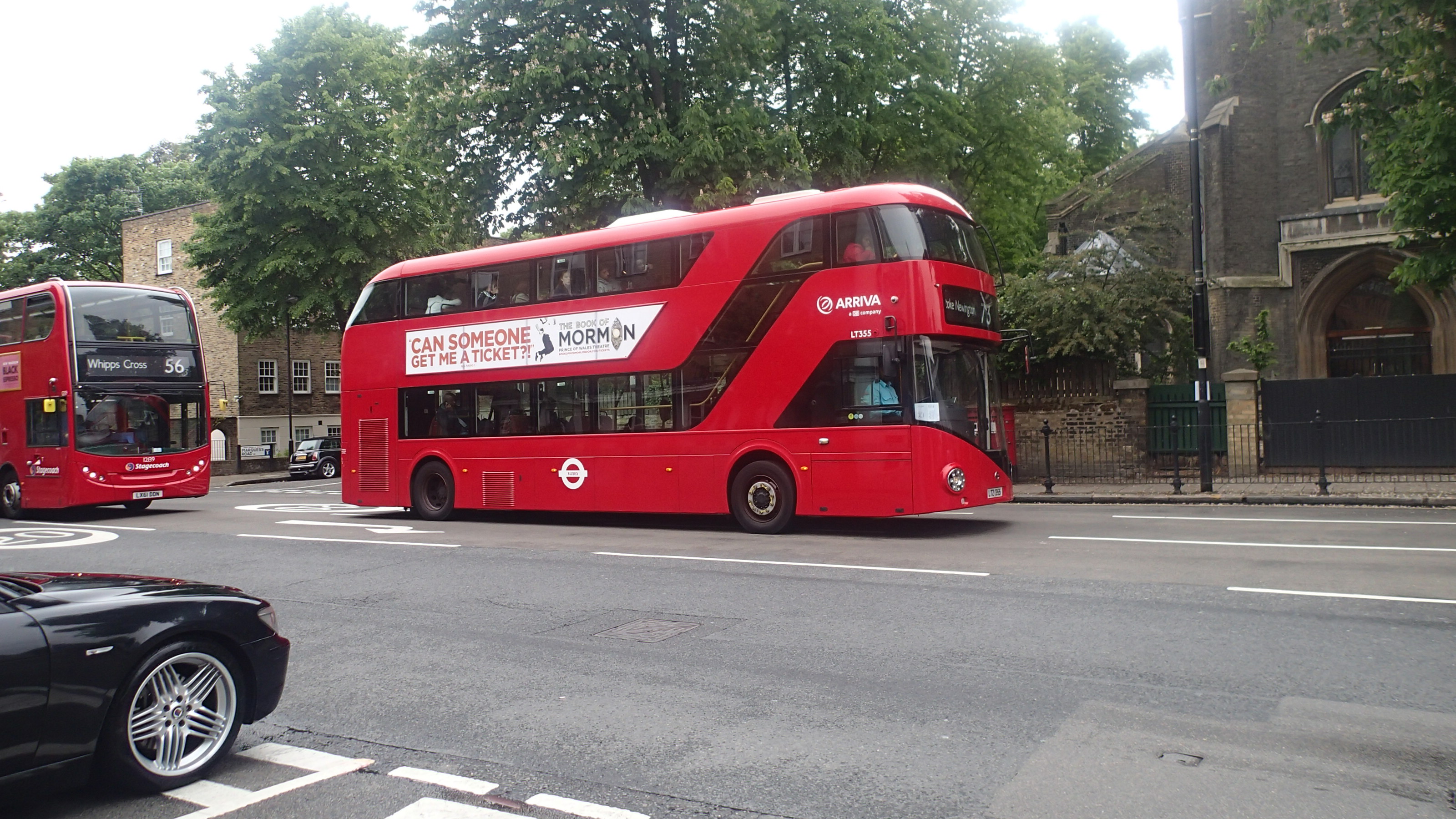
These buses are powered by a small four-cylinder version of the B-series engine, called a 4.5L ISB, which is described like this in Wikipedia.
The 4.5L ISB is essentially a four-cylinder, two-thirds version of the 6.7L ISB rated at 185 hp (138 kW), used in the New Routemaster, a series hybrid diesel-electric double-decker bus in London.
Note.
- Some diesel Range-Rovers, have more power, than these buses, but then they’re not hybrids.
- The engine also needs to be smaller, as it’s mounted under the back stairs.
Did Cummins’ special engine. allow the unique design of London’s Routemaster Buses?
Could London’s Routemaster Buses Be Converted To Hydrogen?
As an engineer and with my knowledge of Cummins’ design and manufacturing methods, I am fairly certain, if Cummins can manufacture six-cylinder versions of the B-Series engines, then four-cylinder hydrogen-powered engines are not far behind.
If London were to convert the thousand New Routemaster buses to hydrogen, there would be winners all round.
- Cummins would love the publicity and would probably benefit from increased sales of their hydrogen engines in vehicles like refuse trucks and small buses.
- It would surely give a route to convert older vehicles to hydrogen.
- The air in cities will improve.
But London has a problem, It is one of the few large cities in the world without readily-available hydrogen.
As this post illustrates and my Google searches show, India has a more advanced and scientifically-correct view on the usefulness of hydrogen.
Will Jaguar Land Rover Switch To Cummins’ Hydrogen Engines?
If Tata Motors make a success of hydrogen in India, it must make them think about adding hydrogen engines to Jaguar Land Rover products, specially as other manufacturers are getting serious about hydrogen.
Conclusion
Cummins will change the world for the better.
Are Scotrail Going To Replace The Inter7City Trains With Hydrogen-Powered Trains?
This article in The Times is entitled The Caley Is Ready To Roll With New Venture Building Trains.
I feel that this is one of the most significant paragraphs in the article.
ScotRail has indicated that it wants to replace nearly two thirds of its fleet with new, low-carbon rolling stock between 2027 and 2035, comprising about 675 carriages in total, with an initial core order of 64 four and five-car units. A spokesman confirmed: “We are working on a business case that will go to the Scottish government for the procurement of a new suburban train fleet.”
The current Scotrail fleet includes.
- 25 Inter7City trains which comprise 52 Class 43 power cars and 120 Mark 3 carriages – Diesel – 120 cars – 1975
- 5 Class 153 trains – Diesel – 5 cars – 1987
- 42 Class 156 trains – Diesel – 84 cars – 1987
- 40 Class 158 trains – Diesel – 80 cars – 1987
- 30 Class 170 trains – Diesel – 90 cars – 1998
- 21 Class 318 trains – Electric – 63 cars – 1985
- 34 Class 320 trains – Electric – 66 cars – 1990
- 40 Class 334 trains – Electric – 120 cars – 1999
- 38 Class 380 trains – Electric – 140 cars – 2009
- 70 Class 385 trains – Electric – 234 cars – 2015
Note the last three fields are the traction type, total number of cars and the build year of the first train.
I will split these trains into four groups.
- Inter7City – Diesel – 25 trains – 120 cars
- BR Diesel – Diesel – 117 trains – 259 cars
- BR Electric – Electric – 55 trains – 129 cars
- Modern Electric – Electric – 148 trains – 494 cars
Note.
- This is a grand total of 345 trains and 1002 cars.
- Ignoring the modern electric trains and the total is 197 trains and 508 cars.
- The total for diesel trains is 142 trains and 359 cars.
- As Great Western Railway have withdrawn their similar GWR Castles, there must be reasons for Scotrail to do the same.
I will now look at replacement strategies, based on this statement from Scotrail.
ScotRail has indicated that it wants to replace nearly two thirds of its fleet with new, low-carbon rolling stock between 2027 and 2035, comprising about 675 carriages in total, with an initial core order of 64 four and five-car units.
I would expect 675 carriages would be about 232 trains, if the current average train length of just under three cars is carried over.
The Effect Of 675 New Carriages
Assuming that no modern electric trains were replaced, this would create a fleet size of at least 1169 carriages.
This would be a sixteen percent increase in carriages, which would be welcome news for some rail users.
The Initial Core Order Of 64 Four And Five-Car Units
All we know of this order, is the number of trains and that they will be new and low-carbon, according to indications from Scotrail.
Low-carbon would mean one of these traction options.
- Electric trains with full electrification.
- Battery-electric trains with partial-electrification.
- Hydrogen-powered trains.
Note.
- The heritage Taliban would object violently to full electrification of some historic routes.
- UNESCO would probably remove the World Heritable Site status to the Forth Bridge if it were to be electrified.
- Scotland is developing a hydrogen infrastructure.
- Hydrogen-powered trains have long ranges in the order of a thousand kilometres.
- Hydrogen-powered trains are essentially electric trains with a hydrogen fuel-cell to provide electricity as needed.
- Hydrogen-powered trains would need very little new infrastructure, except for a network of refuelling points across Scotland.
- Well-designed battery-electric and hydrogen-electric trains, should be very quiet and comfortable for passengers.
As an engineer, I would choose hydrogen-power for the initial core order.
Where would the initial core order be deployed?
Twenty-five would be used to replace the carbon-emitting elderly Inter7City trains.
These routes could probably handle the other forty.
- Aberdeen and Inverness
- Edinburgh/Glasgow and Aberdeen.
- Edinburgh/Glasgow and Inverness.
- Glasgow and South Western Line
- West Highland Line.
Note.
- A lot of diesel trains would be retired.
- Trains could be designed, for tourists with proper cycle spaces.
- The West Highland Line would get the five-car trains it needs.
This would be a good start.
Conclusion
It looks to me, that the Inter7City trains will be going and will be replaced by new trains.
But will Scotland take the great leap forward and power the new trains by Scottish hydrogen?
Blackwall Tunnel Southbound Route To Close For Four More Weekends
The title of this post, is the same as that of this article on the BBC.
This is the sub-heading.
Part of the Blackwall Tunnel will close this weekend as work continues on the Silvertown Tunnel.
These three paragraphs detail the closures.
The southbound route will be closed from 00:01 BST Saturday until 05:00 Monday and on three further weekends.
The 57-year-old crossing is also due to shut on 1-3 June, 8-10 June and 29 June-1 July, as resurfacing and landscaping work is undertaken.
The Silvertown Tunnel is due to open in 2025, after which drivers using both tunnels will pay to cross the Thames.
At least the works to create the Silvertown Tunnel, seem to be progressing as planned.
But then London’s tunnels have generally been completed on time.
Excitement Brewing for Gateshead FC Away At Wembley
The title of this post, is the same as that of this news item on Lumo.
This is the sub-heading.
Lumo, the Open Access rail operator, has teamed up with local Gateshead brewery Black Storm to offer Gateshead FC fans a special commemorative beer onboard its trains.
These first two paragraphs add a few more details.
Hot on the heels of Tyneside based Lumo, the Open Access rail operator, announcing an extra train on Saturday 11th May to get Gateshead FC fans back from London as part of the club’s huge achievement of a second Wembley FA cup final in as many years, they’ve teamed up with local Gateshead brewery Black Storm to offer fans and travellers a special commemorative beer onboard its trains.
The appropriately named’ Whistle Stop’ is a 5% ABV Helles Lager featuring special commemorative Gateshead FC Wembley 2024 and Lumo branding on the can and will be available to purchase on the LumoEats at seat trolley service on all Lumo trains from this week, including on its specially named ‘Heed Army Express’ trains on Saturday 11th (running from Newcastle to London at 07:12 and 10:22, and returning at 20:26).
Surely, rail companies should do more deals like this to support local teams and suppliers.
Feadship Ushers In The Fuel-Cell Era With The Launch Of118.80-metre Project 821
The title of this post, is the same as this press release from Feadship.
This picture from Feadship shows project 821.
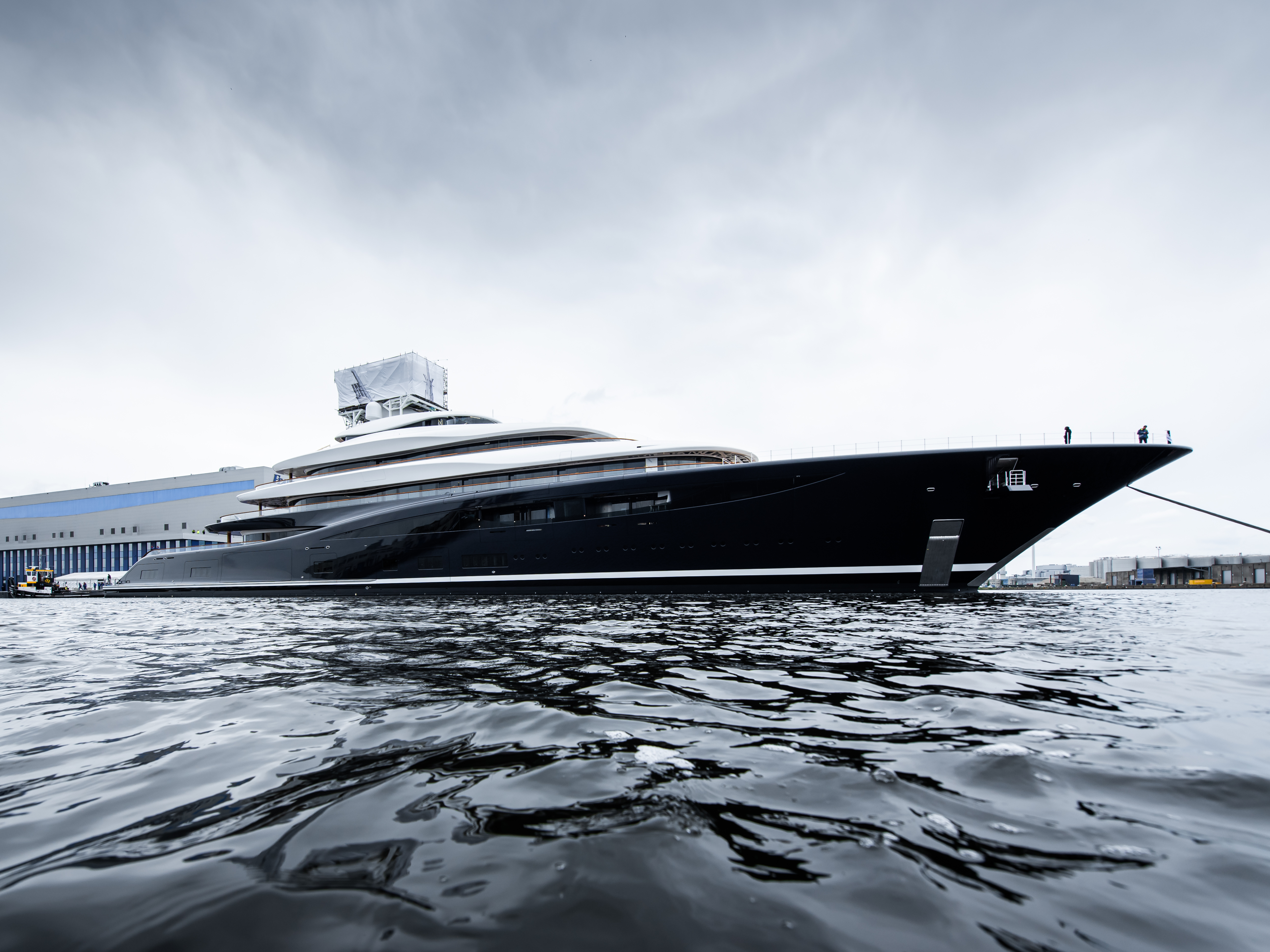
These are the first two paragraphs of the press release.
When the drydock doors slid open on 4 May at Feadship’s Amsterdam shipyard, the yachting
world was forever changed. Say hello to Project 821, the world’s first hydrogen fuel-cell
superyacht. Five years in the making, innovation-packed Feadship Project 821 is the answer to
a fundamental question: “How far can we push green technology on superyachts?”Designed by RWD and with owners representation by Edmiston, Feadship’s bold response was
a multi-faceted, zero-diesel approach designed to cruise between harbours or anchorages and
to operate the yacht’s hotel load and amenities with emission-free power from green hydrogen.
“The aim has been to develop a new, clean technology not just for this project, but for the
world,” said Jan-Bart Verkuyl, Feadship Director / CEO Royal Van Lent Shipyard. The size of
the proposed yacht – 100-metres-plus – made it a good candidate to explore pure green
hydrogen as the fuel-cell source. For those captivated by cutting-edge innovations, this yacht
presents an opportunity for potential acquisition as it showcases the pinnacle of modern
technological advancements.
As the superyacht is 118.8 metres long, I can see a lot of ships of this size being powered by hydrogen.
Klaipėda – Kyiv Rail Freight Plan
The title of this post, is the same as that of this article on Railway Gazette.
These two paragraphs give more details.
Lithuania’s national train operator LTG Group and Ukrainian Railways have signed a memorandum of understanding to develop an intermodal freight service from the Baltic port of Klaipėda to Kyiv via Poland.
Test runs are planned for this year, ahead of regular services.
I have some thoughts.
The Route
This Google Map shows the route.

Note.
- Russia is in the North-East corner of the map, with Moscow clearly marked.
- Lithuania is in the North-West corner of the map.
- Klaipėda is on the Lithuanian coast.
- South-West of Lithuania is the Kaliningrad enclave, which is part of Russia.
- South of the Kaliningrad enclave is Poland, where Gdansk, Warsaw and Krakow are clearly marked.
- Belarus is in the middle of the map, with Minsk clearly marked.
- Ukraine is South of Russia and Belarus and East of Poland.
- Dnipro, Kharkiv, Kyiv and Lyiv in Ukraine are clearly marked.
It looks to me, that a possible route would be along the Eastern Polish Border avoiding both Belarus and the Kaliningrad enclave.
The Gauges
This Google Map shows the gauges between Klaipėda and Kyiv.
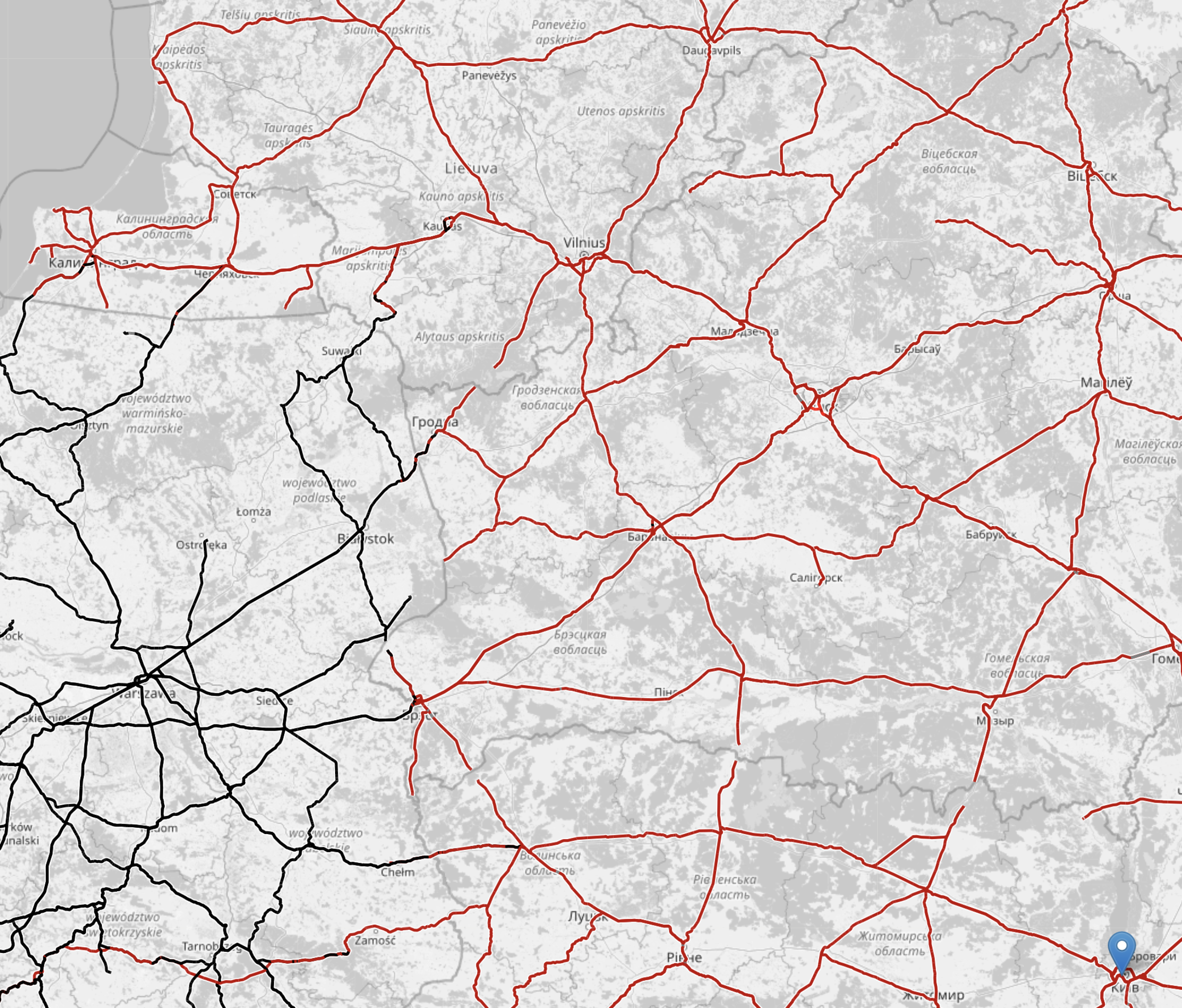
Note.
- Black tracks are Standard gauge of 1435 mm.
- Red tracks are Russian gauge of 1520 mm.
- Klaipėda is on the Lithuanian coast in the North-West corner of the map.
- Kviv is in the South-East corner of the map.
It looks to me, that although Lithuania and Ukraine are Russian gauge, the routes through Poland could be standard gauge.
So there may be a need for some rolling stock, that can run on both Russian and Polish gauges.
This article on Railway Gazette is entitled Ukrainian Railways Produces Cross-Border Grain Wagon.
These two paragraphs describe the wagons.
National railway Ukrzaliznytsia has used mostly domestic components to produce a grain hopper wagon which can operate on both the former USSR’s 1 520 mm broad gauge and the 1 435 mm standard gauge of neighbouring EU countries.
The Type 19-8005-U wagon has a capacity of 70 tonnes and 104 m3, with five loading and six unloading hatches. It is designed for operation at up to 120 km/h.
The wagon certainly looks professional in the pictures.
I don’t think that dual-gauge wagons for containers will be a serious engineering problem for the Ukrainians.
Rail Baltica
The Wikipedia entry for Rail Baltica has this introduction.
Rail Baltica is an under-construction rail infrastructure project that is intended to integrate the Baltic states in the European rail network. Its purpose is to provide passenger and freight service between participating countries and improve rail connections between Central and Northern Europe, specifically the area southeast of the Baltic Sea.
Note.
- As it is an EU-funded project, it is being built as standard gauge.
- It is being built with operating speeds of 145 mph for passengers and 75 mph for freight trains.
- There will be comprehensive connections to airports, freight terminals and major conurbations.
This page on the Rail Baltica web site has an interactive map of Rail Baltica.
It is thought that Putin is not pleased about Rail Baltica, as his extensive fleet of rail transporters for tanks and other military vehicles, are now built for the wrong gauge to invade the Baltic States.
Putin And Dual-Gauge Tracks And Wagons
As they could be used to bring war-related imports to Kyiv, I suspect Vlad the Genocider is against them.
How Will Ukraine Protect The Trains?
Consider.
- Being West of Kyiv will help.
- I suspect the UK have a few ideas for camouflage.
- Will a few brave Ukrainians ride the trains, with a sophisticated train protection missile?
- Drones probably won’t be as effective as ground attack aircraft at attacking trains.
I do suspect though that the Ukrainians have a plan.
Conclusion
This is going to be an interesting development.
 The Anonymous Widower