Memories Of Althorpe
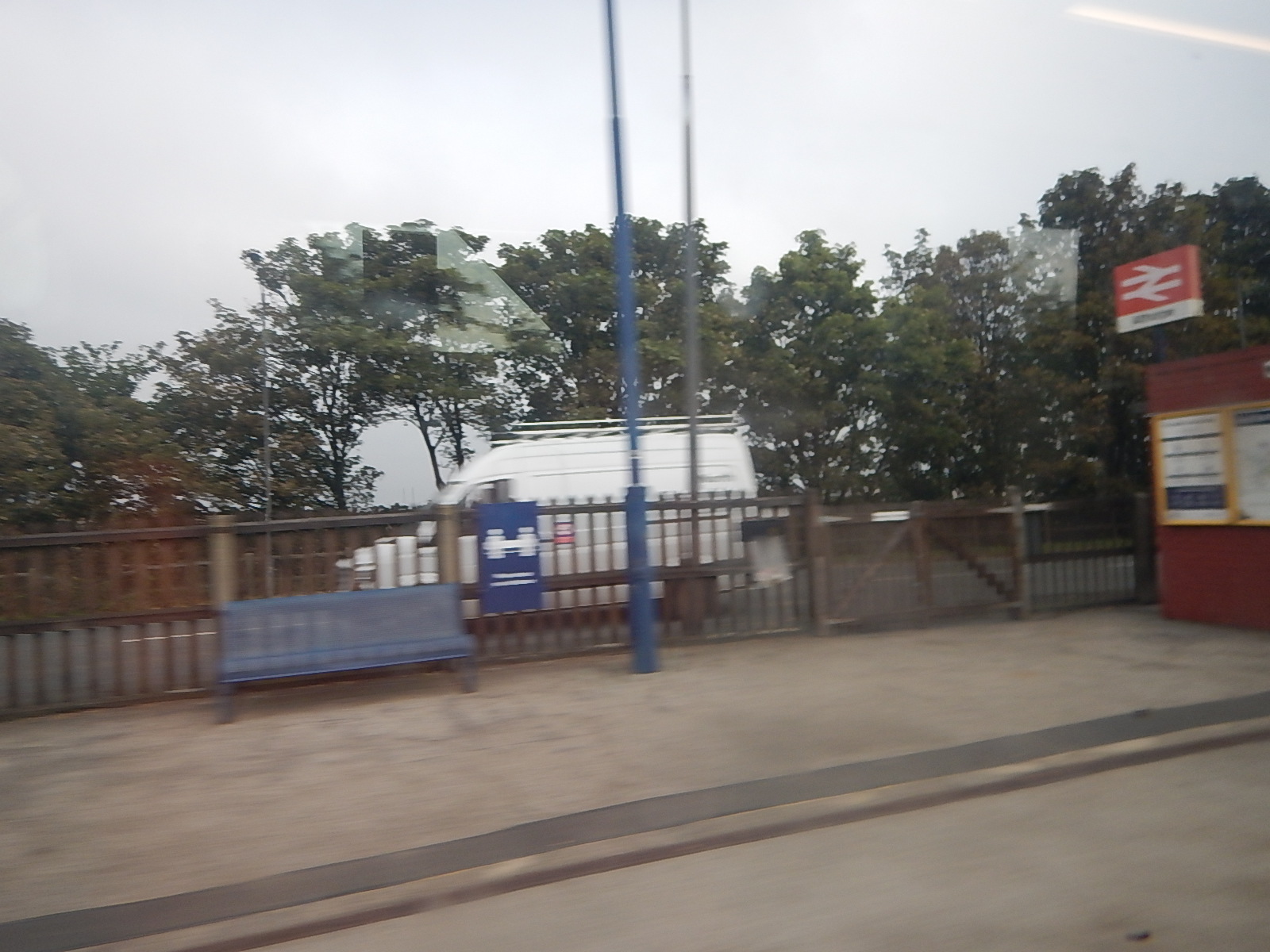
On The way to Cleethorpes, I passed through Althorpe station.
This Google Map shows the area.
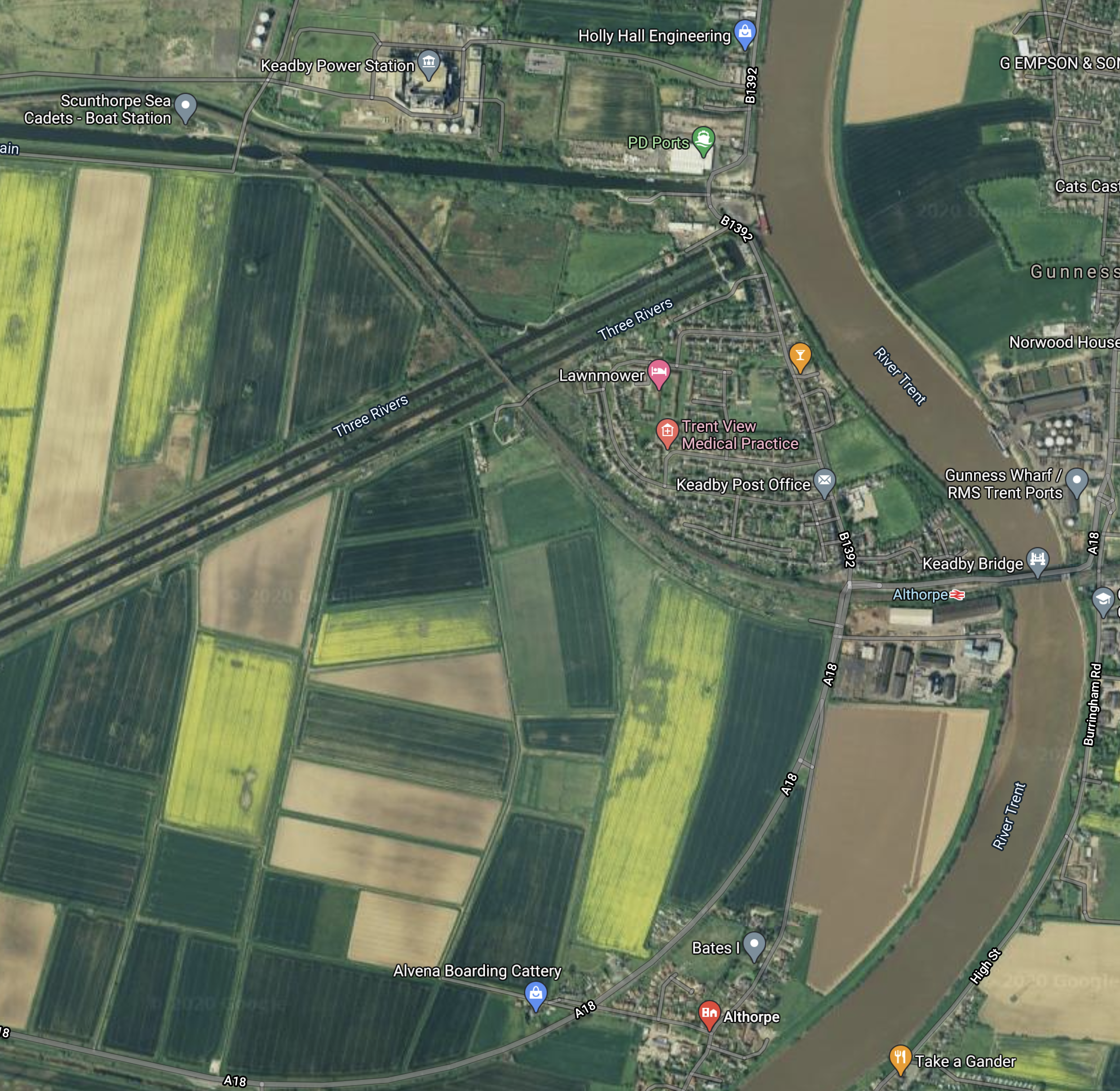
Note.
- The River Trent flowing South to North.
- Keadby power station at the top of the map.
- Althorpe station close to the bridge over the river.
- The village of Althorpe is at the South of the map by the river.
C and myself had friends, who farmed much of the land in the curve of river, South of the railway.
These are a few tales, some might enjoy.
Althorpe And Princess Diana’s Grave
I was once told, that regularly tourists would appear looking for the last resting place of Princess Diana.
Sat-navs may be a wonderful gadget for some, but they do lead those with a certain lack of common sense on wild goose chases.
C And The Tug-Boats
C once spent a night in their farmhouse, which was by the River Trent.
She didn’t sleep well, as tug-boats pulling barges were constantly going past and sounding their sirens. The river was actually above the house, due to the embankments to stop flooding.
Princess Anne And The Centrefold
Our friends’ daughter was a very good rider in eventing and used to supplement her variable income in the sport with modelling. At one point, I used her for some promotional shots for one of my companies.
Some years ago, she was competing at an event in Yorkshire. Coincidentally, this was just after she had appeared as the centrefold in a well-known men’s magazine.
The event was a bit of a nightmare for her, as paparazzi were following her with open copies of the magazine.
At one point, it all got a bit much, so she decided to sneak back to the calm of her horsebox, by a circuitous route.
As she walked back, she encountered Princess Anne, who was also competing and using the same route to avoid the paparazzi.
They talked about the pressures of the paparazzi, who were being a nuisance, with the Princess saying, she approved of my friends’ daughter’s modelling and hoped it continued, as it had taken the pressure off herself.
Flixborough
My friends’ farm was not far from Flixborough, which is infamous for the Flixborough Disaster in 1974, when a chemical plant exploded and killed 28 people and seriously injured a further 36.
My friends also lost several thousand pigs because of the explosion.
Wikipedia says this about the cause of the explosion.
The disaster involved (and may well have been caused by) a hasty modification. There was no on-site senior manager with mechanical engineering expertise (virtually all the plant management had chemical engineering qualifications); mechanical engineering issues with the modification were overlooked by the managers who approved it, nor was the severity of the potential consequences of its failure appreciated.
At the time, I had just left ICI and I was still in contact with my former colleagues.
One told me, that he had met a Senior ICI Engineer, who had been involved with the enquiry into the disaster.
The plant had been a copy of a Dutch plant, that had been built to metric units, which were converted to Imperial to build the Flixborough plant.
As ICI had used metric units since the mid-1950s, there was considerable alarm in the mind of the Senior Engineer, that when the hasty modification was made, someone got mixed up.
Would the Flixborough disaster have happened, if the plant had been built as a copy of the Dutch plant using metric units?
Scunthorpe Steelworks
On my way back from Cleethorpes, I passed Scunthorpe Steelworks.


It did seem rather quiet, although I did pass a train-load of new rails on their way to somewhere.
The Future Of Steel-Making
Steel-Making is on its uppers in the UK and it has a bad carbon footprint.
However, various processes are in development that could make the industry fit for the Twenty-First Century.
HIsarna Steelmaking
In Whitehaven Deep Coal Mine Plan Moves Step Closer, I said this.
In Wikipedia, there is an entry for the HIsarna ironmaking process.
This process is being developed by the Ultra-Low Carbon Dioxide Steelmaking (ULCOS) consortium, which includes Tata Steel and the Rio Tinto Group. Reduction in carbon-dioxide produced by the process compared to traditional steel-making are claimed to be as high as fifty percent.
This figure does not include carbon-capture to reduce the carbon-dioxide still further.
However, looking at descriptions of the process, I feel that applying carbon-capture to the HIsarna steelmaking process might be a lot easier, than with traditional steelmaking.
As Scunthorpe is close to Theddlethorpe Gas Terminal, the captured carbon-dioxide could probably be stored in wells connected to the terminal.
Hydrogen Steelmaking
North-East Lincolnshire is becoming the new Aberdeen, but instead of being based solely on oil and gas, there is a large proportion of wind energy being reaped.
In the future, I believe that a lot of this wind energy will be turned into hydrogen gas both onshore and increasing off-shore scores of miles out in the North Sea. There is talk of upwards of 70 GW of wind turbines being installed and much of it will be turned into hydrogen in North-East Lincolnshire.
In Funding Award to Supply An 8MW Electrolyser, I wrote about hydrogen steelmaking and the HYBRIT process in particular.
Will some of this massive amount of hydrogen be piped to Scunthorpe to make steel?
Conclusion
The future of steelmaking in Scunthorpe, doesn’t have to be all doom and gloom.
Go-Ahead For West London 460-Home Build To Rent Scheme
The title of this post, is the same as that of this article on Construction Enquirer.
This is the first paragraph.
The scheme is the first to be brought forward by Connected Living London, a partnership between build to rent specialist Grainger and Transport for London.
This must be the way for London to get best value from all the suitable sites for housing, owned by Transport for London.
Four sites are mentioned in the article.
- Next to Southall station
- Next to Arnos Grove station
- Montford Place in Kennington. which is currently being used as a construction site for the Northern Line Extension.
- Above the new Nine Elms station on the Northern Line Extension.
These are some thoughts on the sites.
Arnos Grove Station
The developers will have to be careful, with the design at Arnos Grove station, as it’s a Grade II* Listed building.
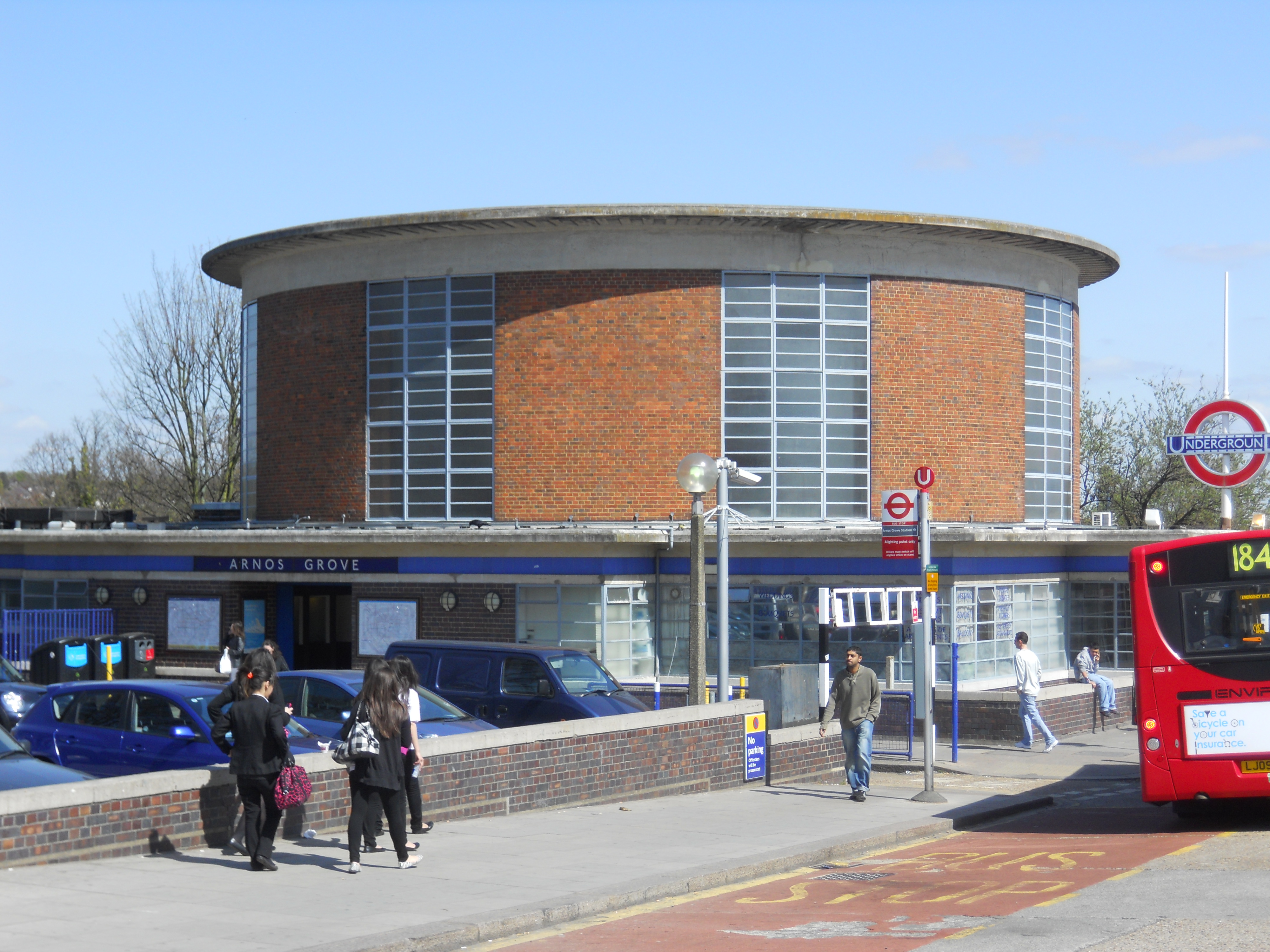
This Google Map shows the station.

I never knew, that the station had so much parking.
Will the development be over some or all of this car parking?
This article on Ian Visits is entitled Plans To Build Flats On Arnos Grove Tube Station Car Park.
Ian says that there will be four blocks, with a total of162 rental homes, of which 40 % will be affordable.
- It doesn’t seem to be high density or high towers.
- A map shows it is not over the railway.
Ian also says this about the loss of car parking.
Unsurprisingly, there are local objections to the plans to remove the car park with nearly 300 parking spaces, although TfL counters that a third of the people who currently drive to the station living within walking distance.
But then many people never drive very far from where they live. For environmental reasons, perhaps fossil fuel vehicles should pay a Movement Tax of say five pounds, every time the vehicle is moved in a built-up area. Zero-emission vehicles would be exempt!
Montford Place
I took these pictures of the Montford Place site in July.




This site could be sensitive too! But surely, the residents don’t want an ugly utilitarian headhouse for the ventilation shaft of the Northern Line Extension.
This Google Map shows the site.

It is not small, judging by the two buses at the side.
There’s also a large hole to cover!
Vital Energi To Build Waste Heat From Power Plant Centre
The title of this post, is the same as that of this article on the Construction Enquirer.
This is the introductory paragraph.
Waste heat from the nearby £680m North London Waste Authority (NLWA) Energy Recovery Facility will be used to heat homes and businesses in the London Borough of Enfield.
Some of the homes, will be on the 82-hectare Meridian Water development.
We will see more schemes like this.
BP And Microsoft Form Strategic Partnership To Drive Digital Energy Innovation And Advance Net Zero Goals
The title of this post, is the same as that of this article on Authority.
This is the introductory paragraph.
The companies intend to work together to develop new technology innovations and digital solutions to help meet their sustainability aims, including reducing energy use and carbon emissions.
I find this an interesting and possibly very important partnership.
It is an article that is well worth a read.
Conclusion
Strategic partnerships like this might be one of the moves, that will improve the world.
A Reader’s Comment On The Times Web Site
This made be laugh.
We run an AirBnB and have been asked whether we have smart meters installed “as they’re known to cause cancer”. Made my day that did.
There are certainly some weird ideas about!
Air In Scotland’s Prisons 90% Cleaner, Due To Smoke-Free Policy
The title of this post, is the same as that of this article on the University of Stirling web site.
This is the introductory paragraph.
Scotland’s smoke-free prisons policy is protecting the health of prison staff and those in custody – with the majority no longer exposed to second-hand tobacco smoke, according to a new study.
My late wife, who probably visited Holloway Prison around two hundred times, would probably agree with Scotland’s smoke-free prisons regime.
As I do!
It should be introduced into the rest of the UK, as soon as possible.
And why shouldn’t prisons have regular drug-testing?
The Schoolgirl Who Helped To Win A War
The title of this post, is the same as a programme to be shown on the BBC News Channel, this weekend.
Seeing the trailers on the BBC this morning, I am reminded of my mother, who was my mathematical parent. The girl in the story is Hazel Hill, who was the daughter of Captain Frederick William Hill, who worked on armaments research.
My mother would be a few years older than Hazel and won a scholarship to one of the best girls schools in London at the time; Dame Alice Owen’s, which was then in Islington.
I get the impression, that contrary to perceived opinion, that in the 1920s and 1930s, girls with aptitude were well-schooled in practical mathematics.
I’d be very interested to know, where Hazel Hill went to school.
I shall watch the programme.
OVO Energy To Lead Major Zero-Carbon Heat Trial
The title of this post, is the same as that of this article on Current News.
These initial three paragraphs explain the project.
OVO Energy is to lead one of the UK’s largest ever zero-carbon heating trails, thanks to a £4.2 million grant from the government.
Kaluza, Sunamp, Retrofit Works and Parity Projects will work together with OVO Energy to install and operate zero-carbon heating systems worth up to £15,000 in 250 homes.
Mitusbishi’s Ecodan air source heat pump and Sunamp’s thermal batteries will be installed in the homes, creating electric, zero-carbon heating systems. Additionally, the homes involved will have up to £5,000 worth of energy efficiency improvements made.
That sounds like a sensible project to me, as we need to be zero-carbon in everything we do and heating is the largest source of emissions in the UK with twenty percent.
Coeliac Disease: Can We Avert The Impending Epidemic In India?
The title of this post, is the same as that of this peer-reviewed paper on the Indian Journal Of Research Medicine.
With the high levels of COVID-19 in Leicester and people with an Indian heritage making up 28.3 % of the population of the city, I was searching the internet to see if there was any connection between those of Indian heritage and coeliac disease.
I know you should not try to prove a theory. But as a coeliac, I’m very interested to see how the millions of diagnosed coeliacs on a gluten-free diet like me, are faring in this pandemic.
These are some extracts from the paper.
Prevalence Of Coeliac Disease In Northern India
Coeliac disease was recognized in northern India, primarily in children, since the 1960s. A community-based study in Ludhiana that involved a step-wise approach to case detection and diagnosis estimated that celiac disease prevalence in this city was at least 1 in 310 individuals. Hospital-based studies examining a general paediatric patient population suggest a prevalence of 1 per cent.
One per cent is a high figure.
Diet And Coeliac Disease
The other variable is that cereal consumption patterns are very different between north and south India, although there has been a recent change in these patterns particularly in urban areas. In south India, rice is the primary cereal consumed in the diet. In the Indian sub-continent, wheat consumption is high in Pakistan and in the States of north India, which also constitute the coeliac belt of India.
It’s fascinating how two parts of the same country can be so different.
Introducing Babies To Gluten
The time of first exposure to wheat influences the development of celiac disease. In countries such as Finland, Estonia, and Denmark, characterized by low gluten consumption in infancy, celiac disease prevalence is much lower than in Sweden where gluten consumption is high in infancy. A natural experiment occurred in Sweden about two decades ago when national recommendations were made to introduce wheat into the diet after cessation of breast feeding at six months. This change was coupled with increased wheat gluten consumption through infant feeds. Together these measures resulted in a two-fold increase in incidence of celiac disease in Sweden, which was attributed to introduction of wheat into the diet after cessation of breast feeding. In 1996 this recommendation was changed to introduce gluten in gradually increasing amounts while the infant was still being breast fed. This led to a dramatic decrease in celiac disease incidence.
We used a Baby Mouli with our three and they all got what we ate, through a sieve.
All Wheats Are Not Equal
The other dimension to this problem is that not all wheat is alike when it comes to inducing celiac disease. The ancient or diploid wheats (e.g. Triticum monococcum) are poorly antigenic, while the modern hexaploid wheats e.g. Triticum aestivum) have highly antigenic glutens, more capable of inducing celiac disease in India, for centuries, grew diploid and later tetraploid wheat which is less antigenic, while hexaploid wheat used in making bread is recently introduced. Thus a change back to older varieties of wheat may have public health consequences.
I’ve read somewhere before that high-gluten wheats could have been the reason that bubonic plague came back.
Public Health Recommendations
Public health authorities may well want to examine both these avenues, i.e. infant feeding recommendations and wheat varieties cultivated in the country, for opportunities to avert the epidemic of celiac disease which is impending in our country.
I’ll agree with that! And the recommendations should be carried forward in the UK.
Conclusion
I have found this medical paper fascinating.
I can’t resist looking up the rates of confirmed cases of COVID-19 in the countries mentioned.
- Denmark 12751 – 6.80 million – 187.5
- Estonia – 1947 – 1.32 million – 147.3
- Finland – 7190 – 5.52 million – 130.2
- Sweden – 65137 – 10.3 million – 632.4
- United Kingdom – 311965 – 66.5 million – 469.1
- United States – 2593169 – 326.7 million – 793
Note.
- The first figure is the number of lab confirmed cases from Wikipedia
- The second figure is the population.
- The third figure is the rate of lab-confirmed cases per 100.000 of the population
I have left India out as their number of tests seems extremely low.
Note how the three countries, that have fed their children on a low-gluten diet are top of the table, with the lowest rates of lab-confirmed cases.
I have said it before and I’ll say it until I’m blue in the face. Undiagnosed coeliac disease may have something to do with this pandemic and someone should investigate it properly.
Thoughts On The Outbreak In Leicester
I have heard reports that those found positive in Leicester live in a poor area and they tend to be younger.
Could it be that in their new country, they were introduced to gluten too early, because it’s easier to give gluten than proper food? Especially, where some roads in this country, are lined with scores of fast food shops selling gluten-rich junk food.
What do I know? I’m just an engineer and a coeliac who has a good nose for problems!
But please someone! Research the connection between undiagnosed coeliac disease and COVID-19!
My son; George was an undiagnosed coeliac with a gluten-rich and smokey lifestyle. He died at just 37 from pancreatic cancer.
Did he have a poor immune system, which meant he couldn’t fight the cancer? One expert on cancer from Liverpool University said, “Yes!”
 The Anonymous Widower