Trump Brings Personal Pastor Paula White-Cain To White House To Preach Her Gospel Of Wealth
This is the title of an article in today’s copy of The Times!
I do like the paper’s sense of humour!
Fibreglass Giraffes Help Stop Elephants Rampaging Across Delicate Tea Crops
The title of this post is the same as that of this article in The Times.
Tea plantations in Assam have an elephant problem and this weird solution seems to work.
My Christmas Wrapping
I don’t use traditional paper, which because of all the glitter goes into landfill.

I use these coloured cotton bags from Clever Baggers, which are very reasonably priced.
I hope most get reused.
Grenfell Tower Fire: ‘Systemic Failures’ In Fire Brigade’s Response
The title of this post is the same as that of this article on the BBC.
This is the introductory paragraph.
The London Fire Brigade (LFB) has been condemned for “serious shortcomings” and systemic failures in its response to the Grenfell Tower fire, in a report into the 2017 blaze.
I am particularly worried about the stay-put policy.
In the 1950s, I was a member of the Scouts and several times we did exercises with the London Fire Brigade, where we were taught how to get out of blazing buildings. We were also used as dummy causalities in major incident training.
Certainly, the advice then for a fire was to get out.
Around 1970, I worked on chemical plants for ICI and fire safety was taken very seriously.
I remember being told to know your escape route from where you were working. And get out fast, if anything happened. Not that it did!
One other thing I remember is on the Wilton site, seeing office windows with “Perspex Window – Fine Hazard” stencilled on them. The reason for this, was that a nearby polythene plant very occasionally caused spectacular aerial explosions and glass windows were just too dangerous, as when shattered, they covered those inside with shards of glass.
If you read the story of the Summerland Disaster in August 1973, which killed fifty people and injured eighty, Wikipedia says this about the building.
The street frontage and part of the roof was clad in Oroglas, a transparent acrylic glass sheeting.
Oroglas is a poly(methyl methacrylate) and is another tradename for the same plastic, which ICI called Perspex.
I’d left ICI, by the time of the Summerland Disaster, but I was still in contact with friends, who worked in Plastics Division, who were responsible for Perspex. One was very critical of the use of Oroglas in the building. I was also told that ICI turned down Summerland order, as they thought it was not a suitable application, as Perspex was too flammable.
I should also say, that I have lived in a tower block with my family.
From my knowledge, I would not have lived in a building with flammable cladding.
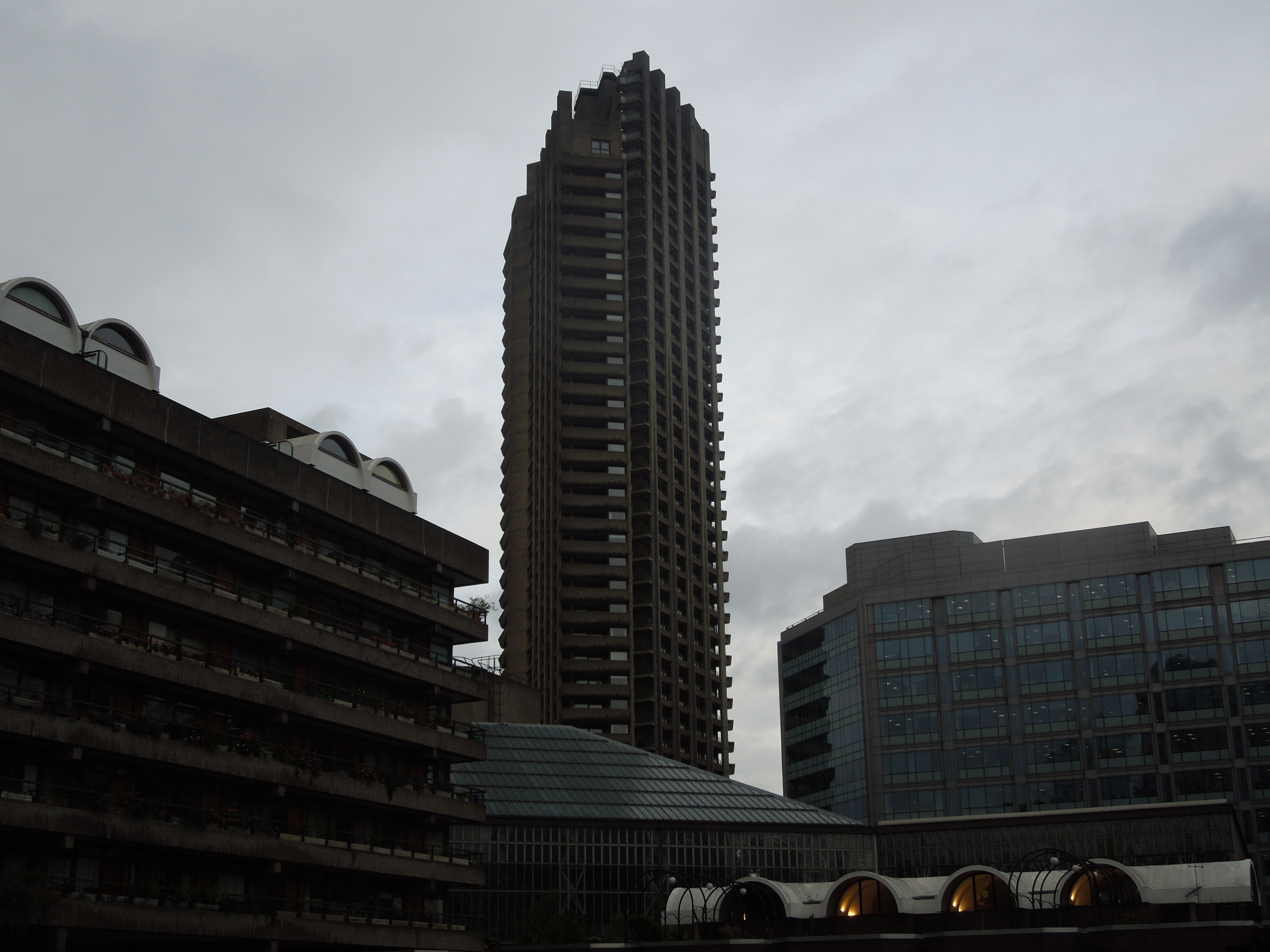
Cromwell Tower in the Barbican is clad in concrete, with a network of tunnels going a couple of floors down from each flat on the thirty-five floors. I can remember checking the fire escapes before I signed the lease.
It also has no gas supply, with underfloor electric heating.
After the Grenfell Tower fire, I feel that architects and lawmakers have completely ignored the lessons of history!
Conclusion
There is a need to make sure that we take on board all the lessons of Grenfell, so that the chance of another disaster are minimised.
Hydrogen Safety: Busting The Myth That Hydrogen Is More Dangerous Than Gas
The title of this post is the same as that of this article on Hydrogen Fuel News.
It is a must read. Especially for hydrogen sceptics!
A Hotel That Loves To Say No!
Last night I stayed in the easyHotel in Ipswich.
It was convenient for after the match. affordable and I wanted to see what the low cost chain was like.,
I took these pictures.











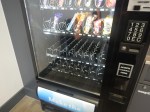
Note all these Noes!
- No Space
- No Two-Ply Toilet Paper
- No window.
- No Space For Two People To Hang Clothes
- No Glass For Water
- No Bottles Of Water In The Vending Machine. This made worse the fact that there is no late-night shop in the centre of Ipswich.
- No automated check-in system.
- No free wi-fi
- No free television. The need to enter a code each time you switched it on, was a total pain.
- No free room cleaning
- No space to put a large suitcase.
- No space to put a cot for a baby.
- No flat space to change a baby’s nappy! A real one, I hope!
- No bottle opener.
- No food to buy except chocolate or even a good nearby cafe.
I know it’s designed down to a price, but I’ve been in sleeper trains, caravans and boats that do it much better.
Note that I’m only one metre seventy and sixty kilos and C was a little bit smaller. We could just about have managed, as we always travelled light.
I don’t think, I’ll use it again, but if I do, I’ll use it this way.
- No case bigger than a brief-case.
- Bring a bottle!
- Bring a plastic glass.
- Make sure, I arrived as late as possible and left as early as possible.
- Expect to leave in the same clothes I arrived in.
- Ask how to get radio on the TV.
But at least, I slept reasonably well!
Rumours about the possible Ryanair hotels include.
- Pay-As-You-Go use of the bathroom.
- Corkage charges for any wine or beer taken into the room.
- Extra charges for those not checking in online.
- Extra charges to put your large cases in a secure separate room.
- Shielded room, so you get no mobile signal and have to pay to use wi-fi.
I do wonder, if there is to be a race to the cheapest, whether Governments will legislate on room size and various charges.
Ultrasound On A Chip
The latest episode of BBC Click is a must-watch.
One section is about a new ultrasound device from Butterfly Network.
Their product called Butterfly iQ; is an ultrasound sensor on a chip, that converts a smart phone into a full function medical ultrasound machine.
But as an engineer, who knows a bit about this sort of technology, I doubt that all the applications are medical ones.
Typical hospital ultrasound machines cost tens of thousands of pounds, but the price of the sensor on the Butterfly Network web site is in the order of a couple of grand. Software is probably extra, but even so, Southampton Hospital has bought four and one is in their paediatric ambulance.
I have one big question.
Is the device open source? This would enable, an imaginative programmer, as I once was, to convert the device, so that it is able to perform an important application.
I would be very disappointing if it wasn’t!
To get a snapshot of the power of ultrasound, read the Wikipedia entry for ultrasound.
A Video
I found this on the Internet.
As you can see, it’s not very big.
Conclusion
This is an amazing development and it will revolutionise so much of healthcare and other fields.
Fracking Hell…Is It The End?
The title of this post, is the same as that of this article in yesterday’s Sunday Times.
The article is an interesting read.
These two paragraphs are key.
Activism by Extinction Rebellion and growing public concern about climate change have weakened the chances of an industry once expected to create 64,500 jobs ever getting off the ground.
Cuadrilla Resources, the fracking company most active in Britain, has in recent days been removing equipment from its sole operating site in Lancashire. Petrochemicals tycoon Sir Jim Ratcliffe has vowed to pursue shale gas exploration overseas because of “archaic” and “unworkable” regulations at home.
But I think it’s more complicated than that!
I sometimes go to lectures at the Geological Society of London and two stand were about fracking.
Two were about fracking.
Fracked or fiction: so what are the risks associated with shale gas exploitation?- Click for more.
This is a video of the lecture.
What Coal Mining Hydrogeology Tells us about the Real Risks of Fracking – Click for more.
This is a video of the lecture.
This is a must-watch video from a good speaker.
I have also written several posts about fracking, with some of the earliest being in 2012-2013.
I have just re-read all of my posts.
- In the posts I have tried to give information and at times, I have said we should start fracking.
- But we should only start if we know what we’re doing.
- In several places I ask for more research.
However, there are some interesting facts and inconvenient truths about fracking and natural gas in general.
- Russia earns about €300billion a year or twenty percent of its GDP from gas exports to Europe. See Should We Nuke Russia?.
- Putin backs the anti-fracking movement. See Russia ‘secretly working with environmentalists to oppose fracking’.
- Fracking techniques is used in the Scottish Highlands to obtain clean water from deep underground. See the second Geological Society of London video.
- About forty per cent of gas usage is to heat housing. See the second video.
- The eighteen percent of the UK population, who don’t have a gas supply are more likely to be in fuel poverty. See the second video.
- Scotland has more need for energy to provide heat. See the second video.
- Natural gas with carbon capture and storage has a similar carbon footprint to solar power. See the second video.
- Cowboy fracking, as practised in the United States, would not be allowed in the UK or the EU. See the second video.
- We have no historic earthquake database of the UK, which would help in regulation and research of fracking. See the second video.
- Fracking has brought down the price of gas in North America.
- In the United States fracked gas is cutting the need to burn coal, which produces more pollution and carbon dioxide to generate the same amount of energy. See A Benefit Of Fracking.
The article in the Sunday Times says pressure against fracking has started the shutdown of the industry in the UK.
But there is another big pressure at work.replacement of natural gas with hydrogen.
- This would reduce carbon emissions.
- It can be used as a chemical feedstock.
- It could be delivered using the existing gas network.
- The gas network could be changed from natural gas to hydrogen on a phased basis, just as the change from town to natural gas was organised around fifty years ago.
But it would mean that all gas users would need to change their boilers and other equipment.
Put yourself in the position of Jim Ratcliffe; the major owner and driving force behind INEOS.
INEOS needs feedstocks for chemical plants all over the world and affordable natural gas is one that is very suitable, as it contains two of the major elements needed in hydrocarbons and many useful chemicals; carbon and hydrogen.
If local sources are not available, then liquefied natural gas can be shipped in.
The Hydrogen Economy
It is possible to replace natural gas in many applications and processes with hydrogen.
- It can be used for heating and cooking.
- Important chemicals like ammonia can be made from hydrogen.
- It can be transported in existing natural gas etworks.
- Hydrogen can also replace diesel in heating and transport applications.
There is also a possibility of measures like carbon taxes being introduced, which using hydrogen would reduce.
There’s more in the Wikipedia entry for Hydrogen economy.
Have Jim Ratcliffe and others done their predicting and decided that the demand for locally sourced natural gas will decline and that the hydrogen economy will take over?
But there will need to be a readily available source of large amounts of hydrogen.
I used to work in a hydrogen factory at Runcorn, which was part of ICI, that created hydrogen and chlorine, by the electrolysis of brine. In some ways, the hydrogen was an unwanted by-product, back in the late 1960s, but similar and more efficient processes can be used to convert electricity into hydrogen.
The latest idea, is to cluster offshore wind farms around gas rigs in the seas around the UK. The electricity produced would be used to electrolyse water to extract the hydrogen, which would then be piped to the shore using existing gas pipelines.
It would be a way of reusing infrastructure associated with gas fields, that have no gas left to extract.
There would be no need to build an expensive electricity cable to the shore.
The Dutch, Danes and the Germans are proposing to build the North Sea Wind Power Hub, which is described like this in Wikipedia.
North Sea Wind Power Hub is a proposed energy island complex to be built in the middle of the North Sea as part of a European system for sustainable electricity. One or more “Power Link” artificial islands will be created at the northeast end of the Dogger Bank, a relatively shallow area in the North Sea, just outside the continental shelf of the United Kingdom and near the point where the borders between the territorial waters of Netherlands, Germany, and Denmark come together. Dutch, German, and Danish electrical grid operators are cooperating in this project to help develop a cluster of offshore wind parks with a capacity of several gigawatts, with interconnections to the North Sea countries. Undersea cables will make international trade in electricity possible.
Later, Wikipedia says that ultimately 110 GW of electricity capacity could be developed.
So could these planned developments create enough hydrogen to replace a sizeable amount of the natural gas used in Western Europe?
I suspect a lot of engineers, company bosses and financiers are working on it.
Conclusion
I have come to the following conclusions.
- Fracking for hydrocarbons is a technique that could be past its sell-by date.
- The use of natural gas will decline.
- INEOS could see hydrogen as a way of reducing their carbon footprint.
- The heating on all new buildings should be zero carbon, which could include using hydrogen from a zero-carbon source.
There are reasons to think, that electricity from wind-farms creating hydrogen by electrolysis could replace some of our natural gas usage.
Does This Bank Launder Money?
I always associate Tide with a brand of washing powder.

So does the bank of the same name launder money?
Renewable Energy Outperforms Fossil Fuels For A Whole Quarter
The title of this post is the same as that of an article in today’s copy of The Times.
This is the introductory paragraph.
Wind and solar farms and other sources of renewable power have produced more electricity than fossil fuels for the first time in a three-month period.
This is a good figure, but how do we compare with the rest of the world.
This Wikipedia entry is entitled List Of Countries By Electricity Production Prom Renewable Sources.
These are some example percentages of renewable energy production.
- Albania – 100 %
- Australia – 14.5 %
- Belgium – 16.6 %
- Brazil – 80.4 %
- Canada 65.0 %
- China – 24.5 %
- Denmark – 60.5 %
- Egypt – 8.2 %
- Ethiopia 93.6 %
- France – 17.5 %
- Germany – 29 %
- Hungary – 10.1 %
- Iceland – 100.0 %
- India – 16.88 %
- Indonesia – 15.9 %
- Iran – 5.8 %
- Iraq – 6.4 %
- Ireland – 24.7 %
- Israel – 2.5 %
- Italy – 37.3 %
- Japan – 15.0 %
- Kuwait – 0.1 %
- Libya – 0.0 %
- Malaysia – 13.7 %
- Netherlands – 12.1 %
- New Zealand – 83.9 %
- Norway – 97.2 %
- Poland – 13.7 %
- Qatar – 0.3 %
- Pakistan – 32.7 %
- Russia – 16.9 %
- Saudi Arabia – 0.0 %
- South Africa – 3.2 %
- South Korea – 2.8 %
- Spain – 38.1 %
- \sweden – 57.1 %
- Switzerland – 59.8 %
- Taiwan – 4.2 %
- Turkey – 32.9 %
- UAE – 0.3 %
- United Kingdom – 27.9 %
- United States – 14.7 %
Figures are for 2016
 The Anonymous Widower