Southeastern Keen On Battery EMUs
The title of this post, is the same as that of a small section in the August 2023 Edition of Modern Railways.
This is said.
Southeastern is to seek pre-qualification interest from manufacturers and leasing companies for a replacement fleet for the Networker Class 465 and 466 inner-suburban stock, now over 30 years old. The company intends to compare the price of new and cascaded stock.
Southeastern MD Steve White told Modern Railways his preference is for a bi-mode EMU, capable of working off both the third rail supply and batteries. Battery EMUs were originally proposed for the Networker replacements so they could work through services to the unelectrified Isle of Grain branch, after Medway Council put forward plans to restore passenger services on the Hoo peninsular to serve new housing there.
Despite the extension of services to Sharnal Street on the Isle of Grain having since been put on hold by Medway Council on cost grounds (p13, May issue).
Southeastern is still pursuing battery EMUs, even though the company’s existing network is all electrified on the third rail system.
Merseyrail is already adopting battery EMU technology, with seven of the new fleet of 53×4-car Class 777 units being equipped with batteries to enable them to serve the unelectrified extension to Headbolt Lane (p82, July 2022 issue).
Mr. White says there are a number of reasons battery EMUs are attractive.
-
- Increasing levels of mental health issues in society have led to trespass being a major issue the railway: battery EMUs would make it feasible to keep trains moving at slow speed when the current supply has to be switched off to protect a trespasser.
- Battery EMUs would be able to keep moving on occasions when the third rail supply fails, due to technical failures or ice on the conductor rail. This would avoid the compounding of problems, as when delayed passengers got out on the track at Lewisham in March 2018 when the third rail iced up, forcing Network Rail to cut the electricity supply and making it more difficult to get trains moving again.
- Battery EMUs would make it feasible to remove third rail from depots, making them safer places in which to work. A train cleaner was electrocuted and died at West Marina depot in St. Leonards in May 2014, and the Office of Road and Rail has well-publicised concerns on safety grounds about any extensions to the third rail system.
- Battery EMUs would be able to cater for service extensions on unelectrified lines, such as the Isle of Grain.
Mt. White says the trespass issue is the major driver, and if the principle of battery EMUs becomes established it might prove feasible to remove the third rail from platform areas at inner-suburban stations with a persistent trespass problem. He points out this approach might unlock extension of third rail to routes such as the Uckfield line, allowing station areas to be left unelectrified. Replacement of DMUs by electric stock on the Uckfield branch would eliminate diesel working at London Bridge, with air-quality and carbon removal benefits for the capital.
There are a 5-star hotel and a major hospital close to the diesel-worked plstform at London Bridge.
I will now look at some of the issues in detail.
Range Of A Battery EMU
I discuss range of battery EMUs in these posts.
- Stadler FLIRT Akku Battery Train Demonstrates 185km Range
- New Merseyrail Train Runs 135km On Battery
Note.
- Both trains are built by Stadler.
- 135 km. is 84 miles.
- A Bombardier engineer told me eight years ago, that the prototype battery-electric Class 379 train had a range of sixty miles.
I feel it is reasonable to assume that a 100 mph battery-electric train, designed to replace Southeastern’s Networkers could have a range of at least sixty miles.
Distances Of Cannon Street Metro Services
These are distances of services from Cannon Street.
- Erith Loop via Greenwich, Woolwich Arsenal and Bexleyheath – 28.5 miles
- Gravesend – 24.5 miles
- Orpington – 12.6 miles
- Grove Park – 7.1 miles
- Slade Green – 14.5 miles
Note.
- The Erith Loop services start and finish at Cannon Street station.
- The Gravesend service terminates in an electrified bay platform.
- The Orpington service terminates in an electrified bay platform.
- Grove Park and Slade Green are depots.
If trains could be fully charged at Cannon Street station, all services out of the station could be worked by a battery EMU with a range of forty miles.
Charging At Cannon Street
Consider.
- All Cannon Street services arrive at the station via London Bridge station.
- All Cannon Street services leave the station via London Bridge station.
- Trains typically take 4-5 minutes between Cannon Street and London Bridge station.
- Trains typically wait at least 7 minutes in Cannon Street station before leaving.
- Typically, a battery EMU takes fifteen minutes to charge.
A train running from London Bridge to London Bridge would probably take a minimum of fifteen minutes, which should be enough to charge the train.
The track between London Bridge and Cannon Street would need a strong level of protection from trespassers.
I suspect that with some slight timetable adjustments, all Cannon Street services could be run using battery EMUs.
Distances Of Charing Cross Metro Services
These are distances of services from Charing Cross.
- Maidstone East – 38.9 miles
- Dartford – 17.1 miles
- Gravesend – 23.8 miles
- Hayes – 14.3 miles
- Sevenoaks – 22.2 miles
- Grove Park – 8 miles
Note.
- The Gravesend service terminates in an electrified bay platform, which could be used to charge the train before return.
- The Maidstone East service terminates in an electrified platform.
- Grove Park is a depot.
If trains could be fully charged at Charing Cross station, all services out of the station could be worked by a battery EMU with a range of fifty miles.
Charging At Charing Cross
Consider.
- All Charing Cross services arrive at the station via London Bridge station.
- All Charing Cross services leave the station via London Bridge station.
- Trains typically take 10 minutes between Charing Cross and London Bridge station.
- Trains typically wait at least 7 minutes in Charing Cross station before leaving.
- Typically, a battery EMU takes fifteen minutes to charge.
A train running from London Bridge to London Bridge would probably take a minimum of twenty minutes, which should be enough to charge the train.
The track between London Bridge and Charing Cross would need a strong level of protection from trespassers.
I suspect that with some slight timetable adjustments, all Charing Cross services could be run using battery EMUs.
Distances Of Victoria Metro Services
These are distances of services from Victoria.
- Gillingham – 37.2 miles
- Orpington – 14.7 miles
- Dartford – 18.9 miles
Note.
- The Orpington service terminates in an electrified bay platform.
- The Gillingham service terminates in an electrified bay platform.
- The Dartford service terminates in an electrified platform.
If trains could be fully charged at Victoria station, all services out of the station could be worked by a battery EMU with a range of fifty miles.
Charging At Victoria
Consider.
- All Victoria services arrive at the station via Shepherds Lane junction.
- All Victoria services leave the station via Shepherds Lane junction.
- Trains typically take five minutes between Victoria and Shepherds Lane junction.
- Trains typically wait at least 7 minutes in Victoria station before leaving.
- Typically, a battery EMU takes fifteen minutes to charge.
A train running from Shepherds Lane junction to Shepherds Lane junction would probably take a minimum of seventeen minutes, which should be enough to charge the train.
The track between Shepherds Lane junction and Victoria would need a strong level of protection from trespassers.
Conclusion
It certainly appears that if the Networker Class 465 and Class 466 trains were replaced by new trains with the following specification.
- 100 mph operating speed.
- Range of fifty miles on battery power.
- Ability to charge batteries in fifteen minutes.
- Third-rail operation
- It might be an idea to add a pantograph, so the trains could use 25 KVAC overhead wires where necessary and charge batteries on a short length of overhead electrification.
Then a substantial part of the Southeastern Metro network could be made safer, by selective removal of third rail at trespassing hot spots.
The Glimmer Twins
The Glimmer Twins is a bronze sculpture of Mick Jagger and Keith Richards, that was unveiled this week in Dartford.












My only criticism is that the sculpture is not obvious from the station. But if you go over the bridge into the two centre and carry straight on, you should find it.
Beyoncé Funds Metro Service
The title of this post, is the same as that of this article on Railway Gazette.
This is the first paragraph.
Singer Beyoncé’s Renaissance World Tour funded an extra hour of operation of the Washington metro at a cost of $100 000, ensuring that fans could get home after bad weather delayed the start of her concert at the FedEx Field stadium.
Reading the whole article, it looks like everyone was a winner and it is to be hoped that it sets a precedent and under similar circumstances, other promoters take similar actions.
I remember a few years ago, Ipswich and Charlton in the League Cup overran badly one evening and we all got back to Ipswich station well after the last train had gone.
But Greater Anglia made sure that everybody got home, even sending a fleet of taxis to Sudbury.
Portway Park & Ride Station – 10th August 2023
Portway Park & Ride station, opened on the first of this month, so I went to visit today.

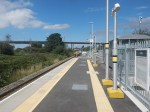
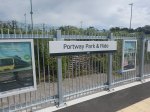
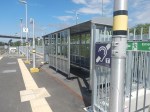
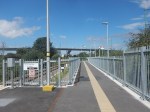

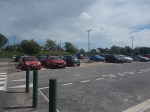
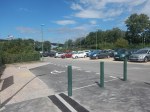
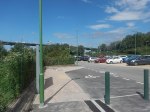

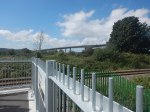
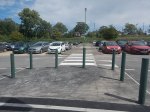
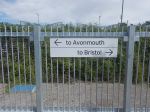
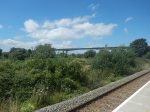
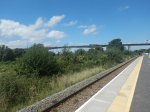
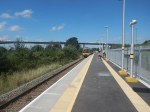
Note.
- The Portway Park & Ride is served by both buses and trains.
- Buses serve the City Centre and rugby and football at Ashton Gate stadium.
- Trains serve Avonmouth, Bristol Temple Meads, Severn Beach, Weston-super-Mare and a large number of other Bristol stations.
The M5 crosses over the railway to the West of the station.
This Google Map shows the M5 and the Portway Park & Ride.
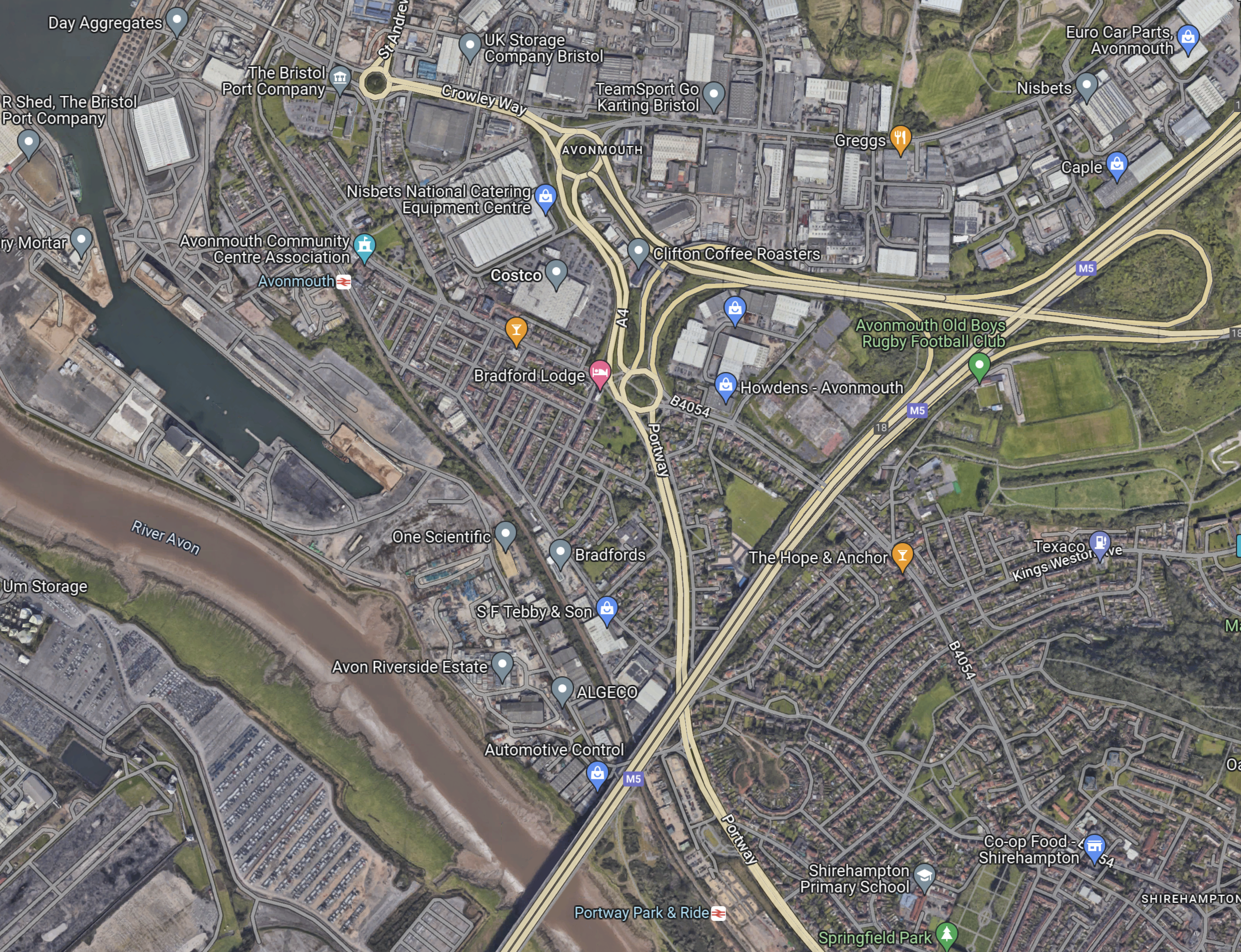
Note.
- The M5 goes diagonally SW-NE across the map.
- The wide river is the Avon.
- Portway Park & Ride with its station is in the middle of the bottom of the map.
- Avonmouth station is in the North-West corner of the map.
The Portway Park & Ride seems to be an extremely well-connected Park & Ride.
These are my thoughts.
Are There Any Other Park & Ride Sites, Where A Station Could Be Added?
Consider.
- I wrote about a possible new station at Leicester Forest East in A Station At Leicester Forest East.
- In A Look At New Station Projects, several possible Park & Ride stations are mentioned.
Has Portway Park & Ride been developed to see if sites served by buses and trains are a good idea?
Is Portway Park & Ride The Solution To Big Matches At Ashton Gate?
Consider.
- Ashton Gate Stadium has a capacity of 27,000.
- Wikipedia says that buses from Portway Park & Ride are used to bring supporters to games.
- The platform at Portway Park & Ride might be able to take a five-car Class 802 train for a big match.
I wouldn’t be surprised that Portway Park & Ride has been designed for large crowds at big matches at Ashton Gate.
T-Pylons To The West Of Yatton Station
I talked about National Grid’s first T-pylons in National Grid Energise World’s First T-Pylons.
Today, I went and had a look for them and found where they cross the Bristol-Exeter Line between Yatton and Worle stations.
I took these pictures.


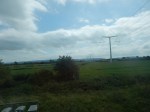
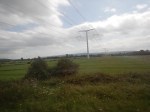
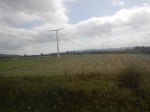
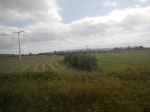




Note.
- The first nine pictures were taken going West between Yatton and Worle and the last eleven were taken going East.
- Some of the mature trees seem to hide the pylons, as the train passes.
T-pylons are deliberately smaller than traditional pylons, as these pictures show.
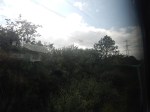
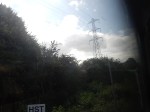


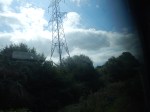
It is certainly a good attempt at producing a less noticeable electricity transmission line.
Northumberland Line Station Contracts Are Signed
The title of this post, is the same as that of this news item from Nexus.
These are the first three paragraphs.
The signs are good for the new Northumberland rail line after the green light was given for construction to get underway on three new stations.
Contracts have been exchanged for principal contractor Morgan Sindall Infrastructure to formally start work on Bedlington, Blyth Bebside and Seaton Delaval stations.
Main construction works are progressing at pace, with station works well underway at Newsham and works approaching completion in Ashington, and 21km of new track is already installed.
It certainly looks like it’s all systems go.
I hope Network Rail have the next reopening ready to go!
An INEOS Grenadier Spotted In De Beauvoir Town
I saw an INEOS Grenadier by my doctor’s surgery this morning.
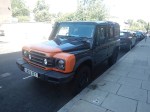

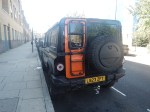


I think, if I was still driving and lived in the country, I’d take a serious look at one.
Chiltern Railways Seeks Proposals For Low-Emission Multiple-Unit Fleet
The title of this post, is the same as that of this article on Railway Gazette.
These are the first three paragraphs.
Chiltern Railways is seeking proposals for the supply of between 20 and 70 new or converted ‘low-emission’ multiple units.
The operator has called for ‘established’ rolling stock manufacturers, owners and modifiers to propose vehicles which would provide a ’meaningful’ reduction in the emissions and external noise compared to its existing diesel multiple-units, particularly in urban areas.
The envisaged five-year framework agreement has an estimated value of up to £400m, including supply and maintenance of the fleet, refuelling infrastructure and any depot modifications.
I have my thoughts.
Chiltern’s Rolling Stock
Chiltern Railways have two different types of rolling stock; diesel multiple units and rakes of coaches haled by diesel locomotives.
Chiltern’s Diesel Multiple Units
Chiltern has these diesel multiple units.
- Class 165 diesel trains – 28 x two-cars – 56 cars
- Class 165 diesel trains – 11 x three-cars – 33 cars
- Class 168 diesel trains – 9 x two-cars – 18 cars
- Class 168 diesel trains – 9 x three-cars – 27 cars
- Class 168 diesel trains – 10 x four-cars – 40 cars
Note.
- The trains were built between 1990 and 2004.
- The Class 165 trains are 75 mph units, whereas the Class 168 trains are 100 mph units.
- These total to 67 trains and 174 cars.
- This is an average train length of 2.6 cars.
Could a fleet of three-car low-emission 100 mph trains fit Chiltern’s requirements?
- They could work in pairs for six-car units for Birmingham Moor Street and Oxford.
- There may be a need for some four-car units.
But how will they be powered?
- Pure diesel will surely give out too many emissions!
- Would an mtu Hybrid PowerPack lower emissions enough?
- Could hydrogen-power be used, either with fuel-cells or a hydrogen internal combustion engine?
In Alstom And Eversholt Rail Sign An Agreement For The UK’s First Ever Brand-New Hydrogen Train Fleet, I wrote about Alstom’s proposed Hydrogen Aventra.
A version of these trains could be ideal, if Children could source the fuel economically.
Chiltern’s Diesel-Hauled Rakes Of Coaches
Chiltern have four rakes of Mark 3 coaches hauled by Class 68 locomotives.
These could be replaced by pairs of three-car low-emission’ multiple units.
Conclusion
A fleet of seventy three-car ‘low-emission’ multiple units, powered by hydrogen could be an innovative solution to the trains to run Chiltern’s services.
Northern Trains Plans Framework Contract For 450 Multiple-Units
The title of this post, is the same as that of this article on Railway Gazette.
This is the first paragraph.
Northern Trains has invited expressions of interest in a framework contract covering the supply of up to 450 multiple-units to replace ‘significant quantities of its ageing fleet’.
These are other details.
- Firm orders would be placed in phases.
- The initial order would be for ‘multi-mode’ multiple-units.
- Battery-electric or electric-only trains would be included in subsequent orders.
- Trains would have a minimum design life of 35 years from acceptance.
- The ability for the multi-mode units to be converted to electric or battery-electric power as part of an ‘in-life decarbonisation’ programme.
These four paragraphs outline the framework agreement between Northern Trains, the train manufacturer and the owners, who will finance the trains.
The framework agreement would run for eight years, with Northern able to order rolling stock in multiple phases.
Each phase would include a train manufacturing and supply agreement and a technical support and spares supply agreement.
The supplier would provide tools and spare parts, and there would be options for the supply of mock-ups and a cab simulator. Northern is to run a separate procurement for an owning party which would purchase each fleet and lease it to the operator.
The owner would be party to each manufacturing and supply agreement, and there may be different owning parties for each order phase.
This is a well-thought out proposal, that would be worth around a billion pounds to the train manufacturer.
It would probably be based around a family of trains like Alstom’s Aventra, CAF’s Civity or Stadler’s FLIRT.
For a series of orders of such a value, I think we will see some excellent proposals.
The deal will transform rail travel in the North.
I have some thoughts.
Which Trains Will Be Replaced?
Northern Trains fleet includes these ageing trains.
- Class 150/0 diesel trains – 6 x three-car – 18 cars
- Class 150/1 diesel trains – 46 x two-car – 92 cars
- Class 150/2 diesel trains – 26 x two-car – 52 cars
- Class 155 diesel trains – 7 x two-car – 14 cars
- Class 156 diesel trains – 65 x two-car – 130 cars
- Class 158/0 diesel trains – 45 x two-car – 90 cars
- Class 158/9 diesel trains – 8 x three-car – 24 cars
- Class 319 electric trains – 12 x four-car – 48 cars
- Class 323 electric trains – 34 x three-car – 102 cars
- Class 333 electric trains – 16 x four-car – 64 cars
- Class 769 bi-mode trains – 8 x four-car – 32 cars
Note.
- These total to 273 trains and 661 cars.
- If the 16 Class 170 trains, which are of three-cars, were also to be replaced. that would bring the total trains to be replaced to 289 trains and 709 cars.
I would expect the difference between 273-289 current trains and 450 trains in the article, is explained by new services and increased services on certain routes.
Which Trains Could Be Retained?
Northern Trains fleet includes these new trains.
- Class 195 diesel trains – 25 x two-cars – 50 cars
- Class 195 diesel trains – 33 x three-cars – 99 cars
- Class 331 electric trains – 31 x three-cars – 93 cars
- Class 331 electric trains – 12 x four-cars – 48 cars
Note.
- These trains were all built by CAF in the last five years.
- These total to 101 trains and 290 cars.
But if they have an expected life of 35 years, the diesels will have to be converted to zero-carbon trains.
Will The CAF Trains Be Retained?
Consider.
- If all the ageing trains and those not built by CAF were to be replaced then that would be 289 trains and 709 cars.
- If the nearly-new CAF trains were also to be replaced that would be 390 trains and 999 cars.
- Add in a few more trains for expanded services and you’re got the figure of 450 trains given in this article.
- If the CAF trains were to be replaced, then Northern Trains would have an homogenous fleet of new trains from one manufacturer, with all the advantages in operation and maintenance.
On the other hand, I haven’t read any bad criticism of these CAF trains, so I will assume that there is no pressing reason to replace them.
And of course Northern Trains could have an homogenous fleet of new CAF trains.
This is said in the article.
The supplier would provide tools and spare parts, and there would be options for the supply of mock-ups and a cab simulator.
As this is specifically mentioned, do Northern lack a simulator for driver training?
What About The Manchester Bee Network And Other Local Networks?
Will these networks want to take control of their local trains?
If there is an homogenous fleet of new trains from one manufacturer, then surely, it would be easier to give control of some routes to the local transport interests.
Training and driver rostering could be retained in what was left of Northern Trains.
Tram-Trains
Tram trains would be an added complication, but as the South Wales Metro is showing, tram-trains are an interesting way of expanding a network.
Able Seaton Port
Able Seaton Port has been in the news several time recently. So I looked it up on Google Maps.
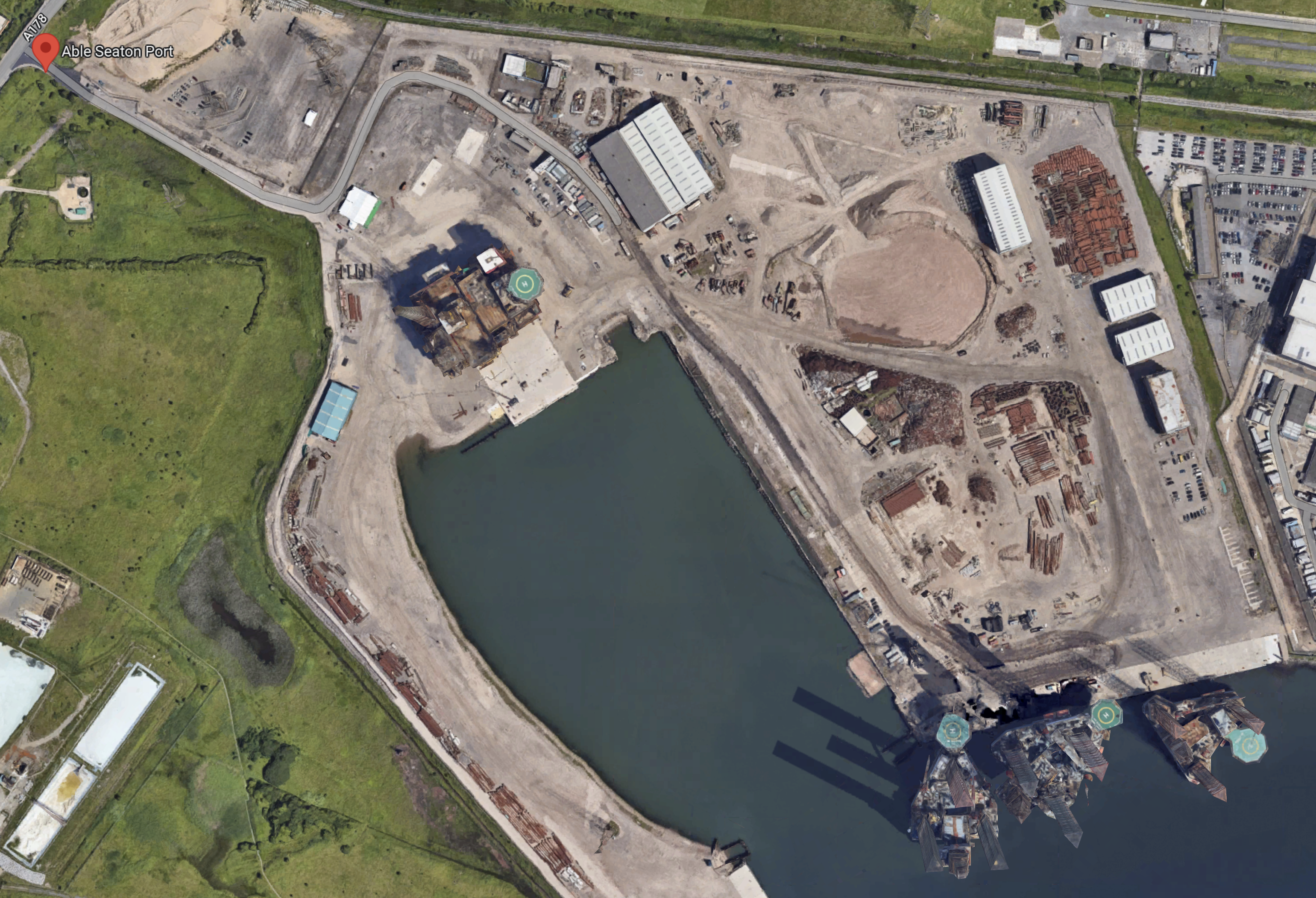
These four paragraphs on the Able Seaton Port website outline the capabilities of the port.
ABLE Seaton Port (ASP) is located in the centre of the UK on the North East Coast close to the mouth of the River Tees and covers 51 hectares (126 acres) including a 10 hectare (25 acre) dry dock (currently wet) – one of the world’s largest.
It is capable of handling all types of offshore construction vessels, has significant crane capacity and quays, which have been constructed particularly to suit the requirements of the heavy fabrication industry.
Quays 10 & 11 are some of the strongest in Europe at 306m long. They are dredged to -15m chart datum and are designed with a quay loading capacity of 40T/m² with a heavy load-out pad area capable of 60T/m².
Quay 6 is a new heavy-lift quay at the northern end of the wet dock. At 60T/m² this is one of the heaviest load out quays in Europe. It’s function is to service the Brent field decommissioning project which ABLE is undertaking with partners Shell and Allseas.
Note.
The four platforms with their helipads.
Is the platform at the Northern end of the dock concerned with the Brent field decommissioning project?
There seems to be lots of components around the dock ready to be assembled into assemblies like wind turbine foundations.
As Able say this is certainly a large facility.
This second Google Map is a 3D-visualisation of the Southern three platforms.
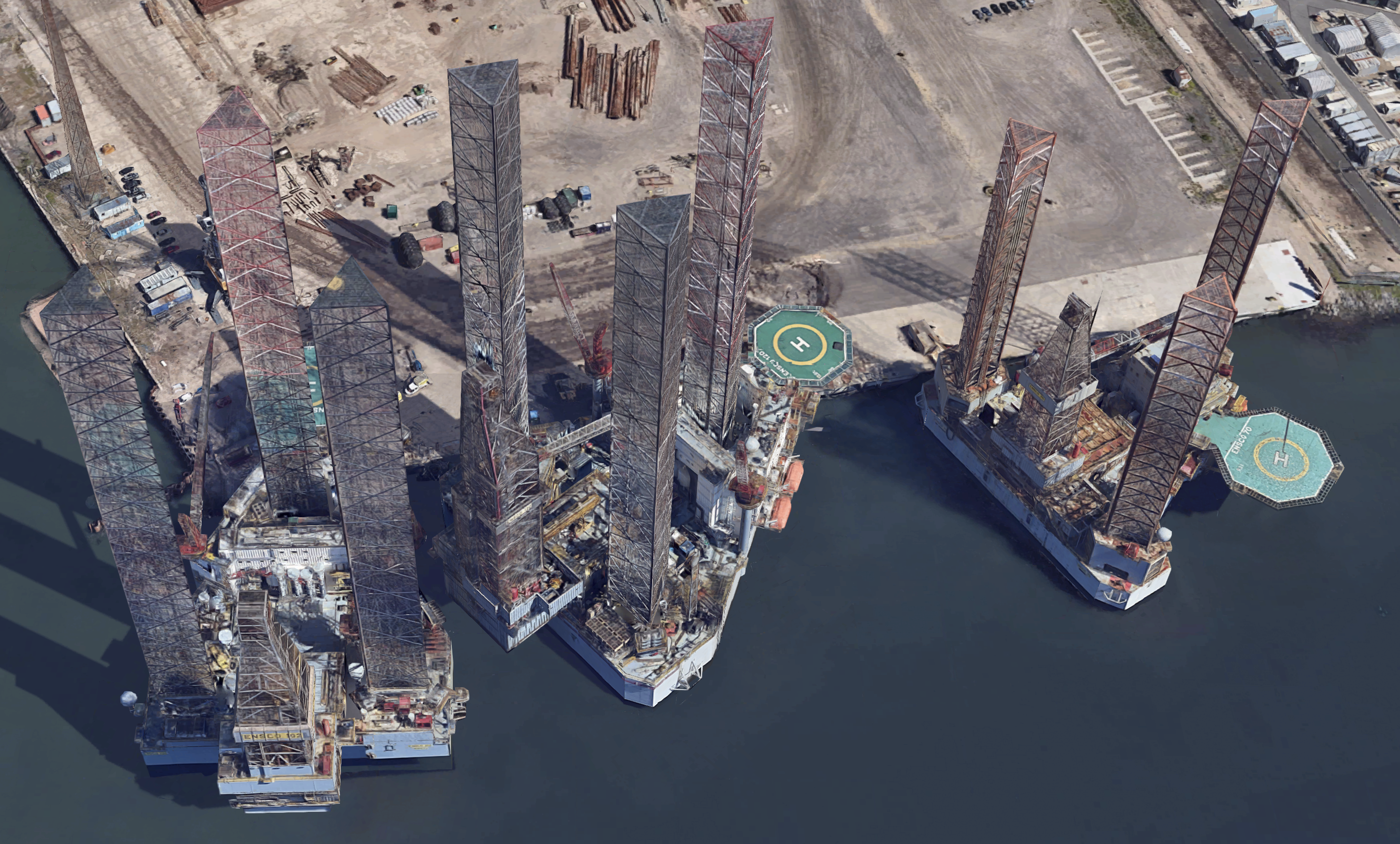
The view has all changed now according to this news item on the Able Seaton Port, which is entitled First Campaign To Install Turbines At World’s Largest Offshore Wind Farm Is Underway.
A new vessel called Voltaire will be used to install the turbines.
This page on the Dogger Bank Wind Farm web site, is entitled Largest Jack-Up Vessel Voltaire Arrives In The UK To Build Largest Wind Farm In The World.
These are the bullet points.
- Largest offshore jack-up vessel and first seaworthy ultra-low emission installation vessel Voltaire arrives in the UK for her very first assignment on Dogger Bank Wind Farm.
- The vessel will install turbines for all three Dogger Bank Wind Farm phases, a total of 277 units of GE Renewable Energy Haliade-X offshore wind turbines.
These three paragraphs describe the assembly of the wind farm.
The largest offshore jack-up installation vessel ever built, Voltaire, has just arrived in the UK port of Able Seaton ahead of its first campaign on Dogger Bank Wind Farm.
Voltaire of Jan De Nul Group was delivered in late 2022. Since then she has been undertaking final preparations for her very first assignment, the construction of the Dogger Bank Wind Farm phases A, B and C.
In total, the vessel will be responsible for installing 277 GE Renewable Energy Haliade-X turbines. Voltaire will sail out in early July to begin installation
As in an earlier life I was writing project management software for North Sea oil and gas, I can obviously say history is repeating itself. In the 1970s offshore work got easier as cranes got bigger and now fifty years later, it looks like larger lifting capacity, is enabling the installation of larger turbines.
 The Anonymous Widower