The Fruits Of Victory Would Be Ashes In Our Mouth
These words from from President Kennedy’s speech on the Cuban Missile Crisis, seem to be the Russian aim, as they continue to lay waste to Ukraine.
Kennedy was talking about nuclear war, but pictures from Ukraine remind me more of the damage of atomic bombs on Nagasaki and Hiroshima or from an all-destroying earthquake.
Vlad the Mad will certainly be remembered by history in the same way as Hitler, Pol Pot and Stalin.
I don’t believe in the death penalty, but he is surely the one case, where anybody would make an exception.
I wonder how he would like Hitler’s most feared punishment. Hitler apparently, worried most about being exhibited in a zoo.
A Rusting Battery In Minnesota Could Unlock The Electric Grid Of The Future
The title of this post is the same as that of this article on the West Central Tribune.
This is the first paragraph.
A pilot project between Minnesota’s second largest supplier of electricity, Great River Energy, and a Massachusetts start-up claims to have a breakthrough in battery technology that would allow for vast expansions of renewable energy on the power grid.
The article goes on to describe Form Energy’s batteries and gives a couple of pictures.
I’m not sure, but it looks like the battery can supply 1 MW for a hundred hours.
Form Energy have impressive backers and have been secretive in the past, but the concept of using iron oxide (rust) as an energy storage medium sounds to me, to be a challenging idea.
Design Contract Awarded To Extend Railway Arches Low Line Concept
The title of this post is the same as that of this article on Ian Visits.
These are the first two paragraphs.
Plans to revamp the railway arches running through Wandsworth and Lambeth to create an extension of Southwark’s “low line” have taken a step forward after a contract was awarded to a design agency.
The extension would create a continuous walking and cycling route from Battersea to London Bridge, to connect communities with the creation of new spaces alongside the viaduct.
It looks to be an interesting concept with lots of possibilities.
Shell Resurrects Plans For Rejected North Sea Gasfield
The title of this post, is the same as that of this article on The Times.
This is the first two paragraphs.
Shell has submitted a revised plan for a North Sea gasfield that was rejected by regulators on environmental grounds last year.
The oil and gas major is seeking to develop the Jackdaw field, about 155 miles east of Aberdeen, which it says could produce 6.5 per cent of UK domestic gas output at peak — enough to heat 1.4 million homes. It hopes to start production in 2025 at the field, which would keep producing until 2033.
Other points in the article include.
- The platform would be unmanned.
- One of the problems with the field is that the gas naturally contains a lot of carbon dioxide.
- Shell plans to capture and store this carbon dioxide.
- The gas would be brought to shore using a nineteen mile pipeline to the Shearwater platform.
Surprisingly, the Shearwater platform is connected by the 295 mile SEAL pipeline to the Bacton terminal in Norfolk. But then Bacton is connected by the BBL pipeline to the Netherlands.
- There are depleted gas fields connected to Bacton, that can be used to store the carbon dioxide from the Jackdaw gas field.
- Shell manage the BBL pipeline.
- Shell are sitting in the middle with gas, that can be sold to the highest bidder.
It could be good for Shell without a great deal of expenditure on infrastructure.
In the short term, Jackdaw could make up our gas shortage, but as we start to blend wind-produced hydrogen into the gas network, we can export the surplus gas to the Continent. Shell might have plans for other gas fields to participate in the export of British gas to Germany, that has been replaced by wind-produced hydrogen.
It would be an interesting point, as to who would be responsible for the carbon dioxide produced by Jackdaw’s gas, that is burned in Germany. I suspect it will be the Germans.
In the long-term, when Shearwater and Jackdaw have given up all their gas, I wonder if Shell’s plans could be.
- Surround the platforms serving these fields with floating wind farms.
- Put a giant electrolyser on the Shearwater platform and bring hydrogen to the shore in the SEAL pipeline.
- Distribute the hydrogen from Bacton to the UK or through the BBL pipeline to the Continent.
I feel that Shell could do very nicely thank you out of the Jackdaw gas-field.
But it is also a plan, that produces a lot of energy, without emitting vast amounts of carbon dioxide.
Movable Overhead Electrification To Decarbonise Freight
The title of this post is the same as that as this article on Railway Gazette.
This is the first paragraph.
The use of a moveable overhead conductor rail to eliminate the need to use diesel locomotives at freight terminals where traditional fixed electrification equipment would obstruct loading and unloading is being demonstrated in the UK, and a trial in India is planned.
The Railway Gazette article also has two pictures, which show the overhead conductor rail in two positions.
Ipswich And Wentloog
In A Class 93 Locomotive Hauling A Train Between The Port Of Felixstowe And Wentloog, I wrote about running freight trains between Felixstowe and Wentloog using a Class 93 locomotive.
Currently, there appear to be three services a day each way between Felixstowe and Wentloog.
- They are diesel hauled.
- The Class 66 locomotive can’t travel faster than 75 mph.
- The route between Ipswich and Wentloog is fully-electrified.
- Other services that go from Felixstowe to the rest of the UK via London, are sometimes hauled by a Class 90 locomotive from Ipswich.
- Class 90 electric locomotives can haul trains at up to 110 mph.
This Google Map shows the layout of Wentloog freight terminal.
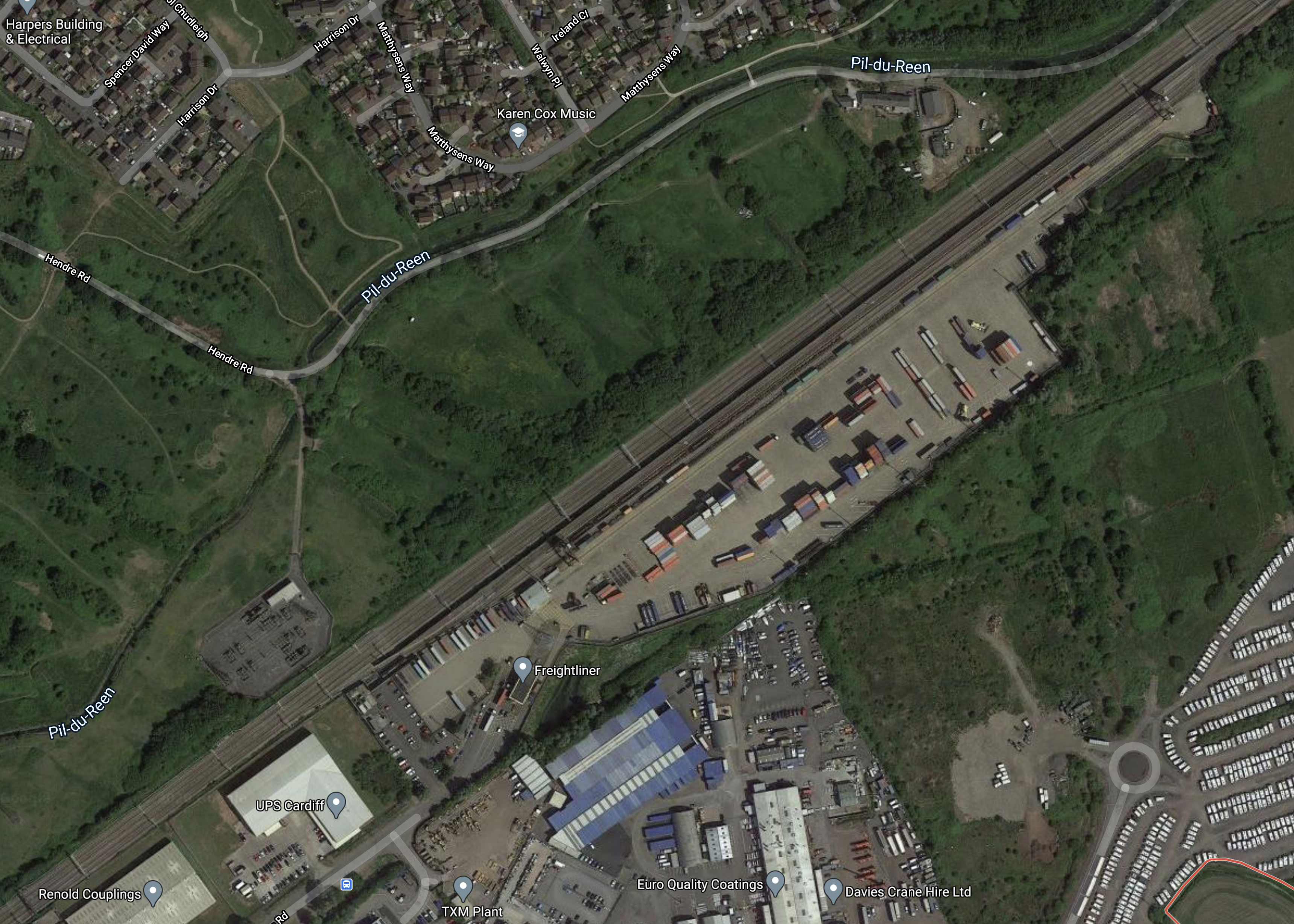
Fitting a moveable overhead conductor rail at Wentloog would surely allow carbon-cutting Class 90 locomotives to haul a train, between Ipswich and Wentloog.
How many other freight terminals can be electrified by installing a moveable overhead conductor rail?
Putin And The School
This has just been published by a reader on The Times web site.
To get on the good side of voters, Vladimir Putin goes to visit a school in Moscow to have a chat with the local children. He talks to them about how Russia is a powerful nation and how he wants the best for the people. At the end of the talk there is a Question and Answer session.
Little Sasha puts up her hand and says ”I have 2 questions. “Why did Russia invade the Crimea and why are we amassing troops at the the Ukraine border?”
Putin says ” Very good questions ” but just then the bell goes for lunch break.
When they come back to finish the Q&A section another girl, Misha, puts up her hand and says ”I have 4 questions for you. Why did Russia invade the Crimea and why are we amassing troops at the the Ukraine border? Why did the lunch bell ring 20 minutes early and where the hell is Sasha?”
Someone thought it was a Finnish joke from the time of the Winter War.
But we should certainly unleash the Dogs of Comedy!
Old Street Station – 18th March 2022
There has been some progress at Old Street station in the last week.












A large mobile crane has arrived on site and the concrete beams for the station have started to be installed.
Express On A Perpetual Motion Machine. Scientists Create An Electric Train That Will Charge By Gravity
The title of this post, is the same as that of this article on The Saxon.
These are the first two paragraphs.
The world’s first “infinity train” will recharge its electric batteries during deceleration using the force of gravity.
Scientists and engineers from the Australian company Fortescue Future Industries have begun developing the world’s first train that will be powered by gravity. The company plans to spend $50 million on this development over the next two years, according to the Daily Mail.
How Does The Train Work?
According to the article, the sequence of operation appears to be as follows.
- The train starts at the high end of the line.
- The train rolls down the hill to the low end of the line.
- As it descends, it will pick up kinetic energy due to gravity.
- Regenerative braking on the train will be used to charge the battery.
- The train will have a full battery, when it reaches the low end of the line.
- The full battery will then power the empty train back up the hill.
I have a feeling that this will work, where there is a full train coming down the hill and an empty one going up.
In an example, I will assume the following.
- The high end of the line is 100 metres above the low end.
- The train weighs 100 tonnes.
- The full load weighs 100 tonnes.
- Regenerative braking is 100 % efficient.
I can calculate these energy values for a train running down and then up the line.
- A full train just about to descend, which weighs 200 tonnes and is 100 metres up will have a potential energy of 54.4 kWh.
- Whilst descending, this energy will be converted to kinetic energy and the regenerative braking will transfer this energy to the battery, which will then contain 54.4 kWh of electrical energy.
- After descending, the full train, which weighs 200 tonnes and is zero metres up will have a potential energy of 0 kWh.
- After emptying, the empty train, which weighs 100 tonnes and is zero metres up will have a potential energy of 0 kWh.
- After ascending, the the empty train, which weighs 100 tonnes and is 100 metres up will have a potential energy of 27.2 kWh.
- When the train reaches the high end, there will still be 27.2 kWh left in the battery.
Note.
- After a trip, there will be some energy left in the battery to start the train rolling down the hill on the next trip.
- Effectively, the train is powered by the weight of its cargo, which in Fortescue’s case is very dense iron ore on its trains from Pilbara to the coast.
- In some ways the Infinity train carrying iron ore is a bit like an overshot water wheel, where weight is added to the wheel and this makes the wheel turn.
- The train is driven by the weight of the cargo.
It may look like perpetual motion, but the train needs to be loaded for each trip to increase its potential energy.
I will now look at a passenger train on the same route.
- The high end of the line is 100 metres above the low end.
- The train weighs 100 tonnes.
- I will assume there are 50 passengers in both directions.
- I will assume each weighs 80 Kg with baggage, bikes and buggies, which gives a weight of 4 tonnes.
- Regenerative braking is 100 % efficient.
I can calculate these energy values for a passenger train running down and then up the line.
- A passenger train just about to descend, which weighs 104 tonnes and is 100 metres up will have a potential energy of 28.3 kWh.
- Whilst descending, this energy will be converted to kinetic energy and the regenerative braking will transfer this energy to the battery, which will then contain 28.3 kWh of electrical energy.
- After descending, the full train, which weighs 104 tonnes and is zero metres up will have a potential energy of 0 kWh.
- After emptying and reloading, the empty train, which weighs 104 tonnes and is zero metres up will have a potential energy of 0 kWh.
- After ascending, the the empty train, which weighs 104 tonnes and is 100 metres up will have a potential energy of 28.3 kWh.
Note.
- After a trip, there will be almost no energy left in the battery to start the train rolling down the hill on the next trip.
- If the regenerative braking has an efficiency of less than 100 %, it would be unlikely to work.
But it would work, if an appropriate amount of energy were to be added to the battery at either or both ends of the route.
Could A Passenger Train Like This Work On A Real Route?
In the UK, there are several lines, where a rail line climbs a few hundred metres.
- Cardiff Central and Aberdare
- Cardiff Central and Ebbw Vale Town
- Cardiff Central and Merthyr Tydfil
- Cardiff Central and Rhymney
- Cardiff Central and Treherbert
- Glasgow Central and East Kilbride
- Llandudno Junction and Blaenau Ffestiniog
- Manchester Piccadilly and Buxton
- Manchester Piccadilly and Glossop
For the trains to work, I suspect the following is needed.
- Regenerative braking efficiency must be as close to 100 % as possible.
- The total number of passengers going down during the day needs to be at least the same as the total number of passengers going up.
- For passenger trains to work, an appropriate amount of energy needs to be added to the battery at either or both ends of the route.
Freight trains which are transferring weight down the hill will generally always work.
Conclusion
The Infinity Train will work well with heavy freight, but will probably need supplemental charging to work with passenger trains.
Both heavy freight and passenger trains will use less energy, than one working to traditional principles.
Great British Journeys┃Beautiful Railway Journeys┃24/7 Live Stream
The title of this post is the same as this National Rail video on YouTube.
This is their description.
Sit back and relax as you enjoy a driver’s eye view of Britain’s most picturesque railway journeys, streamed in our exclusive footage.
Experience what it’s like to travel across the Scottish Highlands; watch the waves crash against the Devon coast; get lost in the pleasant green land of Wales and immerse yourself in the natural beauty of Suffolk.
The sounds and the motion of travelling by train have been scientifically proven to help people relax, which is why we’ve developed Great British Journeys; a series of the country’s most scenic train journeys – all shot from the train driver’s cab.
It looks like this could be an idea that grows and could turn out to be good marketing.
A Resilient Net Zero Electricity System Achievable By 2035 But Increased Investment Required, Regen Report Finds
The title of this post, is the same as that of this article on Current News.
This is the first two paragraphs.
The technical solutions needed to operate a net zero electricity system by 2035 are available or attainable, Regen has found, though a step-change in the level of investment is still needed.
The trade body has produced a new report for National Grid ESO into a ‘day in the life’ of a fully decarbonized electricity system by 2035, which the ESO is aiming for.
The article gives a lot of figures about our electricity supply in 2035.
Consumption of electricity will be between 450 and 500TWh per year, with the following sources.
- 55-65GW of offshore wind
- 25-35GW onshore wind
- 40-50GW of solar
- 6-10GW of other renewables
- 10-15GW of low carbon dispatch
- 8-10GW of nuclear
- 8-12GW of carbon capture and storage (CCS)
- 15-25GW of fossil fuel backup.
Note.
- 450-500 TWh is 51-57 GW per hour averaged out over the year.
- They emphasise the importance of energy storage.
- No mention is made of the massive Coire Glas pumped hydro storage.
- No mention is made of hydrogen.
- As is normal, with reports like this the authors don’t keep their GW and GWh separate.
- They also don’t explain the hierarchy of MW, GW and TW, which is 1000 x steps up the scale.
The full report is at this page on the Internet.
 The Anonymous Widower