HS2 Downsizes Euston Station To Save Costs
The title of this post, is the same as that of this article on Construction Enquirer.
The High Speed Two station at Euston will now have only ten platforms and it will be built in a single construction phase.
These are my thoughts.
Oversite Development
When completed, there will be a lot of development over the top of the new Euston station.
One way or another, this could be a nice little earner for High Speed Two,
- It will be one of the most convenient addresses in London.
- The development could be housing, offices or some innovative commercial property.
- There might even be a large indoor sports or concert arena like the O2.
But whatever gets developed on top of the station, the developer would surely prefer to be handed as large a site as possible in 2026 all in one go.
And the earlier it is handed over, the earlier High Speed Two gets paid.
I do wonder, if a large international property and entertainment group of the highest quality has made the government an offer that is far too good to refuse to build a world class venue on top of the station.
- It would be a very well-connected by public transport and most visitors could come by public transport.
- Surely, if a massive attraction was on top of the station, High Speed Two and all the railways would benefit from the rail ticket revenue.
- The Manchester Arena is over the top of Manchester Victoria station. So why not a Euston Arena?
Euston station, is a site where High Speed Two and developers must be ultra-bold to maximise the return for everyone, including those sceptics, who believe High Speed Two is a waste of money.
The View From Ian
There is an excellent post on Ian Visits which is entitled HS2 to Cut London Euston Station To Ten Platforms.
Some of the following thoughts have been suggested by reading Ian’s post.
Euston Station Must Be Able To Handle Eighteen Trains Per Hour
The main tracks of High Speed Two are being designed to handle eighteen trains per hour (tph) or a train every three minutes and twenty seconds.
The current plan is that when Phase 2 is complete, the High Speed platforms at Euston station will handle seventeen tph, which will leave one path spare for sorting out problems.
With ten High Speed platforms, that would mean that in a busy hour, each platform would handle two tph or a train every thirty minutes.
With the improvements in signalling and track and train design, I would expect that turning trains in Euston at that frequency is possible.
I suspect that High Speed Two and Network Rail have done extensive Monte-Carlo simulations to prove that ten High Speed platforms can handle the required eighteen tph.
Greater Integration Between High Speed Two And Network Rail
In Ian’s post he says this.
In the meantime, HS2 and Network Rail are working on how they can have a greater integration between HS2 and the associated upgrades of the Network Rail side of the station.
Consider.
- The Network Rail station should be able to handle a single 200 metre long Classic-Compatible train at the present time.
- Under current plans four services into the High Speed platforms at Euston station will be single 200 metre long Classic-Compatible trains.
- I wonder if it would be possible to add a crossover to allow High Speed Two trains from the North to enter the Network Rail platforms alongside the High Speed Two platforms.
- If the track layout were possible, this could effectively give High Speed Two ten High Speed platforms and one or even two emergency ones, if required in the Network Rail station.
This Google Map shows Euston station.
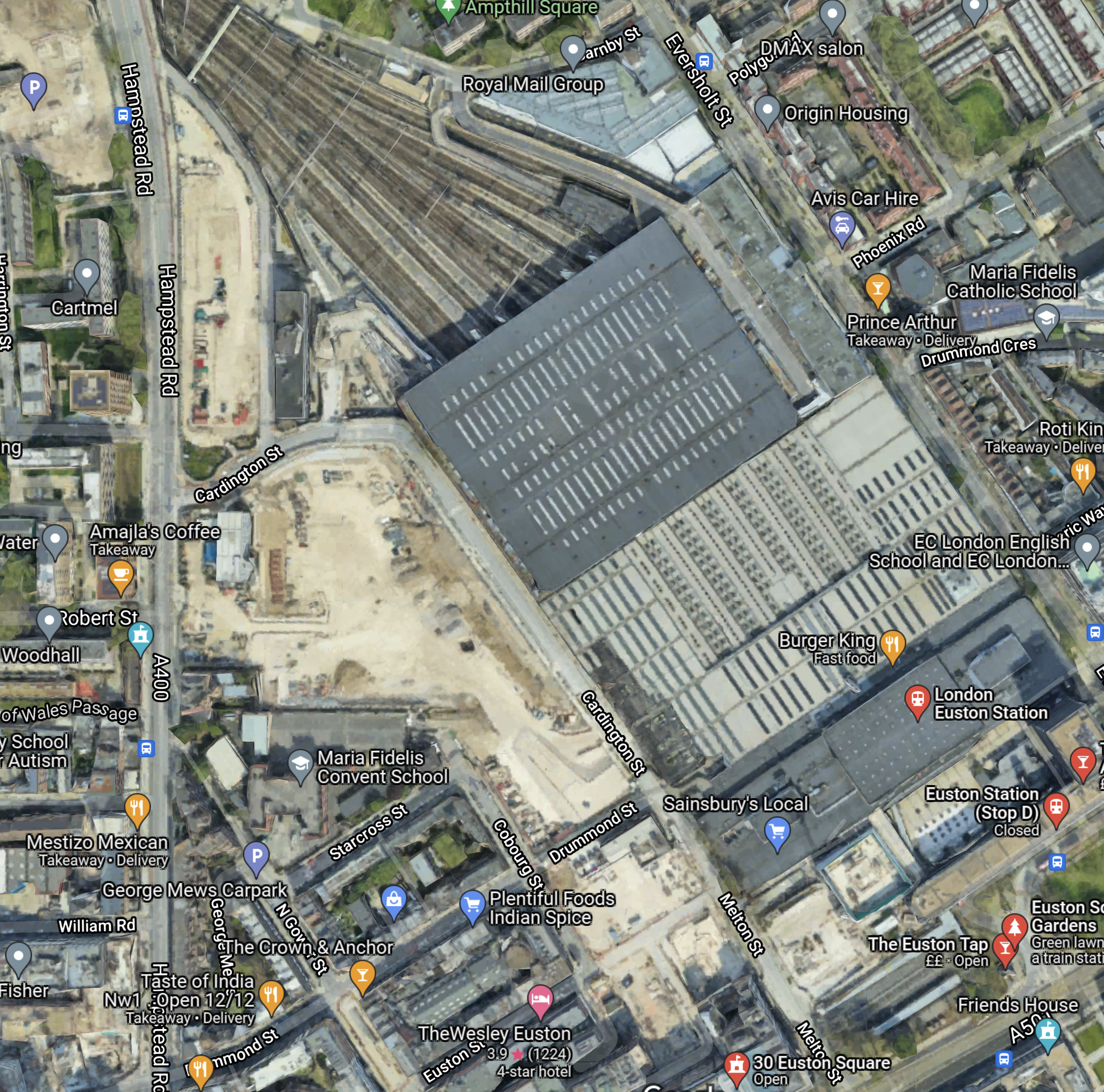
Note.
- The large square building is the current Euston station.
- The building site on the Western side of the station is the High Speed extension, where there will be ten platforms.
- Euston station can take 265 metre long Class 390 trains.
- Platform 1 on the East side of Euston station can take the 355 metre long Caledonian Sleeper.
There certainly would appear to be possibilities to link the two sides of the station to improve operational flexibility.
I wonder if something could be done in Birmingham to improve connectivity.
In Birmingham Airport Connectivity, I said this
But look at this map clipped from the High Speed Two web site.
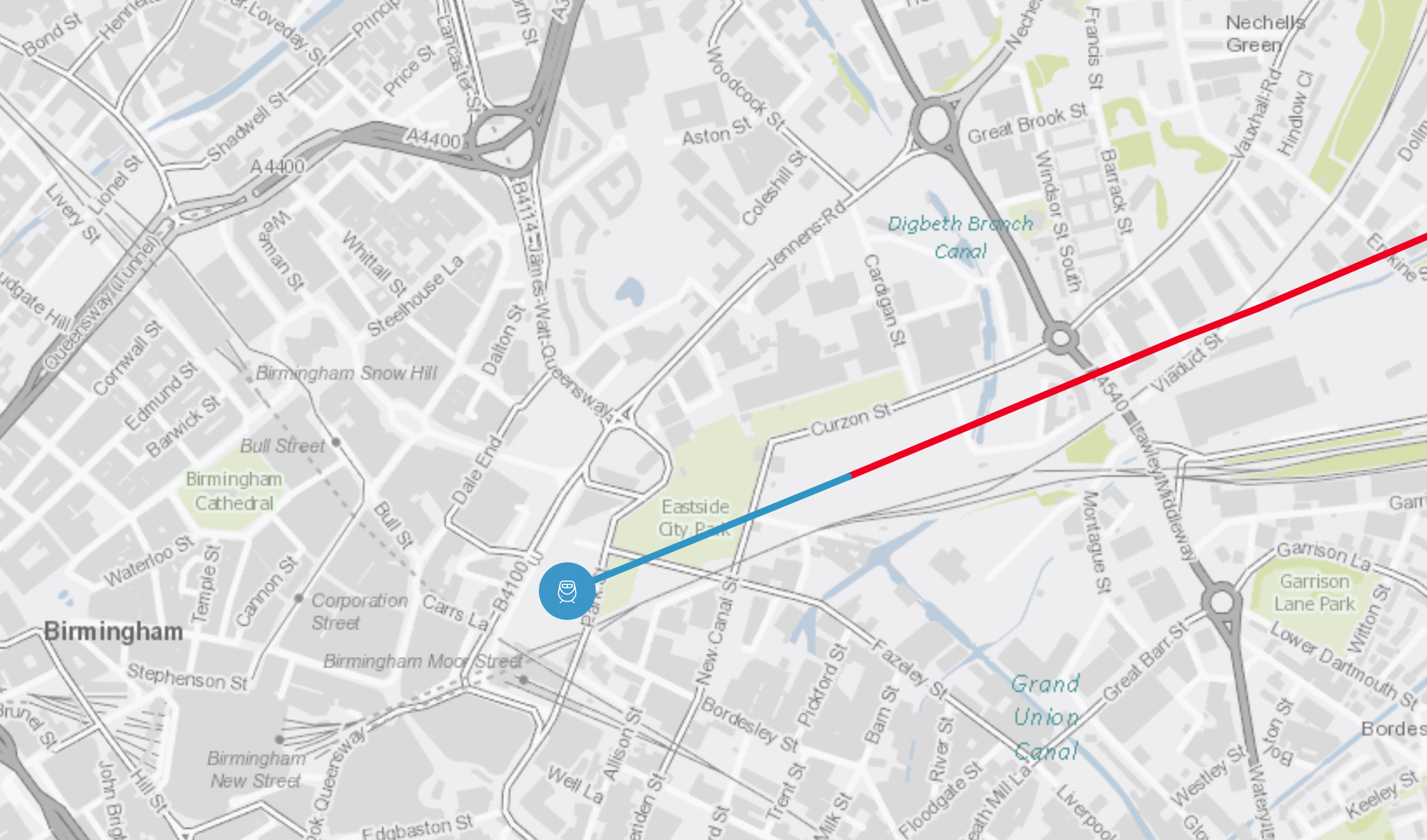
Note.
- The blue dot shows the location of Curzon Street station.
The West Coast Main Line running into New Street station, is just to the South of Curzon Street station.
New Street station can be picked out to the West of Curzon Street station.
This Google Map shows a close-up of the current Curzon Street station site.
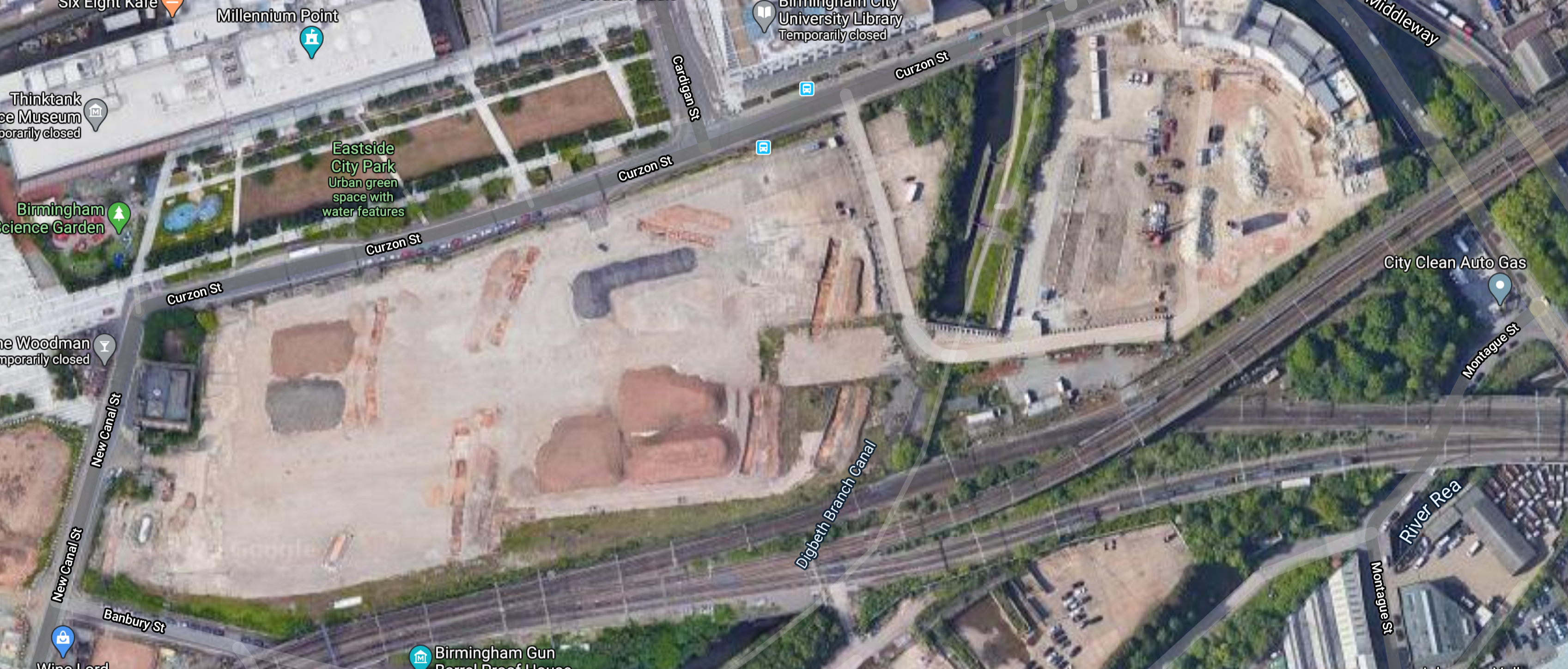
The same pattern of rail lines going past the Curzon Street site into New Street station can be picked out.
Surely, a connection could be made to allow trains from a couple of platforms in Curzon Street station to terminate trains from the West Coast Main Line.
Possible services could include.
- London Euston and Birmingham Curzon Street via Watford Junction, Milton Keynes, Rugby and Coventry
- Cardiff and Birmingham Curzon Street via Bristol Parkway, Swindon, Oxford and Milton Keynes.
- Cambridge and Birmingham Curzon Street via Bristol Parkway, Bedford and Milton Keynes.
There are a lot of possibilities to give High Speed Two much bigger coverage.
How Celiac Disease May Affect Your Risk for Gallbladder Disease
The title of this post, is the same as that of this article on verywell.health.
I am posting, as I am a coeliac, who has had gallstone problems and want to be able to find the article easily in the future.
Gore Street Energy Storage Fund Revenues Boosted Amid Market Volatility
Over the last few years, I have blogged about energy storage and two energy storage funds; Gore Street and Gresham House.
According to an article on Proactive Investors, with the same title as this post, Gore Street hasn’t been doing badly lately and says this about their recent performance.
Gore Street Energy Storage Fund PLC said its assets in Great Britain generated revenues two times above forecast in September and added that industry is only at the start of its growth curve.
When I saw the concept of an energy storage fund, as a Control Engineer, I liked it.
The wind doesn’t always blow and the sun doesn’t always shine, so something is needed to cover the gaps in the supply.
The obvious way to cover the gaps is to put a battery in the circuit.
- When the electricity supply is higher than the demand, the surplus electricity can be stored in a convenient battery connected to the grid.
- When the reverse is true and there is a deficit of electricity, the energy in the battery can be used to make up the difference.
The battery works with electricity, just like a bank works with money, except that batteries don’t pay interest.
- The battery owners do make money by buying electricity, when it’s cheap and selling it back at a higher price.
- Tesla and others will sell you both batteries and the controlling software.
- Some areas with perhaps high levels of wind and solar or unreliable power supplies could use batteries improve the robustness of the electricity supply.
- More wind and solar power will inevitably lead to a need for more energy storage.
- Battery technology will get cheaper in terms of the cost per MWh of storage.
- Battery-grid interface hardware will get more capable.
- Management software will get better at balancing the grid.
This all adds up to increasing opportunities at possibly lower costs for energy storage funds like Gore Street and Gresham House.
So we will inevitably see a growth of energy storage funds.
But they will change.
New Battery Technology
There are several new battery technologies, that I believe could prove to be competitive in terms of capacity, cost, efficiency and reliability when compared to lithium-ion batteries.
Some of them will also have the advantage of only using easy-to-source, environmentally-friendly materials in their manufacture.
Some battery technologies are also easier to scale up, in that your have a central unit, which is connected to several stores. So to scale up, you add another store to the central unit. Highview Power’s CRYOBattery works on this principle.
I can see energy storage funds taking off faster, when someone designs the ideal battery for their purposes.
More Energy Storage Funds
We will see more players enter the energy storage fund market, just as we saw more players enter the peer-to-peer lending market. But just as that market attracted men with silly hats, boots and horses, not all will be reputable. But there are signs that banks I might trust are entering the market.
I also think there could be a hybrid model, which is almost a cross between an energy storage fund and peer-to-peer technology.
But be prepared for financial innovation.
And always do due diligence before investing.
Local Energy Storage Funds
I can envisage sensible established players offering investment on a local basis.
So perhaps the residents of a town with a need for a battery, might like to help fund it.
Or just as Aviva with their strong connections to East Anglia helped to fund Greater Anglia’s new trains, they might fund a battery in perhaps Cromer.
Conclusion
I feel the future is very rosy for energy storage funds.
Scottish Transport Minister ‘Perplexed’ By COP26 Strikes
The title of this post, is the same as that of this article on Railnews.
I’ll leave them to continue arguing,
But I am perplexed too! Especially as the other unions have signed up to a similar deal.
Lumo – A View From Across The Pond
I have just read this guide to Lumo on a United States web site called NewsNation USA, which is entitled Lumo Trains: Cheaper London To Edinburgh Fares – What You Need To Know. The article is positive about the new train service.
It only misses out one important detail. Lumo have said, they will have a long booking window, which will surely appeal to travellers on the route from overseas, who are coming to the UK for a holiday and want to visit both cities.
COP26 And Lumo Branding At King’s Cross Station
I took these pictures as I passed through King’s Cross station today.








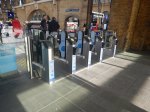






Note.
- Wilston Samuel Jackson was the first black train driver in the UK.
- Lumo seem to have taken over all of the branding at the station.
There was a generally upbeat atmosphere at the station.
The Northern Ends Of The Platforms At Kings Cross Station
These pictures show the Northern ends of the platforms at Kings Cross station.

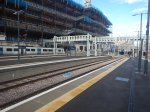


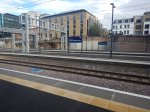
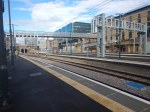


The two trains are both nine-car Hitachi Class 800 or Class 801 trains and I was standing in line with their noses.
I wonder what is the maximum length of trains that can be handled in these platforms.
- They can certainly handle ten-car trains, as LNER run these to Leeds.
- Hitachi have designed the trains, so they can be up to twelve-cars, which are 312 metre long trains.
- Looking at maps, I suspect that eleven-car trains would be the largest that can be handled.
But surely to maximum the number of passengers handled in the station, the platforms should be able to handle the longest Hitachi trains.
- Unless, the capacity of an individual train is limited by the gate-lines and Network Rail have said that ten-car trains are the longest allowed.
- Or would twelve-car trains be two far to walk with lots of luggage.
But ten-car trains would allow Lumo to double-up trains to increase capacity selectively, when perhaps, there is an important sporting event.
So when say the Culcutta Cup is taking place, an early morning train to the match and a late evening return could be doubled to add another four hundred seats.
But the current Lumo timetable only shows just two trains on a Saturday.
- London King’s Cross – Edinburgh, which leaves at 10:25 and arrives at 14:57.
- Edinburgh – London King’s Cross, which leaves at 08:49 and arrives at 13:17.
Not very good to go to the rugby or a birthday lunch with your mum.
But realtimetrains reveals two early morning paths allocated to Lumo.
- London King’s Cross – Edinburgh, which leaves at 05:45 and arrives at 10:06.
- Edinburgh – London King’s Cross, which leaves at 05:36 and arrives at 10:04.
So you can get to the other capital, but is there a later last train back?
Oh! Yes there is! And again they are revealed by realtimetrains.
- London King’s Cross – Edinburgh, which leaves at 18:27 and arrives at 22:56.
- Edinburgh – London King’s Cross, which leaves at 17:56 and arrives at 22:29.
Is the Southbound service earlier, as Murrayfield is closer to Waverly station, than Twickenham is to King’s Cross?
If the return was fifty pounds and the trains were doubles, that could be revenue of around £ 40,000. There would be more electricity and track access charges, and they’d need extra train crew, but Lumo would surely be quids in!
Lumo’s financial model has several nice little earners.
The First Lumo Service Arrives In London
These pictures show the first Lumo service as it arrives in Platform 5 at King’s Cross station.

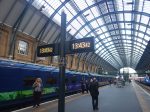



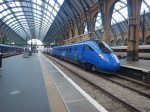

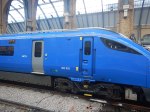
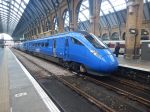
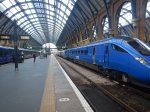


Note.
The clock showed the train arrived five minutes early.
The train appeared to be about ninety percent full!
How close is the train colour to LNER blue?
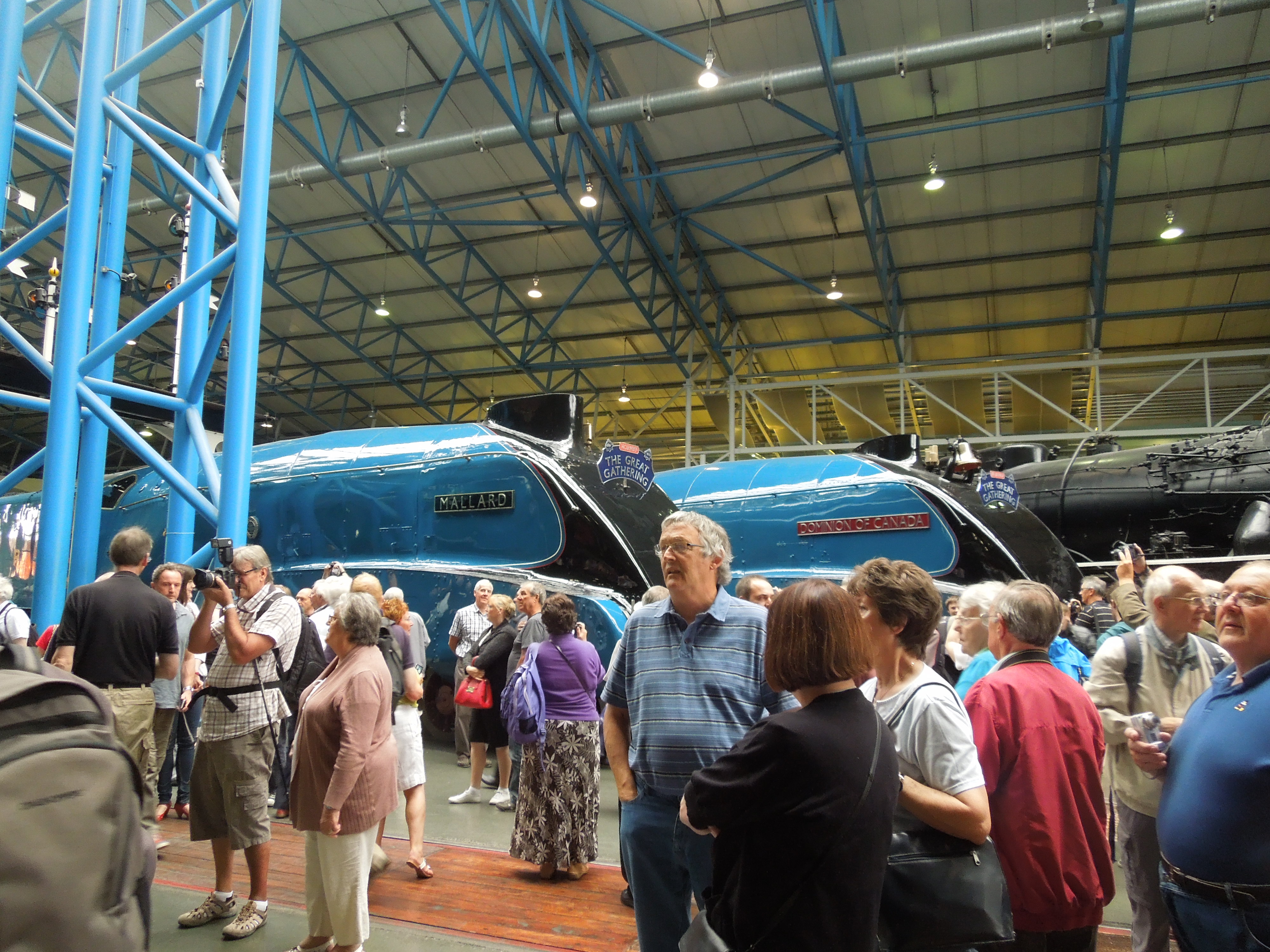
The picture shows two iconic A4 Pacifics; Mallard and Dominion of Canada at the National Railway Museum.
Not very is the probable answer!
Lumo’s Seats Are OK
I went down to King’s Cross to see the 1348 Lumo arrival from Edinburgh arrive (At 1343 incidentally!)
The seats seemed to be a big topic with passengers I talked to, who’d just spent four-and-a-half hours sitting on them!



I will replace these pictures with better ones, when I use the trains. But they do show the basic design.
But all felt positive about them and said they were better than LNER.
One guy showed me a video of pushing his hand into the seat cushion. It appeared they would make bad ironing boards.
Track Monitoring System To Be Tested On Chiltern Line
The title of this post, is the same as that of this article on Railway Gazette.
This is the first paragraph.
Network Rail is to undertake in-service trials with DB Systemtechnik’s CTM2·0 continuous track monitoring system on a Chiltern Railways MkIII driving van trailer operating in passenger service between London Marylebone and Birmingham.
This seems to me to be a good idea.
- The German system appears to be comprehensive and has been in service for seven years.
- There is a lot of space in the back of a driving van trailer.
- It probably can do much of the work of the New Measurement Train, but more often.
It could surely be applied to other routes.
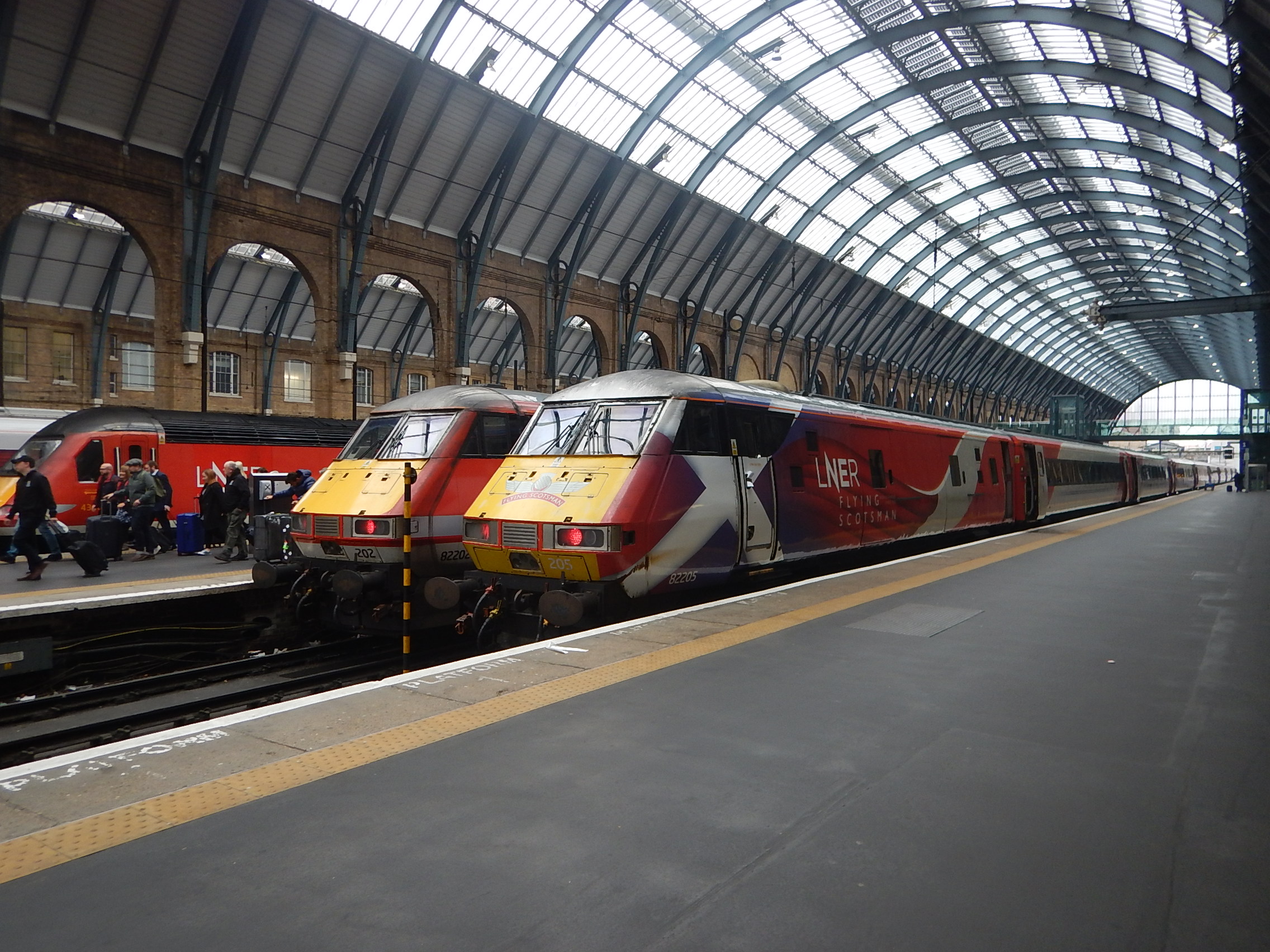
The picture shows the driving van trailers on the London-ends of a pair of InterCity 225s at King’s Cross.
Some Open Access Operators are also looking at the possibility of running short InterCity 225 sets.
It would also be possible to create extra Measurement Trains, by coupling an instrumented driving van trailer to an appropriate locomotive and a couple of coaches.
As a Control Engineer, who has analysed a lot of data in his working life, it could improve rail safety by testing rail lines more often.
 The Anonymous Widower