Nikola Badger
The title of this post, is the same as that of this article on Business Insider.
This is the sub-title of the article.
An electric pickup truck with a longer range than Tesla’s Cybertruck will soon be up for pre-order — check out the Nikola Badger.
From the picture in the article, it certainly seems to have the right style.
Could this be the vehicle that promotes the growth of hydrogen as a vehicle fuel in the United States?
But not just in the United States!
I lived in rural Suffolk for forty years and I can think of several people, for whom this truck would be the ideal business pickup, that gave the right image to their customers.
Hydrogen Infrastructure
A hydrogen vehicle is no good without infrastructure.
This is a paragraph from the article.
Nikola also announced that it is planning on opening 700 hydrogen stations in North America.
In Startup Nikola Bets Hydrogen Will Finally Break Through With Big Rigs, I said this.
They will also make their hydrogen filling station network available to car makes.
I think this is the way to go.
£35m Station Transformation Launched By Tees Valley Mayor
The title of this post, is the same as that of this article on Rail Technology Magazine.
This is the introductory paragraph.
Tees Valley Mayor Ben Houchen has announced (June 9th) a £35m transformation of Middlesbrough Station to transport more train services to the town, including the first direct rail link to London in decades.
The Rail Technology Magazine article indicates that Platform 2 at Middlesbrough station will be extended to handle Azuma trains. As the current platform looks to be around 150 metres long and this would be long enough for a five-car train, does this mean that in the future nine-car and ten-car Azumas will be able to run services to Middlesbrough?
Currently, LNER run one train per two hours (tp2h) between London and York. Could some or all of these trains be extended to Middlesbrough?
- TransPennines’ trains between York and Middlesbrough take fifty-eight minutes, but they are timed for slower Class 185 trains.
- I would expect faster Class 800 trains could go between York and Middlesbrough and back to York in under a convenient two hours.
- In addition, the lengthened Platform 2 at Middlesbrough would allow longer trains on the service between London and York to turn back at Middlesbrough.
- As the York service, which has a frequency of 1tp2h shares a path with the Lincoln service of a similar frequency, there must be the possibility to run a 1tp2h between Kings Cross and Middlesbrough.
- The same path is also used to run one train per day (tpd) to and from Hull.
- It should also be noted that all Class 800 trains have the ability to split and join together in under two minutes.
There would appear to be a large amount of scope to develop a comprehensive timetable between Kings Cross and Hull, Lincoln and Middlesbrough.
- If the first train left at 07:06 and the last at 22:06, there could be sixteen trains per day on the Kings Cross and Lincoln, Hull, York and Middlesbrough route.
- Each train could be two five-car trains that split and joined en route, which means there would be a total of 32 tpd.
- If five tpd went to both Lincoln and Middlesbrough and perhaps three tpd to Hull, that would leave nineteen tpd trains for other destinations.
- As many trains as possible would need to call at York.
I can certainly see extra destinations built into a intricate pattern in Lincolnshire, Yorkshire and County Durham.
- Nottingham could be served from Newark.
- Grimsby and Cleethorpes could be served by extending services from Lincoln.
- Sheffield, Hull, Scunthorpe, Grimsby and Cleethorpes could be serves from Doncaster.
- Scarborough could be served from York.
- Washington and Newcastle could be served on an alternative route using a reopened Leamside Line.
- Sunderland could be served by extending services from Middlesbrough along the Durham Coast Line.
- Saltburn and Redcar could be served by extending services from Middlesbrough.
Splitting and joining could occur at the following stations.
- Newark for Nottingham and Lincoln, Grimsby and Cleethorpes
- Doncaster for Sheffield, Hull and Scunthorpe, Grimsby and Cleethorpes.
- York for Scarborough and Middlesbrough.
- Middlesbrough for Sunderland and Redcar and Saltburn
Middlesbrough station would need to be able to take two five-car trains for splitting and joining, so the platform extension is required.
Kings Cross and Middlesbrough Could Be A Zero-Carbon Route
In Could Some of Hitachi’s Existing Trains In The UK Be Converted To Battery-Electric Trains?, I indicated that as Middlesbrough station is only 21 miles and 29 minutes from Northallerton and the East Coast Main Line, that a five-car Azuma train converted to battery-electric operation should be able to run between Middlesbrough and Kings Cross, totally on electric power, which would be zero-carbon, if the electricity were to be renewable.
Britain Goes Coal-Free For Two Months – Longest Period Since Industrial Revolution
The title of this post, is the same as that of this article in The Independent.
This is the introductory paragraph.
Britain is on course to pass an energy milestone as it reaches two months of coal-free power generation on Wednesday – the longest period the country has gone without using the fossil fuel since the industrial revolution.
It is partly due, to a lack of electricity demand due to COVID-19, but overall it is a good thing.
As I write this at 14:30 on the 9th June 2020, UK Electricity Production gives the various sources of production as follows.
- Biomass – 3,045 MW
- CCGT – 17,442 MW
- Hydroelectric – 217 MW
- Interconnects – 1,977 MW
- Nuclear – 4,229 MW
- Other – 75 MW
- Pumped Storage – 0 MW
- Solar – 4,800 MW
- Wind – 697 MW
This all adds up to a total of 32.42 GW.
Note.
- CCGT stands for combined cycle gas turbine.
- Solar power is generating more than nuclear.
- I don’t think today is a very windy day!
I have just used the site to look at a few solar farms in Kent. Most seem to be generating 14.8 % of their capacity.
Lithium Battery Cell Prices To Almost Halve By 2029
The title of this post, is the same as that of this article on Energy Storage News.
This is the introductory paragraph.
Lithium-ion cell prices will fall by around 46% between now and 2029, according to new analysis from Guidehouse Insights, reaching US$66.6 per kWh by that time.
The rest of the article contains a lot more useful predictions.
I will add a prediction of my own.
The drop in prices of lithium-ion batteries will surely result in a lot more applications, in the following areas.
- Battery-electric vehicles
- Battery-electric vans and buses and light-trucks.
- Battery-electric trams and trains
- Battery-electric aircraft.
- Battery-electric ships.
- Battery-electric tractors
- Battety-electric construction plant
Lithium-ion batteries will also be used in hydrogen-powered versions of any of the above.
The cost of lithium-ion batteries, will also lead to more applications in the following areas.
- Grid energy storage or as it sometimes called; front-of-the-meter storage.
- Heavy trucks
- Double-deck buses
- Railway locomotives
These could use a very large number of lithium-ion cells.
Conclusion
Because as yet, there is no alternative to lithium-ion cells for mobile applications, I think we’ll see grid-energy storage going to one of the alternatives like Gravitricity, Highview Power or Zinc8.
US Deployed 98MW / 208MWh Of Energy Storage During First Quarter Of 2020
The title of this post, is the same as that of this article on Energy Storage News.
This is the introductory paragraph.
Research firm Wood Mackenzie has held onto its forecast that the US will deploy around 7GW of energy storage annually by 2025 and found that 97.5MW / 208MWh of storage was installed during the first quarter of this year.
The United States may be led by a President, who doesn’t believe in global warming, but individuals and businesses in the country seem to believe in battery storage and the benefits it brings.
This is an interesting paragraph from the article.
The overall deployments were also down in megawatt-hour terms: 208MWh in total was a 43% decrease quarter-on-quarter and down 34% year-on-year. Wood Mackenzie found that this was due to a majority of front-of-the-meter projects coming online being short duration energy storage. This meant that FTM storage accounted for 13% of Q1 2020 deployments in megawatt-hours but for 22% of the total megawatts deployed.
Front-of-the-meter storage is mainly used to maintain supplies, when demand is going up and down like a yo-yo in an area. Companies like Gresham House Energy Sorage Fund seem to be funding these batteries in the UK. Gravutricity, Highview Power and Zinc8 also seem to be targeting this market.
Conclusion
It would appear that the energy storage market is healthy on both sides of the Atlantic
Spanish Covid-19 Recovery Investment Scheme Funds 12 Energy Start-Ups
The title of this post, is the same as that of this article on Power Technology.
These are the two introductory paragraphs.
Several energy companies have announced they will assist and invest in a scheme to develop smaller companies assisting in Spain’s Covid-19 recovery.
The Positive Energy+ investment scheme has taken 396 proposals over 13 days. The promoters of the programme have chosen 12 businesses they believe will have a large impact on the country’s decarbonisation, digitalisation and mobility, while also considering their social impact.
It looks like Spain is going a similar route to Norway, with their fund.
Norway Announces $384.5m Clean Energy Fund To Aid In Covid-19 Recovery
The title of this post, is the same as that of this article on Power Technology.
These are the first one-and-a-half paragraphs.
Last week, Norway announced plans to fund a “green transition package”, investing $384.5m into sustainable power and infrastructure to help the country’s economy and productivity post-Covid-19.
The fund will be used to support a range of initiatives, including investments in hydrogen power and battery storage technology, building offshore wind infrastructure, and renovations to new and existing buildings, as Norway looks to reach the Paris Climate Agreement target of limiting global temperature rise to less than two degrees by 2050.
Perhaps we should follow Norway’s lead.
Will Bread And Circuses Help Us Through COVID-19?
Bread and circuses is an old phrase that goes back to Roman times.
It looks like TV and on-line cooks and chefs and the supermarkets have given us the first, so do we need more of the second?
At the weekend, I enjoyed watching quality horse-racing on ITV, so wouldn’t it be sensible to get football on free-to-air television as soon as possible.
It might encourage people to stay-in, rather than gather in groups.
Would it cut the spread of COVID-19?
Satellite Images Suggest Wuhan Outbreak Began Last Autumn
The title of this post, is the same as that of this article in The Times.
This is the introductory paragraph.
Big increases in traffic at Wuhan hospitals last autumn suggest that the coronavirus was spreading in the Chinese city weeks earlier than previously admitted, according to a study by Harvard Medical School.
If this is true and the Chinese had given us the truth, how would it have affected the rest of the world’s response to COVID-19?
A Pair Of Class 230 Trains In The Sun
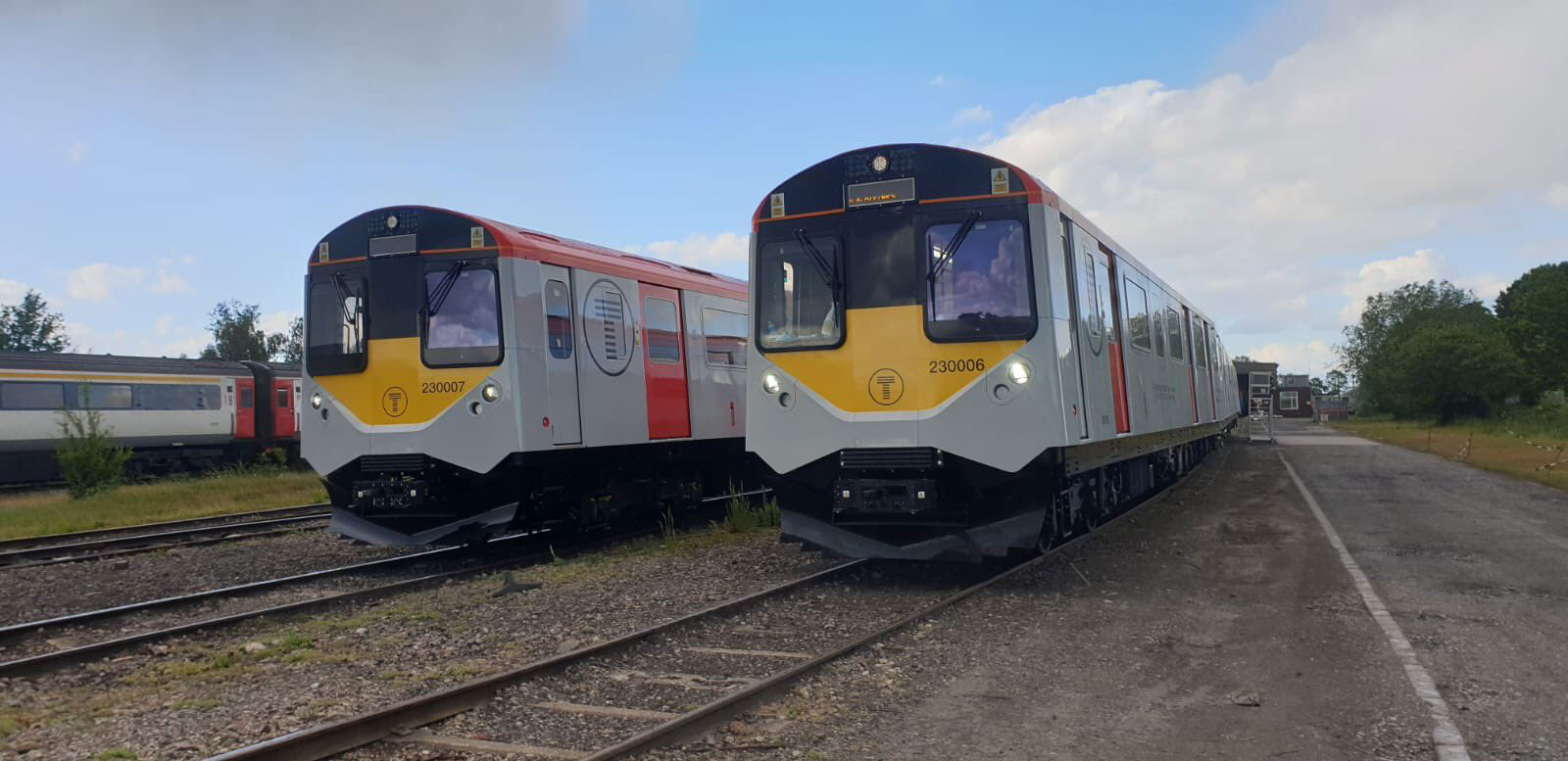
The picture is from Vivarail and shows a pair of their Class 230 trains in the sun.
Compare it with this picture I took in 2014 and showed with others in Raw Material For A New Train.
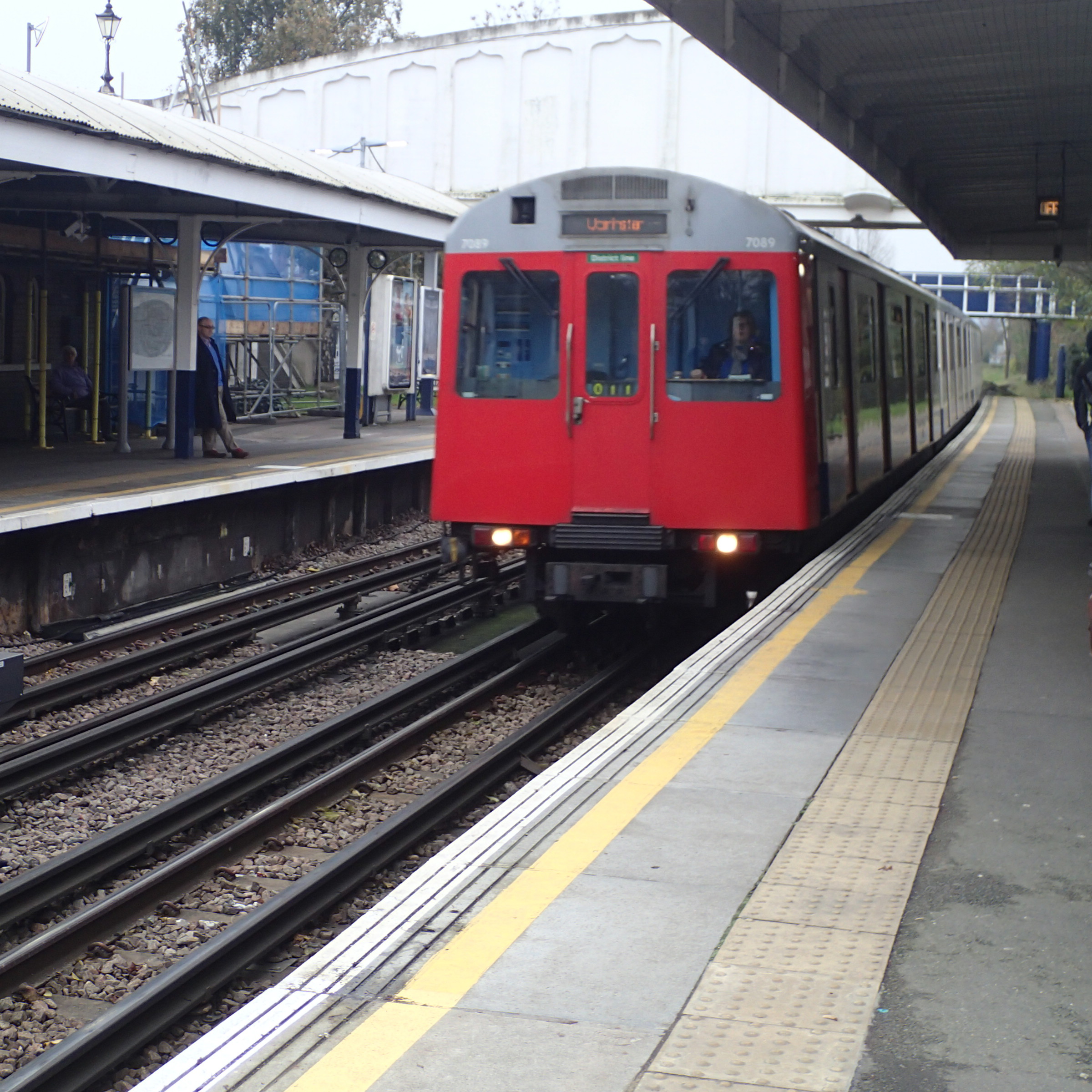
The trains certainly scrub-up well.
The improvement is more than cosmetic, if you read this Press Release from Vivarail, which is entitled First Time Together – 230006 And 230007.
Features of this pair of trains for Transport for Wales include.
- They are the UK’s first battery hybrid trains.
- The trains are geo-fenced, so that the gensets are not used in sensitive areas or stations.
- The batteries allow fast acceleration comparable with other electric trains.
- The gensets charge the batteries.
- They have high-specification interiors.
These trains must be an ultimate example of recycling, when you consider that the London Underground D78 Stock, on which the trains are based, were built around forty years ago.
Conclusion
I’m certainly looking forward to riding in these trains.
 The Anonymous Widower