An Analysis Of The Route Between Buxtehude And Cuxhaven
Alstom have chosen the route between Buxtehude and Cuxhaven, as the launch route for their hydrogen-powered Coradia iLint train.
I’ll now look at the route.
Buxtehude Station
Buxtehude station is on the outskirts of Hamburg.
This Google Map shows the station.

Note.
- There is a double-track electrified line through the station.
- There appears to be a West-facing bay platform, which conveniently has what looks to be a train in DB red, in the platform.
Services at Buxtehude include.
- Line S3 of the Hamburg S-Bahn between Pinneberg and Stade. This line appears to be electrified with 15 KVAC overhead wires.
- Service RE 5 between Cuxhaven and Hamburg via Otterndorf, Stade and Buxtehude. This route is only electrified between Hamburg and Stade.
- Service RE 33 between Cuxhaven and Buxtehude via Bremerhaven and Bremervörde. This route is not electrified.
Service three is the one that from yesterday has been run by the Coradia iLint trains.
Between Buxtehude And Bremervörde
I followed this route in my helicopter and it is a single-track line through reasonably open country with in places trees along the line.
If this line was in the UK, it would be something like the Breckland Line or Great Eastern Main Line. through Norfolk, both of which have an operating speed of between 140-160 kph.
So I wouldn’t be surprised that the Coradia iLint could be almost at its maximum speed of 140 kph for long periods between stations.
Bremervörde Station
This Google Map shows Bremervörde station.
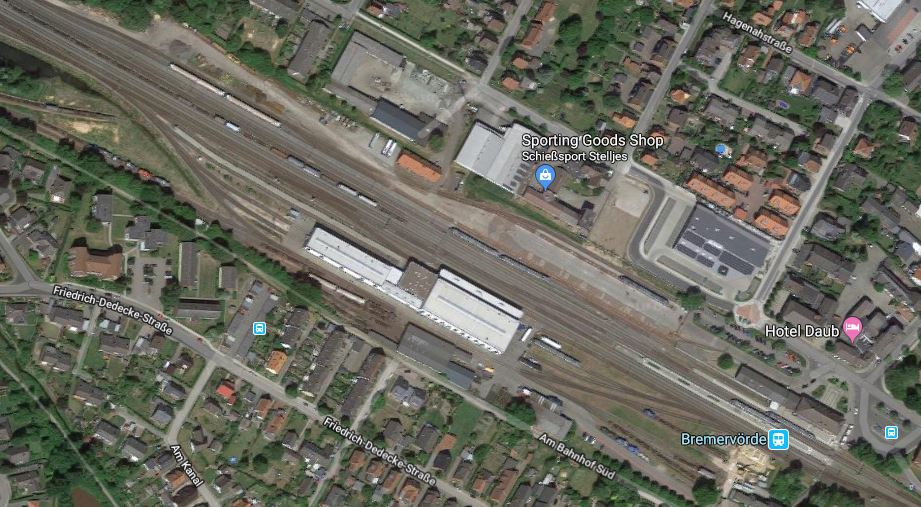
It would appear to be on a large site and there might even be a depot.
There’s certainly space to add a couple of large wind turbines to generate electricity, that could be used to create hydrogen through electrolysis.
Between Bremervörde And Bremerhafen HBf
As with the line to the East of Bremervörde, it is fairly straight across what appears to be fairly flat and through a mixture of open countryside and woodland.
This Google Map shows Bremerhafen Wulfdorf station.
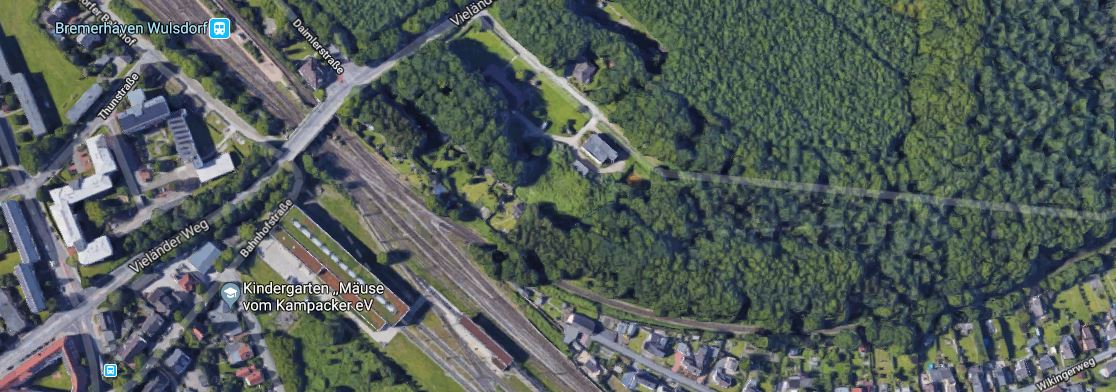
The line from Buxtehude can be seen joining from the East.
The line is electrified to Bremerhafen HBf station.
So will the Coradia iLint trains change to overhead power at Bremerhafen Wulfdorf?
From Bremerhafen HBf To Cuxhaven
This Google Map shows Bremerhaven HBf station.
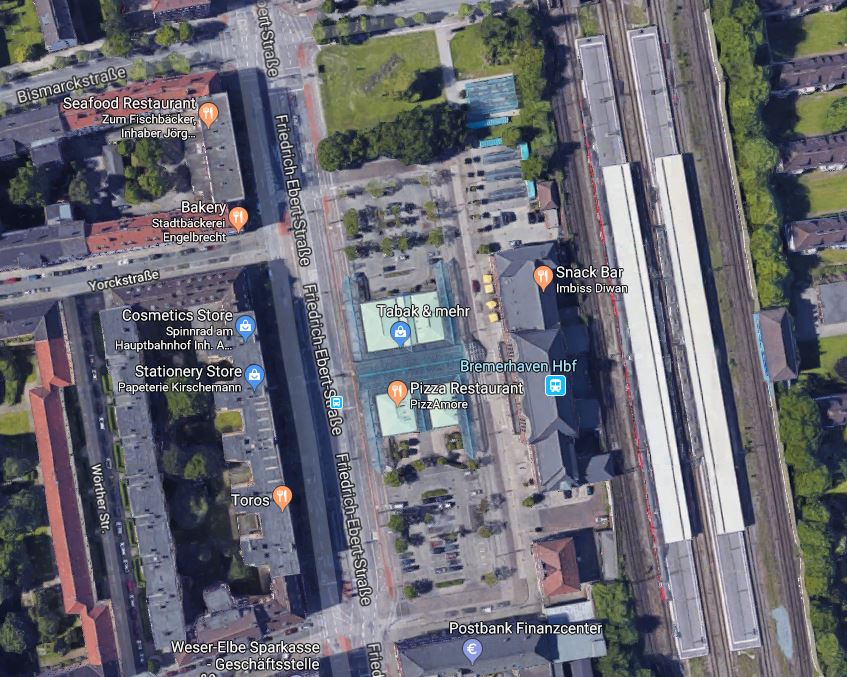
It looks to be a typical functional German station with four platforms, which are all electrified.
The electrification continues Northwards for a few kilometres, but once out of Bremerhaven, the line becomes single track without electrification.
I found this passing loop at the two-platform Dorum station, shown here on a Google Map.
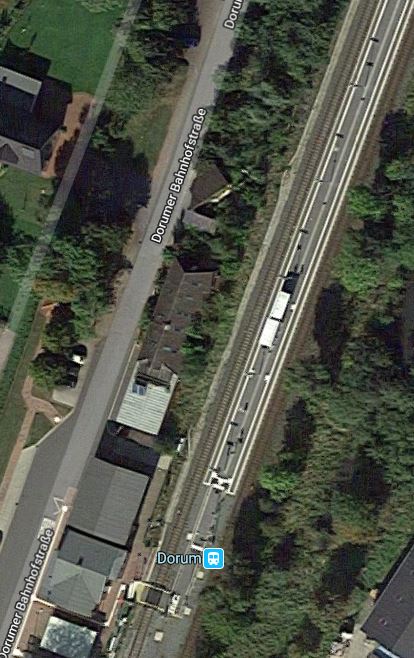
Note how the tracks go either side of an island platform.
I suspect there are other places for trains to pass or they could easily be created.
The route ends at Cuxhaven station, shown in this Google Map.
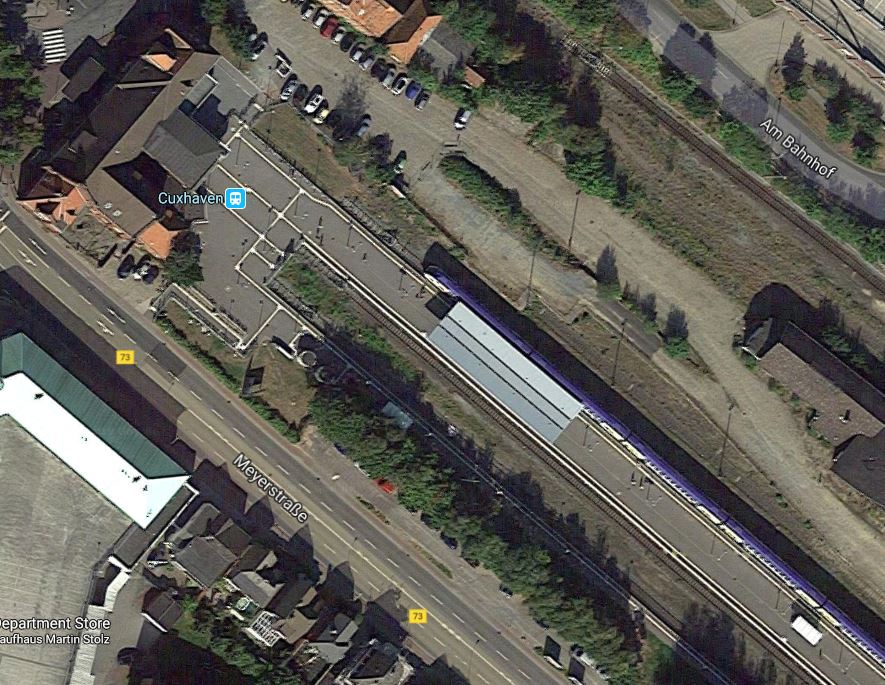
In addition to the service to Buxtehude, there is also a another service on a shorter and more direct route to Hamburg along the estuary of the River Elbe.
Summing up this section of the route.
- It is single-track with at least one passing loop.
- There are just four stations.
- It is electrified for a few miles at the Southern end.
I’ve also never seen a line with so many level crossings.
Services Between Cuxhaven And Buxtehude Via Bremerhaven HBf
The current service is hourly, with what looks to be these timings.
- Buxtehude to Bremerhaven HBf – 1:43 – Incldes 14 stops
- Bremerhaven HBf to Buxtehude – 1:37
- Bremerhaven HBf to Cuxhaven 0:51 – Includes 4 stops
- Cuxhaven to Bremerhaven HBf – 0:44
- Buxtehude to Cuxhaven – 2:34
- Cuxhaven to Buxtehude – 2:21
Turnrounds are the following times.
Buxtehute – 28 minutes
Cuxhaven – 12 minutes
This gives a round trip of five hours and thirty-five minutes.
So it would appear that at least five Coradia Lint 41 trains are needed to provide the service.
Coradia Lint Trains
From what I can find on the Internet, the Coradia Lint trains are diesel-mechanical units, where the wheels are driven directly from the two diesel engines.
I’m not sure, but the engines may be mounted under the cabs!
Coradia iLint Trains
I suspect that the hydrogen-powered iLint trains could be driven by simply replacing the diesel engine, with a suitable traction motor.
What surprises me, is that there appears to be no plans to fit a pantograph to the iLint, so that the intelligent brain on the train can use overhead electrification, when it exists.
This would mean that the range of the train on hydrogen would be increased, if the route was partially electrified.
Coradia iLint Trains Between Buxtehude to Cuxhaven
On the Buxtehude to Cuxhaven route, using electrification could be used to advantage to power the train and charge the batteries through Bremerhaven, where about ten kilometres is electrified using 15 KVAC overhead wires.
Also, in Buxtehude station, which has 15 KVAC electrification on other lines, the bay platform that it appears will be used for the hydrogen-powered trains could be electrified to charge the batteries, during the twenty-eight minutes, that the train is in the station. Perhaps, they could use a system such as I wrote about in Is This The Solution To A Charging Station For Battery Trains?
A similar system could be installed at Cuxhaven.
Surely, it is better to use the turnround times at each end of the route to charge the batteries, as this means less hydrogen will be consumed and the train’s range on a tankful will be increased!
There is an interesting comparison to be made here, with a route, I know well in the UK; Cambridge to Norwich.
- Both routes are around 100 km.
- Both routes are fairly flat and reasonably straight.
- The operating speed of the UK line is 140 kph and I suspect the German line is about the same.
- The UK line has six intermediate stops, whereas the German route has fourteen stops.
- Both lines are run by diesel trains with similar operating speeds.
But the UK route is timed at one hour and nineteen minutes, as opposed to the two hours thirty-four minutes of the German one.
The German route does have twelve more stops, but even if two minutes is allowed for each stop, that doesn’t explain the difference.
The German route must be run at a slower speed than the UK one.
As the Germans improve the speed, journey times will surely reduce.
Conclusion
I am led to the conclusion, that Buxtehude to Cuxhaven route is an ideal route on which to test hydrogen-powered trains, but that as the trains develop, journey times will reduce substantially.
Cancer Is No Laughing Matter, But!
I took this picture on an Overground train, with permission of the young ladies.
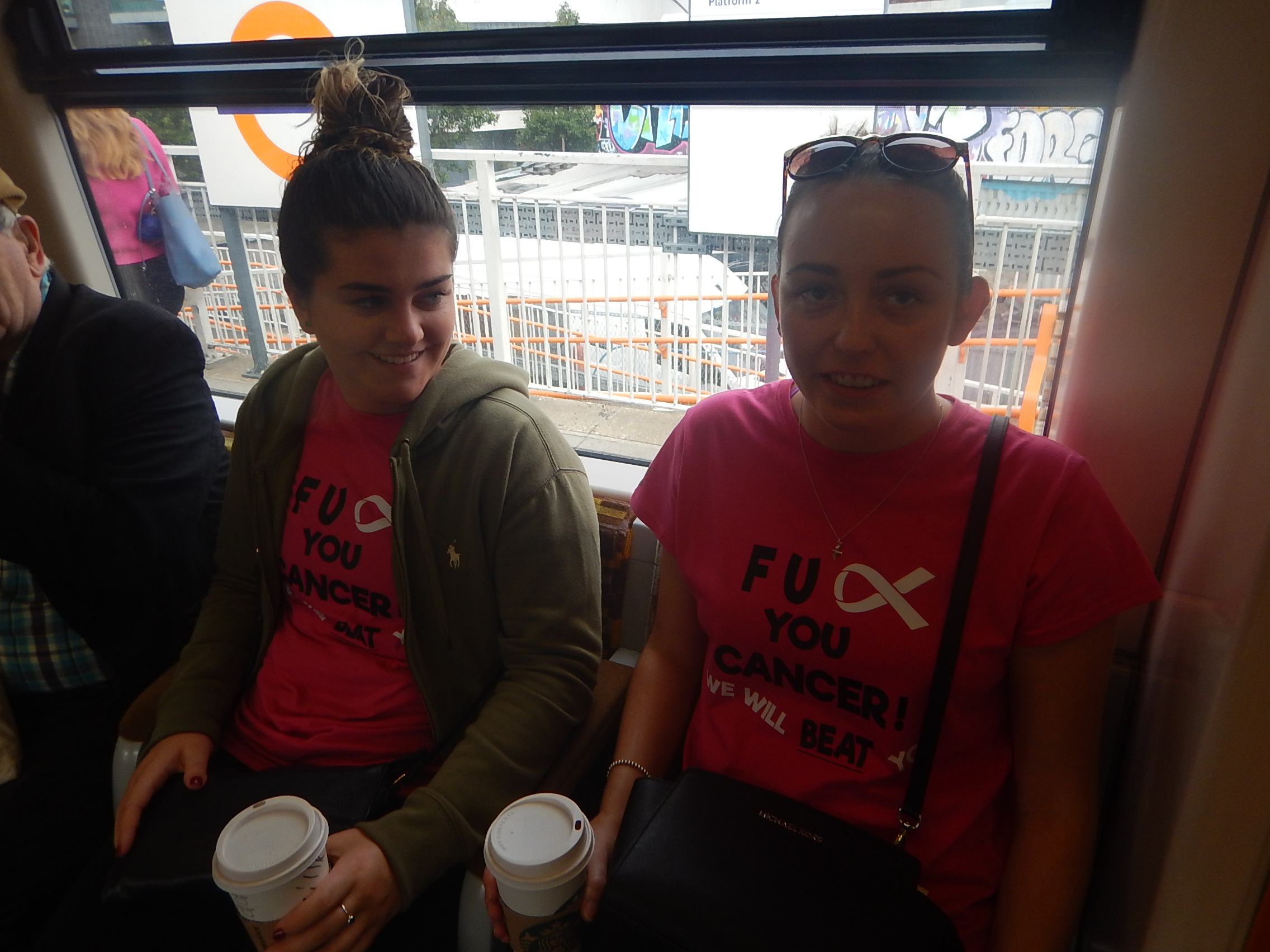
I have this feeling that we’re winning the fight against cancer, through top-quality research.
Colne To Skipton Rail Line Re-Opening Campaign Moves Forwards
The title of this post, is the same as that of this article in the Lancashire Telegraph.
This is the first paragraph.
A meeting at the House of Commons hosted by Pendle MP Andrew Stephenson and his Labour counterpart for Keighley John Grogan convened senior officials from the Department of Transport (DfT), Transport for the North (TfN), Network Rail and commercial companies with an interest in East-West rail links.
Like many at the meeting, I feel very strongly that this link should be built.
There are obviously local reasons, like better passenger services between the conurbations of Blackburn/Accrington/Burnley and Leeds/Bradford, but there is something far more important.
Extra Train Paths Across The Pennines
Currently, trains take about twenty minutes between Rose Grove and Colne stations, over the mainly single track line.
I think it would be possible for experts to design a railway between Rose grove and Skipton stations via Colne, that would offer paths for three trains per hour (tph) across the Pennines in both directions. It might even be possible to accommodate four tph, using a combination of passing loops and digital signalling.
It should be noted that currently, the traffic through Accrington on the Calder Valley Line, which is to the West of Rose Grove station is around three tph in both directions. As the route is double-track, with modern trains and modern signalling, surely a higher frequency can be achieved.
These extra paths would be invaluable during the upgrading of the main TransPennine routes from Leeds to Manchester via Huddersfield.
I have some questions about the link.
Should The Link Be Double-Track?
Given that it will probably be difficult to put a double track on the Bank Top Viaduct over Burnley, I feel that to get the needed extra capacity, where it is possible to squeeze in a double-track, this should be done.
Should The Link Be Electrified?
Operationally, this would probably be preferable, but there are reasons why it could be difficult.
- There are a lot of quality stone bridges over all routes in the area.
- The heritage lobby might object to gantries marching across the Pennines.
- Network Rail’s abysmal performance on installing electrification.
It would also be sensible to electrify between Preston and Rose Grove stations, which would add substantially to the cost.
Passenger services wouldn’t be too much of a problem, as I am fairly certain that hydrogen-powered or battery trains could be used. The four-car Class 321 Hydrogen would probably by ideal.
Freight trains are probably better under electric power, rather than the awful Class 66 locomotives. Especially, if freight trains were run in the middle of the night.
I think the budget will decide on electrification.
Conclusion
I feel it is imperative, that to reduce the chaos of the TransPennine upgrade, work should start on the creation of the Skipton to Colne Link immediately.
Hydrogen Trains Have Arrived
According to this page on the Internet, Alstom launched the Coradia iLint today.
These are some of the pictures.


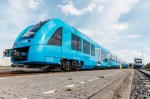
I shall go for a ride.
The web page says this about the test route.
On behalf of LNVG, the Coradia iLint trains will be operated on nearly 100km of line running between Cuxhaven, Bremerhaven, Bremervörde and Buxtehude, replacing EVB’s existing diesel fleet.
As Buxtehude is close to Hamburg, the easiest way to experience the trains would be to fly to Hamburg.
A Swiss-Style Wheelchair Ramp
I took this picture of a wheelchair ramp at Interlaken Ost station
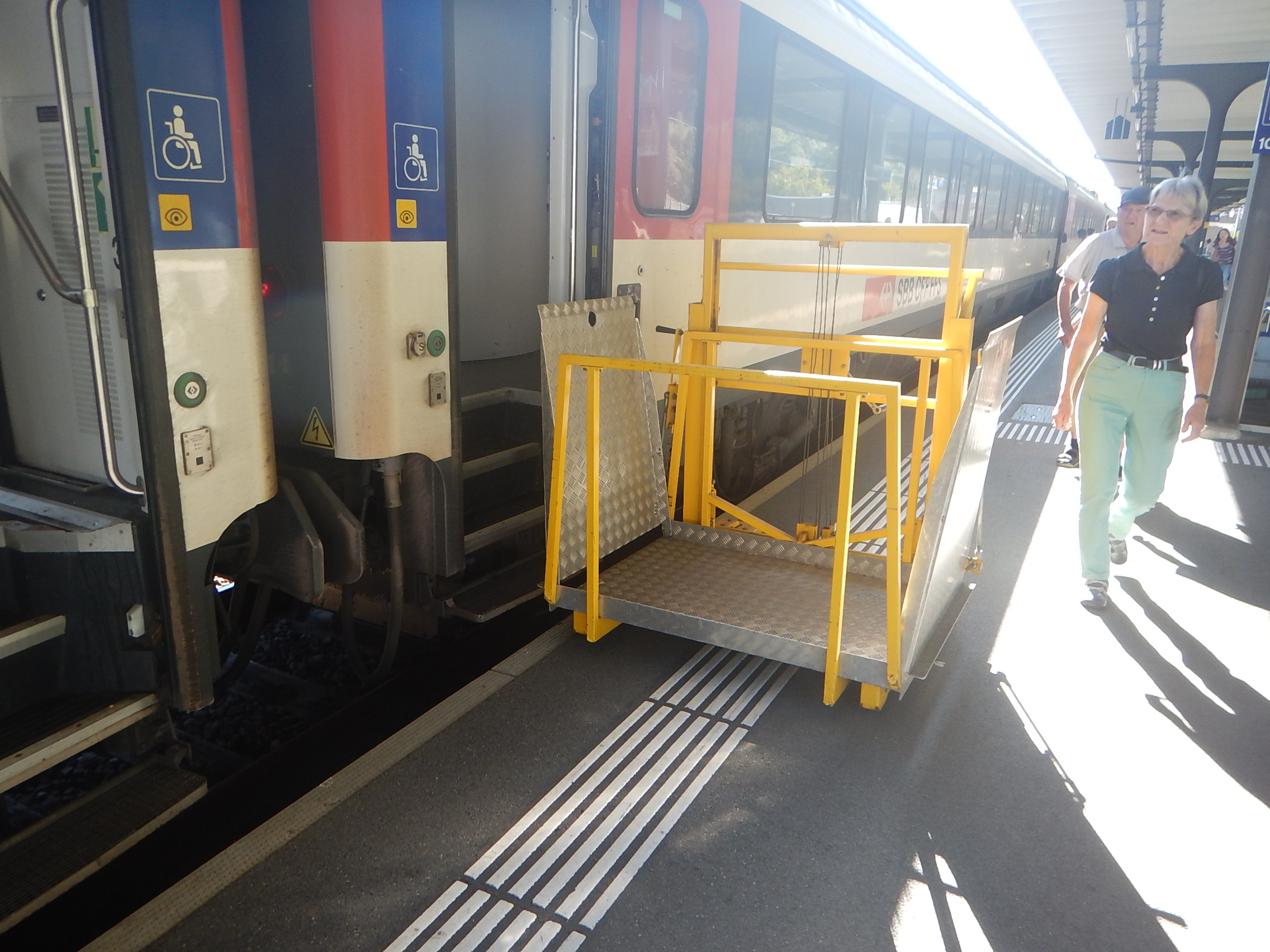
At least I noticed several low-floor trains with gap fillers.




I think most of these pictures were taken of trains built by Swiss train manufacturer; Stadler.
I think that this is the way to go.
Stadler are using gap fillers on their Class 777 trains for Merseyrail. This is said in Wikipedia about the design of the trains.
The trains will also have platform gap fillers so wheelchair users will not have to use ramps to board the train.
Will there be step-free access on Greater Anglia’s Class 745 and Class 755 trains?
It’s obviously good for passengers, but what’s in it for train operators?
It’s all about making the dwell time in a station as short as possible.
The Stunning New Public Space Under The Ordsall Chord Might Not Open To The Public For Years
The title of this post is the same as that of this article in the Manchester Evening News.
As I understand it, the new Orsall Chord in Manchester has been designed to open up a public space by the River Irwell.
The headline says it all and there appears to be no-one who knows when it will open.
For one time too, it doesn’t seem that Network Rail is the villain of the piece.
I suppose the trouble is that this development has nothing to do with football!
Come on Manchester, get your act together!
Is This The Solution To A Charging Station For Battery Trains?
This page on the Opbrid web site has a main title of Automatic High Power Charging for Buses, Trucks, and Trains.
It also has a subtitle of Furrer+Frey Opbrid Charging Stations for Battery Trains.
Furrer + Frey are a Swiss railway engineering company, that design and build railway electrification systems.
The web page gives this introduction.
Since 2009, Furrer+Frey has developed a multi-modal ultra high power charging station for battery-powered vehicles that is already radically changing the way traction power is delivered to road and rail vehicles. In particular, the Furrer+Frey Railbaar system targets existing low traffic diesel traction routes as well as new light rail and tram projects. The technology applies to battery powered trams and trains (Railbaar), buses (Busbaar) and trucks (Trukbaar) with a design rooted in proven Swiss electric rail technology already successfully deployed by Furrer+Frey across Europe and the world.
The web page has an interesting image for a Swiss company.
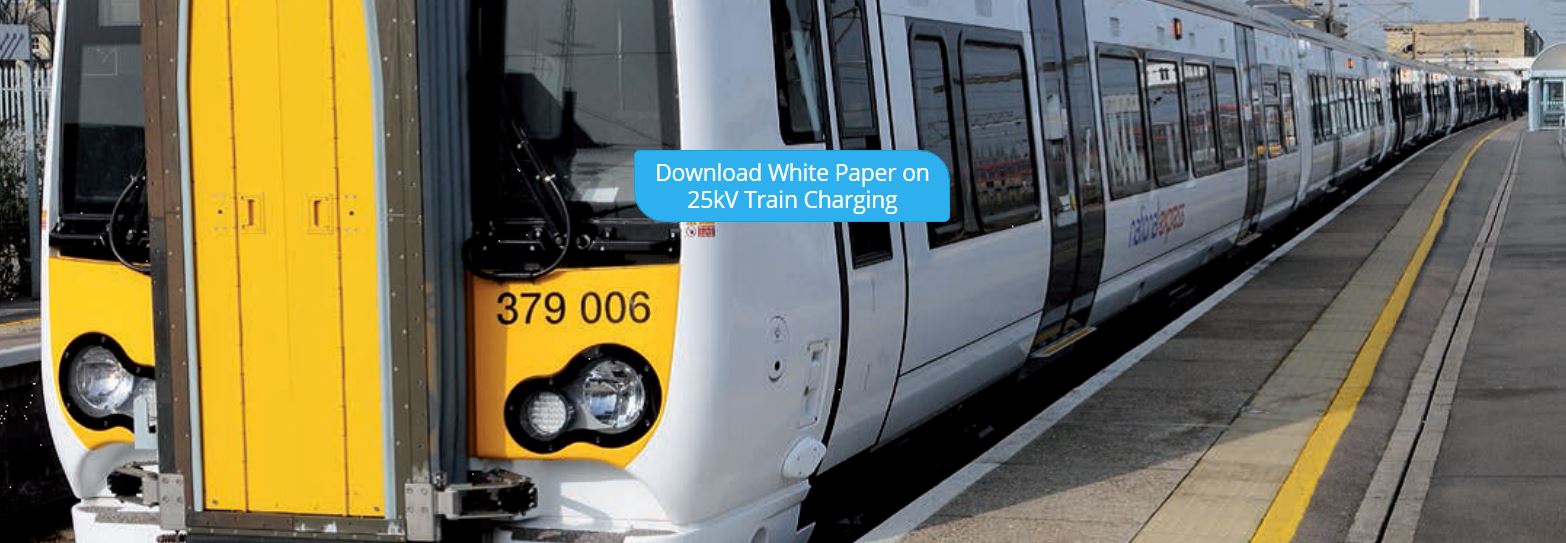
Shown is a Class 379 train, at a station, which I’m pretty sure is Cambridge.
Liverpool Street to Cambridge is a fully-electrified route, so why would a charging station be needed on this service?
I can’t think of a reason.
So I suspect, it’s just that to illustrate the web page, they needed to use a train that had the capability of running under battery power, which the Class 379 did in the BEMU trial of 2015.
It could also be that Furrer + Frey are working with Bombardier and it’s a Bombardier library picture.
But then Furrer + Frey probably work with all the major train manufacturers.
And as Bombardier have just released a new battery train, that I wrote about in Bombardier Introduces Talent 3 Battery-Operated Train, it would be logical that the two companies are working together, as battery trains will surely need charging in stations to develop longer routes.
Note the blue box in the middle of the picture. It says.
Download White Paper On 25 Kv Train Charging
If you download the white paper, you will find a very comprehensive and detailed description of how battery trains could be charged in stations. This is the introductory paragraph.
Battery-powered trains are rapidly becoming the vehicle of choice for the replacement of diesel
trains on non-electrified rail lines. Often there is not enough traffic on these lines to justify the expense of erecting overhead line equipment (OLE) along the track. In many cases, the train runs under OLE for part of its route where the battery train can charge via its pantograph. However, sometimes additional charging is required. While it is possible to erect additional kilometers of OLE for charging, it is more cost effective to charge the train via pantograph while stopped at a station using a very short length of overhead conductor rail and a 25 kV power supply.
I will now try to explain the solution.
The white paper gives this physical description of the solution.
The physical structure of the charging station is quite simple.
It consists of a short length of overhead conductor rail, approximately 20 m to 200 m in length. This length depends on the type, length, and number of battery trains that will be charging at one time. The conductor rail is supported by normal trackside posts and high voltage insulators. Insulated cables lead from the power supply to the conductor rail, with the return path from the running
rails. Furrer+Frey makes 25 kV and 15 kV overhead conductor rail systems that are ideal for this
purpose.
The design seems to use readily available components.
What Is Overhead Conductor Rail?
This picture, that I took on the Thameslink platforms at St. Pancras station, shows the overhead conductor rail, used to power the trains.
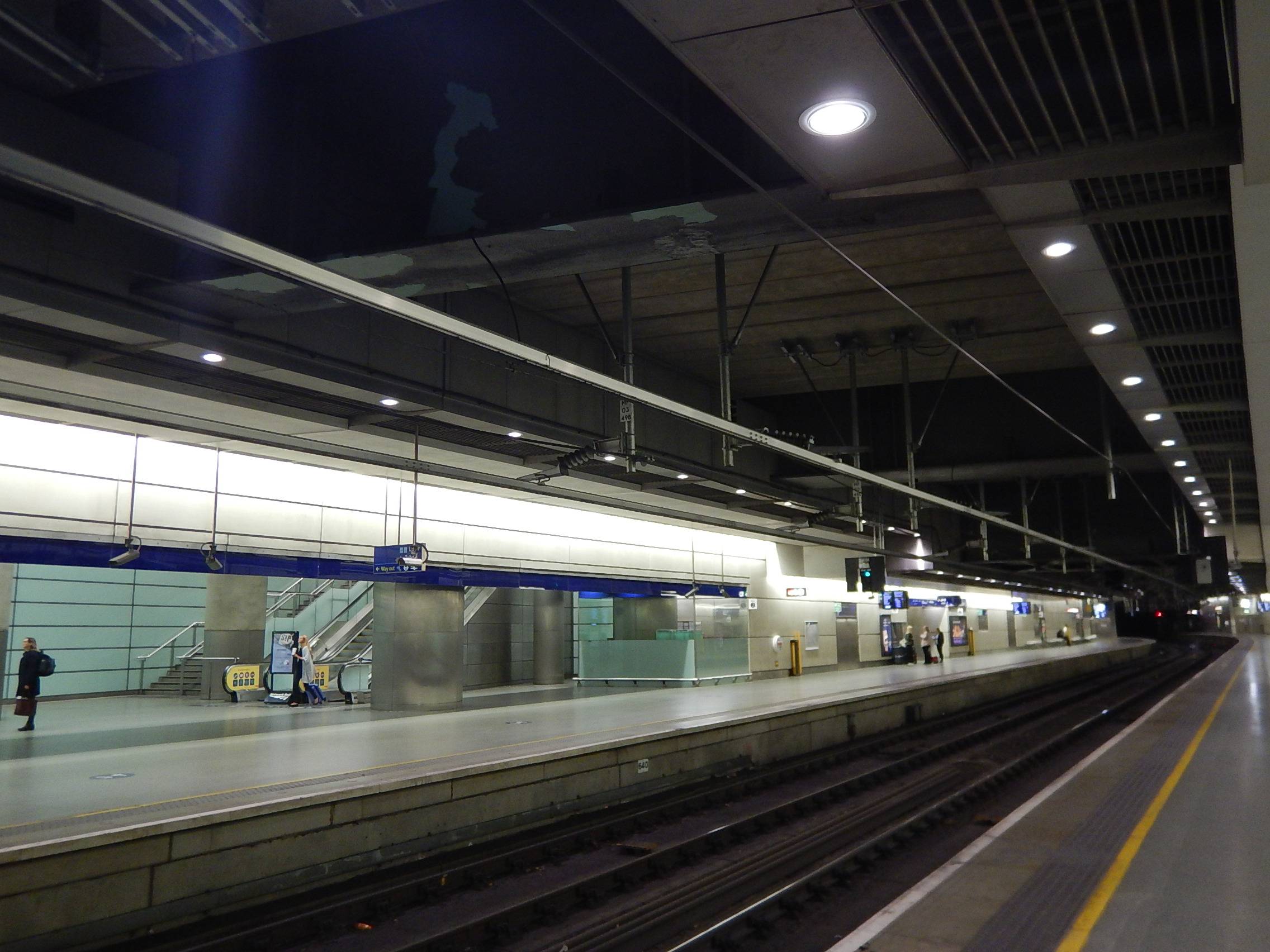
St. Pancras is one of the best places to see overhead conductor rail in London, although overhead conductor rail will be used by Crossrail in the tunnels.
How Would Overhead Conductor Rail Be Used To Charge A Train’s Batteries?
A short length of such a rail, would be mounted above the track in the station, so that it could be accessed by the train’s pantograph.
The rail would be positioned so that it was exactly over the train track, at the height required by the train.
What Voltage Would Be Used?
The normal overhead voltage in the UK, is 25 KVAC. There is no reason to believe that any other voltage would be used.
The overhead conductor rail/pantograph combination has a lot of advantages and benefits.
The Overhead Conductor Rail Is Standard
The overhead conductor rail is a standard Furrer + Frey product and it can be supported in any of the appropriate ways the company has used around the world.
This picture shows conductor rail fixed to the wall in Berlin HBf station.

Or it could be fixed to gantries like these at Gospel Oak station, which carry normal overhead wiring.
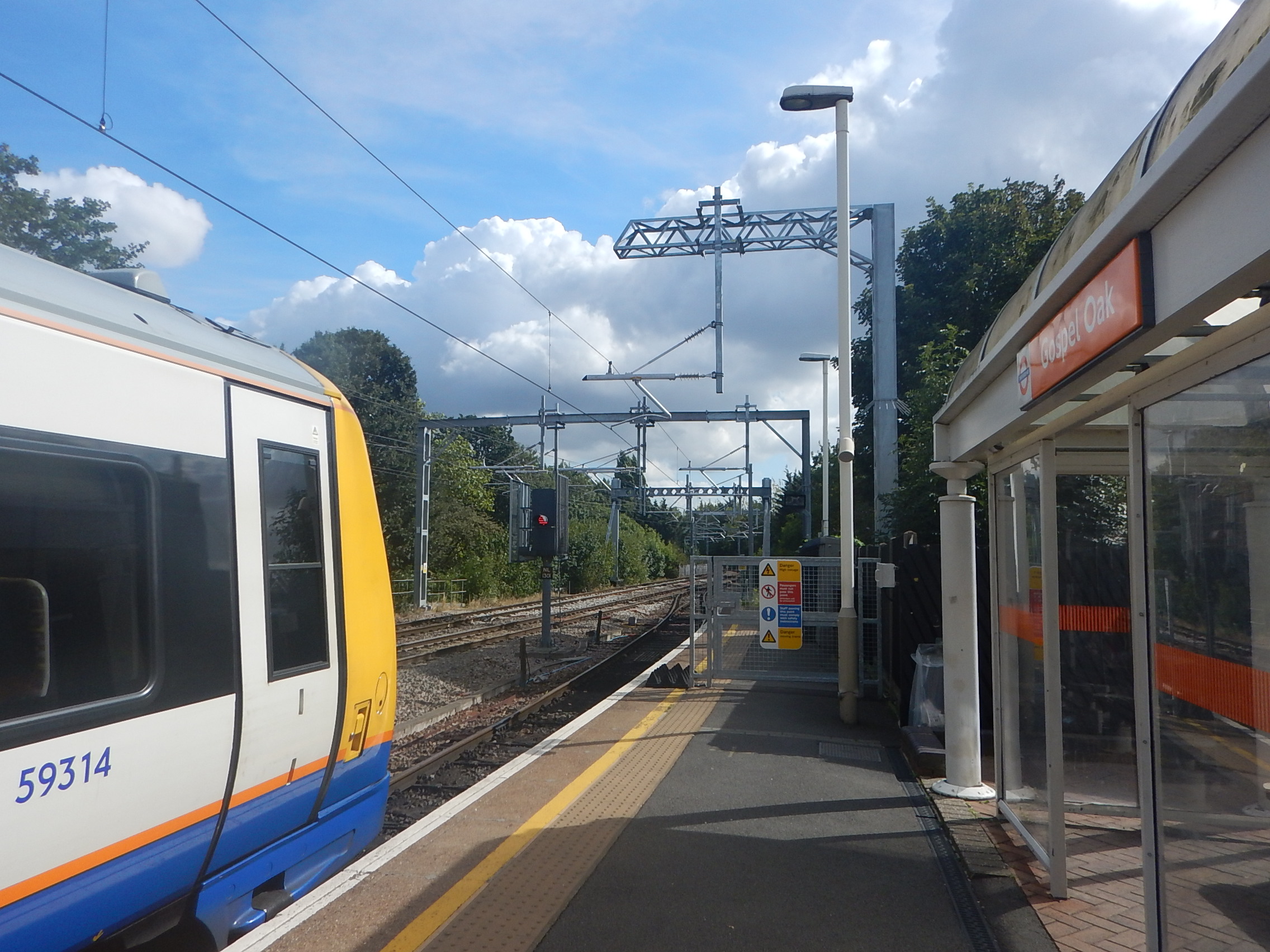
Note that gantries come in all shapes and sizes.
The Overhead Conductor Rail Can Be Any Convenient Length
There is probably a minimum length, as although drivers can stop the trains very precisely, a few extra metres will give a margin of error.
But there is no reason why at a through platform on a line served by battery trains, couldn’t have an overhead rail, that was as long as the platform.
The Train Pantograph Is Standard
The pantograph on the train, that collects the current from the overhead conductor rail can be an almost standard unit, as it will be doing the same job as it does on electrified sections of the route.
The white paper goes into this in detail.
As in the UK, our overhead line voltage is 25 Kv, the train can receive 1 MW with a current of 40 A, which is probably low enough to be below the limit of the conductor rail/pantograph combination. This would allow around 80 kWh to be transferred to the train in a five minute charge.
Could Trains Use Two Pantographs To Charge Batteries?
The white paper says that the system could handle more than one train, if the overhead conductor rail was long enough.
Bombardier’s Class 345 trains are effectively two half-trains, which each have their own pantograph.
So could a train use both pantographs to charge the batteries?
A Sophisticated Pantograph Control System Could Be Used
The train would probably have a sophisticated control system to automatically raise and lower the pantograph, so as to maximise the charge, whilst the train was in the station.
The System Should Be Safe
The overhead conductor rail would be no closer to passengers and staff, than overhead wires and conductor rail are at any other station platform in the UK.
I also suspect, that the power to the overhead conductor rail would only be switched on, if a train was being charged.
Standard Solutions Could Be Developed
One application of battery trains is to use them on a branch without electrification from an electrified line to a simple station in a town, housing or commercial development or airport..
The terminal stations would be very simple and surprisingly similar.
- One platform.
- An overhead conductor rail on gantries, a wall or some other simple support.
- A power supply for the overhead conductor rail.
A station building,, shelters and information displays could be added to the solution or designed specifically for the location.
Solutions for a wide range of countries would only differ in a few areas.
- The height of the platform.
- The gauge of the track.
- The overhead conductor rail voltage.
But I do believe that in this example of a standard system, there will be surprising commonality across the world.
As the white paper identifies, there is at least one tricky problem.
The High Voltage Power Supply
Providing high-quality, reliable high-voltage supplies may not always be that easy in some areas, so innovative electrical solutions will certainly be needed.
One solution suggested in the white paper involves using energy storage and then creating the 25 KVAC to power the overhead conductor rail.
I like this solution, as there are many applications, where these forms of independent power supplies are needed to power industrial premises, villages and equipment like flood pumps, often in remote locations. They could also incorporate a wind turbine or solar panels.
Someone will develop these systems and providing 15 or25 KVAC will be just another application.
Conclusion
I will add the conclusion from the white paper, as it says it all.
Battery trains are now available to replace diesel
trains on existing non-electrified tracks. They can
be charged using AC 25 kV 50 Hz or AC 15 kV 16,7
Hz either while running under catenary or when at
a standstill at a station using a short length of
overhead conductor rail and an appropriate power
supply. Standstill charging avoids the need to
build long stretches of catenary along a track
thereby saving money, and allowing the electrification
of track previously thought to be uneconomic
to electrify. Battery trains also enable the
use of renewable energy sources. Moving towards
green energy sources reduces harmful emissions
and noise which positively impacts climate change
and improves health
I am sure, we’ll see a lot of uses of this simple and efficient method of charging battery trains.
Bombardier Introduces Talent 3 Battery-Operated Train
The title of this post is the same as that of this article on InsideEVs.
This picture of the train is from Bombardier’s web site.
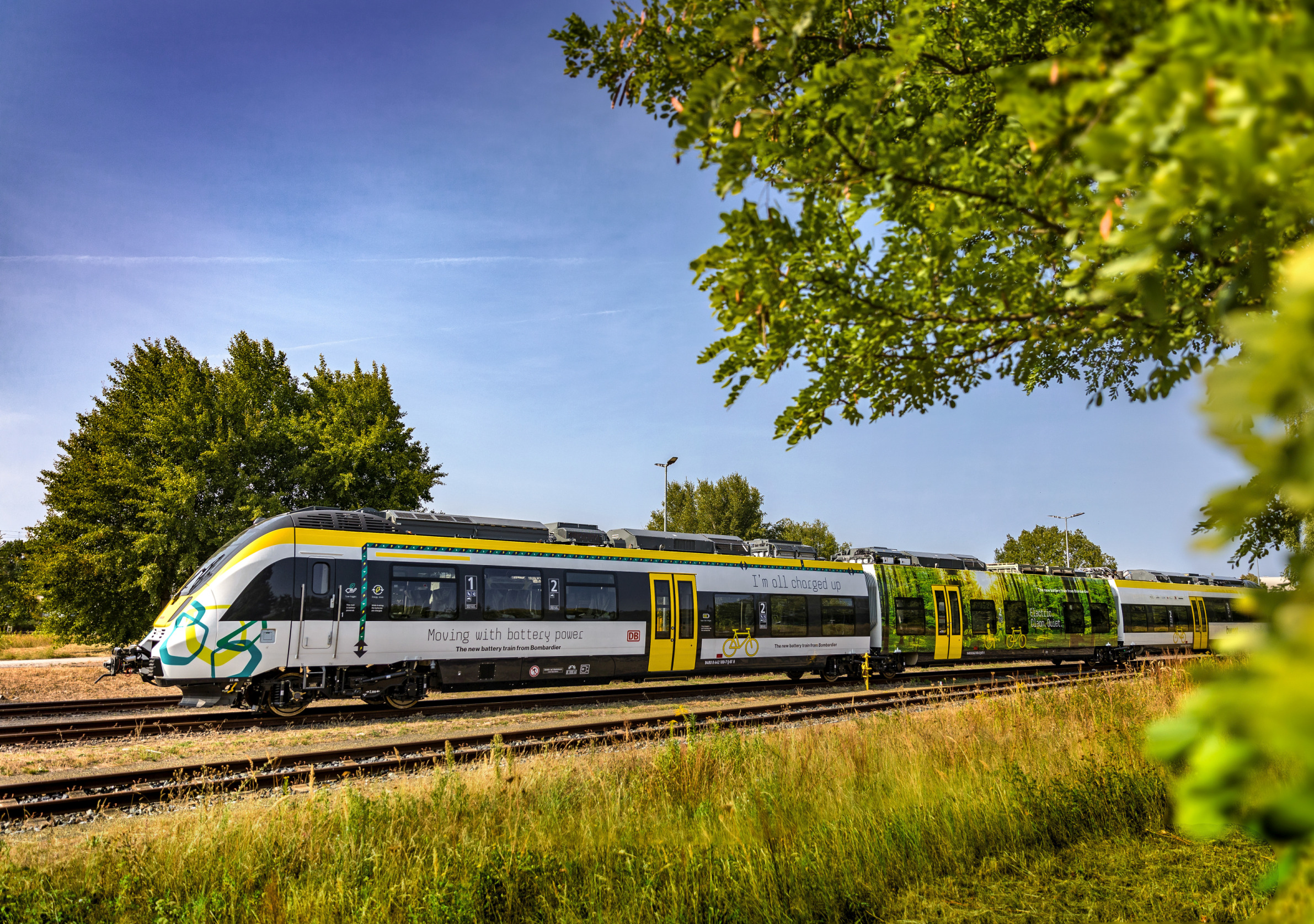
This is said.
Bombardier recently presented the Talent 3, which according to the press release, is the first of its kind to enter passenger operation in Europe in over 60 years.
The first prototype has a range of 40 km (25 miles), but the second one scheduled for 2019 will go 100 km (62 miles) on a single charge.
There’s even a nifty little video.
All the features and benefits of the train are detailed.
- Bridging gaps in electrification.
- Modular batteries, so more can be added to increase range.
- Regenerative braking to save energy.
- Lower infrastructure costs.
- Electric instead of diesel trains under city centres.
- Low noise.
- No CO2 emissions.
- Low cost of ownership.
But this is all about a Talent 3 train, that is designed to a Continental loading gauge. Wikipedia says this about the design.
The Talent 3 is based on the earlier Talent and Talent 2 designs, with a wider carbody, larger doors, and a lower floor to increase capacity and improve passenger flow at station stops. Depending on the intended service pattern, the Talent 3 can be specified with either a 160 kilometres per hour (99 mph) or 200 kilometres per hour (120 mph) top speed. Talent 3 trainsets can vary in length based on customer requirements—ÖBB ordered six-car sets with a passenger capacity of 300, while Vlexx ordered three-car sets that carry up to 160 passengers.
The picture and the video look like a three-car train.
How Large Are The Batteries On A Talent 3?
What do we know about the train?
- It appears to have three cars.
- According to this page on the Bombardier web site, the train has four batteries.
- I estimate that according to weights in Wikipedia, a three-car Talent weighs 86.5 tonnes
- A three-car Talent 3 can carry 160 passengers.
My calculation is as follows.
- 160 passengers at 90 Kg each with baggage, bikes and buggies weigh 14.4 tonnes.
- I’ll assume each battery weighs a tonne.
- This gives a total train weight of 104.9 tonnes.
At a speed of 160 kph, the Omni Kinetic Energy Calculator gives a kinetic energy of 28.8 kWh.
So four batteries of 25 kWh each would be sufficient to handle the regenerative braking energy.
What about the UK?
Bombardier’s equivalent product for the UK is the Aventra, which unlike the Talent 3 is a substantially all-new design, although it does use proven technology from previous trains.
It has also received six orders for a total of over 400 trains.
I have always thought, that after the successful BEMU trial with a Bombardier Class 379 train, that batteries will become an important part of rail technology and they will feature in the design of the Aventra.
You may think, that looking at the video, that we’ll have trouble with the UK’s small loading gauge putting the batteries on the roof of the train, but the actual size of batteries is not large and they can go underneath.
I sometimes wonder, If the reason for the delay of the Class 710 trains, is that when they are successfully running, Bombardier will finally come clean in the UK, about how batteries are used on the Aventra. You wouldn’t want the trains to be unreliable, so they are making sure that all systems, including the important batteries are 100 % reliable.
In Don’t Mention Electrification!, I state why I believe that the Barking Riverside Extension of the Gospel Oak to Barking Line could be built without electrification.
So I’m fairly certain that the Class 710 trains are designed to run this section of the route on battery power.
Taste Of Nature Bars
Finding gluten-free snacks was difficult in Switzerland, but I did find these.

I bought this pair at Geneva Airport on the way home.
They were very similar to some Eat Natural bars.
I usually take about two UK bars for each day of travel.
 The Anonymous Widower