London Tram Enhancements Included In Growth Fund
The title of this post is the same as that of this article in Metro Report International.
This is the first two paragraphs.
Transport for London is to finance around one-third of the cost of double-tracking the Elmers End branch of the tram network, Mayor of London Sadiq Khan announced on May 21.
TfL is to provide £3·3m from its Growth Fund towards the estimated £9m estimated project cost. In addition to double-tracking the short branch, this would add a second tram platform to the Elmers End terminus. TfL says that this would enable service improvements and ‘address reliability issues’ on the network.
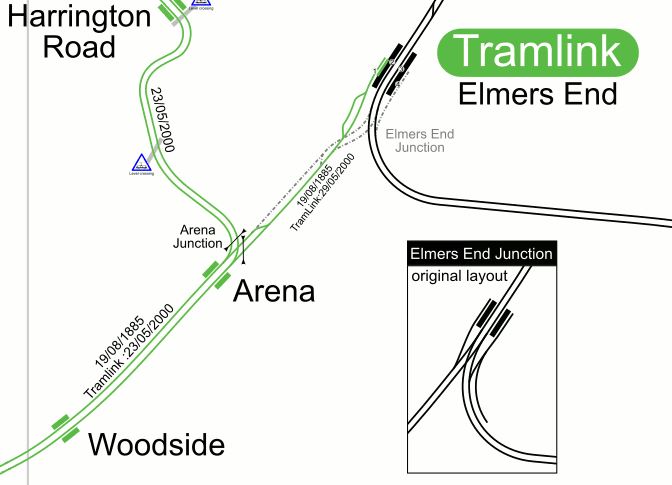
This map from carto.metro.free.fr, shows the track layout between the Arena tram stop and Elmers End station.
My thoughts on the various works follow.
Double-Tracking
From the map, it doesn’t appear that a very large amount of track needs to be doubled.
This Google Map shows some of the single track section of the route.

Note the passing loop to the South of Elmers End is visible, at the top of the map.
It would also appear that there is space to add the second track, which used to exist when the tram line was the Addiscombe Line.
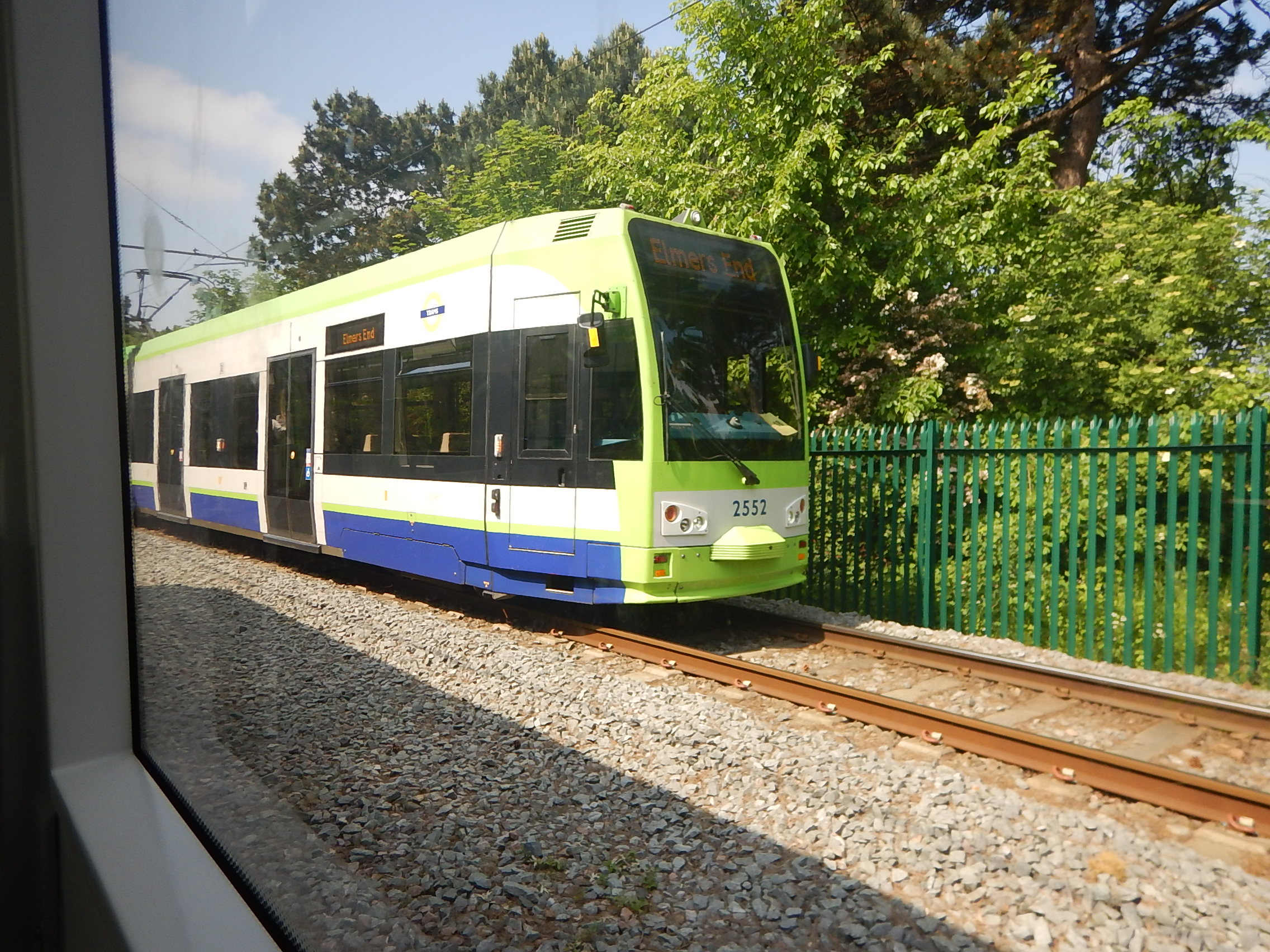
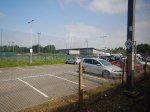
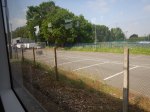
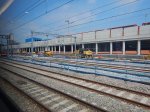
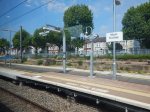
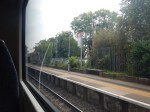
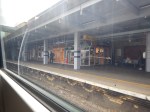
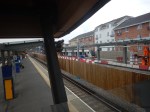
These pictures, which were taken from a tram, show the section of line in the map.




I suspect that a second track linking the double track at Arena to the passing loop South of Elmers End can be created.
Electrification Or Battery
Battery trams will soon be running on many tram networks around the world, including Birmingham in the UK.
Tramlink has a problem, in that they have two types of trams.
Because of their age, I think the CR4000 trams might be difficult to be fitted with batteries.
But Munich already has Variobahn trams fitted with batteries.
If battery power were needed just on the route to Elmers End, I think it would not be an economic decision to fit all trams with batteries.
Obviously, if in the future, more trams were to be ordered, there may be other routes, where batteries are ideal.
I don’t think, there will be any issues about putting up more wires.
Being able to use the current trams on the new track to Elmers End would be very convenient
For these and other reasons, I suspect this line will be electrified.
The New Elmers End Platform
Elmers End is the only one of the four Tramlink termini with a single platform, as Beckenham Junction, New Addington and Wimbledon all have two platforms.
So a second platform at Elmers End would surely make running a service easier, when things go a bit awry.
The need was illustrated as my tram left Elmers End. We stopped for a couple of minutes in the passing loop just outside the station to let another tram enter the platform.
After the proposed works, the two trams would have passed on the double-track to the East of the Arena tram stop.
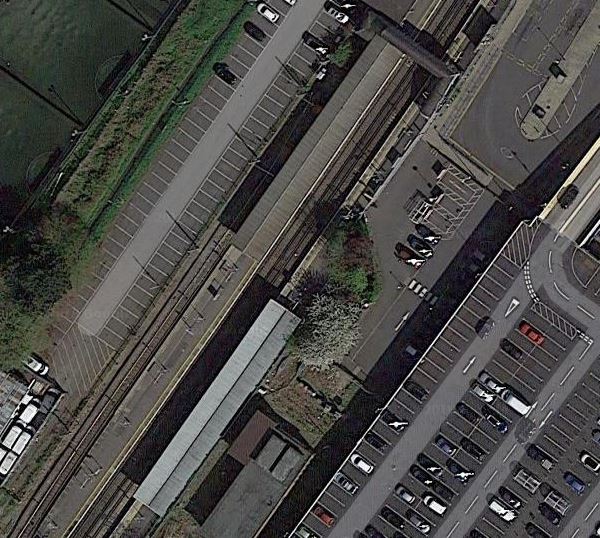
This Google Map shows the platforms at Elmers End station.
These pictures show the station and in particular, the current single tram platform.
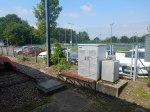

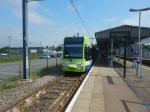


Note.
- Platform level is such, that platform-to-tram is step-free.
- The current platform has a cross-platform interchange with the Northbound Platform 2 on the Hayes Line.
- It would appear, that there is space alongside for a second platform, although it might mean the loss of some car parking spaces.
- Some equipment might need to be moved.
- The footbridge could probably need to be made step-free.
- There is space to add the gantries for the electrification.
The original Addiscombe Line had a platform on the other side of the tracks as shown in the map earlier in this post.
I doubt this old layout will be used, as a flat junction would be rather difficult to operate and a flyover would be expensive.
Could we see a staggered platform layout, so that both platforms are accessible from Platform 2?
This map from carto.metro.free.fr shows the track arrangement at New Addington.
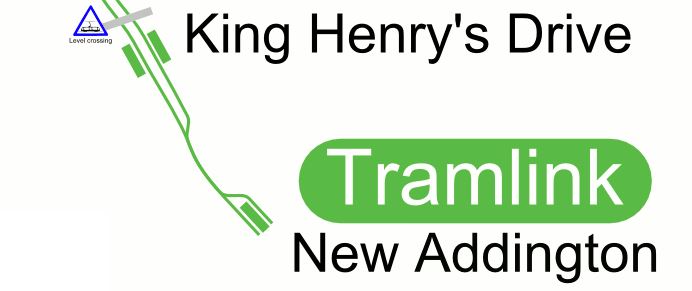
The line appears to be singled a convenient distance from the terminus and then it splits again just outside the platforms.
Beckenham Junction and Wimbledon, both use a similar track layout.
If a layout similar to this were to be applied at Elmers End, it would have the collateral benefit of reducing the current three sets of points to two.
A single track, would also be easy to squeeze through the gap into Elmers End, provided there was space for the points before the platforms.
I believe this layout, would work with staggered platforms.
Would The Elmers End Platforms Be Made Longer?
Wikipedia talks about expanding Tramlink. Under Phase C of Trams 2030, this is said.
Furthermore, if extra capacity is required, tram stops could be lengthened to serve either longer trams or two trams coupled together on services between Wimbledon and Beckenham Junction or Elmers End.
I think that Elmers End will be future-proofed.
An Increase In Frequency To Elmers End
The Wikipedia entry for Elmers End station, says this about current tram frequencies under Services.
Trams depart from the station every 12 minutes; this service falls to four trams per hour during the early morning and evenings. Each tram travels towards Croydon town centre; trams on Route 1 continue to West Croydon tram stop, before travelling back as Route 2 to Beckenham Junction, while trams on Route 4 continue to Wimbledon.
A second platform would surely allow the five trams per hour frequency to be doubled to ten trams per hour, if this was thought necessary.
These trams would either be turned in Croydon or continue to Wimbledon.
Some might use a proposed diverting loop in Dingwall Road, by East Croydon station.
More Trams
If more trams are needed, I’m sure Stadler would oblige with a few new Variobahn trams.
Future Expansion
I also think, that because after the Elmers End scheme is completed, all the Tramlink termini will have two platforms, this will make it much easier to expand the system.
Conclusion
It seems a relatively simple scheme with no serious construction problems.
Hackney Wick Station Opens
Hackney Wick station is now almost fully rebuilt and the new facilities are open to passengers



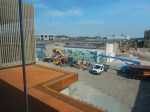

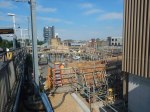


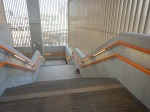
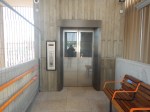

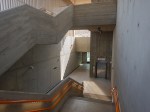




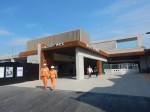


It is a design, that draws heavily on brutalist architecture, but the general feeling is that people seem to like the station.
The station is simple in layout, with a double subway through the embankment, which was built alongside and inserted at Easter 2017, as I wrote about in A Tough Way To Spend Easter.
- One side of the subway is reserved for ticketed passengers and the other when it opens will be a new route under the railway.
- Access to the platforms on top of the embankment is by well-designed high capacity staircases and two lifts.
- The staircases have similar hand-rails with built-in LED lighting, as I saw yesterday at Abbey Wood station.
- The station does not have ticket gates and relies on passengers to just touch in, as at several stations on the London Overground.
- But then the station will be used for large sporting events at the Olympic Stadium.
- It also has wider platforms than it used, to accommodate large numbers of passengers.
There is still some work to do, like adding the signage and opening the subway for those not using the railway.
I only met one person, who didn’t like the station. He struck me as an artistic type and said the money should have been spent on other things.
But Hackney Wick needed a new high-capacity station and a high-capacity walking route under the railway.
- It is the nearest station to the Olympic stadium.
- There is a large amount of housing development in the area.
Currently, the station handles two million passengers a year and this will surely rise.
A Comparison With The New White Hart Lane Station
Various sources say that the rebuilding of Hackney Wick station will cost £25million.
White Hart Lane station is also being rebuilt in conjunction with Tottenham Hotspur’s new ground and redevelopment of the area.
This also needs to give access to a high railway line, which is on a brick viaduct, that can be incorporated into the structure, rather than replaced, as at Hackney Wick.
According to this article in Construction Enquirer, the budget is £18million.
Modern step-free stations to handle two million passengers per year, don’t come cheap!
On the other hand, once built most stations last for at least a hundred years.
White Hart Lane opened in 1872, whereas Hackney Wick opened in 1980.
So it looks like the Victorians did a longer lasting job, than British Rail!
A First Ride In A Nine-Car Class 345 Train
This morning, I had a first ride in a nine-car or full length Class 345 train.
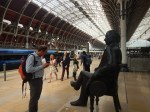
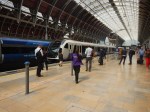
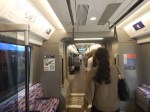



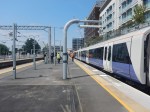
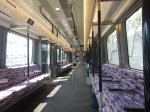
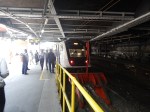
I just took it between Paddington and Hayes & Harlington stations and back again.
The overall impression, is how much longer they seem, than the seven-car version currently working between Liverpool Street and Shenfield.
Gravitricity Gets An Imperial Seal Of Approval
This article on Renewable Energy Magazine is entitled Gravitricity Technology Turns Mine Shafts into Low Cost Power Storage Systems.
This is the first paragraph.
A report by independent analysts at Imperial College London has found that Scotland-based Gravitricity’s gravity-fed energy storage system may offer a better long-term cost of energy storage than batteries or other alternatives – particularly in grid balancing and rapid frequency response services.
I am starting to believe that Gravitricity’s simple, but patented system has a future.
The Imperial report says the system has the following advantages.
- More affordable than batteries.
- Long life.
- No long term degredation.
The main requirement is a shaft, which can be newly sunk or an old mine shaft.
Hopefully, reusing old mine shafts, must save costs and remove hazards from the landscape.
No-one can say the system isn’t extremely scientifically green.
I have some thoughts.
Eco-Developments
Could clever design allow a mine shaft to be both capped and turned into an energy storage system?
Perhaps then housing or other developments could be built over the top, thus converting an area unsuitable for anything into something more valuable. with built in energy storage.
More Efficient Motor-Generators
One of the keys to efficient operation of a Gravitricity system is efficient motor-generators.
These are also key to efficient regenerative braking on trains, trams and other vehicles.
So is enough research going into development of efficient motor-generators?
London To Rainham And Back On Thameslink
Today was the first Monday of a new timetable and I took a trip to Rainham (Kent) station from London Bridge on the new Thameslink service,, before returning to Abbey Wood station.






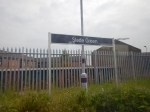

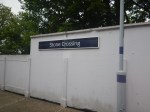
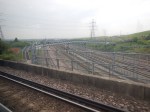
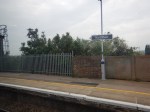
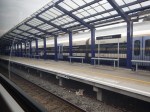

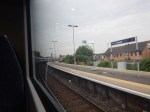


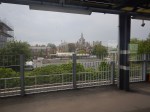
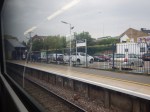
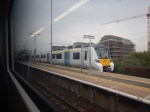
Note.
- I took a picture at each station as we went out to Rainham.
- There is a lot of housing and commercial development going on by Dartford and Rochester stations.
- Thameslink are scheduled to run trains between Luton and Rainham (Kent) stations every thirty minutes.
- There were two Class 345 trains at Abbey Wood station.
- I went in a Class 700 train with eight-cars.
There was the odd cancelled train on the route, but what surprised me on the return journey, was that my train passed four Class 700 trains going in the other direction.
I must assume, that Thameslink were training more drivers for the route.
The Service I Took
The Thameslink service between Luton and Rainham, that I took from London Bridge to Rainham is a replacement for the Southeastern service between Charing Cross and Gillingham.
- Both services use the same route between London Bridge and Gillingham.
- Both services stop everywhere between London Bridge and Gillingham.
- Both services are well-connected to other services at Abbey Wood (Crossrail), Woolwich Arsenal (DLR), Greenwich (DLR) and London Bridge (Northern and Jubilee).
- The previous Southeastern service took 66 minutes between London Bridge and Gillingham,
- The current Thameslink service is timetabled to take 82 minutes.
- The Thameslink service takes over forty minutes to turn round at Rainham.
Given that the Thameslink Class 700 trains are 100 mph trains and the previous Class 465 trains are only 75 mph trains, I find it extraordinary that faster and more modern trains are delivering a slower service.
Complaints
There have been complaints about the new timetable, so I asked a couple of station staff, what they felt about the new Thameslink service from Luton to Rainham.
They seemed in favour and added, these points about the service.
- It would help with getting the service out of trouble, when there were delays East of Rainham.
- It gives a direct connection to Dartford.
- The extra capacity will help.
The service to Rainham will surely act as a collector service for those changing to Crossrail at Abbey Wood.
Rainham to Bond Street with a change at Abbey Wood, should be under an hour and a half.
Abbey Wood Station – 21st May 2018
Abbey Wood station has been progressing and I took these pictures.

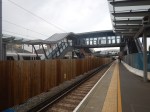
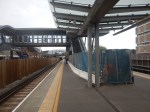
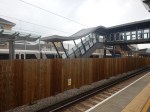


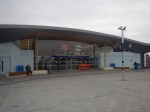

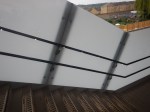
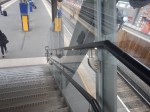

The layout of the connecting bridges between the Crossrail and North Kent Line platforms is now clear.
- At the London End, there is a simple footbridge, with steps to each pair of platforms.
- At the Main Entrance End, there are wide steps and a lift between the station ticket hall and each pair of platforms.
- The third bridge in the middle is the unusual one with wide steps and a single escalator to each pair of platforms.
I would assume, that the direction of the escalators is as follows.
- In the Morning Peak, the North Kent Line escalator is set to Up and the Crossrail escalator is set to Down, to speed passengers from the North Kent Line to Crossrail.
- In the Evening Peak, the Crossrail escalator is set to Up and the North Kent Line escalator is set to Down, to speed passengers from Crossrail to the the North Kent Line.
- At other times with less traffic, both escalators would be set to Up.
I have seen a lot of station layouts all over the UK and Europe and never one like this.
I doubt, I’ve even seen a pair of platforms connected by three separate bridges too!
Could it be a design of genius to allow thousands of passengers to change between the two pairs of platforms in a short space of time?
Other station layouts that enable this rate of passenger transfer, like the interchange between Crossrail and the Central Line at Stratford station, arrange for a cross-platform interchange, with lines going in the same direction sharing a common platform.
But that arrangement would have been difficult at Abbey Wood, unless perhaps the Crossrail tunnel emerged closer to the station or a flyover or dive-under were to be built.
Both options would have required more space and would have been a lot more expensive.
The design of Abbey Wood station with its three footbridges and wide platforms, would appear to be a more affordable alternative.
Train Length
In some of the pictures, a Class 345 train is shown in one of the Crossrail platforms.
This is a full-length train, which is 205 metres long.
The pictures show just how long these trains are.
LED Lights On The Stairs
Three of the pictures in the bottom row, show the stair handrails with their light underneath.
I Like them.
Transport for London’s New Rail Line
Today, Transport for London have taken over Heathrow Connect, in preparation for the full Crossrail.
The service is now run by TfL Rail, just like the Liverpool Street to Shenfield service in the East of London.
It’s even shown on some of the new Underground maps.
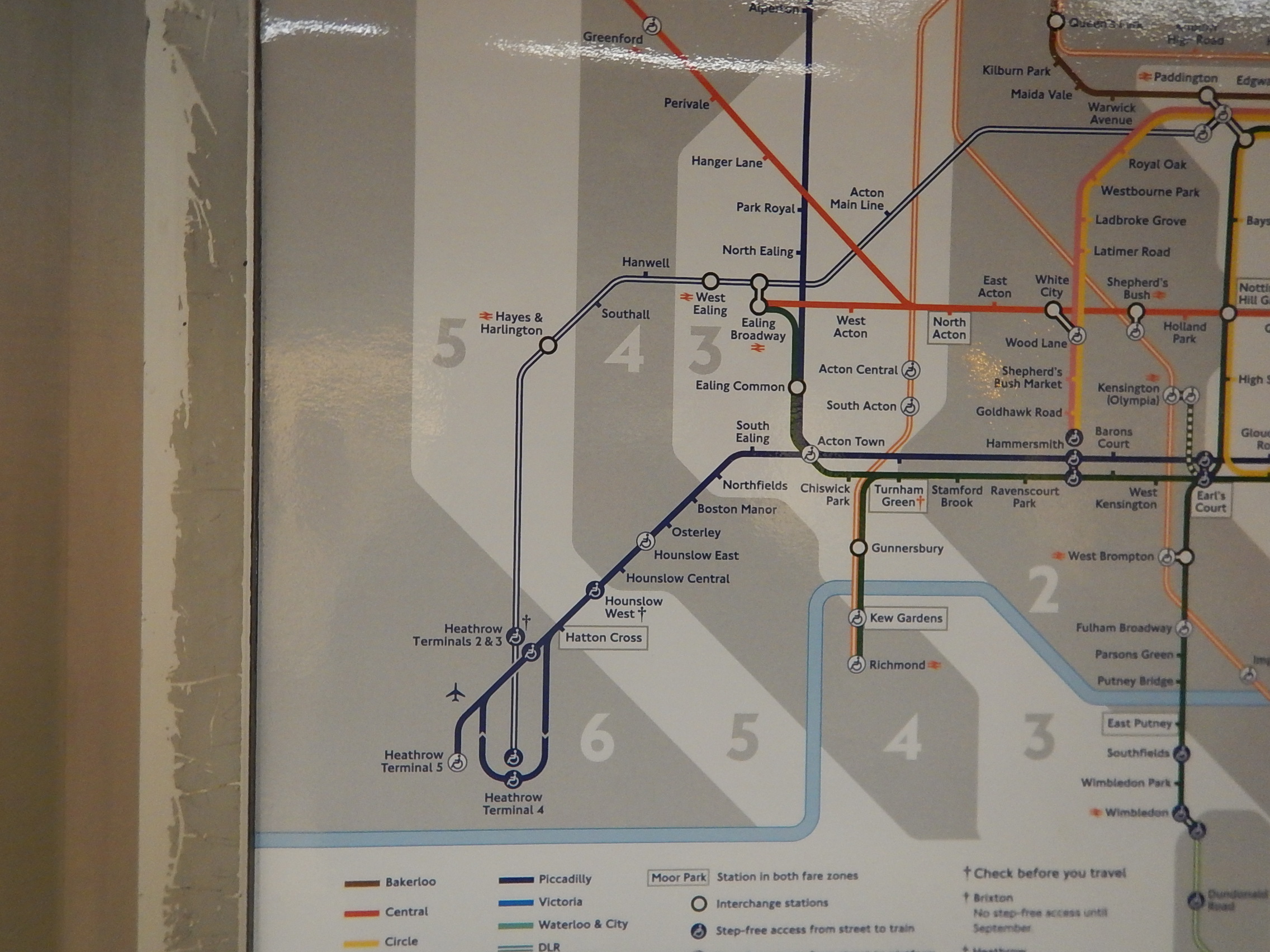
I photographed this map at Kings Cross St. Pancras.
Note the double blue line, which indicates the new route of the former Heathrow Connect, running from Paddington in the top-right corner of the map to Heathrow Terminal 4 towards the bottom-left.
The intermediate stations shown are.
- Acton Main Line
- Ealing Broadway – Change for Central and District Lines.
- West Ealing
- Hanwell
- Southall
- Hayes and Harlington
- Heathrow Terminal 2 & 3 (Heathrow Central) – Change for Piccadilly Line.
Note that TfL use Heathrow Terminal 2 & 3 for the main railway station at Heathrow and Wikipedia uses Heathrow Central.
A Trip To Heathrow From Paddington
This morning, I checked into the new TfL Rail service at Paddington, using my Freedom Pass and took the 09:11 service to Heathrow Airport.
I got out at Heathrow Terminal 2 & 3 station before returning later on another TfL Rail service to Paddington.
I took these pictures on the route.
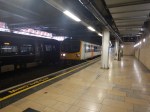

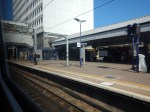

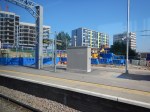
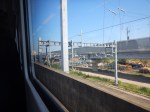
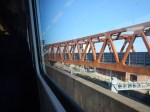


Note that the Class 360 trains are still running on the route, as there are operational issues with Crossrail’s new Class 345 trains in the tunnel to Heathrow.
Contactless Card/Oyster To Heathrow
TfL Rail also accepts contactless card or Oyster on this route.
According to TfL’s Single Fare Finder, the single fare is £10.20 in the Peak and £10.10 in the Off-Peak.
But,I’m not sure about railcards, the affect of capping or the price if you buy the ticket on line.
Freedom Passes To Heathrow
As I’d used my Freedom Pass, the two journeys cost me a big fat nothing!
It won’t be long before the many Freedom Pass holders, will realise, that Heathrow will be in their free travel area by a comfortable train and they will possibly use it more often, than the Piccadilly Line.
TfL Rail Service Frequency
Currently, the frequency between Paddington and Heathrow is two trains per hour (tph).
Provisional service details are shown under Services in the Wikipedia entry for Crossrail, when the line opens fully in December 2019.
- Four tph between Abbey Wood and Heathrow Terminal 4 stations
- Two tph between Abbey Wood and Heathrow Terminal 5 stations
All services will call at the following stations.
- All stations between Abbey Wood and Paddington stations.
- Ealing Broadway station
- Heathrow Terminal 2 & 3 station.
Plans for stopping at Acton Main Line, West Ealing, Hanwell, Southall and Hayes & Harlington stations are yet to be decided.
I suspect that TfL would like all Heathrow trains to stop at all intermediate stations, just as services do between Liverpool Street and Shenfield, in the East of London.
But Great Western Railway may have other ideas!
Speaking for myself, I’d like to see four tph on the TfL Rail route between Paddington and Heathrow, as soon as possible.
The Future Of The Class 360 Trains
When Crossrail sort out the Class 345 trains, the five sets of five-car Class 360 trains will be surplus to requirements.
They will also be joined in the sidings in a couple of years, by twenty-one similar four car trains, that are being replaced with new Class 720 trains, by Greater Anglia.
As they are modern 100 mph trains, they should find a home somewhere!
They could even be exported to Thailand, where a similar fleet operates.
Karen’s Travel Problem
My friend, Karen, has a train problem.
She lives in Leeds and needs to go to Milton Keynes regularly.
The journey is difficult with often two changes and the need to go across Manchester.
But not from Monday!
It appears that under the new timetable, all the XX:50 trains from Leeds, go direct to Piccadilly over the Ordsall Chord and now give you twenty-five minutes to catch a direct train to Milton Keynes.
The total journey time is just under three hours.
The return journey seems quicker too!
It will be interesting to see, how much the Ordsall Chord changes journeys across Manchester!
An Unusual Service Pattern Between Paddington And Hayes & Harlington Stations
I’ve just been looking at the service pattern from Monday between Paddington and Hayes & Harlington stations.
There appears to be four (tph) provided by both TfL Rail and Great Western Railway (GWR) at most times, which means an eight tph service between the two stations.
So it would appear logical that intermediate stations get the same service.
- Acton Main Line gets two tph
- Ealing Brodway gets eight tph.
- West Ealing gets four tph
- Hanwell gets two tph
- Southall gets five tph.
I wouldn’t be surprised to see complaints.
A Hydrogen-Powered Locomotive
If Alstom’s ventures in Germany and the UK with hydrogen-powered trains, are successful, I don’t think it will be long before engineers start thinking about a hydrogen-powered locomotive.
Consider some of the various locomotives used in the UK.
- Class 66 – Diesel – 2,500 kW – Over 400 in service
- Class 67 – Diesel – 2,400 kW – 30 in service
- Class 68 – Diesel – 2,800 kW – 34 in service
- Class 70 – Diesel – 2,800 kW – 37 in service
- Class 88 – Diesel – 700 kW – Electric – 4,000 kW – 10 in service
- Class 90 – Electric – 3,700 kW – 50 produced.
- Class 91 – Electric – 4,800 kW – 31 produced
- Class 92 – Electric – 5.000 kW – 46 produced.
Note.
- Many of the diesel locomotives, like the Class 66, don’t meet the latest emission regulations.
- Class 66 locomotives spent a lot of time pulling freight trains on electrified lines.
- The Class 90 electric locomotives are getting old and need careful maintenance.
- The Rail Minister, Jo Johnson, would like to see diesel power on UK railways gone by 2040.
I have not included some of the heritage locomotives, that are regularly seen on the UK rail network pulling freight.
This picture shows a pair of Class 86 locomotives hauling a freight train through Hackney Wick station.
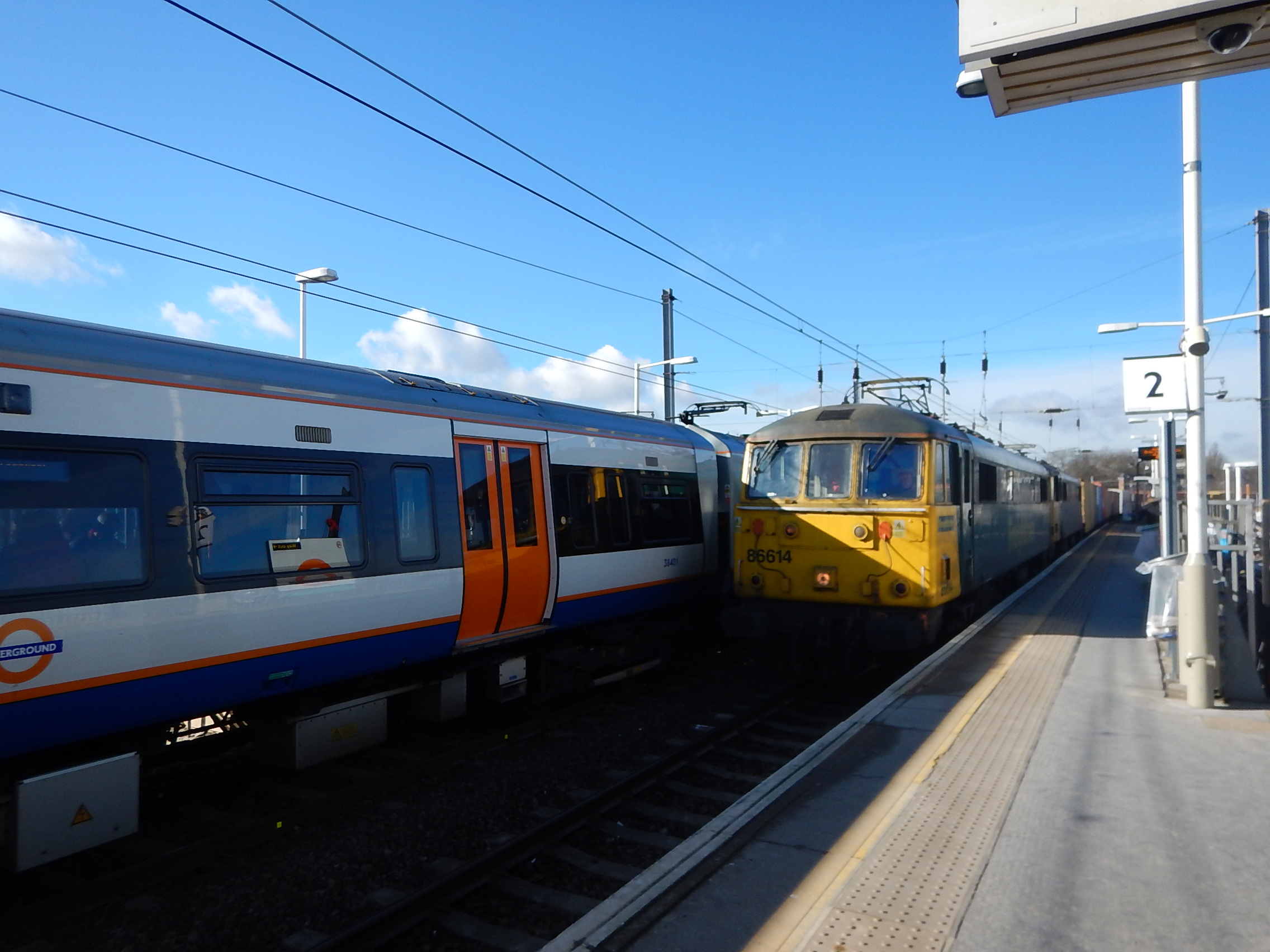
These two Class 86 locomotives date from the mid-1960s. But they do have 2,700 kW of power. Each!
According to Wikipedia, fourteen of Freightliner‘s thirty Class 86 locomotives are still in regular use.
Not only is this a tribute to 1960s engineering, but it does show that there is a shortage of suitable locomotives in the UK.
So could a modern environmentally-friendly locomotive be developed to fill the gap?
A Look At The Class 88 Locomotive
There could be a clue as to what could be a useful power output in the design of the Class 88 locomotive.
- These are a modern design from Shadler that entered service in 2017.
- They have a power output of 4,000 kW from electricity.
- They have a power output of 700kW from diesel.
- They can switch between power sources automatically.
- They can haul passenger trains, as well as heavy freight trains.
- They comply with Euro III B emission limits.
Did Direct Rail Services make sure they got a correctly-sized locomotive with the right capabilities?
They obviously find the diesel Class 68 locomotive to their liking, as they have bought over thirty.
So they probably knew very well, the sort of power that they would need from a dual-mode electro-diesel locomotive.
On electricity, the Class 88 locomotive is more powerful than a Class 90 electric locomotive, which commonly haul heavy freight trains on the electrified network.
In this article in Rail Magazine, the following is said about Class 88 locomotives, operating from Preston to Glasgow.
When hauling the maximum permitted load of 1,536 tonnes on the 1 in 75 banks on this route, Class 88 has a balancing speed of 34mph in electric mode or 5mph in diesel mode.
This shows how a well-delivered 700 kW, isn’t that inadequate.
I suspect that there is sufficient power to bring a heavy freight train out of Felixstowe and the other ports without electrification.
So perhaps, we should take the specification of a Class 88 train, as a starting point for the specification of a proposed hydrogen locomotive?
Possible Routes And Duties
There are also some specific problems associated with various routes and duties, where the current UK fleet of locomotives are used.
InterCity 225 Trains
There are currently thirty-one InterCity 225 trains, running on the East Coast Main Line.
- They are hauled by a 4,800 kW Class 91 electric locomotive.
- The trains consist of nine Mark 4 coaches and a driving van trailer.
- The trains were designed for 140 mph, but normally run at 125 mph.
- The trains have a capacity of over five hundred passengers.
- The trains could be made to meet all proposed access regulations for those with reduced mobility, with not a great deal of expensive work.
- Most of the trains will be replaced by Class 800 trains in the next couple of years.
- The trains are owned by Eversholt Rail Group, who are gaining a reputation for innovation.
The trains could probably give a few more years of service.
One suggestion, that has been made, would be to run the trains on the Midland Main Line.
- Sections of the route allow running at 125 mph.
- The route needs an urgent replacement for InterCity 125 trains.
- The route is only to be electrified as far as Kettering and Corby.
So an alternative and powerful locomotive would be needed, that could run on both lines with and without electrification.
The Class 91 locomotives are powerful beasts running on electricity, but with careful calculations, I’m sure that the power needed on lines with and without wires should be known.
The trains might also be formed of less coaches and selective electrification could be used in stations to accelerate the trains.
Note that accelerating the train to 125 mph, will be the major use of electricity. Hence, electrified stations would be welcome.
Expect some innovative proposals to use Mark 4 coaches from the InterCity 225 on the Midland Main Line.
Initially, could two Class 88 locomotives working in push-pull mode, handle say six Mark 4 coaches between London and Derby, Nottingham and Sheffield?
Who knows? But there are probably teams of engineers working away to create plausible solutions for the bidders for the new East Midlands Franchise, which will be awarded in April 2019.
Class 66 Locomotive Replacement
Because of their number, you see Class 66 locomotives everywhere on the UK network.
- They haul long inter-modal freight trains.
- They haul freight into and out of docks like Felixstowe, that are without electrification.
- They haul engineering trains.
- They are often seen hauling trains using diesel power on electrified lines.
But they are one of the most environmentally-unfriendly of diesel trains, which don’t meet the latest emission regulations.
How long before residents and rail passengers, start to complain about these locomotives, where electric haulage is possible?
I believe there is an increasingly urgent need for a go-anywhere replacement for the Class 66 locomotive.
It would appear, that the Class 88 locomotive, was specified so it can take over some of the duties of a Class 66 locomotive,
Could this see more orders for the Stadler locomotive?
I also believe that we could see other types of locomotive built to replace the Class 66 locomotive.
We might even see a locomotive with a lower power rating able to use electric or hydrogen power for work with all the smaller trains, that Class 66 locomotives haul.
Hydrogen Instead Of Diesel
The 700 kW diesel engine in a Class 88 locomotive is a Caterpillar C27, which drives an ABB alternator.
The engine alone weighs three tonnes.
By comparison Ballard make a hydrogen fuel cell that has an output of 100 kW, for a weight of 385 Kg.
This gives a weight of 2.7 tonnes for an output of 700 kW.
There will need to be a substantial battery. I estimate that a 500 kWh battery will weigh about eight tonnes.
On balance, the hydrogen-powered locomotive will probably be heavier than a diesel one, but it will have environmental advantages.
But with good design, I do think that a locomotive with similar performance to a Class 88 can be produced.
It might need to be longer or articulated and have more axles, to cope with extra weight.
Conclusion
I am led to the belief that a hydrogen-powered locomotive with sufficient power is possible.
They may be able to handle a lot of the duties of Class 66 locomotives, but I doubt they would be powerful enough for hauling full rakes of Mark 4 coaches.
It will be interesting to see, what solutions are proposed to solve the forthcoming rolling stock shortage on the Midland Main Line.
 The Anonymous Widower