Batteries On Class 777 Trains
In this article on Railway Gazette, which is entitled Merseyrail Class 777 arrives in Liverpool, there is this sentence.
There is space under one vehicle to house a battery weighing up to 5 tonnes within the axleload limit.
This matter-of-fact sentence, draws me to the conclusion, that these trains have been designed from the start to allow future battery operation.
Batteries are not an add-on squeezed into a design with great difficulty.
Battery Capacity
Energy densities of 60 Wh/Kg or 135 Wh/litre are claimed by Swiss battery manufacturer; Leclanche.
This means that a five tonne battery would hold 300 kWh.
Note that Vivarail find space for 424 kWh in the two-car Class 230 train, I wrote about in Battery Class 230 Train Demonstration At Bo’ness And Kinneil Railway, so it would appear that Stadler aren’t being over ambitious.
Kinetic Energy Of A Full Class 777 Train
The weight of a full Class 777 train is calculated as follows.
- Basic empty weight – 99 tonnes
- Battery weight – 5 tonnes
- 484 passengers at 80 Kg – 38.72 tonnes
Which gives a total weight of 143.72 tonnes.
Intriguingly, the weight of a current Class 507 train is 104.5 tonnes, which is 500 Kg more than an empty Class 777 train with a battery!
If these weights are correct, I suspect Stadler have used some very clever lightweight design techniques.
For various speeds, using Omni’s Kinetic Energy Calculator, this weight gives.
- 30 mph – 3.6 kWh
- 40 mph – 6.4 kWh
- 50 mph – 10.0 kWh
- 60 mph – 14.4 kWh
- 70 mph – 19.5 kWh
- 75 mph – 22.4 kWh
Note.
- The average speed between Bidston and Wrexham General stations on the Borderlands Line is under 30 mph
- The operating speed on the Wirral Line is 70 mph
- The operating speed on the Northern Line is 60 mph
- The maximum speed of the trains is 75 mph.
Every time I do these calculations, I’m surprised at how low the kinetic energy of a train seems to be.
How Small Is A Small Battery?
One battery doesn’t seem enough, for a train designed with all the ingenuity of a product with quality and precision, that is designed to out-perform all other trains.
This is another paragraph from the Railway Gazette article.
According to Merseytravel, ‘we want to be able to prove the concept that we could run beyond the third rail’. By storing recovered braking energy, the batteries would help to reduce power demand and the resulting greenhouse gas emissions. All of the Class 777s will be fitted with small batteries to allow independent movement around workshop and maintenance facilities.
I am not quite sure what this means.
It would seem strange to have two independent battery systems in one train.
I think it is more likely, that the smaller battery can be considered the primary battery of the train.
- After all in the depot, it looks after the train’s power requirement.
- Does it also handle all the regenerative braking energy?
- Is it used as a secondary power supply, if say the power is low from the electrification?
- Could it be used to move the train to the next station for passenger evacuation in the event of a power failure?
I wonder if the power system is a bit like the average battery-powered device like a lap-top computer, smart phone or hybrid car.
- The electrification and the regenerative braking charges the battery.
- The battery provides the traction and hotel power for the train.
When the five tonne battery is fitted, does the train’s control system move power between the two batteries to drive the train in the most efficient manner?
I’ll return to factors that define the size of the small battery.
The small battery must be big enough for these purposes.
- Handling regenerative braking at the operating speed.
- Recovering a full train to the next station.
- Keeping a train’s systems running, during power supply problems.
- Moving a train around a depot
As the lines leading to depots are electrified, the train can probably enter a depot with a battery fairly well-charged.
As the new Class 777 trains have a maximum operating speed of 75 mph, I would suspect that the small battery must be able to handle the regenerative braking from 75 mph, which my calculations show is 22.4 kWh with a full train. Let’s call it 30 kWh to have a reserve.
Using Leclanche’s figures, a 30 kWh battery would weigh 500 Kg and have a volume of just under a quarter of a cubic metre (0.222 cubic metre to be exact!)
I suspect the operation of the small battery through a station would be something like this.
- As the train runs from the previous station, the power from the battery will be used by the train, to make sure that there is enough spare capacity in the battery to accommodate the predicted amount of energy generated by regenerative braking.
- Under braking, the regenerative braking energy will be stored in the battery.
- Not all of the kinetic energy of the train will be regenerated, as the process is typically around eighty percent efficient.
- Whilst in the station, the train’s hotel services like air-conditioning, lights and doors, will be run by either the electrification if available or the battery.
- When the train accelerates away, the train’s computer will use the optimal energy source.
The process will repeat, with the battery constantly being charged under braking and discharged under acceleration.
Lithium-ion batteries don’t like this cycling, so I wouldn’t be surprised to see dome other battery or even supercapacitors.
A Trip Between Liverpool and Wrexham Central in A Class 777 Train With A Battery
The train will arrive at Bidston station with 300 kWh in the battery, that has been charged on the loop line under the city.
I will assume that the train is cruising at 50 mph between the twelve stops along the twenty-seven and a half miles to Wrexham Central station.
At each of the twelve stops, the train will use regenerative braking, but it will lose perhaps twenty percent of the kinetic energy. This will be two kWh per stop or 24 kWh in total.
I usually assume that energy usage for hotel functions on the train are calculated using a figure of around three kWh per vehicle mile.
This gives an energy usage of 330 kWh.
But the Class 777 trains have been designed to be very electrically efficient and the train is equivalent in length to a three-car Class 507 train.
So perhaps a the calculation should assume three vehicles not four.
Various usage figures give.
- 3 kWh per vehicle-mile – 247.5 kWh
- 2.5 kWh per vehicle-mile – 206 kWh
- 2 kWh per vehicle-mile – 165 kWh
- 1.5 kWh per vehicle-mile – 123.8 kWh
- 1 kWh per vehicle-mile – 82.5 kWh
Given that station losses between Bidston and Wrexham Central could be around 24 kWh, it looks like the following could be possible.
- With a consumption of 3 kWh per vehicle-mile, a Class 777 train could handle the route, but would need a charging station at Wrexham Central.
- If energy consumption on the train could be cut to 1.5 kWh per vehicle-mile, then a round trip would be possible.
It should also be noted that trains seem to do a very quick stop at Wrexham Central station of just a couple of minutes.
So if charging were to be introduced, there would need to be a longer stop of perhaps eight to ten minutes.
But the mathematics are telling me the following.
- The Class 777 train has been designed to weigh the same empty as a current Class 507 train, despite carrying a five tonne battery.
- If power consumption can be kept low, a Class 777 train with a battery can perform a round trip from Liverpool to Wrexham Central, without charging except on the electrified section of line between Liverpool and Bidston.
- Extra stops would probably be possible, as each would consume about 2 kWh
I feel that these trains have been designed around Liverpool to Wrexham Central.
Conclusion
Wrexham Central here we come!
Other routes are possible.
- Hunts Cross and Manchester Oxford Road – 27 miles
- Ormskirk and Preston – 15 miles
- Headbolt Lane and Skelmersdale – 6 miles
- Ellesmere Port and Helsby – 5 miles
- Kirkby and Wigan Wallgate – 12 miles
Chargers will not be needed at the far terminals.
Could High Speed Two Trains Serve Chester And North Wales?
This may seem a slightly outrageous proposal to run High Speed Two trains to Chester.
- The city is a major tourist destination.
- Despite its closeness to Crewe it is a major rail hub, with services across Wales to Cardiff, Holyhead and Llandudno and along the border between England and Wales to Shrewsbury and Newport.
- Merseyrail serves the city and the station can be considered to be part of Liverpool’s extensive commuting area. This service is likely to be more reliable and faster with the delivery of new Class 777 trains.
- For parts of Merseyside, travelling to London or Manchester Airport, is easier via Chester than Liverpool Lime Street or Liverpool South Parkway.
If the promoters of High Speed Two are serious about creating a railway for the whole country, then I feel that running trains direct to and from Chester could be very beneficial for the towns and cities, that can be served by the current network at Chester.
Current And Possible Timings
Currently, trains take two minutes over two hours between Euston and Chester.
When Avanti West Coast introduces the new Hitachi AT-300 trains on the route, the following times will be possible.
- Euston and Crewe via West Coast Main Line – 90 minutes – Fastest Pendelino
- Crewe and Chester – 24 minutes – Current timing
This would give a time of one hour and 54 minutes, which is a saving of 8 minutes. But a lot of carbon would not be emitted between Euston and Crewe.
I estimate, that with High Speed Two Phase 2a completed, the following timings will be possible.
- Euston to Crewe via HS2 – 55 minutes – HS2 website
- Crewe and Chester – 24 minutes – Current timing
This would give a time of one hour and 19 minutes, which is a saving of 43 minutes.
Infrastructure Needed
There will need to be some infrastructure changes.
Platform Lengthening At Chester Station
The station would probably be served by two-hundred metre long High Speed Two Classic-Compatible trains, which might need some platform lengthening.
This Google Map shows the station.
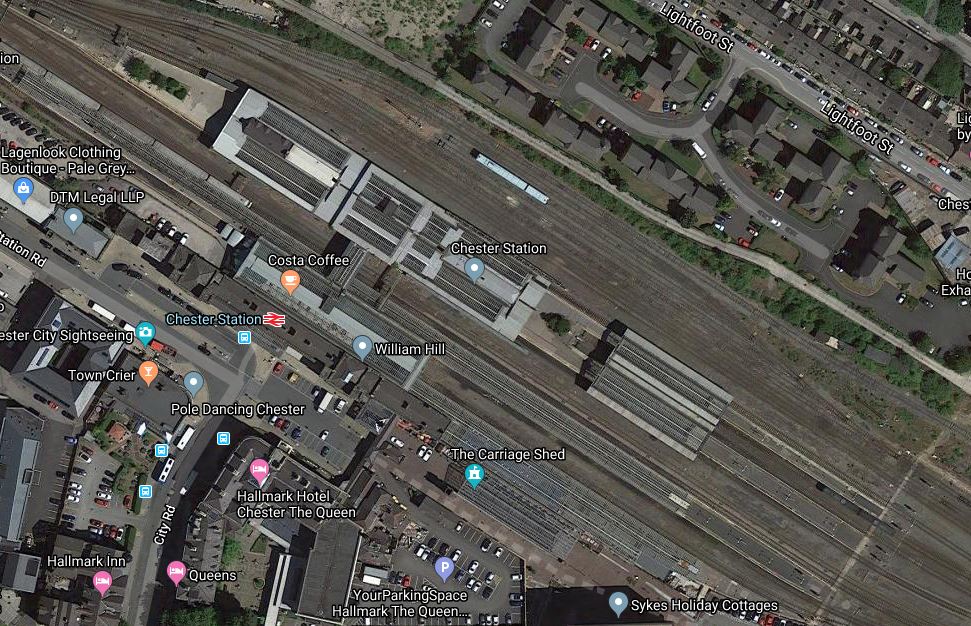
It looks to me, that there is plenty of space.
Will Chester And Crewe Be Electrified?
We know little about the capabilities of the trains proposed by the various manufacturers.
But, I wouldn’t be surprised that one or more of the proposals use batteries for one of the following purposes.
- Regenerate braking.
- Emergency power.
- Range extension for up to perhaps sixty miles.
As Chester and Crewe stations are only twenty-one miles apart with no intermediate stations, which will be run at an average speed of only 52 mph I don’t think it will be impossible to extend the service to Chester on battery power.
If electrification is required I wrote about it in Hitachi Trains For Avanti.
As it is only just over twenty miles, I don’t think it will be the most challenging of projects, although there does seem to be a lot of bridges.
Electrification would also allow Avanti West Coast’s Hitachi trains to run on electricity to Chester.
What About Holyhead?
Holyhead could become a more important destination in the next few years.
It is probably the best alternative to avoid flying and driving between Great Britain and the Island of Ireland.
And who can accurately predict, what effect Brexit and thinking about global warming will have?
I have a feeling that after electrification to Chester, using on-board energy storage could be used West of Chester.
It is very difficult to predict battery ranges in the future, but I can see a two hundred metre long High Speed Two Classic-Compatible train being able to reach Holyhead on battery power, with or without some limited extra electrification.
Alternatively, the UK and Welsh governments, might bite the bullet and just electrify the whole route between Crewe and Holyhead.
I have found a train on Real Time Trains, that covered the 105.5 miles between Holyhead and Crewe in two hours and 11 minutes at an average speed of 48 mph. The train took then a total of three hours and forty-five minutes to get to Euston
I estimate that with electrification and some track improvements, that it will be possible to travel between Euston and Holyhead in under three hours before High Speed Two.
Conclusion
It looks to me, that when High Speed Two, think about adding extra destinations, Chester and Holyhead could be on the list.
I also suspect that even without electrification and High Speed Two services, but with the new Class 805 trains, the route could be a valuable one for Avanti West Coast.
The New Warrington West Station
These pictures show the new Warrington West station.
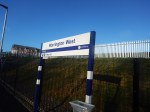


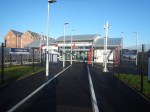
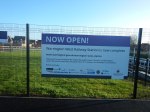


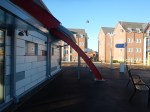
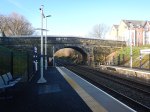


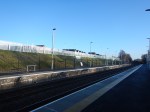
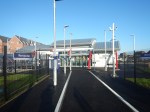

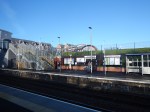

The station looks to have a similar layout to Maghull North station, which I described in Maghull North Station – 29th June 2018.
The two stations have a lot in common.
- The cutting and the contours of the land are used to create a simpler station.
- Provision for car-parking.
- Links to the bus network.
- Enough car-parking. Warrington West has 387 spaces, with 156 spaces at Maghull North.
- Fully step-free.
- A separate amenity building, with a booking office, waiting area and toilets.
Surprisingly, the two stations were designed by different architectural practices.
The Major Problem
The major problem is that Warrington West station only has two trains per hour (tph), in the Off Peak.
- The route connects Liverpool Lime Street to Manchester Airport and Manchester Oxford Road stations alternately.
- Manchester Airport services also call at Manchester Piccadilly station.
- All services call at Deansgate station for the Manchester Metrolink.
- There are links to Merseyrail’s Wirral Line at Liverpool Lime Street.
- There are links to Merseyrail’s Northern Line at Liverpool South Parkway and Hunts Cross.
- Liverpool South Parkway, Warrington West and Birchwood stations are already step-free.
- Hunts Cross, Irlam, and Manchester Oxford Road stations are in the queue for step-free access.
- Most of the services on Liverpool’s Merseyrail network have four tph.
- There is a lot of housing and other development on this route,
I’m sure that four tph and full step-free access will be needed on this route before too long.
Possible Electrification
It could be argued that this route between Liverpool Lime Street and Manchester Oxford Road stations, should be fully-electrified.
Currently, just over twenty-eight miles of the route between Manchester Oxford Road and Liverpool South Parkway stations is not electrified.
- Between Liverpool South Parkway and Liverpool Lime Street stations has 25 KVAC overhead electrification.
- Between Hunt’s Cross and Liverpool Central station is part of Merseyrail’s Northern Line and has 750 VDC third-rail electrification.
- Manchester Oxford Road station has 25 KVAC overhead electrification.
- The bay platform at Manchester Oxford Road station could be electrified or fitted with a fast charging station for battery trains.
- Battery trains can easily do forty miles after a charge of perhaps ten minutes, as I wrote in Retired London Underground Train Travels Forty Miles Solely On Battery Power.
I think, that the route between Manchester and Liverpool via Warrington is a very suitable route for running using battery-electric trains.
- It is electrified at both ends.
- The section without electrification is less than thirty miles.
- Charging can be performed using the existing electrification or with a charging station at Manchester Oxford Road station.
- Northern’s Class 331 trains, which are being built by CAF. I suspect that battery-electric versions are possible as CAF have successfully built battery-electric Urbos trams for Luxembourg, Seville and the West Midlands.
- Merseyrail’s new Class 777 trains, can be converted to battery-electric operation.
- The route is not busy.
- There aren’t many freight trains on the route.
Using battery-electric trains would probably cause a lot less disruption, than full electrification of the route.
Possible ways to increase trains on the route include.
- Merseyrail could extend Northern Line trains from Hunt’s Cross to Manchester Oxford Road.
- The Manchester Metrolink could even be connected to the route at somewhere near Pomona and run tram-trains to Liverpool.
- Northern could run battery-electric trains on the route.
There must also be the possibility of running hydrogen-powered trains on the route.
Negotiations between Liverpool and Manchester over who provides the extra services will be tough.
Conclusion
It is a neat new station, that will attract passengers.
The station could be an important link in improved rail services between Liverpool and Manchester via Warrington.
- This route could probably handle at least six tph in both directions.
- Would turning back four tph in the bay platform at Manchester Oxford Road station, ease the pressure on the Castlefield corridor.
- It serves the important stations of Liverpool Lime Street, Liverpool South Parkway, Manchester Oxford Road, Manchester Piccadilly and Manchester Airport.
- It connects Merseyrail’s to Northern and Wirral Lines and the Manchester Metrolink.
- An increasing number of stations on the route are step-free.
I suspect too, that it could be an important feeder line for High Speed Two.
Retired London Underground Train Travels Forty Miles Solely On Battery Power
This article on Railnews is a summary of today’s news and has a subtitle of Battery Train Sets British Record.
This is the first sentence.
A battery train from Vivarail has achieved a British first by travelling 64km on battery power alone, and the feat has been repeated many times during tests.
The train was a Vivarail Class 230 train, that is based on retired London Underground D78 Stock.
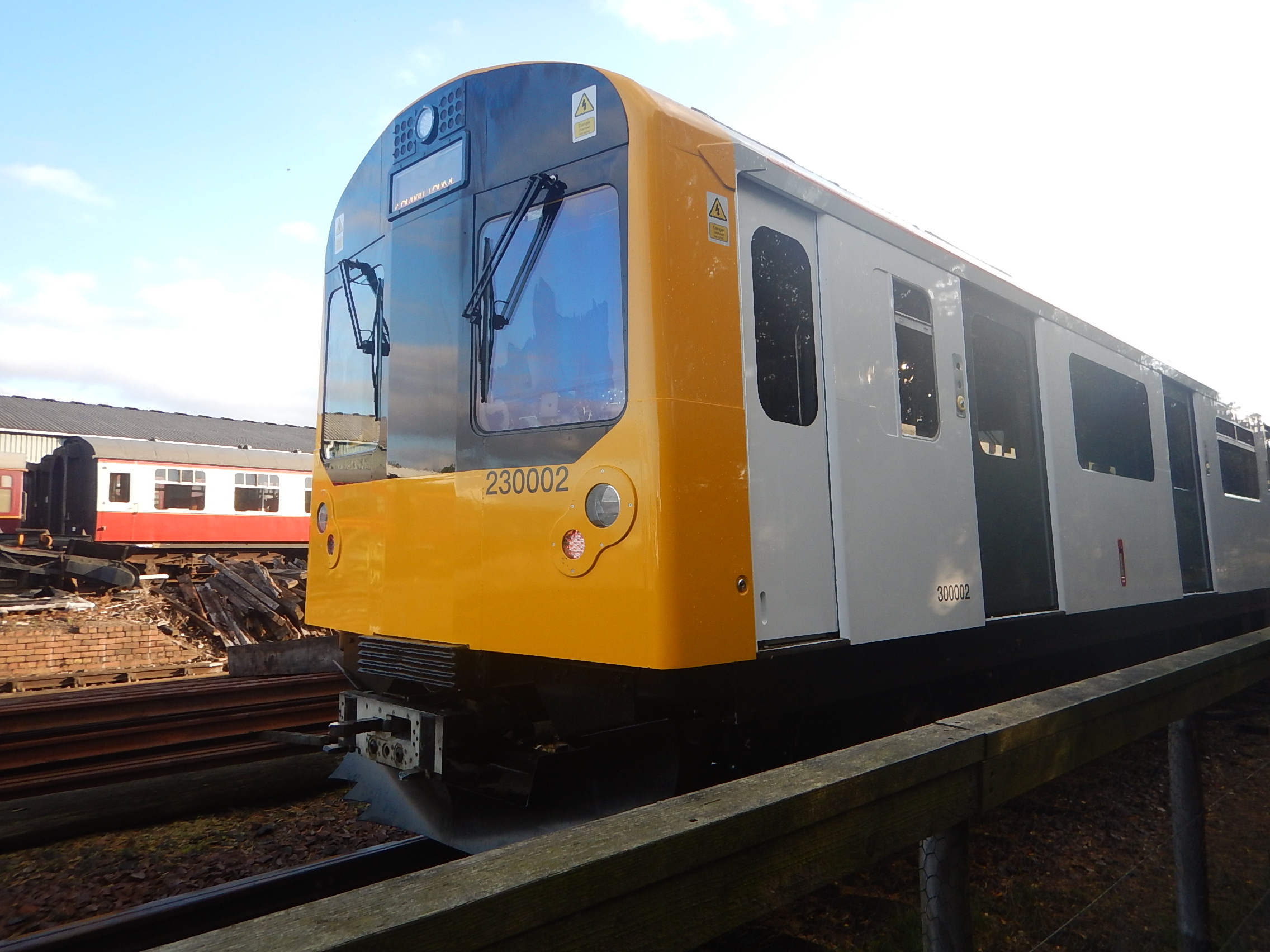
The picture shows the prototype battery train, when I rode it in 2018 at the Bo’ness And Kinneil Railway.
The article also says this.
Vivarail CEO Adrian Shooter is predicting that production versions of the battery trains will be able to run for almost 100km between charges, which will take just 10 minutes.
Battery trains appear to be going places.
Hitachi Trains For Avanti
The title of this post is the same as that of an article in the January 2020 Edition of Modern Railways.
The Bi-Mode Trains
Some more details of the thirteen bi-mode and ten electric Hitachi AT 300 trains are given.
Engine Size and Batteries
This is an extract from the article.
Hitachi told Modern Railways it was unable to confirm the rating of the diesel engines on the bi-modes, but said these would be replaceable by batteries in future if specified.
I do wonder if my speculation in Will Future Hitachi AT-300 Trains Have MTU Hybrid PowerPacks? is possible.
After all, why do all the hard work to develop a hybrid drive system, when your engine supplier has done it for you?
Would Avanti West Coast need a train that will do 125 mph on diesel?
- The North Wales Coast Line has a maximum line speed of just 90 mph.
- Wikipedia is uncertain of the maximum speed of the Chester and Shrewbury Line, but it is extremely unlikely to be more than 80-90 mph.
The only place, they will be able to run at 125 mph or even higher will be on the West Coast Main Line, where they will be running under electric power from the pantograph.
If I were designing a bi-mode for 90 mph on diesel and 125 mph on electric, I would have batteries on the train for the following purposes.
- Handle regenerative braking.
- Provide hotel power in stations or when stationery.
- Provide an acceleration boost, if required, when running on diesel.
- Provide emergency power, if the wires go down in electric mode.
I’m sure MTU could work out a suitable size of diesel engine and batteries in an MTU PowerPack, that would meet the required performance.
Or maybe a smaller diesel could be used. An LNER Class 800 train has 1680 kW of installed power to maintain 125 mph. But the Great Western Railway versions have 2100 kW or twenty-five percent more, as their routes are more challenging with steeper gradients.
For the less challenging routes at a maximum of 90 mph between Crewe, Chester, Shrewsbury and North Wales, I wonder what level of power is needed.
A very rough estimate based on the speed required could put the power requirement as low as 1200-1500 kW.
As the diesel engines are only electrical generators, it would not effect the ability of the train to do 125 mph between Crewe and London.
There looks to be a virtuous circle at work here.
- Lower maximum speed on diesel means smaller diesel engines.
- Smaller diesel engines means lighter diesel engines and less fuel to carry.
- Less weight to accelerate needs less installed power.
- Less power probably means a more affordable train, that uses less diesel.
It looks to me, that Hitachi have designed a train, that will work Avanti West Coast’s routes efficiently.
The Asymmetric Bi-Mode Train
It looks to me that the bi-mode train that Avanti West Coast are buying has very different performance depending on the power source and signalling
- 90 mph or perhaps up to 100 mph on diesel.
- 125 mph on electric power.with current signalling.
- Up to 140 mph on electric power with in-cab digital signalling.
This compares with the current Class 221 trains, which can do 125 mph on all tracks, with a high enough operating speed.
The new trains’ different performance on diesel and electric power means they could be called asymmetric bi-modes.
Surely, creating an asymmetric bi-mode train, with on-board power; battery, diesel or hydrogen, sized to the route, means less weight, greater efficiency, less cost and in the case of diesel, higher carbon efficiency.
Carbon Emissions
Does the improvement in powertrain efficiency with smaller engines running the train at slower speeds help to explain this statement from the Modern Railways article?
Significant emissions reduction are promised from the elimination of diesel operation on electrified sections as currently seen with the Voyagers, with an expected reduction in CO2 emissions across the franchise of around two-thirds.
That is a large reduction, which is why I feel, that efficiency and batteries must play a part.
Battery-Electric Conversion
In my quote earlier from the Modern Railways article, I said this.
These (the diesel engines) would be replaceable by batteries in future if specified.
In Thoughts On The Next Generation Of Hitachi High Speed Trains, I looked at routes that could be run by a battery-electric version of Hitachi AT-300 trains.
I first estimated how far an AT-300 train could go on batteries.
How far will an AT-300 train go on battery power?
- I don’t think it is unreasonable to be able to have 150 kWh of batteries per car, especially if the train only has one diesel engine, rather than the current three in a five-car train.
- I feel with better aerodynamics and other improvements based on experience with the current trains, that an energy consumption of 2.5 kWh per vehicle mile is possible, as compared to the 3.5 kWh per vehicle mile of the current trains.
Doing the calculation gives a range of sixty miles for an AT-300 train with batteries.
As train efficiency improves and batteries are able to store more energy for a given volume, this range can only get better.
I then said this about routes that will be part of Avanti West Coast’s network.
With a range of sixty miles on batteries, the following is possible.
- Chester, Gobowen, Shrewsbury And Wrexham Central stations could be reached on battery power from the nearest electrification.
- Charging would only be needed at Shrewsbury to ensure a return to Crewe.
Gobowen is probably at the limit of battery range, so was it chosen as a destination for this reason.
The original post was based on trains running faster than the 90 mph that is the maximum possible on the lines without electrification, so my sixty mile battery range could be an underestimate.
These distances should be noted.
- Crewe and Chester – 21 miles
- Chester and Shrewsbury – 42 miles
- Chester and Llandudno – 47 miles
- Chester and Holyhead – 84 miles
Could electrification between Crewe and Chester make it possible for Avanti West Coast’s new trains to go all the way between Chester and Holyhead on battery power in a few years?
I feel that trains with a sixty mile battery range would make operations easier for Avanti West Coast.
Eighty miles would almost get them all the way to Holyhead, where they could recharge!
Rlectrification Between Chester And Crewe
I feel that this twenty-odd miles of electrification could be key to enabling battery-electric trains for the routes to the West of Chester to Shrewsbury, Llandudno and Holyhead.
How difficult would it be to electrify between Chester and Crewe?
- It is not a long distance to electrify.
- There doesn’t appear to be difficult viaducts or cuttings.
- It is electrified at Crewe, so power is not a problem.
- There are no intermediate stations.
But there does seem to be a very large number of bridges. I counted forty-four overbridges and six underbridges. At least some of the bridges are new and appear to have been built with the correct clearance.
Perhaps it would be simpler to develop fast charging for the trains and install it at Chester station.
Conclusion On The Bi-Mode Trains
It appears to me that Avanti West Coast, Hitachi and Rock Rail, who are financing the trains have done a very good job in devising the specification for a fleet of trains that will offer a good service and gradually move towards being able to deliver that service in a carbon-free manner.
- The initial bi-mode trains will give a big improvement in performance and reduction in emission on the current Voyagers, as they will be able to make use of the existing electrification between Crewe and London.
- The trains could be designed for 125 mph on electric power and only 90-100 mph on diesel, as no route requires over 100 mph on diesel. This must save operating costs and reduce carbon emissions.
- They could use MTU Hybrid PowerPacks instead of conventional diesel engines to further reduce emissions and save energy
- It also appears that Hitachi might be able to convert the trains to battery operation in a few years.
- The only new infrastructure would be a few charging stations for the batteries and possible electrification between Chester and Crewe.
I don’t think Avanti West Coast’s ambition of a two-thirds reduction in CO2 is unreasonable and feel it could even be exceeded.
Other Routes For Asymetric Bi-Mode Trains
I like the concept of an asymetric bi-mode train, where the train has the following performance.
- Up to 100 mph on battery, diesel or hydrogen.
- Up to 100 mph on electrified slower-speed lines.
- 125 mph on electrified high-speed lines, with current signalling.
- Up to 140 mph on electrified high-speed lines, with in-cab digital signalling.
I am very sure that Hitachi can now tailor an AT-300 train to a particular company’s needs. Certainly, in the case of Avanti West Coast, this seems to have happened, when Avanti West Coast, Hitachi, Network Rail and Rock Rail had some serious negotiation.
LNER At Leeds
As an example consider the rumoured splitting and joining of trains at Leeds to provide direct services between London and Bradford, Harrogate, Huddersfield, Ilkley, Skipton and other places, that I wrote about in Dancing Azumas At Leeds.
In the related post, I gave some possible destinations.
- Bradford – 13 miles – 25 minutes – Electrified
- Harrogate – 18 miles – 30 minutes
- Huddersfield – 17 miles – 35 minutes
- Hull – 20 miles – 60 minutes
- Ilkley – 16 miles – 26 minutes – Electrified
- Skipton – 26 miles – 43 minutes – Electrified
- York – 25 miles – 30 minutes
Note, that the extended services would have the following characteristics.
They would be run by one five-car train.
- Services to Bradford, Ilkley and Skipton would be electric
- Electrification is planned from Leeds to Huddersfield and York, so these services could be electric in a few years.
- All other services would need independent power; battery, diesel or hydrogen to and from Leeds.
- Two trains would join at Leeds and run fast to London on the electrified line.
- Services would probably have a frequency of six trains per day, which works out at a around a train every two hours and makes London and back very possible in a day.
- They would stop at most intermediate stations to boost services to and from Leeds and give a direct service to and from London.
As there are thirty trains per day between London and Leeds in each direction, there are a lot of possible services that could be provided.
Currently, LNER are only serving Harrogate via Leeds.
- LNER are using either a nine-car train or a pair of five-car trains.
- The trains reverse in Platforms 6 or 8 at Leeds, both of which can handle full-length trains.
- LNER allow for a generous time for the reverse, which would allow the required splitting and joining.
- All trains going to Harrogate are Class 800 bi-mode trains.
Note that the Class 800 trains are capable of 125 mph on diesel, whereas the average speed between Harrogate and Leeds is just 35 mph. Obviously, some of this slow speed is due to the route, but surely a train with a maximum speed of 90-100 mph, with an appropriate total amount of diesel power, would be the following.
- Lighter in weight.
- More efficient.
- Emit less pollution.
- Still capable of high speed on electrified lines.
- Bi-mode and electric versions could run in pairs between Leeds and London.
LNER would probably save on track access charges and diesel fuel.
LNER To Other Places
Could LNER split and join in a similar way to other places?
- Doncaster for Hull and Sheffield
- Edinburgh for Aberdeen and Inverness
- Newark for Lincoln and Nottingham
- York for Middlesbrough and Scarborough.
It should be noted that many of the extended routes are quite short, so I suspect some train diagrams will be arranged, so that trains are only filled up with diesel overnight,
GWR
Great Western Railway are another First Group company and I’m sure some of their routes could benefit, from similar planning to that of Avanti West Coast.
Splitting and joining might take place at Reading, Swindon, Bristol and Swansea.
South Western Railway
South Western Railway will need to replace the three-car Class 159 trains to Exeter, that generally work in pairs with a total number of around 400 seats, in the next few years.
These could be replaced with a fleet of third-rail Hitachi trains of appropriate length.
- Seven cars sating 420 passengers?
- They would remove diesel trains from Waterloo station.
- All South Western Railway Trains running between Waterloo and Basingstoke would be 100 mph trains.
I wonder, if in-cab digital signalling on the route, would increase the capacity? It is sorely needed!
Southeastern
Southeastern need bi-mode trains to run the promised service to Hastings.
- Trains would need a third-rail capability.
- Trains need to be capable of 140 mph for High Speed One.
- Trains need to be able to travel the 25 miles between Ashford International and Ore stations.
- Trains would preferably be battery-electric for working into St. Pancras International station.
Would the trains be made up from six twenty-metre cars, like the Class 395 trains?
The Simple All-Electric Train
The Modern Railways article, also says this about the ten all-electric AT-300 trains for Birmingham, Blackpool and Liverpool services.
The electric trains will be fully reliant on the overhead wire, with no diesel auxiliary engines or batteries.
It strikes me as strange, that Hitachi are throwing out one of their design criteria, which is the ability of the train to rescue itself, when the overhead wires fail.
In Do Class 800/801/802 Trains Use Batteries For Regenerative Braking?, I published this extract from this document on the Hitachi Rail web site.
The system can select the appropriate power source from either the main transformer or the GUs. Also, the size and weight of the system were minimized by designing the power supply converter to be able to work with both power sources. To ensure that the Class 800 and 801 are able to adapt to future changes in operating practices, they both have the same traction system and the rolling stock can be operated as either class by simply adding or removing GUs. On the Class 800, which is intended to run on both electrified and non-electrified track, each traction system has its own GU. On the other hand, the Class 801 is designed only for electrified lines and has one or two GUs depending on the length of the trainset (one GU for trainsets of five to nine cars, two GUs for trainsets of 10 to 12 cars). These GUs supply emergency traction power and auxiliary power in the event of a power outage on the catenary, and as an auxiliary power supply on non-electrified lines where the Class 801 is in service and pulled by a locomotive. This allows the Class 801 to operate on lines it would otherwise not be able to use and provides a backup in the event of a catenary power outage or other problem on the ground systems as well as non-electrified routes in loco-hauled mode.
This is a very comprehensive power system, with a backup in case of power or catenary failure.
So why does it look like Hitachi are throwing that capability out on the trains for Avanti West Coast.
There are several possibilities.
- The reliability of the trains and the overhead wire is such, that the ability of a train to rescue itself is not needed.
- The auxiliary generator has never been used for rescuing the train.
- The West Coast Main Line is well-provided with Thunderbird locomotives for rescuing Pendelinos, as these trains have no auxiliary generator or batteries.
- Removal of the excess weight of the auxiliary engine and batteries, enables the Hitachi AT-300 trains to match the performance of the Pendelinos, when they are using tilt.
Obviously, Hitachi have a lot of train performance statistics, from the what must be around a hundred trains in service.
It looks like Hitachi are creating a lightweight all-electric train, that has the performance or better of a Pendelino, that it achieves without using tilt.
- No tilt means less weight and more interior space.
- No auxiliary generator or batteries means less weight.
- Wikipedia indicates, that Hitachi coaches are around 41 tonnes and Pendelino coaches are perhaps up to ten tonnes heavier.
- Less weight means fast acceleration and deceleration.
- Less weight means less electricity generated under regenerative braking.
- Pendelinos use regenerative braking, through the catenary.
- Will the new Hitachi trains do the same instead of the complex system they now use?
If the train fails and needs to be rescued, it uses the same Thunderbird system, that the Pendelinos use when they fail.
Will The New Hitachi Trains Be Less Costly To Run?
These trains will be lighter in weight than the Pendelinos and will not require the track to allow tilting.
Does this mean, that Avanti West Coast will pay lower track access charges for their new trains?
They should also pay less on a particular trip for the electricity, as the lighter trains will need less electricity to accelerate them to line speed.
Are Avanti West Coast Going To Keep The Fleets Apart?
Under a heading of Only South Of Preston, the Modern Railways article says this.
Unlike the current West Coast fleet, the Hitachi trains will not be able to tilt. Bid Director Caroline Donaldson told Modern Railways this will be compensated for by their improved acceleration and deceleration characteristics and that the operator is also working with Network Rail to look at opportunities to improve the linespeed for non-tilting trains.
The routes on which the Hitachi trains will operate have been chosen with the lack of tilt capability in mind, with this having the greatest impact north of Preston, where only Class 390 Pendelinos, which continue to make use of their tilting capability will be used.
Avanti West Coast have said that the Hitachi trains will run from London to Birmingham, Blackpool and Liverpool.
All of these places are on fully-electrified branches running West from the West Coast Main Line, so it looks like there will be separation.
Will The New Hitachi Trains Be Faster To Birmingham, Blackpool And Liverpool?
Using data from Real Time Trains, I find the following data about the current services.
- Birmingham and Coventry is 19 miles and takes 20 minutes at an average speed of 57 mph
- Blackpool and Preston is 16.5 miles and takes 21 minutes at an average speed of 47 mph
- Liverpool and Runcorn is 3.15 miles and takes 15 minutes at an average speed of 52 mph
All the final legs when approaching the terminus seem to be at similar speeds, so I doubt there are much savings to be made away from the West Coast Main Line.
Most savings will be on the West Coast Main Line, where hopefully modern in-cab digital signalling will allow faster running at up to the design speed of both the Hitachi and Pendelino trains of 140 mph.
As an illustration of what might be possible, London to Liverpool takes two hours and thirteen minutes.
The distance is 203 miles, which means that including stops the average speed is 91.6 mph.
If the average speed could be raised to 100 mph, this would mean a journey time of two hours and two minutes.
As much of the journey between London and Liverpool is spent at 125 mph, which is the limit set by the signalling, raising that to 135 mph could bring substantial benefits.
To achieve the journey in two hours would require an overall average speed of 101.5 mph.
As the proportion of track on which faster speeds, than the current 125 mph increase over the next few years, I can see Hitachi’s lightweight all-electric expresses breaking the two hour barrier between London and Liverpool.
What About The Pendelinos And Digital Signalling?
The January 2020 Edition of Modern Railways also has an article entitled Pendolino Refurb Planned.
These improvements are mentioned.
- Better standard class seats! (Hallelujah!)
- Refreshed First Class.
- Revamped shop.
Nothing is mentioned about any preparation for the installation of the equipment to enable faster running using digital in-cab signalling, when it is installed on the West Coast Main Line.
Surely, the trains will be updated to be ready to use digital signalling, as soon as they can.
Just as the new Hitachi trains will be able to take advantage of the digital signalling, when it is installed, the Pendellinos will be able to as well.
Looking at London and Glasgow, the distance is 400 miles and it takes four hours and thirty minutes.
This is an average speed of 89 mph, which compares well with the 91.6 mph between London and Liverpool.
Raise the average speed to 100 mph with the installation of digital in-cab signalling on the route, that will allow running at over 125 mph for long sections and the journey time will be around four hours.
This is a table of average speeds and journey times.
- 100 mph – four hours
- 105 mph – three hours and forty-eight minutes
- 110 mph – three hours and thirty-eight minutes
- 115 mph – three hours and twenty-eight minutes
- 120 mph – three hours and twenty minutes
- 125 mph – three hours and twelve minutes
- 130 mph – three hours and four minutes
I think that I’m still young enough at 72 to be able to see Pendelinos running regularly between London and Glasgow in three hours twenty minutes.
The paragraph is from the Wikipedia entry for the Advanced Passenger Train.
The APT is acknowledged as a milestone in the development of the current generation of tilting high speed trains. 25 years later on an upgraded infrastructure the Class 390 Pendolinos now match the APT’s scheduled timings. The London to Glasgow route by APT (1980/81 timetable) was 4hrs 10min, the same time as the fastest Pendolino timing (December 2008 timetable). In 2006, on a one off non-stop run for charity, a Pendolino completed the Glasgow to London journey in 3hrs 55min, whereas the APT completed the opposite London to Glasgow journey in 3hrs 52min in 1984.
I think it’s a case of give the Pendelinos the modern digital in-cab signalling they need and let them see what they can do.
It is also possible to give an estimate for a possible time to and from Manchester.
An average speed of 120 mph on the route would deliver a time of under one hour and forty minutes.
Is it possible? I suspect someone is working on it!
Conclusion
I certainly think, that Avanti West Coast, Hitachi and Network Rail, have been seriously thinking how to maximise capacity and speed on the West Coast Main Line.
I also think, that they have an ultimate objective to make Avanti West Coast an operator, that only uses diesel fuel in an emergency.
Hertfordshire County Council’s Aspiration For A Watford Junction And Aylesbury Service
This article on Ian Visits is entitled Watford Junction Station Could Become A “Super-Hub”.
This is the introductory paragraph.
A new Watford Junction to Aylesbury rail service, along with a new link between Stevenage and Luton are two of the proposals being put forward by Hertfordshire Council.
The proposals are contained in this document on the Hertfordshire County Council web site, which is entitled Rail Strategy.
In TfL Seeks New Procurement Plan For Metropolitan Line Extension, I proposed a service run by Chiltern Railways between Watford Junction and Amersham stations.
The rest of this article is a rewrite of part of that linked post, which explores the possibilities of a service between Watford Junction and Aylesbury stations.
This Was My Original Simple Proposal
I think it would be possible to design a simpler link with the following characteristics.
- Watford station would remain open.
- A four trains per hour (tph) link would run all day between Watford Junction and Amersham stations.
- Stops would be at Watford High Street, Vicarage Road, Cassiobridge, Croxley, Rickmansworth, Chorleywood and Chalfont & Latimer.
No-one would get a worse service than currently and the new stations of Cassiobridge and Vicarage Road, would make rail an alternative for many travellers.
The cross-Watford service would give access to these London services.
- Chiltern at all stations between Croxley and Amersham.
- London Midland at Watford Junction.
- Metropolitan Line at Croxley, Rickmansworth and Amersham.
- Virgin Trains at Watford Junction,
- Watford DC Line at Watford High Street and Watford Junction
The Bakerloo Line at Watford Junction and Watford High Street, could possibly be added, if the line is extended. Which I doubt, it will be!
Hertfordshire is proposing the terminal is Aylesbury, which seems to be a good idea. But I’ll examine that later.
The next few sections, will cover various issues with the route.
New Track
There would need to be new track between Croxley and Watford High Street stations.
Will The New Stations Have Two Platforms?
All proposals have shown new stations on the new track at Cassiobridge and Vicarage Road.
I believe that money can be saved by creating two much simpler stations.
- Only one platform, but probably an island platform with two faces like Watford High Street station.
- No expensive footbridge if possible.
- Only one lift.
Cassiobridge would be more complicated because of the viaduct connecting the line towards Croxley station.
This visualisation shows the viaduct and the location of Cassiobridge station.
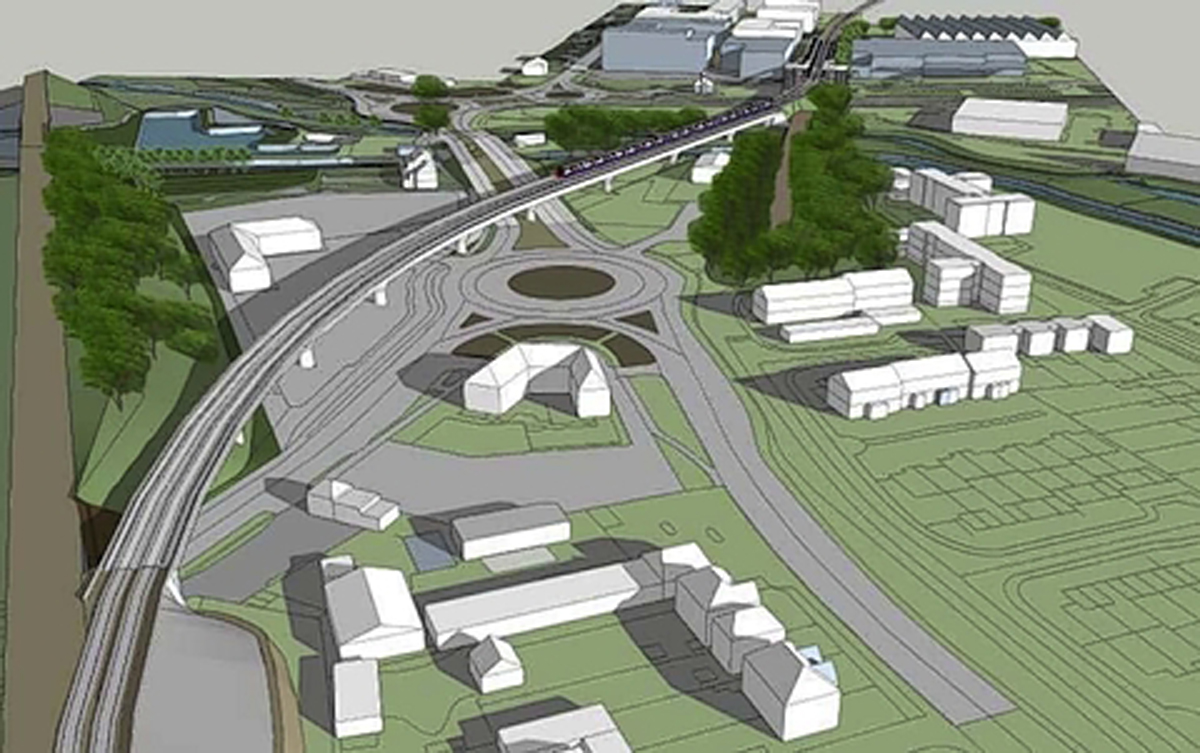
Cassiobridge station will be behind the trees towards the top-right of the image.
Would The New Track Be Single Or Double-Track?
There is space for double-track and the two ends of the route are already electrified double-track.
But surely the viaduct shown above would be much more affordable, if it were to be built for only one track!
Trains would need to pass at places East of Croxley station, but then if the line was double-track through and to the East of Cassiobridge station, trains could pass with impunity.
Consider.
- The Borders Railway looks to have too much single-track
- The Barking Riverside Extension is being built with a double track.
Too much single-track is often regretted.
Why Four Trains Per Hour?
Four trains per hour (tph) is becoming a standard, as it encourages Turn-Up-And-Go behaviour from travellers.
It also fits well with keeping the four tph Metropolitan Line service to Watford station, as this could give a same platform interchange at Croxley station.
Would The New Track Be Electrified?
The only part of the route that is not electrified is the about three miles of new track between the Watford Branch and the Watford DC Line.
All current electrification is either third-rail or to the London Underground standard. and any future electrification would probably be to the London Underground standard, so that S Stock can work the route.
I believe that the Class 710 trains will have a limited onboard energy storage capability, which could enable the trains to bridge the cap in the electrification between Watford High Street and Croxley stations.
How much would not electrifying the new track save?
How Long Will A Journey Take From Amersham Or Aylesbury To Watford Junction?
Consider.
- Amersham to Croxley takes about 30 minutes, but it does involve a change to a bus.
- The Overground takes three minutes between Watford Junction and Watford High Street stations.
- Chiltern Railways achieve a twelve minute time between Amersham and Rickmansworth.
I suspect that a modern train like one of London Overground’s Class 378 trains could do the journey in a few minutes under half-an-hour.
As Amersham to Aylesbury takes about sixteen minutes, that looks like a trip between Aylesbury and Watford Junction would take about forty-five minutes.
Amersham Or Aylesbury?
My original plan used Amersham, as it has a turnback facility.
But Aylesbury looks to have space as this Google Map shows.
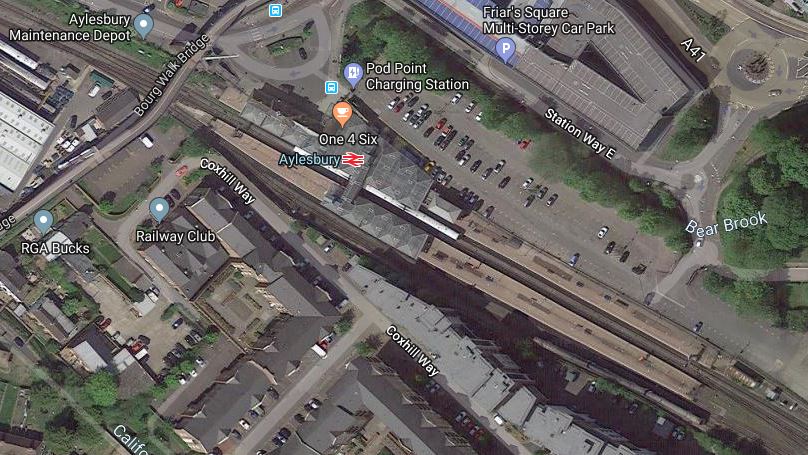
It should also be noted that the forty-five minute journey time between Aylesbury and Watford Junction stations, would give a two hour round trip, with relaxed fifteen minute turnround times.
This would allow time to top-up the batteries.
What Class Of Train Could Be Used?
Four-car Class 378 trains or the new Class 710 trains would be ideal. As the Class 378 train is out of production, it would have to be Class 710 trains or something similar from Bombardier. But other manufacturers might have a suitable train.
Battery power would be required, but that is becoming a standard option on metro trains like these.
How Many Trains Would Be Needed?
If the trains could do an Out-and-Back journey in an hour, then four trains would be needed to provide a four tph service.
A two-hour time would need eight trains.
Will The Link Have Any Other Services?
I have seen to plans to use the line for any other passenger or freight services.
Will There Be Infrastructure Issues At Existing Stations?
As all of the trains, I’ve mentioned and the London Underground S Stock trains, share platforms all over North West London, the answer is probably no, with the exception of a few minor adjustments to signs and platforms.
Croxley Station
Croxley station would be unchanged.
But in addition to the 4 tph between Baker Street and Watford, there would be 4 tph between Watford Junction and Amersham.
Platform 1 would handle.
- Baker Street to Watford
- Amersham to Watford Junction
Platform 2 would handle.
- Watford to Baker Street
- Watford Junction to Amersham
This would mean that if the trains alternated, the maximum wait for a connection would be about 7.5 minutes.
What I feel would be the two most common connections, would just involve a wait on the same platform.
I suspect that those, who timetable trains, would come up with a very passenger-friendly solution.
Watford Station
A property developer once told me, that the most profitable developments, are those where a railway station is involved.
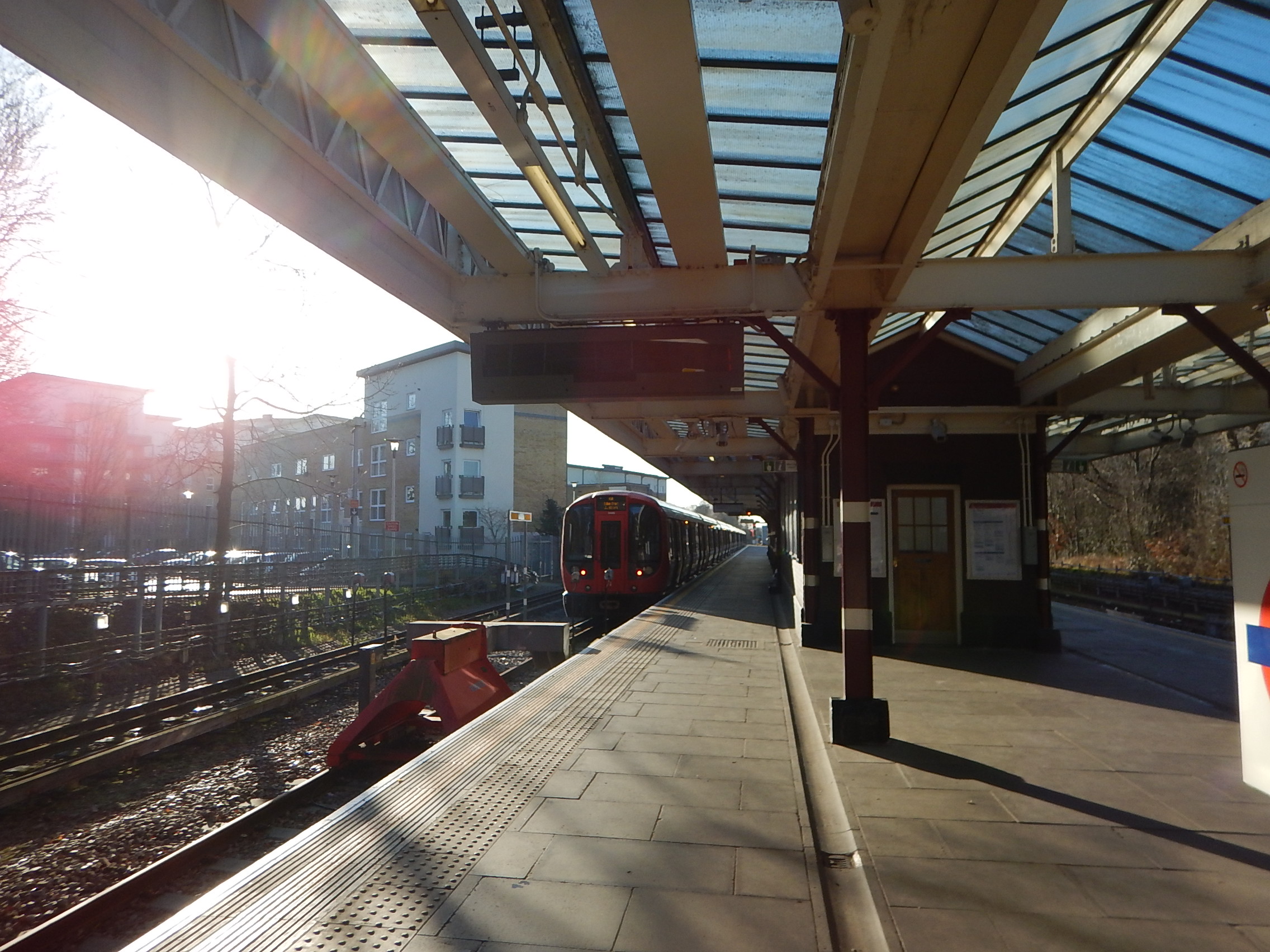
So would the development of the extension involve a rebuild of Watford station to provide the following?
- A modern future-proofed station, with all the capacity that might be needed in the next forty years or so.
- Appropriate housing or commercial development on top of the new station.
- Sensible amounts of parking for travellers.
With four tph to and from London in the basement, it would surely be a profitable development.
Watford Junction Station
Watford Junction station has four bay platforms 1-4, that handle the three tph service on the Watford DC Line.
At stations like Clapham Junction, Crystal Palace, Dalston Junction, Highbury and Islington and New Cross, single platforms handle four tph with ease for London Overground services.
This means that handling four tph to Amersham in addition to current services would not be difficult.
The only work, that I think should be done, is make sure that these platforms are long enough to take two of the future Class 710 trains working as an eight-car train.
There could even be two platforms left for Bakerloo Line services, if it were to be decided, that these services would go to Watford Junction.
Elton John Plays Vicarage Road Stadium
This or some football matches at Vicarage Road Stadium, would be the biggest test of the Link.
Note the following.
- Some stations like Watford High Street can already handle longer trains than the hundred metre long, five-car Class 378 trains they currently do.
- Some stations like Croxley can handle the 133 metre long S Stock trains used on the Metropolitan Line.
So to future-proof the Link for massive one-off events would it be sensible to make the platforms long enough for eight-car trains or two Class 710 trains working as a pair?
Benefits
The benefits of this approach are as follows.
- Watford station keeps its current service to London.
- Watford gets a four tph link across the South of the town, serving the Shopping Centre, the Hospital and the Stadium.
- Amersham or Aylesbury to Croxley stations get a link to the West Coast Main Line.
- It could be built as a single track line without electrification.
- Trains to run the services could be more easily available.
- Simple island platform-based stations could be built at Cassiobridge and Vicarage Road.
In addition, Chiltern Railways, London Midland, London Overground and Underground, all gain a feeder railway bringing travellers to their services to and from London.
Cost Savings
Note.
- Transport for London needs cost savings on this project.
- Redevelopment of Watford station as a station with oversite development could raise a lot of money.
- The Croxley Link could be built as a single-track link without electrification and run initially using battery-electric trains.
I also feel, that building the line this way would deliver it earlier, thus improving cash-flow.
The simple link would need at the minimum.
- A single- or double-track railway without electrification between Croxley and Watford High Street stations.
- Two stations with island platforms at Cassiobridge and Vicarage Road
- A viaduct to connect Cassiobridge station to the Watford Branch.
- Some Class 710 trains or similar.
If skates were worn, the link could probably open in 2025.
Battery Trains To Be Tested In Denmark
The title of this post is the same as that of this article on Railway Gazette.
This is the introductory paragraph.
Suppliers are to be invited to test battery-powered trains on regional lines in late 2020 and early 2021, ahead of a potential order which could see battery trains enter passenger service from 2025.
This order follows on from three confirmed or possible German battery train orders in Schleswig-Holstein, Baden-Württemberg and Chemnitz.
So far interest in battery trains in the UK, has not been so strong, with only orders in Wales.
Thoughts On A Tri-Mode AT-300 Between Waterloo And Exeter
Note that in this post, I’m using the Class 802 train as an example of Hitachi’s AT-300 train.
In writing my post called What Would Be The Range Of A Tri-Mode Class 802 Train?, I realised that an efficient tri-mode train with electric, battery and diesel power could have a range of over a hundred miles.
Suppose a Class 802 train was built with the following characteristics, were designed for service on the West Of England Line.
- Five cars, which would seat around 350 passengers.
- Two diesel engines replaced with batteries of the same seven tonne weight.
- At least 840 kWh or perhaps as much as 1,500 kWh of battery power could easily be installed.
- One 700 kW diesel engine would be retained for electrification failure and to boost battery power.
- All electrical equipment on the train will use the minimum amount of electricity.
- Regenerative braking to batteries.
- Aerodynamics would be improved, as I believe Hitachi are doing.
- I believe that the train could have an energy consumption to maintain 100 mph on the West Of England Line around two kWh per vehicle-mile.
So what would be the range of a five-car train on just 840 kWh of batteries?
- The train would consume 10 kWh per mile.
So this would give a range of 84 miles.
The diesel engine could be key.
- At 100 mph, the train does a mile in thirty-six seconds.
- In this time, the diesel engine can generate up to 7 kWh.
- The train would need just 3 kWh per mile from the batteries to maintain 100 mph.
This would give a range of 280 miles,
This is more than enough for the 125 miles between Basingstoke and Exeter St. Davids stations.
Other people read books in the evening, I do puzzles and mathematical exercises.
In How Much Power Is Needed To Run A Train At 125 mph?, I calculated that a forty-year-old InterCity 125 needs 2.83 kWh per vehicle mile to maintain 125 mph. Surely, modern trains can halve that figure.
Suppose Hitachi, improve the aerodynamics and the energy consumption of the train, such that it is 1.5 kWh per vehicle mile, which is a figure I don’t consider impossible.
This would give a range with 840 kWh batteries of 112 miles.
With selective use of the diesel engine and a charging station at Exeter, this train could easily run between Waterloo and Exeter.
Passenger Capacity
The passenger capacity of the current Class 159 trains is 392 in two three-car trains working as a pair.
A five-car Class 802 train would probably seat 350 passengers in comfort.
Train Length
These are the train lengths.
- A pair of three-car Class 159 trains are 156 metres long.
- A five-car Class 802 train is 130 metres long.
So it would appear, there would be no platform length problems.
Conclusion
A tri-mode Class 802 train or AT-300 would appear to be ideal for Waterloo and Exeter.
Details of the AT-300 trains, that have been ordered by East Midlands Railway and the West Coast Partnership are not very comprehensive, but do say, the following.
- Five-car trains will have four engines instead of three. Would they be smaller, with an added battery? Or will they use MTU Hybrid PowerPacks.
- They will have a new nose. For better aerodynamics?
, But I believe they will make extensive use of battery traction to reduce the use of diesel.
What Would Be The Range Of A Tri-Mode Class 802 Train?
In Could Cirencester Be Reconnected To The Rail Network?, I speculated about the routes of a battery-electric version of a Class 800 train.
I said this.
As Hitachi have stated they will be using battery power to extend ranges of their trains, I wouldn’t be surprised to see some of the current trains modified to have batteries instead of some of their current diesel engines.
Such a train would would be ideal for the following routes.
- Paddington and Bedwyn – 13 miles
- Paddington and Cheltenham – 43 miles
- Paddington and Oxford – 10 miles
- Paddington and Weston-Super-Mare – 19 miles
The distance is the length that is not electrified.
I don’t think it improbable, that London Paddington and Swansea will be achieved by a battery-electric train based on the current Hitachi train designs.
So was it a serious idea or mad speculation?
Under Powertrain in the Wikipedia entry for theClass 800 train, this is said.
Despite being underfloor, the generator units (GU) have diesel engines of V12 formation. The Class 801 has one GU for a 5-9 car set. These provide emergency power for limited traction and auxiliaries if the power supply from the overhead line fails. The class 800/802 electro-diesel or Bi-Mode has 3 GU per five car set and 5 GU per nine car set. A 5 car set has a GU situated under vehicles 2/3/4 respectively and a 9 car set has a GU situated under vehicles 2/3/5/7/8 respectively.
This means that a five-car Class 800 or Class 802 train has three engines and an all -electric Class 801 train has a single engine.
If you were building a tri-mode Class 802 train, could two of the diesel engines be replaced by batteries.
- Hitachi have stated that trains can be changed from one class to another by adding or removing engines.
- Trains would always have at least one diesel engine for emergencies, just as the Class 801 trains do.
- Each MTU 1600 R80L diesel engine weighs just under seven tonnes.
Fourteen tonnes of batteries would probably store about 840 kWh of energy, if the most efficient batteries are used. That would not be a problem if Hitachi came calling.
In How Much Power Is Needed To Run A Train At 125 mph?, I calculated that a five-car Class 801 train needs 3.42 kWh per vehicle mile to cruise on electricity at 125 mph.
Dividing 840 by 5 cars and 3.42 kWh per vehicle file gives a range of forty-nine miles.
- The trains would need regenerative braking to the batteries.
- Battery energy density is increasing.
- Train aerodynamics could be improved, to reduce the power needed.
- Secondary routes like the Golden Valley Line are unlikely to have an operating speed higher than 110 mph, which would reduce the power needed.
I am coming round to the opinion, that Hitachi could design a battery-electric train based on the current Class 80X trains, that could reach Swansea from Paddington, without touching a drop of diesel.
- The batteries would need to be recharged before returning to London.
- I am assuming that the electrification is up and working between Paddington and Cardiff.
- Could the overhead rails in the Severn Tunnel be removed or replaced with engineering plastic or ceramic, as they corrode so much?
- Two five-car trains with batteries could work together as they do now.
Hitachi would need to get the software absolutely right.
Could The Diesel Engine Be Used To Increase Battery Range?
Lets assume that a tri-mode Class 802 train is running on a 125 mph main line.
It enters a section without electrification.
- It is cruising at 125 mph
- The batteries have a capacity of 840 kWh and have been charged on previous electrification.
- The train needs 3.42 kWh per vehicle mile to maintain speed.
- It’s a five-car train so it will need 17.1 kWh per mile.
- The train will take approximately thirty seconds to cover a mile and in that time the diesel engine will produce 5.83 kWh.
- So the net energy use of the train will be 11.27 kWh per mile.
This would give the train a range of 74.5 miles at 125 mph.
Obviously, a good driver, aided by a powerful Driver Assistance System could optimise the use of power to make sure the train arrived on time and possibly minimised carbon emissions.
What Would Be The Ultimate Range?
I think it would be possible to reduce the electricity consumption by means of the following.
- Slower operating speed.
- Better aerodynamics.
- More efficient train systems.
- Improved Driver Assistance Systems.
I think an energy consumption of 2.5 kWh per vehicle-mile could be possible, at perhaps a cruise of 100 mph
I can do the calculation without diesel assistance.
- It’s a five-car train so it will need 12.5 kWh per mile.
This would give the train a range of 67.2 miles at 100 mph on batteries alone.
I can also do the calculation again with diesel assistance.
- It’s a five-car train so it will need 12.5 kWh per mile.
- The train will take thirty-six seconds to cover a mile and in that time the diesel engine will produce 7 kWh.
- So the net energy use of the train will be 5.5 kWh per mile.
This would give the train a range of 153 miles at 100 mph on batteries with diesel assistance.
How Many Places Could Be Reached With A Fifty-Mile Range?
Setting a limit of fitly miles would allow running these routes on partial battery power, split down by companies who run the Hitachi trains.
Great Western Railway
These routes could certainly be run using a tri-mode Class 802 train.
- Paddington and Bedwyn – 13 miles
- Paddington and Cheltenham – 43 miles
- Paddington and Oxford – 10 miles
- Paddington and Swansea – 46 miles
- Paddington and Weston-Super-Mare – 19 miles
- Swindon and Bristol via Bath – 39 miles
Note.
- The distance gives the length of the longest section of the route without electrification.
- Certain routes like Bedwyn, Oxford and Weston-super-Mare probably wouldn’t need a charging station at the final destination.
- GWR could probably run a few other routes, without adding substantial new infrastructure.
- Tri-mode Class 802 trains, might be able to avoid electrification through Bath.
But surely the the biggest gain is that they would reduce GWR’s carbon footprint.
Hull Trains
I very much feel that with a charging station at Hull station, a tri-mode Class 802 train could bridge the forty-four mile gap between Beverley and the electrified East Coast Main Line at Temple Hirst Junction.
- The train could top up the battery every time it stops in Hull station.
- The 700 kW diesel engine could add 700 kWh in the hour long trip with no wires.
If a tri-mode Class 802 train could bridge this gap, then Hull Trains could go zero carbon.
LNER
These routes could certainly be run using a tri-mode Class 802 train.
- Kings Cross and Bradford – 14 miles
- Kings Cross and Harrogate – 18 miles
- Kings Cross and Huddersfield – 17 miles
- Kings Cross and Hull – 36 miles
- Kings Cross and Lincoln – 16 miles
- Kings Cross and Middlesbrough – 21 miles
Note.
- The distance gives the length of the longest section of the route without electrification.
- Certain routes like Bradford, Harrogate, Huddersfield, Lincoln and Middlesbrough probably wouldn’t need a charging station at the final destination.
- LNER could probably run a few other routes, without adding substantial new infrastructure.
- Using both battery and diesel power, the train would be able to make Cleethorpes and Grimsby after Lincoln.
But surely the the biggest gain is that they would reduce LNER’s carbon footprint.
TransPennine Express
These routes could certainly be run using a tri-mode Class 802 train.
- Leeds and Huddersfield – 17 miles
- Liverpool and Edinburgh – 34 miles
- Liverpool and Hull – 34 miles
- Liverpool and Scarborough – 34 miles
- Manchester Airport and Middlesbrough – 34 miles
- Manchester Airport and Newcastle- 34 miles
Note.
- The distance gives the length of the longest section of the route without electrification.
- TransPennine Express services all suffer because of the long gap across the Pennines.
- Network Rail are planning to partly electrify Dewsbury and Huddersfield, which would reduce the major gap to just eighteen miles.
As with GWR, Hull Trains and LNER, the carbon footprint would be reduced.
Conclusion
A tri-mode Class 802 train would be a good idea.
It should be noted that GWR, Hull Trains and TransPennine Express are all First Group companies.

