Boris Johnson Vows New Life For High Streets And Axed Rail Lines
The title of this post is the same as that of this article in The Times.
This is the introductory paragraph.
Boris Johnson is promising to revitalise “left behind” high streets through tax cuts for pubs and shops and reversing some of the Beeching rail cuts to branch lines.
The article gives a map of the lines and here is a list of them.
- Newcastle and Ashington/Blyth.
- Bristol and Portishead
- Camp Hill Line
- Willenhall and Darlaston
- Thornton-Cleveleys and Fleetwood
- Okehampton and Exeter
- March and Wisbech
- Uckfield and Lewes
- A new station he building of a station at Skelmersdale.
I will suggest other possibilities and add them here.
- West Hampstead and Hounslow – Part of the West London Orbital Railway
- Brent Cross and Kew – Part of the West London Orbital Railway
- Cirencester – See Could Cirencester Be Reconnected To The Rail Network?
There could be several!
The Technology Is With Us!
Anyone who follows railway technology, as I do, knows that technology coming on stream will ease the creation of these routes.
- Modern digital in-cab signalling, as already used on Thameslink.
- Battery-electric trains.
- Innovative charging for battery-electric trains.
- Hydrogen-powered trains.
- Tram-trains
- Automatic train control
- Remote services in simple depots.
- Better bridge-raising and other construction techniques.
Many of these new routes will be able to use a standard train.
Fuel Cell Train To Be Tested In The Netherlands
The title of this post, is the same as that of this article on Railway Gazette.
This is the introductory paragraph.
A Coradia iLint hydrogen fuel-cell multiple-unit is to be tested on the Groningen – Leeuwarden line after an agreement was signed at the Klimaattop Noord NL climate summit by manufacturer Alstom, the province of Groningen, local operator Arriva, infrastructure manager ProRail and energy company Engie.
You can get a flavour of some of the Dutch railways in the area from The Train Station At The Northern End Of The Netherlands.
Hydrogen powered trains are also part of the future plans for the use of hydrogen, which I wrote about in The Dutch Plan For Hydrogen.
The Railway Gazette article gives more details on how they will be introducing low carbon trains in the network around Groningen and the wider Netherlands.
These general points are made.
- The Netherlands has nearly a thousand kilometres of lines without electrification.
- Alstom has forty-one orders for their hydrogen-powered Coradia iLints.
They will also be refurbishing the 51 Stadler GTW trains in the area.
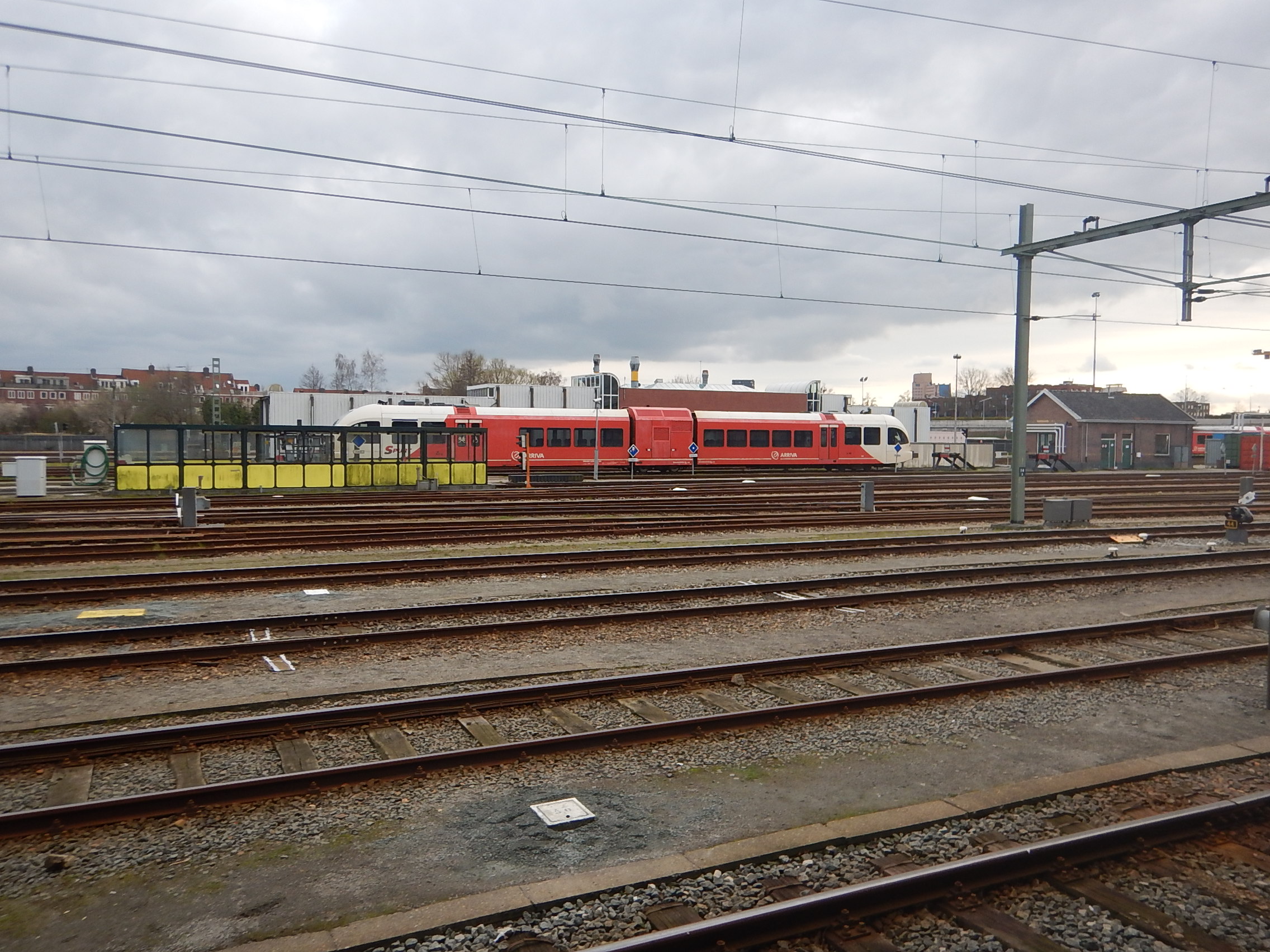
The main improvement, is that they will be fitted with batteries to handle regenerative braking and cut their carbon footprint.
The Railway Gazette article also says this.
A further 18 new Stadler Wink trainsets have been ordered which will be able use overhead electrification or hydrotreated vegetable oil fuel, with batteries for regenerated braking energy. These will be designed so that their engines can be replaced with larger batteries when the planned 1·5 kV DC discontinuous electrification of the routes is completed.
The Stadler Wink appears to be the another train from the Flirt family, which is the successor to the GTW.
The Dutch seem to be moving very firmly towards a zero-carbon railway in the North.
Collateral Benefits For The UK
What areas of the UK would be ideal places to adopt a similar philosophy to that which the Dutch are using in the North of the Netherlands?
I think they will be areas, where there are lots of zero carbon electricity, railways without electrification and terrain that’s not to challenging.
These areas come to mind.
- East Anglia
- Lincolnshire
- East Yorkshire
- Far North and North East Scotland.
Note.
-
- The only electrification in these areas is the main lines to Norwich and Cambridge in East Anglia.
- All areas have Gigawatts of offshore wind farms either operating or under development.
- Vivarail are proposing to run battery-electric trains between Wick and Turso, as I wrote about in Is This The Most Unusual Idea For A New Railway Service in The UK?
- With the exception of East Yorkshire, the train operating company is Abellio, who are Dutch railways, by another name.
- East Anglia is already using Stadler Flirt Class 755 trains, that can be fitted with batteries.
I also believe that Hitachi will soon be providing battery-electric versions of their AT300 trains. I wrote about this in Thoughts On The Next Generation Of Hitachi High Speed Trains.
Battery electric AT300 trains could provide long distance services to the areas I listed.
Conclusion
What is happening in the North of the Netherlands, will be watched with interest in the UK.
‘Earthquake Mode’ Battery Packs To Be Fitted To N700S Shinkansen Fleet
The title of this post is the same as that of this article on the Railway Gazette.
The Japanese are fitting batteries into the latest N700S Shinkansen trains.
- Eight of the sixteen cars will be fitted with batteries.
- It is quoted that they may be for rescue modes at low speed.
- The batteries seem to be a proven component from Toshiba.
I would be very surprised if they didn’t handle the regenerative braking.
I feel in a few years time, no manufacturer will build a train without batteries, as it will save energy and provide a rescue mode.
Shapps Wants ‘Earlier Extinction Of Diesel Trains’
The title of this post, is the same as that of this article on the East London and West Essex Guardian.
This is the first two paragraphs of the article.
The phasing out of diesel trains from Britain’s railways could be intensified as part of the Government’s bid to cut carbon emissions.
Transport Secretary Grant Shapps told MPs he is “hugely concerned” that the current policy means diesel trains will continue to operate until 2040.
In some ways the positioning of the article in a newspaper serving East London and West Essex is a bit strange.
- The only diesel trains in the area are freight trains, after the electrification of the Gospel Oak and Barking Line.
- Grant Schapps constituency is Welwyn and Hatfield, which is twenty or so miles North of London.
It looks to me to be a syndicated story picked up by the paper.
But as it reports what he said to the Transport Select Committee, there is a strong chance that it is not fake news.
How Feasible Would It Be To Bring Forward The 2040 Diesel Extinction Date?
Government policy of an extinction date of 2040 was first mentioned by Jo Johnson, when he was Rail Minister in February 2018.
This article on Politics Home is entitled Rail Minister Announces Diesel Trains To Be Phased Out By 2040, gives more details about what Jo said.
Since then several developments have happened in the intervening nearly two years.
Scores Of Class 800 Trains Are In Service
Class 800 trains and their similar siblings can honestly be said to have arrived.
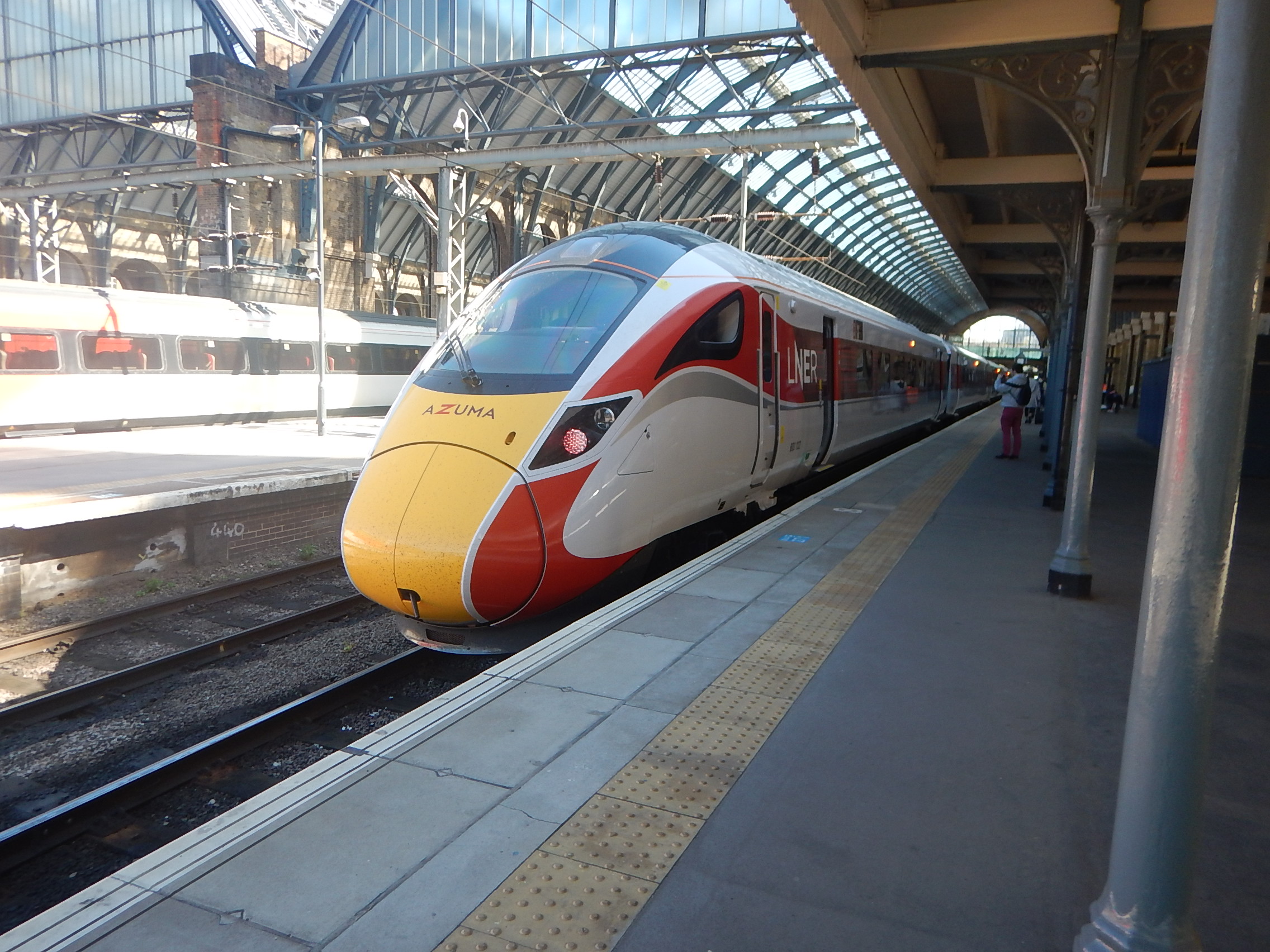
Currently, there appear to be over two hundred of these trains either delivered or on order.
Many have replaced diesel trains on Great Western Railway and LNER and stations like Kings Cross, Paddington and Reading are becoming over ninety percent diesel-free.
It should be noted that over half of these trains have diesel engines, so they can run on lines without electrification.
But the diesel engines are designed to be removed, to convert the trains into pure electric trains, when more electrification is installed.
Midland Main Line Upgrade
This line will be the next to be treated to the Hitachi effect, with thirsty-three of the second generation of Hitachi’s 125 mph trains.
- The Hitachi trains will use electrification South of Melton Mowbray and diesel power to the North.
- The trains will have a redesigned nose and I am sure, this is to make the trains more aerodynamically efficient.
- The introduction of the trains will mean, that, all passenger trains on the Midland Main Line will be electric South of Melton Mowbray.
- St. Pancras will become a diesel-free station.
Whether High Speed Two is built as planned or in a reduced form, I can see electrification creeping up the Midland Main Line to Derby, Nottingham and Sheffield and eventually on to Leeds.
Other Main Line Routes
The Midland Main Line will have joined a group of routes, that are run partly by diesel and partly by electricity.
- London and Aberdeen
- London and Bradford
- London and Cheltenham
- London and Harrogate
- London and Hull
- London and Inverness
- London and Lincoln
- London and Middlesbrough
- London and Penzance via Exeter and Plymouth.
- London and Sunderland
- London and Swansea
- London and Worcester and Hereford
Once the Midland Main Line is upgraded, these main routes will only be these routes that use pure diesel for passenger routes.
- TransPennine Routes
- Chiltern Route
- London and Exeter via Basingstoke
- London and Holyhead
Plans already exist from West Coast Rail to use bi-mode on the Holyhead route and the Basingstoke route could also be a bi-mode route.
TransPennine and Chiltern will need bespoke solutions.
Some Electrification Has Happened
Electrification has continued at a slow pace and these schemes have been completed or progressed.
- Chase Line
- Between Birmingham and Bromsgrove
- North West England
- Between Edinbugh, Glasgow, Alloa, Dunblane and Stirling.
- Gospel Oak to Barking Line
- Between St. Pancras and Corby.
- Crossrail
In addition London and Cardiff will soon be electrified and a lot of electrification designed by the Treasury in the past fifty years has been updated to a modern standard.
Battery Trains Have Been Developed And Orders Have Been Received Or Promised
Stadler bi-mode Class 755 trains have been delivered to Greater Anglia and these will be delivered as electric-diesel-battery trains to South Wales.
Stadler also have orders for battery-electric trains for Germany, which are a version of the Flirt called an Akku.
In the Wikipedia entry for the Stadler Flirt, this is a paragraph.
In July 2019, Schleswig-Holstein rail authority NAH.SH awarded Stadler a €600m order for 55 battery-powered Flirt Akku multiple unit trains along with maintenance for 30 years. The trains will start entering service in 2022 and replace DMUs on non-electrified routes.
55 trains at €600 million is not a small order.
Alstom, Bombardier, CAF, Hitacxhi and Siemens all seem to be involved in the development of battery-electric trains.
I think, if a train operator wanted to buy a fleet of battery trains for delivery in 2023, they wouldn’t have too much difficulty finding a manmufacturer.
Quite A Few Recently-Built Electric Trains Are Being Replaced And Could Be Converted To Battery-Electric Trains
In 2015 Bombardier converted a Class 379 train, into a battery-electric demonstrator.
The project showed a lot more than battery-electric trains were possible.
- Range could be up to fifty miles.
- The trains could be reliable.
- Passengers liked the concept.
Judging by the elapsed time, that Bombardier spent on the demonstrator, I would be very surprised to be told that adding batteries to a reasonably modern electric train, is the most difficult of projects.
The Class 379 trains are being replaced by by brand-new Class 745 trains and at the time of writing, no-one wants the currents fleet of thirty trains, that were only built in 2010-2011.
In addition to the Class 379 trains, the following electric trains are being replaced and could be suitable for conversion to battery-electric trains.
- Thirty Class 707 trains from South Western Railway.
- Thirty-seven Class 350/2 trains from West Miidlands Railway.
- Perhaps twenty Class 387 trains from various sources.
There also may be other trains frm Heathrow Express and Heathrow Connect.
All of these trains are too good for the scrapyard and the leasing companies that own them, will want to find profitable uses for them.
Porterbrook are already looking at converting some Class 350 trains to Battery-electric operation.
Vivarail And Others Are Developing Fast Charging Systems For Trains
Battery trains are not much use, unless they can be reliably charged in a short time.
Vivarail and others are developing various systems to charge trains.
Hydrogen-Powered Trains Have Entered Service In Germany
Hydrogen-powered Alstom Coradia Lint trains are now operating in Germany.
Alstom are developing a Class 321 train powered by hydrogen for the UK.
Stadler’s Bi-Mode Class 755 Train
The Class 755 train is the other successful bi-mode train in service on UK railways.
I would be very surprised if Grant Schapps hasn’t had good reports about these trains.
They may be diesel-electric trains, but Stadler have made no secret of the fact that these trains can be battery electric.
Like the Class 800 train, the Class 755 train must now be an off-the-shelf solution to use on UK railways to avoid the need for full electrification.
Class 93 Locomotives
Stadler’s new Class 93 locomotive is a tri-mode locomotive, that is capable of running on electric, diesel or battery power.
This locomotive could be the best option for hauling freight, with a lighter carbon footprint.
As an example of the usability of this locomotive, London Gateway has around fifty freights trains per day, that use the port.
- That is an average of two tph in and two tph out all day.
- All trains thread their way through London using either the North London or Gospel Oak to Barking Lines.
- Most trains run run substantially on electrified tracks.
- All services seem to go to freight terminals.
With perhaps a few of miles of electrification, at some freight terminals could most, if not all services to and from London Gateway be handled by Class 93 locomotives or similar? Diesel and/or battery power would only be used to move the train into, out of and around the freight terminals.
And then there’s Felixstowe!
How much electrification would be needed on the Felixstowe Branch to enable a Class 93 locomotive to take trains into and out of Felixstowe Port?
I have a feeling that we’ll be seeing a lot of these tri-mode freight locomotives.
Heavy Freight Locomotives
One of the major uses of diesel heavy freight locomotives,, like Class 59 and Class 70 locomotives is to move cargoes like coal, biomass, stone and aggregate. Coal traffic is declining, but the others are increasing.
Other countries also use these heavy freight locomotives and like the UK, would like to see a zero-carbon replacement.
I also believe that the current diesel locomotives will become targets of politicians and environmentalists, which will increase the need for a replacement.
There could be a sizeable world-wide market, if say a company could develop a powerful low-carbon locomotive.
A Class 93 locomotive has the following power outputs.
- 1,300 kW on hybrid power
- 4,055 kW on electric
It also has a very useful operating speed on 110 mph on electric power.
Compare these figures with the power output of a Class 70 locomotive at 2,750 kW on diesel.
I wonder if Stadler have ideas for a locomotive design, that can give 4,000 kW on electric and 3,000 kW on diesel/battery hybrid power.
A few thoughts.
- It might be a two-section locomotive.
- Features and components could be borrowed from UKLight locomotives.
- It would have a similar axle loading to the current UKLight locomotives.
- There are 54 UKLight locomotives in service or on order for the UK.
- Stadler will have details of all routes run by Class 59, Class 66 and Class 70 locomotives, in the UK.
- Stadler will have the experience of certifying locomotives for the UK.
Stadler also have a reputation for innovation and being a bit different.
Conclusion
All pf the developments I have listed mean that a large selection of efficient zero carbon passenger trains are easier to procure,than they were when Jo Johnson set 2040 as the diesel extinction date.
The one area, where zero carbon operation is difficult is the heavy freight sector.
For freight to be zero-carbon, we probably need a lot more electrification and more electric locomotives.
What Will Happen To Great Western Railway’s Class 387 Trains?
I have been looking at the services that Great Western Railway run using Class 387 trains.
Current services run by these trains are.
London Paddington And Didcot Parkway
This service has the following characteristics.
- The frequency is two trains per hour (tph)
- Services are run by two trains working as a pair.
- Intermediate stops are Ealing Broadway, Southall, Hayes and Harlington, West Drayton, Iver, Langley, Slough, Maidenhead, Twyford, Reading, Tilehurst, Pangbourne, Goring and Streatley and Cholsey.
- Journey time is one hour twenty-three minutes, giving a three hour round trip.
I estimate that twelve trains are needed to run this service.
From the 15th December 2019, this service appears to run to a similar timetable.
London Paddington And Reading
This service has the following characteristics.
- The frequency is two tph.
- Services are run by two trains working as a pair.
- Intermediate stops are Ealing Broadway, Southall, Hayes and Harlington, West Drayton, Slough, Burnham, Maidenhead and Twyford
- Journey time is fifty-seven minutes, giving a two and a half hour round trip.
I estimate that ten trains are needed to run this service.
From the 15th December 2019, this service will be run by TfL Rail using Class 345 trains.
Reading And Newbury
This service has the following characteristics.
- The frequency is one tph.
- Services are run by two trains working as a pair.
- Intermediate stops are Reading West, Theale, Aldermaston, Midgham, Thatcham and Newbury Racecourse.
- Journey time is twenty-nine minutes, giving an hour round trip.
I estimate that two trains are needed to run this service.
From the 15th December 2019, this service appears to run to a similar timetable.
Current Trains Needed
Summarising the trains needed gives the following.
- London Paddington and Didcot Parkway – twelve trains
- London Paddington and Reading – ten trains
- Reading and Newbury – two trains.
This gives a total of twenty-four trains.
Trains Needed After 15th December 2019
Summarising the trains needed gives the following.
- London Paddington and Didcot Parkway – twelve trains
- London Paddington and Reading – no trains
- Reading and Newbury – two trains.
This gives a total of fourteen trains.
Heathrow Express
Heathrow Express will use twelve Class 387 trains in the near future.
Great Western Railway’s Future Need For Class 387 Trains
Summarising the trains needed gives the following.
- London Paddington and Didcot Parkway – twelve trains
- Reading and Newbury – two trains.
- Heathrow Express – twelve trains.
This gives a total of twenty-six trains.
Great Western Railway have a total of forty-five Class 387 trains. Wikipedia is a bit confusing on this point, but I’m fairly certain this is a correct figure.
This means that Great Western Railway have nineteen trains available for expansion of services.
Great Western Railway’s Class 769 Trains
Great Western Railway have also ordered nineteen dual-voltage bi-mode Class 769 trains.
These are for the following routes.
- Reading – Redhill or Gatwick Airport
- London Paddington – Reading and Oxford
As the spare number of Class 387 trains is the same as that of the bi-mode trains, was it originally intended, that these routes could be run by the Class 387 trains, after Network Rail had joined the electrification together.
But the extra electrification never happened.
So Great Western Railway ordered the bi-modes trains.
Great Western Railway’s Dilemma
The Class 769 trains appear to be running late, so Great Western Railway are running the Gatwick and Oxford services with diesel multiple units, that they’d like to send to the West Country.
Bombardier appear to have moved on with their battery technology, that was successfully trialled using a similar Class 379 train in 2015. I wrote about the possibility of battery Electrostars on the Uckfield Branch last month in Battery Electrostars And The Uckfield Branch.
I believe that both routes would be within range of a battery-electric Class 387 train.
Reading – Redhill or Gatwick Airport
The various sections of the route are as follows.
Reading and Wokingham – Electrified with 750 VDC third-rail.
Wokingham and Aldershot South Junction – Not electrified – 12 miles
Aldershot South Junction and Shalford Junction – Electrified with 750 VDC third-rail.
Shalford Junction and Reigate – Not electrified – 17 miles
Reigate and Redhill/Gatwick – Electrified with 750 VDC third-rail.
To my mind, this is a classic route for a battery-electric train, as it is mainly electrified and both gaps are less than twenty miles long.
Some or all of the Class 387 trains are dual-voltage.
London Paddington – Reading and Oxford
The distance between Didcot Parkway and Oxford is under twelve miles, so a return trip should be well within range of a battery-electric Class 387 train.
There are also plans at Oxford station to put a new bay platform on the London-bould side of the station. This could be fitted with a charging station to avoid any range anxiety.
A Gatwick And Oxford Service
Could the Oxford and Gatwick services be joined together to make a direct Oxford and Gatwick service via Reading?
- I estimate that the service would take around two hours.
- Assuming a fifteen minute turnround at both ends, a round trip would be four and a half hours.
Running a half-hourly service would need just nine trains.
Or eighteen, if they were to run as eight-car trains!
Could this explain the order for nineteen trains, as it’s always a good idea to have a spare?
Conclusion
Great Western Railway can dig themselves elegantly out of a hole of Network Rail’s making by converting the spare Class 387 trains to battery-electric trains.
I’m sure Bombardier have the design available and would be happy to oblige after they have finished conversion of the Heathrow Express units.
There might also be an argument for fitting all Class 387 trains with batteries.
- A more unified fleet.
- Train recovery in the event of electrification failure.
- Better safety in depots.
- Direct services between Paddington and Henley and Bourne End.
- Would it allow Class 387 trains to run between Paddington and Bedwyn?
- Reduced electricity consumption.
It’ll be a decision for the accountants.
One collateral benefit of a successful conversion program for the Great Western Railway, is that it would enable Great Northern’s twenty-eight trains and c2c’s six trains to be easily converted to battery-electric versions.
- Great Northern’s coulde be used by sister company; Southern on the Uckfield Branch and the Marshlink Line.
- c2c trains are soon to be replaced by new trains.
I’m sure that quality four-car battery-electric trains won’t wait long for an operator.
Battery Units Planned For Chemnitz – Leipzig Route
The title of this post is the same as that of this article on Railway Gazette.
I have visited Chemnitz and after a visit to the area I wrote Would I Go Back To Dresden, Chemnitz And Leipzig, where I said this.
I enjoyed my two days spent exploring these three cities in the former East Germany. On a properly planned trip, there is a lot to see to satisfy any particular taste.
This picture sums up Chemnitz, which used to be called Karl-Marx-Stadt.
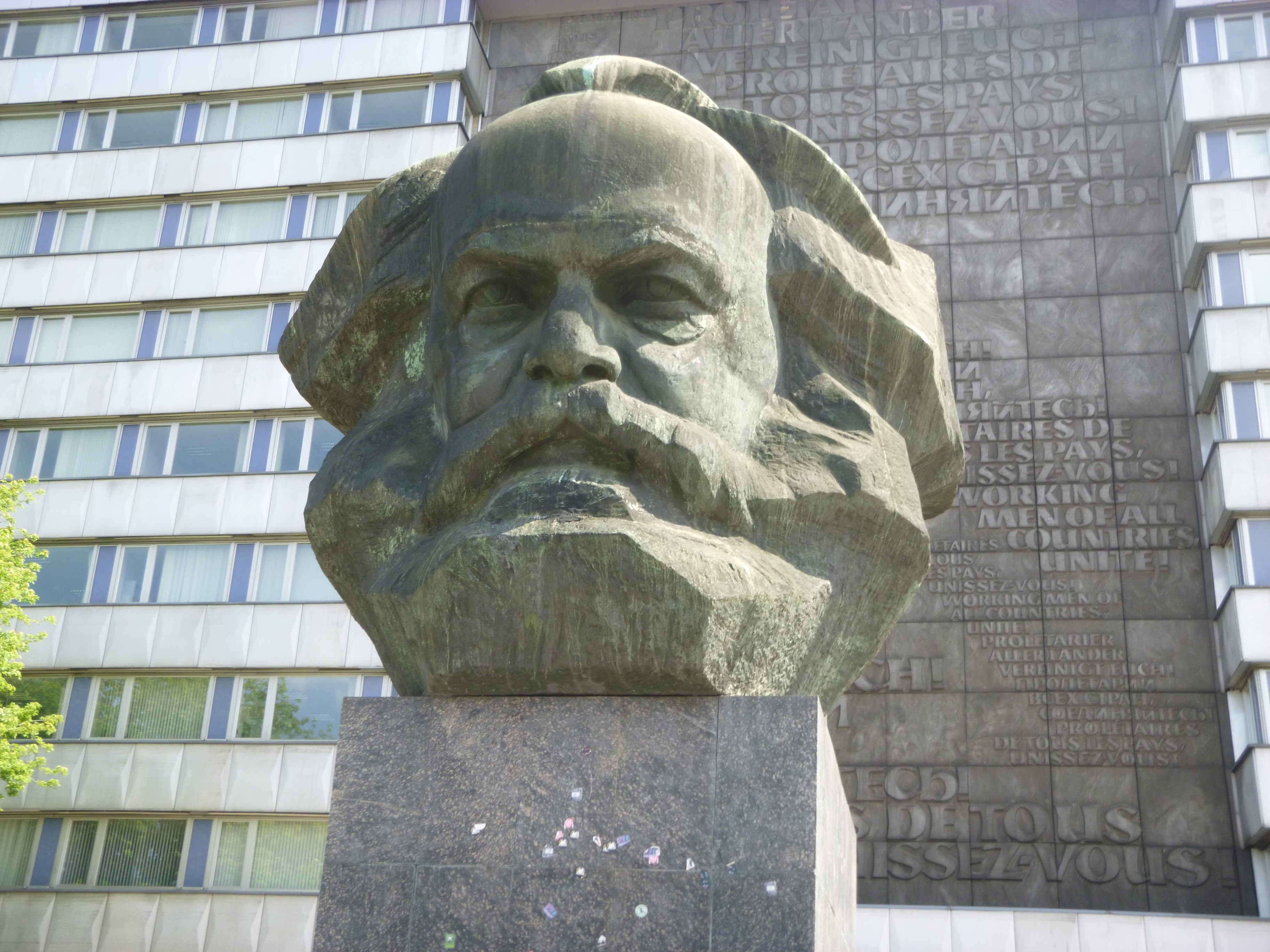
Although, I did get a reasonable gluten-free lunch in a restaurant under the Rathaus, called the Ratskeller.
Summarising the new battery trains, I can say the following.
- The trains will be eleven three-car battery-powered versions of Alstom’s Coradia Continental multiple-units.
- They will replace diesel-electric locomotives and coaches.
- Trains will generally run in pairs.
- The maximum speed would be increased by 20 kph to 160 kph.
- The current service takes sixty-five minutes and the new trains will knock six minutes off the time.
- Batteries will take thirty minutes to charge at Chemnitz and Leipzig.
Note that the route would appear to be just over seventy kilometres and there are stops at .. Bad Lausick, Geithain and Burgstädt.
A few of my thoughts.
Chemnitz And Leipzig
Consider.
Chemnitz and Leipzig are two of the three largest cities in the German state of Saxony.
- Chemnitz has a population of around 220,000
- Leipzig has a population of nearly 600,000
- The train journey between the two cities takes an hour.
But they only have an hourly train service between them.
Many services of a similar duration in the UK have only hourly services, but there are several that have or aspire to have half-hourly services.
Liverpool and Preston could be an equivalent city-pair in the UK and they currently have a single stopping service every hour.
In the next few years, the following will happen.
- An express Liverpool and Glasgow service will stop at Preston.
- A second stopping service will run via Ormskirk.
I wouldn’t be surprised to see the Germans doubling the frequency between Chemnitz and Leipzig.
Number Of Trains Needed
Consider.
- The service will take an hour.
- Thirty minutes will be needed to charge the batteries at either end of the route.
This means that a round trip will take three hours, so this will mean.
- Three trains will be needed for the hourly service.
- Six trains will be needed for a half-hourly service.
If all services are run by pairs of three-car trains, there would be a need for twelve new trains to run the half-hourly service.
So perhaps, the service will be half-hourly, with some trains six-cars and others only three-cars.
Charging Time
The charging time seems a bit long to me, but it is using conventional pantographs, rather than a specialist charging station.
Suppose, by using one of these stations like a Railbaar, that the charging time could be reduced to fifteen minutes, this would reduce the round trip to two and a half hours.
This would mean that five trains would be needed for a half-hourly service.
If all services are run by pairs of three-car trains, there would be a need for ten new trains.
This would leave a spare or allow for one being maintained.
Conclusion
Around the world we will be seeing a lot of current diesel services converted into battery-electric services.
How many services are there like Chemnitz and Leipzig?
- Around 50-60 miles.
- Only a few stops.
- Run by noisy and polluting diesel trains.
- Operators need more trains to increase the frequency.
- Operators need new trains to increase the level of customer service.
- Operators need to run faster services.
- There are good electricity supplies to charge the trains at both ends.
Here are a few simple examples from the UK.
- Ashford and Hastings
- Bidston and Wrexham
- Cambridge and Ipswich
- Carlisle and Newcastle
- Didcot and Oxford
- Ely and Norwich
- Ely and Peterborough
- Fife Circle Line
- Ormskirk and Preston
Battery-electric trains will be invading the diesel world.
The Batteries For Bombardier Electrostars
This article on the Railway Gazette is entitle Bombardier And Leclanché Sign Battery Traction MoU.
This is the second paragraph.
According to Bombardier, Leclanché will deliver ‘imminently’ its first performance demonstrator battery systems, after which it will be in line to supply traction equipment worth in excess of €100m for use in more than 10 rolling stock projects.
In Stadler’s New Tri-Mode Class 93 Locomotive, I investigated who was providing two large suitcase-sized batteries for Stadler’s new Class 93 locomotive.
In the related post, I said this about the batteries in the Class 93 locomotive, which I describe as a hybrid locomotive.
The Class 93 Locomotive Is Described As A Hybrid Locomotive
Much of the article is an interview with Karl Watts, who is Chief Executive Officer of Rail Operations (UK) Ltd, who have ordered ten Class 93 locomotives. He says this.
However, the Swiss manufacturer offered a solution involving involving an uprated diesel alternator set plus Lithium Titanate Oxide (LTO) batteries.
Other information on the batteries includes.
- The batteries are used in regenerative braking.
- Batteries can be charged by the alternator or the pantoraph.
- Each locomotive has two batteries slightly bigger than a large suitcase.
Nothing is said about the capacity of the batteries, but each could be say 200 litres in size.
I have looked up manufacturers of lithium-titanate batteries and there is a Swiss manufacturer of the batteries called Leclanche, which has this data sheet, that describes a LT30 Power cell 30Ah.
- This small cell is 285 mm x 178.5 mm x 12 mm.
- It has a storage capacity of 65 Wh
- It has an expedited lifetime of greater than 15,000 cycles.
- It has an energy density of 60 Wh/Kg or 135 Wh/litre
These cells can be built up into much larger batteries.
- A large suitcase is 150 litres and this volume would hold 20 kWh and weigh 333 Kg.
- A battery of 300 litres would hold 40 kWh. Is this a large Swiss suitcase?
- A box 2.5 metres x 1 metre x 0.3 metres underneath a train would hold 100 kWh and weigh 1.7 tonnes
These batteries with their fast charge and discharge are almost like supercapacitors.
, It would appear that, if the large suitcase batteries are used the Class 93 locomotive will have an energy storage capacity of 80 kWh.
I wonder how many of these batteries can be placed under a Bombardier Eectrostar.
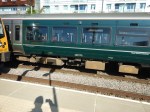
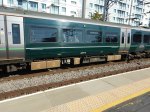
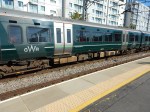
It looks rather cramped under there, but I’m sure Bombardier have the detailed drawings and some ideas for a bit of a shuffle about. For comparison, this is a selection of pictures of the underneath of the driver car of the new Class 710 trains, which are Aventras.

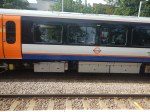
It looks like Bombardier have done a big tidy-up in changing from Electrostars to Aventras.
In Battery Electrostars And The Uckfield Branch, I came to the conclusion that Class 387 trains were the most likely trains to be converted for battery operation.
I also developed Excel spreadsheets that model the operation of battery trains on the Uckfield Branch and the Marshlink Line.
Feel free to download and examine.
Size Of Batteries Needed
My calculations in the two spreadsheets are based on the train needing 3 kWh per vehicle-mile to cruise between stations.
To handle the Uckfield Branch, it appears that 290.3 kWh is needed to go South and 310.3 kWh to go North.
I said this earlier.
A box 2.5 metres x 1 metre x 0.3 metres underneath a train would hold 100 kWh and weigh 1.7 tonnes.
So could we put some of these batteries under the train?
The Effect Of More Efficient Trains
My calculations are based on the train needing 3 kWh per vehicle-mile, but what if the trains are more efficient and use less power?
- 3 – 290.3 – 310.3
- 2.5 – 242.6 – 262.6
- 2 – 194.9 – 214.9
- 1.5 – 147.2 – 167.2
- 1 – 99.4 – 119.4
Note.
- The first figure is Southbound and the second figure is Northbound.
- More power is needed Northbound, as the train has to be accelerated out of Uckfield station on battery power.
The figures clearly show that the more efficient the train, the less battery capacity is needed.
I shall also provide figures for Ashford and Ore.
- 3 – 288
- 2.5 – 239.2
- 2 – 190.4
- 1.5 – 141.5
- 1 – 92.7
Note that Westbound and Eastbound energy needs are the same, as both ends are electrified.
I obviously don’t know Bombardier’s plans, but if the train’s energy consumption could be reduced to around 2 kWh per vehicle-mile, a 250 kWh battery on the train would provide enough energy storage for both routes.
Could this be provided by two of Leclanche’s batteries designed to fit a space under the train?
These would be designed to provide perhaps 250 kWh.
What Would Be The Ultimate Range Of A Class 387 Train On Battery Power?
Suppose you have a four-car Class 387 train with 25 kWh of battery power that leaves an electrified station at 60 mph with a full battery.
How far would it go before it came to a lifeless stop?
The battery energy would be 250 kWh.
There would be 20 kWh of kinetic energy in the train.
Ranges with various average energy consumption in kWh per vehicle-mile are as follows.
- 3 – 22.5 miles
- 2.5 – 27 miles
- 2 – 34 miles
- 1.5 – 45 miles
- 1 – 67.5 miles
Obviously, terrain, other traffic and the quality of the driving will effect the energy consumption.
But I do believe that a well-designed battery-electric train could easily handle a fifty mile electrification gap.
What Would Be The Rescue Range On One Battery?
One of the main reasons for putting batteries on an electrical multiple unit is to move the train to a safe place for passenger evacuation if the electrification should fail.
This week, there have been two electrification failures in London along, one of which was caused by a failing tree in the bad weather.
I’ll assume the following.
- The train is a Class 387 train with one 125 kWh battery.
- The battery is ninety percent charged.
- The train will be moved at 40 mph, which has a kinetic energy around 9 kWh.
- The energy consumption of the train is 3 kWh per vehicle-mile.
The train will use 9 kWh to accelerate the train to line speed, leaving 116 kWh to move the train away from the problem.
With the energy consumption of 3 kWh per vehicle-mile, this would be a very useful 9.5 miles.
Regenerative Braking To Battery On Existing Trains
This has been talked about for the Class 378 trains on the London Overground.
Regenerative braking to batteries on the train, should cut energy use and would the battery help in train recovery from the Thames Tunnel?
What About Aventras?
Comparing the aerodynamics of an Electrostar like a Class 387 train with an Aventra like a Class 710 train, is like comparing a Transit van with a modern streamlined car.
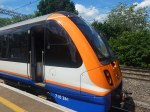
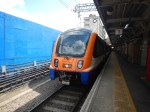
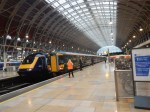
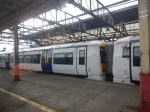
Look at these pictures some of which are full frontal.
It should be noted that in one picture a Class 387 train is shown next to an InterCity 125. Did train designers forget the lessons learned by Terry Miller and his team at Derby.
I wonder how much electricity would be needed to power an Aventra with batteries on the Uckfield branch?
These are various parameters about a Class 387 train.
- Empty Weight – 174.81 tonnes
- Passengers – 283
- Full Weight – 2003 tonnes
- Kinetic Energy at 60 mph – 20.0 kWh
And these are for a Class 710 train.
- Empty Weight – 157.8 tonnes
- Passengers – 700
- Full Weight – 220.8 tonnes
- Kinetic Energy at 60 mph – 22.1 kWh
Note.
- The Aventra is twenty-seven tonnes lighter. But it doesn’t have a toilet and it does have simpler seating with no tables.
- The passenger weight is very significant.
- The full Aventra is heavier, due to the large number of passengers.
- There is very little difference in kinetic energy at a speed of 60 mph.
I have played with the model for some time and the most important factor in determining battery size is the energy consumption in terms of kWh per vehicle-mile. Important factors would include.
- The aerodynamics of the nose of the train.
- The turbulence generated by all the gubbins underneath the train and on the roof.
- The energy requirements for train equipment like air-conditioing, lighting and doors.
- The efficiency of the regenerative braking.
As an example of the improvement included in Aventras look at this picture of the roof of a Class 710 train.
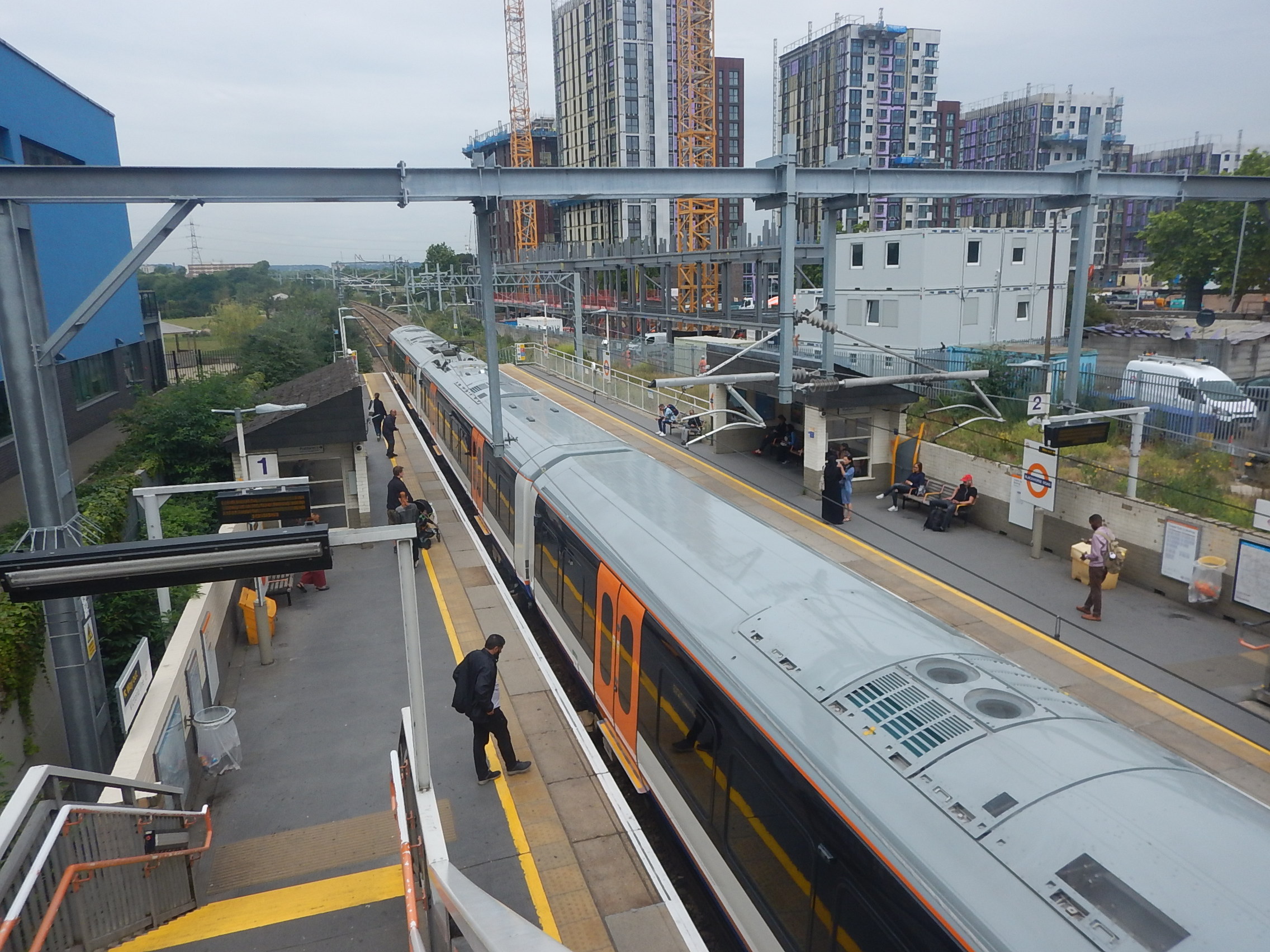
This feature probably can’t be retrofitted, but I suspect many ideas from the Aventra can be applied to Electrostars to reduce their energy consumption.
I wouldn’t be surprised to see Bombardier push the energy consumption of an Electrostar with batteries towards the lower levels that must be possible with Aventras.
Battery Electrostars And The Uckfield Branch
In Rounding Up The Class 170 Trains, I said this, which is based on a quote from an article in the October 2019 Edition of Modern Railways.
Are Battery Electrostars On The Way?
The article finishes with this paragraph about the Class 171 trains, that will come from Govia Thameslink Railway (GTR) and be converted back to Class 170 trains.
GTR currently uses the ‘171s’ on the non-electrified Marshlink and Uckfield lines, and the release of these sets to EMR is contingent on their replacement with converted Electrostar EMUs with bi-mode battery capability, removing these diesel islands of operation from the otherwise all-electric GTR fleet.
So are these battery Electrostars finally on their way?
The article got several comments, which said that some five-car Electrostars were to be converted and they would probably be Class 376 trains, that would be used.
The comments also said that Network Rail were working on using short lengths of third-rail to charge the train batteries.
That sounds like Vivarail’s system to me, that I wrote about in Vivarail Unveils Fast Charging System For Class 230 Battery Trains.
Southern’s Current Diesel Fleet
I will start by looking at Southern’s current diesel fleet that works London Bridge and Uckfield stations and the Marshlink Line.
Currently, Southern has a diesel fleet of Class 171 trains.
- 12 x two-car trains
- 8 x four-car trains.
According to Modern Railways, the following trains will transfer to EMR Regional in September 2021.
- 10 x two car
- 6 x three-car, which will be created by moving a few cars in the four-car trains.
It looks as if after the transfer Southern will be left with eight driver-cars and ten intermediate cars.
This would give them four four-car trains and two spare intermediate cars. I’m sure that someone will have a need for the intermediate cars to lengthen a two-car Class 170 train because of capacity issues.
The Marshlink Line Service
The service on the Marshlink Line is an hourly service between Ashford International and Eastbourne stations.
- It is run by Class 171 diesel trains.
- Trains were four-cars most times I’ve used it.
- Journey times are around one hour and twenty-minutes.
- A round trip takes three hours.
- It would appear that three four-car trains are needed to run the service.
So if there is a spare train, four trains would be ideal, After all the transfers, this is the remaining number of Class 171 trains, that would be left with Southern.
If they wanyted to get rid of the diesel trains, then they could replace the trains on the Marshlink Line with four four-car battery bi-mode Electrostars!
Network Rail’s Plan For The Uckfield Branch
This document on the Network Rail web site from 2016, is entitled Delivering A Better Railway
For A Better Britain – Route Specifications 2016 – South East.
In the document, this is said about the the route between Hurst Green and Uckfield.
The key issue presently is overcrowding on the shorter length services that operate on the route during and close to the peak hours. As the route is operated by Class 171 diesel units, there is only a small fleet available to the TOC to deploy on the route. As a result some peak and shoulder peak services are not able to operate at the maximum length the route is capable of (8-car).
Electrification schemes in the North West will displace rolling stock to strengthen existing peak services to 8-car and eventually of 10-car operation during CP5, so associated platform lengthening is currently being developed, this will also be compatible with 12-car 20m vehicle trains.
Electrification is still an aspiration for this route or use of battery-powered trains (currently under development) if they are deemed successful.
Signalling is controlled by Oxted Signal Box but during CP5 this will be transferred to Three Bridges ROC.
The key point is that the platforms have been lengthened for 240-metre long trains, which will also allow ten-car Class 171 trains, which have 23 metre vehicles.
The Uckfield Branch Service
The service on the Uckfield Branch is an hourly service between London Bridge and Uckfield stations.
- It is currently run by Class 171 diesel trains.
- The platforms on the route can accept ten-car trains with 23 m vehicles or twelve-car trains with 20 metre vehicles.
- A round trip takes three hours.
- It would appear that three ten- or twelve-car trains are needed to run the service.
So if we add in a spare and perhaps an extra train for the rush hour, it would appear that around half-a-dozen ten- or twelve-car battery bi-mode trains will be needed for the service.
- As a ten-car train would be two five-car trains, twelve five-car trains would be needed.
- As a twelve-car train would be three four-car trains, eighteen four-car trains would be needed.
Interestingly, Southern have three trains that could be candidates for conversion to battery bi-modes in their fleet.
- One hundred and fifty-two four-car Class 377 trains.
- Thirty-four five car Class 377 trains.
- Twenty-nine four-car Class 387 trains.
All trains were built for longer commuter journeys,
Which Electrostars Will Be Converted To Battery Operation For The Uckfield Service?
Obviously, the trains must be four- or five-cars and suitable for conversion to battery bi-mode trains, but I feel they must have other features.
- Toilets
- First Class seats.
- Plenty of tables.
- Wi-fi and plug sockets.
- Comfortable interiors.
- End gangways, to ensure staff and passengers can move around the train if required.
I’ll now look at the various fleets of Electrostars.
Class 357 Trains
The Class 357 trains can probably be discounted, as I suspect c2c need them and they are not third rail.
Class 375 Trains
The Class 375 trains can probably be discounted, as I suspect Southeastern need them.
But if the new Southeastern franchise should decide on a complete fleet replacement, as the trains are dual-voltage, they might be very useful if fitted with a battery capability.
Class 376 Trains
The Class 376 trains can probably be discounted, as I suspect Southeastern need them.
The trains are also third-rail only and lack toilets, so would probably need a rebuilt interior.
Class 377 Trains
The Class 377 trains are a possibility as Soiuthern has a large fleet of both four- and five-car trains.
But they would be losing the Class 171 trains, so would probably need to bring in some new trains to have a large enough fleet.
Class 378 Trains
The Class 378 trains can probably be discounted, as London Overground need them.
Class 379 Trains
The Class 379 trains are surely a possibility, as Greater Anglia will be releasing them before the end of 2020.
Consider.
- There have no new home to go to.
- I am suspicious that that NXEA overpaid for these trains and Macquarie are sitting on a very good deal, that will cost Grester Anglia a lot to cancel!
- They appeared to me to be a shoe-in for Corby services, so perhaps they lost out to the Class 360 trains on cost.
- They are only 100 mph trains, whereas others are 110 mph trains.
- They would need to be fitted with third-rail shoes.
- The trains are coming up to nine years old and probably need a refresh.
- They have an interior aimed at airport passengers.
If I was Macquarie, I’d convert these into go-anywhere battery bi-modes for use in small fleets by operators.
But, Porterbrook’s battery-bi-mode conversion of a Class 350 train may be available at a lower price.
Class 387 Trains
The Class 387 trains are surely a serious possibility, for the following reasons.
- Govia already has fifty-six of these trains on lease and in service.
- c2c has six trains, that could come off lease in 2021.
- The trains are dual voltage
- The trains are 110 mph trains.
- They can run as twelve-car walk-through trains.
- Many of the trains are leased from Porterbrook.
I’ve felt for some time, that these trains would make excellent battery bi-modes.
But they are a good fit for Southern, as surely one could be scrounged from their Great Northern fleet to create a prototype for test.
I would feel that having the required number of trains for the Uckfield Branch can be achieved by September 2021, when the Class 171 trains will be sent to the Midlands.
There is also a backstop, in that there are nineteen Class 365 trains in store, which were replaced by Class 387 trains on Great Northern services. If there is a shortage of Class 387 trains during the conversion, surely some of these Class 365 trains could stand in, just as they did successfully in Scotland recently.
My Choice
I would convert Class 387 trains.
- There are quite a few Class 387 trains, that could be converted.
- Southern already have fifty-six Class 387 trains.
- There are enough to convert eighteen for Uckfield and four for the Marshlink
- It could be possible to deliver the full fleet before the Class 171 trains leave.
- If during conversion of the trains, they are short of stock, Southern can hire in some Class 365 trains.
It looks to be a low-risk project.
It will also have collateral benefits.
- The hourly London Bridge and Uckfield service will be raised to maximum capacity without any new infrastructure, except the trains and a number of battery chargers.
- Diesel will be eliminated in London Bridge station making the station electric trains only.
- Diesel will be eliminated between London Bridge and Uckfield stations.
- Efficient regenerative braking to battery would be available on the complete route.
- A ten-car diesel service between East Croydon and London Bridge will be replaced by a twelve-car electric service. stations.
In addition, if the diesel trains on the Marshlink Line were to be replaced by battery bi-modes, Southern would be a diesel-free franchise.
What About New Trains?
It’s all about the money and whether the new trains could be delivered in time.
I would suspect that Bombardier, CAF, Stadler and others are making competitive proposals to Southern, but would they be more affordable and timely, than a conversion of Class 387 trains?
But could they be as competitive if Bombadier and Porterbrook co-operated to convert some of Porterbrook’s Class 387 trains, that are already leased to Great Northern?
You don’t usually move house if you need a new boiler, you replace the boiler!
What About Hydrogen Trains?
The Alstom Breeze based on a Class 321 train is scheduled to first come into service in 2022. This is too late, as the Class 171 trains are scheduled to leave in September 2021.
Hydrogen trains would need a hydrogen filling station.
Kinetic Energy Of Class 387 Trains
I will calculate the kinetic energy of a four-car Class 387 train.
I will assume the following.
- Empty train weight – 174.81 tonnes – Read from the side of the train.
- Seats – 223
- Standees – 60 – Estimated from the seats/standing ratio of a Class 720 train.
- Total passengers – 283
- Each passenger weighs 90 Kg, with baggage, bikes and buggies.
- This gives a passenger weight of 25.47 tonnes and a train weight of 200.28 tonnes
Using Omni’s Kinetic Energy calculator, gives the following kinetic energies.
- 40 mph – 8.89 kWh
- 50 mph – 13.9 kWh
- 60 mph – 20.0 kWh
- 70 mph – 27.2 kWh
- 80 mph – 35.6 kWh
- 90 mph – 45.0 kWh
- 100 mph – 55.6 kWh
- 110 mph – 67.3 kWh
These figures are for a full train, but even so many will think they are low, when you think that 60 kWh batteries are used in hybrid buses.
A Trip To Uckfield
I took a trip to Uckfield today and these are my observations.
- The maximum operating speed of the train was no more than 70 mph.
- For much of the journey the train trundled along at around 40-50 mph.
- The route is reasonably flat with only gentle gradients.
- I hardly noticed the diesel engine under the floor of my car.
- Obviously in the Peak, the engines will have to work harder.
It was a very good demonstration of five Turbostars working in unison.
I can understand why East Midlands Railway are using Class 170 trains, as their standard train for EMR Regional.
Modelling the Route
I have built a mathematical model of the route between Hurst Green and Uckfield using Excel.
Input parameters are.
- Cruise Energy Consumption in kWh per vehicle mile. I assumed 3 kWh per vehicle mile
- Cruise Kinetic Energy in kWh. I assumed a 70 mph cruise and used 20 kWh
- Regeneration Energy Loss as a ratio. I assumed 0.15.
These parameters showed that a battery of between 290 kWh and 350 kWh would be needed, that was full at Hurst Green and was recharged at Uckfield.
Note that Vivarail are talking about putting 424 kWh under a three-car Class 230 train.
This page on the Vivarail web site is entitled Battery Train Update.
This is a paragraph.
Battery trains are not new but battery technology is – and Vivarail is leading the way in new and innovative ways to bring them into service. 230002 has a total of 4 battery rafts each with a capacity of 106 kWh and requires an 8 minute charge at each end of the journey. With a 10 minute charge this range is extended to 50 miles and battery technology is developing all the time so these distances will increase.
So it looks like Vivarail manage to put 212 kWh under each car of their two-car train.
I don’t think putting 350 kWh of batteries under a four-car Class 387 train would be impossible.
I have also created an Excel model for the second route between Ashford and Ore stations.
This shows that a battery of about 300 kWh on the train should cover the route.
It might appear strange that the longer Marshlink route needs a smaller battery, but this is because it leaves both ends of the route with a full battery.
These two links give access to the two Excel models that I have used. Feel free to access and criticise them.
It does appear, that on both these routes, if a train starts with full batteries, the energy in the battery is reduced in these ways as it travels along the route.
- There is an energy use to power the train along the line which is proportional to the vehicle-miles.
- Energy is needed to accelerate the train to line speed after each stop.
- Energy is needed to operate stop-related functions like opening and closing the doors.
But there will also be energy recovered from regenerative braking from line speed, although this won’t cover the subsequent acceleration.
I suspect with better understanding and better data, Bombardier can create a simple formula for battery size needed based on the following.
- The length of the route.
- The number of stations.
- The line speed
- The gradient and speed profile of the route
- The kinetic energy of the train at various loadings and speeds
- The amount of energy needed for each vehicle mile
- The efficiency of the regenerative braking
It is not the most difficult of calculations and I was doing lots of them in the 1960s and early 1970s.
Charging The Train At Uckfield
This picture shows the long platform at Uckfield station.

The platform has been built to accept a twelve-car electric train and if traditional third rail electrification were to be installed, this could be used to charge the batteries.
I would use a Vivarail-style system, which I described fully in Vivarail Unveils Fast Charging System For Class 230 Battery Trains.
As trains take a few minutes at Uckfield to turnback, I’m sure enough time can be arranged in the timetable to charge the batteries with enough power to get back to the electrification at Hurst Green.
The train would switch the charging system on and off by automatically connecting and disconnecting.
Battery Power Lined Up For ‘755s’
In Issue 888 of Rail Magazine, there is a short article, which is entitled Battery Power Lined Up For ‘755s.‘
This is said.
Class 755s could be fitted with battery power when they undergo their first overhaul.
Stadler built the trains with diesel and electric power.
The Swiss manufacturer believes batteries to be the alternative power source for rail of the future, and is to build tri-mode trains for Transport for Wales, with these entering traffic in 2023.
Rock Rail owns the Greater Anglia fleet. Chief Operating Office Mike Kean told RAIL on September 4 it was possible that when a four-car ‘755/4’ requires an overhaul, one of its four diesel engines will be removed and replaced by a battery.
These are some thoughts.
What Is The Capacity Of A Single Battery?
This picture shows the PowerPack of a Class 755 train.

Note the two ventilated doors on the side. Currently, a diesel engine is behind each!
The PowerPack has four slots,; two on either side of the central corridor.
Each of the slots could take.
- A V8 16-litre Deutz diesel that can produce 478 kW and weighs 1.3 tonnes.
- A battery of a similar physical size.
- Possibly a hydrogen fuel-cell!
I would assume that the battery module is plug-compatible, the same physical size and similar weight to the diesel engine module, as this would make the design and dynamics of the train easier.
A 1.2 tonnes battery would hold around 120 kWh.
Kinetic Energy Of The Train
I will use my standard calculation.
- The basic train weight is 114.3 tonnes.
- If each of the 229 passengers weighs 90 kg with Baggage, bikes and buggies, this gives a passenger weight of 20.34 tonnes.
- This gives a total weight of 134.64 tonnes.
Using Omni’s Kinetic Energy Calculator gives these figures for the Kinetic energy.
- 50 mph – 9.34 kWh
- 60 mph – 13.5 kWh
- 75 mph – 21 kWh
- 90 mph – 30.3 kWh
- 100 mph – 37.4 kWh
- 125 mph – 58.4 kWh
Note.
- Class 755 trains will not be able to run at 125 mph, but I have been told by someone who should know, that the trains have probably been designed, to enable this in other versions of the trains in the future.
- The kinetic energy of the train at typical Greater Anglia service speeds is not very high.
These amounts of kinetic energy can be easily handled in a 120 kWh battery under regenerative braking, to improve the efficiency of the trains.
Range On Battery Power
Assuming that the train uses 3 kWh per vehicle mile (SeeHow Much Power Is Needed To Run A Train At 125 mph?) , this would give.
- A four-car train a range of ten miles.
- A three-car train a range of 13.3 miles.
This probably isn’t long enough given that these are Greater Anglia’s electrification gaps.
- Ely and Peterborough – 30 miles
- Ipswich and Cambridge – 41 miles
- Ipswich and Ely – 37 miles
- Ipswich and Felixstowe – 14 miles
- Ipswich and Lowestoft – 45 miles
- Marks Tey and Sudbury – 12 miles
- Norwich and Ely – 50 miles
- Norwich and Great Yarmouth – 18 miles
- Norwich and Lowestoft – 20 miles
- Norwich and Sheringham – 30 miles
It would appear that more battery capacity is needed, as the required range is around sixty miles on some routes.
In the July 2018 Edition of Modern Railways, there is an article entitled KeolisAmey Wins Welsh Franchise.
This is said about the Stadler Tri-Mode Flirts on the South Wales Metro.
The units will be able to run for 40 miles between charging, thanks to their three large batteries.
So does this mean that these Flirts have just one Deutz diesel engine of 478 kW and three batteries in the four slots of the power-pack?
Assuming that the Flirts use 3 kWh per vehicle mile, this gives these ranges.
- A four-car train a range of thirty miles.
- A three-car train a range of forty miles.
These ranges might give enough range for many the of East Anglian routes. Improvements in train efficiency and battery storage would only increase these ranges.
Class 755 Trains In Electric Mode
Being able to do this, is important, as if the Class 755 trains are to use battery power, then they will need to use 25 KVAC overhead electrification in the various electric islands around East Anglia to charge the batteries.
The article in Issue 888 of Rail Magazine, says this about running in electric mode.
GA Joint Project Manage Steve Mitchell told RAIL that the ‘755s’ can already operate on electric power between Norwich and London, but they must carry out Electro Magnetic Current testing on the Ely-Cambridge route.
When that is complete, they will operate Notwich-Ely in diesel mode, and Ely-Cambridge in electric.
At least it appears that the Northern bay platforms at Cambridge are electrified.
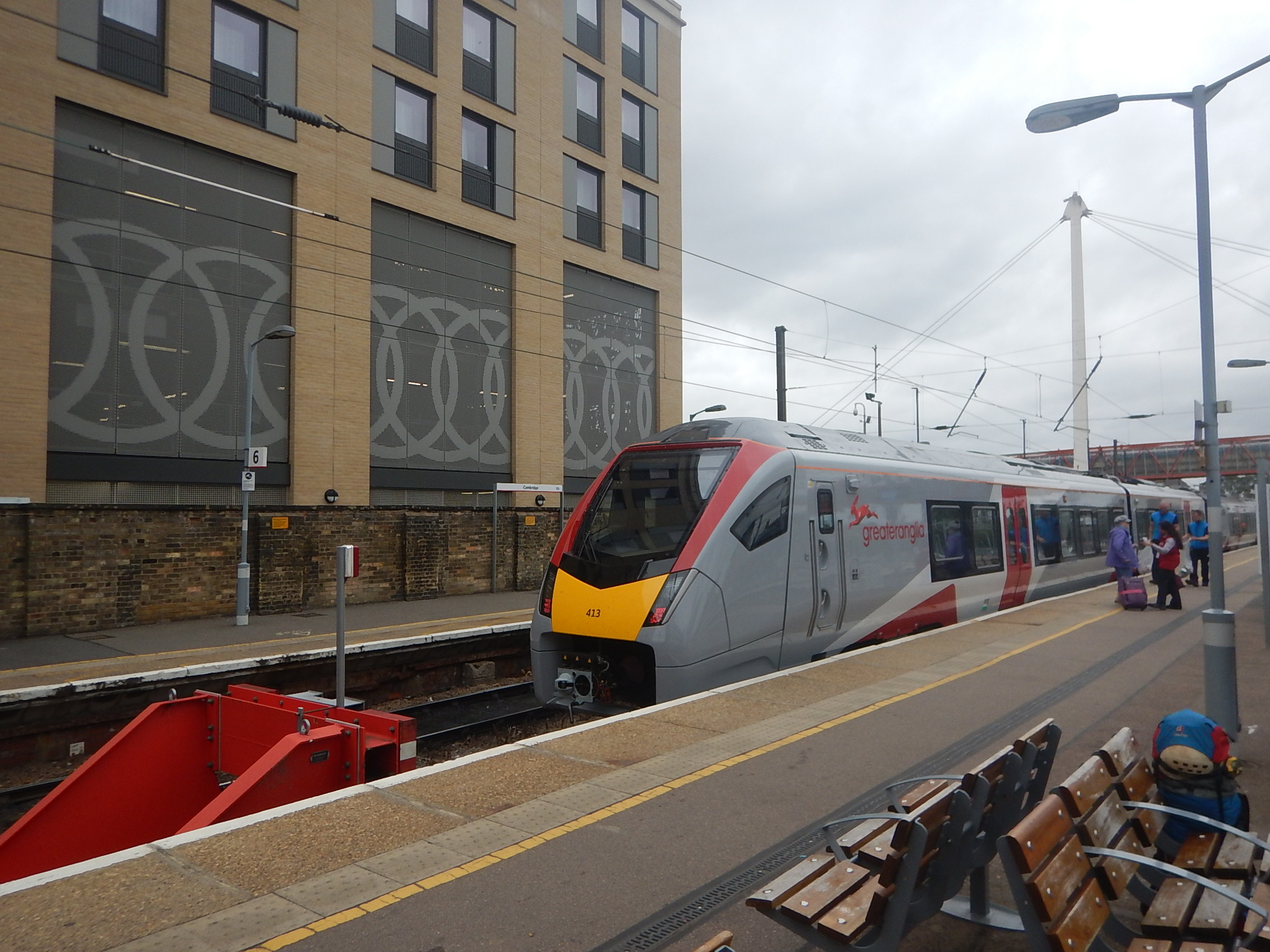
This would probably mean that no new infrastructure is needed.
As both Ipswich and Norwich stations are fully electrified, charging the batteries on hourly shuttles between the three stations, wouldn’t be a problem, if and when the trains are fitted with enough battery capacity to bridge the fifty mile gaps in the electrification on the routes.
Three-Car Trains And Batteries
The two short Southern routes; Coclester Town and Sudbury and Ipswich and Felixstowe will probably be run by three-car Class 755 trains, which have two diesel engines and two spare slots in the PowerPack.
Battery modules in both spare slots would give a twenty-seven mile range, which could enable the following.
- Running a return trip between Marks Tey and Sudbury, after charging the batteries on the main line between Colchester Town and Marks Tey.
- Running a return trip between Ipswich and Felixstowe, provided enough charge can be taken on at Ipswich.
The article in Issue 888 of Rail Magazine, also says this about the new Class 755 trains entering service.
The last line to receive them will be Sudbury-Marks Tey, will exclusively be operated by three-car Class 755/3s due to infrastructure restraints on the branch. No date has been given.
It should also be noted that the three-car trains are going to be the last to be delivered.
I feel that Stadler and Greater Anglia are following a cautious and very professional route.
Consider.
- They introduced the new trains on the Wherry Lines, which are close to the Crown Point Depot.
- Services between Norwich and Sheringham and Norwich and Cambridge were introduced next.
- All the initial services have used four-car trains
- Greater Anglia held on to the standby train of two Class 37 locomotives and Mark 2 coaches until last week.
- They have stated that training of Ipswich drivers is starting, ahead of services from the town to Cambridge, Felixstowe, Lowestoft and Peterborough.
- All the Ipswich cervices can be run using four-car trains.
- As I said earlier, the only service that needs a three-car train is Sudbury and Marks Tey.
- A three-car train could probably be thoroughly tested on one of the Norwich routes before deplayment to Sudbury.
- It should also be noted that a three-car train is only a four-car train with two less diesel engines and one less trailer car.
So far everything seems to have gone very well, with no adverse reports in the media.
Stadler have orders for further bi-mode trains for South Wales and other places in Europe. At least one of these orders, that for the South Wales Metro, includes a number of diesel/electric/battery versions.
Given the problems, that Bombardier and others have had with getting the complex software of these trains to work correctly, if I was Stadler’s Project Manager on multi-mode Flirts, I would be testing the trains and their software morning, noon and night!
So could the planned later arrival of the three-car Class 755 trains, be partly to enable Stadler to fully investigate the characteristics of a multi-mode Flirt?
After all, Greater Anglia only need a couple of three-car trains to start the service between Sudbury and Marks Tey, of the fourteen on order. And they have twenty-four four-car trains on order for the other routes.
They are also replacing twenty-four assorted diesel multiple units with thirty-eight longer new bi-mode multiple units.
I do wonder, if there is a cunning plan being hatched between Greater Anglia and Stadler.
- Stadler finalises the design and the software for a PowerPack, that contains both diesel and battery modules.
- Stadler thoroughly tests the design using a Greater Anglia three-car train in Switzerland.
- Stadler shows the concept to other prospective customers.
- Greater Anglia certifies the three-car Class 755 bi-mode train in the UK.
- Greater Anglia runs three-car 755 trains between Colchester Town and Sudbury, using the electrification between Marks Tey and Colchester Town, as they have planned for some time.
- When ready, Class 755 trains with batteries are introduced between Sudbury and Colchester Town.
Greater Anglia would be running the first battery-electric service using bi-mode battery-electric trains in the UK.
New Railway Station Between Hinckley And Nuneaton Receives Backing
The title of this post is the same as that of this article on Rail Technology Magazine.
This is the first paragraph of the article.
Plans for a new railway station between Hinckley and Nuneaton looks set to go ahead following backing from councillors.
The station will be called Nuneaton Parkway.
This page on Coventry Live gives some more information.
There is also a proposed station, to be called Nuneaton Parkway, situated off the A5 between Hinckley and Nuneaton.
This Google Map shows the area where the A5 crosses the Birmingham-Peterborough Line, that runs between Hinckley and Nuneaton..
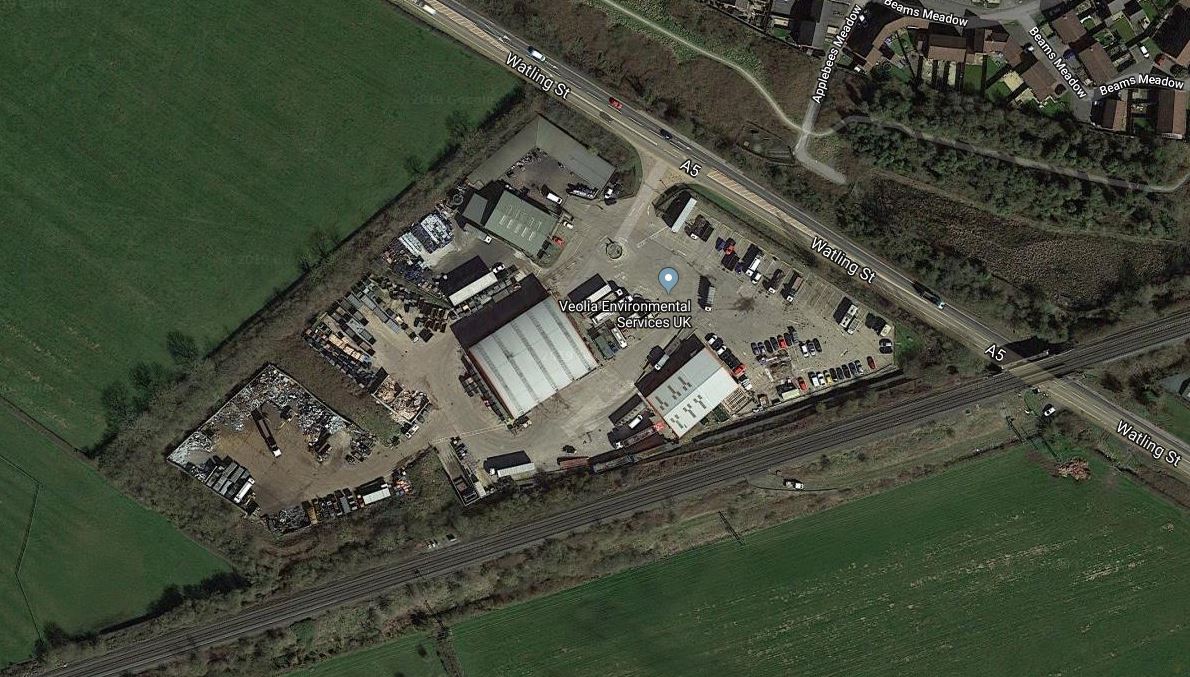
This must surely be one of the best sites to build a new Parkway station in the UK.
- The triangular site is a waste transfer station operated by Veolia Environmental Services UK.
- It has a direct connection to the A5, which could be easily improved, with perhaps a roundabout.
- Doing a crude estimate from the Google Map, I calculate that the site is about sixteen hactares, which is surely a good size for a Parkway station.
- There’s even quite a lot of new housing within walking and cycling distance.
It would also appear that the station could be built on this site without major disruption to either road or rail traffic.
Train Services
Currently the train service passing the proposed site of Nuneaton Parkway, which stops at both Hinckley and Nuneaton stations is as follows.
- An hourly CrossCountry service between Birmingham New Street and Leicester.
- In addition there are four trains per day between Birmingham New Street and Stansted Airport and/or Cambridge.
- All trains take seven minutes between Nuneaton and Hinckley.
But just under forty trains per day is not enough.
In my view, there should be a train at least every half-hour and preferably four trains per hour (tph) between Birmingham New Street and Leicester.
What About Coventry and Birmingham International?
Services between Nuneaton and Birmingham go via Coleshill Parkway and don’t call at Coventry and Birmingham International for the Airport, High Speed Two and the National Exhibition Centre.
So could there be a Birmingham New Street and Leicester service via Birmingham International, Coventry, Coventry Arena, Nuneaton, Nuneaton Parkway and Hinckley?
London, Liverpool and Manchester Via Nuneaton
Currently, the Nuneaton and London service is hourly and timed badly for connections at Nuneaton.
If it is intended that passengers will park at Nuneaton Parkway station and go to and from London, Liverpool or Manchester, the following must be arranged.
- At least four tph calling at Nuneaton, Nuneaton Parkway and Hinckley.
- At least two tph from West Midland Trains going between London Euston and Crewe calling at Nuneaton.
- Perhaps one tph from Virgin Trains calling at Nuneaton.
- A big improvement in cafes and waiting rooms at Nuneaton.
Note that times between Nuneaton and London Euston are as follows.
- West Midlands Trains – 78 minutes
- Virgin Trains – 69 minutes
Perhaps West Midlands Trains should be running trains with the same performance as Virgin?
Could Battery-Electric Trains Be Used Between Birmingham New Street And Leicester?
The route between Birmingham New Street and Leicester is not electrified, but two important stations; Birmingham New Street and Nuneaton are both wired, as is the route between Coventry and Birmingham New Street via Birmingham International.
Distances between Nuneaton and other stations, where independent power would be needed are.
- Birmingham New Street via Coleshill Parkway – 21 miles.
- Leicester – 19 miles or 38 miles return.
- Coventry – 10 miles
These distances are all feasible for battery operation.
In Porterbrook Makes Case For Battery/Electric Bi-Mode Conversion, I talked about Porterbrook’s plan to convert redundant Class 350 trains into battery-electric trains.
- They are four-car electric trains.
- They were built within the last ten years.
- They are currently used by West Midlands Trains.
In the related post, I estimated that these converted trains would have the following battery ranges for the power usages shown, if they were to be fitted with 400 kWh of batteries. I chose 400 kWh as this is the battery capacity of a Three-car Class 230 train.
- 5 kWh per vehicle mile – 20 miles
- 4 kWh per vehicle mile – 25 miles
- 3 kWh per vehicle mile – 33.3 miles
- 2 kWh per vehicle mile – 50 miles
In How Much Power Is Needed To Run A Train At 125 mph?, I calculated that.
- A Class 801 train needs 3.42 kWh per vehicle mile to maintain 125 mph.
- An IOnterCity125 train needs 2.83 kWh per vehicle mile to maintain 125 mph.
- A Class 222 train needs 4.83 kWh per vehicle mile to maintain 125 mph.
- A Class 170 train needs 3.15 kWh per vehicle mile to maintain 100 mph.
Looking at the last figure for the Class 170 train, I feel that a modern electric train must surely be as or more efficient and I’m justified to assume that a well-designed battery-electric train based on a Class 350 train, should be capable of a power usage of 3 k|Wh per vehicle mile, which would give a 33.3 mile range.
If more range was needed to handle Nuneaton and Leicester, the following could be done.
- Install a bigger battery in the trains.
- Install a charging station at Leicester.
- Extend the electrificationfrom Nuneaton for a few miles.
I very much believe that within a few years, the technology exists to have 100 mph battery electric trains running between Birmingham and Leicester, getting a quick charge en route at Nuneaton.
Conclusion
My logical thinking leads me to the conclusion, that a high-frequency service between Birmingham New Street and Leicester could grow into a Crossrail-style service.
- Six tph between Birmingham New Street and :Leicester.
- Services split between Birmingham New Street and Nuneaton, with some trains going via Coleshill and others via Coventry and Birmingham International.
- There could be extensions from Coventry to Leamington and Birmingham to Wolverhampton and Bromsgrove.
- Centred on Nuneaton Parkway.
- Possibly run by battery-electric trains.
Although the Crossrail branding is possibly overused these days.

