Class 158/159 Bi-Modes?
In the March 2018 Edition of Modern Railways, there is a short news item, which is entitled Bi-Mode Study For SWR DMUs.
The Class 158 and Class 159 diesel multiple units used by South Western Railway are diesel-hydraulic units.
Under their franchise aggreement, South Western Railway, agreed to perform a study, to see if the multiple units could be converted from diesel-hydraulic to diesel-electric transmission.
If this is successful, then the plan would be to fit a third-rail capability to the trains, so they could use the electrification between Basingstoke and Waterloo on services to Salisbury and Exeter.
Could the conversion also raise the operating speed of the trains from their current 90 mph to a more timetable-friendly 100 mph?
It looks like it could be a feasible , especially as the article states they might re-use redundant modern traction equipment from Class 455 trains, which are due for replacement.
Disruptive Innovation From Edinburgh
In The Future Of Diesel Trains, I talked about work being done in Edinburgh, by a company called Artemis Intelligent Power, to improve the efficiency of diesel-hydraulic trains.
This is an extract from the original post.
Artemis Intelligent Power has a page about Rail applications on their web-site.
This is the introductory paragraphs to their work.
Whilst electrification has enabled the de-carbonisation of much of the UK’s rail sector, the high capital costs in electrifying new lines means that much of Britain (and the world’s) railways will continue to rely on diesel.
In 2010, Artemis completed a study with First ScotRail which showed that between 64 and 73 percent of a train’s energy is lost through braking and transmission.
In response to this, Artemis began a number of initiatives to demonstrate the significant benefits which digital hydraulics can bring to diesel powered rail vehicles.
Two projects are detailed.
The first is the fitting of a more efficient hydraulic unit, that is described in the Rail Technology Magazine article.
Under a heading of Faster Acceleration, Reduced Consumption, there is a technical drawing with a caption of The Artemis Railcar.
This is said.
We are also working with JCB and Chiltern Railways on a project funded by the RSSB to reduce fuel consumption and improve engine performance by combining highly efficient hydraulic transmission with on board energy storage in the form of hydraulic accumulators, which store energy during braking for reuse during acceleration.
Note.
- The use of hydraulic accumulators to provide regenerative braking.
- The involvement of JCB, whose construction equipment features a lot of hydraulics.
- The involvement of Chiltern Railways, who like their parent company, Deutsche Bahn, have a lot of diesel-hydraulic multiple units and locomotives.
The article goes on to detail, how a test railcar will be running before the end of 2017.
I wonder if Artemis Intelligent Power have ideas for improving the efficiency and creating bi-modes of Class 158 and Class 159 trains?
Could they for instance produce a highly-efficient electrically-driven hydraulic pump, that could be powered by the third-rail electrification, where it is available?
If they can, the advantages of this approach include.
- The ability to swap from diesel to electric power as required.
- Regenerative braking could be made available.
- The trains would still use diesel-hydraulic transmission.
It must surely, be at a lower cost.
Electrification At Bromsgrove – 26th December 2017
These pictures show the electrification works at Bromsgrove station and up and down the Lickey Incline.


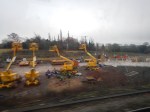
Nearly all the gantries seem to have been erected and much of the wiring seem to have been added.
It would appear that there is every chance that Bromsgrove will be able to run an electric service on Birmingham’s Cross-City Line in May 2018.
Onward From Bromsgrove With Electric Trains
It is worthwhile to look at the options for taking electric trains onward from Bromsgrove station.
The distances to and from Bromsgrove are as possible.
- Birmingham – 25 miles – Electrified
- Worcester – 16 miles – Not Electrified
- Hereford – 42 miles – Not Electrified
West Midlands Trains‘ fleet of four-car diesel CAF Civity trains would handle Birmingham to Hereford with ease.
Abellio, who are a partner in West Midlands Trains, have ordered Stadler bi-mode Class 755 trains for Greater Anglia.
These trains are ideal for routes like Norwich to Stansted and Cambridge to Ipswich, but they would also be efficient on the Birmingham to Hereford route.
So perhaps we might see bi-mode trains or trains with batteries on suburban routes from Birmingham.
I doubt a battery train could go further than Worcester.
The Lickey Incline
Electrifying from Birmingham to Bromsgrove means that the steep Lickey Incline will be included in the works.
Once the Lickey Incline is electrified, I would think it more likely that bi-mode trains could be seen on the routes to Hereford and Worcester.
Hitachi Battery Trains On The Great Western Railway
The slow pace of the electrification on the Great Western Main Line has become a big stick with which to beat Network Rail.
But are rolling stock engineers going to pull Network Rail out of their hole?
On page 79 of the January 2018 Edition of Modern Railways, Nick Hughes, who is the Sales Director of Hitachi Rail Europe outlines how the manufacturer is embracing the development of battery technology.
He is remarkably open.
I discuss what he says in detail in Hitachi’s Thoughts On Battery Trains.
But here’s an extract.
Nick Hughes follows his description of the DENCHA; a Japanese battery train, with this prediction.
I can picture a future when these sorts of trains are carrying out similar types of journeys in the UK, perhaps by installing battery technology in our Class 395s to connect to Hastings via the non-electrified Marshlink Line from Ashford for example.
This would massively slice the journey time and heklp overcome the issue of electrification and infrastructure cases not stacking up. There are a large number of similar routes like this all across the country.
It is a prediction, with which I could agree.
I conclude the post with this conclusion.
It is the most positive article about battery trains, that I have read so far!
As it comes direct from one of the train manufacturers in a respected journal, I would rate it high on quality reporting.
Hitachi Battery Train Technology And Their UK-Built Trains
The section without electrification on the Marshlink Line between Ashford International and Ore stations has the following characteristics.
- It is under twenty-five miles long.
- It is a mixture of double and single-track railway.
- It has nine stations.
- It has a sixty mph operating speed.
As the line is across the flat terrain of Romney Marsh, I don’t think that the power requirements would be excessive.
In the Modern Railway article, Nick Hughes suggests that battery technology could be installed in Class 395 trains.
The Class 395 train is part of a family of trains, Hitachi calls A-trains. The family includes.
- Class 800 trains as ordered by GWR and Virgin Trains East Coast.
- Class 801 trains as ordered by GWR and Virgin Trains East Coast
- Class 802 trains as ordered by GWR, Hull Trains and TransPennine Express
- Class 385 trains as ordered by ScotRail.
In Japan, another member of the family is the BEC819, which is the DENCHA, that is mentioned in the Modern Railways article.
As a time-expired electrical engineer, I would think, that if Hitachi’s engineers have done their jobs to a reasonable standard, that it would not be impossible to fit batteries to all of the A-train family of trains, which would include all train types, built at Newton Aycliffe for the UK.
In Japan the DENCHAs run on the Chikuhō Main Line, which has three sections.
- Wakamatsu Line – Wakamatsu–Orio, 10.8 km
- Fukuhoku Yutaka Line – Orio–Keisen, 34.5 km
- Haruda Line – Keisen–Haruda, 20.8 km
Only the middle section is electrified.
It looks to me, that the Japanese have chosen a very simple route, where they can run on electrification for a lot of the way and just use batteries at each end.
Bombardier used a similar low-risk test in their BEMU Trial with a Class 379 train in 2015.
So How Will Battery Trains Be used On the Great Western?
On the Great Western Main Line, all long distance trains and some shorter-distance ones will be Class 80x trains.
The size of battery in the DENCHA can be estimated using a rule, given by Ian Walmsley.
In an article in the October 2017 Edition of Modern Railways, which is entitled Celling England By The Pound, Ian Walmsley says this in relation to trains running on the Uckfield Branch.
A modern EMU needs between 3 and 5 kWh per vehicle mile for this sort of service.
So the energy needed to power the DENCHA, which is a two-car battery train on the just under twenty miles without electrification of the Chikuhō Main Line in a one way trip would be between 112 and 187 kWh.
A Battery-Powered Class 801 Train
The Class 801 train is Hitachi’s all-electric train, of which Great Western Railway have ordered thirty-six of the closely-related five-car Class 800 train and twenty-one of the nine-car units.
The difference between the two classes of train, is only the number of generator units fitted.
- Trains can be converted from Class 800 to Class 801 by removing generator units.
- Bi-mode Class 800 trains have a generator unit for each powered car.
- The all-electric Class 801 train has a single generator unit, in case of electrical power failure.
- When trains couple and uncouple, the train’s computer system determines the formation of the new train and drives and manages the train accordingly.
If I was designing the train, I would design a battery module, that replaced a generator unit
This leads me to think, that a five-car Class 801 train, could have one generator unit and up to four battery modules.
- The computer would decide what it’s got and control the train accordingly.
- The generator unit and battery power could be used together to accelerate the train or at other times where high power is needed.
- If the batteries failed, the generator unit would limp the train to a safe place.
- The number of battery units would depend on the needs of the route.
It would be a true tri-mode train; electric, diesel and battery.
I will now look at some routes, that could see possible applications of a battery version of Class 80x trains.
Cardiff To Swansea
I’ll start with the most controversial and political of the cutbacks in electrification.
At present plans exist to take the electrification on the Great Western as far as Cardiff Central station, by the end of 2018.
The distance between Cardiff Central and Swansea stations is forty-six miles, so applying the Ian Walmsley formula and assuming the train is five-cars, we have an energy usage for a one-way trip between the two cities of between 690 and 1150 kWh.
As the Class 80x trains are a modern efficient design, I suspect that a figure towards the lower end of the range will apply.
But various techniques can be used to stretch the range of the train on battery power.
- From London to Cardiff, the line will be fully-electrified, so on arrival in the Welsh capital, the batteries could be fully charged.
- The electrification can be continued for a few miles past Cardiff Central station, so that acceleration to line speed can be achieved using overhead wires.
- Electrification could also be installed on the short stretch of track between Swansea station and the South Wales Main Line.
- There are three stops between Cardiff and Swansea and regenerative braking can be used to charge the batteries.
- The single generator unit could be used to help accelerate the train if necessary.
- There are only two tph on the route, so efficient driving and signalling could probably smooth the path and save energy.
- Less necessary equipment can be switched off, when running on batteries.
Note. that the power/weight and power/size ratios of batteries will also increase, as engineers find better ways to build batteries.
The trains would need to be charged at Swansea, but Hitachi are building a depot in the city, which is shown in these pictures.


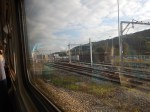
It looks like they are electrifying the depot.
Surely, enough electrification can be put up at Swansea to charge the trains and help them back to the South Wales Main Line..
The mathematics show what is possible.
Suppose the following.
- Hitachi can reduce the train’s average energy consumption to 2 kWh per carriage-mile, when running on battery power.
- Electrification at Cardiff and Swansea reduces the length of battery use to forty miles.
This would reduce the battery size needed to 400 kWh, which could mean that on a five-car train with four battery modules, each battery module would be just 100 kWh. This compares well with the 75 kWh battery in a New Routemaster bus.
Will it happen?
We are probably not talking about any serious risk to passengers, as the worst that can happen to any train, is that it breaks down or runs out of power in the middle of nowhere. But then using the single generator unit, the train will limp to the nearest station.
But think of all the wonderful publicity for Hitachi and everybody involved, if the world’s first battery high speed train, runs twice an hour between Paddington and Swansea.
Surely, that is an example of the Can-Do attitude of Isambard Kingdom Brunel?
Paddington To Oxford
The route between Paddington and Oxford stations is electrified as far as Didcot Parkway station.
The distance between Didcot Parkway and Oxford stations is about ten miles, so applying the Ian Walmsley formula and assuming the train is five-cars, we have an energy usage for the return trip to Oxford from Didcot of between 300 and 500 kWh.
If the five-car train has one generator unit,four battery modules and has an energy usage to the low end, then each battery module would need to handle under 100 kWh.
There are plans to develop a South-facing bay platform at Oxford station and to save wasting energy reversing the train by running up and down to sidings North of the station, I suspect that this platform must be built before battery trains can be introduced to Oxford.
If it’s not, the train could use the diesel generator to change platforms.
The platform could also be fitted with a system to charge the battery during turnround.
Paddington To Bedwyn
The route between Paddington and Bedwyn is electrified as far as Reading station, but there are plans to electrify as far as Newbury station.
The distance between Newbury and Bedwyn stations is about thirteen miles, so applying the Ian Walmsley formula and assuming the train is five-cars, we have an energy usage for the return trip to Bedwyn from Newbury of between 390 and 520 kWh.
As with Paddington to Oxford, the required battery size wouldn’t be excessive.
Paddington To Henley-on-Thames
The route between Paddington and Henley-on-Thames station is probably one of those routes, where electric trains must be run for political reasons.
The Henley Branch Line is only four miles long.
It would probably only require one battery module and would be a superb test route for the new train.
Paddington To Weston-super-Mare
Some Paddington to Bristol trains extend to Weston-super-Mare station.
Weston-super-Mare to the soon-to-be-electrified Bristol Temple Meads station is less than twenty miles, so if Swansea can be reached on battery power, then I’m certain that Weston can be reached in a similar way.
Other Routes
Most of the other routes don’t have enough electrification to benefit from trains with a battery capability.
One possibility though is Paddington to Cheltenham and Gloucester along the Golden Valley Line. The length of the section without electrification is forty-two miles, but unless a means to charge the train quickly at Cheltenham station is found, it is probably not feasible.
It could be possible though to create a real tri-mode train with a mix of diesel generator units and battery modules.
This train might have the following characteristics.
- Five cars.
- A mix of generator units and battery modules.
- Enough generator units to power the train on the stiffest lines without electrification.
- Ability to collect power from 25 KVAC overhead electrification
- Ability to collect power from 750 VDC third-rail electrification.
Note.
- The battery modules would be used for regenerative braking in all power modes.
- The ability to use third rail electrification would be useful when running to Brighton, Exeter, Portsmouth and Weymouth.
The train could also have a sophisticated computer system, that would choose power source according to route,timetable, train loading, traffic conditions and battery energy level.
The objective would be to run routes like Paddington to Cheltenham, Gloucester to Weymouth and Cardiff to Portsmouth Harbour, as efficiently as possible.
Collateral Advantages
Several of the routes out of Paddington could easily be worked using bi-mode Class 800 trains.
- But using battery trains to places like Bedwyn, Henley, Oxford and Weston-super-Mare is obviously better for the environment and probably for ticket sales too!
- If places like Bedwyn, Henley and Oxford are served by Class 801 trains with a battery option, it could mean that they could just join the throng of 125 mph trains going in and out of London.
- Battery trains would save money on electrification.
I also suspect, that the running costs of a battery train are less than those of using a bi-mode or diesel trains.
Conclusion
Hitachi seem to have the technology, whereby their A-train family can be fitted with batteries, as they have done it in Japan and their Sales Director in the UK, has said it can be done on a Class 395 train to use the Marshlink Line.
We may not see Hitachi trains using batteries for a couple of years, but it certainly isn’t fantasy.
Great Western Railway certainly need them!
Could Bombardier Build A Hydrogen-Powered Aventra?
In Is A Bi-Mode Aventra A Silly Idea?, I looked at putting a diesel power-pack in a Class 720 train, which are Aventras, that have been ordered by Greater Anglia. I said this.
Where Would You Put The Power Pack On An Aventra?
Although space has been left in one of the pair of power cars for energy storage, as was stated in the Global Rail News article, I will assume it is probably not large enough for both energy storage and a power pack.
So perhaps one solution would be to fit a well-designed power pack in the third of the middle cars, which would then be connected to the power bus to drive the train and charge the battery.
This is all rather similar to the Porterbrook-inspired and Derby-designed Class 769 train, where redundant Class 319 trains are being converted to bi-modes.
I also suggested that a hydrogen power-pack could be used.
After writing Is Hydrogen A Viable Fuel For Rail Applications?, I feel that a similar hydrogen power pack from Ballard could be used.
UK Rolling Stock Strategy: Diesel, Bi-mode and Fuel Cell-Powered Trains
The title of this post is the same as that on an article in Global Rail News.
I will not repeat myself here, but I laid down my thoughts in The Intelligent Multi-Mode Train And Affordable Electrification.
In that post, I said that an Intelligent Multi-Mode Train would have these characteristics.
- Electric drive with regenerative braking.
- Diesel or hydrogen power-pack.
- Onboard energy storage to handle the energy generated by braking.
- 25 KVAC and/or 750 VDC operation.
- Automatic pantograph and third-rail shoe deployment.
- Automatic power source selection.
- The train would be designed for low energy use.
- Driver assistance system, so the train was driven safely, economically and to the timetable.
Note the amount of automation to ease the workload for the driver and run the train efficiently.
After discussing affordable electrification, I came to the following conclusion.
There are a very large number of techniques that can enable a multi-mode train to roam freely over large parts of the UK.
It is also a team effort, with every design element of the train, track, signalling and stations contributing to an efficient low-energy train, that is not too heavy.
The Intelligent Multi-Mode Train And Affordable Electrification
Some would say we are at a crisis point in electrification, but I would prefer to call it a crossroads, where new techniques and clever automation will bring the benefits of electric traction to many more rail lines in the UK.
Lines That Need Electric Passenger Services
I could have said lines that need to be electrified, but that is probably a different question, as some lines like the Felixstowe Branch Line need to be electrified for freight purposes, but electric passenger services can be provided without full electrification.
Lines include.
- Ashford to Hastings.
- Borderlands Line.
- Caldervale Line from Preston to Leeds
- Camp Hill Line across Birmingham.
- Huddersfield Line from Manchester to Leeds via Huddersfield.
- Midland Main Line from Kettering to Derby, Nottingham and Sheffield.
- Uckfield Branch Line
There are many others, too numerous to mention.
What Is A Multi-Mode Train?
If a bi-mode train is both electric and diesel-powered, a multi-mode train will have at least three ways of moving.
The Intelligent Multi-Mode Train
The intelligent multi-mode train in its simplest form would be an electric train with these characteristics.
- Electric drive with regenerative braking.
- Diesel or hydrogen power-pack.
- Onboard energy storage to handle the energy generated by braking.
- 25 KVAC and/or 750 VDC operation.
- Automatic pantograph and third-rail shoe deployment.
- Automatic power source selection.
- The train would be designed for low energy use.
- Driver assistance system, so the train was driven safely, economically and to the timetable.
Note the amount of automation to ease the workload for the driver and run the train efficiently.
Onboard Energy Storage
I am sure that both the current Hitachi and Bombardier trains have been designed around energy storage. Certainly, there are several quotes from Bombardier executives that say so.
The first application will be to handle regenerative braking, so that energy can be stored on the train, rather than returned to the electrification.
Onboard energy storage is also important in modern electric trains for other reasons.
- Features like remote train wake-up can be enabled.
- Moving the train short distances in case of power failure.
- When Bombardier started developing the use of onboard energy storage, they stated that one reason was to reduce electrification in depots for reasons of safety.
Onboard energy storage will improve in several ways.
- The energy density will get higher, meaning lighter and smaller storage.
- The energy storage capacity will get higher, meaning greater range.
- The cost of energy storage will become more affordable.
- Energy storage will last longer before needing replacement.
- CAF use a supercapacitor to get fast response and a lithium-ion battery for good capacity.
We underestimate how energy storage will improve over the next few years at our peril.
Automatic Onboard Storage Management
The use of the energy storage will also be optimised for route, passenger load, performance and battery life by the trains automatic power source selection system.
Diesel Power Pack
A conventional diesel power pack to drive the train on lines without electrification.
As the train is electrically-driven, when running under diesel, regenerative braking can still be used, with the generated energy being stored onboard the train.
Hydrogen Power Pack
I believe that hydrogen could be used to generate the electricity required, as it is in some buses.
Operation Of The Multi-Mode Train
I’ve read somewhere that Greater Anglia intend to run their Class 755 trains using electricity, where electrification is available, even if it only for a short distance. This is enabled, by the ability of the train to be able to raise and lower the pantograph quickly and at line speed.
The train’s automatic power source selection will choose the most appropriate power source, from perhaps electrification, stored energy and diesel, based on route, load and the timetable.
Do Any Multi-Mode Trains Exist?
The nearest is probably the Class 800 train, which I believe uses onboard energy storage to handle regenerative braking, as I outlined in Do Class 800/801/802 Trains Use Batteries For Regenerative Braking?.
This article in RailNews is entitled Greater Anglia unveils the future with Stadler mock-up and says this.
The bi-mode Class 755s will offer three or four passenger vehicles, but will also include a short ‘power pack’ car to generate electricity when the trains are not under the wires. This vehicle will include a central aisle so that the cars on either side are not isolated. Greater Anglia said there are no plans to include batteries as a secondary back-up.
So does that mean that Class 755 trains don’t use onboard energy storage to handle regenerative braking?
At the present time, there is no bi-mode Bombardier Aventra.
But in Is A Bi-Mode Aventra A Silly Idea?, I link to an article on Christian Wolmar’s web site, which says that Bombardier are looking into a 125 mph bi-mode Aventra.
My technical brochure for the new Class 769 train, states that onboard energy storage is a possibility for that rebuild of a Class 319 train.
I don’t think it is a wild claim to say that within the next few years, a train will be launched that can run on electric, diesel and onboard stored power.
The Pause Of Electrification
Obviously, for many reasons, electrification of all railway lines is an ideal.
But there are problems.
- Some object to electrification gantries marching across the countryside and through historic stations.
- Network Rail seem to have a knack of delivering electrification late and over budget.
- The cost of raising bridges and other structures can make electrification very bad value for money.
It is for these and other reasons, that the Government is having second thoughts about the direction of electrification.
Is There A Plan?
I ask this question deliberately, as nothing has been disclosed.
But I suspect that not for the first time, the rolling stock engineers and designers seem to be getting the permanent way and electrification engineers out of trouble.
As far as anybody knows, the plan seems to be to do no more electrification and use bi-mode trains that can run under both electrification and diesel-power to provide new and improved services.
Use Of Bi-Mode Trains
Taking a Liverpool to Newcastle service, this would use the electrification to Manchester, around Leeds and on the East Coast Main Line, with diesel power on the unelectrified sections.
If we take a modern bi-mode train like a Class 800 train, some features of the train will help on this route.
- The pantograph can raise or lower as required at line speed.
- It is probably efficient to use the pantograph for short sections of electrification.
- Whether to use the pantograph is probably or certainly should be controlled automatically.
On this route the bi-mode will also be a great help on the fragile East Coast Main Line electrification.
Improving Bi-Mode Train Efficiency
Bi-mode trains may seem to be a solution.
However, as an electrical engineer, I believe that what we have at the moment is rather primitive compared to how the current crop of trains will develop.
Onboard Energy Storage
I said this earlier.
- I am sure that both the current Hitachi and Bombardier trains have been designed to use energy storage.
- CAF use a supercapacitor to get fast response and a lithium-ion battery for good capacity.
This is an extract from the the Wikipedia entry for supercapacitor.
They typically store 10 to 100 times more energy per unit volume or mass than electrolytic capacitors, can accept and deliver charge much faster than batteries, and tolerate many more charge and discharge cycles than rechargeable batteries.
Supercapacitors are used in applications requiring many rapid charge/discharge cycles rather than long term compact energy storage: within cars, buses, trains, cranes and elevators, where they are used for regenerative braking.
Pairing them with a traditional lithium-ion battery seems to be good engineering.
The most common large lithium-ion batteries in public transport use are those in hybrid buses. In London, there are a thousand New Routemaster buses each with a 75 kWh battery.
In the past, there has have been problems with the batteries on New Routemasters and other hybrid buses, but things have improved and I suspect there is a mountain of knowledge both in the UK and worldwide on how to build a reliable, affordable and safe lithium-ion battery in the 75-100 kWh range.
As on the New Routemaster the battery is squeezed under the stairs, these batteries are not massive and I suspect one or more could easily be fitted underneath the average passenger train.
Look at this picture of a Class 321 train.
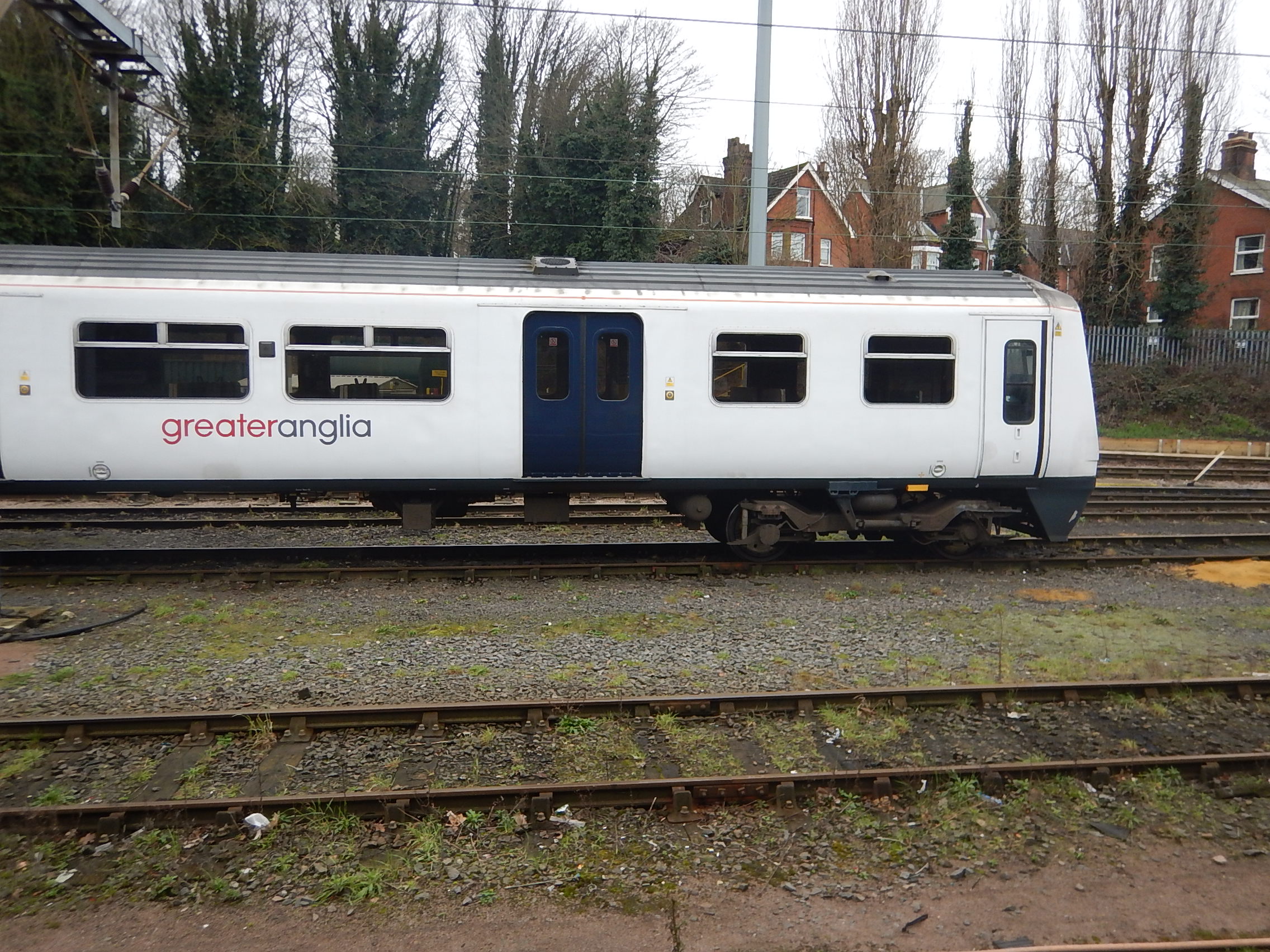
The space underneath is typical of many electrical multiple units.
How Far Could A Train Travel On Stored Energy?
In an article in the October 2017 Edition of Modern Railways, which is entitled Celling England By The Pound, Ian Walmsley says this in relation to trains running on the Uckfield Branch.
A modern EMU needs between 3 and 5 kWh per vehicle mile for this sort of service.
So if we take a battery from a New Routemaster bus, which is rated at 75 kWh, this would propel a five-car electric multiple unit between three and five miles.
Suppose though you put a battery of this size in every car of the train. This may seem expensive, but a typical car in a multiple unit and a double-deck bus carry about the same number of passengers.
A battery in each car would give advantages, especially in a Bombardier Aventra.
- Most cars in an appear to be powered, so each traction motor would be close to a battery, which must reduce electrical transmission losses and ease regenerative braking.
- Each car would have its own power supply, in case the main supply failed.
- The weight of the batteries is spread along the train.
If you take any Aventra, with a 75 kWh battery in each car, using Ian’s figures, they would be able to run between fifteen and twenty-five miles on battery power alone.
Quotes by Bombardier executives of a fifty mile range don’t look so fanciful.
What Onboard Energy Storage Capacity Would Be Needed For Fifty Miles?
This article in Rail Engineer, which is entitled An Exciting New Aventra, quotes Jon Shaw of Bombardier on onboard energy storage.
As part of these discussions, another need was identified. Aventra will be an electric train, but how would it serve stations set off the electrified network? Would a diesel version be needed as well?
So plans were made for an Aventra that could run away from the wires, using batteries or other forms of energy storage. “We call it an independently powered EMU, but it’s effectively an EMU that you could put the pantograph down and it will run on the energy storage to a point say 50 miles away. There it can recharge by putting the pantograph back up briefly in a terminus before it comes back.
What onboard energy storage capacity would be needed for the quoted fifty miles?
I will use these parameters.
- Ian Walmsley said a modern EMU consumes between 3 and 5 kWh for each vehicle mile.
- All vehicles are powered and there is one battery per vehicle.
This will result in the following battery sizes for different EMU consumption rates.
- 3 kWh/vehicle-mile – 150 kWh
- 4 kWh/vehicle-mile – 200 kWh
- 5 kWh/vehicle-mile – 250 kWh
These figures show that to get a smaller size of battery, you need a very energy-efficient train. At least lighting, air-conditioning and other electrical equipment is getting more efficient.
The 379 IPEMU Experiment On The Mayflower Line
In 2015, I rode the battery-powered Class 379 train on the 11.2 mile long Mayflower Line.
I was told by the engineer monitoring the train on a laptop, that they generally went to Harwich using the overhead electrification, charging the battery and then returned on battery power.
Ian Walmsley in his Modern Railways article says that the batteries on that train had a capacity of 500 kWh.
This works out at just over 11 kWh per vehicle per mile.
Considering this was an experiment conducted on a scheduled passenger service, it fits well with the conssumption quoted in Ian Walmsley’s article.
Crossrail’s Emergency Power
If you look at Crossrail’s Class 345 trains, they are nine cars, with a formation of
DMSO+PMSO+MSO+MSO+TSO+MSO+MSO+PMSO+DMSO
All the Ms mean that eight cars are motored.
Suppose each of the motored cars have a battery of 75 kWh.
- This means a total installed battery size of 600 kWh.
- Suppose the nine-car train needs Ian’s Walmsley’s high value of 5 kWh per vehicle mile to proceed through Crossrail.
- Thus 45 kWh will be needed to move the train for a mile.
- Dividing this into the battery capacity gives the range of 13.3 miles.
If this were Crossrail’s emergency range on stored energy, it would be more than enough to move the train to the next station or place of safety in case of a complete power failure.
Trains Suitable For Onboard Energy Storage
I have a feeling that for any train to run efficiently with batteries, there needs to be a lot of powered axles and batteries distributed along the train.
Aventras certainly have a lot of powered axles and I think Hitachi trains are similar.
Perhaps this explains, why after the successful trial of battery technology on a Class 379 train, it has not been retrofitted to any other Electrostars.
There might not be enough powered axles!
Topping Up The Onboard Energy Storage
There are three main ways to top up the onboard energy storage.
- From regenerative braking.
- From the diesel or hydrogen powerpack.
- From the electrification, where it is available.
The latter is probably the most efficient and is ideal, where a route is partly electrified.
Affordable Electrification
Although the Government has said that there will be no more electrification, I think there will be selective affordable electrification to improve the efficiency of multi-mode trains.
Why Is Electrification Often Late And Over Budget?
The reasons I have found or been told are varied.
- Electrification seems regularly to hit unexpected infrastructure like sewers and cables on older routes.
- There have been examples of poor engineering.
- There is a large amount of Victorian infrastructure like bridges and stations that need to be rebuilt.
- There is a certain amount of opposition from the Heritage lobby.
- Connecting the electrification to the National Grid can be a large cost.
My experience in Project Management, also leads me to believe that although Network Rail seems to plan large station and track projects well, they tend to get in rather a mess with large electrification projects.
Electrification Of New Track
It may only be a personal feeling, but where new track has been laid and it is electrified Network Rail don’t seem to have the same level of problems.
These projects are generally smaller, but also I suspect the track-bed has been well-surveyed and well-built, to give a good foundation for the electrification.
It was interesting to note a few weeks ago at Blackpool, where they are electrifying the line, that Network Rail appeared to be relaying all of the track as well.
I know they were also re-signalling the area, but have Network Rail decided that the best way to electrify the line was a complete rebuild?
Short Lengths Of New Electrification
Short lengths of new electrification could make all the difference on routes using multi-mode trains with onboard energy storage.
As a simple example, I’ll take the Felixstowe Branch Line, that I know well. Ipswwich to Felixstowe is about sixteen miles, which is probably too far for a train running on onboard energy storage. But there are places, where short lengths of electrification would be beneficial to both the Class 755 trains and trains with onboard energy storage.
- Ipswich to Westerfield
- On the section of double-track to be built in 2019.
- Felixstowe station
There is also the large number of diesel-hauled freight trains passing through the area, quite a few of which change to and from electric haulage at Ipswich.
So would some selective short lengths of electrification enable the route to be run by trains using onboard energy storage?
Electrification Of Tunnels
Over the last few years, there has been some very successful electrification of tunnels like the seven kilometre long Severn Tunnel. This is said about the problems of electrification in Wikipedia.
As part of the 21st-century modernisation of the Great Western Main Line, the tunnel was prepared for electrification. It has good clearances and was relatively easy to electrify, although due to its age, the seepage of water from above in some areas provided an engineering challenge. The options of using either normal tunnel electrification equipment or a covered solid beam technology were considered and the decision was made to use a solid beam. Over the length of the tunnel, an aluminium conductor rail holds the copper cable, which is not under tension. A six-week closure of the tunnel started on 12 September 2016. During that time, alternative means of travel were either a longer train journey via Gloucester, or a bus service between Severn Tunnel Junction and Bristol Parkway stations. Also during that time, and possibly later, there were direct flights between Cardiff and London City Airport. The tunnel was reopened on 22 October 2016.
It appears to have been a challenging but successful project.
This type of solid beam electrification has been used successfully by Crossrail and Chris Gibb has suggested using overhead beam to electrify the three tunnels on the Uckfield Branch Line.
In the North of England, there are quite a few long tunnels.
Could these become islands of electrification to both speed the trains and charge the onbosrd energy storage?
Third-Rail Electrification Of Stations
Ian Walmsley in his Modern Railways article proposes using third rail electrification at Uckfield station to charge the onboard energy storage of the trains. He also says this.
This would need only one substation and the third rail could energise only when there is a train on it, like a Bordeaux tram, hence minimal safety risk.
There needs to be some serious thought about how you create a safe, affordable installation for a station.
I also feel there is no need to limit the use of short lengths of third-rail electrification to terminal stations. On the Uckfield Branch, some stations are very rural, but others are in centres of population and/or industry, where electricity to power a short length of third-rail might be available.
Overhead Beams In Stations
This picture shows the Seville trams, which use an overhead beam at stops to charge their onboard energy storage.
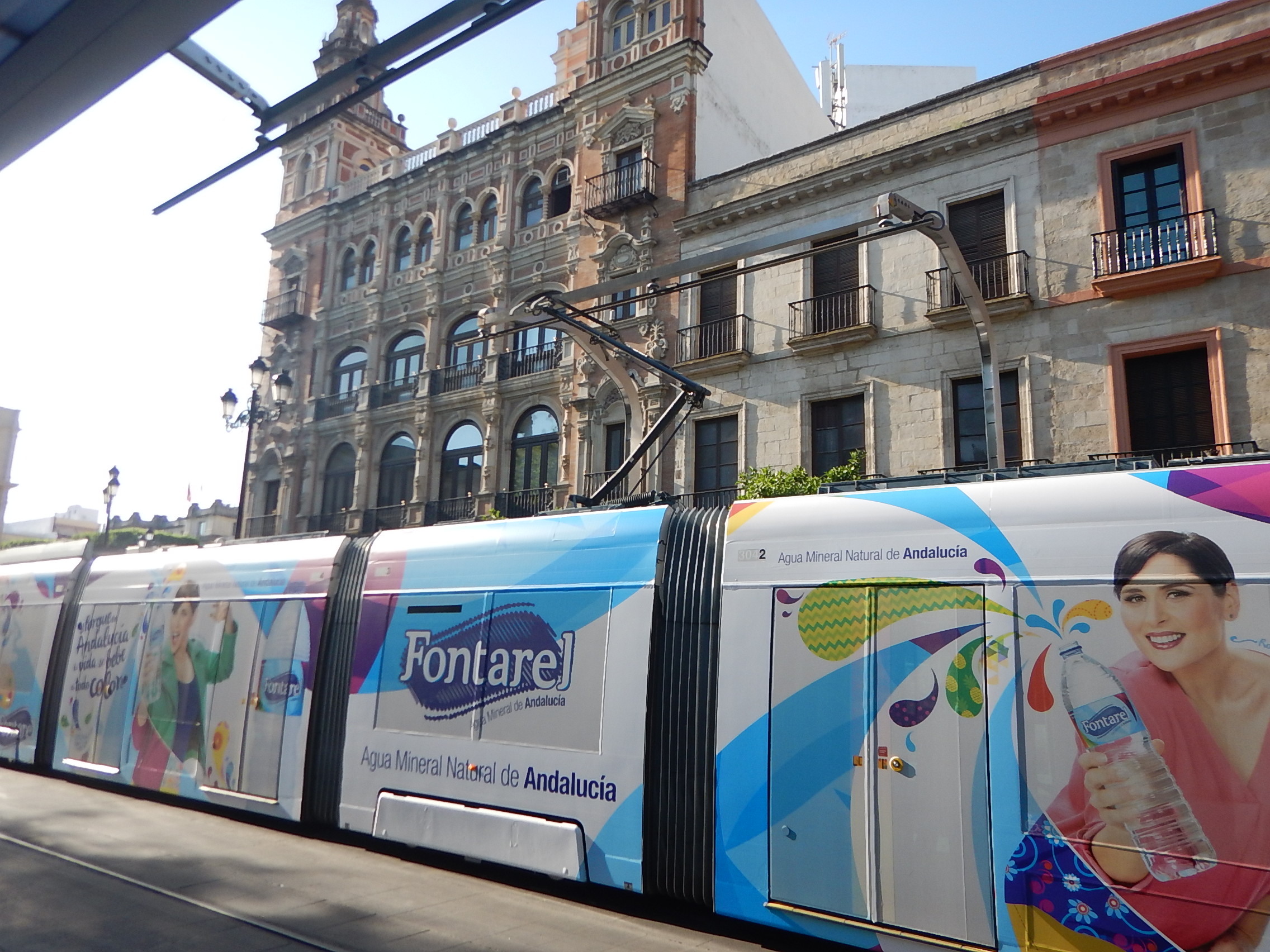
Surely devices like these can be used in selective stations, like Hull, Scarborough and Uckfield.
Third-Rail Electrification On Bridges And Viaducts
Some bridges and high rail viaducts like the Chappel Viaduct on the Gainsborough Line, present unique electrification problems.
- It is Grade II Listed.
- Would overhead electrification gantries be welcomed by the heritage lobby?
- It is 23 metres high.
- Would this height present severe Health and Safety problems for work on the line?
- The viaduct is 320 metres long.
Could structures like this be electrified using third-rail methods?
- The technology is proven.
- As in stations, it could only be switched on when needed.
- The electrification would not be generally visible.
The only minor disadvantage is that dual-voltage trains would be needed. But most trains destined for the UK market are designed to work on both systems.
Getting Power To Short Lengths Of Electrification
One thing that is probably needed is innovation in powering these short sections of electrification.
Conclusion
There are a very large number of techniques that can enable a multi-mode train to roam freely over large parts of the UK.
It is also a team effort, with every design element of the train, track, signalling and stations contributing to an efficient low-energy train, that is not too heavy.
?
Is A Bi-Mode Aventra A Silly Idea?
In How Long Will It Take Bombardier To Fulfil Their Aventra Orders?, when discussing the new West Midlands Trains franchise, that has recently been awarded, I said this about the proposed eighty new carriages for the Snow Hill Lines.
As it is unlikely that the Snow Hill Lines will be electrified in the near future, could we be seeing an Aventra bi-mode for the Snow Hill Lines?
So is the bi-mode Aventra a silly idea?
The Five-Car Aventra
It looks like the formation of a five car Aventra like a Class 720 train is something like DMSLW+MS+MS1+PMS+DMSL
The codes are as follows.
- D – Driving
- L – Lavatory
- M – Motor
- S – Standard Class
- W – Wheelchair
So this means the following.
- All cars are motored for fast acceleration and smooth regenerative braking.
- As all cars are motored, there must be a heavy-duty electrical power bus running the length of the train.
- Both driving cars have a toilet.
- The wheelchair area and the fully-accessible toilet are probably together in one driving car.
- The pantograph is on one of the middle three cars.
It should also be noted that the Aventra has a slightly unusual and innovative electrical layout.
This article in Global Rail News from 2011, which is entitled Bombardier’s AVENTRA – A new era in train performance, gives some details of the Aventra’s electrical systems. This is said.
AVENTRA can run on both 25kV AC and 750V DC power – the high-efficiency transformers being another area where a heavier component was chosen because, in the long term, it’s cheaper to run. Pairs of cars will run off a common power bus with a converter on one car powering both. The other car can be fitted with power storage devices such as super-capacitors or Lithium-ion batteries if required.
This was published six years ago, so I suspect Bombardier have refined the concept
It would appear that this could be the reason, why in the document I found MS1 was used for one of the intermediate cars, as this is the car with space for the energy storage.
Do Aventras Have Batteries For Regenerative Braking?
Until I get a definitive statement from Bombardier, that they don’t, I will believe that they do for the following reasons.
- In Do Class 800/801/802 Trains Use Batteries For Regenerative Braking?, I said I would be very surprised if the answer to this question is No!
- In Class 345 Trains And Regenerative Braking, I showed that there were no giveaway electric fires on the roof to handle regenerative braking.
- Batteries would be the ideal way to drag a Class 345 train to safety in case of complete electrical failure in the Crossrail tunnel.
- The Germans, the Japanese, the Swiss and probably the Basques are experimenting with batteries to handle regenerative braking.
- Hybrid vehicles like cars and buses do it all the time.
But the main reason, is that as an Electrical Engineer, I believe it to be stupid and seriously bad design to not use some form of energy storage to handle the energy produced by regenerative braking.
Energy Storage In A Bi-Mode Train
If you look at the five-car Class 720 train, all axles are motored. This will give fast acceleration and smooth regenerative braking, which is just what both train operators and passengers want.
If a bi-mode train had energy storage, if say its speed was checked by a yellow signal, it would be able to regain line speed using the energy stored when it slowed down. So passengers wouldn’t have to endure the vibration of the diesel engine and the jerks as it started.
No competent engineer would ever design a modern bi-mode train without energy storage.
Where Would You Put The Power Pack On An Aventra?
Although space has been left in one of the pair of power cars for energy storage, as was stated in the Global Rail News article, I will assume it is probably not large enough for both energy storage and a power pack.
So perhaps one solution would be to fit a well-designed power pack in the third of the middle cars, which would then be connected to the power bus to drive the train and charge the battery.
This is all rather similar to the Porterbrook-inspired and Derby-designed Class 769 train, where redundant Class 319 trains are being converted to bi-modes.
Diesel Or Hydrogen Power Pack
Diesel will certainly work well, but London and other cities have hydrogen-powered buses.
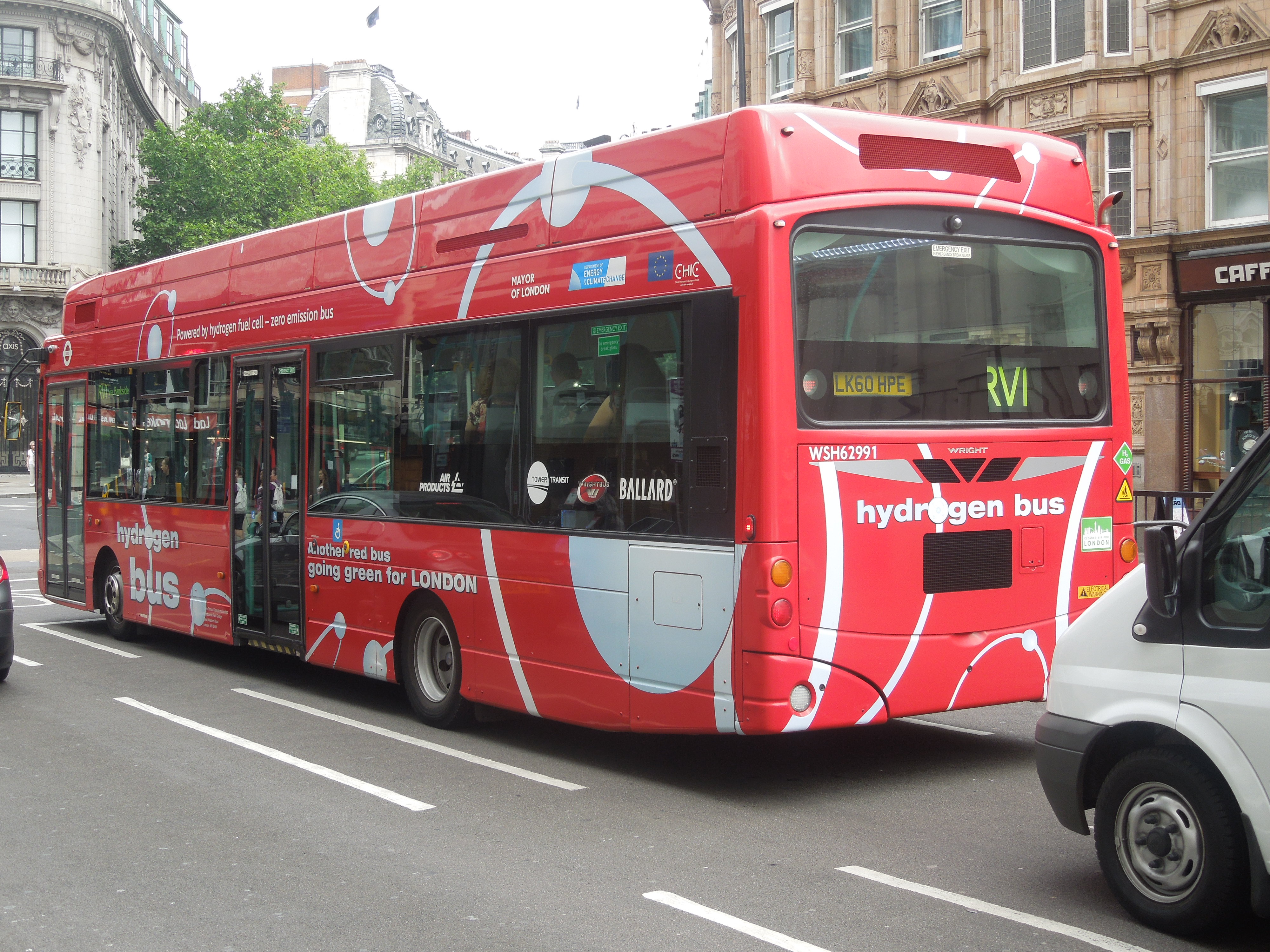
The picture is from 2013, so the technology has probably moved on. This Fuel Cell Bus section in Wikipedia gives the up-to-date picture.
Automatic Power Source Selection
Effectively, the ideal bi-mode train will be a tri-mode and will have the following power sources.
- Traditional electrification.
- On board diesel or hydrogen power.
- Energy storage, charged from the electrification or from regenerative braking.
The power source would be chosen automatically to minimise the use of both diesel/hydrogen power and electric power from the electrification.
Modern trains like an Aventra can raise and lower the pantograph automatically, so they can do this to make best use of what electrification exists to both power the train and charge the energy storage.
Techniques like these will be used to minimise the use of the diesel or hydrogen power pack.
Intermittent And Selective Electrification
On lines like the Snow Hill Lines sections could be electrified, where the engineering is easy and affordable, to with time reduce the use of unfriendly diesel or expensive hydrogen.
Strangely, one of the first places to electrify, might be the tunnels, as after the electrification of the Severn Tunnel, our engineers can probably electrify any railway tunnel.
I also don’t see why third rail electrification can’t be used in places like on top of viaducts and in well-designed station installations.
The 125 mph Bi-Mode Aventra
This article on Christian Wolmar’s web site is entitled Bombardier’s Survival Was The Right Kind Of Politics. This is said.
Bombardier is not resting on its laurels. Interestingly, the company has been watching the problems over electrification and the fact that more of Hitachi’s new trains will now be bi-mode because the wires have not been put up in time. McKeon has a team looking at whether Bombardier will go into the bi-mode market: ‘The Hitachi bi-mode trains can only go 110 mph when using diesel. Based on Aventra designs, we could build one that went 125 mph. This would help Network Rail as it would not have to electrify everywhere.’ He cites East Midlands, CrossCountry and Wales as potential users of this technology.
So Bombardier don’t think it is silly. Especially, the statement that Bombardier could build an Aventra that could do 125 mph running on diesel.
Applying, what we know about the power in the bi-mode Class 800 and Class 769 trains, which have three and two diesel power-packs respectively, I suspect that to create a five-car Aventra, that is capable of 125 mph on diesel, would need the following.
- At least three diesel power-packs.
- Regenerative braking using onboard energy storage.
- Automatic pantograph deployment.
- Automatic power source selection.
The light weight of the Aventra would be a big help.
It is my belief that energy storage is key, for the following reasons.
- Stored energy from braking at a station from 125 mph, would be used to get the train back to operating speed, without using a large amount of diesel power.
- Braking and acceleration back to operating speed, perhaps after being slowed by another train, might not need the diesel engines to be started.
- Starting a journey with an optimum amount of power in the battery might make getting to operating speed easier.
It would be a rough engineering challenge, but one I believe is possible.
Consider the routes mentioned.
East Midlands
Consider.
- 125 mph running would certainly be needed on this route.
- Battery power could be used to boost the trains to 125 mph.
- Electrification will be available between St. Pancras and Kettering.
- Electrification might be impossible between Derby and Sheffield because the Derwent Valley is a World Heritage Site.
Some form of charging might be needed at Derby, Nottingham and Sheffield.
A bi-mode train would be ideal for Norwich to Liverpool, although there’s not a great deal of electrification.
Cross Country
CrossCountry use several electrified lines on their various routes..
- York to Edinburgh
- Birmingham New Street to Manchester Piccadilly
- Bournemouth to Basingstoke
- Stansted Airport to Ely
Note that parts of some of these routes allow125 mph and Bournemouth to asingstoke is electrified using third-rail.
A dual voltage, 125 mph bi-mode train would probably fit CrossCountry’s routes well.
Wales
Except for the South Wales Main Line, there’s little electrification in Wales, but a 125 mph bi-mode train could be used on the following several partially-electrified routes.
- Carmarthen to Manchester Piccadilly.
- Holyhead to Manchester Piccadilly
- Holyhead to Liverpool via the Halton Curve.
- Birmingham to Shrewsbury.
- Swansea to Newport
Currently most of these services are served by 100 mph Class 175 trains. If nothing else, they would probably be more spacious, faster and fuel-efficient.
Conclusion
A five-car Aventra bi-mode is definitely not a silly idea.
It would be a sophisticated train with the following characteristics.
- Electric drive
- Regenerative braking.
- 25 KVAC overhead and 750 VDC third rail capability.
- Automatic pantograph deployment.
- Onboard energy storage.
- Automatic power source selection.
- Diesel or hydrogen power-pack
- 125 mph capability.
The first four are probably already in service in the Class 345 train.
.
Bi-Mode Trains And CrossCountry
The CrossCountry franchise runs trains all over the UK.
I wonder how bi-mode trains will effect their services.
These are just a few thoughts.
InterCity 125 Trains
CrossCountry have enough Class 43 locomotives and Mark 3 carriages to make-up five 2+8 InterCity 125 sets.
These trains will not meet the regulations in a couple of years, so will they be replaced or refurbished.
It is probably not an easy decision for the following reasons.
- Passengers and I suspect drivers too, love them.
- They are probably ideal for longer routes like Devon and Cornwall to Scotland
- Scotrail and Great Western Railway will be updating several trains each.
- They are forty years old.
- There may be pressure to retire the trains because of environmental problems.
- If they even wanted to acquire a few extra sets, the type retirement by other operators might help.
Left to the Marketing Department, there would only be one decision.
Class 800 Trains
Class 800 trains or more likely Class 802 trains, specified for their routes may offer advantages to CrossCountry on some of their routes.
Consider these features of Class 802 trains.
- Available in any number of cars between four and twelve.
- Designed around a flexible interior.
- Dual voltage is probably available.
- Wi-fi and power sockets.
- Hitachi have designed the trains for lower track-access charges.
Costs and the marketing advantage of new electric trains will probably decide.
Devon and Cornwall to Scotland
Consider.
- Plymouth to Edinburgh and Glasgow is an hourly service that takes just under nine hours to Edinburgh with no changes.
- One train per day goes from Plymouth to Aberdeen in eleven hours.
- A lot of the route is not electrified, but it is North of York.
- Would a Class 802 train have enough fuel capacity?
I suspect current arrangements will continue.
Southampton Central And Bournemouth To Manchester And Newcastle
Consider.
- North of Leeds, the route is electrified using 25 KVAC overhead
- South of Basingstoke, the route is electrified using 750 VDC third-rail.
- Any bi-mode train would need to be dual-voltage.
- Range should be less of a problem
A dual-voltage bi-mode Class 802 train might be ideal.
Other Routes
Most other routes only have a small proportion of running on electrified track.
Conclusion
I think it unlikely, that CrossCountry will go for a total replacement of their fleet with bi-mode trains.
But I suspect, they’re keeping a watching brief on developments in electrification and trains.
 The Anonymous Widower