Is It Illegal To Discriminate Against Diesel Black Cabs?
I probably take one or two black cabs a week.
Usually, this is from a rank at a main line station or from outside Marks & Spencer on Finsbury Pavement, when I have a lot of shopping.
A couple of days ago, I was waiting outside Moorgate station for a 21 or 141 bus to travel home, as these conveniently stop within a hundred metres of my house.
Note that I prefer the 21 bus, as its’s a New Routemaster, which are more spacious.
But as no bus seemed due and I was in a hurry, I decided to take a black cab.
So I made a deal with myself. Whichever cam first of a 21 bus or a battery electric taxi would take me home. The bus came first and I got in.
I think now, that there are more battery electric taxis on the streets, in Central London, the chances of being picked up by one are increasing significantly.
But is it illegal to discriminate, as I now appear to be doing?
I would argue, that my choice of a battery electric taxi is not environmental but selfish! These new taxis are more comfortable, spacious and quieter, making the journey experience much more pleasurable.
After all, why would you travel in a Ford or Vauxhall, when you have the comfort of a Jaguar? Especially, as the cost of both vehicles is the same!
London To Have World-First Hydrogen-Powered Double-Decker Buses
The title of this post, is the same as that of this article in the Guardian.
This is the first three paragraphs.
London will have the world’s first hydrogen-powered doubledecker buses on its streets next year, as the capital steps up attempts to tackle its polluted air.
Transport for London (TfL) has ordered 20 of the buses, which cost around £500,000 each and only emit water as exhaust.
As well as cutting polluting exhaust emissions, the buses will run on green hydrogen produced via North Kent offshore wind farms, according to TfL.
After the announcement of the Alexander Dennis hydrogen buses for Liverpool, that I wrote about in New Facility To Power Liverpool’s Buses With Hydrogen, I wondered how long it would take Wrightbus to respond?
It appears to be less than a month.
This is also said about the buses.
The buses will also feature amenities such as USB charging points, and promise a smoother, quieter ride. They will operate first on three routes in west London and to Wembley, which served over 10 million passenger journeys last year.
I will add these comments.
USB Charging Points
I’ve only ever used USB charging points three times on the move.
- On a Vivarail Class 230 train.
- On a newly-refurbished Scotrail Class 158 train.
- In a LEVC TX electric black cab.
All installations were under a few years old and it is definitely the way passenger transport is going.
London Overground’s new Class 710 trains will be fitted with USB charging points and wi-fi.
Smoother, Quieter Ride
I have ridden in the following electric or hydrogen-powered vehicles
- A battery-electric Vivarail Class 230 train
- A battery-electric Class 379 train
- Several battery-electric and hydrogen-powered buses in London.
- A hydrogen-powered Alstom Coeadia iLint train.
- An LEVCC TX electric black cab.
With the exception of the iLint train, which has a mechanical transmission, all are smooth and quiet.
So I have no reason to disbelieve this claim in The Guardian article.
Three Routes In West London
This article in Air Quality News gives more details on the routes.
The vehicles will be introduced on routes 245, 7 and N7, with people travelling to Wembley Stadium, or from west London to the West End.
- Route 7 runs between East Acton and Oxford Circus.
- Route 245 runs between Alperton Sainsburys and Golders Green station.
Both are operated by Metroline from Perivale East garage, where they appear to be the only routes served from the garage, which has a capacity of forty buses.
This Google Map shows a 3D picture of Perivale East garage.
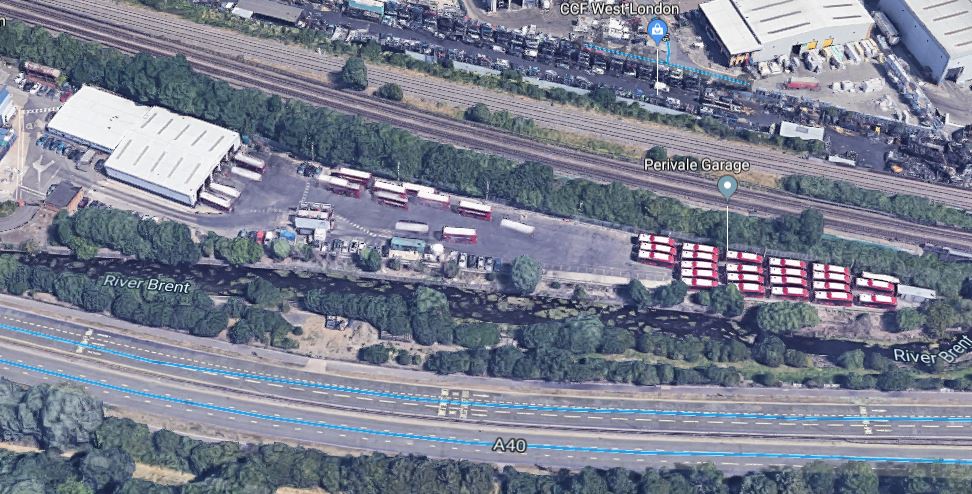
The garage is squeezed into a triangle of land between the Acton-Northolt Line, the Central Line and the six-lane A40 road.
- It’s not near any houses.
- It’s surrounded by trees and industrual units.
- Is the site large enough to generate hydrogen on site?
- Could hydrogen be brought in by rail?
- It could easily hold the twenty hydrogen buses and a few others.
I can certainly see why Transport for London have chosen to use hydrogen buses on routes 7, 245, N7, based at Periavale East garage.
Design
This is a paragraph from the Air Quality News article.
TfL says they are investing £12m in the new buses and the fuelling infrastructure with Northern Ireland firm Wrightbus as the manufacturer, which uses a fuel cell from Ballard to power a Siemens drivetrain.
Wikipedia says this about the transmission of a New Routemaster bus, that was built by Wright.
Hybrid diesel-electric in series; 18 kW] Microvast Lithium Titanate battery,Microvast LpTO, Siemens ELFA2 electric traction motor.
I should point out that it appears that originally, the New Routemaster had a larger 75 kWh battery. Has the technology improved?
Is the transmission and the chassis based on the Wright-designed New Routemaster chassis and transmission, substituting a Ballard fuel cell for the Cummins diesel engine?
The Cummins diesel engine in the New Routemaster is rated at 185 hp or 138 kW.
This page on the Ballard web site is the data sheet of Ballard’s FCveloCity family of fuel cells.
- The fuel cells come in three sizes 60, 85 and 100 kW
- The largest fuel cell would appear to be around 1.2 m x 1 m x 0.5 m and weigh around 400 Kg.
- The fuel cell has an associated cooling subsystem, that can provide heat for the bus.
It strikes me that this fuel cell is smaller and weighs less than a typical diesel engine fitted to a double-decker bus.
With a larger battery, regenerative braking and a clever transmission would a 100 kW fuel-cell provide enough power for the bus?
Wright have obviously solved the problem and found space for the hydrogen tank, otherwise they wouldn’t have received the order.
Drawing on their experience with the New Routemaster and adding the proven fuel cell technology of Ballard looks at first glance to be a low-risk route to a hydrogen-powered bus.
Conclusion
Wright Group and Transport for London appear to have designed a well-thought out solution to the problem of providing zero-emission buses for London and delivering the first buses next year!
We now have two hydrogen double-decker bus projects under way.
- London and Wright Group
- Liverpool and Alexander Dennis
Both appear to be fully-integrated projects, which include the supply of hydrogen to the buses.
When both are proven, there could be very keen competition between the two companies to sell systems all over the UK and the wider world.
It should be noted, that double-decker buses are not that common outside of the UK, Ireland, Hong Kong and Singapore.
But could these two zero-emission projects open up the rest of the world, to these most British of products?
From Paddington To Victoria The Hard Way
On Friday, I tried to use the Bakerloo Line at Paddington station and it was in chaos because of related engineering work.
So today, instead of going between Paddington and Victoria by using the Bakerloo and Victoria Lines, I thought I’d use the Circle Line and go direct.
But it turned into a struggle.
- A train arrived within a minute but didn’t say where it was going.
- It turned out to be Olympia, so I changed at Earl’s Court for Victoria.
- Close to my exit from the train at Victoria was a lift saying it was going to the Way Out.
- But it didn’t and I had to climb back up to the platform where I started.
- Another set of stairs took me to the sueface.
When I got to the surface, I saw an information office and asked if they could point me to a bus spider map, so I could find out if a bus would have been easier. They hadn’t a clue and probably only wanted to see me a tour.
But I found one in an obvious place.
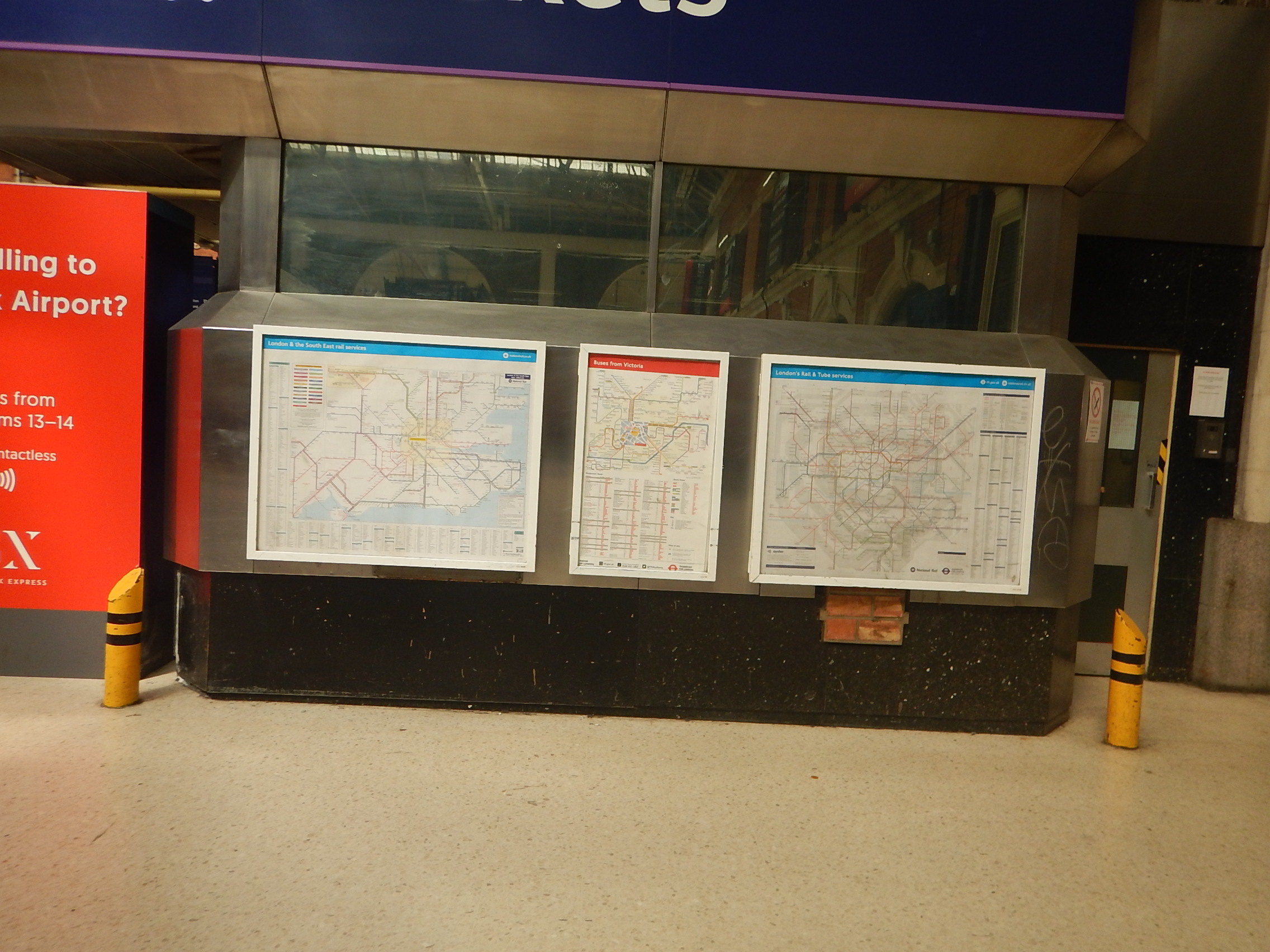
And ascertained that a 36 bus would have been just the job.
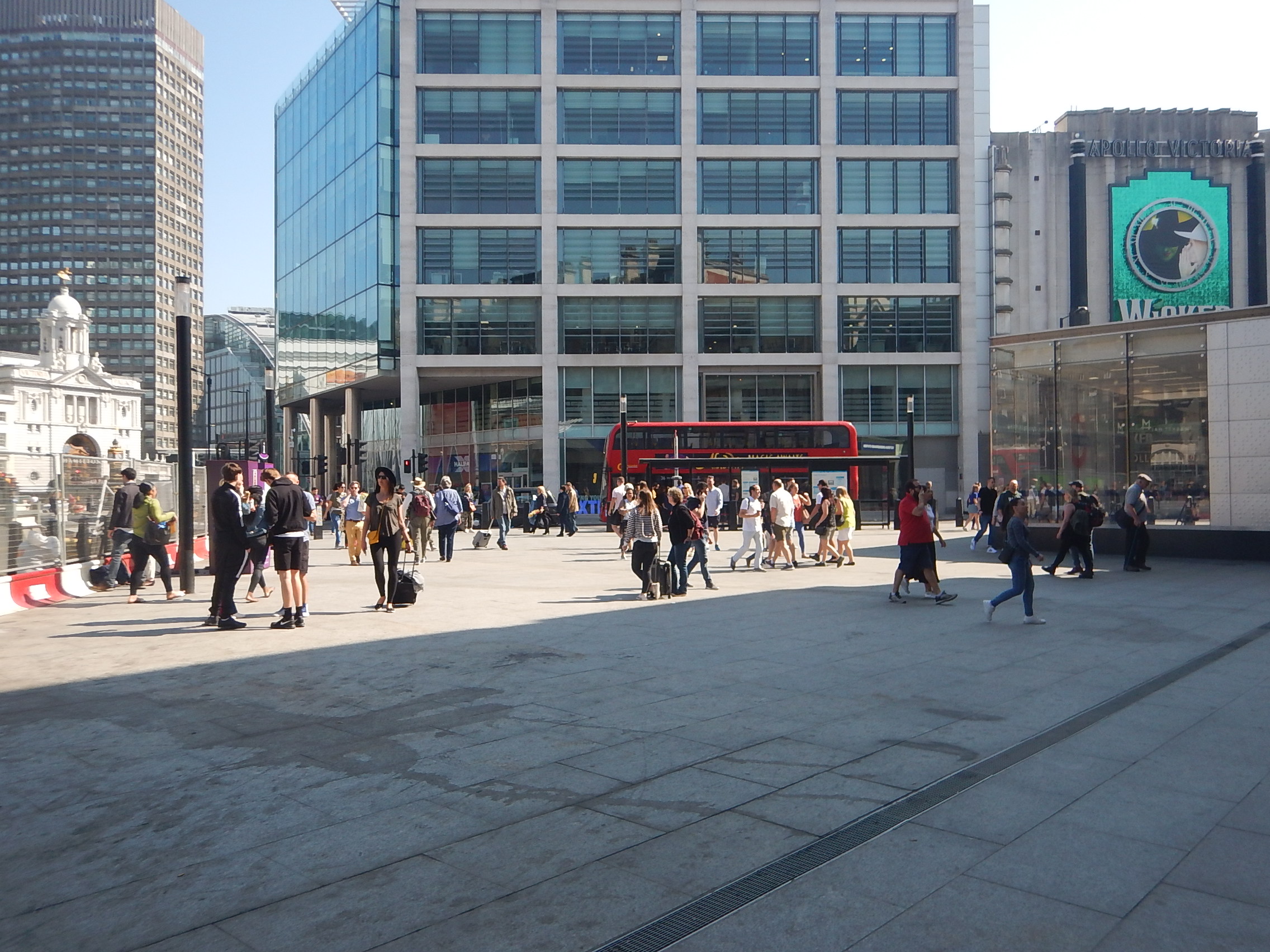
The picture shows one going the other way, just outside the station.
It is a bit slower, but not if you have a heavy case or a child in a buggy.
New Facility To Power Liverpool’s Buses With Hydrogen
The title of this post is the same as that of this article on Air Quality News.
These are the first three paragraphs.
Arcola Energy will build a facility to develop hydrogen and fuel cell technology for buses near Liverpool.
The company has secured 15,000 sq. ft of newly-built premises in Knowsley which will house the company’s manufacturing, installation and maintenance facilities.
The manufacturing area of the new site will be used to produce and install hydrogen fuel systems into a fleet of double-decker buses for the Liverpool City Region, after the city region was awarded £6.4m for the project by the Office for Low Emission Vehicles.
The article says this about the design of the buses.
The buses have been developed through a partnership between Arcola and Alexander Dennis, the world’s largest double-decker bus manufacturer.
Arcola Energy‘s Head Office is just round the corner from where I live, by the Arcola Theatre in Dalston.
Improving Bus Information
The latest bus shelters seem to have video screen for advertising.
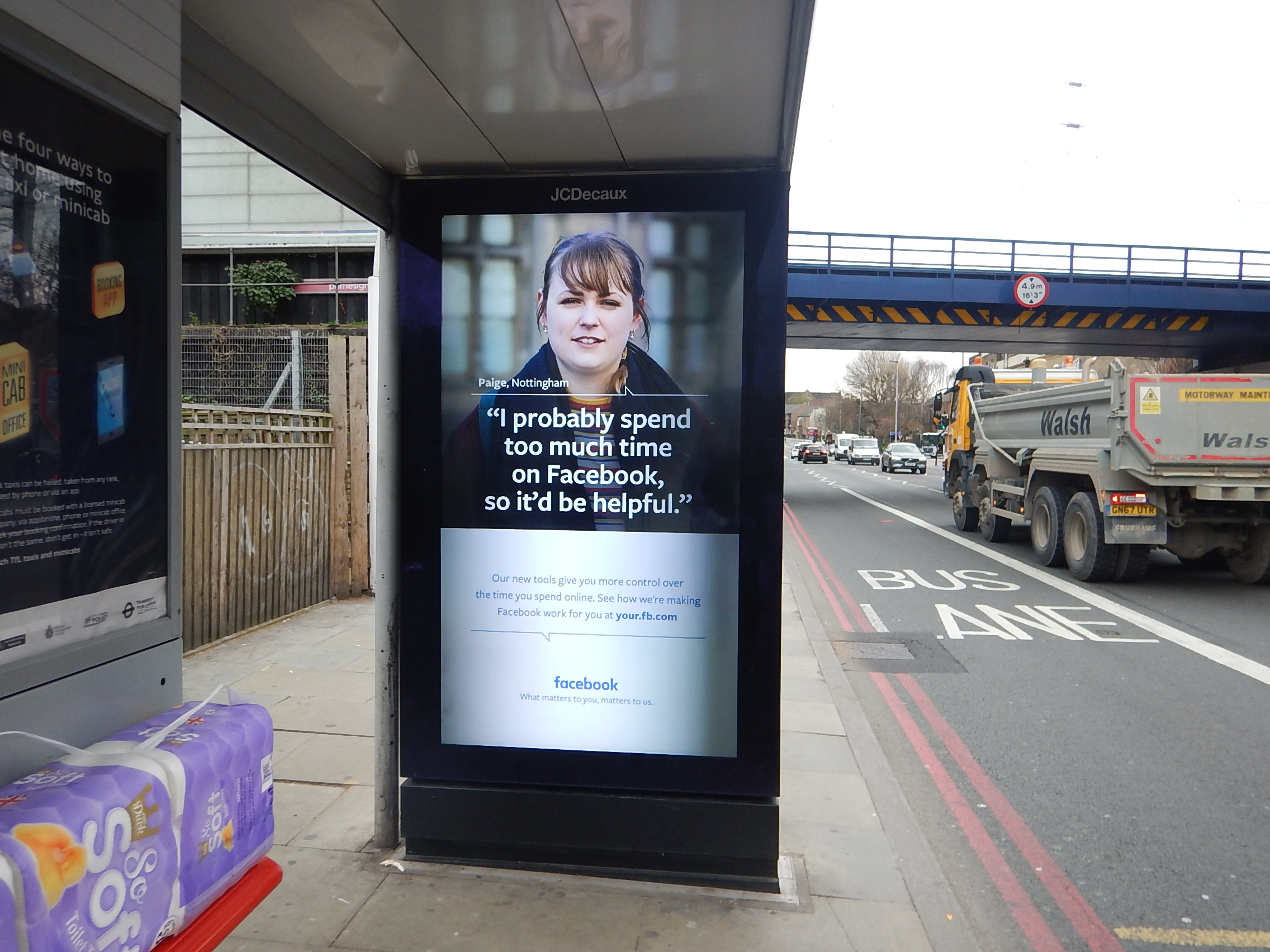
The shelter shown is outside South Tottenham station.
The shelter has no bus information.
Would it not be a good idea to incorporate bus information in a window in this screen?
A Lonely Electric Bus
I found this bus at its terminus by the old Barts Hospital.
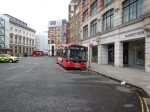
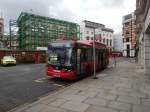
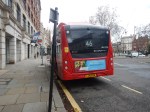

It is an Alexander Dennis Enviro200ev.
They are built in Britain on a Chinese chassis from BYD.
This week, I read the obituary of Simon Norton, who was a mathematician, who had an interest in group theory and bus routes and timetables.
He could have worked out a strategy, of how to keep London’s fleet of electric buses fully charged.
Consider.
- London’s single-deck routes are generally the shorter ones, so are probably ideal for electric buses.
- My instinct is telling me, that if all small buses were to be replaced with electric ones, the tight network would show up places for charging points.
- Would some be at the end of routes and some where several routes crossed?
It would be a fun calculation.
I suspect, I would solve it using a graphical method.
Are Transport for London Going To Install Bus Maps On Underground Platforms?
On both of the platforms at Angel station, Transport for London have now placed, their excellent bus spider maps, with a local street map.
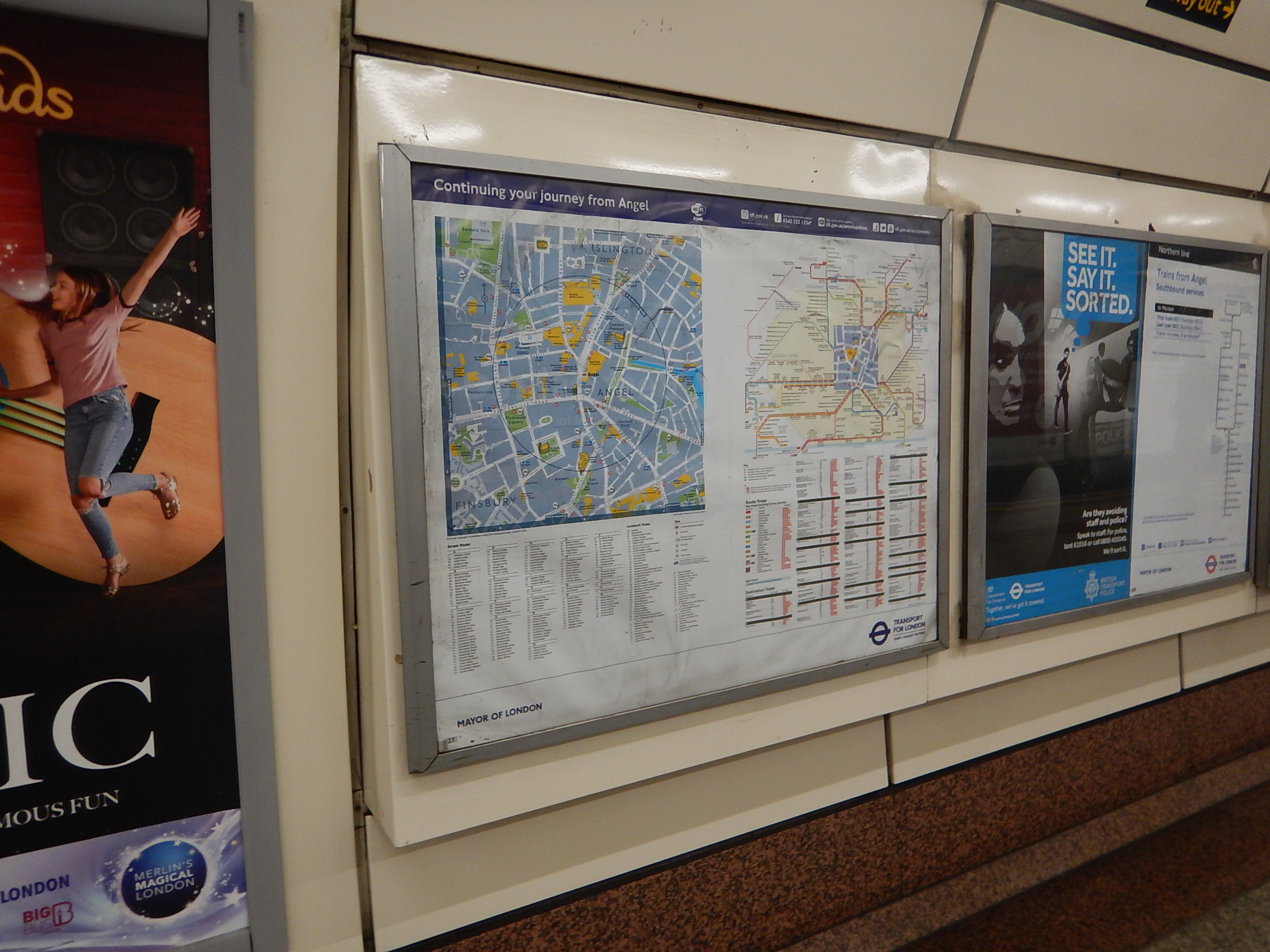
More of this please.
DfT Consulting On Plans To Expand Pay-As-You-Go Rail Travel Nationwide
The total of this post is the same as that of this article on Rail Technology Magazine.
I can’t see what the problem is.
- My bank card would be linked to my Freedom Pass and Senior Railcard on either a ticketing web site or even better on my on-line bank account.
- If it were the latter, then when I checked my bank account, as I do regularly, I could also check my travel.
- I would then just touch in and touch out for each journey.
- The central computer would then give me the best price for my journey.
As an example, if I went to say Oxford, I would only be charged between the Zone 6 boundary, which is my Freedom Pass limit and Oxford station.
I would not need to buy an extra ticket.
This is all well and good for those with UK bank accounts, but how would it handle other eventualities?
Overseas Visitors
If say one of my overseas friends was in the UK, they would just use a contactless bank card.
If they had a Railcard, as several do, they would register the link on a ticketing web site.
Advance Tickets
These could still be bought on-line or at a booking office as now.
Buses, Taxis and Trams
The system should be extended to buses, taxis, traims and any other future transport systems like cable-cars and pod systems.
Conclusion
It would be a very complicated computer system to program, but most of the work has already been done for London and is working successfully.
It would make the UK’s public transport system one of the most passenger-fruendly in the world.
What would that do for ridership? And tourism?
Building Under The Wires At Barking Riverside
I went to Barking Riverside yesterday, where they are building over 10,000 housing units and took these pictures where the EL1 buses from Barking station turn round.




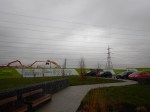
As the pictures show, there are a lot of high voltage cables running over the site.
The East London Transit
The EL1, EL2 and EL3 buses of the East London Transit connect the area to Barking station.
When I last came to this area, the buses weren’t to the high standard of New Routemasters.
Wright Bus Embraces Ultracapacitors
This press release from Skeleton Technologies is entitled Graphene-Based Ultracapacitors Boost Double and Single Decker-Buses Through Low Emission Zones by Reducing Fuel Consumption.
This is said.
The integration of graphene-based ultracapacitors into test WrightBus double deck buses enables a 36% fuel saving compared to a UK based EuroVI diesel bus baseline. It also adds at least another 3 passengers to the capacity of these buses compared to a lithium battery-based hybrid equivalent.
I have a feeling that graphene-based ultracapacitors will give lithium batteries a very good kicking.

