Traffic Constipation At The Angel
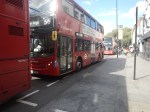
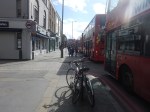
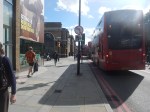
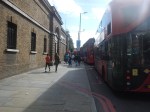
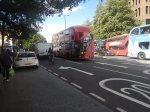
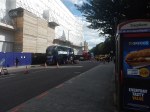
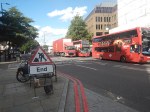
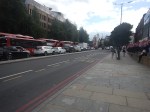
On Tuesday, I went to the Angel, with the intention of doing some shopping and then got tuck in an enormous traffic jam.



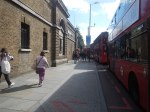



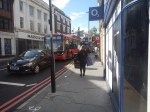

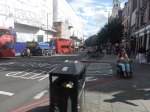

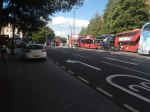




Note.
- In the end I abandoned the bus and walked.
- It looked like it was all caused by emergency roadworks at the Angel.
- These happen regularly, as Islington’s water pipes aren’t the best quality.
I believe traffic jams at the Angel will get worse, when the Silvertown Tunnel opens, as this will encourage trucks to take routes through Central London, when the Dartford Crossing is busy.
Hydrogen ‘The Only Option’ For Metrobus Fastway ZE
The title of this post, is the same as that of this article on Route One.
This is the introductory paragraph.
Hydrogen fuel cell-electric remains the most realistic zero-emission technology for usage cases requiring very high mileage and utilisation capabilities. That is the verdict from the Go-Ahead Group after its Metrobus subsidiary launched 20 Wrightbus GB Kite Hydroliner single-deckers on 29 June.
This paragraph gives more details.
Go-Ahead Group Chair Claire Hollingsworth, who was present at the launch alongside Under-Secretary of State for Transport Richard Holden and other stakeholders and dignitaries, underlines the need for hydrogen on Fastway. “These are the most intensive routes in the Go-Ahead network,” she explains. “We need 300 miles of range and have little time to plug in.”
Let’s face it, a bus that takes a lot of time to fuel-up can’t be as efficient, as one that takes just a few minutes. Especially, if the buses are running a large number of hours per day.
The whole article is a must read and surely Go-Ahead’s conclusion to other modes of transport, that do long distances, like heavy trucks, long-distance coaches and railway locomotives.
Riding The SL8 Bus Between Shepherd’s Bush Market And Uxbridge Stations – 16th July 2023
This draft map from TfL illustrates the concept of the Superloop.
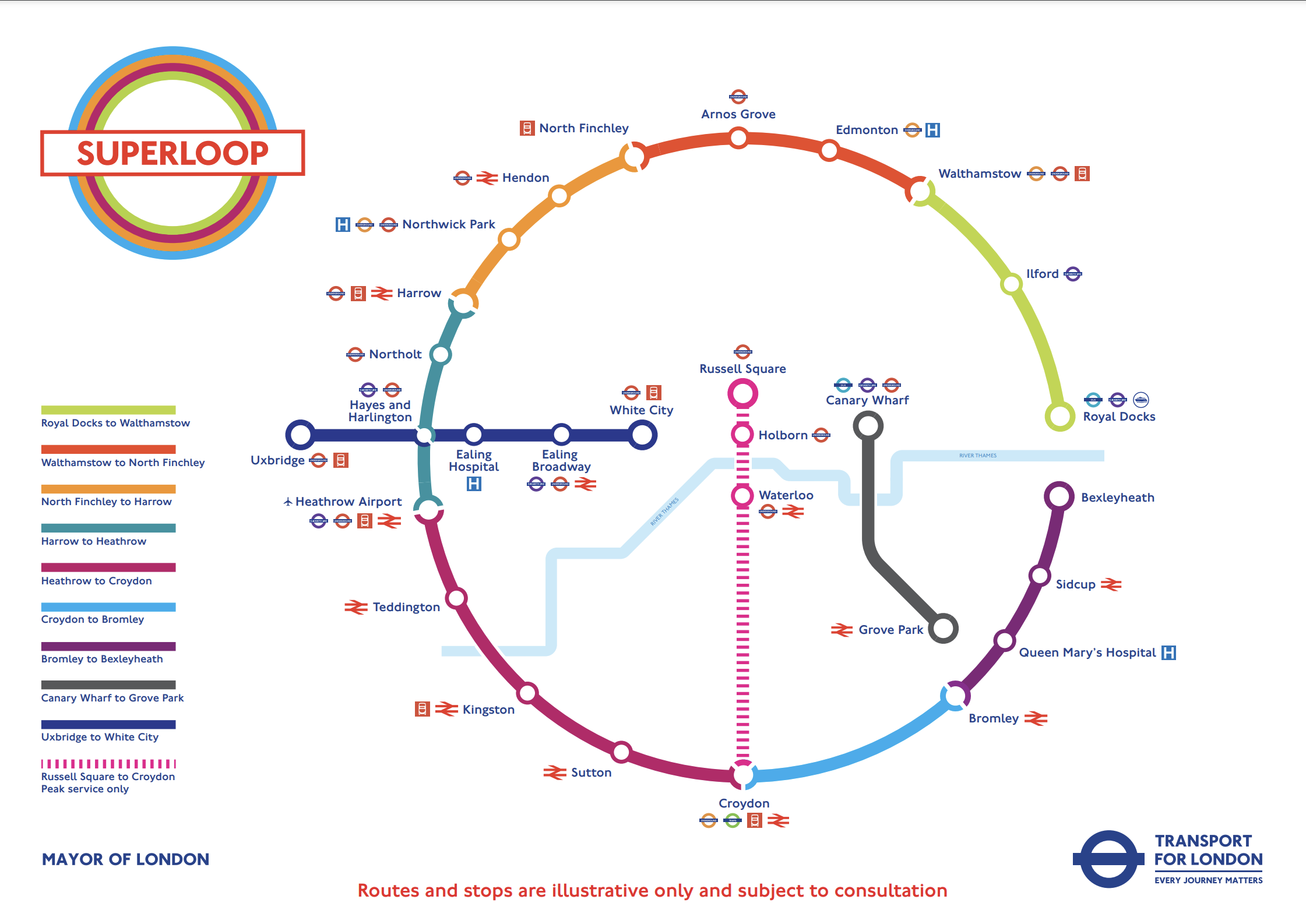
The spoke on the Western side of the map is route SL8 between White City and Uxbridge stations.
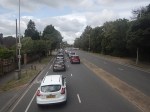
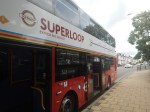
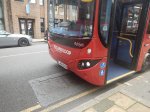
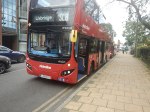
This morning I rode the route between Shepherd’s Bush Market and Uxbridge stations and took these pictures.













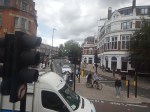
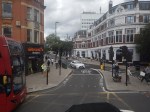
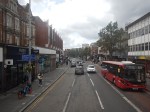



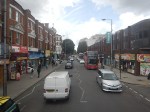
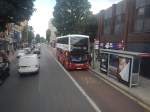



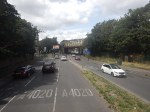



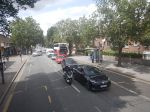

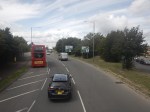














Note.
- Some of the buses have still to be painted in the new white-topped Superloop livery.
- The buses are diesel-powered.
- The stops have their own livery.
- I estimate the route is 12.3 miles long and the bus took 67 minutes.
- The frequency appeared to be typically four buses per hour.
- The route is mainly dual-carriageway to the West of Ealing Hospital.
Route SL8 used to be route 607 and except for the branding nothing has changed.
I have few thoughts.
The Concept
The concept seemed to work well, where the roads were free of traffic.
But we get get a bit delayed through places like Ealing Broadway, where parking reduced the width of the road.
The Route
The route connects quite a few stations and other important locations.
From East to West they include.
- Westfield Shopping Centre
- Shepherd’s Bush station for the Central Line and the Overground.
- Shepherd’s Bush Market station for the Hammersmith and City Line
- Acton Central station for the Overground
- Ealing Common station for the District and Piccadilly Lines.
- Ealing Broadway station for the Central, District and Elizabeth Lines.
- Ealing Broadway
- Ealing Town Hall
- Ealing Hospital
- Southall Broadway
- Hayes
Note.
- The route is very much the same as the now-abandoned West London Tram, which was proposed twenty years ago.
- The tram was opposed y the three London boroughs on the route, as it cut them in half. But buses don’t cause the same problems.
- The Superloop map shows that the SL8 bus calls at Hayes and Harlington station, but we went nowhere near it today.
- The route with its sections of dual carriageway and congested shopping streets was a bit like the route o Birmingham’s hydrogen buses, that I wrote about in Riding Birmingham’s New Hydrogen-Powered Buses.
I feel as the route is very similar to the West London Tram, which was probably extensively researched, that there won’t be too many changes to this route.
Parking Along The Route
I wouldn’t be surprised to see more parking restrictions along the route, to speed up the buses in the crowded shopping streets like Acton, Ealing Broadway and Southall Broadway.
The Buses
The buses are Egyptian-built eVoSeti diesel buses, which use a Volvo chassis.
- I don’t like these buses as they don’t have a flat floor and I’ve seen some passengers struggling with the stairs on the lower deck.
- At least the stairs to the upper deck aren’t too bad.
We used to have them locally in Dalston and I used to avoid them, if there was another bus close behind.
This new route, though should be served by zero-carbon buses, so that pollution and carbon emissions are reduced.
- Between White City and Uxbridge takes over an hour.
- A battery-electric bus would need recharging during the day.
- It looks like there’s not much space at White City and Uxbridge stations, to install charging stations.
- A hydrogen-powered bus could probably manage all day on one filling.
For these reasons, I suspect that hydrogen buses would be the preferred option.
Discover How Greater Brighton Is Championing The Transition To Hydrogen
The title of this post, is the same as that of this news item from Brighton & Hove Council.
This is the introduction to the news item.
Local experts will present the strengths and opportunities for developing the hydrogen economy in the Sussex area at an online launch on 11 July.
Register for the online launch of the Hydrogen Strategy
Developed by local company Ricardo, on behalf of Hydrogen Sussex, the Greater Brighton Hydrogen Strategy shows that with the right focus, collaboration and action, the region has real potential to stand out within the UK hydrogen landscape and gain economic and environmental benefits.
Brighton & Hove Council seem to be taking a sensible approach, but then they do have one of the world’s most respected hydrogen companies; Ricardo, a few miles to the West.
This section outlines, how Brighton is embracing hydrogen.
Hydrogen is a fast-growing sector with the potential to enable decarbonisation, support national energy security, create green growth and improve air quality.
The Greater Brighton and wider Sussex area has already broken ground in the Hydrogen industry, with advanced engineering, education and research being very well represented. Local initiatives include:
-
- Hydrogen buses: Metrobus has just launched 15 hydrogen buses to serve the Crawley and Gatwick area, with a further 34 hydrogen buses joining their fleet over the next 18 months.
- Shoreham Port: The port is working with partners H2Green to create a Green Energy Hub, producing green hydrogen in a multi-megawatt electrolysis plant – initially for Shoreham Port, and then supplying green hydrogen across the region.
- Maritime sector: Sussex’s engineering companies are at the forefront of hydrogen decarbonisation in the maritime sector. Bramble Energy, Cox Marine, Ceres Power and Ricardo are just some of the local companies which have received Government funding to tackle marine decarbonisation.
- Sussex and Brighton universities: The two universities in the area have PHD studies on innovations in the sector, with Brighton University partnering with companies to win government research funding.
- Worthing Crematorium: Could become the first in the world to trial a switch to 100% hydrogen. If testing is successful with cremator manufacturer DFW Europe, hydrogen technology will be brought over to Worthing Crematorium as early as spring 2024.
The region is already home to several hydrogen technology companies and has a strong capacity for innovation which could be developed to expand its engineering excellence.
That list looks fairly comprehensive.
Conclusion
Other towns, cities and regions in the UK, should look at what Brighton is doing, with respect to hydrogen.
Eltham Station – 6th July 2023
I’d never used Eltham station until yesterday. But as I’d documented half of bus route 132 for Exploring London Bus Route 132, it seemed a good place to start following the second part.
I took these pictures as I passed through.




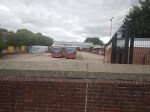


The station is an unusual design, which is summed up, in this paragraph from the stations, Wikipedia entry.
Both stations were closed and replaced by the current station which was opened by British Rail on 17 March 1985 when a new section of the A2, the Rochester Way Relief Road, was opened. A bus station that was built on a raft above the A2 was opened at the same time.
This Google Map shows the layout of the station.
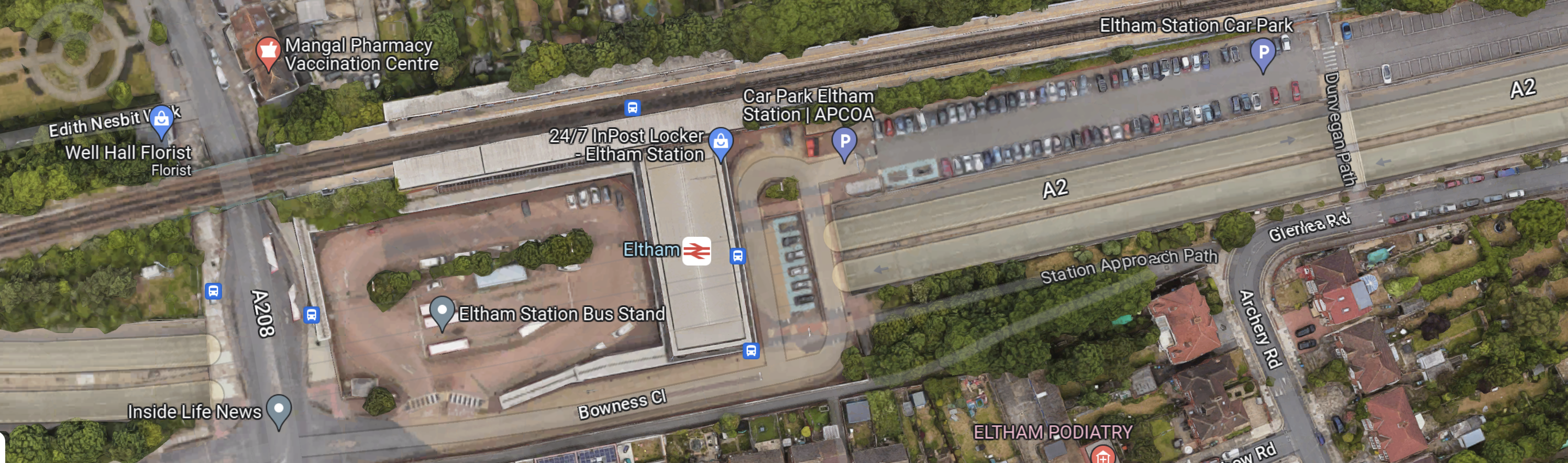
Note.
- The station is step-free using ramps.
- There are no lifts, but I suspect they could be easily added.
- On my visit yesterday, I hadn’t realised that there was a dual-carriageway road underneath the station.
- It is a comprehensive interchange between trains and buses.
For the 1980s, it is an excellent example of a station built to modern principles.
The underlying principle of this station could be used to create transport interchanges where railways, major rods and busy bus corridors intersect.
Exploring London Bus Route 132
London Bus Route 132, is run by battery-electric buses and it the first in London to use opportunity charging.
These pictures show the route from North Greenwich to Bexleyheath Shopping Centre.













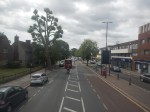

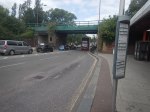
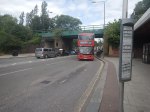







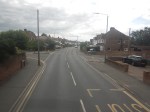

















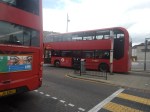

Note.
- These pictures were shot in two sections on the 3rd and the 6th of July 2023.
- The break was at Eltham station.
- Some sections of the route had a lot of cars.
- Some side roads were full of parked cars.
- There were large numbers of cars parked in front of houses.
There are my thoughts.
More will appear here over the next couple of days.
The Buses
The buses used on the route are Alexander Dennis Enviro400EV, which are built on a BYD Auto chassis.
They have a range of 160 miles.
The Route
The route has several inclines both ways and I estimate it is just under ten miles.
At North Woolwich, the bus didn’t appear to have a charge, but I can’t be sure.
But it disappear at Bexleyheath Shopping Centre and I was certain it went for a charge.
So is the operational philosophy to fill, the bus up overnight and then top the battery up every time, that it needs it at Bexleyheath.
A Comparison With A Similar Route In Birmingham That Has Hydrogen-Powered Buses
As the bus ran between North Woolwich and Bexleyheath Shopping Centre, I was comparing it, with the trip, I made across Birmingham, in hydrogen-powered buses, that I wrote about in Riding Birmingham’s New Hydrogen-Powered Buses.
Both were quality buses, but I felt the hydrogen bus had more power.
Opportunity Charging At Bexleyheath
If, buses need to be charged at the Bexleyheath Shopping Centre end of the route, where will they go?
This Google Map shows Bexleyheath Bus Garage in relation to the Shopping Centre.
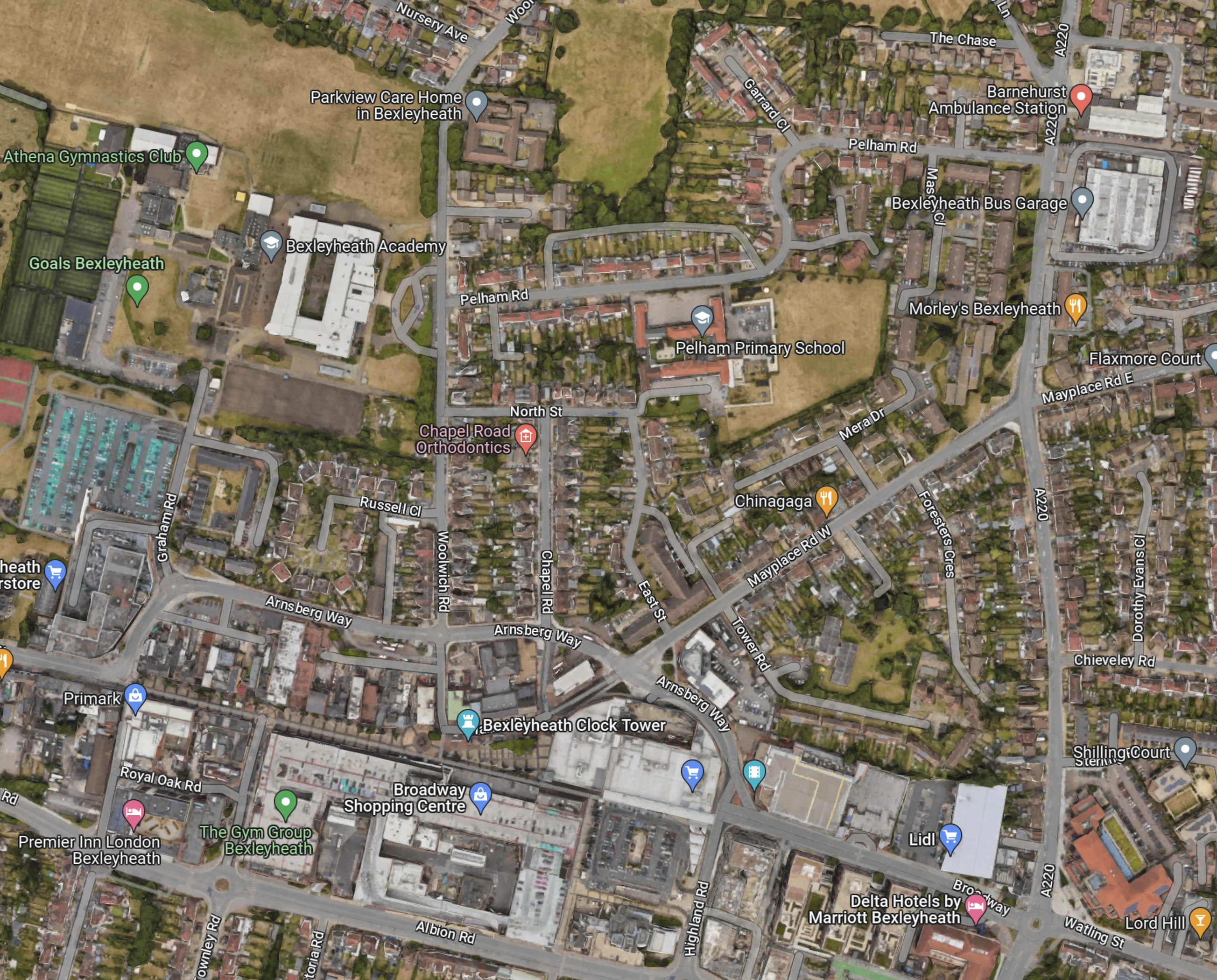
Note.
- Bexleyheath Bus Garage is in the North-East corner of the map.
- It looks like it shares a site with Bexley Fire Station and Barnehurst Ambulance station.
- So the garage is well located for any future lithium-ion battery fires.
- In the middle of the map at the bottom, is Bexleyheath Clock Tower, in the middle of the town centre.
- I estimate it’s less than two kilometres between Bexleyheath Bus Garage and the Shopping Centre.
This Google Map shows a close-up of the Western side of the Bexleyheath Bus Garage.
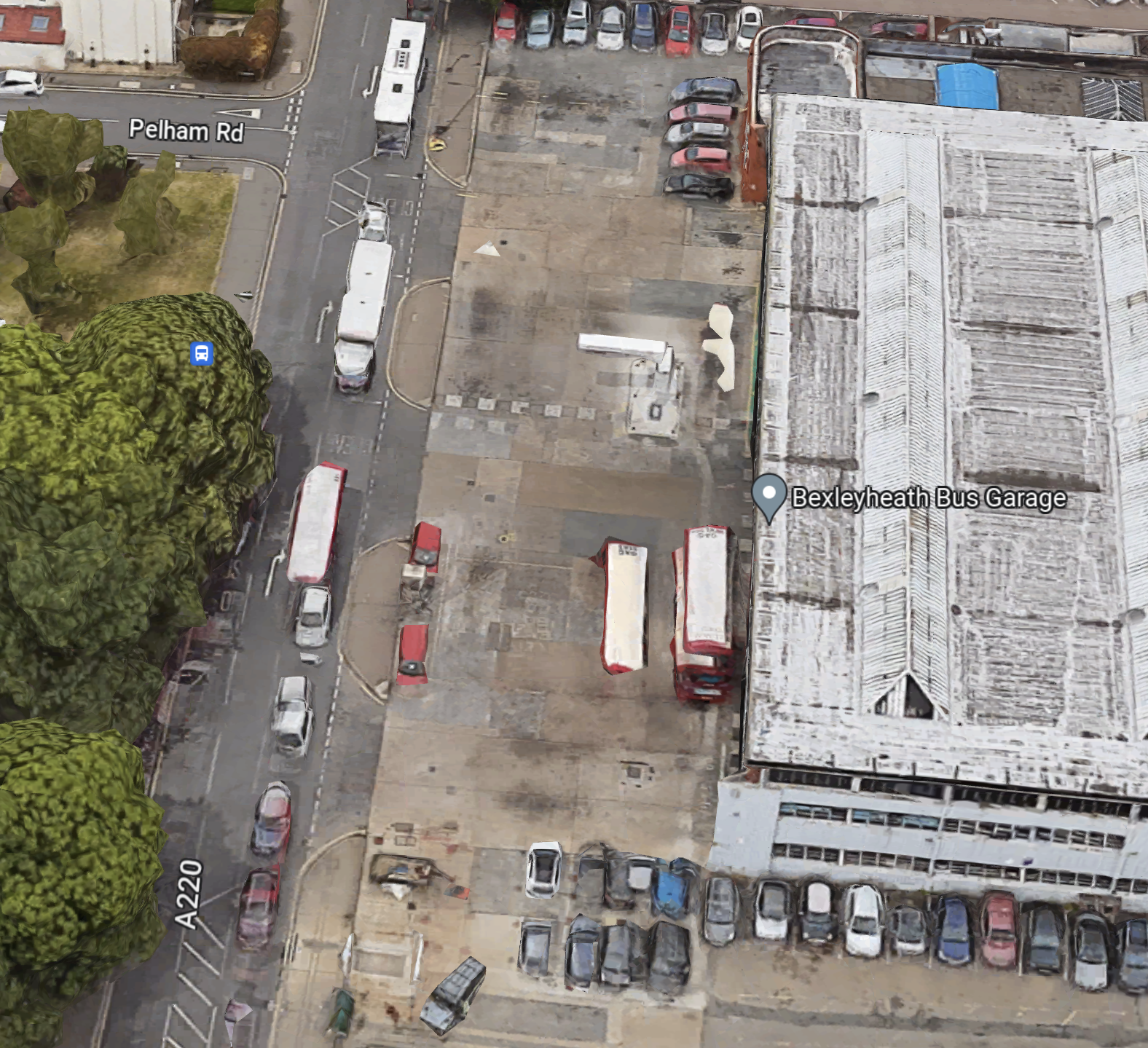
Note.
- The two buses parked by the side of the garage.
- Behind them a white arm reaches over towards the road.
- This is the charger and buses connect using a pantograph on the roof.
It could be an All-In-One Fast Charging Station AIO from Furrer+Frey.
The Electrical Connection At Bexleyheath Bus Garage
Consider.
- The bus garage shares a site with a fire station and an ambulance station, which surely must need a reliable power source.
- This is London’s first application of opportunity charging.
- There are improvements constantly happening to London’s struggling power network.
- It is a large site and I suspect there is space for a battery to boost power.
I would assume that Transport for London wouldn’t have chosen a bus garage with a dodgy power supply.
Could The Charger Be Solar-Powered?
This Google Map shows the roof of Bexleyheath Bus Garage.
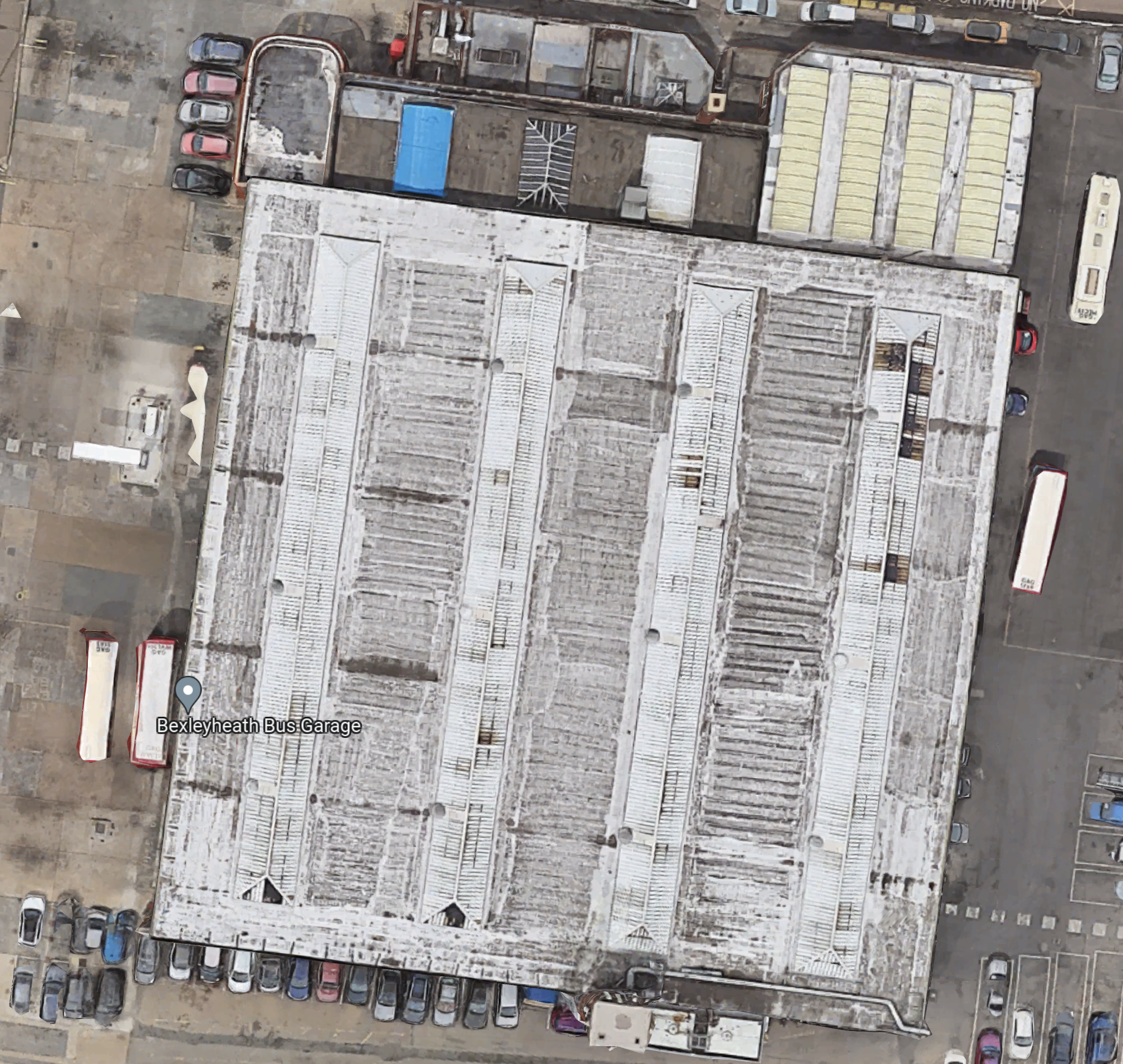
Note.
- It appears to be a square with a length of about six buses.
- It looks rather dirty.
I suspect that the roof could be replaced with a modern solar roof.
Hydrogen Or Electric
This article on RouteOne is entitled Enviro400FCEV Hydrogen Bus Fleet For Liverpool Debuts.
This paragraph describes the performance.
Alexander Dennis has chosen the heavy-duty variant of VEDS. It is designed to deliver up to 410kW of power, but the vehicle OEM says that in the Enviro400FCEV, output is limited to 350kW. Such an approach will maximise fuel economy while still enabling a high road speed and good hill climbing ability. Expected range is up to 300 miles.
So the range on hydrogen is nearly doubled.
Wrightbus’s outwardly similar electric and hydrogen buses have ranges of 200 and 280 miles, but filling times of 2.5 hours and 8 minutes.
The problem with hydrogen in London, is that the Mayor and Transport for London, don’t appear to have a hydrogen policy.
But I think, that hydrogen will win out in cities and areas, where hydrogen can be supplied.
I also believe that hydrogen has other advantages.
- There is likely to be significant progress in improving hydrogen-powered heavy vehicles.
- Hydrogen internal combustion engines are coming and could promise more affordable hydrogen buses.
- Better and more affordable methods to create green hydrogen are being developed.
- Some existing diesel buses will be able to be converted to buses powered by hydrogen internal combustion engines.
- Lithium-ion batteries have a high environmental footprint.
Hydrogen is also likely to be the fuel of choice for heavy trucks.
My Second Ride In A Wrightbus Single-Decker Hydrogen Bus
Or it might have been the third or fourth, but it was the first outside of London in a single-decker Wrightbus hydrogen bus. The earlier rides were in the RV1 route, which I wrote about in London’s Hydrogen Buses.
I took these pictures.

















Note.
The trip was in Crawley and Go-Ahead are building a network of hydrogen buses to link the town and Gatwick Airport.
- It was a high quality bus.
- It was busy.
- It was the first bus, I’d seen in the UK, with a detailed route.
Someone had been thinking about how to design a bus route.
Goodyear Releases New EV Tire For Electric Metro Buses
The title of this post, is the same as that of this article on The Buzz EV News.
This is the sub-heading.
The new Urban Max BSAEV tire was designed in partnership with heavy-duty transit bus manufacturer Gillig.
This is the first paragraph.
The Goodyear Tire & Rubber Company has introduced its newest EV-ready tire for buses and transit fleets. The new Urban Max BSAEV (bus service all-position) tire was designed in partnership with Gillig, a manufacturer of American-built heavy-duty transit buses. The Urban Max BSAEV is the first Goodyear tire engineered specifically with low rolling resistance for EV transit and metro buses to help extend range and handle the increased load capacity, the company says.
This is an idea that could roll a long way.
Does your EV have low rolling resistance tyres?
Mercedes eCitaro Fuel Cell Will ‘See The Light’ At UITP Summit 2023
The title of this post, is the same as that of this article on Sustainable Bus.
This is the first paragraph.
Daimler Buses will unveil the Mercedes eCitaro fuel cell at UITP Global Public Transport Summit in early June. At the group’s stand, visitors will have the opportunity to see the first series-production eCitaro electric bus with a fuel cell as a range extender. First order for the vehicles dates back to October 2022.
This paragraph describes the bus.
The Mercedes eCitaro in fuel cell bus version offers a stated range of approximately 350 kilometers without the need for recharging. This goes together a passenger capacity, on the articulated version, of up to 128 passengers. The difference between the eCitaro fuel cell project and most of the fuel cell buses on the market stay in the battery capacity: while it’s common to feature a small LTO battery (below 50 kWh) accompanying the fuel cell module, the eCitaro is equipped with a battery capacity similar to its battery-electric counterpart (up to 392 kWh for the 18-meter).
It looks an impressive bus with a generous capacity and range.
But I doubt we’ll see many in the UK.
- Motorists object to their blocking of junctions.
- They were easy for dodging fares.
- In London, they were dubbed Ken’s Chariots of Fire.
I don’t think politicians will chance them in the UK!
Toyota And VDL Groep To Convert Heavy-Duty Vehicles Into Hydrogen Fuel Cell Trucks
The title of this post, is the same as that of this article on Hydrogen Fuel News.
This is the first paragraph.
Toyota Motor Europe (TME) and Dutch VDL Groep have teamed up to covert VDL’s existing heavy-duty trucks into hydrogen fuel cell trucks using Toyota’s fuel cell modules, with a goal to accelerate decarbonizing the road logistics sector while also breaking into Europe’s zero-emission heavy duty H2 trucks market.
Note.
- According to their Wikipedia entry, VDL Groep seem to manufacture buses, coaches, chassis modules and vehicle components.
- In Ricardo Supports Toyota To Develop Its First UK-Based Hydrogen Light Commercial Vehicle, I wrote about conversion of the Toyota Hilux to hydrogen.
- There are a large number of companies all over the world, who will convert vehicles to hydrogen.
- It could be argued that Wrightbus and Alexander Dennis, have designed hydrogen buses, that could be conversions of existing designs.
- Cummins are selling diesel engines, that can be converted to hydrogen.
Could these points indicate, that one of the main routes to the decarbonisation of the heavier end of the commercial vehicle sector will be conversion of existing vehicles to hydrogen fuel?
And will this lead to smaller conversion kits to decarbonise vehicles like Land Rovers, Range Rovers, larger BMWs, Jaguars and Mercedes?
If you consider, that when I was growing up in the 1950s, you rarely saw a small diesel vehicle and how diesel came to grab a large market share, due to good engineering and some misguided tax changes from Gordon Brown, I don’t think it is unreasonable to believe that good engineering and perhaps well-thought out tax changes could create an affordable route to decarbonise a large proportion of vehicles.
If I was still driving and lived away from dreaded ULEZs, then I would be keeping my reliable diesel Jaguar estate.
 The Anonymous Widower