Porterbrook Makes Case For Battery/Electric Bi-Mode Conversion
The title of this post is the same as that of this article on Global Rail News.
This is the first paragraph.
Rolling stock leasing company Porterbrook is working on a prototype battery/electric bi-mode Class 350/2 to demonstrate the technology’s viability to train operators.
So why would you fit batteries to an electric train like a Class 350 train?
Range Extension
An appropriately-sized battery can be used to power the train on an extension or branch line without electrification.
The classic route in London is the Barking Riverside Extension of the Gospel Oak to Barking Line.
Until someone says otherwise, I believe this short route will be built without electrification and the Class 710 trains will run on this route using stored battery power.
In my article in Issue 856 of Rail Magazine, I said this.
London is also designing and building another rail line, which will be used only by Aventras – The Barking Riverside Extension of the Gospel Oak and Barking Line.
I have read all of the published Transport for London documents about this extension and although electric trains are mentioned, electrification is not!
The extension is only a mile of new track and trains could leave the electrified c2c line with full batteries.
It would not be difficult to go to Barking Riverside and back on stored power.
Benefits would include.
- Less visual and audible intrusion of the new railway.
- Simpler track and station design.
- It might be easier to keep the railway at a safe distance from all the high voltage electricity lines in the area, that bring power to London.
- A possibly safer and more reliable railway in extreme weather.
- Costs would be saved.
No-one has told me, I’ve got it wrong.
Handling Regenerative Braking Energy
Normally, the energy generated by regenerative braking is returned through the overhead wires or third-rail to power nearby trains.
This does save energy, but it does have drawbacks.
- What happens if there are no nearby trains?
- The transformers and systems that power the track are more complicated and more expensive.
As trains slow and accelerate continuously, would it not be better if regenerative energy could be used to accelerate the train back up to line speed?
The train would need an intelligent control system to decide whether to use power from the electrification or the batteries.
In my view, a battery on the train is the obvious way to efficiently handle the energy from regenerative braking.
Handling Power Failures
Electrification failures do occur for a number of reasons.
If trains have an alternative power supply from a battery, then the driver can move the train to perhaps the next station, where the train can be safely evacuated.
I believe that Crossrail uses battery power for this purpose.
Electrically Dead Depots And Sidings
Depots and sidings can be dangerous places with electricity all over the place.
If trains can be moved using stored energy, then safer depots and sidings can be designed.
Remote Wake-Up
We’ve all got up early in the morning, to drive to work on a cold day.
One train driver told me, there was no worse start to the day, than picking up the first train from sidings in the snow.
I discuss, remote wake-up fully in Do Bombardier Aventras Have Remote Wake-Up?.
I suspect to do this reliably needs a battery of a certain size.
How Big Should The Batteries Be?
It is my belief, that the batteries on an electric train, must be big enough to handle the energy generated if a full-loaded train stops from maximum speed.
If we take the Class 350/2 train, as owned by Porterbrook, Wikipedia gives this information.
- Maximum Speed – 100 mph
- Train Weight – 175.5 tonnes
- Capacity – Around 380 passengers
If I assume each passenger weighs 90 Kg with baggage, bikes and buggies, the train weight is 209.7 tonnes.
This could be a bit high, but if you’ve been on one of TransPennine’s Class 350 trains, you might think it a bit low.
Using Omni’s Kinetic Energy Calculator, I get the following kinetic energies at various speeds.
- 60 mph – 20.9 kWh
- 70 mph – 28.5 kWh
- 80 mph – 37.2 kWh
- 90 mph – 47.1 kWh
- 100 mph – 58.2 kWh
- 110 mph – 70.4 kWh
- 120 mph 83.6 kWh
I have added the unrealistic 120 mph figure, to show how the amount of energy rises with the square of the speed.
As it would be advantageous for trains to run at 110 mph, the batteries must always have the capacity to handle at least 70.4 kWh, so perhaps 100 kWh would be a good minimum size.
How Much Battery Capacity Could Be Fitted Under A Train?
Wikipedia doesn’t give the formation of a Class 350 train, but it does give that of the similar third-rail version of the train; the Class 450 train.
- DMSO(A)
- TCO
- TSO
- DMSO(B)
Which is two identical Driver Motor Cars with two Trailer Cars in the middle. Looking at a Class 350 train in Euston, they appear to have a similar formation.
This page on the Vivarail web site is entitled Battery Train Update.
This is a paragraph.
Battery trains are not new but battery technology is – and Vivarail is leading the way in new and innovative ways to bring them into service. 230002 has a total of 4 battery rafts each with a capacity of 106 kWh and requires an 8 minute charge at each end of the journey. With a 10 minute charge this range is extended to 50 miles and battery technology is developing all the time so these distances will increase.
So it looks like Vivarail manage to put 212 kWh under each car of their two-car train.
This article on the Railway Gazette is entitled Battery-Powered Desiro ML Cityjet Eco Unveiled.
This is an edited version of the first two paragraphs.
An electric multiple-unit equipped with a prototype electric-battery hybrid drive system designed to enable through running onto non-electrified lines was unveiled by Siemens and Austrian Federal Railways in Wien on September 10.
The Desiro ML Cityjet Eco has been produced using a series-built version of the Desiro ML EMUs which Siemens is supplying to ÖBB. The middle car has been equipped with three battery containers with lithium-titanate batteries offering a total capacity of 528 kWh.
Although this train is designed for a different loading gauge, it is another Siemens product and they manage to fit 528 kWh in, on top or under one car.
I think, it would be reasonable to assume that around 400 kWh of batteries could be fitted under a Class 350 train.
These pictures show a Class 350 train at Euston.
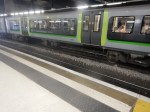
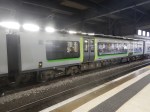

Note that the trailer car with the pantograph has less free space underneath. I would assume that is because the transformer and other electrical gubbins are underneath the car to increase passenger space.
I’m certain there is space under a Class 350 train to fit an appropriate amount of storage.
What Battery Range Could Be Expected?
In an article in the October 2017 Edition of Modern Railways, which is entitled Celling England By The Pound, Ian Walmsley says this in relation to trains running on the Uckfield Branch, which is not very challenging.
A modern EMU needs between 3 and 5 kWh per vehicle mile for this sort of service.
So how far would a four-car Class 350 train go with a fully-charged 400 kWh battery?
- 5 kWh per vehicle mile – 20 miles
- 4 kWh per vehicle mile – 25 miles
- 3 kWh per vehicle mile – 33.3 miles
- 2 kWh per vehicle mile – 50 miles
Obviously, this is a very crude estimate, but it does show that the train could have a useful range on battery power.
But the following would increase the range of the train.
- A low energy interior.
- An increased battery capacity.
- Two cars in the four-car train are trailers, so should have more space underneath.
- Routes for battery trains could be reprofiled with gentle curves and gradients.
- Terminal platforms could be fitted with charging stations.
In Did Adrian Shooter Let The Cat Out Of The Bag?, Mr Shooter talked about a range of forty miles at sixty mph for the battery version of a Class 230 train.
That distance, would open up a surprising number of routes for battery trains.
Should A Small Diesel Generator Be Fitted?
It is worth noting that Transport for Wales has ordered two battery trains.
- Vivarail Class 230 trains for North Wales.
- Stadler Flirts for South Wales
Both trains have diesel engines, that can be used to back-up battery power.
In addition the Class 801 train has a diesel generator to rescue the electric train, when the power fails.
Are Hitachi, Stadler and Vivarail just being safe or do their figures show that a diesel engine is absolutely necessary? After all, the diesel generator can be easily removed, if it’s never used.
I think if it was easy, whilst the new battery-powered train was being tested and on probation, I’d fit a small diesel generator.
Remote Battery Charging
Most of the charging would be done, whilst running on electrified lines, which could be either 25 KVAC overhead or 750 VDC third-rail.
But the trains would be ideal for the sort of charging system, that I wrote about in Is This The Solution To A Charging Station For Battery Trains?.
To use this Opbrid system, all the train needs is the ability to connect through a 25 KVAC pantograph, which the train already has.
As there is a lot of interest in battery trains throughout Europe, I suspect that a charging station will be a standard piece of equipment, that can be easily installed in a terminal platform or a turnback siding.
We could see important towns and cities like Barrow-in-Furness, Blackburn, Chester, Dundee, Harrogate, Huddersfield, Hull, Middlesbrough, Perth and Sheffield, which are within battery range of the electrified network, being served by electric trains , without the disruption of installing electrification.
An Updated Interior
The Class 350 trains were ordered around 2000 and don’t have the features that passengers expect, as these pictures show.
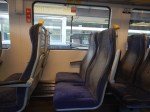
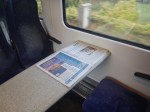


An update would probably include.
- LED lighting.
- Low-energy air-conditioning.
- Wi-fi
- Power sockets
- USB sockets.
Other features would be cosmetic like new seat covers and flooring.
But overall, a better interior will surely reduce the energy needs of a train.
What Would Be The Maximum Speed?
The current maximum speed of Porterbrook’s Class 350/2 trains is 100 mph, but all other variants of the train are capable of 110 mph.
Under Description in the Wikipedia entry for the Class 350 train, this is said.
The top speed of the fleet was originally 100 mph (160 km/h), but all 350/1s were modified to allow 110 mph (180 km/h) running from December 2012, in order to make better use of paths on the busy West Coast Main Line.
So would the conversion to battery power, also include an uprating to 110 mph?
It would definitely be a prudent move, so as to make better use of paths on busy main lines.
Where Would These Trains Run?
I feel that Porterbrook will produce a four-car train with these characteristics.
- 110 mph operating speed.
- Forty or perhaps a fifty mile range on batteries.
- Quality interior.
- The ability to use a charging station in a terminal platform.
The Global Rail News article says this about possible use of the trains.
Engineers at Porterbrook have run models on a variety of routes, including the Windermere branch line and the West Coast main line, and believe a battery/electric bi-mode, known as a 350/2 Battery/FLEX, could offer various performance benefits.
The Windermere to Manchester Airport service would seem to be an ideal route for the Class 350/2 Battery/FLEX trains.
- Only ten miles are not electrified.
- The trains could easily work the return trip on the Windermere Branch Line on battery power.
- There would be no need for any charging station at Windermere station.
- Much of the route is on the West Coast Main Line, where a 110 mph electric train would fit in better than a 100 mph diesel train.
- As the trains would need a refurbishment, some could be fitted with an interior, suitable for airport travellers.
- The trains would fit the ethos and environment of the Lake District.
As the route will soon be run by Class 769 trains, I suspect there would need to be no modifications to the tracks, stations and signalling, as both trains are bi-modes, based on four-car electric trains.
I have other thoughts about, where Class 350/2 Battery/FLEX trains could be used.
Interchangability With Class 769 Trains
Both the Class 350/2 Battery/FLEX and Class 769 trains are trains owned by Porterbrook.
They are also surprisingly similar in their size, performance and capabilities.
- Both are four-car trains around eighty metres long.
- Both can work on 25 KVAC overhead electrification and both could be modified to work on 750 VDC third-rail electrification.
- Both are 100 mph trains, although it may be possible to uprate the Class 350/2 Battery/FLEX to 110 mph working.
- Both trains can be fitted with modern interiors giving operators, passengers and staff what they need or want.
- Many routes for bi-mode trains could be worked by either train.
There will be a few differences.
- The Class 350/2 Battery/FLEX train is a pure electric train and more environmentally-friendly.
- The Class 350/2 Battery/FLEX train could fit in better on a busy main line.
- The Class 769 train will probably have a longer range away from electrification.
- The Class 350/2 Battery/FLEX train is twenty years younger.
I think that this similarity will be used to advantage by Porterbrook and the train operating companies.
- A Class 350/2 Battery/FLEX train would be an ideal replacement for a Class 769 train, when the latter needs replacing.
- A Class 769 train could replace a Class 350/2 Battery/FLEX train, if say the latter was being serviced or repaired or perhaps the charging station at one terminus was out of action.
- A Class 769 train could be used for route-proving for both trains.
Porterbrook wins every way, as they own both trains.
But I can also see a time, when the Class 769 trains become a reserve fleet to be used, when a train operating company is in urgent need of more capacity.
Around Electrified Conurbations
The UK has several conurbations with a lot of electrification.
- Birmingham-Coventry-Wolverhampton
- Edinburgh-Glasgow-Stirling
- Leeds-Bradford-Doncaster-York
- Liverpool-Manchester-Preston-Blackpool
- London
Cambridge, Cardiff, Reading and Newcastle could also become major electrified hubs.
I suspect there will be a lot of routes for which these trains would be eminently suitable.
This is a selection of the easy routes, where there is electrification at one end of the route and a charging station could be added at the other, if required.
- Doncaster to Hull
- Dunblane to Perth
- Glasgow Central To East Kilbride
- Leeds to York
- London Bridge to Uckfield
- Manchester to Buxton
- Manchester to Chester
- Manchester to Clitheroe
- Preston to Barrow-in-Furness
- Preston to Blackpool South
- Preston to Colne
In total, there must be at least twenty of these routes in the UK.
Trains Across The North Of England
It should be noted that Leeds to Stalybridge is about thirty-five miles by rail and both ends of the route are electrified.
So could these trains have sufficient battery capacity to enable Northern to run fast electric services between Blackpool, Chester, Liverpool, Manchester, Manchester Airport and Preston in the West to Hull, Leeds and York in the East?
If the Class 350/2 Battery/FLEX train has sufficient battery capacity and the speed limits on various sections of the East West routes are increased from some of their miserable levels, I believe that a much better service could be provided.
At over seventy miles long, the Settle-Carlisle Line, is probably too long for battery operation, especially as the route is not electrified between Skipton and Carlisle, which is nearly ninety miles.
The same probably applies to the Tyne Valley Line, which has just over sixty miles without electrification.
But it is called the Tyne Valley Line for a good reason, it runs alongside the River Tyne for a long way and looks to be not very challenging.
I wouldn’t rule out, that in a few years time, the route is run by a battery hybrid train, like the Class 350 Battery/FLEX.
The secondary route between Leeds and Lancashire is the Calder Valley Line via Hebden Bridge, which is not electrified between Preston and Bradford, which is a distance of fifty-three miles.
Electrification of this route and especially between Burnley and Bradford would be extremely challenging due to mthe numerous bridges and the terrain, with the added complication of the Grade II Listed Hebden Bridge station.
It would be pushing it, but I believe the Class 350 Battery/Flex train could handle it.
There is a plan to reconnect Skipton in Yorkshire to Colne in Lancashire to create another route across the Pennines.
The trains would need to travel the forty-two miles between Preston and Skipton using battery power, but it would create a valuable route at an affordable cost, if no electrification was used.
What would improve the running of the routes via Hebden Bridge and Colne, would be to electrify the route between Preston and Blackburn, which would reduce the distance to be run on battery power by twelve miles.
The Hope Valley Line runs between Sheffield and Manchester Piccadilly and is forty-two miles long without electrification.
This route certainly needs a modern four-car train and I believe that the Class 350 Battery/FLEX train could handle it.
But it would need a charging station at Sheffield.
On this rough and ready analysis, it looks like the three Southern routes and a new one via Colne could be handled successfully by a Class 350 Battery/FLEX.
Summing up the gaps West of Leeds we get.
- Bradford and Manchester Victoria via Hebden Bridge – 40 miles
- Sheffield and Manchester Piccadilly via Hope Valley Line – 42 miles
- Stalybridge and Leeds via Hudderfield – 35 miles
- Preston and Skipton via Colne – 42 miles
If the Class 350 Battery/FLEX train can do around fifty miles on battery power, which I suspect is a feasible distance, then these trains could give Northern an electric stopping service on all their routes across the Pennines.
In my view the system could be improved by the following projects.
- Electrify between Preston and Blackburn and possibly Burnley Manchester Road.
- Electrify between Manchester Victoria and Todmorden.
- Renew the crap electrification between Manchester Piccadilly and Glossop, with an extension for a few miles along the Hope Valley Line to perhaps New Mills Central and Rose Hill Marple.
- Tidy up the electrification between Leeds and Bradford and extend it to the Northbound East Coast Main Line.
But the most important thing to do, is to increase the line speed on the routes across the Pennines.
Greater Anglia and Network Rail are talking about ninety minutes for the 114 miles between London and Norwich, which is an average speed of 76 mph.
Liverpool Lime Street to York is about the same distance and TransPennine take around 110 minutes for the journey, which is an average speed of around 60 mph.
- Both journeys have a few stops.
- Both routes are or will be run by 100 mph trains.
- The East Anglian route is electrified, but trans-Pennine is not.
The big difference between the routes, is that large sections of the East Anglian route can be run at 100 mph, whereas much of the Trans-Pennine route is restricted to far lower speeds, by the challenging route
Sort it!
Electric traction will make a difference to the acceleration, but it doesn’t matter if they get their power from overhead wires or batteries!
Putting up overhead wires on the current route will be throwing good money after bad, unless the track is fixed first.
Liverpool Lime Street to York should be ninety minutes in a Class 350 Battery/FLEX.
The Scottish Breakout
Finally, the electrification in the Scottish Central Belt is on track and the Scots are seeing the benefit of modern electric trains.
Trains like the Class 350 Battery/FLEX could be the key to extending Scotland’s growing network of electric trains.
In A Railway That Needs Electric Trains But Doesn’t Need Full Electrification, I described how the 11.5 mile service between Glasgow Central and East Kilbride station could be run by an electric train using batteries, which would be charged using the 25 KVAC overhead wires at the Glasgow end of the route.
If the Class 350 Bettery/FLEX train existed, they could work this route, as soon as drivers and other staff had been trained.
With a forty mile range on batteries, trains could reach from the electric core to many places, like Dumbarton, Perth and possibly Dundee.
It should be noted that Dundee is just under fifty miles from Dunblane, where the current electrification will end, so with a charging station in one of the bay platforms at Dundee, a Class 350 Battery/FLEX should be able to bridge the gap.
They could even probably handle the current Borders Railway, with a charging station at Tweedbank.
Scotland would not need to acquire a fleet of Class 350 Battery/FLEX, as they already have a fleet of Class 380 trains, which I am certain could be re-engineered in the same way to become battery/electric trains.
ScotRail may need a few more electric trains, but they could always keep the Class 365 trains, that have been used as cover for the much-delayed Class 385 trains.
South Western Railway
South Western Railway don’t have any obvious needs for a train like a Class 350 Battery/FLEX train.
But consider.
- They do have 127 Class 450 trains, which are the third-rail version of the Class 350 train, so could probably be converted into a Class 450 Battery/FLEX.
- They have ten Class 158 and thirty Class 159 diesel trains, some of which work partially-electrified routes.
- British Rail-era third-rail systems have their deficiencies in places.
- There are proposals and some plans to reopen branch lines to the West of Basingstoke and Southampton.
- The Class 450 trains could be converted to dual-voltage operation, as they have a pantograph well.
So perhaps a few Class 450 Battery/FLEX trains could be a useful possibility.
- Basingstoke to Salisbury is thirty-six miles and with a charging station at Salisbury, an electric service between Waterloo and Salisbury could be run.
- Salisbury to Southampton Central is twenty-five miles.
- Waterloo to Corfe Castle and Swanage, if it was decided to run this Saturday service, more frequently.
I also suspect that a Class 450 Battery/FLEX would give South Western Railway several operational and energy-efficiency advantages, which could lead to financial advantages.
I doubt though that the trains would have the capability to reach Exeter, as that is just too far.
These trains would also be ideal for the for the following services, run by other operators.
- London Bridge to Uckfield.
- The Marshlink Line.
- Reading to Gatwick, where they would replace the proposed Class 769 trains.
Converting these three lines to electric traction, would remove the final diesel passenger services from Kent and Sussex.
Other Routes
Use your imagination!
Conclusion
Porterbrook have just dropped an enormous flower-smelling bomb, into the electrification and train replacement plans of UK railways.
Is This The Solution To A Charging Station For Battery Trains?
This page on the Opbrid web site has a main title of Automatic High Power Charging for Buses, Trucks, and Trains.
It also has a subtitle of Furrer+Frey Opbrid Charging Stations for Battery Trains.
Furrer + Frey are a Swiss railway engineering company, that design and build railway electrification systems.
The web page gives this introduction.
Since 2009, Furrer+Frey has developed a multi-modal ultra high power charging station for battery-powered vehicles that is already radically changing the way traction power is delivered to road and rail vehicles. In particular, the Furrer+Frey Railbaar system targets existing low traffic diesel traction routes as well as new light rail and tram projects. The technology applies to battery powered trams and trains (Railbaar), buses (Busbaar) and trucks (Trukbaar) with a design rooted in proven Swiss electric rail technology already successfully deployed by Furrer+Frey across Europe and the world.
The web page has an interesting image for a Swiss company.
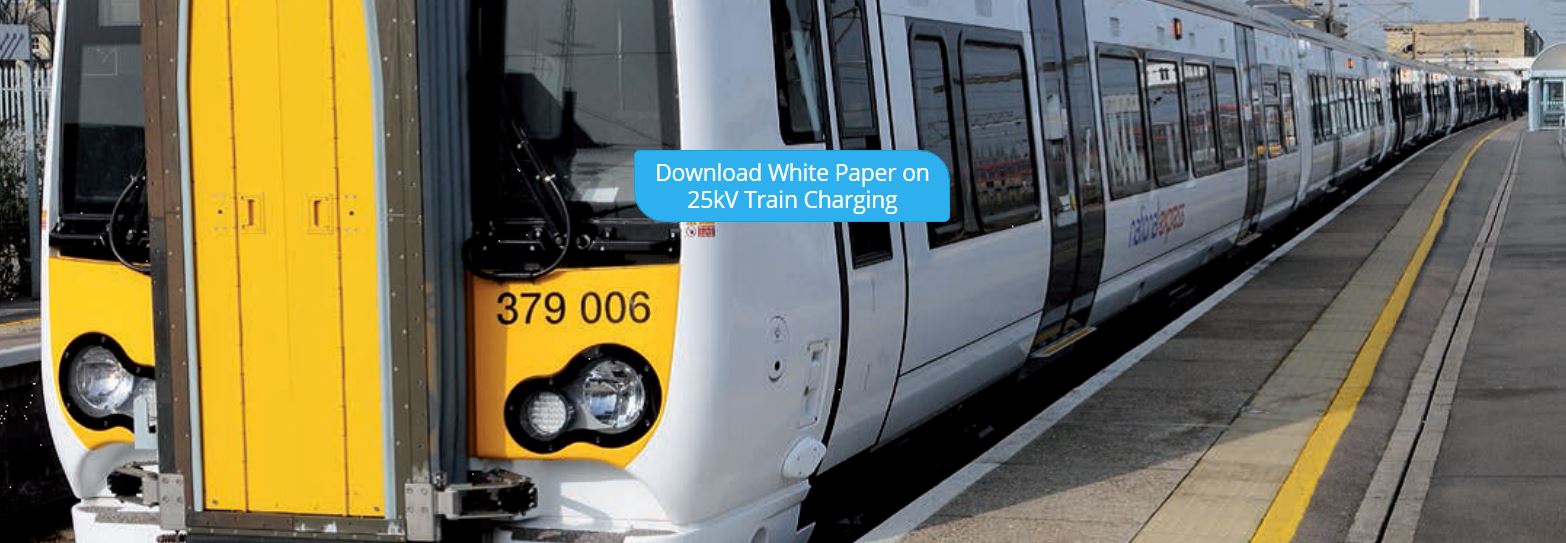
Shown is a Class 379 train, at a station, which I’m pretty sure is Cambridge.
Liverpool Street to Cambridge is a fully-electrified route, so why would a charging station be needed on this service?
I can’t think of a reason.
So I suspect, it’s just that to illustrate the web page, they needed to use a train that had the capability of running under battery power, which the Class 379 did in the BEMU trial of 2015.
It could also be that Furrer + Frey are working with Bombardier and it’s a Bombardier library picture.
But then Furrer + Frey probably work with all the major train manufacturers.
And as Bombardier have just released a new battery train, that I wrote about in Bombardier Introduces Talent 3 Battery-Operated Train, it would be logical that the two companies are working together, as battery trains will surely need charging in stations to develop longer routes.
Note the blue box in the middle of the picture. It says.
Download White Paper On 25 Kv Train Charging
If you download the white paper, you will find a very comprehensive and detailed description of how battery trains could be charged in stations. This is the introductory paragraph.
Battery-powered trains are rapidly becoming the vehicle of choice for the replacement of diesel
trains on non-electrified rail lines. Often there is not enough traffic on these lines to justify the expense of erecting overhead line equipment (OLE) along the track. In many cases, the train runs under OLE for part of its route where the battery train can charge via its pantograph. However, sometimes additional charging is required. While it is possible to erect additional kilometers of OLE for charging, it is more cost effective to charge the train via pantograph while stopped at a station using a very short length of overhead conductor rail and a 25 kV power supply.
I will now try to explain the solution.
The white paper gives this physical description of the solution.
The physical structure of the charging station is quite simple.
It consists of a short length of overhead conductor rail, approximately 20 m to 200 m in length. This length depends on the type, length, and number of battery trains that will be charging at one time. The conductor rail is supported by normal trackside posts and high voltage insulators. Insulated cables lead from the power supply to the conductor rail, with the return path from the running
rails. Furrer+Frey makes 25 kV and 15 kV overhead conductor rail systems that are ideal for this
purpose.
The design seems to use readily available components.
What Is Overhead Conductor Rail?
This picture, that I took on the Thameslink platforms at St. Pancras station, shows the overhead conductor rail, used to power the trains.
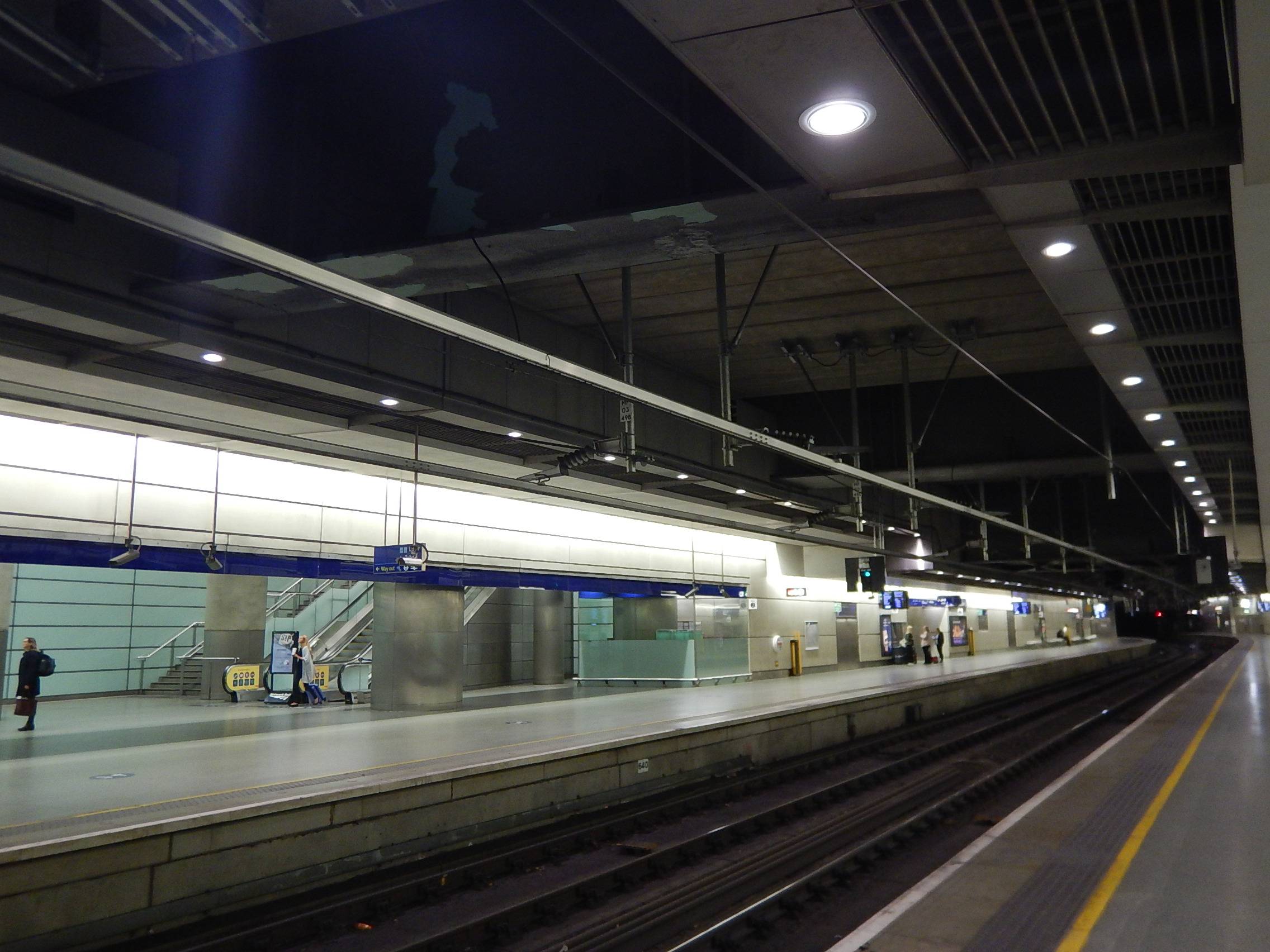
St. Pancras is one of the best places to see overhead conductor rail in London, although overhead conductor rail will be used by Crossrail in the tunnels.
How Would Overhead Conductor Rail Be Used To Charge A Train’s Batteries?
A short length of such a rail, would be mounted above the track in the station, so that it could be accessed by the train’s pantograph.
The rail would be positioned so that it was exactly over the train track, at the height required by the train.
What Voltage Would Be Used?
The normal overhead voltage in the UK, is 25 KVAC. There is no reason to believe that any other voltage would be used.
The overhead conductor rail/pantograph combination has a lot of advantages and benefits.
The Overhead Conductor Rail Is Standard
The overhead conductor rail is a standard Furrer + Frey product and it can be supported in any of the appropriate ways the company has used around the world.
This picture shows conductor rail fixed to the wall in Berlin HBf station.

Or it could be fixed to gantries like these at Gospel Oak station, which carry normal overhead wiring.
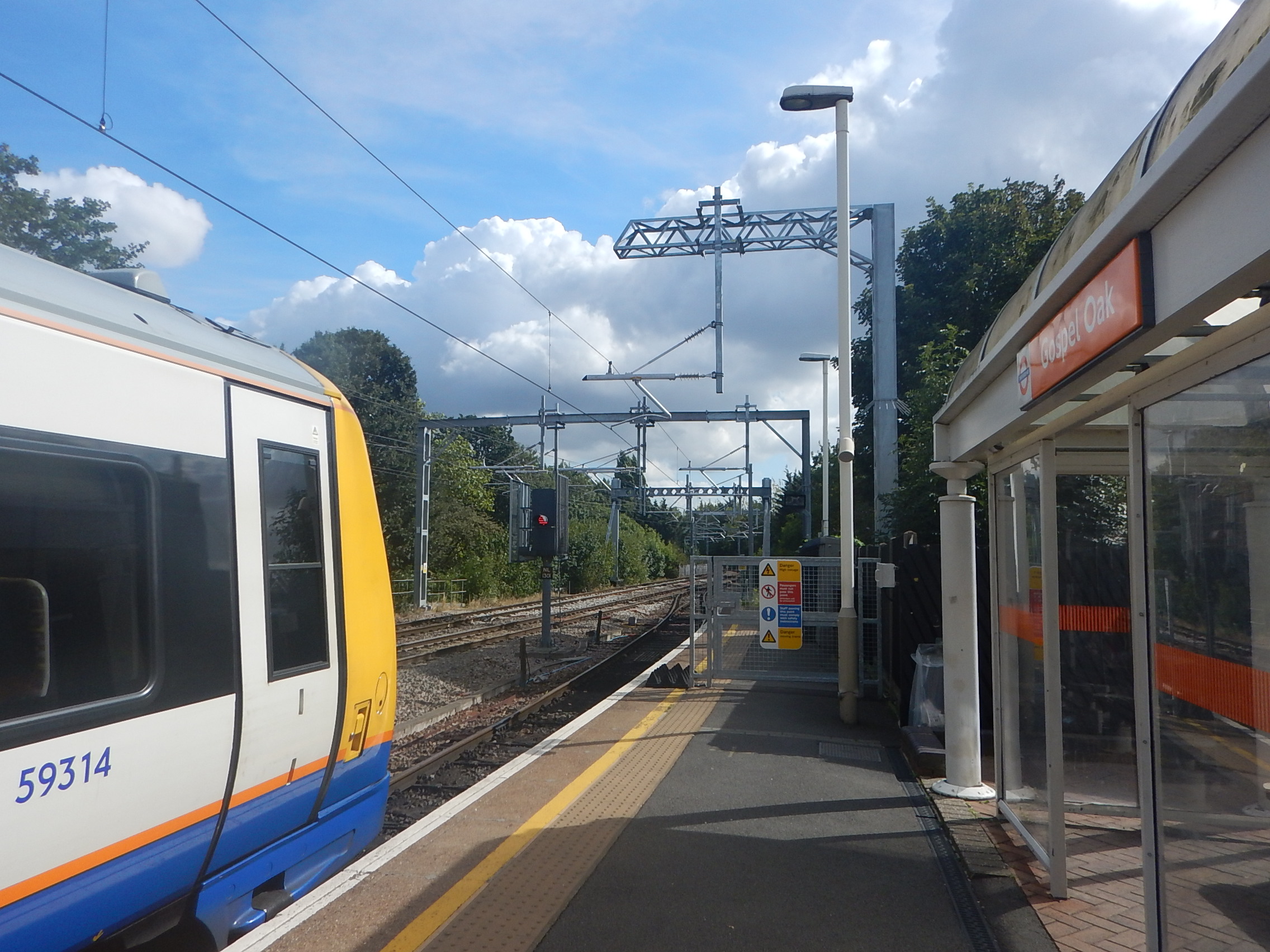
Note that gantries come in all shapes and sizes.
The Overhead Conductor Rail Can Be Any Convenient Length
There is probably a minimum length, as although drivers can stop the trains very precisely, a few extra metres will give a margin of error.
But there is no reason why at a through platform on a line served by battery trains, couldn’t have an overhead rail, that was as long as the platform.
The Train Pantograph Is Standard
The pantograph on the train, that collects the current from the overhead conductor rail can be an almost standard unit, as it will be doing the same job as it does on electrified sections of the route.
The white paper goes into this in detail.
As in the UK, our overhead line voltage is 25 Kv, the train can receive 1 MW with a current of 40 A, which is probably low enough to be below the limit of the conductor rail/pantograph combination. This would allow around 80 kWh to be transferred to the train in a five minute charge.
Could Trains Use Two Pantographs To Charge Batteries?
The white paper says that the system could handle more than one train, if the overhead conductor rail was long enough.
Bombardier’s Class 345 trains are effectively two half-trains, which each have their own pantograph.
So could a train use both pantographs to charge the batteries?
A Sophisticated Pantograph Control System Could Be Used
The train would probably have a sophisticated control system to automatically raise and lower the pantograph, so as to maximise the charge, whilst the train was in the station.
The System Should Be Safe
The overhead conductor rail would be no closer to passengers and staff, than overhead wires and conductor rail are at any other station platform in the UK.
I also suspect, that the power to the overhead conductor rail would only be switched on, if a train was being charged.
Standard Solutions Could Be Developed
One application of battery trains is to use them on a branch without electrification from an electrified line to a simple station in a town, housing or commercial development or airport..
The terminal stations would be very simple and surprisingly similar.
- One platform.
- An overhead conductor rail on gantries, a wall or some other simple support.
- A power supply for the overhead conductor rail.
A station building,, shelters and information displays could be added to the solution or designed specifically for the location.
Solutions for a wide range of countries would only differ in a few areas.
- The height of the platform.
- The gauge of the track.
- The overhead conductor rail voltage.
But I do believe that in this example of a standard system, there will be surprising commonality across the world.
As the white paper identifies, there is at least one tricky problem.
The High Voltage Power Supply
Providing high-quality, reliable high-voltage supplies may not always be that easy in some areas, so innovative electrical solutions will certainly be needed.
One solution suggested in the white paper involves using energy storage and then creating the 25 KVAC to power the overhead conductor rail.
I like this solution, as there are many applications, where these forms of independent power supplies are needed to power industrial premises, villages and equipment like flood pumps, often in remote locations. They could also incorporate a wind turbine or solar panels.
Someone will develop these systems and providing 15 or25 KVAC will be just another application.
Conclusion
I will add the conclusion from the white paper, as it says it all.
Battery trains are now available to replace diesel
trains on existing non-electrified tracks. They can
be charged using AC 25 kV 50 Hz or AC 15 kV 16,7
Hz either while running under catenary or when at
a standstill at a station using a short length of
overhead conductor rail and an appropriate power
supply. Standstill charging avoids the need to
build long stretches of catenary along a track
thereby saving money, and allowing the electrification
of track previously thought to be uneconomic
to electrify. Battery trains also enable the
use of renewable energy sources. Moving towards
green energy sources reduces harmful emissions
and noise which positively impacts climate change
and improves health
I am sure, we’ll see a lot of uses of this simple and efficient method of charging battery trains.
D-Train Order For Marston Vale Confirmed
The title of this post, is the same as the title of an article in the April 2018 Edition of Modern Railways.
It gives a few more details on the order from West Midlands Trains for three Class 230 trains to provide the service on the Marston Vale Line.
- The trains will be in operation in December 2018
- Two trains will operate the daily service.
- The trains will be diesel-powered.
When the trains come into operation, extra early morning and late-night services will be added from Monday to Saturday.
Battery Prototype
The article also gives more details of the battery prototype.
- The train has four battery rafts, each with a capacity of 106 kWh
- Range is up to fifty miles with a ten minute charge at each end of the journey.
- Range will increase as battery technology improves.
- The train is charged using a patented automatic charging point.
- The batteries will have a seven-year lifespan, backed by a full warranty.
- Battery rafts would appear to be interchangeable with the diesel generators.
- Hydrogen power will be used within the next few years.
The specification seems comprehensive and it would appear there is a high degree of innovative automation and well-thought-out electrical engineering.
Train Energy Consumption
The train has the following characteristics.
- Two cars
- 424 kWh of battery capacity.
- 50 mile range
This gives a consumption 4.24 kWh/per car/per mile.
In an article in the October 2017 Edition of Modern Railways, which is entitled Celling England By The Pound, Ian Walmsley says this in relation to trains running on the Uckfield Branch, which is probably not much more taxing than the Marston Vale Line.
A modern EMU needs between 3 and 5 kWh per vehicle mile for this sort of service.
I am surprised that the Class 230 train lies in the 3-5 kWh range, but then I’m not sure of the weights of the two trains.
I estimate two-car units to weigh as follows.
- Class 230 train plus batteries – Around 50 tonnes.
- Electrostar – Around 90 tonnes
- Aventra – Around 80 tonnes
I shall get some better figures, when I actually see the trains, as the weight is on the side.
The Pop-Up Train
The article talks of the concept of a low-cost pop-up train as a solution for a regional or commuter train.
Export To America?
This pop-up train could be designed to be used to demonstrate rail services in America.
Henry Posner, who is promoting the train in America is quoted as saying cities could use the train to test possible services with passengers on board ‘for less than the cost of a consultant’s study into a possible service’.
These demonstrations will be on freight lines, where for reasons of safety, the passengers trains would run during the day and freight trains at night.
Is America ready for an invasion of remanufactured forty-year-old London Underground D78 Stock trains?
Could Third-Rail Tram-Trains Work The Epsom Downs Branch?
The Epsom Downs Branch is a single-track branch line from Sutton to Epsom Downs station.
Currently, it has a service to Victoria of around two trains per hour (tph), but it doesn’t seem to generate much business.
In 2015-16, Epsom Downs station had 112,000 passengers, whereas Sutton station had 7,111,000.
As the three stations on the branch are all single-platform stations with few facilities, can it be viable to run Class 377 and Class 455 trains on the branch?
When the London Tramlink arrives in Sutton, I wonder if the branch would be more suited to be running by trams.
But as the line is electrified with the standard 750 VDC third-rail system, is it one of those places, that could it be served by a third-rail tram-train, as I proposed in The Third-Rail Tram-Train?
I think the answer is in the affirmative.
Consider.
- The tram service could terminate at the proposed Streatham Common Interchange station.
- It takes less than ten minutes to go between Sutton and Epsom Downs
- In the Peak or when more capacity is needed, Class 377 trains could still run the service.
- The tram-trains could provide a step-free service.
Running the service with tram-trains, would give one big advantage; the ability to run a service to the Royal Marsden Hospital, which according to this document from the hospital is not the best, when it comes to public transport.
A single-track branch from the Epsom Downs Branch could start South of Belmont station and tram-trains running on batteries could serve both the Royal Marsden Hospital and the Institute of Cancer Research.
This Google Map shows Belmont station and the hospital.
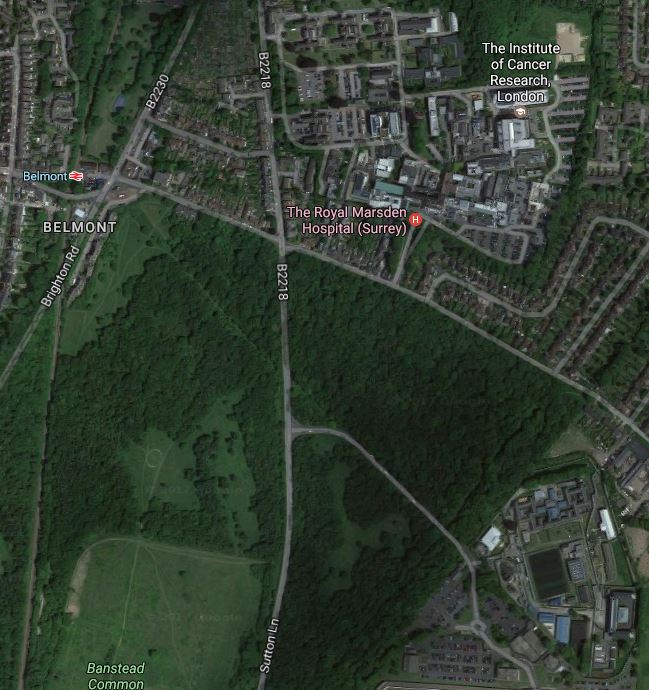
Note.
- The rail line from Belmont station to Epsom Downs station running down the West side of the map.
- There are two prisons in the South East corner of the map.
- The road from Belmont to the Hospital may only be half a mile, but it is up a steep hill.
- Why is every train arriving at Belmont station, not met by a shuttle bus to the Royal Marsden Hospital?
- There is one train per hour through Belmont station in both directions.
A silent battery tram-train without any overhead wires, climbing up on the railway line and then turning East across Banstead Common calling at the prisons en route to the Hospital, might be acceptable to the Planning Authorities. It would surely be less intrusive than some of cars and vans, I saw rushing through the Downs.
I would think that the hospital needs a frequency of four trains per hour to Sutton, in addition to the current sewrvices between Sutton and Epsom Downs.
A charging station, like a Railbaar, at the end of the short branch might be needed, to make sure that the gradients were conquered.
These pictures show Belmont station and the walk to the Royal Marsden Hospital.
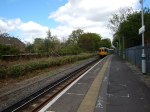
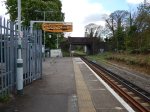
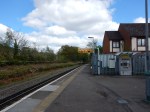
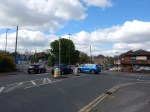
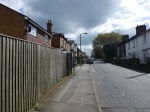
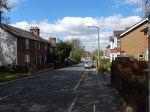
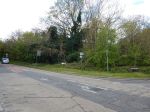
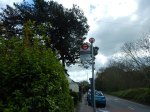
Knowing, what I now know of the Royal Masrsden Hospital, it wouldn’t be my choice of hospital.
I don’t think, I’vw seen a hospital with such terrible access by public transport!
The Third-Rail Tram-Train
I’ve never seen anybody propose a third-rail powered tram-train, but that is probably because everybody has assumed quite rightly, that you couldn’t power a tram by using third-rail electrification. It’s just too dangerous! But is it so dangerous on a segregated track?
In February 2016 I wrote Brummies Go For Battery Trams and it is now ienvisaged that Midland Metro‘s trams will be running services under battery power in 2019.
Battery power is used for trams in several places around Europe and the rest of the World and is becoming a proven technology. Is there any reason why a battery tram-train, can’t be powered by third-rail electrification, when it is running as a train?
The Class 399 Tram-Train
The Class 399 tram-train is under test in Sheffield, to prove that it can run passenger services in the UK.
These tram-trains can handle either 25 KVAC or 750 VDC from overhead wiring. I also think, they are also clever enough to work out what voltage they are getting and configure themselves accordingly.
Since, I originally wrote this post, KeolisAmey Wales have ordered thirty-six tram-trains from the same Citylink family as the Class 399 trains.
Stadler, whose Valemcia factory built the Class 399 tram-trains, will also be building trains for Merseyrail’s network, which will run using 750 VDC third-rail electrification.
Would it be reasonable to assume, that Stadler will be able to design an appropriate pick-up shoe for the Class 399 tram-train, so that it can run on a 750 VDC third-rail network?
Batteries
A battery system would also be needed, but I believe that this will be generally offered by all tram and tram-train manufacturers, as trams and tram-trains will be running increasingly in heritage or sensitive areas.
Charging The Batteries
Batteries would normally be charged, when the tram-train is running on an electrified line, under power from the third-rail system.
The MetroCentro in Seville, works without catenary and has a fast charging system at the two end stops.
There is no reason to believe that a Class 399 tram-train with batteries, couldn’t work with a fast charging station like a Railbaar.
Tram-Trains For The South Wales Metro
Since, I originally wrote this post, KeolisAmey Wales have ordered thirty-six tram-trains from the same Citylink family as the Class 399 trains, for running on the South Wales Metro.
These tram-trains will be fitted with batteries.
Would A Third-Rail Tram-Train Have A Pantograph?
This would be a matter for the operator.
But there is one UK tram network; the London Tramlink in Croydon, which is surrounded by an extensive third-rail electrified network.
The ability to run on both types of 750 VDC systems might be an asset and enable new services to be created without any extra electrification, by using a small amount of battery power to change from one system to another.
Changing Between Third-Rail And Overhead Electrification
This map from carto.metro.free.fr shows the track layout at Mitcham Junction station.
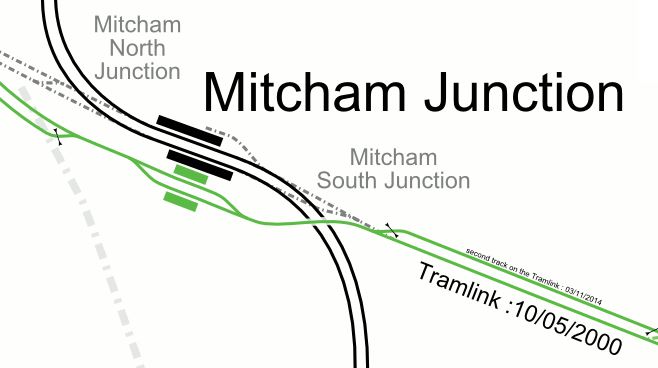
Suppose a link were to be provided, so that tram-trains could come from the South, pass through Mitcham Junction station and then cross over to the tram tracks for Wimbledon.
These pictures show the area.
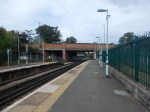
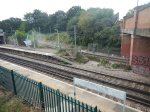


As the link would have no electrification, the power changeover would be as follows.
- Arrive in Mitcham Junction station, using third-rail power.
- Raise and isolate the third-rail shoe.
- Switch to battery power.
- Proceed using the link to Mitcham tram stop.
- Raise the pantograph and switch to overhead power.
A reversed procedure would be used in the opposite direction.
Range On Third-Rail Power
The range of a Class 399 tram-train running on third-rail power, would be more limited by the train-tram’s speed of 100 kph and interaction with other services, rather than any electrification issues.
The range will probably be the same as the German cousins of the Class 399 tram-trains on the Karlsruhe Stadtbahn. These trams run on both 750 VDC and 15 KVAC, to places up to fifty kilometres from the Centre of Karlsruhe.
As a simple example, a third-rail tram-train running on the London Tramlink, could certainly use third-rail lines to access Gatwick Airport.
Range On Battery Power
In Out Of The Mouths Of Brummies, which describes an interview with those involved in the Midland Metro battery train project, I published this quote about battery trams.
Since then there has been lots of work and we’re now comfortable that battery technology has advanced sufficiently for it to be viable.
Under test conditions with plain straight track a tram could travel 20 km catenary-free. In practice, this would be rather less for a fully laden tram ascending the 9% gradient on Penfold Street. The longest catenary-free run we’ve envisaged is around 2 km, and we’re comfortable we can achieve that.
I think until Birmingham proves otherwise, 2 km. would be a sensible range for a tram or tram-train running on a full battery.
Compatibility Issues With Other Rail Vehicles And Platforms
This to me is a matter of design, but after the Sheffield tram-train trial and the analysis of platform solutions in Europe, I suspect that we’ll come up with a solution that works.
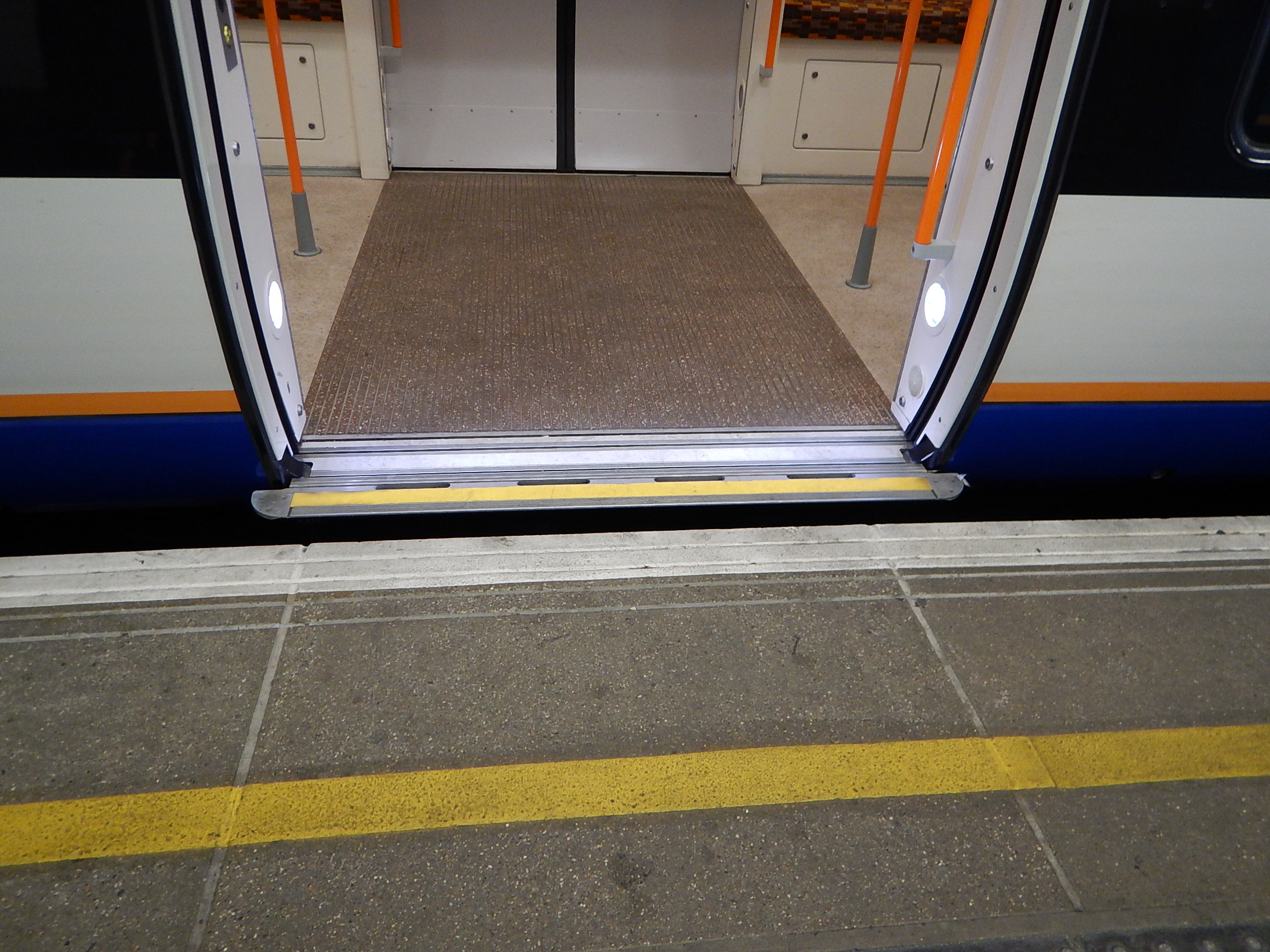
I think it is true to say, that many of our trains are badly matched to the platforms, but as this picture of a Class 378 train on the London Overground shows, the gap is becoming easier to mind.
I think too, we have an advantage over Europe, in that our loading gauge is smaller and our trains are closer in size to a modern tram or tram-train.
We are also good at innovative access solutions, as this picture from Canonbury station shows.
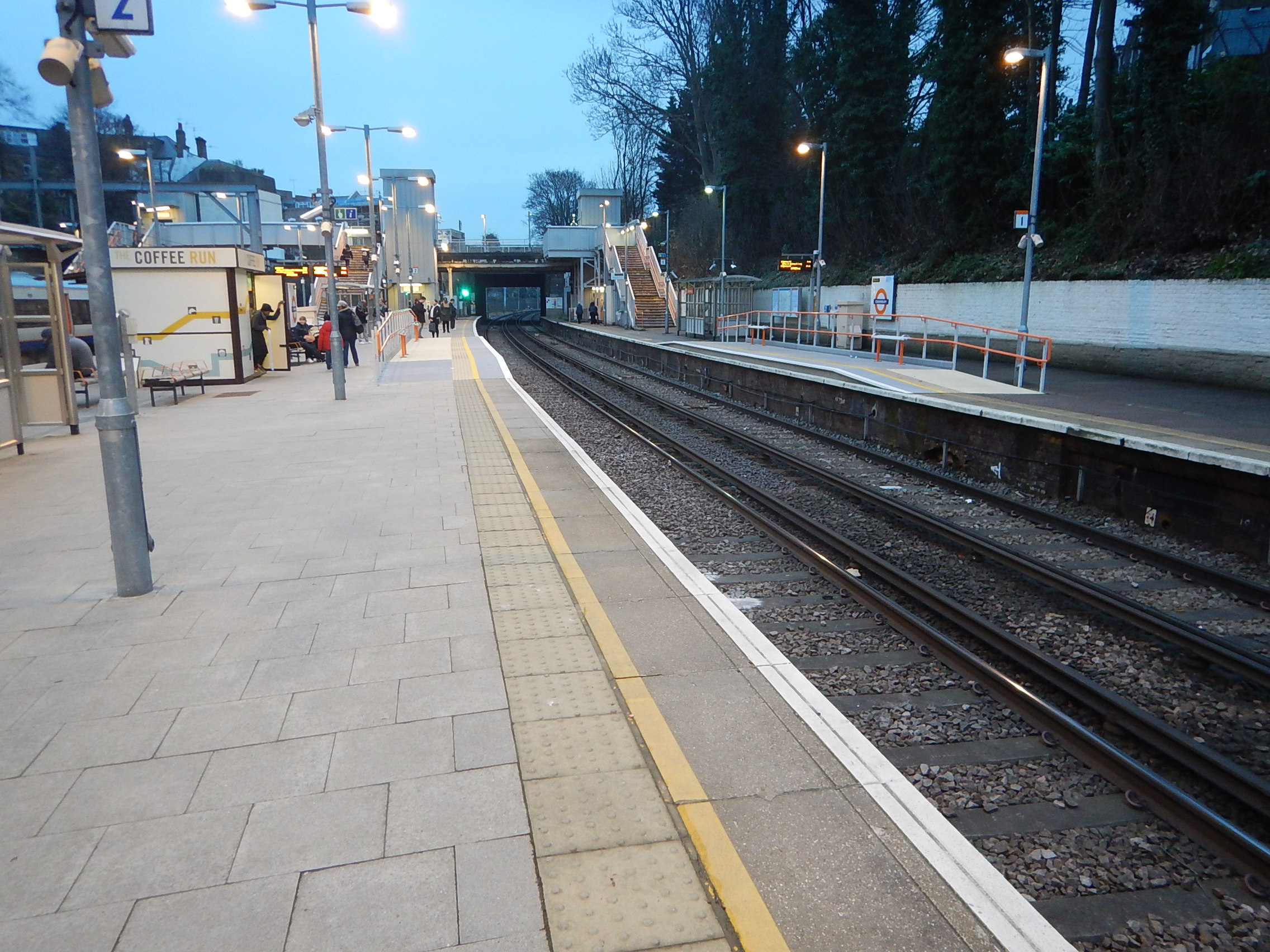
We may have a problem with using double-deck trains, but I believe that good design can minimise the problems of good access to both trains and tram-trains at the same platform.
Applications
The applications will be limited by battery range and by the gradients of the line.
In Southampton – A City Built For Cars, I describe how if they built their proposed Solent Metro around third-rail tram-train technology, they could transform the city.
In Could Beckenham Junction To Birkbeck Be Run Using Third-Rail Tram-Trains?, I show how third-rail tram train-technology , could be used to create more capacity at Beckenham Junction station.
In Could Third-Rail Tram-Trains Be Used To Increase Services In South London?, I show how third-rail tram-train technology, could be used to expand the London Tramlink.
In Could Third-Rail Tram-Trains Work The Epsom Downs Branch?, I show how third-rail tram-train technology, could serve the Royal Marsden Hospital.
In The Cranleigh Line, I suggest that third-rail tram-train technology could be used on this route.
Conclusion
Technically, I feel that a Class 399 tram-train capable of running on third-rail electrified lines is possible.
But it would have to run on battery power or 750 VDC overhead, when running as a tram.
Railbaar In Rail Engineer
In January 2016, I wrote How To Charge A Battery Train, in which I described a Swiss idea called Railbaar.
This article in Rail Engineer is entitled RailBaar – Rapid Charge Station and it describes the technology in detail.
The article gives the impression, that respected Swiss company; Furrer+Frey, have a product that is ready to be rolled out.
This is said.
Furrer+Frey feels that the system could be a game changer, dramatically reducing the cost of electrification, and thus the feasibility of new electrification projects.
Read the article and see if like me, you agree with Furrer+Frey, like I do.
The Felixstowe Branch Line
I will use the twelve mile long Felixstowe Branch Line as an example, because I know the branch line well and spent some miserable days trapped in the town as a teenager because of the inadequate rail service to Ipswich.
The train service is better now, but it would be better if every thirty minutes one of Greater Anglia’s new Aventras was to shuttle along the branch.
But the line is not electrified and there is very little change it will happen.
Bombardier showed with their Class 379 BEMU trials in January 2015, that a four-car and probably a five-car version of the Avenytra could be fitted with a battery that would take the train reliably between Ipswich and Felixstowe.
But the problem with say electrifying a platform at Ipswich station and charging the train there, is that the battery needs to be sized to do two trips along the branch line.
By using a charging station like Railbaar at both ends of the line, the train would always leave the station with a full charge.
Currently, trains between Felixstowe and Ipswich take 26 minutes, so if the battery could be charged in four minutes, then a train could do a return trip in an hour.
This would mean that two trains would be needed to provide a two trains per hour service.
Sudbury And Colchester Town
Greater Anglia have indicated that they might replace the shuttle between Sudbury and Marks Tey stations, with a direct service between Sudbury and Colchester Town stations.
They could run this service with bi-mode Stadler Flirts.
On the other hand, the Gainsborough Line between Marks Tey and Sudbury is only eleven miles long, which is well within the range of a train running on stored energy.
It currently takes nineteen minutes for a train to go between Marks Tey and Sudbury, so a battery train would have twenty-two minutes in every hour for charging.
Operation could be as follows.
- 10:00 Leave Colchester Town running on current electrification.
- 10:08 Call Colchester station.
- 10:16 Arrive Marks Tey station with a full battery, after charging it on the main line.
- 10:35 Arrive Sudbury station after running from Marks Tey on battery power.
- 10:40 Leave Sudbury station after charging the batteries using a Railbaar.
- 11:59 Arrive Marks Tey station after running from Sudbury on battery power.
- 11:02 Leave Marks Tey station, raise the pantograph and travel to Colchester.
- 11:10 Call Colchester station.
- 11:18 Arrive back at Colchester Town station.
Note.
- The trains pass each other on the main line.
- I have used the times for the current trains.
- Only one Railbaar would be needed at Sudbury.
,Perhaps Aventras and with a faster charge at Sudbury could save a few minutes.
Aventras And Railbaar
The Aventra has a slightly unusual and innovative electrical layout.
This article in Global Rail News from 2011, which is entitled Bombardier’s AVENTRA – A new era in train performance, gives some details of the Aventra’s electrical systems. This is said.
AVENTRA can run on both 25kV AC and 750V DC power – the high-efficiency transformers being another area where a heavier component was chosen because, in the long term, it’s cheaper to run. Pairs of cars will run off a common power bus with a converter on one car powering both. The other car can be fitted with power storage devices such as super-capacitors or Lithium-Iron batteries if required.
This was published six years ago, so I suspect Bombardier have improved the concept.
So in a battery version of the Aventra would this mean that the pantograph is on the car with the high-efficiency transformer and the battery is in the second car?
So if the train is going to work with Railbaars, then the contact points on the roof of the train for the Railbaar would be on the car with the batteries.
All of the 25 KVAC and its handling is in one car and all the batteries and their charging is in another, with the only connection being the common power bus connecting everything on the train.
I suspect that with careful positioning of the Railbaar at each end of the route and an aid for the driver so that the train is positioned accurately and it would create a reliable charging system.
Obviously, there is nothing to stop, the trains charging their batteries, when they are using overhead wires or third rails.
Conclusions
So what do we know about using batteries on trains to work routes?
- Bombardier showed in their trial, that a battery train can run the eleven miles of the Mayflower Line, starting with a full battery.
- Batteries are getting more powerful and more affordable every year.
- The Bombardier Aventra would be ideal for a Railbaar-type charging system.
- Battery trains can charge their batteries running on electrified lines.
- The bus version of Railbaar is in use charging electric Volvo buses at a rate of 360 kW. See the Opbrid web site.
- The physics of steel wheel on steel rail is efficient, as George Stephenson knew.
Put this all together and I think that by the end of 2018, we’ll be seeing Aventra trains, running services on a twenty mile branch line without electrificaton.
Reopening The Fawley Branch Line
The Fawley Branch Line is a freight-only branch line alongside Southampton Water in Hampshire.
Under Future in the Wikipedia entry for the Line, this is said.
On 16 June 2009 the Association of Train Operating Companies announced it was looking into the reopening of the railway as far as Hythe, with a possibility of a further extension to Fawley if agreement could be reached with Esso, which owns the land where Fawley railway station once stood.
A lot more detail is also given, which has these major points.
- Reopening of all former stations along the line.
- A new station in Totton called Totton West, sited just west of the junction with the main line.
- A new train service from Fawley or Hythe to Totton and on via Southampton Central, Southampton Airport Parkway, Eastleigh, Chandlers Ford and Romsey before returning to Southampton Central, Totton and Fawley or Hythe, also serving other intermediate stations.
- Hourly train service.
- Possible future electrification
The section to be reopened would be about seven miles in length.
This Google Map shows the area of the branch line.
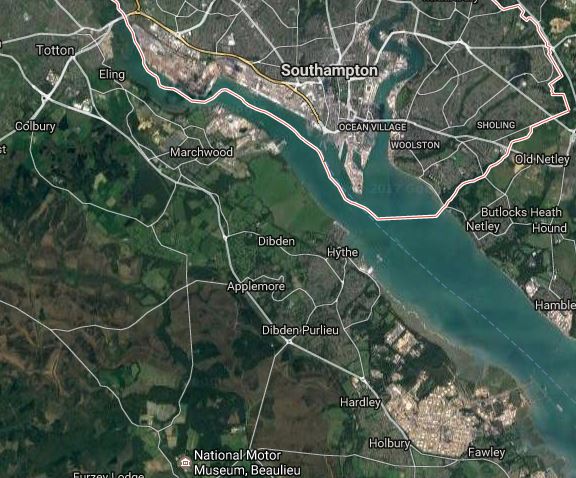
Fawley Branch Line
It starts at Totton and there used to be stations at Marchwood, Hythe, Hsardley and Fawley.
Rolling Stock
The current proposals talk about using diesel trains, which would probably be Class 158 or Class 159 trains.
Given that Totton station is on the electrified South Western Main Line, other trains that can work on partly electrified lines may be able to work services on the Fawley Branch Line.
A Class 319 Flex train could use electric power on the main line and diesel power on the branch.
Battery trains like an Aventra with onboard energy storage, could use electric power on the main line, where they would also charge the batteries. Batteries would then be used on the branch, with a possible top-up charge from something like a Railbaar at Hythe station.
A Trip To Hythe
To look at the Fawley Branch Line, whilst I was in Southampton, I took a trip on the ferry to Hythe and had a look round.
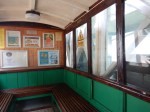

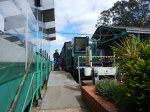
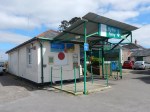


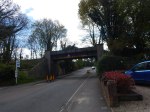





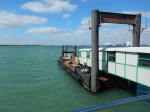

The Fawley Branch Line passes through Hythe about two hundred metres from the water.
This Google Map shows Hythe.
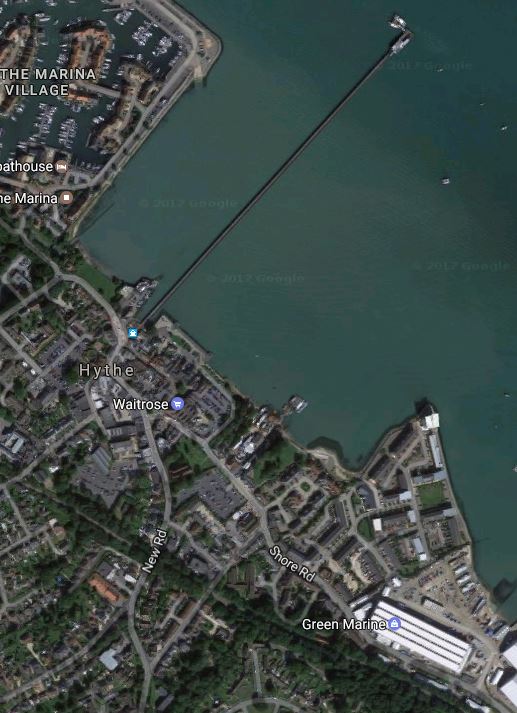
The railway can be picked out as the green scar going across the bottom of the map.
I’m not sure, where the new Hythe station would go.
The Design Of The Line
This picture shows where the Fawley Branch Line joins the main line.
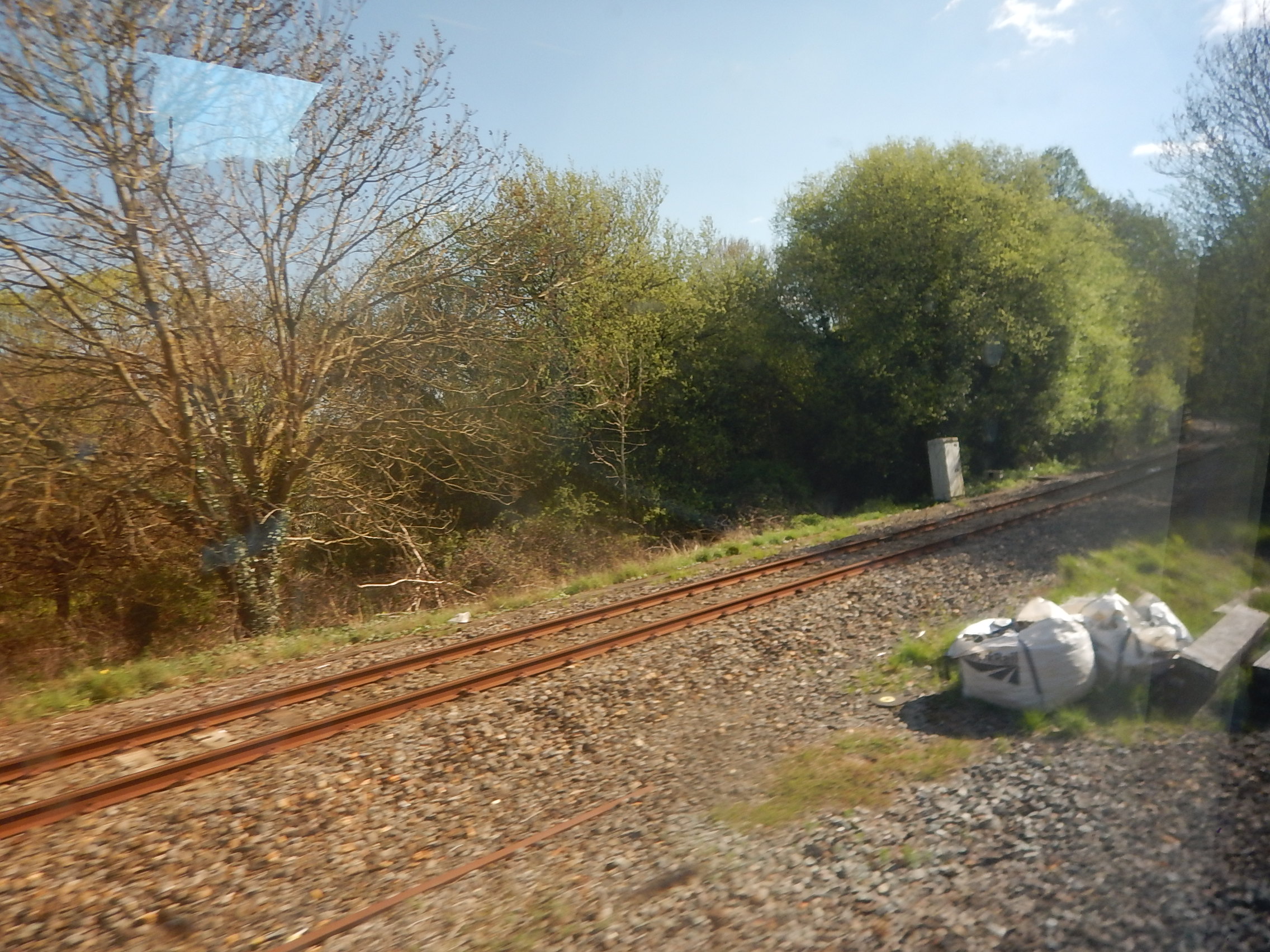
It all looks pretty tidy and in good condition, so making the connection to the main line wouldn’t be too difficult.
The quoted route from Fawley or Hythe via Totton, Southampton Central, Southampton Airport Parkway, Eastleigh, Chandlers Ford to Romsey is only electrified between Totton and Eastleigh, as the Fawley Branch Line and the Eastleigh to Romsey Line are not electrified.
But it is an interesting route, as one of its effects will be to double the frequency of services between Eastleigh and Romsey, where it is probably needed to serve new housing.
I reckon that it would take about forty-five minutes to go from Fawley to Romsey or vice-versa.
It would also be a route for using some form of train with new technology.
- A bi-mode train able to use third-rail electrification would be a possibility.
- A Class 319 Flex train would manage the route with ease.
- Perhaps, a battery train based on a third-rail multiple unit could make the route.
The battery train could be very suitable for the route, as an hourly service would need two trains, which would have around fifteen minutes to charge their batteries at either end of the route.
Current Status
Currently, the project is on hold, but given the location, where some very nice waterfront housing might be built, circumstances could change.
Thoughts On Merseyrail’s New Trains
Merseyrail have ordered 52 new Stadler trains to replace, the 59 geriatric Class 507 and Class 508 trains on the Northern and Wirral Lines.
In some ways I was surprised, as with the possible takeover of tye Borderlands Line to Wrexham in Wales, I thought that Bombardier, may have had a good chance with Aventras with an onboard energy storage or IPEMU-capability.
Reports On The Internet
These are some useful articles that give more details.
- Article in the Liverpool Echo, entitled Merseytravel reveals new £460m train fleet plans – with no train guards
- Article in Railway Gazette, entitled Stadler selected to supply bespoke Merseyrail train fleet
- Article in Rail News entitled Stadler wins contract to build new Merseyrail trains
- Article in Focus Transport entitled New Stadler Trains Announced for Merseyrail
These are my thoughts on the new trains.
The Loop
The Wirral Line trains run in a single-track circular loop tunnel under Liverpool (The Loop), which is a fairly unusual railway formation. But it works well and means that the three stations on The Loop can be single-platform.
The track in the Loop is being relaid in the first half of 2017 and this article on the Merseyrail web site describes the work.
This is a video of the rebuilding.
Note.
- The tunnel has a diameter of 4.7 metres.
- By comparison, the Crossrail tunnels have a diameter of 6.2 metres.
- If you are relaying the track, you will make sure, that the track and platforms fit your current trains, which could run for another five years or more.
- The tunnels and platforms will probably be sized, so that there is only a small gap between the train and platform.
- The slab track chosen looks to be of the highest quality and similar to that which Transport for London are using on the Sub Surface lines, as described in this article in Rail Engineer.
So Liverpool is getting a world-class railway track on The Loop, which will fit its current rolling stock, like a glove.
It will also be very safe, as the gap between the trains and the platform could be very narrow.
They don’t say in the video, but will the tracks be arranged so that the trains align for step-across at the stations on The Loop?
The Tunnel Size Issue
If you have just rebuilt the track in the Loop, then this will have implications for the new trains needed for the lines.
The small size of the tunnel and the precision fit, mean that any new trains must be a similar height and width, as the current Class 507/508 trains.
The height of the Class 508 train is 3.58 metres and for comparison the height of a Class 378 train is 3.78 metres.
I don’t have a figure for a Bombardier Aventra, but I suspect that they are just too fat.
So it looks like that a small number of non-standard size trains need to be built to fit the slightly smaller size tunnels under Liverpool.
The Railway Gazette article says this about the trains ordered from Stadler.
There will be a mix of airline and facing seats, with more space for bicycles, pushchairs and persons with reduced mobility. The train body will be designed specifically for the Merseyrail network, with lower floors and a sliding step to provide near-level access.
It is interesting to note, that Stadler also won the order for the smaller trains on the Glasgow Subway, which I wrote about in Glasgow Subway Orders New Trains From Stadler.
As it looks like they will be specially built to fit the tunnels and the platforms, this has various implications.
- Passengers in wheelchairs, pushing buggies or dragging large suitcases should be able to just wheel themselves into the train, which is described as lower floor.
- All platforms, that the trains call at, must have the same critical dimensions.
- Safety could be increased as the gap between train and platform could be very narrow.
- Incidentally, the trains are reported to be fitted with automatic gap fillers, to make sure nothing drops through the gap.
- Will the tracks in the Northern Line tunnel through Liverpool be renewed?
The trains had better be well-built as they’re going to have to last a long time. But if say extra trains were to be needed to increase frequency, capacity or routes, Merseyrail would probably just send an e-mail to Switzerland.
Platforms And Stations
Most new trains need modifications to platforms, to match the trains.
As it appears that the new trains are designed to fit the current platforms, I suspect that very little will need to be done before they arrive.
On my travels, I did notice on-going work at some stations, but this would fit either fleet of trains.
From the specification of the trains, it would appear that all of the driver-only-operation equipment is on the trains, rather than the platform, so station improvement money can be spent on passenger facilities like lifts and weather protection.
Any new stations that may be required could possibly be built to an affordable but very passenger-focused design.
Cost
Special trains don’t come cheap and these 52 trains roll in at a total of £450million or about nine millions a train.
Compare this with the price of £260million, that Transport for London paid for 45 similar-capacity Class 710 trains for the London Overground, which works out at just under six million a train.
The trains are apparently not leased, but paid for directly. The Rail News article, says this.
The 52 four-car trains will be publicly owned rather than leased from a ROSCo, and the finance needed will be raised in various ways, including by using a rail reserve that has already been established for this purpose, plus loans at ‘favourable interest rates’. Merseytravel said ‘such opportunities are currently being explored, such as a loan from the European Investment Bank’.
London financed the first London Overground trains in a similar way.
Capacity
The Railway Gazette article, says this on capacity.
The 65 m long four-car EMUs will have the same number of seats as the existing three-car sets, but will be 4 m longer with wide through gangways to provide an increase in standing space. This will increase total capacity per EMU from 303 to 486 passengers.
Some of my observations.
- It looks like each train is 64 metres long, with a car length of 16 metres, as opposed to 60 and 20 for the current trains.
- I suspect that there is some interesting behavioural software out there, that is used to design people systems. So the interiors will work!
- The current trains pack in five passengers in every metre of length, whereas the new trains pack in 7.6
- Will it be a lot more packed in there? I don’t know, but the space between carriages is now available for passengers.
- The same trains will be able to run on both the Northern and Wirral Lines.
- Will the extra capacity in a single train, mean that most services will be run by a single four-car unit?
In the Peak, I suspect two trains could be coupled together, as they are now. However, they will couple together and uncouple much quicker and probably automatically.
On the other hand the trains themselves could increase capacity.
I’ll look at the Northern Line first.
In London, Thameslink, Crossrail and the East London Line, run similar services to those on Liverpool’s Northern Line, where services fan out from a central core.
I believe that if the Northern Line ran twelve trains per hour (tph) between Sandhills and Hunts Cross stations, that this would increase the capacity on that route. Twelve tph running all day, would need just 24 trains.
If in the Peak more trains were needed, extra services would be added to an appropriate route.
The Wirral Line is unique, in that trains from four destinations slot together to go under the Mersey, go round The Loop, before going back to Birkenhead and fanning out to where they started.
Currently, twelve tph run in The Loop and I suspect to provide this service all day needs just 24 trains.
Merseyrail have ordered 52 trains, which means there are just four trains to cover maintenance issues and increase services in the Peak.
London Overground Syndrome
All new and upgraded lines seem to suffer from London Overground Syndrome, where passengers see what they like and the original passenger forecasts prove to have been pessimistic.
On the East London Line, three-car trains were forecast to be the right size, but they had been designed to be lengthened and now after two upgrades, the trains are now five-cars long.
As this syndrome has been seen on the Borders Railway, the Nottingham Express Transit and other places, I would not be surprised to see it on Merseyrail’s Northern and Wirral Lines.
But the design of the trains, future-proofs the lines, should there need to be more capacity.
Provided, the signalling can accept the increased frequencies, more identical trains would be added to the fleet.
Or trains could be lengthened, by adding another car, so that the busiest routes perhaps ran five-car trains.
As it would only be a problem of success, I suspect, that the financing wouldn’t be a problem.
Extras In The Contract
The Railway Gazette article, says this on extra items included in the contract.
This headline figure also covers upgrades to the power supply, platforms and track, as well as refurbishment of the depots at Kirkdale and Birkenhead North and future maintenance of the new trains.
I’ve heard that Merseyrail’s power supply is a bit dodgy and probably needs updating. I’ve always wondered, if the trains would handle regenerative braking by the use of onboard energy storage.
Nothing is said except this in the Railway Gazette article.
At 99 tonnes, the EMUs will be lighter than the current 105 tonne trains, and energy consumption is expected to be 20% lower, including regenerative braking; options for energy storage are to be studied.
It will be interesting to see the specification of the new train.
Performance
The Railway Gazette article, says this on performance.
A new timetable will be introduced in 2021 once the existing Class 507 and 508 units dating from the 1970s have been withdrawn; the new trains’ better acceleration and braking is expected to enable Hunt’s Cross – Southport journey times to be reduced by 9 min.
The interesting thing, is that being nine minutes quicker between Southport and Hunts Cross, will bring the journey under the hour and mean that the service can be achieved using less trains.
It would also mean that all trains could go through the core to Hunts Cross, without having to turn trains at Liverpool Central.
Energy Storage
The trains will be fitted with regenerative braking, where the traction motors, act as generators to slow the train, turning the train’s energy into electricity.
There are three common ways of handling the electricity generated.
- Feed it back into the power network for other trains to use, as is done on the London Underground and on the extensive third-rail network in the South East.
- Store the energy on the train and reuse it, as has been demonstrated by Bombardier and is common in vehicles as diverse as high-performance cars, hybrid buses and trams in Seville.
- Feed the electricity into resistors on the roof of the train and turn it into heat.
I believe that option 3 is totally unacceptable and is akin to burning money.
Option 1 will probably require extensive modification to the power supply of the Merseyrail network, as the supply is not known to be of the best and there is no need to handle regenerative braking with the current Class 507/508 trains.
So will we see some form of energy storage on the trains? Birmingham’s trams will have on board energy storage in a few years, so the technology is on its way.
The Railway Gazette article, says that options for energy storage are to be studied.
As an Electrical and Control Engineer, I strongly believe that the cost cost-effective way to handle the regenerative braking energy is to store the energy on the trains.
On European gauge trains, equipment is often mounted on the roof, where there is plenty of space in the generous loading gauge.
But Merseyrail has the problem of the small tunnels.
Look at this picture of a Class 507/508 train entering a tunnel at James Street station.
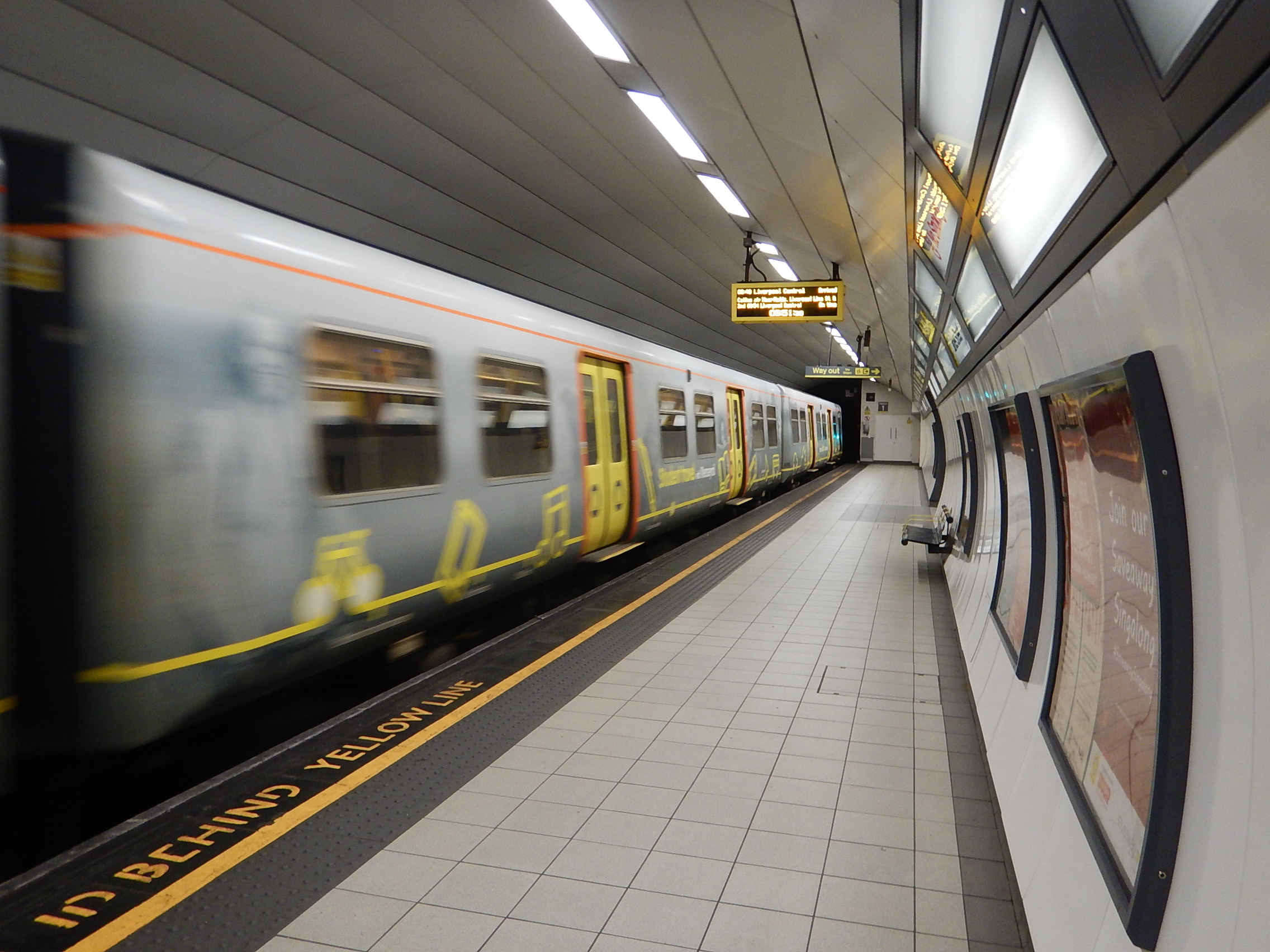
Note how there is some space above the train in the tunnel entrance.
Imagine a train specifically-designed for these tracks, platforms and tunnels, with the bottom of the doors level with the platforms. Would this release more space for putting energy storage on the roof, as has been done with Seville’s trams?
If I am right with this speculation, onboard energy storage also enables the following.
- Regenerative braking on the whole of the Merseyrail third-rail network.
- Next station recovery of the trains, in case of power failure.
- The ability to extend routes using stored energy.
In addition, trains with onboard energy storage have other maintenance and operational advantages.
More Destinations
The Railway Gazette article, says this on more destinations.
The 750 V DC third-rail EMUs will be capable of conversion to dual-voltage operation for use on 25 kV 50 Hz lines with a view to serving Skelmersdale, Warrington and Wrexham in the longer term.
If onboard energy storage is fitted with sufficient range, this would open up other possibilities and also make destinations like Preston much more affordable to implement.
Train-Tram Operation
Note that I said train-tram and not tram-train.
In Riding The Vogtlandbahn, I talked about riding a unique German railway in Zwickau, where the trains go walkabout from the main line station and travel through the city just like trams to a stop in the centre. This picture shows a train-tram at that stop.
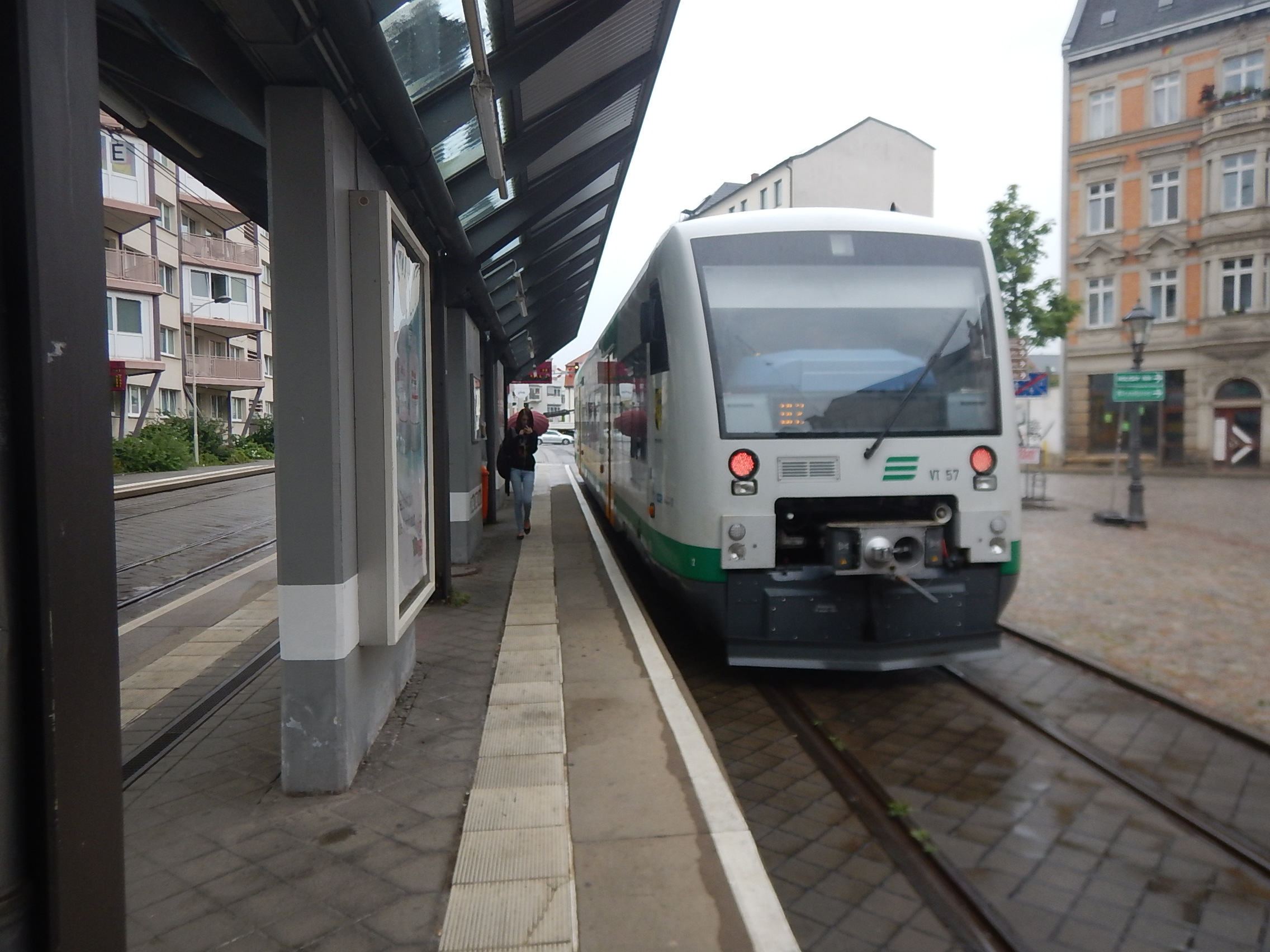
At Zwickau Zentrum Train/Tram Stop
You don’t need to guess, who made the train! It was of course Stadler and is not electric, but a diesel-multiple unit.
It is worth comparing weight and capacity of Liverpool’s new trains with Manchester’s trams.
The Railway Gazette article, says that the trains will weigh 99 tonnes and have a capacity of 486 passengers. This compares with the M5000 on the Manchester Metrolink, which weighs in at 80 tonnes for a double unit and carries 400 passengers.
So weight and capacity is not out of line with a typical large tram.
Trams need to have a door sill height, that gives level access between the tram and platform.

Level Access On The London Tramlink
Not all trams and trains match the platform, as well as this example on the London Tramlink.
But, Liverpool’s new trains will be built to fit the current track and platforms, which after updating, will all be to the same height and designed to give step-free access..
Without doubt, the new trains could call at correctly-dimensioned tram-style stops, just as the train-trams do in Zwickau.
Tram-style sections of the route could be designed to the following principles.
- Tram-style flush slab track, so passengers can just walk across the track.
- Segregated tracks.
- No electrification
- Trains would run using onboard energy storage.
- Low speed limit.
- Rail-style signalling, whether trackside or in-cab.
- Charging station, like a Railbaar if required.
Lines could be single-tracked with single-platform stops to make everything more affordable.
Train-Tram To Liverpool Airport
Could we see Merseyrail’s new trains leaving the rail lines at Liverpool South Parkway station, switch to onboard energy storage and continue to the Airport on a dedicated track without electrification?
This Google Map shows the station and the Airport.
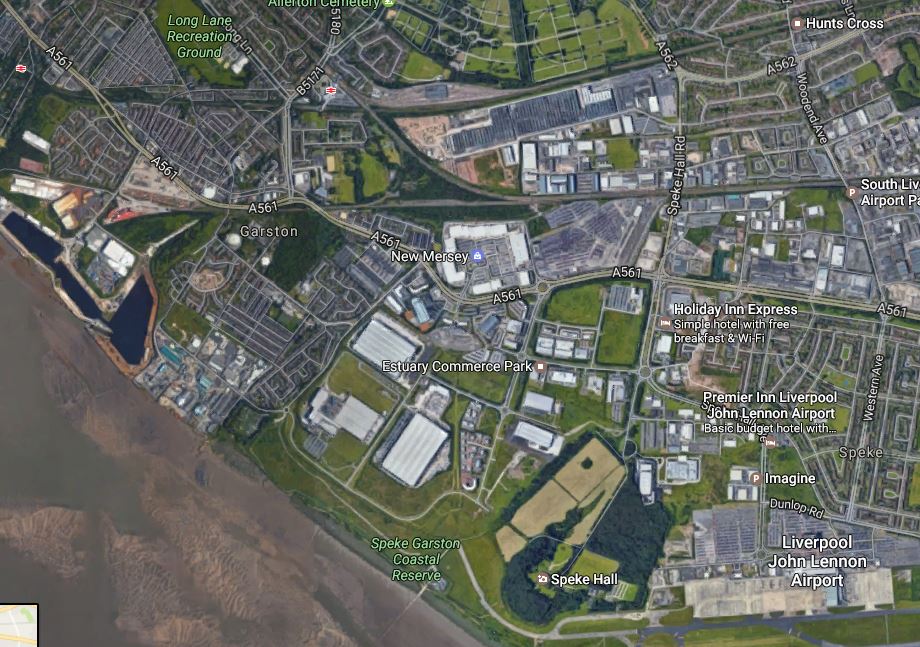
Liverpool Airport And Liverpool South Parkway Station
Note.
- The station is at the top of the map in a triangle of lines.
- There must be various possibilities for a route between the station and the airport.
- The train could call at the New Mersey Shopping Park.
From my knowledge of both areas, the Liverpool Airport route is no more difficult, than what was done in Zwickau.
Journey times to and from Liverpool Airport would be something like.
- Liverpool South Parkway station – 5 minutes
- Liverpool Central station – 18 minutes
- Southport station – 54 minutes
If they followed Northern Line principles, the frequency would be four tph.
I may be wrong, but it looks like Merseyrail have acquired trains, that running as train-trams can fulfil the link to Liverpool Airport.
More Train-Tram Routes
The proposed Liverpool Airport link is a classic route extension using onboard energy storage, which is very similar to the extension of the Midland Metro through Birmingham City Centre.
So could any of the routes to current terminals, be extended using onboard energy storage and running as a tram.
Ellesmere Port, New Brighton, Southport and West Kirby stations all serve coastal towns, but despite this, they don’t seem the sort of places that cry out for a tram along the promenade.
Chester could possibly benefit, but I suspect this could be one very much for the future.
Skelmersdale could be a distinct possibility, as the scars of the rail routes to the old Skelmersdale station, from the two Northern Line termini of Ormskirk and Kirkby, which are still visible on Google maps. This map from Wikipedia shows the old Skelmersdale Branch.
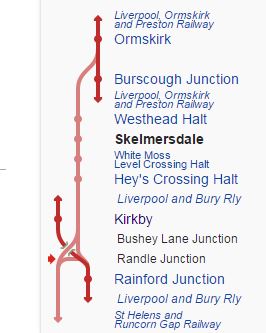
Skelmersdale Branch
A new railway could be built simply, as it was in Zwickau.
- Single-track
- No electrification
- Trains would run using onboard energy storage.
- Tram-style stops.
The train could even go walkabout in Skelmersdale to serve important places.
As Kirkby station needs demolition and rebuilding, unless it gets Listed status, as a monument to the British Rail School Of Crap Design, there must be opportunities to give Kirkby and Skelmersdale a modern transport system to be envied.
If you think all of this speculation is outrageous fantasy, I suggest you visit Zwickau and ride the Vogtlandbahn.
The Ultimate Train-Tram Route
A lot of people, that I’ve met from Liverpool, mourn the passing of the Liverpool Overhead Railway or the Docker’s Umbrella.
Because of this, it has been suggested that a tram should run along the Mersey, past the main attractions of the Waterfront, connecting to the Northern Line at perhaps Sandhills and Brunswick stations.
This is one of those projects thast gets speculated about for years and then it gets implemented because it is integral to another project, like a massive development or a City getting the Olympic Games. Or in Liverpool’s case the Commonwealth Games, which is a distinct possibility in either 2022 or 2026!
As it runs through a World Heritage Site, it will have to be built without overhead wires and run on stored energy.
Canada Dock Branch
The Canada Dock Branch runs in an arc to the North and East of Liverpool city centre.
- It is a freight route linking Liverpool Docks to routes out of the city.
- The capacity of the route is being upgraded to 48 freight trains per day.
- It is not electrified.
- There are no passenger services.
- The line runs close to both Liverpool’s main football grounds.
- Are there any large developments, that would benefit from a train service along the route of the line?
With the development of the massive new dock at Liverpool2 and the pressure for more electrified freight trains, I think it is likely that the Canada Dock Branch will be electrified.
So could passenger services be reinstated on the line?
This Google Map shows the section of the Canada Dock Branch, where it curves round the two football grounds.
The station at the bottom left is Sandhills station, with Merseyrail’s Kirkdale depot to the North.
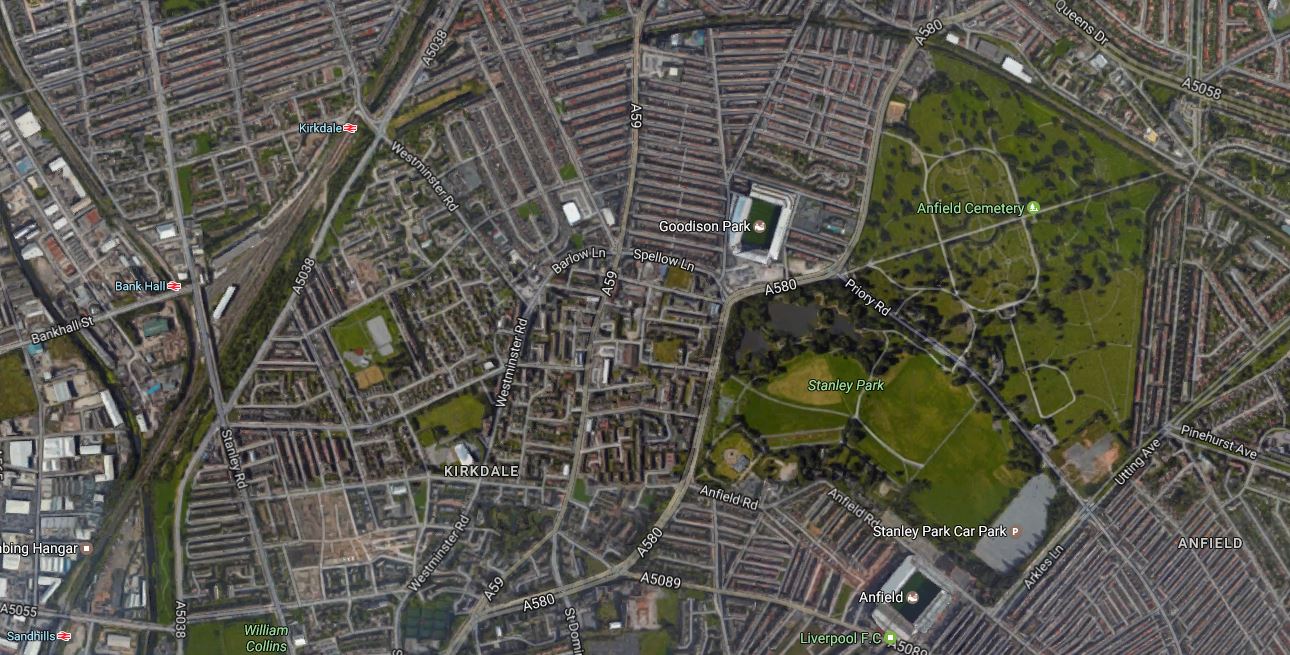
I don’t know whether there is a connection, but the lines cross in the region of the depot and if required one could probably be built.
I think it is likely, that if the Canada Dock Branch is electrified for freight reasons, then Merseyrail will look at running a service along the line.
- It might terminate at Sandhills in the North.
- It might terminate at Broad Green, Edge Hill or even Lime Street in the South.
- Stations could be simple affairs, much like the one in the picture at Zwickau.
Whether they did propose a service would depend on traffic forecasts and possible costs.
The Commonwealth Games Line
Liverpool do spectaculars well and if they get the Commonwealth Games in either 2022 or 2026, I can see that the city could use the new Stadler trains to create a line for the Games, thaqt would be a legacy, that the city needs and wants.
Starting in the South by the Albert Dock and the Echo Arena, the line would go past the Three Graces at the Pierhead and then North to Everton’s new stadium at Bramley-Moore Dock, which is being proposed as the main venue of the Games. From there it could continue to Liverpool’s Anfield Stadium, which will probably play some part in the Games.
The line would also connect or go close to the following.
- Mersey Ferry
- The Wirral Line at James Street station.
- The Northern Line at the new Vauxhall station.
- The museums and galleries at the Albert Dock.
- Liverpool Cruise Terminal
- Liverpool One
- The Liverpool Waters development
I’m sure Liverpudlians will give it a suitable nickname.
Consider.
- Much of the Southern part of the route is within the Liverpool Maritime Mercantile City World Heritage Site.
- I think it would be possible to run the route using onboard storage.
- Charging would be at each end of the route.
- Catenary running could be used between the two football grounds, some of which could be on an electrified Cansada Dock Branch.
- The Southern end could use on-street running with catenary to go up the hill to Hope Street , to serve both cathedrals.
- After the Games, both Liverpool football grounds would have a tram connection to the Pierhead.
Designed properly, it could become one of the world’s most iconic tram lines.
Conclusions
Merseyside will be getting one of the best commuter railways in the world!
I also think, that these innovative trains will make other cities and train operators, think hard about the design of their railways and the trains.
How To Charge A Battery Train
There is a Twitter hashtag of #ipemu and this tweet has been posted, which describes something called a Railbaar from a well-known Swiss company called Furrer + Frey, who are very much involverd in transport electrification.

Railbaar
This could be the missing link in running IPEMU trains on branch lines, like those to Barrow, Lowestoft, Scarborough or Windermere. After pulling into the terminal, the battery is topped up to make sure the train gets all the way back.
As an example, current schedules at Windermere allow somewhere between six and fifteen minutes for the turnround, which is probably typical around the UK rail network
 The Anonymous Widower