Israel Becomes First Nation To Announce A Second Coronavirus Lockdown
This title of this post, is the same as that of this article on The Times.
Israil had done well to control the first lockdown, but now they have over 4,000 new infections per day.
This paragraph gives some details.
About two thirds of the infections are in the Arab-Israeli and ultra-Orthodox Jewish communities, which together account for almost a third of the 8.8 million-strong population. Experts attribute the levels of infection to both groups’ insistence, despite restrictions, on holding weddings with as many as 1,000 guests, and the resumption of study three weeks ago in the ultra-Orthodox seminaries.
With 4,000 new infections in a population of just under nine million, their rate is much higher than in the UK.
Will There Be A Sports And Arts Bounceback As There Was After World War II?
This may be optimism, but after World War II, all sports had massive attendances, and I wonder if the same thing will happen, when we get a 100 % reliable vaccine against the covids?
There was even a great desire for fun during the war, as this news item on British Pathe, which is entitled Wartime Derby at Newmarket 1941 shows.
There are several horse racing videos of this period on YouTube.
Perhaps, the proximity of Newmarket to the major fighter base at Duxford, meant that the Luftwaffe didn’t feel safe to attack Newmarket in daylight? Or their intelligent was bad.
Fighting My Way Through The Covids
I owe it to the memory of my great-great-great-grandfather; Robert, who arrived in this country around 1800, from Konigsberg in East Prussia, that I fight my way through the covids.
He had to leave Konigsberg because he was eighteen, male and Jewish! Unless, you were a member of a privileged family, you had to leave. As he had just finished his apprenticeship to be a tailor, he at least had a trade and could carry the tools he needed in a small case.
He became a tailor in Bexley and lived to a good age. I am also sure, that he contributed coeliac disease to the family’s gene pool.
In this post, I will talk about various topics, as I fight my way through to normality.
On the mother’s side of the family, the male line in Huguenot, who probably arrived about 1750.
Did I Fall Because Of A Blood Pressure Problem?
I had a fall in my bedroom, a couple of months ago, as I wrote about in An Accident In My Bedroom.
My GP thinks I might have a blood pressure problem, so I’m now taking my blood pressure sitting down and then standing up for five minutes before taking it again.
These are my readings.
- September 1st – 132/74/182 – 123/102/79
- September 2nd – 145/75/85 – 138/51/82
- September 3rd – 102/77/69 – 123/64/87
- September 3rd – 143/74/75 – 150/64/74
- September 4th – 140/54/64 – 139/64/73
- September 4th – 124/62/92 – 120/51/79
- September 5th – 106/67/51 – 138/52/64
- September 5th – 127/78/67 – 136/62/73
- September 6th – 10:45 – 138/104/76 – 116/53/55
- September 6th – 16:00 – 138/63/54 – 137/88/74
- September 6th – 22:00 – 136/71/59 – 131/77/61
- September 7th – 09:30 – 147/98/76 – 152/82/75
- September 7th – 22:30 – 164/80/74 – 145/61/77
- September 8th – 09:15 – 121/77/66 – 119/71/66
- September 8th – 11:45 – 109/47/70 – 119/48/78
- September 9th – 08:45 – 114/70/73 – 137/51/73 – 129/64/92
- December 9th – 11:00 – 107/146/73 – 143/43/83 – 116/49/87
- September 9th – 20:00 – 131/54/84 – 140/53/78
- September 9th – 21:30 – 131/78/80 – 156/64/81
- September 10th – 10:00 – 148/77/74 – 141/78/63
- September 10th – 13:00 – 106/61/82 – 122/60/81
- September 11th – 09:15 – 137/44/71 – 135/80/66
- September 11th – 10:00 – 126/72/72 – 116/58/70
- September 12th – 10:30 – 119/69/78 – 117/66/70
- September 12th – 20:00 – 111/68/75 – 140/78/69
- September 13th – 10:45 – 112/73/61 – 109/57/69
- September 13th – 15:30 – 106/59/62 – 110/43/65
- September 14th – 09:30 – 116/63/91 – 109/61/85
- September 14th – 17:15 – 117/59/97 – 126/57/79
- September 15th – 08:30 – 134/78/54 – 107/75/76
- September 16th – 06:00 – 113/79/77 – 130/66/80
- September 17th – 09:00 – 117/69/91 – 113/50/63
- September 17th – 22:00 – 118/54/85 – 146/76/86
- September 18th – 09:00 – 147/81/69 – 139/71/67
- September 18th – 21:00 – 124/109/69 – 113/60/83
- September 19th – 10:00 – 143/57/66 – 152/83/75
- September 19th – 19:00 – 118/57/55 – 121/74/81
- September 20th – 09:50 – 143/69/52 – 135/67/66
- September 21st – 09:30 – 158/72/73 – 150/73/66
- September 22nd – 09:15 – 147/49/77 – 149/59/73
- September 22nd – 20:22 – 108/65/82 – 141/66/73
- September 23rd – 08:10 – 140/63/70 – 109/73/60
- September 23rd – 15:00 – 97/65/83 – 109/61/68
- September 24th – 09:00 – 134/52/74 – 143/62/62
- September 25th – 09:00 – 149/70/69 – 130/92/77
- September 25th – 13:00 – 108/75/78 – 135/68/73
- September 26th – 17:30 – 120/62/77 – 124/63/68
- September 27th – 10:00 – 139/64/74 – 132/70/74
- September 28th – 08:00 – 140/73/77 – 140/73/60
Note.
- The first reading is sitting down and the second is after standing up for five minutes.
- My blood pressure meter isn’t the best.
- I didn’t note the times, when I started.
- The third reading is taken about four minutes later.
I don’t know anything about understanding these readings.
Managing My INR
My GP and I have agreed that I should be on 3.5 mg. of Warfarin a day to control my INR.
- So I alternate between 3 and 4 mg.
- I also test my INR every two days.
These are my figures for the last few days, with my Warfarin dose.
- September 1st – 4 mg – N/R
- September 2nd – 3 mg – 2.5
- September 3rd – 4 mg – N/R
- September 4th – 3 mg – 2.7
- September 5th – 4 mg – N/R
- September 6th – 3 mg – 2.8
- September 7th – 3 mg – N/R
- September 8th – 4 mg – 2.4
- September 9th – 3 mg – N/R
- September 10th – 4 mg – 2.3
- September 11th – 3 mg – 2.7
- September 12th – 4 mg – N/R
- September 13th – 3 mg – 2.5
- September 14th – 4 mg – N/R
- September 15th – 4 mg – 2.2
- September 16th – 3 mg – N/R
- September 17th – 5 mg – 2.2
- September 18th – 3 mg – 2.8
- September 19th – 4 mg – N/R
- September 20th – 4 mg. – 2.5
- September 21st – 3 mg – N/R
- September 22nd – 4 mg – 2.2
- September 23rd – 3 mg – 2.3
- September 24th – 4 mg – N/R
- September 25th – 3 mg – 2.4
- September 26th – 4 mg – N/R
- September 27th – 4 mg – 2.1
- September 28th – 3 mg – 2.4
Note.
- If the INR is 2.5 or greater, I take 3 mg that day and 4, the next.
- If it’s less than 2.5, I take 4 mg that day and 3 the next,
- I also check the 30 day average of my Warfarin dose and currently it is 3.6.
One advantage about Warfarin, is the degree of control, you have of your INR.
A couple of years ago, I needed to have a small operation on my mouth.
The surgeon wanted to use an anaesthetist to boost the bill.
- So I said, what INR would be safe and he said 2.1!
- In the end I reduced it, by not taking four mg of the drug.
- After the successful operation, I brought it back up to 2.5, by taking an extra four mg.
- I suspect it cost me a tenner for the extra strips!
Good value and I avoided the lottery of anaesthesia.
I’m Drinking A Lot
In a four-hour period a few days ago, I drank two litres. Is that excessive?
It did include half a unit of alcohol, but was mainly mugs of tea.
And I still felt the need to drink more.
General Health
Like most coeliacs, I know on a gluten-free diet, I’m doing fairly well in the pandemic.
Not one of us has had a severe dose of the covids. But then I’ve never had flu since I went gluten-free and I’ve only had a flu jab since 2005.
Could this be related to the fact, that the gluten-free diet gives us a strong immune system and seems to protect us from cancer, according to research by Joe West at Nottingham University?
Social Distancing In An Empty Train
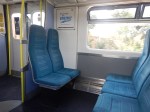
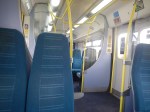
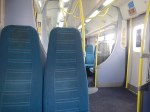
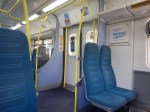
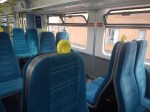
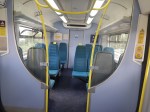
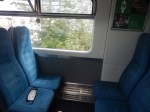
On Sunday morning, I went to Croydon to look at Windmill Bridge, in Croydon, which I wrote about in Croydon Area Remodelling Scheme – Lower Addiscombe Road / Windmill Bridge.
On the way, I found myself in a more or less empty carriage, as these pictures show.

It all got me thinking.
- Generally, the rule in most of the world, is that you should keep a given number of metres apart.
- But supposing, that each public space were to be given a figure for the maximum number of people, who can occupy the space.
- I think, this has already happened in London, where thirty passengers seems to be the maximum number allowed on a double-deck bus.
- Buses and train carriages are public spaces.
But supposing each space was to be assigned a figure for the number of people present, below which the wearing of masks would be optional.
On a bus or train, the customer announcements would change appropriately.
Some might argue, it would be confusing, but it might nudge passenger behaviour in the right way.
- More might travel.
- More might travel at less busy times.
- I suspect that many on a long commute, take their masks off, as they get near home, as te train empties out anyway!
- It should be born in mind, that many modern trains, trams and buses, may know how many passengers are on board, as they can count passengers.
A Design Crime – Pedestrian Chaos At London Bridge
To get home from London Bridge station, I usually get the 141 bus in the station, or if I’m walking along the riverside, I get a 21 or 141 bus from the stop at the Southern side of the bridge.


There is now, no stop on the bridge, so it meant walking nearly to Bank station to get a bus. Not everybody of my age could manage that!
I hope the pea-brained idiot, who designed the current scheme at London Bridge, with no bus stops in either direction has been given his marching orders.
I know that for COVID-19 and wannabe terrorists something must be done, but surely one of the bus-stops in each direction should be working.
I suspect, it was designed by the same idiot, who decided to close the important Waterloo and City Line.
The Mayor won’t care, as he’s a South Londoner.
Care Homes In England Had Greatest Increase In Excess Deaths At Height Of The COVID-19 Pandemic
The title of this post, is the same as that of this article on the University of Stirling web site.
This is the introductory paragraph.
Care homes in England experienced the highest increase in excess deaths at the height of the COVID-19 pandemic compared to those in the rest of the UK, according to new research.
The actual figures are as follows.
- England – 79 %
- Northern Ireland – 46 %
- Scotland – 62 %
- Wales – 66 %
So why are the three Celtic nations, doing better than England?
In A Thought On Deaths Of The Elderly From Covid-19, I said this.
How many undiagnosed coeliacs are there in those over seventy, who because they are coeliacs, have a compromised immune system?
I would be undiagnosed but for that elderly locum!
How many other coeliacs are there in the UK population?
-
- Age UK has a figure of twelve million who are over 65 in the UK.
- If 1-in-100, as stated by Coeliac UK, in the UK are coeliac, that is 120,000 undiagnosed coeliacs over 65.
Will these 120,000 people have a compromised immune system, that makes them more susceptible to Covid-19?
It has been said, that a good immune system helps you fight Covid-19!
If those 120,000 elderly undiagnosed coeliacs have a compromised immune system, how many are in poor health with cancer, arthritis and general poor health and have decided that a care home is best.
Coeliac Disease And The Celts
The Irish have a history of coeliac disease, which I have heard suggested goes back to the potato famine.
Certainly, the whole island of Ireland is a coeliac friendly place compared to some parts of England. Although, Liverpool with its strong Irish heritage is an exception.
Conclusion
I do wonder, if understanding of coeliac disease in the three Celtic nations is better than it is in England and a higher proportion of elderly coeliacs have been diagnosed.
Any younger coeliac born after about 1980, has probably been picked up, for the simple reason, that most GPs these days take regular blood tests and do seem to be more knowledgeable about the disease than GPs were before about 1980.
According to my GP, to test a child, is normally just a simple blood test and an analysis at a lab. Only a few cases, will need an endoscopy.
So do we have this population of undiagnosed coeliacs with compromised immune systems in English care homes?
Perhaps, everybody in a care home, should be tested for coeliac disease?
If nothing else, it may save money on cancer care, as diagnosed coeliacs on a gluten-free diet are 25 % less likely to suffer from cancer.
Eurostar Plans To Start Direct Amsterdam – London Trains In October
The title of this post, is the same as that of this article on Railway Gazette International.
This is the introductory paragraph.
Cross-Channel high speed operator Eurostar has confirmed its intention to launch direct Amsterdam – London St Pancras services from October 26, complementing the London – Amsterdam trains which have run since April 2018.
The article then goes on to give more details of the service.
- Security checks will be undertaken at Amsterdam CS and Rotterdam Centraal stations.
- Amsterdam to London will be nine minutes over four hours.
- There will initially be two trains per day.
- There was a hint of more next year.
- It will carry Shengen area passengers between Amsterdam and Brussels.
Eurostar says it will offer flexible booking options to help, if the Government changes COVID-19 quarantine regulations.
Conclusion
It looks a sensible offering and as I’ve used it between London and Amsterdam three times, I will be trying to fit in a trip before the end of the year.
Replacement Of South Western Railway’s Class 158/159 Trains
South Western Railway use Class 158 and Class 159 trains on the following routes.
- London Waterloo and Salisbury (and Yeovil Pen Mill)
- London Waterloo and Exeter St Davids
- Romsey and Salisbury
- Salisbury and Bristol Temple Meads
The two types of train are very similar, with the Class 159 trains being converted from Class 158 trains.
- There are ten two-car Class 158 trains in service with South Western Railway. which have a capacity of around 140 seats
- There are thirty three-car Class 159 trains in service with South Western Railway, which have a capacity of 196 seats
- Each car has a diesel engine driving two axles through a hydraulic transmission.
- Both trains have an operating speed of 90 mph.
- The trains are all around thirty years old.
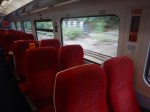
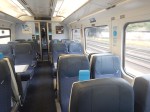
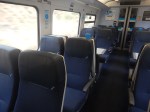
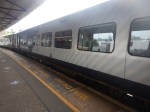
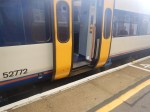
I took these pictures on my trip to Basingstoke station on Friday, when I rode in nine-car formation of three Class 159 trains both ways.

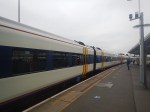

Note.
- For much of the route between Clapham Junction and Basingstoke, the trains were doing just a few mph short of ninety on the 100 mph route.
- The interiors are fairly spacious and I got a table seat both ways.
As diesel multiple units go, there are worse ones in service in the UK. And I don’t mean Pacers.
Replacement Possibilities
Ideally, these trains should be replaced with zero-carbon trains.
As most of the routes, on which the trains run are not-electrified, there must either be a lot of new third-rail electrification or battery electric trains must be used.
These are my thoughts for the various trains.
Two-Car Class 158 Train
These trains have the following specification.
- Length – 46 metres
- Seats – 140
- Operating Speed – 90 mph
In Converting Class 456 Trains Into Two-Car Battery Electric Trains, I stated that these Class 456 battery electric trains would have the following specification.
- Seats – 113
- Range on Battery Power – 30-40 miles
- Operating Speed – 75 mph
I also felt that as the trains would receive a new AC traction system, that the operating speed could be increased to perhaps 90 mph.
I wouldn’t be surprised to find, that a professional conversion capitalising on Alstom’s work to create the Class 600 hydrogen train, could turn a Class 456 train into a battery electric replacement for a two-car Class 158 train.
Three-Car Class 159 Train
These trains have the following specification.
- Length – 69 metres
- Seats – 196
- Operating Speed – 90 mph
Could these be replaced with a three-car Class 456 battery electric train, lengthened by the addition of a Trailer Car from a Class 321 train, that has been converted to a Class 600 hydrogen train?
As most Class 159 trains probably work in longer formations, this could be a possibility, to replace units working alone.
Two Three-Car Class 159 Trains Working As A Six-Car Formation
These trains have the following specification.
- Length – 138 metres
- Seats – 392
- Operating Speed – 90 mph
This formation would be impossible for Class 456 battery electric trains, so it must be a case for calling up the heavy brigade, in the shape of Hitachi’s Regional Battery Train, which is described in this Hitachi infographic.

A five-car version of this train could have the following specification.
- Length – 130 metres
- Seats – 326
- Range on battery power – 56 miles
- Operating Speed – 100 mph
- It would probably be able to work with both 25 KVAC overhead and 750 VDC third-rail electrification.
Note.
- More seats could probably be fitted if needed.
- Platforms where the trains would work can already accept nine-car Class 159 trains, which are 207 metres long.
- The trains would charge the batteries using the electrification between London Waterloo and Basingstoke.
- Fast Charge facilities would also be needed at some intermediate and terminal stations like Bristol Temple Meads, Exeter St. Davids, Salisbury, Westbury and Yeovil Junction.
- These trains would be ten mph faster than the Class 159 trains and this may enable the saving of a few minutes between London Waterloo and Basingstoke stations.
A six-car version would be possible, if more capacity is needed.
Three Three-Car Class 159 Trains Working As A Nine-Car Formation
These trains have the following specification.
- Length – 207 metres
- Seats – 588
- Operating Speed – 90 mph
An eight-car version of Hitachi’s Regional Battery Train could have the following specification.
- Length – 208 metres
- Seats – 522
- Range on battery power – 56 miles
- Operating Speed – 100 mph
- It would probably be able to work with both 25 KVAC overhead and 750 VDC third-rail electrification.
Note.
- More seats could probably be fitted if needed.
- Platforms where the trains would work can already accept nine-car Class 159 trains, which are 207 metres long.
- The trains would charge the batteries using the electrification between London Waterloo and Basingstoke.
- Fast Charge facilities would also be needed at some intermediate and terminal stations like Bristol Temple Meads, Exeter St. Davids, Salisbury, Westbury and Yeovil Junction.
- These trains would be ten mph faster than the Class 159 trains and this may enable the saving of a few minutes between London Waterloo and Basingstoke stations.
A nine-car version would be possible, if more capacity is needed.
More Capacity Between London Waterloo And Basingstoke
London Waterloo and Basingstoke was very busy before COVID-19 and it needed more capacity.
- All the express passenger trains are capable of 100 mph, with the exception of the diesel Class 158 and Class 159 trains, which can only do 90 mph.
- If these diesel trains were to be replaced by Hitachi’s Regional Battery Trains, these trains will be able to do 100 mph on battery power.
This speed increase will enable faster journey times and increase capacity.
- But between London Waterloo and Basingstoke, they will be using the third-rail electrification.
- Class 800 and Class 801 trains, which are cousins of the Regional Battery Train are currently able to do 125 mph between London Paddington and Swindon and London Kings Cross and Doncaster.
- London and Doncaster is being upgraded to 140 mph running.
So will we see 125 mph running between London Waterloo and Basingstoke? I will be very surprised if we didn’t, before 2030.
Charging The Batteries
Much of the charging of batteries will be performed whilst running on electrified lines.
But as I indicated there will need to be Fast Charge facilities at intermediate and terminal stations.
The Need For A Universal Fast Charge Facility For All Battery Electric Trains
If you look at Salisbury for example, the facility would need to be able handle all types of battery electric trains. So the Government, Network Rail and the Office of Road and Rail must come up with a universal design of charging facility that can be used by all battery electric trains.
Standard UK electrification, which can be either 25 KVAC overhead or 750 VDC third-rail, can obviously be used, as all battery electric trains will be designed to be able to charge the batteries, whilst running on electrified lines.
But a Universal Fast Charge system is surely needed, that can charge every battery electric train running on the UK rail network.
Splash-and-Dash At Yeovil Junction Station
But I believe that trains like Hitachi’s Regional Battery Train, when working long routes like Salisbury and Exeter will need the equivalent of Formula One’s Splash-and-Dash, where a fast pit-stop enabled cars to complete the race in the most economic manner.
If you look at timings between Salisbury and Exeter on Real Time Trains, you find the following.
- Salisbury and Exeter is 88.5 miles
- Salisbury and Yeovil Junction is 39 miles
- Yeovil Junction and Exeter St. Davids is 50 miles
- Trains seem to be timed to wait between 8-14 minutes at Yeovil Junction station.
- At several times during the day the Westbound and Eastbound services pass at Yeovil Junction station.
I would assume the wait and the passing, are so that trains can safely navigate the sections of single-track line, that are a legacy of British Rail’s policy of saving money, that affectively ruined the efficiency of sections of the network.
It would appear that a well-designed Universal Fast Charge facility at Yeovil Junction station could enable battery electric trains to run between Salisbury and Exeter St Davids stations, without any adjustment to the existing timetable.
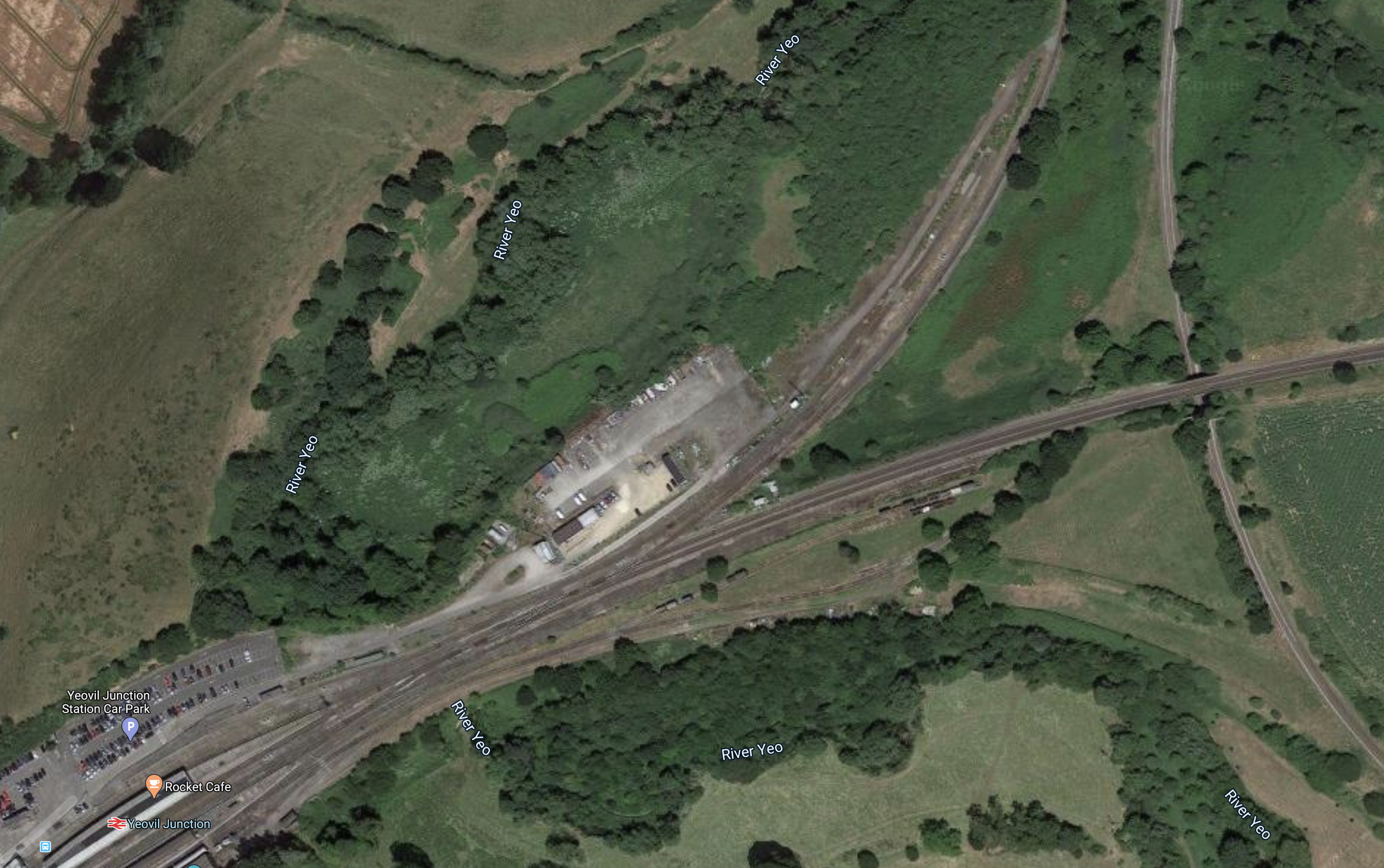
This Google Map shows Yeovil Junction station.
Note.
- Yeovil Junction station is in the South West corner of the map.
- The West of England Main Line passes East-West through the station.
- The station has two platforms.
- The two lines running North to Yeovil Pen Mill and Westbury stations.
- The line running between the North side and the South-East corner of the map is the Heart of Wessex Line, between Yeovil Pen Mill in the North and Weymouth in the South.
- Most links between the West of England Main Line and the Heart of Wessex Line have been removed.
The station doesn’t appear short of space.
Great Western Railway’s Gloucester And Weymouth Service
If a link between Yeovil Junction station and the Heart of Wessex Line towards Weymouth, this would enable Great Western Railway’s Gloucester and Weymouth service to call at both Yeovil stations, with a reverse at Yeovil Junction.
It would surely, improve the train service for the town of Yeovil.
If in the future, it was desired to run the Gloucester and Weymouth service using a battery electric train, Yeovil Junction station could be used to charge the train’s batteries.
Vivarail’s Fast Charge System
Vivarail’s Fast Charge system has been patented and demonstrated and this could be used with both the battery electric Class 456 train and Hitachi’s Regional Battery Train.
So it could be used as an initial design for a Universal Fast Charge system.
Conclusion
A mix of these battery electric trains could probably replace the Class 158 and 159 trains.
- Two-car Class 456 train
- Three-car Class 456 train
- Five-car Hitachi Regional Battery Train
- Eight-car Hitachi Regional Battery Train
Note.
- Universal Fast Charge facilities would also be needed at some intermediate and terminal stations like Bristol Temple Meads, Exeter St. Davids, Romsey, Salisbury, Westbury and Yeovil Junction.
- Services between London Waterloo and Basingstoke could be faster.
These rebuilt and new trains would fully decarbonise South Western Railway.
1-in-11,000 Chance Of Contracting COVID-19 On Trains
The title of this post, is the same as that of this article on Rail Magazine.
That looks like a chance I’ll take!
Stevenage Station’s New Fifth Platform Opened A Year Early
The title of this post, is the same as that of this article on Rail Engineer.
This is the introductory paragraph.
A new £40 million platform and track at Stevenage station has been completed more than a year ahead of schedule.
Yesterday, it appears that the first scheduled train left Stevenage for Moorgate at 0502.
Will This Be Good For Travellers?
A few thoughts!
Stevenage Hospital
One of my old school friends lives in Cuffley. From that part of Hertfordshire, the hospital, patients use is in Stevenage. He can drive, but not everybody can!
LNER
Currently, LNER run an hourly service between Stevenage and Leeds, with an hourly service between Stevenage and Lincoln or York via Newark.
North From Enfield, Palmers Green, Southgate, Winchmore Hill and Wood Green
If you live in Enfield or the old London boroughs of Southgate or Wood Green, it could be easier to pick up trains for the North from Stevenage, rather than Kings Cross.
Not Bad For Me Too!
Even, where I live now, which is a mile or so East of Highbury & Islington station, if the timing is right, I can walk or get a bus for four stops to Essex Road station and get a train to Stevenage and then change for Leeds and the North.
East Coast Trains
East Coast Trains will be starting a fast, low-cost London Kings Cross and Edinburgh service, which will call at Stevenage.
Grand Central Trains
Grand Central Trains are currently shut down because of COVID-19, but will they call at Stevenage station, when they restart?
Hull Trains
Some Hull Trains services between London Kings Cross and Hull, call at Stevenage.
Hitachi’s Class 80x Trains
LNER, East Coast Trains and Hull Trains, all run versions of Hitachi’s Class 800 trains or similar.
These trains are built for performance and an extra stop at Stevenage station can probably be incorporated in the timetable without any penalty.
So will we see more trains stopping at Stevenage, if the train operators think it will be worthwhile?
Could Some Services From The North Terminate At Stevenage?
The Digswell Viaduct and the double-track section through Welwyn North station are the major bottleneck on the East Coast Main Line.
But a train returning North at Stevenage wouldn’t go over the viaduct.
Stevenage already has or could have excellent connections to the following.
- Cambridge, Stansted Airport and East Anglia
- Moorgate and the City of London and Crossrail.
- North East London
If keen pricing can encourage travellers to use Stevenage instead of Kings Cross, I can see operators wanting to run extra services, that could start at Stevenage.
I can also see Greater Anglia getting in on the act.
Could Greater Anglia’s Ipswich and Cambridge service be extended to Stevenage via the planned Cambridge South and Royston stations?
Could the service be timed to offer cross-platform interchange with their Norwich and Stansted Airport, at Cambridge South station?
Four important extra services would be created with a step-free interchange.
- Ipswich and Stansted Airport – 106 minutes – Step-free walk across at Cambridge South station
- Ipswich and Stevenage – 115 minutes – New direct service
- Norwich and Stansted Airport – 107 minutes – Existing service
- Norwich and Stevenage – 116 minutes – Step-free walk across at Cambridge South station.
A large number East Anglian rail journeys would be simpler.
Car Parking
Will there be enough car parking at Stevenage station?
I suppose, it would be possible to build a Stevenage Parkway station between Stevenage and Watton-at-Stone stations.
This Google Map shows the area.
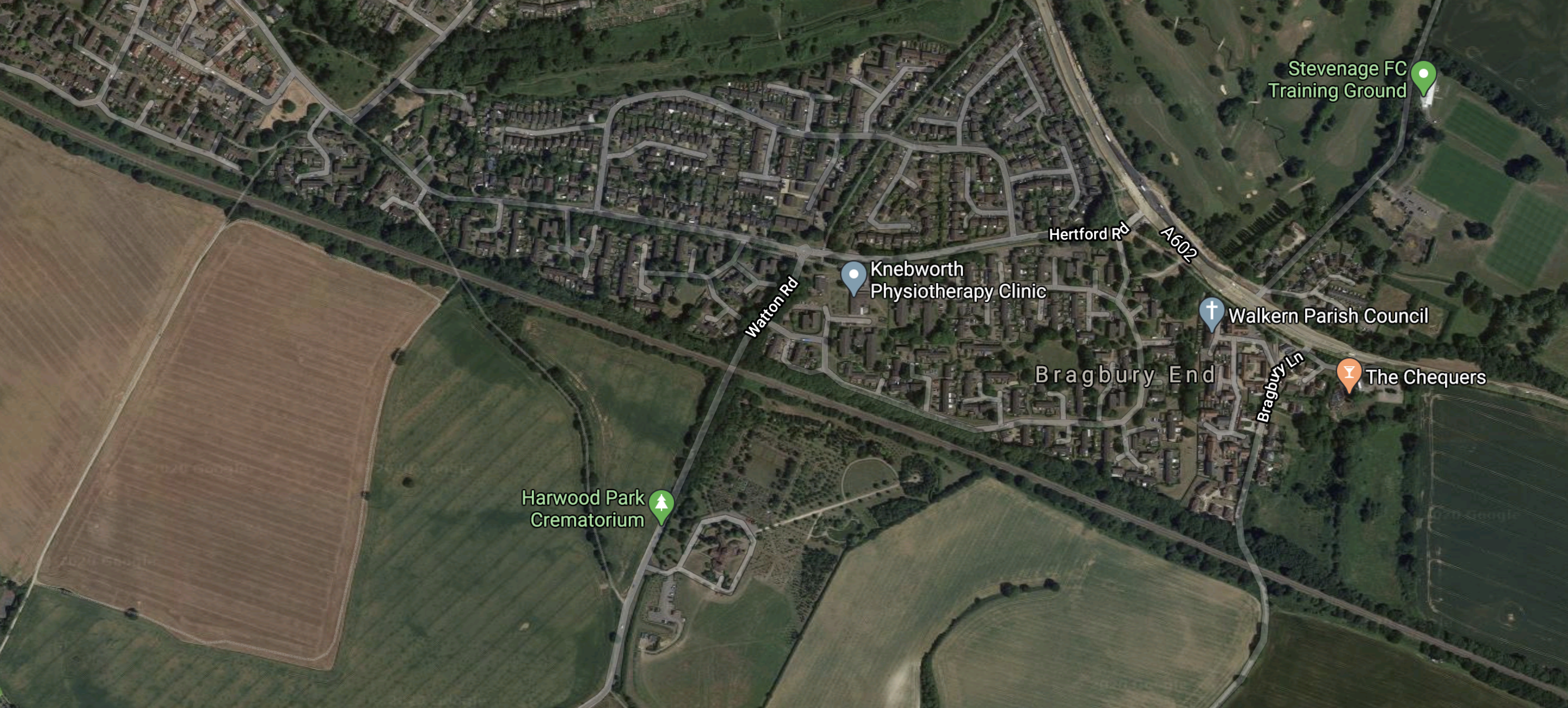
Note, that the railway seems to mark the development limit for the town.
The high performance of the Class 717 trains, would probably mean, that there would be no lengthened journey times.
Conclusion
This project appears to have been well-thought through!
 The Anonymous Widower