53 Train Stations To Benefit From Tap-In Tap-Out Rollout
The title of this post, is the same as that of this news story from the UK Government.
This is the sub-heading.
Passengers across the South East of England will benefit from ‘Pay As You Go’ technology by the end of December 2023.
The news story has these three bullet points.
- £20 million of government funding marks the first phase of the government’s commitment to extend Pay As You Go to a further 200 stations in the South East
- The department is also working with Great British Railways transition team (GBRTT) to agree Pay As You Go pilots in the Greater Manchester and the West Midlands by the end of the year
- Both form part of the government’s plan to make fares and ticketing simpler and more convenient for passengers
If I look at the list of 53 stations to be added in this first phase, several are ones I have regularly used.
- Beaconsfield
- Bletchley
- Bricket Wood
- East Tilbury
- Gerrards Cross
- High Wycombe
- Kempton Park
- Southend Central
- Southend East
- St Albans Abbey
- Staines
- Windsor & Eton Riverside
With the Government saying that this list of stations in the South East, will rise to 200, I suspect that the number of listed stations, where I go regularly will increase.
At present, if I go to a contactless station like Gatwick Airport, which is outside of the Freedom Pass area, I have to buy an extension ticket, either before I board the train or I have to get off somewhere like East Croydon and tap-out with my Freedom Pass and tap-in with my bank card.
Surely, a better system, would be to be able to link a bank card to my Freedom Pass. This would enable my bank card to be charged excess on my Freedom Pass.
New Wellington Railway Station Worth £15m Could Open By 2025
The title of this post is the same as that of this article on the BBC.
This is the sub-heading.
Efforts to build a new railway station could soon move a step closer – if plans for 220 new homes are approved.
These are the first two paragraphs.
Somerset West and Taunton Council and Mid Devon District Council put together plans to reopen Wellington and Cullompton railway stations
Both closed during the infamous Beeching cuts of the mid-1960s.
Reading the article, it looks like the Department for Transport are going to pay for the station.
Four weeks ago, I went to the opening of Reading Green Park station, which I wrote about in Reading Green Park Station – 27th May 2023.
When I was there, I met the guy, who works for Great Western Railway, who is responsible for new stations in the area, who when I asked him about Wellington and Cullompton, indicated that they might be treated together.
In Thoughts About Electrification Through Devon And Cornwall, I speculated that there might be some electrification in the area to charge battery-electric trains on their way to and from the Devon and Cornwall Peninsular. As the M5 motorway goes through the area close to the railway, who would complain about some well-designed overhead electrification.
Network Rail could even use a design like this.
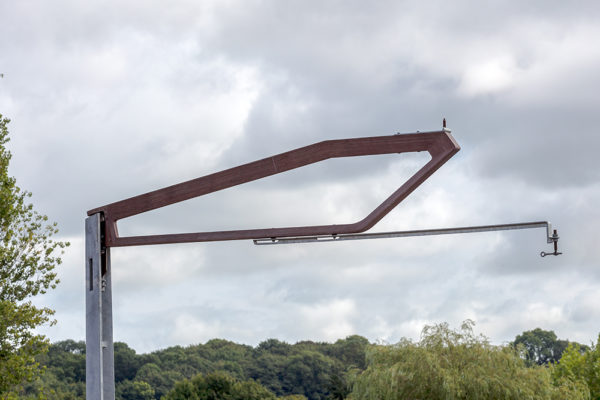
The structural rhomboid shape on top is made from laminated wood.
I describe it in detail in Prototype Overhead Line Structure Revealed.
According to Real Time Trains, Taunton and Exeter St. David’s are 30.7 miles apart and a typical train takes twenty-seven minutes, so I’m fairly sure that a long enough electrified section can be created to fully charge trains, even if they speed through at nearly 70 mph.
Services
The BBC article says this about services.
David Northey, a retired strategic planner with Network Rail, said at a public meeting held in May, that the station would initially be served by trains every two hours as part of the Great Western Railway service between Exeter St. David’s and Cardiff Central.
However, he said this likely increase to once per hour as demand grows.
There are currently four services that go through the site of the proposed stations at Wellington and Cullompton.
- London Paddington and Exeter St. David’s
- London Paddington and Plumouth
- London Paddington and Penzance
- Cardiff Central and Penzance
Note.
- All trains have a frequency of one train per two hours (tp2h).
- There is a train every thirty minutes.
- All trains stop at Taunton, Tiverton Parkway and Exeter St. Davids.
If at some time in the future all services are run by battery-electric Class 802 trains, I suspect GWR will have fun working out an efficient charging and stopping schedule, which increases the number of stops at Wellington and Cullompton stations.
Could Hydrogen Trains Be Used As Pathfinders?
I must admit, I have a soft-spot for hydrogen transport, but I suppose most people look back on their first real job with a certain affection.
The only new hydrogen train under development for the UK Is the Alstom Hydrogen Aventra, which was announced in this press release in November 2021 and is entitled Alstom And Eversholt Rail Sign An Agreement For The UK’s First Ever Brand-New Hydrogen Train Fleet.
Little is known about these trains, except what is in the original press release.
- Ten trains have been ordered.
- Each will be three-cars.
- Contracts will be signed in 2022, which didn’t happen.
Nothing is said about the following important features.
- What will be the operating speed?
- What will be the range on a fill of hydrogen?
- Will the trains have a pantograph, so they can be run on electrified lines with 25 KVAC overhead electrification?
All are important to train operating companies, who along with the Department for Transport need to be able to plan.
What Do I Mean By A Pathfinder?
I will look at the service between Reading and Basingstoke.
- It is 15.4 miles long.
- There are four stops, which will soon be five, with the addition of Reading Green Park.
- The line is partly-electrified.
- The service is only hourly and probably needed to be two trains per hour (tph).
- It is currently run by diesel trains.
In a decarbonised railway, there are only two options for running this line.
- Use hydrogen trains.
- Electrify and use electric trains.
Note.
- The cost of the two options will be different.
- If the hydrogen and electric trains are both quality trains, the passenger experience will be similar.
- To run two tph, track and signalling modifications will be needed.
- These modifications would also allow a two tph diesel service.
- There is no way to accurately determine, how many passengers would use a two tph hydrogen and electric service.
So suppose the following plan were to be enacted.
- Upgrade the track and signalling to allow a two tph service.
- Run the two tph service with diesel trains.
- Install hydrogen infrastructure for the route. In this case, it would probably be at the nearby Reading depot.
- Run the two tph service with hydrogen trains.
Hopefully on the completion of some months of successful running of the hydrogen trains, the number of passengers to be expected will have been predicted to a better accuracy than UK railways normally manage.
Then the decision between hydrogen and electric trains can be taken.
If hydrogen trains are the decision, the trains could stay in service, but if electrification is the solution, then once the electric service is operating, the hydrogen trains would move on to the next line to be decarbonised.
Why The Alstom Hydrogen Aventra’s Need To Be Able To Use Electrification
If you look at routes, where hydrogen trains could be used as Pathfinders, they could include, some partially-electrified routes.
- Reading and Bedwyn
- Reading and Oxford
- Reading and Gatwick
- London Bridge and Uckfield
- Ashford and Eastbourne
- Preston and Blackpool South
- Wisbech and Cambridge
- Dereham and Norwich
- Basingstoke and Exeter
- Romsey and Salisbury
- York and Scarborough
This list includes both routes with both types of electrification; 25 KVAC overhead and 750 VDC third rail.
But if the electrification is there and not used, the exercise will be labelled as greenwashing, by some.
Devizes Station Would Need To Be Part Of Wider Rail Plan
The title of this post, is the same as that of this article on Railway Gazette.
These two paragraphs outline the current status.
The construction of a Devizes Gateway station at Lydeway is unlikely to represent value for money as a standalone project, but it could be viable as part of a wider rail improvement programme, a study has concluded.
The feasibility study undertaken by Wiltshire Council, Devizes Development Partnership, GWR and Network Rail built on a strategic outline business case submitted to the Department for Transport under the Restoring Your Railway Fund programme in November 2021.
The Department for Transport will now decide what to do next.
I think there are other issues on the route between Reading and Taunton.
The Current Train Service
The only passenger services using the Reading and Taunton route are these three trains, which all have a frequency of one train per two hours (tp2h).
- London Paddington and Exeter St. Davids – Calling at Reading, Newbury, Hungerford, Pewsey, Westbury, Castle Cary, Taunton and Tiverton Parkway
- London Paddington and Plymouth – Calling at Reading, Taunton, Tiverton Parkway and Exeter St Davids
- London Paddington and Penzance – Calling at Reading, Taunton, Tiverton Parkway and Exeter St Davids
Note.
- London Paddington and Exeter St. Davids takes a few minutes over two hours.
- London Paddington and Plymouth takes a few minutes over three hours.
- London Paddington and Penzance takes a few minutes over five hours.
- The Reading and Taunton route is a double-track railway with a 110 mph operating speed.
- London Paddington and Newbury is electrified.
- The last two trains alternate to give Plymouth an hourly service.
- After Exeter St. Davids, trains have a sophisticated stopping pattern to give all stations served a good service.
From several trips along the line, I have the impression, that it’s a route, where drivers can get the best out of the trains.
Electrification
The line would benefit from electrification, in terms of journey times and decarbonisation.
But could this route be run by battery-electric trains?
- It is 89.7 miles between Newbury and Taunton.
- It is 120.4 miles between Newbury and Exeter St. Davids.
- It is 52.1 miles between Exeter St. Davids and Plymouth.
- It is 79.4 miles between Plymouth and Penzance.
- London Paddington and Newbury is electrified.
- Taunton, Exeter St. Davids, Plymouth and Penzance stations could have a charging system of some sort.
This Hitachi infographic shows the specification of the Hitachi Intercity Tri-Mode Battery Train.

Consider.
- Two trains go between Newbury and Taunton without stopping.
- The Exeter St. Davids service stops three times.
- Newbury and Taunton non-stop took 75 minutes at an average speed of 72 mph
- Newbury and Taunton with three stops took 78 minutes.
- All trains currently appear to be nine cars.
I suspect that Hitachi’s Intercity Tri-Mode Battery Train could go between Newbury and Taunton with a great deal of ease.
How many diesel engines and batteries would the train have?
Normally, nine-car Class 800/802 trains have five diesel engines.
So how many will be replaced by batteries?
The infographic says one engine will be replaced, so if that is a five-car train, it looks likely that a nine-car train could have two batteries.
But Hitachi could be playing a long game!
In Stadler FLIRT Akku Battery Train Demonstrates 185km Range, I wrote about how the FLIRT Akku has a range of 115 miles.
If Hitachi can squeeze 125 miles out of a nine-car Class 800 with two or three battery packs, they will outrange the FLIRT Akku and be able to run between London Paddington and Penzance on batteries, with some topping up on the way.
We mustn’t forget the engineers at Hyperdrive Innovation, who are designing and building Hitachi’s battery packs.
They will be ultracompetitive and know the range required to get battery-electric trains to Penzance.
I suspect that when the range of the nine-car battery-electric Class 800/802 is revealed, it will astonish everybody!
Bedwyn Station
Bedwyn station is served by an hourly shuttle train to and from Newbury, run by a diesel train.
The station used to have a direct service from London, but now passengers change at Newbury.
A Station For Marlborough
I investigated this in A Station For Marlborough, where this was my conclusion.
With the next generation of electric train with onboard energy storage or IPEMUs, a Marlborough station on a new Marlborough Branch Line can be used to create a two tph service to and from Paddington to replace the current one tph service from Bedwyn.
So a new Marlborough station would be a win for all those using stations on the Reading to Taunton Line to the East of Pewsey.
I also wonder how many other similar services can be developed by extending a service past a main line terminal to a new or reopened branch line, which is built without electrification and run using trains with onboard energy storage.
In answer to my posed question in the last paragraph, I suspect it is quite a few!
Devizes Gateway Station At Lydeway
I wrote about this proposed Devizes Gateway station in Reinstatement Of Rail Access To Devizes Via A New Station At Lydeway.
After writing Was Baldrick An Essex Man? about the building of an avoiding line at the new Beaulieu Park station North of Chelmsford, I do wonder, if it would be an idea to incorporate one in this proposed station, if there is a need to increase capacity.
This Google Map shows the station site, where the A342 crosses the railway.
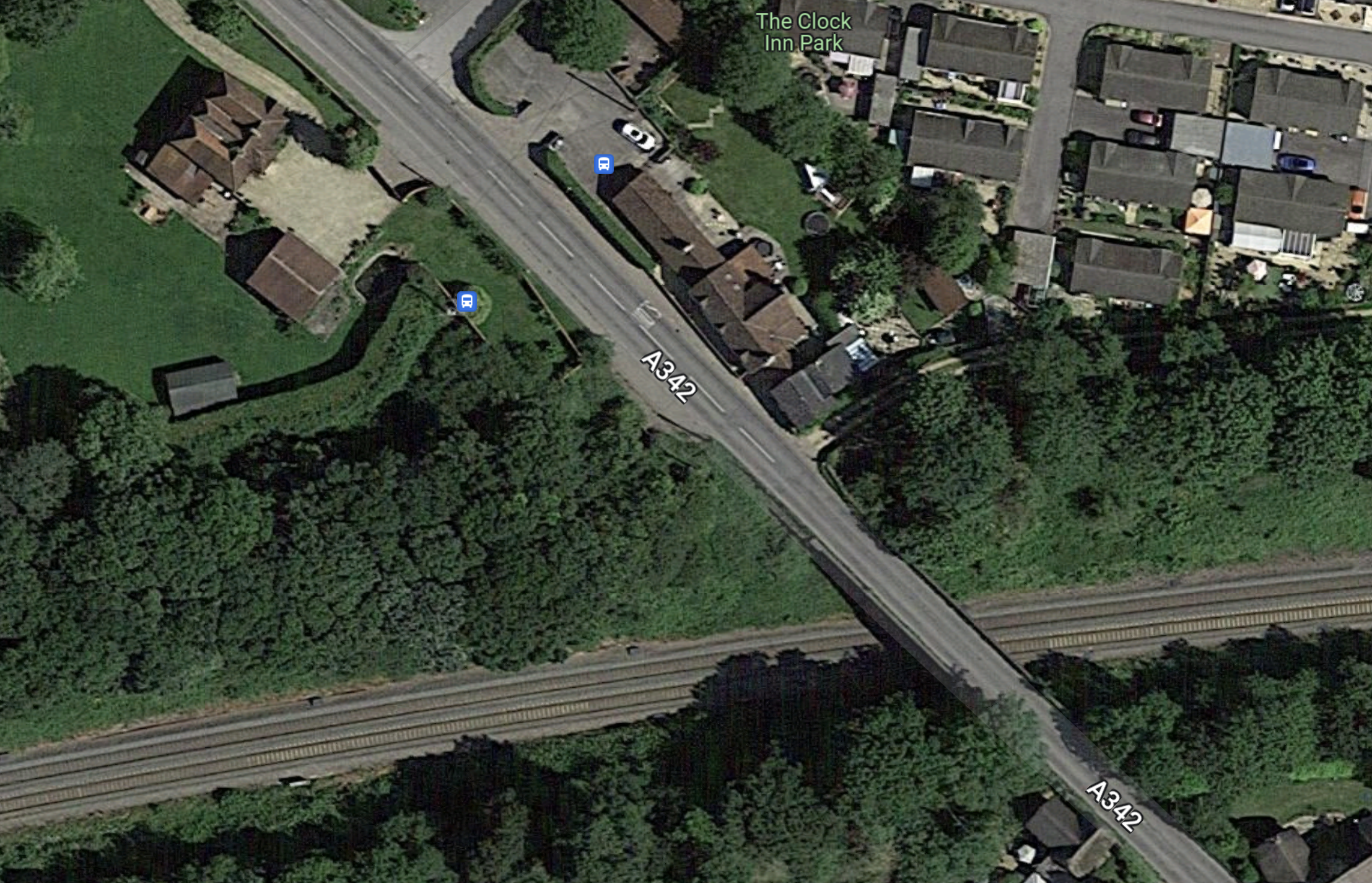
I suspect a third track can be squeezed in.
Westbury Station
Westbury station is a busy station, where the Reading and Taunton Line crosses the Wessex Main Line.
This map from OpenRailwayMap shows the lines in the station.
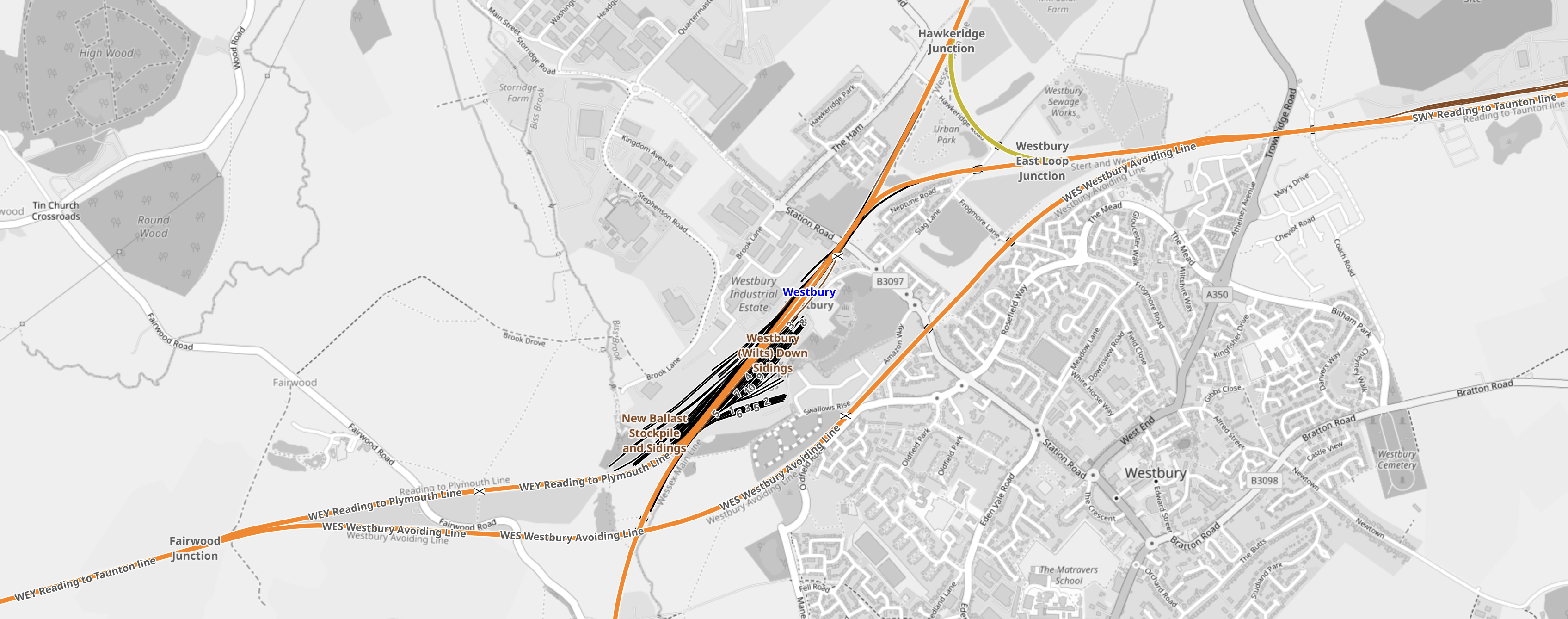
Note.
- The blue lettering indicates Westbury station.
- The two major rail routes are shown in orange.
- The Reading and Taunton Line goes East-West across the map.
- Note the avoiding line South of Westbury station.
- Reading is in the East and Taunton is in the West.
- The Wessex Main Line goes North-South across the map.
- Bristol is in the North.
- Salisbury and Southampton is in the South.
In Westbury Station – 30th July 2020, there are some pictures I took of Westbury station.
This section in Wikipedia says this about the Future of Westbury station.
The line to Westbury is not due to be electrified as part of the 21st-century modernisation of the Great Western Main Line. Although local councillors support it, the extension of electrification beyond Newbury to Westbury was assessed as having a benefit–cost ratio of only 0.31.
On the other hand this document on the Network Rail web site, which is entitled the Devizes Gateway Interim
Feasibility Study, suggests that another platform might be added at Westbury station.
Castle Cary Station
Castle Cary station doesn’t seem to have any well-publicised problems, so please tell me if you know of any.
Frome Station
Frome station is described in its Wikipedia entry as an unusual station and one that is Grade II Listed.
I suspect, it could do with some more services.
Somerton Station
I wrote about a new Somerton station in Somerset: Plans For New Railway Station On Levels.
Track Improvements
I suspect if Network Rail were improving the route between Reading and Taunton, they know of some places, where they could do some work.
Service Improvements
Consider.
- There is probably a need for a stopping train between Newbury and Taunton, which calls at all stations.
- It might terminate at the London end, at either London Paddington or Reading.
- It might be a battery-electric train.
- An hourly frequency would be ideal, if the track and signalling could handle it.
- Charging systems would be positioned as needed.
The train would interface with other Great Western services to Bristol, London Paddington, Gloucester, Salisbury, Southampton and Weymouth.
Oy could also interface with the Transwilts services.
Conclusion
This could be developed into a very useful network for Wessex.
New £3.6bn London Transport Funding Deal Agreed
The title of this post, is the same as that of this article on the BBC.
These five paragraphs outline the deal.
A new £3.6bn government bailout to keep Tube trains, railways, buses and trams running in London has been agreed.
The package includes almost £1.2bn of upfront funding for Transport for London (TfL) to secure the long-term future of the capital’s transport network.
It is the sixth bailout for TfL after its revenues plummeted in the pandemic.
The funds will allow Piccadilly line trains to be built as well as upgrades to three Tube lines.
TfL Commissioner Andy Byford described the deal as “hard won” but Mayor of London Sadiq Khan, who is also chair of TfL, branded it “far from ideal”.
I have a few thoughts.
Will The North And Scotland Like It?
In my travels around the UK, when I ask someone on a bus,train or tram about their new transport funding, I often get a reply something like.
It’s good, but London gets more.
I don’t think other areas of the UK will like £3.6 billion, especially after Crossrail’s over budget and late construction.
Driverless Trains
The BBC article says this about driverless trains.
The 16-page settlement letter includes a commitment to “press forward a joint programme on the implementation of driverless trains on the London Underground”.
These seven paragraphs in the settlement letter say this about driverless trains.
29. TfL’s record of modernisation and innovation should not leave it behind other European
networks, which are achieving significant operational efficiencies through driverless trains.
Accordingly, DfT and TfL will press forward with the joint programme on the implementation of
driverless trains on the London Underground, recognising TfL’s safety, regulatory and statutory
responsibilities.
30. Taking the findings of the network review to the next stage, TfL will continue to work with DfT
to develop the evidence required to make a strong case for investment in driverless trains on the
London Underground. This will include but not be limited to the work set out below.
31. TfL will work with DfT to assess the case for introducing GoA4 on the London Underground
network, taking into account opportunities and risks.
32. TfL will undertake further studies and wider research to support progressing driverless trains
on the lines where the case(s) are strongest.
33. In addition, TfL should continue working with DfT to make progress developing and testing
innovative technology, where it can save money in the delivery of driverless trains.
34. Based on the findings of the above, TfL will work with DfT to develop a business case for
driverless trains as necessary.
35. TfL will ensure senior representation on the joint programme and will actively support this work
through the provision of staff resources, expertise and access to both the London Underground
network and any information sources. TfL’s participation should seek to explore all options in a
collaborative and open manner and work with the programme on an implementation plan. HMG
will provide resource funding to TfL to enable it to support the programme’s work
Around 1970, I worked at ICI in sections who were at the forefront in creating computer-controlled chemical plants.
I also remember that Simulation magazine gave a detailed description about how London Underground’s Victoria Line worked using automation, which colleagues thought was an excellent system.
The trouble with driverless trains, is that they have got too political.
- You have the Government wanting to introduce driverless trains for reasons of efficiency and to follow the best technological practice in Europe.
- You have the Unions totally against it for their obvious reasons.
- You have the Mayor of London grudgingly accepting it.
I take a practical attitude to automation based on the views of world-class automation engineers, I worked with in the 1960s and 1970s.
- In an airliner, most of the flying, landing and control of the aircraft is automatic, with the pilot monitoring everything on instruments.
- Much of the automation I was involved with all those years ago, was about ensuring optimal operation of plant and machinery and ensuring that the safety margins were not exceeded.
These two paragraphs from Wikipedia, explain the operation of the Victoria Line.
On opening, the line was equipped with a fixed-block Automatic Train Operation system (ATO). The train operator closed the train doors and pressed a pair of “start” buttons and, if the way ahead was clear, the ATO drives the train at a safe speed to the next station. At any point, the driver could switch to manual control if the ATO failed. The system, which operated until 2012, made the Victoria line the world’s first full-scale automatic railway.
The Victoria line runs faster trains than other Underground lines because it has fewer stops, ATO running and modern design. Train speeds can reach up to 50 miles per hour (80 km/h). A common method used by north London residents to visit the West End is to take the Northern line Bank branch, change platforms at Euston, and continue on faster Victoria line trains. The original signalling has been replaced with a more modern ATO system from Westinghouse Rail Systems incorporating ‘Distance to Go Radio’ and more than 400 track circuits. The track operator, London Underground Limited, claimed it is the world’s first ATO-on-ATO upgrade. The new system allowed a revised timetable to be introduced in February 2013, allowing up to 33 trains per hour instead of 27. In combination with new, faster trains, the line’s capacity increased by 21%, equivalent to an extra 10,000 passengers per hour.
Note.
- I very much approve of this type of automation, which fits well with the operation of metro services.
- The driver is very much in control, as he initiates and can stop all train movements.
- The original automation in the 1960s, used thermionic valves and relays.
- I believe that automation like this can be exceptionally safe.
As the extract says, Automatic Train Operation system (ATO) increases the frequency of trains, runs them faster and increases capacity.
The only problem is how do you sell it to the unions.
Mayor Warns TfL Services May Be Cut Due To A Funding Gap
The title of this post, is the same as that of this article on the BBC.
This is the first two paragraphs.
The Mayor of London has warned tube and bus services may be axed due to a £1.9 billion funding gap.
Sadiq Khan claims bus services could be cut by a fifth and tube services by almost 10%.
If these cuts should happen, I would seriously have to think about moving out of London.
I knew that his bribe of a Fare Freeze would end in tears for someone, but not for everyone.
Government’s Bias Against Hydrogen Buses Challenged
The title of this post, is the same as that of this article on Fleetpoint.
This is the introductory paragraph.
Industry leaders, campaign groups and academics today challenged the Government’s “deliberate” and “misjudged” bias against hydrogen buses in its pursuit of decarbonising public transport.
I do find this article a bit surprising.
- We have had a couple of trials of hydrogen buses in London and Aberdeen and I can’t remember any serious adverse stories.
- Jo Bamford has rescued Wrightbus and plans to make thousands of hydrogen-powered buses.
- Councils seem keen on hydrogen-powered buses.
- There has been articles praising hydrogen in quality newspapers.
- It’s almost, as if someone in the Department of Transport, is saying No, for an illogical reason.
The government also seems to have given Alstom the nod to develop hydrogen trains.
Or has it?
I wrote Breeze Hydrogen Multiple-Unit Order Expected Soon, almost exactly a year ago and nothing has happened.
The only valid excuse is that the Department for Transport is up to its neck in work for COVID-19!
Abbey Line Passing Loop Proposed
The title of this post is the same as that of an article in the June 2019 Edition of Modern Railways.
Bricket Wood station used to be an important station on the Abbey Line, with grand buildings and a passing loop to allow trains to run a teo trains per hour (tph) service as opposed to the current inconvenient train every forty-five minutes.
Consultants have now said that a traditional passing loop, with a second platform and a bridge would cost up to £10million, which is probably not viable.
The Penryn Solution
The article says this about the consultants’ alternative solution.
The platform at Bricket Wood be lengthened such that trains stop at different ends of a single platform, similar to the solution adopted in Penryn on the branch line from Truro to Falmouth, which would help to minimise costs.
This Google Map shows Penryn station.
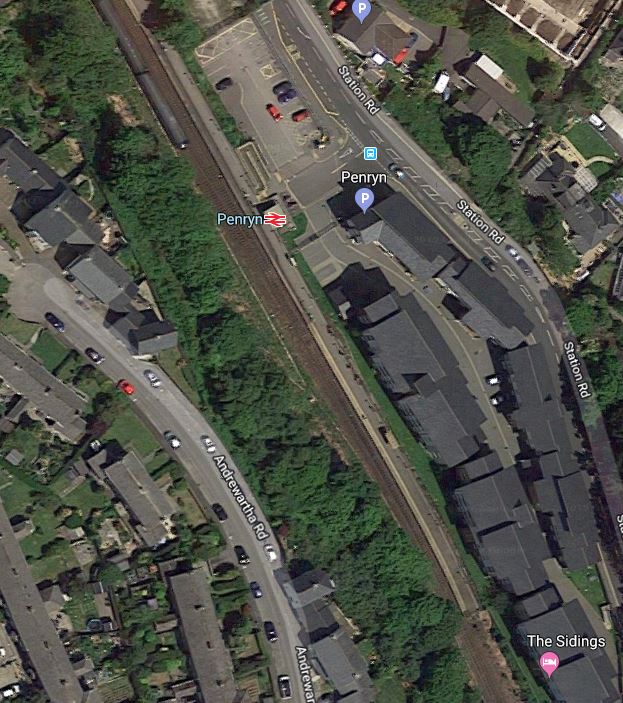
Note the long single platform in the station.
This section in the Wikipedia entry called Signalling, gives a full explanation of the method of operation at Penryn.
Truro-bound trains use the northern end of the station (Platform 2), arriving before the Falmouth-bound train, which will pass through the new loop and to the southern end of the platform (Platform 1), allowing the Truro-bound train to continue its journey north. This gives a rare situation in the United Kingdom where trains run on the right, instead of on the left as is usual in this country. Trains are scheduled to depart simultaneously for Truro and Falmouth.
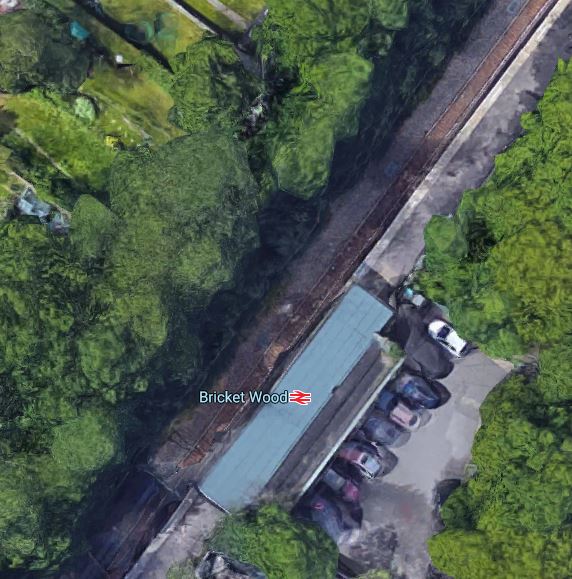
Bricket Wood station already has a platform, that can take a comfortably take a four-car Class 319 train, as this Google Map shows.
Consider.
- I estimate from Google Maps, that the single platform at Bricket Wood station is currently around 190 metres long.
- Looking at the map, it might be possible to add another ten metres or so to the platform length.
- The current Class 319 trains are 79.5 metres long or 159 metres for a pair.
- It wouldn’t matter, if for reasons of safety, the front of the trains were allowed to extend for perhaps ten metres past the end of the platform.
- There also appears to be space to put a second track alongside the current single track.
I also suspect, that Network Rail have track design software, that can precisely calculate the size and position of the points, so that the manoeuvre can be safely executed every time.
I very much feel, that a design can be produced, that will staff, passengers and regulators.
Can This Proposal Handle More Than Two tph?
If you look at the timings of the train, it takes eight minutes to run these legs.
- Watford Junction and Bricket Wood
- Bricket Wood and St. Albans Abbey
The times are identical, irrespective of direction.
If times are the same after installation of the novel loop. A train will take sixteen minutes plus however much time, it takes to turnback the train to get back to Bricket Wood.
As trains will be running every thirty minutes and both trains will leave Bricket Wood at the same time, the train must be able to run the out-and-back journey from Bricket Wood in thirty minutes or less.
- The out and back legs both take eight minutes.
- This means that the turnback time must be less than fourteen minutes.
Currently, turnback times are fourteen minutes or less.
- If you look at four tph, there is a train every fifteen minutes. As each leg is eight minutes long, it would appear another method of operation will have to be used.
- If you look at three tph, there is a train every twenty minutes. Would it be possible to turn back the trains in under four minutes? It might be possible, but it would be a tough call.
I would suspect, that for a reliable service, the proposed method of operation has a maximum frequency of two tph.
I suspect, that the only way to get more than two tph, would be to fully double track the route, with two platforms at all stations on the route.
Does The New Track Need To Be Fully-Electrified?
There would be around two hundred metres of new track and if electrification were to be installed, a pair of the current Class 319 trains could provide a two tph service.
Surely Network Rail can manage to put up this amount of new electrification without massive cost and time overruns?
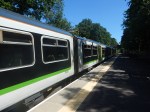
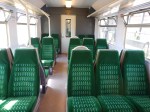
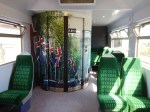
Despite being over thirty years old, the Class 319 trains scrub-up well as these pictures show.
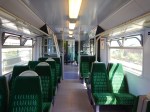
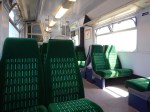
But what could be done if electrification was deemed to be outside the budget? Or it was decided that new zero-carbon trains should be used on the Abbey Line?
Battery trains are coming and there are several trains that can use both electric and battery power under development, in the UK, Europe, China and Japan.
Battery Power On The Abbey Line
Bricket Wood station is 3.5 miles from the Watford Junction end of the Abbey Line and perhaps three miles from the St. Albans end.
In an article in the October 2017 Edition of Modern Railways, which is entitled Celling England By The Pound, Ian Walmsley says this in relation to trains running on the Uckfield Branch, which is not very challenging, as is the Abbey Line.
A modern EMU needs between 3 and 5 kWh per vehicle mile for this sort of service.
So if a four-car electric-battery hybrid train was to handle the whole of the 6.5 mile route, it would need a battery of between 156-260 kWh to go between Watford Junction and St. Albans Abbey stations and back. It would also need charging at one or both ends of the route.
But supposing trains used the current electrification between Watford Junction and Bricket Wood stations to both power the train and charge their batteries.
- The trains would only be doing six miles on batteries, so the battery would be between 72-120 kWh.
- Trains would raise and lower their pantographs at Bricket Wood station.
- No new electrification would be required.
- If trains needed to top-up their batteries, they would do this using the electrification in the two terminal stations.
It might even be preferential to remove electrification between St. Albans Abbey and Bricket Wood stations to save maintenance costs and improve safety.
Could West Midlands Trains’ Class 730 Trains Be Used?
The current franchise holder; West Midlands Trains has ordered a large fleet of Class 730 trains for services between London and the West Midlands and for local electric services in the West Midlands.
Included are thirty-six three-car trains for working suburban services across Birmingham. These have twenty-four metre long cars, so are eight metres shorter than the four-car Class 319 trains, so they are another possibility, unless their longer car length would cause problems in the Bricket Wood manoeuvre.
Should The Abbey Line Be Transferred To Transport for London?
There have been suggestions in the past, that the route be transferred to Transport for London.
I’ll leave the politics aside, but electric-battery hybrid versions of London Overground’s Class 710 trains, which will soon be serving Watford Junction station would probably be ideal.
As they are dimensionally similar to the Class 319 trains, they may also be able to work the route under electric power.
Conclusion
There are certainly, several affordable ways to improve the Abbey Line.
My preferred solution would be go for the Penryn solution, using a fleet of Class 319 trains.
- Penryn seems to be working well.
- Track would need to be re-laid through Bricket Wood station, to add the passing loop.
- About two hundred metres of extra electrification would need to be erected.
- There would probably need to be some modification to the signalling, as there was at Penryn.
- Three trains as a minimum, would be needed, two for the service and one as a spare or as maintenance cover.
- West Midlands Trains already have fifteen Class 319 trains, so finding a viable fleet in top-class condition, shouldn’t be difficult.
- If slightly shorter trains could be needed, the trains might be able to be shortened to three-car trains.
- Staff training would be minimal.
- The current trains are liked by drivers.
- The trains would be zero-carbon.
- The current trains are in very good condition.
- The current trains even have toilets, which are probably not needed on a six-and-a-half mile journey
- If say in ten years time, new trains are needed, I suspect there will be fleets of suitable electric multiple units, less than eighty metres long.
It is probably the most affordable solution.
Grants To Support Low-Carbon Technology Demonstrators
The title of this post is the same as that of this article on Railway Gazette.
This is the two introductory paragraphs.
The Department for Transport has awarded grants of around £350 000 to each of five projects which aim to develop technology to reduce the rail network’s carbon footprint.
The projects were selected under the second round of the DfT’s First of a Kind competition, run by Innovate UK as part of the DfT’s wider Accelerating Innovation in Rail programme.
These are the winners.
Project 1 Riding Sunbeams
I wrote about this technology in Solar Power Could Make Up “Significant Share” Of Railway’s Energy Demand.
Project 2 Diesel Freight Carbon Reduction Technology
We all hate Class 66 locomotives, with their noise, vibration and pollution.
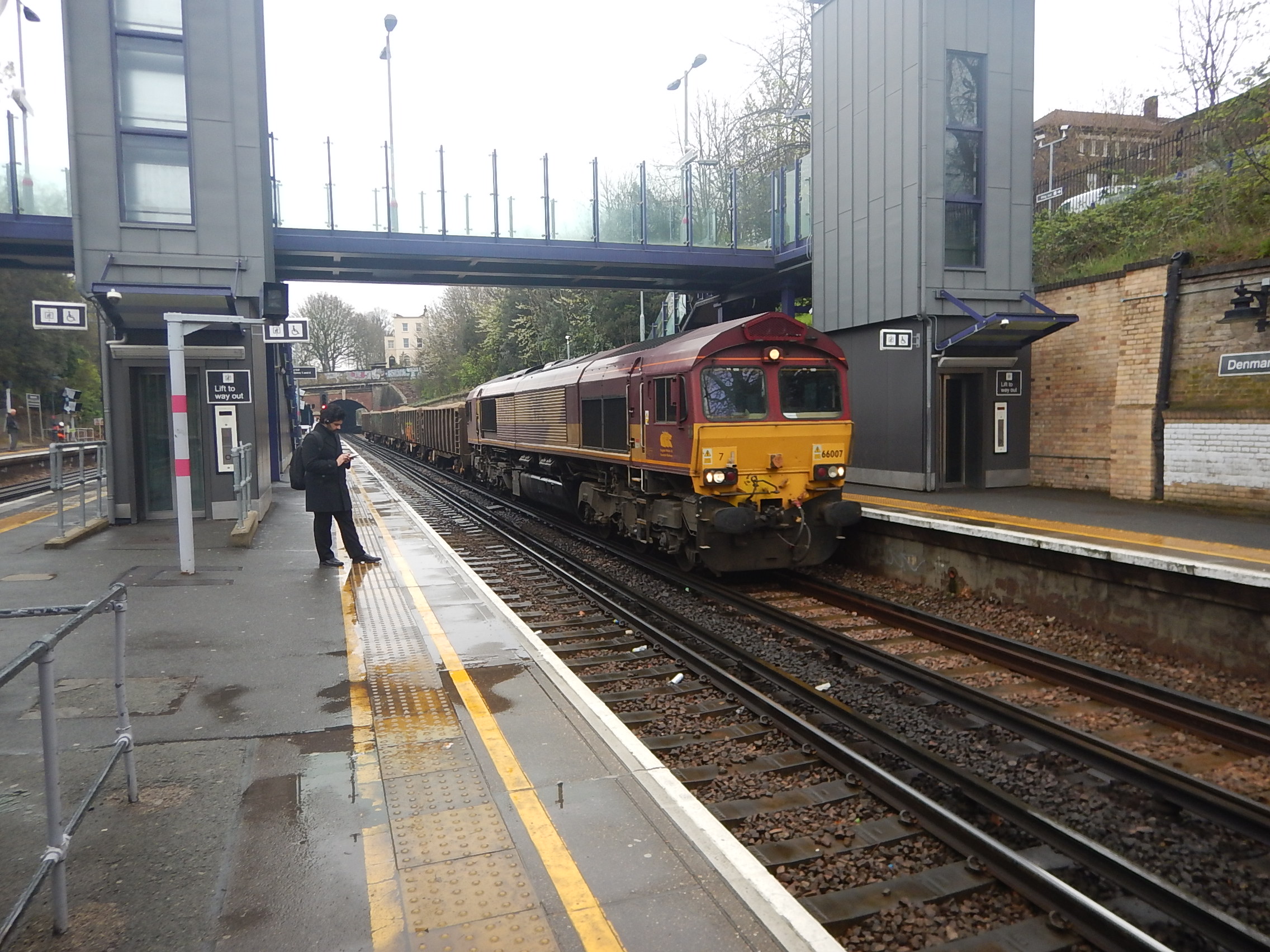
But an Essex company called Vortex Exhaust Technology has been awarded a grant to see if their free-flowing exhausts can tame, these most unfriendly of beasts.
They make this claim on their web site.
Vortex is the ONLY exhaust technology available that effectively eliminates back pressure, improving engine efficiency, boosting power and cutting emissions.
A Class 66 locomotive will be a tough challenge.
To see what the company can do for road vehicles, there is a case study at the bottom of this page.
But then they are Essex Boys! Performance is in the genes!
Project 3 CODD-P Hydraulic Pump
This is said in the Railway Gazette article.
Unipart Rail will undertake in-service testing of a commercial version of a digital displacement pump and electronic controller in place of a traditional hydraulic pump with swashplate design. This is expected to provide a significant reduction in fuel consumption.
It sounds like an idea from Artemis Intelligent Power in Edinburgh.
Project 4 Green Rail Exhaust After Treatment
This is said in the Railway Gazette article.
Leasing company Porterbrook will collaborate with Eminox to transfer an on-road exhaust after-treatment system widely fitted to heavy-duty vehicles to the railway environment, equipping a South Western Railway Class 158 DMU for in-service trials. This will enable the technical and commercial viability to be established, so it can be offered for widespread fitment.
There are currently 170 Class 158 trains and 30 of the closely-related Class 159 trains in service, so if this is successful, there won’t be a shortage of installations.
The picture shows one of East Midlands Trains, Class 158 trains.

It should also be said, that most Class 158 trains are in excellent condition, despite being nearly thirty years old.
Note that Porterbrook are involved. Train leasing companies seem to be getting increasingly involved with innovation.
Project 5 W2W Zero Emissions Power System
This is said in the Railway Gazette article.
Steamology’s Water 2 Water concept will use compressed hydrogen and oxygen gas in a ‘compact energy-dense steam generator’ to produce high pressure superheated steam to drive a turbine, which will generate electricity to charge the batteries as a ‘range extender’ for a Vivarail Class 230 multiple-unit produced from former London Underground vehicles.
It sounds to me, that the tabloids will say that this is the return of the steam train.
Conclusion
They are a broad spread of technology and I have this feeling, that the Department for Transport will get a sensible return for an outlay of around two million pounds.
But I suspect that the best and most profitable idea, will come, after a meeting between two or more of the award winners and their backers.
 The Anonymous Widower