Just Look How The Port Of Felixstowe Has Grown
This article on Rail Engineer is entitled Felixstowe Branch Line Capacity Enhancement Goes Live.
This is the introductory paragraph.
Funded by the Strategic Freight Network, with a contribution from Hutchinson Ports UK (HP-UK), a £60.4 million investment to create a new 1.4km loop on the Felixstowe branch line in Suffolk was successfully brought into service on 29 May 2019, on time and on budget. It facilitates an increase from 33 to 47 freight train paths a day in each direction on this key artery, carrying the highest freight tonnage in the country and serving the largest container port in the UK.
High Speed Two it is not, but if you read the article, you’ll see that a substantial amount of work has been done, involving track, footbridges, level crossings and signalling.
I can remember the Port of Felixstowe, when it was a just a small basin, with the Little Ships Hotel, a couple of warehouses and the giant seaplane crane. A couple of times, I used the Harwich Ferry to cross the harbour to Harwich on the Brightlingsea.
In some ways Felixstowe has come a long way in those sixty years.
With the increase in capacity on the Felixstowe Branch Line, the rail link can handle the container traffic through the Port better!
Note this about trains between Ipswich and Felixstowe.
- 47 freight trains per day between Ipswich and Felixstowe is roughly two trains per hour (tph) in both directions.
- The current passenger service is one tph.
- In addition, there is an hourly Ipswich and Lowestoft train, which shares track between Ipswich and Westerfield Junction.
- The new Class 755 trains are faster and will have shorter dwell times than the current trains.
Between Ipswich and Westerfield, there are four tph.
- The route is double-track.
- Not all trains stop at Westerfield
- The level-crossing at Westerfield station has been improved and is now is a Manually Controlled Barrier with CCTV
- The signalling has been improved and moved to Colchester Power Signal Box.
Between Westerfield and Felixstowe, there are three tph.
- The route is single track with loops to the East of Derby Road and the West of Trimley stations.
- The level crossings have been improved and three have been converted to Manually Cntrolled Barriers.
- The signalling has been improved and moved to Colchester Power Signal Box..
It looks to my untrained eye, that these service pattern are possible.
So what will happen in the future?
In the next few sections, I talk about the future.
Could More Passenger Trains Be Run To Felixstowe And Lowestoft?
I suspect here, that the limiting factor will be platform capacity at Ipswich station.
Ipswich station will have at least four tph running between Stowmarket and Colchester (3 x London and Norwich and 1 x Peterborough and Colchester), that will use Plstform 2 at Ipswich station. I suspect that this means Lowestoft and Felixstowe trains will have to share the Bay Platform 1.
With good signalling and precision driving, I suspect that the single platform could handle 2 tph to both Felixstowe and Lowestoft.
There would only ever be one train in Platform 1 at Ipswich station, unlike now, where two trains share. The new Class 755 trains will be just too long.
Could Two tph Be Run Between Ipswich And Felixstowe?
The current timetable is as follows.
- Leaves Ipswich at XX:58 and arrives Felixstowe at XX:24
- Leaves Felixstowe at XX:28 and arrives Ipswich at XX::54
Note.
- The clock-face nature of the timetable.
- Both journeys are 26 minutes
- There is four minutes for the driver to change ends and have a break.
This service would need two trains and if there’s one thing that Abellio Greater Anglia aren’t short of, it’s three-car Cl;ass 755 trains.
If the trains had the branch to themselves, there could be a two tph service between Ipswich and Felixstowe.
But they have to share it with freight trains running at two tph.
This would mean the following.
- Five tph between Ipswich and Westerfield
- Four tph between Westerfield and Felixstowe.
As two tph between Ipswich and Felixstowe is likely to be on Greater Anglia’s wish list, I suspect the new track layout was designed with this service in mind.
Currently, there is one or two cars per hour between Ipswich and Felixstowe, but a two tph service would mean a minimum of six cars per hour or a massive increase in capacity.
Could Two tph Be Run Between Ipswich And Lowestoft?
The current timetable between Ipswich and Lowestoft stations is as follows.
- An almost clock-face hourly service in both directions.
- A journey time of just under one-and-a-half hours.
- There are nine stops on the route.
- There are several minutes for the driver to change ends and have a break.
When the new Class 755 trains are working the route, the following will apply.
- The Class 755 trains are faster and have a shorter dwell time in stations.
- There will be four London and Lowestoft services per day.
I think it is true to say, that journey times will be reduced.
I suspect that the following could be possible.
- A journey time of perhaps one hour and twenty minutes.
- Trains would leave Lowestoft at XX:07
- Trains would leave Ipswich at XX:37
This or something like it, would be an acceptable clockface timetable.
I strongly believe that an improved service will be possible between Ipswich and Lowestoft.
- I feel that two tph between Ipswich and Lowestoft might be difficult to achieve without extra works on the track.
- Extra capacity can be added by using four-car Class 755 trains on the route.
- Faster services will certainly be introduced, as the train’s faster speed and shorter dwell times will knock several minutes from the journey.
I also think, that it may be possible to introduce a second service on the Southern section of the route, which runs to perhaps Leiston or even Aldeburgh. This would give the busier Southern section of the route two tph.
So Platform 1 at Ipswich station could see the following trains.
- Two tph Ipswich and Felixstowe
- One tph Ipswich and Lowestoft
- One tph Ipswich and Leiston/Aldeburgh
I believe that timetabling of the route would not be a difficult task!
Four Trains Per Day Between Lowestoft and London
The London and Lowestoft service could be arranged as follows.
- Lowestoft station has three platforms., so one could be reserved for the London service.
- If the last service arrived back late or the first service needed to leave early, the dedicated platform could be used for overnight stabling.
- When running between Ipswich and Lowestoft it would take over, one of the Ipswich and Lowestoft paths.
- The trains will stop at all stations between Ipswich and Lowstoft, as there will be jealousy between users.
- It would call in the through platforms 2 and 3 at Ipswich station..
- The trains would make as few calls as possible South of Ipswich, as the Lowestoft train will be a fourth fast London service in the hour.
No new infrastructure would be required.
Could London And Lowestoft Services Be A Dedicated Shuttle Train?
This may have marketing advantages, as the train could have its own livery and perhaps a buffet or a catering trolley.
If you assume that the working day for a train is 0600-2400, then this means the following.
- A round trip must be performed in four and a half hours.
- A London and Lowestoft time of two hours and fifteen minutes,.
- The journey time would include the turnround time at the destination.
As Ipswich and London times of an hour are possible with a 100 mph trains, like the Class 755 train, Ipswich and Lowestoft would have to be run in a time as close to an hour as possible.
Consider.
- The only trains on the East Suffolk Line will be Class 755 trains between Ipswich and Lowestoft.
- Class 755 trains may be able to stop at stations in under a minute.
- Line speed could possibly be increased, as the route appears reasonably straight
- Some level crossings could probably be removed.
- The current average speed on the line is around 35 mph.
I also suspect that Greater Anglia have run tests with the current Class 170 trains, which are 100 mph trains to determine what times are possible.
I wouldn’t be surprised if using a single shuttle train to run the four trains per day between London and Lowestoft, is possible.
- Services could leave Lowestoft at 06:00, 10:30, 15:00 and 19:30
- Services could leave Liverpool Street at 08:15, 12:45, 17:15 and 21:45
The last service would arrive back in Lowestoft at midnight.
Tram-Trains Between Ipswich And Felixstowe
This report on the East-West Rail web site is entitled Eastern Section Prospectus and gives full details of their proposals for the Eastern section of the East-West Rail Link.
This is said in the report.
Introduction of a tram-train service on the Felixstowe branch, with doubling between Derby Road and Felixstowe and street running through
Ipswich.
It is also said, that there will be a frequency of four tph between Ipswich and Felixstowe.
It looks like the plan is to fully-double the branch line to the East of Derby Road station.
To the West of Derby Road, the line is mainly single track until it joins the East Suffolk Line close to Westerfield station.
The problem is that the single-track railway goes over the over the Spring Road Viaduct. Rebuilding the viaduct to add the second track, would be something that everybody would want to totally avoid, as how would the containers from forty-seven freight trains per day in both directions, be moved in and out of the Port of Felixstowe?
If the capacity can’t be increased, the demand will have to be reduced.
A Possible Tram-Train Proposal
The East West Rail report is proposing that the 1-2 tph passenger service between Ipswich and Felixstowe should be replaced by a four tph tram-train service.
- The tram-train service would start at Ipswich station, running as a tram.
- It would probably meander through Ipswich, serving places like Portman Road, the Town Centre< Christchurch Park, the new housing in the North, Ipswich Hospital and the Retail Parks in the East.
- If Ipswich gets a new Northern Ring Road, the tram-trains, might run on the original by-pass, that goes past Ipswich Hospital.
- It would then join the double-track section of the Felixstowe Branch Line on the Eastern outskirts of the town.
- Extra stops might be built between Ipswich and Felixstowe.
- At Felixstowe station, the tram-trains could revert to tram mode and might even go as far as the sea-front, using battery-power.
There are a lot of possibilities to give Ipswich and Felixstowe, one of the best local transport links in the world.
There will be some collateral benefits.
- Extra freight trains can probably be squeezed through.
- Ipswich Hospital will get the updated transport links, that it badly needs.
- Road traffic would be reduced.
I also believe that the tram-train could be added to the Felixstowe Branch Line without disrupting trains, freight or passengers.
Electrification
I can remember reports from the 1960s, which said that felt the Felixstowe Branch Line would be electrified.
- With a frequency of four tph, the route would surely be electrified for the tram-trains.
- It would probably be electrified at 25 KVAC, so that freight trains could take advantage.
- When street running in Ipswich and Felizstowe,, 750 VDC electrfication or battery-power could be used.
There would be no extra electrification needed to enable all freight trains going via London to be electric-hauled.
Freight Locomotives
I think it likely, that increasingly, we’ll see Class 93 locomotives and other electro diesel locomotives with a Last Mile capability taking freight trains into and out of the Port of Felixstowe.
These new breed of 110 mph locomotives will be able to take maximum-length freight trains on routes to, from and through London, but a new locomotive will be needed to take trains across East Anglia to Ely and Pryrtborough and then on to the Midlands and the Notth.
Conclusion
The Port of Felixstowe and the railways connecting it to the rest of the UK have come a long way in sixty years and they will expand more in the next decade or two!
Stanmore Tube Station To Convert Car Park Into Flats
The title of this post is the same as this article on Ian Visits.
Network Rail To Outline Business Case For Clapham Junction Redevelopment
The title of this post is the same as that of this article on Rail Technology Magazine.
This is the first two paragraphs.
Network Rail have timetabled their plans to publish a strategy outline business case (SOBC) for the redevelopment of Clapham Junction station.
The public body told delegates at a rail conference in London that it intends to lay out the strategy by the end of the year.
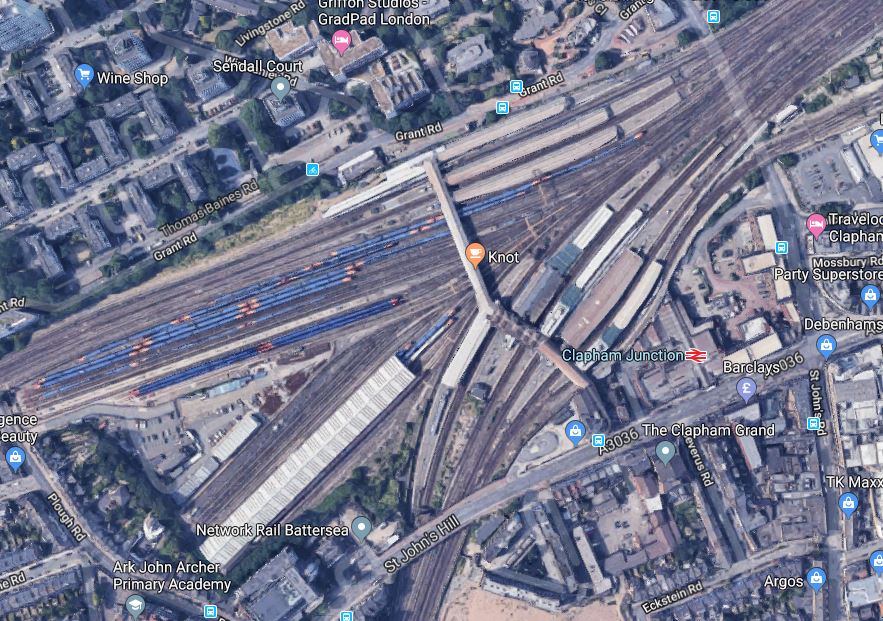
To get a better idea of Clapham Junction station, this Google Map shows the station.
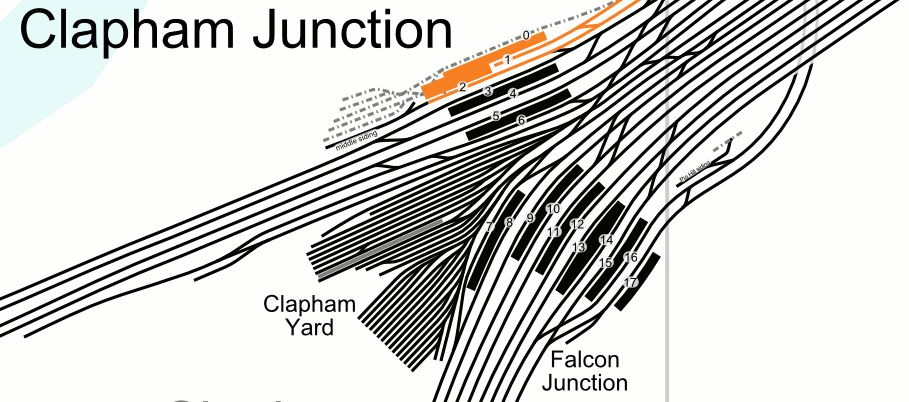
And this map from carto.metro.free.fr shows the track layout.
Note.
- The track layout is extremely complicated.
- A large amount of the area of the station is used for stabling of trains.
- The large number of platforms connected by a pedestrian bridge in the middle.
- There are a lot of stairs and lifts between the bridge and the platforms.
This description of the amount of traffic through the station is from Wikipedia.
Routes from London’s south and south-west termini, Victoria and Waterloo, funnel through the station, making it the busiest in Europe by number of trains using it: between 100 and 180 per hour except for the five hours after midnight. The station is also the busiest UK station for interchanges between services.
All of this adds up to a challenging problem, that if it can be solved, will fulfil these objectives.
- Greatly improve the passenger experience.
- Increase the train and passenger capacity of the station.
- Create more and longer platforms.
- Create or release lots of space for housing and other developments.
- Make the station ready for the Northern Line Extension from Battersea and Crossrail 2.
All of the development must be carried out with as little disruption to trains and passengers.
I’m no architect, but neither are Network Rail or were their predecessor British Rail, but they are good at creating well-thought out track layouts.
I suspect somewhere in a drawer or on a computer, is a British Rail plan for how the station could be laid out.
Such a plan probably existed for London Bridge station and with the design from good architects and structural engineers on top, one of the best terminal stations in the World has been built.
The Rail Technology Magazine article talks of decking over the whole station and putting two million square feet of development on top. But it also cautions, it would be very expensive.
- Could an imaginative architect create a unique development?
- Clapham Junction station, is the best-connected railway station in the South of London.
- Could the development be built with very little provision for car parking?
- Is the land strong enough for a cluster of high tower blocks?
- Could green space be provided?
I’ve lived in the Barbican with a young family and that estate works. But it should be remembered that the City of London had a completely cleared site at the Barbican, due to Nazi bombing.
So would decking over the station, be the way to create a cleared site to create a high-quality eco-friendly development for all?
I think it would and I think it could allow the development to be built at an affordable price.
I also feel that the important objective of building the development without disrupting trains and passengers can be met, by arranging construction in the right order.
Conclusion
Clapham Junction station is a unique site on which to build and like the Barbican, if we build it right, it will be admired fifty years later.
Battersea Power Station To Outshine Typical Tourist Attraction Sites In The UK
The title of this post is the same as this article in the New Straits Times.
This is the first paragraph.
Malaysia-owned Battersea Power Station project is expected to outshine many prime property developments in London after seeing a 36 per cent capital appreciation for units offered under its first phase.
The article goes on to give an interesting view on how Malaysian investors and tourists see London.
On Tourism
This is a paragraph.
It is expected that when it opens, 40 million people will visit Battersea Power Station annually.
That is around 109,000 visitors for every day of the year.
Will the Northern Line Extension and the roads cope?
On Investment
This is two paragraphs.
“London is never going to be cheap. Those who wanted to invest, better do it now. A lot of people from overseas have already started investing in London,” he added.
Mason said London would still remain attractive place for investors globally due to its higher capital returns for the property sector.
Londoners like me, don’t look on their City as an investment, but as an exciting and fulfilling place to live.
St Michaels Station To Go Step-Free
This document on the Government web site is entitled Access for All: 73 Stations Set To Benefit From Additional Funding.
St. Michaels station is on the list.
These pictures show the current station.
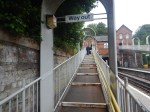
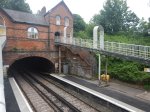
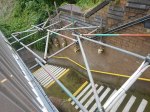
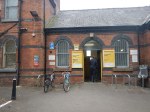
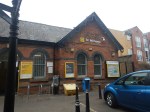
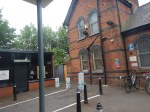

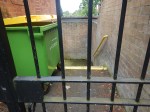
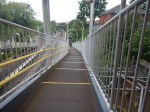
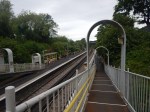
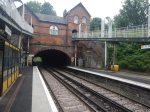
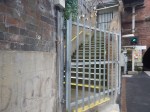
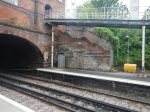
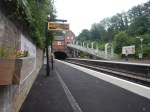
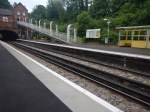
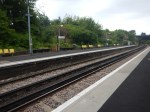
St Michaels station, like Hunts Cross station, has rather unusual long shallow angle ramps, with steps.
This 3D Google Map shows the station.
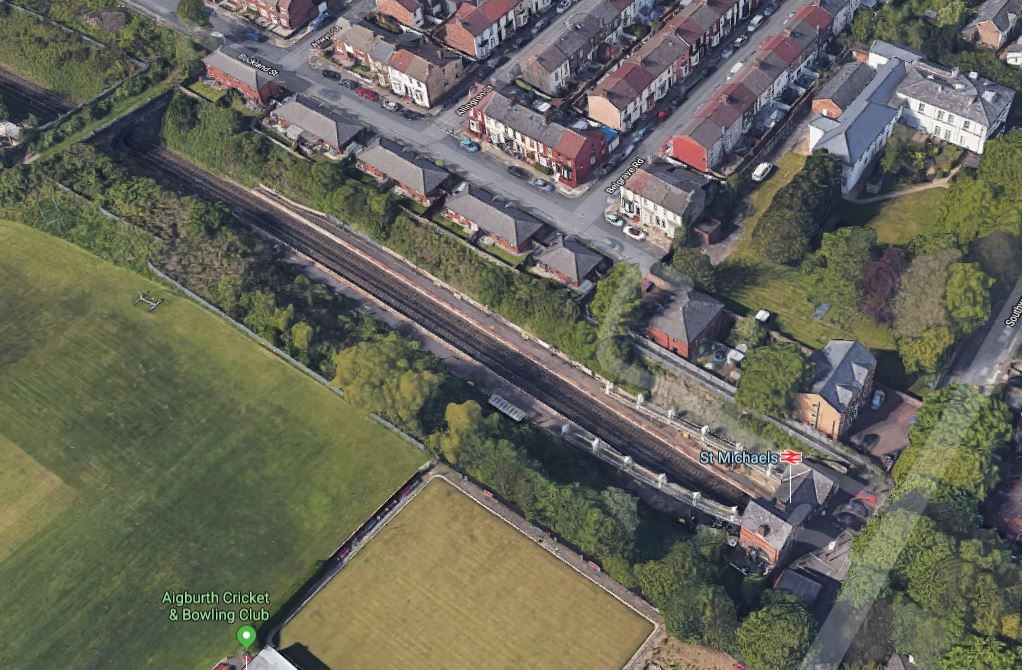
Note.
- It is a well-appointed and well-maintained station with a Ticket Office, a toilet and cycle storage and hire.
- Car parking is very limited.
- But the station is designed for pedestrians, cyclists and visitors
- The station has a rather chequered history, being closed in 1972, only to be reopened six years later.
- I think the design of the ramps is a good example of independent Liverpudlian thinking, which often ignores conventional practice.
The ramps were built for International Garden Festival in 1984, the site of which is shown on this second Google Map.
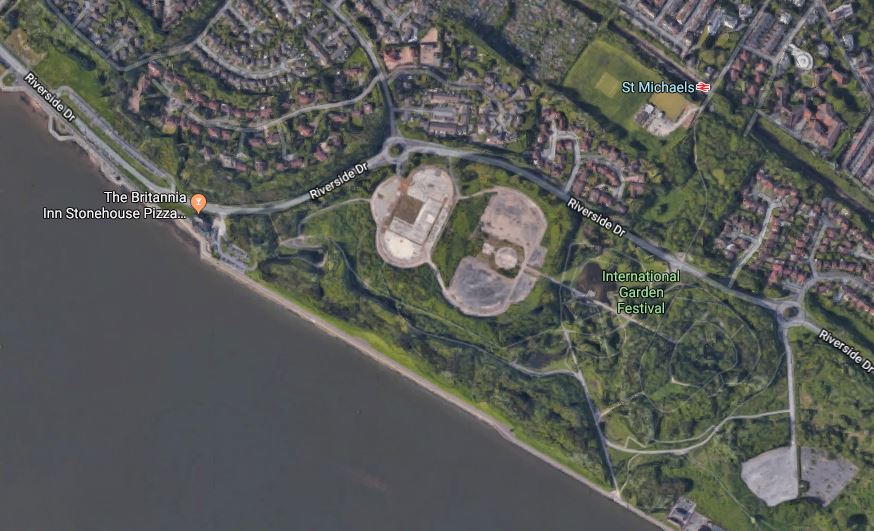
St. Michaels station is in the top-right corner of the map.
The International Garden Festival site has since been updated and 1300 new houses are being built on the site.
Adding step-free access to the station, will surely be a big asset to the area.
Preparation For Class 777 Trains
Note that St. Michaels station has been updated to allow step-free access between the new Class 777 trains and platform.
According to a fellow traveller, it had been done at night with little inconvenience to passengers.
Installing The Lifts
I would suspect, that the two new lifts could be installed in the space currently occupied by the two disused stairways.
Conclusion
This is the type of station that needs step-free access.
- It will make nearby developments more desireable.
- It will facilitate walking with children and for those in wheelchairs.
- It will increase traffic at the station.
I would also suspect the lifts can be added without too much disruption to the travelling public.
I also think there a lesson in the chequered history of St. Michaels station.
Next time a station or even a whole line has to be closed, make sure that it can be reopened, if necessary in the future. To many useful stations like Horden and Maiden Lane have been reduced to rubble. The former is being rebuilt and many believe the latter is needed.
Aviva Investors Acquires 101 Moorgate Development Site
The title of this post is the same as that of the title of this article on Property Funds World.
This introductory paragraph says it all.
Aviva Investors, a global asset management unit of Aviva, has completed the acquisition of the long leasehold interest in 101 Moorgate, EC2, from Transport for London (TfL). Aviva Investors will develop a mixed-use retail and office site above Crossrail infrastructure and opposite the new Crossrail Liverpool Street Station western entrance.
This Google Map shows a 3D visualisation of the site.
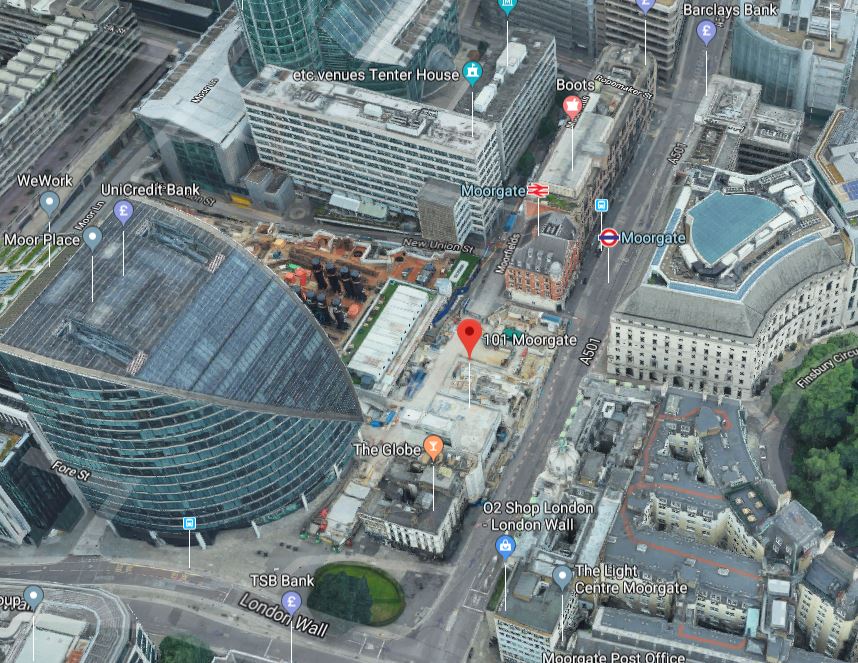
Note the site is indicated by the red arrow.
To its left is the distinctive Moor House, which as well as being a large office block, incorporates a Crossrail ventilation shaft.
Hopefully, Transport for London raised a few pennies for that deal.
A Residential Development Convenient For Rugby And Train Travel
I went through Twickenham station yesterday and took these pictures.
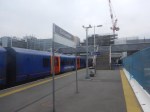
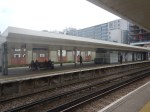
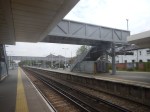
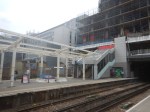
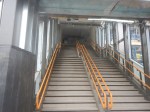


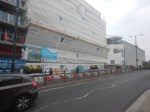
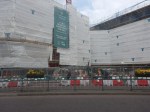
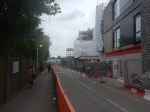
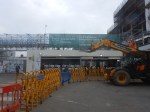
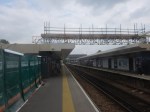
Surely many more stations could sustain a substantial development of much-needed housing on the top.
Development North Of Kew Bridge Station
This Google Map shows the large site to the North of Kew Bridge station.
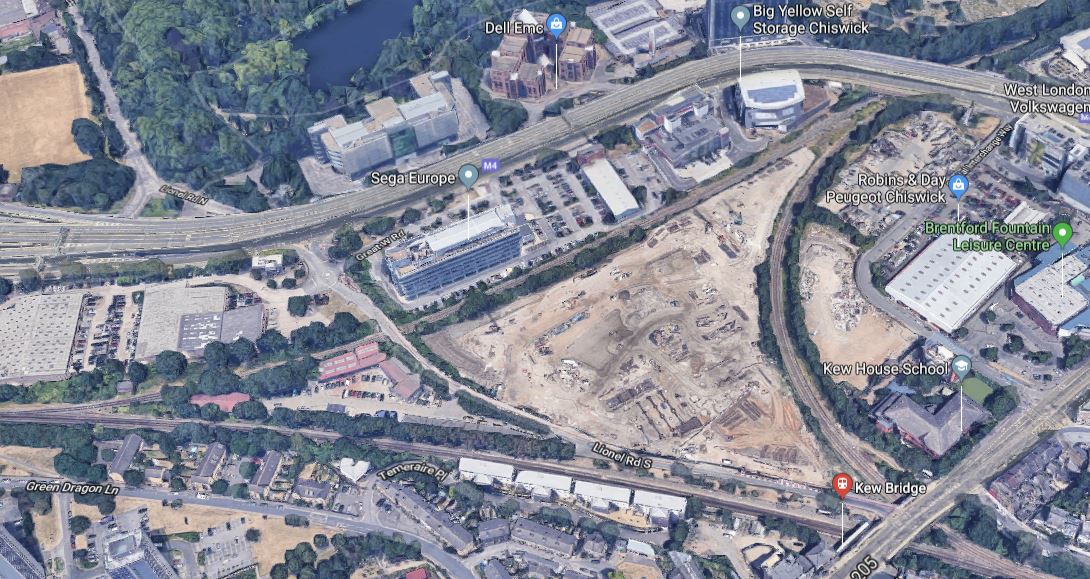
Note.
- Kew Bridge station in the South-East corner of the map.
- The M4 passing around the North of the site.
- The triangle of railway lines going to Hounslow in the West, South Acton in the North and Barnes and Waterloo in the East.
Some of the plans for the site have been disclosed.
Brentford’s New Stadium
I took these pictures from a train, as I passed through yesterday.
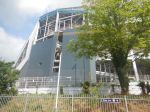
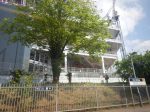
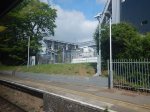
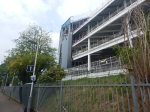
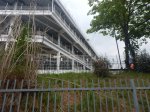
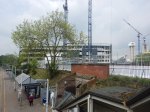
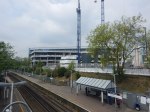
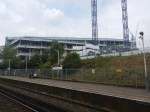
Brentford Community Stadium is planned to open in Summer 2020.
Step-Free Access At Kew Bridge Station
Currently, Kew Bridge station is not step-free.
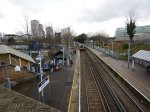
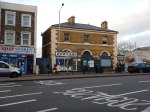
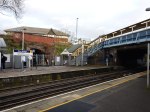
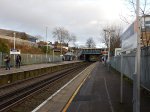
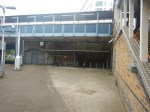

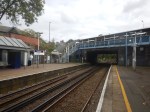
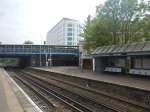
Searching the Internet, I found this document on the Hounslow Borough Council web site, which is dated April the 15th 2019 and entitled Step-Free Access To Many Of Hounslow’s Stations Proceeding At Pace!
This is an extract.
Kew Bridge is also set to benefit from accessibility improvements when the new Brentford stadium opens. The London-bound platform is to be made step free and the council is working with SWR and NR to explore how step-free access from the country-bound platform to the street can also be delivered. A feasibility study is due to progress later this year.
This map from carto.metro.free.fr shows the lines at Kew Bridge station.
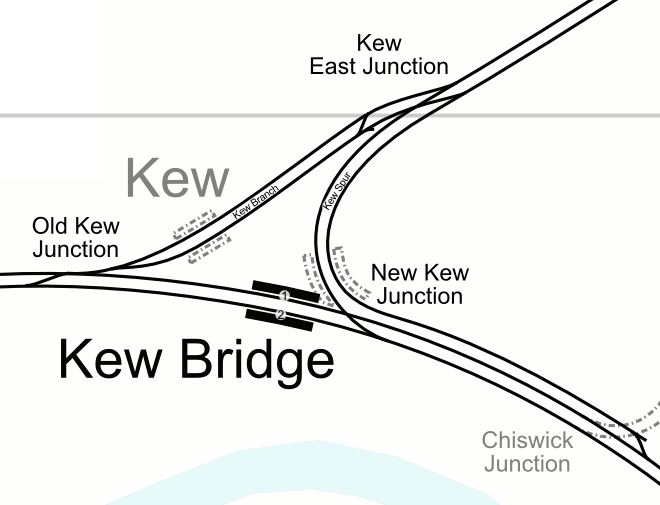
The two lines, through the disused platforms at Kew Bridge station could be used as a terminus, by the proposed West London Orbital Railway.
I’m sure Brentford FC wouldn’t object to more trains serving their new ground.
Preparations For The West London Orbital
This picture was taken as I looked through the short tunnel, that connects the current Platform 1 to the disused platform shown on the map of the lines.
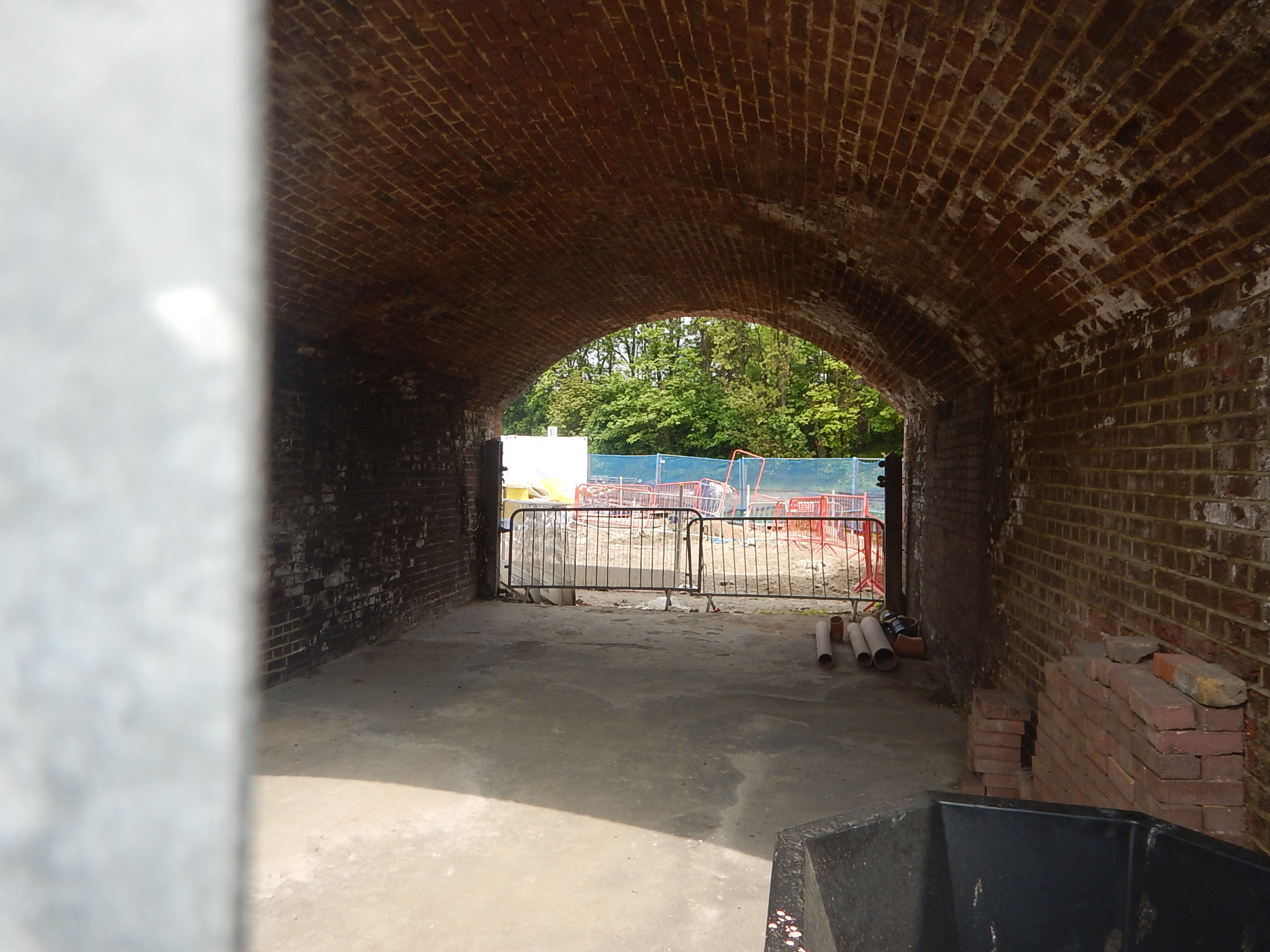
It appears that the rubbish and shrubbery of many decades is being cleared.
Could it be in connection with making the London-bound platform step-free?
It would also allow surveyors to assess how much work is needed to get the platform back into use for the West London Orbital Railway.
Development To The South Of The Station
This picture shows a large site behind the station building and the country-bound platform

The location of the site can be seen behind the Express Tavern on this Google Map.
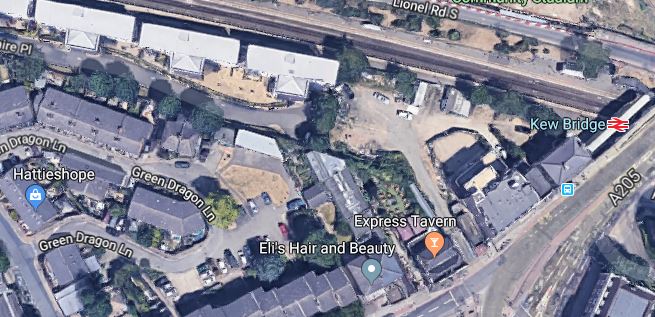
The map also shows how the flats developed on the South side of the tracks have limited the ability to put a second footbridge over the tracks to whisk passengers from London to the stadium.
I wonder, if a route could be built, through the developments, to deliver step-free access to the country-bound platform.
But it would be the wrong side for the stadium!
A step-free bridge is needed at Kew Bridge station.
The Cafe At Kew Bridge Station
Whilst at the station, I had a welcoming coffee.



It’s certainly better than your average chain coffee shop.
I could also wait watching a Departures display.
Development Of The Southall Gas Works Site
I took these pictures as my train went past the former Southall Gas Works to the West of Ealing station.





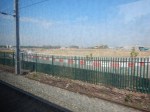


This was where there used to be a gasholder with a helpful sign, showing the way to Heathrow..
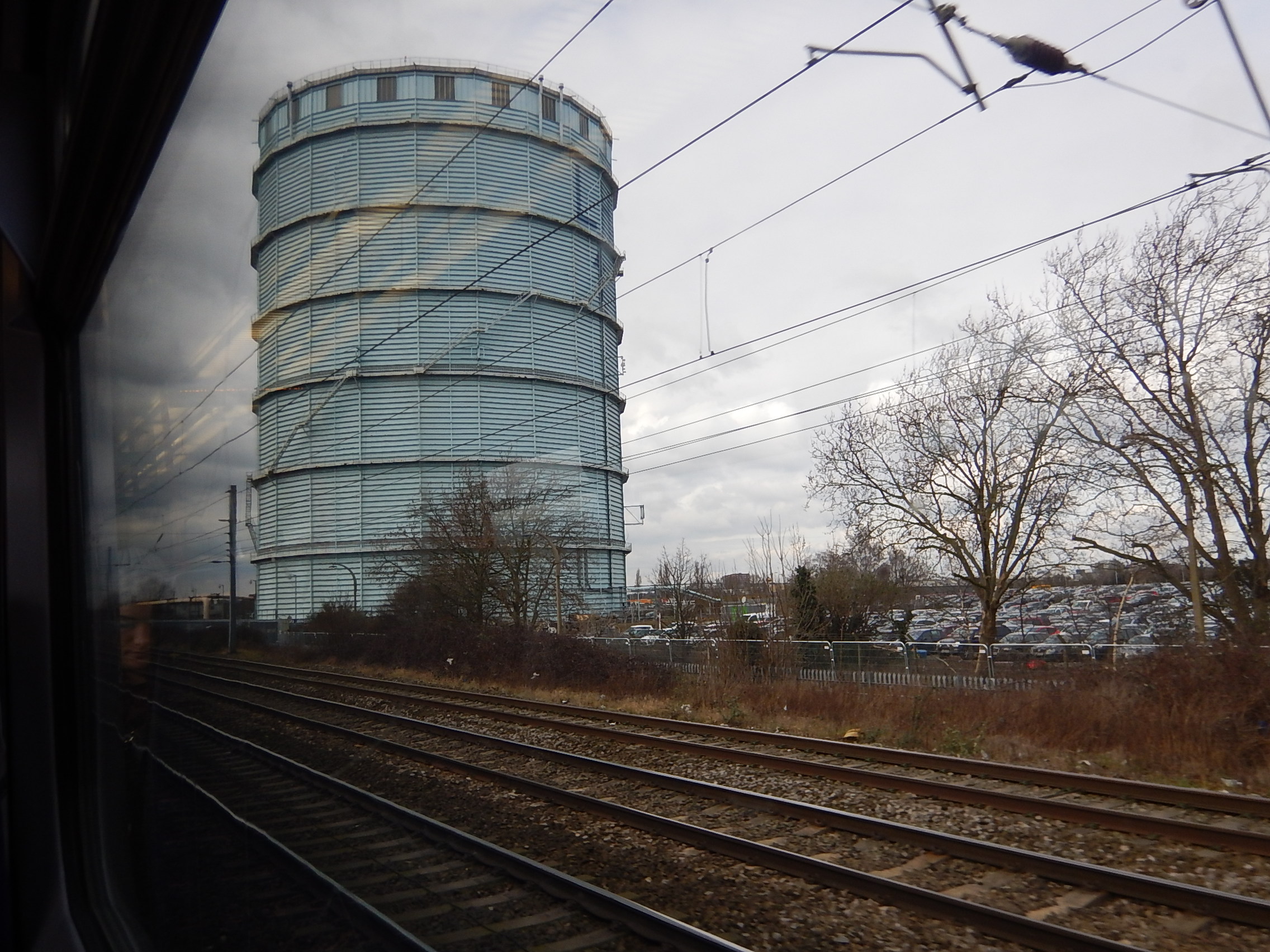
You can just see the L of LHR and the arrow.
This Google Map shows the site.
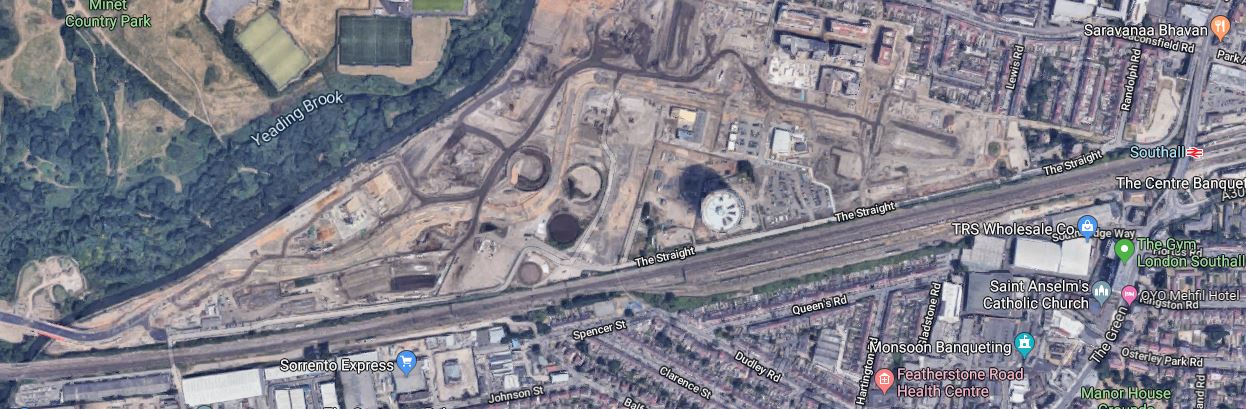
It is going to be a big development.
There are some older pictures from 2016 in What A Waste Of Valuable Land.
Streatham Station To Go Step-Free
This document on the Government web site is entitled Access for All: 73 Stations Set To Benefit From Additional Funding.
Streatham station is on the list.
These are some pictures of Streatham station.
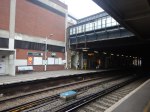
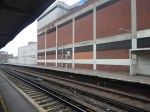


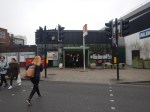

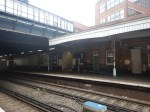
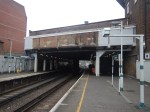
This station ineeds a massive makeover.
- The stairs are difficult with three sections.
- The booking office is in a structure balanced over the tracks.
- The platforms are very dark and as welcoming as a prison cell.
- There are various rooms that could be repurposed to improve the customer experience.
There is in fact very little of architectural merit, that would be missed if a rogue Class 66 locomotive and twenty large wagons full of stone demolished the station in the middle of the night.
This Google Map shows how the station is surrounded by new developments.

Note the bus station. Surely, when this development was built, the opportunity could have been taken to sort out the station.
Conclusion
As the site is surrounded by development, this must be an ideal location for a developer to build an appropriate residential block, with a new step-free station in the basement, based on the current platforms.
 The Anonymous Widower