Inside A Class 99 – The UK’s Most Powerful Locomotive
The title of this post, is the same as the title of this YouTube video.
This locomotive and its siblings, which can run on both electrification and diesel is the future of rail freight in the UK and GB Railfreight have ordered thirty of them.
Hopefully, by the end of the year, I’ll see one of these locomotives running along the North London Line, through Highbury & Islington and Dalston Kingsland stations.
At the present time, there are 480 Class 66 diesel freight locomotives in the UK. A substantial amount of carbon emissions would be saved, if as many as possible of Class 66 locomotives as possible were replaced by Class 99 locomotives.
These Class 99 locomotives will literally turn the rail freight business upside down.
Can These Locomotives Be Converted from Diesel To Hydrogen Power?
Stadler or Cummins have not said, but Cummins are decarbonising the company.
Already, large American trucks fitted with the latest Cummins engines can be converted to hydrogen. I write about this in Cummins Debuts Integrated HELM Drivetrain At IAA.
Cummins are also supplying Wrightbus with engines for the next generation of low-emission bus, as I wrote about in Wrightbus StreetDeck Ultroliner Next-Gen To Get Cummins Power.
Did Stadler fit a Cummins diesel engine in a Class 99 locomotive, as they know that every Class 99 locomotive or similar locomotives for other markets can be converted to hydrogen?
It is strange but very heartening, that when we have an American President, who thinks that climate change is fake news, one of the United States, largest and most iconic companies is leading the charge to decarbonisation.
Footage Released Of East West Rail’s First Commercial Freight Train
The title of this post, is the same as that of this news item from Network Rail.
These four paragraphs give detail to the story.
The inaugural journey was part of a dual first, as it also saw the entry into service of Maritime Transport’s Northampton Gateway Terminal.
This Easter Network Rail completed its work there to join the 35-acre freight facility directly to the West Coast Main Line via the Northampton Loop.
The modern junction design allows freight trains to enter and exit the site at speeds of up to 40mph, which is eight times faster than conventional freight connections.
Clearing the railway junction much faster will significantly improve both passenger and freight journeys – as it reduces the impact on other services running on the main line.
This OpenRailwayMap shows the location of Maritime Transport’s Northampton Gateway Terminal.
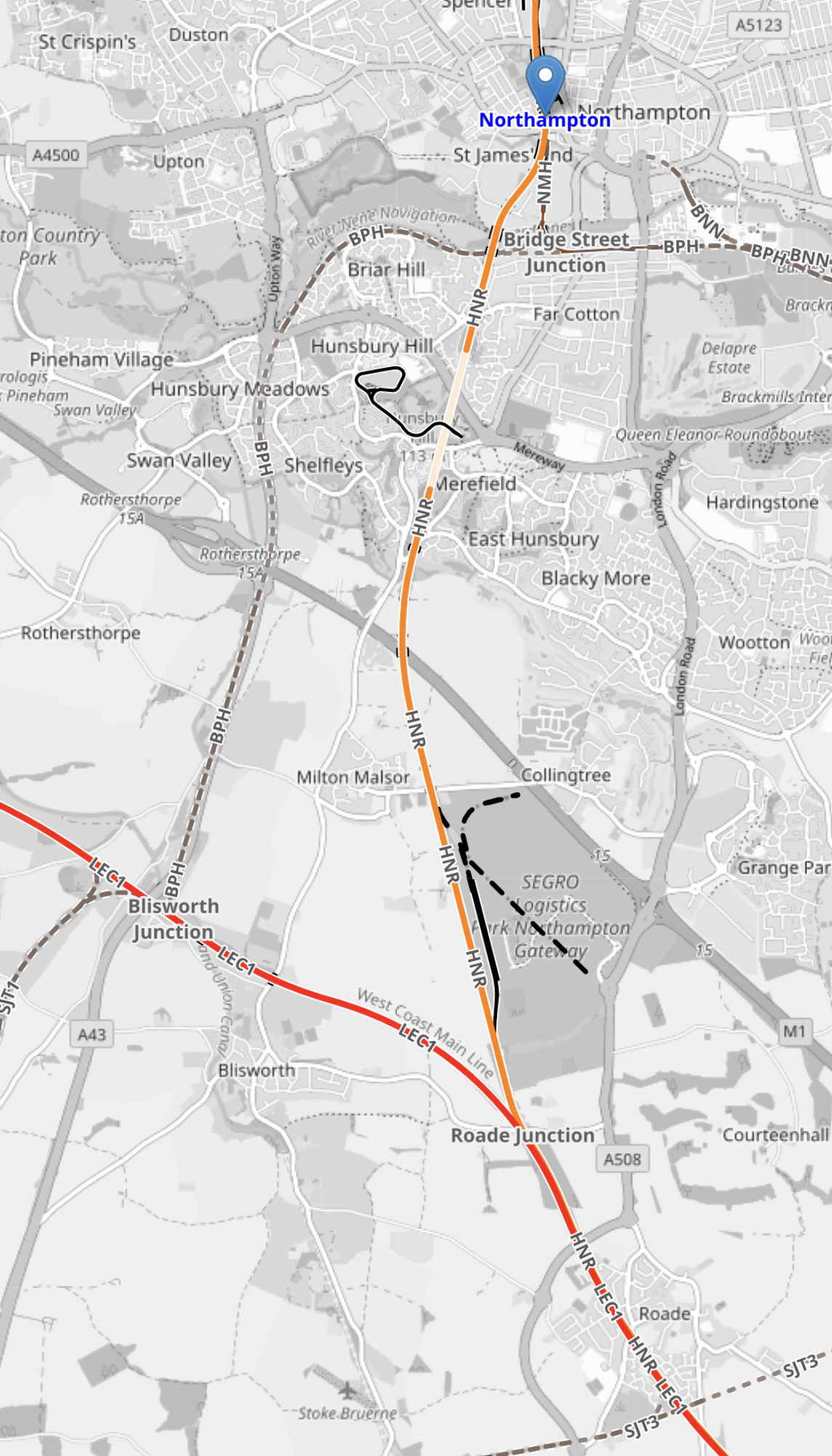
Note.
- The red track running diagonally across the bottom half of the map is the West Coast Main Line.
- The orange track running North-South is the Northampton Loop of the West Coast Main Line.
- The blue arrow indicates Northampton station.
- The grey line running diagonally across the map, vaguely parallel to the West Coast Main Line is the M1 Motorway.
- The SEGRO Logistics Park Northampton Gateway is indicated between the Northampton Loop and the M1 Motorway.
This Google Map shows the layout of the logistics park to a larger scale.
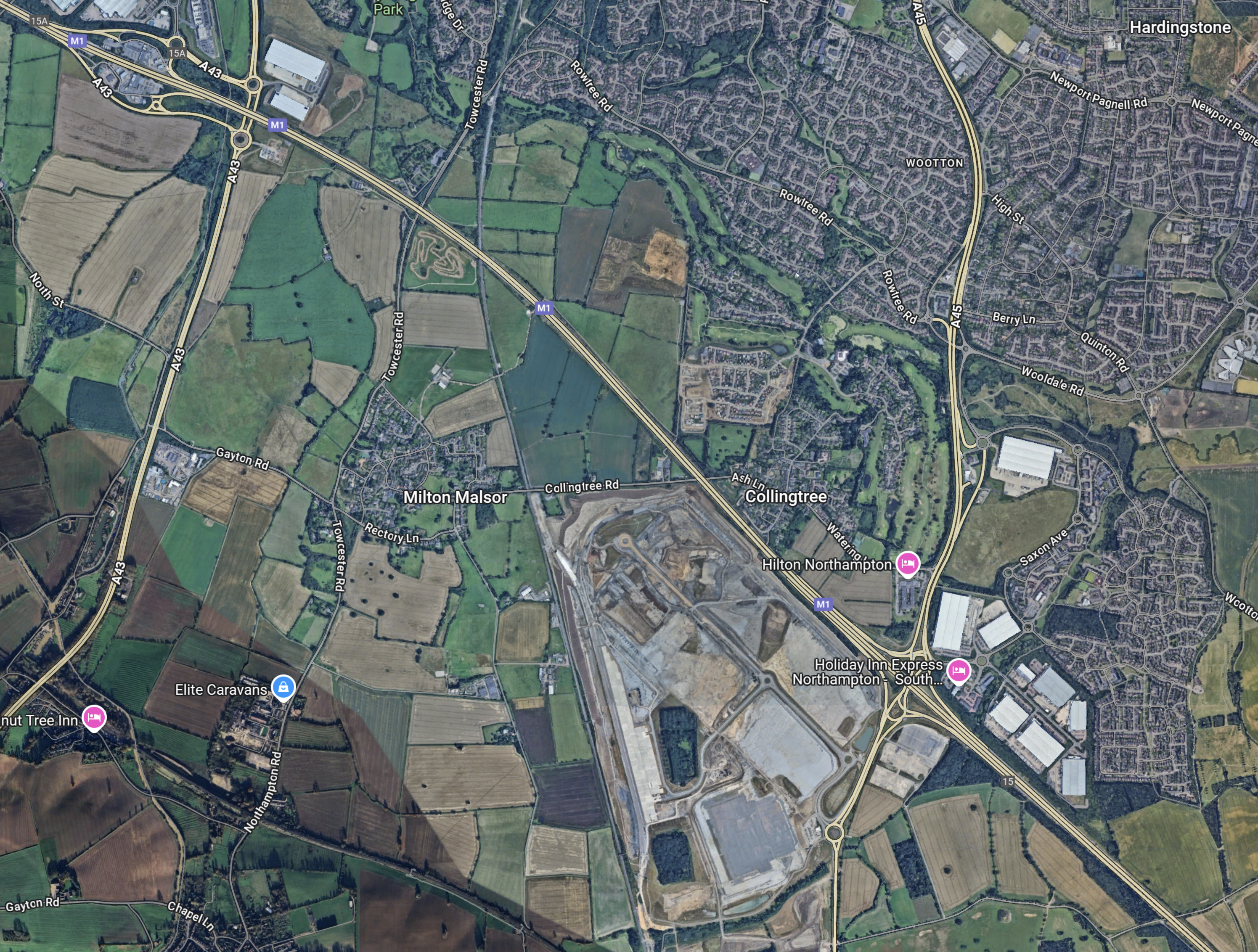
Note.
- The Northampton Loop of the West Coast Main Line running North-South across the map.
- The M1 Motorway running between the North-West and South-East corners of the map.
- Junction 15 is the M1 junction in the South-East corner of the map which connects the logistics park and the A45 to the M1.
- Junction 15A is the M1 junction in the North-West corner of the map which connects the A43 and Northampton services to the M1.
- There is probably space to add more warehouses and other facilities.
The logistics park is well connected to both rail and road.
This second Google Map shows the rail connection to the logistics park in more detail.
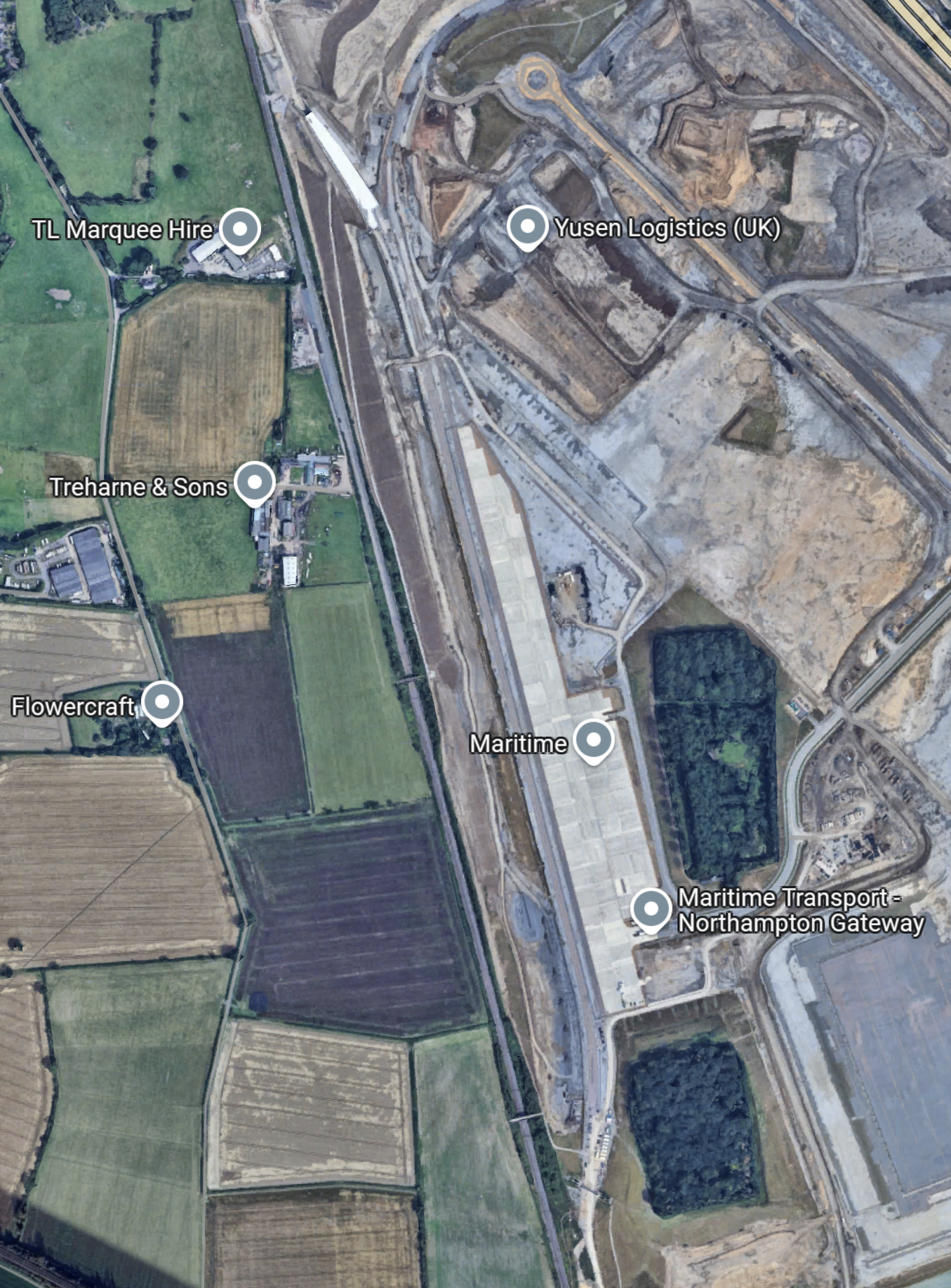
From this map, it appears that Network Rail have met their objective outlined in this paragraph of the news item.
The modern junction design allows freight trains to enter and exit the site at speeds of up to 40mph, which is eight times faster than conventional freight connections.
As only freight trains and slower passenger trains use the Northampton Loop, I would expect that freight trains should be able to enter and leave the logistics park with the minimum of disruption to traffic on the Northampton Loop.
The Route Of Yesterday’s Train
These three paragraphs from the Network Rail news item describe the route.
The first commercial freight train has travelled along the East West Rail line as part of its journey into a new strategic rail freight interchange in Northampton.
Shortly after 13:00 yesterday (Monday 16 June) the service* from Didcot came onto the new infrastructure at Oxford, travelling the 35 miles to Milton Keynes to connect with the West Coast Main Line.
It marked the first time East West Rail infrastructure has been used for commercial freight, after many months of signaller training and train driver learning since the £1.2bn railway was completed in October 2024.
This OpenRailwayMap shows the route from Didcot to Milton Keynes.
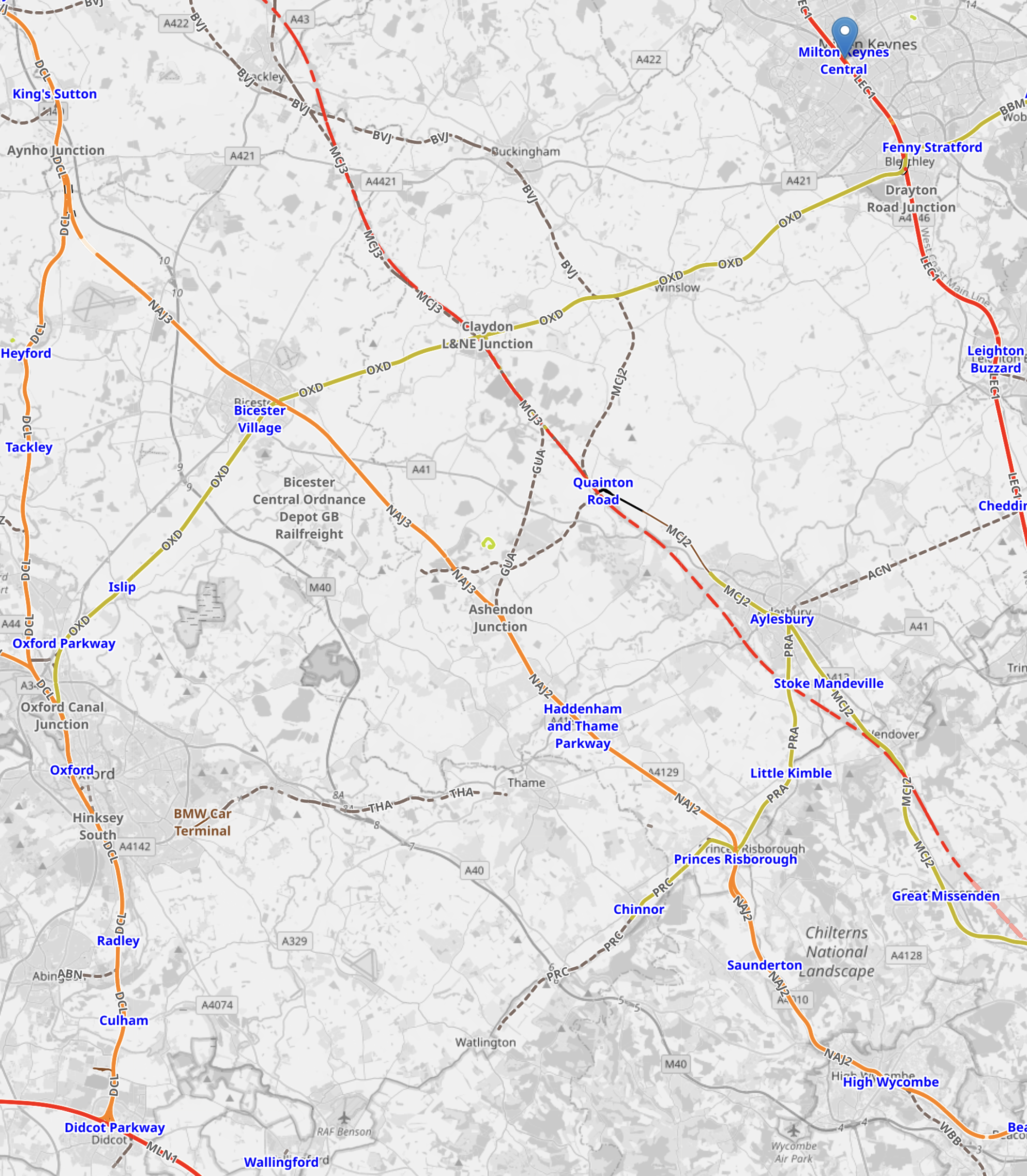
Note.
Didcot Parkway station is in the South-West corner of the map.
Milton Keynes Central is in the North-East corner of the map and marked with a blue error.
The route is via Oxford, Oxford Parkway, Bicester Village, Winslow and Bletchley.
This video shows the train passing Winslow.
Arriving In Liverpool Lime Street Station – 10th May 2025
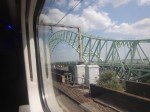
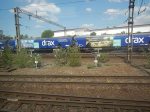
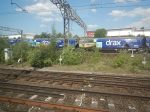
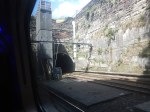
Liverpool Lime Street station has one of the more spectacular approaches of British railway stations, as these pictures show.









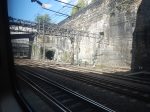


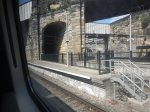
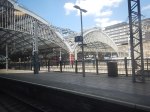
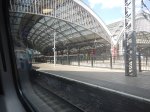
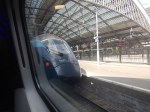
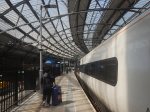
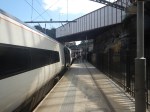
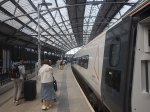

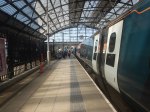
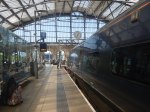

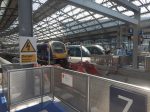
These sections describe the approach.
Crossing The Mersey
You cross the Mersey at Runcorn on the Ethelfreda or Britannia Bridge, which is described in this Wikipedia entry.
It was completed in 1868 and hopefully in a few years, it will be carrying High Speed Two trains between London and Liverpool.
On your right as you cross the Mersey to Liverpool is the Silver Jubilee road bridge, which is a through arch bridge that opened in 1961 to replace a historic transporter bridge. I am just a little bit too young to have seen the transporter bridge.
Further to your right, you can see the Mersey Gateway Bridge, which is a cable-stayed bridge, that opened in 2017 and is described in this Wikipedia entry.
Drax’s Biomass
As you approach Lime Street station, you pass through Edge Hill, where there are the GB Railfreight sidings, where the biomass trains for Drax power station are marshalled for their journey across the Pennines. These Drax trains seem to be one of the few freight trains in the UK, that carry advertising. Tesco trains also do, but their’s is just big letters.
In Do Cummins And Stadler Have a Cunning Plan?, I talked about the possible conversion at some date in the future of GB Railfreight’s new electro-diesel Class 99 locomotives to electro-hydrogen locomotives. These locomotives will surely be ideal for hauling Drax’s biomass trains across the Pennines.
I do believe that these Class 99 locomotives are the future of heavy freight trains in the UK. In Iarnród Éireann Looks At Diesel Loco Replacement Options, I write about speculation, that Stadler may build a version for the Irish.
Through The Edge Hill Cutting
From Edge Hill a deep cutting through the sandstone takes you into Lime Street station.
It looked good in the sun, but the first time I arrived in the city to start my studies at Liverpool University, it was chucking it down and the cutting was very dark and wet.
It was a very different welcome to that, which I got yesterday.
My Train Arrived In Platform 10
Liverpool Lime Street has two cast iron train sheds.
- The Western shed has platform 1 to 5 and generally handles trains from the East.
- The Eastern shed has platform 6 to 10 and generally handles trains from the South.
Note.
- Changing between trains is just a step-free walk across the station concourse.
- Both sections have their own taxi rank and full-size clock.
- The Ticket Office is in the Western train shed.
I just walked from my train to the Ticket Office, bought a Lancashire Day Ranger ticket and then walked fifty metres to my next train.
How many stations have such an easy change of trains?
Is Liverpool Lime Street Station Ready For High Speed Two?
Consider.
- I travelled North in an 11-car Class 390 train, which is 265.3 metres long and can carry 607 passengers.
- As the last pictures show, the train fitted easily into platform 10.
- High Speed Two plans to send 200 metre classic-compatible trains to Liverpool Lime Street, with each having a capacity of up to 528.
It looks to me, that these High Speed Two classic-compatible trains will fit into Liverpool Lime Street station, at any platform that currently accepts an eleven-car Class 390 train.
Looking on Real Time trains over the last few days, I’ve found eleven-car Class 390 trains using platforms 9, 10 and 6.
It seems that Network Rail’s engineers have done a superb job to turn the Grade II Listed station, into one of the best operationally.
Silvertown Tunnel Increases Network Resilience But It Comes At A Cost, Says Logistics UK
The title of this post, is the same as that of this article on UK Haulier.
This paragraph summarises the view of Chris Yarsley of Logistics UK.
Following the opening of the Silvertown tunnel in London, Logistics UK Senior Policy Manager – Road Freight Regulation Chris Yarsley says it will increase network resilience and make journey times more predictable, but feels the high toll charges penalise essential delivery vehicles who have no alternative means of servicing the capital.
Click this link to see all my Silvertown Tunnel posts.
Note.
- I have been through the Silvertown Tunnel a number of times now and I have only seen one large truck and a couple of vans in the tunnel.
- I have also seen no congestion at any of the entrances to the tunnels.
It certainly seems to have been well-designed.
How Many Cars Can You Get In A Station?
This morning, I took this sequence of pictures in Denmark Hill station.

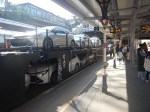
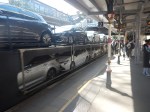
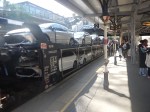
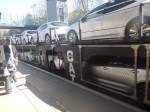
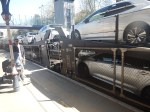
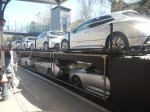
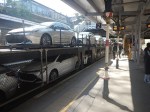
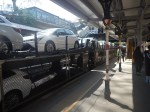
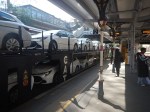

Note.
- The train had started at Toton
- The train was going to Dollands Moor in Kent.
- The train would then be transhipped through the Channel Tunnel.
- It will be a distance of 207.4 miles in the UK. Will that be classed as delivery mileage only?
I did think about calling this set of pictures – Japanese-designed cars, built in Derby, going between Toton and Europe, via Denmark Hill.
DRS Launches Trans-Pennine Freight With Ultra-Low IDA Wagons
The title of this post, is the same as that of this article on Modern Railways.
These three paragraphs describe the service.
Direct Rail Services is operating a trial freight from Teesport to Trafford Park using ultra-low IDA wagons meaning that standard high-cube containers can be carried. This is a first for the route.
The first train ran on 3 February, hauled by DRS No 68033 The Poppy. The train runs from the PD Ports terminal at Teesport and will initially operate for 12 weeks. DRS said that if the trial is a success then the flow will become permanent.
The train leaves Teesport at 15.25, running via the East Coast main line to Colton Junction before heading to Castleford, Wakefield Kirkgate, Healey Mills, Mirfield, Huddersfield, Stalybridge and Manchester Piccadilly. It arrives at 00.12. The return departs Trafford Park at 04.30, arriving at 09.07. The trains run five days a week.
This is a classic case of a rail service becoming possible, because some innovative technology was procured.
In this case the innovative technology, which is the IDA ‘twin’ intermodal flats, which are best described in this article in Rail Express, which is entitled Going low with the IDA flats. They seem to have had a bit of a chequered entry into service, but they may be doing better now.
Redundant Coal Wagons To Be Converted For Construction Traffic
The title of this post is the same as that of this article on Railway Gazette.
These three paragraphs describe the project.
WH Davis is to convert coal wagons owned by leasing company Porterbrook for use by Freightliner to transport aggregates.
’This is a fantastic opportunity to demonstrate what can be achieved by giving redundant fleets a purpose for the next 30-plus years’, said WH Davis Managing Director Andy Houghton on December 19. ‘It’s a truly sustainable option that also gives UK manufacturing a boost to enable the creation of UK jobs in the industry. I really can’t wait to see our latest box wagon design in traffic for Freightliner in 2025.’
Mark Wyborn, Head of Freight at Porterbrook, said freight volumes in the construction sector were expected to continue growing, and the deal ’highlights our commitment to investing in the long-term growth of rail freight while providing affordable, innovative and sustainable rolling stock for the UK railway’.
We need more recycling projects like these.
In the article, there is a picture of a Class 66 locomotive like this one.
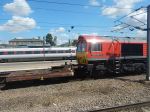
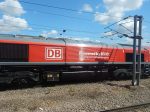
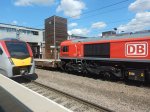
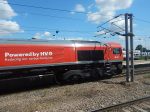
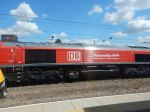
Except this one, which is named after Benjamin Gimbert GC, is different in that it is running on Hydrotreated Vegetable Oil (HVO). which is a more sustainable fuel.
Unfortunately, there is only so much second-hand vegetable oil from the likes of McDonalds and Burger King and it is also a component of Sustainable Aviation Fuel (SAF).
But in the UK, we have engineers at Cummins, JCB, Ricardo and a number of other companies, research organisations and universities, who could create a conversion for the American two-stroke diesels of the Class 66 locomotive so they could run on hydrogen.
These posts detail attempts to create a zero-carbon or dual-fuel locomotive in the UK and some of my thoughts.
- Dual-Fuel Class 37 And 66 Locomotive Concepts Unveiled
- Could Class 66 Locomotives Be Converted Into Battery-Electric Locomotives?
- Freightliner Secures Government Funding For Dual-Fuel Project
- Grants To Support Low-Carbon Technology Demonstrators
- Thoughts On A Battery/Electric Replacement For A Class 66 Locomotive
- A Hydrogen-Powered Locomotive
- Our Sustainability Journey
The Bi-Mode Class 99 locomotive is coming, but we need action now.
I estimate it would probably cost up to £2million to convert a Class 66 locomotive to hydrogen.
So why not have a competition with a prize of perhaps £10million to see who, can produce the best Class 66 or Class 68 locomotive conversion by the end of 2025?
Conclusion
We need urgent action to cut pollution, noise and emissions from heavy freight locomotives and market forces and government grants don’t seem to have produced a solution, so perhaps a competition with a big prize might do it.
It could even be televised,
Council’s Concerns Over Suggested Tunnel Charges
The title of this post, is the same as that of this article on the BBC.
This is the sub-heading.
Concerns have been raised by a county council over suggested charges at the Silvertown and Blackwall tunnels in London.
These are the first two paragraphs.
Kent County Council (KCC) said the proposed charges could impact on the county’s traffic, including at the Dartford Crossing.
The council said although it supported TfL’s ambition to improve journey reliability and reduce air pollution, it believed the proposed changes could “significantly affect” drivers from Kent.
I can’t see that the charges on the two tunnels won’t affect drivers habits.
Thirty years ago, before satellite-navigation had been invented, when my family and myself lived in East Suffolk, if I was returning from Brighton or Gatwick, I would make a choice about, whether to use the Dartford Crossing or the Blackwall Tunnel. Sometimes traffic was so bad, that I had to take the longer Western route using the M11 and the A14.
I didn’t really bother about the toll on the Dartford Tunnel, as it was then, but often the free Blackwall route was quicker.
In those days, I was relying on radio reports, but now with satellite-navigation, drivers will be taking more intelligent decisions, that take account of tolls.
The BBC article also says this.
The council says Kent drivers make up 10% of the Blackwall Tunnel’s users.
So it looks like the drivers of Kent will be paying tolls to London.
These are my thoughts.
How Can The Tolls Be Avoided?
There will still be two free crossings, to the East of Tower Bridge; the Rotherhithe Tunnel and the Woolwich Ferry, but how long will they remain free, if they drain money from the tolled tunnels?
What About The Trains?
Trains from somewhere like Ebbsfleet international station can be used.
Ebbsfleet international station has a lot of parking, but at some stations parking is distinctly limited.
I doubt though, that Transport for London have done a professional survey of the amount of parking that is needed.
They tend to believe if people live out of London, that parking for trips to London is not a Transport for London problem.
Are there any plans to increase the train frequencies, if more people use them?
Note that Off Peak Day Return tickets can be purchased with a Railcard, from Dartford to London for under a tenner, and from Ebbsfleet international to London for under fifteen pounds.
If Built, Will The Lower Thames Crossing Help?
The first paragraph of the Wikipedia entry for the Lower Thames Crossing, describes it like this.
The Lower Thames Crossing is a proposed road crossing of the Thames estuary downstream of the Dartford Crossing that links the counties of Kent and Essex, and its proposed approaches. If built it would pass through the districts of Thurrock and Gravesham, supplementing the Dartford route. The approximately 14.3-mile (23.0 km) route is being assessed by the Planning Inspectorate.
As it is likely to cost nine billion pounds and take six years to build, I can’t see the current Government building it.
But it would certainly make it easier for traffic to go between the Channel Tunnel and North of London.
Conclusion
I can see the UK muddling through, when we should be bold and create the transport infrastructure for the Twenty-First Century.
For instance, I would extend the Elizabeth Line in the North-East to Southend and in the South-East to Ebbsfleet and Gravesend. With the existing cross-platform interchange at Whitechapel, I believe, it could pick up much of the cross-river passenger traffic close to London.
I also feel that there will need to be improved connections between the fast-expanding London Gateway freight port and the Channel Tunnel.
Freightliner Offers Single Container Transport By ‘Carbon Reduced’ Trains
The title of this post, is the same as that of this article on Railway Gazette.
These two paragraphs explain the service.
Freightliner has launched its ECO90 booking service which enables customers of any size to reduce their carbon emissions by sending as little as one container on trains powered by alternative fuels.
The trains currently use hydrotreated vegetable oil, and Freightliner told Rail Business UK that other options could be available in the future, A certificate confirms that the fuel is fully traceable and from sustainable sources, and a Scope 3 carbon emissions report is provided.
It will be interesting to see if this service succeeds.
I suspect that in the future, the service’s biggest competitor will be the hydrogen-or electric- powered truck, which will offer an end-to-end zero-carbon service with minimal cargo handling.
Hybrid And Over 1.100 kW Strong: Rolls-Royce Presents New mtu Propulsion Concepts For Military Vehicles Of The Future
The title of this post, is the same as that of this press release from Rolls-Royce.
These two paragraphs detail some of the philosophy and features behind the hybrid power units.
Electrification and hybridisation will give tactical vehicles new capabilities in the field. To this end, Rolls-Royce’s new mtu hybrid drive combines the advantages of a high-performance diesel engine with those of a battery-electric drive. The highly integrated propulsion system requires comparatively little installation space in the vehicle in order to maximise the volume available for equipment and crew. The core of the solution is a highly mobile and extremely compact drive solution, taking into account increasing cost pressure, tight budgets and the need for significantly larger vehicle fleets.
For quiet operation, for example in a concealed position, the high-performance batteries previously charged in diesel mode, supply the vehicle’s electrical and electronic systems. This is done without the noise and thermal footprint of the diesel engine – and over a longer period of time. This makes the vehicle more difficult to locate for enemy reconnaissance. The so-called “anti-idling” mode not only ensures better camouflage of the vehicle, but also significantly reduces fuel consumption when the vehicle is on standby. The range of the vehicles and the downstream logistics chain for refuelling the vehicles are optimised.
Hopefully, power concepts like these will lead to highly capable fighting vehicles, that will defeat the threats we face from the East.
But surely, as hybrid power develops and embraces the use of clean fuels like green hydrogen and green methanol, power units like these will be found in other applications, both on land and on the sea.
And how about a hydrogen-hybrid rail locomotive to haul trains in noise-sensitive areas!

