The TruckTrain
Note that I first came across the TruckTrain, when I wrote Innovative Composite Masts Look To Reduce Cost And Increase Efficiency Of Rail Electrification.
I have now decided that the concept could be so revolutionary, that it needs its own post.
The TruckTrain
TruckTrain is a concept with roots in Coventry University that could be off-beam enough to become a new normal.
The TruckTrain Web Site
The TruckTrain web site is the main source of information for the TruckTrain.
A sales leaflet for the TruckTrain can be accessed from the Home page.
The About page on the web site, gives this description of the TruckTrain.
TruckTrains® are short, fast, bi-directional self-propelled fixed freight train formations able to operate at passenger train speeds. Train sets can work in multiple in response to operational and commercial imperatives. Each vehicle is powered and all axles are powered to deliver the acceleration and braking required to achieve and to sustain this demanding level of performance. The initial configuration will use diesel-electric power to ensure freedom of operation over the national network. A hybrid design able to operate on electrified lines has also been developed together with an all-electric variant capable of extremely high-speed performance.
The Specifications page on the web site gives a detailed specification of the TruckTrain.
These are my thoughts.
The Basic Design Concept
The leaflet on their web site describes the concept.
This visualisation at the bottom of the leaflet shows four TruckTrains forming a train carrying twelve intermodal containers, each of which I suspect are 20 feet long.

Note.
- Each of the four TruckTrains appears to be carrying three intermodal containers.
- A 20 foot container is 6.096 metres long, so three are 18.288 metres long.
- Each TruckTrain has two bogies and four axles.
- The cabs at the two ends of each TruckTrain are different sizes.
- The longest carriages in use on the UK rail network are the 26 metre carriages used by Hitachi in their Class 800 and other trains.
I can deduce that with a twenty metre load space, a TruckTrain would accommodate any of the following.
- Three twenty-foot containers.
- A forty foot container and a twenty foot container.
- Large numbers of pallets.
- Ability to handle roll-cages as regularly used by supermarkets.
- A curtain-sided load space.
Any of these would give six metres for the two cabs.
This should be enough space for two cabs, but there are other possibilities.
- The longer cab could have a pantograph on the roof to use 25 KVAC electrification.
- The space behind the driver cab in the longer cab could be used for power-train gubbins.
- There must also be space under the load space for more power-train gubbins.
I feel certain, that an electrically-powered TruckTrain is more than a possibility.
The Width And Height Of A TruckTrain
This sentence from the Wikipedia entry for intermodal container, says this about their size.
Intermodal containers exist in many types and a number of standardized sizes, but ninety percent of the global container fleet are so-called “dry freight” or “general purpose” containers – durable closed rectangular boxes, made of rust-retardant Corten steel; almost all 8 feet (2.44 m) wide, and of either 20 or 40 feet (6.10 or 12.19 m) standard length, as defined by International Organization for Standardization (ISO) standard 668:2020. The worldwide standard heights are 8 feet 6 inches (2.59 m) and 9 feet 6 inches (2.90 m) – the latter are known as High Cube or Hi-Cube (HC / HQ) containers.
The Specifications page for the TruckTrain says this.
2-7 car Freight multiple unit capable of carrying combinations of 6 to 21 TEU of ISO containers, Hi-cube containers or swap bodies or 175 cubic meters of palletised cargo per vehicle with refrigeration available for both variants.
And the sales leaflet for the TruckTrain says this.
Performance and train path profile similar to a Turbostar passenger DMU.
Does that also mean that the width and height of a TruckTrain are no greater than that of a Class 170 train, which are respectively 2.69 and 3.77 metres?
It appears that international standards allow for a wagon floor height of 0.94 metres, which gives the following train heights to the top of the container.
- Standard container – 3.53 metres
- High Cube container – 3.84 metres
It will be a tight fit, but companies like Stadler use smaller wheels on some of their UK trains, which also have a height of 3.95 metres
I suspect that with a bit of selective bridge-raising TruckTrains will be able to go anywhere a Turbostar can go.
Connecting TruckTrains Together
The pictures of the TruckTrain on the web-site and the leaflet appears to show a standard multiple unit coupler like a Dellner.
The Specifications page for the TruckTrain says this.
2-7 car Freight multiple unit capable of carrying combinations of 6 to 21 TEU of ISO containers.
Is seven the maximum or just a marketing limit?
The technology and software to connect the trains and run them as a formation has been well and truly tested in many multiple units.
Motive Power Of TruckTrains
The About page for the TruckTrain says this.
The initial configuration will use diesel-electric power to ensure freedom of operation over the national network. A hybrid design able to operate on electrified lines has also been developed together with an all-electric variant capable of extremely high-speed performance.
As I said earlier, the pantograph could go on the roof of the longer cab for electric operation and the diesel engine could go under the load, as it does on most diesel multiple units.
I would think though, that one of the best variants would mount batteries under the load space.
Hydrogen would probably be a no-no, as this would limit the availability of the train to serve certain routes.
Performance Of TruckTrains
The Specifications page for the TruckTrain says this.
Maximum speed 140 kph for the inter-modal version, 160 kph for the pallet carrier.
As some of the routes, where these trains would be used is out of Felixstowe, where there is a 100 mph operating speed on the Great Eastern Main Line, I suspect that TruckTrains will sell better with a 100 mph (160 kph) operating speed on electric power.
125 mph Truck Trains
If they were running on a fully electrified route, I suspect the technology is available to run TruckTrains at 125 mph, which would make them ideal for parcels and light freight.
Manufacture Of TruckTrains
I don’t see that there would be many problems in manufacturing TruckTrains.
- 100 mph (160 kph) bogies are readily available for freight trains.
- A wagon manufacturer would probably be happy to design and build the chassis.
- The cabs could possibly be a standard multiple unit design.
- There shouldn’t be any problems with the power-train.
- Multiple running and splitting/joining technology is very much proven.
Certified rail components would probably be available for other parts and uses.
Combi TruckTrains
Combi Aircraft is defined in Wikipedia like this.
Combi aircraft in commercial aviation are aircraft that can be used to carry either passengers as an airliner, or cargo as a freighter, and may have a partition in the aircraft cabin to allow both uses at the same time in a mixed passenger/freight combination.
Would a Combi TruckTrain have applications on some routes in the world, where a passenger route carries the occasional container up and down the route?
Several ideas might be possible.
- The simplest would probably to have a twenty or forty foot passenger module, which could be lifted in and out like a standard intermodal freight container.
- TruckTrains could also be built with the load space fitted out for passengers, so they became a Class 153 replacement, that could be coupled to a freight TruckTrain.
- Could a TruckTrain be fitted out as a specialised work train to take workers and equipment to a work site, which had difficult road access?
It could almost be like a rail equivalent of Thunderbird 2.
Point-To-Point TruckTrains
The classic point-to-point train, could be run by someone like Toyota, where the engines for their cars are made in North Wales and the cars are assembled at Burnaston near Derby. I know there is a doubt over the future of Toyota’s engine plant, due to the stopping of manufacture of cars running on fossil fuels, but surely, an appropriate number of TruckTrains shuttling on the route would give advantages over a fleet of trucks, like, speed and reliability.
In the leaflet, they mention that the TruckTrain has been designed to use single-track short-terminals. These would surely be ideal for a company that decides to use TruckTrain as a point-to-point train between an important supplier and their main factory or distribution centre.
TruckTrains Could Use Stations
There has been a lot of talk recently about using major stations as freight terminals at night.
I doubt that a TruckTrain would have any problems using stations.
International TruckTrains
Why not? In Kraft Heinz And Freight Innovation, I talked about an international freight movement, that would be ideal for TruckTrains.
TruckTrains And Ferries
Could we even see the revival of train ferries?
Imagine a terminal at a port in Ireland, which could load and unload containers between standard gauge TruckTrains and trucks.
- A short length of standard gauge track would lead from the terminal to the quay, so that the TruckTrains could be driven on and off the ferry, either using a shunter or the TruckTrains’ own battery or diesel power.
- On the other side of the water, the TruckTrain would use the UK railways to get to its destination.
This concept would allow freight to go between most of Western Europe and Ireland with only a transfer to and from trucks at both ends.
It could even be improved with dual-gauge TruckTrains, which might be able to run between Ireland and Spain, through the Channel Tunnel.
Conclusion
I like the concept and I can’t see why it would not be successful worldwide.
Innovative Composite Masts Look To Reduce Cost And Increase Efficiency Of Rail Electrification
The title of this post is the same as that of this article on New Civil Engineer.
This is the sub-title.
Engineering consultancy Furrer+Frey will this week unveil its innovative composite masts for rail electrification, which could revolutionise the way that rail electrification is undertaken.
Other points from the article include.
- Development has been undertaken with Cranfield, Southampton and Newcastle Universities and Prodrive and TruckTrain.
- The project was part funded by the Department for Transport and Innovate UK through the First Of A Kind competition.
- The first composite masts have been created and tested at St Bride’s feeder station, just outside Newport in Wales.
This Google Map shows the area, where the test will take place.
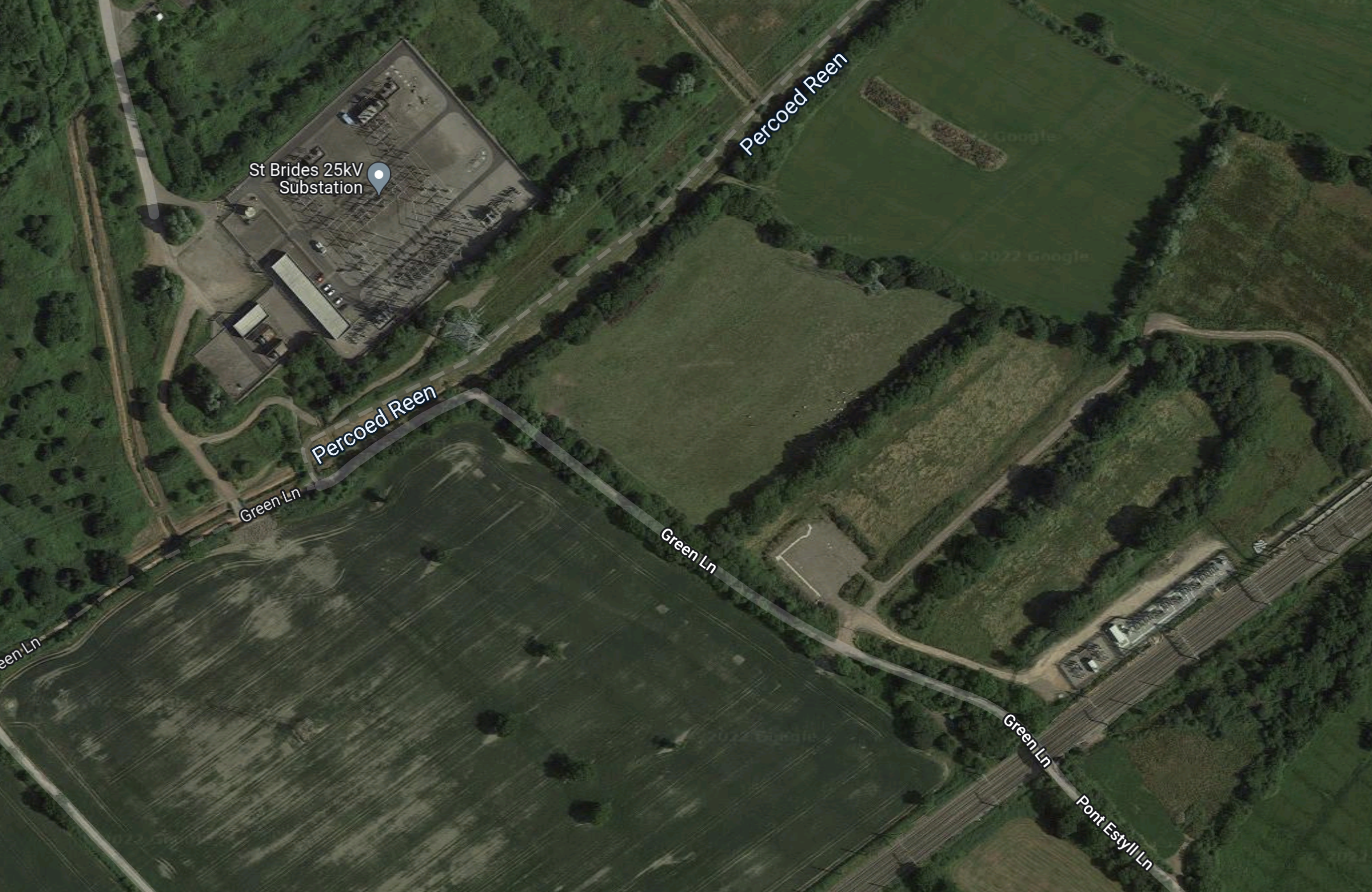
Note.
- The South Wales Main Line crossing the South-East corner of the map.
- Newport station is to the East and Cardiff station is to the West.
- The St. Brides feeder station alongside the railway, by the Green Lane bridge.
I would assume that the connection to the National Grid is via the St. Brides 25 kV Substation in the North-West corner of the map.
The article lists the features of the design.
- A typical steel mast weighs 750 Kg., whereas a composite mast weight just 80 Kg.
- I suspect that these masts can be lifted around by a couple of average workers.
- They have lower wind resistance.
- Piles can be less deep. The prototype piles are 1.25 m., as against many that are over four metres on recent schemes.
- The piles have sensors to detect, when they are out of kilter and need replacing.
- Currently, wonky masts need to be identified by hands-on measurement or observant drivers.
- Two masts have been tested to destruction, to see if they match the theory.
But this to me as an Electrical Engineer is the clincher.
Furrer+Frey GB head of UK projects Noel Dolphin says this about the new design.
When they do take it to a mass manufacturing stage, it will be without carbon fibre inside, which presents another opportunity. The other ultimate goal is that the structure is insulating in itself. It’s another big saving if you can remove the insulators on the electrification cantilevers, as they’re expensive in themselves.
It’s all going the way of much more affordable electrification.
I have a few further thoughts.
The Involvement Of Prodrive
Prodrive are best known for their involvement in motorsport, as the home page of their web site indicates.
But as their site also indicates they get involved in other forms of high-performance disruptive engineering, where their experience is relevant.
Prodrive build the prototypes, but won’t build the production masts, although I suspect, their expertise will be used.
The TruckTrain
TruckTrain is a concept with roots in Coventry University that could be off-beam enough to be the new normal.
I have updated my thoughts on the TruckTrain and it is now in a post called The TruckTrain.
My Conclusion About TruckTrains
I like the concept and I can’t see why it would not be successful worldwide.
The Involvement Of TruckTrain With Furrer+Frey
This puzzled me for a time, as undoubtedly, the TruckTrain will be able to use standard electrification.
But in the TruckTrain leaflet, they mention that the TruckTrain has been designed to use single-track short-terminals.
So did they approach Furrer+Frey to find out about electrifying short terminals and the Swiss company felt TruckTrain was a concept they could support?
Obviously, if the TruckTrain is developed to be a battery-electric train, some mini freight terminals will need the ability to charge the TruckTrain.
Could A TruckTrain Be Used to Support Electrification?
Would a TruckTrain be the ideal support vehicle to erect or repair electrification?
If you take the problem, when the wires have been damaged, a TruckTrain could get to the site at 100 mph, much faster than a truck on the road. It could also have a platform to lift the engineers for inspection and repair.
A TruckTrain could be more than just a transport system.
Conclusion
Furrer + Frey’s lightweight composite electrification masts are a good idea.
Teamed with TruckTrains, they could prove a very powerful freight concept, where new mini freight terminals are needed.
Russia Destroys Ukraine’s Dream
The Antonov An-225 Mriya was a unique aircraft.
It was the biggest aircraft in the world and was regularly used to move heavy or awkward cargoes around the world, as a reading of its Wikipedia entry will disclose.
Mriya is Ukrainian for dream.
But all that useful work has come to an end.
This article on CNN is entitled World’s Largest Plane Destroyed In Ukraine.
These are the first two paragraphs.
The world’s largest plane, the Antonov AN-225, has been destroyed during the Russian invasion of Ukraine, according to Ukrainian officials, generating alarm and sadness among the aviation world in which it occupies almost cult status.
The enormous aircraft, named “Mriya,” or “dream” in Ukrainian, was parked at an airfield near Kyiv when it was attacked by “Russian occupants,” Ukrainian authorities said, adding that they would rebuild the plane.
I know it’s only a plane and in the current scheme of things, that is a minor loss, but the Mriya has proved itself to be so uniquely useful in moving awkward cargoes, that the plane would surely have played a major part in the humanitarian relief and the rebuilding of Ukraine.
Given, that the plane would have surely been of use to the Russians, it just shows how utterly stupid, they have been in this war.
Lithuania To Germany Intermodal Service To Launch In April
duiThe title of this post, is the same as that of this article on Railway Gazette.
These are the first two paragraphs.
Lithuanian national railway’s freight business LTG Cargo is to launch a service carrying containers and semi-trailers from the Kaunas Intermodal Terminal to Duisburg in Germany on April 4.
Trains with a capacity of up to 36 semi-trailers and containers will run thrice-weekly on the 1 500 km route. This will be LTG Cargo’s first westward service operating in three countries, with operations in Poland and Germany handled by its LTG Cargo Polska subsidiary.tail
These are more information and my thoughts.
The Route
The route appears to follow a route from Kaunas to Warsaw via
- Marijampolė
- Šeštokai
- Mockava
- Suwalki
- Buchwalowo
- Bialystok
Note.
- The links on the names are to the town’s Wikipedia entry.
- The border between Lithuania and Poland is between Mockava ans Suwalki.
- There are freight yards and change of gauge facilities at Šeštokai and Mockava.
Some of these towns are probably worth a visit, especially if like me, you have Jewish ancestors from the area.
My father’s great-great-grandfather possibly came from Konigsberg in East Prussia and arrived in the UK around 1800.
The Russian And Standard Gauge Solution
Consider.
- Estonia, Latvia and Lithuania have Russian gauge railways which is 1520 mm.
- Poland, Germany, France, Italy and the UK have standard gauge railways, which is 1435 mm.
The solution has been to build between Kaunus and Šeštokai, to build Russian gauge and standard gauge tracks side by side.
Kaunas Intermodal Terminal
This Google Map may show the Kaunas Intermodal Terminal.
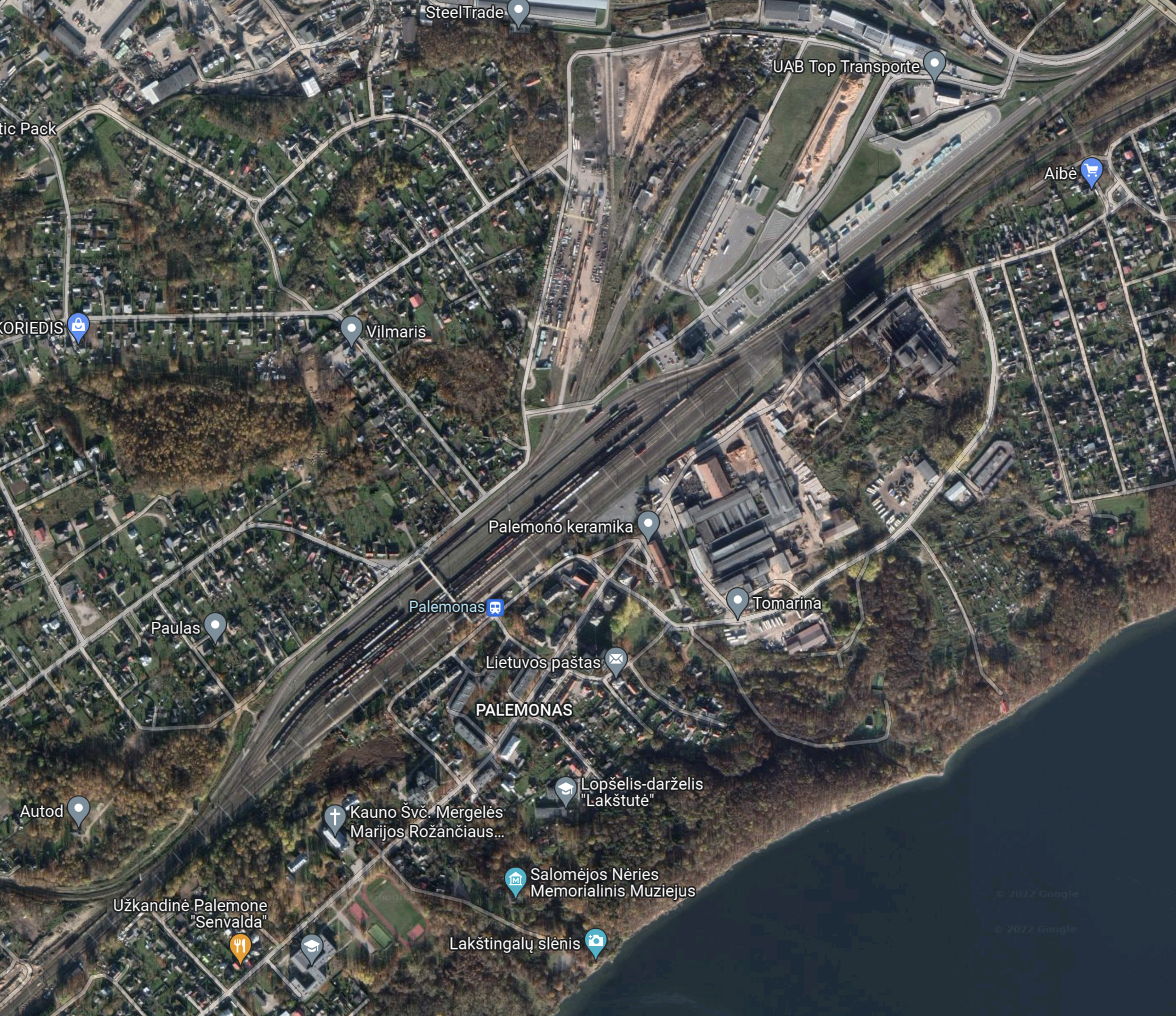
Note the rail yards in the middle of the map, have both Russian and standard gauge tracks.
Rail Baltica
The route taken is the standard gauge route of Rail Baltica, which is an EU project.
- It will run between Helsinki and Warsaw.
- Intermediate stops will be Pärnu, Riga, Riga International Airport, Panevėžys, Kaunas and Bialystok
- Vilnius will be served by a branch from Kaunus.
- The line will be double track.
- The line will be electrified with 25 KVAC overhead.
- Passenger trains will operate at up to 249 kph.
- Freight trains will operate at up to 120 kph.
- A tunnel will be built later between Helsinki and Tallinn.
Completion of the route between Warsaw and Tallinn is planned for 2026.
Rail Baltica I
Rail Baltica I is the first section of the route to be opened and is described like this in Wikipedia.
The name Rail Baltica is also sometimes used to mean the first phase of European gauge railway construction from the Poland-Lithuania border to Kaunas in Lithuania.
It opened in October 2016.
The new freight service will use this route to connect to Bialystok and Warsaw.
Conclusion
I have been on the roads in this area of Poland and rail freight services are needed to take the pressure off the roads.
Conference Calls For More Freight Routes To And From Spain
The title of this post, is the same as that of this article on Railway Gazette.
This is the first paragraph.
Salvador Galve, Chairman of the Railway Commission of the General Council of Industrial Engineers, presented the European Alliance for the Development of Railway Corridors in the Iberian Peninsula initiative at a conference held in Madrid on March 9.
These are some points from the article.
- Less than 4% of freight is currently transported by rail in Spain, compared with an average of 18% across the EU.
- The Spanish government wants to raise this to 20%.
- Incidentally, in the UK, rail freight is at a level of 5 %.
- Italy has seven main lines connecting it to its neighbours, Spain has only two!
- Spain also has a break of gauge, whereas the UK and Italy do not!
- Plans exist for more freight corridors in Spain, and linking these to ports in North Africa and logistics hubs in the rest of Europe.
- Zaragoza, could be turned into a key southern European logistics hub, linked by tunnels to the main line between Toulouse and Bordeaux.
But to me the most interesting plan is set out in this paragraph.
On March 1 the Infrastructure Ministry gave its provisional approval for study into the feasibility of converting the single track, non-electrified line from Huesca to Canfranc from 1 668 mm gauge to 1 435 mm gauge, ahead of any possible reconstruction of the through route to Pau in France in the longer term.
It has always been on my bucket list to visit the magnificent Canfranc station.
Wagons Ordered For Growing Freight Traffic
The title of this post, is the same as that of this article on Railway Gazette.
This is the first paragraph.
GB Railfreight and leasing company Porterbrook have placed an order for Greenbrier Europe to supply 50 JNA 60 m3 capacity four-axle box wagons for transporting construction materials.
Other points from the article.
- The wagons will be built in Romania.
- They will be delivered in the Autumn.
- Porterbrook research is indicating a possible increase of 35 % in construction sector traffic between now and 2034.
Certainly, judging by the number of posts about freight, the sector seems to be innovating and running more trains.
Freightliner’s New Livery
.As I passed through Ipswich yesterday, I took these images of Freightliner’s locomotives in their new livery.



Note.
- Freightliner’s new depot on the town side of the Great Eastern Main Line appears to be fully open.
- Freightliner’s Class 90 locomotives, which they received from Greater Anglia now seem to be in the new livery.
- Freightliner’s Class 08 shunter is also shown in the new livery.
It also looked like up to four Class 90 locomotives were parked by Ipswich station.
This Google Map shows the tracks at the Western end of Ipswich station.
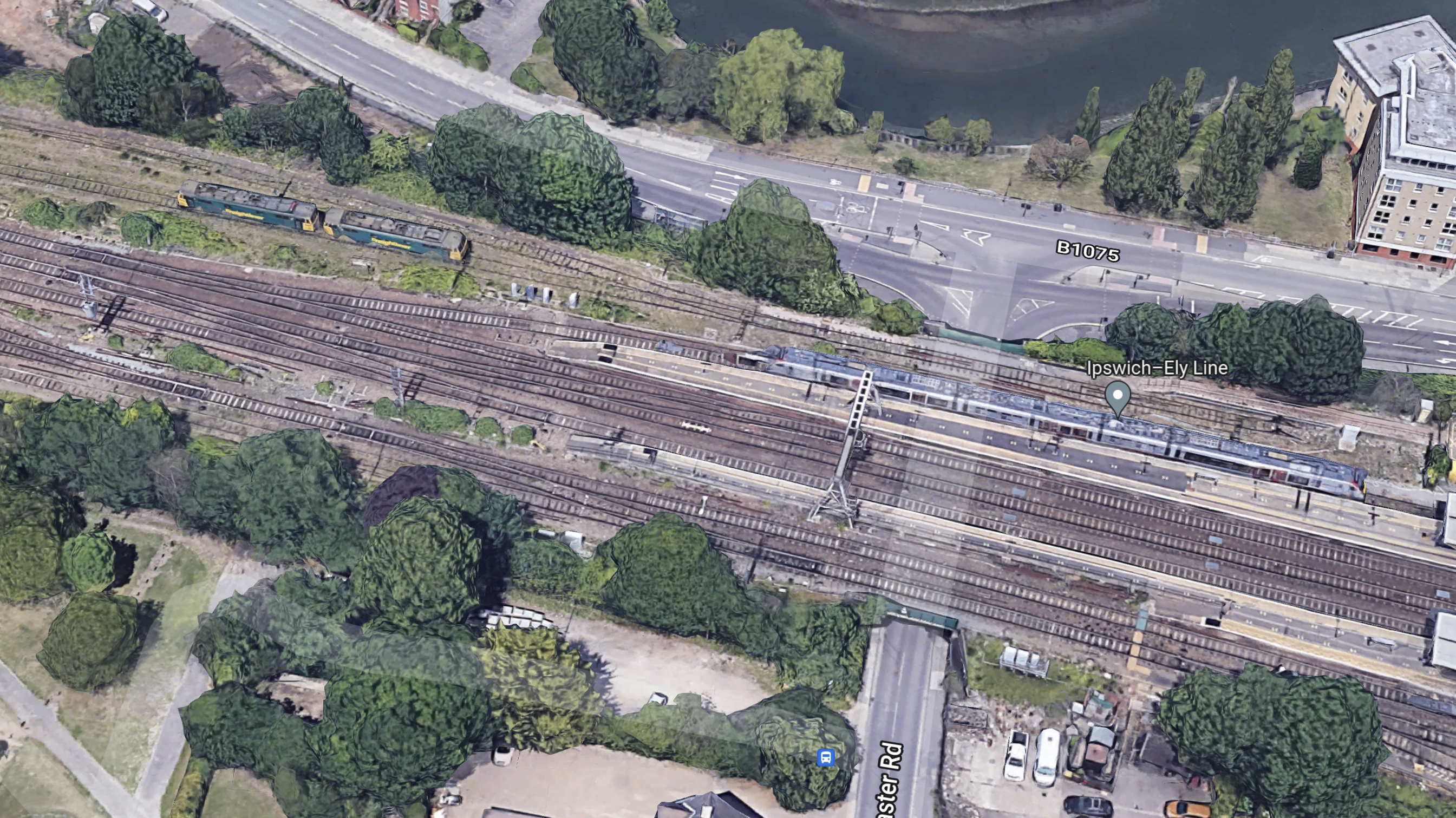
Note.
- The Greater Anglia Class 755 train in Platform 1 of Ipswich station.
- The two Freightliner Class 90 locomotives in the old green livery in the locomotive parking.
- I wonder, if freight trains are now changing to electric haulage after being hauled out of Felixstowe into Ipswich Yard, before continuing their onward journey.
Yesterday, by the use of Real Time Trains, I found these trains changed to electric haulage at Ipswich.
- 0250 – 436K – Felixstowe North to Garston – Changed back to diesel at Crewe.
- 0912 – 496K – Felixstowe North to Trafford Park – Changed back to diesel at Crewe.
- 0932 – 497K – Felixstowe North to Ditton
- 1113 – 412L – Felixstowe North to Trafford Park
- 2046 – 410M – Felixstowe North to Trafford Park
- 2152 – 412M – Felixstowe North to Garston – Changed back to diesel at Crewe.
These are my thoughts.
Changing Locomotives At Ipswich
It seems to take about 25 minutes to change a locomotive from diesel to electric.
At Ipswich, this seems to fairly easy.
- The freight train from Felixstowe stops in Ipswich Yard to the West of the station.
- The diesel locomotive is detached and probably moved to the yard to the South of the station.
- The electric locomotive is moved from by the station and attached to the train.
- The train goes on its way using electric traction.
All locomotive movements don’t seem to be too challenging.
Could More Electric Services Be Run?
I found these paths yesterday, where services left Felixstowe and went South to London.
- Coatbridge – 1
- Ditton – 2
- East Midlands Gateway – 1
- Garston – 2
- Hams Hall – 2
- Lawley Street – 3
- Trafford Park – 5
- Wentloog – 3
This is a total of nineteen trains and currently only six are electrified between Ipswich and London.
Would Bi-Mode Locomotives Be More Efficient?
In GB Railfreight Plans Order For Future-Proofed Bi-Mode Locomotives, I wrote about how GB Railfreight were planning to acquire a fleet of bi-mode locomotives.
In the related post, I said this.
I feel that, as the locomotive must fit current routes and schedules, so I wouldn’t be surprised to see the following specification.
- UK loading gauge.
- Co-Co
- Class 90 locomotive power and operating speed on electricity of 3.7 MW and 110 mph.
- Class 66 locomotive power and operating speed on diesel of 2.5 MW and 75 mph.
- Ability to change between electric and diesel power at speed.
- Ability to haul a heavy freight train out of Felixstowe.
- Ability to haul passenger trains.
Stadler will have one eye on the fact, that if they get this design right, this order for up to fifty locomotives could be just the start.
These locomotives would be ideal for Felixstowe to Ditton, Garston and Trafford Park.
- They would eliminate changing locomotives on these routes.
- They would reduce carbon emissions and fuel usage.
- They would be able to run at at least 100 mph on the Great Eastern and West Coast Main Lines.
They might also open up other partially electrified routes from Felixstowe via London.
Felixstowe And Wentloog
Wentloog freight terminal in South Wales.
In Movable Overhead Electrification To Decarbonise Freight, I used the Ipswich and Wentloog route to show how a long route could be decarbonised by the use of moveable electrification.
Conclusion
It looks like a philosophy is emerging to decarbonise a large proportion of freight services out of the Port of Felixstowe.
Movable Overhead Electrification To Decarbonise Freight
The title of this post is the same as that as this article on Railway Gazette.
This is the first paragraph.
The use of a moveable overhead conductor rail to eliminate the need to use diesel locomotives at freight terminals where traditional fixed electrification equipment would obstruct loading and unloading is being demonstrated in the UK, and a trial in India is planned.
The Railway Gazette article also has two pictures, which show the overhead conductor rail in two positions.
Ipswich And Wentloog
In A Class 93 Locomotive Hauling A Train Between The Port Of Felixstowe And Wentloog, I wrote about running freight trains between Felixstowe and Wentloog using a Class 93 locomotive.
Currently, there appear to be three services a day each way between Felixstowe and Wentloog.
- They are diesel hauled.
- The Class 66 locomotive can’t travel faster than 75 mph.
- The route between Ipswich and Wentloog is fully-electrified.
- Other services that go from Felixstowe to the rest of the UK via London, are sometimes hauled by a Class 90 locomotive from Ipswich.
- Class 90 electric locomotives can haul trains at up to 110 mph.
This Google Map shows the layout of Wentloog freight terminal.
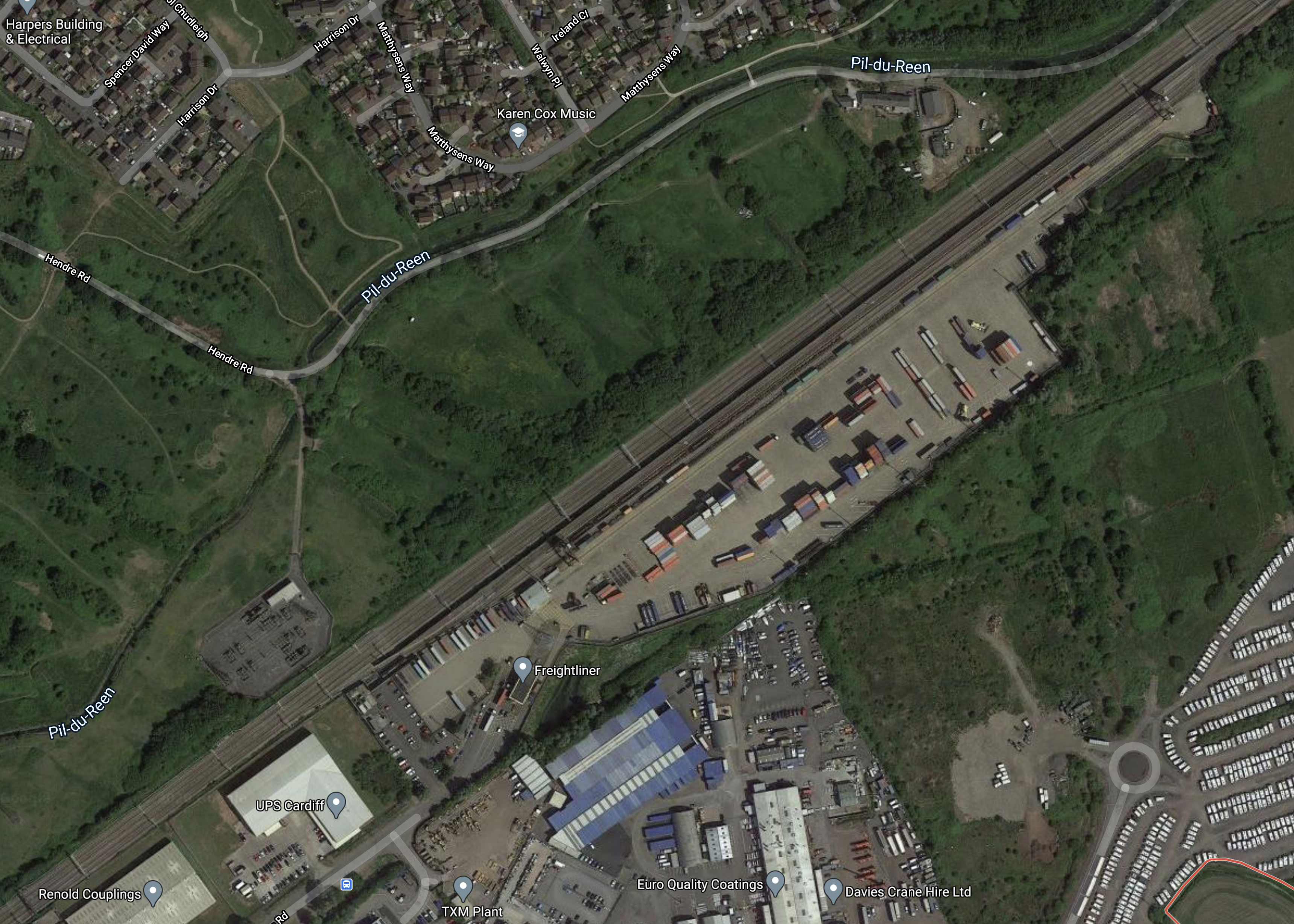
Fitting a moveable overhead conductor rail at Wentloog would surely allow carbon-cutting Class 90 locomotives to haul a train, between Ipswich and Wentloog.
How many other freight terminals can be electrified by installing a moveable overhead conductor rail?
Express On A Perpetual Motion Machine. Scientists Create An Electric Train That Will Charge By Gravity
The title of this post, is the same as that of this article on The Saxon.
These are the first two paragraphs.
The world’s first “infinity train” will recharge its electric batteries during deceleration using the force of gravity.
Scientists and engineers from the Australian company Fortescue Future Industries have begun developing the world’s first train that will be powered by gravity. The company plans to spend $50 million on this development over the next two years, according to the Daily Mail.
How Does The Train Work?
According to the article, the sequence of operation appears to be as follows.
- The train starts at the high end of the line.
- The train rolls down the hill to the low end of the line.
- As it descends, it will pick up kinetic energy due to gravity.
- Regenerative braking on the train will be used to charge the battery.
- The train will have a full battery, when it reaches the low end of the line.
- The full battery will then power the empty train back up the hill.
I have a feeling that this will work, where there is a full train coming down the hill and an empty one going up.
In an example, I will assume the following.
- The high end of the line is 100 metres above the low end.
- The train weighs 100 tonnes.
- The full load weighs 100 tonnes.
- Regenerative braking is 100 % efficient.
I can calculate these energy values for a train running down and then up the line.
- A full train just about to descend, which weighs 200 tonnes and is 100 metres up will have a potential energy of 54.4 kWh.
- Whilst descending, this energy will be converted to kinetic energy and the regenerative braking will transfer this energy to the battery, which will then contain 54.4 kWh of electrical energy.
- After descending, the full train, which weighs 200 tonnes and is zero metres up will have a potential energy of 0 kWh.
- After emptying, the empty train, which weighs 100 tonnes and is zero metres up will have a potential energy of 0 kWh.
- After ascending, the the empty train, which weighs 100 tonnes and is 100 metres up will have a potential energy of 27.2 kWh.
- When the train reaches the high end, there will still be 27.2 kWh left in the battery.
Note.
- After a trip, there will be some energy left in the battery to start the train rolling down the hill on the next trip.
- Effectively, the train is powered by the weight of its cargo, which in Fortescue’s case is very dense iron ore on its trains from Pilbara to the coast.
- In some ways the Infinity train carrying iron ore is a bit like an overshot water wheel, where weight is added to the wheel and this makes the wheel turn.
- The train is driven by the weight of the cargo.
It may look like perpetual motion, but the train needs to be loaded for each trip to increase its potential energy.
I will now look at a passenger train on the same route.
- The high end of the line is 100 metres above the low end.
- The train weighs 100 tonnes.
- I will assume there are 50 passengers in both directions.
- I will assume each weighs 80 Kg with baggage, bikes and buggies, which gives a weight of 4 tonnes.
- Regenerative braking is 100 % efficient.
I can calculate these energy values for a passenger train running down and then up the line.
- A passenger train just about to descend, which weighs 104 tonnes and is 100 metres up will have a potential energy of 28.3 kWh.
- Whilst descending, this energy will be converted to kinetic energy and the regenerative braking will transfer this energy to the battery, which will then contain 28.3 kWh of electrical energy.
- After descending, the full train, which weighs 104 tonnes and is zero metres up will have a potential energy of 0 kWh.
- After emptying and reloading, the empty train, which weighs 104 tonnes and is zero metres up will have a potential energy of 0 kWh.
- After ascending, the the empty train, which weighs 104 tonnes and is 100 metres up will have a potential energy of 28.3 kWh.
Note.
- After a trip, there will be almost no energy left in the battery to start the train rolling down the hill on the next trip.
- If the regenerative braking has an efficiency of less than 100 %, it would be unlikely to work.
But it would work, if an appropriate amount of energy were to be added to the battery at either or both ends of the route.
Could A Passenger Train Like This Work On A Real Route?
In the UK, there are several lines, where a rail line climbs a few hundred metres.
- Cardiff Central and Aberdare
- Cardiff Central and Ebbw Vale Town
- Cardiff Central and Merthyr Tydfil
- Cardiff Central and Rhymney
- Cardiff Central and Treherbert
- Glasgow Central and East Kilbride
- Llandudno Junction and Blaenau Ffestiniog
- Manchester Piccadilly and Buxton
- Manchester Piccadilly and Glossop
For the trains to work, I suspect the following is needed.
- Regenerative braking efficiency must be as close to 100 % as possible.
- The total number of passengers going down during the day needs to be at least the same as the total number of passengers going up.
- For passenger trains to work, an appropriate amount of energy needs to be added to the battery at either or both ends of the route.
Freight trains which are transferring weight down the hill will generally always work.
Conclusion
The Infinity Train will work well with heavy freight, but will probably need supplemental charging to work with passenger trains.
Both heavy freight and passenger trains will use less energy, than one working to traditional principles.
DB Cargo UK Successfully Trials The Use Of ‘Combi-Consists’
The title of this post, is the same as that of this press release on DB Cargo UK.
This is the first paragraph.
DB Cargo UK is trialling the use of ‘combi-consists’ to increase capacity, improve customer service and improve its efficiency.
The next four paragraphs describe the trial.
This month the UK’s largest rail freight operator ran a unique jumbo train from Belmont Yard in Doncaster to Barking, East London, carrying a mix of wagons for two altogether different types of customers.
The train consisted of two sets of empty wagons – 21 x MBA wagons for Ward Recycling and 18 x JNA wagons for FCC Environment – with an isolated DIT (dead-in-train) locomotive – in the middle.
The MBA wagons had previously been discharged at Immingham in North Lincolnshire and the JNA wagons discharged at FCC Environment’s new waste transfer facility at Tinsley in South Yorkshire.
Both sets of wagons were then taken to DB Cargo UK’s Belmont Yard depot in Doncaster where the jumbo train was assembled. The train travelled from Belmont Yard to Barking via Lincoln Central, Spalding, The East Coast Mainline, Hertford North and Canonbury Tunnel.
There is also a video embedded in the press release, which shows the formation of the train in detail.
This train is certainly efficient, as it uses less train paths, crew and fuel.
DB Cargo UK now intend to trial the concept on a greater portion of the East Coast Main Line and the Midland Main Line.
I have a few thoughts.
Could The Concept Work With Loaded Trains?
This trial was with empty trains, but would it be possible to use the concept with two shorter loaded trains?
Would there be advantages in terms of efficiency, if the following were done?
- Two container trains leave Felixstowe as a pair, with one going to Plymouth and the other going to Cardiff.
- They split at say Swindon and then proceed independently.
Obviously, all the weights would have to be in order and the locomotive would need to be able to pull the combined train.
Other possibilities might be.
- Stone trains running from the Mendips and the Peak District to London.
- Biomass trains running from import terminals to power stations in the Midlands.
- Trains delivering new cars.
- Trains delivering goods for supermarkets. Tesco are certainly increasing their use of trains.
I would suspect that DB Cargo UK have several ideas.
Could An Electric Locomotive Go In The Middle?
A Class 90 locomotive weighs 84.5 tonnes, as against the 129.6 tonnes of the Class 66 locomotive used in the trial.
So if the electric locomotive can be run dead-in-train, the weight would be slightly less.
But this might give a big advantage, if they ever wanted to run a pair of trains from Felixstowe to Plymouth and Cardiff, as per my earlier example.
- The trains would split anywhere on the electrified section of the Great Western Main Line.
- The lead train would go to Plymouth.
- The second train would go to Cardiff, which is now fully electrified.
There would appear to be possibilities to save carbon emissions.
Could An Electric Locomotive Go On The Front?
Some routes out of Felixstowe are fully-electrified from the Great Eastern Main Line.
It could be possible for the following.
- Two diesel-hauled trains to leave Felixstowe with ubiquitous Class 66 locomotives and form up as a combi-consist train in Ipswich yard.
- The Class 66 locomotive on the front is replaced by an electric locomotive.
- Both Class 90 and Class 92 electric locomotives have twice the power of a Class 66 locomotive, so both should be able to haul the combi-consist train.
The trains would split en-route with the electric locomotive hauling a train to an electrified destination.
This picture shows, what could be an experiment by Freightliner at Shenfield.
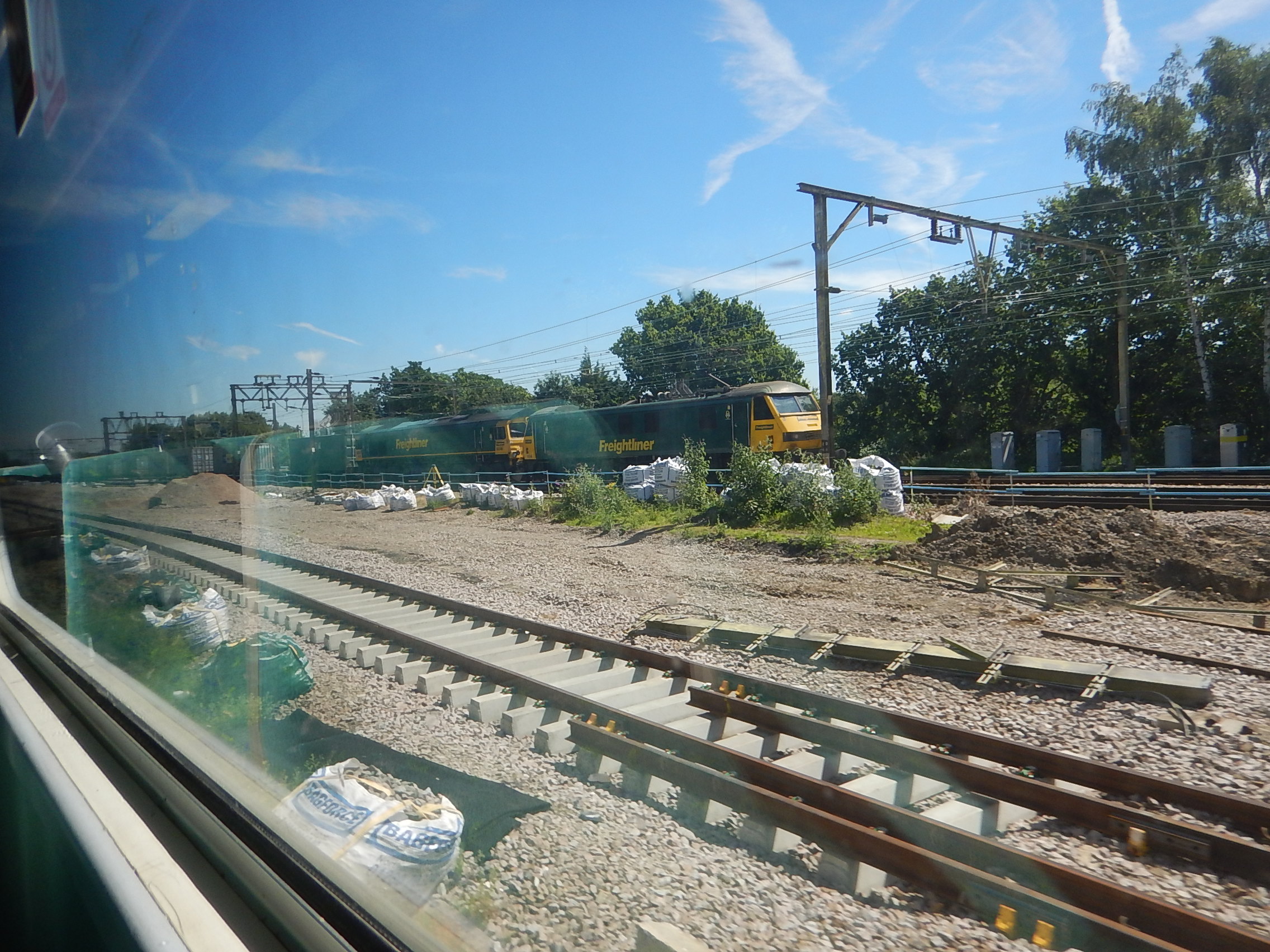
Unfortunately, I didn’t have a chance to ask the driver, if the Class 66 locomotive was running dead-in-train or helping the Class 90 locomotive with a very heavy load.
The picture shows, that the electric and diesel locomotives can work together, at the front of a train.
Since I took this picture, I’ve never seen a similar consist again.
Could A Bi-Mode Locomotive Go On The Front?
In GB Railfreight Plans Order For Future-Proofed Bi-Mode Locomotives, I talked about how GB Railfreight had started negotiations to purchase a fleet of powerful bi-mode locomotives from Stadler.
- Provisionally, they have been called Class 99 locomotives.
- The locomotives will be Co-Co bi-modes.
- The diesel engine will be for heavy main line freight and not just last-mile operations.
- I suspect that on diesel the power will be at least 2.5 MW to match a Class 66 locomotive.
These locomotives could be ideal for hauling combi-consist trains.
Would Combi-Consist Trains Save Energy?
This could be a big driver of the use of combi-consist trains and may push DB Cargo UK to acquire some powerful bi-mode locomotives.
Conclusion
Combi-consist trains seem to be an excellent idea.
 The Anonymous Widower