I Want To Go By Train Between Heathrow Airport And Central London, What is Best Train; Lizzie, Piccadilly, Or Heathrow Express?
I asked Google AI, the title of this post and received this answer.
The Elizabeth Line is generally the best balance of speed, cost, and convenience for most travelers (approx. 30–40 mins to central London,£13). The Heathrow Express is fastest (15 mins,£25) to Paddington only, while the Piccadilly Line is cheapest (hr,£6) but slowest.
Detailed Breakdown:
Elizabeth Line (Recommended): Offers direct, modern, air-conditioned trains to central hubs like Bond Street, Tottenham Court Road, and Liverpool Street without needing to change at Paddington. It is much cheaper than the Express and only slightly slower.
Heathrow Express: The fastest option, but only goes to London Paddington. It is expensive unless booked far in advance. Best if you are staying right next to Paddington station.
Piccadilly Line: The cheapest option, ideal for budget travelers, and serves all terminals. However, it is a traditional Tube train, which can be crowded and uncomfortable with heavy luggage.
Note: Fares mentioned are approximate and based on standard off-peak, single-journey, tap-on/tap-off usage.
Ask virtually anybody in London and they’ll probably give you a similar answer.
Even Larry the cat would know, as he’s probably heard the question asked thousands of times.
Is British Airways Getting A Boost From The Lizzie Line?
This article in The Times is entitled Everyone Bashes It But BA Is Surging Ahead …What’s Its Secret?
Various managerial reasons are given, but the Lizzie Line is not mentioned.
live in Dalston and for Heathrow, I take a twenty minute bus-ride and then use the Lizzie Line from Moorgate.
Before Lizzie, I used to take a variety of much slower routes.
If you get on a Lizzie Line train to or from Heathrow in Central London, it’s often very crowded, showing how popular it is with knowledgeable passengers.
London’s new line has made it easier, quicker and more affordable to get to Heathrow by train for many people in England.
So are passengers flying from Heathrow more?
And who’s the dominant carrier at Heathrow? BA!
Could An Open Access Operator Develop A Train Service Along The South Coast of The UK Between Kent and Fishguard?
Before I go into detail, I will answer a question that explains the terminology and the why’s and wherefores’ of the title of this post.
What Is An Open Access Operator?
This is the first paragraph of the Wikipedia entry of an Open Access Operator.
In rail transport, an open-access operator is an operator that takes full commercial risk, running on infrastructure owned by a third party and buying paths on a chosen route and, in countries where rail services run under franchises, are not subject to franchising.
In the UK, these are all open access operators, that are running services.
Note.
- Other groups are developing services.
- Regional, High Speed, International, Local and Sleeper services seem to be offered by various open access operators.
- Grand Central is a subsidiary of Deutsche Bahn,
- Hull Trains and Lumo are both subsidiaries of FirstGroup.
Open Access operators seem to operate in most European Union countries.
Why Run Between Kent and Fishguard?
- The main purpose of the train service would be to provide a low-cost rail connection between the island of Ireland and particularly the Republic of Ireland, with the Southern part of England and the European Union.
- At both ends of the route the train service would connect to ferries.
- At the Eastern end, the train service would also connect to Eurostar services through the Channel Tunnel.
- The Port of Dover could be efficiently connected to Dover Priory Station.
- Dover Priory Station could be the Eastern terminus.
- The service could stop at Folkestone Central station, if ferries call at the Port of Folkestone in the future.
- The service could stop at Ashford International station for Eurostar services.
- Fishguard Harbour station has been built as a train terminus for the Port of Fishguard.
- Fishguard Harbour station could be the Western terminus.
This could be a busy service.
Where Would The Trains Call?
Intermediate stations would depend on passenger umbers, but could start as Folkestone Central, Ashford International, Hastings, Eastbourne, Brighton, Portsmouth & Southsea, Southampton Central, Romsey, Salisbury, Warminster, Westbury, Trowbridge, Bradford-on-Avon, Bath Spa, Bristol Temple Meads, Bristol Parkway, Newport, Cardiff Central, Gowerton, Llanelli and Carmarthen.
How Long Would The Journey Be?
The journey would be around 377 miles and I suspect could take about three and a half hours with modern digital signalling.
Surprisingly, the route is fully-electrified except for the following.
- Ashford International and Ore – 27.9 miles
- Southampton Central and Bristol Parkway – 82 miles
- Cardiff Central and Fishguard Harbour – 115.6 miles
All gaps should be able to be bridged using battery power.
I suspect trains would be Hitachi high speed battery-electric trains.
Would Any European Funding Be Available?
This is an interesting question, as the service does join up two separate sections of the European Union.
An Unusual Advert
I clipped this advert from my on-line copy of The Times today.
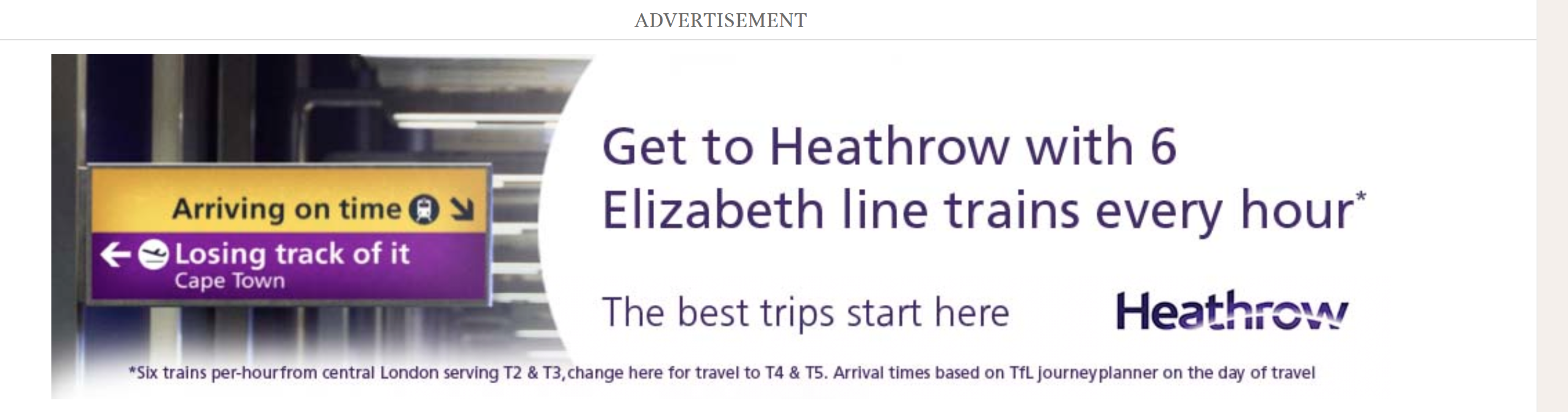
It looks to me to be an advert placed by Heathrow Airport, that is telling Heathrow passengers to use the Elizabeth Line to get to the Airport.
This could be considered strange, as Heathrow Airport has an interest in Heathrow Express.
So why would the airport be urging passengers to use a competitive service?
Could it be because there has been engineering works on Heathrow Express and the Elizabeth Line to the airport in recent days and they wanted to assure travellers, that they wouldn’t have to use the Piccadilly Line on an airport bus?
It does look like services to Heathrow Airport are normal tomorrow.
Extending The Elizabeth Line – Adding Ladbroke Grove Station To The Elizabeth Line
There is a Wikipedia entry for Ladbroke Grove railway station, which starts with this paragraph.
Ladbroke Grove is a proposed railway station in London, England on the Crossrail Route between Old Oak Common and Paddington. This is not part of the internal route and would be added at a later stage. Locals want the station to be called Portobello Central to serve the nearby Portobello Market. It was originally called Kensal.
The Wikipedia entry also gives these details of two proposals for a Ladbroke Grove station on the Elizabeth Line.
Kensington and Chelsea Council has been pushing for a station at North Kensington / Kensal, just to the east of the Old Oak Common railway station site, off Ladbroke Grove and Canal Way, as a turn-back facility will have to be built in the area anyway. Siting it at Kensal Rise, rather than next to Paddington itself, would provide a new station to regenerate the area. Amongst the general public there is a huge amount of support for the project and then-mayor of London Boris Johnson stated that a station would be added if it did not increase Crossrail’s overall cost; in response, Kensington and Chelsea Council agreed to underwrite the projected £33 million cost of a Crossrail station, which was received very well by the residents of the borough. Transport for London (TfL) is conducting a feasibility study on the station and the project is backed by National Grid, retailers Sainsbury’s and Cath Kidston, and Jenny Jones (Green Party member of the London Assembly).
The plans were resurrected by Boris Johnson in 2016.
In March 2017, it was announced that TfL was considering a Crossrail station in Kensal Green, on the site of a former gasworks, and it would be between Old Oak Common and Paddington.
This map from cartometro.com shows the railway lines to the West of Paddington.
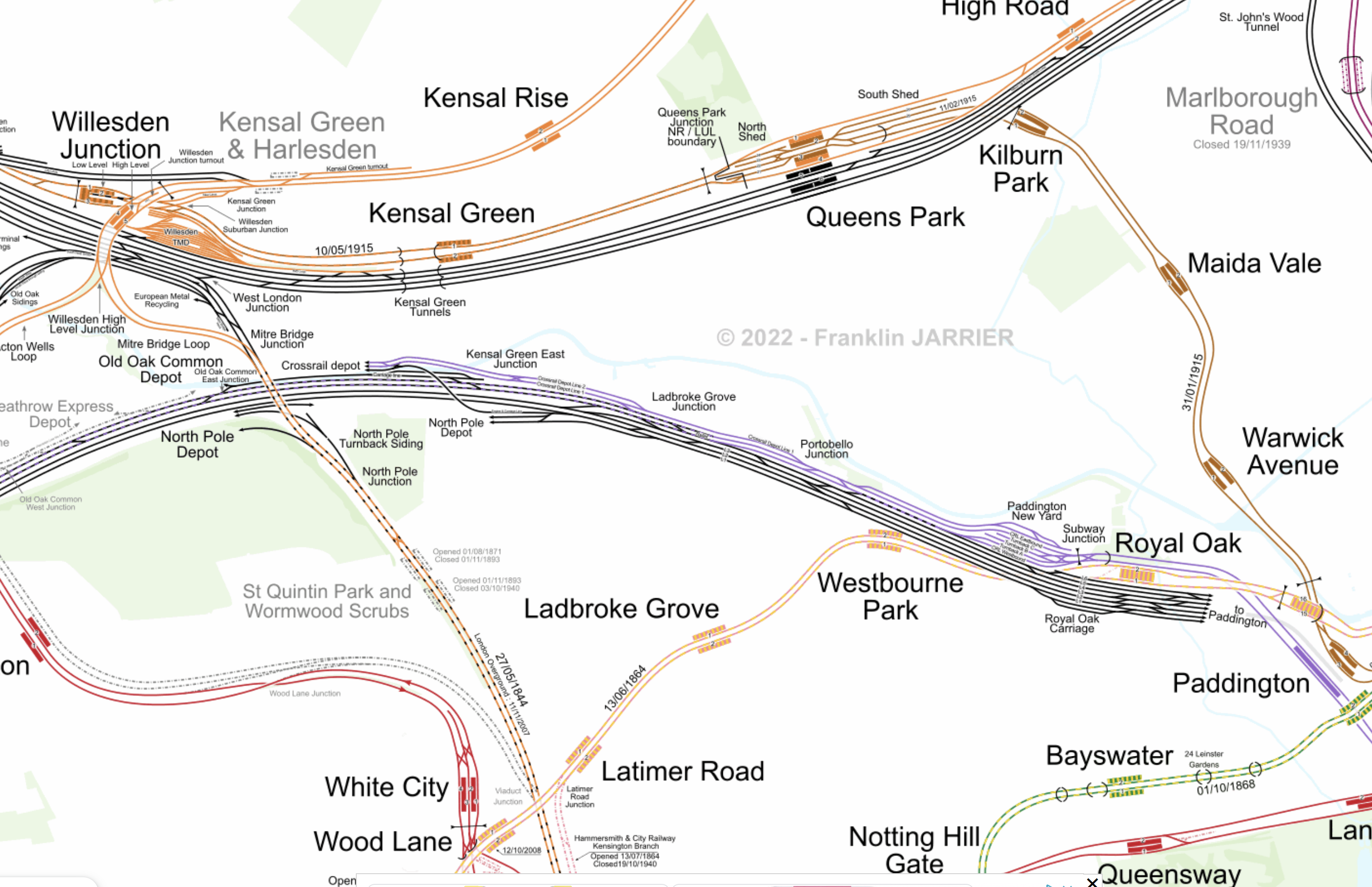
Note.
- The Elizabeth Line is shown in purple.
- Ladbroke Grove rube station is not close to the Elizabeth Line.
- Kensal Green tube station is not close to the Elizabeth Line.
But we do know this about the future Old Oak Common station.
- It will be served by Elizabeth Line services between Central London and Heathrow Airport.
- It will be served by High Speed Two services between London Euston and the North of England and Scotland.
- It will be served by Great Western services between London Paddington and the West of England and Wales.
- It will be served by North London Line services betweeen Stratford and Richmond.
- It will be served by Heathrow Express services between London Paddington and Heathrow Airport.
From the map, it looks unlikely that the Hammersmith & City Line will be able to serve Old Oak Common station.
However, it might be possible that Euston and Old Oak Common could be served by Watford DC Line services, which called at either Old Oak Common or Kensal Greeen.
A link between Euston and Old Oak Common, would give all stations on the line access to High Speed Two and Heathrow with a change at Old Oak Common.
Some Euston suburban services could stop at Old Oak Common for access to High Speed Two and Heathrow.
The Watford DC Line which is very self-contained could become a comprehensive feeder line for High Speed Two and Heathrow.
Kensal Green Station
I took a trip to Kensal Green station and took these pictures.

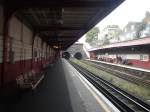
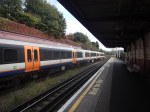
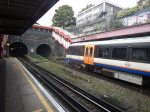
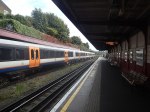
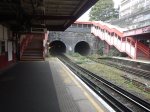
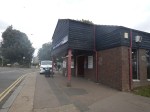
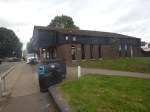


Note.
The station handles two heights of trains on single-height platforms.
Some of the stairs are not the best.
There is no step-free access.
There are six lines through the station and there may be scope for more platforms.
If ever there was a station that needed a makeover it is Kensal Green.
Conclusion
I doubt that the Hammersmith & City Line could be connected to the Elizabeth Line to the West of Paddingt9n.
But I do feel that the Watford DC Line could be developed into a comprehensive link between Euston and Old Oak Common satiations.
Heathrow Rail Link Withdrawn, But MP Vows To Carry On
The title of this post, is the same as that as this article on Rail Magazine.
These are the first three paragraphs.
Hopes for a rail link between the Great Western Main Line and Heathrow Airport appear to have finally ended.
The scheme had been on hold since 2021, when Network Rail staff working on it were transferred to other tasks.
At the time, NR called it a “controlled pause”, but a pre-application process has now been withdrawn, according to the Planning Inspectorate website.
Currently, the two main routes to Heathrow from the Great Western Main Line are.
- Continue to Paddington and get either the Heathrow Express or the Elizabeth Line to the airport.
- Use the RailAir bus from Reading to the airport.
Both routes probably encourage passengers and staff to drive to the airport.
I have my thoughts.
Tan Dhesi
The article says this about this MP’s support for the rail link.
However, Slough MP Tan Dhesi, a former shadow transport minister, believes the link still has wide support as it would bring 20% of the UK population within one interchange of its busiest airport.
Dhesi led an All-Party Parliamentary Group for the Western Rail Link to Heathrow before the General Election. He now plans to re-launch the group, as some previous members have since lost their seats.
He has a point, but is this because a large number of his constituents work at Heathrow.
Would an improved local bus service, at least partially serve the need?
RailAir Between Reading And Heathrow
This appears to have two drawbacks.
- It only runs every thirty minutes.
- It doesn’t serve Terminal Four.
But at least it runs modern coaches, not buses.
I would increase the frequency to perhaps every twenty or even fifteen minutes, serve Terminal Four and perhaps in the future, switch to Wrightbus’s new hydrogen coaches, which I wrote about in Wrightbus Hydrogen Coach Planned For 2026.
I feel that switching to hydrogen power, may attract more passengers to the route.
Obviously, I feel the other RailAir routes from Guildford, Watford and Woking to Heathrow would also be updated.
Improving The Rail Route Between Reading And Heathrow Via Hayes And Harlington Station
Hayes and Harlington station has the following frequencies to Heathrow and Reading, in trains per hour (tph)
- Heathrow Terminals Two & Three – 6 tph
- Heathrow Terminal Four – 4 tph
- Heathrow Terminal Five – 2 tph
- Maidenhead – 2 tph
- Reading – 2 tph
More trains between Reading and Hayes and Harlington might encourage more passengers to use the trains.
Could Hayes And Harlington Station Become A Transport Hub For Heathrow?
This Google Map shows Hayes and Harlington station.
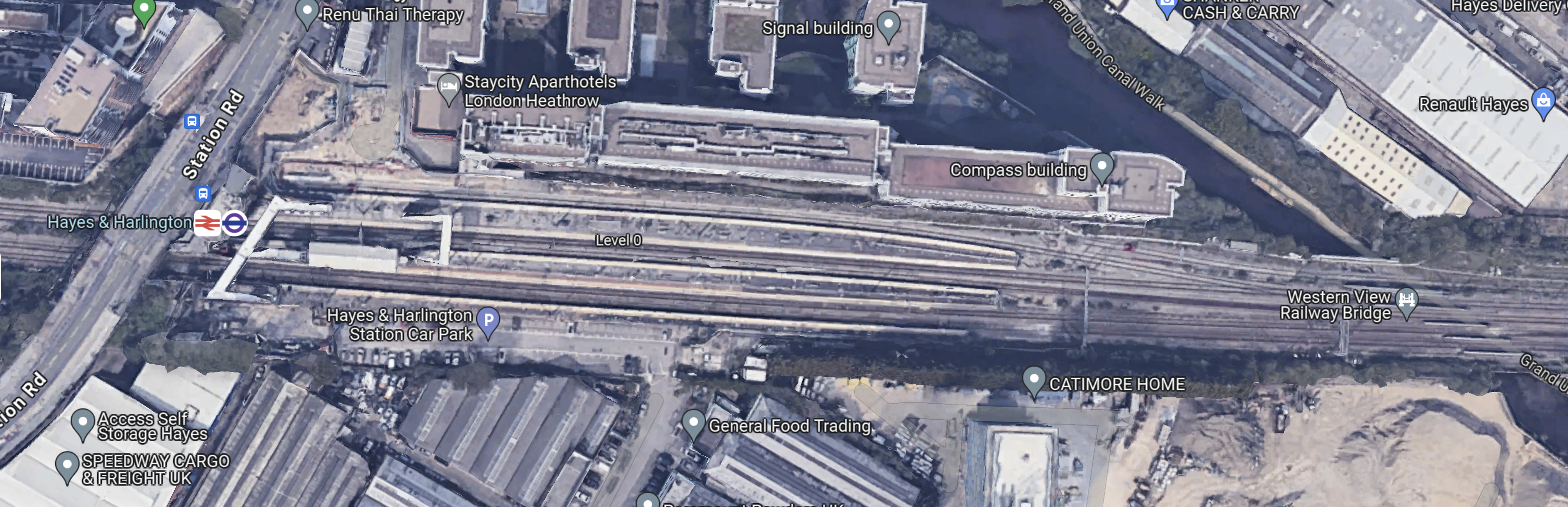
Note.
- It has platforms on all four tracks of the Great Western Main Line.
- There is a London-facing bay platform to terminate Elizabeth Line trains, if needed.
- The land to the North of the station has been developed.
- There is land to the South of the station that could be developed.
Could the space above the tracks, with some of the land to the South of the station be developed into a transport hub for Heathrow?
Heathrow Southern Railway
I prefer the Heathrow Southern Railway, which is a comprehensive, privately funded scheme.
A Very Busy Paddington – 4th July 2023
On my trip to Marsh Barton station, Paddington was very busy, as these pictures show.

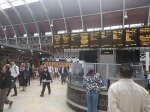



Note.
- Trains were leaving to Cheltenham Spa, Great Malvern. Newquay and Paignton, in addition to the more expected destinations of Bristol Temple Meads, Cardiff and Swansea.
- I took the Elizabeth Line to the station and it was very busy.
I feel, that action needs to be taken to increase the capacity of the station for both passengers and trains.
These are my thoughts.
Catching Trains From Reading
Recently, if I want to go somewhere, that is within an hour West of Reading station, I’ve started taking the Elizabeth Line to Reading using my Freedom Pass and then buying an Off Peak Day Return ticket from Reading.
- It saves a few pounds.
- I can catch the Elizabeth Line train at Moorgate direct to Reading, after having breakfast on Moorgate.
- Moorgate is an easy bus ride from outside my house.
I suspect some other Freedom Pass holders will start to use Reading station to go West.
The only disadvantages are that you miss the Reading train and have to wait half-an-hour for another and that buying tickets at Reading means leaving the station.
Improvements, I would make would include.
- Four trains per hour (tph) between Whitechapel and Reading.
- A ticket machine on the bridge at Reading station, so that those needing a ticket can buy one without leaving the station.
I suspect other improvements could also improve this option.
A Second Concourse At The Western End Of Paddington Station
If you go to Paddington station on the Hammersmith and City Line of the Underground, you can walk across the top of the main station and take stairs down to the platform for your departing train.
There has been talk of improving this area of the station, so that passengers using that route from the Underground have an easier route with more facilities like cafes, shops and toilets.
I’m all for this improvement.
What Is The Point Of Heathrow Express?
On my trip, I watched a Heathrow Express arrive in Paddington and just a few people got off.
I am utterly certain, that the Elizabeth Line is giving Heathrow Express a good kicking, as it is so much better connected to the important destinations within London, like Bond Street, Canary Wharf, Farringdon for Thameslink, Liverpool Street for The City, Stratford for events and Whitechapel for the East London Line.
Discussions of the future of Heathrow Express, must also include the Western Rail Link to Heathrow, which is currently being planned by Network Rail.
This page on the Network Rail web site gives more details, including these benefits for the link.
- Reduce rail journey times between Reading and Heathrow by delivering a new, faster, frequent, more reliable direct train service to Heathrow with four trains per hour in each direction. All trains would call at Reading and Slough and alternate trains at Twyford and Maidenhead. Journey times could be as short as 26 minutes from Reading and 6 to 7 minutes from Slough.
- Significantly improve rail connectivity to Heathrow from the Thames Valley, South Coast, South West, South Wales and West Midlands.
- Provide an alternative form of transport for passengers and the large number of people who work at the airport who are currently travelling by road.
- Ease congestion on some of the UK’s busiest roads, the M4, M3 and M25 resulting in lower CO2 emissions equivalent to approximately 30 million road miles per year, helping to deliver the UK’s climate change and carbon reduction targets.
- Generate economic growth and new jobs across the Thames Valley and surrounding areas.
- Reduce passenger congestion at London Paddington.
There is then the question of who should run the service; Heathrow Express, the Elizabeth Line or both.
At the present time, trains from London to Heathrow are.
- Elizabeth Line – 2 tph – Shenfield and Terminal 5
- Elizabeth Line – 4 tph – Abbey Wood and Terminal 4
- Heathrow Express – 4 tph – Paddington and Terminal 5
Note.
- All trains also serve Heathrow Terminals 2 and 3.
- The Piccadilly Line also serves all Heathrow Terminals.
- It appears that Terminal 4 is only served by the Elizabeth Line.
- Terminal 5 has 6 tph, but the Western Rail Link will be at a frequency of four tph.
Because of the mismatch at Terminal 5 and that two tph will stop at Slough, Maidenhead and Twyford, I suspect we might see the following services on the Western Rail Link
- Elizabeth Line – 2 tph – Terminal 5 and Reading via Slough, Maidenhead and Twyford
- Heathrow Express – 2 tph – Terminal 5 and Reading via Slough.
Note.
- This would give Reading and Central London, a much-needed four tph on the Elizabeth Line. Two tph would be direct and two tph would be via Heathrow.
- It would not require any more paths in the Elizabeth Line Central Tunnel, as the 2 tph between Shenfield and Terminal 5 will just be extended to Reading.
- Heathrow Express has Western access with a connection to Reading.
It looks like this service pattern could be a good compromise.
I also suspect that this would improve passenger numbers for Heathrow Express.
Could Heathrow Express Run Its Service Using One Platform At Paddington?
I am fairly certain that this would be possible, if passenger access to the platforms at Paddington station were to be improved, by the building of a second concourse at the Western end of the station.
It is also likely, that full digital signalling will be applied between Paddington and Reading and this will surely improve the ease of running four tph into one platform at London Paddington for Heathrow Express.
I can see, that a reorganisation of Heathrow Express after the building of a second Western concourse at Paddington and the Western Rail Link to Heathrow, that Heathrow Express could be able to release a platform.
Could Great Western Railway Reorganise Suburban Services?
These are Great Western Railway’s suburban services, that terminate at Paddington.
- 1 tph – London Paddington and Oxford via Reading and Didcot Parkway
- 2 tph – London Paddington and Didcot Parkway via Slough, Maidenhead, Twyford, Reading, Tilehurst, Pangbourne, Goring & Streatley and Cholsey
- 1 tph – London Paddington and Newbury via Reading, Theale and Thatcham
Note.
- The Oxford services, are run by Class 800 trains, running as either five-car, nine-car or ten-car trains.
- Oxford is also served by the hourly Paddington and Great Malvern service.
- All of the other services, are run by Class 387 trains, running as either four-car or eight-car trains.
- There doesn’t seem to be any pattern to the platforms used by these services.
I find the last point very surprising, as my extensive scheduling experience says that it is easier to schedule several similar processes, rather than a number of different ones.
This OpenRailwayMap shows the platforms at Paddington station.
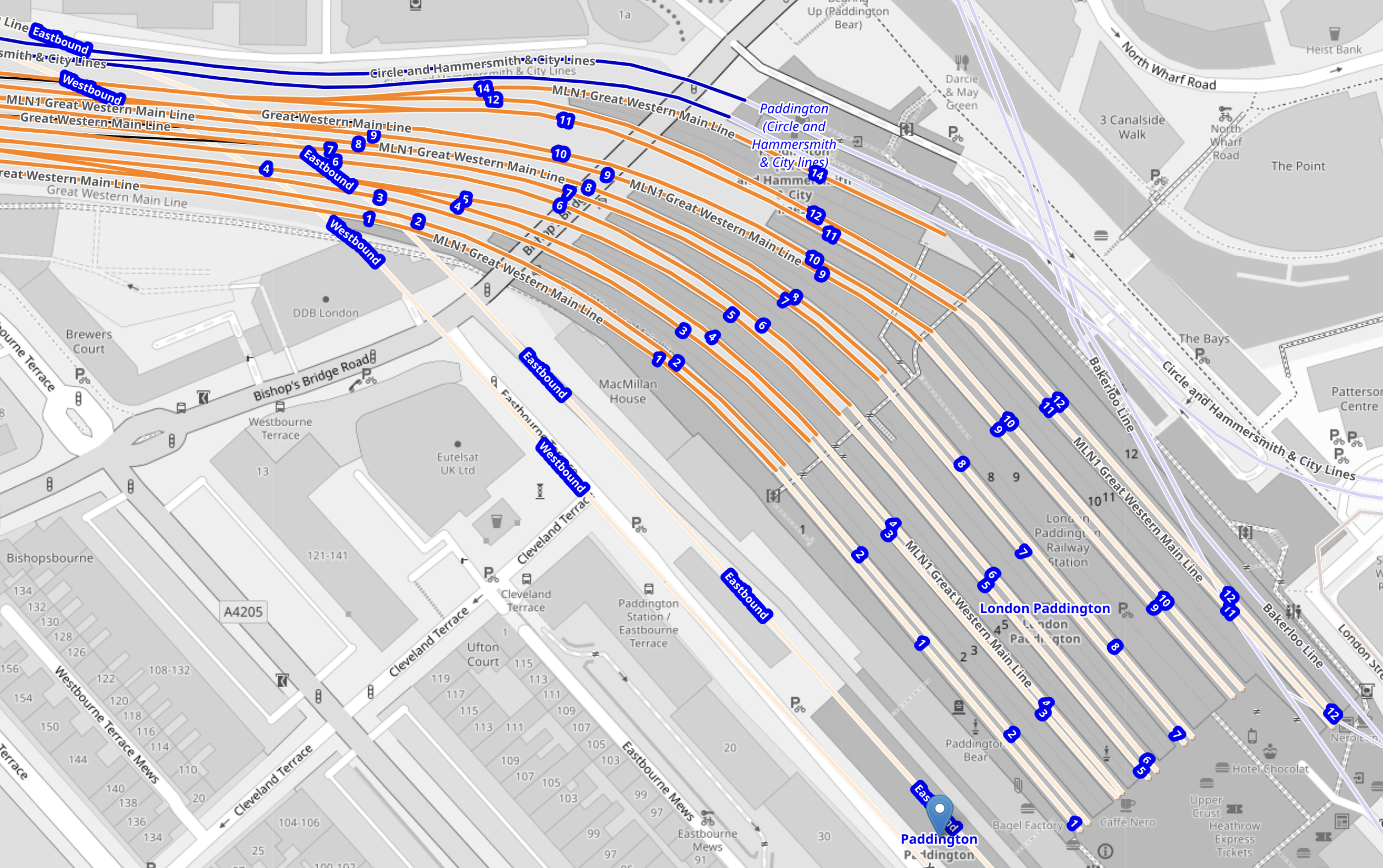
Note.
- The platforms are numbered 1 to 14 from South-West to North-East.
- Platforms 1 to 12 all appear to long platforms about the same length.
- As some platforms can take ten-car Class 800 trains, I wouldn’t be surprised to find out all platforms 1-12 can.
- The only short platform is platform 14, which can accommodate an eight-car Class 387 train, which is 163 metres long.
It looks to me, with twelve long similar platforms, they can schedule the platforms on the fly, so perhaps this explains, the randomness of platform allocations.
I think in an ideal world, I would try and organise these services as follows.
- The Oxford and Great Malvern services could share a platform at Paddington, which would help passengers to find the next Oxford train.
- The Didcot Parkway and Newbury services could also share a platform at Paddington, for the same reason.
- Unless Didcot Parkway and Newbury services are occasionally run by a twelve-car train, they could even use the short platform 14.
This would surely be a more efficient use of the platforms at Paddington station.
Could Didcot Parkway Services Become Another Elizabeth Line Destination?
Consider.
- Didcot Parkway to London Paddington services appear to use the same tracks as Elizabeth Line services between Reading and Southall West Junction, where they change to the main line for Paddington.
- London Paddington to Didcot Parkway services appear to use the main line from Paddington to Dolphin Junction, which is just to the East of Slough station, where it joins the same tracks as Elizabeth Line services to Reading.
- Nine-car Class 345 trains are forty metres longer than an eight-car Class 387 train.
- Class 345 trains are 90 mph trains.
- Class 387 trains are 110 mph trains.
- Class 387 trains wouldn’t fit the platform edge doors in the Elizabeth Line Central Tunnel.
It would appear that the Didcot Parkway and London Paddington services could be moved to the Elizabeth Line, by doing the following.
- The Class 387 trains would be replaced by Class 345 trains.
- Trains to London would go straight on at Southall West Junction and through the Elizabeth Line Central Tunnel.
- Trains from London would emerge from the Elizabeth Line Central Tunnel on the right track for Reading.
- There might be a need to lengthen a few platforms.
Note.
- The Didcot Parkway to London Paddington services would not need to use the main line.
- 2 tph would be removed from Paddington station.
As one electric train is being replaced by another, there would probably be no need for more electrification.
Could Newbury Services Become Another Elizabeth Line Destination?
Consider.
Freight trains appear to be able to go from Theale station to Platform 5 at Slough station, through Platform 15 at Reading station, which is a possible route that a Newbury to the Elizabeth Line Central Tunnel train would take.
Freight trains appear to be able to go from Platform 4 at Slough station to Theale station, through Platform 15 at Reading station, which is a possible route that an Elizabeth Line Central Tunnel to Newbury train would take.
It would appear that the Newbury and London Paddington services could be moved to the Elizabeth Line, by doing the following.
- The Class 387 trains would be replaced by Class 345 trains.
- Trains through Reading would follow the freight route.
- There might be a need to lengthen a few platforms.
Note.
- The Newbury to London Paddington services would not need to use the main line.
- 1 tph would be removed from Paddington station.
As one electric train is being replaced by another, there would probably be no need for more electrification.
Conclusion
It looks like the capacity of Paddington station can be increased by the following.
- Building a new second concourse at the Western end of the station.
- Heathrow Express releasing a platform.
- Oxford and Great Malvern services could share a platform at Paddington
- Moving Didcot Parkway and Newbury services to the Elizabeth Line.
No new electrification would be required.
A Waste Of Valuable Resources Between Paddington And Heathrow
Much of my working life was spent in writing project management software.
I like to think, I was an expert at writing software to juggle resources.
I wrote my first piece of software in that field in ICI, to get my boss out of trouble, after he’d promised the department a program to allocate the department’s office space more efficiently.
Unfortunately, the student, who’d written the software, without leaving anything that worked or any decent instructions.
So I told my boss;Colin, that I’d have a go.
In my previous position at ICI in Runcorn, I’d worked out an algorithm to decode mass spectrometer traces, which started with a rough idea of what was there, which was entered by an operator and then used permutations and combinations to fit the output.
I used the algorithm in every resource scheduler, I ever wrote and it worked a treat.
So when I see a waste of resources, I get angry, as I know those who devised the system could have done a lot better.
Look at these pictures, I took of a Heathrow Express, that I took today.
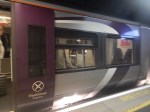
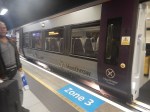
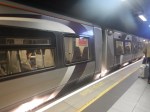

It is barely ten percent full.
It has become a waste of resources; train, valuable paths in the Heathrow tunnel, and platform space at Paddington.
These are a few thoughts.
Capacity To And From Heathrow
Consider.
- Heathrow Express uses twelve-car Class 387 trains, with a capacity of 672 seats, that run at a frequency of four trains per hour (tph), which is 2,688 seats per hour.
- The Elizabeth Line uses nine-car Class 345 trains, with a capacity of 454 seats, that run at a frequency of six tph, which is 2,724 seats per hour.
- The Class 345 trains can also carry another 1046 standing passengers on each journey, which adds up to a maximum of 6276 standees per hour.
- The Piccadilly Line uses 73 Stock trains, with a capacity of 684 seats, that run at a frequency of twelve tph, which is 8,208 seats per hour.
This gives a capacity of 19,896 passengers, staff and visitors per hour, or which 13,620 get seats.
Expressed as percentages, the four modes of transport are as follows.
- Heathrow Express – 13.5 %
- Elizabeth Line – Sitting – 13.7 %
- Elizabeth Line – Standees – 33.8 %
- Piccadilly Line – 41.2 %
In Effects Of The ULEZ In West London, I said this about journeys to and from the airport.
Heathrow Airport is one of the world’s busiest airports and 76,000 people work at the airport, with many more employed nearby.
The airport handled 61.6 million passengers in 2022, which is a few short of 170,000 per day.
If you consider that those that work at the airport do two trips per day and passengers generally do one, that means there are 322,000 trips per day to or from the airport.
But as it now so easy to get to the Airport using the Elizabeth Line will more people use the new line to meet and greet and say goodbye to loved ones or business associates. Since the Elizabeth Line opened, I’ve met a couple of friends at Heathrow, who were passing through.
I wonder, if that daily journey total of 322,000 could be nearer to 350,000 or even 400,000.
If the ULEZ charge makes some passengers and staff switch from their car to using a bus or train, this probably means that public transport to and from the airport, will need to be boosted by a substantial amount.
322,000 trips per day is 13,416 per hour assuming a 24 hour day.
Consider.
- The ULEZ will drive employees and passengers to trains to Heathrow.
- A lot of would-be travellers to Heathrow have had a tough couple of years.
- Because of the Elizabeth Line more meeters and greeters will go to the airport.
- The Elizabeth Line is making it easy to get to Heathrow for a large proportion of those living in the South-East.
- There have been numerous car parking scandals at Heathrow and other airports.
- Are there enough charging points for electric cars in Heathrow’s parking?
- Parking at Heathrow is expensive.
- Taxis to the airport are very expensive.
- Passengers with large cases can use the Elizabeth Line.
- Good reports of the Elizabeth Line will push people to use it.
- The Elizabeth Line serves the City, Canary Wharf and the West End.
- The Elizabeth Line has a step-free connection with Thameslink.
- Passengers seem to travel with very large cases.
- Passengers seem to be deserting Heathrow Express, as I wrote in Elizabeth Line Takes Fliers Away From Heathrow Express.
Note.
- The train, I took back from Heathrow this morning was full with all seats taken and quite a few standees.
- And it was a Sunday morning!
- We won’t know the effect of the ULEZ until August, but I believe it will be significant.
Obviously, I’m only using rough figures, but they lead me to believe that in a few months, the Elizabeth Line will be at full capacity to and from Heathrow.
Heathrow Express’s Train Paths Should Be Re-Allocated To The Elizabeth Line
This would increase hourly passenger capacity from 19,896 to 23,208 or by seventeen percent.
Great Western Railway would get two extra platforms at Heathrow and the Class 387 trains could be reallocated.
Where Would Great Western Railway Run Trains From Two Extra Platforms?
Consider.
- Various government levelling up funding has been allocated to Wales and the West.
- I talk about the Mid-Cornwall Metro in Landmark Levelling Up Fund To Spark Transformational Change Across The UK.
- The Mid-Cornwall Metro could include direct trains between London and Newquay.
- There are also plans for a new station at Okehampton Parkway.
- Given all the wind farm development in the Celtic Sea, I can see more trains between London and Pembrokeshire.
- Cardiff and Bristol would probably welcome extra services.
I don’t think Great Western Railway will have problems finding destinations to serve from two extra platforms.
What Will Happen To The Class 387 Trains?
Currently, twelve Class 387 trains are used for Heathrow Express.
In The Future Of The Class 387 And Class 379 Trains, I said this.
The Battery-Electric Class 379 Train
I rode this prototype train in 2015.

An Outwardly Normal Class 379 Train
I think it is reasonable to assume, that as battery technology has improved in the seven years since I rode this train, that converting Class 379 trains to battery-electric operation would not be a challenging project.
Creating A Battery-Electric Class 387 Train
If the Class 387 train is as internally similar to the Class 379 train as it outwardly looks, I couldn’t believe that converting them to battery-electric operation would be that difficult.
I could see a lot of the Class 379 and Class 387 trains converted to 110 mph battery-electric trains.
Would Heathrow Express Completely Disappear?
If the Elizabeth Line trains are going between Heathrow Airport and Central London, at a frequency of 10 tph or one train every six minutes, I feel there may be scope for marketing and operational reasons to create a sub-fleet of the Class 345 trains.
The trains would be identical to the Elizabeth Line’s current fleet, except for livery, seating and some internal passenger features.
- Perhaps, they could be called the Heathrow Train boldly on the outside, so even the dimmest passenger didn’t get on a Reading train instead of a Heathrow one.
- All trains would have wi-fi and 4G connectivity. These features have been promised for the Class 345 trains.
- Some coaches would be fitted with luggage spaces for the outsize cases people carry.
I could envisage the Heathrow Trains terminating at a wide number of places in addition to Abbey Wood and Shenfield. Possibilities must include Beaulieu Park, Ebbsfleet, Gravesend, Northfleet and Southend Victoria
Elizabeth Line Takes Fliers Away From Heathrow Express
The title of this post, is the same as that of this article on The Times.
These three paragraphs add details to the story.
The opening of the Elizabeth Line has eaten into the revenues of Heathrow Express, the country’s most expensive railway service per mile travelled.
Filings reveal that Heathrow Express, which offers a 15-minute service between London Paddington and Heathrow, has failed to recover to pre-pandemic levels despite flight volumes at the airport returning to near-normal. Heathrow said revenues from Heathrow Express in the first three months of the year were £22 million.
While that is 50 per cent more than in the same period last year, when Covid-19 travel restrictions were beginning to be relaxed, it is almost a third down on the £31 million of revenues in the first quarter of 2019.
Considering how air travel is on the upturn, Heathrow Express would not appear to be performing as the airport expects.
Remember, that First Group are paid by Heathrow Airport to run the service, which is owned by the airport.
In So Many Cases On A Train!, I wrote about a trip from West Ealing to Moorgate station. These were my opening sentences.
This afternoon about three, I went to West Ealing station to see what it was like to transfer between the Elizabeth Line Central Tunnel and the Western Branch at Paddington.
Coming back, I took an Elizabeth Line service that had started from Heathrow Airport and it was one of the busiest Lizzies, I’d ever ridden!
To get on the train at West Ealing station, I got in to probably coach 4 of 9, as that was in the dry and the back end of the train I needed for Moorgate station was certainly in the wet.
I then had to walk half the length of the train to get to the back of the train.
It was not easy, as the train was full of scores of passengers with large wheelie cases.
It certainly got me thinking about how passengers were getting to and from Heathrow and I came to this conclusion.
Lizzie will start a revolution in travel to and from Heathrow.
Judging by the title of the article in The Times, the revolution has already started.
Consider these reasons.
- Heathrow Express is overpriced.
- It doesn’t go where many passengers want to go.
- It’s not the best way to get workers to and from the airport.
- The ULEZ will discourage passengers and staff from driving to the airport.
In Effects Of The ULEZ In West London, I said this about journeys to and from the airport.
Heathrow Airport is one of the world’s busiest airports and 76,000 people work at the airport, with many more employed nearby.
The airport handled 61.6 million passengers in 2022, which is a few short of 170,000 per day.
If you consider that those that work at the airport do two trips per day and passengers generally do one, that means there are 322,000 trips per day to or from the airport.
But as it now so easy to get to the Airport using the Elizabeth Line will more people use the new line to meet and greet and say goodbye to loved ones or business associates. Since the Elizabeth Line opened, I’ve met a couple of friends at Heathrow, who were passing through.
I wonder, if that daily journey total of 322,000 could be nearer to 350,000 or even 400,000.
If the ULEZ charge makes some passengers and staff switch from their car to using a bus or train, this probably means that public transport to and from the airport, will need to be boosted by a substantial amount.
I can see airport workers lobbying for free tickets on Heathrow Express, but they probably live closer to the airport than Paddington or perhaps even in the Eastern areas of London served by the Elizabeth Line.
The Elizabeth Line Is Showing Signs Of Running Out Of Capacity
In the last few weeks, I’ve been on some very full Elizabeth Line trains.
Articles, like this one on Rail Advent, which is entitled Transport for London Looks Into Funding For Additional Elizabeth Line Trains, are also starting to appear.
These three paragraphs explain the problem.
Transport for London has announced that they are looking for confirmation from the Government regarding funding so that they can look into the possibility of purchasing additional Elizabeth Line trains.
The news from TfL comes after the recent announcement of delays to HS2 terminating at London Euston.
TfL says that without the extra trains, there is insufficient capacity on the Elizabeth Line (until HS2 is extended to Euston in the 2040s) for passengers looking to use HS2 and the Elizabeth Line to get into Central London.
Alstom also appear to want the space in the factory to build other trains.
So it appears that Transport for London must act soon.
Heathrow Express Needs To Be Repurposed
In Extending The Elizabeth Line – High Speed Trains On The Elizabeth Line, I talked about running faster trains through the Central Tunnel of the Elizabeth Line.
As any train would have to be compatible with the platform-edge doors in the central tunnel of the Elizabeth Line, the trains would have to be dimensionally identical to the current Class 345 trains.
- Nine cars
- Possibility of lengthening to ten cars.
- 204.73 metres long.
- 6 sets of doors per carriage
- Ability to run under full digital signalling.
- The trains would be designed for a higher speed of at least 110 or 125 mph, to enable running on the fast lines of the Great Western Main Line.
- The trains would have Heathrow Express branding and interior.
Services could be as follows.
- Heathrow Terminal 4 and Southend Victoria via Bond Street and Liverpool Street for the City and Stratford.
- Heathrow Terminal 5 and Ebbsfleet International via Bond Street and Liverpool Street for the City and Canary Wharf.
Note.
- Both services would be two trains per hour (tph)
- Traffic would determine, which Eastern terminal is paired with which Western terminal.
- Each route would also have two Elizabeth Line tph on the same route.
The Heathrow Express services would run as follows.
- Between Heathrow Airport and Paddington, they would run as now.
- I believe that by using the power of the digital signalling, they could be slotted into the queue of Elizabeth Line trains taking the Central Tunnel.
- They would run through the Central Tunnel, as just another Elizabeth Line train, stopping at all stations.
- Southend Victoria trains would stop at Stratford, take the fast lines to Shenfield, after which they would stop at all stations to Southend Victoria.
- Ebbsfleet International trains would stop at all stations from Abbey Wood to Ebbsfleet International.
Note.
- Trains would stop at Old Oak Common after it opened for High Speed Two and GWR.
- All ticketing would be contactless.
- Passengers using Heathrow Express to the West of Paddington, would pay an extra fee, but nothing like today’s price.
These Heathrow Express routes would have advantages.
- Southend Airport and Southend Victoria would get a direct fast train to Central London and High Speed Two.
- Heathrow would have a direct connection with Continental train services at Ebbsfleet International.
- Capacity could be increased by going to ten-car trains.
- Heathrow Express could release their platforms at Paddington.
- There would be two fast tph between Heathrow and Stratford.
- There would be two fast tph between Heathrow and Canary Wharf.
- There would be four fast tph between Heathrow and Bond Street for the shopping and Liverpool Street for the City of London.
- There would be four fast tph between Heathrow and Farringdon for Thameslink, Gatwick and Luton Airports.
Heathrow Express trains will be fifteen minutes faster to all destinations.
I don’t think there would be any major disadvantages.
St. Pancras To Heathrow By Elizabeth Line
I ate breakfast in Le Pain Quotidien in St.Pancras station this morning and afterwards I took the Elizabeth Line to Heathrow.
I took Thameslink for one stop to Farringdon station and got a Elizabeth Line train direct to Terminal 2 and 3 at the Airport.


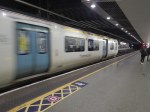
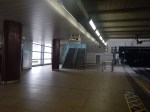


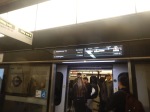

Note.
- The train I took was going to Gravesend. I suspect it was because of engineering work.
- An empty train passed through, whilst I waited. I’ve never seen that before on Thameslink in St. Pancras station.
- I travelled in the front of the Thameslink train for the one stop.
- The change at Farringdon station was very quick, as it was just down in the lift and the Heathrow train was waiting.
These are some notes on a fast change using the lifts between Southbound Thameslink and the Elizabeth Line at Farringdon station.
- Get the first lift of the two that arrives, if like me, you can use escalators.
- If it goes up, walk across the station at street level and get the two serial escalators down to the Elizabeth Line.
- If it goes down, take the lift to the Elizabeth Line.
If you can’t manage escalators, you have to wait for a lift going down.
I have some observations.
Meeting And Greeting At St. Pancras Station
From my position in Le Pain Quotidien, I was able to watch passengers leaving and arriving at the Eurostar terminal opposite.
There were quite a few people, who were meeting and greeting others.
In Effects Of The ULEZ In West London, I said this about meeting and greeting at Heathrow.
But as it now so easy to get to the Airport using the Elizabeth Line will more people use the new line to meet and greet and say goodbye to loved ones or business associates. Since the Elizabeth Line opened, I’ve met a couple of friends at Heathrow, who were passing through.
Will the Elizabeth Line increase the number of trips to the airport, by making meeting and greeting easier?
If it does, then it will put more pressure on the services to Heathrow Airport.
Seats In St. Pancras Thameslink Station
These pictures show some of the large number of seats in St. Pancras Thameslink Station.


Should there be more seats along the platform at stations on the Elizabeth Line, where passengers change trains?
My Train To The Airport Was Crowded
Ten in the morning on a Sunday, is not the time I’d expect to be busy, but I estimated it was about ninety percent full, judging by the few empty seats.
There Were Eight Trains Per Hour (tph) To And From Heathrow
From Real Time Trains, it looks like the following trains were running.
- Elizabeth Line – Abbey Wood and Terminal Four – 2 tph
- Elizabeth Line – Abbey Wood and Terminal Five – 2 tph
- Heathrow Express – Paddington and Terminal Five – 4 tph
My train to the Airport had been going to Terminal Four.
Is eight tph the maximum frequency, that can use the tunnel to the Airport?
Is The Elizabeth Line Diverting Passengers From Heathrow Express?
When I returned from the Airport, my Elizabeth Line train left about ten minutes after a Heathrow Express train.
- The Heathrow Express train wasn’t very full.
- The Elizabeth Line train was very full.
- Passengers got out at all stations.
- I got out at Tottenham Court Road.
It will be interesting to see the Heathrow Express passenger figures.
Which Is The Best Elizabeth Line Station For A Marks and Spencer?
Because their gluten-free food is so much better than other shops, this is important to me.
- There are larger stores at Ealing Broadway, Tottenham Court Road (West), Liverpool Street (West), Stratford and Ilford.
- There are food only stores at Heathrow, Paddington, Bond Street and Liverpool Street (East).
Today, I used the large store by the Western entrance at Tottenham Court Road station.
But, if you want to avoid walking, Stratford is probably the easiest.
 The Anonymous Widower