Centrica Business Solutions And Highview Power
Centrica Business Solutions is one of Centrica’s business units.
It has its own web page, with this sub heading.
Helping Organisations Balance Planet And Profit
This is followed by this mission statement.
Centrica Business Solutions helps organisations to balance the demands of planet and profit, by delivering integrated energy solutions that help you save money and become a sustainable business.
Several pictures show some of the solutions, that Centrica Business Solutions can provide.
Centrica Business Solutions In Numbers
These numbers are given about the customers of Centrica Business Solutions.
- Customer Sites Globally – 7000
- Solar PV Installations Delivered Worldwide – 16,380+
- Solar PV Installations Delivered Power – 240 MW
- CHP Units Operated And Maintained Globally – 700 MW+
- Energy Data Points Collected Each Month Globally – 29 billion
Theses are large numbers.
How Would Centrica Business Solutions Use Highview Power’s Batteries?
The obvious use of Highview Power’s batteries is to connect them between a solar or wind farm and the grid, for when the sun isn’t shining or when the wind isn’t blowing.
Currently, there are three sizes of Highview Power batteries, either working on under development.
5MW/15 MWh
This is the demonstration system, which is described on this page of the Highview web site.
Surely, if a system of this size is very useful for Viridor, there may be other applications and customers out there.
This system will provide 5 MW for three hours.
50MW/300MWh
This is the Carrington system, which is described on this page of the Highview web site.
The Highview web site says this about output potential and connectivity.
The facility will store enough clean, renewable energy to serve the needs of 480,000 homes, as well as providing essential grid stabilisation services. The site will use existing substation and transmission infrastructure.
This system will provide 50 MW for six hours.
200MW/2.5GWh
This is the larger system for Scotland and the North East, which is under development and described on this page of the Highview web site.
The Highview web site says this about output their use.
These will be located on the national transmission network where the wind is being generated and therefore will enable these regions to unleash their untapped renewable energy potential and store excess wind power at scale.
This system will provide 200 MW for 12.5 hours.
In Rio Tinto Punts On British Start-Up To Plug Renewables Gap, I said this.
In Britain, Highview hopes to be putting four 2.5-gigawatt assets into planning this year – one in Scotland, three with Orsted in England.
This sentence was originally published in this article on the Australian Financial Review.
I believe that Centrica could find applications for all three sizes of Highview’s batteries.
Suppose, though Centrica find that an application needs say a 100 MW/1 GWh battery.
From the mathematics, I did at ICI in the 1970s, when looking at the scaling of chemical plants, I believe that Highview’s battery design could be scalable, by just using appropriately-sized turbomachinery, matched to the right number of tanks.
So the customer would get the battery size they needed!
How Much Electricity Could One Of Highview’s Batteries Store?
This image shows large LNG tanks at Milford Haven.
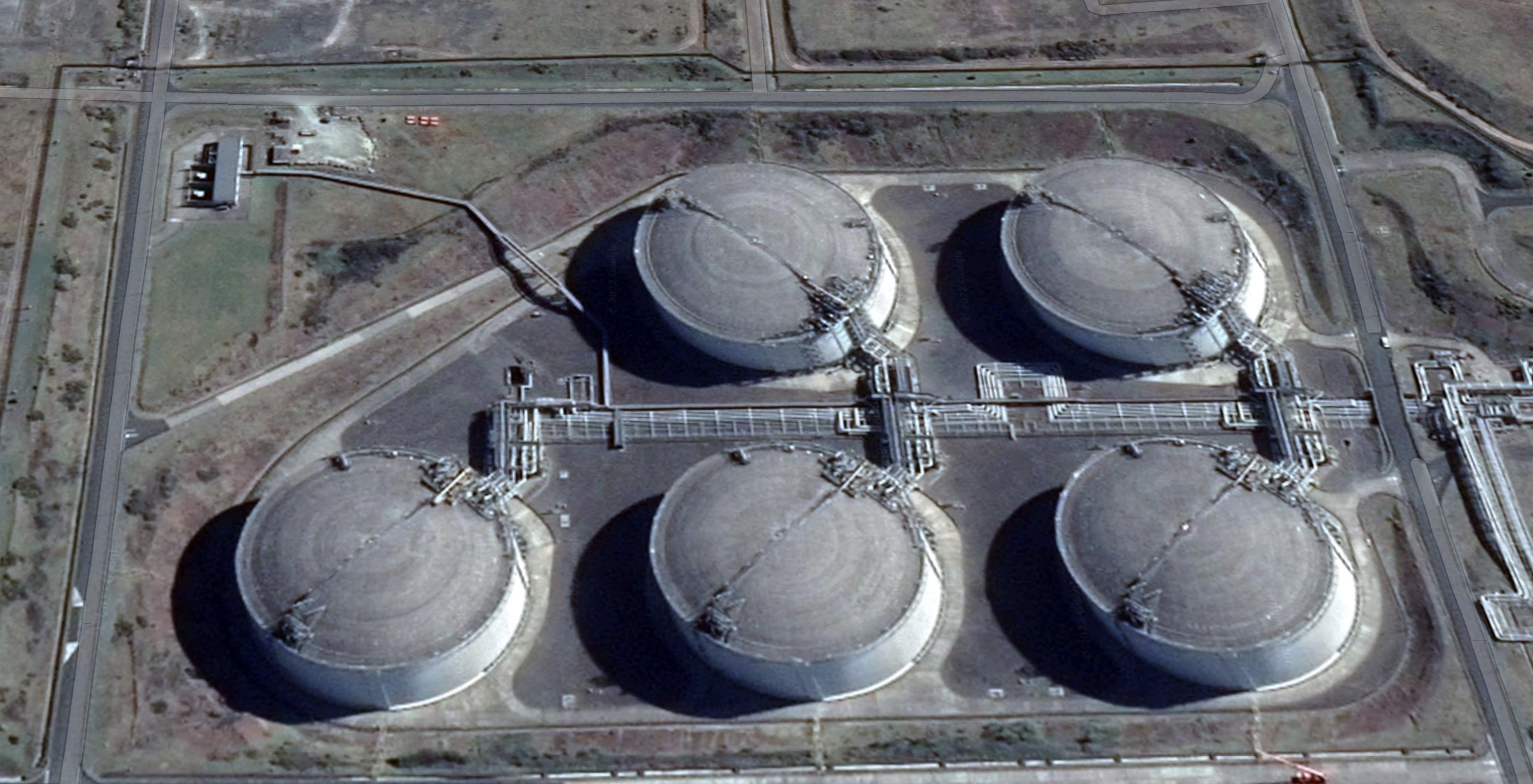
In Could A Highview Power CRYOBattery Use A LNG Tank For Liquid Air Storage?, I did a rough calculation and found that the largest LNG tanks could hold enough liquid air, that would be the equivalent of around one GWh.
So the image above could be a 5 GWh battery.
This image clipped from Highview’s web site, shows large tanks for liquified gas storage.
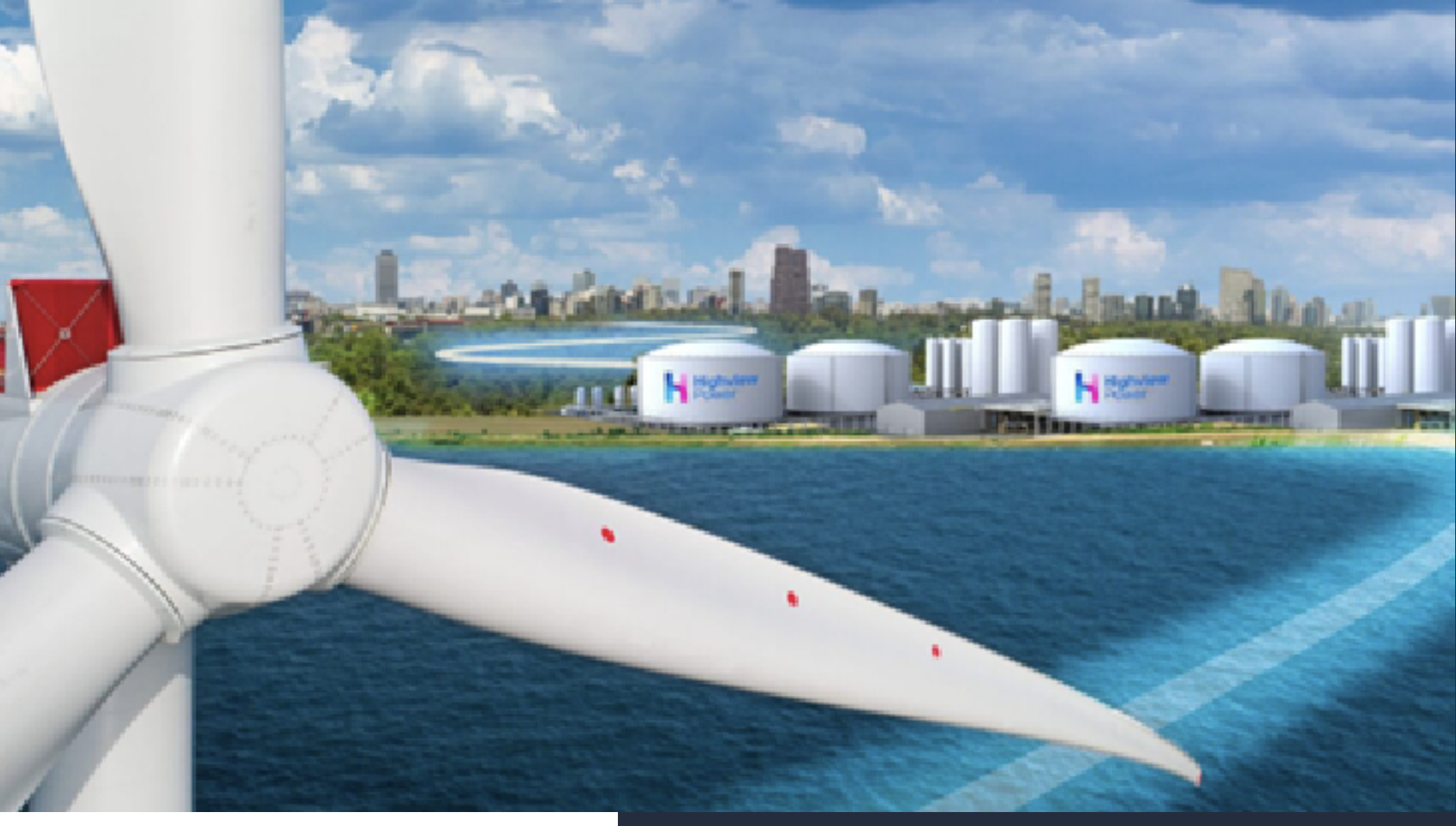
With tanks like these, Highview could be building batteries with storage to rival the smaller pumped storage hydroelectric power stations.
In Grid Powers Up With One Of Europe’s Biggest Battery Storage Sites, I talked about how Ørsted were planning the Swardeston BESS, where the 2852 MW Hornsea Three wind farm connects to the grid.
The chosen battery will be from Tessla with an output of 300 MW and a capacity of 600 MWh.
I suspect Ørsted couldn’t wait for Highview, but circumstances might have changed now, with the financing deal for the Carrington battery!
Are Combined Heat And Power Units And Highview’s Batteries Interchangeable And Complementary Technologies?
According to the Centrica Business Systems web site, they have deployed over 700 MW of CHP systems globally.
I wonder how many of these systems could have used a standard Highview battery?
Perhaps, Centrica Business Systems have done a survey and found that it could be quite a few.
So, perhaps if Centrica Business Systems had access to Highview’s technology, it would increase their sales.
In addition how many of Centrica Business Systems existing CHP systems, would be improved with the addition of a Highview battery?
It appears to me, that if Centrica Business Systems were to develop a series of standard solutions based on Highview’s technology, they could substantially increase their sales.
What Could Centrica Business Systems Do For Highview Power?
Centrica Business Systems could probably develop several standard applications with Hoghview’s technology, which would be to the benefit of both companies.
But, I believe that as Centrica Business Systems are supporting large number of systems globally, that they are in a good place to help develop and possibly run Highview Power’s support network.
Conclusion
I can see Centrica Business Systems and Highview Power having a long and profitable relationship.
Centrica Invests In Renewable Energy Storage Capabilities To Boost UK’s Energy Security And Accelerate Transition To Net Zero
The title of this post, is the same as that of this press release from Centrica.
These two paragraphs are effectively headings.
Centrica plc announces a strategic partnership and £70 million investment in Highview Power and its first clean energy storage project in Carrington, Manchester.
Centrica’s investment will be a key part of a £300 million funding package to develop the first commercial-scale Liquid Air Energy Storage plant in the UK, which will boost the UK’s energy security and accelerate the transition to net zero.
These four paragraphs give more details on the deal.
The investment, which forms part of our plans to invest between £600m – £800m a year until 2028, will be structured as £25m of convertible debt at Highview Enterprises Limited, being the Highview Power holding company and £45m of debt funding at the Carrington Liquid Air Energy Storage project, phased over the project construction. The investment delivers several benefits to Centrica:
Robust standalone returns aligned with Centrica’s capital allocation framework and returns thresholds
Aligned to our green-focused investment programme targeting assets which complement our existing capabilities, provide balance to the portfolio, and align to the needs of the energy transition
Includes rights to equity participation and energy optimisation from future projects in Highview’s £9 billion project pipeline.
At a first look, it appears to give Centrica robust returns and some security for their £70 million investment.
But it is the last paragraph that I like. Does it mean that Centrica can cherry-pick, the projects that it likes and fit its own objectives and expertise from Highview’s £9 billion project pipeline and take-up some equity?
Whatever it means, It looks like it will be good for Centrica.
Do the other partners have similar rights to equity?
Suppose Goldman Sachs have a long-term client in the Mid-West of the United States, who are an electricity generator, with perhaps half-a-dozen coal-fired power stations.
As the client needs to decarbonise and it is believed that Highview’s long duration batteries can replace small coal-fired power stations, it is likely that a Highview solution will at least be examined.
If the client goes down the Highview route, Goldman Sachs might like to continue their long-term relationship, by taking a share in the equity.
Rio Tinto Punts On British Start-Up To Plug Renewables Gap
The title of this post is the same as that of this article on the Australian Financial Review.
The article is a must-read and these are a few points.
- Highview is readying to take a big punt on the Australian market, with Rio Tinto and the Northern Territory government shaping up as potential customers.
- Highview is very committed to Australia. We think Australia can be as big as the UK for us, given their ambitions,
- Highview is working on concepts with Rio Tinto. And separate from Rio, we are well advanced in the Northern Territory with the government there to provide a solution to decarbonise the power grid.
- The process uses existing hardware from the gas industry, and the plant’s life should be at least 40 years – five times longer than a battery.
- Highview could replace fossil-fuel gas plants in situ, and could also be an alternative to the more complex and capital-intensive option of pumped hydro.
- Highview already had staff operating in Brisbane.
- Highview was negotiating the long-term contract with the government in Darwin, and had engaged Australian banks to start testing the market for a local fundraising.
- In Britain, Highview hopes to be putting four 2.5-gigawatt assets into planning this year – one in Scotland, three with Orsted in England.
As I said, the article is a must-read and it proves to me that Highview is on its way.
Are Goldman Sachs Stitching Together A Large Deal On Energy Storage?
In UK Infrastructure Bank, Centrica & Partners Invest £300M in Highview Power Clean Energy Storage Programme To Boost UK’s Energy Security, I talked about a deal to invest £300 million into energy storage company; Highview Power.
These three paragraphs are from the Highview Power news item, on which I based my post.
Highview Power has secured the backing of the UK Infrastructure Bank and the energy industry leader Centrica with a £300 million investment for the first commercial-scale liquid air energy storage (LAES) plant in the UK.
The £300 million funding round was led by the UK Infrastructure Bank (UKIB) and the British multinational energy and services company Centrica, alongside a syndicate of investors including Rio Tinto, Goldman Sachs, KIRKBI and Mosaic Capital.
The investment will enable the construction of one of the world’s largest long duration energy storage (LDES) facilities in Carrington, Manchester, using Highview Power’s proprietary LAES technology. Once complete, it will have a storage capacity of 300 MWh and an output power of 50 MWs per hour for six hours. Construction will begin on the site immediately, with the facility operational in early 2026, supporting over 700 jobs in construction and the supply chain.
Note.
- The UK Infrastructure Bank is a is a British state-owned development bank.
- Centrica plc is an international energy and services company.
- Rio Tinto is a leading global mining group that focuses on finding, mining and processing the Earth’s mineral resources.
- The Goldman Sachs Group, Inc. is a leading global investment banking, securities and investment management firm.
- KIRKBI is the Kirk Kristiansen family’s private holding and investment company founded to build a sustainable future for the family ownership of the LEGO Group.
- Mosaic Capital are an American investment firm.
With six partners, that is just £50 million per partner.
As that sum is very much small change for the likes of these guys and the question of taking an equity stake is not mentioned in Highview Power’s news item, it looks like this deal could be a try-before-you-buy deal with some of the partners or a simple investment with others.
Consider.
- Gresham House, Gore Street and others have proven that investing in lithium-ion batteries give a good return on investment.
- The Carrington long duration energy storage facility will be located near to the 884 MW gas-fired Carrington power station. I suspect that Centrica and Rio Tinto will be interested to see how the hybrid power-station performs.
- Could the Lego Group owners be looking at using solar power, wind power and a LDES to reduce the carbon footprint of their stores?
I would assume, that all the investors would get full details on the performance of the batteries.
Someone To Build The LDES
In Bilfinger Drives Highview Power’s Innovative Storage Project, Accelerating The Energy Transition, I describe how German company will build the Carrington LDES.
The Advantages Of An LDES over a BESS
This is only a short list, of the advantages I see.
- An LDES is easily recyclable.
- The LDES has less exotic materials.
- An LDES can be built from zero-carbon steel.
- Highview are claiming a 40-year life for their LDES.
- Highview is already talking about 200MW/2.5GWh LDES systems.
- Two 200MW/2.5GWh systems working together with a wind or solar farm, can replace a 400 MW gas- or coal-fired station.
- I suspect one of Highview’s LDES systems could be placed offshore, if needed.
I also believe that Highview’s LDES systems could be incorporated into complex chemical plants to increase the efficiency.
Are Goldman Sachs Stitching Together A Large Deal On Energy Storage?
Everything now seems to be in place to build these LDES one after the other, to accelerate the energy transition.
With a good supply of orders and enough money to build each system, I cab see no reason, why several systems a month cannot be built and installed.
I have worked with companies like Goldman Sachs in the past, and I wouldn’t be surprised to find, that they have created the consortium, so that all members get the returns and recognition, they disserve.
Adding Lego Group To The Consortium Could Be A Masterstroke
The Lego Group has lots of stores and theme parks worldwide and a reputation for good design and environmental standards.
Last year, I wrote Bedford Depot’s Massive Solar Roof Helps Thameslink On Way To Net Zero. This was putting a solar roof on a rail depot, but surely buildings like this would be suitable for a Highview LDES.
Bilfinger Drives Highview Power’s Innovative Storage Project, Accelerating The Energy Transition
The title of this post, is the same as that of this press release from Bilfinger, who are a European multinational engineering and services company.
This is the first paragraph of the Wikipedia entry for Bilfinger.
Bilfinger SE (previously named Bilfinger Berger AG) is a European multinational company specialized in civil and industrial construction, engineering and services based in Mannheim, Germany.
Fifty years ago, I was playing a very small part in the designing of complex chemical plants for ICI. My part was mainly to check, the mathematics and dynamics for the designs, the engineers wanted to use.
The experience certainly left me with the belief, that to design a world-class chemical plant is not an easy process.
So if I was needing a complex chemical plant, I would call in the experts.
A Highview Power energy storage system, may not be a chemical plant, but it shares many of the factors of chemical plants, waterworks and sewage plants. So building one, needs a company, with wide experience, which Bilfinger certainly appear to have.
This paragraph from the press release, summarises Bilfinger’s roll in Hghview Power’s Manchester project to create a 50 MW/300 MWh battery based on Highview’s proprietary long duration energy storage system.
The scope of Bilfinger’s services ranges from the procurement of steel to extensive plant construction services, including mechanical, electrical, instrumentation, insulation, painting and structural steel work, along with the overall management of all aspects of construction, including civil works and equipment installation. As principal contractor, Bilfinger is committed to ensuring the highest safety standards on site.
In UK Infrastructure Bank, Centrica & Partners Invest £300M in Highview Power Clean Energy Storage Programme To Boost UK’s Energy Security, I described how Highview Power had recruited high-class backers to fix the companies finances.
It looks like the Bilfinger deal to build the first system, is the last piece of the jigsaw and will see Highview Power on its way.
Where’s The Plan, Rishi?
In RWE Goes For An Additional 10 GW Of Offshore Wind In UK Waters In 2030, I detailed how RWE intended to add an extra 10 GW of offshore wind to the seas around the UK.
As our current offshore wind capacity is around 15 GW, another 10 GW would surely be very welcome.
My post also outlined H2ercules, which is Germany’s massive project to create a hydrogen network to bring hydrogen to Southern Germany.
I also gave details of the hydrogen hub at Wilhelmshaven, which is being built by Uniper to feed H2ercules with green hydrogen from around the world.
I believe that some of this hydrogen for H2ercules will take a short trip across the North Sea from UK waters, after being created by offshore electrolysers.
Rishi Sunak’s Manifesto Speech – June 11
I also reported on Rishi Sunak’s Manifesto Speech, which he made on June 11th. This is an extract
This document on the Policy Mogul web site is entitled Rishi Sunak – Conservative Party Manifesto Speech – Jun 11.
These are three paragraphs from the speech.
We don’t just need military and border security. As Putin’s invasion of Ukraine has shown, we need energy security too. It is only by having reliable, home-grown sources of energy that we can deny dictators the ability to send our bills soaring. So, in our approach to energy policy we will put security and your family finances ahead of unaffordable eco zealotry.
Unlike Labour we don’t believe that we will achieve that energy security via a state-controlled energy company that doesn’t in fact produce any energy. That will only increase costs, and as Penny said on Friday there’s only one thing that GB in Starmer and Miliband’s GB Energy stands for, and that’s giant bills.
Our clear plan is to achieve energy security through new gas-powered stations, trebling our offshore wind capacity and by having new fleets of small modular reactors. These will make the UK a net exporter of electricity, giving us greater energy independence and security from the aggressive actions of dictators . Now let me just reiterate that, with our plan, we will produce enough electricity to both meet our domestic needs and export to our neighbours. Look at that. A clear, Conservative plan not only generating security, but also prosperity for our country.
It is now nine days since Rishi made that speech and I can’t remember any reports about an energy security policy, which he outlined in the last paragraph of my extract from his speech.
He particularly mentioned.
- New gas-powered stations
- Trebling our offshore wind capacity
- Having new fleets of small modular reactors.
He also said we would have sufficient electricity to export to our neighbours. As I said earlier some of this energy will be in the form of hydrogen, which has been created by offshore electrolysers.
If we are exporting electricity and hydrogen to Europe, this is likely to have three effects.
- An improvement in Europe’s energy security.
- H2ercules will improve and decarbonise German industry, using UK hydrogen.
- The finances of UK plc will improve.
It looks like there will be winners all round.
Rishi also said this, in his speech.
As Putin’s invasion of Ukraine has shown, we need energy security too.
The gas-powered stations, offshore wind farms and the fleets of small modular reactors, will be part of the equation.
But I believe, we need three other components to complete our energy security.
- The upgrading of the National Grid.
- The building of four x 2 GW interconnectors between Scotland and Eastern England.
- Large amounts of energy storage.
Note.
- The Great Grid Upgrade and the four x 2 GW interconnectors are being planned.
- In Huge Boost To UK Supply Chain As National Grid Launches The Great Grid Partnership With Seven New Industry Partners, All United In The Drive To Deliver The Great Grid Upgrade, I describe how National Grid has setup the Great Grid Partnership to deliver the Great Grid Upgrade.
- In UK Infrastructure Bank, Centrica & Partners Invest £300M in Highview Power Clean Energy Storage Programme To Boost UK’s Energy Security, I describe how the big boys do a deal with Highview Power to create affordable batteries for the UK and the world.
- In Grid Powers Up With One Of Europe’s Biggest Battery Storage Sites, I describe how the very large Swardeston BESS is to be built near Norwich.
- In Mercia Power Response & RheEnergise Working Together To Build Long Duration Energy Storage Projects In The UK, I describe another UK-developed long duration energy storage system, which is now being planned.
- In National Grid Shares Proposals For Green Electricity Projects In Lincolnshire And West Norfolk, Needed To Boost Home-Grown Energy Supplies And Progress Towards Net Zero, I describe National Grid’s projects in the East of England.
- In UK ESO Unveils GBP 58 Billion Grid Investment Plan To Reach 86 GW of Offshore Wind By 2035, I show how we’re not that far away from 86 GW by 2035.
- In 400k For National Grid Innovation Projects As Part Of Ofgem Fund To Help Shape Britain’s Net Zero Transition, I describe how National Grid is using innovation to help target net-zero by 2035.
- In Iberdrola Preparing Two East Anglia Offshore Wind Projects For UK’s Sixth CfD Round, I describe how Iberdrola is getting 1.7 GW ready for commissioning in 2026.
- In National Grid To Accelerate Up To 20GW Of Grid Connections Across Its Transmission And Distribution Networks, I describe how National Grid are accelerating the development of the electricity networks. 10 GW of battery storage is a collateral benefit.
These ten projects, most of which are financed and/or underway, would appear to be good foundations, on which to build the Great Grid Upgrade.
It looks to me, that National Grid, RWE, Centrica, Iberdrola and others, by just doing what comes naturally have offered the next government a road to a future.
It will be interesting, what gets said before the election.
UK Infrastructure Bank, Centrica & Partners Invest £300M in Highview Power Clean Energy Storage Programme To Boost UK’s Energy Security
The title of this post, is the same as that of this news item from Highview Power.
This is the sub-heading.
Highview Power kickstarts its multi-billion pound renewable energy programme to accelerate the UK’s transition to net zero in Carrington, Manchester.
These three paragraphs outline the investment.
Highview Power has secured the backing of the UK Infrastructure Bank and the energy industry leader Centrica with a £300 million investment for the first commercial-scale liquid air energy storage (LAES) plant in the UK.
The £300 million funding round was led by the UK Infrastructure Bank (UKIB) and the British multinational energy and services company Centrica, alongside a syndicate of investors including Rio Tinto, Goldman Sachs, KIRKBI and Mosaic Capital.
The investment will enable the construction of one of the world’s largest long duration energy storage (LDES) facilities in Carrington, Manchester, using Highview Power’s proprietary LAES technology. Once complete, it will have a storage capacity of 300 MWh and an output power of 50 MWs per hour for six hours. Construction will begin on the site immediately, with the facility operational in early 2026, supporting over 700 jobs in construction and the supply chain.
Note.
- The backers are of a high quality.
- The Carrington LDES appears to be a 50 MW/300 MWh battery.
It finally looks like Highview Power is on its way.
These are my thoughts on the rest of news item.
Centrica’s Involvement
This paragraph talks about Centrica’s involvement.
Energy leader Centrica comes on board as Highview Power’s strategic partner and a key player in the UK’s energy transition, supporting Carrington and the accelerated roll-out of the technology in the UK through a £70 million investment. The programme will set the bar for storage energy systems around the world, positioning the UK as the global leader in energy storage and flexibility.
I suspect that Centrica have an application in mind.
In Centrica Business Solutions Begins Work On 20MW Hydrogen-Ready Peaker In Redditch, I talk about how Centrica is updating an old peaker plant.
In the related post I refer to this news item from Centrica Business Systems.
This paragraph in the Centrica Business Systems news item, outlines Centrica’s plans.
The Redditch peaking plant is part of Centrica’s plans to deliver around 1GW of flexible energy assets, that includes the redevelopment of several legacy-owned power stations, including the transformation of the former Brigg Power Station in Lincolnshire into a battery storage asset and the first plant in the UK to be part fuelled by hydrogen.
As Redditch power station is only 20 MW, Centrica could be thinking of around fifty assets of a similar size.
It seems to me, that some of these assets could be Highview Power’s LDES batteries of an appropriate size. They may even be paired with a wind or solar farm.
Larger Systems
Highview Power’s news item, also has this paragraph.
Highview Power will now also commence planning on the next four larger scale 2.5 GWh facilities (with a total anticipated investment of £3 billion). Located at strategic sites across the UK, these will ensure a fast roll-out of the technology to align with UK LDES support mechanisms and enable the ESO’s Future Energy Scenario Plans.
Elsewhere on their web site, Highview Power say this about their 2.5 GWh facilities.
Highview Power’s next projects will be located in Scotland and the North East and each will be 200MW/2.5GWh capacity. These will be located on the national transmission network where the wind is being generated and therefore will enable these regions to unleash their untapped renewable energy potential and store excess wind power at scale.
So will the four larger systems have a 200MW/2.5GWh capacity?
They could, but 200 MW may not be an appropriate output for the location. Or a longer duration may be needed.
Highview Power’s design gives the flexibility to design a system, that meets each application.
Working With National Grid
Highview Power’s news item, also has this sentence.
Highview Power’s technology will also provide stability services to the National Grid, which will allow for the long-term replacement of fossil fuel-based power plants for system support.
Highview Power’s technology is also an alternative to Battery Energy Storage Systems (BESS) of a similar capacity.
How does Highview Power’s technology compare with the best lithium-ion systems on price, performance and reliability?
Curtailment Of Wind Farms
Highview Power’s news item, also has these two paragraphs.
This storage will help reduce curtailment costs – which is significant as Britain spent £800m in 2023 to turn off wind farms.
Highview Power aims to accelerate the roll-out of its larger facilities across the UK by 2035 in line with one of National Grid’s target scenario forecasts of a 2 GW requirement from LAES, which would represent nearly 20% of the UK’s long duration energy storage needs. By capturing and storing excess renewable energy, which is now the cheapest form of electricity, storage can help keep energy costs from spiralling, and power Britain’s homes with 24/7 renewable clean energy.
I can see several wind farms, that are regularly curtailed would have a Highview Power battery installed at their onshore substation.
Receently, I wrote Grid Powers Up With One Of Europe’s Biggest Battery Storage Sites, which described how Ørsted are installing a 300 MW/600 MWh Battery Energy Storage Systems (BESS) at Swardeston substation, where Hornsea Three connects to the grid.
I would suspect that the purpose of the battery is to avoid turning off the wind farm.
Would a Highview Power battery be better value?
What’s In It For Rio Tinto?
I can understand, why most companies are investing, but Rio Tinto are a mining company. My only thought is that they have a lot of redundant holes in the ground, that cost them a lot of money and by the use of Highview Power’s technology, they can be turned into productive assets.
Collateral Benefits
Highview Power’s news item, also has this paragraph.
Beyond contributing to the UK’s energy security by reducing the intermittency of renewables, Highview Power’s infrastructure programme will make a major contribution to the UK economy, requiring in excess of £9 billion investment in energy storage infrastructure over the next 10 years – with the potential to support over 6,000 jobs and generate billions of pounds in value add to the economy. It will also contribute materially to increasing utilisation of green energy generation, reducing energy bills for consumers and providing significantly improved energy stability and security.
If Highview Power can do that for the UK, what can it do for other countries?
No wonder companies of the quality of Centrica, Rio Tinto and Goldman Sachs are investing.
Highview Power, Ørsted Find Value In Integrating Offshore Wind With Liquid Air Energy Storage
The title of this post, is the same as that of this article on offshoreWIND.biz.
This is the sub-heading.
Highview Power and Ørsted have completed their joint investigation into how combining the technologies of Liquid Air Energy Storage (LAES) and offshore wind could unlock greater value for investors and consumers.
These three paragraphs outline the findings.
The results show that there is value in combining offshore wind with LAES to support reducing wind curtailment, increasing productivity, and helping the move to a more flexible, resilient zero-carbon grid, according to Higher Power.
The two companies have carried out analysis of technical performance, route to planning approval, and route to market with a regulatory and economic assessment.
As a result of this study, the companies believe a project can be developed and built aligned with the timeline of an offshore wind farm.
I feel very strongly, that putting the two technologies together is a good idea.
In the simplest cases, the storage could be built into the offshore sub-station.
Could LAES Be Used With Hornsea 4 Wind Farm?
The Wikipedia entry for the Hornsea Wind Farm says this about Hornsea 4.
In July 2023, British government officials gave the final approval for Hornsea Four, the fourth phase of the wind project. Hornsea Four is expected to generate 2.6GW, have 180 giant wind turbines, and has the capability to generate enough renewable energy to power 1 million homes in Britain.
The Wikipedia entry also says this about Hornsea 3.
Project 3 will be to the east of Projects 1 and 2, with an estimated maximum capacity of 2.4 GW over 696 square kilometres (269 sq mi). DONG Energy (which in November 2017 changed its name to Ørsted) began consultation on the project’s development in May 2016. Ørsted submitted a Development consent application in 2018 and consent was granted on 31 December 2020.[69] In early 2023, consent was also given to a battery storage power station at Swardeston. The project is expected to begin construction in 2022, and be completed by 2025.
If Ørsted are adding a battery to the 2.4 GW Hornsea 3 wind farm, I would feel, that Ørsted would think about a battery on the 2.6 GW Hornsea 4 wind farm.
The Energy Storage The UK Needs
This is the last paragraph of the article.
The UK will need up to 100 GWh of energy storage by 2050 according to the estimates from National Grid ESO’s Future Energy Systems Scenario.
SSE Renewables are planning two large pumped-storage hydroelectric power stations in Scotland.
- Coire Glas – 1.5 GW/30 GWh – Possible completion in 2031.
- Loch Sloy – 152.5 MW/25 GWh – See SSE Unveils Redevelopment Plans For Sloy Hydro-Electric Power Station.
A quick calculation, says we’d need seven pumped-storage hydroelectric power stations, which need a lot of space and a handy mountain.
I don’t think pumped-storage hydroelectric would be feasible.
Highview Power say this about their next projects on this page of their web site.
Highview Power’s next projects will be located in Scotland and the North East and each will be 200MW/2.5GWh capacity. These will be located on the national transmission network where the wind is being generated and therefore will enable these regions to unleash their untapped renewable energy potential and store excess wind power at scale.
Note.
- This is more like the size.
- Work is now underway at Carrington – a 50MW / 300MWh plant at Trafford Energy Park near Manchester.
- Highview’s technology uses liquid air to store energy and well-proven turbo-machinery.
They are a definite possibility, as only eighteen 200MW/2.5GWh systems would be needed.
National Grid To Accelerate Up To 20GW Of Grid Connections Across Its Transmission And Distribution Networks
The title of this post, is the same as that of this press release from National Grid.
These four bullet points, act as sub-headings.
- Connection dates of 10GW of battery projects accelerated at transmission level, and 10GW of capacity unlocked at distribution level, both part of the Electricity System Operator (ESO)’s connections five-point plan.
- Battery energy storage projects connecting to the transmission network to be offered new connection dates averaging four years earlier than their current agreement.
- The accelerated 20GW equates to the capacity of six Hinkley Point C nuclear power stations.
- Work is part of ongoing collaborative industry efforts, together with Ofgem and government, to speed up and reform connections.
This is the opening paragraph.
National Grid is accelerating the connection of up to 20GW of clean energy projects to its electricity transmission and distribution networks in England and Wales as part of ongoing collaborative work across industry.
As I write this, the UK is generating 38.5 GW of electricity, so another 20 GW will be a large increase in capacity.
I shall look at what National Grid are proposing in sections.
10 GW Of Battery Power
These two paragraphs, outline the plan for 10 GW of battery power.
On its transmission network, 19 battery energy storage projects worth around 10GW will be offered dates to plug in averaging four years earlier than their current agreement, based on a new approach which removes the need for non-essential engineering works prior to connecting storage.
The new policy is part of National Grid’s connections reform initiative targeting transmission capacity, spearheaded by the ESO – which owns the contractual relationship with connecting projects – and actioned jointly with National Grid Electricity Transmission (ET), the part of the business which designs and builds the transmission infrastructure needed in England and Wales to plug projects in.
It looks to me that someone has been doing some serious mathematical modelling of the UK’s electricity network.
Fifty years ago, I provided the differential equation solving software, that enabled the Water Resources Board to plan, where reservoirs and pipelines were to be built. I have no idea how successful it was, but we don’t seem to have any serious water supply problems, except when there is equipment failures or serious drought.
But modelling water and electrical networks is mathematically similar, with rainfall, pipelines and reservoirs in the water network and power generation, transmission lines and batteries and pumped storage hydroelectricity in the electricity network.
I’d be interesting to know what software was used to solve the mathematical model.
I certainly agree with the solution.
Two of our modern sources of renewable energy; solar and wind are not very predictable, but cost a lot of capital investment to build.
So it is very wrong not to do something positive with any excess electricity generated. And what better place to put it than in a battery, so it can be retrieved later.
The earlier, the batteries come on stream, the earlier, the batteries can save all the excess electricity.
So moving the plug in dates for battery storage four years earlier is a very positive thing to do.
A simple calculation shows that for 10 GW, we would need nineteen batteries of about 526 MW.
Ideally, like power stations, they would be spread around the country.
Could Pumped-Storage Hydroelectricity Be Used?
The largest battery in the UK is the Dinorwig pumped-storage hydroelectric power station, which is commonly known as Electric Mountain or Mynydd Gwefru if you’re Welsh.
- It opened in 1984, after a ten years of construction.
- It has a power output of 1.8 GW.
- The energy storage capacity of the station is around 9.1 GWh.
Roughly, every gigawatt of output is backed up by 5 GWh of storage.
If the proposed nineteen new batteries have the same power to storage ratio as Electric Mountain, then each battery will have a storage capacity of 2.63 GWh
SSE Renewables are planning two large pumped-storage hydroelectric power stations in Scotland.
- Coire Glas – 1.5 GW/30 GWh – Possible completion in 2031.
- Loch Sloy – 152.5 MW/25 GWh – See SSE Unveils Redevelopment Plans For Sloy Hydro-Electric Power Station.
A quick calculation, says we’d need seven pumped-storage hydroelectric power stations, which need a lot of space and a handy mountain.
I don’t think pumped-storage hydroelectric would be feasible.
Could Lithium-Ion Batteries Be Used?
My mathematical jottings have shown we need nineteen batteries with this specification.
- An output of about 526 MW.
- A storage capacity of around 2.63 GWh
This Wikipedia entry gives a list of the world’s largest battery power stations.
The current largest is Vistra Moss Landing battery in California, which has this specification.
- An output of 750 MW.
- A storage capacity of 3 GWh
Reading the Wikipedia entry for Vistra Moss Landing, it appears to have taken five years to construct.
I believe that nineteen lithium-ion batteries could handle National Grid’s need and they could be built in a reasonable time.
Could Any Other Batteries Be Used?
Rounding the battery size, I feel it would be better have twenty batteries with this specification.
- An output of 500 MW.
- A storage capacity of 2.5 GWh
Are there any companies that could produce a battery of that size?
Form Energy
Form Energy are well-backed with an MIT heritage, but their largest proposed battery is only 10 MW/1 GWh.
They could be a possibility, but I feel it’s only a small chance.
Highview Power
Highview Power say this about their next projects on this page of their web site.
Highview Power’s next projects will be located in Scotland and the North East and each will be 200MW/2.5GWh capacity. These will be located on the national transmission network where the wind is being generated and therefore will enable these regions to unleash their untapped renewable energy potential and store excess wind power at scale.
Note.
- This is more like the size.
- Work is now underway at Carrington – a 50MW / 300MWh plant at Trafford Energy Park near Manchester.
- Highview’s technology uses liquid air to store energy and well-proven turbo-machinery.
- Highview have a co-operation agreement with Ørsted
They are a definite possibility.
10 GW Of Extra Unlocked Capacity
These two paragraphs, outline the plan for 10 GW of extra unlocked capacity.
On its distribution network in the Midlands, South West of England and South Wales, the additional 10GW of unlocked capacity announced recently is set to accelerate the connection of scores of low carbon technology projects, bringing forward some ‘shovel ready’ schemes by up to five years.
National Grid has already been in contact with more than 200 projects interested in fast tracking their distribution connection dates in the first wave of the capacity release, with 16 expressing an interest in connecting in the next 12 months and another 180 looking to connect within two to five years.
This page from National Grid ESO, lists the actions that were taken to release the extra grid capacity.
Conclusion
This looks to be a very good plan from National Grid.
Carlton Power Secures Planning Consent For World’s Largest Battery Energy Storage Scheme
The title of this post, is the same as that of this news story from Carlton Power.
This is the sub-heading.
£750m 1GW Battery Project To Be Built At Carlton Power’s Trafford Low Carbon Energy Park In Greater Manchester
These three paragraphs outline the project.
Carlton Power, the UK independent energy infrastructure development company, has secured planning permission for the world’s largest battery energy storage scheme (BESS), a 1GW (1040MW / 2080MWh) project located at the Trafford Low Carbon Energy Park in Greater Manchester. The £750m BESS scheme will strengthen the security and resilience of the energy system in the North West of England, and support the energy transition and the growth of renewable power generation in the region.
Planning permission for the BESS was granted by Trafford Council, the local planning authority.
Subject to a final investment decision, construction of the battery storage scheme is expected to begin in the first quarter of next year (2024) with it entering commercial operation in the final quarter of 2025. Carlton Power is in advanced talks with companies to finance, build and operate the Trafford BESS.
I have a few thoughts.
It’s A Monster
This Wikipedia entry, lists the World’s Largest Grid Batteries.
- The current largest is Vistra Moss Landing battery in the United States, which has a capacity of 1600 MWh and an output of 400 MW.
- The Trafford BESS will have a capacity of 2080 MWh and an output of 1040 MW.
By both measures the Trafford BESS is larger.
Where Will It Get The Energy?
Consider.
- In Liverpool and Morecambe Bays there is over 5 GW of offshore wind farms either operational, under construction or planned.
- Carrington gas-fired power station has a capacity of 884 MW.
- The Western HVDC Link is a 2250 MW link between Scotland and Connah’s Quay in North Wales.
- I wrote about the proposed Mersey Barrage in Mersey Tidal Project And Where It Is Up To Now.
I can see enough renewable energy being generated to replace Carrington gas-fired power station.
Who Will Finance, Build And Operate The Trafford BESS?
There are two major Energy Storage Funds in the UK.
- Gore Street with 27 projects totalling 1.17 GW.
- Gresham House with 17 projects totalling 425 MW.
Note.
- There are other smaller funds.
- The figures given are cumulative outputs for the portfolios.
- Sourcing the large number of batteries might be a problem.
- As the maths of these batteries are now well-known, I would expect that finance shouldn’t be too much of a problem.
- Local companies like Liverpool Victoria or Peel Holdings could even take a position.
A large American contractor backed by US money could swallow the whole project.
That happened with North Sea oil and gas in the last century.
Is Highview Power’s CRYOBattery Still Planned?
Carlton Power’s news story says this about Highview Power’s plans.
In addition to Carlton Power’s two projects, Highview Power Storage Inc. is planning to build and operate the world’s first commercial liquid air storage system – a £250m 250MWh long duration, cryogenic energy storage system – on the Trafford Low Carbon Energy Park, which was until 1991 the site of the Carrington coal-fired power station. The Low Carbon Energy Park is located close to Manchester Ship Canal and the £750m Carrington flexible gas-fired power station which entered operation in 2016.
It seems that the CRYOBattery is still planned.
Conclusion
Manchester is getting a powerful zero-carbon hub.
 The Anonymous Widower