Surviving Lockdown
People ask if I am surviving lockdown.
I am lucky in several ways.
Housing
I live in a spacious house, which is comfortable.
Although, it does have problems.
- It was built by a Turkish Jerrybuilder, who bought fixtures and fittings at the cheapest price possible.
- It gets too hot.
- The plumbing is suspect.
- The air-conditioner is broken and the service company, have had my money to fix it, but won’t come.
- The smoke detector above my bed is just hanging there, as I wrote in A Design Crime – The Average Smoke Detector
Hopefully, when we beat COVID-19, I’ll be able to move.
Finances
My investments give me enough to live comfortably. If you call, living in two rooms, never talking face-to-face with anybody living comfortably.
Exercise
I am still fit and can exercise as much as I need and is recommended.
I have a workout that I do twice a day, which includes movements like press-ups, stretches and single-leg stands.
I can do two dozen press-ups straight off or walk three miles, if I need to.
Health
My health is good, despite being a coeliac and suffering a serious stroke ten years ago.
- I test my own INR.
- I seem to have survived my fall of a month ago.
- I only go to the surgery for B12 injections, drug reviews and the odd problem.
Other than that I just suffer from the problems of a healthy man of 72, like arthritis and hay fever.
I do have a strange skin, that leaks a lot of water and doesn’t bleed, when I have an injection or a doctor or nurse takes blood. I never have a plaster after either procedure.
Food
I am a reasonable and very practical cook, or so my son and various friends tell me. These are some meals, I’ve been cooking under lockdown.
Pasta With Yogurt Sauce For One
Goat’s Cheese, Strawberry And Basil Salad
Smoked Haddock And Curried Rice
I shall add more here.
I won’t starve!
Shopping
A Marks and Spencer food store is fifteen minutes walk away, so I can get all the food I need.
I also got plenty of Adnams 0.5% alcohol Ghost Ship beers direct from the brewers delivered last week.
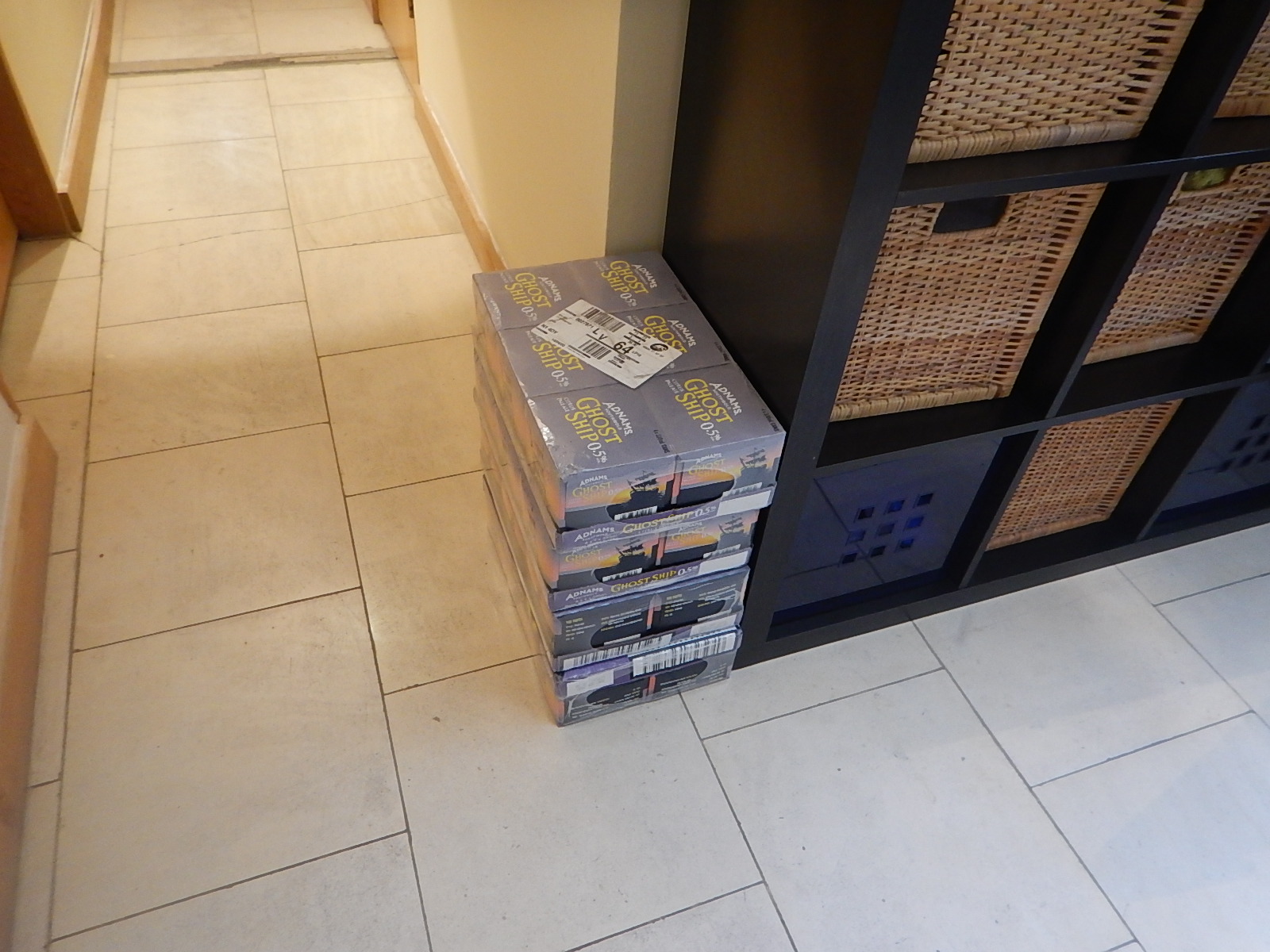
Their beers have been a lifeline, as they are gluten-free, thirst-quenching and don’t get me drunk. Even in quantity!
I also have safe delivery without any contact, as the couriers just ring my bell, we chat through the window about three metres away and they leave the goods on the step.
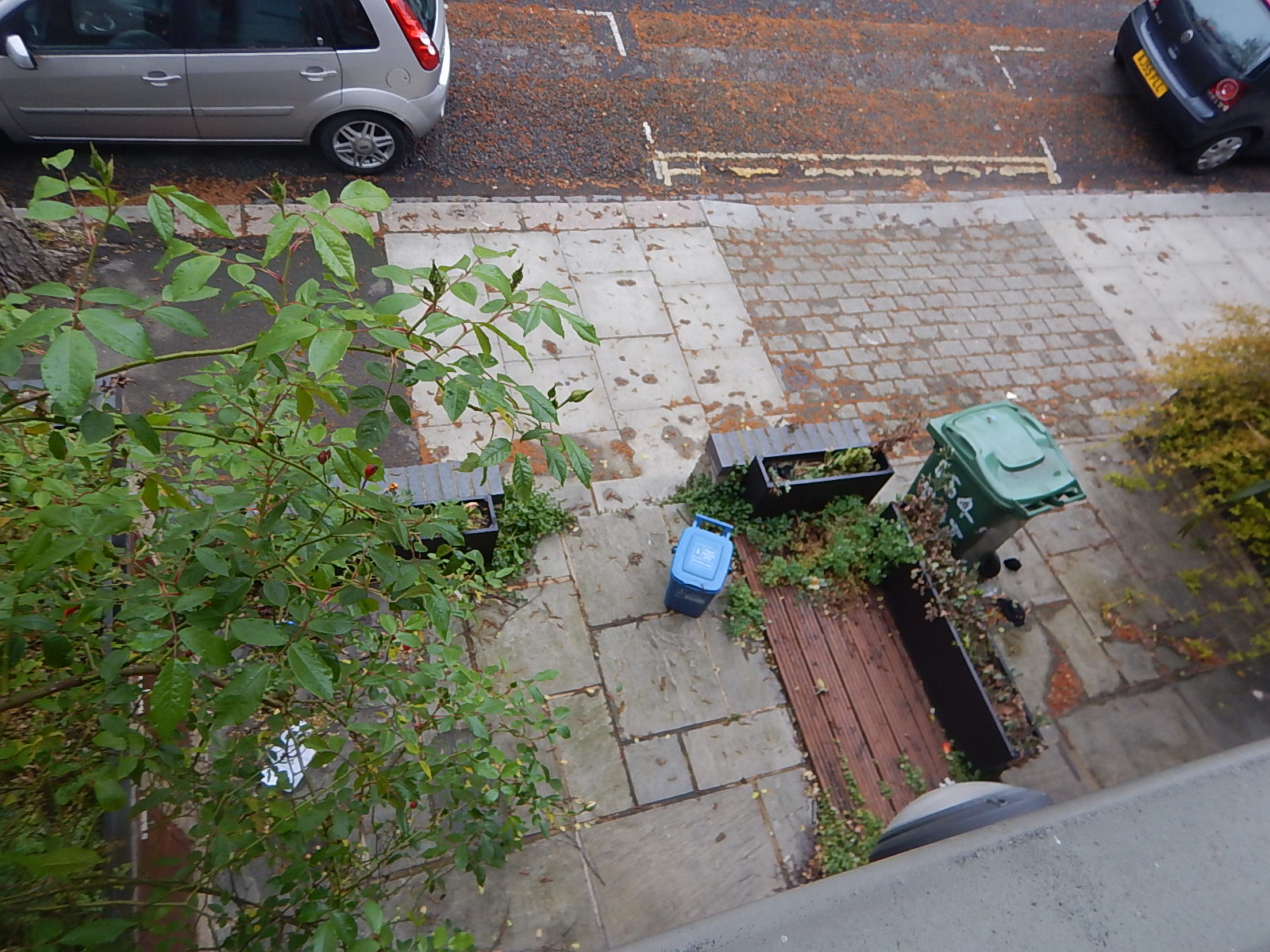
I didn’t think about lockdown, when I bought this house, but it is ideal for safe COVID-19-free deliveries.
Lockdown Practice
There can’t be many people, now going through the COVID-19 lockdown, wo have locked themselves away so many times in their life as I have.
- At the age of about six, I spent three months or more, in isolation because I caught scarlet fever.
- For the summer before A-Levels, my parents went to their house in Felixstowe. For part of the time, I locked myself in my bedroom and read up on my A level Physics.
- A couple of times at ICI, I self-isolated with a computer to get important jobs done. How many have used an IBM-360 as a PC?
- I self-isolated to write Speed, my first piece of independent software.
- Pert7 and other software for Time Sharing Ltd was written overnight sitting in the window of their offices on Great Portland Street.
- Artemis was written in an attic in Suffolk, with no-one else around for most of the time.
- The special PC version of Artemis, that was a combined project management, database and spreadsheet program, was also written under lockdown.
- After Celia died, I wrote Travels With My Celia(c) under lockdown. You can download the pdf file here.
Lockdown has almost been a way of life for me.
But on past form, I certainly have the mental strength to get through lockdown unscathed.
Conclusion
There must be a lot of others in much worse situations than myself.
I Only Ran Out Of Deoderant
For about three years, I’ve not bought deodorant or toothpaste in the normal manner, in say a shop in the High Street or locally.
What I’ve tended to do, is just pack my toothbrush and a few other things in my travel bag and buy new travel ones, once I’ve gone through Customs.
Consequently, I’ve only bought small travel roll-on deodorants. I’ve used roll-on ones for many years, as I didn’t like to use aerosols with all their noxious gases.
On Friday my last one ran-out and I needed a new one. The only one I could buy in a local shop, was an aerosol powered by butane. In other words it’s a flame-thrower in all but name! Search the Internet and you’ll find lots of pictures.
I find this very sad, as I funded a development of a totally-safe aerosol, that used compressed nitrogen as the propellant! The development was sold to a US company and I got a return on my money! Obviously, the product wasn’t cheap and nasty enough! But it was good enough though to be discussed at the Montreal Climate Change talks in 2005.
I actually found the butane-powered flame-thrower impossible to use, due to the damage to my left hand.
- Was it the break to my humerus caused by the school bully?
- Was it the stroke?
- Was it the recent damage caused by my fall?
I just needed to find a roll-on deodorant. But had they been discontinued?
This morning, thankfully, I found one at the Angel.
So I will smell better tomorrow!
I won’t leave this post before telling this tale.
I used to work for ICI Mond Division, who used to make the hydro-fluoro-carbon gases, that used to power aerosols in the 1960s and 1970s.
One of the guys in a nearby lab, where I worked at Runcorn Heath, used to formulate the propellants for possible products.
His standard joke was that he’d get baked beans into an aerosol, even if they had to come out one by one.
Every so often, he’d bring round samples that he’d made for various companies and one day I obtained an aerosol hand cream.
What make it was, no-one had a clue, but C always swore, it was the best hand cream, she’d ever used.
Grenfell Tower Fire: ‘Systemic Failures’ In Fire Brigade’s Response
The title of this post is the same as that of this article on the BBC.
This is the introductory paragraph.
The London Fire Brigade (LFB) has been condemned for “serious shortcomings” and systemic failures in its response to the Grenfell Tower fire, in a report into the 2017 blaze.
I am particularly worried about the stay-put policy.
In the 1950s, I was a member of the Scouts and several times we did exercises with the London Fire Brigade, where we were taught how to get out of blazing buildings. We were also used as dummy causalities in major incident training.
Certainly, the advice then for a fire was to get out.
Around 1970, I worked on chemical plants for ICI and fire safety was taken very seriously.
I remember being told to know your escape route from where you were working. And get out fast, if anything happened. Not that it did!
One other thing I remember is on the Wilton site, seeing office windows with “Perspex Window – Fine Hazard” stencilled on them. The reason for this, was that a nearby polythene plant very occasionally caused spectacular aerial explosions and glass windows were just too dangerous, as when shattered, they covered those inside with shards of glass.
If you read the story of the Summerland Disaster in August 1973, which killed fifty people and injured eighty, Wikipedia says this about the building.
The street frontage and part of the roof was clad in Oroglas, a transparent acrylic glass sheeting.
Oroglas is a poly(methyl methacrylate) and is another tradename for the same plastic, which ICI called Perspex.
I’d left ICI, by the time of the Summerland Disaster, but I was still in contact with friends, who worked in Plastics Division, who were responsible for Perspex. One was very critical of the use of Oroglas in the building. I was also told that ICI turned down Summerland order, as they thought it was not a suitable application, as Perspex was too flammable.
I should also say, that I have lived in a tower block with my family.
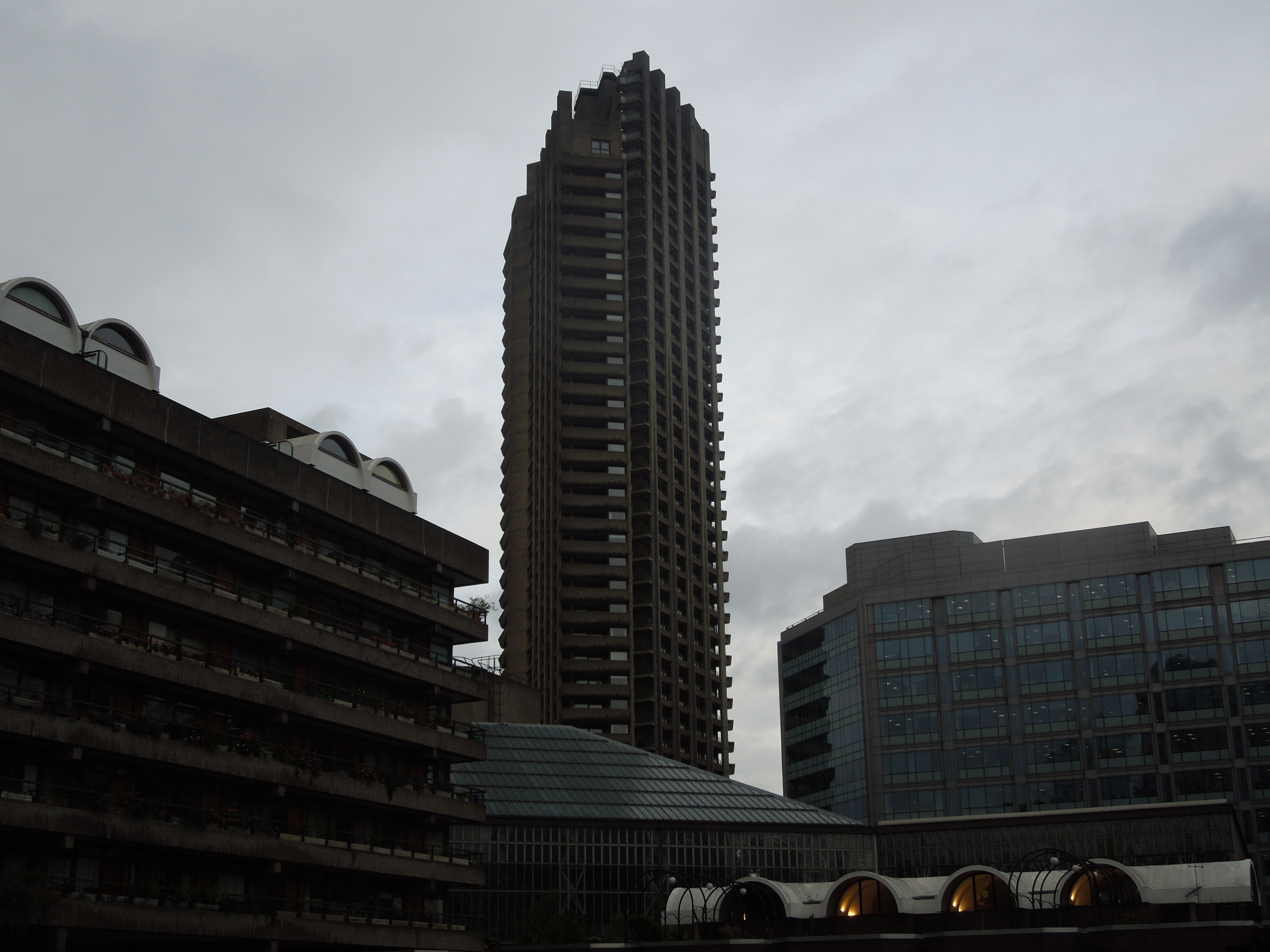
From my knowledge, I would not have lived in a building with flammable cladding.
Cromwell Tower in the Barbican is clad in concrete, with a network of tunnels going a couple of floors down from each flat on the thirty-five floors. I can remember checking the fire escapes before I signed the lease.
It also has no gas supply, with underfloor electric heating.
After the Grenfell Tower fire, I feel that architects and lawmakers have completely ignored the lessons of history!
Conclusion
There is a need to make sure that we take on board all the lessons of Grenfell, so that the chance of another disaster are minimised.
The Importance Of Libraries For Research
I went to a fund-raising event for Book Aid at the British Library on Monday evening.
The main purpose was to raise funds for the library in Mosul, which has been wrecked by IS.
The event made me think, about the number of times in the 1960s and 1970s, I used libraries for research.
- My undergraduate thesis was about analogue computing and I used information about how Lord Kelvin and his elder brother; James, were developing and using mechanical analogue computers in the late 1800s, that I had found in the Liverpool University library.
- A few years later, whilst working for ICI, I found that by properly searching Chemical Abstracts in their library, I could find the solution to difficult problems. Nowadays, you’d use the Internet!
- When I developed Artemis, I needed methods to improve the performance of the software. Some I developed myself, but one particular algoithm used for linking datasets together was found in a paper, written in the 1960s in IBM’s library. In those days, getting the maximum performance from not very powerful computers was more difficult and the algorithm was important.
- These days, with everything on the Internet I use libraries less. Although, I regularly visit Hackney’s Records Office near to where I live, to browse old images, reference books and maps.
Do we all underestimate the part books, play in our lives?
North West Hydrogen Alliance Focuses On Low-Carbon Transportation
The title of this post is the same as that of this article on Gasworld.
This is an extract.
A study is currently underway to look at the feasibility of using hydrogen produced at chemical company INOVYN’s Runcorn site to power buses on the street of Liverpool.
It was also recently announced the Liverpool City Region will become the first area in the North of England to trial hydrogen buses following a £6.4m government funding bid, with a new refuelling station at BOC’s hydrogen plant in St Helens.
INOVYN is owned by INEOS, so are they getting involved with hydrogen?
I knew that site well in the late 1960s, when I worked there in the chlorine cell rooms, that made hydrogen and chlorine by electrolysing brine.
Life goes round in circles.
I heard some in those days, say hydrogen was a bit of a problem! Now it’s a valuable resource.
But I always remember a senior engineer, saying the only waste products that should come out of a chemical plant was pure water.
Hydrogen For Hydrogen-Powered Trains And Other Vehicles
I have received e-mails worrying about how hydrogen-powered trains and other vehicles, like buses and trucks, will get the fuel they need.
Production Of Hydrogen
There are two major methods of producing large quantities of hydrogen.
Steam Reforming Of Natural Gas
Steam reforming is used to convert natural gas into hydrogen by using high temperature and pressure steam in the presence of a nickel catalyst.
This section in Wikipedia is entitled Industrial Reforming, says this.
Steam reforming of natural gas is the most common method of producing commercial bulk hydrogen at about 95% of the world production of 500 billion m3 in 1998. Hydrogen is used in the industrial synthesis of ammonia and other chemicals. At high temperatures (700 – 1100 °C) and in the presence of a metal-based catalyst (nickel), steam reacts with methane to yield carbon monoxide and hydrogen.
It gives this chemical equation for the reaction.
CH4 + H2O ⇌ CO + 3 H2
I have two questions about steam reforming.
- How much fossil fuel energy is needed to create the high temperatures and pressures to make the process work?
- What happens to the carbon monoxide (CO)? Is it burnt to provide heat, thus producing more carbon dioxide (CO2)?
I therefor question the use of steam reforming to produce hydrogen for vehicles, especially, as a system might be required to be installed in a train, bus or freight depot.
The only time, where steam reforming could be used, is where an existing refinery producing large quantities of hydrogen by the process is close TO the point of use.
Electrolysis Of Water Or Brine
It is fifty years, since I worked in the chlorine-cell rooms of ICI’s Castner-Kellner chemical complex at Runcorn.
The process used was the Castner-Kellner Process and this is the first paragraph of the Wikipedia entry.
The Castner–Kellner process is a method of electrolysis on an aqueous alkali chloride solution (usually sodium chloride solution) to produce the corresponding alkali hydroxide, invented by American Hamilton Castner and Austrian Karl Kellner in the 1890s.
Brine from Cheshire’s extensive salt deposits is electrolysed using a graphite anode and a mercury cathode to produce chlorine, hydrogen, sodium hydroxide and sodium metal.
Large amounts of electricity are needed, but the biggest problem is the poisonous mercury used in the process.
My work incidentally concerned measuring the mercury in the air of the plant.
Since the 1960s, the technology has moved on, and ICI’s successor INEOS, still produces large quantities of chlorine at Runcorn using electrolysis.
More environmentally-friendly processes such as membrane cell electrolysis are now available, which produce chlorine, hydrogen and sodium hydroxide.
In the 1960s, the production of chlorine and hydrogen was a 24/7 process and I would suspect that INEOS have a good deal to use electricity from wind and other sources in the middle of the night.
The Future Of Hydrogen
Hydrogen is a clean fuel, that when it burns to produce heat or is used in a fuel cell to produce electricity, only produces steam or water.
There is also a lot of research going into hydrogen fuel-cells, hydrogen storage and batteries, and some of this will lead to innovative use of hydrogen as a fuel.
As an example, there is a growing market for fuel-cell forklifts. The first one was built in 1960, so fifty years from idea to fulfilment seems about right.
How many other applications of hydrogen will be commonplace in ten years?
- City buses
- Local delivery vans for companies like Royal Mail and UPS.
- Taxis
- Refuse trucks
I also think, some surprising applications will emerge driven by the need to clean up the air in polluted cities.
Ideally, these applications will need a hydrogen filling station at the depot.
Modern electrolysis technologies should lead to the development of simple cells, for the electrolysis of water to produce hydrogen and oxygen.
Powered by renewable energy sources or nuclear, this technology could be used to create zero-carbon hydrogen at the point of use.
Diesel Or Hydrogen?
The diesel engine in a New Routemaster bus is a Cummins diesel with these characteristics.
- 4.5 litre
- 138 kW
- 400 Kg
So how much would a 150 kW fuel-cell weigh?
A Ballard FCveloCity-HD, which is capable of producing 100 kW, weighs around 300 Kg.
I feel that as hydrogen and battery technology improves, that more and more city vehicles will be hydrogen-powered.
Hyundai Launch A Hydrogen-Powered Truck
This page on the Hyundai web site is entitled Hyundai Motor Presents First Look At Truck With Fuel Cell Powertrain.
It will be launched this year and looks impressive. Other articles say they have tied up with a Swiss fuel-cell manufacturer called H2 Power and aim to sell a thousand hydrogen-powered trucks in Switzerland.
Gas Should Be Banned In All Buildings With Multiple Occupation
I am now remembering more and more of the conversations I had in the 1960s, with fellow engineers, whilst I was working at ICI Plastics Division at Welwyn Garden City.
I arrived just after the explosion in Polythene Plant No 6 at Wilton had killed two plant operators. That and the dark shadow of the Flixborough disaster changed the way the company looked at process design. My role was to do the dynamic calculations to make sure that the mathematics of the plant were safe and correct. In the design of one new plant, we looked at all possible combinations of vessels to make sure we were designing the best plant.
If this work led me to any personal conclusions, it was how dangerous gases like hydrogen and methane can be. I remember that it was found by investigators that the Six Plant explosion was caused by perhaps a couple of kilograms of ethylene gas that ignited and did a large amount of damage.
The Section I worked in, had actually installed an IBM 1800 process control computer on this plant and I heard rumours it went up in the air and when it came down, it continued to work.
Since then, I have only lived in one flat that relied on gas for cooking and that was a flat that was converted when we lived there from town gas to natural gas.
We nearly had a serious fire there, when one of the children got the matches from the gas stove and set fire to a duvet. Luckily, I smelt burning and put out the fire.
Our first real place to live was in Cromwell Tower in the Barbican. This is my thoughts as I expressed them in an e-mail to the BBC. They intended to put me on air, but the previous more important interview overran.
My late wife and myself brought our three children up in a high-rise 1960s block in the Barbican.
For safety there were escape passages everywhere, as I suspect there were in Grenfell Tower.
These passages would be ideal places for gas to seep and propagate the fire.
In my view, no tower block is safe with a gas supply, as a leak compromises safety.
According to The Times, the new gas supply was an unprotected steel pipe up the stairwell installed by National Grid! Talking to an engineer with lots of experience of pipework on oil rigs, could it just have buckled and fractured in the heat? If so, that is criminal!
Sprinklers wouldn’t have contained the resulting gas fire and the intense heat got the cladding to burn.
Note that. I joined ICI in the 1960s and worked on process design, just after a series of serious gas-related explosions in UK chemical plants. All those stories about Flixborough and other disasters told over pints of beer have come back to me.
I’ve never trusted gas in a house, and my next dwelling will probably be an all-electric flat.
Gas should never be allowed in any multiple-occupation dwelling.
This will never be made law, as so many people swear by their gas cookers and the Big Six Gas companies would lobby against it.
Thoughts On The Tragedy At Grenfell Tower
As a family, C, myself and our three boys used to live in a tower block. Admittedly, Cromwell Tower was an upmarket tower in the Barbican. I wrote about the tower in Cromwell Tower.
Cromwell Tower was designed around a concrete core in a brutalist style in the 1960s, just like Grenfell Tower.
Cromwell Tower had a network of passages that allowed escape to the floors underneath. I suspect that Grenfell Tower had similar passages.
But there were differences.
- Cromwell Tower had a higher standard of interior finish.
- Every flat in Cromwell Tower has a wide airy balcony.
- Cromwell Tower has no gas.
- Cromwell Tower was designed for high net worth tenants, whereas Grenfell Tower was a Council block.
As both blocks were designed around the same time, I suspect that they were designed to the same set of regulations.
So why did Grenfell Tower catch fire?
These are possible reasons.
Gas
I don’t like gas, as one thing I remember from working at ICI in the 1960s, is that how powerful a gas explosion can be.
Naked gas flames also are a major cause of asthma, as they create oxides of nitrogen.
But if we had had gas in Cromwell Tower and there had been a leak, the escape passages would have been an ideal way for the gas to spread through the tower.
For these and other reasons, I believe strongly, that all multiple occupancy housing should not be connected to a gas supply.
I’ve also heard that view from a Chief Fire Officer in Suffolk.
The Design And Execution Of The Upgrade
Was it done to high enough standards?
The Cladding
\Suspicion is falling on the cladding of the building.
Smoking
How friendly was the building to smokers?
Have we really learned the lessons of the past?
The Summerland Disaster
In 1971, over fifty people were killed in a fire on the Isle of Man in the Summerland Disaster. This is Wikipedia’s summary.
The Summerland disaster occurred when a fire spread through the Summerland leisure centre in Douglas on the Isle of Man on the night of 2 August 1973. Between fifty and fifty-three people were killed and eighty seriously injured
I know it wasn’t a tower block, but I think that there are common issues.
Under Background this is said.
Summerland was opened on 25 May 1971. It was a climate-controlled building covering 3.5 acres (1.4 ha) on Douglas’s waterfront, consisting of 50,000 sq ft (4,600 m2) of floor area at a cost of £2 million. The building’s hull and the interior were designed by two different architects—they did not match their planning to each other and thereby created a venue with significant fire risks that were only to become apparent later.
So did the architects of the upgrade do a proper job? Did they have any co-operation with the original architects.
The same Background section also says this.
Summerland was designed to accommodate up to 10,000 tourists and comprised a dance area, five floors of holiday games, restaurants and public bars. It was a 1960s concrete design incorporating advanced controlled internal climate, built with novel construction techniques using new plastic materials. The street frontage and part of the roof was clad in Oroglas, a transparent acrylic glass sheeting.
Note the use of Oroglas cladding, which is still made today.
At the time of the Summerland disaster, I was working at ICI Plastics, who made a similar acrylic sheet called Perspex. As I look around my kitchen, I see various applications of this or similar plastics.
In several places in one ICI chemical works, Perspex windows were used, as there was the occasional small explosion and you didn’t want to shower people in glass fragments. But they were clearly marked Perspex Window – Fire Hazard.
So the problems of acrylic were clearly known at the time and yet, acrylic sheet was used to clad the building. One ICI Perspex expert told me, that Perspex shouldn’t be used to clad buildings.
So was the cladding itself a fire risk at Grenfell Tower because an inappropriate material was used, just as at Summerland?
Under Fire, this is said.
The fire started around 7:30 p.m. on 2 August 1973, and was caused by three boys who were smoking in a small, disused kiosk adjacent to the centre’s miniature golf course.
So was smoking, one of the causes of the fire, just as it was in the Summerland disaster?
We don’t seem to have learned much from the Summerland disaster.
Conclusion
I’m led back to gas being the cause of the original fire, as there is nothing energetic enough to cause such a fierce fire.
It is also stated in various media articles, that there were problems with the gas.
Engineers Will Be Engineers
Coming back from Ipswich last night, as the train sped through Stratford, I was reminded of a story from the time I worked for ICI at Welyn Garden City in the 1960s.
In those days staff travelled up to the major plant at Wilton on Teesside quite regularly. One of my tales is detailed here.
Usually, staff travelled from Stevenage, as the fast trains didn’t stop at Welwyn Garden City.
One day, the train staff announced on a trip down, that the train would not be stopping at Stevenage for some reason and passengers would have to alight at Kings Cross and get a train back.
There was quite an ICI contingent on the train, and one was a railway enthusiast, who knew the speeds and distances of the line.
He calculated that if the communication cord was pulled so many seconds after the train crossed the Digswell Viaduct, the train would coast safely into Welwyn Garden City station.
The plan worked perfectly and anybody who wanted to, disembarked safely at the station.
British Railways were not amused!
The British Secret In The Velodrome – Round Wheels
The French are getting a bit uppity about the British bikes in the velodrome.
The British have joked that they use round wheels and the French have swallowed the story, hook, line and sinker. Read about it here in the Standard.
But I doubt, that the story is very far from the truth. Even your car from humble run-arounds upwards, has its wheels properly balanced, at manufacture and when new tyres are fitted. We’ve all been in cars, where there has been vibration because of out-of-balance wheels.
So I suspect that British cycling has borrowed from Formula One and other industries that spin things fast, and developed extremely accurate roundness and balance sensing for bicycle wheels. So they run straighter and truer than the best the French can do!
I didn’t do the work myself, but forty years ago, I worked in a department at Plastics Division of ICI, that did a lot of calculations in this area, to try to stop vibrations in chemical vessels. So the theory is nothing new.
It is the application of technology to bicycles, helmets and other things, that have given the British the edge. I doubt that cycling is the only sport to have benefited either!
 The Anonymous Widower