HSTs For 2020
The title of this post is the same as that of an article in the September 2017 Edition of Modern Railways.
It describes how Wabtec in Doncaster will be updating the InterCity 125 train, so that meet the latest Persons with Reduced Mobility (PRM) regulations, which come into force in 2020.
The fitting of power doors and retention toilets will see the following trains in service for a number of years after 2020.
- CrossCountry – 5 x 2+8 sets.
- GWR 11 x 2+4 sets.
- Scotrail – 17 x 2+5 sets
- Scotrail – 9 x 2 +4 sets
This totals up to eighty-four Class 43 power cars and two hundred and five Mark 3 coaches.
Work On The Power Cars
With the exception of some interlocks, there appears to be little work being done on the power cars, which is probably because of the good care, that the trains have had over the years.
Although, they’ll obviously be serviced and painted.
Work On The Coaches
This is summed up as follows.
- Sliding power doors for passengers will be fitted.
- A test rig will simulate fifteen years of use.
- Controlled emission toilets are being fitted.
- If a coach has two toilets , only one can be retained due to space limitations, caused by the pockets for the sliding doors.
- Most of the coaches are receiving new universal access toilets.
- From a picture caption in the article, it appears that less work on the interiors will be done on the CrossCountry coaches.
Production details are also given.
- The first GWR and CrossCountry sets will be released in early November.
- Two production lines will be setup.
- The CrossCountry sets are targeted for completion by May 2018.
- The Scotrail sets are targeted for completion by May 2019.
- The final ten GWR sets will be rebuilt last.
Initially coaches will be modified to a 40-day turnround, which should be halved for the Scotrail sets.
Conclusions
Wabtec seem to be doing a comprehensive and quality job in updating the Msrk 3 coaches.
Consider.
- Wabtec are setting up two production lines for the modifications.
- At twenty days to modify a train, that means in a year, they can refurbish 36 coaches or probably four trains.
- Greater Anglia have fifteen rakes of recently-refurbished Mark 3 coaches, one of which has been sold to be used with 60163 Tornado.
- East Midlands Trains have twelve InterCity 125 sets.
- Virgin Trains East Coast have sixteen InterCity 125 sets,
I wonder if any of these extra sets will be converted at Wabtec?
Where would they be used?
Chiltern Railways
Chiltern will probably need some more coaches for their services to Birmingham, Oxford and in the future; Milton Keynes.
If partial electrification should happen on their routes, Chiltern could replace the current Class 68 locomotives for a bi-mode like a Class 88 locomotive.
The New East Midlands Franchise
The new East Midlands franchise could go for a fleet of InterCity 125s for Derby, Leicester, Nottingham and Sheffield services given than electrification won’t happen.in the near future.
It should be noted that HS2 will reach the new East Midlands Hub station around 2032/2033, so this will become a date, when London to East Midlands services will change forever.
CrossCountry
CrossCountry has a capacity problem and might find more InterCity 125s a very well-proven solution, that is liked by passengers.
Long Distance Services
Some long-distance routes like Norwich to Liverpool and Cardff to Manchester might be ideal for shortened InterCity 125s.
New Services
It is well-known that passengers very much like travelling on InterCity 125s and after my trip from Edinburgh to Inverness in the cab, I am convinced that drivers and probably other staff too, have a lot of affection for these superb trains from a very different era.
It is these thoughts and feelings, that led Scotrail to go down the route of introducing shortened InterCity 125s on their major inter-city routes North of Edinburgh and Glasgow.
So could we see Scotrail’s example used in other places in the UK?
Chris Stokes in the September 2017 Edition of Modern Railways, finishes his column, after talking about scenic railways in the rest of the world, with this paragraph.
There are limited examples in Britain, such as the ‘Jacobite’ steam service between Fort William and Mallaig and the expensive and exclusive ‘Royal Scotsman’ service. But elsewhere on the Kyle line, the Cambrian Coast or Settle-Carlisle, all you get is a Class 158, with, if you’re lucky seats aligned with the windows. We could do so much better.
A shortened InterCity 125, perhaps with a regional buffet car would certainly be a lot better.
Scotrail could perhaps start the process by running a Glasgow to Leeds service via the Glasgow South Western Line and the the Settle to Carlisle Line.
The Transformation Starts Here
This article in Rail Magazine is entitled First GWR High Speed Train Off-Lease This Month.
It describes how the first InterCity 125 for ScotRail is leaving Great Western Railway for refurbishment to meet the new regulations coming in on the 1st of January 2020.
What other train in the world, after forty years front-line service, could be given a full upgrade to be made ready for more years of service?
We Should All Think Radically!
In the August 2017 Edition of Modern Railways, Ian Walmsley, who is a writer, that I respect, thinks radically about how to upgrade or replace the High Speed Trains on the Midland Main Line.
He has a lot of experience in the rail industry and his views in this issue, are probably worth the price of the magazine alone.
He feels the InterCity 125s should be replaced as you can only make-do-and-mend for so long and he proposes replacing them with a modern equivalent, which would initially be two diesel locomotives topping and tailing a rake of new coaches, and then if electrification happens, the diesels are replaced with electric units.
Ian’s article comes a few days after this article in Rail Technology Magazine, entitled New bi-mode fleet a requirement for East Midlands as consultation opens, was published.
This is the first paragraph.
The DfT has this week launched its public consultation on the new East Midlands franchise, including specifications for a new bi-mode fleet of intercity trains, whilst at the same time revealing that plans to electrify the Midland Main Line north of Kettering have been abandoned.
There is going to have to be a lot of radical thinking to get a solution for that.
To make the replacement harder, Ian indicates various problems, which I won’t disclose here.
But I do think Ian’s idea is sound and it could be the solution to the problem of running modern 125 mph trains from St. Pancras to Derby, Nottingham and Sheffield.
So How Feasible Is Ian’s Plan?
Maths and physics don’t change. so I suspect that the calculations done by Terry Miller and his team in the 19670s, which led to the iconic InterCity 125 are still valid.
Locomotive Haulage
The power output of each Class 43 power car is 2,250 hp, so to propel an appropriate number of new carriages, you still need a locomotive at each end of the train.
The most modern diesel locomotive in the UK is the Stadler-built Class 68 locomotive, which has a power voutput of 3,800 hp, but a top speed of only 100 mph. The only 125 mph diesel locomotive in the UK is the Class 67 locomotive. To complicate matters, there is also the Stadler-built Class 88 locomotive, which is a 100 mph electro-diesel locomotive, but this locomotive is more a powerful electric locomotive with a sensible-sized last-mile diesel engine.
Ian suggests, that as the Class 68 is a few tonnes lighter than the Class 67, that a 125 mph Class 68/2 locomotive would be possible.
I don’t disagree, but given the quality of railway engineering coming out of companies like Bombardier, CAF and Stadler, that someone will do better.
We should also consider that the UK will need more than a few new freight locomotives in the next few years, as they do seem to be scratching around for motive power, as this picture shows.
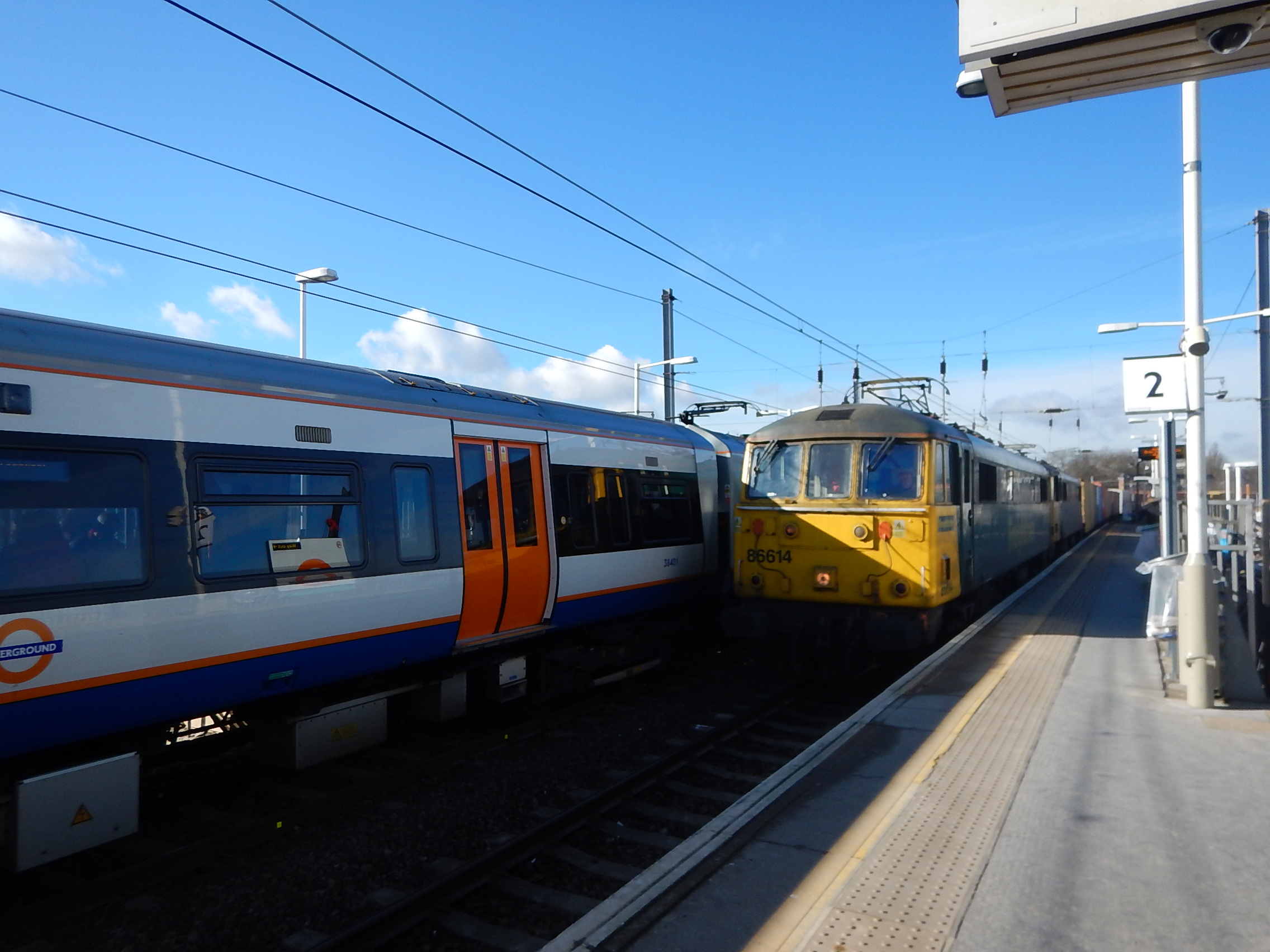
These two Class 86 locomotives date from the mid-1960s. But they do have around 3,600 hp each and a top speed of around 100-110 mph.
I even saw this interesting combination at Shenfield.
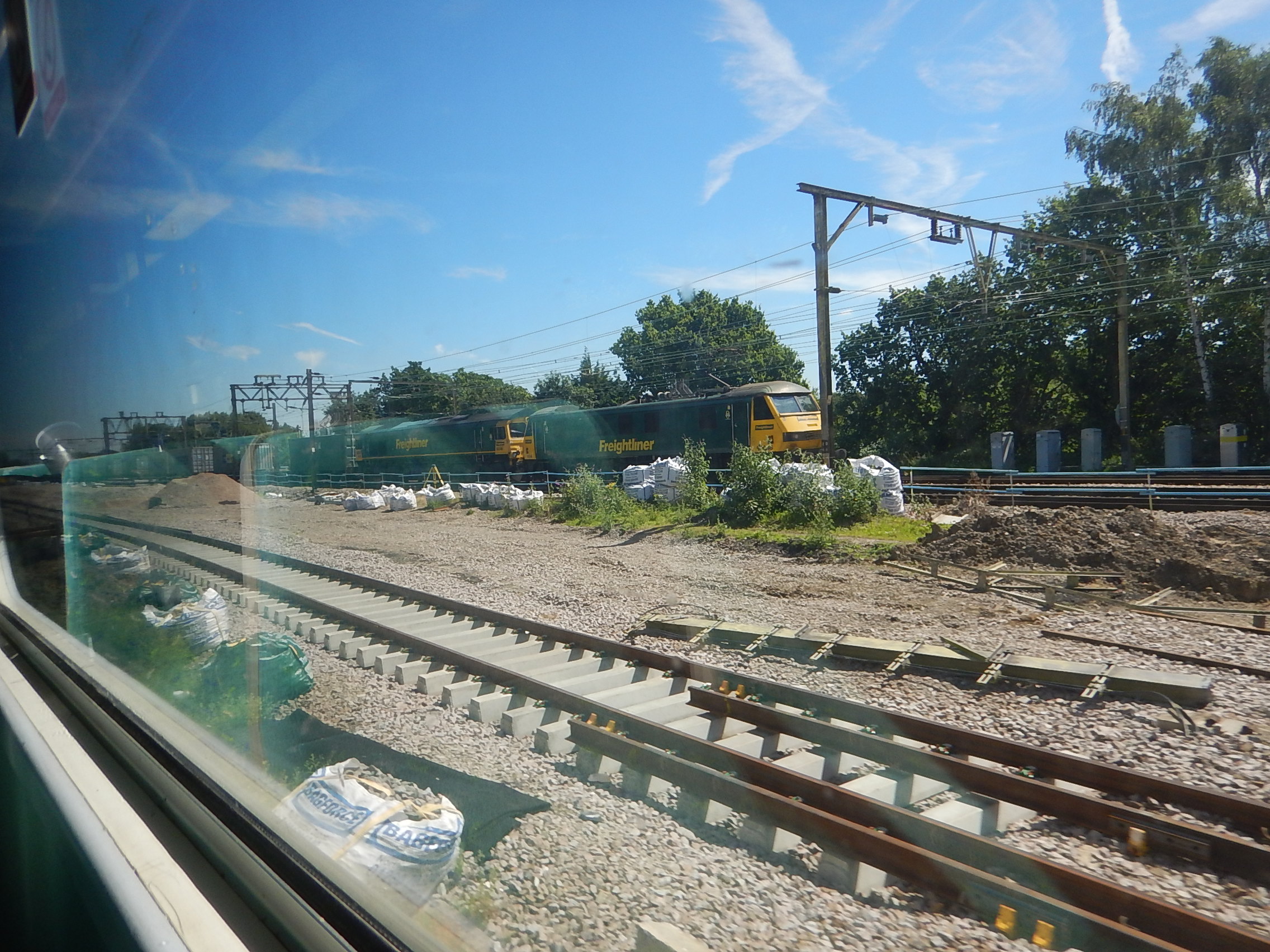
The Class 90 and Class 66 locomotives appear to be double-heading the heavy freight train. The Class 90, of which several will become available soon from Greater Anglia are 5,000 hp units with a top speed of 110 mph, whereas the ubiquitous Class 66 has only 3,300 hp and 75 mph.
With more and more long freight trains appearing on increasingly busy main lines, these freight trains must be becoming unwelcome to the companies running passenger trains and also to those, who live alongside the lines.
So is there another desperate need for a powerful locomotive to pull express freight trains at maximum length and weight around the country?
Some main freight routes like these are electrified with 25 KVAC overhead wires or will be soon.
- East Coast Main Line
- West Coast Main Line
- Greast Eastern Main Line
- Great Western Main Line
- North London Line
- Gospel Oak to Barking Line
But others are not.
- London to Southampton
- Felixstowe to Peterborough and The Midlands
- Peterborough to Doncaster via Lincoln
- Trans-Pennine Routes
And that’s just for starters.
I think it becomes obvious, why Direct Rail Services and Stadler came up with the Class 88 locomotive. The 5,300 hp available under the wires is more than adequate for the heaviest express intermodel freight train and the 1,000 hp under diesel can probably move the train into and out of the docks.
But this amount of diesel power is probably inadequate for hauling a heavy freight train at 100 mph.
A New Electro-Diesel Locomotive
So could we see a new electro-diesel locomotive with the following characteristics?
- The ability of a pair to top-and-tail an express passenger train on both diesel and 25 KVAC overhead electrification.
- The ability to haul the heaviest intermodal freight trains at up to 100 mph on both diesel and 25 KVAC overhead electrification.
- The ability to switch between modes at line speed.
- Regenerative braking underboth elkectricity and diesel.
In a few years time the diesel might be replaced by hydrogen or some other exotic fuel.
Electrification South Of Bedford
It might appear that these locomotives if working the Midland Main Line could switch to electric power South of Bedford or in the near future; Kettering, but the electrification is limited to 100 mph and there is no planned upgrade. This is a familiar story for anybody like me who uses the Great Eastern Main Line, where the inadequate electrification has had to be upgraded over the last couple of years to allow faster services.
The Coaches
The coaches are the least of the problems for Ian’s proposals.
This article on Rail Technology Magazine is entitled First bodyshell completed by CAF for new TPE fleet.
This is the first paragraph.
Pictures of the first bodyshell for new rolling stock to be used by TransPennine Express (TPE) have been unveiled as the operator looks to introduce 13 five-car Mark 5A Coaches – being built by Spanish company CAF – as part of its brand-new fleet.
The Mark 5A coaches, being built by CAF are designed for 125 mph! So all that is needed is to specify the interior!
As the Spanish train manufacturer has just announced the building of a factory at Llanwern in South Wales, that might be an ideal place to build the coaches needed.
Beating The PRM Deadline In 2020
The Mark 5A coaches for TransPennine Express are scheduled for delivery in 2018-2019, so I suspect the coaches for the Midland Main Line could start to be delivered after the TransPennine Express and Caledonian Sleeper orders are complete.
The locomotives might be move problematical, but if they are a derivative of an existing type, then surely this wouldn’t delay fleet introduction.
I suspect that a certain amount of testing can be done in parallel too!
So having some trains in service by the PRM eadline of 2020 could certainly be possible.
Conclusion
Ian Walmsley’s proposal for the next Midland Main Line franchise is possible.
Bi-Mode Trains And CrossCountry
The CrossCountry franchise runs trains all over the UK.
I wonder how bi-mode trains will effect their services.
These are just a few thoughts.
InterCity 125 Trains
CrossCountry have enough Class 43 locomotives and Mark 3 carriages to make-up five 2+8 InterCity 125 sets.
These trains will not meet the regulations in a couple of years, so will they be replaced or refurbished.
It is probably not an easy decision for the following reasons.
- Passengers and I suspect drivers too, love them.
- They are probably ideal for longer routes like Devon and Cornwall to Scotland
- Scotrail and Great Western Railway will be updating several trains each.
- They are forty years old.
- There may be pressure to retire the trains because of environmental problems.
- If they even wanted to acquire a few extra sets, the type retirement by other operators might help.
Left to the Marketing Department, there would only be one decision.
Class 800 Trains
Class 800 trains or more likely Class 802 trains, specified for their routes may offer advantages to CrossCountry on some of their routes.
Consider these features of Class 802 trains.
- Available in any number of cars between four and twelve.
- Designed around a flexible interior.
- Dual voltage is probably available.
- Wi-fi and power sockets.
- Hitachi have designed the trains for lower track-access charges.
Costs and the marketing advantage of new electric trains will probably decide.
Devon and Cornwall to Scotland
Consider.
- Plymouth to Edinburgh and Glasgow is an hourly service that takes just under nine hours to Edinburgh with no changes.
- One train per day goes from Plymouth to Aberdeen in eleven hours.
- A lot of the route is not electrified, but it is North of York.
- Would a Class 802 train have enough fuel capacity?
I suspect current arrangements will continue.
Southampton Central And Bournemouth To Manchester And Newcastle
Consider.
- North of Leeds, the route is electrified using 25 KVAC overhead
- South of Basingstoke, the route is electrified using 750 VDC third-rail.
- Any bi-mode train would need to be dual-voltage.
- Range should be less of a problem
A dual-voltage bi-mode Class 802 train might be ideal.
Other Routes
Most other routes only have a small proportion of running on electrified track.
Conclusion
I think it unlikely, that CrossCountry will go for a total replacement of their fleet with bi-mode trains.
But I suspect, they’re keeping a watching brief on developments in electrification and trains.
How Times Change
Several hundred years ago, those living in the North of England, would have waited with fear and trepidation at the thought of invasion from those living across the Border.
But not anymore!
According to this article in the Cumbria Crack, which is entitled Settle-Carlisle groups welcome Scottish rail study.
This is said.
Putting this into historical context, Mark Rand, Joint Vice Chairman of the 3500-member Friends of the Settle-Carlisle Line said: “People often ask why did the Victorians build a railway line from tiny Settle to the border city of Carlisle. It was part of a much greater whole – the Midland Railway’s main route from London St Pancras to Scotland via Leeds and Carlisle, from where what is today called the Borders Railway continued to Edinburgh. What opportunities the full Edinburgh-Carlisle re-opening would enable! The Friends of the Settle-Carlisle Line welcomes this study with open arms.”
Further, the full re-opening would give a railway offering world-class scenery for much of the 211 miles from Leeds to Edinburgh, attracting huge numbers of international tourists, as happens in countries such as Norway and Switzerland, an industry so vital to the UK economy.
Unlike many railway projects, this project only needs the railway to be built, as the trains that would be ideal for Leeds to Edinburgh via Caelisle, were built forty years ago.
What better route would there be to serve with refurbished examples of Terry Miller‘s masterpiece, the InterCity 125?
Last ‘319s’ On Thameslink This Summer
The title of this post is the title of an article in the May 2017 Edition of Modern Railways.
This is the first paragraph of the article.
Govia Thameslink Railway plans to withdraw its last Class 319s by the end of June, allowing it to operate a full Class 700 service on Thameslink this summer.
According to Wikipedia on the 28th April 2017, Thameslink still have thirty-five examples (319/0 – 13 and 319/4 – 22) and there are twelve examples Off Lease (319/2 – 1,319/3- 6 and 319/4 – 5)
So it looks like there could be a maximum of forty-seven trains released, of the following types.
In Riding In A Clean Class 319/4 Train, I wrote about riding in a particularly nice Class 319/4 train. If any of the other twenty-six are in as good a condition, operators will want to take them over.
There’s certainly enough trains to keep the refurbishment line busy for four or five years.
There is also plenty of scope for speculation about the specification of the refurbished trains and where the trains will see service.
- How many will end up as bi-mode Class 319 Flex trains?
- How many will retain their third rail capability?
- How many will retain their First Class seats?
- How many will get wi-fi?
- How many will end up in a reserve fleet to cover for train shortages? Think level crossing accidents!
- Will any have a luxury interior, so they can be used as special event trains and shuttles? Think Edinburgh to St. Andrews for the Open or Manchester to Aintree for the Grand National!
- Will any be bought for use in non-passenger roles? Think 100 mph parcel carriers bringing goods into and out of big city stations at three in the morning!
- Will any be bought by Network Rail for engineering purposes? Think testing and checking overhead and third-rail electrification!
Uses will be demand-led and I suspect some will be very surprising.
Operators have never had a train that is both a 100 mph electric train and a 90 mph diesel train, which is available, affordable and proven.
I shall discuss a few of the ideas in detail.
Parcels Trains
Currently, Royal Mail uses the closely-related Class 325 trains to move parcels traffic around the country. These trains have the following specification.
- They are four-car electric units.
- They can run as four, eight and twelve car units.
- They are 100 mph dual-voltage trains.
- Each car can carry twelve tonnes.
- They use the same running gear as the Class 319 trains.
If they have a problem it is that they can only run on electrified lines, so they seem to be confined to the West and East Coast Main Lines.
Royal Mail and their train operator DB Cargo UK, might be interested in some more trains. They might even have use for some Class 319 Flex trains for routes with no or partial electrification.
In A Station At Doncaster Sheffield Airport, I talked of Peel Group’s plans to develop the Airport.
I said this.
It should also be stated that Doncaster Sheffield Airport has air cargo ambitions.
Consider.
- It has a massive runway, that was able to accept the Space Shuttle in an emergency.
- The airport has lots of space for cargo terminals.
- The largest cargo planes, that exist only in the minds of Airbus and Boeing engineers would be welcome.
- The Great Northern and Great Eastern Joint Railway, which is a major freight route between the South East and the North passes the airport.
- Plans exist to create a network of high speed package carrying trains. I’d use Doncaster Shjeffield Airport as a hub.
- Amazon already fly freight to and from the Airport. Deliveries could leave the United States in the evening and be in Edinburgh, Glasgow, Liverpool, London and Manchester for a morning delivery.
It looks like the Peel Group have a plan to create a transport interchange for both passengers and freight for a cost of millions, not billions. But it were to be worth spending billions, I’m certain that they can obtain it.
Could Class 319 trains be the trains delivering the parcels to main-line stations all over the country for onward distribution?
There must also be specialist and possibly perishable cargoes like fish and flowers, perhaps between Cornwall and London. Some of the cargoes now go in the large space in the locomotives of the InterCity 125s , but these trains are being phased out.
Could a Class 319 Flex train substitue with honour?
The Luxury Go-Anywhere Shuttle Train
Look at the venues for the Open Championship and they seem to be tucked away. But supposing there was an all Class 319 Flex train fitted with all First Class seating and a bar, it would make a very good alternative to get spectators to the venue in style.
Other venues within the trains range would include.
- Aintree, Ascvot, Chelternham, Doncaster, Epsom, Goodwood, Haydock Park, Newbury, Newmarket, Sandown Park and York racecourses.
- Glastonbury for the Festival
- Henley for the Regatta.
- Important football and rugby matches.
Travel First Class in any InterCity 125 and you realise the standard that can be applied to a Mark 3 coach.
Reserve Trains
Greater Anglia are often short of a train or two, with the cause often being a level crossing accident.
Their way round the problem is to hire in two Class 68 locomotives and some elderly coaches.
But surely, a better way, would be to have an appropriate number of Class 319 Flex trains available for hire with a driver!
They could deputise for a 100 mph electric train and an up to 90 mph diesel train.
Network Rail Use
Network Rail have a highly-instrumented InterCity 125 called the New Measurement Train, which is used to test the condition of the tracks all over the UK.
But it can only test those tracks where an InterCity 125 train is allowed.
If Network Rail ever need to create a smaller version of the train and especially one to test both overhead and third-rail electrification systems, a Class 319 train would be a candidate.
Conclusion
Porterbrook’s Sales and Marketing Department are going to have fun!
How Will Virgin Trains East Coast Use Class 800/801 Trains?
The following two sections give Virgin Trains East Coast (VTEC) current and future fleets.
Current Fleet
VTEC have a current fleet comprising the following locomotives and coaches.
- 32 – Class 43 locomotives
- 117 – Mark 3 coaches
- 31 – Class 91 locomotives
- 302 – Mark 4 coaches
- 31 – Driving van trailers
The Class 43 locomotives and the Mark 3 coaches are formed into InterCity 125 trains.
- Two locomotives and nine coaches per set.
- 125 mph capability
- Diesel-powered
Which gives thirteen diesel trains.
The Class 91 locomotives and Mark 4 coaches are formed into InterCity 225 trains.
- One locomotive, one driving van trailer and nine coaches per set.
- 140 mph capability
- Electric-powered.
- Ability to run London to Edinburgh in under four hours.
Which gives thirty-one electric trains.
Adding the two figures together gives a total of forty-four nine-car trains.
Future Fleet
VTEC’s future fleet will include.
- 10 – Five-car Class 800 electro-diesel trains.
- 13 – Nine-car Class 800 electro-diesel trains.
- 12 – Five-car Class 801 electric trains.
- 30 – Nine-car Class 801 electric trains.
Adding these together counting the five-car trains as half gives fifty-four nine-car trains.
Or ten more nine-car trains!
In addition six to eight InterCity225 trains could be retained in service to run limited stop trains between London and Edinburgh.
This increase in capacity can only me good for passengers, with more services and destinations.
Questions About Class 800/801 Trains
What is the capacity of a nine-car Class 800/801 train?
I can’t find this on the Internet and I suspect it hasn’t been decided.
Wikipedia gives the capacity of an InterCity 225 train as 406 Standard and 129 First Class seats.
It should also be noted that the car length in a Class 800/801 is twenty-six metres, as opposed to the twenty-three metres of the InterCity 225.
I would hope good design can make excellent use of this space.
Will two Class 800/801 trains be able to work as a pair?
I suspect the answer to this is yes, as the closely-related Class 395 trains regularly do this.
The most common use would be to run two five-car trains as a ten-car set.
This would be a 260 metre long train, which is perhaps fifteen metres longer than an InterCity 225 train.
Some lengthening of platforms may be necessary, but it probably isn’t a major problem.
Will coupling and uncoupling of a pair of Class 800/801 trains be automatic?
In The Impressive Coupling And Uncoupling Of Class 395 Trains, I linked to videos of the closely-related Class 395 trains, doing just this in under a minute.
I would be very surprised if two Class 800/801 trains couldn’t do the same.
Will a Class 800 train and a Class 801 train be able to work as a pair?
There may be circumstances, where this is needed on electrified lines, so I would be very surprised if this is not possible.
At what station will a Class 800/801 train be able to call?
The nine-car trains are 234 metres long and a pair of five car trains will be 260 metres long, so platform length will mean they can’t call at a lot of smaller stations.
But a five-car train will be only 130 metres long, which will be shorter than a pair of four-car multiple-units working together, which are regularly seen on the UK’s rail network.
So the five-car trains will probably be able to serve a surprising number of stations.
Will Class 800/801 trains have a faster turn-round time?
If you look at the times of trains between London and Leeds, this things happen.
- A few minutes after a train leaves the platform at Leeds and Kings Cross, the next incoming service arrives.
- It then waits in the station for nearly half-an-hour before going back.
Effectively, an hour must be added to each Out and Back journey between London and Leeds.
This time will enable.
- Passengers to unload and load.
- Train to be prepared.
- Crew to be changed if required.
Any delay of a few minutes can hopefully be recovered.
Train preparation time will probably be better with the Class 800/801 trains, as hopefully automation and better design will speed the process.
But cutting this thirty minutes substantially would probably require passengers to be marched around like the Brigade of Guards, which is of course not possible.
Hopefully, the new trains will be designed, so that ingress and egress for all passengers will be easier and faster but at some stations like Leeds, the station layout is more of a bottleneck than the train.
A few minutes reduction in turn-round time might be possible, but nothing that would mean a train doesn’t occupy a platform for half-an-hour.
How long will A Class 801 train take between London and Edinburgh?
Currently the fastest journey time using an InterCity 225 is around four hours and twenty minutes, but they have done it in under four hours in test runs.
For marketing reasons, I suspect that VTEC would like to dip under four hours with the fastest trains.
As the Class 800/801 trains have a similar 140 mph performance to the InterCity 225, I suspect that four hours will also be possible.
But the big difference will be that the Class 800/801 trains will probably have faster stop times at any intermediate stations.
So I suspect that the average journey time between London and Edinburgh will drop.
How Will VTEC Use Class 800/801 Trains?
Returning to my original question, I’ll now attempt to answer it in the next few sections.
London-Edinburgh Services
I think we can assume the following.
- There will be at least two trains per hour (tph)
- Trains will usually be nine-car trains.
- Class 800 trains will not normally use diesel power on the route.
- Some trains could be two five-car trains running as a pair.
- A proportion of trains will do the trip in under four hours.
- Intermediate stops as now will be optimised to the passenger traffic.
- Intermediate stops will be faster.
I also think, that the InterCity 225 sets will be improved, so they can match the times of the Class 800/801 trains.
I think that once improved signalling on the East Coast Main Line is working and allowing running faster than 125 mph, we could be seeing trains being able to go from London to Edinburgh and back in under nine hours, assuming a thirty minute turn-round at both ends of the route.
This would mean that a dedicated London to Edinburgh fleet of just eighteen trains would be required to run a two tph service. Three tph would need another nine trains.
Speed up the trains so, that a round trip can be done in eight hours and sixteen trains are needed for the two tph service, with eight more trains needed to up the service to three tph.
Under Future in the Wikipedia entry for Virgin Trains East Coast, this is said.
If VTEC’s application to operate extra limited stops services to Edinburgh is successful, it is proposing to operate these by retaining six to eight InterCity 225 sets.
Interesting! So will some or all hours see a third train between London and Edinburgh.
Are the thirty-year-old InterCity 225 trains, showing the same survival instincts of their ten-year-older predecessors; the InterCity 125s?
London-Aberdeen And London-Inverness Services
Currently times on these routes from London are as follows.
- London-Aberdeen – seven hours and four minutes – three trains per day
- London-Inverness- eight hours and four minutes – one train per day
So what times could a Class 800 achieve on these routes?
Times North of Edinburgh with an InterCity 125 are as follows.
- Edinburgh to Aberdeen takes two hours and thirty-six minutes – Fastest ScotRail takes two hours sixteen minutes.
- Edinburgh to Inverness takes three hours and thirty-one minutes – Fastest ScotRail takes three hours nineteen minutes.
I suspect that a Class 800 train running on diesel power could match the InterCity 125 times and approach the ScotRail times.
But as they would be running on electric power to and from London in four hours, times could be as follows.
- London-Aberdeen – six hours and sixteen minutes
- London-Inverness – seven hours and nineteen minutes
So over half-an-hour could be saved on both routes.
Currently trains leave London at these times.
- 10:00 – Aberdeen
- 12:00 – Inverness
- 14:00 – Aberdeen
- 16:00 – Aberdeen
Note that there is probably no 18:00 train, as that would arrive in Aberdeen at 0110.
That is probably too late, but a well-driven Class 800 train, might get to Aberdeen around 00:30, which could be acceptable.
There is also the possibility of running a pair of five-car Class 800 trains to |Edinburgh, where they split with one train going to Aberdeen and the other to Inverness.
If the 16:00 train were to split, the Inverness portion would finish its journey before midnight.
A schedule like this from London could be possible.
- 10:00 – Aberdeen and Inverness
- 12:00 – Inverness
- 14:00 – Aberdeen and Inverness
- 16:00 – Aberdeen and Inverness
- 18:00 – Aberdeen
Both Northern cities would get four trains per day from London, because of two factors.
- The ability to run on electric power between London and Edinburgh, which knocks time off that section of the route.
- The ability to split and join trains at Edinburgh, which saves paths on the East Coast Main Line.
It should be noted that any electrification North from Edinburgh will help.
Stirling to Edinburgh and Glasgow could be electrified by 2019 or 2020.
- Trains would run to the South of Stirling on electric power.
- Any splitting going North and joining going South would take place at Stirling.
- Trains would still stop at Edinburgh to load and unload passengers.
- Crew change currently takes place at Edinburgh, but that could happen at Stirling.
With a well-executed stop at Stirling, electric power between Stirling and Edinburgh and a few other improvements could we see the following?
- London-Aberdeen – six hours
- London-Inverness – seven hours
It would certainly please VTEC’s Marketing Department.
Services To St. Andrews
The Open Championship was last held at St. Andrews in 2015, so by the next time it is held at the Home of Golf, it is likely that a station will have been built for the town.
This new station must be able to accept Class 800/801 trains, which during a major event might need to run to the area.
This reasoning must apply to lots of places either on or within fifty miles of the East Coast Main Line.
London-Leeds Services
Leeds is generally served by 2 tph from London in around two hours ten minutes.
These are usually nine-car InterCity 225 trains, with a couple of InterCity 125 trains, that go to places like Harrogate, which are not electrified.
As the speed limits on the East Coast Main Line are increased as trains are fitted with in-can signalling, I suspect that VTEC’s Marketing Department will be pushing for times between London and Leeds to be under two hours.
I can’t believe that VTEC will not extend services from Leeds by making use of five-car trains running to Leeds as a pair, where they would divide and join.
I am assuming that Class 800/801 trains can join as well as the closely-related Class 395 trains, which do so it in under a minute.
Places that could be served include.
- Bradford
- Harrogate
- Horsforth
- Huddersfield
- Ilkley
- Keighley
- Shipley
- Skipton
Note.
- Some stations like Harrogate and Horsforth are not electrified, so would need Class 800 electro-diesel trains.
- Five-car trains could serve a lot of stations on the Leeds-Bradford Metro network, thus opening up the possibility of services to places like Headingley for the cricket and rugby and Saltaire for the culture.
- Could a five-car Class 800 electro-diesel train run over the Settle and Carlisle Line to Carlisle and Scotland?
- Extending some services from Leeds may mean that platform space is released at the station.
I think that the possibilities to extend services from Leeds using the five-car Class 800/801 trains are large.
London-Edinburgh Via Leeds
On the West Coast Main Line, some Scottish services from London, go via Birmingham and Wolverhampton.
So if there was a fully electrified route from Leeds to York, then some Scottish trains could go via Leeds.
At present, I don’t think this is possible with an electric train, as part of the route from Leeds to York is not electrified.
The electrification should be well underway by now, but there is no sign of it.
Other Extended Services
What can be done at Leeds can surely be done at other places.
If the two trains can couple and uncouple within a minute, that means that a pair of trains can arrive in a station and go through the following sequence.
- 00:00 -A joined pair of Class 800/801 trains arrive in the station and load and unload passengers.
- 00:03 – Close the train doors
- 00:04 – Start the automatic decoupling process.
- 00:05 – The first train leaves the platform.
- 00:08 – After three minutes the second train leaves the platform.
I believe that the stop could be under ten minutes and the trains would be a safe three minutes apart, as they left the station.
So where could trains be split?
- Newark or Peterborough for Lincoln and Nottingham
- Doncaster for Hull and Sheffield
- York for Scarborough and Harrogate
- York for Middlesbrough and Sunderland
- Newcastle for Ashington and Sunderland
Note.
- Trains could go in a loop to serve several stations.
- Sunderland could be on such a loop.
- As trains would only be five cars, they could stop at most stations in need of a service.
- Stations like Peterborough, Doncaster, York and Newcastle with more than one through platform in each direction would probably be preferred stations for split and join.
- No electrification is needed away from the East Coast Main Line.
Obviously, passenger needs and traffic patterns will decide, where the trains split and join.
Conclusions
The big conclusion will be that more places will receive long distance services to London and the places in between.
But these trains will really put the squeeze on smaller operators like Hull Trains and Grand Central Trains, as VTEC will be serving their station.
An Idea From India
This article from Global Rail News is entitled India’s Minister for Railways launches glass-roof scenic rail cars.
Why not?
Scotrail’s plans for shortened HST train sets to go between the major cities will hopefully carried out with style and a great deal of respect for the scenery.
For a start, will the seats be arranged like these in Chiltern’s Mark 3 coaches.
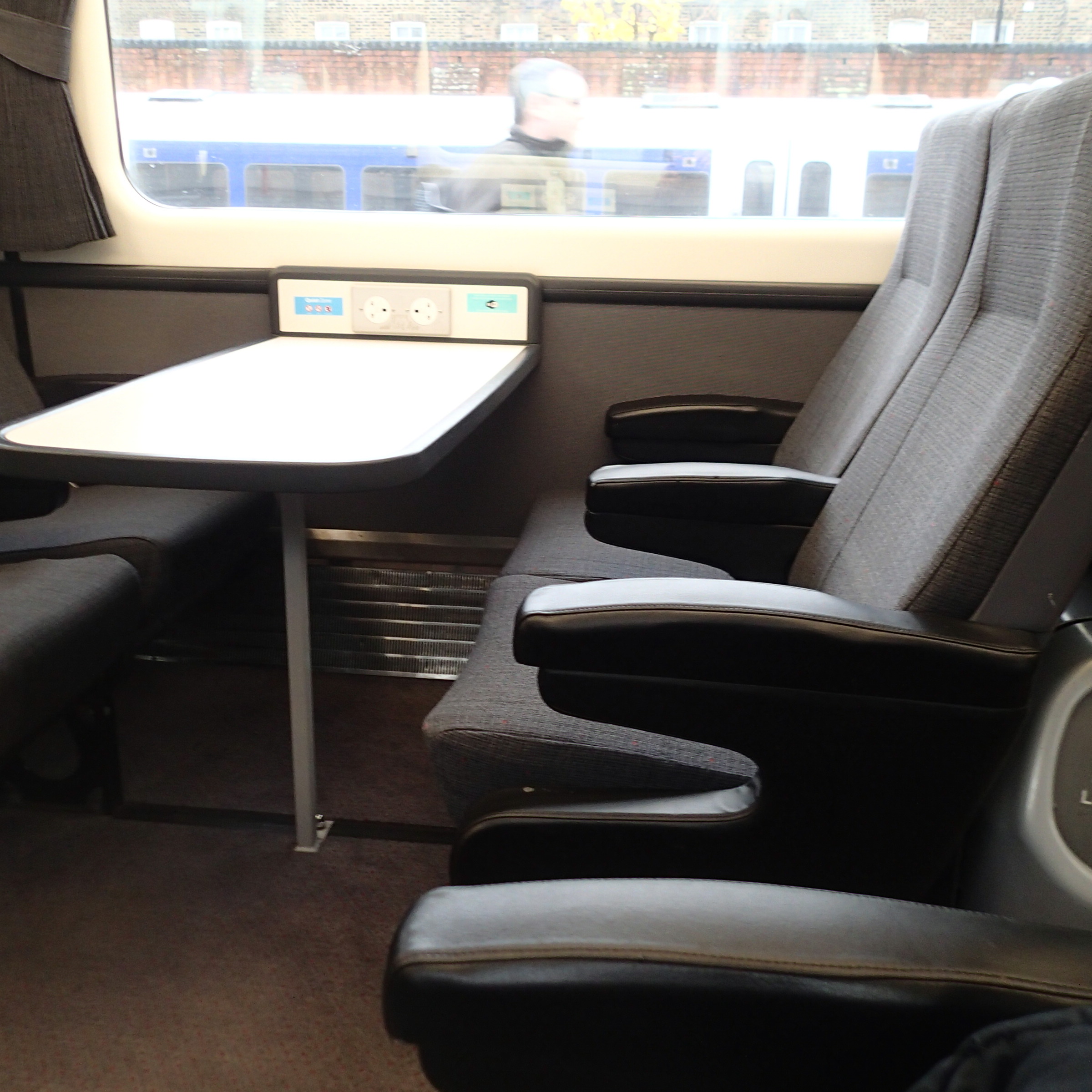
Note that the picture was taken in Standard Class.
There can’t be more stylish, comfortable and practical rides in a train of this Class anywhere in the world.
What is not shown is the cheery staff with the snacks and drinks trolley.
All of this too comes from a subsidiary of Deitsche Bahn and it is far superior to anything I’ve ridden in Germany.
I wonder if windows can be put in the roof of a Mark 3?
Probably! Engineers certainly have ways of making Mark 3 coaches do anything they want
But there’s always the option of connecting cameras to the train’s wi-fi.
The Train Of The Future
This article in Rail |Engineer is entitled ScotRail’s ‘new’ HSTs, gives full details of the modifications ScotRail wukk make to their HSTs, before they enter service in Summer 2018. This is said.
The iconic HST is now over forty years old. It ensured the success of British Rail’s inter-city service and is still the world’s fastest diesel train, although the ScotRail HSTs will have a maximum speed of 100 mph. With around ten million miles on the clock these trains are approaching retirement for long-distance services as they are about to be replaced by IEPs. However, as ScotRail is about to demonstrate with its reincarnation of these trains, there is still much life left in them.
I wrote Edinburgh to Inverness in the Cab of an HST, after a trip to Inverness and it was the trip of a lifetime.
On the trip, you realise that Scotland has a big problem and an asset with railways and it’s called mountains. So a train is needed with bags of grunt and big windows.
An HST has both, coupled with an iconic style, unmatched since the days of steam.
Scotrail’s plan to run the trains between the seven Scottish cities would appear to be a good one.
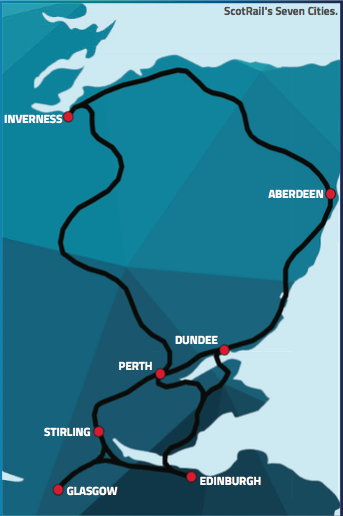
I wonder, if we’ll ever see the trains going to Kyle of Lochalsh, Thurso and Tweedbank.
The article is worth reading, as it details everything that will be done to create a train worthy of the iconic routes.
If I’m still of this life next Summer, I shall be in Scotland.
I’ve never spent a night in Aberdeen, Dundee or Perth for a start!
Can Mark 3 Coaches Come To The Rescue?
The Mark 3 coach is one of the mainstays of UK railways.
- Chiltern Railways use thirty one coaches on Birmingham and Oxford services from Marylebone.
- CrossCountry have thirty-eight coaches as part of InterCity 125s.
- East Midlands Trains have over a hundred as part of InterCity 125s
- Greater Anglia use one hundred and thirty coaches between Liverpool Street and Norwich.
- Great Western Railway have over four-hundred and fifty coaches as past of InterCity 125s.
- Virgin Trains East Coast have over a hundred coaches as part of InterCity 125s.
It should be said, that some are in better condition than others and very few meet the latest access regulations.
But even the table hides a few strength and problems.
Chiltern Trains
Chiltern Trains run their Mark 3 sets with a driving van trailer (DVT) and a Class 68 locomotive on some Birmingham and Oxford services.
- Marylebone to Birmingham Moor Street is a two trains per hour (tph) service and the journey takes ten minutes under two hours.
- Marylebone to Oxford is a two tph service and the journey takes a few minutes over an hour.
The Birmingham service needs eight trains for a 2 tph service.
The Oxford service would need six trains for a 2 tph service, but if the journey could be under the hour, there could be a reduction in the number of trains needed.
If Chiltern decided to run a 2 tph service between Oxford and Birmingham, as I suggested in Where Next For Chiltern?, this would need another four trains.
This leads me to say.
- As Chiltern only have six sets of Mark 3 coaches, they will have to use Class 168 trains for some of the services.
- Probably by clever timetabling, they would need at least a dozen trains to run a quality two tph service on both routes.
- They would probably like all their services to Birmingham and Oxford to share a common train type, for operational and marketing reasons.
So where do Chiltern find another probably ten trains?
- The Class 68 locomotives would have to be hired.
- There are up to a dozen DVTs in storage at Long Marston according to Wikipedia, so creating some for the trains, might be a reasonably predictable refurbishment.
But where do they find the sixty coaches needed?
This article from Rail Magazine in June 2012, is entitled Making the Mk 3s even better, describes Chiltern’s methods.
This is an extract.
Economics dictate that it is cheaper to rebuild the Mk 3s than to order brand new DMUs. Indeed, because of track access and fuel costs, if a LHCS formation is more than five coaches (as they are in Chiltern’s case), then the costs favour locomotive-hauled trains.
The freedom to be able to do this is also a factor for Chiltern. The franchise is owned by Deutsche Bahn, which also owns the coaches. This means that vehicles can be tailored to exactly what the operator wants, rather than thinking about the re-sale value. No expensive engineering will be needed, again because this is what Chiltern wants.
Note the trains are in the same ownership as Chiltern; Deutsche Bahn.
As a passenger, the proof of the pudding is in the eating.
The product looks, feels and tastes good!
Greater Anglia
Greater Anglia could be a good source of quality Mark 3 coaches.
- Greater Anglia have 130 of them, which are leased from Porterbrook.
- The trainsare due to be replaced by new Flirt electric multiple units during 2019/2020.
- The trains have recently been refurbished and have been fitted with wi-fi and retention toilets.
The problem is that they are still slam-door stock and don’t meet the latest access regulations.
But this is not a great problem, as Chiltern have form in updating Mark 3 coaches to meet the latest standards.
Greater Anglia are also replacing fifteen sets of carriages with just 10 electric multiple units, which will provide Norwich in ninety minutes at 3 tph, as opposed to the current service of Norwich in two hours at just 2 tph.
Incidentally, just eight trains are needed to provide the current service, so Greater Anglia could have a few spares.
So it looks to me, that immediately each Flirt is in service, there will be a Mark 3 set sitting in Crown Point ready to go on its next task.
But as just ten Flirts will be replacing fifteen Mark 3 sets, it looks to me, Chiltern might be able to raid Greater Anglia’s stock of spare trains earlier than has so far been thought.
Suppose three trains could be released, this would release twenty-four refurbished coaches and three DVTs.
If another DVT could be sources from Long Marston, then there would be another four rakes of coaches for refurbishment to Chiltern’s standards.
One of the great advantages of modifying the Greater Anglia coaches, is that they have all been refurbished to a high standard, so I suspect that all the mechanicals and structure of the coaches are in virtually in as-new condition.
This page on the Greater Anglia web site, gives full details of the refurbishment.
This is said.
The significant refresh will see all of the train operator’s MkIII fleet enhanced, with improvements throughout for both First Class and Standard carriages including, plug points; new LED lighting; new carpets; new tables; new seat covers; upgraded environmentally-friendly controlled emission toilets with new floors and new taps; re-painting of the carriage interior saloon and vestibule panels, walls and ceilings.
It also appears that Greater Anglia set up a special work-shop in Crown Point TMD to do the update.
Could Greater Anglia have stolen a copy of Chiltern’s rule-book? More likely, they used the same consultant.
After a recent trip in one of these coaches with a friend, I wrote The Power Of Three! To say she was impressed, could be an understatement!
Chiltern just need to fit the new doors and their own interiors.
The Various InterCity 125 Coaches.
There are several ideas as to what to do with the various High Speed Trains formed from two Class 43 locomotives and an appropriate number of Mark 3 coaches.
This according to Wikipedia is Abellio’s Scotrail’s plan.
Abellio ScotRail will also introduce 9 four-car (2+4) and 17 five-car (2+5) refurbished High Speed Trains by December 2018 on longer-distance services between Edinburgh, Glasgow, Aberdeen and Inverness. Scotrail will receive the first locomotives and carriages late 2017, with the refurbishment program taking place at Brush Loughborough (power cars) and Wabtec Doncaster (carriages) between late 2017 and May 2019.
There have been rumours that Great Western Railway will do something similar with a few more trains.
As the InterCity 125s will each be shortened by a few coaches this will release more coaches for use by other operators.
Lots Of Mark 3 Rakes Of Coaches
There are probably enough Mark 3 coaches in excellent condition and DVTs, that can be refurbished, to create perhaps another twenty-five rakes of between five-car and eight-car Mark 3 coaches, tailored to an individual customer’s need.
All of the design work has been done and proven by Chiltern or their contractors.
Obviously, you wouldn’t fit the doors and do the final parts of the refurbishment, until you actually had a customer, but it looks to me, that Porterbrook, who own the Greater Anglia Mark 3 coaches, seem to be doing a bit of speculation. Obviously, they have a plan in there to make money, as ROSCOs don’t do charity!
There is also this article from Rail Magazine, which is entitled Refurbished Mk 3s for Tornado.
It describes how, a rake of Greater Anglia’s Mark 3 coaches, will be acquired to be used with the new-build steam locomotive 60163 Tornado. One would even be fitted with a water tank to extend the range of the engine. Surely, a Mark 3 can handle that sort of weight.
Porterbrook have done well in the last few months out of a speculative order for Class 387 trains, that helped tide some train companies through rolling-stock shortages.
So have they seen a market niche to create an affordable train for longer routes based on Mark 3 coaches hauled by a Class 68 locomotive or perhaps a Class 88 electro-diesel locomotive.
Consider.
- It would meet all the access and environmental regulations.
- It would probably be quieter than a shortened InterCity 125.
- According to the Rail Magazine article, track access charges are affordable.
- As Chiltern and Greater Anglia are showing, it would deliver a superb customer experience.
- Chiltern like the package and could be a customer or do something similar themselves.
- It would be ideal for some of CrossCountry’s long routes like Aberdeen to Plymouth.
- It would be ideal for an open-access operator, developing a new route.
- Virgin West Coast might like it for Euston to Holyhead.
- With a faster version of the Class 88 locomotive, it might have a maximum speed in excess of 100 mph.
It would do anything a Class 800 train can do, at probably a more affordable purchase price, lower track access charges and an earlier delivery date.
Conclusion
Their is something behind Porterbrook’s decision to refurbish Greater Anglia’s Mark 3 coaches, when they knew there was a good chance they would be replaced by new trains, as the clapped Class 90 locomotives certainly couldn’t do London to Norwich in ninety minutes, as mandated in the new East Anglian franchise.
I suppose that Abellio could have been keen to upgrade the coaches, as the interiors were very much on the tatty side and the upgraded coaches would hold the fort until the Flirts arrived, without too much grief.
On the other hand, if the Great Western Electrification gets later and Abellio ScotRail lose their source of shortened InterCity 125s, locomotive-hauled Mark 3s to a high standard would be a very acceptable and affordable alternative.
I must also ask this question.
Could Greater Anglia’s Mark 3 coaches have been refurbished, so that to fulfil Scotrail’s requirements, all that needs to be done is the following?
- Fit doors that are compliant with the access regulations.
- Shuffle the coaches to the length and First and Standard Class capacities required.
- Give the rake of coaches a Scotrail livery.
- Couple a Class 68 or Class 88 locomotive on one requisite end.
I suspect the negotiation would be quite convivial, as both Greater Anglia and Scotrail are owned by Abellio.
The only problem would be that Scotrail need 9 four-car and 17 five-car trains and there may not be enough DVTs. However, some sets could be to the original plan of shortened InterCity 125s.
Scotrail certainly have a Plan B, if the Great Western Electrification gets even more pear-shaped.
Appendix – Posted on December 24th, 2016
In the January 2017 Edition of Modern Railways, under a heading of Pennine Pretendolino, there is a picture of a Class 68 locomotive hauling, the jokily named spare rake of Mark 3 coaches to Laira depot for attention, so that it can be used for driver training purposes by TransPennine Express, prior to the arrival pg the new Mark 5A coaches from CAF.
The Pretendolino is described under rolling stock on the Virgin Trains entry in Wikipedia. This is said.
Following the loss of a Class 390 Pendolino in the Grayrigg derailment, a Mark 3 set with a Driving Van Trailer was leased with a Class 90 hired from English Welsh & Scottish as required. In 2008 Virgin looked at leasing two Class 180[49] but decided to retain the Mark 3 set. Nicknamed the Pretendolino, this received re-upholstered seating, power points, wi-fi and a full external re-paint at Wabtec, Doncaster in 2009.[50] Virgin used this set with a Class 90 locomotive hired from Freightliner on a Euston to Crewe (via Birmingham) service on Fridays only until December 2012. From 9 December 2013 it was utilised to operate a London Euston -Birmingham New Street train on Thursdays and Fridays only, until its withdrawal in October 2014. The Mk.III set was also occasionally hired out as a private charter train. It was used in the filming of Harry Potter and the Deathly Hallows and can be seen at King’s Cross station at the end of the film. It is currently in use as a ‘hot spare’ with Abellio Greater Anglia
Like most of its siblings, it is showing a very strong survival instinct and keeping well away from the scrapyard.
Over the last year or so, I’ve ridden to and from Ipswich in the train several times, as it has been filling in whilst, the operator was updating their own Msrk 3 coaches.
 The Anonymous Widower