The Future Of Class 378 Trains
This post is a musing on the future of the Class 378 trains.
The Thames Tunnel
The Thames Tunnel is the tail that wags the East London Line, when it comes to trains.
- For evacuation and safety purposed, trains running through the tunnel, must have an emergency exit through the driver’s cab.
- It hasn’t happened yet, as far as I know, but a version of Sod’s Law states if you ran trains without this emergency exit, you’d need to use it.
- London Overground’s Class 378 trains have this feature, but their Class 710 trains do not.
So it would appear that until Bombardier build an Aventra with an emergency exit through the driver’s cab, that the existing Class 378 trains must work all services through the Thames Tunnel.
Incidentally, I can’t think of another long tunnel, that might be served by the London Overground, so it could be that Class 378 trains will be the only trains to go through the Thames Tunnel, until they wear out and need to go to the scrapyard.
Six Car Trains On The East London Line
I covered this in Will The East London Line Ever Get Six-Car Trains? and I came to this conclusion.
I will be very surprised if Network Rail’s original plan on six-car trains on the East London Line happens in the next few years.
It might happen in the future, but it would need expensive platform extensions at Shadwell, Wapping, Rotherhithe and Canada Water and Surrey Quays stations.
Increased Frequency On The East London Line
If five-car Class 378 trains are the limit, the only way to increase capacity of the East London Line would be to increase frequency.
The current frequency of the East London Line is sixteen trains per hour (tph)
There are four tph on each of these routes.
- Dalston Junction And Clapham Junction
- Dalston Junction And New Cross
- Highbury & Islington And Crystal Palace
- Highbury & Islington And West Croydon
Two increases are planned.
- 2018 – 6 tph – Highbury & Islington And Crystal Palace
- 2019 – 6 tph – Dalston Junction And Clapham Junction
This would increase the frequency of the East London Line to twenty tph.
It will probably mean an updated digital signalling system on the East London Line.
Eventually, I think it likely, that a full ERTMS system as is fitted to Thameslink and Crossrail will be fitted to at least the East London Line, but possibly the whole Overground network.
Digital signalling would certainly allow the twenty-four tph frequency of Thameslink and CXrossrail, which could mean that the four routes all received a frequency of four tph.
But Thameslink and Crossrail are theoretically capable of handling thirty tph or a train every two minutes, through their central tunnels.
If the two modern multi-billion pound tunnels can handle 30 tph, why can’t their little brother, that started life as a half-million pound pedestrian tunnel in 1843,
The Number Of Trains Needed For The Current Service
If I go through the routes of the original Overground, I find the following.
Dalston Junction And Clapham Junction
Trains take 46 minutes to go South and 44 minutes to come North and a round trip would take two hours.
This means that the current four tph service would need eight trains.
A six tph service in the future would need twelve trains.
Dalston Junction And New Cross
Trains take 22 minutes both ways and a round trip would take an hour.
This means that the current four tph service would need four trains.
A six tph service in the future would need six trains.
Highbury & Islington And Crystal Palace
Trains take 44 minutes to go South and 43 minutes to come North and a round trip would take two hours.
This means that the current four tph service would need eight trains.
A six tph service in the future would need twelve trains.
Highbury & Islington And West Croydon
Trains take 52 minutes both ways and a round trip would take two hours.
This means that the current four tph service would need eight trains.
A six tph service in the future would need twelve trains.
This means that the current four tph on all four routes needs twenty-eight trains.
The Proposed 2020 Service
This will have two extra tph to Crystal Palace and Clapham Junction and will need thirty-six trains.
Six Trains Per Hour On All Four Routes
as each route terminates at both ends in a single platform, which can handle six tph, with the right signalling, I feel that this could be the design objective of the East London Line, when it was built in the early-2010s.
This could be achieved with forty-two trains, leaving perhaps twelve to fifteen trains for other duties, depending on how many are needed on stand-by or are in maintenance.
What Could Be Done With Twelve Trains?
As I calculated earlier, three routes need twelve trains to provide a six tph service.
- Dalston Junction And Clapham Junction
- Highbury & Islington And Crystal Palace
- Highbury & Islington And West Croydon
All three services take between 44 and 52 minutes.
So could another six tph service that takes around this time be added to the current four services?
Willesden Junction As A Northern Terminal
Trains could take the North London Line to Willesden Junction and terminate in the Bay Platform 2.
I estimate the following timings from Willesden Junction.
- Highbury & Islington – 27 mins
- Dalston Junction – 31 mins
- Whitechapel – – 41 mins
- New Cross – 49 mins
- Crystal Palace – 64 mins
- Clapham Junction – 73 mins.
- West Croydon – 74 mins
It would appear that the only possible Southern terminal of the current four, would be New Cross, as that is the only terminal within the 44-52 minute range of journey time.
So could a service between Willesden Junction and New Cross replace the current one between Dalston Junction and New Cross?
- It would need to be run using dual-voltage trains
- Voltage changeover could be at Highbury & Islington station.
- Extending the New Cross service would free up a bay platform at Dalston Junction station.
- It should be possible to have a frequency of six tph.
- Serious modifications or additions to infrastructure would probably not be required.
As running to Willesden Junction was talked about before the Overground opened, I wonder if the numerous crossovers on the North London Line, already allow trains from the East London Line to terminate at Willesden Junction.
Southern Terminals Via New Cross Station
This map from carto.metro.free.fr shows the lines at New Cross station.
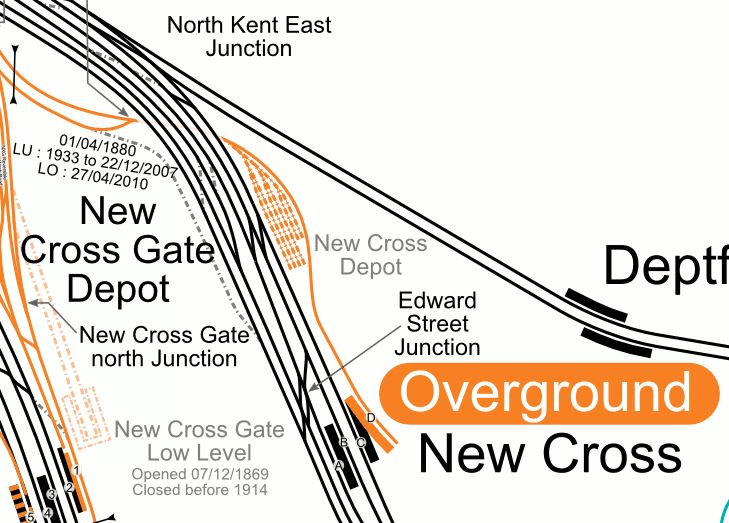
Note how the double-track East London Line, shown in orange, arrives from Surrey Quays station arrives in the North-Western corner of the map, becomes a single-track and then goes under the main lines before going into the bay platform D.
This Google Map shows the same area.
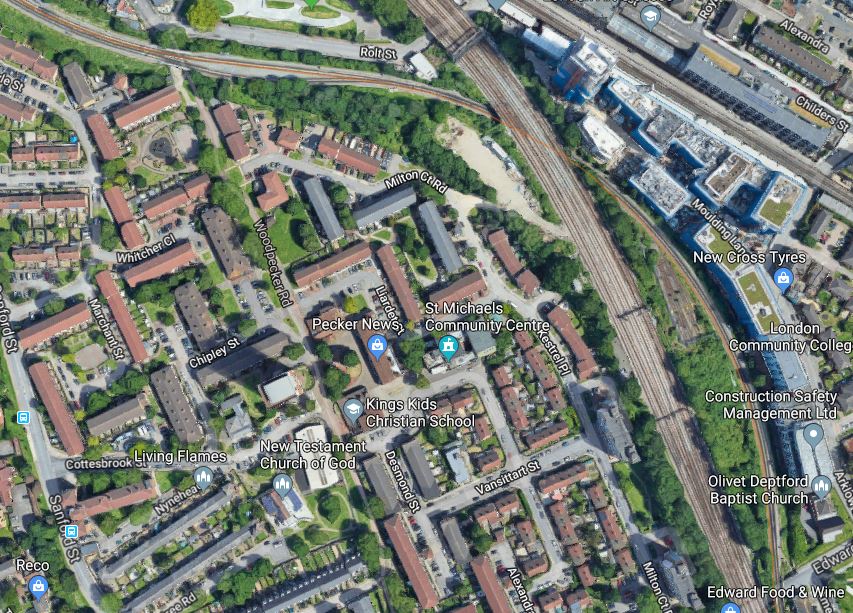
The London Overground track is clearly visible.
Could extra track be added, to enable the following?
- Southbound trains could join the main line and stop in Platform C
- Northbound could leave the main line after stopping in Platform A and go towards Surrey Quays station.
If this is possible, then trains could run between Dalston Junction and Lewisham stations.
Once at Lewisham they would have choice of Southern terminal,
Hayes As A Southern Terminal
Consider a service between Dalston Junction and Hayes stations.
- I estimate that a train could go between the two stations in 53 minutes.
- Hayes station has two terminal platforms
Six tph would probably be too many services, but 2-3 tph might be very welcome.
Orpington As A Southern Terminal
Consider a service between Dalston Junction and Orpington stations.
- I estimate that a train could go between the two stations in 47 minutes.
- Orpington station has three terminal platforms.
Six tph would probably be too many services, but 2-3 tph might be very welcome.
A Combined Hayes And Orpington Service
As a case can be made for services to both Hayes and Orpington via Lewisham, I think the ideal service could be two tph to both Hayes and Orpington.
- There would be four tph between Dalston Junction and Lewisham.
- Stations on the East London Line would have access to the important interchange station at Lewisham.
- Several stations on the routes to Hayes and Orpington would have a two tph service to Crossrail and the Jubilee Line.
Other Stations Via New Cross
Looking at rail maps, there would seem to be several possibilities including with their times from Dalston junction station.
- Beckenham Junction – 41 mins
- Bromley North – 40 mins
- Gove Park – 35 mins
There are probably others.
Southern Terminals Via Peckham Rye Station
As an example Streatham Common station is planned to be a major interchange and is 43 minutes from Dalston Junction.
Would a bay platform work here as an East london Line terminal?
Conclusion
If all fifty-seven Class 378 trains worked the East London Line, they could run six tph on the current routes.
- Dalston Junction And Clapham Junction
- Dalston Junction And New Cross
- Highbury & Islington And Crystal Palace
- Highbury & Islington And West Croydon
It would need forty-two trains.
Suppose the Dalston Junction and New Cross service was replaced with a Willesden Junction and New Cross service.
- This would provide a useful direct four tph service between East and North London.
- Changing at Highbury & Islington station would be avoided for a lot of journeys.
- The journey time wold be around 49 minutes.
- A two tph service would need four trains.
- A four tph service would need eight trains.
- A six tph service would need twelve trains.
- Many journeys between North and South London would now be possible with just a single same platform interchange.
To run the following frequencies on this route would mean these total frequencies on the East London Line and total numbers of trains.
- 2 tph – 20 tph – 40 trains
- 4 tph – 22 tph – 44 trains
- 6 tph – 24 tph – 48 trains
I think that if the figures are juggled a bit, there is enough trains to run extra services to one or more Southern destinations from Dalston Junction.
My preference would be a split service of 2 tph to both Hayes and Orpington via New Cross, where some new track would be needed.
This would do the following.
- Create a frequent connection between South-East and North-East London.
- Both areas would be connected to Crossrail and several Underground Lines, including the future Bakerloo Line Extension.
- The Hayes Line would be shared between Overground and Southeastern trains.
No more new trains or large amounts of new infrastructure would be needed.
I suspect that London Overground and the new Southeastern franchise can do better than my musings.
The Hackney Campaign To Bring The North London Line Back From The Brink In The 80s
The title of this post is the same as that of this article on the Hackney Gazette.
It is an interesting insight into life before the London Overground and how the section between Highbury & Islington and Stratford stations was created from a freight line, that hadn’t had passenger services for several decades.
It also talks about Broad Street station.
I used to use this station to travel from Ipswich to Metier’s offices at Stonebridge Park.
It was just a short walk from Liverpool Street station next door and then a train to Willesden along a very much forgotten North London Line, before taking the Bakerloo Line. It avoided the very crowded route via Baker Street station.
The Problem Of Step-Free Access At South Acton Station
South Acton station would be one of two stations on the shared section of the North London Line and the proposed West London Orbital Railway.
It could be handling fourteen passenger trains per hour in both directions.
This Google Map shows the station.
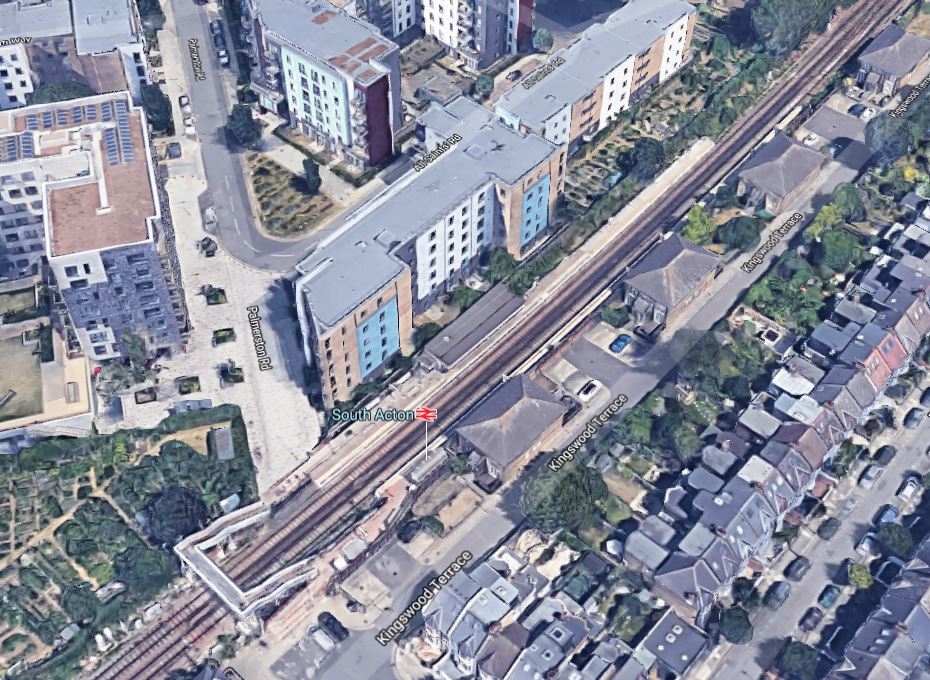
Note how all the land close to the line has been sold to developers and new housing, now means space is very restricted.
This image shows a close-up of the bridge.
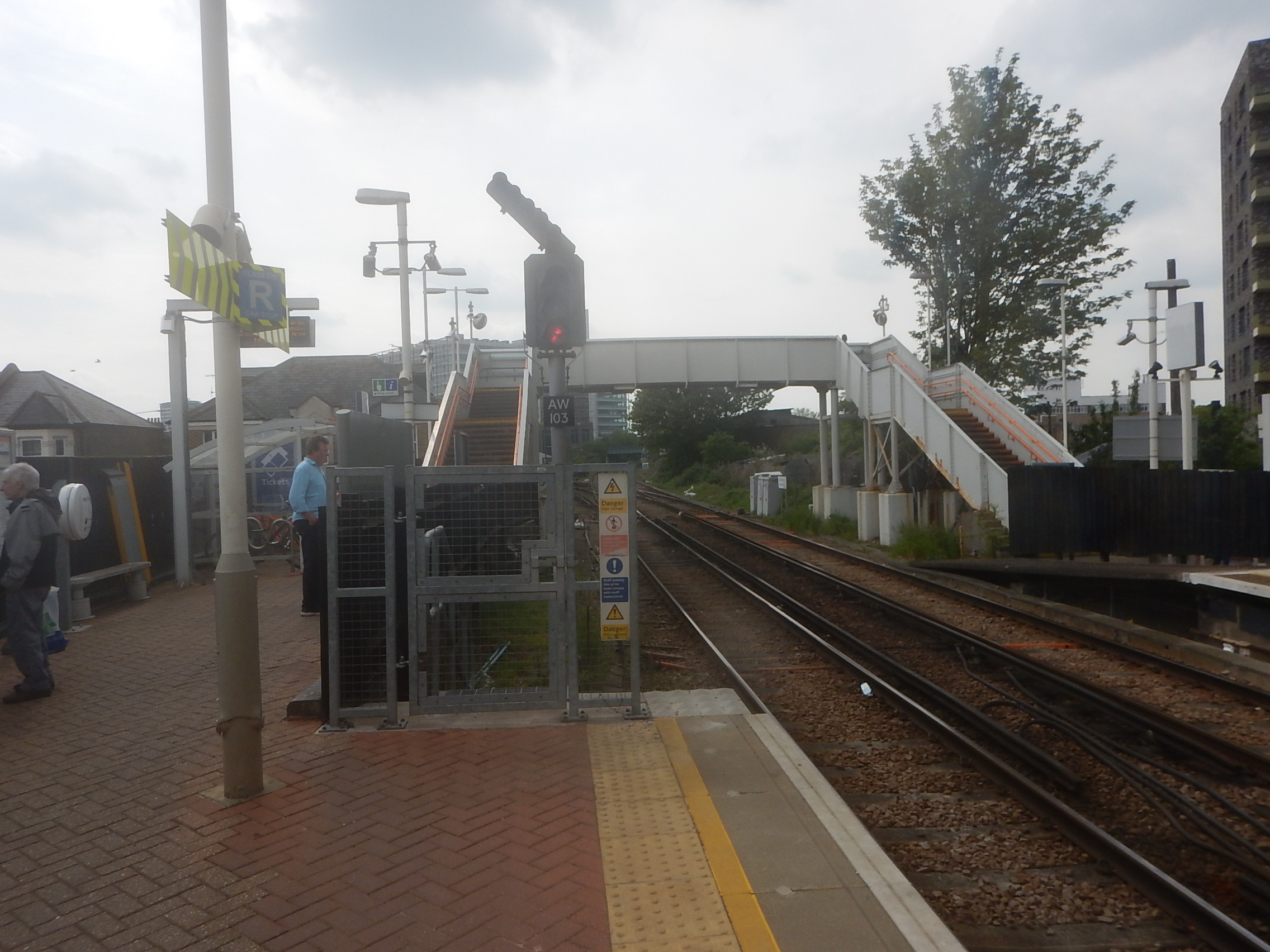
With a train stopping at the station every four minutes, a step-free means of crossing the line is essential.
The often-used solution of building a new step-free bridge and keeping the old one is not a solution at South Acton station, due to the space restrictions.
I suspect the current bridge could be replaced with a step-free one, but how do you provide a bridge whilst the new one is installed?
I went back to the station on May the 2nd and took these pictures.
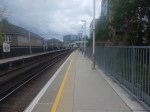
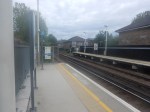
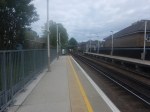
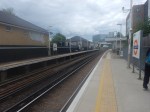
It might just be possible to squeeze a bridge in at the North end of the station.
There is certainly enough space for a bridge tower on the Western side behind the fence and if space can be found on the other, a bridge might be possible.
What Is Happening At Acton Central Station?
On my way home today, I stopped off at Acton Central station to have a look.
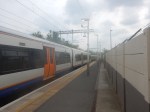

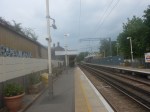
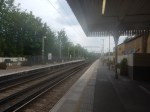
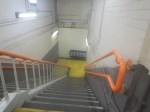

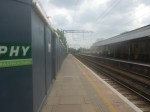
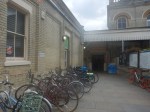
This Google Map shows the station.
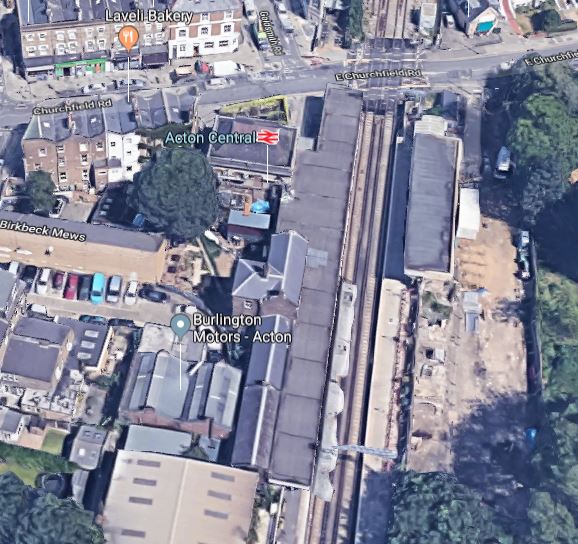
Note the level crossing and the partially demolished station building behind the hoarding.
The station could have a few problems in the future and may need partial rebuilding.
- The level crossing handles four trains per hour (tph) in both directions and there are plans to increase this frequency by two tph.
- The station is the changeover point between third-rail and overhead electrification.
- There is no step-free access between the two platforms.
But the biggest cause of future problems could be the West London Orbital Railway.
- This route will call at Acton Central station and it will have two services, each with four tph in both directions, giving a total of fourteen tph in each direction through the station.
- It is also likely that some passengers will want to change direction, so they will have to use the subway.
- The number of trains and passengers, may mean that a second entrance is needed on the Richmond-bound platform.
Could the work at Acton Central station be part of a solution?
Conclusion
It looks like it could be a second entrance is being created.
This might also make it easier for some passengers to change platforms and shut the level crossing.
Mayor Drops Plans To Close London Overground Ticket Offices
The title of this post is the same as that of this article on the BBC.
This is the first two paragraphs.
The Mayor of London has dropped plans to close ticket offices at 51 London Overground stations.
Busy stations will continue to operate as usual, though many will have opening hours reduced to just two-and-a-half hours per day, City Hall said.
Although the Unions objected to the Mayor’s original plans and this has probably prompted the Mayor’s U-turn, I think that staff in ticket offices will disappear within perhaps five years.
The only time, I see anyone use the Ticket Office at Dalston Junction station, is probably to sort out a ticketing issue with the machines, which are becoming increasingly rare, as Transport for London are increasing their numbers and replacing older machines with better designs.
Also as Dalston Junction is a busy station, there is usually someone manning the gate-line, who can help.
But over the next few years, the following will happen.
- More and more passengers will use contactless ticketing with bank cards.
- Contactless ticketing will expand widely, so that for most journeys in the UK, you would just touch-in and touch-out.
- Oyster will cease to be used and be withdrawn.
- Gateline technology will get better.
- Staff working on the gateline and platforms, will be better equipped with mobile technology to sort out problems.
- Ticket machines will develop into sophisticated multi-language help points.
- Cash will disappear from daily life and stations.
- Train companies will continue to be short of drivers and will look for other staff that can be retrained.
On a related note, increasingly, London Underground and Overground are being targeted by organised gangs of beggars. This means they need more staff on the gateline to control the problem.
I can see a time, when working in a ticket office will be a very lonely and boring job, that no-one will want to do.
So like the dinosaurs, they will just die out!
An Ungated Entrance Used To Create Step-Free Access At Crofton Park Station
Crofton Park station is not step-free and has the usual staiircases.
As I passed through today, I noticed that an ungated entrance had been used to create step-free access.
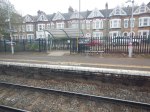
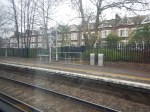
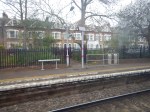
Passengers are expected to touch-in and out on the touch pads.
I suspect most do!
But it’s a clever idea to build an affordable step-free entrance.
I suspect this type of entrance might become more common in the Oyster-card area.
After all, there are several Overground stations without ticket gates.
By Overground To High Speed Two
The North London Line will be my route to High Speed Two when it opens in 2026.
This map from Wikipedia, shows how the lines connect.
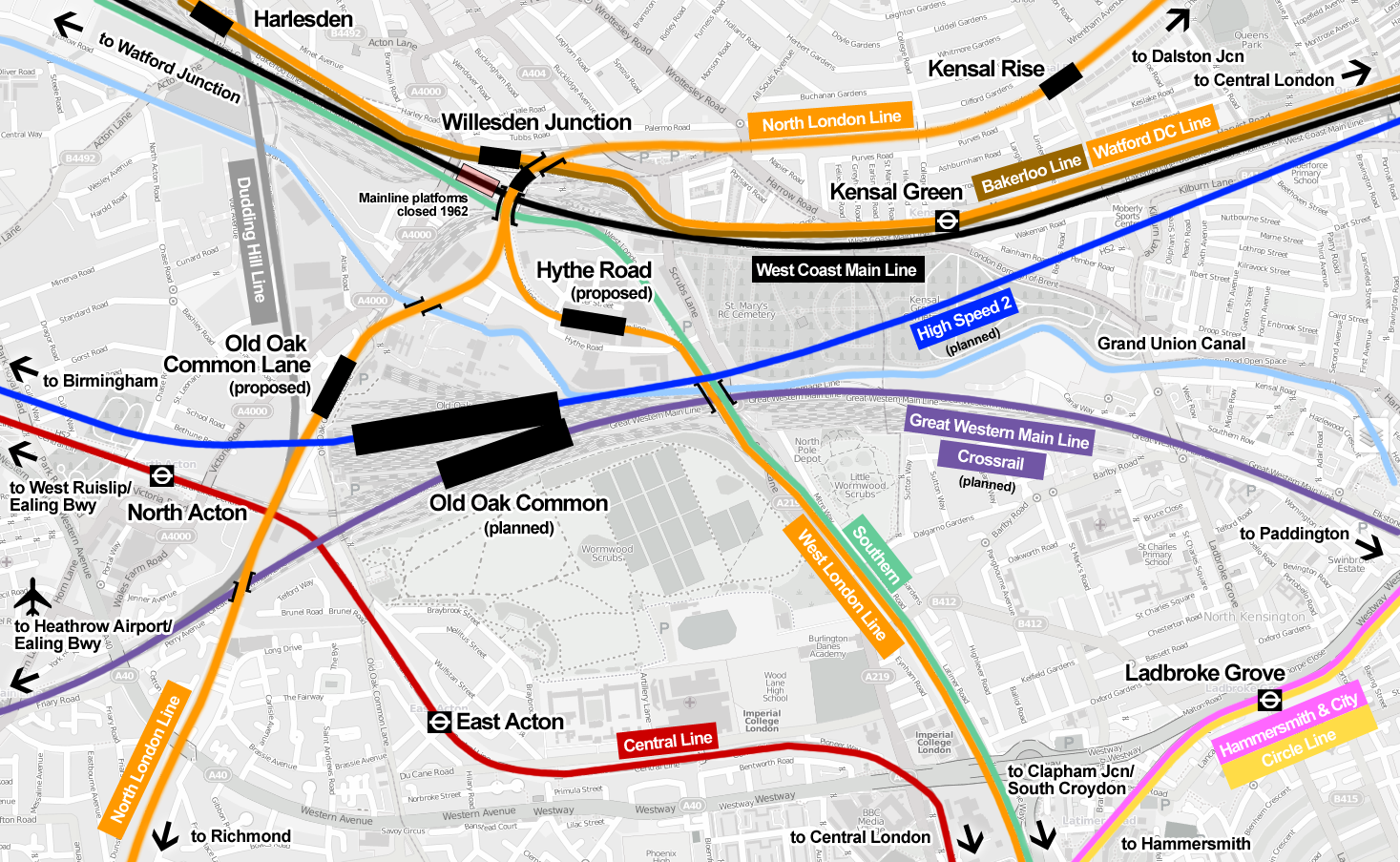
I will actually have two Overground stations, that I will be able to use.
- Old Oak Common Lane station on the North London Line between Stratford and Richmond stations.
- Hythe Road station on the West London Line between Stratford and Clapham Junction stations.
Note.
- Wikipedia says that both stations should open in 2026, which is the same date as High Speed Two.
- Hythe Road station is 700 metres from the High Speed Two station.
- Old Oak Common Lane station is 350 metres from the High Speed Two station.
Currently, both lines have a four trains per hour (tph) service.
- The Class 378 trains are five cars, which can get very busy in the Peak.
- It would need an additional five trains to increase the frequency to five tph on both routes.
- Six new five-car Class 710 trains are on order for North and West London Line services.
- I feel the higher frequency could be in operation by the opening of High Speed Two.
- Most stations between Stratford and Willesden Junction would appear to be able to accept six-car trains, if selective door opening were to be used.
I think by 2026, there will be a more than adequate service between Stratford and High Speed Two.
- There will be at least ten tph to Stratford, with services split equally between Hythe Road and Old Oak Common Lane stations.
- Richmond and Clapham Junction stations will get at least five tph.
- Step-free access is not currently available at Brondesbury Park, Brondesbury, Finchley Road & Frognal, Kentish Town West and Dalston Kingsland stations.
But what other developments will or might happen?
Highbury & Islington Station
Highbury & Islington station is the thirteenth busiest station in the UK and it is in need of a major upgrade to bring the deep level platforms and their access up to the standard of the four London Overground platforms, which all have lifts.
I also think that the track layout at the station could be modified to allow trains on the East London Line to continue further to the West. This was mentioned, when the Oveground was created, but is seldom talked about these days.
Step-Free Access On The North And West London Lines
These two lines which form a Y-shaped railway that splits at Willesden Junction, will provide these services from High Speed Two to major interchange stations.
The only thing that is needed is to complete step free access at all stations on the North and West London Lines.
The Maximum Frequency Across North London
Five tph on both the North and West London Line would give the following turnback frequencies at the four terminals.
- Clapham Junction – 5 tph
- Richmond – 5 tph
- Stratford – 10 tph
This chart from TfL shows planned improvements on the London Overground
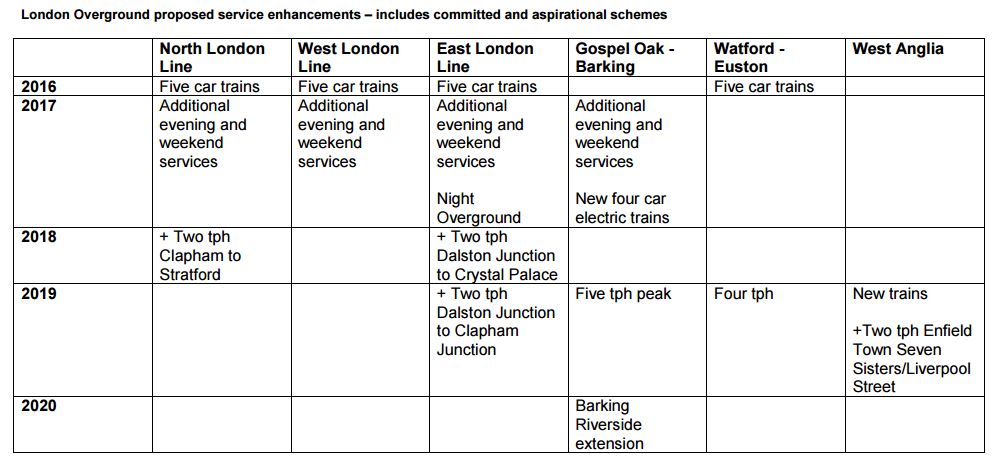
Note that it clearly shows that it is possible to run a six tph service between two single platform stations.
I think it likely that it would be possible to run six tph on both routes, provided that the route and the signalling could handle the increased frequency.
Twelve tph between Stratford and Willesden Junction stations would probably be the maximum frequency.
But would the number of freight trains allow this frequency?
A Reduction In Freight Services
Currently, the North London Line carries a lot of freight trains, going between Barking, Felixstowe and London Gateway in the East to virtually everywhere West of London.
- Noises from the East West Rail Consortium are hinting that services to and to and from Bristol, Liverpool, Manchester, South Wales, Southampton and the West Midlands might use their new route between Oxford and Cambridge.
- Could more freight use ports like Liverpool and Teesport in the North of England, which would reduce the traffic through the ports in the South?
Whatever happens, the current succession of diesel-hauled freight trains across London is not environmentally-friendly and it will raise increasing numbers of protests.
I think it is inevitable that the number of freight services will reduce, thus allowing more paths for passenger trains.
Digital Signalling
To handle the increasing traffic on the North and West London Lines, I can see digital signalling being installed. There could even be a degree of Automic Train Control.
Six-Car Trains
Only a few stations can handle six-car trains without selective door opening and even the rebuilt West Hampstead station still has platforms for five-cars.
Selective door opening would allow six-car trains to use the five-car platforms and passengers have in London have shown they can cope with moving forward to get out at certain stations. Especially, as the walk-through design of the train, makes this a lot easier.
A Round-The-Corner Service
I can remember reading in Modern Railways, that one of the reasons for the East and North London Lines running parallel through Canonbury to Highbury & Islington was to possibly enable extension of the East London Line to perhaps Willesden Junction, where there is a handy bay platform.
This has not happened and I doubt we’ll ever see something like a New Cross to Willesden Junction service, as Crossrail will effectively provide a faster frequent service between Whitechapel and Old Oak Common stations.
West London Orbital Railway
The proposed West London Orbital Railway will have two routes.
- West Hampstead Thameslink and Hounslow
- Brent Cross Thameslink and Kew Bridge
Both routes will have four tph and have a connection to Crossrail, High Speed Two and the North London Line at Old Oak Common station.
The only possible problem would be the eight extra tph through Acton Central station and level crossing and South Acton station.
But it would become an important feeder route to Crossrail, Heathrow Airport and High Speed Two.
Conclusion
The North and West London Line route between Stratford and Willesden has the ability to handle a lot more traffic than it currently does.
Dgital signalling and six-car trains could add over another fifty per cent capacity to the route.
I very much feel that digital signalling will be absolutely necessary.
 The Anonymous Widower