The Southbound Northern Line Platform At Bank Station
These pictures show the Southbound platform of the Northern Line at Bank station.
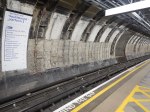

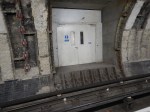
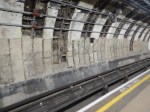
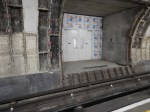
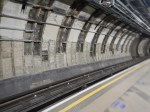

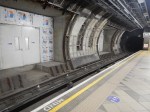
Can there be a Metro, U-bahn, Underground or subway platform anywhere with such bad design and worse decor?
- There are no tiles or cladding on the walls.
- You can see all the cast iron linings dating from the nineteenth century.
- How do people get across the tracks to the passages in the wall?
- But above all there are no adverts.
The state of this tunnel only tells a one-sided story.
Some metres to the West of the existing tunnel a new larger Southbound tunnel has been dug.
This map from Transport for London, shows the route of the new tunnell.
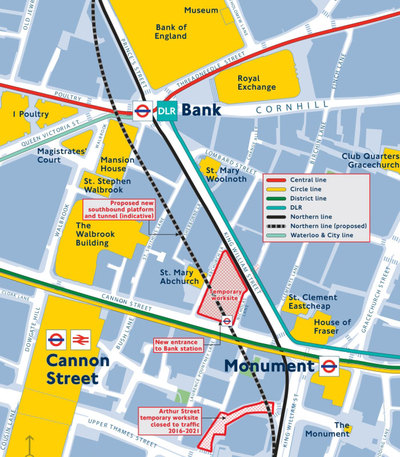
Note.
- The continuous black line of the existing Northbound line.
- The dotted black line of the new Southbound line.
This sentence from this article on IanVisits, which is entitled Bank Tube Station Upgrade Reaches Tunnelling Milestone, explains how the new tunnels were built.
Part of the tunnelling work saw the project team cut through deep-level piled foundations of one building, which required careful excavation and the installation of a new load-support system to support the existing foundations while still allowing a tunnel to pass through them.
According to Ian, 1300 metres of new tunnels have been constructed. All have been dug by fairly traditional methods, uding men, shovels and small diggers and other machines.
The space between the two running tunnels will become a wide concourse. This picture taken at Angel station, shows a wide platform that could be delivered at Bank station.

The old Southbound tunnel will be filled in to form the concourse. Those curious doors will become through passages to the escalators, lifts and the other platform.
Whitechapel Station – 29th December 2020
I took these pictures as I passed through Whitechapel station.
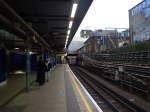

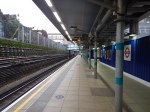
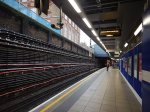
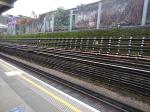

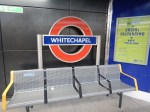
Note.
- The platforms for the Metropolitan and District Lines seem to be almost complete.
- New lighting and seating has been installed.
The stairs down to the platforms from the street, can be seen behind one of the hoardings.
Northern Line Extension ‘On Track’ For 2021 Opening
The title of this post, is the same as that of this article on Transport Network.
I’m looking forward to using the line in the Autumn.
This map from cartometro.com, shows the track layout of the extension.

Note.
- The extension starts from the existing Kennington Loop at Kenning station.
- There is an intermediate station at Nine Elms.
- As with many two-platform stations, there is a cross-over in the approach. It is shown in a picture in the article.
Hopefully, the extension will eventually be extended to Clapham Junction.
Step-Free Interchange At Kennington Station
I have been worried about this and from the comment of others like Melvyn, I am not alone.
This map from cartometro.com, shows the track layout at Kennington station.
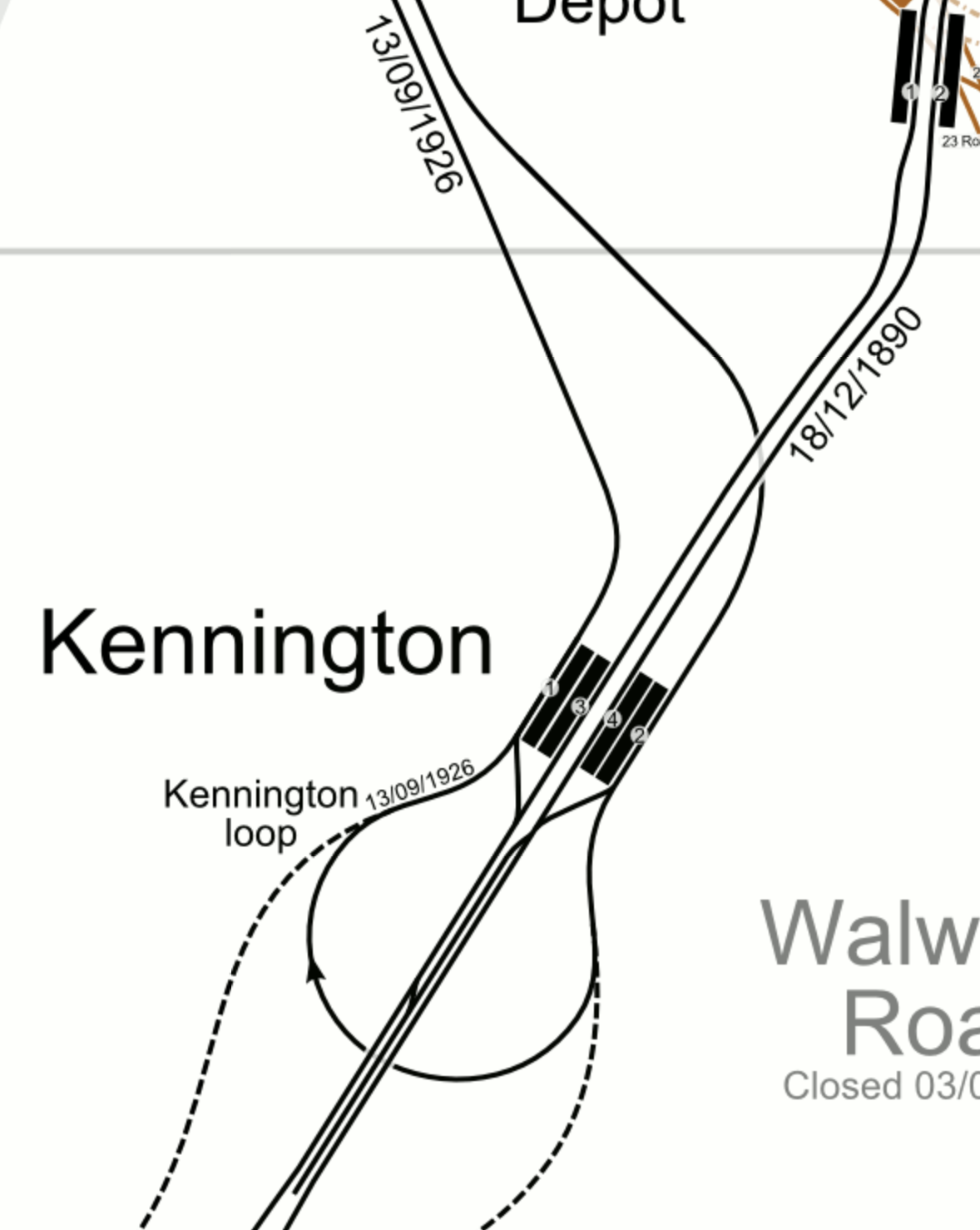
Note.
- Elephant and Castle station is at the North-East corner of the map and is on the Bank branch of the Northern Line.
- The pair of tracks going North-West are the Charing Cross branch of the Northern Line.
- The pair of tracks going South-West are the Morden branch of the Northern Line.
- Trains going South to Morden can use either Platform 2 or 4, depending, whether they have come Charing Cross or Bank.
- Trains going North from Morden can use either Platform 1 or 3, depending, whether they are going to Charing Cross or Bank.
- The Kennington Loop allows trains from Charing Cross that arrive in Platform 2 to go direct to Platform 1 to return to the North.
- There appears to be a revering siding, which can also reverse trains from either Platform 2 or 4 and send them North from Platform 1 or 3.
- Chords South of the platforms allow trains to and from Charing Cross to access the tracks to Morder and the reversing siding.
- The Battersea Power Station branch, is shown in dotted lines and connects to the Kennington Loop.
I took these pictures at Kennington station today.

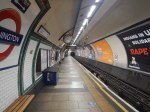
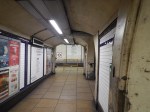
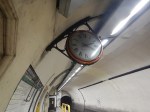
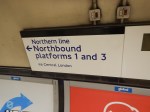

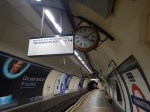
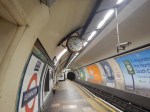
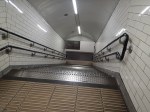
Note.
The platforms are in two pairs, which are connected by walk-through passages, with Platforms 2 and 4 for Southbound trains and Platforms 1 and 3 for Northbound trains.
- Each platform has a proper clock.
- The only access to the pair of platforms is by steep long stairs.
- The stairs need to be rebuilt with proper handrails on both sides.
- The last picture shows the handrails at Moorgate station.
Currently, the system allows journeys between the North and Morden, either directly or with a walk-across change at Kennington station.
- Going South to Morden, if you get a train, that reverses at Kennington, you would wait for a train to turn up on either Platform 2 or 4, that is going the whole way.
- Going North from Morden, if you get a train going to the wrong Northern destination, you would get off at Kennington and wait for a train to turn up on either Platform 1 or 3, that is going to the destination you desire.
What is needed on all platforms, is more comprehensive information displays.
- Displays on Platforms 2 and 4, would show details of all Southbound trains. whether they terminated at Kennington or went to Morden, or in future went to Battersea Power Station station.
- Displays on Platforms 1 and 3, would show details of all Northbound trains.
Displays would indicate destination and time as now, but with the addition of platform, where you catch the train.
If there is one problem it is taking a train between Battersea Power Station and Morden stations.
This public domain drawing from the Internet shows the station, after the Kennington Loop had been built in the 1920s and 1930s.
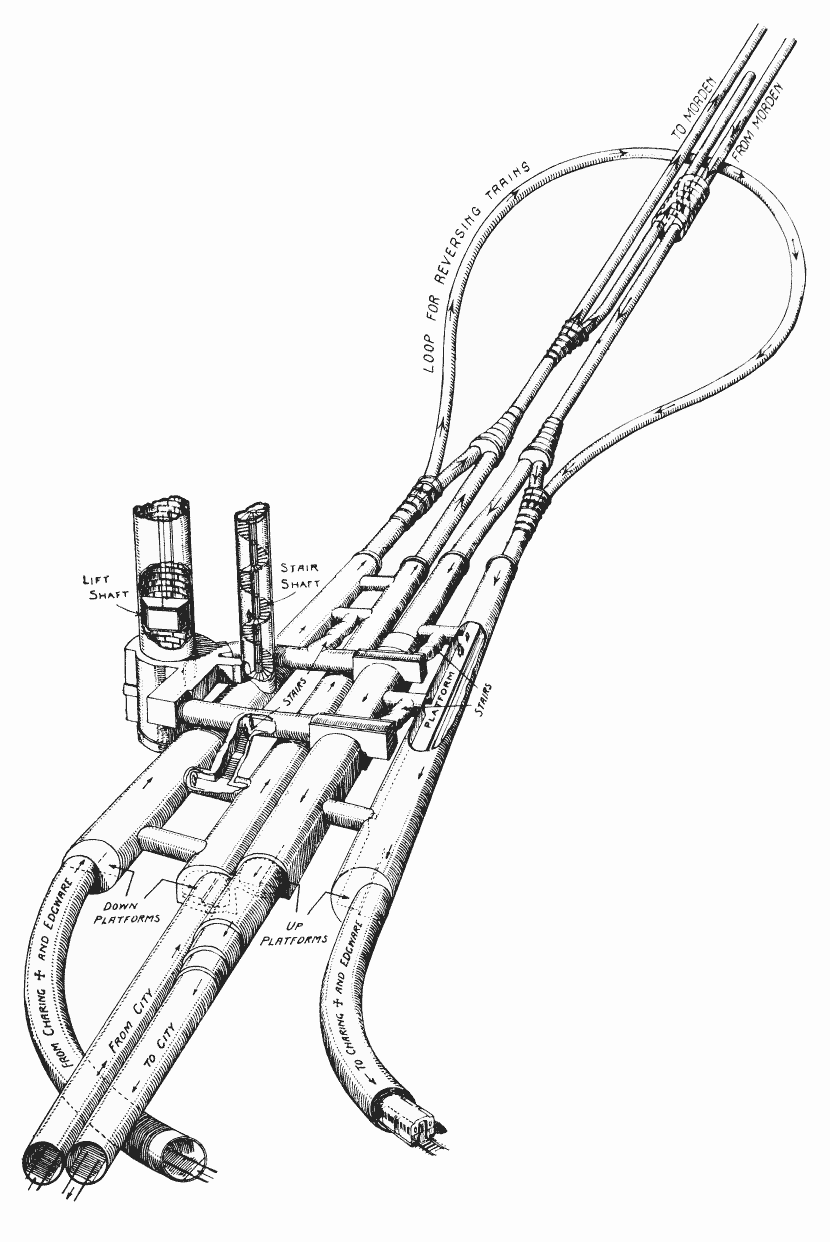
Note.
- We are looking from the North.
- The Kennington Loop at the far end of the station.
- The four platforms of the station numbered 2, 4, 3 and 1 from left to right.
- The stairs between the two pairs of platforms, leading to overbridges.
- The lift tower and a spiral staircase leading to and from the surface.
I can now sum up the step-free status of the station.
- Passengers entering or leaving the station, must walk up or down a staircase like that shown in the first picture.
- Passengers needing to change to another train going in the same direction, just walk across to the other platform in the pair.
- Passengers needing to change to another train going in the opposite direction, as they would going between Battersea Power Station and Morden stations, will need to climb one set of stairs and descend another.
It does appear that in an ideal world lifts will need to be added.
Thoughts On Future Step-Free Access At Kennington Station
In the future, it is planned that the Northern Line will be split into two lines.
- Battersea Power Station and Edgware
- Morden and High Barnet
Will this increase the number of passengers, who need to do the opposite direction change, as there will just be more trains running on all branches?
Alternative Step-Free Access
But, there may be another way to go between Battersea Power Station and Morden stations.
- Take a train from Battersea Power Station to Waterloo.
- Walk across the platform at Waterloo to the Southbound platform.
- Take a train from Waterloo back to Kennington.
- Walk across from Platform 2 at Kennington to Platform 4.
- Take the first train from Platform 4 to Morden.
The reverse journey between Morden and Battersea Power Station stations would be.
- Take a train from Morden to Kennington.
- Walk across from Platform 3 at Kennington to Platform 1
- Take a train from Platform 1 to Waterloo.
- Walk across the platform at Waterloo to the Southbound platform.
- Take the first train from Waterloo to Battersea Power Station.
Note,
- Both routes have two changes; one at Kennington and one at Waterloo,
- All changes are step-free.
- All changes are very simple
It should also be noted that Battersea Power Station, Nine Elms and Waterloo are all or will be fully step-free stations.
The two routes I have outlined have one big advantage. They already exist and the only costs would be training of staff and indicating the routes to passengers.
Thameslink Is Back On The London Tube Map
The title of this post, is the same as that, of this this article on Ian Visits.
Thameslink last appeared on the tub map in 1999.
I’m glad it’s back.
I regularly use Thameslink as a quick route across London, especially, if I want to go to Tate Modern, as the gallery is a short walk from Blackfriars station.
Coronavirus: Can I Be Infected By Touching Surfaces?
The title of this post is the same as that of an article on The Sunday Times.
The article is worth reading.
These two paragraphs some up the latest thoughts on infection from surfaces.
Monica Gandhi, a professor of medicine at the University of California, San Francisco, told the US science website Nautilus that there had been “a lot of fear” at the beginning of the pandemic about transmission of the virus if people touched their faces after contact with metal, plastic or other contaminated surfaces, collectively known to scientists as fomites.
Yet the evidence suggests that the virus on most surfaces is not strong enough to make people ill. “It’s not through surfaces,” she added. “It’s from being close to someone spewing virus from their nose and mouth, without in most cases knowing they are doing so.”
I travel around the Underground a lot and I’m always masked, when I enter stations and usually use the hand-sanitisers, at least once on a trip. Most in London, seem to be acting similarly.
There has been no scares about using the Underground because of high-rates of the covids in recent months, that I can find.
More importantly, under a sub-title of Why Are Young Women The Targets Now?, this is the first paragraph.
The disease that ravaged care homes and turned the elderly into hermits for much of the spring has taken aim at different targets this autumn. Public Health England’s most recent statistics show that the 20-29 age group has had the most new cases since the end of June, followed closely by the 30-39 age group. In both those groups, more women are being infected than men.
This is paragraph is from the NHS web site.
Reported cases of coeliac disease are around 3 times higher in women than men. It can develop at any age, although symptoms are most likely to develop: during early childhood – between 8 and 12 months old, although it may take several years before a correct diagnosis is made.
Could this paragraph partly explain, the fact that women in their twenties and thirties are suffering from the covids?
Coeliac disease affects one in fifty of the population.
As a coeliac, it’s no hard task to stick to a gluten-free diet.
And I get the bonus of being 25 % less likely to suffer from cancer, according to peer-reviewed research from Nottingham University.
Tory London Mayoral Candidate Wants Sponsorship Deals For Tube Station Names To Raise TfL Cash
The title of this post, is the same as that of this article on the Telegraph.
This is the introductory paragraph.
Underground stations could be renamed under plans put forward by the Conservative London mayoral candidate for a £100 million a year sponsorship deal to bolster investment in the capital’s public transport network.
I think it could be an idea worth pursuing, as due to Sadiq Khan’s bribe of a fare freeze to get elected Transport for London’s finances are in a terrible state.
The article says, that Dubai, Madrid and New York already use similar ideas to raise money.
Remember, London already has one station, where name was changed for a local business; Gillespie Road station was renamed Arsenal in 1932.
Let’s Be Creative!
I also think, if we are creative, we could make the stations much more passenger-friendly, with respect to services nearby.
Imagine a board, with Alight Here For at the top and slots for local shops and businesses below. Each slotted-in advert would be a perhaps a foot wide and four inches high, saying something like. “Boots 100 metres” or “Costa Here!”
Go-Ahead For West London 460-Home Build To Rent Scheme
The title of this post, is the same as that of this article on Construction Enquirer.
This is the first paragraph.
The scheme is the first to be brought forward by Connected Living London, a partnership between build to rent specialist Grainger and Transport for London.
This must be the way for London to get best value from all the suitable sites for housing, owned by Transport for London.
Four sites are mentioned in the article.
- Next to Southall station
- Next to Arnos Grove station
- Montford Place in Kennington. which is currently being used as a construction site for the Northern Line Extension.
- Above the new Nine Elms station on the Northern Line Extension.
These are some thoughts on the sites.
Arnos Grove Station
The developers will have to be careful, with the design at Arnos Grove station, as it’s a Grade II* Listed building.
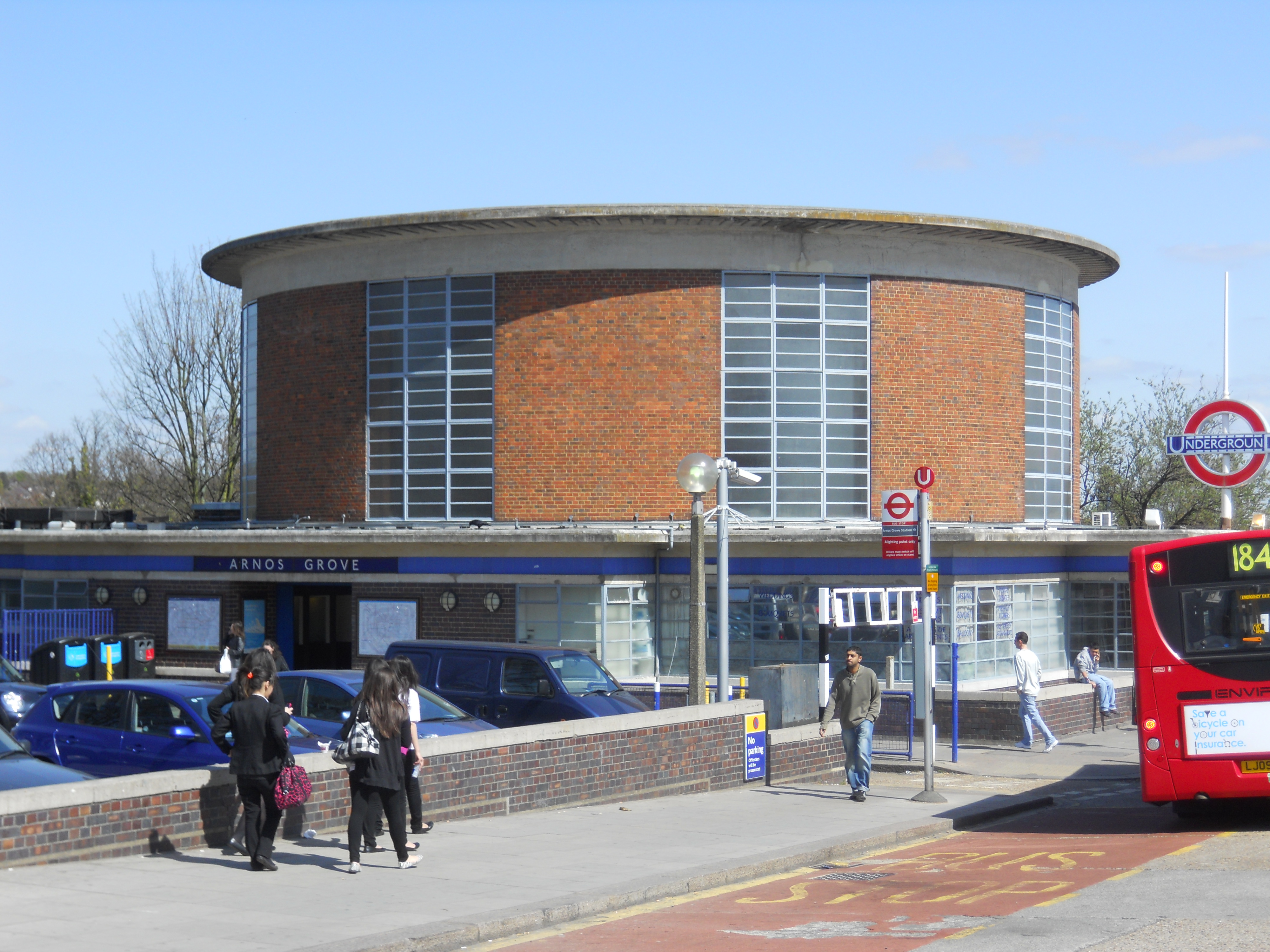
This Google Map shows the station.

I never knew, that the station had so much parking.
Will the development be over some or all of this car parking?
This article on Ian Visits is entitled Plans To Build Flats On Arnos Grove Tube Station Car Park.
Ian says that there will be four blocks, with a total of162 rental homes, of which 40 % will be affordable.
- It doesn’t seem to be high density or high towers.
- A map shows it is not over the railway.
Ian also says this about the loss of car parking.
Unsurprisingly, there are local objections to the plans to remove the car park with nearly 300 parking spaces, although TfL counters that a third of the people who currently drive to the station living within walking distance.
But then many people never drive very far from where they live. For environmental reasons, perhaps fossil fuel vehicles should pay a Movement Tax of say five pounds, every time the vehicle is moved in a built-up area. Zero-emission vehicles would be exempt!
Montford Place
I took these pictures of the Montford Place site in July.

This site could be sensitive too! But surely, the residents don’t want an ugly utilitarian headhouse for the ventilation shaft of the Northern Line Extension.
This Google Map shows the site.

It is not small, judging by the two buses at the side.
There’s also a large hole to cover!
Transport for London Are Driving Me Mad
Because of COVID-19, a lot of Underground station entrance and exits have been closed.
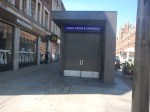


I can understand, why it needs to be done, but I keep falling foul of their closures.
- I wanted to go from the Angel to Paddington and my usual route is to change between Northern and Circle Lines at Kings Cross. But you had to walk all the way round Kings Cross station for the change.
- Coming back from Paddington, I often take the Bakerloo Line to Regents Park station, but the train went straight through.
- I wanted to go from Wlathamstow Central to Dalston. Normally, I would use the Overground and a bus, changing at Hackney Downs. But the Overground wasn’t working, so I used the alternative route changing at Seven Sisters and I got another long walk.
What is needed is better information at all station entrances, as once you’re in the labyrinth it’s too late.
The Abandoned Tube Entrance At Euston
These pictures show the abandoned tube entrance at Euston station.


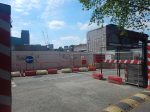
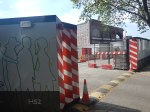
The station was built to serve the Charing Cross, Euston and Hampstead Railway, which is now part of the Northern Line.
- It opened in 1907.
- The building will now be demolished to make way for High Speed Two.
- I can’t ever remember using the entrance.
It looks to be a station, which are typical of many, that were created by Leslie Green.
- Wikipedia has a list of over forty stations, that were designed by Leslie Green.
- Many are Grade II Listed
- His designs inspired the look of the fictional Walford East Underground station in EastEnders.
I would reckon, the one I use most is Oxford Circus.
Braving The London Underground
I took these pictures today, in a short Underground trip between Angel and Kings Cross St. Pancras tube stations.

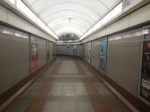

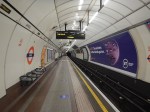
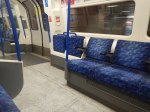

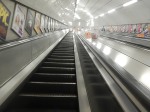

It’s not very busy! Is it?
- There was no-one else in the tunnel as I walked between the escalators at Angel station.
- There was only two other people in my carriage on the train.
- There were few people in the tunnels at Kings Cross.
Isuspect that I travelled during lunchtime helped.
 The Anonymous Widower