Up From The Depths At Moorgate Station
Moorgate station must have been built for rabbits, as it is a bit of a warren.
On arriving on the Northern Line platforms at the station a few days ago, I took the rat-up-the-drainpipe route to the surface.
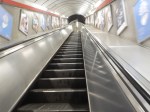
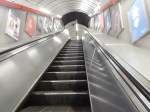
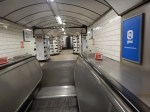
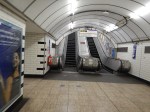
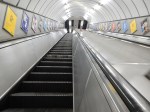
This is the route I took.
- Up the escalator to the Northern City Line platforms.
- Straight up the Northern City Line escalators to the surface.
- Through the barrier and then up to street level on one of two flights of steps, which are on opposite sides of Moorgate.
It is quicker and has less steps.
Crossrail
How will axxess change, when Crossrail opens.
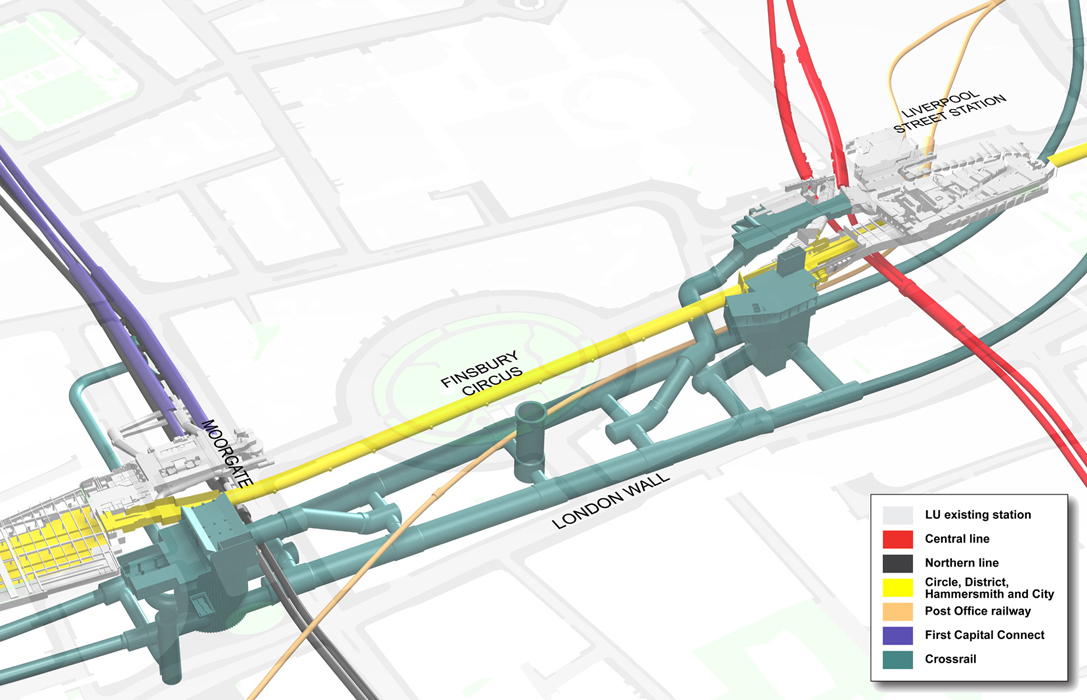
Look at this image, I’ve clipped from this large visualisation of the massive Liverpool Street-Moorgate Crossrail Station.
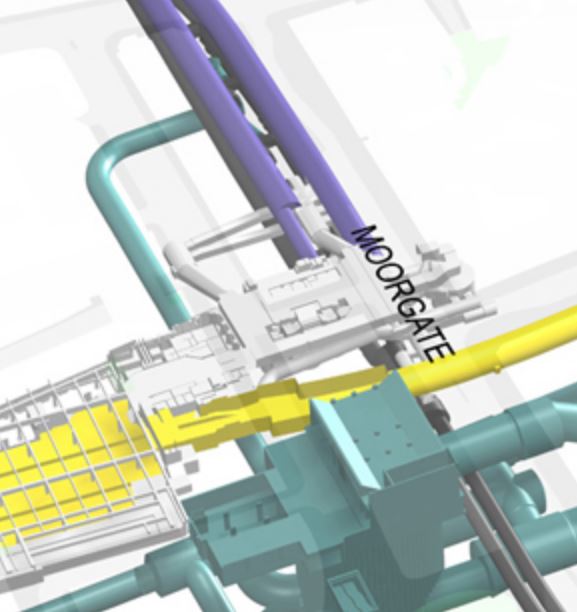
The image shows the Northern City Line coming into Moorgate station.
Colours are as follows.
- Blue – Northern City Line
- Yellow – Circle and Hammersmith & City Lines
- Black – Northern
- Turquoise – Crossrail
Details to note.
Existing Northern City Escalators
The escalator shaft to the existing ticket hall is shown in white by the letter M of Moorgate.
Existing Northern Line Escalators
The double tunnels from the stairs leading to the platforms to the escalators are shown in white underneath the Northern City Line.
The escalators to the existing ticket hall are clearly shown. Both are in white.
Circle And Hammersmith & City Lines
When Crossrail opens, passengers would seem to still do, as they do now to interchange between Northern/Northern City and the Sub-Surface Lines.
But there is also a turquoise tunnel with a right-angle bend in the middle, that appears to do the following.
- Link to the Northern and Northern City Lines at its Northern end.
- Run under the sub-surface Lines.
Finally the tunnel connects to the big turquoise block, which I take to be the new Crossrail ticket hall.
There appear to be lifts on both sides of the Sub-Surface Lines.


Note.
- The lift on the North side of the Sub-Surface Lines, appears to be in a room with a window. Perhaps, the wall will be removed?
- The lift on the South side of the Sub-Surface Lines, appears to be in a lobby, set back from the tracks, but accessible from all three platforms on that side.
- I suspect they connect to the connecting tunnel below the platforms.
There does appear to be quite a bit of work to do.
The New Crossrail Station
The big turquoise block is the new Crossrail station and Ticket Hall.
Crossrail would appear to connect to the Northern and Northern City Lines, using the new subway, but it doesn’t seem that obvious how passengers will walk between the Sub-Surface Lines and the Crossrail Ticket Hall.
It
Thoughts On The Closure Of The Northern Line At Bank To Complete The Upgrade To Bank Station
The Bank Station Upgrade is a major project that will increase the capacity of Bank station by forty percent.
This document on the Transport for London web site gives details of the project.
It was originally planned that sometime in late 2021, the Northern Line will be closed through Bank station.
The document says this.
We will need to close part of the Northern line Bank branch in 2021, between Kennington and Moorgate, to connect new and existing sections of tunnel safely. Trains will run less frequently on those sections of the Bank branch that are still open. Check back here for details.
This would mean that Bank, London Bridge, Borough and Elephant & Castle stations will be closed on the Northern Line.
To help passengers, TfL say, they will do the following.
- Run 33% more trains on the Northern line Charing Cross branch
- Review bus use and consider enhancing services where necessary
- Investigate scope for passengers to use alternative National Rail services, such as Waterloo to London Bridge, and London Bridge to Cannon Street
- Review available walking space on the Moorgate to London Bridge pedestrian corridor.
These are my thoughts.
The New Cannon Street Entrance To Bank Station
This visualisation shows the new Cannon Street entrance to Bank station.
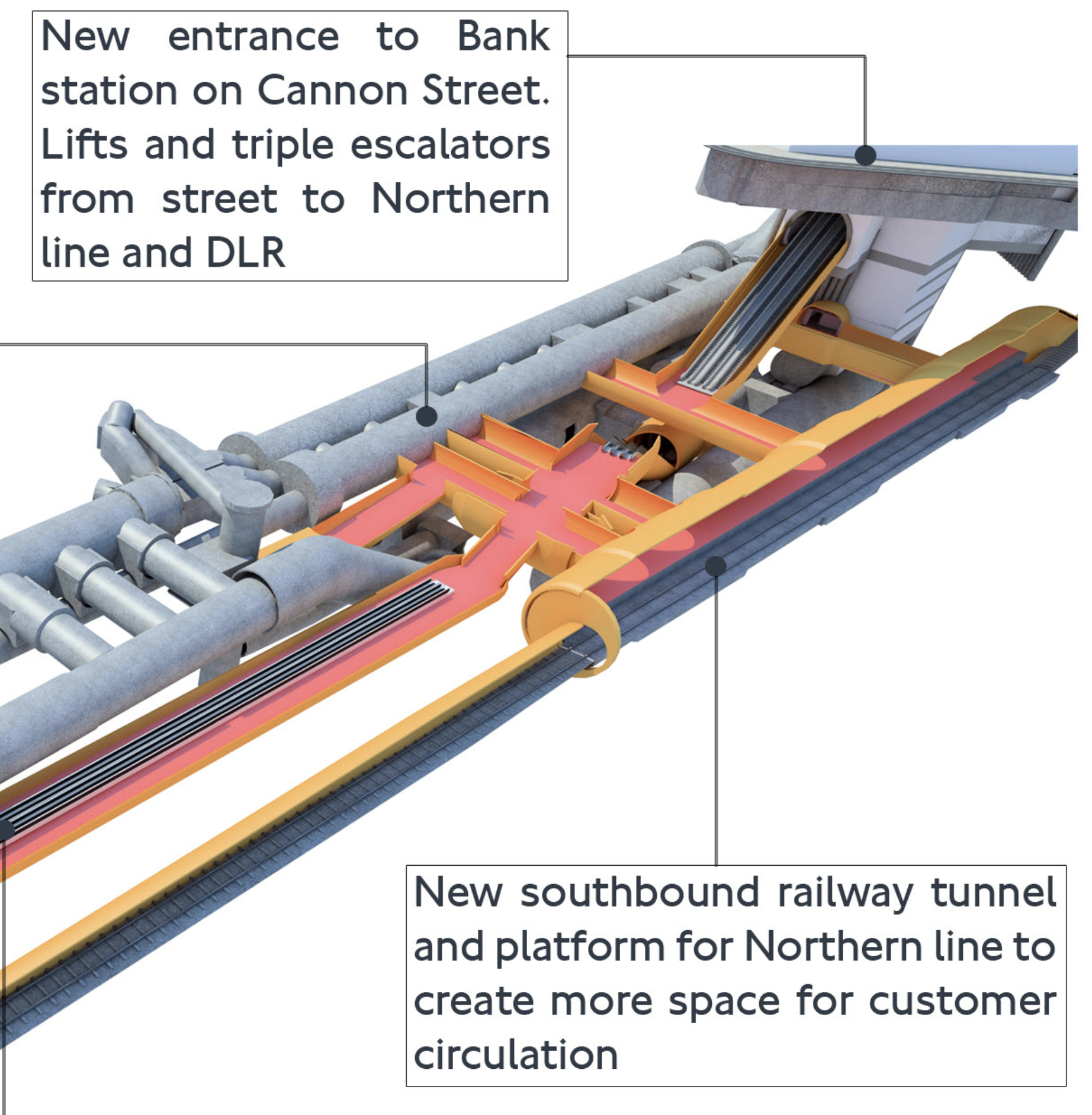
Note.
- South is to the right and we’re looking from roughly the North-West.
- The existing twin bores of the Northern Line on the far side of the visualisation.
- The escalator connection to the District and Circle Lines at Monument station Starts at the Southern end of these two narrow platforms.
- The new single bore of the new Southbound tunnel on the near side of the visualisation.
- The triple escalators descending from the new Cannon Street entrance to one of the four cross-walks between the Northern Line platforms.
- The current Eastern ends of these cross-walks are shown in The Southbound Northern Line Platform At Bank Station.
But where is the Docklands Light Railway (DLR)?
This map from carto.metro.free.fr shows the lines at Bank station.
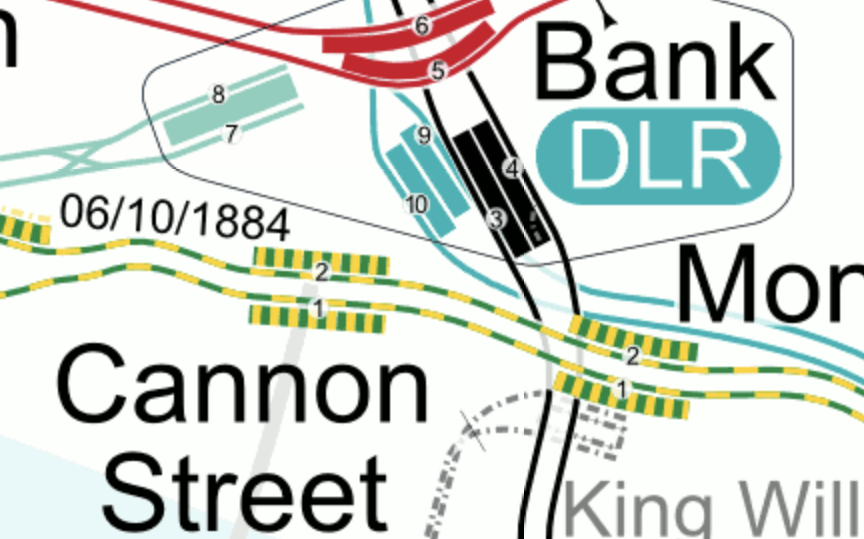
Note.
- The two existing Northern Line Platforms 3 and 4 are shown in black.
- The Central Line is shown in red.
- The DLR is shown in turquoise and sneaks under the Northern Line into Platforms 9 and 10.
- Platforms 7 and 8 are the platforms of the Waterloo and City Line.
- It would appear that the escalator connection between Bank and Monument stations goes between the existing tracks of the Northern Line.
So where is the Docklands Light Railway?
- As Platforms 3 and 9 appear to be close together with Platform 9, the deeper of the two, I suspect we can’t see the Docklands Light Railway in the visualisation, as it is hidden behind and underneath everything else.
- I also suspect that the triple escalators between the new Northern Line cross-walks descend in the space at the Southern ends of Platforms 9 and 10.
This is the Northern end of the visualisation I showed earlier
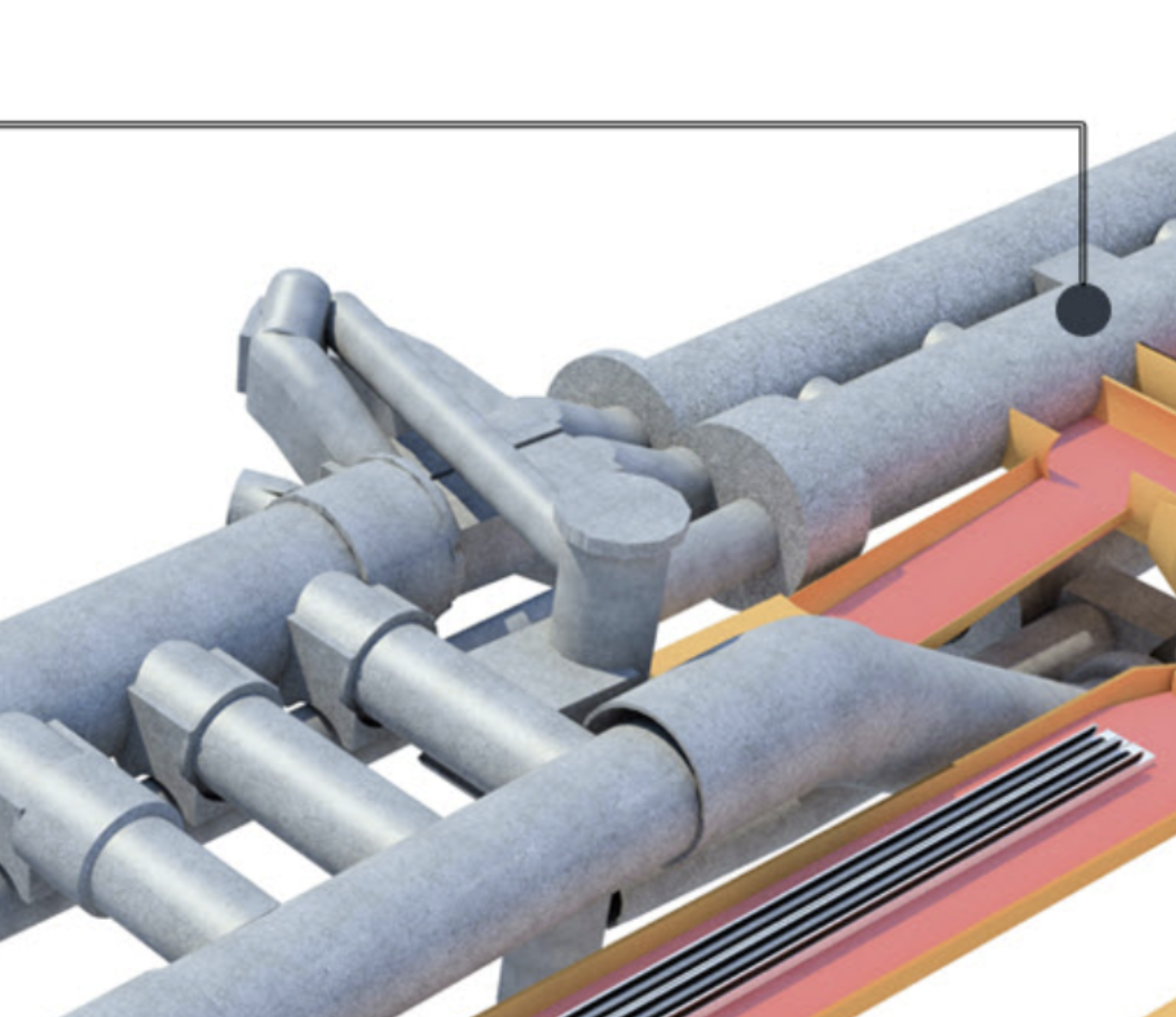
Note.
- North is to the left.
- The two tracks and the narrow island platform of the current Northern Line on the far side of the visualisation.
- The two staircases leading up from Northern Line to a lobby, where passengers can walk North to the Central Line.
- The double escalator barrel going down to the DLR.
- The travelator that will connect the Northern and Central Lines
- The three cross passages linking the DLR escalators to the lobby between the Central and Northern Lines.
- The most Southerly of these cross passages has a lift to the DLR.
The new Southbound platform of the Northern Line, would appear to be to the West of the Docklands Light Railway.
It appears to be a very tight fit.
These pictures show the current status of the new entrance.
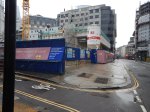
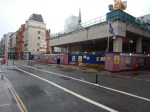
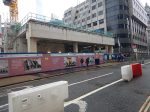
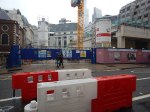
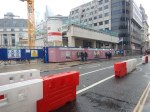
There would appear to be still a lot to be done.
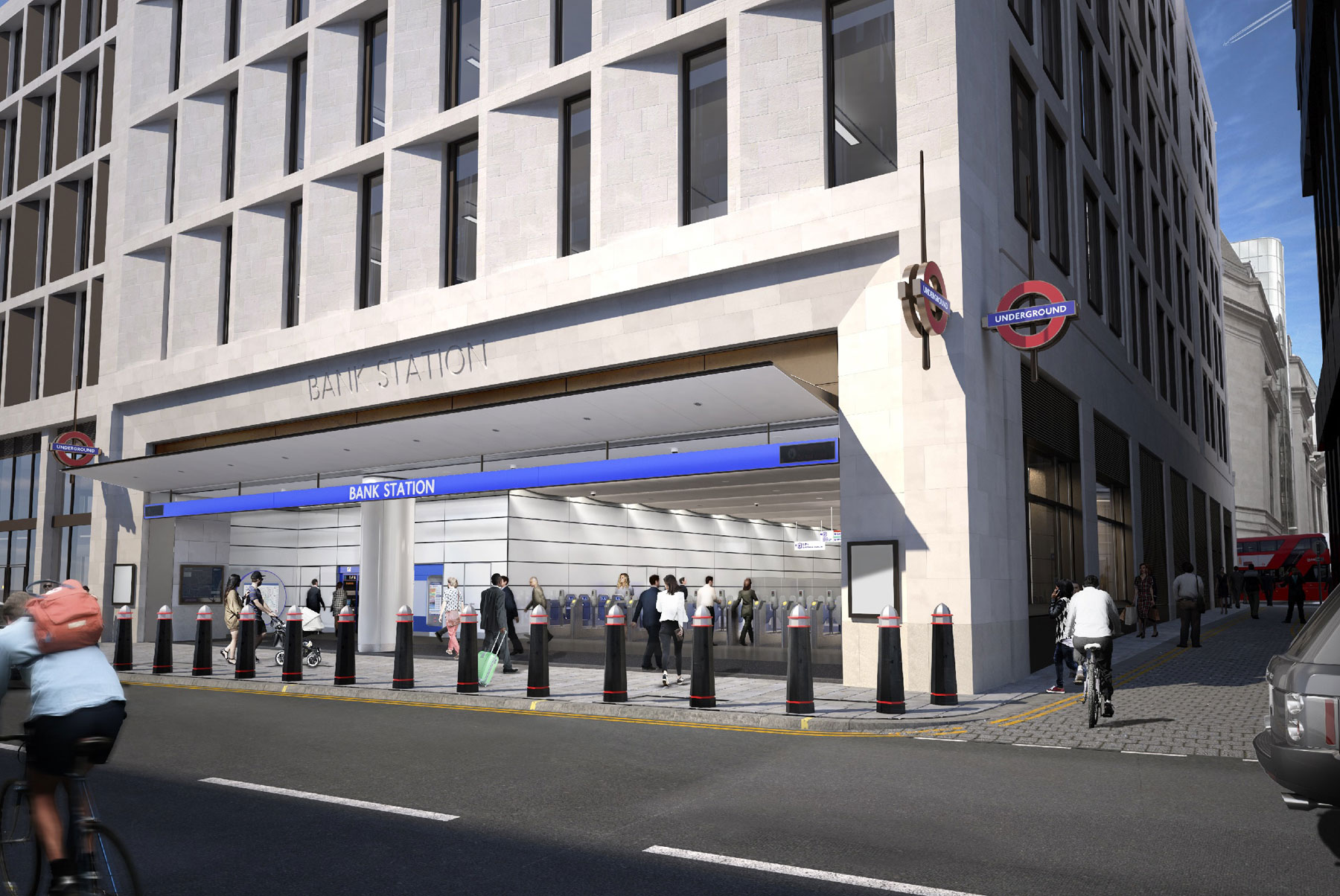
This TfL image shows how it will look in 2022.
Ducking And Diving
No-one ducks and dives like Londoners. So rest assured, that if someone needs to get from A to B and the obvious route is blocked, Londoners will always get through. And if all else fails, a black cab will find a way, usually driven by a Londoner or someone infected with the ducking and diving virus.
Crossrail
As ever Crossrail is the herd of elephants in the London railway system.
The Northern Line is possibly the most important North-South route across Central London with two branches through the centre; Bank and Charing Cross.
But Crossrail connects to these North-South routes.
- Lea Valley Lines at Stratford
- East London Line at Whitechapel
- Lea Valley and West Anglia Lines at Stratford
- Northern Line Bank Branch at Moorgate/Liverpool Street
- Northern and City Line at Moorgate/Liverpool Street
- Thameslink at Farringdon
- Northern Line Charing Cross Branch at Tottenham Court Road
- Jubilee Line at Bond Street
- Bakerloo Line at Paddington
Crossrail will give a lot of opportunities for ducking and diving.
Under original plans Crossrail was supposed to open in 2019, with the Bank station closure for the upgrade in 2021.
This phasing certainly seemed a good idea at the time.
- Crossrail will be able to offer alternative routes during the closure.
- If the Crossrail stations are substantially complete, they can release workers to finish Bank station.
I wonder, if it would be sensible to not upgrade the tracks through Bank station until Crossrail opens through Moorgate/Liverpool Street.
As I wrote in Your First Crossrail Service May Arrive In Time For Christmas, Crossrail could open this year.
So are we being prepared for the mother of all cunning plans?
- Crossrail between Paddington and Abbey Wood opens before Christmas.
- The closure of the Bank branch to allow the Bank station upgrade happens at a convenient time after the opening of Crossrail through Moorgate/Liverpool Street.
- Moorgate continues to have a limited Northern Line service to the North.
- Crossrail continues work on the other branches.
Note.
- There is a crossover to the North of Moorgate station, which might allow Moorgate to work as a two-platform terminal station handling up to 4 or 6 trains per hour (tph).
- If Crossrail is running at Moorgate, the station should be step-free to and from the deep-level platforms.
- Transport for London are looking at walking routes on the Moorgate and London Bridge route.
- During the closure of the Northern Line through Bank, passengers for the City will go to Moorgate and walk or perhaps take a bus.
It is my view, that Crossrail must be open, before the Northern Line through Bank station is closed to allow work to be completed.
A Demonstration of the Northern Line Capacity At Moorgate When Working As A Terminal Station
Yesterday, which was a Sunday, the Northern Line was closed between Moorgate and London Bridge stations.
- After a walk, I returned home from Moorgate station via Angel station, where I got a 38 bus.
- I was surprised to find that trains on the Northern Line were leaving Moorgate station for the North every four to five minutes.
This would seem to indicate that frequencies of between 12 and 15 tph are possible.
Current frequencies through Bank station are 24 tph in the Peak and 20 tph in the Off Peak, so it will be a substantial reduction. But it is better, than my original estimate earlier in this section.
33% More Trains on the Northern Line Charing Cross Branch
Currently, the Charing Cross branch has a capacity of twenty-four tph and handles the following services in the Peak.
- 10 tph between Edgware and Kennington
- 2 tph between Edgware and Morden
- 10 tph between High Barnet and Kennington
- 2 tph between High Barnet and Morden
And these services in the Off Peak.
- 10 tph between Edgware and Kennington
- 10 tph between High Barnet and Kennington
Note.
- Extra trains go between the two Northern branches and Morden via the Bank branch.
- Kennington and Morden can handle 28 tph and regularly does.
- The loop at Kennington turns twenty trains per hour in both the Peak and the Off Peak
If there is an increase of 33 % in the number of trains, this must mean that 32 tph will run through Charing Cross in the Peak and 28 tph in the Off Peak.
- The signalling system on the Northern Line is the same as that on the Jubilee Line, where it handles 30 tph.
- It also can handle up to 30 tph between Kennington and Morden on the Northern Line.
- Perhaps it can be stretched to 32 tph through Charing Cross in the Peak.
If the Charing Cross branch can only be uprated to 30 tph, that is still an increase of 25 % in the number of trains.
The Kennington Loop
I mentioned the Kennington Loop and this beautiful old drawing shows its layout.
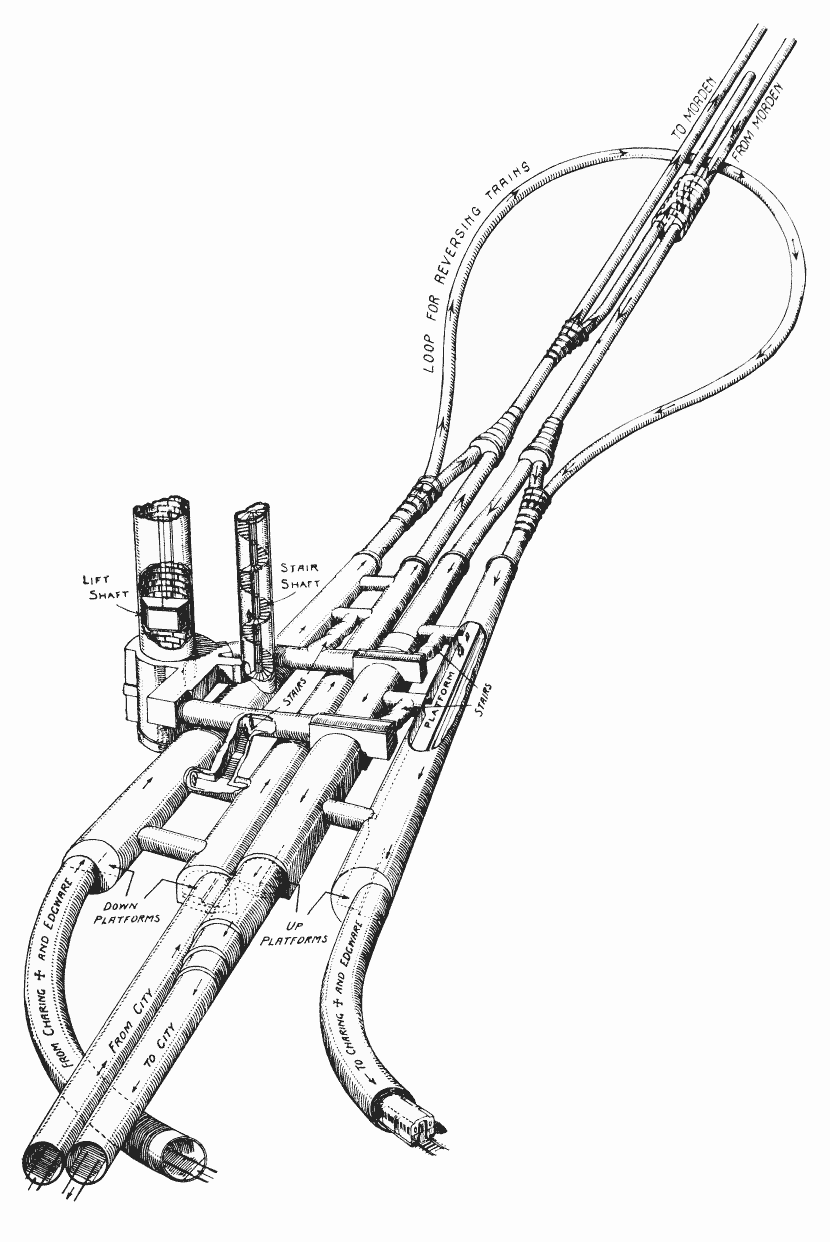
Note.
- South is at the top of the drawing.
- At present, as I said, the loop turns twenty tph all day.
- The extension to Battersea connects to the loop.
This map from carto.metro.free.fr shows a map of the loop.
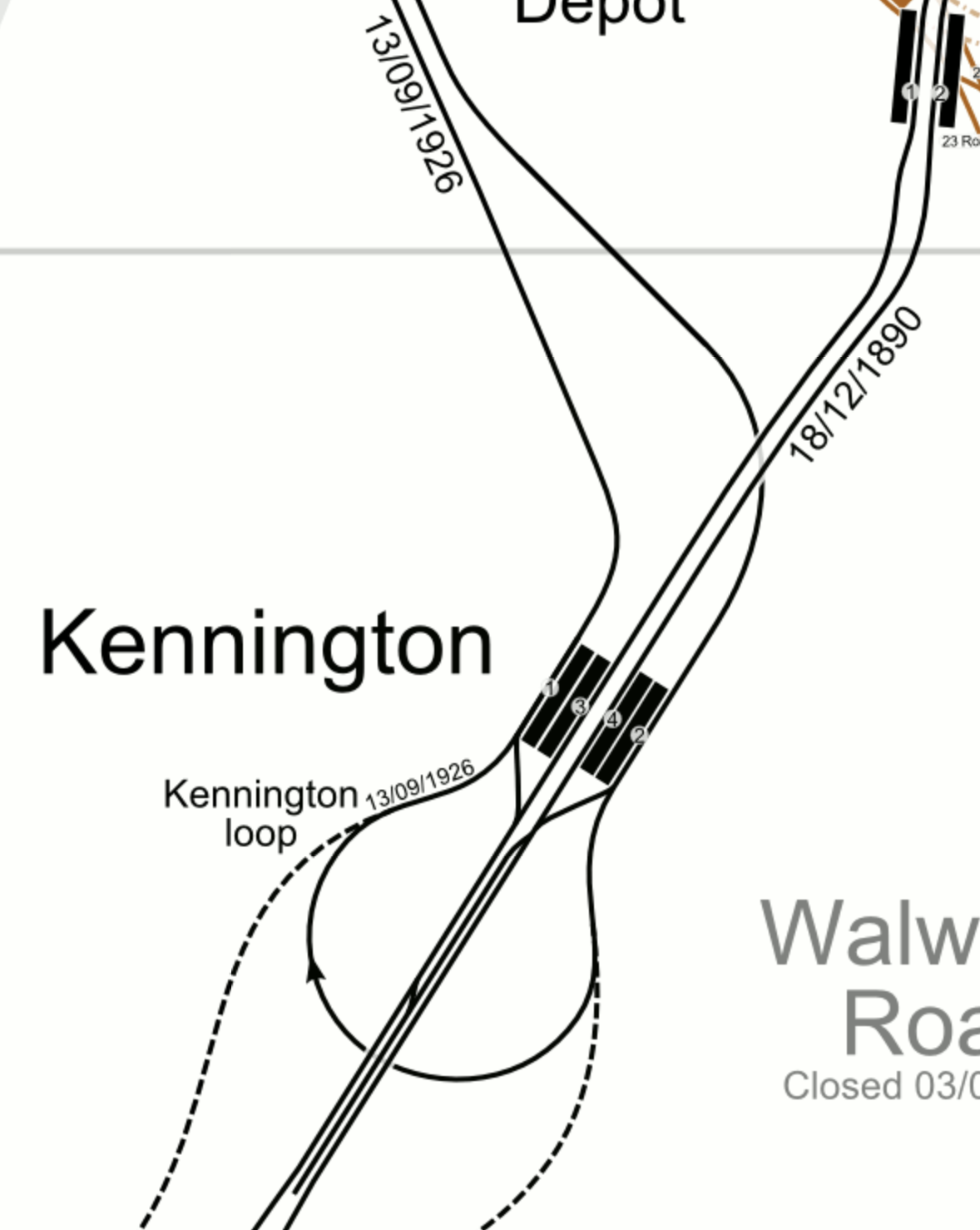
Note.
- The Charing Cross branch goes to the North-West from Kennington.
- The Bank branch goes to the North-East from Kennington.
- ,The lines to Battersea are shown dotted.
- Trains using the extension to Battersea can only use the Charing Cross branch.
I don’t know, but I wouldn’t be surprised, if the line speed to and from Battersea, is faster than it is round the loop.
It’s just that the lines to Battersea are not such a sharp curve and they have been recently designed and built.
As the Modern branch can handle 30 tph, I wouldn’t be surprised to find that the Battersea extension has been designed to handle this frequency.
The Northern Line Extension To Battersea
This document on the Transport for London web site gives details of the Northern Line Extension To Battersea.
This paragraph introduces the project.
The Northern line extension (NLE) between Kennington and Battersea will help regenerate the Vauxhall, Nine Elms and Battersea areas by supporting new jobs and homes. The extension is scheduled to be completed in autumn 2021.
The opening of the extension could offer benefits to the existing Northern Line.
As I said in the previous section, twenty tph are turned at Kennington using the loop.
Will all these trains now use the new Battersea extension, when it opens?
- The Battersea extension is fully double-track.
- Battersea Power Station station has two platforms and a cross-over, so if Brixton and Walthamstow Central stations can handle in excess of 30 tph, I suspect London’s newest terminal station can too!
If the Battersea extension has a design capacity of 30 tph, it would certainly be able to handle 20 tph.
So I wouldn’t be surprised to see all trains that currently turn at Kennington will take the Battersea extension, when it opens.
There must surely be the interesting possibility of before the Battersea extension opens to passengers, using it to turn the trains that would otherwise use the loop at Kennington. It would certainly be a very thorough test, of track and signalling.
I am fairly certain, there would be advantages in having the Battersea extension open before the Bank branch is upgraded.
- Running trains to Battersea could be more efficient than using the Kennington Loop.
- Opening the Battersea extension would need the signalling at Kennington to be upgraded and fully tested, so any changes needed for increased frequencies on the Charing Cross branch could be performed at the same time.
- All the residents of the new housing in Battersea. would have an Underground connection.
Opening the Battersea extension will change passenger patterns on the Northern Line and as the changes will be difficult to predict, it would surely be better to upgrade Bank station, after the opening of the Battersea extension.
Thameslink
Thameslink is not mentioned in any of the Transport for London documents, but surely it has a big part to play.
- Thameslink serves a lot of stations in South and South East London and beyond, including Brighton, East Croydon, Orpington, Sevenoaks and Woolwich Arsenal.
- Thameslink has an interchange with the Circle and District Lines at Blackfriars.
- Thameslink has an interchange with the Metropolitan and Circle Lines at Farringdon.
- Thameslink will have an interchange with Crossrail at Farringdon.
- Blackfriars and City Thameslink stations have good walking routes along the River and to the City.
Thameslink should be appearing on the Tube Map any time soon.
Waterloo And City Line
I am missing the Drain, as it is the easiest way for people in the area, where I live to get to Waterloo station.
I just take a bus to Bank and then walk underground to London’s shortest Underground line.
According to this article on London SE1, it is closed because of the covids, but should reopen in April 2021.
Surely, Transport for London could reopen the line, if they vaccinated all the drivers.
As the Waterloo and City Line has an independent new entrance on Wallbrook, there should be no reason, why it couldn’t reopen before the Northern Line through bank is upgraded.
The Central Line At Bank Station
Nothing has been said, about whether the Central Line will be closed through Bank station, during the upgrade.
I don’t think it will be continuously closed, although access to some parts may be restricted.
There could be partial closures at weekends or in the evenings.
So for commuters and other must-travellers, I suspect the Central Line will get through.
The Circle And District Lines At Monument Station
My thoughts about the Circle and District Line would be similar to the Central Line.
But these lines with their connections at Westminster, Blackfriars, Cannon Street, Tower Hill and Whitechapel could prove important during the works.
The Docklands Light Railway At Bank Station
Again my thoughts about the Docklands Light Railway would be similar to the Central Line.
But there is a lot of work going on to improve access to the Docklands Light Railway, and this could result in a closure to allow completion.
Review Bus Use
When I come into London Bridge station, I usually go to the bus station and get a bus, which stops within fifty metres of my front door. Going to London Bridge isn’t as convenient and I take a variety of routes.
But the corridor between London Bridge and Old Street via Bank and Moorgate has three bus routes; 21, 43 and 141, the last two of which terminate in the bus station at London Bridge. I suspect that the frequency of the last two buses could be increased, if they had a few more buses and drivers, and turned them faster at London Bridge.
I also feel there is scope to run a shuttle between Finsbury Square and London Bridge station.
- It would loop round Finsbury Square at the Northern end.
- It would loop through London Bridge station, as the 43 and 141 buses currently do.
- They would serve Moorgate and Bank.
- As it will be running through a busy part of the City with lots of pedestrians, these buses should be either battery or hydrogen.
- But as they should be high-capacity double-deckers, battery probably wouldn’t have enough power.
What better way would there be, to showcase London’s new hydrogen buses?
And I’m sure Jo Bamford, would make sure that London had enough new Wrightbus hydrogen buses to provide the service.
National Rail Between Charing Cross/Waterloo And London Bridge
I am probably not alone in using this route in preference to the Jubilee Line to travel between Westminster and London Bridge, as where there is an alternative to the deep-level Underground, I will often use it.
In my case coming home from Waterloo, I’ll often hop to London Bridge on National Rail and then get a 141 bus home.
This is classic ducking and diving on my part.
I’m sure others will do the same during the Bank branch closure.
I would also hope, that season tickets would allow passengers to swap terminals without too much trouble and any expense.
National Rail Between Cannon Street And London Bridge
Using Cannon Street instead of London Bridge could be an relatively easy alternative for many passengers.
- It connects to the Circle and District Lines.
- There are East-West buses outside the station.
This Google Map shows the location of the station.
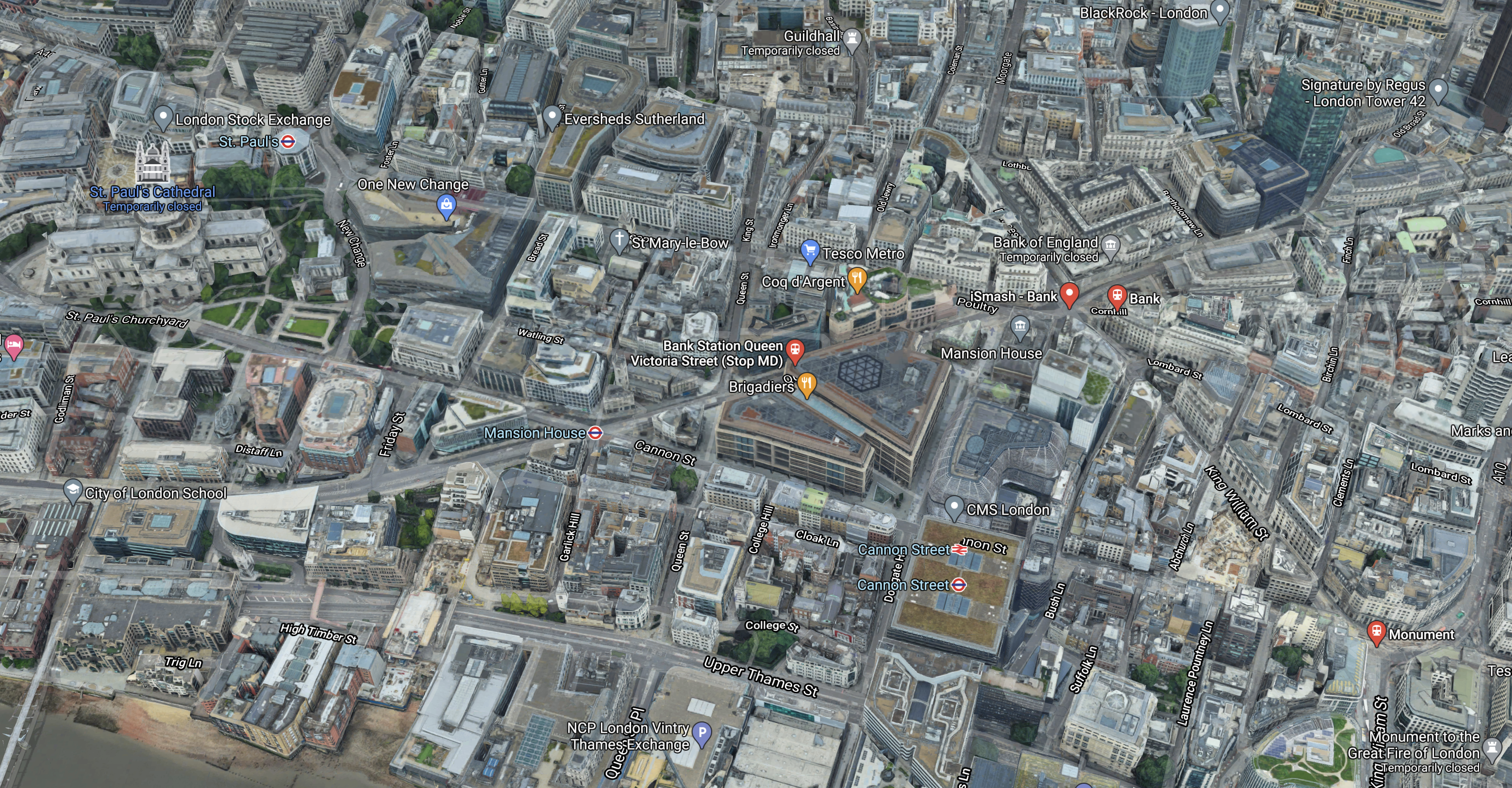
There are a number of useful walking routes from the station, which is towards the bottom of the image slightly towards the right.
- Bank station is about 300 metres and six minutes away.
- The North-South buses between Moorgate and London Bridge on King William Street are 200 metres and three minutes away.
- St. Paul’s is a bit further but it does have the Central Line and lots of buses including the 76 to Moorgate and Old Street stations.
At seventy-three, I can still walk between Cannon Street and Moorgate stations in 15 minutes.
Walking Between London Bridge and Moorgate
Transport for London have said they will review this.
It is not a difficult walk and it has improved since traffic was reduced at Bank.
Conclusion
As originally planned, the timings of the various projects were such that these projects would be more of less completed before the upgrade of the tracks at Bank station was to be performed.
- Crossrail
- The Northern Line Extension to Battersea.
- The new Wallbrook entrance to Bank station.
But no-one had foreseen Covid-19.
So I would plan the date of the Northern Line closure with the utmost care.
Walking Between Cannon Street And Moorgate Stations
I took these pictures as I walked between Cannon Street And Moorgate stations.
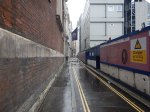
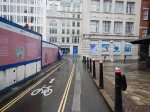
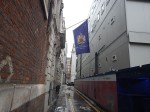
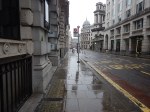
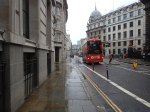
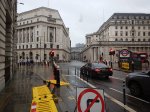
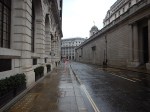
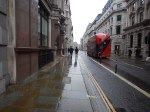
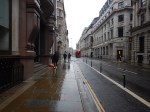

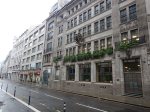
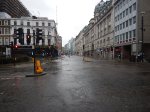
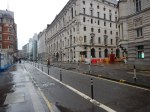

Note.
- It was a Sunday, so there wasn’t much traffic about.
- The bus stop on King William Street is served by buses 21, 43 and 141. wjich all go to Moorgate and Old Street stations.
I needed to find out how long it took for this other post, called Thoughts On The Closure Of The Northern Line At Bank To Complete The Upgrade To Bank Station.
Timings were as follows.
- Cannon Street Station to the Northbound bus stop on King William Street – 3 minutes
- Cannon Street Station to Bank Junction – 6 minutes
- Cannon Street Station to Moorgate Station – 15 minutes
How much faster would I be in better weather?
From Silicon Roundabout To Bank – 4th February 2021
I was on top of a 21 bus, as I took these series of pictures.
Silicon Roundabout


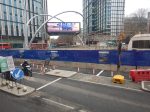
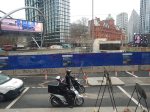
Note.
- My bus Crossed from North to South down the East side of the roundabout.
- Work is now concentrating on creating the new road and pedestrian layout in the North-West corner of the roundabout.
- There will be a lift for passengers in this corner.
This map from Transport for London shows the future layout.
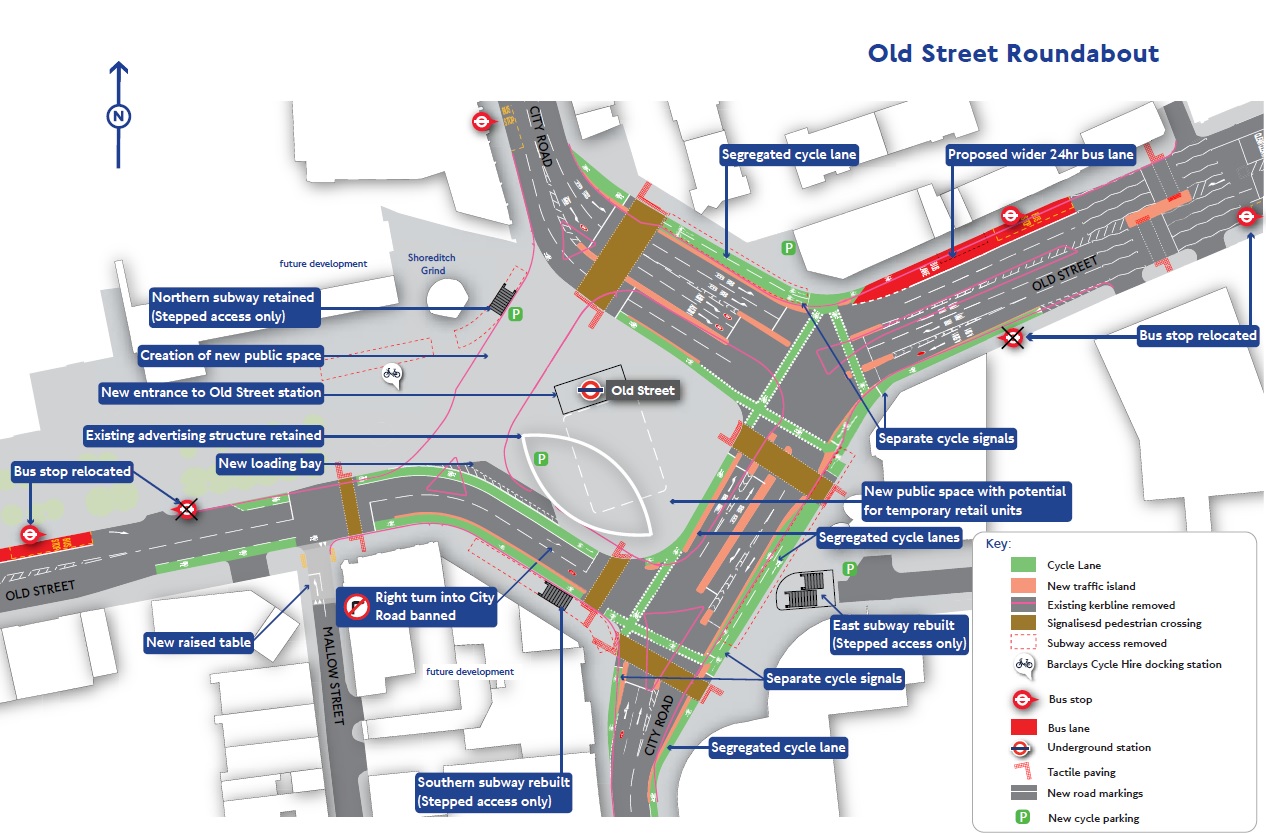
Note the Shoreditch Grind coffee house on the map.
20 Ropemaker Street
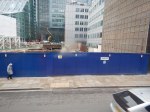

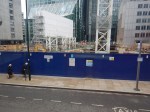
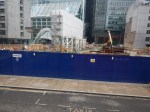
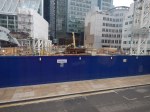
This will be a twenty-seven storey tower.
Moorgate Station
The road was blocked off yesterday, when I went earlier to Marks and Spencer. It still was when I took these pictures.


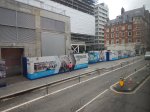
This screen-capture from a Crossrail video shows a possible future Moorgate.
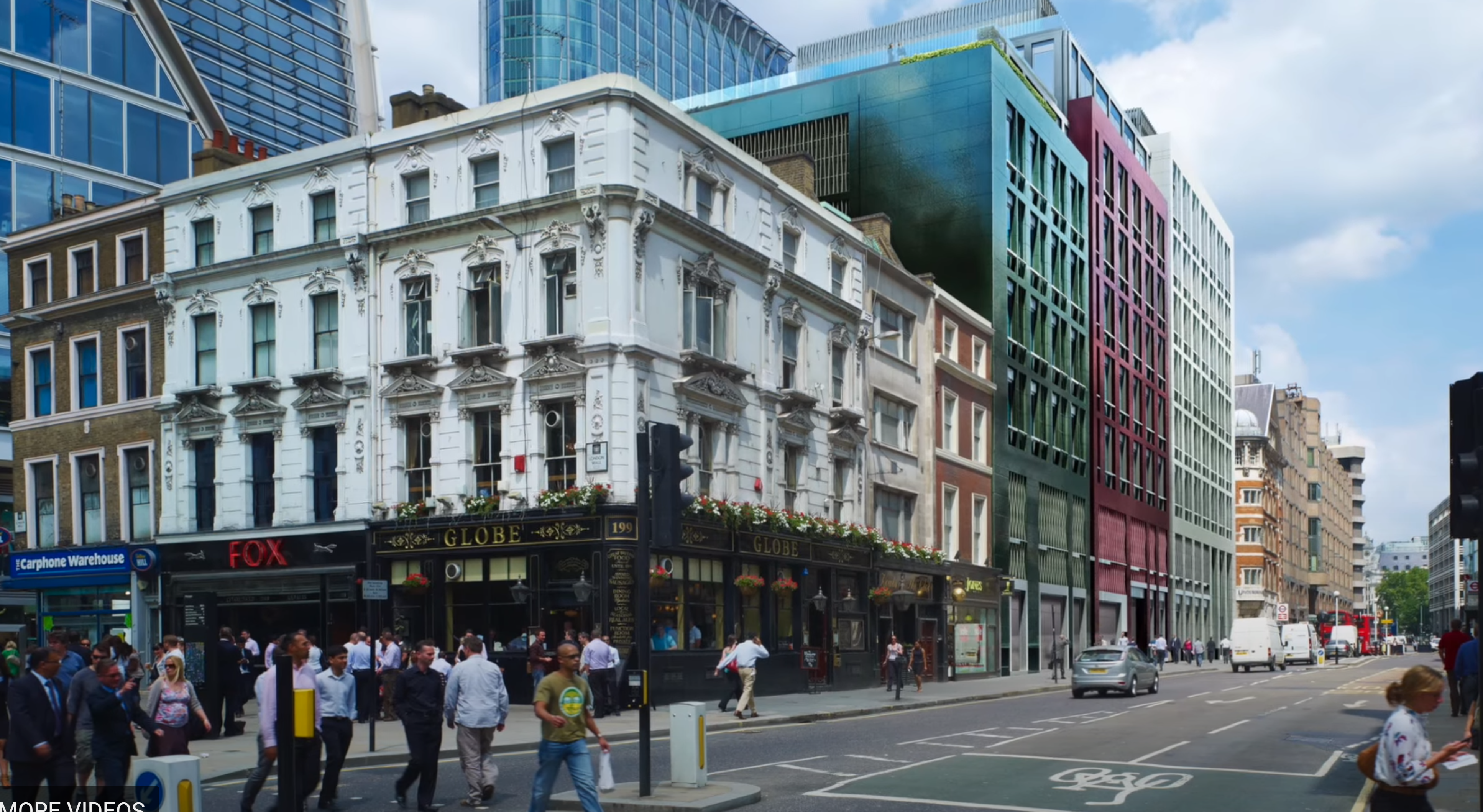
Note the new buildings at 101 Moorgate and the current Moorgate station.There appears to be a gap, so will the station entrance be set back behind a small pedestrian area?
From Moorgate To Bank


The last two pictures show the works at Bank station.
Parallel Trains At Finsbury Park
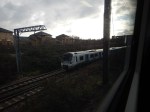
I was travelling from Finsbury Park to Kings Cross, so I got on a Grand Northern service.
Like I’ve seen several times, there was a good cross-platform connection, between services going to Kings Cross and Moorgate, which leave from opposite sides of the same platform.


Note.
- The wide platform at Finsbury Park station between the two services.
- At the current time, the Kings Cross trains are every thirty minutes and the Moorgate trains every five minutes.
- Going say from Stevenage to the City would mean a wait of no more than five minutes.
- But going North, you might wait at Finsbury Park for up to half-an-hour.
Finsbury Park could be a very handy interchange as it has Thameslink, Victoria and Piccadilly Line services, in addition to the Kings Cross and Cambridge and Moorgate services.
Walking Along Moorgate – 30th September 2020
I took these pictures as I walked from North to South along Moorgate today from the bus stop by Finsbury Square.
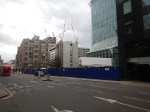
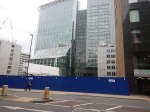
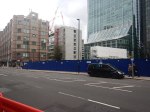
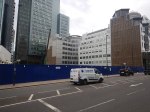
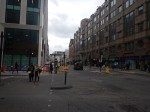
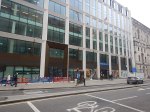
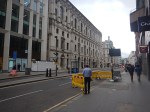
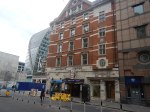
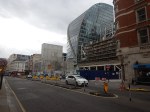
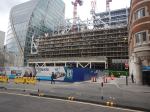
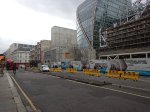
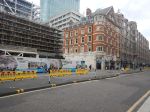
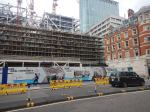
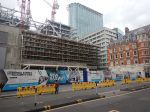
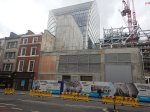
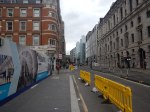
Note.
- I did cross the road three times.
- The building site behind the blue hoardings in some of the first pictures, looks like it could be another tall building.
- The tower looming in the background of several of the pictures is Citypoint, which was originally built in 1967 and refurbished in 2000.
- The new looking building, with the Barclays branch at street level, is not new but another refurbished building, that has been finished in the last few months.
- The older red and white building is Moorgate station. There is nothing to indicate that this building will be rebuilt.
- The odd shaped building to the South of the station is Moor House.
- A large new entrance to the station, with an office block on top is being built between the original station entrance and Moor House.
- Between the new station entrance and Moorgate, 101 Moorgate is being built.
There is certainly, a lot of all types of property development going on at Moorgate station, which after Crossrail opens will become the Western entrance to the Crossrail station at Liverpool Street station.
This 3D Google Map shows Moorgate.
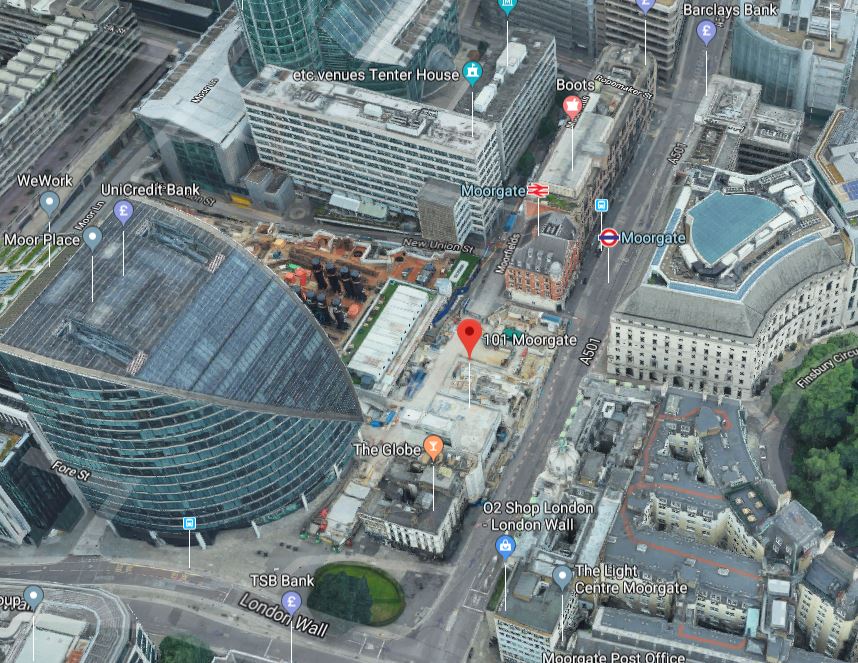
101 Moorgate is marked with a red arrow.
A Crossrail Video Of Liverpool Street Station
This video shows the design of Crossrail’s Liverpool Street station.
This screen-capture from the video shows a possible future Moorgate.
Note the new buildings at 101 Moorgate and the current Moorgate station.
These are related posts on the design of the Crossrail station at Moorgate and Liverpool Street.
- London’s First Underground Roller Coaster
- Moorgate Is Being Refurbished In Readiness For Crossrail
- Has The Possibility Been Created For A Pedestrian Tunnel Between Bank And Moorgate Stations?
The station could become the major one for the City of London.
Extending the Northern City Line To The South
This was intended by the builders of the Northern City Line and they intended to take the route to just North of Bank station at Lothbury.
In the Wikipedia entry for Moor House, this is said.
Completed in 2004, it was the first building to be designed for the forthcoming Crossrail, with a ventilation shaft to the station underneath the building. When built, it had the deepest foundations in London, which reach down 57 metres (187 ft) and are specifically designed to withstand further tunneling below it in the future.
I suspect that could mean that Moor House won’t get in the way of any further railway development.
In the Wikipedia entry for the Northern City Line, this is said about possible developments planned after World War 2.
After the war there were proposals to extend the Northern City Line north and south. The London Plan Working Party Report of 1949 proposed several new lines and suburban electrification schemes for London, lettered from A to M. The lower-priority routes J and K would have seen the Northern City Line extended to Woolwich (Route J) and Crystal Palace (Route K), retaining the “Northern Heights” extensions to Edgware and Alexandra Palace. The lines would have run in small-diameter tube tunnels south from Moorgate to Bank and London Bridge. The “K” branch would have run under Peckham to Peckham Rye, joining the old Crystal Palace (High Level) branch (which was still open in 1949) near Lordship Lane. Nothing came of these proposals, and the Edgware, Alexandra Palace and Crystal Palace (High Level) branches were all closed to passengers in 1954. As a result, the Northern City Line remained isolated from the rest of the network.
Note.
- The proposed J branch to Woolwich has been covered by Crossrail calling at both Moorgate and Woolwich.
- The proposed K branch to Peckham Rye and Crystal Palace has been covered by Crossrail and the London Overground with a change at Whitechapel.
So why bother to open up the possibility by designing Moor House for more tunnels to be bored?
As the London Plan Working Party Report of 1949 indicated several more lines and electrification were proposed.
Also during the war several deep-level shelters were built under Underground stations. Wikipedia says this about the background to the shelters.
Each shelter consists of a pair of parallel tunnels 16 feet 6 inches (5.03 m) in diameter and 1,200 feet (370 m) long. Each tunnel is subdivided into two decks, and each shelter was designed to hold up to 8,000 people. It was planned that after the war the shelters would be used as part of new express tube lines paralleling parts of the existing Northern and Central lines. Existing tube lines typically had 11-foot-8.25-inch (3.56 m) diameter running tunnels and about 21 feet (6.4 m) at stations; thus the shelter tunnels would not have been suitable as platform tunnels and were constructed at stations the new lines would have bypassed. However, they would have been suitable as running tunnels for main-line size trains. (One existing tube, the Northern City Line opened in 1904, used a similar size of tunnel for this reason, although in fact main-line trains did not use it until 1976.)
Shelters were planned on the Northern Line at Belsize Park, Camden Town, Goodge Street, Stockwell, Clapham North, Clapham Common, and Clapham South on the Northern Line. Did London Transport do a full survey of the Northern Line before the war and leave documents saying where an express Northern Line could be easily built.
My mother told me about these plans and as her best friend worked in Personnel at London Transport, she probably knew more than the average suburban housewife, who worked part-time for my father as a book-keeper.
After Crossrail opens and Moorgate station and the Bank station Upgrade are completed will it be possible to bore two new full-size tunnels underneath the Northern Line and Moor House and other buildings on the route to create a Northern Line Express service?
Consider.
- The tunnels would be very deep and suitable for full-size trains.
- Moorgate, Bank and London Bridge stations will have all been rebuilt in the last twenty years, so hopefully, they have been built to allow tunnels for a Northern Line Express service to pass through.
- The Northern Line Express would take the pressure off the City Branch of the Northern Line?
- Initially, the line might terminate under London Bridge station in perhaps a two platform station.
- Modern digital signalling would allow up to 24 trains per hour (tph) on the section between London Bridge and Alexandra Palace station and 12 tph on the Welwyn Garden City and Stevenage branches
It would be a lot easier to build than Crossrail 2 and would give some of the benefits.
An Extension To North Cheam?
The Wikipedia entry for Morden station has this paragraph.
A post-war review of rail transport in the London area produced a report in 1946 that proposed many new lines and identified the Morden branch as being the most overcrowded section of the London Underground, needing additional capacity. To relieve the congestion and to provide a new service south of Morden, the report recommended construction of a second pair of tunnels beneath the northern line’s tunnels from Tooting Broadway to Kennington and an extension from Morden to North Cheam. Trains using the existing tunnels would start and end at Tooting Broadway with the service in the new tunnels joining the existing tunnels to Morden. The extension to North Cheam would run in tunnel. Designated as routes 10 and 11, these proposals were not developed by the London Passenger Transport Board or its successor organisations.
Perhaps, the solution would be to bore two new deep full-size tunnels from Moorgate to Tooting Broadway.
- The Northern Line Express trains couldn’t continue to Morden, as they would be too big for the existing tunnels.
- So they would have to turn back at Tooting Broadway station.
- The stations between Kennington and Morden, that are in need of improvement could be updated.
- I would design the interchange between Northern Line Express and Northern Line trains at Tooting Broadway station as a step-free cross-platform interchange.
The Wikipedia entry for North Cheam station, describes the extension to the station.
- It would have been in tunnel from Morden.
- There would be an intermediate station at Morden South station.
- It didn’t think much of the economics.
- I would suspect that the tunnel would run under the A 24.
- The tunnel would be just under three miles long.
I wonder, if the extra distance, made operation of the line easier.
I estimate that a train could go from Morden to North Cheam stations and back in under ten minutes.
- This would allow 6 tph with a single tunnel and track between the two stations.
- The two new stations; North Cheam and Morden South could be single platform.
- The signalling could be simplified.
The extension could be more affordable.
A Hand Sanitiser In A Quiet Corner
This corner at Moorgate station never gets any passenger traffic, but thousands pass within three or four metres or so.
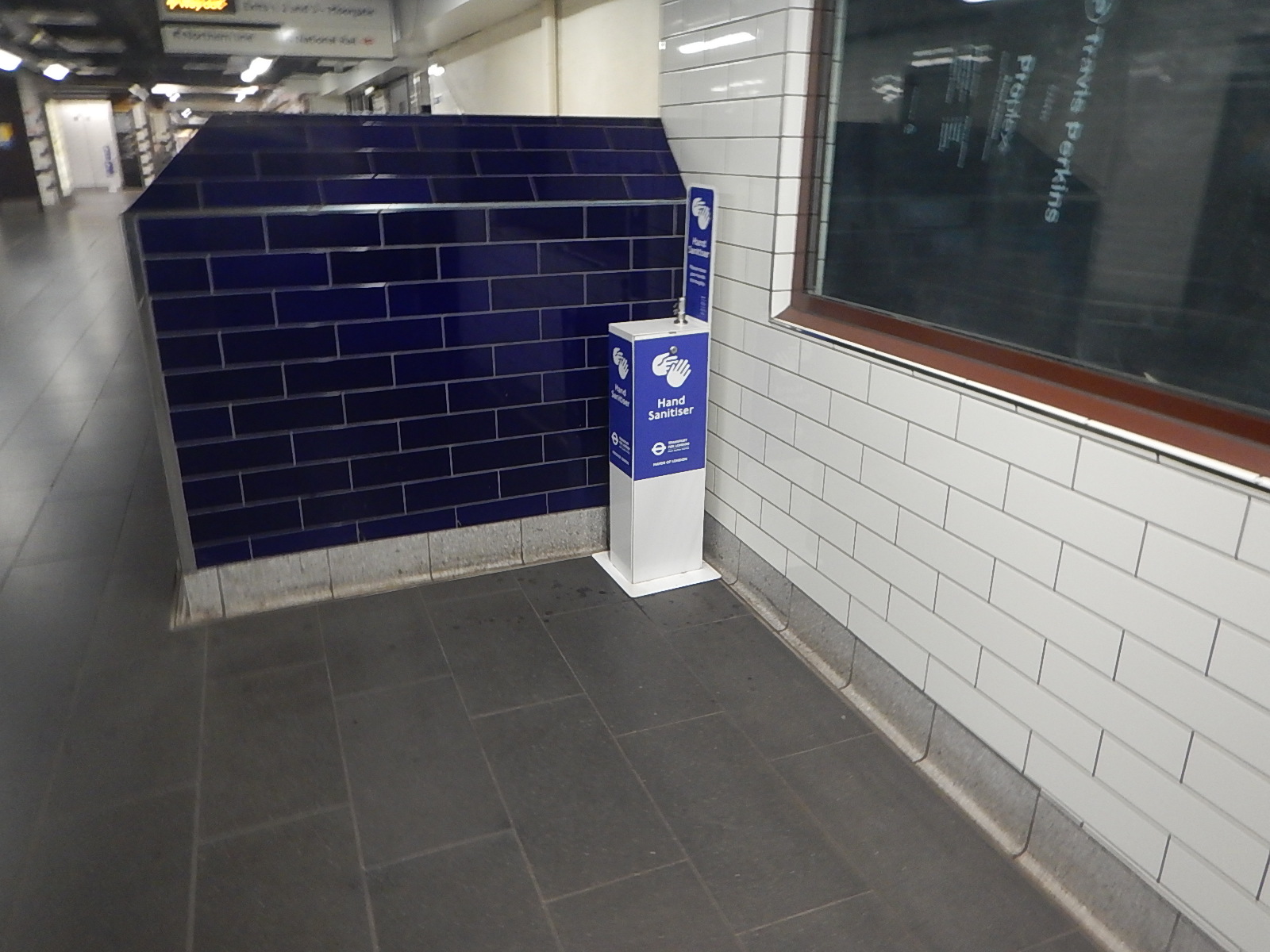
So what a good place to put a hand sanitiser.
I often use these sanitisers, when I pass and wonder if they should be a permanent feature, even after COVID-19 has passed.
Would they help in the control of winter influenza?
Another Space To Be Filled
This Google Map shows the City of London North of Moorgate station.
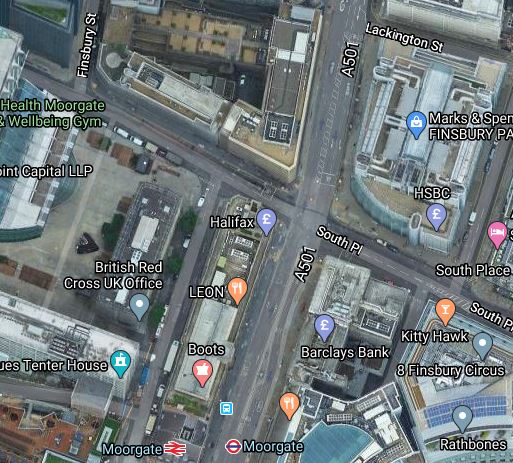
Note the crossroads, where South Place goes East from the A501, which has LEON and Boots on the West side and Barclays Bank on the East.
The South-East corner of the crossroads has been redeveloped and now it the time for the North-West corner to be redeveloped.



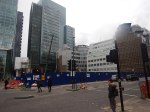
The pictures show that the site has been cleared.
- At appears that the site will be a development called 20 Ropemaker Street.
- It will be up to 27 stories high.
- It will be 457,000 square feet of offices.
- There will be retail premises along Finsbury Pavement opposite Gap and Marks & Spencer.
- The building will be the new London headquarters for Linklakers LLP.
There are also hints on the Internet, that the main entrance will be opposite the entrance for Moorgate station, with all its connections to the following.
Circle Line
- Crossrail
- Hammersmith & City Line
- Metropolitan Line
- Northern Line
- Northern City Line
It looks to me that the developers are taking advantage of the transport developments.
My Bus Stop At Moorgate Has Been Reopened
The easiest way to get to my house is to get a 21, 76 or 141 bus from outside Moorgate station. All stop within a hundred metres of my house.
For several years the stop has been a temporary affair, whilst Moorgate station is rebuilt.
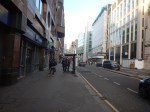
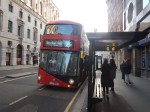
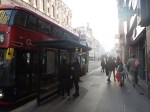
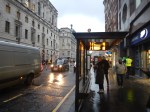
But now it’s a proper stop with a next bus display and a shelter.
Much of what I need in life, is available close to this stop.
- On the other side of the road is a Marks and Spencer store with both food and clothes.
- Within twenty metres of the stop, there are Boots, Hotel Chocolat, Pret a Manger and Leon.
- There’s a PC World and a Rymans around the corner.
And underneath it all is Crossrail!
I will have my own personal frequent bus route to London’s new rail line!
 The Anonymous Widower