An MG Y-Type
On Bank Holiday Monday, in my travels along the Crouch Valley Line, I ended up at Quay Day at Burnham-on-Crouch.
I took these pictures of an MG Y-Type.


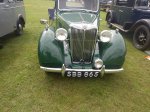
It is an example of the earliest car owned by my father that I can remember
I can still remember the number, which was BNH 368.
Incidentally, my father had owned several MGs, both before and after the Second World War. The last two MGs were both ZA Magnettes; TNK 663 and 676 RME.
Now That’s What I Call A Footbridge!
This article on Global Rail News is entitled Network Rail Launches Footbridge Design Competition.
This is the first two paragraphs.
A competition for new footbridge design ideas has been launched by Network Rail and the Royal Institute of British Architects (RIBA).
Entrants are asked to design fully accessible footbridges that can be used across Britain’s rail network and that further improve the legacy of rail pioneers.
Hopefully, something better than some of those on Britain’s rail network will be designed.
I was in Wales last week on the Ffestiniog Railway and saw this bridge.
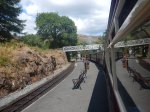
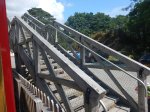


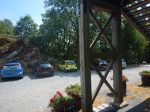
Surely, someone can come up with something like this, that meets all the regulations and looks a lot better, than Network Rail’s standard offering in green-painted steel.
My father used to build structures like this with timber and bolts to create extra floors and storage in his print works in Wood Green. From about the age of seven, I was his little helper.
Perhaps, thirty years later, I had a barn built at a house I owned. The architect had the building designed in a similar manner.
Someone, ought to enter Network Rail’s competition with a similar design.
England In Kaliningrad
There is a good chance, that my great-great-great-grandfather; Robert Muller, came from East Prussia, the capital of which was Konigsberg East Prussia was annexed by the Soviet Union after the Second World |War and Konigsberg was renamed Kaliningrad.
My father was about fourteen, when his grandfather died and my father once told me, that his grandfather had told him, about meeting Robert, who would have been his grandfather’s grandfather.
Apparently, the elderly man didn’t speak any English and only spoke German. Knowing that my male line is Jewish, I wonder if it wasn’t German but Yiddish.
Konigsberg was an important city and the Prussian
Wikipedia has a section about the Jews in Konigsberg, where this is said.
The Jewish population of Königsberg in the 18th century was fairly low, although this changed as restrictions became relaxed over the course of the 19th century. In 1756 there were 29 families of “protected Jews” in Königsberg, which increased to 57 by 1789. The total number of Jewish inhabitants was less than 500 in the middle of the 18th century, and around 800 by the end of it, out of a total population of almost 60,000 people.
Speaking to someone at the German History Museum, a lot of Jewish men had to leave East Prussia, when they became adults, unless they were protected.
As Robert would have been a young adult,, when he turned up in Bexley, I suspect that soon after he qualified as a tailor, he left the area.
This keeping out of the way of trouble, is very much a family trait.
Konigsberg was at that time a port city and there was quite a lot of trade with London. So I suspect getting to London was not that great a problem.
I very much regret not asking my father for more details.
Like me my father was an atheist, although with a Jewish philosophy of life. He was also very much against fascists, communists and dictators of both the left and right. He was proud to have been at the Battle of Cable Street, when the East End of London stopped Oswald Mosley and his Blackshirts.
In some ways, I regret not being at the match tonight. But then I was advised that there would be trouble.
I have been to the Polish border with the Russian enclave. I wrote about it in At Poland’s Border With Russia.
A Visit To The Swanage Railway
Yesterday, I noticed this article on Railnews which was entitled National Rail Trains To Score Heritage First.
This was the first two paragraphs.
Scheduled National Rail trains will run on a heritage railway tomorrow for the first time.
South Western Railway is launching Saturday services to Corfe Castle on the Swanage Railway, and Corfe Castle has been restored to the national stations database.
So I thought, I’d be on the first South Western Railway train on a scheduled service into Corfe Castle station on the Swanage Railway.
I caught the 08:25 train from London Waterloo to Weymouth and I alighted at Wareham station to catch the 11:12 train to Corfe Castle.
These pictures illustrate my trip.

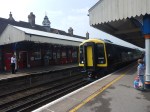

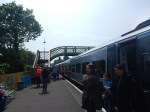
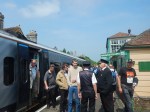
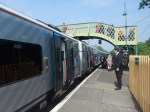
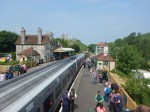
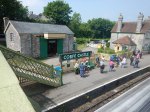
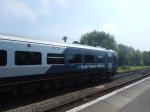
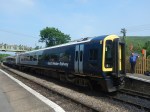
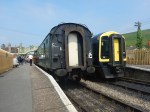




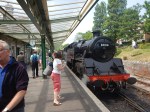


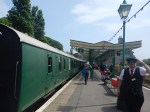


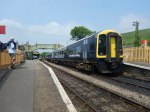
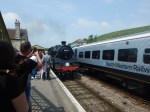
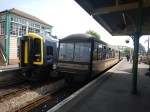

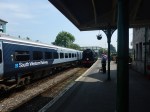
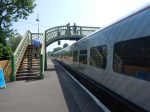
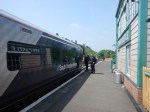
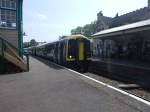

I have various observations.
Costs
I came down from London, so I had to pay for that ticket, but train tickets to Swanage from Wareham cost me five pounds for the South Western Railway leg and ten pounds for steam haulage.
Operations
Everything was very professional and there seemed to be a high-level of communication and good humour between the staff of South Western Railway and the volunteers of the Swanage Railway.
Swanage Railway were operating a steam-hauled shuttle along their line between Norden and Swanage stations and as the pictures show, both companies were able to run their own services, without interrupting the other.
Does Swanage Need A Year Round Train Service?
After my father retired, my parents went to live in Felixstowe.
It certainly didn’t work for me, as it was not the sort of place, a late teenager, could amuse himself, especially as all my friends were in London. As we hadn’t sold the house in London, I was usually to be found there.
I don’t know Swanage and I don’t know what it is like to live there!
But I do remember a short film on the BBC program Tonight in the early 1960s.
They were talking about long-distance commuting and they used as an example, a guy, who had moved his family to Swanage and was leaving home very early in the morning to go back to London for his work.
He was very happy with the arrangement, but the last shot of the film was after the reporter had asked his two teenage daughters what they thought of it all. Their faces said it all and I can remember my mother made an acerbic comment.
I wonder what a year round hourly service would do for Swanage?
Felixstowe has a year-round hourly rail service to Ipswich, but then Felixstowe is over twice as large as Swanage.
On the other hand, Felixstowe also has a fast dual-carriageway road connecting it to the rest of East Anglia.
Providing An Hourly Service To Swanage
Unlike many rail schemes aiming to create a new branch line, a lot of infrastructure is already in place.
Track
Yesterday, the following services were running.
- A roughly hourly steam service between Norden and Swanage stations, run by the Swanage Railway.
- A two-hourly service diesel service between Wareham and Corfe Castle stations, run by South Western Railway.
The track, which is a mixture of single and double track, seemed to cope well.
Interestingly, there is a mothballed oil terminal at Furzebrook, which was used to export oil from the large field at Wytch Farm. It is connected to the Swanage Railway between Norden station and the South Western Main Line.
As development and exploitation of oil fields is a very unpredictable process, I suspect that the Northern section of the Swanage railway is kept in very good condition by Network Rail, just in case Furzebrook has to reopen.
Norden Station
Norden station is the Northernmost station on the Swanage Railway.
This Google Map shows the station.
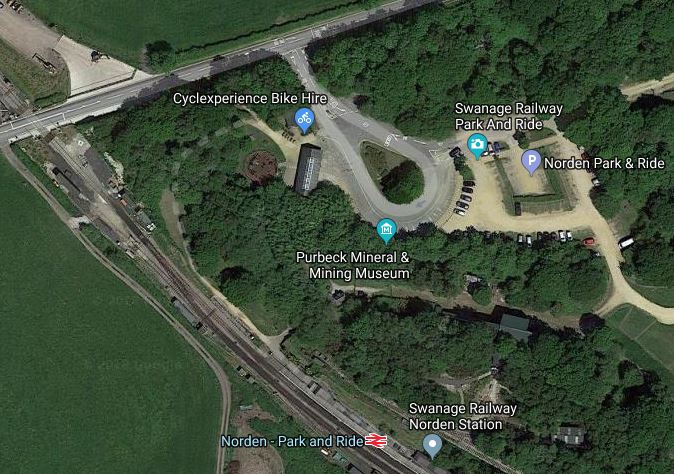
The map clearly shows the single platform, the Purbreck Mineral and Mining Museum and the Swanage Railway Park & Ride.
The Wikipedia entry for Norden station, says this about the car park.
A large car park, provided by Purbeck District Council, allows the station to function as a park & ride facility for the tourist centres of Corfe Castle and Swanage
Could this car park, also be used by local residents wanting to commute to or go shopping in Poole or Bournemouth?
Corfe Castle Station
Corfe Castle station is a well-built station with two platforms and a footbridge, that is as good if not better than many rural stations.
Harman’s Cross Station
Harman’s Cross station is a two platform station, without a footbridge.
It appears from the Google Map of the area, that new houses are being built in Harman’s Cross.
Swanage Station
Swanage station is the terminus station with two platforms.
As the pictures show, the platform used by the steam train is long and would certainly take an eighty metre long train.
Operating As A Single-Track Branch Line
I suspect that on days, when the heritage railway is not in operation, that the Swanage Railway could be used as a single-track branch line.
So perhaps, a diesel multiple unit could run a passenger shuttle along the branch. Operation would be little different to any of several diesel-operated branch lines in the UK.
Surely, if the CAA can allow Loganair to use Barra Airport, which is a beach on the island of the same name, then the ORR must be able to write a sensible rule book, to allow an hourly passenger service between Wareham and Swanage.
This picture shows Zwickau Zentrum station in the centre of the German town of Zwickau.
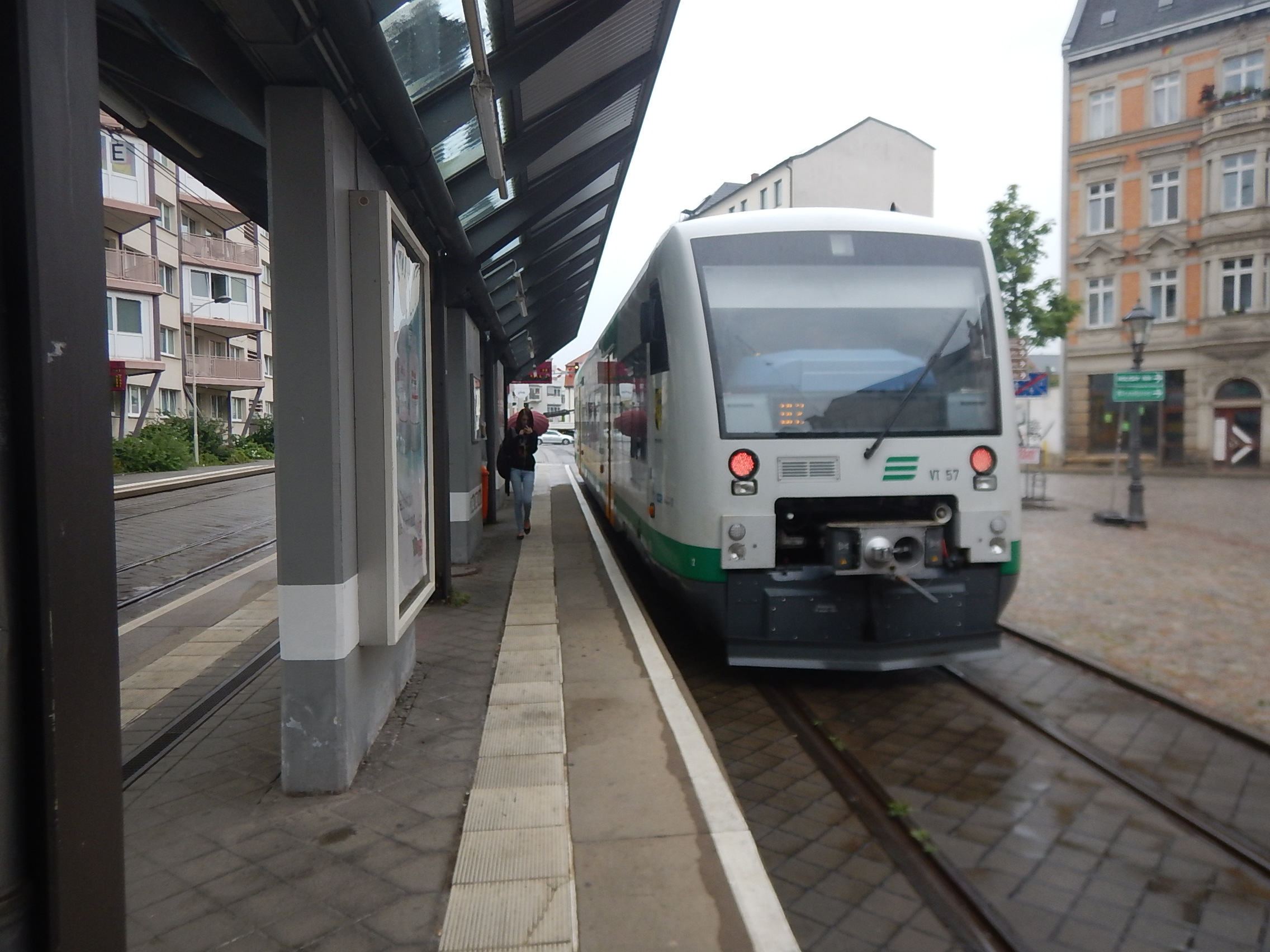
It is the simplest station, I’ve ever seen in a town centre. The diesel multiple unit appears to come into the city under the following rules.
- A sensible speed.
- Orange lights flashing.
- Two crew operation.
Effectively, the train service in Zwickau is run like a tram and even has an unusual three-rail track, that it shares with metre-gauge trams.
Note that as the Swanage Railway is a heritage railway, the speed limit is only 25 mph anyway.
As yesterday showed, South Western Railway and the Swanage Railway are able to operate a practical shared service on days, when the heritage railway is in operation.
Connecting To South Western Main Line Services
As was demonstrated yesterday by South Western Railway’s Class 159 train, operation between Corfe Castle and Wareham stations, is not the most difficult of operations.
Two things help.
- The South Western Main Line is not the busiest of routes through Wareham station.
- There is a cross-over to the West of the station.
These allowed the Class 159 train to use one of the through platforms to turnback.
Would this continue, if say the Swanage Railway were to run an hourly shuttle between Corfe Castle and Wareham stations?
Look at this Google Map of Wareham station.
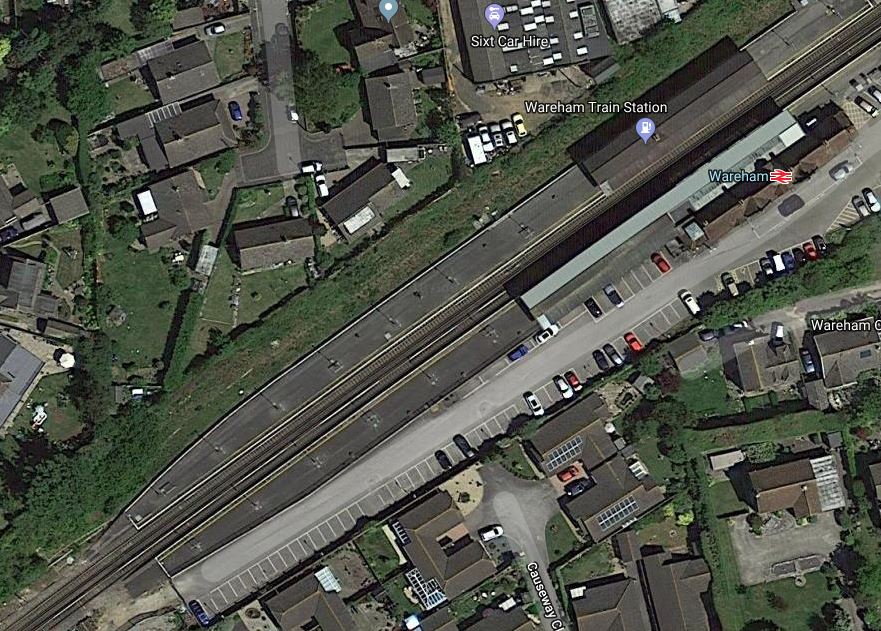
Is there space on the Northern side of the station to add a bay platform, to allow the shuttle to terminate in its own platform?
When I returned from Wareham to Waterloo, I just missed a train and I had to wait thirty minutes for the next train.
Looking at the Google Map of Poole station, there would appear to be a large amount of space around the station,
The Wikipedia entry for Poole station, also says this.
In 2004 proposals were drawn up for the current station buildings and footbridge to be replaced as part of redevelopment plans for the old goods yard. A hotel was to be built on the site of the current station building, however as of 2010 these plans have not progressed.
So would it be feasible at some time in the future to terminate a Swanage service in a bay platform in the much larger town of Poole?
There are certainly possibilities to use Poole or even Bournemouth stations as a terminus of a service to Swanage station, that would also increase the frequency on the South Western Main Line between Bournemouth and Weymouth.
How Long Would A Train Take To Go From Wareham To Corfe Castle And Back?
Looking at yesterday’s figures on Real Time Trains, the following times were achieved yesterday.
- Wareham to Corfe Castle – 21 minutes
- Corfe Castle to Wareham – 26 minutes
Yesterday, the trains were waiting for a long time at Corfe Castle station, to fit with their two-hourly timetable and that of the steam trains on the other track.
If you add in sensible turnback times at Wareham and Corfe Castle, I doubt that a round trip could be done in an hour, making it difficult to run an hourly shuttle between the two stations.
How Long Would A Train Take To Go From Wareham To Swanage And Back?
Using yesterday’s figures and the quoted times for steam trains between Corfe Castle and Swanage stations, we get the following times.
- Wareham to Corfe Castle – 21 minutes
- Corfe Castle to Swanage – 22 minutes
- Swanage to Corge Castle – 20 minutes
- Corfe Castle to Wareham – 26 minutes
Or a total of 89 minutes plus how long the turnround will be at Swanage station.
I have a feeling that timetabling an hourly service could be difficult.
What Rolling Stock Can Be Used?
If the trains travel for more than a few miles on the South Western Main Line, being able to use the third-rail electrification would be useful.
But they would also need to be self-powered on the Swanage Railway.
So perhaps, a bi-mode would be ideal.
As they have rather a heritage flavour, perhaps a Class 769 train would be ideal?
Conclusion
There is a lot of potential to improve services on the Swanage Railway.
I suspect that if South Western Railway and the Swanage Railway got into serious discussion, there will be a solution, that would be beneficial to both parties and all those who live and work in or visit Swanage and the Isle of Purbeck.
My Father’s Politics
In a A Trip To The Berlin Olympic Stadium, I said this about my father’s politics.
My father hated both extreme-right and extreme-left politics with a vengeance and I can honestly say, that I never heard him tell a racist joke.
With the rows going on this morning about antisemitic elements in the Labour Party, I looked up Stalin and antisemitism in Wikipedia.
My father had a Jewish male line, but no religion of any kind, although the more I learn, his outlook on life and morals were fairly Jewish.
In the Battle of Cable Street, he was there to stop Oswald Mosley and his supporters marching through the East End.
I know he moved in left-wing Tory Party circles, nearly stood for Parliament against one of Mosley’s supporters, and once said he had been at the League of Nations in Geneva. But, he remained largely silent about what he did in the 1920s and 1930s.
But I do think his Jewish genes drove him to take up his strong centrist views, especially when you read about Stalin and the Jews.
It is one of my regrets in life, that I didn’t find out more about my father’s life, in what must have been exciting times for those, who thought about politics.
A Trip To The Berlin Olympic Stadium
My father hated both extreme-right and extreme-left politics with a vengeance and I can honestly say, that I never heard him tell a racist joke.
My father also liked his sport and always claimed he’d first been driven to White Hart Lane in a pony and trap, before the First Wold War. He said, that you used to give a kid, a shilling to hold the horse’s head during the match.
He also used to like his athletics and one day told me with great joy, how the black American athlete Jesse Owens had annoyed Hitler by wining three gold medals.
So as I was in Berlin, I had to visit the Berlin Olympic Stadium.
I arrived at the S-bahn station and walked through to the U-bahn station from where I returned to Central Berlin.
These are some of the npictures that I took.


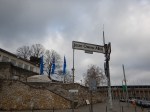
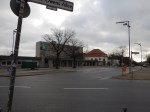






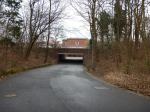
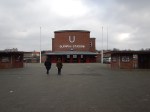
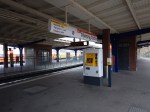
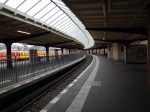
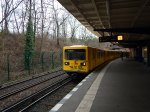
It was a cold walk, but would be very pleasant in the sun.
The Finest Low-Alcohol Gluten-Free Beer In The World
In some ways this is an open letter to Archie Norman and Jonathan Adnams, who are respectively chairman of Marks and Spencer and Adnams Brewery.
Adnams brew Southwold Pale Ale 0.5% for Marks and Spencer.
I have three medical conditions.
- I am coeliac, which means I must avoid gluten.
- I’ve had a stroke and am on Warfarin, which means I can’t drink too much alcohol.
- I have a need to drink lots of fluids and I find beer is best.
So I need a low-alcohol and gluten-free beer, that has all the thirst-quenching properties of beer.
I should say that my grandfather had the same need to drink a lot and he eventually turned into a serious alcoholic and died at the age of just forty.
I am now seventy and started drinking halves of Adnams at fourteen in Felixstowe Conservative Club, whilst playing snooker with my father. Since a stroke seven years ago, I’ve probably never drunk more than ten units of alcohol in a week.
The Southwold Pale Ale 0.5% satisfies my need for a low-alcohol beer and it has a quality taste, that I very much like.
When I was diagnosed as a coeliac twenty years ago, one of the problems was finding a decent gluten-free beer. So I had a discussion with a brewer at Adnams and he said that their beers could be gluten-free.
But I never tried one!
However, after testing a few bottles of Southwold Pale Ale 0.5% , I was convinced that the beer was low enough in gluten not to have any ill-effects on my body.
But then surely, a low-alcohol beer must be made with less barley to create the low-alcohol level!
I think Southwold Pale Ale 0.5% is a superb beer.
Don’t just take my word for it!
In the reviews on the Marks and Spencer web site, these are some of the titles.
- Favourite Low Alcohol Option
- Best Low Alc Beer I’ve Tried Yet
- Excellent Low Alcohol Pale Ale
Two other reviewers complain about the availability of the product.
Research shows that as many as one-in-fifty of the population of the UK could be coeliac.
Conclusion
Improving the availability of this product could be good for all concerned.
Then
Gibb Report – Moorgate Services Could Be Transferred To The London Overground
The Gibb Report, looks in detail at services out of Moorgate station on the Northern City Line in detail.
Note that current plans for this line include.
- New Class 717 trains to replace the Class 313 trains, which are little better than scrapyard specials.
- Higher frequency and faster services to Hertford North, Letchworth Garden City, Stevenage and Welwyn Garden City.
- Better Off Peak services.
- A step-free connection at Moorgate to Crossrail and four Underground lines.
It could also be rebranded as the Great Northern Metro.
Chris Gibbs flags up various issues with this service. He says this about the infrastructure.
25 new Class 717 six-car trains are being built by Siemens as a dedicated fleet for this route, and will be maintained by GTR at their Hornsey Depot. The line between Drayton Park and Moorgate is a former underground line transferred to BR in 1976 and partly converted for main line trains.
It retains various Underground characteristics, such as third rail electrification with a fourth return rail, and tripcocks at all signals, and I believe Old Street and Moorgate stations are owned by London Underground as part of shared stations, and are in need of modernisation. The track and signalling is owned and operated by Network Rail.
I would add a personal observation. Highbury and Islington station is a station where the below-ground platforms are in desperate need of improvement and step-free access. Over the last year or so, with GTR’s labour troubles, the operation of the station at times, has not been smooth, much to the exasperation of London Underground/Overground staff.
Chris Gibbs also notes several issues with the employment of staff after 2018.
Other current Great Northern services run between Kings Lynn, Cambridge, Peterborough and Kings Cross, and these will be part of the Thameslink operation from 2018, with most services continuing to destinations south of London and a few running to Kings Cross. I understand Great Northern drivers will be “temporarily” split between Metro and Thameslink in 2017 to avoid them all having to learn the cross London routes and Class 700 trains, so there may then be a some division for TUPE purposes.
At present it is proposed not to initially train about 100 drivers on Class 700 trains, spread across several locations, and it is proposed to open new drivers depots, for example at Welwyn Garden City and Finsbury Park. These proposals have not yet been approved by DfT, and recruitment has not yet begun. However there is still risk that splitting the driver workforce, who currently enjoy variety of work, may be unpopular, and more work is required to evaluate this. All Great Northern Metro services are currently DOO.
It looks like a disaster waiting to happen to me.
He finishes his discussion on the Great Northern Metro like this.
I believe there is an option to transfer the Great Northern Metro operation to TfL and it’s London Overground concession in 2018. If TfL / the London Overground concessionaire were to take the lead in this transfer, and the implementation of the new trains and service, this could reduce risks associated with the Thameslink programme, led by GTR.
However to do this, a decision should be made immediately, and discussions commenced with
TfL, GTR and the London Overground concessionaire.
Personally, I think that this would be a very good idea.
In this area of London, we have three stations that need to be dramatically improved; Old Street, Essex Road and Highbury and Islingtont.
All are on the Northern City Line and they could start with a deep clean at Essex Road, which was probably cleaner when it opened in the same year my father was born.
But being serious, these three stations could be serious development opportunities.
- Highbury and Islington is a major interchange that hasn’t been rebuilt properly since it was bombed in World War 2 and was changed on the cheap to squeeze the Victoria Line through underground.
- Essex Road could also be redeveloped with a modern step-free station underneath.
- Old Street is now surrounded by towers and the road layout is being simpified, so why not put a massive tower on the site and build a modern station underneath?
Having only one operator at the stations must surely ease redevelopment.
I think if the split between GTR and the Great Northern Metro was thought through properly, there could be advantages all round.
- All services North of Welwyn Garden City on the East Coast Main Line and the Cambridge Line would be provided by GTR.
- All Hertford Loop Line services would be provided by London Overground.
- All Hertford Loop Line stations would be managed by London Overground.
- All stations South of Welwyn Garden City on the East Coast Main Line would be managed by London Overground.
- A turnback platform would be built at Stevenage.
- Welwyn Garden City and Stevenage stations would be updated to allow easy interchange between GTR and Great Northern Metro services.
- Alexandra Palace station is developed, so that cross platform interchange is possible between GTR and Great Northern Metro services.
It certainly looks like a properly integrated 100 mph suburban rail route can be built to Stevenage, with similar fleets of 100 mph Class 700 trains and Class 717 trains on Thameslink and the Great Northern Metro respectively.
The East Coast Main Line would work as now.
- Great Northern Metro services between Moorgate and Welwyn Garden City
- Outer suburban services between Kings Cross and Stevenage, Peterborough and Cambridge.
- In 2018, Thamelink will link St. Pancras to Stevenage, Peteborough and Cambridge.
On the Hertford Loop Line, there would just be a Great Northern Metro service between Moorgate and Stevenage, via Hertford North.
There could be possible problems and questions.
- Would residents of Hertfordshire, object to services being controlled by the London Mayor?
- Who would pay for the required turn-back platform at Stevenage?
- Could London Overground absorb the route without too many problems?
- Would there be enough paths on the East Coast Main Line?
- Where would the depot for the Class 717 trains be located?
- How will Siemens respond to the change of operator for their Class 717 trains?
But there are some other factors in favour.
- The Great Northern Metro service on the Hertford Loop Line would effectively be an independent double-track railway capable of handling as many six-car Class 717 trains as were desired. The current three trains per hour (tph) is probably way below the theoretical capacity, which is probably determined by the single platform at Stevenage.
- London Overground successfully integrated the Lea Valley Lines into their operation.
- London Overground and the Great Northern Metro both work under DOO.
- Hopefully, Transport for London have the knowledge to integrate the Class 717 trains into the tunnels to Moorgate. But they have an excellent museum!
- London Overground’s working practices would appear to be similar to those on the Great Northern Metro.
- London Overground’s station manning policies are better for passengers and may even be better for staff, who always seem to be courteous and enjoying their work.
But surely the biggest thing in the transfer’s favour, is that it gives responsibility to new train introduction and updating of the Great Northern Metro to another operator, who has a proven record in this field, so that GTR can concentrate on launching Thameslink services.
Collateral Benefits Of Updating Great Northern Metro Services
After train replacement the Great Northern Metro will be run by modern 100 mph trains, as opposed to 75 mph scrapyard specials.
Currently, the Class 313 trains take the following times.
- Moorgate and Hertford North – 45 minutes – 13 stops
- Moorgate and Letchworth Garden City – 79 minutes – 16 stops.
- Moorgate and Stevenage – 63 minutes – 15 stops.
- Moorgate and Welwyn Garden City – 49 minutes – 16 stops
As modern trains can save a minute or two on each stop, there must be the possibilities of faster services, with the serious possibility of Letchworth Garden City within an hour from Moorgate, with the new 100 mph Class 717 trains.
Stevenage would certainly be well within the hour and I suspect that because of the extra speed an additional fourth train could be run to both Hertford North and Welwyn Garden City, with all Hertford North trains running on and terminating at Stevenage, once the turnback platform is built.
To run four tph each route would require just eight trains or sixteen trains in total.
If you split the order for twenty-five trains into two, that would mean twelve trains would be available for each route, which are enough trains to have the following service.
- 6 tph – Moorgate to Welwyn Garden City
- 6 tph – Moorgate to Stevenage via Hertford North
These are the sort of frequencies that train operating companies like to run in South London.
Alexandra Palace to Moorgate would have a massive twelve tph.
The current timetable handles this frequency in the Peak, so it could be possible all day, with very little work needed on the infrastructure. London Underground would probably laugh at 12 tph, when you consider the Northern and Victoria Lines handle three times as many trains to a two platform below ground terminal.
But is it really needed?
If you look at the timing of the fast Class 387 trains between Stevenage and Finsbury Park, they take around twenty minutes going fast down the East Coast Main Line, as against the Class 313 trains which take forty-four minutes using the Hertford Loop Line. On a rough estimate the new Class 717 trains might be able to do this trip in perhaps twenty-five minutes on an updated Hertford Loop Line.
A fast high-capacity service on this route that has been neglected, must be capable of development with perhaps a Park-and-Ride and a couple of new stations.
It may not be a bad idea to update the Hrtyford Loop Line with modern signalling and to allow faster running, as surely if the normal trains on the loop were modern 100 mph units, then extra paths could be found to act as diversion routes for the bottleneck of the double-track Digswell Viaduct.
It’s amazing how faster trains can unlock the potential of a rail route.
Conclusion
Chris Gibb has made an interesting proposal.
There are good reasons to transfer the Great Northern Metro to London Overground.
- London Overground have the expertise to introduce the new trains.
- Transport for London have the expertise to redevelop the stations on the route at the Southern end.
- GTR will be able to concentrate on Thameslink
- Moorgate, Old Street, Essex Road and Highbury and Islington stations become Transport for London-only stations.
- London would gain a new Metro line between Moorgate and Alexandra Palace via Highbury and Islington and Finsbury Park, that extends into Hertfordshire and has a frequency of at least twelve tph.
- Crossrail gets another North-South feeder line.
- Highbury and Islington and Finsbury Park will become high quality interchanges.
- The Hertford Loop Line can be developed independently of Thameslink and the East Coast Main Line to be a high-capacity North-South Metro from North London to Stevenage.
- The Victoria Line gets a cross-platform connection to the Great Northern Metro for Crossrail at Highbury and Islington.
The only problem, is that it might remove some of the reasons for extending Crossrail 2 to New Southgate.
Overall it strikes me that GTR have been working totally without any vision or any idea about how their new trains will transform the Great Northern Metro.
Fake News – The Zinoviev Letter
My father told me all about the Zinoviev Letter, which was written around the time of the 1924 General Election and published in the Daily Mail.
He certainly knew all about the letter, but I doubt he was anything to do with its production, as he’d only have been twenty at the time.
But in the 1920s and 1930s he moved in left-wing Tory political circles, so he probably knew the truth, even if all he told me was the basic story, you can now read on Wikipedia.
The Zinoviev letter would certainly be considered Fake News today.
The Future Of Commuting
I take the title from this article in this Guardian, which is entitled Cattle-class: are Thameslink’s new ‘tube-style’ trains the future of commuting?
This is the sub-title to the article.
As the UK south-east’s rail nightmare continues, a new class of commuter trains has been quietly revealed – long, metro-style carriages without tables, built to accommodate as many standing passengers as possible. Is this the new normal?
The New Class 700 Trains
I have travelled on the new Class 700 trains and I wrote about my journey in A First Ride In A Class 700 Train.
These are things I thought some people might not like.
- The lack of audible messages. – I liked the quiet, but I’m not blind.
- The lack of tables in Standard Class compared with say the Class 387 trains, that currently work the line.
- The lack of wi-fi.
- The length of the train at 242.6m., if they get in the wrong carriage.
- The high step up into the train.
The last one is possibly to be compatible with other trains and is being addressed at East Croydon station, by raising the platforms. I didn’t go to Gatwick, but imagine large numbers of heavy cases being loaded and unloaded.
I think that the problem is that some bright spark in the Department of Transport or the Treasury, decided that the trains should be a one size fits all and that they had to cope with a lot of stations, where the platforms wouldn’t be seriously modified.
Thank goodness this idiot didn’t order the same trains for Crossrail.
The Routes Compared
It is interesting to compare the route and trains of Thameslink with Crossrail
The trains are similar in length, with about a third of the passengers getting seats at full capacity of 1500 for Crossrail’s Class 345 trains and 1800 for Thameslink’s Class 700 trains.
But I think there will be a big difference in passenger loading between the two lines.
These are times from four selected end points to Farringdon, where the two lines cross.
- Bedford (Thameslink) – 60 minutes
- Brighton (Thameslink) – 86 minutes
- Reading (Crossrail) – 58 minutes
- Shenfield (Crossrail) – 43 minutes
So it looks like the average commute on Thameslink could be longer, so possibly their trains should reflect that, with wi-fi, lots of tables etc.
But whereas Brighton and Bedford will get a few trains every hour to Central London, Shenfield will get ten.
Shenfield and Reading will also have long distance services coming in from further out and going direct to the capital.
Unfortunately, trains can’t start further South than Brighton.
Another big difference, is that Crossrail serves a lot of the places, commuters and visitors to the capital want to go. For example.
- Bond Street for the shops and the Underground
- Canary Wharf with a cross-platform change, if not direct.
- Heathrow for the planes
- Liverpool Street for long distance trains and the Underground.
- Moorgate for a walk to the City.
- Old Oak Common for long distance trains and the Overground.
- Paddington for long distance trains.
- Stratford for the Queen Elizabeth Olympic Park, shopping and the Underground.
- Whitechapel for the Overground.
Thameslink’s list is shorter and less impressive.
- Blackfriars for a walk to the City.
- City Thameslink for a walk to the City.
- Gatwick for the planes.
- Kings Cross St. Pancras for Eurostar and long distance trains.
- London Bridge for a walk to the City and the Underground.
I might be wrong, but this leads me to think that Crossrail will act like a high-capacity Underground Line across Central London,and will for example, be used by visitors wanting to have a walk in the City and then go to do some shopping in Oxford Street. Thameslink doesn’t have similar casual uses across Central London.
Another difference, is that Crossrail’s Shenfield and Reading branches are very much all-stations branches, whereas Thameslink’s have a lot of semi-fast trains.
This thinking leads to an important difference.
Crossrail’s train design and capacity depends heavily on the needs from Stratford to Old Oak Common, wheras Thameslink’s trains are more about the needs of long-distance commuters.
But then, Crossrail has been designed as a system of trains and routes to satisfy the capital’s needs, whereas Thameslink has been created by stitching together a series of Victorian lines, that all have different needs.
A Redesign For Thameslink
I think a few years after Crossrail and Thameslink open, Thameslink services will have a big redesign.
So what will happen?
It will be driven by the statistics of where passengers need to go.
But I can see the following happening.
Upgrading Of The Class 700 Trains
The more I read about the two sets of trains, the more I feel that passengers will moan about the Class 700 trains on Thameslink, when they experience the Class 345 trains on Crossrail.
Points of annoyance could include.
- The lack of wi-fi and charging sockets.
- Nowhere to put a coffee.
- The number of tables.
- The layout of the seats.
- Bicycles
But then these trains weren’t specified by the operator, unlike those on Crossrail, where Transport for London had a big input.
Creation Of More Cross-Platform And Same-Platform Interchanges
The only quality interchange between Thameslink and other services is London Bridge. But that has been designed recently.
East Croydon has been the victim of make-do-and mend for decades.
Gatwick Airport could be so much better.
St. Pancras is truly terrible and was designed so that passengers are kept fit, by walking long distances underground to reach other services.
West Hampstead Thameslink could be another Stratford, but it falls short.
I think we’ll see improvements to some of these stations to create better same-platform or cross-platform interchange between Thameslink and longer distance services.
As an example Alexandra Palace and Finsbury Park seem to have been improved so that Thameslink has a good interchange with local services out of Kings Cross and Moorgate.
On Thameslink East Croydon, Gatwick and West Hampstead Thameslink must be updated to improve connectivity between Thameslink and longer distance services.
Separation Of Short And Longer Distance Trains South Of The River
On Crossrail, passengers going further East can change at Liverpool Street or Stratford in the centre or Shenfield in the East and those going further West can change at Paddington in the centre or Reading in the West.
Four of the five interchange stations; Liverpool Street, Paddington, Reading, Shenfield and Stratford, are large stations with excellent facilities and lots of trains and I can see that Shenfield will be improved by some pragmatic use of the current platforms and the nearby High Street.
North of the River on Thameslink, the interchange between short and longer distance distance trains isn’t perfect, but Finsbury Park, Kentish Town, Welwyn Garden City and West Hampstead are better and have more spare capacity than East Croydon.
The only decent interchange South of the River is the recently-updated London Bridge. But it is too close to the centre of London.
South of the River, Thameslink needs a station like Reading or Shenfield, where passengers have a cross-platform or same-platform change to and from a proper long-distance commuter train to a comfortable high-density shuttle across London, as an alternative to getting one train all the way.
The Brighton Belle Will Return
The Brighton Belle was the way to commute between London and Brighton until it ceased running in the 1970s.
I may have ridden it once as a child of about seven with my father, but we may have made our trip to Brighton on an ordinary train.
Having travelled to Brighton many times, the route could probably sustain a higher quality service than it currently gets.
Currently, there are three services on the route.
- Thameslink, that when complete will go via Gatwick, East Croydon and London Bridge to all points North of the River.
- Southern to Victoria, that will go via Gatwick Airport, East Croydon and Clapham Junction.
- Gatwick Express to Gatwick and Victoria.
All are operated by the same franchise, Govia Thameslink Railway.
In my view, this is part of the commuting problem to the South Coast and especially Brighton.
There are no paths for a high-class operator on the route between either Victoria or London Bridge and Gatwick, but I think that better use could be made of the current services to increase capacity and the quality of the trains.
So I believe that as it was after the initial privatisation, Gatwick Express should become a separate franchise.
In its simnplest reincarnation, it would offer a high-class operator between Vicrtoria, Gatwick and Brighton, perhaps calling at Three Bridges and/or Horsham, just as did the original Brighton Belle called at Horsham.
But I’ve believed for some time that with the electrification of the Great Western Railway, that a service between Reading and Gatwick, should come under the control of Gatwick Express.
Consider.
- A network of upmarket Gatwick Express services could be developed centred on Gatwick.
- A Class 387 train, running from Reading to Gatwick would do the journey faster than using Crossrail/Thameslink, without all the problems of even a simple change.
- A Gatwick to Ebbsfleet or Ashford service would be possible.
- Gatwick could have Gatwick Express services to Luton Airport using Thameslink via London Bridge and St. Pancras.
- The current services to Victoria and Brighton would continue.
- It would have dedicated platforms at Brighton, Gatwick, Victoria and possibly Reading.
Properly structured it could be a mix of high-class Airport and commuter services.
- It must have nothing to do with Govia Thameslink Railway.
- The Class 387 trains are probably good enough for the franchise.
- Something like a Chiltern-style Class system might be best.
- Surely, modern technology should be able to create a decent buffet car.
- Ticketing would be as now and must include contactless bank card and Oyster.
- If it wants to extend services to Eastbourne, Portsmouth and Southampton, it should be taken seriously.
I’m certain, a bright marketing man would come up with an iconic name for the service.
The only problem would be that Govia Thameslink Railway would object like mad, but in some ways they’ve brought it on themselves.
Only Twelve-Car Trains Through The Central Tunnel
It is essential that to maximise capacity of the line, that in the most restricted section through the central tunnel, that all trains through the tunnel are twelve-car trains.
So this would mean that Sutton Loop Line services would have to terminate at Blackfriars station, as was originally intended until MPs intervened.
In the Wikpedia entry for The Sutton Loop Line, this is said.
Recent proposals were to increase the frequency of the Thameslink service but terminate at Blackfriars. This would allow the trains through the core section to be replaced with longer trains which could not use the loop, but this has not proceeded due to objections from loop passengers about the withdrawal of their through service.
It might be difficult to bring in now, due to the layout of Blackfriars station. This means that passengers going South will need to Cross under the lines to get to the bay platforms on the other side of the station.
It should be noted, that under the latest plans, passengers coming South on Thameslink and wanting to go to Sevenoaks, will have to negotiate this down and up at Blackfriars. It will be easier, if they are on the Midland branch, as they could get any of the four Sutton Loop Line trains and change at Elephant and Castle. But those passengers on the East Coast branch have only the 2 tph Maidstone East service that goes through Elephant and Castle.
Sufficient Trains On Each Section Of Thameslink
If you look at the current proposed timetable in All Change On Thameslink, you can summarise each section as follows.
- Bedford to St. Pancras – 16 trains per hour (tph)
- Bedford to Luton – 8 tph
- Luton to St. Albans – 10 tph
- St. Albans to Kentish Town – 14 tph
- Kentish Town to St. Pancras – 16 tph
- Peterborough/Cambridge to St. Pancras – 6 tph
- Peterborough to Hitchin – 2 tph
- Cambridge to Hitchin – 4 tph
- Hitchin to St. Pancras – 6 tph
- St. Pancras to Blackfriars – 22 tph
- Blackfriars To Elephant and Castle – 8 tph
- Elephant and Castle to Sutton Loop – 4 tph
- Elephant and Castle to Swanley- 4 tph
- Swanley to Maidstone East- 2 tph
- Swanley to Sevenoaks – 2 tph
- Blackfriars to London Bridge 16 tph
- London Bridge to Orpington – 2 tph
- London Bridge to Rainham via Greenwich and Dartford – 2 tph
- London Bridge to East Croydon- 12 tph
- East Croydon to Gatwick – 10 tph
- Gatwick to Brighton – 4 tph
- Gatwick to Horsham – 2 tph
- Gatwick to Littlehampton – 2 tph
My numbers are probably not totally correct, but it does show there are reasonable frequencies everywhere.
Note.
- Rainham to Luton via Dartford, Greenwich and London Bridge looks a service for an area of South East London that needs development.
- Rainham to Luton calls at Abbey Wood for Crossrail, so it also is a valuable extension to Crossrail services at Abbey Wood.
- Swanley seems to be developing into an interchange for services to Kent, with four tph to Blackfriars and two tph to each of Maidstone East and Sevenoaks.
- Gatwick gets a frequency of 10 tph to London on Thameslink.
- There are 8 tph between Gatwick and Luton airports.
These frequencies have changed from those given in Wikipedia
The Effect Of The Northern City Line
The original service plan for Thameslink to the North of London, showed the following.
- 4 tph to Bedford
- 2 tph to Peterborough
- 4 tph to Cambridge
In total sixteen sixteen services were planned go up the Midland Main Line and eight up the East Coast Main Line and the Cambridge Branch.
But as I showed in All Change on Thameslink, it is now planned to be.
- 8 tph to Bedford
- 2 tph to Peterborough
- 4 tph to Cambridge
The service to Finsbury Park and Welwyn Gsrden City has also disappeared, so although the total number of services on the Midland Main Line remains the same, the number of services on the East Coast Main Line has dropped to six.
Could this be because the Northern City and the Hertford Loop Lines are going to be given an increased role in providing services, when the new Class 717 trains arrive in a couple of years?
It certainly looks as if Govia Thameslink Railway could be organising their services out of Kings Cross and Moorgate to augment the Thameslink services.
It looks like the following is happening.
- Short distance services up to about Hitchin and Letchworth Garden City are being served by trains from Kings Cross and Moorgate.
- The increase in the number and quality of the Class 717 trains is being used to provide an improved local service.
- Trains from Thameslink and Great Northern will provide the bulk of the long distance commuter services to Cambridge and Peterborough.
- GTR have also said that their Class 387 trains, will be working between Kings Cross, Cambridge, Peterborough and Kings Lynn.
I don’t think anybody will be complaining.
Embracing The East London Line
If you were going from say Gatwick Airport to Hatfield, when Thameslink is fully open in a few years time, you would probably get one of the direct trains, which will run at a frequency of 4 tph.
But rail enthusiasts and masochists might travel by this route.
- Gatwick Airport to East Croydon on Thameslink or Southern.
- East Croydon to Norwood Junction on Southern
- Norwood Junction to Highbury and Islington on the East London Line
- Highbury and Islington to Finsbury Park on the Northern City Line
- Finsbury Park to Hatfield on Great Northern or Thameslink.
I know it’s rather convoluted, but it does show how the East London Line is an important cross-London route, with strong links to railways controlled by Govia Thameslink Railway.
It is well-connected at the North, but connections at the South to Southern and Thameslink at the important station of East Croydon are woeful.
Thameslink must embrace the East London Line fully, just as it is embracing the Northern City Line.
Swanley Station
Swanley station could prove to be an important station for Thameslink.
Currently services call at the station are as follows.
- 4tph to London Victoria via Bromley South
- 2tph to West Hampstead Thameslink via Catford
- 2tph to Sevenoaks via Bat & Ball
- 1tph to Ashford International via Maidstone East
- 1tph to Canterbury West via Maidstone East
- 1tph to Dover Priory via Chatham
But if the current plans for Thameslink are fulfilled there will be the following Thamesline services through Swanley.
- 2 tph – Maidstone East to Cambridge
- 2 tph – Sevenoaks to Blackfriars
Adding these to the current services gives.
- 4tph to London Victoria via Bromley South
- 4tph to Blackfriars via Catford
- 2tph to Cambridge via Catford and Blackfriars
- 2tph to Sevenoaks via Bat & Ball
- 4 tph to Maidstone East
Effectively, Swanley will get a turn-up-and-go 4 tph service to Blackfriars, Maidstone East and Victoria.
This map from carto.metro.free.fr shows the layout of lines at Swanley station.
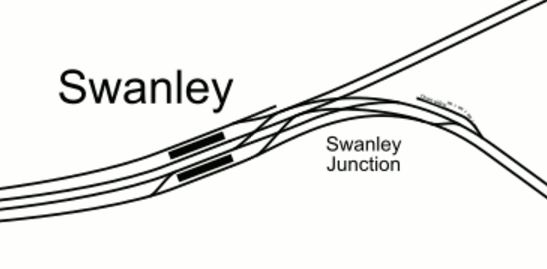
Swanley Station
Note.
- Swanley station has two island platforms.
- The line going North-East is the Chatham Main Line.
- The line going South-East is the Maidstone Line, leading to Maidstone East and Sevenoaks stations.
- At present, the platform arrangement is not one island platform for each direction.
This station could be dramatically improved to be a cross-platform interchange with London-bound and coast-bound services each with their own island platform. If of course, this were to be possible for other operational reasons.
The only passengers who would be inconvenienced, would be those who were travelling between stations on different lines to the East.
- The East London Line having cross-platform interchange vwith Thamesllink.
- Sortout the dreadful St. Pancras with good interchange between Thameslink and other lines.
- Gatwick acts as a collector station, where passengers from all over the South change trains to a high-capacity Gatwick to Luton/Bedford shuttle.
Thameslink will be radically different to how it is planned to be today.
 The Anonymous Widower