Hydro-Storage Options To Be Studied For Grängesberg
The title of this post, is the same as that of this news item from Anglesey Mining.
These are the highlights of the news item.
- Anglesey Mining plc, together with its 49.75% owned subsidiary Grängesberg Iron AB (“GIAB”) have entered into an MoU with Mine Storage to investigate the potential for the Grängesberg Mine to be converted into a Pumped Hydro-Storage project at the end of the mine’s producing life.
- Pumped-Hydro Storage is a green-energy storage solution that utilises water and gravity to store electrical energy. An underground mine can provide a closed-loop solution using proven, pumped hydro-power technology. Essentially, the system involves water being gravity fed through pipes down a shaft into the turbines, which produce electricity for supply to the grid and also pump the water back to surface. The mine storage system has a high round-trip efficiency of 75-85% and proven durability.
- The MoU with Mine Storage could lead to numerous future benefits.
I like this project.
Too often, when mines, quarries or other large operations come to the end of their economic lives, they are just abandoned in the hope that something worthwhile will happen.
But here we have a company planning the end of an iron ore mine in a way that will turn it into a source of future revenue.
I have a few thoughts.
Mine Storage
Mine Storage are a Swedish company with an informative web site.
The web site answered most of my questions.
Mines Are Moving From a Liability To A Resource
Consider.
- Gravitricity are using mines to store energy using cables and weights.
- Charlotte Adams and her team at Durham University are developing the use of the heat in abandoned coal mines.
- The Global Centre of Rail Excellence is being developed in a disused opencast mine in Wales.
- RheEnergise are developing their first High Density Hydro system in the Hemerdon Tungsten Mine in Devon.
And now we have this co-operation between Anglesey Mining and Mine Storage working together on pumped storage hydroelectricity.
Where is Grängesberg
This Google Map shows the location of Grängesberg.
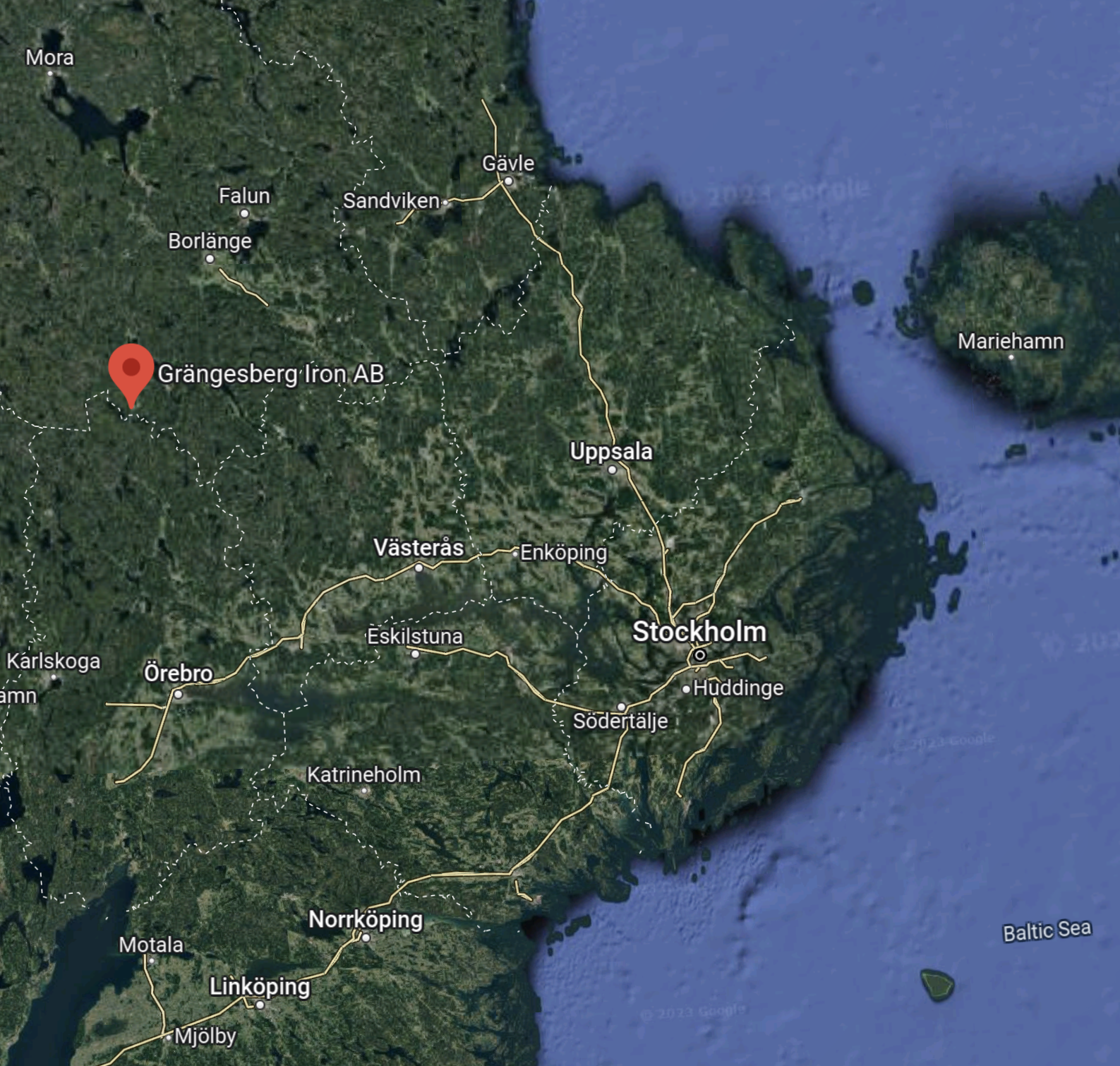
It is convenient for storing energy for Stockholm.
Drax Moves Forward With 600MW Scottish Hydro Scheme
The title of this post, is the same as that of this article on reNEWS.BIZ.
This is the sub-heading.
Studio Pietrangeli has been appointed as owner’s engineer for the project
It looks like this 600 MW project, which will turn Drax’s 440 MW pumped storage hydroelectric power station into 1 GW power station, is finally on its way.
Reading about this project on the Internet, there are still some hurdles to be overcome before the power station is upgraded.
- Planning permission is needed.
- Both the UK and Scottish Governments need to give permission.
- Argyle and Bute Council are not totally behind the project.
My view as a Control Engineer, is that we need it to help balance the grid and allow wind power to play its full part.
The Case For Pumped Hydro Storage
The Coire Glas Project
Note that Coire Glas is a pumped storage hydroelectric scheme being developed by SSE Renewables.
- It is rated at 1.5 GW.
- It can store 30 GWh of electricity.
- It is being built in the Highlands of Scotland above Loch Lochy.
- The estimated construction time will be five to six years.
- It should be operational for more than 50 years.
- There is more about the project on this page on the Coire Glas web site.
Exploratory works have started.
The Case For Pumped Hydro Storage
The title of this post, as the same as that of this page on the Coire Glas web site.
This is the sub-heading.
A study by independent researchers from Imperial College London found that investing in 4.5GW of pumped hydro storage, with 90GWh of storage could save up to £690m per year in energy system costs by 2050, as the UK transitions to a net-zero carbon emission system.
And this is the first paragraph.
The report focused on the benefits of new long-duration pumped hydro storage in Scotland, as the current most established long-duration energy storage technology. The benefit of long duration storage compared to short duration batteries is being able to continuously charge up the storage with excess renewables and also discharge power to the grid for several hours or days when wind and solar output is low.
So Coire Glas will provide 1.5GW/30GW, so where will we get the other 3 GW/60GW?
Loch Earba Pumped Hydro
In Gilkes Reveals 900MW Scottish Pumped Storage Plan, I introduced Loch Earba Pumped Hydro.
- It is rated at 900 MW
- It can store 33 GWh of electricity.
- It is being built in the Highlands of Scotland to the East of Fort William.
- The estimated construction time will be three to four years.
- It should be operational for more than 50 years.
- There is more about the project on the Earba Storage web site.
It would appear we could be edging towards the Imperial College target in lumps of about 1GW/30 GWh.
Other Schemes In Scotland
These are other proposed or planned schemes in Scotland.
Balliemeanoch Pumped Hydro
Balliemeanoch Pumped Hydro now has a web site.
The proposed Balliemeanoch pumped hydro scheme will have these characteristics.
- Output of the power station will be 1.5 GW
- Available storage could be 45 GWh.
This medium-sized station has a lot of storage.
Corrievarkie Pumped Hydro
Corrievarkie Pumped Hydro now has a web site.
The proposed Corrievarkie pumped hydro scheme will have these characteristics.
- Output of the power station will be 600 MW
- Available storage could be 14.5 GWh.
This medium-sized station has a moderate amount of storage.
Loch Kemp Pumped Hydro
I wrote about Loch Kemp Pumped Hydro in Loch Kemp Pumped Hydro, where I said this.
The proposed Loch Kemp pumped hydro scheme will have these characteristics.
- Loch Kemp will be the upper reservoir.
- Loch Ness will be the lower reservoir.
- The power station will be on the banks of Loch Ness.
- The power station will be designed to fit into the environment.
- Eight dams will be built to enlarge Loch Kemp.
- Trees will be planted.
- Output of the power station will be 300 MW
- Available storage could be 9 GWh.
The medium-sized station will have almost as much storage capacity as Electric Mountain, but that power station has an output of 1.8 GW.
Red John Pumped Hydro
I wrote about Red John Pumped Hydro in Red John Pumped Storage Hydro Project, where I said this.
I have also found a web site for the project, which is part of the ILI Group web site.
- The scheme has an output of 450 MW.
- The storage capacity is 2,800 MWh or 2.8 GWh.
- The scheme has planning consent.
- The project is budgeted to cost £550 million.
- The construction program indicates that the scheme will be completed by the end of 2025.
Not a large scheme, but every little helps.
Proposed Pumped Hydro In Scotland
I have listed these schemes.
- Balliemeanoch – 1.5GW/45 GWh
- Coire Glas – 1.5 GW/30 GWh
- Corrievarkie – 600 MW/14.5 GWh
- Loch Earba – 900 MW/33 GWh
- Loch Kemp – 300 MW/9 GWh
- Loch Na Cathrach/Red John – 450 MW/2.8 GWh
Note.
- The scheme’s name is linked to their web site.
- The two figures are output and storage capacity.
There is a total output of 5.25 GW and a total storage capacity of 134.3 GWh.
Conclusion
If all these schemes are built, Imperial’s targets of an output of 4.5 GW and a storage capacity of 90 GWh will be comfortably exceeded.
Gilkes Reveals 900MW Scottish Pumped Storage Plan
The title of this post, is the same as that of this article on renews.biz.
This is the sub-heading.
Earba project would be ‘largest in the UK’ in terms of energy stored
And this is the introductory paragraph.
Gilkes Energy has unveiled scoping plans for its 900MW Earba Pumped Storage Hydro Project in Scotland.
These are a few more details.
- It will have a capacity of 33 GWh.
- Loch a’ Bhealaich Leamhain is proposed to be the upper reservoir.
- Lochan na h-Earba is proposed to be the lower reservoir.
- There will be a three kilometre tunnel between the reservoirs.
- The 900 MW power station will be on the shore of Loch Earba.
- Construction is expected to take between 3 and 4 years.
This Google Map shows the location of the site.
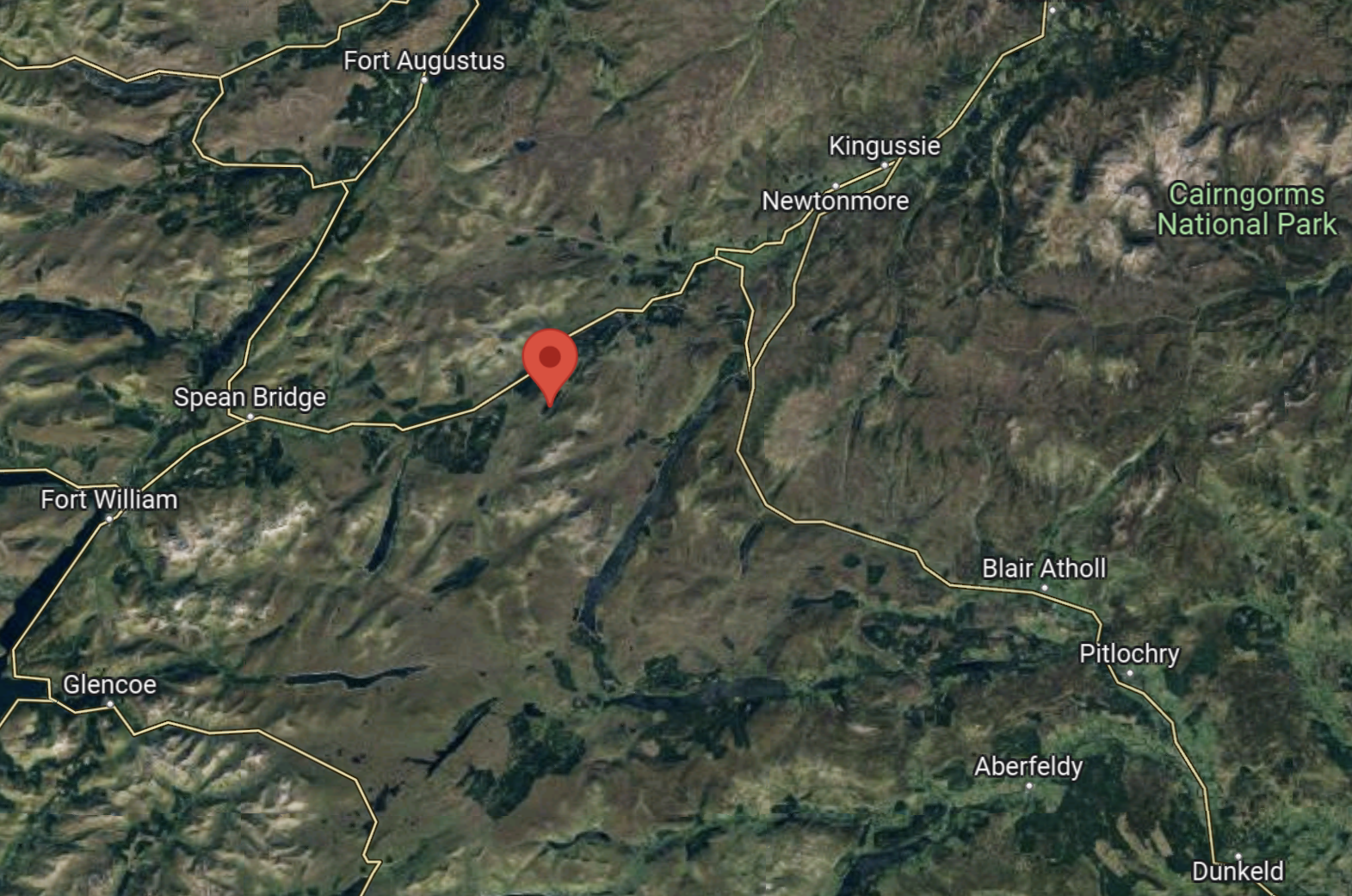
And this Google Map shows the site.

Note.
- Lochan na h-Earba, which will be the lower reservoir is clearly marked, in the North-West corner of the map.
- Loch a’ Bhealaich Leamhain, which will be the upper reservoir is in the South-East corner of the map.
- Much of Loch a’ Bhealaich Leamhain appears to be frozen, with only a small triangular area of water visible.
- There doesn’t seem to be too many roads.
- There is a detailed map on the Earba Storage web site.
This looks like it could be extreme construction, at it’s most extreme.
Conclusion
With a power output of 900 MW and a storage capacity of 33 GWh, this pumped storage hydroelectric power station will have the largest storage capacity of any energy storage in the UK.
The Monster In The Mountains That Could Save Europe’s Winter
Ulla-Førre is a complex of five hydroelectric power stations and a massive lake in the Norwegian mountains to the East of Stavanger.
- The power stations have a total generating capacity of 2.1 GW.
- Lake Blåsjø is able to hold enough water to generate 7800 GWh of electricity.
- The complex is at the Norwegian end of the North Sea Link to Blyth in England.
This YouTube video from Statkraft, explains how Ulla-Førre was built.
I have some further explanation and thoughts.
What Is The Operating Philosophy Of The North Sea Link?
This press release from National Grid says this.
The Norwegian power generation is sourced from hydropower plants connected to large reservoirs, which can respond faster to fluctuations in demand compared to other major generation technologies. However, as the water level in reservoirs is subject to weather conditions, production varies throughout seasons and years.
When wind generation is high and electricity demand low in Britain, NSL will enable renewable power to be exported from the UK, conserving water in Norway’s reservoirs. When demand is high in Britain and there is low wind generation, hydro power can be imported from Norway, helping to ensure secure, affordable and sustainable electricity supplies for UK consumers.
It almost seems to me, that the North Sea Link is part of a massive pumped-storage system, where we can bank some of our wind-generated electricity in Norway and draw it out when we need it.
Suppose There Is No Wind In The UK And Norway’s Giant Reservoirs Need Filling?
We could always throw on a substitute, which is the 1,185 MW Hartlepool nuclear power station.
- Unfortunately, this will close in 2024.
- Wikipedia indicates that Hartlepool’s closure has been on and off several years, so I don’t think it will be delayed again.
- A new station probably couldn’t be commissioned until 2029, at the earliest.
But over the next few years these wind farms will be connected to the North-East.
- Sofia wind farm should commission the 1.4 GW Phase 1, which connects to Teesside in 2023.
- Dogger Bank wind farm should commission 3.6 GW, which connects to Teesside and Humberside in 2025.
- The 4.1 GW Berwick Bank wind farm will have a second connection to Blyth by 2030. Say 2 GW!
There’s more than enough wind there to fill up Norway’s reservoirs and replace Hartlepool nuclear station.
Will Ulla-Førre Be Expanded?
It does sound to me that the video does imply that Ulla-Førre could be expanded.
Will Norwegian Pumped Storage Hydro Help Us Through The Winter?
In UK To Norway Sub-Sea Green Power Cable Operational, I discussed the North Sea Link interconnector to Norway.
The North Sea Link is no ordinary interconnector, as it is a lot more than a 1.4 GW cable linking the electricity grids of the UK and Norway.
- At the UK end, there is an increasing amount of wind power. The UK has added 3.5 GW in 2022.
- At the Norway end, there is the 2.1 GW Ulla-Førre hydropower complex.
- The water to generate electricity at Ulla-Førre comes from the artificial Lake Blåsjø, which contains enough water to generate 7.8 TWh of electricity.
- The storage capacity at Ulla-Førre is 857 times greater than that at the UK’s largest pumped storage hydroelectric power station at Dinorwig in North Wales.
- The power complex consists of five power stations and some can also be used as a pump powered by UK electricity to fill Lake Blåsjø with water.
Effectively, the North Sea Link, the Ulla-Førre power complex and Lake Blåsjø are a giant pumped storage hydro battery, that can either be filled by Norwegian precipitation and water flows or by using surplus UK electricity, through the North Sea Link, which opened a year ago.
If the Norwegian precipitation goes on strike, the only way to fill Lake Blåsjø is to use surplus UK power, which I suspect will be British wind and nuclear in the middle of the night!
But then I thought we will be short of electricity this winter.
- I suspect we will be at times, but then at others there will be a surplus.
- So the surplus will be pumped to Norway to top up the reservoir at Lake Blåsjø.
- When we are short of electricity, the Norwegians will turn water back into electricity and send it back through the North Sea Link.
It will be more sophisticated than that, but basically, I believe it provides us with the electricity we need, at the times, when we need it.
I wouldn’t be surprised to be told, that we’ve been squirreling away overnight wind energy to Norway over the last few months.
I have written more about Ulla-Førre in The Monster In The Mountains That Could Save Europe’s Winter.
It includes a video about the building of the complex.
UK Cleantech Consortium Awarded Funding For Energy Storage Technology Integrated With Floating Wind
The title of this post, is the same as that of this page on the UK Government’s Catapult Offshore Renewable Energy Web Site.
This is the introductory paragraph.
STORE, a UK-based cleantech consortium led by RCAM Technologies Limited, has been awarded £150,000 of funding to develop an advanced subsea energy storage technology manufactured using 3D printed concrete that could help offshore wind farms produce a steady and predictable energy output to the electricity grid.
This paragraph talks of the concept of Marine Pumped Hydro.
STORE is assessing the feasibility of integrating Marine Pumped Hydro (MPH) technology, which stores energy using hollow concrete spheres fitted with a hydraulic turbine and pump, with floating offshore wind plants in UK waters. In addition, the project advances the design of MPH systems and plans a prototype demonstration in the UK.
Note.
- The hollow concrete spheres are 3D-printed in concrete using the technology of RCAM Technologies.
- Spheres are structurally very strong.
- 3D printing of concrete is now mainstream technology and has been extensively used on the Elizabeth Line as I wrote about in The Story Behind The Concrete Panels On The Elizabeth Line.
- There is a visualisation on the Catapult web page, which shows several floating turbines, a floating sub station and several concrete hemispheres sitting on the seabed.
- The energy storage medium is sea water and air, which must be environmentally-friendly.
The technology is described in detail on this page of the STORE consortium web site.
- The spheres are fifteen metres across.
- The spheres can be installed at depths between 150 and 2000 metres.
- The system has a round-trip efficiency is up to 70%, which is similar to pumped storage hydro.
- The design life is 50 to 80 years.
I think that this system has possibilities.
This last paragraph in the Catapult web page gives a look into the future.
As well as improving the reliability and predictability of energy to the electricity grid, the project will support the cross sector transfer of UK offshore expertise and port infrastructure for use in renewable energy and create high-value UK jobs in engineering, construction, and operations and maintenance. This energy storage solution is ideally suited to coupling with floating wind plants and for powering offshore oil and gas assets from renewable energy. The 3D printed concrete also facilitates localized manufacturing and enables low cost fabrication of new and complex shapes that were previously not practical.
I also feel that if the concrete sphere energy storage can be made to successfully work, then the technology can surely be fitted to any offshore wind farm, by just adding the right number of spheres and connecting them to the offshore sub station.
The STORE Consortium
The STORE consortium has a web site, which has a heading of Innovative Subsea Energy Storage.
It describes the technology in this paragraph.
STORE is advancing a subsea energy storage technology called Marine Pumped Hydro (MPH). MPH uses large hollow concrete spheres on the seafloor to store mechanical energy in the form of pressure. MPH charges when seawater is pumped out of the spheres and releases energy to the grid when high-pressure water flows back into the spheres through a turbine. MPH features a patent-pending multi-sphere pod to increase the amount of energy stored and uses efficient 3D concrete printing to reduce manufacturing costs.
It sounds like an engineer with children, has been playing with them and their plastic toys in a bath and has had an Archimedes moment.
The project and its funding is described in this paragraph.
STORE was awarded £150,000 from the Department for Business, Energy & Industrial Strategy Longer Duration Energy Storage Demonstration (LODES) competition. Phase 1 will deliver a Feasibility Study focused on the design and analyses for the UK. Phase 2, if awarded, will design, manufacture, and operate a prototype system at TRL 6.
Note that TRL 6 is Technology Readiness Level 6 and is fully defined on this NASA web page, as having a fully functional prototype or representational model.
There is also an interesting link to the ScotWind N3 wind farm. that I wrote about in ScotWind N3 Offshore Wind Farm.
- This is an unusual floating wind farm with a floating substation.
- Technip and Loch Kishorn port are involved in both the wind farm and STORE.
- Loch Kishorn has a history of building immense concrete structures.
I wouldn’t be surprised if this wind farm would be the location of the prototype system.
Conclusion
This is a brilliant concept.
- It is the ideal energy storage system for offshore wind, as it can turn a wind farm with a variable output into one with a much more constant output.
- It can be retrofitted to existing offshore wind farms.
- It will work with both fixed and floating wind farms.
- The concrete storage spheres can be fully assembled with all their electrical gubbins on shore and towed out, before sinking in the required position.
It also looks like the Department for Business, Energy & Industrial Strategy have got involved and helped with the funding. Someone there seems to know a good idea, when they see it!
Pumped Storage Development In Scotland
The title of this post, is the same as that of this article on International Water Power & Dam Construction.
It describes and gives the current status of the two large pumped storage hydroelectric schemes under development in Scotland.
The 1.5 GW/30 GWh scheme at Coire Glass, that is promoted by SSE.
The Cruachan 2 scheme, that is promoted by Drax, that will upgrade Cruachan power station to 1.04 GW/7.2 GWh.
Note.
- Construction of both schemes could start in 2024, with completion in 2030.
- Both, SSE and Drax talk of a substantial uplift in employment during the construction.
- Both companies say that updated government legislation is needed for schemes like these.
The article is very much a must-read.
Conclusion
Welcome as these schemes are, given the dates talked about, it looks like we will need some other energy storage to bridge the gap until Coire Glas and Cruachan 2 are built.
Will Highview Power step forward with a fleet of their 2.5 GW/30 GWh CRYOBatteries, as was proposed by Rupert Pearce in Britain Will Soon Have A Glut Of Cheap Power, And World-Leading Batteries To Store It.
- The site needed for each CRYOBattery could be smaller than a football pitch.
- In Could A Highview Power CRYOBattery Use A LNG Tank For Liquid Air Storage?, I came to the conclusion that a single LNG tank could hold a lot of liquid air.
- The storing and recovery of the energy uses standard turbomachinery from MAN.
- Highview Power should unveil their first commercial system at Carrington near Manchester this year.
I am sure, that when they get their system working, they could build one in around a year.
The Creation Of The Coire Glas Monster
Loch Ness is probably most famous for the mythical monster, but it is about to be joined by a man-made monster of a different kind.
To the South-West of Loch Ness lies Loch Lochy.
This Google Map shows the South-Western part of the Great Glen, which runs diagonally across the Highlands from Fort William in the South-West to Inverness in the North-East.
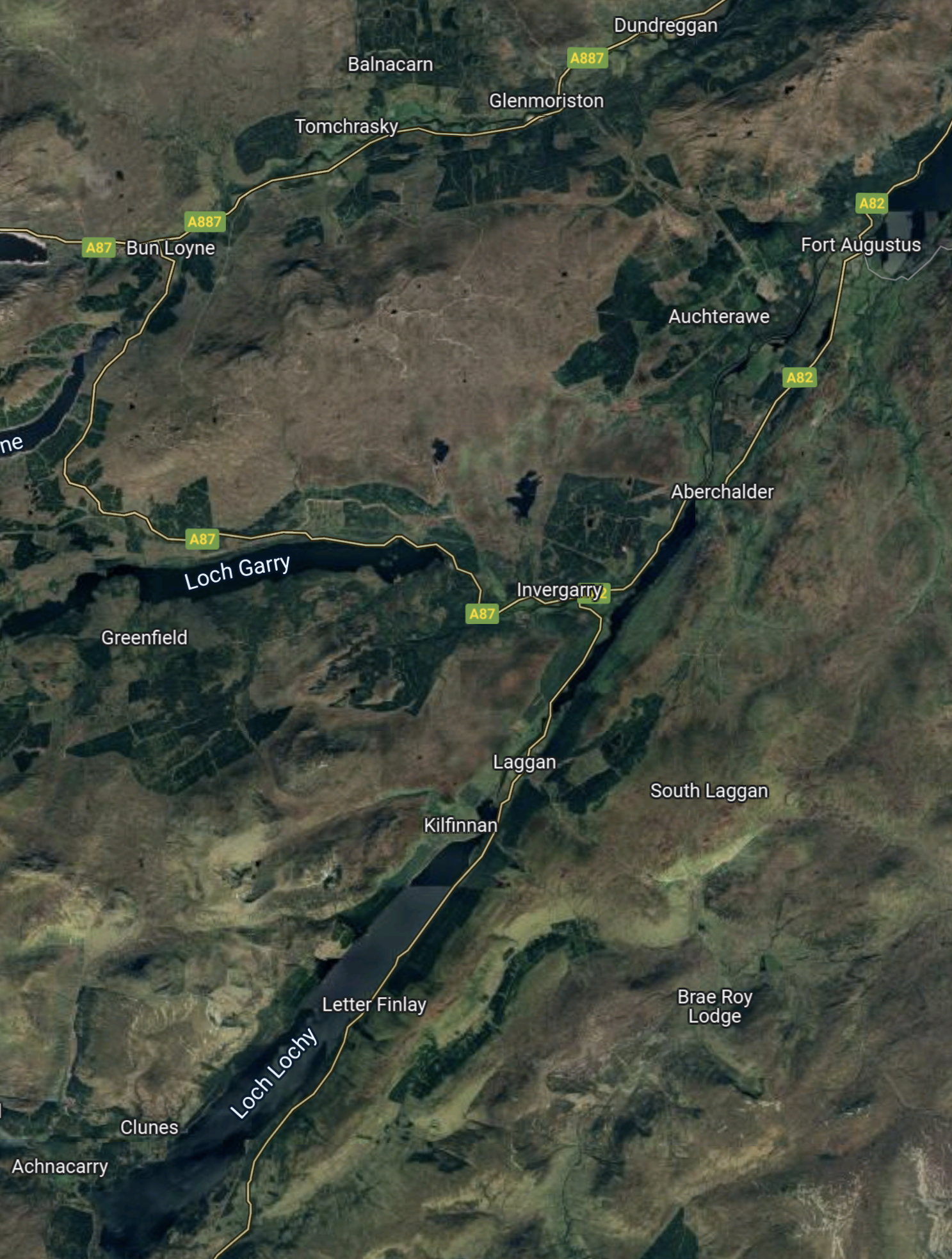
Note.
- Fort Augustus in the North-East corner of the map, is at the South-West end of Loch Ness.
- In the South-West corner of the map, Loch Lochy can be seen.
- To the North-West of Loch Lochy, there are mountains.
This second Google Map shows Loch Lochy and the mountains.
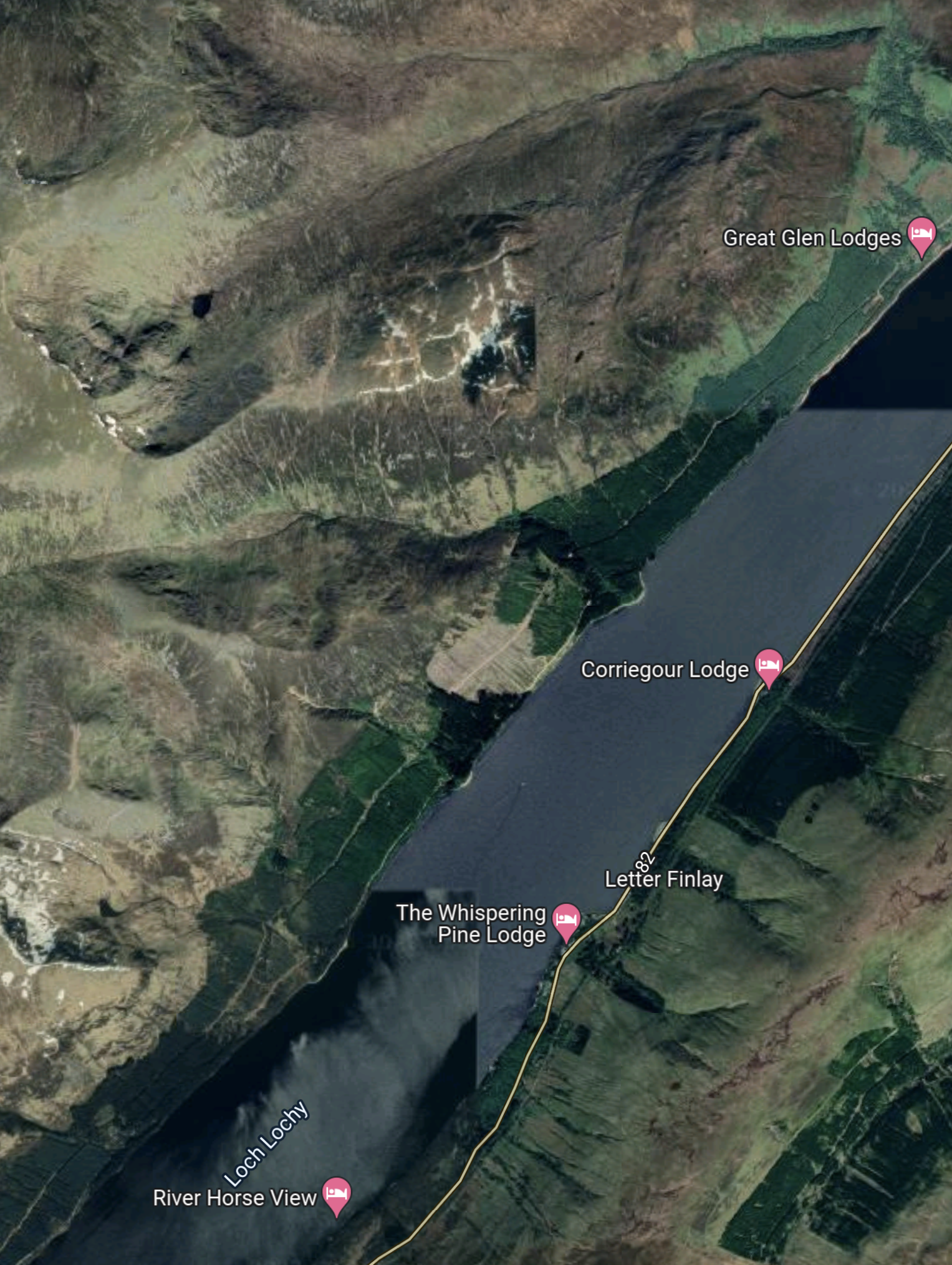
SSE plan to create a pumped storage hydroelectric power station called Coire Glas.
- Loch Lochy will be the lower reservoir.
- The upper reservoir will be in the mountains to the North-West of the loch.
- Energy will be stored by pumping water from the lower to the higher reservoir.
- The power station will be able to provide 1.5 GW of electricity.
- The upper reservoir will be able to store enough water to generate 30 GWh of electricity.
If that isn’t a monster of a power station, I don’t know what is! It has more than three times the storage capacity of both Dinorwig or Cruachan.
This article on Utility Week, which is entitled Inside £1bn Pumped Hydro Plans To ‘More Than Double’ Britain’s Electricity Storage, gives more details.
This is the sort of heroic engineering, that will defeat Vlad the Mad and his bloodstained gas.
ILI Group Secures Planning Consent For 50MW Energy Storage Project
The title of this post, is the same as that of this article on Solar Power Portal.
ILI Group or Intelligent Land Investments Group to give them their full name, are a Scottish-based company, that I follow as I like their energy storage developments.
The home page of their web site, lists three main areas of activity.
The home page also has a scrolling mission statement of
- UK Energy Security
- 4GW of Energy Storage Projects
- Aligned with government policy
- Saving over 200million tonnes of CO2e
- Over £4 billion of Investment
It is very much worth reading the section of the ILI Group web site, which talks about pumped-storage hydroelectricity.
It starts with a overview of the Pump Storage Sector.
Between 2007 and 2015, the total installed capacity of renewables electricity in Scotland has more than doubled. Due to its intermittent nature, the rise in renewable generation has resulted in increased demand for flexible capacity to help meet energy balancing requirements for the national grid system.
Pumped storage hydro is considered by the Directors to be the most developed and largest capacity form of grid energy storage that currently exists. This can help reduce renewable energy curtailment and therefore promote grid stability.
It then gives an overview of how pumped-storage hydroelectricity works and the benefits of the technology.
The section finishes by noting that the company has secured planning permission for the Red John pumped-storage hydroelectric power station.
The article on the Solar Power Portal, also has this paragraph on ILI Group’s ambitions for pumped-storage hydroelectricity.
ILI Group is also responsible for the development of a 1.5GW pumped storage hydro project at Loch Awe. The Balliemeanoch project based at Dalmally in Argyll and Bute will be able to supply 1.5GW of power for up to 30 hours. It is the third and largest of ILI’s pumped storage hydro projects, with the other two being Red John at Loch Ness and Corrievarkie at Loch Ericht.
Note these points about the Balliemeanoch project.
- It has a storage capacity of 45 GWh, which is around the total amount of electricity, the whole of the UK would use in two hours.
- It couldn’t power the UK, as it has an output of only 1.5 GW and the UK needs at least 23 GW.
- The largest pumped storage hydroelectric power station in the UK is Dinorwig power station, which has an output of 1.8 GW and a storage capacity of 9.1 GWh.
In terms of storage capacity, the Balliemeanoch project will probably be the largest in the UK.
The section of the ILI Group web site, that talks about battery storage, opens with an overview of battery storage opportunities, where this is said.
Battery storage projects provide an enticing new opportunity for landowners and investors alike. As a market that will see significant growth over the coming years (National Grid predict up to 40GW of storage could be required by 2050) we see exciting new opportunities in a sector that will be critical to meeting our climate change needs.
Whereas our pumped storage hydro projects will provide long-term storage capacity, our batteries will provide short-term services (less than 4 hours) to the electricity system. As the system decarbonises, becoming steadily more reliant on intermittent green renewable generation, storage will play a role of increasing importance in balancing the grid and ensuring security of supply.
Note.
- This is a sales pitch to landowners and investors.
- National Grid’s prediction of 40GW of storage by 2050, could be able to store as much as 1200 GWh of electricity.
- I agree with their statement that there will be a need for both pumped storage hydro and batteries.
The section finishes with a status summary of 21 battery projects that they are developing.
Conclusion
I feel that ILI Group is a company that means business and knows where it’s going.
The UK probably needs several more companies like the ILI Group.
 The Anonymous Widower