TRISO-X Completes Vertical Construction Of TX-1 Fuel Fabrication Facility
The title of this post, is the same as that of this news item from X-energy.
These two bullet-points act as sub-headings.
Completion of vertical construction marks major milestone for first-in-the-nation commercial scale advanced nuclear fuel fabrication facility
Project advances into interior buildout, fuel fabrication equipment installation and construction of supporting facilities
These two paragraphs add more detail.
TRISO-X, LLC (“TRISO-X” or the “Company”), a wholly-owned subsidiary of X-Energy, Inc. (Nasdaq: XE) (“X-energy”), today announced the completion of vertical construction at TX-1, its first-in-the-nation advanced nuclear fuel fabrication facility in Oak Ridge, Tennessee. The milestone completes the primary building structure of the 214,000-square-foot facility and enables the project to advance fully into its next phase of construction, including interior buildout, installation of fuel fabrication equipment and continued construction of supporting facilities.
“Completing vertical construction is a major milestone for TX-1 and another tangible demonstration of the progress our team is making in Oak Ridge,” said Joel Duling, President of TRISO-X. “We are moving from constructing the core and shell of the facility to building out the interior utilities, installing manufacturing equipment, and constructing key support capabilities. Every milestone brings us closer to establishing a new domestic source of advanced nuclear fuel and supporting the deployment of the next generation of American nuclear reactors.”
Note.
- Oak Ridge is one of the United States premier nuclear facilities.
- It would be like building a similar facility for specialist nuclear reactor fuel at Harwell in the UK.
This is without doubt a very professional start to the X-energy programme.
I also feel that the fourth paragraph has important information.
Once operational, TX-1 is expected to produce approximately 700,000 TRISO-X fuel pebbles annually, equivalent to 5 metric tons of uranium (“MTU”), with capacity to provide fuel for up to 11 Xe-100 reactors. The U.S. Nuclear Regulatory Commission (“NRC”) granted TRISO-X a 40-year Special Nuclear Material License for the facility earlier this year, the first-ever NRC Category 2 fuel fabrication license issued for the processing of high-assay low-enriched uranium. TX-1 is expected to be the first new commercial-scale advanced U.S. nuclear fuel fabrication facility built in more than 50 years.
Note.
- TX-1 will be able to support eleven Xe-100 reactors.
- Four Xe-100 reactors will be built initially at Dow’s Seadrift site.
- In Hartlepool Nuclear Reactor Moves To UK Regulatory Assessment, I said that Hartlepool will eventually be a 12-pack site.
I can envisage a fuel strategy based on TX-1, which is something like this.
TX-1 will provide the TRISO fuel for the four reactors at Dow’s Seadrift site.
TX-1 will provide the TRISO fuel for the initial reactor or reactors at a new site like Hartlepool, or for other licensees like Amazon or North Western.
TX-1 will be cloned as necessary to create TX-2, TX-3, TX-4 etc. as more Xe-100 reactors are built.
I am sure, that there is relevant expertise to make TRISO-X fuel pebbles safely in Japan, Korea and the UK of the known partners of X-energy.
The Wikipedia entry for the Dragon reactor finishes with these three paragraphs.
The choice of helium coolant was made after a long debate within the UKAEA between proponents of helium and carbon dioxide, with helium ultimately selected. Groundbreaking occurred in 1960. It operated from 1965 to 1976, and is generally considered extremely successful.
Dragon’s construction was followed by similar work in the US, leading ultimately to the much larger Fort Saint Vrain Nuclear Power Plant. This suffered from a number of problems due to corrosion and the customer soured on the design. Contracts for similar models in the US that were being signed were cancelled, and although Dragon suffered none of these issues, no orders were forthcoming in Europe either. By this time the market had largely standardized on the pressurized water reactor (PWR) for the large buildout that occurred during the 1970s and 80s, and the decision was made to shut down Dragon.
As of 2023, Dragon is being decommissioned.
Note.
- It appears only two reactors using TRISO fuel have been constructed.
- The 20 MW Dragon reactor was extremely successful.
- The 330 MW Fort Saint Vrain reactor had corrosion problems.
- Both reactors used helium gas as a coolant.
- The Wikipedia entry for the Fort Saint Vrain reactor details the corrosion problems.
- According to Google AI fuel for Fort Saint Vrain was fabricated at the General Atomic Fuel Fabrication Facility in San Diego, California.
- According to Google AI fuel for the Dragon reactor was fabricated on-site at Winfrith.
After writing these seven points, I have concluded that TRISO-fueled helium-cooled nuclear reactor designs better suited to small reactors?
What does Google AI think?
I asked Google AI “Are TRISO-fueled helium-cooled nuclear reactor designs better suited to small reactors?” and received this reply.
TRISO-fueled, helium-cooled reactor designs are exceptionally well-suited for small and micro-modular reactor applications because their physical properties scale down efficiently to provide inherent safety and high-temperature operation.
Why They Suit Small Reactors
Inherent Safety (Walk-Away Safe): Each TRISO fuel particle acts as its own tiny containment system, capable of withstanding extreme temperatures (well over 1,600°C) without melting or releasing radioactive fission products. In a small reactor design, the high surface-area-to-volume ratio allows residual decay heat to dissipate passively through the reactor vessel walls, meaning the reactor cannot suffer a catastrophic meltdown even if active cooling completely fails.
Simplified Helium Cooling: Helium is chemically inert and does not absorb neutrons or become radioactive. In smaller reactor configurations, helium’s single-phase gas state eliminates the high-pressure water loops and massive containment structures required by traditional large light-water reactors.
High-Temperature Process Heat: Because helium can operate at very high temperatures without boiling off, small TRISO-gas systems can deliver high-grade industrial heat (useful for chemical plants or hydrogen production) alongside electricity.
Compact Footprint: Small modular reactor (SMR) and microreactor developers (such as X-energy and Ultra Safe Nuclear Corporation) leverage these traits to design factory-fabricated units that can be transported and sited near urban or off-grid industrial locations.
Key Challenges
Power Density and Size: Helium has a lower volumetric heat capacity than water, meaning gas-cooled cores can be physically bulkier per megawatt than water-cooled equivalents, placing a premium on optimizing core geometry for micro-scales.
Supply Chain and Cost: High-Assay Low-Enriched Uranium (HALEU) and specialized TRISO manufacturing face immature supply chains and higher first-of-a-kind costs.
The more I read about X-energy’s technology, the more I like it.
With Federal Funding Windfall, X-energy Advances Small Nuclear Reactor
The title of this post, is the same as this article on Canary Media.
This is the sub-heading.
The Amazon-backed firm is aiming to build up to 144 of its novel Xe-100 reactors as the U.S. government seeks to revitalize an industry beset by rising costs
These three initial paragraphs add more detail.
The federal government has thrown its weight into reviving America’s long-stagnant nuclear industry, and X-energy’s first-of-a-kind reactor project is among the biggest beneficiaries so far.
The U.S. Department of Energy last month said it would award $1 billion to X-energy, an Amazon-backed advanced nuclear startup working to bring four novel 80-megawatt electric reactors online at a Dow Chemical facility in Seadrift, Texas, in the early 2030s.
The award nearly doubles the federal government’s commitment to X-energy, following a $1.2 billion investment in early 2021. Both tranches were structured as 50-50 cost-sharing agreements under the DOE’s Advanced Reactor Demonstration Program, launched in 2020 to commercialize next-generation nuclear technologies.
Note.
- It looks like X-energy are well-funded.
- It also looks like they have received funding under two different presidents.
- I like Dow’s concept of using nuclear to power a chemical complex, which needs both lots of electricity and heat.
- If they build 144 reactors, this will be twelve of the 12-pack power station, that they have said they will build at Hartlepool and I wrote about in Hartlepool Nuclear Reactor Moves To UK Regulatory Assessment.
The next phase would appear to be up to the regulators.
The article on Canary Media is well worth giving a full read.
These are some important highlights.
Dow Seem Enthusiastic And Would Be An Ideal First Customer
In any large project the first customer is always important.
- Dow seem to fit the part well.
- I also suspect, that as Dow turned over around $40 billion in fiscal year 2025, they know what they want.
Even in nuclear power, the customer is generally right.
Has X-energy Found Any Customers For The Xe-100?
I asked Google AI, this question and received this answer.
Yes, X-energy has secured major commercial customers and strategic partners for the Xe-100 reactor.
Key Customers and Partners
Dow: Partnering to deploy an Xe-100 four-pack plant at the Seadrift chemicals manufacturing site in Texas to provide low-carbon heat and power.
Amazon: Bankrolling and collaborating on up to 12 Xe-100 units via Energy Northwest in Washington state, alongside broader clean energy scaling for AI infrastructure.
Centrica: Partnering in the UK to deploy a potential fleet of up to 6 GW (10 to 20 reactors), targeting the Hartlepool site.
Energy Northwest: A Washington public power utility working collaboratively on project deployment frameworks.
Note.
When, the four partners, of which I was one, started to develop the Artemis project management system, the salesman of the four, did a survey of who might buy.
A proportion of these became valuable clients.
As X-energy also has a world-class engineering partner from Japan and Korea, I feel that they have done their preparation thoroughly.
Where Is The TRISO Fuel To Be Made?
According to the Canary Media article, it will be made near Oak Ridge National Laboratory in Tennessee.
- This could be handy for support.
- It could ease recruiting some of the staff with the right experience.
- There may also be useful sub-contractors in the area, with the right experience and certification.
The location is an excellent one.
Has Centrica Been Recruited Because They Are British?
According to its Wikipedia entry, the Dragon reactor, which used TRISO fuel, was generally considered extremely successful.
So by inviting Centrica to be involved, will X-energy be able to get access to the British files concerning the details of the Dragon reactor?
Their interpretation may be the difference between success and failure of the project.
I wouldn’t be surprised that there is a very trustworthy and knowledgeable network of very elderly British nuclear engineers, who enjoy meeting in pubs, with only the best real ales.
A Quick Visit To Hartlepool – 19th September 2026
I went to Hartlepool today from King’s Cross station.
These were my objectives.
- Assess Grand Central Trains current offering.
- See how Hartlepool station has improved since my last visit.
- Take some pictures of Hartlepool Nuclear Power Station.
These are some pictures I took.






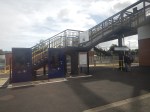












































Note.
Here are my thoughts on my objectives.
Grand Central Trains And Their Class 180 Trains
This is a summary of my journey from King’s Cross and Hartlepool.
- The journey took eight minutes under three hours and we arrived thirteen minutes late.
- The train was four minutes early at the Newark Crossing, one minute early at Doncaster and on-time at York. Was this good driving or was the driver having assistance from the digital signalling?
- Delays seemed to build up after York.
There was no trolley, so I didn’t have any refreshment.
This is a summary of my journey from Hartlepool and King’s Cross.
- The journey took seven minutes over three hours and we arrived one minute late.
- The train was two minutes late at York and Doncaster and a minute late at the Newark Crossing.
- As the train ran smoothly into King’s Cross, was it using the digital signalling, as I observed in Did My InterCity225 From Leeds Arrive Like An Airliner In King’s Cross?
- At King’s Cross we shared Platform 4, with a five-car Azuma, which shows the advantage of splitting the platforms into a and b.
There was again no trolley, but the buffet was in the next car.
Six Hours In A Class 180 Train Was Not Good For Me
I have not felt well today and I blame six hours in Class 180 trains yesterday.
I used to feel like this, after a ride in a Class 390 train, but since they have been fitted with better air-conditioning, I have not had a problem.
Hopefully, the Class 820 trains will be better.
Hartlepool Nuclear Reactor Moves To UK Regulatory Assessment
The title of this post, is the same as that of this article on the Northern Echo.
This is the sub-heading.
Plans for a new generation of nuclear power stations moved closer after the Government approved the next regulatory stage for an advanced reactor planned for Hartlepool
These two paragraphs add more details.
The approval follows a partnership between X-energy and Centrica to build a new generation of UK nuclear power stations using Xe-100 Advanced Modular Reactors, starting in Hartlepool.
On the partnership’s first anniversary, the Government directed regulators to begin assessing X-energy’s Xe-100 reactor under the Generic Design Assessment, a major step towards commercial licensing in the UK.
This Google Map shows the area around the current Hartlepool Nuclear Power Station.
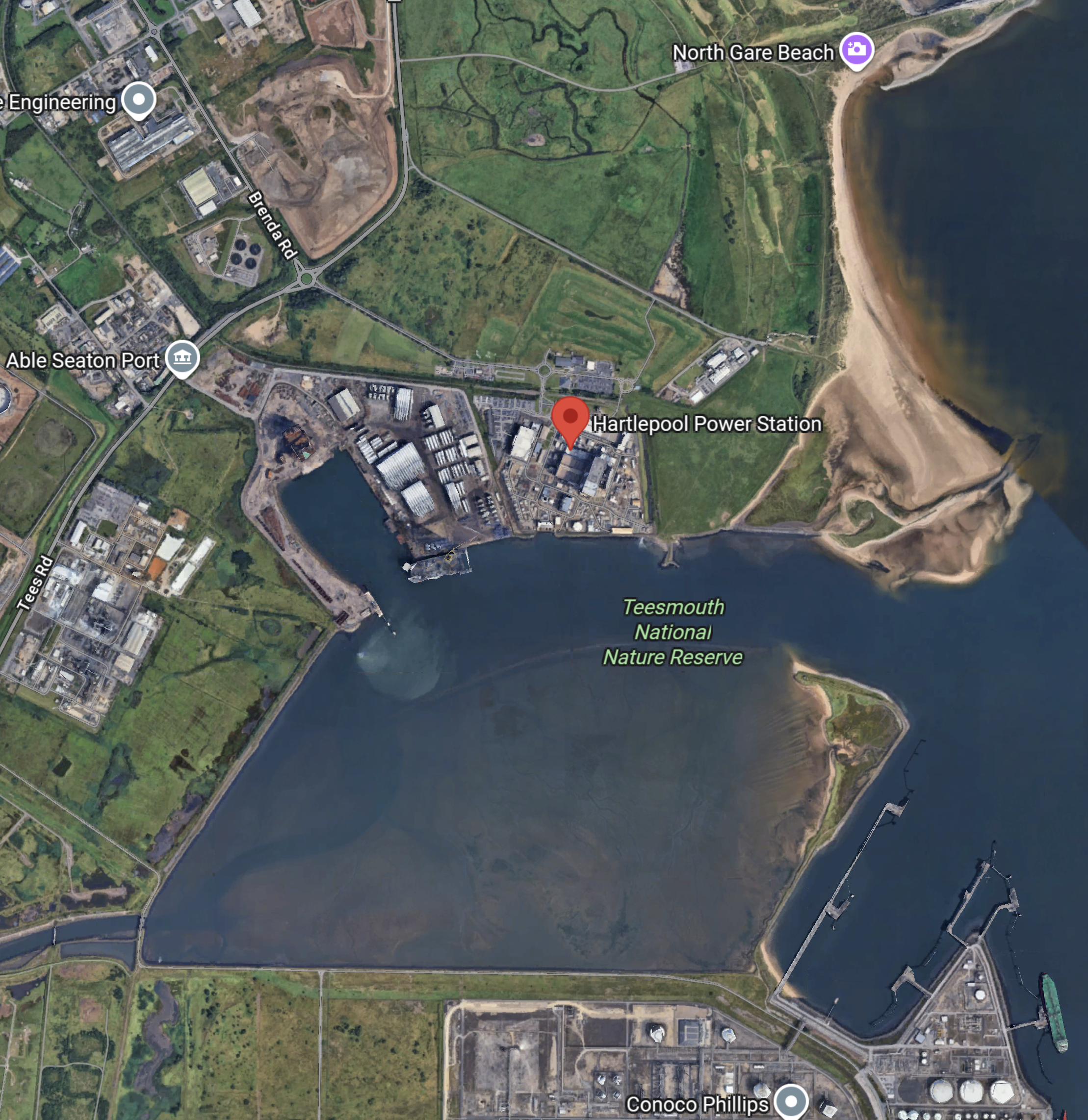
Note.
- Hartlepool Nuclear Power Station is indicated by the red arrow.
- Hartlepool serves as a major industrial, manufacturing, and logistics hub supporting offshore wind farms rather than a landing point for their electricity grid connections.
- Full details of the current nuclear power station is given in its Wikipedia entry, but here’s a summary.
- It is an Advanced Gas-Cooled Reactor, which uses carbon dioxide for cooling.
- It was commissioned in 1983.
- It is scheduled to be closed in 2030.
- It produces 1,185 MW of electricity.
- The current site has rail access from the Durham Coast Line.
Nothing is said in the article about the capacity or the timescale for building the new power station.
What Will Be The Capacity Of X-energy’s New Nuclear Power Station At Hartlepool?
I took a quick look with Google AI and received this answer.
AI Overview
X-energy’s planned new nuclear power station at Hartlepool is proposed to have a capacity of up to 960 megawatts (MW), using a 12-unit deployment of its Xe-100 advanced modular reactors.
Project Details
Technology: X-energy Xe-100 high-temperature, gas-cooled small modular reactor (each individual unit generates 80 MW of electricity).
Configuration: A 12-reactor plant (“12-pack” multi-unit layout).
Location: Adjacent to the existing Hartlepool Power Station in Teesside, northeast England.
Timeline: First electricity generation is targeted for the mid-2030s, following the scheduled closure of the current operating plant.
That was an excellent answer, that gave me all I needed.
Hartlepool’s Rail Links
This OpenRailwayMap shows the Durham Coast Line and the rail links to the current Hartlepool Nuclear Power Station.
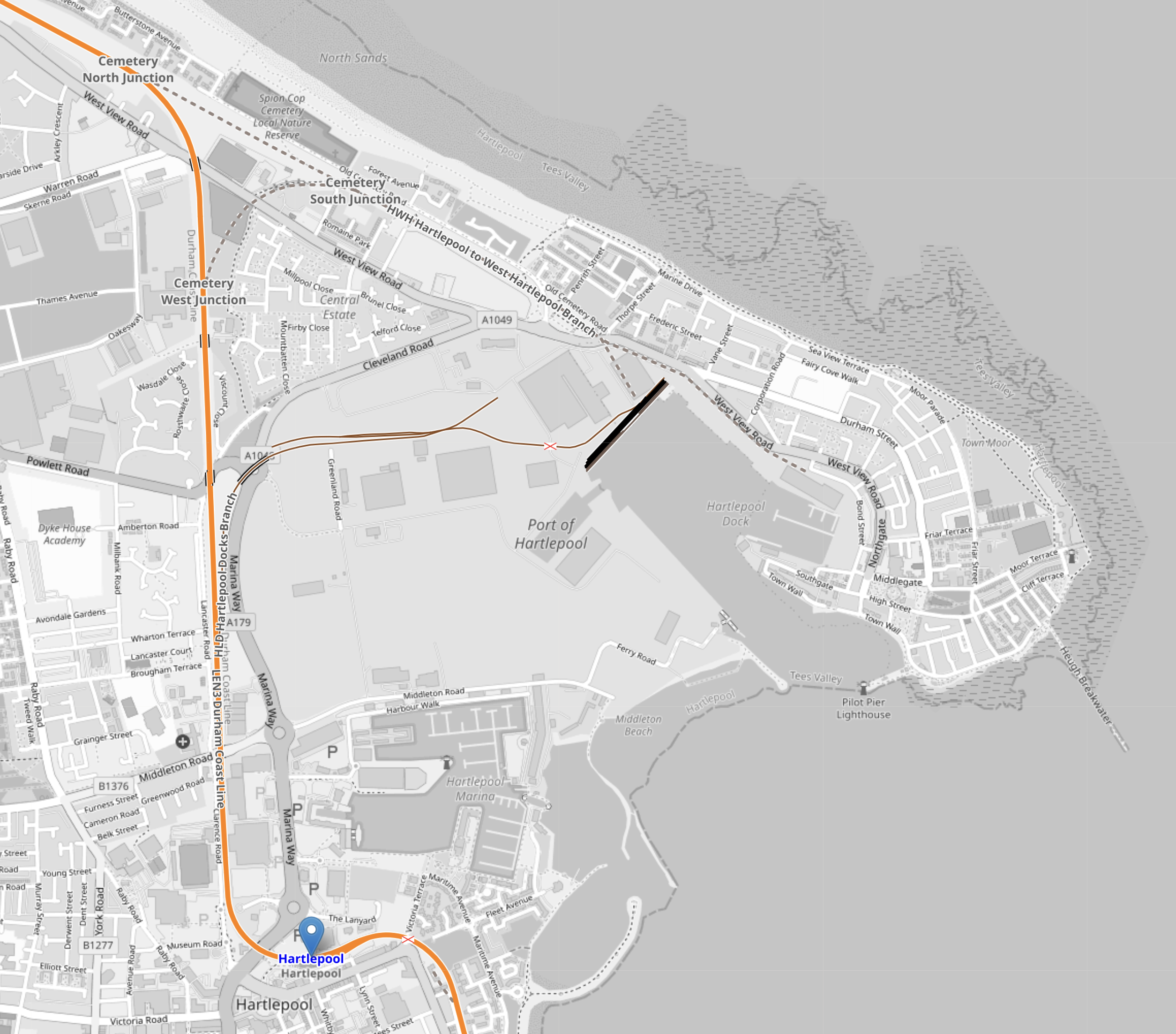
Note.
- The orange track going North-South across the map is the Durham Coast Line between Newcastle and Middlesbrough.
- Hartlepool station is indicated by the blue arrow.
- A rail connection goes East from the Durham Coast Line to the Port of Hartlepool and the current Hartlepool Nuclear Power Station, which I believe is the big square building by the black line.
- Hartlepool station is served by six trains per day (tpd) to and from London King’s Cross, with five tpd on Sundays.
- All London services are operated by open access operator Grand Central Trains, who have new Hitachi Class 820 tri-mode trains on order for delivery in 2028.
Current timings are a few minutes over three hours, but I suspect that the new Hitachi trains could do the trip very close to three hours.
The Thoughts Of Chris O’Shea
This article on This Is Money is entitled Centrica boss has bold plans to back British energy projects – but will strategy pay off?.
The article is basically an interview with a reporter and gives O’Shea’s opinions on various topics.
Chris O’Shea is CEO of Centrica and his Wikipedia entry gives more details.
These are his thoughts.
On Investing In Sizewell C
This is a paragraph from the article.
‘Sizewell C will probably run for 100 years,’ O’Shea says. ‘The person who will take the last electron it produces has probably not been born. We are very happy to be the UK’s largest strategic investor.’
Note.
- The paragraph shows a bold attitude.
- I also lived near Sizewell, when Sizewell B was built and the general feeling locally was that the new nuclear station was good for the area.
- It has now been running for thirty years and should be good for another ten.
Both nuclear power stations at Sizewell have had a good safety record. Could this be in part, because of the heavy engineering tradition of the Leiston area?
On Investing In UK Energy Infrastructure
This is a paragraph from the article
‘I just thought: sustainable carbon-free electricity in a country that needs electricity – and we import 20 per cent of ours – why would we look to sell nuclear?’ Backing nuclear power is part of O’Shea’s wider strategy to invest in UK energy infrastructure.
The UK certainly needs investors in UK energy infrastructure.
On Government Support For Sizewell C
This is a paragraph from the article.
Centrica’s 500,000 shareholders include an army of private investors, many of whom came on board during the ‘Tell Sid’ privatisations of the 1980s and all of whom will be hoping he is right. What about the risks that deterred his predecessors? O’Shea argues he will achieve reliable returns thanks to a Government-backed financial model that enables the company to recover capital ploughed into Sizewell C and make a set return.
I have worked with some very innovative accountants and bankers in the past fifty years, including an ex-Chief Accountant of Vickers and usually if there’s a will, there’s a solution to the trickiest of financial problems.
On LNG
These are two paragraphs from the article.
Major moves include a £200 million stake in the LNG terminal at Isle of Grain in Kent.
The belief is that LNG, which produces significantly fewer greenhouse gas emissions than other fossil fuels and is easier and cheaper to transport and store, will be a major source of energy for the UK in the coming years.
Note.
- Centrica are major suppliers of gas-powered Combined Heat and Power units were the carbon dioxide is captured and either used or sold profitably.
- In at least one case, a CHP unit is used to heat a large greenhouse and the carbon dioxide is fed to the plants.
- In another, a the gas-fired Redditch power station, the food-grade carbon dioxide is sold to the food and construction industries.
- Grain LNG Terminal can also export gas and is only a short sea crossing from gas-hungry Germany.
- According to this Centrica press release, Centrica will run low-carbon bunkering services from the Grain LNG Terminal.
I analyse the investment in Grain LNG Terminal in Investment in Grain LNG.
On Rough Gas Storage
These are three paragraphs from the article.
O’Shea remains hopeful for plans to develop the Rough gas storage facility in the North Sea, which he re-opened in 2022.
The idea is that Centrica will invest £2 billion to ‘create the biggest gas storage facility in the world’, along with up to 5,000 jobs.
It could be used to store hydrogen, touted as a major energy source of the future, provided the Government comes up with a supportive regulatory framework as it has for Sizewell.
The German AquaVentus project aims to bring at least 100 GW of green hydrogen to mainland Germany from the North Sea.
This map of the North Sea, which I downloaded from the Hydrogen Scotland web site, shows the co-operation between Hydrogen Scotland and AquaVentus
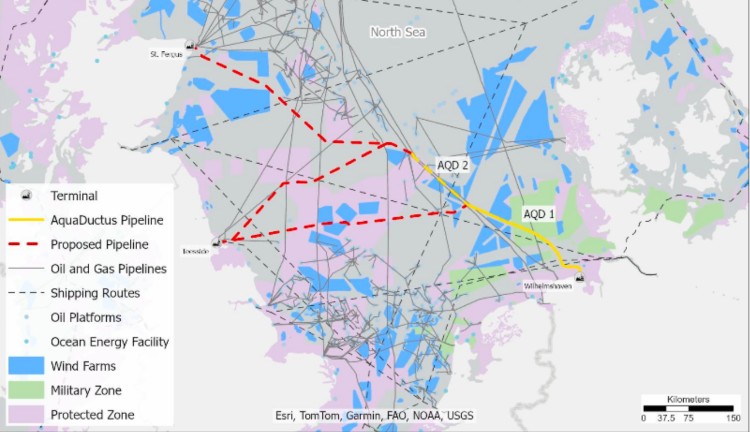
Note.
- The yellow AquaDuctus pipeline connected to the German coast near Wilhelmshaven.
- There appear to be two AquaDuctus sections ; AQD 1 and AQD 2.
- There are appear to be three proposed pipelines, which are shown in a dotted red, that connect the UK to AquaDuctus.
- The Northern proposed pipeline appears to connect to the St. Fergus gas terminal on the North-East tip of Scotland.
- The two Southern proposed pipelines appear to connect to the Easington gas terminal in East Yorkshire.
- Easington gas terminal is within easy reach of the massive gas stores, which are being converted to store hydrogen at Aldbrough and Rough.
- The blue areas are offshore wind farms.
- The blue area straddling the Southernmost proposed pipe line is the Dogger Bank wind farm, is the world’s largest offshore wind farm and could eventually total over 6 GW.
- RWE are developing 7.2 GW of wind farms between Dogger Bank and Norfolk in UK waters, which could generate hydrogen for AquaDuctus.
This cooperation seems to be getting the hydrogen Germany needs to its industry.
It should be noted, that Germany has no sizeable hydrogen stores, but the AquaVentus system gives them access to SSE’s Aldbrough and Centrica’s Rough hydrogen stores.
So will the two hydrogen stores be storing hydrogen for both the UK and Germany?
Storing hydrogen and selling it to the country with the highest need could be a nice little earner.
On X-energy
These are three paragraphs from the article.
He is also backing a £10 billion plan to build the UK’s first advanced modular reactors in a partnership with X-energy of the US.
The project is taking place in Hartlepool, in County Durham, where the existing nuclear power station is due to reach the end of its life in 2028.
As is the nature of these projects, it involves risks around technology, regulation and finance, though the potential rewards are significant. Among them is the prospect of 2,500 jobs in the town, where unemployment is high.
Note.
- This is another bold deal.
- I wrote in detail about this deal in Centrica And X-energy Agree To Deploy UK’s First Advanced Modular Reactors.
- Jobs are mentioned in the This is Money article for the second time.
I also think, if it works to replace the Hartlepool nuclear power station, then it can be used to replace other decommissioned nuclear power stations.
On Getting Your First Job
These are three paragraphs from the article.
His career got off to a slow start when he struggled to secure a training contract with an accountancy firm after leaving Glasgow University.
‘I had about 30, 40 rejection letters. I remember the stress of not having a job when everyone else did – you just feel different,’ he says.
He feels it is ‘a duty’ for bosses to try to give young people a start.
I very much agree with that. I would very much be a hypocrite, if I didn’t, as I was given good starts by two companies.
On Apprenticeships
This is a paragraph from the article.
‘We are committed to creating one new apprenticeship for every day of this decade,’ he points out, sounding genuinely proud.
I very much agree with that. My father only had a small printing business, but he was proud of the apprentices he’d trained.
On Innovation
Centrica have backed three innovative ideas.
- heata, which is a distributed data centre in your hot water tank, which uses the waste heat to give you hot water.
- HiiROC, which is an innovative way to generate affordable hydrogen efficiently.
- Highview Power, which stores energy as liquid air.
I’m surprised that backing innovations like these was not mentioned.
Conclusion
This article is very much a must read.
Centrica And X-energy Agree To Deploy UK’s First Advanced Modular Reactors
The title of this post, is the same as that of this press release from Centrica.
This is the sub-heading.
Centrica and X-Energy, LLC, a wholly-owned subsidiary of X-Energy Reactor Company, LLC, today announced their entry into a Joint Development Agreement (JDA) to deploy X-energy’s Xe-100 Advanced Modular Reactors (“AMR”) in the United Kingdom.
These three paragraphs add more details.
The companies have identified EDF and Centrica’s Hartlepool site as the preferred first site for a planned U.K. fleet of up to 6 gigawatts.
The agreement represents the first stage in a new trans-Atlantic alliance which could ultimately mobilise at least £40 billion in economic value to bring clean, safe and affordable power to thousands of homes and industries across the country and substantive work for the domestic and global supply chain.
A 12-unit Xe-100 deployment at Hartlepool could add up to 960 megawatts (“MW”) of new capacity, enough clean power for 1.5 million homes and over £12 billion in lifetime economic value. It would be developed at a site adjacent to Hartlepool’s existing nuclear power station which is currently scheduled to cease generating electricity in 2028. Following its decommissioning, new reactors would accelerate opportunities for the site and its skilled workforce. The site is already designated for new nuclear under the Government’s National Policy Statement and a new plant would also play a critical role in generating high-temperature heat that could support Teesside’s heavy industries.
This is no toe-in-the-water project, but a bold deployment of a fleet of small modular reactors to provide the power for the North-East of England for the foreseeable future.
These are my thoughts.
The Reactor Design
The Wikipedia entry for X-energy has a section called Reactor Design, where this is said.
The Xe-100 is a proposed pebble bed high-temperature gas-cooled nuclear reactor design that is planned to be smaller, simpler and safer when compared to conventional nuclear designs. Pebble bed high temperature gas-cooled reactors were first proposed in 1944. Each reactor is planned to generate 200 MWt and approximately 76 MWe. The fuel for the Xe-100 is a spherical fuel element, or pebble, that utilizes the tristructural isotropic (TRISO) particle nuclear fuel design, with high-assay LEU (HALEU) uranium fuel enriched to 20%, to allow for longer periods between refueling. X-energy claims that TRISO fuel will make nuclear meltdowns virtually impossible.
Note.
- It is not a conventional design.
- Each reactor is only about 76 MW.
- This fits with “12-unit Xe-100 deployment at Hartlepool could add up to 960 megawatts (“MW”) of new capacity” in the Centrica press release.
- The 960 MW proposed for Hartlepool is roughly twice the size of the Rolls-Rpoyce SMR, which is 470 MW .
- Safety seems to be at the forefront of the design.
- I would assume, that the modular nature of the design, makes expansion easier.
I have no reason to believe that it is not a well-designed reactor.
Will Hartlepool Be The First Site?
No!
This page on the X-energy web site, describes their site in Texas, which appears will be a 320 MW power station providing power for Dow’s large site.
There appear to be similarities between the Texas and Hartlepool sites.
- Both are supporting industry clustered close to the power station.
- Both power stations appear to be supplying heat as well as electricity, which is common practice on large industrial sites.
- Both use a fleet of small modular reactors.
But Hartlepool will use twelve reactors, as opposed to the four in Texas.
How Will The New Power Station Compare With The Current Hartlepool Nuclear Power Station?
Consider.
- The current Hartlepool nuclear power station has two units with a total capacity of 1,185 MW.
- The proposed Hartlepool nuclear power station will have twelve units with a total capacity of 960 MW.
- My instinct as a Control Engineer gives me the feeling, that more units means higher reliability.
- I suspect that offshore wind will make up the difference between the power output of the current and proposed power stations.
As the current Hartlepool nuclear power station is effectively being replaced with a slightly smaller station new station, if they get the project management right, it could be a painless exercise.
Will This Be The First Of Several Projects?
The press release has this paragraph.
Centrica will provide initial project capital for development with the goal of initiating full-scale activities in 2026. Subject to regulatory approval, the first electricity generation would be expected in the mid-2030s. Centrica and X-energy are already in discussions with additional potential equity partners, as well as leading global engineering and construction companies, with the goal of establishing a UK-based development company to develop this first and subsequent projects.
This approach is very similar to the approach being taken by Rolls-Royce for their small modular reactors.
Will Centrica Use An X-energy Fleet Of Advanced Modular Reactors At The Grain LNG Terminal?
This press release from Centrica is entitled Investment In Grain LNG Terminal.
This is one of the key highlights of the press release.
Opportunities for efficiencies to create additional near-term value, and future development options including a combined heat and power plant, bunkering, hydrogen and ammonia.
Note.
- Bunkering would be provided for ships powered by LNG, hydrogen or ammonia.
- Heat would be needed from the combined heat and power plant to gasify the LNG.
- Power would be needed from the combined heat and power plant to generate the hydrogen and ammonia and compress and/or liquify gases.
Currently, the heat and power is provided by the 1,275 MW Grain CHP gas-fired power station, but a new nuclear power station would help to decarbonise the terminal.
Replacement Of Heysham 1 Nuclear Power Station
Heysham 1 nuclear power station is part-owned by Centrica and EdF, as is Hartlepool nuclear power station.
Heysham 1 nuclear power station is a 3,000 MW nuclear power station, which is due to be decommissioned in 2028.
I don’t see why this power station can’t be replaced in the same manner as Hartlepool nuclear power station.
Replacement Of Heysham 2 Nuclear Power Station
Heysham 2 nuclear power station is part-owned by Centrica and EdF, as is Hartlepool nuclear power station.
Heysham 2 nuclear power station is a 3,100 MW nuclear power station, which is due to be decommissioned in 2030.
I don’t see why this power station can’t be replaced in the same manner as Hartlepool nuclear power station.
Replacement Of Torness Nuclear Power Station
Torness nuclear power station is part-owned by Centrica and EdF, as is Hartlepool nuclear power station.
Torness nuclear power station is a 1,290 MW nuclear power station, which is due to be decommissioned in 2030.
I don’t see why this power station can’t be replaced in the same manner as Hartlepool nuclear power station.
But the Scottish Nationalist Party may have other ideas?
What Would Be The Size Of Centrica’s And X-energy’s Fleet Of Advanced Modular Reactors?
Suppose.
- Hartlepool, Grain CHP and Torness power stations were to be replaced by identical 960 MW ADRs.
- Heysham 1 and Heysham 2 power stations were to be replaced by identical 1,500 MW ADRs.
This would give a total fleet size of 5,880 MW.
A paragraph in Centrica’s press release says this.
The companies have identified EDF and Centrica’s Hartlepool site as the preferred first site for a planned U.K. fleet of up to 6 gigawatts.
This fleet is only 120 MW short.
The Monster In The Mountains That Could Save Europe’s Winter
Ulla-Førre is a complex of five hydroelectric power stations and a massive lake in the Norwegian mountains to the East of Stavanger.
- The power stations have a total generating capacity of 2.1 GW.
- Lake Blåsjø is able to hold enough water to generate 7800 GWh of electricity.
- The complex is at the Norwegian end of the North Sea Link to Blyth in England.
This YouTube video from Statkraft, explains how Ulla-Førre was built.
I have some further explanation and thoughts.
What Is The Operating Philosophy Of The North Sea Link?
This press release from National Grid says this.
The Norwegian power generation is sourced from hydropower plants connected to large reservoirs, which can respond faster to fluctuations in demand compared to other major generation technologies. However, as the water level in reservoirs is subject to weather conditions, production varies throughout seasons and years.
When wind generation is high and electricity demand low in Britain, NSL will enable renewable power to be exported from the UK, conserving water in Norway’s reservoirs. When demand is high in Britain and there is low wind generation, hydro power can be imported from Norway, helping to ensure secure, affordable and sustainable electricity supplies for UK consumers.
It almost seems to me, that the North Sea Link is part of a massive pumped-storage system, where we can bank some of our wind-generated electricity in Norway and draw it out when we need it.
Suppose There Is No Wind In The UK And Norway’s Giant Reservoirs Need Filling?
We could always throw on a substitute, which is the 1,185 MW Hartlepool nuclear power station.
- Unfortunately, this will close in 2024.
- Wikipedia indicates that Hartlepool’s closure has been on and off several years, so I don’t think it will be delayed again.
- A new station probably couldn’t be commissioned until 2029, at the earliest.
But over the next few years these wind farms will be connected to the North-East.
- Sofia wind farm should commission the 1.4 GW Phase 1, which connects to Teesside in 2023.
- Dogger Bank wind farm should commission 3.6 GW, which connects to Teesside and Humberside in 2025.
- The 4.1 GW Berwick Bank wind farm will have a second connection to Blyth by 2030. Say 2 GW!
There’s more than enough wind there to fill up Norway’s reservoirs and replace Hartlepool nuclear station.
Will Ulla-Førre Be Expanded?
It does sound to me that the video does imply that Ulla-Førre could be expanded.

