Platforms 10-14 At Paddington Station
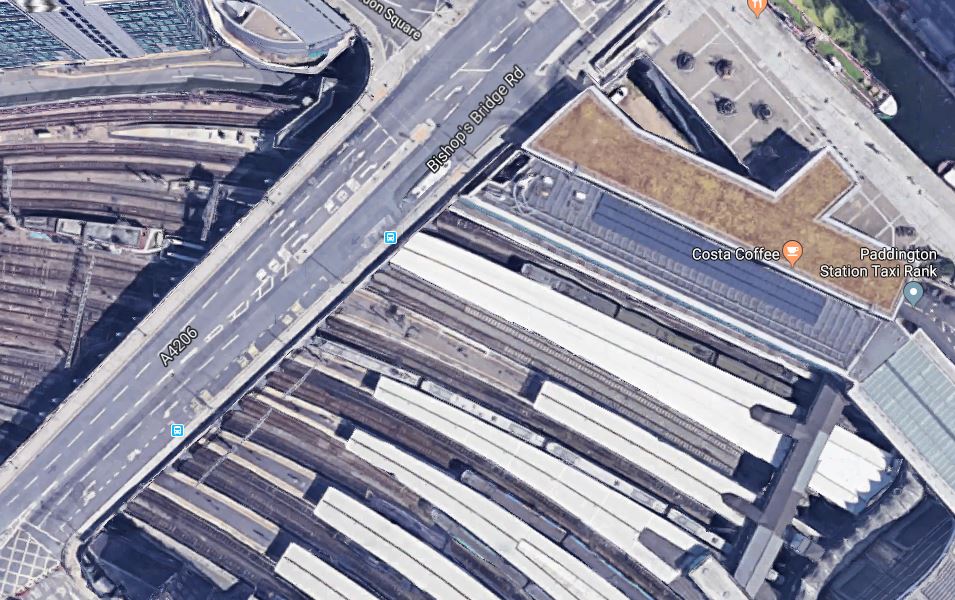
This Google Map shows the Western end of Paddington station.
Note.
- In the top right hand corner of the map you can see the canal boats parked alongside the station.
- The light brown flat roof, would appear to be the roof of the London Underground station, which has two platforms and is served by the Circle and Hammersmith & City Lines.
- The thin platform pointing out from under the road bridge at the is probably the extension of the two Underground platforms, which are numbered 15 and 16.
- The next platform end which is wider, is platforms 12 and 14.
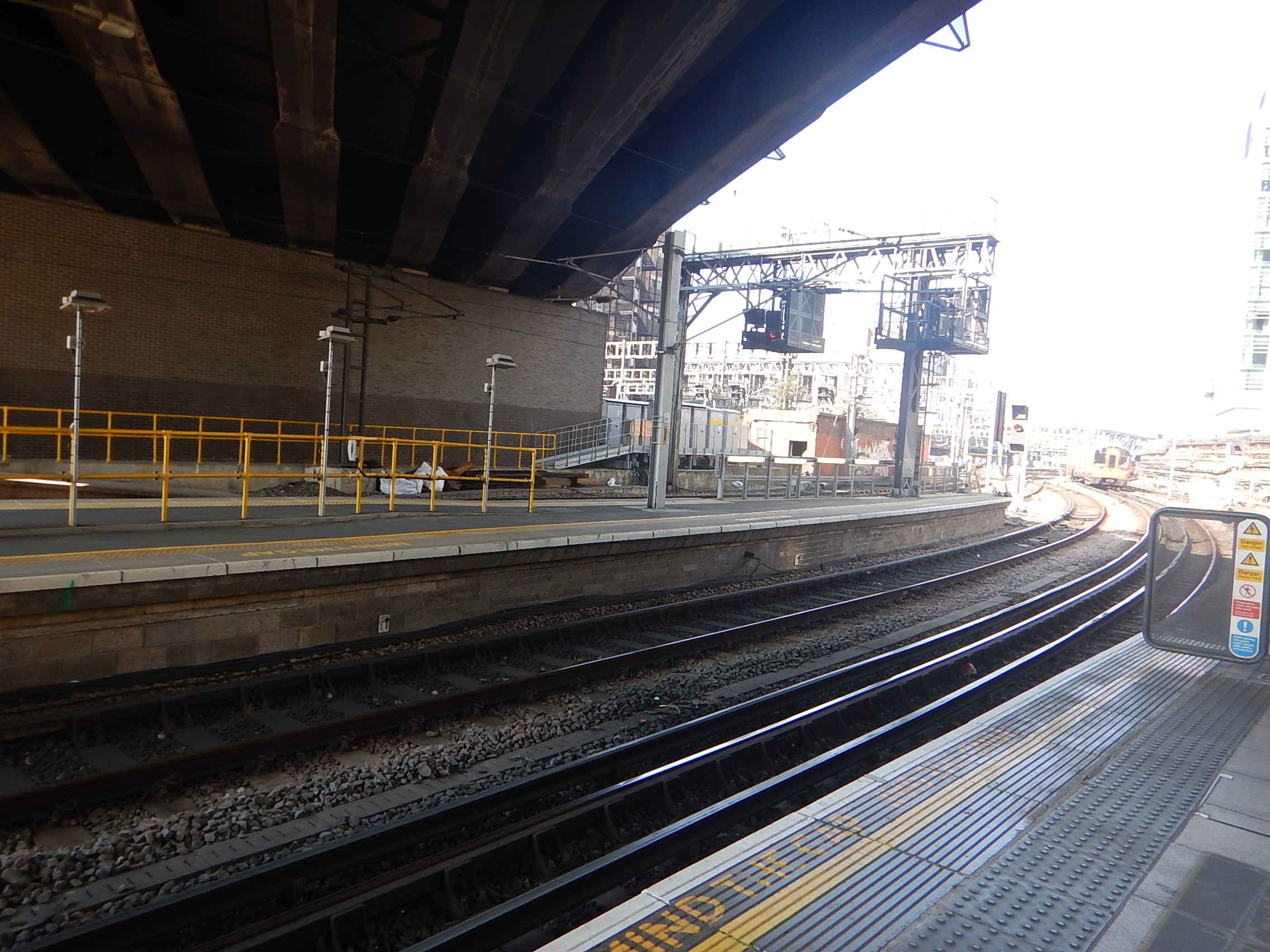
Now look at this picture taken by the end barrier on platform 15.
Note.
- The road bridge is over the top.
- Platform 14 is opposite, which is fitted with overhead electrification.
- The track for Platform 15, is the Westbound Underground line and has typical London Underground electrification.
- I think the signal gantry at the end of the platform can be seen on the Google Map.
The Google Map and my photo are two different views of the same area.
The Length of Platform 14
This article on Rail Engineer is entitled All Change At Paddington.
This is an extract, which is talking about Platform 14.
To extend the platform’s operational length to 164 metres, it had to be extended at both ends. On the London end, the buffer stop had already been moved by 11 metres, and that was all the room available. The country end had also been extended as much as possible.
164 metres is an interesting length.
The length of a four-car Class 387 train is just over eighty metres, so two working as a pair would fit Platform 14.
In Weight And Dimensions Of A Class 345 Train, I state that the length of a seven-car Class 345 train is 159.74 metres.
It looks like platform 14 can accept either of the electric trains that work the suburban services out of Paddington.
The Length of Platform 12
Platform 12 is the other platform face of the island containing platform 14.
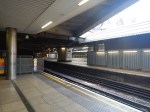
I took these pictures as I walked down the Underground platform.


I then left the Underground station and took these pictures on the island containing platforms 12 and 14.
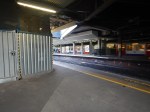
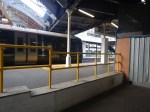
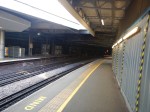
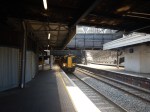
Note that the train in Platform 12 is an eight-car Class 387 train, which is around 160 metres long.
The end of the train appeared to be about the same place as the end barriers on the Eastern end of the Underground platform.
As a S7 Stock train is 117.45 metres long, I estimate that the length of Platform 12 is almost 280 metres.
This picture was taken at the Eastern End of the platforms from behind the buffers.

As there is perhaps forty metres, between the buffer stop and the train, does that mean that Platform 12 and its neighbour; Plstform 11 are long enough to accommodate any of the following.
- Up to four four-car Class 387 trains.
- Two seven car Class 345 trains.
- A Class 345 train at the maximum length of nine or ten cars.
Network Rail seem to have provided a lot of space for future services.
Conclusion
There is certainly enough space to run a Western Cossrail service to Reading. The space is available now, so it should be available in December 2019.
The only restriction would be that Platform 14 can only handle a seven-car Class 345 train.
Crossrail’s Class 345 Trains Are Not Suburban Trumdlers
Over the last couple of days, I’ve had several trips on Class 345 trains, running to Hayes & Harlington station.
- I found that I was able to time the trains at almost 80 mph in places.
- They don’t seem to go this fast to Shenfield.
- Wikipedia says the maximum speed of the trains are 90 mph.
I would not be surprised to see 90 mph cruising on some of the longer stretches between stations towards Reading.
This will surely mean that when Crossrail opens to Reading, the Crossrail service with all its stops might not be the slowest way to travel between Reading and London.
Consider.
- Some Class 800 trains do the trip in as fast as 26 minutes.
- Class 387 trains do the trip with eight stops in 56 minutes.
- Most Crossrail Class 345 trains from Reading To Paddington will have fourteen stops.
- In the Peak, two Class 345 trains in each hour, will take just five stops.
Although the Class 387 are modern trains, they probably don’t have the performance and certainly don’t have the digital signalling of the Class 345 trains.
I suspect that even with fourteen stops, the Class 345 trains will still do the journey in under an hour, when Crossrail is completed.
I suspect that many travellers between Reading and London will be changing their routes.
Crossrail To Reading In December 2019
It is rumoured that Crossrail will open to Reading in December 2019, with all services terminating at Paddington in Brunel’s station.
I believe that the Class 345 trains will be able to provide a high-capacity service between Paddington and Reading, which will complement the faster and mostly non-stop Great Western Railway services.
Should The Elizabeth Line Be Extended To Ascot?
The idea for this post came from an article in the October 2018 Edition of Modern Railways, that was entitled Windsor Link Railway Gains Momentum.
The article talks about the benefits of the Windsor Link Railway.
Property Development And Landscaping
Ever since I read about the Windsor Link Railway, I thought it would create or free-up sites in Windsor for property development.
I even wrote about this in Is This One Of The Most Valuable Sites For New Development In The UK?.
The article details or suggests the following.
- Around twenty-one acres, which would include the two existing station sites could be developed.
- The Windsor and Eton Riverside station, which Grade II Listed, could be developeed into a boutigue hotel on the river.
- The gardens in the centre of Windsor could be extended.
The article also suggests that the property development could pay for the whole scheme.
Reducing Traffic In Windsor
Windsor is full of tourist coaches and other traffic.
The proposed railway would have.
- A single sub-surface station in the middle of the town.
- Twelve trains per hour (tph) through Windsor, in a single-track tunnel.
- Areinstated Royal Curve at Slough to create a route between Reading and Windsor.
- A Park-and-Ride by the M4 at Chalvey.
- A journey between Waterloo and Windsor of around fifty minutes, with four tph.
- Slough would be the Northern terminal, either in the current station or West of the town in the Trading Estate.
- It should be noted that six-car Aventras similar to Crossrail’s Class 345 trains, would probably hold a thousand passengers.
If a railway like that didn’t cut traffic going into Windsor, then nothing will.
Western Access To Heathrow
The Windsor Link Railway could also serve Heathrow Terminal 5.
The article states that this would probably need a double-track tunnel, so provision should be made in the initial scheme.
Crossrail trains could also use the link to extend Crossrail to Reading via Windsor.
- The Royal Curve at Slough would be rebuilt.
- The new Windsor station would need to be able to handle two hundred metre long trains.
- Trains would serve both Heathrow Central and Terminal 5.
- Trains wouldn’t need a terminal platform at Heathrow Terminal 5 station.
But the biggest benefit (or even curse!) would be to connect Windsor to Central London.
Wider Connectivity
George Bathurst; the scheme’s proposer envisages trains from Windsor to the following places.
- Heathrow
- High Wycombe via Bourne End.
- Reading
- Waterloo
- Woking
In one throwaway remake this is said.
The WLR connection to Heathrow could also be used (with dual-voltage stock) for extending the Elizabeth Line westwards, to Ascot for example.
This would need a chord at Staines, which I wrote about in Heathrow Southern Railway’s Proposed Chord At Staines.
Hence the title of this post!
The Heathrow Southern Railway And The Windsor Link Railway
I wrote about the interaction of the two proposals to access Heathrow from the West and South in Heathrow Southern Railway And The Windsor Link Railway.
This was my original conclusion.
Co-operation could be beneficial to both projects.
I have not changed my conclusion, although I have updated the related post.
Heathrow’s Destinations In The West And South
Taken together the two proposals; Heathrow Southern Railway and Windsor Link Railway, will or could offer the following destinations.
- Basingstoke – Heathrow Southern Railway – Extension to Heathrow Express
- Guildford – Heathrow Southern Railway – Extension to Heathrow Express
- High Wycombe – Windsor Link Railway – Possible via Bourne End!
- Reading – Windsor Link Railway – Possible Extension to Crossrail!
- Slough – Windsor Link Railway – Possible Extension to Crossrail!
- Staines – Heathrow Southern Railway – Extension to Crossrail
- Weybridge – Heathrow Southern Railway – Local Service
- Windsor – Windsor Link Railway – Possible Extension to Crossrail!
- Woking – Heathrow Southern Railway – Extension to Heathrow Express
I can see two high-capacity stations at Terminal 5 and Windsor capable of handling upwards of ten tph in both directions, feeding services all over the area, bringing passengers, workers and freight to Heathrow.
A Crossrail Extension To Ascot
I’ll now look at this in detail.
The Route
As I said earlier this would need the reinstatement of the chord at Staines station.
This map from carto.metro.free.fr shows former route of the chord as a dotted line.
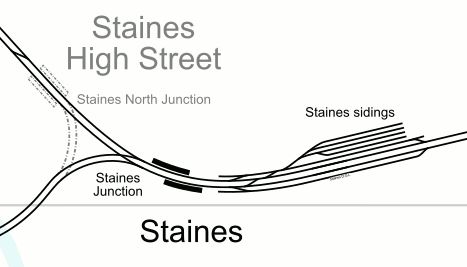
Would it be possible to get one of Crossrail’s two hundred metre long trains around a rebuilt chord?
From Staines, it would be an easy run up the Waterloo-Reading Line, with calls at the following stations.
- Egham
- Virginia Water
- Longcross
- Sunningdale
All appear to be stations capable of taking long trains.
Current Service
Currently, there are two services on this route.
2 tph – Waterloo and Reading
2 tph – Waterloo and Weybridge, which branches off at Virginia Water.
Benefits Of Extending To Ascot
At present Heathrow Terminal 5 is planned to get just two tph from Crossrail. But as Terminal 5 is the busiest terminal at Heathrow by a large margin, surely it needs more services than this.
I also think, that the ideal number of services between Staines and Ascot should be at least four tph.
If two tph ran through Heathrow Terminal 5 to Ascot, this would mean the following.
- There would be at least four tph on services between Staines and Ascot.
- Travellers would have a wider choice of London terminals.
- Travellers would be have direct access to all terminals and HS2 at Old Oak Common.
There would also probably be less road traffic into Heathrow.
Why Stop At Ascot?
Although, George Bathurst suggested Ascot as a terminus, why not continue all the way to Reading station?
Stations on the route are.
- Martins Heron
- Bracknell
- Wokingham
- Wnnersh
- Winnersh Triangle
- Earley
Note that Reading station has three third-rail electrified platforms to handle trains from Ascot, Guidford, Staines and Waterloo.
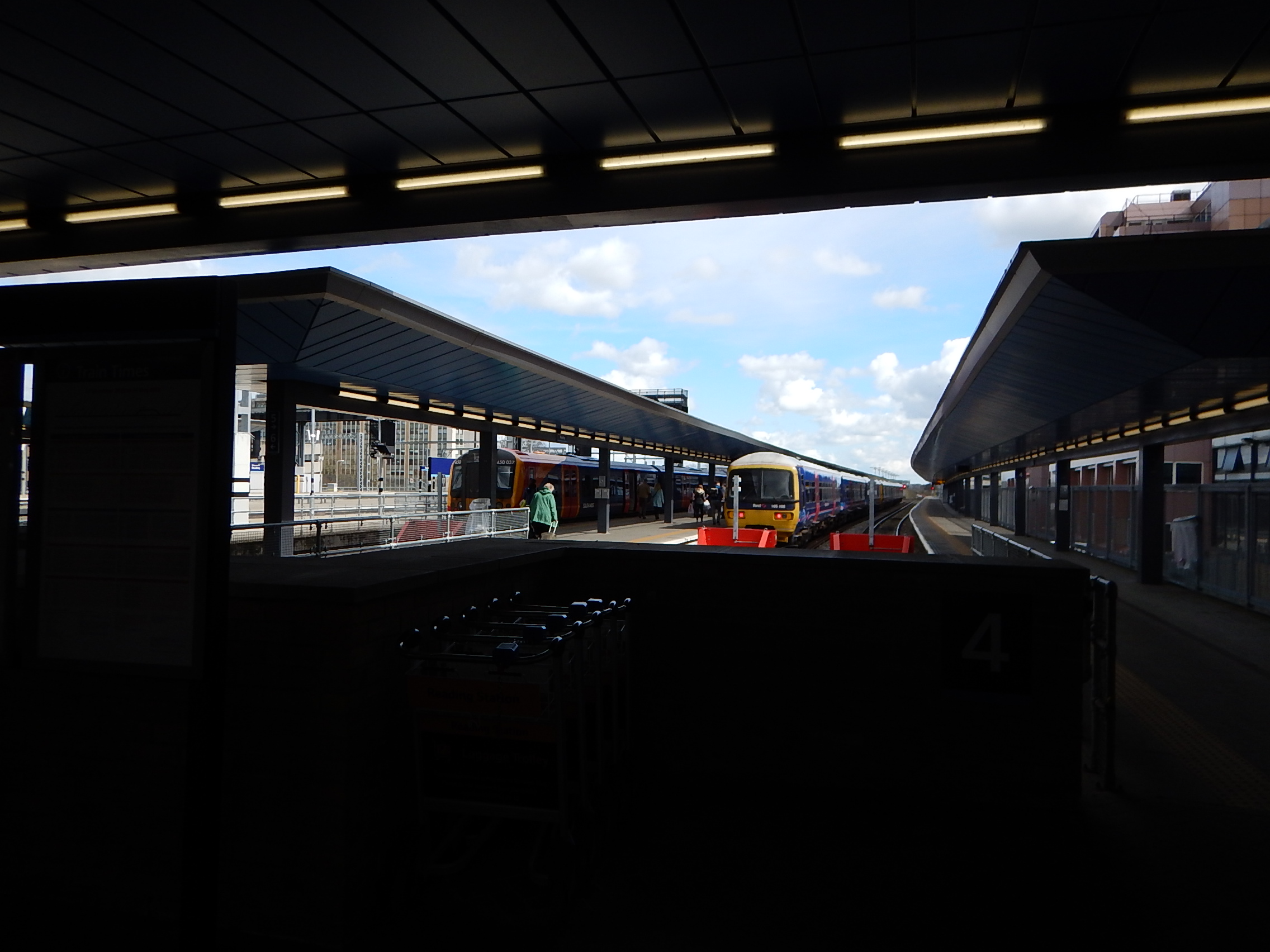
Note the train in the platform is a Great Western Railway train to Gatwick, which in a couple of years will be run by tri-mode Class 769 trains.
As the platforms only handle four tph, there is plenty of capacity to turn extra trains.
I can’t see any reason, why if Crossrail is extended to Ascot, it shouldn’t be extended to Reading.
Especially, as all the benefits I talked about earlier to Ascot would also apply to terminating at Reading.
Conclusion
I believe that an extension of Crossrail to Ascot would be worthwhile, but that it should continue to Reading.
Hitachi Battery Trains On The Great Western Railway
The slow pace of the electrification on the Great Western Main Line has become a big stick with which to beat Network Rail.
But are rolling stock engineers going to pull Network Rail out of their hole?
On page 79 of the January 2018 Edition of Modern Railways, Nick Hughes, who is the Sales Director of Hitachi Rail Europe outlines how the manufacturer is embracing the development of battery technology.
He is remarkably open.
I discuss what he says in detail in Hitachi’s Thoughts On Battery Trains.
But here’s an extract.
Nick Hughes follows his description of the DENCHA; a Japanese battery train, with this prediction.
I can picture a future when these sorts of trains are carrying out similar types of journeys in the UK, perhaps by installing battery technology in our Class 395s to connect to Hastings via the non-electrified Marshlink Line from Ashford for example.
This would massively slice the journey time and heklp overcome the issue of electrification and infrastructure cases not stacking up. There are a large number of similar routes like this all across the country.
It is a prediction, with which I could agree.
I conclude the post with this conclusion.
It is the most positive article about battery trains, that I have read so far!
As it comes direct from one of the train manufacturers in a respected journal, I would rate it high on quality reporting.
Hitachi Battery Train Technology And Their UK-Built Trains
The section without electrification on the Marshlink Line between Ashford International and Ore stations has the following characteristics.
- It is under twenty-five miles long.
- It is a mixture of double and single-track railway.
- It has nine stations.
- It has a sixty mph operating speed.
As the line is across the flat terrain of Romney Marsh, I don’t think that the power requirements would be excessive.
In the Modern Railway article, Nick Hughes suggests that battery technology could be installed in Class 395 trains.
The Class 395 train is part of a family of trains, Hitachi calls A-trains. The family includes.
- Class 800 trains as ordered by GWR and Virgin Trains East Coast.
- Class 801 trains as ordered by GWR and Virgin Trains East Coast
- Class 802 trains as ordered by GWR, Hull Trains and TransPennine Express
- Class 385 trains as ordered by ScotRail.
In Japan, another member of the family is the BEC819, which is the DENCHA, that is mentioned in the Modern Railways article.
As a time-expired electrical engineer, I would think, that if Hitachi’s engineers have done their jobs to a reasonable standard, that it would not be impossible to fit batteries to all of the A-train family of trains, which would include all train types, built at Newton Aycliffe for the UK.
In Japan the DENCHAs run on the Chikuhō Main Line, which has three sections.
- Wakamatsu Line – Wakamatsu–Orio, 10.8 km
- Fukuhoku Yutaka Line – Orio–Keisen, 34.5 km
- Haruda Line – Keisen–Haruda, 20.8 km
Only the middle section is electrified.
It looks to me, that the Japanese have chosen a very simple route, where they can run on electrification for a lot of the way and just use batteries at each end.
Bombardier used a similar low-risk test in their BEMU Trial with a Class 379 train in 2015.
So How Will Battery Trains Be used On the Great Western?
On the Great Western Main Line, all long distance trains and some shorter-distance ones will be Class 80x trains.
The size of battery in the DENCHA can be estimated using a rule, given by Ian Walmsley.
In an article in the October 2017 Edition of Modern Railways, which is entitled Celling England By The Pound, Ian Walmsley says this in relation to trains running on the Uckfield Branch.
A modern EMU needs between 3 and 5 kWh per vehicle mile for this sort of service.
So the energy needed to power the DENCHA, which is a two-car battery train on the just under twenty miles without electrification of the Chikuhō Main Line in a one way trip would be between 112 and 187 kWh.
A Battery-Powered Class 801 Train
The Class 801 train is Hitachi’s all-electric train, of which Great Western Railway have ordered thirty-six of the closely-related five-car Class 800 train and twenty-one of the nine-car units.
The difference between the two classes of train, is only the number of generator units fitted.
- Trains can be converted from Class 800 to Class 801 by removing generator units.
- Bi-mode Class 800 trains have a generator unit for each powered car.
- The all-electric Class 801 train has a single generator unit, in case of electrical power failure.
- When trains couple and uncouple, the train’s computer system determines the formation of the new train and drives and manages the train accordingly.
If I was designing the train, I would design a battery module, that replaced a generator unit
This leads me to think, that a five-car Class 801 train, could have one generator unit and up to four battery modules.
- The computer would decide what it’s got and control the train accordingly.
- The generator unit and battery power could be used together to accelerate the train or at other times where high power is needed.
- If the batteries failed, the generator unit would limp the train to a safe place.
- The number of battery units would depend on the needs of the route.
It would be a true tri-mode train; electric, diesel and battery.
I will now look at some routes, that could see possible applications of a battery version of Class 80x trains.
Cardiff To Swansea
I’ll start with the most controversial and political of the cutbacks in electrification.
At present plans exist to take the electrification on the Great Western as far as Cardiff Central station, by the end of 2018.
The distance between Cardiff Central and Swansea stations is forty-six miles, so applying the Ian Walmsley formula and assuming the train is five-cars, we have an energy usage for a one-way trip between the two cities of between 690 and 1150 kWh.
As the Class 80x trains are a modern efficient design, I suspect that a figure towards the lower end of the range will apply.
But various techniques can be used to stretch the range of the train on battery power.
- From London to Cardiff, the line will be fully-electrified, so on arrival in the Welsh capital, the batteries could be fully charged.
- The electrification can be continued for a few miles past Cardiff Central station, so that acceleration to line speed can be achieved using overhead wires.
- Electrification could also be installed on the short stretch of track between Swansea station and the South Wales Main Line.
- There are three stops between Cardiff and Swansea and regenerative braking can be used to charge the batteries.
- The single generator unit could be used to help accelerate the train if necessary.
- There are only two tph on the route, so efficient driving and signalling could probably smooth the path and save energy.
- Less necessary equipment can be switched off, when running on batteries.
Note. that the power/weight and power/size ratios of batteries will also increase, as engineers find better ways to build batteries.
The trains would need to be charged at Swansea, but Hitachi are building a depot in the city, which is shown in these pictures.


It looks like they are electrifying the depot.
Surely, enough electrification can be put up at Swansea to charge the trains and help them back to the South Wales Main Line..
The mathematics show what is possible.
Suppose the following.
- Hitachi can reduce the train’s average energy consumption to 2 kWh per carriage-mile, when running on battery power.
- Electrification at Cardiff and Swansea reduces the length of battery use to forty miles.
This would reduce the battery size needed to 400 kWh, which could mean that on a five-car train with four battery modules, each battery module would be just 100 kWh. This compares well with the 75 kWh battery in a New Routemaster bus.
Will it happen?
We are probably not talking about any serious risk to passengers, as the worst that can happen to any train, is that it breaks down or runs out of power in the middle of nowhere. But then using the single generator unit, the train will limp to the nearest station.
But think of all the wonderful publicity for Hitachi and everybody involved, if the world’s first battery high speed train, runs twice an hour between Paddington and Swansea.
Surely, that is an example of the Can-Do attitude of Isambard Kingdom Brunel?
Paddington To Oxford
The route between Paddington and Oxford stations is electrified as far as Didcot Parkway station.
The distance between Didcot Parkway and Oxford stations is about ten miles, so applying the Ian Walmsley formula and assuming the train is five-cars, we have an energy usage for the return trip to Oxford from Didcot of between 300 and 500 kWh.
If the five-car train has one generator unit,four battery modules and has an energy usage to the low end, then each battery module would need to handle under 100 kWh.
There are plans to develop a South-facing bay platform at Oxford station and to save wasting energy reversing the train by running up and down to sidings North of the station, I suspect that this platform must be built before battery trains can be introduced to Oxford.
If it’s not, the train could use the diesel generator to change platforms.
The platform could also be fitted with a system to charge the battery during turnround.
Paddington To Bedwyn
The route between Paddington and Bedwyn is electrified as far as Reading station, but there are plans to electrify as far as Newbury station.
The distance between Newbury and Bedwyn stations is about thirteen miles, so applying the Ian Walmsley formula and assuming the train is five-cars, we have an energy usage for the return trip to Bedwyn from Newbury of between 390 and 520 kWh.
As with Paddington to Oxford, the required battery size wouldn’t be excessive.
Paddington To Henley-on-Thames
The route between Paddington and Henley-on-Thames station is probably one of those routes, where electric trains must be run for political reasons.
The Henley Branch Line is only four miles long.
It would probably only require one battery module and would be a superb test route for the new train.
Paddington To Weston-super-Mare
Some Paddington to Bristol trains extend to Weston-super-Mare station.
Weston-super-Mare to the soon-to-be-electrified Bristol Temple Meads station is less than twenty miles, so if Swansea can be reached on battery power, then I’m certain that Weston can be reached in a similar way.
Other Routes
Most of the other routes don’t have enough electrification to benefit from trains with a battery capability.
One possibility though is Paddington to Cheltenham and Gloucester along the Golden Valley Line. The length of the section without electrification is forty-two miles, but unless a means to charge the train quickly at Cheltenham station is found, it is probably not feasible.
It could be possible though to create a real tri-mode train with a mix of diesel generator units and battery modules.
This train might have the following characteristics.
- Five cars.
- A mix of generator units and battery modules.
- Enough generator units to power the train on the stiffest lines without electrification.
- Ability to collect power from 25 KVAC overhead electrification
- Ability to collect power from 750 VDC third-rail electrification.
Note.
- The battery modules would be used for regenerative braking in all power modes.
- The ability to use third rail electrification would be useful when running to Brighton, Exeter, Portsmouth and Weymouth.
The train could also have a sophisticated computer system, that would choose power source according to route,timetable, train loading, traffic conditions and battery energy level.
The objective would be to run routes like Paddington to Cheltenham, Gloucester to Weymouth and Cardiff to Portsmouth Harbour, as efficiently as possible.
Collateral Advantages
Several of the routes out of Paddington could easily be worked using bi-mode Class 800 trains.
- But using battery trains to places like Bedwyn, Henley, Oxford and Weston-super-Mare is obviously better for the environment and probably for ticket sales too!
- If places like Bedwyn, Henley and Oxford are served by Class 801 trains with a battery option, it could mean that they could just join the throng of 125 mph trains going in and out of London.
- Battery trains would save money on electrification.
I also suspect, that the running costs of a battery train are less than those of using a bi-mode or diesel trains.
Conclusion
Hitachi seem to have the technology, whereby their A-train family can be fitted with batteries, as they have done it in Japan and their Sales Director in the UK, has said it can be done on a Class 395 train to use the Marshlink Line.
We may not see Hitachi trains using batteries for a couple of years, but it certainly isn’t fantasy.
Great Western Railway certainly need them!
Platform 0 At Redhill Station Is Progressing
Redhill station is being upgraded.
This picture of the new Platform 0 was taken from the existing Platform 1.
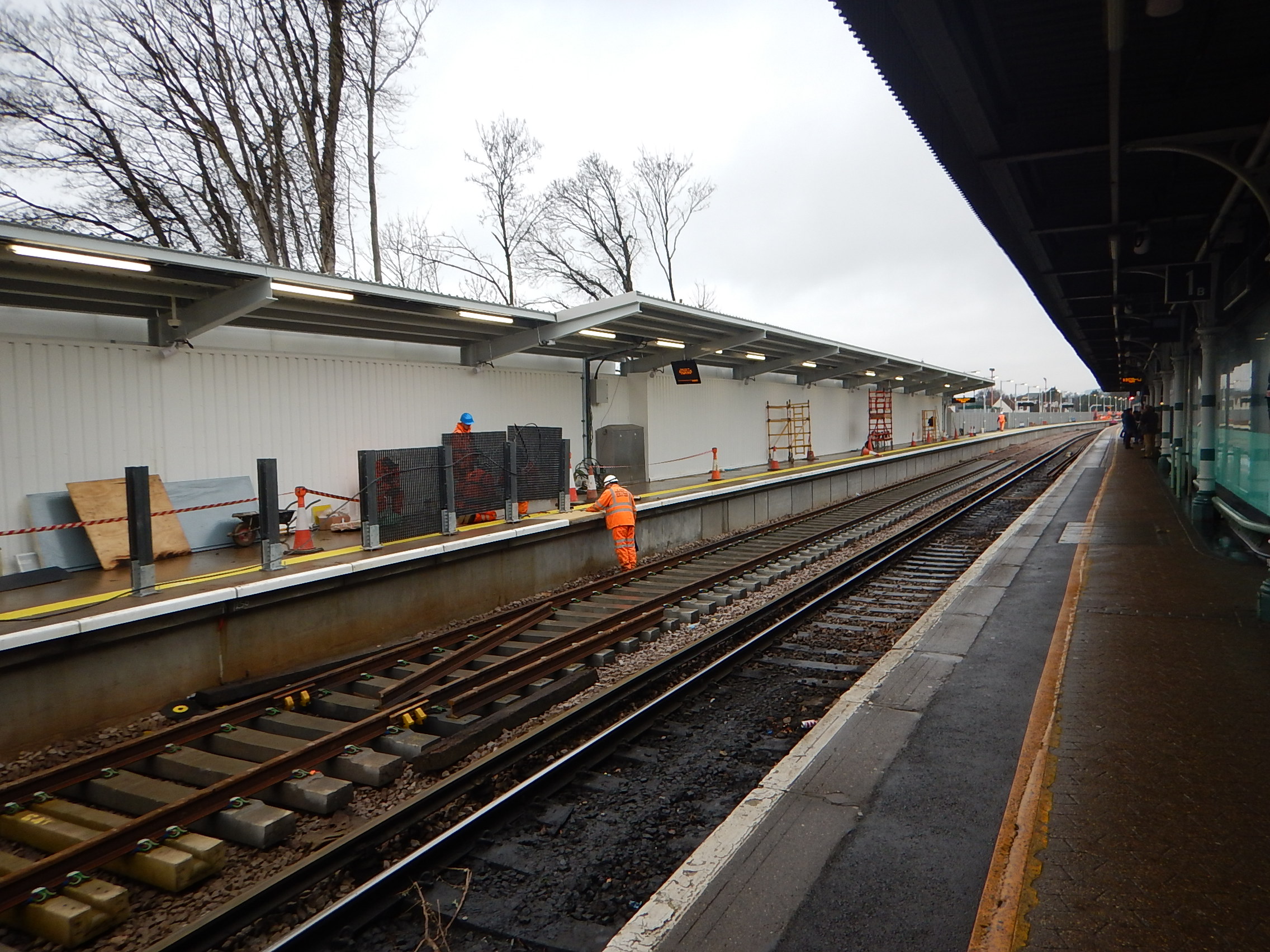
Works include.
- The new Platform 0 will become a through platform for trains to London.
- It is certainly long enough for a twelve car train.
- It appears it will be fully connected to the entrsnce by the car park.
- The current platform 1 will become a South-facing bay platform.
The January 2018 Edition of Modern Railways, also says this about the upgrade.
This is aimed to allow GWR to boost the Reading to Gatwick frequency from hourly to half-hourly from May 2018. The operator’s ultimate sim is to introduce a third hourly service on the North Downs line, although concerns from Network Rail about level crossing risk have affected progress with this plan.
Currently, the journey between Reading to Gatwick Airport takes 76 minutes without a change, but the train reverses direction at Redhill. One driver told me, that if GWR issued the drivers with better shoes, they could save a minute or so on the timetable at Rewdhill.
But 76 minutes isn’t a bad time by way of the North Downs Line. Especially, as the trains have to negotiste eleven level crossing! Is that what Network Rail mean by level crossing risk?
If you take Crossrail’s estimate of the Reading to Farringdon time of 59 minutes and the timetabled Farringdon to Gatwick Airport time of 54 minutes, you get a time 113 minutes or nearly forty minutes longer than the shorter and more direct route.
The North Downs Line is partly electrified with third rail and I wonder what time a Class 802 train could achieve!
Conclusion
The Platform 0 works at Redhill station are part of a fifty million pound project, whivh will do the following.
- Increase capacity at Redhill station.
- Remove conflicts between Brighton Line and Reading to Gatwick Airport services.
- Enable a two trains per hour service between Reading and Gatwick Airport.
It will be interesting to see if it works in May 2018.
The works do show how money spent on smaller projects can give multiple benefits.
Crossrail To Heathrow, Reading And Southend
Crossrail To Heathrow
In the Wikipedia entry for Crossrail, there is a section called Extensions.
This is said under a sub-section called Heathrow Express.
The RUS also proposes integrating Heathrow Express services from Heathrow Terminal 5 into Crossrail to relieve the GWML and reduce the need for passengers to change at Paddington.
Note RUS refers to Network Rail’s Route Utilisation Study of 2011 and GWML is the Great Western Main Line.
Currently, Heathrow Express takes fifteen minutes to go between Paddington and Heathrow Central stations, with Heathrow Connect taking thirty-two minutes with five stops.
The journey time calculator on the Crossrail site, says the trains will take twenty-three minutes with six stops. But as I said in Are Crossrail And Bombardier Having Us On?, Crossrail’s journey time estimates aren’t very good to say the least.
I think until the Crossrail trains reach Heathrow next May 2018, any speculation I make of the time they take between Paddington and Heathrow Central will be very wide of the mark.
However, this can be said of Heathrow Express and Crossrail to Heathrow.
- As the RUS says Heathrow Express services use four paths per hour on the GWML in both directions and these paths would be released for other services if Heathrow Express used the dedicated Crossrail tracks.
- Most Heathrow Express passengers will not be going to Paddington or the surrounding area of the station.
- When fully developed Crossrail will connect Canary Wharf, the City of London, the West End and the Queen Elizabeth Olympic Park, to name just four important destinations, directly to Heathrow Airport.
- If Crossrail works as it says on the box, every travel guide and expert, will recommend you use your contactless bank card to travel on this wonderful new airport train.
- I would suspect, that given Heathrow’s expansion plans, that the Heathrow branch of Crossrail has a capacity in excess of ten trains per hour (tph).
- The accommodation and comfort level in Crossrail’s Class 345 trains is high and well suited for an airport service.
I think that Heathrow Express will be increasingly deserted by passengers, in favour of the cheaper and more convenient Crossrail.
So could the two services be integrated together?
In theory, Heathrow Express could use the Crossrail tracks to Paddington, but there would be problems.
- Heathrow Express trains would have to leave the Crossrail tracks to get into Paddington.
- Would Crossrail want non-stop trains speeding through suburban stations like Southall, with their high suicide rates?
So then why not create a Heathrow Express, that used the Crossrail tracks and stopped at say Old Oak Common (for HS2), Paddington, Bond Street, Farringdon (for Thameslink), Liverpool Street and Canary Wharf?
- Heathrow Express would have to buy new trains compatible with the platform-edge doors in Crossrail’s tunnels.
- Where would the trains be turned back? Perhaps a turnback facility could be built at Liverpool Street at a cost of several hundred million pounds!
- It would still speed through suburban stations.
- Trains moving at different speeds would reduce the capacity of Crossrail.
- As Crossrail and Heathrow Express will use the same platforms at stations, how do you stop people without expensive special tickets using Heathrow Express?
Heathrow will continue to argue to keep Heathrow Express, but in practice in the future, it will be as outdated a concept as trains pulled by steam engines.
So one of two things will happen.
- Heathrow Express will continue as now, using two valuable platforms at Paddington and the four equally valuable paths per hour on the GWML.
- It will be discontinued.
I believe that in some date in the future, only three rail services will serve Heathrow.
- London Underground’s Piccadilly Line.
- A Crossrail service to London and the East.
- A Crossrail service to Reading and the West, which would rejoin the slow tracks of the GWML to the East of Langley station.
The two Crossrail services would probably be run back-to-back, so that fewer trains were turned back at Heathrow.
The two Crossrail branches to Heathrow and Reading would merge easily to the West of Hayes and Harlington station and there would be no complications caused by Heathrow Express trains crossing to and from the fast lines.
Crossrail To Reading
Just over a month ago, Transport for London (TfL) ordered four extra Crossrail trains and announced extra services to Heathrow and Reading. I discussed this in Crossrail Expands Before It Opens
I said this.
Four new Class 345 trains are being ordered, which will mean that in the Off Peak the following will happen.
- Trains between Whitechapel and Paddington will increase from 16 tph to 20.
- Trains between Paddington and Shenfield will increase by two tph
- Trains between Paddington and Abbey Wood will increase by two tph
- Trains between Paddington and Reading will double from two tph to four.
- Trains between Paddington and Maidenhead will increase from four tph to six
- From December 2019, six tph will call at Heathrow Terminal 5.
I also found this quote in the article on Global Rail News, that was the source for the increased services.
The increased service frequency will be achieved, in part, by replacing five Great Western Railway services with Elizabeth line trains.
So could we be seeing a degree of co-operation between TfL, Crossrail and Great Western Railway, whereby the following services are provided?
- Slow stopping services are run by Crossrail on the two slow lines.
- Fast and semi-fast services are run by Great Western Railway on the two fast lines.
This would be operationally simple and might even create extra paths into London for more long-distance services.
The problem are the local stopping trains to Oxford (2 tph) and Bedwyn (1 tph). Will they run on the slow or fast lines between Paddington and Reading?
Consider the service to Bedwyn.
- A five-car Class 800 train could run the service.
- Small modifications at Bedwyn would probably be needed to allow the Class 800 train to use the turnback.
- The train would run using electricity until the wires ran out near Newbury and then diesel.
- The service could run semi-fast or non-stop between Paddington and Reading.
- Nine-car Crossrail Class 345 trains would probably need a lot of platform lengthening, in addition to the electrification to be used to Bedwyn.
And the stopping service to Oxford.
- A five-car Class 800 train could run the service.
- A planned new bay platform at Oxford station would handle the service.
- The train would run using electricity until the wires ran out near Didcot and then diesel.
- The service could run semi-fast or non-stop between Paddington and Reading.
- Niine-car Crossrail Class 345 trains would probably need some platform lengthening, in addition to the electrification, to be used to Oxford.
If the two services are considered together, they could join and split at Reading to save paths on the fast lines.
I think that on balance to use a pair of Class 800 trains would be better than to extend Crossrail past Reading.
Consider.
- A second service to Bedwyn could be easily added.
- A large number of long-distance trains call at Reading station.
- Reading has been designed for easy interchange between fast and slow services.
- Crossrail will be providing at least four tph between Paddington and Reading that stop at all stations.
- Reading has services into Waterloo.
I’m certain that the train companies can find a very efficient solution.
I can see a situation, where Great Western Railway aren’t going to need many Class 387 trains in the Thames Valley.
Crossrail To Oxford
This may seem a bit over the top, but analysis might show, that the best way to create more capacity between Reading and Oxford, might be to extend two Reading Crossrail services each hour to Oxford, when the electrification to Oxford is complete.
Crossrail To Southend
Just as it appears there is co-operation between Crossrail, Great Western Railway and TfL, could similar co-operation between Crossrail, Greater Anglia and TfL, result in improved services on the Shenfield to Southend Line? I wrote about this in Crossrail Tests Its Trains In Southend.
The Long Distance Class 345 Train
Adding Oxford and/or Southend to Crossrail services, may need a sub-class of Class 345 train to be created, due to the length of the journey. Toilets would be the obvious addition.
Kent On The Cusp Of Change – Reading To Tonbridge
The Kent On The Cusp Of Change article in the July 2017 Edition of Modern Railways talks about reopening a service between Reading and Tonbridge stations.
This is said.
Kent County Council has recommended the restitution of through services to Reading, as existed many years ago when the route was operated by ‘Thumper’ stock. The council says that consideration should be given to a future option of providing a through Ashford – Tonbridge – Redhill – Gatwick – Redhill – Guildford – Reading service, potentially as a joint operation between the Great Western Railway (GWR) and South Eastern franchises.
This could build on the existing service level between Reading and Gatwick provided by GWR, and would link together several of the major towns of the south-east region with each other and with their local international airport.
The introduction of bi-mode rolling stock now being deployed across the railway network would resolve the problem of gaps in the electric power system on sections of this route.
In The East-Facing Bay Platforms At Reading Station, I talked about using trains with batteries to perform this service and considered it feasible.
I still do, but then bog-standard bi-mode trains might be a better option in terms of cost.
I also believe that a Reading to Ashford service via Gatwick Airport would be a very valuable route with the following connections.
- Wales and the West at Reading station.
- Gatwick Airport
- Hastings at Tonbridge station.
- Rail services to the Continent at Ashford station.
I also think, that once more Continental services stop at Ashford, as I indicated in Ashford Spurs, that this rail link could be one of those rail routes where usage is way about any forecast.
Conclusion
Given Gatwick Airport’s ambititious plans, I rate an Ashford to Reading service as a high possibility.
See Also
These are related posts.
- Abbey Wood Station
- Ashford Spurs
- Crossrail
- Elimination Of Slow Trains
- Fawkham Junction Link
- Highspeed Routes
- High Speed To Hastings
- Historic Routes
- Longfield Station
- Maidstone
- Thameslink
- Thanet Parkway Station
- Track Improvements
- Ultimate Class 395 Train
- Victoria As A Highspeed Terminal
To know more read Kent On The Cusp Of Change in the July 2017 Edition of Modern Railways.
Crossrail’s Park-And-Ride Facilities
Crossrail is costing upwards of around fifteen billion pounds, but when it comes to providing Park-and-Ride facilities for passengers, it probably scores a massive zero-out-of-ten.
Consider.
- Parking at Shenfield station is no more than adequate for current customers.
- Abbey Wood station‘s restricted site, may well be getting a flagship station, but where will passengers park?
- Crossrail’s South-Eastern branch doesn’t serve Ebbsfleet International stastion, which has masses of parking.
- Of the three branches, only Reading station can probably increase its parking to cope.
- Where are the Park-and-Ride sites , where Crossrail and the M25 intersect?
It is certainly not good enough.
A Park-and-Ride At Brentwood
This Google Map shows where Crossrail crosses the M25, just South of the junction between the M25 and the A12.
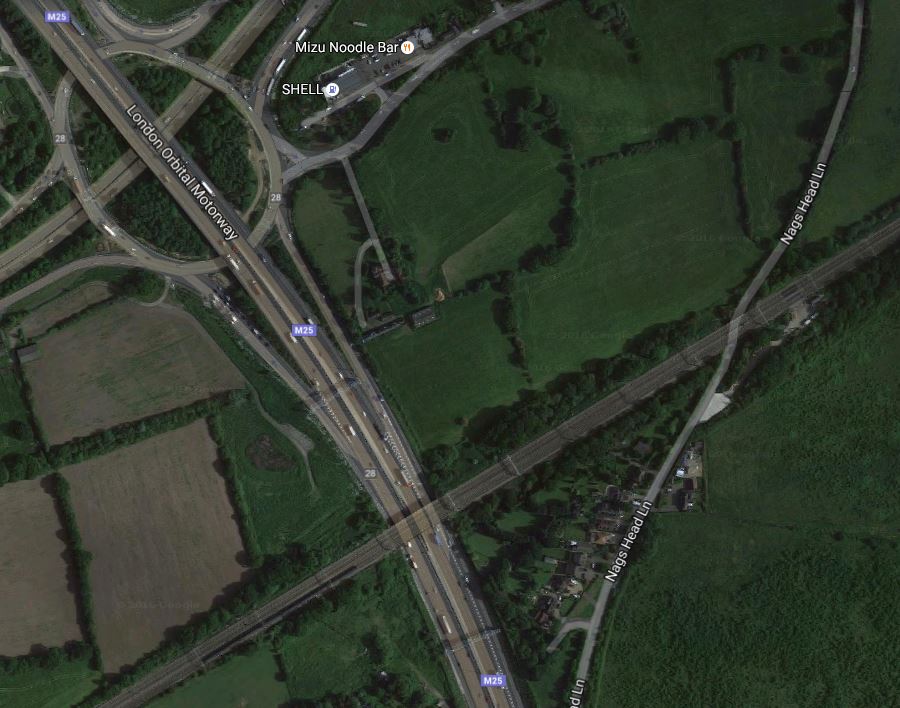
Crossrail And The M25 And A12 At Brentwood
I feel that this would be a logical site for a station with large and efficient Park-and-Ride facilities.
- It would be about thirty minutes from Liverpool Street station and seventy minutes from Heathrow.
- There would be over a dozen trains per hour (tph) to and from Central London.
- Long-distance trains to and from Chelmsford, Colchester, Ipswich, Norwich and Southend could call and have cross-platform interchange with Crossrail.
I suspect that there would be massive opposition to building the station.
A Park-and-Ride At Iver
This Google Map shows Iver station and the M25 as it goes South from the M40 to the M4.
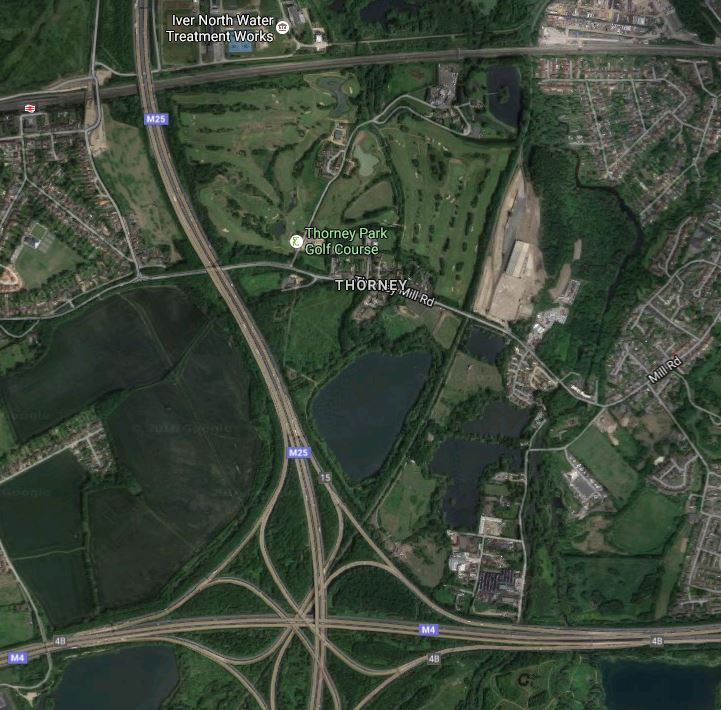
Crossrail And The M25 At Iver
I feel that this would be another logical site for a station with Park-and-Ride facilities.
In Network Rail Plans Another Tunnel Into Heathrow, I talked about plans to create a Western Rail Approach to Heathrow.
- The route starts between Langley and Iver stations, goes South roughly parallel with the M25 and then goes into Terminal 5 from the West.
- Much of the route is in tunnel.
Surely, if a Park-and-Ride site was to be built in the West of London, then these two projects should be combined.
Since I wrote about the PRT System in A Visit To Heathrow Terminal 5, I’ve met someone, who’s had a ride. Their view was totally positive on this new technology.
So I think there could be possibilities for a very futuristic transport system to Heathrow linked to Crossrail at Iver, in addition to the full rail option.
A Park-and-Ride At Abbey Wood
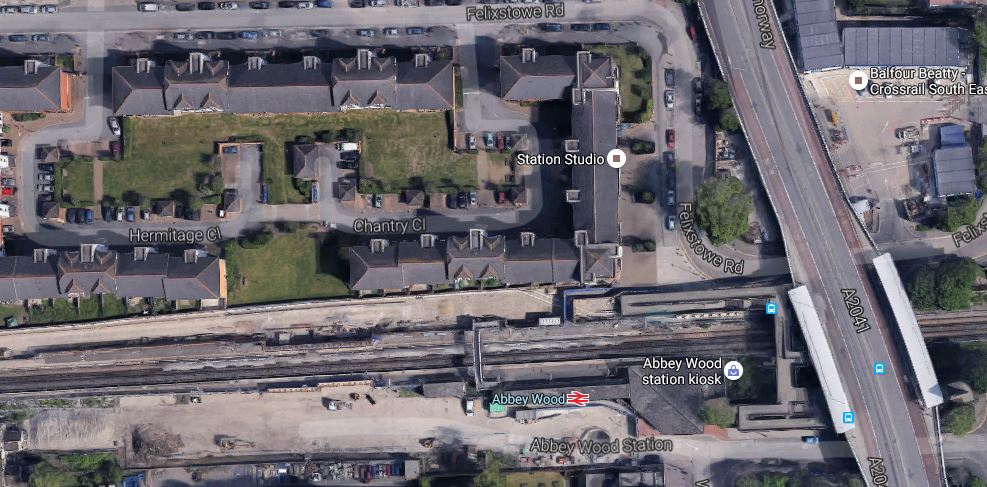
Abbey Wood Station
This Google Map shows the area of South East London around Crossrail’s terminus at Abbey Wood station..
There doesn’t appear to be much space around the station for a Park-and-Ride site.
This Google Map shows the roads in the area.
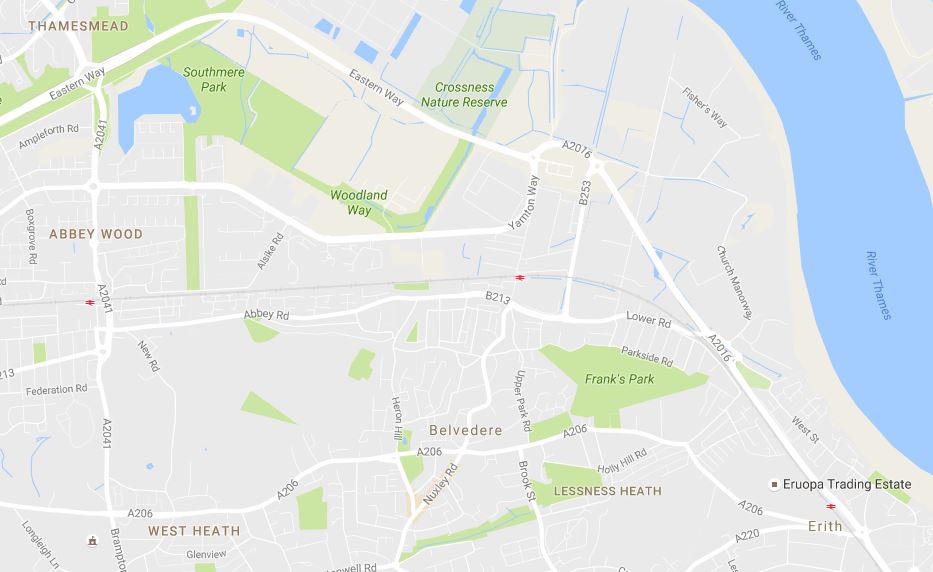
Roads Around Abbey Wood Station
Abbey Road station is on Harrow Manor Way, which links two East-West routes; the A2016 and the A206.
As Abbey Wood is the only surface station on the South-Eastern branch, I don’t think that there is a great probability, that a large Park-and-Ride site can be built on the South-astern branch of Crossrail.
A Park-and-Ride On An Extended South-Eastern Branch
Crossrail have safeguarded an extension Gravesend, which is described in this section in Wikipedia.
The route to Gravesend has been safeguarded by the Department for Transport, although it was made clear that as at February 2008 there was no plan to extend Crossrail beyond the then-current scheme. The following stations are on the protected route extension to Gravesend: Belvedere, Erith, Slade Green, Dartford, Stone Crossing, Greenhithe for Bluewater, Swanscombe, Northfleet, and Gravesend
So does this route give possibilities for a large Park-and-Ride?
This Google Map shows how the proposed extended route of Crossrail, runs under the Queen Elizabeth II Bridge.
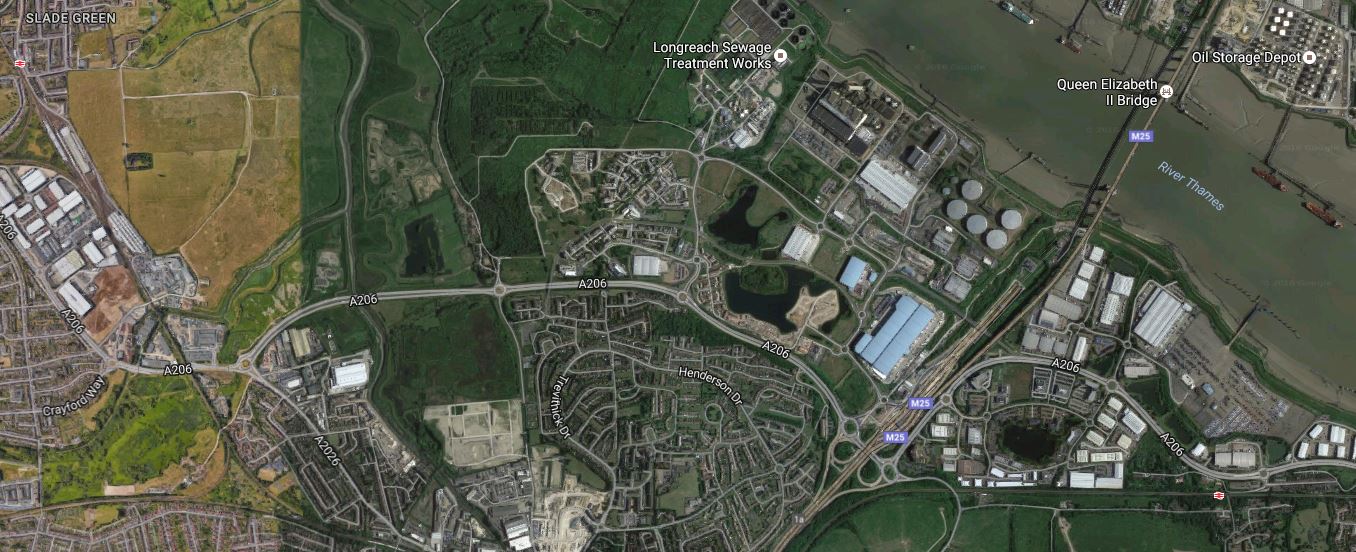
Crossrail, And The QE2 Bridge
Slade Green station is to the West of the bridge and the M25, in the top-left corner of the map, whilst Stone Crossing station is to the East, in the bottom right corner of the map.
This Google Map shows the route between Slade Green station and the Southern end of the bridge using the A206.
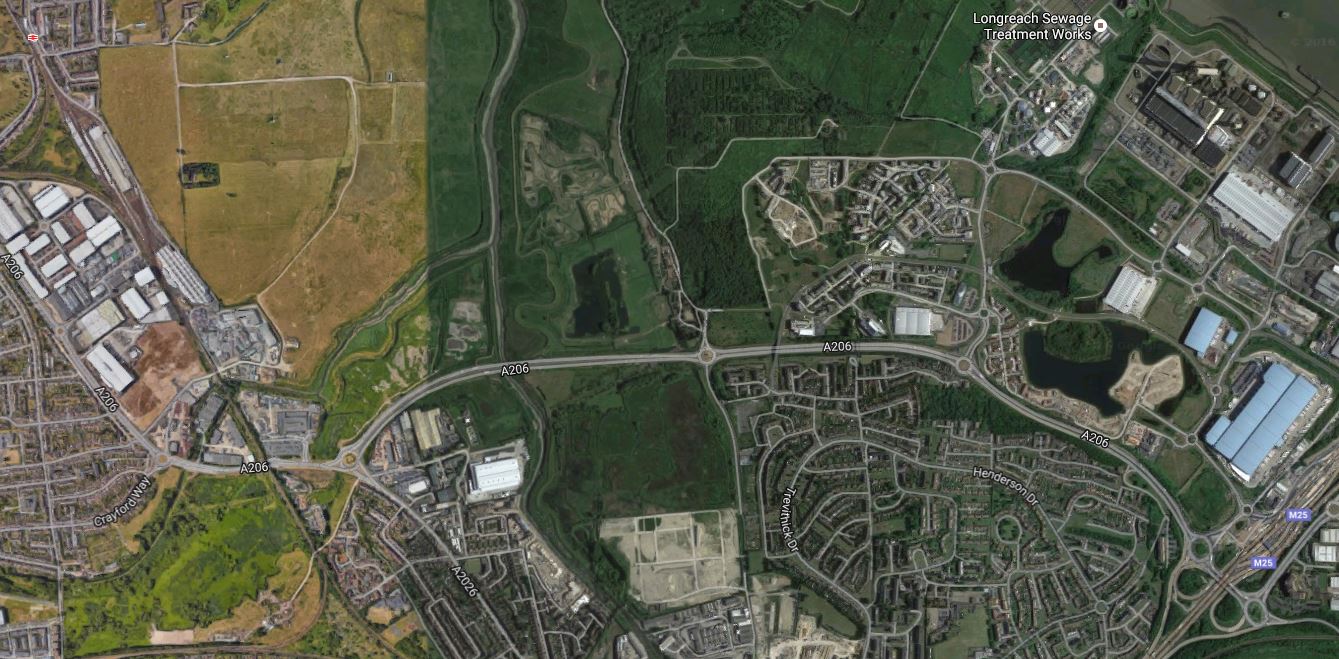
Slade Green Station To The QE2 Bridge
Slade Green station is in the top-left corner of the map and the Southern approach of the bridge in the bottom-right.
This Google Map shows between the bridge and Stone Crossing station.
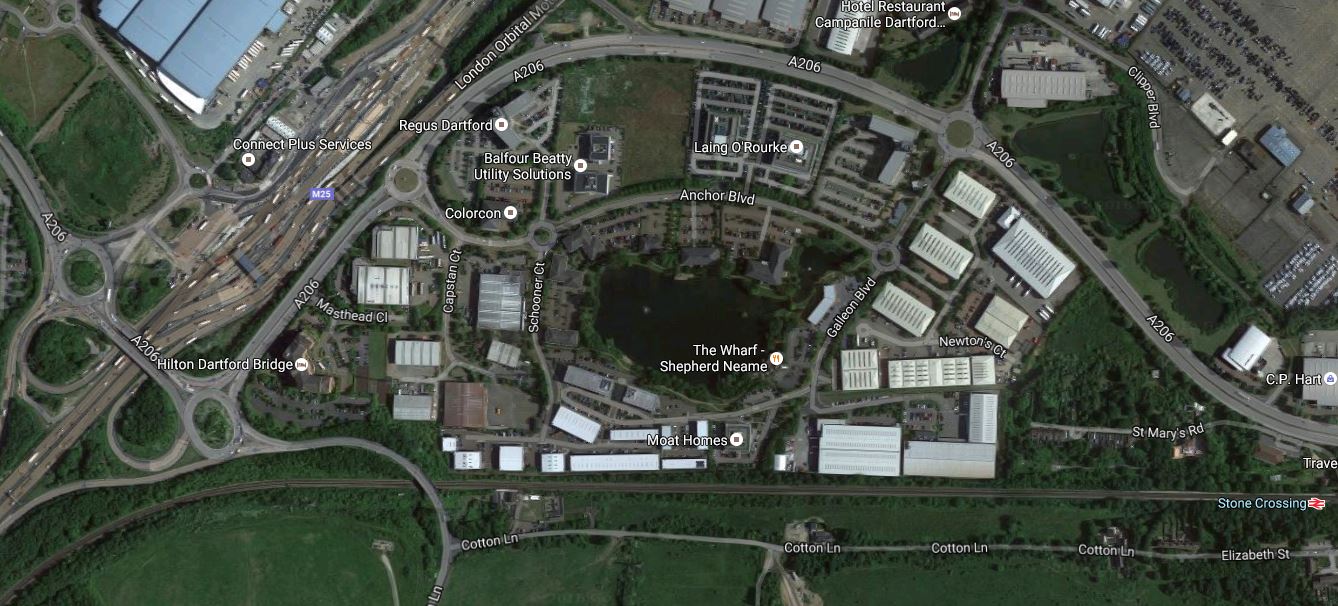
The QE2 Bridge To Stone Crossing Station
The Southern approach to the bridge is in the bottom-left with Stone Crossing station in the bottom-right.
After a brief look at both stations, using Wikipedia and Google Maps, the following can be said.
- Both stations are on the A206 road.
- The links to the M25 and M2 could probably be improved.
- There would appear to be space at both stations to build substantial parking.
- Both have at least two tph to and from Abbey Wood at the present time.
- From 2018, Thameslink will be running two tph will run from Rainham to Luton stopping at Stone Crossing, Slade Green and Abbey Wood stations.
- Nearly all the trains on the line will be 12-car trains.
Could the Park-and-Ride needs on the Abbey Wood branch be solved by increasing the parking at stations like Stone Crossing and Slade Green, with passengers using local trains and Thameslink to access Crossrail?
- There should be sufficient capacity in the 12-car trains to fit in a few short-distance travellers.
- The frequency between Abbey Wood and Rochester should be at least four tph.
- These trains will call at Slade Green, Dartford, Stone Crossing, Greenhithe, and Gravesend.
- The Crossrail frequency at Abbey Wood will be at least eight tph.
- Because of these frequencies, there shouldn’t be too much time wasted, waiting for a train at Abbey Wood.
I think that this shows that if the connecting trains to Abbey Wood have a medium to high frequency and there is plenty of parking along the line, then loyts of parking doesn’t need to be provided at Abbey Wood.
The more that I look at the lines and services in North Kent, it does appear that running Thameslink between Rainham and Luton via Greenwich, Abbey Wood and Dartford was a piece of very high-class thinking.
The East-Facing Bay Platforms At Reading Station
This picture shows the east-facing bay platforms at Reading station.
Bay Platforms 4, 5 and 6 At Reading Station
Note that they are numbered 4, 5 and 6 from the right. The train on Platform 5 is a Great Western Railway service for Gatwick Airport via Guildford. with a South West Trains service for Waterloo on Platform 6.
Gatwick Via The North Downs Line
Trains go to Gatwick using the North Downs Line, which is a double-track line effectively in five sections.
- Reading to Wokingham – electrified
- Wokingham to North Camp – not electrified
- North Camp to Shalford Junction – electrified
- Shalford Junction to Reigate – not electrified
- Reigate to Redhill and Gatwick – electrified.
According to Wikipedia, there needs to be work at Redhill and Gatwick Airport stations, but I believe that is underway.
Wikipedia also states that the line has an operative speed of 70 mph. The journey currently takes 76 minutes.
Once Crossrail and Thameslink are fully open, it would surely be quicker to change at Farringdon.
- The fastest journey between Farringdon and Gatwick Airport is now 54 minutes.
- The Crossrail route calculator says that Reading to Farringdon will take 57 minutes.
So that means that at 111 minutes, surprisingly the London route is thirty five minutes slower and needs a change of train.
Note these further points about the North Downs route.
- A well-driven electric train like a 110 mph Class 387 train might even be able to do the journey a few minutes quicker than the current 76 minutes, if the line were to be electrified.
- It is my belief, that the current piecemeal nature of the third-rail electrification would enable a Class 387 IPEMU to run between Reading and Gatwick Airport, using the batteries as required.
- I don’t think the batteries would need charging at the end of the journey, as both ends of the route are electrified.
- The line has ten level crossings, which must speed the trains, if some were removed.
- There must be other track improvements.
- Class 387 trains have also been fitted with an Airport Express interior for Gatwick Express.
- Can an Airport Express be battery-powered? Engineers like me, would say yes, but Marketing Departments would be sceptical.
I believe that ultimately a Class 387 train or an IPEMU with a similar performance could do Reading to Gatwick Airport in an hour, without further electrification.
The West-Facing Bay Platforms At Reading Station
Reading station has three west-facing bay platforms, numbered 1, 2 and 3.
They are used as follows.
- Platforms 1 and 2 for local services to Basingstoke, Newbury and Bedwyn.
- Platform 3 for Cross Country reversing trains.
Whilst I was at Reading yesterday, a Cross Country train reversed in a higher numbered platform.
These are some pictures of the bay platforms.
The View From Above
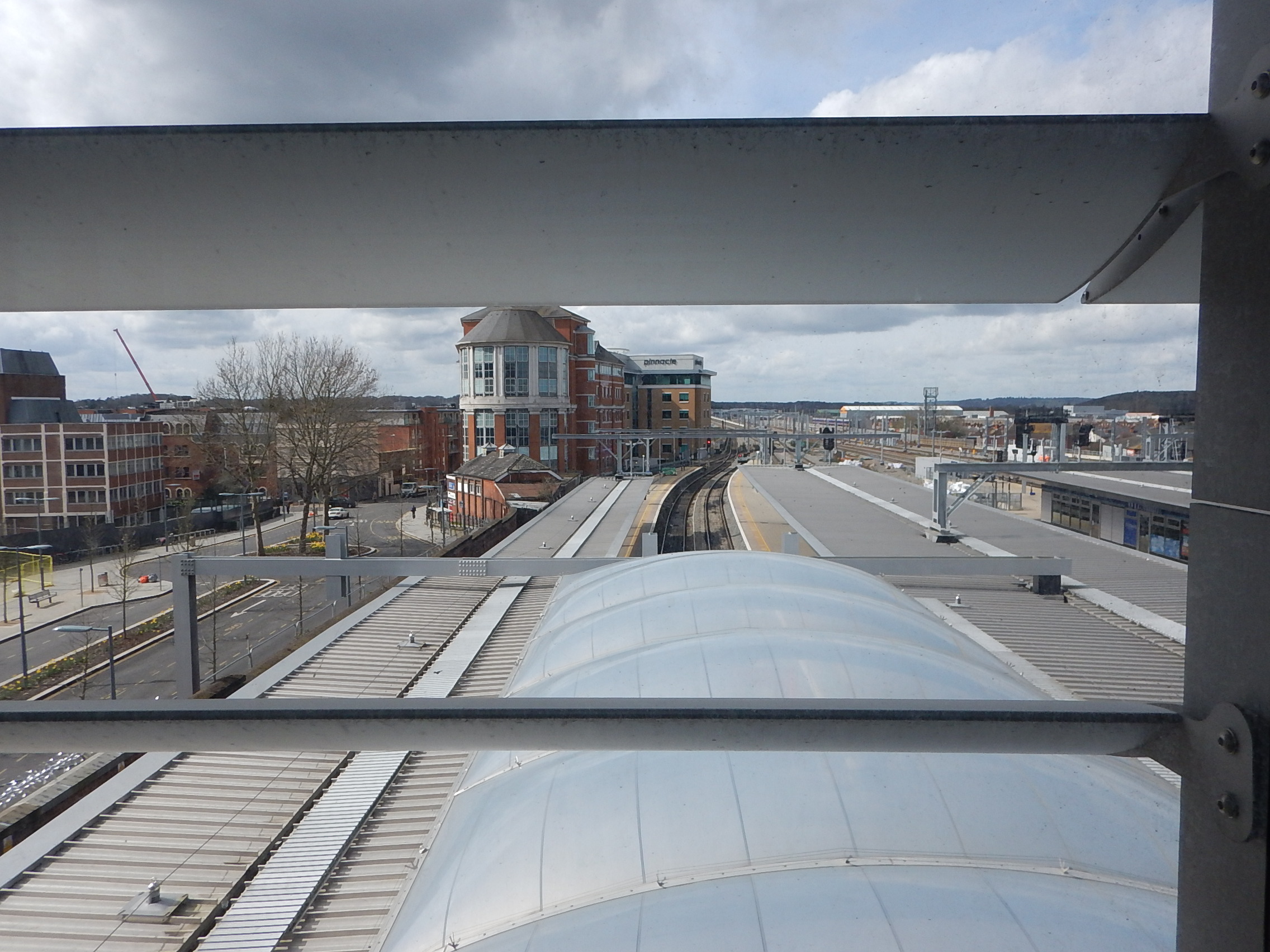
The Layout Of Bay Platforms 1, 2 and 3 At Reading Station
Note that the electrification gantries are in place across the three tracks.
The Platforms From Ground Level
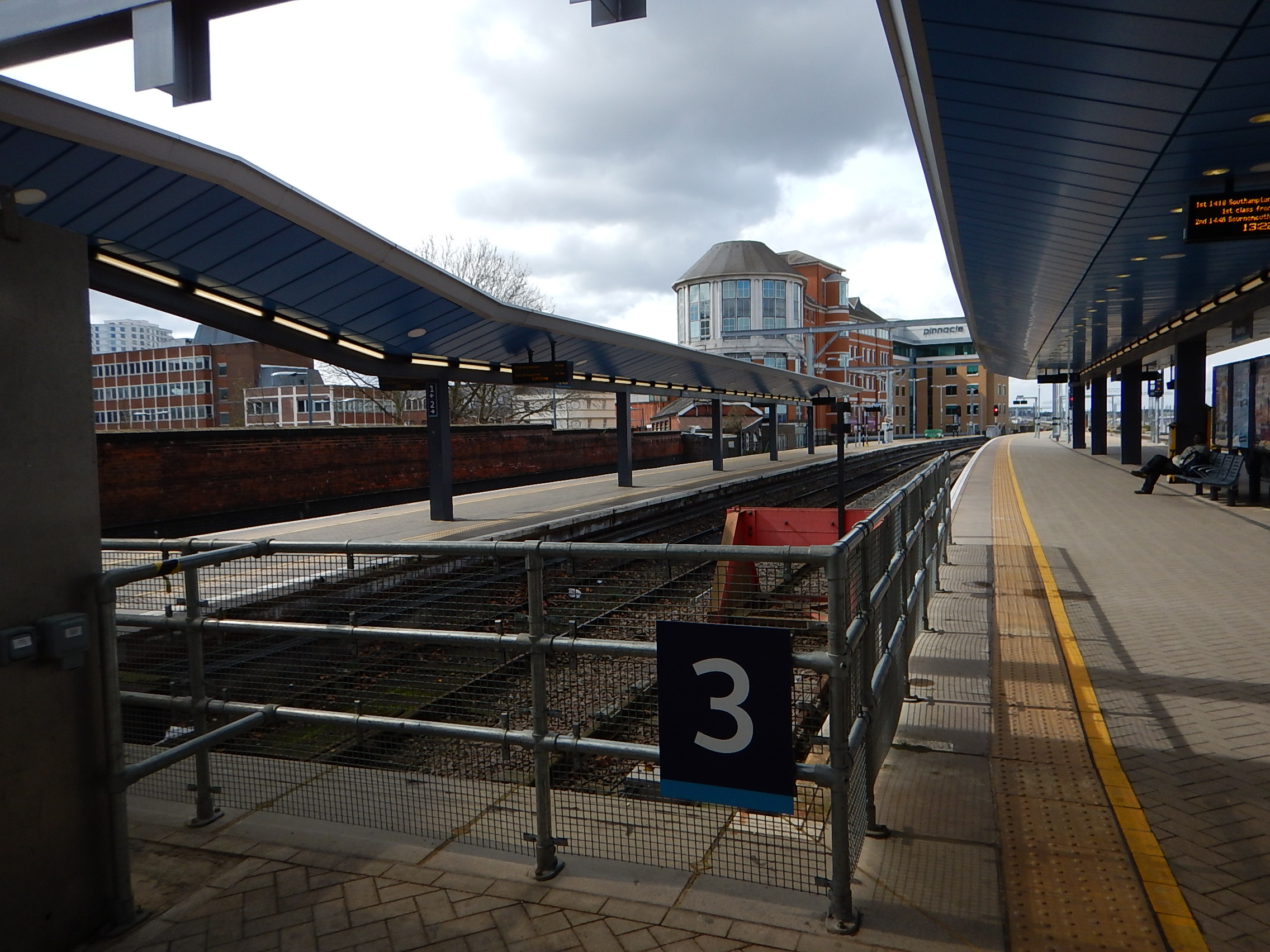
Platforms 1, 2 and 3 At Reading Station
Note how good the access is to the platforms. To the right of Platform 3, is platform 7, which is used for Down trains for the Berks and Hants route and for reversing Cross Country services.
So passengers arriving on a Cross Country train from say Manchester to Bournemouth or Newcastle to Southampton train on Platform 7 have these choices if they need to change trains.
- They could walk across from their train to a local service from platforms 1, 2 or 3.
- They could walk to the other end of the platform and get a local train from the east-facing platforms 4, 5 or 6.
- They could use lifts or escalators to cross the massive bridge to get a train on the Great Western Main Line to London or the West.
- They could also walk across to local services or in future, Crossrail to London.
And of course, they could walk out of the nearby station entrance and get a bus, taxi or their own transport.
Is there a station in the UK, where changing trains comes with so less hassle?
Ready For The Electrification
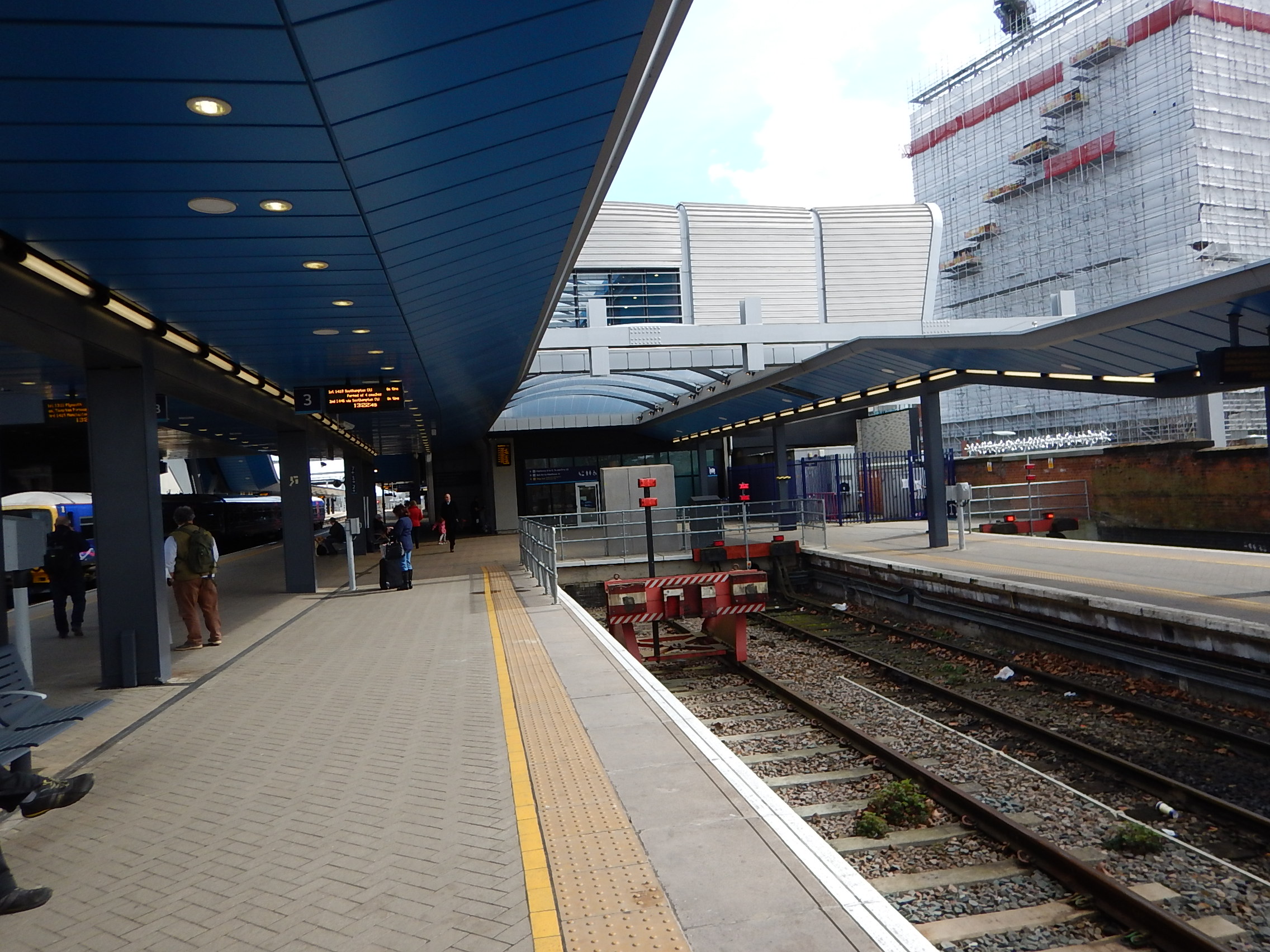
Looking Back At The Buffer End Of The Bay Platforms 1, 2 And 3 At Reading Station
Note that the gantries seem to have been designed into the station and are ready for the wires, with a nice secure steel plate to which to bolt them.
I can’t see the Heritage Taliban arguing about this design of catenery.
The Length Of The Platforms
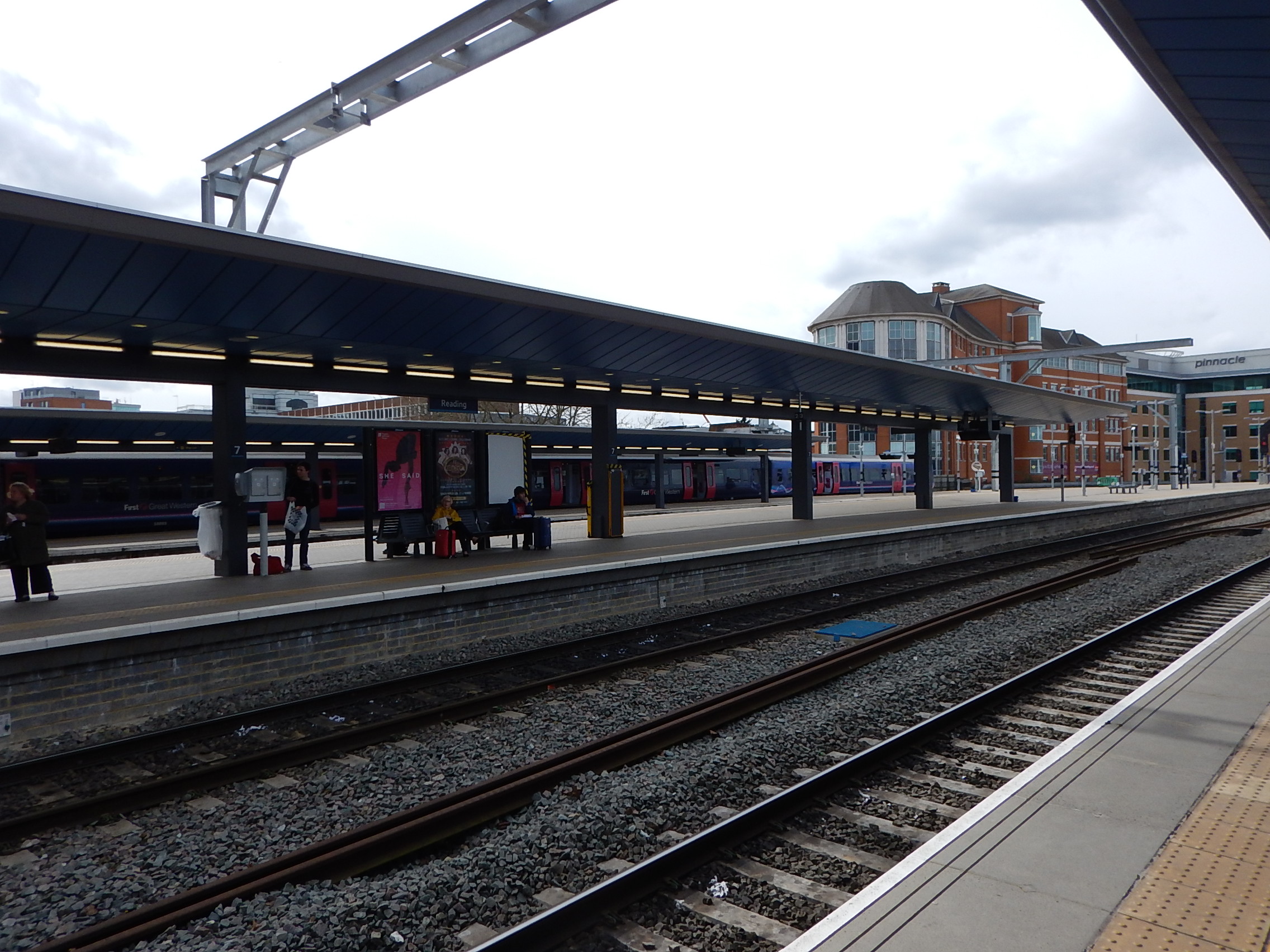
Platform Length Of The Bay Platforms 1, 2 And 3 At Reading Station
Note the three-car diesel multiple unit in the platform. I haven’t measured the platform, but I think they are long enough for a five car Class 800 train.
Future Use Of The Bay Platforms
At I said earlier the three platforms are used for local services to Basingstoke, Newbury and Bedwyn and reversing Cross Country trains., but there are two major purposes for which the bay platforms might be used.
The Test Track for Class 800 Trains
When the electric track between Didcot and Reading has been energised, it will be used as a test track for the new Class 800 trains. This article from the Witney Gazette gives more details.
The first three trains are due to be shipped to the UK early next year to begin an extensive test programme, which will include high-speed running on the line between Didcot and Reading once the installation of overhead electric power cables is completed later next year.
Roger Ford in the April 2016 Edition of Modern Railways said this.
Energisation for test running is now scheduled for September this year.
So will one of the bay platforms be used to reverse the train?
I’ve no idea! But the showman in me, would certainly do it, just for the publicity it would generate!
On a serious side, tests could also be performed on the train/platform/passenger interfaces.
Charging Platforms for IPEMUs
Great Western Railway would probably want to get their Class 387 trains into revenue service as soon as possible.
In the September 2015 edition of Modern Railways, there is an article entitled Class 387s Could Be Battery Powered. This is said.
Delivery as IPEMUs would allow EMUs to make use of as much wiring as is available (and batteries beyond) while electrification pushes ahead under the delayed scheme, and in the longer term would allow units to run on sections not yet authorised for electrification, such as Newbury to Bedwyn. The use of IPEMUs might also hasten the cascade of Class 16x units to the west of the franchise.
To run IPEMUs from Reading to Bedwyn or Basingstoke, would need them to be charged.
These bay platforms would be ideal for charging the trains and would mean that Basingstoke, Bedwyn and Newbury would get electric shuttles to Reading.
Conclusion
The team that designed Reading station, deserve a few gold stars.
 The Anonymous Widower