Kent On The Cusp Of Change – Reading To Tonbridge
The Kent On The Cusp Of Change article in the July 2017 Edition of Modern Railways talks about reopening a service between Reading and Tonbridge stations.
This is said.
Kent County Council has recommended the restitution of through services to Reading, as existed many years ago when the route was operated by ‘Thumper’ stock. The council says that consideration should be given to a future option of providing a through Ashford – Tonbridge – Redhill – Gatwick – Redhill – Guildford – Reading service, potentially as a joint operation between the Great Western Railway (GWR) and South Eastern franchises.
This could build on the existing service level between Reading and Gatwick provided by GWR, and would link together several of the major towns of the south-east region with each other and with their local international airport.
The introduction of bi-mode rolling stock now being deployed across the railway network would resolve the problem of gaps in the electric power system on sections of this route.
In The East-Facing Bay Platforms At Reading Station, I talked about using trains with batteries to perform this service and considered it feasible.
I still do, but then bog-standard bi-mode trains might be a better option in terms of cost.
I also believe that a Reading to Ashford service via Gatwick Airport would be a very valuable route with the following connections.
- Wales and the West at Reading station.
- Gatwick Airport
- Hastings at Tonbridge station.
- Rail services to the Continent at Ashford station.
I also think, that once more Continental services stop at Ashford, as I indicated in Ashford Spurs, that this rail link could be one of those rail routes where usage is way about any forecast.
Conclusion
Given Gatwick Airport’s ambititious plans, I rate an Ashford to Reading service as a high possibility.
See Also
These are related posts.
- Abbey Wood Station
- Ashford Spurs
- Crossrail
- Elimination Of Slow Trains
- Fawkham Junction Link
- Highspeed Routes
- High Speed To Hastings
- Historic Routes
- Longfield Station
- Maidstone
- Thameslink
- Thanet Parkway Station
- Track Improvements
- Ultimate Class 395 Train
- Victoria As A Highspeed Terminal
To know more read Kent On The Cusp Of Change in the July 2017 Edition of Modern Railways.
Crossrail’s Park-And-Ride Facilities
Crossrail is costing upwards of around fifteen billion pounds, but when it comes to providing Park-and-Ride facilities for passengers, it probably scores a massive zero-out-of-ten.
Consider.
- Parking at Shenfield station is no more than adequate for current customers.
- Abbey Wood station‘s restricted site, may well be getting a flagship station, but where will passengers park?
- Crossrail’s South-Eastern branch doesn’t serve Ebbsfleet International stastion, which has masses of parking.
- Of the three branches, only Reading station can probably increase its parking to cope.
- Where are the Park-and-Ride sites , where Crossrail and the M25 intersect?
It is certainly not good enough.
A Park-and-Ride At Brentwood
This Google Map shows where Crossrail crosses the M25, just South of the junction between the M25 and the A12.
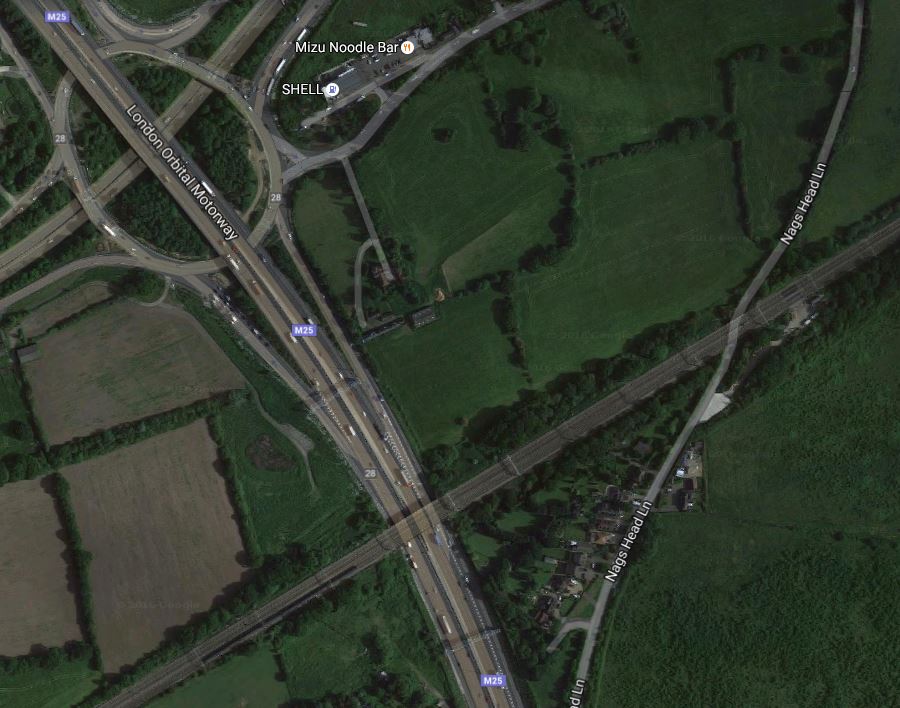
Crossrail And The M25 And A12 At Brentwood
I feel that this would be a logical site for a station with large and efficient Park-and-Ride facilities.
- It would be about thirty minutes from Liverpool Street station and seventy minutes from Heathrow.
- There would be over a dozen trains per hour (tph) to and from Central London.
- Long-distance trains to and from Chelmsford, Colchester, Ipswich, Norwich and Southend could call and have cross-platform interchange with Crossrail.
I suspect that there would be massive opposition to building the station.
A Park-and-Ride At Iver
This Google Map shows Iver station and the M25 as it goes South from the M40 to the M4.
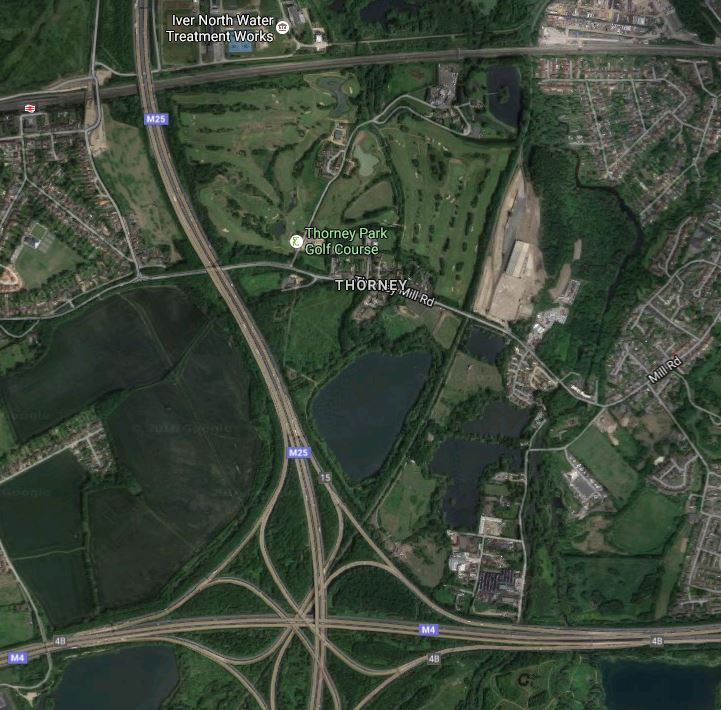
Crossrail And The M25 At Iver
I feel that this would be another logical site for a station with Park-and-Ride facilities.
In Network Rail Plans Another Tunnel Into Heathrow, I talked about plans to create a Western Rail Approach to Heathrow.
- The route starts between Langley and Iver stations, goes South roughly parallel with the M25 and then goes into Terminal 5 from the West.
- Much of the route is in tunnel.
Surely, if a Park-and-Ride site was to be built in the West of London, then these two projects should be combined.
Since I wrote about the PRT System in A Visit To Heathrow Terminal 5, I’ve met someone, who’s had a ride. Their view was totally positive on this new technology.
So I think there could be possibilities for a very futuristic transport system to Heathrow linked to Crossrail at Iver, in addition to the full rail option.
A Park-and-Ride At Abbey Wood
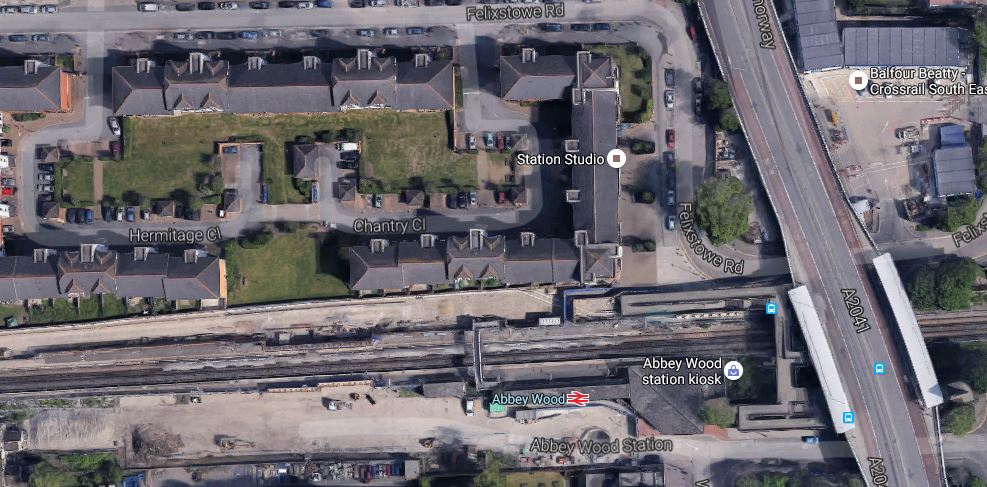
Abbey Wood Station
This Google Map shows the area of South East London around Crossrail’s terminus at Abbey Wood station..
There doesn’t appear to be much space around the station for a Park-and-Ride site.
This Google Map shows the roads in the area.
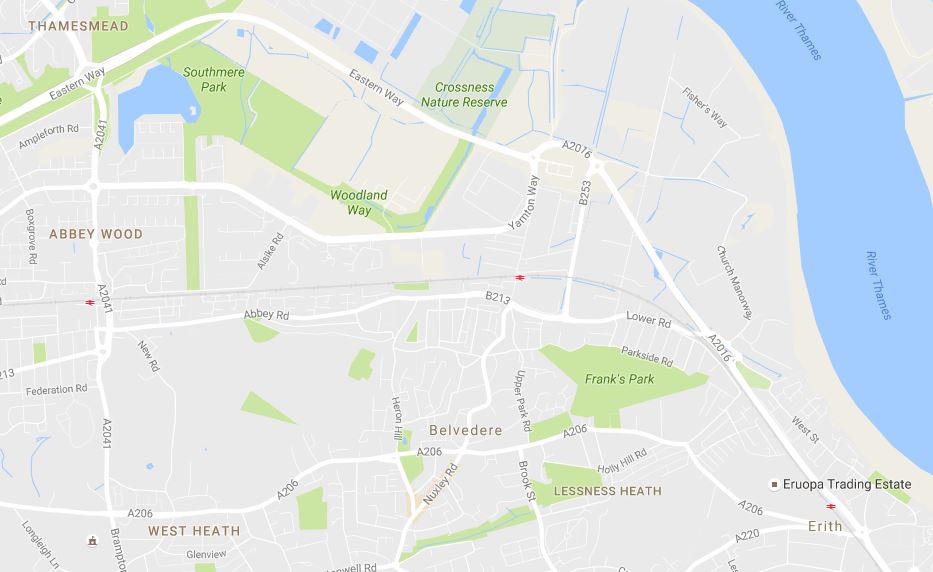
Roads Around Abbey Wood Station
Abbey Road station is on Harrow Manor Way, which links two East-West routes; the A2016 and the A206.
As Abbey Wood is the only surface station on the South-Eastern branch, I don’t think that there is a great probability, that a large Park-and-Ride site can be built on the South-astern branch of Crossrail.
A Park-and-Ride On An Extended South-Eastern Branch
Crossrail have safeguarded an extension Gravesend, which is described in this section in Wikipedia.
The route to Gravesend has been safeguarded by the Department for Transport, although it was made clear that as at February 2008 there was no plan to extend Crossrail beyond the then-current scheme. The following stations are on the protected route extension to Gravesend: Belvedere, Erith, Slade Green, Dartford, Stone Crossing, Greenhithe for Bluewater, Swanscombe, Northfleet, and Gravesend
So does this route give possibilities for a large Park-and-Ride?
This Google Map shows how the proposed extended route of Crossrail, runs under the Queen Elizabeth II Bridge.
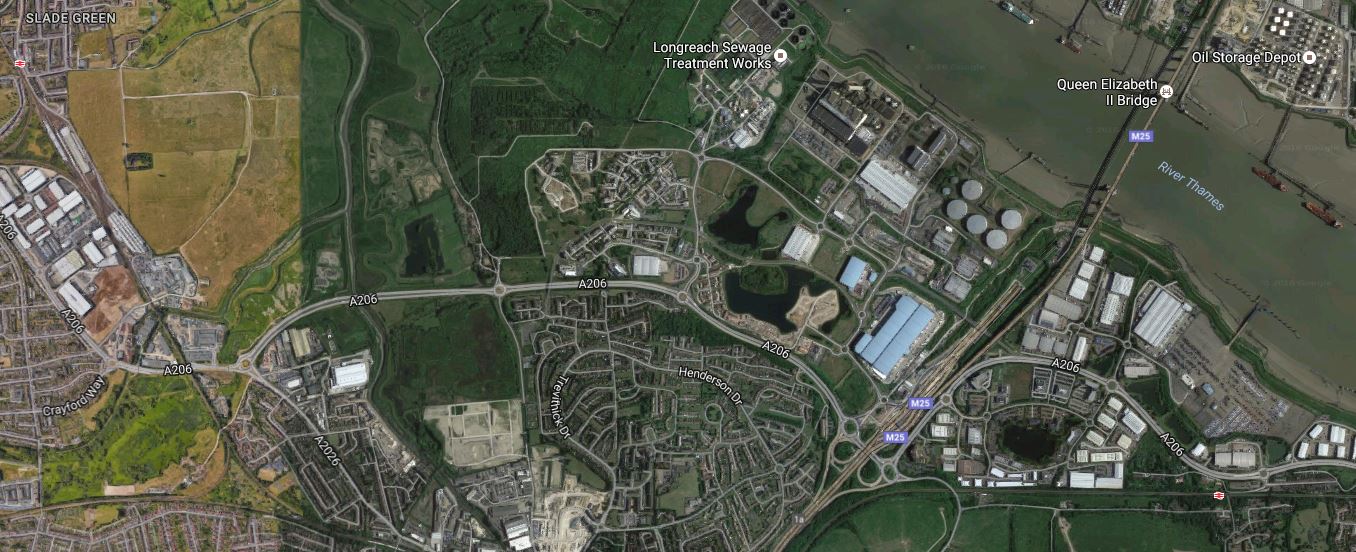
Crossrail, And The QE2 Bridge
Slade Green station is to the West of the bridge and the M25, in the top-left corner of the map, whilst Stone Crossing station is to the East, in the bottom right corner of the map.
This Google Map shows the route between Slade Green station and the Southern end of the bridge using the A206.
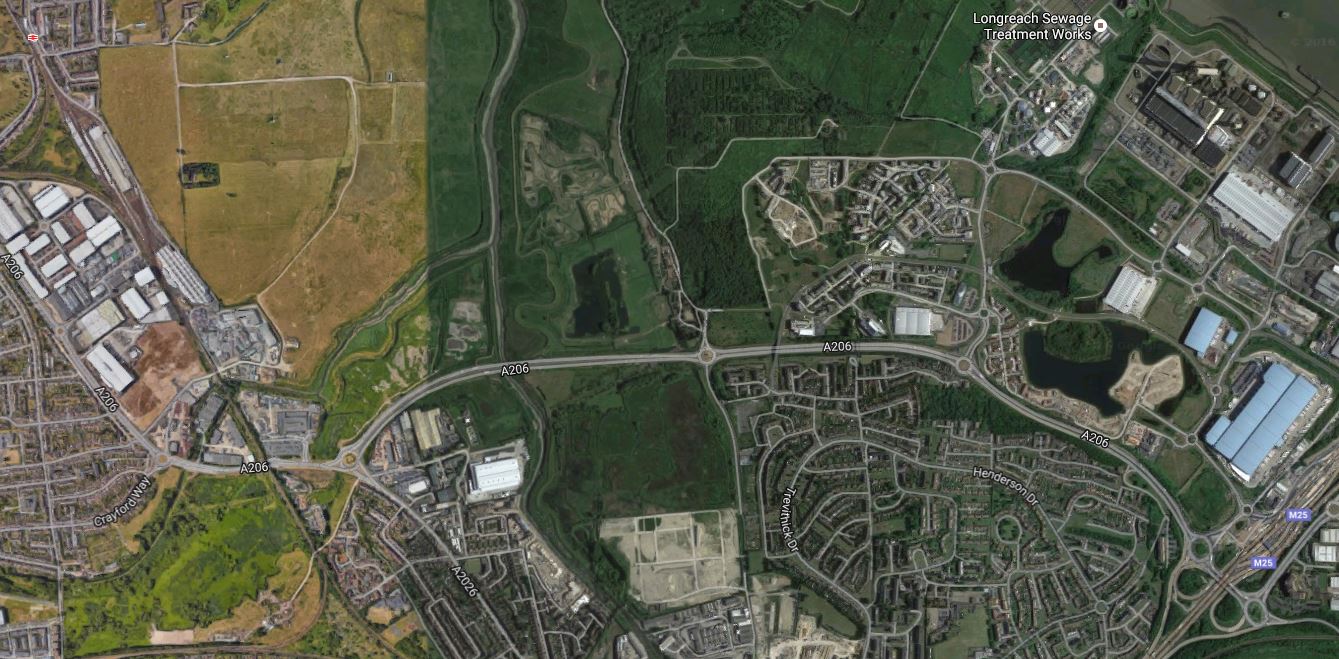
Slade Green Station To The QE2 Bridge
Slade Green station is in the top-left corner of the map and the Southern approach of the bridge in the bottom-right.
This Google Map shows between the bridge and Stone Crossing station.
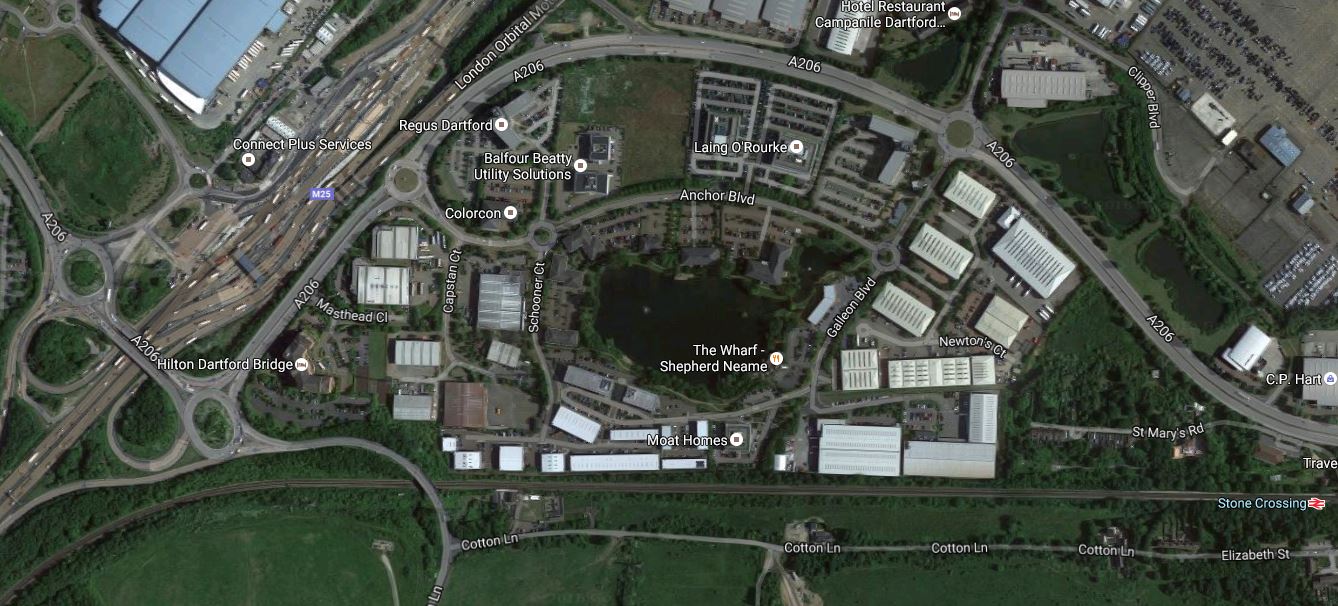
The QE2 Bridge To Stone Crossing Station
The Southern approach to the bridge is in the bottom-left with Stone Crossing station in the bottom-right.
After a brief look at both stations, using Wikipedia and Google Maps, the following can be said.
- Both stations are on the A206 road.
- The links to the M25 and M2 could probably be improved.
- There would appear to be space at both stations to build substantial parking.
- Both have at least two tph to and from Abbey Wood at the present time.
- From 2018, Thameslink will be running two tph will run from Rainham to Luton stopping at Stone Crossing, Slade Green and Abbey Wood stations.
- Nearly all the trains on the line will be 12-car trains.
Could the Park-and-Ride needs on the Abbey Wood branch be solved by increasing the parking at stations like Stone Crossing and Slade Green, with passengers using local trains and Thameslink to access Crossrail?
- There should be sufficient capacity in the 12-car trains to fit in a few short-distance travellers.
- The frequency between Abbey Wood and Rochester should be at least four tph.
- These trains will call at Slade Green, Dartford, Stone Crossing, Greenhithe, and Gravesend.
- The Crossrail frequency at Abbey Wood will be at least eight tph.
- Because of these frequencies, there shouldn’t be too much time wasted, waiting for a train at Abbey Wood.
I think that this shows that if the connecting trains to Abbey Wood have a medium to high frequency and there is plenty of parking along the line, then loyts of parking doesn’t need to be provided at Abbey Wood.
The more that I look at the lines and services in North Kent, it does appear that running Thameslink between Rainham and Luton via Greenwich, Abbey Wood and Dartford was a piece of very high-class thinking.
The East-Facing Bay Platforms At Reading Station
This picture shows the east-facing bay platforms at Reading station.
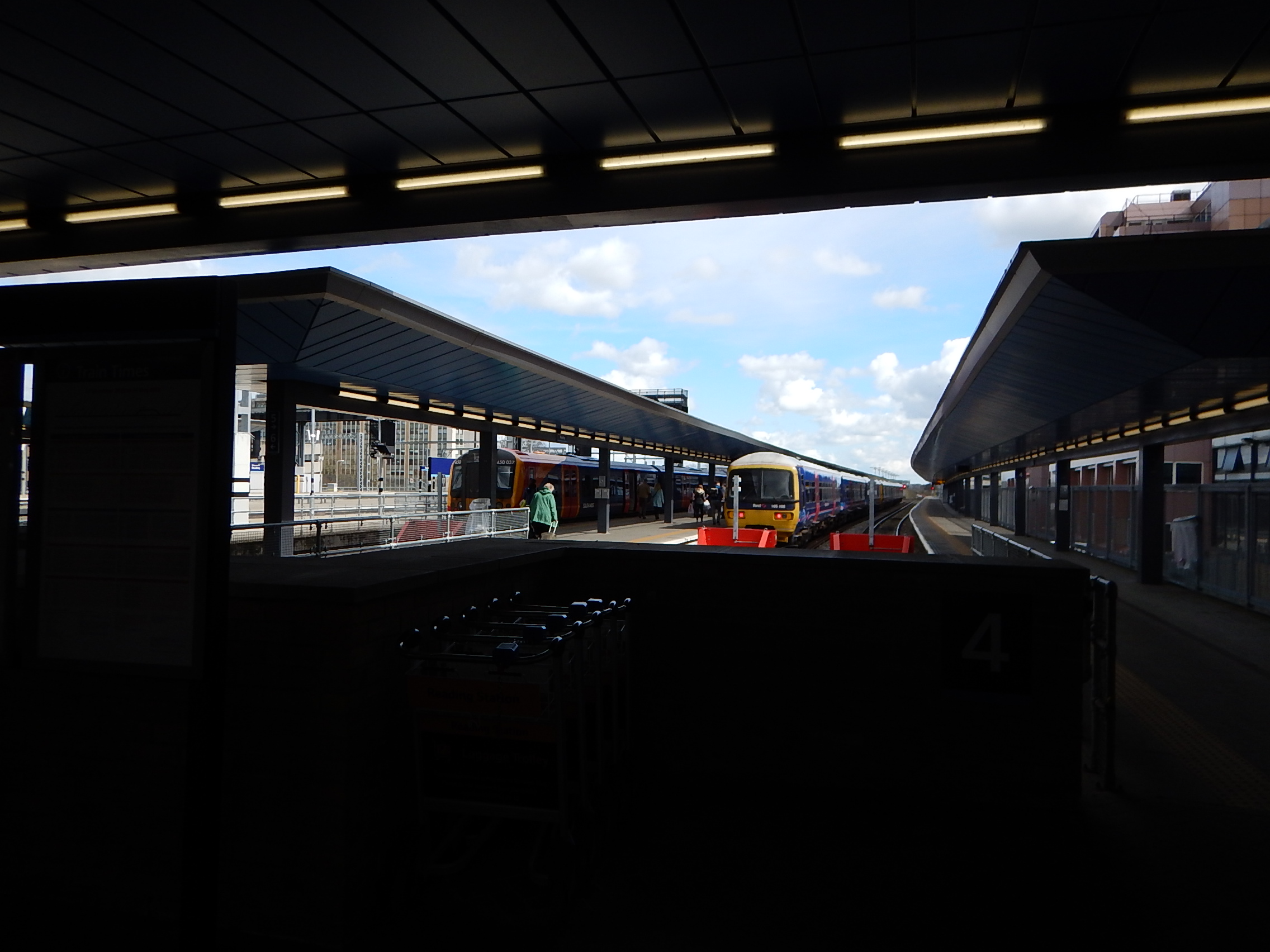
Bay Platforms 4, 5 and 6 At Reading Station
Note that they are numbered 4, 5 and 6 from the right. The train on Platform 5 is a Great Western Railway service for Gatwick Airport via Guildford. with a South West Trains service for Waterloo on Platform 6.
Gatwick Via The North Downs Line
Trains go to Gatwick using the North Downs Line, which is a double-track line effectively in five sections.
- Reading to Wokingham – electrified
- Wokingham to North Camp – not electrified
- North Camp to Shalford Junction – electrified
- Shalford Junction to Reigate – not electrified
- Reigate to Redhill and Gatwick – electrified.
According to Wikipedia, there needs to be work at Redhill and Gatwick Airport stations, but I believe that is underway.
Wikipedia also states that the line has an operative speed of 70 mph. The journey currently takes 76 minutes.
Once Crossrail and Thameslink are fully open, it would surely be quicker to change at Farringdon.
- The fastest journey between Farringdon and Gatwick Airport is now 54 minutes.
- The Crossrail route calculator says that Reading to Farringdon will take 57 minutes.
So that means that at 111 minutes, surprisingly the London route is thirty five minutes slower and needs a change of train.
Note these further points about the North Downs route.
- A well-driven electric train like a 110 mph Class 387 train might even be able to do the journey a few minutes quicker than the current 76 minutes, if the line were to be electrified.
- It is my belief, that the current piecemeal nature of the third-rail electrification would enable a Class 387 IPEMU to run between Reading and Gatwick Airport, using the batteries as required.
- I don’t think the batteries would need charging at the end of the journey, as both ends of the route are electrified.
- The line has ten level crossings, which must speed the trains, if some were removed.
- There must be other track improvements.
- Class 387 trains have also been fitted with an Airport Express interior for Gatwick Express.
- Can an Airport Express be battery-powered? Engineers like me, would say yes, but Marketing Departments would be sceptical.
I believe that ultimately a Class 387 train or an IPEMU with a similar performance could do Reading to Gatwick Airport in an hour, without further electrification.
The West-Facing Bay Platforms At Reading Station
Reading station has three west-facing bay platforms, numbered 1, 2 and 3.
They are used as follows.
- Platforms 1 and 2 for local services to Basingstoke, Newbury and Bedwyn.
- Platform 3 for Cross Country reversing trains.
Whilst I was at Reading yesterday, a Cross Country train reversed in a higher numbered platform.
These are some pictures of the bay platforms.
The View From Above
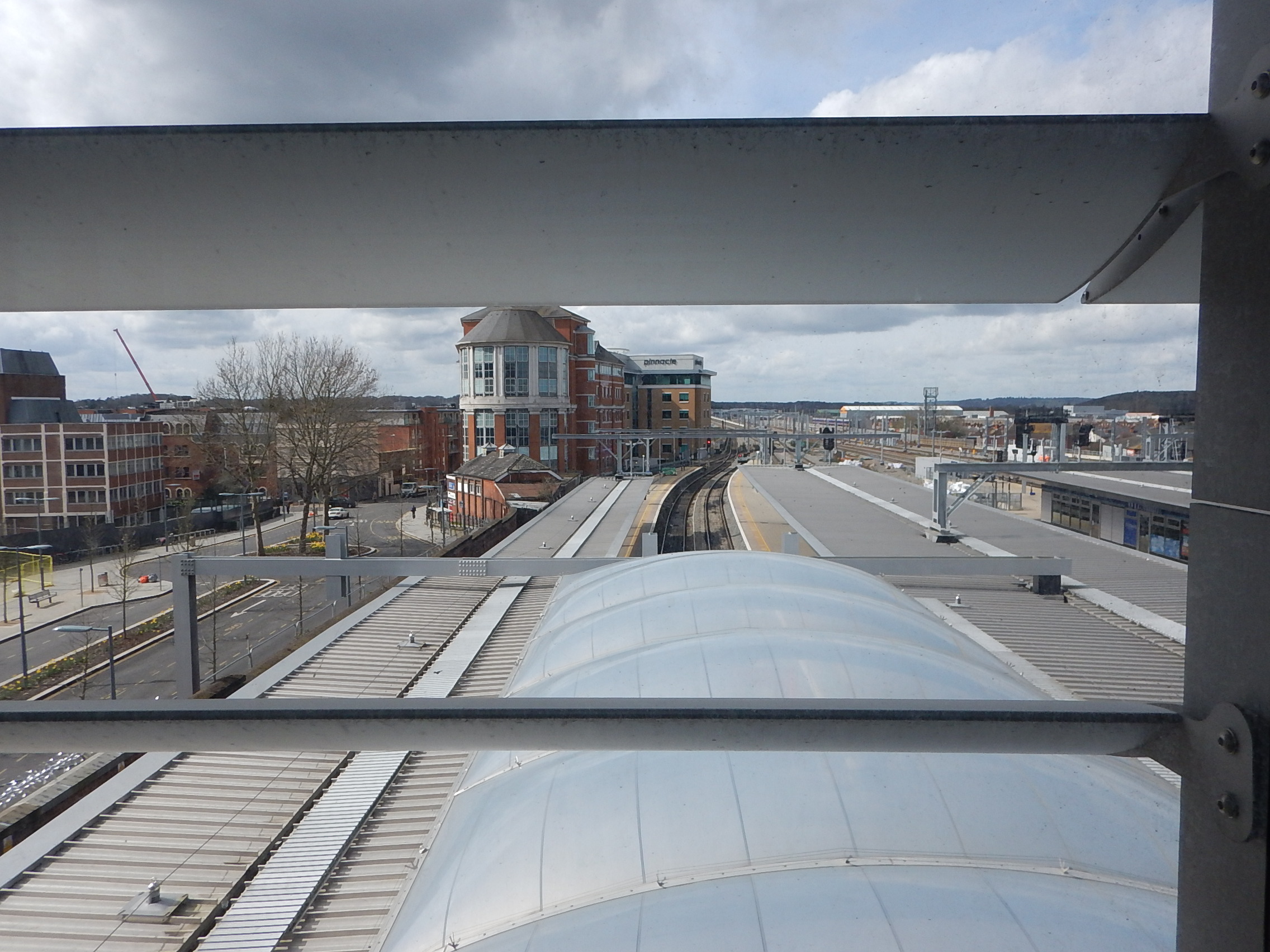
The Layout Of Bay Platforms 1, 2 and 3 At Reading Station
Note that the electrification gantries are in place across the three tracks.
The Platforms From Ground Level
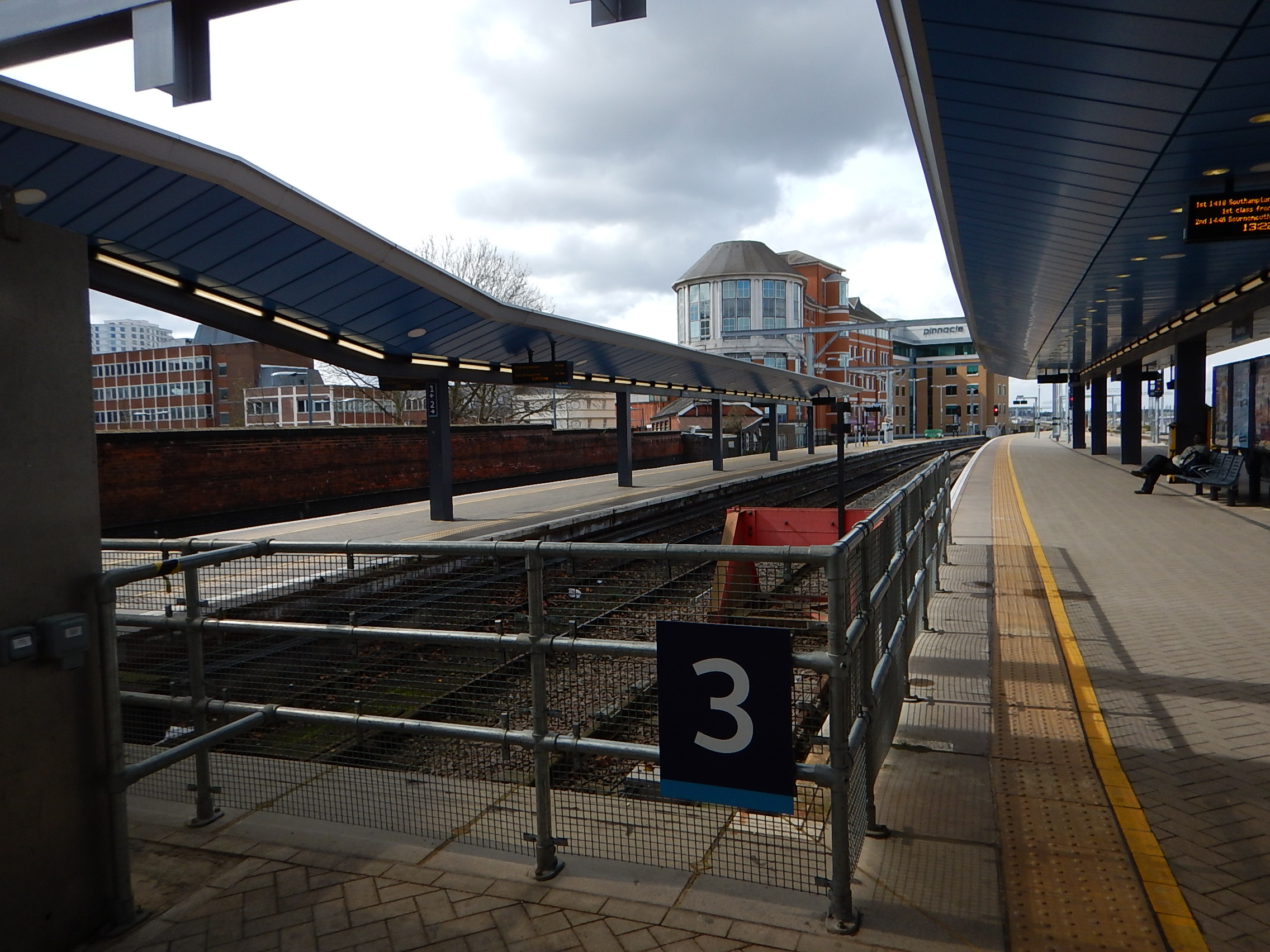
Platforms 1, 2 and 3 At Reading Station
Note how good the access is to the platforms. To the right of Platform 3, is platform 7, which is used for Down trains for the Berks and Hants route and for reversing Cross Country services.
So passengers arriving on a Cross Country train from say Manchester to Bournemouth or Newcastle to Southampton train on Platform 7 have these choices if they need to change trains.
- They could walk across from their train to a local service from platforms 1, 2 or 3.
- They could walk to the other end of the platform and get a local train from the east-facing platforms 4, 5 or 6.
- They could use lifts or escalators to cross the massive bridge to get a train on the Great Western Main Line to London or the West.
- They could also walk across to local services or in future, Crossrail to London.
And of course, they could walk out of the nearby station entrance and get a bus, taxi or their own transport.
Is there a station in the UK, where changing trains comes with so less hassle?
Ready For The Electrification
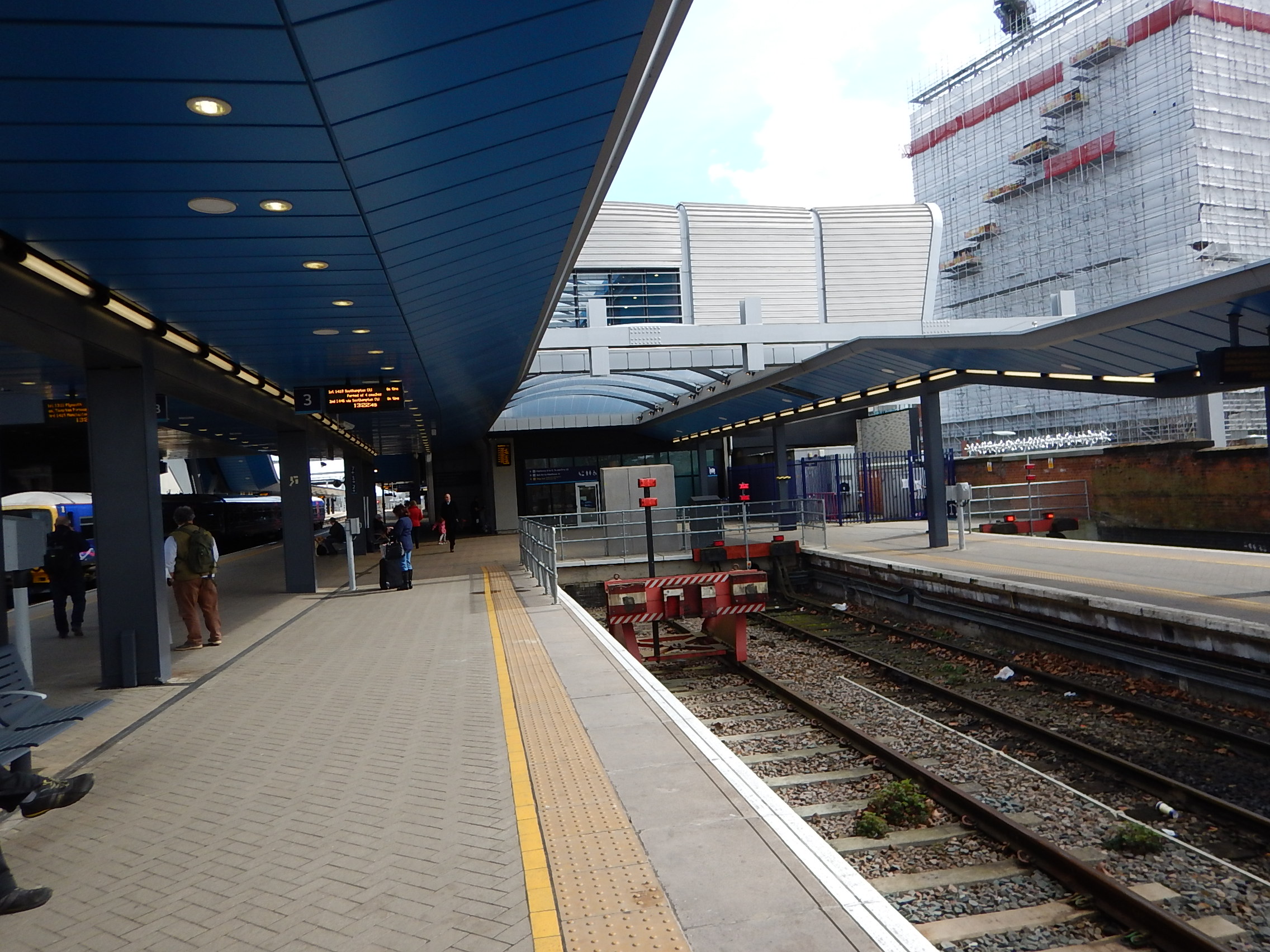
Looking Back At The Buffer End Of The Bay Platforms 1, 2 And 3 At Reading Station
Note that the gantries seem to have been designed into the station and are ready for the wires, with a nice secure steel plate to which to bolt them.
I can’t see the Heritage Taliban arguing about this design of catenery.
The Length Of The Platforms
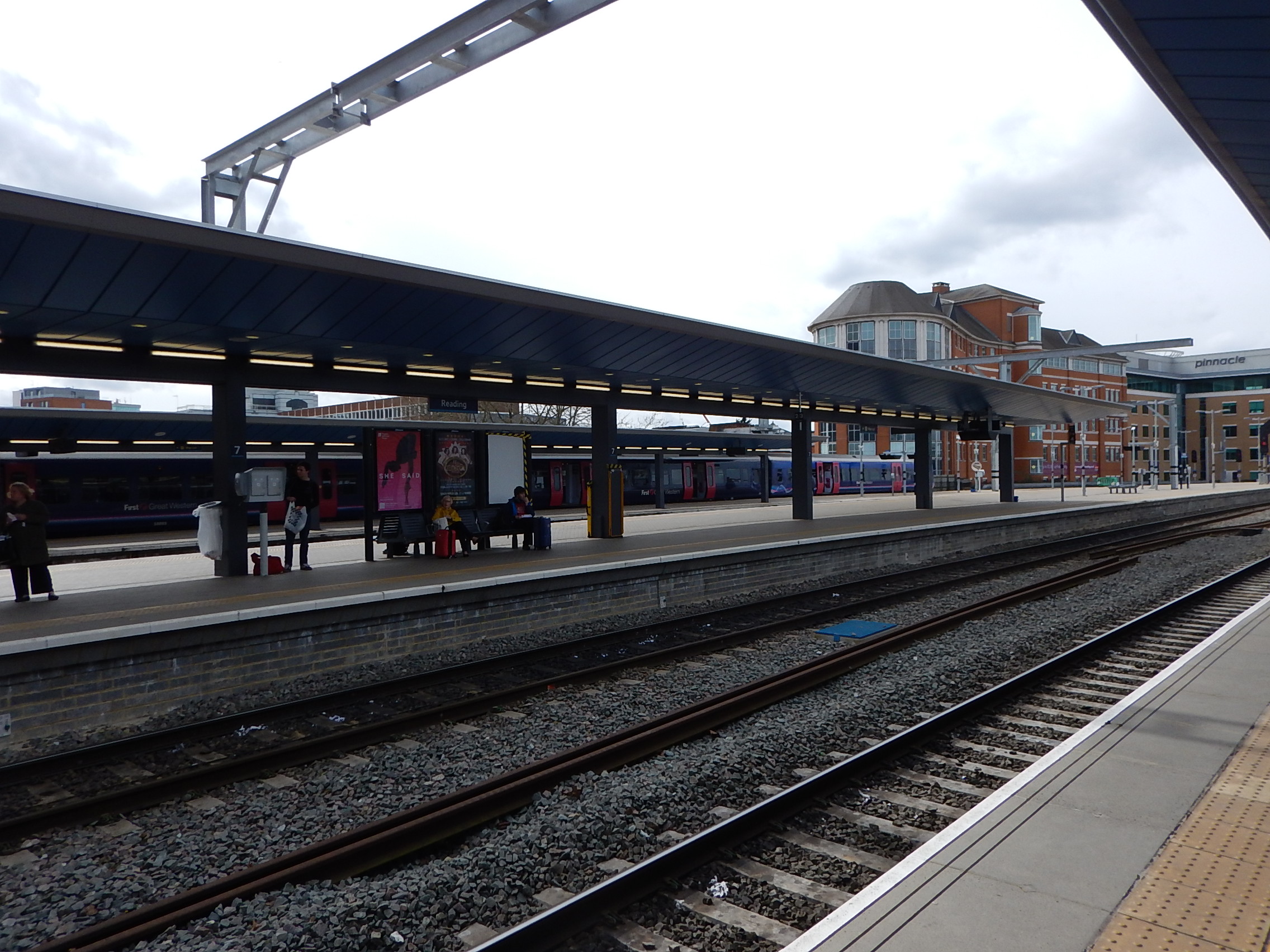
Platform Length Of The Bay Platforms 1, 2 And 3 At Reading Station
Note the three-car diesel multiple unit in the platform. I haven’t measured the platform, but I think they are long enough for a five car Class 800 train.
Future Use Of The Bay Platforms
At I said earlier the three platforms are used for local services to Basingstoke, Newbury and Bedwyn and reversing Cross Country trains., but there are two major purposes for which the bay platforms might be used.
The Test Track for Class 800 Trains
When the electric track between Didcot and Reading has been energised, it will be used as a test track for the new Class 800 trains. This article from the Witney Gazette gives more details.
The first three trains are due to be shipped to the UK early next year to begin an extensive test programme, which will include high-speed running on the line between Didcot and Reading once the installation of overhead electric power cables is completed later next year.
Roger Ford in the April 2016 Edition of Modern Railways said this.
Energisation for test running is now scheduled for September this year.
So will one of the bay platforms be used to reverse the train?
I’ve no idea! But the showman in me, would certainly do it, just for the publicity it would generate!
On a serious side, tests could also be performed on the train/platform/passenger interfaces.
Charging Platforms for IPEMUs
Great Western Railway would probably want to get their Class 387 trains into revenue service as soon as possible.
In the September 2015 edition of Modern Railways, there is an article entitled Class 387s Could Be Battery Powered. This is said.
Delivery as IPEMUs would allow EMUs to make use of as much wiring as is available (and batteries beyond) while electrification pushes ahead under the delayed scheme, and in the longer term would allow units to run on sections not yet authorised for electrification, such as Newbury to Bedwyn. The use of IPEMUs might also hasten the cascade of Class 16x units to the west of the franchise.
To run IPEMUs from Reading to Bedwyn or Basingstoke, would need them to be charged.
These bay platforms would be ideal for charging the trains and would mean that Basingstoke, Bedwyn and Newbury would get electric shuttles to Reading.
Conclusion
The team that designed Reading station, deserve a few gold stars.
Towards A Thames Valley Metro!
After my visit yesterday to Twyford Station and the Henley Branch and today to The Marlow Branch, I think something bigger could be emerging.
On the Great Western Main Line, between Paddington and Didcot, there are several branch lines and other more major routes that run local services into Reading and/or Paddington.
Taken in order from Paddington, they are.
- Acton to Northolt Line – 11 miles – Rather a leftover line that gets used for all sorts of traffic, including freight, diversions and driver training.
- Greenford Branch from West Ealing – 2.7 miles – Another leftover line, that is being rerouted to a bay platform at West Ealing – Could be transferred to the London Overground.
- Brentford Branch Line – 4 miles – Freight only
- Staines and West Drayton Line – 5.5 miles – Freight only.
- Windsor and Eton Branch from Slough – 2.5 miles
- Marlow Branch from Maidenhead – 7.15 miles – I wrote about it in The Marlow Branch.
- Henley Branch from Twyford – 4.5 miles – I wrote about it in Twyford Station and the Henley Branch
- Waterloo to Reading Line – Electrified, but links to the North Downs Line for Gatwick Airport, which isn’t!
- Reading to Basingstoke Line – To be electrified, with possibly some extra stations.
- Cherwell Valley Line from Didcot Parkway – To be electrified.
What follows are my observations.
Class 387 IPEMU Trains
Great Western Railway is to receive twenty-nine Class 387 trains from Thameslink and eight new ones from the factory.
These could easily be upgraded to IPEMU variants by the addition of batteries.
Once the power is switched on as far as Didcot Parkway station, I suspect that all these mainly short branches could be run using IPEMU trains, if passenger services were required or required to be run by electric trains.
Some like Greenford, Windsor and Eton, Marlow and Henley, would be as now, one train per branch. But elderly two car diesels would be replaced by new four car electric trains with a superior performance.
In Rumours of Battery Powered Trains, I reported on an article in Modern Railways magazine, which speculated that the extra Class 387 trains were to be IPEMUs and that they could be used on routes like Bedwyn and Oxford.
So it’s not my speculation!
Electrification Of The Branches
Some of the branches like Marlow Branch with its unusual layout and the Bourne End bridge and Windsor and Eton Branch with the historic nature of where it goes, will not be straightforward, as I suspect the heritage lobby will have a field day. As I wrote in Why We Should Use Independently Powered Electric Trains, the opposition to electrification in sensitive areas is stirring.
Electrification of the Greenford Branch might be more straightforward, but with five stations and a terminus in a bay platform at Greenford, I would suspect that a dedicated Class 387 IPEMU would cost less and only require the bay platform at West Ealing station to be electrified.
North Downs Line
In some ways, the North Downs Line is the most interesting, as I think that a dual-voltage IPEMU could easily supply a high quality service between Reading and Gatwick.
At present the direct service is hourly and takes around eighty minutes, using a two car Class 156 train.
Reading to Gatwick by Crossrail and Thameslink could on current figures and predictions for Crossrail times, take a few minutes over a hundred.
So the current direct route is quicker now with Class 165 diesel trains!
What difference would a faster four-car electric train make?
Crossrail’s Effect On The Great Western Main Line
The biggest effect will be when Crossrail arrives at all stations on the Great Western Main Line from Paddington to Reading.
Stations like Slough, Maidenhead and Twyford, where branches connect, will see a positive effect, as I suspect that more connections to and from the branches will be easier and involve less waiting.
Improving Services On The Branches
I think we could see some reorganisation of the services on the branch lines to give increased frequencies?
I think if Great Western Railway take the IPEMU route instead of electrifying the branches, there is scope for providing improved services from Slough to Reading and on the branches in the area. Diagrams could be arranged that after trundling down a few branches, the IPEMU did a section on the electrified lines to charge the batteries.
On thing I noticed on my trip to Marlow, was that Network Rail seem to be installing a lot of bay platforms at Crossrail stations. Some are London-facing for flexibility in the Crossrail schedules, but some are facing the other way. Could Network Rail be thinking out of the box and making sure, they don’t compromise any possible future services?
Reading As An Important Hub
As the routes develop, it would almost be like a Thames Valley Metro centred on the extremely well-connected Reading.
- Great Western Railway to Wales, the West Country and London
- Crossrail to London and beyond.
- Cross-Country Trains to the South, Midlands and North
- In a few years time the East West Rail Link could join Reading to Oxford, Milton Keynes, Bedford and the East.
The Class 387 IPEMU trains could serve the following stations from Reading, with very little extra electrification and perhaps the odd curve or two.
- Basingstoke
- Bedwyn
- Gatwick Airport
- Heathrow Airport
- Henley-on-Thames
- London Paddington
- Marlow
- Newbury
- Oxford
- Windsor and Eton Central
- Wokingham
If the Marlow Branch were to be extended, the trains could even reach High Wycombe.
Reading is going to have a very interesting time!
Twyford Station And The Henley Branch
I went for lunch in Henley-on-Thames today taking the Great Western Railway to Twyford station for the Henley Branch Line to Henley-on-Thames station.
These pictures document the journey between my two train changes at Twyford station.
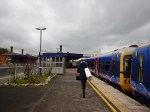
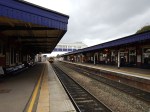
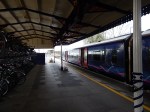
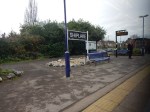
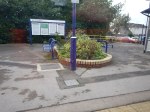
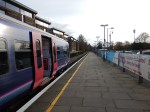
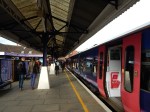

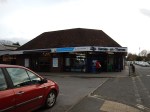



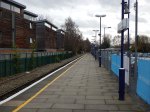
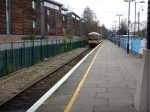

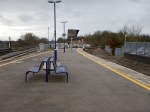
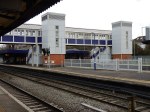


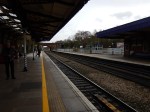
The branch is a typical single-track rural branch line that trundles its way through the countryside, over the River Thames to a single platform, that can take eight car trains.
It is currently served by a single two car Class 165 train, that goes up and down every fifty minutes or so all day, which is augmented by a couple of direct trains in the peak.
I feel that the Henley Branch Line could easily by worked by an IPEMU train. This could be either one of Class 387 trains ordered by Great Western Railway and converted to the technology or a new Aventra train.
Consider the following about the Henley Branch.
- It is only four and a half miles long.
- The speed limit of the line is fifty miles per hour.
- The bridge over the Thames has a lower speed limit and would probably be challenging to electrify.
- The two intermediate stations of Shiplake and Wargrave are built for eight car trains.
- There is at least one level crossing on the branch.
- The bay platform at Twyford station looks like it could take a five car train.
The Class 379 IPEMU test train with its sixty mile range could probably do six up-and-downs without a recharge. When an IPEMU train needed a recharge it would just pull into Platform 4 at Twyford station instead of the normal bay Platform 5, raise the pantograph and charge the batteries. Alternatively, Plstform 5 could have a short length of overhead wiring for recharging the battery.
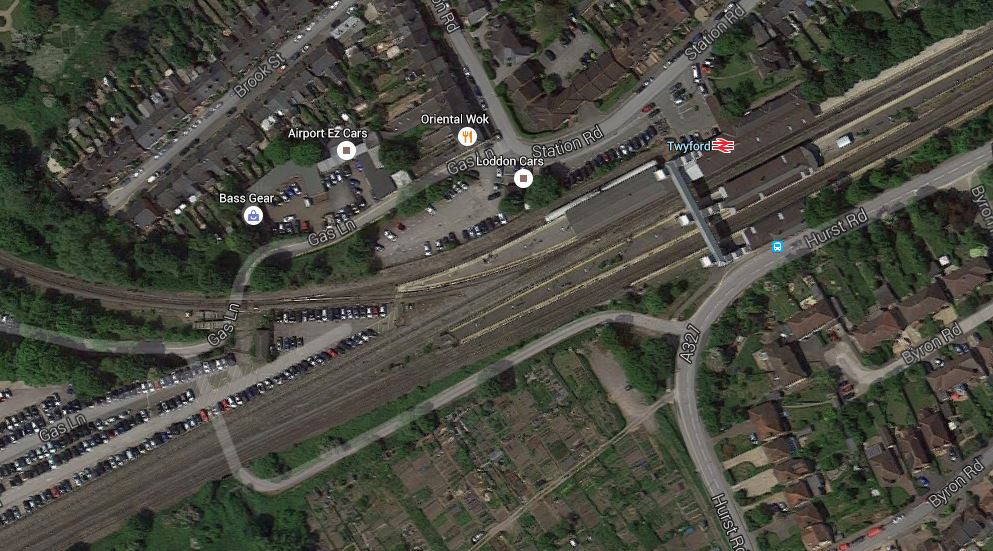
This Google Map shows Twyford station.
Twyford Station
Note the two car train in Platform 5 and the Henley Branch Line leading away to the north from the Great Western Main Line..
If Class 387 trains modified with IPEMU technology were to be used, Henley could receive four car electric trains as soon as the power was switched on as far as Twyford, with no major works on the Branch.
Two Class 387 trains could be coupled together to make an eight car train, that could also be run to and from Paddington during the peak and the Henley Regatta.
Reading Station Just Gets Better!
Reading station is one of the best in the UK and rivals any second level station in Europe.
It first impressed me, when it opened and I wrote Is It Architecture, Engineering Or Art?
I took these pictures when I went to the Reading Ipswich match.

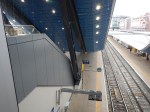

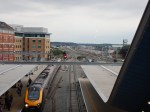
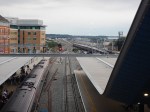



These changes were noted.
- The football buses are now parked by the station
- The Reading flyover is clearly visible from the massive footbridge over the station.
- The area in front of the station is now a plaza and not a building site.
The only problem I had was when returning after the match, It was difficult to find the first fast train to Paddington and I ended up on a stopping train to everywhere.
I did look around the station when I arrived, to see if there was any clue as to which will be the Crossrail platforms. The local services are currently served by Platforms 12 to 15 on the North side of the station. So it would probably be safe to assume that one island platform would be for Crossrail and the other is for services to places like Oxford, Newbury and Bedwyn.
It would appear that Rediung will not be served by Crossrail under December 2019.
A Ticketing Problem For Crossrail
Ipswich are playing at Reading tonight and as it’s an easy trip out from London, I bought a ticket in case I wanted to go.
I certainly won’t have a problem getting back, as there are fast trains to London after midnight.
But the match is on television and the weather looks to be pretty good, so I might just go and not waste my fifteen pound ticket.
As going to Reading in time for the match would mean a journey out restricted by the rush hour, I could go via any number of places like Windsor, Maidenhead or Slough to have a late lunch.
It got me thinking!
The Mayor has said, that when Crossrail opens, you’ll be able to use a Freedom Pass to Heathrow, just as you can now on the Piccadilly Line.
But how far will you be able to use a Freedom Pass on the branch to Reading?
The problem is complicated by the fact that there are three branches off the line between London and Reading; Henley, Marlow and Windsor.
To further complicate matters, direct peak-hour services operate between the Henley and Marlow branches and London.
Putting together snippets in the news and from Theresa May’s web site, led me to the conclusion which I talked about in this article, that all three branches will probably be served by new IPEMU trains (Class 387 or Aventra), as this would avoid the need for electrification.
So we’ll end up with a main line Crossrail service with a frequency of at least four trains per hour to Reading and shuttles and the occasional through trains from the branches.
The whole area will certainly end up with contactless ticketing using Oyster and bank cards, with perhaps a travel card or Ranger ticket thrown in.
But the real problem is organising the charging structure, as contactless will work well at collecting the fares, but how do you charge.
Crossrail will effectively link Windsor to Central London with a fast train and one change, so for tourists going to Windsor will be as easy as going to other important suburban venues like Wembley or the Olympic Park.
Get the ticketing right and the Thames Valley will get a lot of extra visitors.
To return to my earlier question, how far will my Freedom Pass get me in the West?
Crossrail’s journey calculator says that Bond Street to Shenfield, which will be the Freedom Pass limit in the East will take me 48 minutes.
Projected times from Bond Street for the West are as follows.
- Maidenhead – 40 minutes
- Twyford – 46 minutes
- Reading – 52 minutes
I do wonder if TfL and Crossrail will adopt the same rule as they have for Shenfield, as Reading is projected to only take four minutes longer than Shenfield.
This rule would mean that you can travel to Reading, provided you use Crossrail.
I can see an awful lot of protests, if passenger to Reading, got a worse deal than those going to Shenfield.
Which leaves us with the problem of the branches.
- Will the branches follow London rules on ticketing and be cashless and contactless, but still allow through paper tickets?
- Will direct trains to London still be run in the peak hours?
- Will the branches be part of the Great Western franchise or Crossrail?
- Will Booking Offices be closed on the branches?
I suspect that however the branches are managed, passengers from London will consider them part of Crossrail and will want to use contactless ticketing all the way.
The most contentious issue would be if it was decided that there would be no direct trains between Marlow and Henley and London.
All of these problems will hopefully be sorted before Crossrail opens.
Birmingham Gets A Big Snow Job
It is said by many in the regions of the UK, that London gets and eats all the pies.
At present there are four main rail projects on the go in London; Thameslink, Crossrail, the Northern Line Extension and the London Overground.
Thameslink is a government funded project, whereas Crossrail and the NLE are paid for wholly or in part by property developers and business.
The smaller Overgroundisation of London surface railways is more a methodology that is starting to be copied and expanded in places like Merseyside, the Cardiff Valleys and the West Midlands. Although you could argue that other railways in the UK have had the same idea of frequent clean and sometimes new trains, smart stations and good staffing levels, working for some time. Some of the stations on the Overground, have been or will be expanded, in conjunction with property development.
But other projects where co-operation between Network Rail, rail companies.local government and property developers are starting to be proposed and implemented, Often these projects are led by a major redevelopment of a station.
1. Leeds Station
Leeds station was rebuilt and extended a few years ago, but little use was made of the space above the station.
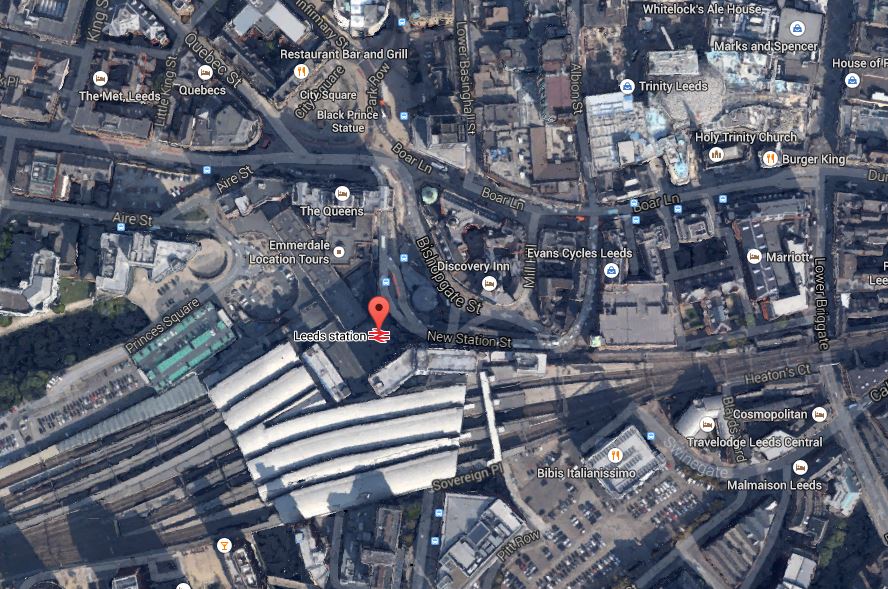
Leeds Station And City Centre
This Google Earth map shows the central location of the station and also its closeness to the main Trinity Shopping Centre at the top right of the map. Walking routes between the two are not good and the station should have been improved with development on the northern side to link it to the city centre. According to Wikipedia. future plans are in place to add much needed extra platforms and develop the south side of the station.
I believe, that you should walk out of a station into an open space, from where you can get your bearings of the city. This has been done well at London Kings Cross, Liverpool Lime Street, Huddersfield and Cardiff Central and some station rebuilding and expanding, is embracing such a concept.
I hope that Leeds develop the concept to a new level, when they create a new southern entrance. Perhaps on a personal level, they could create an easy way to get a bus to Elland Road.
2. Reading Station
Reading station has also been rebuilt and is surrounded by development, as this Google Earth map shows.
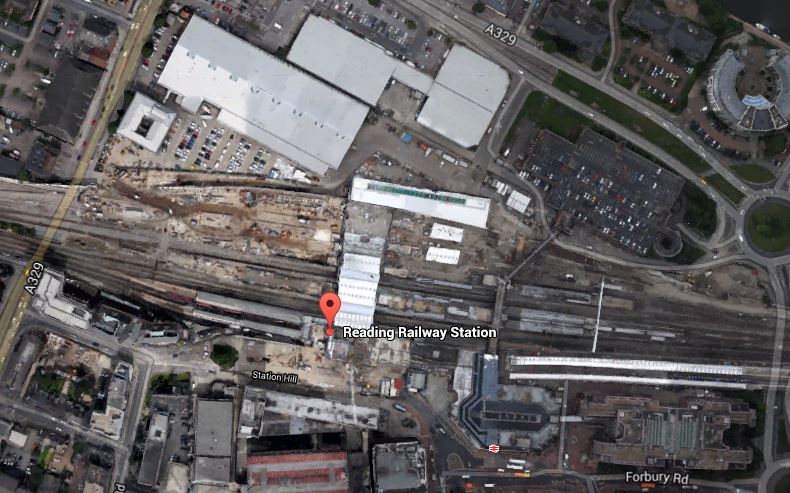
Around Reading Station
In the future it will be getting Crossrail,the new western link to Heathrow and probably more offices around the station. Network Rail, who now manage the station, have already created entrances on both sides of the station and I hope that development in the next few years, will make what is a spectacular station, a true gateway to the City.
3. Birmingham New Street
Birmingham New Street station is approaching the end of its rebuilding, which is now Gateway Plus. It includes a lot of retail including a new John Lewis. The station will also be connected to the Midland Metro. This Google Earth map shows the station and it’s surroundings.
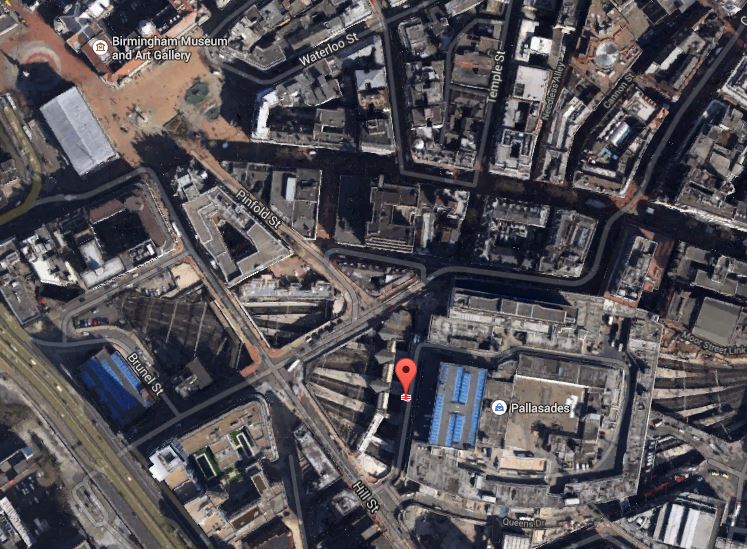
Birmingham New Street
It shows the problem that the station suffers, when compared to many. It is in a deep dark hole surrounded by busy roads, with the buses some way away. I don’t think you would design a station like that these days, as they did in the 1960s.
The station has a problem, as does Leeds, that there is not enough lines and platforms, but whereas at Leeds space is available, it would appear that at Birmingham New Street, it will be difficult to find.
The design of the station means that natural light on the platforms is difficult to provide. Hopefully, though by providing that light on the concourse and lots of lifts and escalators to get to the trains, the architects may have improved things. At present, it’s a bit like a bad Underground station experience arriving and departing at the station. One of the reasons, I generally travel between London and Birmingham by Chiltern Railways, is that Moor Street is a light and airy station, that has been tastefully updated for the modern age.
One of the biggest problems at New Street, is getting onward connections around the City Centre. On my visits to Birmingham, I often walk to Brindley Place to have a drink or lunch with friends. It’s not a difficult walk, but in a few years time, I’ll be able to do this sort of journey on the Midland Metro from the stop in Stephenson Street. When HS2 opens, this tram will be used as the connection between all four Birmingham city centre stations.
4. Manchester Victoria Station
The updating of Manchester Victoria station is the centrepiece of two big projects in Manchester; the Northern Hub and the extensions to the Manchester Metrolink like the Second City Crossing. This Google Earth map shows The station and the surrounding area.

Manchester Victoria
This image is quite old and doesn’t show the new roof, but it does show the roof of Manchester Arena next door, how the tram lines call at the station, the nearby green space and the river. All the station needs now is completing, the Metrolink extensions and new electric train services to Liverpool, Preston, Blackpool, Bolton, Leeds, Huddersfield, Sheffield, Newcastle and Hull.
I would also personally, like to see an hourly service to the South and Euston, so that I can avoid, the mostly dreadful Piccadilly. This will be possible once the Ordsall Chord is opened, although some might say that it is a real pity, the Picc-Vic tunnel was never built. Perhaps Virgin will get permission to run a service to Huddersfield via both main Manchester stations.
5. Newcastle Station
Newcastle station is a station that I don’t remember as anything special from my last visit some yeas ago, although it is a Grade I Listed Building. But since then, several millions have been spent according to Wikipedia, mainly on internal and retail facilities and on opening up the area round the station. So perhaps I should pay the city a visit. This Google Earth image shows the unique position of the station.
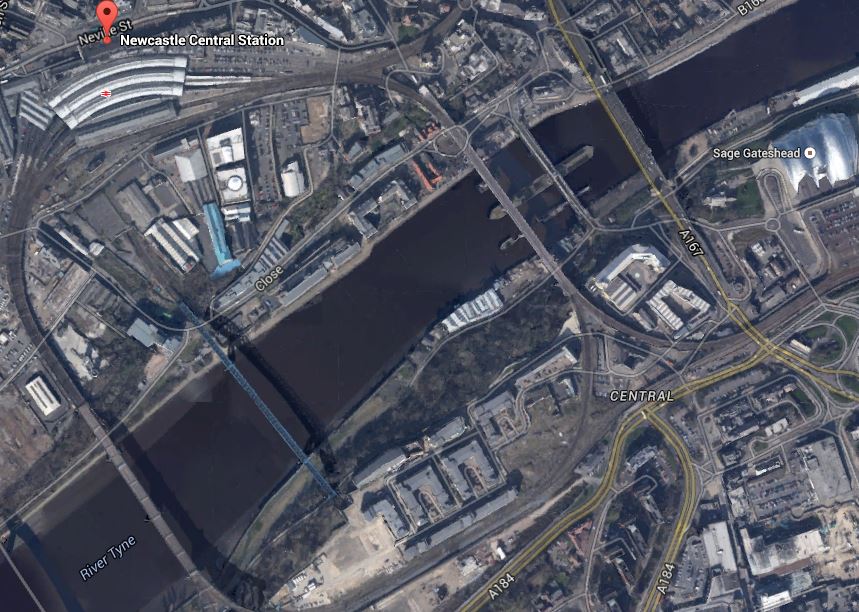
Newcastle Station
It is high above the Tyne on the edge of the city centre and uniquely the station is on a curve. It must be a very difficult to add extra tracks and platforms, which seem to be needed, as both through and local services are going to increase significantly.
I have only given five major examples, but they show how stations are becoming the focus of development.
One of my manual searches on the Internet picked up this article on Modern Railways entitled Snow Hill ‘transformation’ plan. This is the first paragraph.
Birmingham City Council has released its Snow Hill Masterplan, which outlines plans to grow the business district surrounding the station and includes proposals for the ‘transformation’ of the station into a transport hub.
Snow Hill is Birmingham’s station that is ignored by visitors from around the country, although it is important for commuters and others brought into the city on the Snow Hill Lines.
The Snow Hill Masterplan is here on the Birmingham Post website. Some of those who have commented don’t like it and they could be right. But the principles behind the plan of creating high quality offices, retail and apartments over a well-connected station is one that has been proven to work at Canary Wharf. After all it does actually make double use of the same piece of land. This is a Google Earth image of the Birmingham Snow station and its location.

Birmingham Snow Hill
You don’t see much of the actual station, as it is covered by a multi-story car park. As someone who can’t drive and manages well without a car, I can’t see why cities don’t do what London, Cambridge and Oxford have done and discourage people from driving in by providing top quality public transport.
The Snow Hill Masterplan would need an updated Midland Metro and also extra trains and routes through Snow Hill station.
I think that if I could get trains direct from Marylebone to Snow Hill, then that would be my preferred way of going. Snow Hill is in a much friendlier and welcoming part of the City than New Street.
I think on balance it is a good plan.
Before Crossrail – Reading
A Magnificient Station In Most People’s Opinion – Rating 9/10
Reading ranks with some of the best stations in Europe and probably the wider world. There are pictures in this post entitled Is it Architecture, Engineering Or Art?, which show how spectacular the station is.
Wikipedia says this about adding Crossrail to the station.
Crossrail could also be accommodated at the new station with little work beyond electrification, as new sidings have been planned to the west of the station.
So it looks like adding Crossrail to Reading isn’t a difficult problem, if Wikipedia is correct.
Logically, I feel strongly that Crossrail should go to Reading, as Reading is a large city that has twice the population of the original terminus of Maidenhead.
Reading station also has fifteen platforms, and can probably be configured so that passengers arriving on Crossrail could walk across the platform to get their train to Wales and the West Country, with other passengers doing the reverse in the other direction.
If they do provide this sort of change at Reading, I might well go to and from the West by changing at Reading rather than Paddington, as it will be as easy to get to Reading as Paddington, if I take Crossrail from Whitechapel. But at Paddington, I’ll have to get from the Crossrail station deep under Paddington to the main line platforms.
If Reading does have a problem, about its integration into Crossrail, it’s that it’ll put the other terminals into the shade. By any scale Shenfield looks small and outdated against the beauty, size and passenger-friendliness of Reading.

